Sean Whitton: Initial views of 5th edition DnD
 I ve been playing in a 5e campaign for around two months now. In the
past ten days or so I ve been reading various source books and
Internet threads regarding the design of 5th edition. I d like to
draw some comparisons and contrasts between 5th edition, and the 3rd
edition family of games (DnD 3.5e and Paizo s Pathfinder, which may be
thought of as 3.75e).
The first thing I d like to discuss is that wizards and clerics are no
longer Vancian spellcasters. In rules terms, this is the
idea that individual spells are pieces of ammunition. Spellcasters
have a list of individual spells stored in their heads, and as they
cast spells from that list, they cross off each item. Barring special
rules about spontaneously converting prepared spells to healing
spells, for clerics, the only way to add items back to the list is to
take a night s rest. Contrast this with spending points from a pool of
energy in order to use an ability to cast a fireball. Then the
limiting factor on using spells is having enough points in your mana
pool, not having further castings of the spell waiting in memory.
One of the design goals of 5th edition was to reduce the dominance of
spellcasters at higher levels of play. The article to which I linked
in the previous paragraph argues that this rebalancing requires the
removal of Vancian magic. The idea, to the extent that I ve
understood it, is that Vancian magic is not an effective restriction
on spellcaster power levels, so it is to be replaced with other
restrictions adding new restrictions while retaining the
restrictions inherent in Vancian magic would leave spellcasters
crippled.
A further reason for removing Vancian magic was to defeat the
so-called five minute adventuring day . The compat ability of a
party that contains higher level Vancian spellcasters drops
significantly once they ve fired off their most powerful combat
spells. So adventuring groups would find themselves getting into a
fight, and then immediately retreating to fully rest up in order to
get their spells back. This removes interesting strategic and
roleplaying possibilities involving the careful allocation of
resources, and continuing to fight as hit points run low.
There are some other related changes. Spell components are no longer
used up when casting a spell. So you can use one piece of bat guano
for every fireball your character ever casts, instead of each casting
requiring a new piece. Correspondingly, you can use a spell focus,
such as a cool wand, instead of a pouch full of material
components since the pouch never runs out, there s no mechanical
change if a wizard uses an arcane focus instead. 0th level spells may
now be cast at will (although Pathfinder had this too). And there are
decent 0th level attack spells, so a spellcaster need not carry a
crossbow or shortbow in order to have something to do on rounds when
it would not be optimal to fire off one of their precious spells.
I am very much in favour of these design goals. The five minute
adventuring day gets old fast, and I want it to be possible for
the party to rely on the cool abilities of non-spellcasters to deal
with the challenges they face. However, I am concerned about the
flavour changes that result from the removal of Vancian magic. These
affect wizards and clerics differently, so I ll take each case in
turn.
Firstly, consider wizards. In third edition, a wizard had to prepare
and cast Read Magic (the only spell they could prepare without a
spellbook), and then set about working through their spellbook. This
involved casting the spells they wanted to prepare, up until the
last few triggering words or gestures that would cause the effect of
the spell to manifest. They would commit these final parts of the
spell to memory. When it came to casting the spell, the wizard would
say the final few words and make the required gestures, and bring out
relevant material components from their component pouch. The
completed spell would be ripped out of their mind, to manifest its
effect in the world. We see that the casting of a spell is a highly
mentally-draining activity it rips the spell out of the caster s
memory! not to be undertaken lightly. Thus it is natural that a
wizard would learn to use a crossbow for basic damage-dealing. Magic
is not something that comes very naturally to the wizard, to be
deployed in combat as readily as the fighter swings their sword. They
are not a superhero or video game character, pew pew ing their way to
victory. This is a very cool starting point upon which to roleplay an
academic spellcaster, not really available outside of tabletop games.
I see it as a distinction between magical abilities and real
magic.
Secondly, consider clerics. Most of the remarks in the previous
paragraph apply, suitably reworked to be in terms of requesting
certain abilities from the deity to whom the cleric is devoted.
Additionally, there is the downgrading of the importance of the
cleric s healing magic in 5th edition. Characters can heal themselves
by taking short and long rests. Previously, natural healing was very
slow, so a cleric would need to convert all their remaining magic to
healing spells at the end of the day, and hope that it was enough to
bring the party up to fighting shape. Again, this made the party of
adventurers seem less like superheroes or video game characters.
Magic had a special, important and unique role, that couldn t be
replaced by the abilities of other classes.
There are some rules in the back of the DMG Slow Natural
Healing , Healing Kit Dependency , Lingering Wounds which can be
used to make healing magic more important. I m not sure how well they
would work without changes to the cleric class.
I would like to find ways to restore the feel and flavour of Vancian
clerics and wizards to 5th edition, without sacrificing the
improvements that have been made that let other party members do cool
stuff too. I hope it is possible to keep magic cool and unique
without making it dominate the game. It would be easy to forbid the
use of arcane foci, and say that material component pouches run out if
the party do not visit a suitable marketplace often enough. This
would not have a significant mechanical effect, and could enhance
roleplaying possibilities. I am not sure how I could deal with the
other issues I ve discussed without breaking the game.
The second thing I would like to discuss is
bounded accuracy. Under this design principle, the
modifiers to dice rolls grow much more slowly. The gain of hit points
remains unbounded. Under third edition, it was mechanically
impossible for a low-level monster to land a hit on a higher-level
adventurer, rendering them totally useless even in overwhelming
numbers. With bounded accuracy, it s always possible for a low-level
monster to hit a PC, even if they do insigificant damage. That means
that multiple low-level monsters pose a threat.
This change opens up many roleplaying opportunities by keeping
low-level character abilities relevant, as well as monster types that
can remain involves in stories without giving them implausible new
abilities so they don t fall far behind the PCs. However, I m a
little worried that it might make high level player characters feel a
lot less powerful to play. I want to cease a be a fragile adventurer
and become a world-changing hero at later levels, rather than forever
remain vulnerable to the things that I was vulnerable to at the start
of the game. This desire might just be the result of the video games
which I played growing up. In the JRPGs I played and in Diablo II,
enemies in earlier areas of the map were no threat at all once you d
levelled up by conquering higher-level areas. My concerns about
bounded accuracy might just be that it clashes with my own
expectations of how fantasy heroes work. A good DM might be able to
avoid these worries entirely.
The final thing I d like to discuss is the various simplifications to
the rules of 5th edition, when it is compared with 3rd edition and
Pathfinder. Attacks of opportunity are only provoked when leaving a
threatened square; you can go ahead and cast a spell when in melee
with someone. There is a very short list of skills, and party members
are much closer to each other in skills, now that you can t pump more
and more ranks into one or two abilities. Feats as a whole are an
optional rule.
At first I was worried about these simplifications. I thought that
they might make character building and tactics in combat a lot less
fun. However, I am now broadly in favour of all of these changes, for
two reasons. Firstly, they make the game so much more accessible, and
make it far more viable to play without relying on a computer program
to fill in the boxes on your character sheet. In my 5th edition
group, two of us have played 3rd edition games, and the other four
have never played any tabletop games before. But nobody has any
problems figuring out their modifiers because it is always simply your
ability bonus or penalty, plus your proficiency bonus if relevant.
And advantage and disadvantage is so much more fun than getting an
additional plus or minus two. Secondly, these simplifications
downplay the importance of the maths, which means it is far less
likely to be broken. It is easier to ensure that a smaller core of
rules is balanced than it is to keep in check a larger mass of rules,
constantly being supplemented by more and more addon books containing
more and more feats and prestige classes. That means that players
make their characters cool by roleplaying them in interesting ways,
not making them cool by coming up with ability combos and synergies
in advance of actually sitting down to play. Similarly, DMs can
focus on flavouring monsters, rather than writing up longer stat
blocks.
I think that this last point reflects what I find most worthwhile
about tabletop RPGs. I like characters to encounter cool NPCs and
cool situations, and then react in cool ways. I don t care that much
about character creation. (I used to care more about this, but I
think it was mainly because of interesting options for magic items,
which hasn t gone away.) The most important thing is exercising group
creativity while actually playing the game, rather than players and
DMs having to spend a lot of time preparing the maths in advance of
playing. Fifth edition enables this by preventing the rules from
getting in the way, because they re broken or overly complex. I think
this is why I love Exalted: stunting is vital, and there is social
combat. I hope to be able to work out a way to restore Vancian magic,
but even without that, on balance, fifth edition seems like a better
way to do group storytelling about fantasy heroes. Hopefully I will
have an opportunity to DM a 5th edition campaign. I am considering
disallowing all homebrew and classes and races from supplemental
books. Stick to the well-balanced core rules, and do everything else
by means of roleplaying and flavour. This is far less gimmicky, if
more work for unimaginative players (such as myself!).
Some further interesting reading:
- Rules versus rulings over the five editions
- Threat creation using bounded accuracy
- Pathfinder vs. 5e on reddit
- Pathfinder vs. 5e on StackExchange this claims that 5e is like 2e in being low fantasy, with constant character deaths and thus little longterm character development, but this has not been my experience so far
- On the Defining Characteristic of 5th Edition
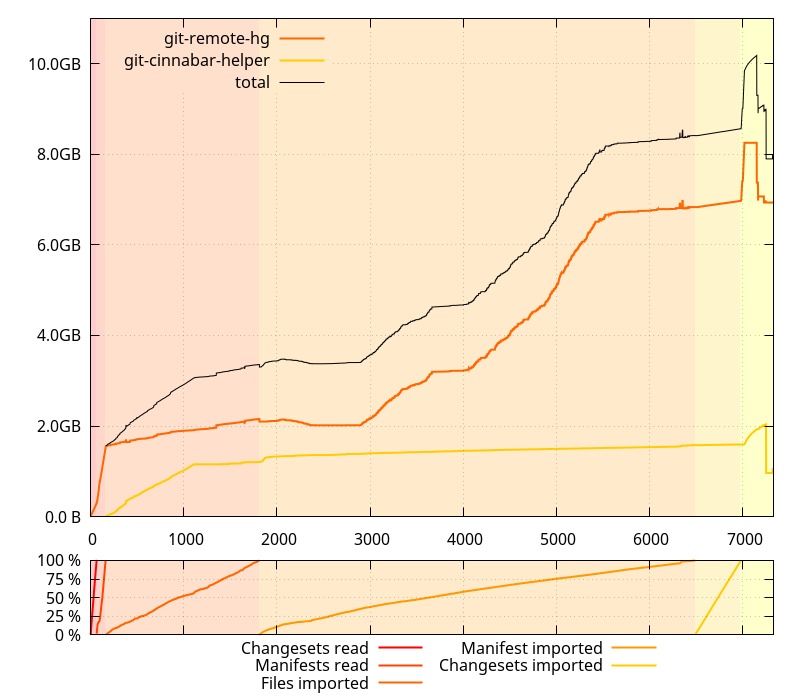 (Note, those memory sizes are RSS, minus shared )
It also was taking an unexpected long time, but then, I hadn t cloned a large repository like mozilla-central from scratch in a while, so I wasn t sure if it was just related to its recent growth in size or otherwise. So I collected data on 0.4.0 as well.
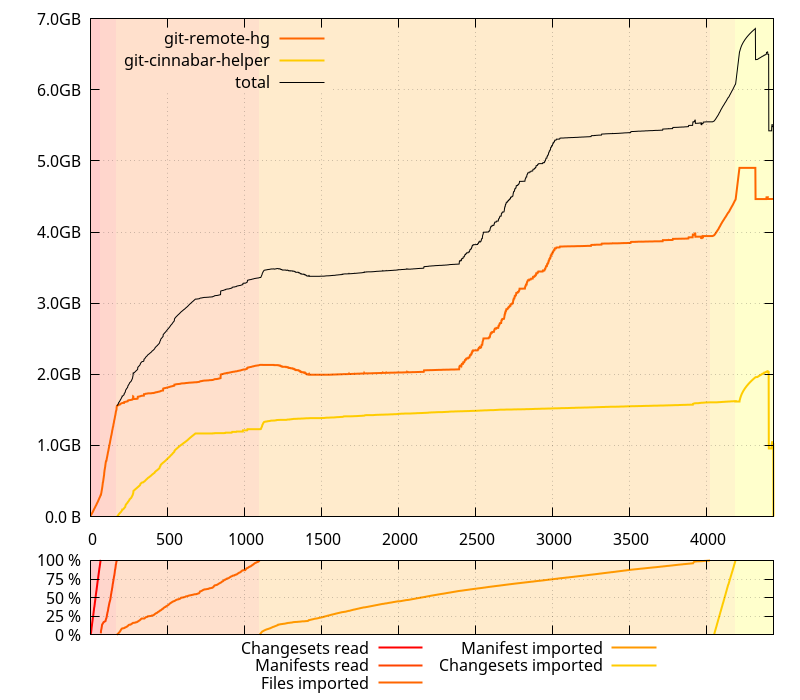 Less time spent, less memory usage ok. There s definitely something wrong on master. But wait a minute, that slope from ~2GB to ~4GB on the git-remote-hg process doesn t actually make any kind of sense. I mean, I d understand it if it were starting and finishing with the Import manifest phase, but it starts in the middle of it, and ends long before it finishes. WTH?
First things first, since RSS can be a variety of things, I checked
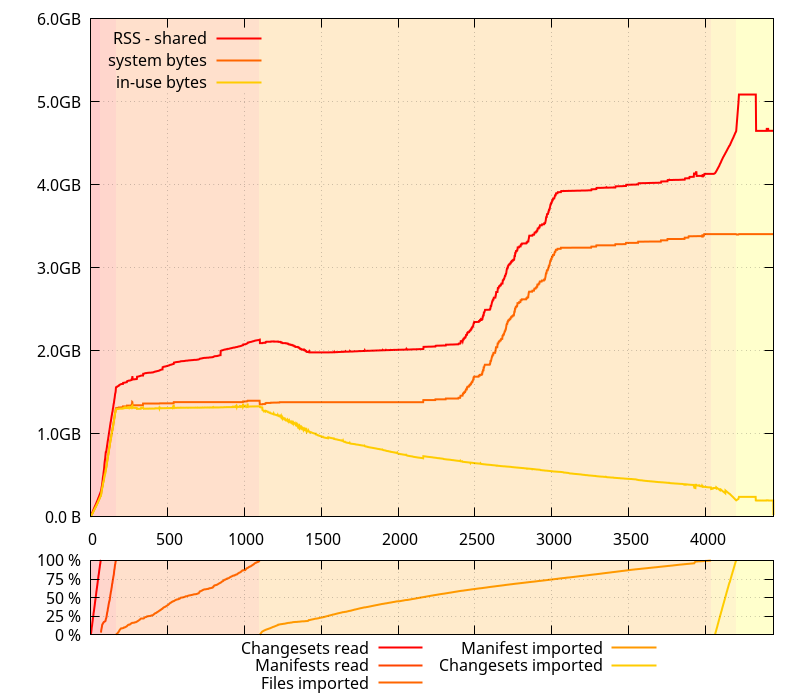 There are two things of note on this data:
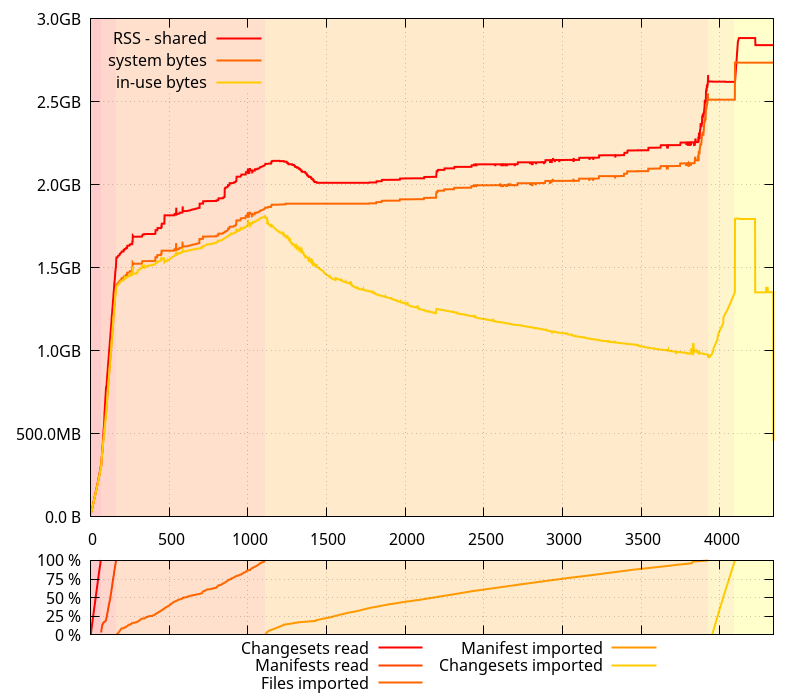 Aha! I thought. That definitely looks much better. Less gap between what glibc says it requested from the system and the RSS size. And, more importantly, no runaway increase of memory usage in the middle of nowhere.
I was preparing myself to write a post about how mixing allocators could have unintended consequences. As a comparison point, I went ahead and ran another test, with the
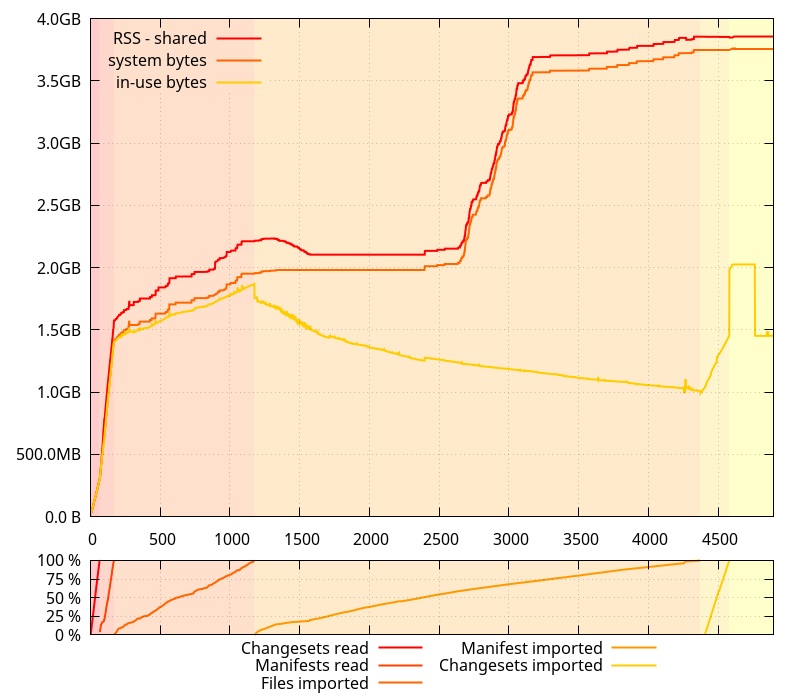 Heh. It turns out glibc was acting up all alone. So much for my (plausible) theory. (I still think mixing allocators can have unintended consequences.)
(Note, however, that the reason why the python allocator exists is valid: without it, the overall clone took almost 10 more minutes)
And since I had been getting all this data with 0.4.0, I gathered new data without the python allocator with the master branch.
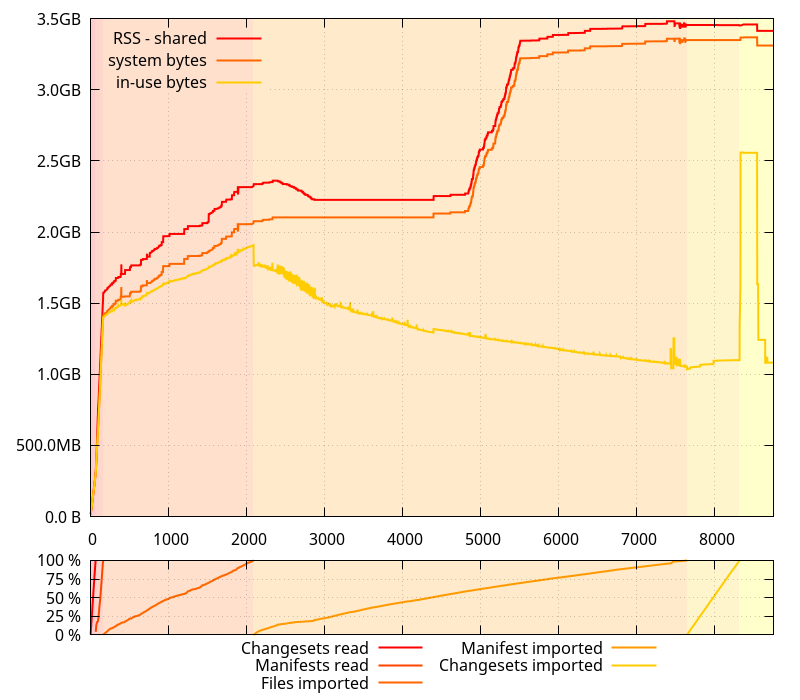 This paints a rather different picture than the original data on that branch, with much less memory use regression than one would think. In fact, there isn t much difference, except for the spike at the end, which got worse, and some of the noise during the Import manifests phase that got bigger, implying larger amounts of temporary memory used. The latter may contribute to the allocation patterns that throw glibc s memory allocator off.
It turns out tracking memory usage in python 2.7 is rather painful, and not all the tools paint a complete picture of it. I hear python 3.x is somewhat better in that regard, and I hope it s true, but at the moment, I m stuck with 2.7. The most reliable tool I ve used here, it turns out, is
 I've written parts of this story in the past, but never in one place
and never in much detail. So why not now?
In 1982 my family moved house, so one morning I went to school and
at lunch-time I had to walk home to a completely different house.
We moved sometime towards the end of the year, and ended up spending
lots of money replacing the windows of the new place. For people
in York I was born in Farrar Street, Y010 3BY, and we moved to a place on Thief Lane, YO1 3HS. Being named as it was I "ironically" stole at least two street-signs and hung them on my bedroom wall. I suspect my parents were disappointed.
Anyway the net result of this relocation, and the extra repairs meant
that my sisters and I had a joint Christmas present that year, a ZX Spectrum 48k.
I tried to find pictures of what we received but unfortunately the web doesn't remember the precise bundle. All together though we received:

 So the CIA

 For people who are visually differently-abled, the above reads
To learn who rules over you, simply find out who you are not allowed to criticize Voltaire wrote this either in late 16th century or early 17th century and those words were as apt in those times, as it is in these turbulent times as well.
Update 05/03 According to @bla these words are attributable to a neo-nazi and apparently a child abuser. While I don t know the context in which it was shared, it describes the environment in which we are perfectly. Please see his comment for a link and better understanding.
The below topic requires a bit of maturity, so if you are easily offended, feel free not to read further.
While this week-end I was supposed to share about the recent Science Day celebrations that we did last week
 Would explore it probably next week.
This week the attempt is to share thoughts which had been simmering at the back of my mind for more than 2 weeks or more and whose answers are not clear to me.
My buttons were pressed when Martin f. Kraft
 From the little sharings and interactions I have been part of, I find people take offence at the most innocuous things. For instance, one of the easy routes of not offending anyone is to use self-deprecating humour (or so I thought) either of my race, caste, class or even my issues with weight and each of the above would offend somebody. Charlie Chaplin didn t have those problems. If somebody is from my caste, I m portraying the caste in a certain light, a certain slant. If I m talking about weight issues, then anybody who is like me (fat) feels that the world is laughing at them rather than at me or they will be discriminated against. While I find the last point a bit valid, it leaves with me no tools and no humour. I neither have the observational powers or the skills that


 The first step is to download a Replicant 6.0 image, currently they are available from
 Welcome to gambaru.de. Here is my monthly report that covers what I have been doing for Debian. If you re interested in Java, Games and LTS topics, this might be interesting for you.
We have reached the end of Stretch s development cycle, a phase called

 The Internet saw Github's new TOS yesterday and collectively shrugged.
That's weird..
I don't have any lawyers, but the way Github's new TOS is written, I feel
I'd need to consult with lawyers to understand how it might affect the
license of my software if I hosted it on Github.
And the license of my software is important to me, because it is the legal
framework within which my software lives or dies. If I didn't care about my
software, I'd be able to shrug this off, but since I do it seems very
important indeed, and not worth taking risks with.
If I were looking over the TOS with my lawyers, I'd ask these questions...
 I woke this morning to
 Debian LTS
February marked the 22nd month I contributed to
