Search Results: "gt"

12 January 2023

Jonathan McDowell: Building a read-only Debian root setup: Part 1

I mentioned in the post about upgrading my home internet that part of the work I did was creating a read-only Debian root with a squashfs image. This post covers the details of how I boot with that image; a later post will cover how I build the squashfs image. First, David Reader kindly pointed me at his rodebian setup, which was helpful in making me think about the whole problem but ultimately not the direction I went. Primarily because on the old router (an RB3011) I am space constrained, with only 120M of usable flash, and so ideally I wanted as much as possible of the system in a well compressed filesystem. squashfs seemed like the best option for that, and ultimately I ended up with a 39M image. I ve then used overlayfs to mount a tmpfs, so I get what looks like a writeable system without having to do too many tweaks to the actual install. On the plus side I can then see exactly what is getting written where and decide whether I need to update something in the squashfs. I don t boot with an initrd - for initial testing I booted directly off a USB stick. I ve actually ended up continuing to do this in production, because I ve had no pressing reason to move it all to booting off internal flash (I ve ended up with a Sandisk SDCZ430-032G-G46 which is tiny). However nothing I m going to describe is dependent on that - this would work perfectly well for a initial UBIFS rootfs on internal NAND. So the basic overview is I boot off a minimal rootfs, mount a squashfs, create an appropriate tmpfs, mount an overlayfs that combines the two, then pivotroot into the overlayfs and exec its init so it becomes the rootfs. For the minimal rootfs I started with busybox, in particular I used the armhf busybox-static package from Debian. My RB5009 is an ARM64, but I wanted to be able to test on the RB3011 as well, which is ARMv7. Picking an armhf binary for the minimal rootfs lets me use the same image for both. Using the static build helps reduce the number of pieces involved in putting it all together. The busybox binary goes in /bin. I was able to cheat and chroot into the empty rootfs and call busybox --install -s to create symlinks for all the tools it provides, but I could have done this manually. There s only a handful that are actually needed, but it s amazing how much is crammed into a 1.2M binary. /sbin/init is a shell script:
Contents
#!/bin/ash
# Make sure we have a sane date
if [ -e /data/saved-date ]; then
        CURRENT_DATE=$(date -Iseconds)
        if [ "$ CURRENT_DATE:0:4 " -lt "2022" -o \
                        "$ CURRENT_DATE:0:4 " -gt "2030" ]; then
                echo Setting initial date
                date -s "$(cat /data/saved-date)"
        fi
fi
# Work out what platform we're on
ARCH=$(uname -m)
if [ "$ ARCH " == "aarch64" ]; then
        ARCH=arm64
else
        ARCH=armhf
fi
# Mount a tmpfs to store the changes
mount -t tmpfs root-rw /mnt/overlay/rw
# Make the directories we need in the tmpfs
mkdir /mnt/overlay/rw/upper
mkdir /mnt/overlay/rw/work
# Mount the squashfs and build an overlay root filesystem of it + the tmpfs
mount -t squashfs -o loop /data/router.$ ARCH .squashfs /mnt/overlay/lower
mount -t overlay \
        -o lowerdir=/mnt/overlay/lower,upperdir=/mnt/overlay/rw/upper,workdir=/mnt/overlay/rw/work \
        overlayfs-root /mnt/root
# Build the directories we need within the new root
mkdir /mnt/root/mnt/flash
mkdir /mnt/root/mnt/overlay
mkdir /mnt/root/mnt/overlay/lower
mkdir /mnt/root/mnt/overlay/rw
# Copy any stored state
if [ -e /data/state.$ ARCH .tar ]; then
        echo Restoring stored state
        cd /mnt/root
        tar xf /data/state.$ ARCH .tar
fi
cd /mnt/root
pivot_root . mnt/flash
echo Switching into root filesystem
exec chroot . sh -c "$(cat <<END
mount --move /mnt/flash/mnt/overlay/lower /mnt/overlay/lower
mount --move /mnt/flash/mnt/overlay/rw /mnt/overlay/rw
exec /sbin/init
END
)"
Most of what the script is doing is sorting out the squashfs + tmpfs backed overlayfs that becomes the full root filesystems, but there are a few other bits to note. First, we pick up a saved date from /data/saved-date - the router has no RTC and while it ll sort itself out with NTP once it gets networking up it s useful to make sure we don t end up comically far in the past or future. Second, the script looks at what architecture we re running and picks up an appropriate squashfs image from /data based on that. This let me use the same USB stick for testing on both the RB3011 and the RB5011. Finally we allow for a /data/state.$ ARCH .tar file to let us pick up changes to the rootfs at boot time - this prevents having to rebuild the squashfs image every time there s a persistent change. The other piece that doesn t show up in the script is that the kernel and its modules are all installed into this initial rootfs (and then symlinked from the squashfs). This lets me build a mostly modular kernel, as long as all the necessary drivers to mount the USB stick are built in. Once the system is fully booted the initial rootfs is available at /mnt/flash, by default mounted read-only (to avoid inadvertent writes), but able to be remounted to update the squashfs image, install a new kernel, or update the state tarball. /mnt/overlay/rw/upper/ is where updates to the overlayfs are written, which provides an easy way to see what files are changing, initially to determine what might need tweaked in the squashfs creation process and subsequently to be able to see what needs updated in the state tarball.

Dirk Eddelbuettel: linl 0.0.5 on CRAN: Extended Background Support

A new release of our linl package for writing LaTeX letters with (R)markdown is now on CRAN. linl makes it easy to write letters in markdown, with some extra bells and whistles thanks to some cleverness chiefly by Aaron. This version add extended header and footer placement support thanks to an included copy of wallpaper.sty as added in a nice PR by I aki. As the previous release was well over three years ago, we also enhanced continuous integration in the process. The repository README.md shows some screenshots of input and output files. The NEWS entry follows:

Changes in linl version 0.0.5 (2023-01-11)
  • Several updates to continuous integration and testing
  • Enhanced placment functionality for images in header and footer via wallpaper.sty and new x and y offset variable (I aki Ucar in #30)

Courtesy of CRANberries, there is a comparison to the previous release. More information is on the linl page. For questions or comments use the issue tracker off the GitHub repo. If you like this or other open-source work I do, you can now sponsor me at GitHub.

This post by Dirk Eddelbuettel originated on his Thinking inside the box blog. Please report excessive re-aggregation in third-party for-profit settings.

11 January 2023

Dirk Eddelbuettel: qlcal 0.0.4 on CRAN: Extended and Updated

The fourth release of the still new-ish qlcal package arrivied at CRAN just now. qlcal is based on the calendaring subset of QuantLib. It is provided (for the R package) as a set of included files, so the package is self-contained and does not depend on an external QuantLib library (which can be demanding to build). qlcal covers over sixty country / market calendars and can compute holiday lists, its complement (i.e. business day lists) and much more. This release generalizes the advanceDate() function (similar to what advanceUnits() already had), and updates several calendars along with the upcoming QuantLib 1.29 release. This includes updates for the UK and Australia related to changes in the monarchy, an update for South Africa and the additional of 2023 holidays for China.

Changes in version 0.0.4 (2023-01-11)
  • The advanceDate function can now selects a business day convention, a time unit and an end-of-month convention
  • Calendars routines for Australia, China, South Africa, UK, US have been updated to current versions from QuantLib 1.29.

Courtesy of my CRANberries, there is a diffstat report for this release. See the project page and package documentation for more details, and more examples. If you like this or other open-source work I do, you can now sponsor me at GitHub.

This post by Dirk Eddelbuettel originated on his Thinking inside the box blog. Please report excessive re-aggregation in third-party for-profit settings.

Junichi Uekawa: Reading through intrusive-collections.

Reading through intrusive-collections. My eyes are not quite used to reading macro packages and they don't quite make sense to me yet. Error messages look strange too.

10 January 2023

Daniel Lange: Happy tenth birthday, dear Thunar bug

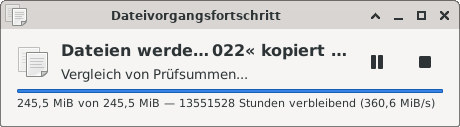
Thunar, the Xfce4 file manager, has a bug that it underflows the time remaining for a file copy since ten years now (bugzilla, gitlab). Happy birthday!

Dirk Eddelbuettel: RcppTOML 0.2.0: TOML 1.0.0 rewrite with toml++

A few years since the last release in late 2020, the RcppTOML package is now back with a new and shiny CRAN release 0.2.0. It is now based on the wonderful toml++ C++17 library by Mark Gillard and gets us (at long last!) full TOML v1.0.0 compliance for use with R. TOML is a file format that is most suitable for configurations, as it is meant to be edited by humans but read by computers. It emphasizes strong readability for humans while at the same time supporting strong typing as well as immediate and clear error reports. On small typos you get parse errors, rather than silently corrupted garbage. Much preferable to any and all of XML, JSON or YAML though sadly these may be too ubiquitous now. TOML is frequently being used with the projects such as the Hugo static blog compiler, or the Cargo system of Crates (aka packages ) for the Rust language. This package is a rewrite of the internals interfacing the library, and updates the package to using toml++ and C++17. The R interface is unchanged, and a full run of reverse dependencies passed. This involved finding one sole test failure which turned to have been driven by a non-conforming TOML input file which Jianfeng Li kindly fixed at the source making his (extensive) set of tests in package configr pass too. The actual rewrite was mostly done in a one-off repo RcppTomlPlusPlus which can now be considered frozen. The short summary of changes follows.

Changes in version 0.2.0 (2023-01-10)
  • Rewritten in C++17 using toml++ for TOML v1.0.0 compliance
  • Unchanged interface from R, unchanged (and expanded tests)
  • Several small continuous integration upgrades since last release

Courtesy of my CRANberries, there is a diffstat report for this release. More information is on the RcppTOML page page. Please use the GitHub issue tracker for issues and bugreports. If you like this or other open-source work I do, you can sponsor me at GitHub.

This post by Dirk Eddelbuettel originated on his Thinking inside the box blog. Please report excessive re-aggregation in third-party for-profit settings.

Matthew Garrett: Integrating Linux with Okta Device Trust

I've written about bearer tokens and how much pain they cause me before, but sadly wishing for a better world doesn't make it happen so I'm making do with what's available. Okta has a feature called Device Trust which allows to you configure access control policies that prevent people obtaining tokens unless they're using a trusted device. This doesn't actually bind the tokens to the hardware in any way, so if a device is compromised or if a user is untrustworthy this doesn't prevent the token ending up on an unmonitored system with no security policies. But it's an incremental improvement, other than the fact that for desktop it's only supported on Windows and MacOS, which really doesn't line up well with my interests.

Obviously there's nothing fundamentally magic about these platforms, so it seemed fairly likely that it would be possible to make this work elsewhere. I spent a while staring at the implementation using Charles Proxy and the Chrome developer tools network tab and had worked out a lot, and then Okta published a paper describing a lot of what I'd just laboriously figured out. But it did also help clear up some points of confusion and clarified some design choices. I'm not going to give a full description of the details (with luck there'll be code shared for that before too long), but here's an outline of how all of this works. Also, to be clear, I'm only going to talk about the desktop support here - mobile is a bunch of related but distinct things that I haven't looked at in detail yet.

Okta's Device Trust (as officially supported) relies on Okta Verify, a local agent. When initially installed, Verify authenticates as the user, obtains a token with a scope that allows it to manage devices, and then registers the user's computer as an additional MFA factor. This involves it generating a JWT that embeds a number of custom claims about the device and its state, including things like the serial number. This JWT is signed with a locally generated (and hardware-backed, using a TPM or Secure Enclave) key, which allows Okta to determine that any future updates from a device claiming the same identity are genuinely from the same device (you could construct an update with a spoofed serial number, but you can't copy the key out of a TPM so you can't sign it appropriately). This is sufficient to get a device registered with Okta, at which point it can be used with Fastpass, Okta's hardware-backed MFA mechanism.

As outlined in the aforementioned deep dive paper, Fastpass is implemented via multiple mechanisms. I'm going to focus on the loopback one, since it's the one that has the strongest security properties. In this mode, Verify listens on one of a list of 10 or so ports on localhost. When you hit the Okta signin widget, choosing Fastpass triggers the widget into hitting each of these ports in turn until it finds one that speaks Fastpass and then submits a challenge to it (along with the URL that's making the request). Verify then constructs a response that includes the challenge and signs it with the hardware-backed key, along with information about whether this was done automatically or whether it included forcing the user to prove their presence. Verify then submits this back to Okta, and if that checks out Okta completes the authentication.

Doing this via loopback from the browser has a bunch of nice properties, primarily around the browser providing information about which site triggered the request. This means the Verify agent can make a decision about whether to submit something there (ie, if a fake login widget requests your creds, the agent will ignore it), and also allows the issued token to be cross-checked against the site that requested it (eg, if g1thub.com requests a token that's valid for github.com, that's a red flag). It's not quite at the same level as a hardware WebAuthn token, but it has many of the anti-phishing properties.

But none of this actually validates the device identity! The entire registration process is up to the client, and clients are in a position to lie. Someone could simply reimplement Verify to lie about, say, a device serial number when registering, and there'd be no proof to the contrary. Thankfully there's another level to this to provide stronger assurances. Okta allows you to provide a CA root[1]. When Okta issues a Fastpass challenge to a device the challenge includes a list of the trusted CAs. If a client has a certificate that chains back to that, it can embed an additional JWT in the auth JWT, this one containing the certificate and signed with the certificate's private key. This binds the CA-issued identity to the Fastpass validation, and causes the device to start appearing as "Managed" in the Okta device management UI. At that point you can configure policy to restrict various apps to managed devices, ensuring that users are only able to get tokens if they're using a device you've previously issued a certificate to.

I've managed to get Linux tooling working with this, though there's still a few drawbacks. The main issue is that the API only allows you to register devices that declare themselves as Windows or MacOS, followed by the login system sniffing browser user agent and only offering Fastpass if you're on one of the officially supported platforms. This can be worked around with an extension that spoofs user agent specifically on the login page, but that's still going to result in devices being logged as a non-Linux OS which makes interpreting the logs more difficult. There's also no ability to choose which bits of device state you log: there's a couple of existing integrations, and otherwise a fixed set of parameters that are reported. It'd be lovely to be able to log arbitrary material and make policy decisions based on that.

This also doesn't help with ChromeOS. There's no real way to automatically launch something that's bound to localhost (you could probably make this work using Crostini but there's no way to launch a Crostini app at login), and access to hardware-backed keys is kind of a complicated topic in ChromeOS for privacy reasons. I haven't tried this yet, but I think using an enterprise force-installed extension and the chrome.enterprise.platformKeys API to obtain a device identity cert and then intercepting requests to the appropriate port range on localhost ought to be enough to do that? But I've literally never written any Javascript so I don't know. Okta supports falling back from the loopback protocol to calling a custom URI scheme, but once you allow that you're also losing a bunch of the phishing protection, so I'd prefer not to take that approach.

Like I said, none of this prevents exfiltration of bearer tokens once they've been issued, and there's still a lot of ecosystem work to do there. But ensuring that tokens can't be issued to unmanaged machines in the first place is still a step forwards, and with luck we'll be able to make use of this on Linux systems without relying on proprietary client-side tooling.

(Time taken to code this implementation: about two days, and under 1000 lines of new code. Time taken to figure out what the fuck to write: rather a lot longer)

[1] There's also support for having Okta issue certificates, but then you're kind of back to the "How do I know this is my device" situation

comment count unavailable comments

9 January 2023

Junichi Uekawa: Uploaded Debian packages, since a long time.

Uploaded Debian packages, since a long time. enumn and remain are rust packages, and needed for crosvm. Working slowly through the dependency chain.

Russ Allbery: Review: Black Stars

Review: Black Stars, edited by Nisi Shawl & Latoya Peterson
Publisher: Amazon Original Stories
Copyright: August 2021
ISBN: 1-5420-3272-5
ISBN: 1-5420-3270-9
ISBN: 1-5420-3271-7
ISBN: 1-5420-3273-3
ISBN: 1-5420-3268-7
ISBN: 1-5420-3269-5
Format: Kindle
Pages: 168
This is a bit of an odd duck from a metadata standpoint. Black Stars is a series of short stories (maybe one creeps into novelette range) published by Amazon for Kindle and audiobook. Each one can be purchased separately (or "borrowed" with Amazon Prime), and they have separate ISBNs, so my normal practice would be to give each its own review. They're much too short for that, though, so I'm reviewing the whole group as an anthology. The cover in the sidebar is for the first story of the series. The other covers have similar designs. I think the one for "We Travel the Spaceways" was my favorite. Each story is by a Black author and most of them are science fiction. ("The Black Pages" is fantasy.) I would classify them as afrofuturism, although I don't have a firm grasp on its definition. This anthology included several authors I've been meaning to read and was conveniently available, so I gave it a try, even though I'm not much of a short fiction reader. That will be apparent in the forthcoming grumbling. "The Visit" by Chimamanda Ngozi Adichie: This is a me problem rather than a story problem, and I suspect it's partly because the story is not for me, but I am very done with gender-swapped sexism. I get the point of telling stories of our own society with enough alienation to force the reader to approach them from a fresh angle, but the problem with a story where women are sexist and condescending to men is that you're still reading a story of condescending sexism. That's particularly true when the analogies to our world are more obvious than the internal logic of the story world, as they are here. "The Visit" tells the story of a reunion between two college friends, one of whom is now a stay-at-home husband and the other of whom has stayed single. There's not much story beyond that, just obvious political metaphor (the Male Masturbatory Act to ensure no potential child is wasted, blatant harrassment of the two men by female cops) and depressing character studies. Everyone in this story is an ass except maybe Obinna's single friend Eze, which means there's nothing to focus on except the sexism. The writing is competent and effective, but I didn't care in the slightest about any of these people or anything that was happening in their awful, dreary world. (4) "The Black Pages" by Nnedi Okorafor: Issaka has been living in Chicago, but the story opens with him returning to Timbouctou where he grew up. His parents know he's coming for a visit, but he's a week early as a surprise. Unfortunately, he's arriving at the same time as an al-Qaeda attack on the library. They set it on fire, but most of the books they were trying to destroy were already saved by his father and are now in Issaka's childhood bedroom. Unbeknownst to al-Qaeda, one of the books they did burn was imprisoning a djinn. A djinn who is now free and resident in Issaka's iPad. This was a great first chapter of a novel. The combination of a modern setting and a djinn trapped in books with an instant affinity with technology was great. Issaka is an interesting character who is well-placed to introduce the reader to the setting, and I was fully invested in Issaka and Faro negotiating their relationship. Then the story just stopped. I didn't understand the ending, which was probably me being dim, but the real problem was that I was not at all ready for an ending. I would read the novel this was setting up, though. (6) "2043... (A Merman I Should Turn to Be)" by Nisi Shawl: This is another story that felt like the setup for a novel, although not as good of a novel. The premise is that the United States has developed biological engineering that allows humans to live underwater for extended periods (although they still have to surface occasionally for air, like whales). The use to which that technology is being put is a rerun of Liberia with less colonialism: Blacks are given the option to be modified into merpeople and live under the sea off the US coast as a solution. White supremacists are not happy, of course, and try to stop them from claiming their patch of ocean floor. This was fine, as far as it went, but I wasn't fond of the lead character and there wasn't much plot. There was some sort of semi-secret plan that the protagonist stumbles across and that never made much sense to me. The best parts of the story were the underwater setting and the semi-realistic details about the merman transformation. (6) "These Alien Skies" by C.T. Rwizi: In the far future, humans are expanding across the galaxy via automatically-constructed wormhole gates. Msizi's job is to be the first ship through a new wormhole to survey the system previously reached only by the AI construction ship. The wormhole is not supposed to explode shortly after he goes through, leaving him stranded in an alien system with only his companion Tariro, who is not who she seems to be. This was a classic SF plot, but I still hadn't guessed where it was going, or the relevance of some undiscussed bits of Tariro's past. Once the plot happens, it's a bit predictable, but I enjoyed it despite the depressed protagonist. (6) "Clap Back" by Nalo Hopkinson: Apart from "The Visit," this was the most directly political of the stories. It opens with Wenda, a protest artist, whose final class project uses nanotech to put racist tchotchkes to an unexpected use. This is intercut with news clippings about a (white and much richer) designer who has found a way to embed memories into clothing and is using this to spread quotes of rather pointed "forgiveness" from a Malawi quilt. This was one of the few entries in this anthology that fit the short story shape for me. Wenda's project and Burri's clothing interact fifty years later in a surprising way. This was the second-best story of the group. (7) "We Travel the Spaceways" by Victor LaValle: Grimace (so named because he wears a huge purple coat) is a homeless man in New York who talks to cans. Most of his life is about finding food, but the cans occasionally give him missions and provide minor assistance. Apart from his cans, he's very much alone, but when he comforts a woman in McDonalds (after getting caught thinking about stealing her cheeseburger), he hopes he may have found a partner. If, that is, she still likes him when she discovers the nature of the cans' missions. This was the best-written story of the six. Grimace is the first-person narrator, and LaValle's handling of characterization and voice is excellent. Grimace makes perfect sense from inside his head, but the reader can also see how unsettling he is to those around him. This could have been a disturbing, realistic story about a schitzophrenic man. As one may have guessed from the theme of the anthology, that's not what it is. I admired the craft of this story, but I found Grimace's missions too horrific to truly like it. There is an in-story justification for them; suffice it to say that I didn't find it believable. An expansion with considerably more detail and history might have bridged that gap, but alas, short fiction. (6) Rating: 6 out of 10

Gunnar Wolf: Back to Xochicalco

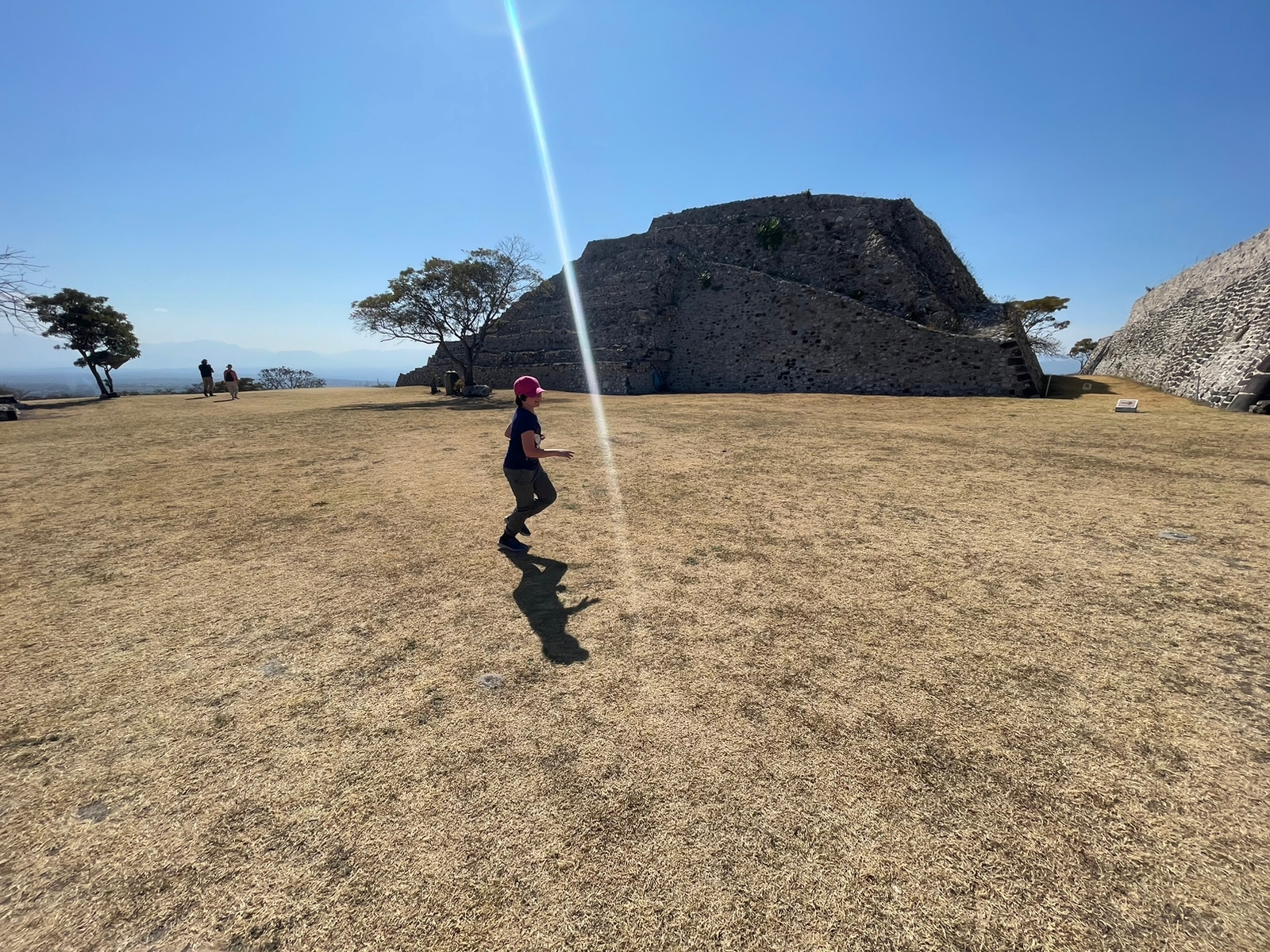
In Mexico, we have the great luck to live among vestiges of long-gone cultures, some that were conquered and in some way got adapted and survived into our modern, mostly-West-Europan-derived society, and some that thrived but disappeared many more centuries ago. And although not everybody feels the same way, in my family we have always enjoyed visiting archaeological sites when I was a child and today. Some of the regulars that follow this blog (or its syndicators) will remember Xochicalco, as it was the destination we chose for the daytrip back in the day, in DebConf6 (May 2006). This weekend, my mother suggested us to go there, as being Winter, the weather is quite pleasant we were at about 25 C, and by the hottest months of the year it can easily reach 10 more; the place lacks shadows, like most archaeological sites, and it does get quite tiring nevertheless! Xochicalco is quite unique among our archaeological sites, as it was built as a conference city: people came from cultures spanning all of Mesoamerica to debate and homogeneize the calendars used in the region. The first photo I shared here is by the Quetzalc atl temple, where each of the four sides shows people from different cultures (the styles in which they are depicted follow their local self-representations), encodes equivalent dates in the different calendaric systems, and are located along representationsof the God of knowledge, the feathered serpent, Quetzalc atl. It was a very nice day out. And, of course, it brought back memories of my favorite conference visiting the site of a very important conference

8 January 2023

Dirk Eddelbuettel: spdl 0.0.4 on CRAN: Adding Stopwatch

Another quick update to the still new-ish package spdl is now om CRAN, and in Debian. The key focus of spdl is a offering the same interface from both R and C++ for logging by relying on spdlog via my RcppSpdlog package. This release add support for the stopwatch() facility. One can now instantiate such an object, and referencing it in a log message shows the elapsed time. No more, no less, and it works the same way in R and C++. The short NEWS entry follows.

Changes in spdl version 0.0.4 (2023-01-08)
  • Add support for stopwatch

Courtesy of my CRANberries, there is also a diffstat report. More detailed information is on the spdl page. If you like this or other open-source work I do, you can sponsor me at GitHub.

This post by Dirk Eddelbuettel originated on his Thinking inside the box blog. Please report excessive re-aggregation in third-party for-profit settings.

Petter Reinholdtsen: LinuxCNC MQTT publisher component

I watched a 2015 video from Andreas Schiffler the other day, where he set up LinuxCNC to send status information to the MQTT broker IBM Bluemix. As I also use MQTT for graphing, it occured to me that a generic MQTT LinuxCNC component would be useful and I set out to implement it. Today I got the first draft limping along and submitted as a patch to the LinuxCNC project. The simple part was setting up the MQTT publishing code in Python. I already have set up other parts submitting data to my Mosquito MQTT broker, so I could reuse that code. Writing a LinuxCNC component in Python as new to me, but using existing examples in the code repository and the extensive documentation, this was fairly straight forward. The hardest part was creating a automated test for the component to ensure it was working. Testing it in a simulated LinuxCNC machine proved very useful, as I discovered features I needed that I had not thought of yet, and adjusted the code quite a bit to make it easier to test without a operational MQTT broker available. The draft is ready and working, but I am unsure which LinuxCNC HAL pins I should collect and publish by default (in other words, the default set of information pieces published), and how to get the machine name from the LinuxCNC INI file. The latter is a minor detail, but I expect it would be useful in a setup with several machines available. I am hoping for feedback from the experienced LinuxCNC developers and users, to make the component even better before it can go into the mainland LinuxCNC code base. Since I started on the MQTT component, I came across another video from Kent VanderVelden where he combine LinuxCNC with a set of screen glasses controlled by a Raspberry Pi, and it occured to me that it would be useful for such use cases if LinuxCNC also provided a REST API for querying its status. I hope to start on such component once the MQTT component is working well. As usual, if you use Bitcoin and want to show your support of my activities, please send Bitcoin donations to my address 15oWEoG9dUPovwmUL9KWAnYRtNJEkP1u1b.

Anuradha Weeraman: Parallelizing and running distributed builds with distcc

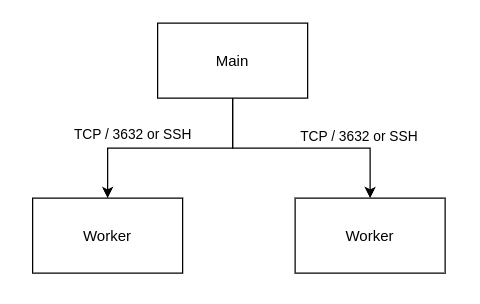
Parallelizing the compilation of a large codebase is a breeze with distcc, which allows you to spread the load across multiple nodes and speed up the compilation time.Here s a sample network topology for a distributed build:
Install distcc on the three Debian/Ubuntu-based nodes:
# apt install distcc
Edit /etc/default/distcc and set:
STARTDISTCC="true"

# Customize for your environment
ALLOWEDNETS="192.168.2.0/24"

# Specify your network device
LISTENER="192.168.2.146"
Additionally, the JOBS and NICE variables can be tweaked to suit the compute power that you have available.Start distcc:
# systemctl start distcc
Do the same all the nodes, and if you have a firewall enabled with ufw, you will need to open up the port 3632 to the master node.
# ufw allow 3632/tcp
Additionally, if you d like to use ssh over untrusted networks so code and communication with the worker nodes happen over a secure channel, ensure that SSH is running and is opened up to the master node in the same manner as above with the key of the master node in ~/.ssh/authorized_keys of the worker nodes. Opening port 3632 in this manner is a security hole, so take precautions over untrusted networks.Back in the master node, setup a DISTCC_HOSTS environment variable that lists the worker nodes, including the master node. Note the order of the hosts, as it is important. The first host will be more heavily used, and distcc has no way of knowing the capacity and capability of the hosts, so specify the most powerful host first.
export DISTCC_HOSTS='localhost 192.168.2.107 192.168.2.91'
At this point, you re ready to compile.Go to your codebase, in this case we use the Linux kernel source code for the purpose of example.
$ make tinyconfig
$ time make -j$(nproc) CC=distcc bzImage
On another terminal, you can monitor the status of the distributed compilation with distmoncc-text or tools such as top or bpytop.Network throughput and latency will be a big factor in how much distcc will help speed up your build process. Using ssh may additionally introduce overhead, so play with the variables to see how much distcc can help speed up or optimize the build for your specific scenario. You may want to additionally consider ccache to speed up the build process.There are some aspects of the build process that are not effectively parallizable in this manner, such as the final linking step of the executable, for which you will not see any performance improvement with distcc.Give distcc a spin, and put any spare compute you have lying around in your home lab to good use.

Scarlett Gately Moore: Debian: Coming soon! MycroftAI! KDE snaps update.

I am excited to announce that I have joined the MycroftAI team in Salsa and working hard to get this packaged up and released in Debian. You can track our progress here: https://salsa.debian.org/mycroftai-team Snaps are on temporary hold while we get everything switched over to core22. This includes the neon-extension, that requires merges and store requests to be honored. Hopefully folks are returning from holidays and things will start moving again. Thank you for your patience! I am still seeking work if you or anyone you know is willing to give me a chance to shine, you won t regret it, life has leveled out and I am ready to make great things happen! I admit the interviewing process is much more difficult than in years past, any advice here is also appreciated. Thank you for stopping by.

Dirk Eddelbuettel: RVowpalWabbit 0.0.18: Maintenance

A new maintenance release, now at version 0.0.18, of the RVowpalWabbit package arrived on CRAN. It improves several sprintf() calls by changing them to snprintf() (though there is a remaining one creeping in from a linked-to library). As noted before, there is a newer package rvw based on the excellent GSoC 2018 and beyond work by Ivan Pavlov (mentored by James and myself) so if you are into VowpalWabbit from R go check it out. CRANberries provides a summary of changes to the previous version. More information is on the RVowpalWabbit page. Issues and bugreports should go to the GitHub issue tracker. If you like this or other open-source work I do, you can now sponsor me at GitHub.

This post by Dirk Eddelbuettel originated on his Thinking inside the box blog. Please report excessive re-aggregation in third-party for-profit settings.

Antoine Beaupr : 20 years blogging

Many folks have woken up to the dangers of commercialization and centralisation of this very fine internet we have around here. For many of us, of course, it's one big "I told you so"... (To fair, I stopped "telling you so" because evangelism is pretty annoying. It's certainly dishonest coming from an atheist, so I preach by example now. I often wonder what works better. But I digress.) Colleagues have been posting about getting back into blogging. This post from gwolf, in particular, reviews his yearly blog output, and that made me wonder how that looked like from my end. The answer, of course, is simple to generate:
anarcat@angela:~$ cd anarc.at
/home/anarcat/wikis/anarc.at
anarcat@angela:anarc.at$ ls blog   grep '^[0-9][0-9][0-9][0-9]'   sed s/-.*//   sort   uniq -c    sort -n -k2
     62 2005
     49 2006
     26 2007
     25 2008
      8 2009
     16 2010
     24 2011
     19 2012
     17 2013
      7 2014
     19 2015
     32 2016
     43 2017
     40 2018
     27 2019
     33 2020
     22 2021
     45 2022
      1 2023
(I thought of drawing this as a sparkline but it looks like Sparklines are kind of dead. https://sparkline.org/ doesn't resolve and the canonical PHP package is gone from Debian. The plugin is broken in ikiwiki anyway...) So it seems like I've been doing this very blog for 18 years, and it's not even my first blog. I actually started in 2003, which makes this year my 20-year blogging anniversary. (And even if that sounds really old, note that I was not actually an early adopter. Jorn Barger having coined the term "weblog" in 1997. Yes, in another millenia.) Reading back some of the headlines in those older posts, I have definitely changed style. I used to write shorter, more random ideas, and more often. I somehow managed to write more than one article per week in 2005! Now, I take more time writing, a habit I picked up while writing for LWN (those articles), which started in 2016. But interestingly, it seems I started producing more articles then: I hit 43 articles per year in 2017, my fourth best year ever. The best years in terms of numbers are the first two years (2005 and 2006, I didn't check the numbers on earlier years), but I doubt they are the best in terms of content. Really, the best writing I have ever did was for LWN. I dare hope I have kept the quality I was encouraged (forced?) to produce, but I know I cannot come anywhere close to what the LWN editors were juicing out of me. You can also see that I immediately dropped to a more normal 27 article in 2019, once I stopped writing for LWN... Back when I started blogging, my writing was definitely more personal. I had less concerns about privacy back then; now, I would never write about my personal life like I did back then (e.g. "I have a cold"). I was also writing mostly in French back then, and it's sad to think that I am rarely writing in my native language here anymore. I guess that brings me an international audience, which is simultaneously challenging, gratifying, and terrifying. But it also means I reach out to people that do not speak English (or French, for that matter) as their first language. For me that is more valuable than catering to my little corner of culture, at least for now, and especially when writing technical topics, which is most of what I do now anyways. Interestingly, I wrote a lot in 2022. People sometimes ask me how I manage to write so much: I don't actually know. I don't have a lot of free time on my hand, and even less than before in the past two years, but somehow I keep feeding this blog. I guess I must have something to say. Can't quite figure out what yet, so maybe I should just keep trying. Or, if you're new to this Internet thing, Bring Back Blogging! Whee! PS: I wish I had time to do a review of my visitors like i did for 2021 but time is missing.

Russ Allbery: Review: Postwar

Review: Postwar, by Tony Judt
Publisher: Penguin Books
Copyright: 2005
ISBN: 1-4406-2476-3
Format: Kindle
Pages: 835
Tony Judt (1948 2010) was a British-American historian and Erich Maria Remarque Professor in European Studies at New York University. Postwar is his magnum opus, a history of Europe from 1945 to 2005. A book described as a history of Europe could be anything from a textbook to a political analysis, so the first useful question to ask is what sort of history. That's a somewhat difficult question to answer. Postwar mentions a great deal of conventional history, including important political movements and changes of government, but despite a stated topic that would suit a survey textbook, it doesn't provide that sort of list of facts and dates. Judt expects the reader to already be familiar with the broad outlines of modern European history. However, Postwar is also not a specialty history and avoids diving too deep into any one area. Trends in art, philosophy, and economics are all mentioned to set a broader context, but still only at the level of a general survey. My best description is that Postwar is a comprehensive social and political history that attempts to focus less on specific events and more on larger trends of thought. Judt grounds his narrative in concrete, factual events, but the emphasis is on how those living in Europe, at each point in history, thought of their society, their politics, and their place in both. Most of the space goes to exploring those nuances of thought and day-to-day life. In the US university context, I'd place this book as an intermediate-level course in modern European history, after the survey course that provides students with a basic framework but before graduate-level specializations in specific topics. If you have not had a solid basic education in European history (and my guess is that most people from the US have not), Judt will provide the necessary signposts, but you should expect to need to look up the signposts you don't recognize. I, as the dubious beneficiary of a US high school history education now many decades in the past, frequently resorted to Wikipedia for additional background. Postwar uses a simple chronological structure in four parts: the immediate post-war years and the beginning of the Cold War (1945 1953), the era of rapidly growing western European prosperity (1953 1971), the years of recession and increased turmoil leading up to the collapse of communism (1971 1989), and the aftermath of the collapse of communism and the rise of the European Union (1989 2005). Each part is divided into four to eight long chapters that trace a particular theme. Judt usually starts with the overview of a theme and then follows the local manifestations of it on a spiral through European countries in whatever order seems appropriate. For the bulk of the book that covers the era of the Cold War, when experiences were drastically different inside or outside the Soviet bloc, he usually separates western and eastern Europe into alternating chapters. Reviewing this sort of book is tricky because so much will depend on how well you already know the topic. My interest in history is strictly amateur and I tend to avoid modern history (usually I find it too depressing), so for me this book was remedial, filling in large knowledge gaps that I ideally shouldn't have had. Postwar was a runner up for the Pulitzer Prize for General Non-Fiction, so I think I'm safe saying you won't go far wrong reading it, but here's the necessary disclaimer that the rest of my reactions may not be useful if you're better versed in modern European history than I was. (This would not be difficult.) That said, I found Postwar invaluable because of its big-picture focus. The events and dates are easy enough to find on the Internet; what was missing for me in understanding Europe was the intent and social structures created by and causing those events. For example, from early in the book:
On one thing, however, all were agreed resisters and politicians alike: "planning". The disasters of the inter-war decades the missed opportunities after 1918, the great depression that followed the stock-market crash of 1929, the waste of unemployment, the inequalities, injustices and inefficiencies of laissez-faire capitalism that had led so many into authoritarian temptation, the brazen indifference of an arrogant ruling elite and the incompetence of an inadequate political class all seemed to be connected by the utter failure to organize society better. If democracy was to work, if it was to recover its appeal, it would have to be planned.
It's one thing to be familiar with the basic economic and political arguments between degrees of free market and planned economies. It's quite another to understand how the appeal of one approach or the discredit of another stems from recent historical experience, and that's what a good history can provide. Judt does not hesitate to draw these sorts of conclusions, and I'm sure some of them are controversial. But while he's opinionated, he's rarely ideological, and he offers no grand explanations. His discussion of the Yugoslav Wars stands out as an example: he mentions various theories of blame (a fraught local ethnic history, the decision by others to not intervene until the situation was truly dire), but largely discards them. Judt's offered explanation is that local politicians saw an opportunity to gain power by inflaming ethnic animosity, and a large portion of the population participated in this process, either passively or eagerly. Other explanations are both unnecessarily complex and too willing to deprive Yugoslavs of agency. I found this refreshingly blunt. When is more complex analysis a way to diffuse responsibility and cling to an ideological fantasy that the right foreign policy would have resolved a problem? A few personal grumblings do creep in, particularly in the chapters on the 1970s (and I think it's not a coincidence that this matches Judt's own young adulthood, a time when one is prone to forming a lot of opinions). There is a brief but stinging criticism of postmodernism in scholarship, which I thought was justified but probably incomplete, and a decidedly grumpy dismissal of punk music, which I thought was less fair. But these are brief asides that don't detract from the overall work. Indeed, they, along with the occasional wry asides ("respecting long-established European practice, no one asked the Poles for their views [on Poland's new frontiers]") add a lot of character. Insofar as this book has a thesis, it's in the implications of the title: Europe only exited the postwar period at the end of the 20th century. Political stability through exhaustion, the overwhelming urgency of economic recovery, and the degree to which the Iron Curtain and the Cold War froze eastern Europe in amber meant that full European recovery from World War II was drawn out and at times suspended. It's only after 1989 and its subsequent upheavals that European politics were able to move beyond postwar concerns. Some of that movement was a reemergence of earlier European politics of nations and ethnic conflict. But, new on the scene, was a sense of identity as Europeans, one that western Europe circled warily and eastern Europe saw as the only realistic path forward.
What binds Europeans together, even when they are deeply critical of some aspect or other of its practical workings, is what it has become conventional to call in disjunctive but revealing contrast with "the American way of life" the "European model of society".
Judt also gave me a new appreciation of how traumatic people find the assignment of fault, and how difficult it is to wrestle with guilt without providing open invitations to political backlash. People will go to great lengths to not feel guilty, and pressing the point runs a substantial risk of creating popular support for ideological movements that are willing to lie to their followers. The book's most memorable treatment of this observation is in the epilogue, which traces popular European attitudes towards the history of the Holocaust through the whole time period. The largest problem with this book is that it is dense and very long. I'm a fairly fast reader, but this was the only book I read through most of my holiday vacation and it still took a full week into the new year to finish it. By the end, I admit I was somewhat exhausted and ready to be finished with European history for a while (although the epilogue is very much worth waiting for). If you, unlike me, can read a book slowly among other things, that may be a good tactic. But despite feeling like this was a slog at times, I'm very glad that I read it. I'm not sure if someone with a firmer grounding in European history would have gotten as much out of it, but I, at least, needed something this comprehensive to wrap my mind around the timeline and fill in some embarrassing gaps. Judt is not the most entertaining writer (although he has his moments), and this is not the sort of popular history that goes out of its way to draw you in, but I found it approachable and clear. If you're looking for a solid survey of modern European history with this type of high-level focus, recommended. Rating: 8 out of 10

Charles Plessy: Could somebody patch Firefox to display Markdown files?

When Firefox receives a file with media type text/markdown, it prompts the user to download it, while other browsers display it as plain text. In the ticket 1319262, it is proposed to display Markdown files by default, but there needs a patch

7 January 2023

Dirk Eddelbuettel: RcppSpdlog 0.0.12 on CRAN: Added Stopwatch

Version 0.0.12 of RcppSpdlog is now on CRAN and in Debian. RcppSpdlog bundles spdlog, a wonderful header-only C++ logging library with all the bells and whistles you would want that was written by Gabi Melman, and also includes fmt by Victor Zverovich. This release adds support for the stopwatch object, a simple container around a std::chrono object. It makes (simple) time measurements of routines and code segments trivially easy. Instantiate a stopwatch object, and formatting it in a logging string displays elapsed time. And given that the whole mojo of RcppSpdlog (and its sibbling package spdl) is to make use easy in both R and C++ we can do this nicely and consistently in both languages. The vignette has an added section with a concrete example. The NEWS entry for this release follows.

Changes in RcppSpdlog version 0.0.12 (2023-01-07)
  • Addeed support for 'stopwatch' object allowing for simple timing (from both C++ and R) via the logging framework.
  • The spdlog logging pattern is documented via a reference.

Courtesy of my CRANberries, there is also a diffstat report. More detailed information is on the RcppSpdlog page, or the package documention site. If you like this or other open-source work I do, you can sponsor me at GitHub.

This post by Dirk Eddelbuettel originated on his Thinking inside the box blog. Please report excessive re-aggregation in third-party for-profit settings.

Reproducible Builds: Reproducible Builds in December 2022

Welcome to the December 2022 report from the Reproducible Builds project.
We are extremely pleased to announce that the dates for the Reproducible Builds Summit in 2023 have been announced in 2022 already: We plan to spend three days continuing to the grow of the Reproducible Builds effort. As in previous events, the exact content of the meeting will be shaped by the participants. And, as mentioned in Holger Levsen s post to our mailing list, the dates have been booked and confirmed with the venue, so if you are considering attending, please reserve these dates in your calendar today.
R my Gr nblatt, an associate professor in the T l com Sud-Paris engineering school wrote up his pain points of using Nix and NixOS. Although some of the points do not touch on reproducible builds, R my touches on problems he has encountered with the different kinds of reproducibility that these distributions appear to promise including configuration files affecting the behaviour of systems, the fragility of upstream sources as well as the conventional idea of binary reproducibility.
Morten Linderud reported that he is quietly optimistic that if Go programming language resolves all of its issues with reproducible builds (tracking issue) then the Go binaries distributed from Google and by Arch Linux may be bit-for-bit identical. It s just a bit early to sorta figure out what roadblocks there are. [But] Go bootstraps itself every build, so in theory I think it should be possible.
On December 15th, Holger Levsen published an in-depth interview he performed with David A. Wheeler on supply-chain security and reproducible builds, but it also touches on the biggest challenges in computing as well. This is part of a larger series of posts featuring the projects, companies and individuals who support the Reproducible Builds project. Other instalments include an article featuring the Civil Infrastructure Platform project and followed this up with a post about the Ford Foundation as well as a recent ones about ARDC, the Google Open Source Security Team (GOSST), Jan Nieuwenhuizen on Bootstrappable Builds, GNU Mes and GNU Guix and Hans-Christoph Steiner of the F-Droid project.
A number of changes were made to the Reproducible Builds website and documentation this month, including FC Stegerman adding an F-Droid/apksigcopier example to our embedded signatures page [ ], Holger Levsen making a large number of changes related to the 2022 summit in Venice as well as 2023 s summit in Hamburg [ ][ ][ ][ ] and Simon Butler updated our publications page [ ][ ].
On our mailing list this month, James Addison asked a question about whether there has been any effort to trace the files used by a build system in order to identify the corresponding build-dependency packages. [ ] In addition, Bernhard M. Wiedemann then posed a thought-provoking question asking How to talk to skeptics? , which was occasioned by a colleague who had published a blog post in May 2021 skeptical of reproducible builds. The thread generated a number of replies.

Android news obfusk (FC Stegerman) performed a thought-provoking review of tools designed to determine the difference between two different .apk files shipped by a number of free-software instant messenger applications. These scripts are often necessary in the Android/APK ecosystem due to these files containing embedded signatures so the conventional bit-for-bit comparison cannot be used. After detailing a litany of issues with these tools, they come to the conclusion that:
It s quite possible these messengers actually have reproducible builds, but the verification scripts they use don t actually allow us to verify whether they do.
This reflects the consensus view within the Reproducible Builds project: pursuing a situation in language or package ecosystems where binaries are bit-for-bit identical (over requiring a bespoke ecosystem-specific tool) is not a luxury demanded by purist engineers, but rather the only practical way to demonstrate reproducibility. obfusk also announced the first release of their own set of tools on our mailing list. Related to this, obfusk also posted to an issue filed against Mastodon regarding the difficulties of creating bit-by-bit identical APKs, especially with respect to copying v2/v3 APK signatures created by different tools; they also reported that some APK ordering differences were not caused by building on macOS after all, but by using Android Studio [ ] and that F-Droid added 16 more apps published with Reproducible Builds in December.

Debian As mentioned in last months report, Vagrant Cascadian has been organising a series of online sprints in order to clear the huge backlog of reproducible builds patches submitted by performing NMUs (Non-Maintainer Uploads). During December, meetings were held on the 1st, 8th, 15th, 22nd and 29th, resulting in a large number of uploads and bugs being addressed: The next sprint is due to take place this coming Tuesday, January 10th at 16:00 UTC.

Upstream patches The Reproducible Builds project attempts to fix as many currently-unreproducible packages as possible. This month, we wrote a large number of such patches, including:

Testing framework The Reproducible Builds project operates a comprehensive testing framework at tests.reproducible-builds.org in order to check packages and other artifacts for reproducibility. In October, the following changes were made by Holger Levsen:
  • The osuosl167 machine is no longer a openqa-worker node anymore. [ ][ ]
  • Detect problems with APT repository signatures [ ] and update a repository signing key [ ].
  • reproducible Debian builtin-pho: improve job output. [ ]
  • Only install the foot-terminfo package on Debian systems. [ ]
In addition, Mattia Rizzolo added support for the version of diffoscope in Debian stretch which doesn t support the --timeout flag. [ ][ ]

diffoscope diffoscope is our in-depth and content-aware diff utility. Not only can it locate and diagnose reproducibility issues, it can provide human-readable diffs from many kinds of binary formats. This month, Chris Lamb made the following changes to diffoscope, including preparing and uploading versions 228, 229 and 230 to Debian:
  • Fix compatibility with file(1) version 5.43, with thanks to Christoph Biedl. [ ]
  • Skip the test_html.py::test_diff test if html2text is not installed. (#1026034)
  • Update copyright years. [ ]
In addition, Jelle van der Waa added support for Berkeley DB version 6. [ ] Orthogonal to this, Holger Levsen bumped the Debian Standards-Version on all of our packages, including diffoscope [ ], strip-nondeterminism [ ], disorderfs [ ] and reprotest [ ].
If you are interested in contributing to the Reproducible Builds project, please visit our Contribute page on our website. You can get in touch with us via:

Next.

Previous.