Search Results: "az"

28 January 2010

Biella Coleman: New Zealand, a photo-round up

kiwiwiwiwiw Kiwis have to be one of the cutest birds of all time. A bit chubby and clumsy looking, they are (to me, at least), walking, breathing icon of furry cuteness. Truth be told, I did not see one live in action during my recent trip to New Zealand, but I did see a Weka bird which is pretty similar. (Micah and I just consulted the Internets and agreed that we did in fact see cherubic Kiwi not a Weka. In fact, Micah almost ran one over on the west coast of the southern island but his quick reflexes born from years of saving servers while typing saved the bird. So as you can tell by now I finally got to go to New Zealand for a few weeks, even able to travel the south island before attending THE Linux conference of the region, LCA where I gave a talk (video to be posted when available). I jumped at the opportunity and was thrilled to find out that I could actually spend some time traveling around before the intense week long conference. So on January 5th I headed down with Micah to what I have found out is one of the windiest cities on earth ( Windy Wellington ) for a few days before heading to the south island to do a loop on the northern half of the island. I wanted to conquer the mountains made famous by a certain set of movies, but last semester was all about sitting in front of the computer, a sort of agonizing life of the mind, which did not prepare me physically for mountain trekking or as it call it there, tramping. So we decided to stick close to the coast (with one transalpine train that serenaded us through some awesome mountain passes) and hike along the coast, snorkel and swim, and kayak. After Andrew showed us around Wellington, we headed to the sea town of Kaikoura brimming with sea life, such as seals, dolphins, and birds. The two highlights there were our snorkeling trip and a hike along the peninsula. Originally we were going to go diving but I arrived to NZ with a head cold so we opted for the sinus friendlier version and snorkeled in the massive kelp forest, which was strikingly beautiful (I am used to tropical reefs and waters). There happened to be a lot of seals and given their curious nature, they would dart over right next to you and play. One seal I called him the twirler was chubby and mellow and twirled next to me for a long while. The lady seals were sleeker and faster and liked to dive deep down and the zoom up and surprise you. As someone who has spent a lot of time underwater, I found it fun and weird to be with animals that pay attention to you given that most of the sea life ignores you. The hike in Kaikoura was fantastic as well. You go high on a bluff and stare down at this water sparkling with the most beautiful blue hues brought out even more majestically by the white rocks. If I were to go back I would hike along the water and up above on the bluff. After a brief stopover in Christchurch to visit a friend, we took the transalpine train (across Arthur s pass) which was superbly beautiful and arrived on the west coast whose seas are far more rough, rocky, andtemperamental than on the east coast. The vegetation is lush as lush can be and you get the feeling that dinosaurs would have been a happy lot in these parts. The cool part about this area are the many rivers that feed into the ocean (we spent an afternoon swimming and exploring the caves in one) and then what are called the pancake rocks, which are odd geological creatures that really amaze. We then made our way to the Marlborough Sounds area, which includes the city of Nelson (apparently the sunniest in New Zealand) as well as many olive and grape vineyards in outlying areas. We spent some time in the Alpine lakes region hiking but more of the time on the coast. The highlight for me and it is a place I would love to go back to is the Abel Tasman National Park. We spent time hiking and kayaking there and you can even hike down the coast for 5-6 days (there are excellent camping facilities along the way). The coast is simply majestic with alpine like forest conditions (unfortunately a cool old tree whose name I can t remember is no longer common). This forest is situated along the most stunning waters, an electric but totally clear turquoise blue deceivingly inviting because the water was quite cold (but not as cold as the Oregon coast over the summer, which I went swimming in only once after weeks of bike travel). Along with the blue, parts of the coastal waters were a stunning clear green that I have never seen despite my many sea travels. If you ever plan on going to the South Island, I would not miss this area and might even try to spend a few days or more hiking the coastal trails and listening to the cool-as/sweet as birds, one of which has double vocal cords so it sings what sounds to be like totally electronic bird calls. We returned via the same ferry a massive 7 story ship from Picton to Wellington but the conditions were far far worse during our return trip. When we got out of the sounds, we hit the Cook Straight, notorious for being rough and tumble. And indeed, once we hit the waves, I felt like I was no longer in a boat but amusement park ride, the bow of the ship thrown high only to fall hard on upon the waves. It was sort of fun or fun for about 10 minutes until people, most especially kids, started yaking all over the place. It was really the most flagrant yakfest I have ever experienced (I mean it is a 7 story ferry, you can fit a lot of people on that boat) and that made the sail particularly difficult. I have pretty strong sea legs, never once getting sick sick during the year I spent at sea but massive yaking will bring out the sea sick feeling in even the hardiest of sea souls and I was thrilled to arrive in Wellington. Wellington is the only large city I spent any considerable time in and it is a pretty awesome one. The city center area is flat and by the water, with a magnificent area filled with museums, the national library, parks, breweries, and piers where kids like to jump off high things. The botanical gardens were the most beautiful I have been to and since I am a flower nut, I was in high heaven. In this area there are a ridiculous number of great coffee shops (NYC has a thing or two to learn as we don t have enough, I suspect it has something to do with insane real estate prices). The city is surrounded by hills populated by houses, some of the precipitously perched on cliffs that require lifts to get to! It was a wonderful home base for what was a sweet as conference (as they would say down there). And I hope to write about it sometime soon.

27 January 2010

Joerg Jaspert: HP Mini 5101, gobi_loader problem

A short while ago I bought a new device, a HP Mini 5101. Basically a slightly oversized pocket calculator, but exactly what I wanted: It is painful to do anything real on it, but it can be used if there is really no better way. And this is exactly what I want to take with me on the vacation starting soon. A device that ensures I will not use it for more than the emergency case and as backup storage for pictures I take. This little thing has a tiny 10.1 (non-glare, I want it painful but even there is a limit. Idiot mirrors, brrr) TFT (1366x768), an Atom N280 with 1.66GHz, 2G RAM, a 160Gb disc, 3 usb ports, wifi, gigabit lan, bluetooth and a 3G module. It ships with one of those pain adventures with which the seller shows you how much they hate you (Windows XP), but that did only boot twice yet. Once to check everything works, for the second read on. It weights 1.3kg and HP imagines some 8 and a half hour runtime with the 6-cell battery. ACPI and powertop predict between 7 and 14hours, depending on my workload and probably the phase of the moon. But 7 will do nicely. Of course I put a Debian on this device. It runs all well. As it has no optical drive its either usbboot or netboot and off it goes. Easy install, only need to remember installing the broadcom-sta packages and building the module for the kernel to get wifi. Otherwise its a simple install and the stuff works out of the box. Except for one thing. I can not get this goddamn 3G module to work. It works fine in Windows, confirming this was the second time I did boot this abomination of a bad joke. When using that HP manager thingie for 3G, its all fine and works. When you then reboot into Linux - it also works. Annoying. It is one of those Qualcomm Gobi USB chipsets and to function it needs it firmware transferred over. Fine. Using google one can easily find gobiloader, which is meant to do that. Just get the firmware from Windows and let gobiloader do the rest. Except - it does not work. Everything I can find tells me it should, ie. various posts on various places on the net, the usbids the device has when without firmware and after this windows crap put firmware into it, everything looks exactly like it should. Yet, gobi_loader simply hangs itself right in the first while (1) loop, where it wants to send the first real data after the set of 3 magics it send before. The write never times out, the firmware never gets into the device, its not usable. Argh. Dear lazyweb, anyone out there with an idea? I tested various firmwares (the one I found in Windows, the one you can find at vendors download page, various of the 10 different you find in each), even let it run for some while before interrupting. Unfortunately I do not have enough clue in this area to debug what is happening here, nor to fix this up myself.

26 January 2010

Wouter Verhelst: Going, obviously

If you thought otherwise, you're crazy, but just for reference: I'm going to FOSDEM, the Free and Open Source Software Developers' European Meeting This year I volunteered to organize the "distributions" devroom/track, because it seemed to be going nowhere, and the people who where supposed to do so were too busy with other stuff. I'm still not very fond of the idea of mixing all distributions in one room, but at least we managed to avoid complete and utter disaster wherein nearly no talks would have been submitted. Let's see how it goes, now.

Bastian Venthur: How to find packages installed/updated yesterday?

Dear Lazyweb, since yesterday s daily update, my laptop runs really sluggish. Is there a way to list all packages which where updated or installed yesterday to track down the problem?

24 January 2010

Marco d'Itri: H.264, Firefox and the <video> element

Recently some Mozilla developers (1, 2) have been trying to justify the lack of support of the HTML 5 <video> element in Firefox for the system-provided codecs (e.g. GStreamer, DirectShow and so on). While I fully agree that patented codecs like H.264 are very bad for the Internet, it is not clear to me how watching H.264 video with the proprietary Flash plugin would help promoting unencumbered codecs more than watching H.264 video without using non-free software. Beware: if your position is that there is no need to watch H.264 Youtube videos then please refrain from wasting your and my time with a reply, because you are missing the point (and probably many others as well).

Steve Kemp: What the hell are you laughing at?

Slaughter
I received my first patch to slaughter today, which made me happy. (I've made a new release including it, and updated the list of primitives to actually document the file-deletion facilities which previously I'd omitted to avoid encouraging mass-breakage.)
Signing Binaries
Andrew Pollock mentions that the days of elfsign might be numbered. This is a shame because I've always liked the idea of signing binaries. Once upon a time, in the 2.4.x days, I wrote a kernel patch which would refuse to execute non-signed binaries. (This was mostly a waste of time; since it denied the execution of shell scripts. Which meant that the system init scripts mostly failed. My solution in the end was to only modprobe my module once the system was up and running, and hope for the best ...) Right now, having performed only a quick search, I don't see anything like that at the moment.
  • elfsign will let you store a binaries MD5 hash.
  • bsign will let you sign a binary with a GPG key.
But where is the kernel patch to only execute such hashed/signed binaries, preventing the execution of random shell scripts and potentially trojaned binaries? Without that I think signing binaries is a crazyish thing to do. Sure you can test that a file hasn't been modified, but even without those tools you can do the same thing via md5sums. (ObRandom: Clearly if you mass-modify all your binaries the system md5sums database will be trashed.)
Perl UTF
I've received a bug report against chronicle, my blog compiler. It seems that some versions of perl fail to run this:
     #
     #  Run the command, reading stdout.
     #
    open( FILTER, "$cmd ;utf8" ) or
       die "Failed to run filter: $!";
Removing the ;utf8 filter allows things to work, but will trash any UTF-8 characters from the output - so that's a nasty solution. I'm not sure what the sane solution is here, so I'm going to sit on it for a few days and continue to write test scripts.
ObSubject: 300

22 January 2010

Marc 'Zugschlus' Haber: Block devices in KVM guests

In the last few days, I found the time to spend some with KVM and libvirt. Unfortunately, there is a subject that I haven t yet found a satisfying solution: Naming of block devices in guest instances. This is surely a common issue, but solutions are rare. Neither an article on Usenet (in German) nor the German version of this blog article has found solutions for the main question. I should have written this in English in the first place and am thus translating from German to english, hoping that there will be some answers and suggestions. KVM is quite inflexible when it coms to configure block devices. It is possible to define on the host, which files or whole devices from the host should be visible in the guest. The documentation suggests that devices should be brought into the guest with the virtio model, which needs suppport in the guest kernel. Importing a device as emulated ATA or SCSI device brings a performance penalty. The devices brought into the guest via virtio appear in the guest s dev as /dev/vd<x> and do also have their corresponding entries in /dev/disk/by-uuid and /dev/disk/by-path. The vd<x> node is simply numbered in consecutive order as hd<x> and sd<x>. /dev/disk/by-uuid is the correct UUID of the file system found on the device, at least if it s a block device partitioned inside the guest and formatted with ext3 (I didn t try anything else yet). The terminology of the /dev/disk/by-path node is not yet understood, and I am somewhat reluctant to assume the PCI paths of emulated hardware as stable. Looks like I am forced to configure inside the guest when I have changed the host s mass storage system (for example, after migration to a different file system or after new block devices have been added) to accommodate for the new order of the /dev/vd<x> or to have the UUID correctly configured. This is like calling for configuration errors. This is a reincarnation of the same issue that has been killed by LVM on Linuxes running on bare metal : The block device itself has a mnemonic name which is constant even in migration and copy actions. This works without file-system specific stuff like UUID or label, and wouldn t even be possible with a UUID (which won t be unique in this case). The mnemonic names of LVs are also available when the data is directly written to the raw device such as a CNFS buffer of a news server. I would love to have something like a paravirtualized device mapper interface which would allow to say in the host s configuration which of the host s LVs should be visible in the guest with which name in /dev/mapper. That way, the guest s configuration could remain stable during data wrangling operations on the host. One solution is to have a single LV for each guest and import this LV as /dev/vda into the guest. /dev/vda would then be partitioned like a real disk and have its own LVM installation. This would however need kpartx if one wants to access the data from the host, and loses flexibility when resizing file systems. These issues appear in every installation of KVM virtualization, and I would expect that there are gazillions of other possible solutions. I am interested in knowing how other people have tackled this issue and whether there are more possiblity that I haven t thought of before. Maybe there is a solution that doesn t leave me with the feeling of having implemented something ugly. Does the interface between the host s KVM and the guest s device mapper that I have been dreaming of maybe exist. Or is there any other possibility of configuring the device node s name in the guest Linux on the host side?

Roland Mas: Simple GnuPG-encrypted password store

I've been accumulating passwords recently. More than I could remember all in one go. I even got worried that I'd locked myself out of one of my own servers recently. So I decided to play it safe and store the passwords somewhere. However, plain text files, even on an encrypted disk, aren't the most secure plan, so I tried to go shopping for a tool that would store passwords in encrypted files and wouldn't be too inconvenient to use. I found a few (pwsafe, keysafe, keepassx, yapet and so on), but they all seem to be either graphical or using their own encryption scheme and (presumably) storage format. Being rather nervous about long-term data accessibility, I thus decided to roll my own script, that would be as simple as possible while doing just the required amount of work. I call the result sgeps, for simple GnuPG-encrypted password store . Note the initial s: I didn't invent any wheel. The code comments should give an idea of the capabilities of sgeps:
  # Usage: sgeps --create                     to create the store
  #        sgeps --add <key>                  to add a key/value to the store
  #        sgeps --list                       to list existing keys
  #        sgeps --add --overwrite <key>      to replace a key/value
I trust both GnuPG and Perl to stay around for quite some time, so hopefully I can forget even the passwords I use very rarely and still be able to recover them later. Even in the event of a hard drive dying, since the encrypted store can now be backed up and burnt on DVDs. I just need to be careful about my GnuPG key. Interested people can grab sgeps from its Bazaar branch with bzr branch http://bzr.debian.org/users/lolando/sgeps/trunk/ or browse it on the web interface. I don't plan to make a Debian package for a hundred lines of Perl code, but if anyone is interested, feel free to include it in an existing package (moreutils maybe?).

21 January 2010

Daniel Kahn Gillmor: TCP weirdness, IMAP, wireshark, and perdition

This is the story of a weirdly unfriendly/non-compliant IMAP server, and some nice interactions that arose from a debugging session around it. Over the holidays, i got to do some computer/network debugging for friends and family. One old friend (I'll call him Fred) had a series of problems i managed to help work through, but was ultimately basically stumped based on the weird behavior of an IMAP server. Here's the details (names of the innocent and guilty have been changed), just in case it helps other folks in at least diagnosing similar situations. the diagnosis The initial symptom was that Fred's computer was "very slow". Sadly, this was a Windows machine, so my list of tricks for diagnosing sluggishness is limited. I went through a series of questions, uninstalling things, etc, until we figured it would be better to just have him do his usual work while i watched, kibitzing on what seemed acceptable and what seemed slow. Quite soon, we hit a very specific failure: Fred's Thunderbird installation (version 2, FWIW) was sometimes hanging for a very long period of time during message retrieval. This was not exhaustion of the CPU, disk, RAM, or other local resource. It was pure network delay, and it was a frequent (if unpredictable) frustrating hiccup in his workflow. One thought i had was Thunderbird's per-server max_cached_connections setting, which can sometimes cause a TB instance to hang if a remote server thinks Thunderbird is being too aggressive. After sorting out why Thunderbird was resetting the values after we'd set them to 0 (grr, thanks for the confusing UI, folks!), we set it to 1, but still had the same occasional, lengthy (about 2 minutes) hang when transfering messages between folders (including the trash folder!), or when reading new messages. Sending mail was quite fast, except for occasional (similarly lengthy) hangs writing the copy to the sent folder. So IMAP was the problem (not SMTP), and the 2-minute timeouts smelled like an issue with the networking layer to me. At this point, i busted out wireshark, the trusty packet sniffer, which fortunately works as well on Windows as it does on GNU/Linux. Since Fred was doing his IMAP traffic in the clear, i could actually see when and where in the IMAP session the hang was happening. (BTW, Fred's IMAP traffic is no longer in the clear: after all this happened, i switched him to IMAPS (IMAP wrapped in a TLS session), because although the IMAP server in question actually supports the STARTTLS directive, it fails to advertise it in response to the CAPABILITIES query, so Thunderbird refuses to try it. arrgh.) The basic sequence of Thunderbird's side of an initial IMAP conversation (using plain authentication, anyway) looks something like this:
1 capability
2 login "user" "pass"
3 lsub "" "*"
4 list "" "INBOX"
5 select "INBOX"
6 UID fetch 1:* (FLAGS)
What i found with this server was that if i issued commands 1 through 5, and then left the connection idle for over 5 minutes, then the next command (even if it was just a 6 NOOP or 6 LOGOUT) would cause the IMAP server to issue a TCP reset. No IMAP error message or anything, just a failure at the TCP level. But a nice, fast, responsive failure -- any IMAP client could recover nicely from that by just immediately opening a new connection. I don't mind busy servers killing inactive connections after a reasonable timeout. If it was just this, though, Thunderbird should have continued to be responsive. the deep weirdness But if i issued commands 1 through 6 in rapid succession (the only difference is that extra 6 UID fetch 1:* (FLAGS) command), and then let the connection idle for 5 minutes, then sent the next command: no response of any kind would come from the remote server (not even a TCP ACK or TCP RST). In this circumstance, my client OS's TCP stack would re-send the data repeatedly (staggered at appropriate intervals), until finally the client-side TCP timeout would trigger, and the OS would report the failure to the app, which could turn around and do a simple connection restart to finish up the desired operation. This was the underlying situation causing Fred's Thunderbird client to hang. In both cases above (with or without the 6th command), the magic window for the idle cutoff was a little more than 300 seconds (5 minutes) of idleness. If the client issued a NOOP at 4 minutes, 45 seconds from the last NOOP, it could keep a connection active indefinitely. Furthermore, i could replicate the exact same behavior when i used IMAPS -- the state of the IMAP session itself was somehow modifying the TCP session behavior characteristics, whether it was wrapped in a TLS tunnel or not. One interesting thing about this set of data is that it rules out most common problems in the network connectivity between the two machines. Since none of the hops between the two endpoints know anything about the IMAP state (especially under TLS), and some of the failures are reported properly (e.g. the TCP RST in the 5-command scenario), it's probably safe to say that the various routers, NAT devices, and such were not themselves responsible for the failures. So what's going on on that IMAP server? The service itself does not announce the flavor of IMAP server, though it does respond to a successful login with You are so in, and to a logout with IMAP server logging out, mate. A bit of digging on the 'net suggests that they are running a perdition IMAP proxy. (clearly written by an Aussie, mate!) But why does it not advertise its STARTTLS capability, even though it is capable? And why do some idle connections end up timing out without so much as an RST, when other idle connections give at least a clean break at the TCP level? Is there something about issuing the UID command that causes perdition to hand off the connection to some other service, which in turn doesn't do proper TCP error handling? I don't really know anything about the internals of perdition, so i'm just guessing here. the workaround I ultimately recommended to Fred to reduce the number of cached connections to 1, and to set Thunderbird's interval to check for new mail down to 4 minutes. Hopefully, this will keep his one connection active enough that nothing will timeout, and will keep the interference to his workflow to a minimum. It's an unsatisfactory solution to me, because the behavior of the remote server still seems so non-standard. However, i don't have any sort of control over the remote server, so there's not too much i can do to provide a real fix (other than point the server admins (and perdition developers?) at this writeup). I don't even know the types of backend server that their perdition proxy is balancing between, so i'm pretty lost for better diagnostics even, let alone a real resolution. some notes I couldn't have figured out the exact details listed above just using Thunderbird on Windows. Fortunately, i had a machine with a decent OS available, and was able to cobble together a fake IMAP client from a couple files (imapstart contained the lines above, and imapfinish contained 8 LOGOUT), bash, and socat. Here's the bash snippet i used as a fake IMAP client:
spoolout()   while read foo; do sleep 1 && printf "%s\r\n" "$foo" ; done  
( sleep 2 && spoolout < imapstart && sleep 4 && spoolout < imapfinish && sleep 500 )   socat STDIO TCP4:imap.fubar.example.net:143
To do the test under IMAPS, i just replaced TCP4:imap.fubar.example.net:143 with OPENSSL:imap.fubar.example.net:993. And of course, i had wireshark handy on the GNU/Linux machine as well, so i could analyze the generated packets over there. One thing to note about user empowerment: Fred isn't a tech geek, but he can be curious about the technology he relies on if the situation is right. He was with me through the whole process, didn't get antsy, and never tried to get me to "just fix it" while he did something else. I like that, and wish i got to have that kind of interaction more (though i certainly don't begrudge people the time if they do need to get other things done). I was nervous about breaking out wireshark and scaring him off with it, but it turned out it actually was a good conversation starter about what was actually happening on the network, and how IP and TCP traffic worked. Giving a crash course like that in a quarter of an hour, i can't expect him to retain any concrete specifics, of course. But i think the process was useful in de-mystifying how computers talk to each other somewhat. It's not magic, there are just a lot of finicky pieces that need to fit together a certain way. And Wireshark turned out to be a really nice window into that process, especially when it displays packets during a real-time capture. I usually prefer to do packet captures with tcpdump and analyze them as a non-privileged user afterward for security reasons. But in this case, i felt the positives of user engagement (how often do you get to show someone how their machine actually works?) far outweighed the risks. As an added bonus, it also helped Fred really understand what i meant when i said that it was a bad idea to use IMAP in the clear. He could actually see his username and password in the network traffic! This might be worth keeping in mind as an idea for a demonstration for workshops or hacklabs for folks who are curious about networking -- do a live packet capture of the local network, project it, and just start asking questions about it. Wireshark contains such a wealth of obscure packet dissectors (and today's heterogenous public/open networks are so remarkably chatty and filled with weird stuff) that you're bound to run into things that most (or all!) people in the room don't know about, so it could be a good learning activity for groups of all skill levels. Tags: debugging, imap, perdition, wireshark

Rob Taylor: Streaming video distribution services

Dear Lazyweb, I m looking for a streaming video provider that Codethink can use for streaming demos, talks etc. I want it to use HTML5 video with ogg or x264 if available and if not, fall back to Flash. Good quality streaming is a must and HD would be good. I m happy to pay for the service. Does anyone have any suggestions? Thanks!

Jaldhar Vyas: There's No Hope With Dope

With Guantanamo Bay about to be shut down, and President Obamas' first year in office complete, what do the American public think of him?
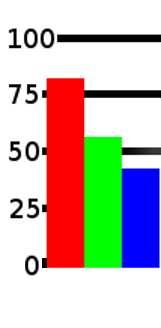
% of Americans who approved of Pres. Bush after one year in office
% of Americans who favor waterboarding the Christmas bomber
% of Americans who approve of Pres. Obama after one year in office
How did this happen? Well, once upon a time, the USA was really racist. Then a light skinned African American with no negro dialect entered the presidential contest and the country entered a new post-racial era. Unfortunately not everyone had the audacity to hope. Things got so bad, people wanted to cut obamas nuts off but the change we sought within us prevailed and became president. Unfortunately some parts of the US are still filled with overweight Jesus and gun loving Walmart shoppers who insist on voting Republican even though that party doesn't exist anymore. Why? Racism. It's the only possible explanation

20 January 2010

Robert Collins: LCA 2010 Thursday Keynote Glyn Moody


Glyn Moody Hackers at the end of the world. Rebel code is now 10 years old 50+ interviews over a year and could be considered an archaeology now :) I probably haven t down the keynote justice it was excellent but high density you should watch it online ;) Glyn talks about open access various examples like the public library of science (and how the scientific magazine business made 30%-40% profit margins. The Human Genome Project & the Bermuda Principles : public submimssion of annotated sequences. In 2000 Celera were going to patent the entire human genome. Jim Kent spent 3 weeks writing a program to join together the sequenced fragments on a 100 PC 800Mhz Pentium processor. This was put into the public domain on just before Celera completed their processing and by that action Celera were prevented from patenting *us*. Openness as a concept is increasing within the scientific community open access to result, open data, open science (the full process). An interesting aspect to it is open notebook science daily writeups, not peer reviewed: release early, release often for science. Amazingly, Project Gutenberg started in 1971! Glyn ties together the scientific culture (all science is open to some degree) and artistic culture (artists share and build on /reference each others work) by talking about a lag between free software and free content worlds. In 1999 Larry Lessig setup Copyright s Commons built around an idea of counter-copyright copyleft for non-code. This didn t really fly, and Creative Commons was setup 2 years later. Wikipedia and newer sharing concepts like twitter/facebook etc are discussed. But what about the real world: transparency and governments, or companies? They are opening up. However, data release != control release. And there are challenges we all need to face:
  • GFinancialC my gain is your loss . Very opaque system.
  • GEnvironmentalC my gain is our loss
Glyn argues we need a different approach to economic governance: the commons. 2009 Nobel laureate for Economic Sciences Elinor Ostrom work on commons and their management via user associations which is what we do in open source! Awesome!

18 January 2010

John Goerzen: Netbook / Notebook Update

Two days ago, I posted about looking for a new netbook or notebook, and asked for people s advice. Since then, I ve done some investigation based on these suggestions. Rejected Candidates First, I ve outright rejected several options. The Thinkpad X100e was out, mainly because it doesn t compare favorably to the Acer 1810TZ. The X100e s battery life is worse than the 1810TZ, it is heaver, and has a single-core CPU. Secondly, the EeePC 1201N was ruled out. Again, its battery life was quite a bit worse than the 1801TZ, and also worse than my existing Eee 901. Finally, the EeePC was out because of its extremely slow performance. Remaining Candidates I took information from notebookcheck for models I was interested in, and those suggested in the comments at the earlier post. After reviewing them, I made a comparison chart showing issues that matter most to me. Candidates: Battery Life Let s start with battery life. The X200s presents an interesting picture here. In the 9-cell battery, we can expect over 15 hours of life in idle mode, and 7 hours when surfing the Internet over wifi. This was best in class performance for the idle and surf tests, but when under load it drops to one of the worst ad only 2.57 hours. This could correlate with what Lars Wirzenius commented, saying the X200s battery life is poor: obviously it is doing a lot of power management in software to achieve its runtimes, and if a default Linux installation isn t doing that power management, battery life could be poor. The other standard in terms of battery life was the Acer 1810TZ, with 12 hours runtime in idle usage and almost 6 when surfing the net with wifi: that s an hour longer than my Eee 901. It was also the best performer under full load of anything on my chart. Disappointing results were turned in by the HP 2530p. Even with a 9-cell battery, it couldn t match the 1810TZ s battery life. The Dell E4200, with its 6-cell battery, fared even worse though I should note notebookcheck hasn t tested the E4200, so those figures come from elsewhere. Candidates: Size and Weight Looking at weight, the X200s and E6200 turn in amazing weights at under 3 pounds for a 12 notebook. HP s 2530p is the heaviest in the group at 3.84 pounds with the 6-cell battery (the 9-cell will be heavier but I couldn t find specs on it). The 1810TZ checks in at 3.1 pounds, a bit more than half a pound heavier than my Eee 901. Considering size, the E4200 is the thinnest in the group at just 0.79 inches thick. The 2530p is also thin, but is one of the deepest. The Eee 901 is smallest in terms of length and depth, but it is the thickest of all. Candidates: Performance Here you can really see why I complain about the Eee 901 being slow. On the PCMark 05 test, it had a third of the performance of the 1810TZ. The best performer was the X200s, followed by HP s 2530p. In terms of hard disk speed, the E4200 was fastest due to its SSD (though I suspect these tests are not fully evaluating write performance). The SSD on the EeePC 901 didn t help it; it finished with less than half the speed of the E4200. Conclusions From this chart, it looks like there are only three really interesting models: the X200s with its top-of-the-line performance and display, the HP 2530p, and the 1810TZ with its stellar battery life. The disappointing battery life on the E4200 rules it out for me. The battery life on the HP 2530p is modiocre, but it has a touchpad. For the 1810TZ, my main concerns are size of screen and the fact that the screen is glossy. I am not at all a fan of glossy screens. For the HP 2530p, we ve had an HP 2510p in at work. Its size is virtually identical to the 2530p, and felt a bit bigger than I d like. It was also lighter than the 2530p, but still a bit heaver that I d like to see. But the 12 screen might be worth it. The X200s lacks a touchpad, which is a major annoyance in my book. I have reports of 7-hour battery life on it with the L9400 CPU under Ubuntu. Another person has reported 12 hours on Arch Linux using a power saving guide (which looks helpful in general as well). Considering size and weight, the X200s is lighter than the 1810TZ, though only by a little if using the 9-cell battery. It s very slightly bigger in every dimension than the 1810TZ, but perhaps not enough to influence the decision. What are your thoughts?

17 January 2010

Gustavo Franco: Dell Mini 10, now what?

Dear lazyweb, I bought a Dell Mini 10 and am curious on how and if you use it for some sort of Debian development.


I would like to use it in an almost stateless setup (think installed, but usb stick would do) to browse things and have a few git/svn repositories to build small packages.

It seems there are some issues with the Xorg driver for this -- sbo. Thoughts?

16 January 2010

Stefano Zacchiroli: Kuhn on Debian, Ubuntu, and the culture of freedom

The culture of freedom lies in the details Here is an interesting blog post by Bradley Kuhn about Ubuntu, Debian, and (warning: my interpretation ahead) the culture of freedom. While reading it, I had kinda moment of truth, because just yesterday I was musing with Mehdi and Lucas on the fact that Debian is basically the only remaining distribution among the mainstream ones (if that means something) that is free from the ground up, including its infrastructure. We "just" seek hardware via donations and then we run, thanks to the amazing work of DSA, our own free infrastructure on top of it. Let's cherish this value! Thanks to Roberto Di Cosmo for the pointer to Bradley's post. Update: there's a thread on the ubuntu-devel mailing list about Bradley's post.

15 January 2010

Tiago Bortoletto Vaz: don t be ingenuous


It s only about business.

Eddy Petri&#537;or: Busy, busy, busy and lazy me

It has been quite some time since my last post. I have been involved in quite a few things and the last part of 2009 which left no time for anything else. At the begining of 2010, just to set things on a good tone from the new year, I went on a snowboarding vacation to Austria to Kitzb hel.

Presidential campaign and pure irrationality in Romania

I got involved in Remus Cernea's presidential campaign, which was quite a success, considering the media blockade he was subject to. Unfortunately, Romanians seem to more and more indoctrinated, idiotic and gullible, probably thanks to newer generations that come through public schools after 12 years of religious indctrination and media promoting stupidity, non-values, ignorance and so on.

The more I live in this country, the more I realize how I don't feel like fitting in, because I refuse to be a mindless sheep, a moron, listening to anything the news at 5 say (those living in Romania know what I mean). I obstinately form my own ideas and question everything.

Significant event in my life

In September 2009 a life-turning event took place in my life - don't worry, is nothing bad, is pure good - and my eyes opened entirely. I have bacame a sponge trying to know more and more and this has helped me see the world with new eyes, from a new perspective, without lies or preconceptions.

Now I am thingking freely.


I am sorry for not going into details, but I have my reasons. Those who have the eyes and brains to understand what I am talking about, surely have understood by now what has happened to me ;-) .

Snowboarding vacation

At the begining of this year I went with my wife and some friends to Austria for a vacation. Kitzb hel's slopes and conditions were very good (bad points were only due to a couple of areas where snowboarders had to open at least one binding).

<iframe frameborder="0" height="350" marginheight="0" marginwidth="0" scrolling="no" src="http://www.openstreetmap.org/export/embed.html?bbox=12.2575,47.3556,12.5092,47.5304&amp;layer=mapnik" style="border: 1px solid black" width="425"></iframe>
View Larger Map

Weather was good and snow was icy only late in the afternoon. I was quite suprised to see stores close at 6pm, but overall, it was a well deserved vacation and I enjoyed it very much. My wife's skills on the board got better, although the third day some beginner skyer broke one of the bindings of my wife's snowboard and she had to use a rental instead. The rental was a quite new Burton board and Otilia got used to it and liked to the extent that we decided the next board we buy (for either of us) will be a Burton.

Did it worth it to drive 1500 km (roughly 1000 miles for the metric system challenged people :-P) for this vacation? Definitely! Did I enjoy the drive? Well, let's just say that the 950km from Kitzb hel to the Romanian border were made in approximately the same time it took us to make the last 550km to Bucharest, while 110km of those last were on the A1 "highway".

I'll probably put some photos from my vacation somewhere on the intenets, but don't hold your breath :-P .

Instead of conclusions

I know I promissed a lot of people to take care of some things like Wormux and some kernel bug debugging and I didn't kept my promise. I appologise, yet I don't expect anyone to accept my appologies. I am still unsure when I'll get back to that. I still care for Debian, yet the day has only 24 hours and I have to use at least 7 of those on sleep.

Russell Coker: Cheap Net Access in Australia

The cheapest ADSL or Cable net access in Australia seems to be about $30 per month. I ve been using 3G net access by the Three phone company for 18 months now and it s been working well [1]. I recently bought a new 3G modem because the old one broke, so it has cost me $250 in modems plus $15 per month for the connection which compares well to $100 (or more) for an ADSL or Cable installation plus $30 per month. My Three net access gives me 1G of data per month. I have just noticed that they have pre-paid net access that gives 12G of data that must be used within one year which costs $149 per year [2] that is $12.41 per month or 83% the price of the plan access plus it means that any bandwidth quota that isn t used in one month can be used the next month (so you can save up for upgrading to a newer distribution of Linux). Dodo has pre-paid mobile net access on the Optus network for $139 which gives 15G of data that must be used within one year [3]. So that s equivalent to $11.58 per month or $9.20 per gig. A member of my local LUG mentioned that Exetel has a 3G plan which is good value if you don t use much data transfer but which has per-megabyte charges for excess data transfer. I couldn t recommend it for my parents as I never know when they will do something that may transfer a lot of data, I could just imagine them saying loading web pages was really slow for a week and then I got a big bill . Ross Barkman s GPRS/UMTS page gives some critical information on using a 3G phone with a tether [4]. Using that information I discovered that I need to use AT+CGDCONT=1,"IP","3netaccess" in my chatscript to get ppp going with my old LG U890 mobile phone (with 3netaccess being the important word). I plan to give my old mobile phone to my parents and let them use prepaid 3G net access to reduce their net access bill by more than 1/3 while also giving them more data transfer quota for times when they need to transfer a lot (EG when my sister visits them). At this stage I m not sure whether I will get them to use Three or Dodo. One advantage of Three is that I ve used them a lot and know exactly how to get it all working, the other is that my old mobile phone is locked to Three they agreed to unlock it on demand after the contract is ended (which happened over a year ago) but it will be a hassle to get it done. Saving the hassle of getting an old phone unlocked may be worth the $10 per year cost. Also I have used my 3G modem at my parents house on a few occasions and know that the reception is quite good, while the reception for Dodo (Optus) 3G is unknown One extra benefit with doing this is that my parents will have some freedom to move their PC. If they decide that the computer room is too hot in summer and want to move their PC to below their air-conditioner they will be able to do so without needing a long Ethernet cable to connect their PC to the cable modem. For my personal 3G net access (which I require for fixing servers on occasion) I am stuck with Three. When I bought a new 3G modem I decided to save about $20 by getting a device that s locked to Three. 12G per year is more than enough for sshing to servers and checking email and if I had paid extra for the unlocked modem it would it would probably have died before the savings on net access made up for the higher purchase price. Update:
Crazy John has a good deal, $129 for 7.5G which expires in a year [5]. I won t use that for my parents though, the probability of them going over 7.5G is too high to make it worth the risk for a $10 saving.

Stefano Zacchiroli: Preserving privacy with Google Docs

Eclectic paper: SEcure GOogle DOCumentS Two days from an important Google announcement, privacy awareness is steadily increasing in the media. The old mantra that "despotic governments might use your data in unexpected way" sounds more real than last week, and recent movies ring different bells in our heads. That event has prodded me to (finally!) blog about yet another eclectic paper of mine, co-authored with my old friend Gabriele D'Angelo, and which I'm going to present at the forthcoming ACM SAC conference. The paper is titled Content Cloaking: Preserving Privacy with Google Docs and other Web Applications and poses (again) a rather simple question: why should you trust Google to faithfully store your Google Docs data? What if roles in the recent Google-vs-China issue were inverted? The proposed solution (Content Cloaking) then simply implements transparent encryption and decryption in the payload which is sent back and forth between your browser and the Docs backend. Trying to access your Docs data without a decryption layer and the needed key will then just show garbage, for both humans and Google harvesters. Of course you lose something, like full text search which is performed server-side by Google, but at least you're back in charge again: it is you who decides to which extent trading-off your privacy with offered services. A proof-of-concept implementation is provided (and of course is free software!) as an extension for the Firefox browser, but is now out of date wrt Firefox mainline and was not really production ready anyhow (let's say it was master-thesis-implementation-quality ...). Still we, the authors, stand behind the idea even if we don't have the energy to maintain a production-quality implementation. So, Dear LazyWeb, If you are interested in the topic and you've development cycles to spare, please drop me a mail and I'll be happy to point you to all needed details to resurrect the implementation (or create one from scratch, which should be pretty easy and quick if you're familiar with extension development).

14 January 2010

Tim Retout: Net-NationalRail-LiveDepartureBoards

On Tuesday, I released version 0.02 of Net::NationalRail::LiveDepartureBoards to CPAN. So far, no one has complained. This module is probably of interest only to people in the UK; it looks up which trains are next to arrive/depart from a particular station. This release was prompted by a patch sent to me by Ian Dash, implementing a filtering feature I was too lazy to write myself. If someone wants to put a fancy GNOME applet around it, I'd be grateful. ;) I think the next step is to add a nicer OO interface. My original reason for writing the module was to advertise this SOAP API that ATOC publishes - it could easily be wrapped in languages other than Perl. That particular URL was found by inspecting the official widget for Windows Vista.

Next.

Previous.