Search Results: "ag"

11 October 2006

Lars Wirzenius: Debian: Debian sources in bzr

Many moons ago I thought it might be nifty for my work on Debian QA to have an easy way to see what has changes in each version of a Debian package. I wrote a little script that built a bzr branch for each package, and imported each new version in my mirror. Unfortunately, there were some problems, and I didn't have the patience then to fix them. Last weekend I finished the script (despite not doing any Debian QA work anymore), and set it running. Today it finished. There were still some problems: 88 packages failed, due to problems in bzr. I've reported them to the bzr mailing list. The run took about three full days, on an machine with a 2 GHz AMD64 cpu (in 64-bit mode), 1 GB of RAM, and two 80 gigabyte hard disks in striping mode. It would've gone faster, but I ran out of disk space a couple of times, and it took me hours to wake up and notice. Disk space usage is now about 90 gigabytes, but that's with most branches' working files removed, to save disk space (i.e., only the .bzr directory and contents in most branches). Note that the size shouldn't grow very quickly. Most new versions only change some files, and only parts of each file. Version control systems are good at keeping only the changes. I'm pretty sure 200 gigabytes would last for a long time. Bandwidth and disk I/O might be more limiting, if we wanted to have this as a service open to everyone. I don't know if bzr is the best vehicle for this; perhaps a huge Subversion repository would work better. My instinct says that a distributed version control system would work better, but I'm sure a centralized one would work, too. Whatever the system, it might be helpful for QA work, and for making changes in many packages at once, to have something like this. For QA work, it would make it easy to see what has changed in each version, or to find the version in which a certain change in a package was made. For sweeping changes, this kind of a system should, I think, make it easier to automate the build and upload of packages that are changed. I'm not, by the way, suggesting that this kind of a system would be used to do normal maintainer development. It would work by importing new uploads, not by having people commit to it directly. Or perhaps such a system wouldn't have any use for Debian, I don't know. But at least the script was useful for stress testing bzr a bit, and finding a couple of bugs in it. So it wasn't a waste of time to finish it.

Ben Armstrong: Ideal mobile text-editing device

Dear Lazyweb, I’m looking for a small, (easily fits on my lap on the cramped seat of a bus,) inexpensive, (around $100 CAD,) mobile text-editing device with a 90%-sized keyboard and decent battery life that runs an open source OS and Vim, and that I can sync to my desktop system. My first mobile device was a NEC PC-8201A, circa 1984. It ran on 4 AA NiCad batteries which I hardly needed to change more than once a week. At the time, it was my ideal mobile notetaking device. Its near-full-sized keyboard, Wordstar-compatible text editor, terminal program and serial interface allowed me to take notes which I would sync to my father’s Mac at home or to the VAX at the university. Today, my mobile computing needs have hardly changed: text editing is almost all I do. I don’t ask for much of a display, but as an 80 to 90 wpm touch-typist, I won’t settle for anything less than a near-full-sized keyboard. I’d prefer a system that runs Debian, and Vim is a must. Some means of easily synchronizing the device with my home system is necessary: PCMCIA wireless-B would be ideal, but is not a must-have. At the moment, I’m using an old Zaurus (not Linux-compatible) ZR-5000 which has good battery life but a very cramped keyboard, poor software, and no functional means of synchronizing the device to my PC. OK for jotting down quick notes, but frankly, I’d rather have my PC-8201A back again. I could at least type on it and sync it across the serial cable. I took a brief look at various Psion models, but they appear to be near-impossible to find. The HP Jornada 720 looks intriguing. And the NEC Mobilepro 780 appears to be another possibility. Have I overlooked anything? So, suggestions please.

Julien Danjou: New personal homepage design

I guess you can see it. That changes from the classical black and white.

Julien Danjou: My new personnal buildd Debian homepage

It seems that yesterday my link to dunc-bank surprised some people of whom aj was part of. He asked me if there was a status page of my buildd. I really did not expect a interesting question from an an uninteresting post on my blog. Anyway, I just created my first Debian homepage to resolve aj's expectation. I decided to share this page with my buildd, so it has a few words about me, but also... all my buildd logs.

Eric Dorland: Iceweasel it is

There's been an amazing amount of press and blogging about the whole Firefox trademark issue. Some of it very positive and with a good grasp of the crux of the problem. Some of it not so positive. I hope you can forgive me using my blog to ask a question but: Ian, where did I go wrong? What could I have done to salvage the situation? I'm certainly not pleased with having to do this but I didn't really see a whole lot of other options.

It was also nice to see Linux.com do a more in depth analysis of the issue. I'm glad to see Larry Rosen seemingly agreeing with me that they could have a free copyright license and a more restrictive trademark license, as I had proposed many times. They did manage to misquote me a little though. "annoyingly bureaucratic and is completely unprecedented in the Free Software community" was said in reference to Mozilla's requirement for patches to be vetted, not the discussion about the trademark.

NOKUBI Takatsugu: A party with malattia and matthew

Junichi Uekawa(dancerj) arrenged a welcome party for Mattia Dngili and Matthew Wilcox tonight. Unfortunately, I couldn't attend it because I need to stay to get my large baggage from a transporter. However, the place of the party is really near from my home, so if I can, I'll attend it. By the way, I already met with Matthew Wilbox in linux.conf.au 2004, but he wouldn't remember me.

Steve McIntyre: BSP Marathon - Zurich, 07 - 08 Oct 2006

Last weekend, I went to Zurich for the second leg of my own personal BSP marathon. Martin Krafft organised the BSP at the AI Lab in Zurich, arranging sponsorship and encouraging local DDs and users to turn up. Martin and I started early on Saturday morning, opening up the lab shortly before 9am and making a start on the RC bug list. Over the course of the next few hours, more people turned up and started work too - local DDs and a couple of Debian users from ETH. We worked our way through a fair number of bugs that day; personally I closed #389318 (a grotty FTBFS bug caused by IMHO a design mistake upstream - parsing header files using a simple awk script to create an m4 script to then generate C source) and spent quite some time digging into some other bugs. For our late dinner on Saturday, we headed to a local American-style bar/restaurant in Oerlikon called Cheyenne. Their speciality, it seems, is the "Big Mama", the largest burger I've ever seen! It comes on a huge serving plate, and is enough to feed up to 4 people...

BSP I took the chance over dinner to chat with the small group of locals, especially Axel Beckert who had some interesting stories about Fedora, Opera and other groups. On Sunday, we started slightly later but probably had a more productive day in terms of the number of bugs closed. I fixed some silly FTBFS issues in ser: #384772 and #390008 were both caused by the build system assuming i386/amd64 compiler options. I adapted patches suggested by Julien Blache from his own work on openser (thanks!) and tested on my sparc and hppa systems at home. Job done... For the rest of the day, I used the time to work on remaining bugs in my own packages. Both CVS and debian-cd needed new uploads to be ready for the Etch freeze. CVS had a bucket-load of new translations following Christian Perrier's call, and debian-cd had a large number of bugs that had already been fixed in svn for a long time. Between those 2 uploads (and some other old bugs in debian-cd that needed reviewing) that made another 17 bugs fixed, although none of them were RC. Once those uploads were done, I continued on with my debian-cd multi-arch development work. On Sunday evening, we went into the middle of the old city centre in Zurich to a more traditional Swiss restaurant. Several of Martin's colleagues from the lab joined us, and we had some widely varying conversation, ranging from Debian (of course! *grin*) to gossip in the lab via lots of other topics. Due to my ridiculously early flight home on Monday morning we couldn't stay out too late nattering, but nonetheless all the people seemed to enjoy themselves. The Swiss group were a fair bit quieter then the Dutch the previous weekend, but seemed just as committed to getting work done and getting Etch out on time. It was lovely to meet and spend time with them, and I've promised to go back and visit again soon. Until then, I've put my small selection of photos online.

10 October 2006

Russell Coker: day 3 of beard, and the gimp


Right now I'm just starting to break new personal records for hairyness.

I've been surprised that the GIMP isn't as difficult to use as I had previously thought. I particularly like the preview feature for saving JPEGs. I can use a slider to set the quality of the image and see a preview of viewing the file before saving. In the past with less capable software I used to go through a laborious process of saving a JPEG, viewing it in a separate program, and then repeating until I achieved an acceptable balance of file size and quality. Now I can adjust the slider and see what the result would be in terms of both quality and file size.

Recently I was doing sys-admin work for a company where Windows was the desktop standard. Often we had to send around screen-shots of various problems and the way of doing this was to use CTRL-PrtSc to copy an image of the window in question and then paste it into a MS-Word document because the Windows image had no other program that was capable of dealing with image data. One significant problem with MS-Word is that it doesn't allow expanding the image or modifying it, so you see it at about half the original resolution. It seems that what I should have been doing is pasting the image data into the GIMP and then saving it as a PNG file (PNG is loss-less compression which avoids the ripples you get from JPEG compression of text and it's also very efficient at compressing the regular data that is typical in a screen-capture). PNG files would take much less space than MS-Word documents and allow efficient viewing by many programs (including web browsers which are on all machines).

Matthew Garrett

So it's been pointed out that since I'm no longer terribly involved in Debian, I possibly shouldn't be on Planet Debian nowadays. So unless there's any violent objections I'll ask to be removed at the end of the week - my RSS gunk is at http://mjg59.livejournal.com/data/rss for those who want to read my delightful prose in any case.

Anyway. Some token Debian-related content. Mozilla corp are unhappy with Debian providing a package called "firefox" unless every patch provided has been approved by Mozilla in advance (there's also some stuff about the logo, but that's basically a bizarre corner aspect of the same problem). I'm not going to argue against this on philosophical grounds - it's clear that that isn't going to change anybody's mind. Instead, let's compare this to some other major applications:On the Mozilla side of things, the closest I can really come up with is cdrecord. There's some pretty strong parallels (upstream being unhappy about various patches, requiring a sufficiently different work to have a different name), but the end result in the cdrecord case was that we ended up with an application that was poorly integrated with the rest of the Linux environment for the sake of remaining consistent across different operating systems.

I'm not saying that that's going to happen to Mozilla. But we've seen numerous cases where allowing vendors to distribute derived versions has encouraged development and testing of new ideas, and I think in most cases that's resulted in benefits to the upstream project. The fundamental problem with refusing to allow patches that cause significant deviations from upstream behaviour is that it makes it impossible for anyone to actually get things like UI experiments into the hands of users. With Gnome, if upstream don't like your idea you have the opportunity to prove them wrong and possibly change their mind. With Mozilla, if upstream don't like your idea you're pretty much screwed. Most distributions are going to be unhappy about losing the magic Firefox branding, so you're unlikely to sell them on it. And you're not even allowed to provide binaries or source on your website unless you've renamed it away from Firefox.

I think the Mozilla corporation are missing something here. We shouldn't be prizing cross-platform consistency over integration and innovation, and we certainly shouldn't be doing our utmost to make it difficult for people to experiment with code. There's a reason that cd writing under Linux has been sucky for years, and it's not because people lacked the technical ability to make it better.

[1] Ok, the X.org case is slightly confused by the fact that they are upstream now. But without the ability to fork under the same name, they wouldn't have been.

Evan Prodromou: 18 Vend miaire CCXV

I've been a fan of the Open Directory Project for a long time. I finally volunteered to become an editor about a month ago, and I just started editing my first category, wiki farms , today. I hope to get the category up to good shape in the next few days. I've now got an ODP profile, too. tags:

Hudson Maj, Amita June and I went down to wt:Hudson (New York) over the weekend for the wedding reception of our friends Morgan and Kate. The trip down was fantastic -- the colors in the wt:Adirondacks were really amazing, just hitting their peak. Amita June had a good drive, too: she got to look around a lot, listened to some music, and had a nap of about an hour and a half. Hudson was a cute town, but not cutesy like other parts of the wt:Hudson Valley can be. The town is small -- 4-5 streets wide -- with big brick buildings lining the main street down to a promenade overlooking the Hudson River. There are a few gourmet restaurants and a disproportionate number of art galleries and antique stores, but it doesn't feel like the locals have been pushed out of their town... yet. We stayed at the St. Charles Hotel, as arranged by Kate's stepmom for most of the guests. It was functional and clean but otherwise unexceptional. There was a bar and a restaurant downstairs, and the hotel itself is just opposite a nice little park. Sunday morning we had breakfast at the Earth Kitchen organic market; I had a bowl of granola and fruit, Maj had a huge plate of huevos rancheros, and AJ ate whatever she could get off our plates. We walked around town and down to the waterfront, where we got a panoramic view for miles up and down the Hudson Valley. With the leaves nearing their height of color, it was an awe-inspiring view. We took a late lunch at Mexican Radio, a branch of a restaurant by the same name in Manhattan. It had good quality California-style Mexican food, with a few fusion dishes (like "Mexican spring rolls") that were probably overdoing it a bit. The margaritas were top-notch, and they have a tequila sampler option with three excellent tequilas for... $125! You won't normally lose that much money on three shots of tequila unless you pass out in the gutter in wt:Nuevo Laredo. The reception itself was at the Ca' Mea restaurant, right next to the historic Hudson Opera House. Kate and Morgan were in good form, playing goth-y music from their early days, and family and friends had a good time too. We all probably ate too much, and Maj and I both had hangovers the next morning. Amita June, however, had an excellent time running around the party and dancing with the bride. She was made for weddings. The drive home the next day was less than optimal. We did brunch in the St. Charles's restaurant, Bridges, and then stopped by the house of Kate's dad and stepmom for an afternoon get-together. They have a really nice Victorian house on a hill above town that overlooks the valley. We had to leave after only a few minutes, though, since we'd been lucky enough to get guest-listed for the Massive Attack show in Montreal that night. Trouble hit us as we were coming up the 87, though. First, the baby refused to sleep, getting more and more hysterical the longer she went awake. By 4:30PM, we'd had to stop so many times to soothe her that we were starting to get worried about the time. Then, we hit a detour on the interstate -- a huge accident had happened going through the mountains. We got into a sluggish line of cars wending its way along highway 9, and by the time we were back on the interstate we knew we were going to be late. We decided that luck was against our going to see MA, so we called and canceled our baby-sitter and sent email to our friend DJ Ghostbeard who'd asked us to come to the show (although we didn't get a call through... his voicemail box was full). We stopped at Geoffrey's Pub in wt:Plattsburgh for a late dinner of blackened salmon, broiled seafood and mashed potatoes, and then got back on the road. ...and straight into a 2-1/2-hour line at the Canadian border. This weekend was Canadian Thanksgiving, and apparently a lot of people took the opportunity to dip down into the states for a last bit of outdoorsmanship before the winter frosts settled in. Amita June, already a little frantic from not sleeping, went completely ballistic, and although we managed to keep her mellow most of the time, 2 hours in a line of cars with a crying baby is a little bit much for anyone. We didn't get back to Montreal until nearly midnight. It was great to get home, finally, and as usual travel's made me appreciate staying in one place. The Gazette this morning says the Massive Attack show was excellent, but I'm glad we didn't try to make it -- coming in 4 hours late is just too much. We're off to wt:Halifax next weekend for our wedding anniversary, and hopefully we'll be back into travel mode by then. tags:

Destinyland Dave Cassel has an excellent list of the 100 Greatest Internet Moments. A great compendium of Stuff What Happened over the last 10 years in cyberland. I think Dave's one of the best Internet culture observers out there. I'm glad to see he's got a new podcast, Destinyland, in which he tears apart the weird media culture we live in. Example: the crazy spiral of Dana Plato. Example: Schoolhouse Rock: Behind the music. Example: Dark side of the Hampster Dance. Good stuff. tags:

Martin F. Krafft: IBM/Lenovo on-site support

I am less enthusiastic about the number of hardware issues I've had with my Thinkpad X40 (3 harddrive replacements, 1 keyboard replacement) than I am with their technical support. Starting at last weekend's bug squashing party, my X40 would randomly lock up, probably in response to some interrupts (network, input devices, ...). At first I thought it was only the 2.6.18 kernel acting up, but now I am seeing crashes with 2.6.17 as well. Thus, I called the support hotline to make use of my 24-hour on-site support contract. Abridged, this is how the call went:
I: It randomly freezes. The harddrive seems fine, and memtest86+ also ran fine. He: Please run the diagnostics tool. I: I don't have that installed. [I did not mention that I do not run Windows, but mumbled something about it being a university installation and that I cannot install the tool] He: Hm, okay. So it's not the hard drive and it's not memory, so there's not much left. I'll have a local technician get in touch with you tomorrow.
Not more than 10 minutes later I had arranged for a replacement. And this was not the first time I came out of an IBM/Lenovo support call with a good feeling. Thanks! NP: Porcupine Tree / XMII

Erich Schubert: Cluster computing with AJAX (aka: ajax-seti)?

Ajax has shown how viable it is to run client-side computations, while just downloading the raw data from a server. But Ajax is not restricted to doing fancy user interfaces. It should easily be possible to use an iframe based ad to use the CPU power of page visitors to do some large-scale computations. Can you imagine how much processing power Google could churn up by having its GMail users do some distributed computing? Or on YouTube. While the user is watching the video, a javascript does some calculations in the background. By keeping data in a cookie, your calculations might even be able to survive page reloads. And if you're running a large ad network such as Googles', you might even be able to dect user inactivity. Update a cookie whenever the user comes onto an adsense page; if he didn't go on such a page for 30 minutes assume the user is idling and start computation. If he leaves open his web browser over night you'll get a lot of CPU cycles. (Yes, I know that Google is supposedly not in desparate need for free CPU cycles...)

Julien Danjou: kexec init scripts now in sid

Hey, now you can reboot your system using kexec. My NMU with support for init scripts just landed in sid yesterday! So edit your /etc/default/kexec and have some fun. 8-)

Andreas Barth: Bugs that want more attention

There are a couple of bugs that really would need more attention. I started a short list here, if you want to find more - just look at http://bts.turmzimmer.net/.

Adam Rosi-Kessel: Farm Animals

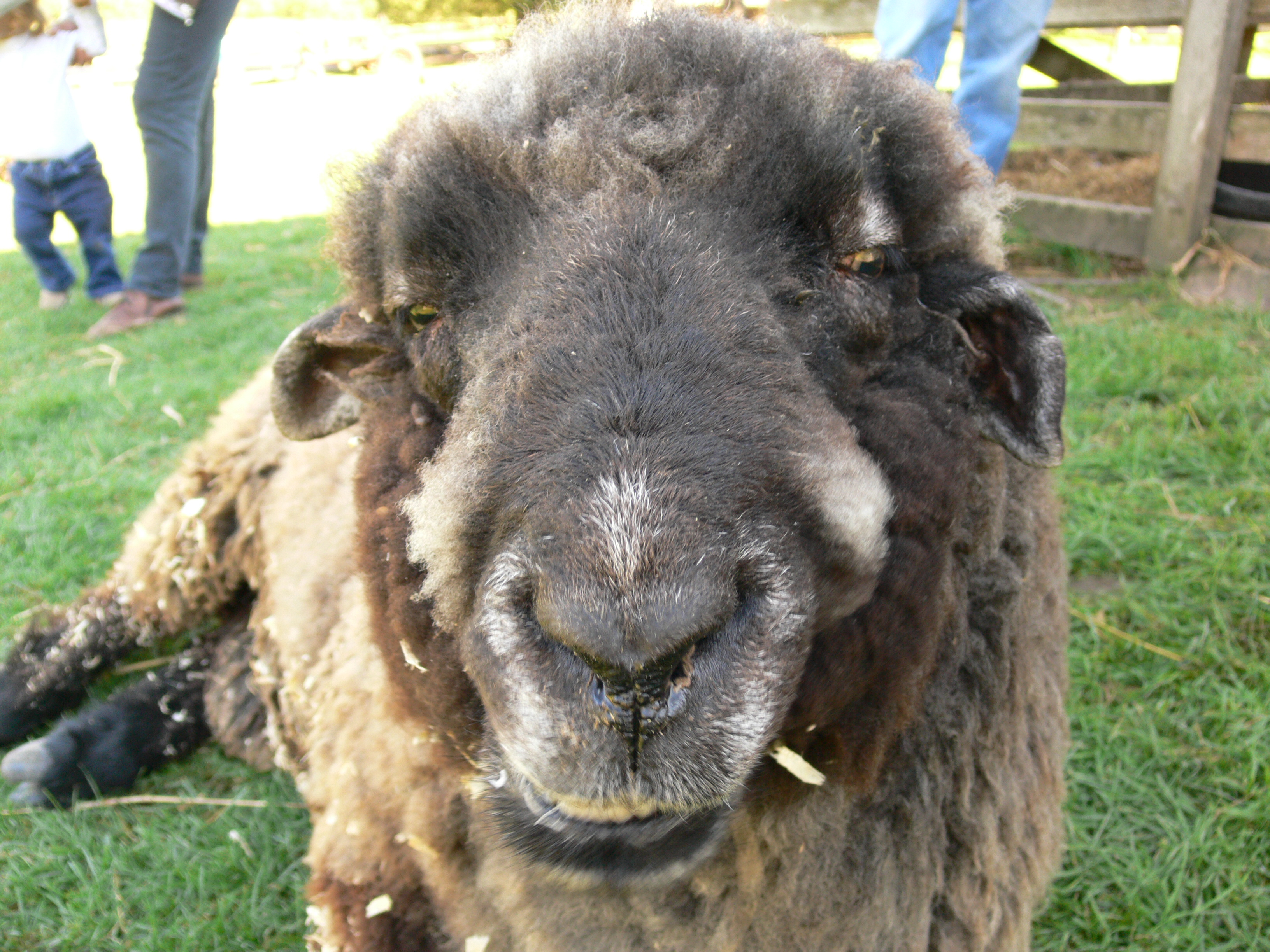
My domestic animal images are among the most popular hits on my blog, especially among the Myspace crowd. Apparently, everyone under 19 thinks it’s funny to post an embedded image link to a llama or an alpaca, pretending it’s a photo of themselves. A recent visit to Shelburne farms yielded the following additional specimens — click on any image to see a very large version. If you want to use one of these as your xanga avatar, ask me first. And please don’t borrow my bandwidth to serve it.
The Proverbial Black Sheep
A Surprisingly Accommodating Donkey and His Friend
Sleepy Sheep

9 October 2006

Russell Coker: Another beard pic


I've attached another pic, titled this one day2, which I guess means that day0 (not photographed) was one day without shaving and day-1 (also not photographed) was the last time I shaved.

So far I'm still in the range of "too busy/lazy to shave".

Blogger beta is living up to it's name and the functionality I had yesterday for uploading an image and having a small version generated is not working now.

Andreas Metzler: i thought I was a nice guy ...

I somehow thought I usually was nice and helpful, however upon reading Marc's e-mail about trying to make exim4 a little bit more foolproof, I realized I was not. My gut reaction to the problem (people failing to check the docs at all) was a simple "So what? Either they'll learn the minimal basics. (Docs on Debian are in /usr/share/doc and reading them can be helpful.) or Debian is not for them. I sure won't be jumping through hoops for them." Lesson learned: I am just an elitist <insert favorite 4-letter word>.

Erich Schubert: How bugs shouldn't be handled

On #debian.de, someone looked for an application to record the screen. So I tried finding the appropriate applications. On first try I found istanbul, but I remembered there was another one. I looked at the description of istanbul and tried searching some more. I remembered it was a city name, too, so I googled and finally found byzanz, too. Thus I filed a wishlist bug (#391860) on byzanz and istanbul to unify their descriptions, and maybe both use the terms "desktop session record" and "screencast". The bug on "byzanz" was immedeately closed, with no discussion taking place. Pretty much a "I like my description, closing the bug". This is not ok. It's just a wishlist bug. There is no harm in keeping it open anyway. And the package description is something you can always improve. Maybe tag it wontfix (however the next maintainer might want to fix it, after all). But just closing it twice (I reopened it once, stating that it is not fixed and thus shouldn't just be closed; I don't play bug ping-pong) without any discussion is not okay IMHO. To me this is just arrogant: "I don't want any wishlist bugs on my packages, and I don't care for your opinion." We've now been talking a bit on IRC; and it'll eventually be fixed on the next upload. But still I'm pretty annoyed by this reply I got back to the bug report... I think what helped is that the official description says "Record your desktop session to a GIF file", which contains exactly the word combination I was missing... "session record", because I'm not recording audio. Maybe the description should also contain the word "application", because after all that is what I'm very likely to want "record" an "application" (and not my full desktop). [Update: he didn't close the bug a second time. This was to a delayed email processing on bugs.debian.org, which processed the -done message after my reopen command. Sorry about this inaccurancy.]

Andree Leidenfrost: New Upstream Mondo Rescue Packages

I have just uploaded mindi and mondo 2.20 (version numbers are now the same for mindi and mondo).

This release marks a bit of a milestone in that we can ship the pristine upstream source in Debian for the first time because the busybox binaries were removed upstream. This together with the numerous bug fixes and stability improvements and combined with the fact that there are no revolutionary new features (despite the version number jump) made me decide to try and push the new upstream version into etch.

'Try' because although I've tested things quite thoroughly on both amd64 and i386, there is always a residual risk (one of my favourite alliterations ;-) ) of something bad slipping through. I think that taking this risk is justified, though, because 2.20 should be a definite improvement over 2.09. Bruno and I worked really hard to get this released in time for etch (Thank you, Bruno, for making my priority your priority!).

While testing, I found #389931, #389729 and #390653 (Thanks for your great help, Russ!). I've also found that archiving to tape doesn't work for me (still gathering more information, so no bug report yet), but it also fails with 2.09, i.e. there is no regression.

Main testing was performed on:
Oh, and this also contains the fix for RC bug #391127.

People seem to be using Mondo Rescue on 'vintage' versions of Debian which is presumably due to Mondo Rescue being disaster recovery software. So, I've made a change to post-nuke suggested by Augustin Amann (Thank you, Augustin!) to make people using the latest packages on sarge happier. I'm still in two minds about adding versioned depends on grep and binutils to make the life of woody (!) users a bit easier as well.

Holger Levsen: Geek travel

More than two and a half months ago, Biella lost her power adapter in Zuerich airport. The next day, I found it, but couldn't use it as I don't have american plugs with me.

But I was really surprised (but prepared) to see it two months later, on September the 18th! And this time I took a picture and used it happily!


Unfortunatly last thursday, when I was in Zuerich airport again, it was gone :-( Even more unfortunatly, I'm back home now ;-)

Next.

Previous.