Search Results: "tim"

19 December 2020

Andreas Bombe: PDP-8/e Replicated A Different Implementation

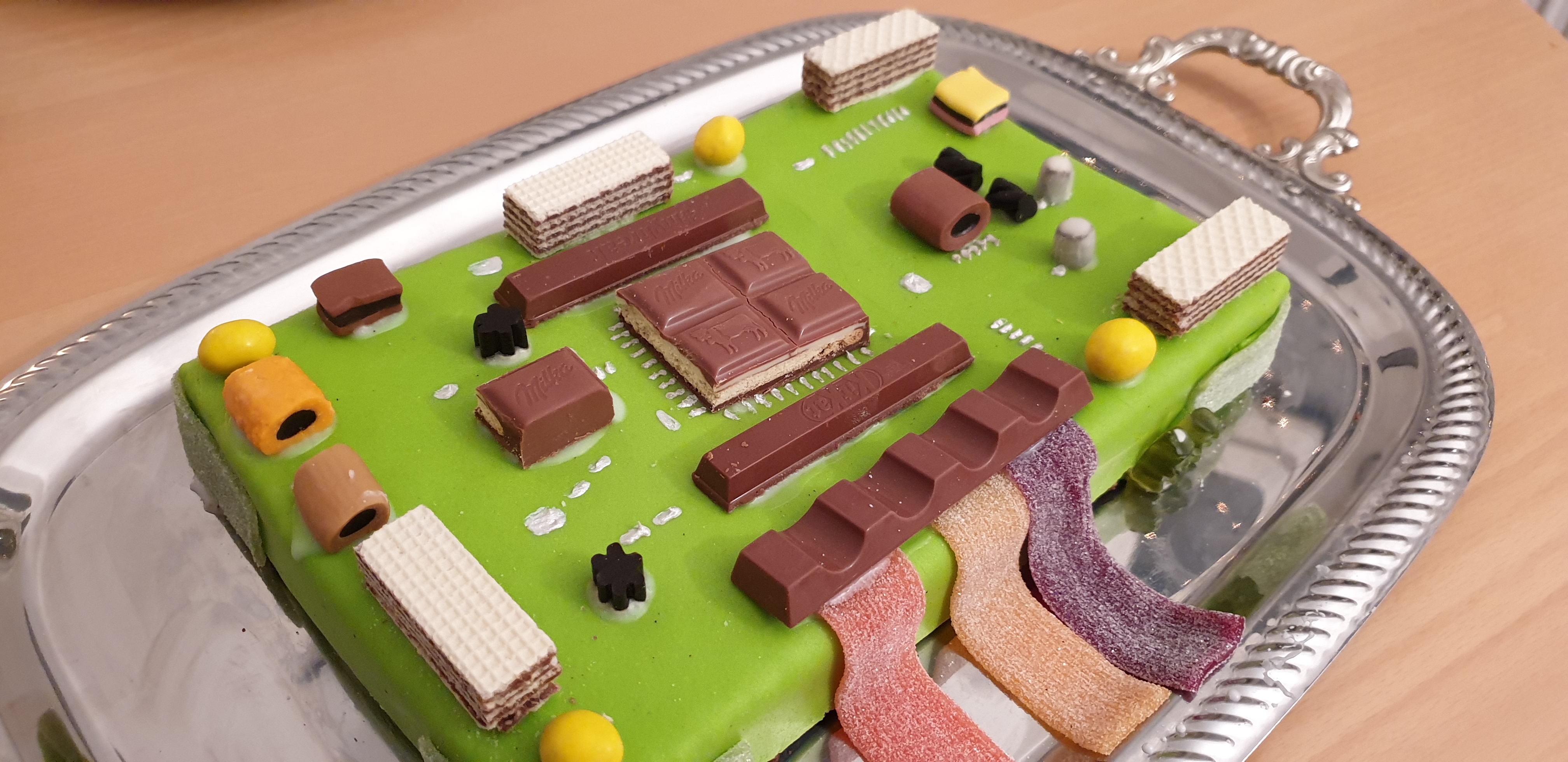
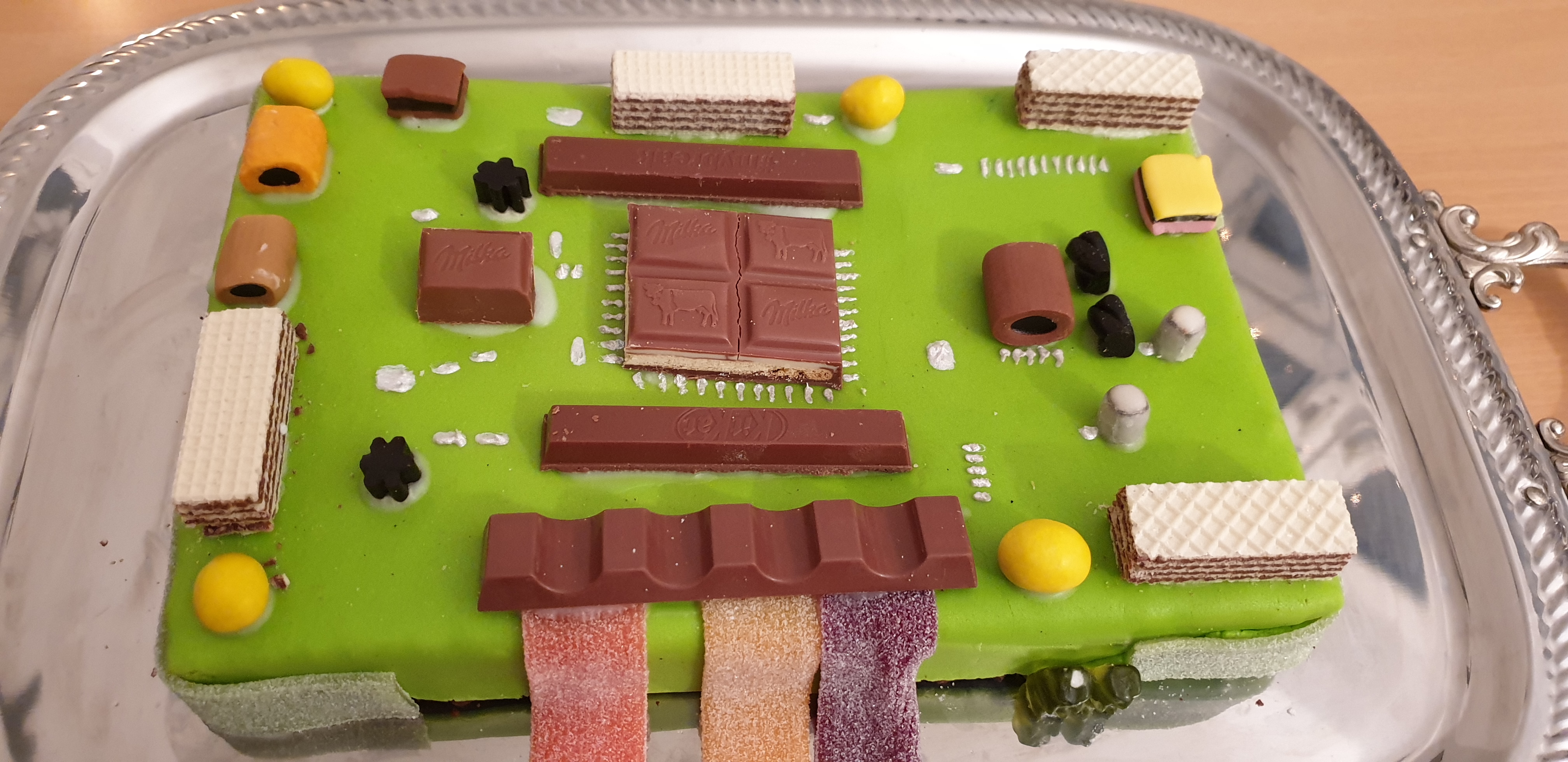
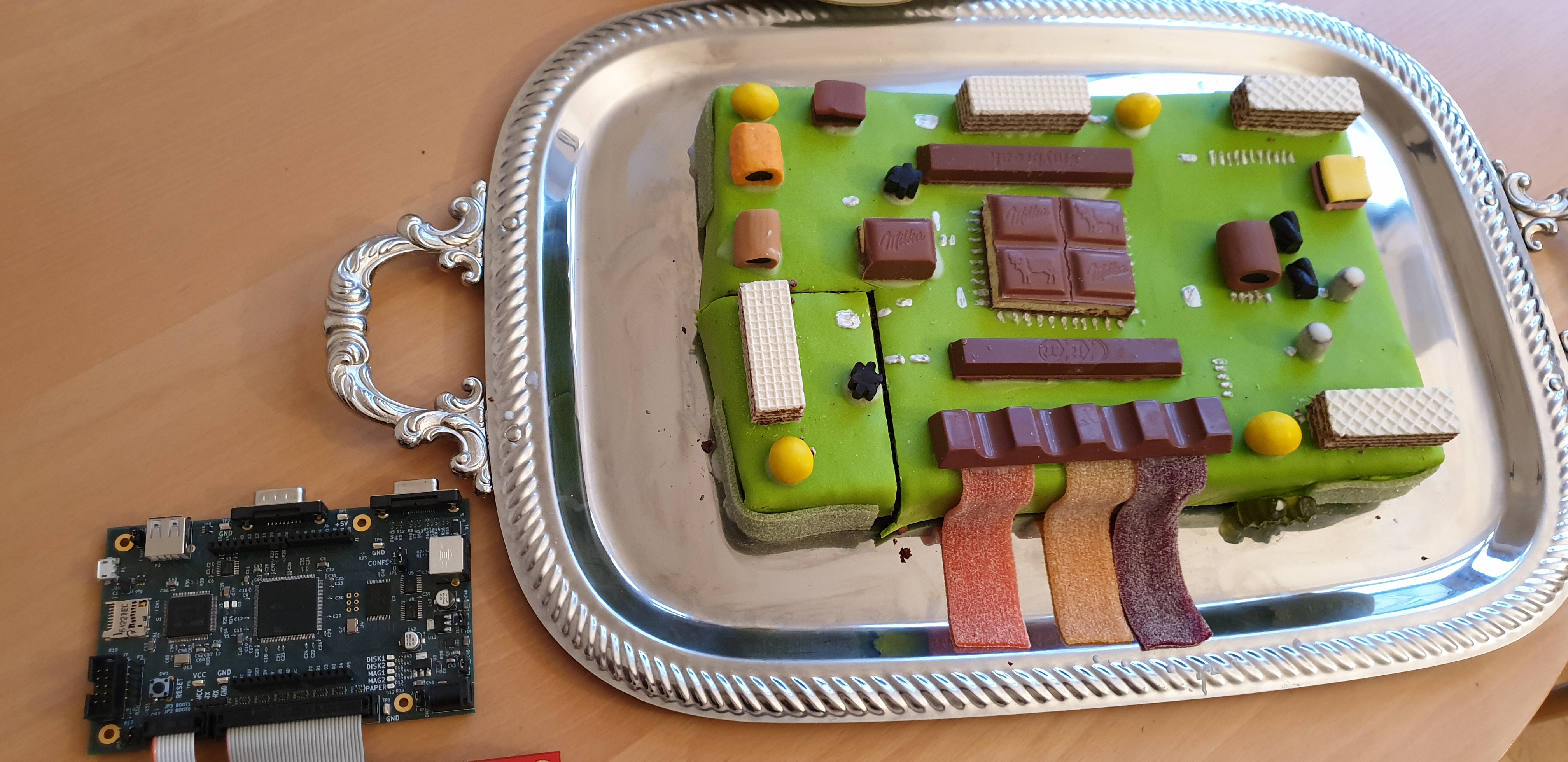
It has been almost a year since I got a different implementation of my PDP-8/e replica project for my birthday. Yes, it was a cake, and I have neglected to share it with the world so far. To be fair, there was a time this year where everything was a cake, at least on Twitter, and adding another one would have just been pouring gasoline on the fire. But here it is, first a side by side comparison of the implementations:
/post/pdp8e-cake-implementation/side-by-side.jpeg
Some detail to admire:
/post/pdp8e-cake-implementation/cake1.jpeg
/post/pdp8e-cake-implementation/cake2.jpeg
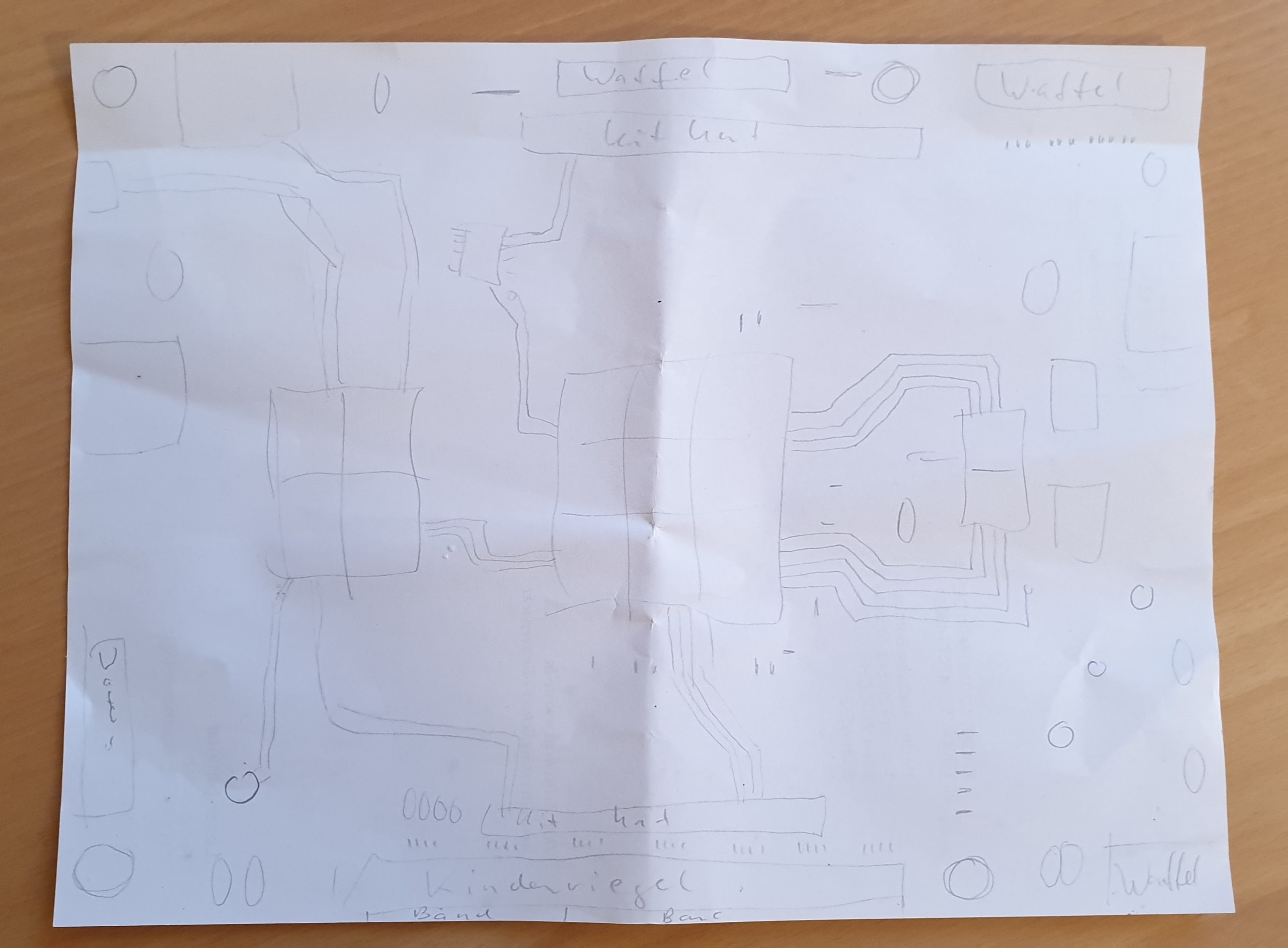
Afterwards I got to see some of the planning that went into it:
/post/pdp8e-cake-implementation/plan.jpeg
I can t say that the other implementation was as functional as mine, but it was definitely tastier.

Russell Coker: Testing VDPAU in Debian

VDPAU is the Video Decode and Presentation API for Unix [1]. I noticed an error with mplayer Failed to open VDPAU backend libvdpau_i965.so: cannot open shared object file: No such file or directory , Googling that turned up Debian Bug #869815 [2] which suggested installing the packages vdpau-va-driver and libvdpau-va-gl1 and setting the environment variable VDPAU_DRIVER=va_gl to enable VPDAU. The command vdpauinfo from the vdpauinfo shows the VPDAU capabilities, which showed that VPDAU was working with va_gl. When mplayer was getting the error about a missing i915 driver it took 35.822s of user time and 1.929s of system time to play Self Control by Laura Branigan [3] (a good music video to watch several times while testing IMHO) on my Thinkpad Carbon X1 Gen1 with Intel video and a i7-3667U CPU. When I set VDPAU_DRIVER=va_gl mplayer took 50.875s of user time and 4.207s of system time but didn t have the error. It s possible that other applications on my Thinkpad might benefit from VPDAU with the va_gl driver, but it seems unlikely that any will benefit to such a degree that it makes up for mplayer taking more time. It s also possible that the Self Control video I tested with was a worst case scenario, but even so taking almost 50% more CPU time made it unlikely that other videos would get a benefit. For this sort of video (640 480 resolution) it s not a problem, 38 seconds of CPU time to play a 5 minute video isn t a real problem (although it would be nice to use less battery). For a 1600*900 resolution video (the resolution of the laptop screen) it took 131 seconds of user time to play a 433 second video. That s still not going to be a problem when playing on mains power but will suck a bit when on battery. Most Thinkpads have Intel video and some have NVidia as well (which has issues from having 2 video cards and from having poor Linux driver support). So it seems that the only option for battery efficient video playing on the go right now is to use a tablet. On the upside, screen resolution is not increasing at a comparable rate to Moore s law so eventually CPUs will get powerful enough to do all this without using much electricity.

18 December 2020

Russell Coker: Thinkpad Storage Problem

For a while I ve had a problem with my Thinkpad X1 Carbon Gen 1 [1] where storage pauses for 30 seconds, it s become more common recently and unfortunately everything seems to depend on storage (ideally a web browser playing a video from the Internet could keep doing so with no disk access, but that s not what happens).
echo 3 > /sys/block/sda/device/timeout
I ve put the above in /etc/rc.local which should make it only take 3 seconds to recover from storage problems instead of 30 seconds, the problem hasn t recurred since that change so I don t know if it works as desired. The Thinkpad is running BTRFS and no data is reported as being lost, so it s not a problem to use it at this time. The bottom of this post has an example of the errors I m getting. A friend said that his searches for such errors shows people claiming that it s a SATA controller or cable problem, which for a SATA device bolted directly to the motherboard means it s likely to be a motherboard problem (IE more expensive to fix than the $289 I paid for the laptop almost 3 years ago). A Lenovo forum discussion says that the X1 Carbon Gen1 uses an unusual connector that s not M.2 SATA and not mSATA [2]. This means that a replacement is going to be expensive, $100US for a replacement from eBay when a M.2 SATA or NVMe device would cost about $50AU from my local store. It also means that I can t use a replacement for anything else. If my laptop took a regular NVMe I d buy one and test it out, if it didn t solve the problem a spare NVMe device is always handy to have. But I m not interested in spending $100US for a part that may turn out to be useless. I bought the laptop expecting that there was nothing I could fix inside it. While it is theoretically possible to upgrade the CPU etc in a laptop most people find that the effort and expense makes it better to just replace the entire laptop. With the ultra light category of laptops the RAM is soldered on the motherboard and there are even less options for replacing things. So while it s annoying that Lenovo didn t use a standard interface for this device (they did so for other models in the range) it s not a situation that I hadn t expected. Now the question is what to do next. The Thinkpad has a SD socket and micro SD cards are getting large capacities nowadays. If it won t boot from a SD card I could boot from USB and then run from SD. So even if the internal SATA device fails entirely it should still be useful. I wonder if I could find a Thinkpad with a similar problem going cheap as I m pretty sure that a Windows user couldn t make any storage device usable the way I can with Linux. I ve looked at prices on auction sites but haven t seen a Thinkpad X1 Carbon going for anywhere near the price I got this one. The nearest I ve seen is around $350 for a laptop with significant damage. While I am a little unhappy at Lenovo s choice of interface, I ve definitely got a lot more than $289 of value out of this laptop. So I m not really complaining.
[315041.837612] ata1.00: status:   DRDY  
[315041.837613] ata1.00: failed command: WRITE FPDMA QUEUED
[315041.837616] ata1.00: cmd 61/20:48:28:1e:3e/00:00:00:00:00/40 tag 9 ncq dma 
16384 out
                         res 40/00:01:00:00:00/00:00:00:00:00/e0 Emask 0x4 
(timeout)                
[315041.837617] ata1.00: status:   DRDY  
[315041.837618] ata1.00: failed command: READ FPDMA QUEUED
[315041.837621] ata1.00: cmd 60/08:50:e0:26:84/00:00:00:00:00/40 tag 10 ncq 
dma 4096 in
                         res 40/00:01:00:00:00/00:00:00:00:00/e0 Emask 0x4 
(timeout)                
[315041.837622] ata1.00: status:   DRDY  
[315041.837625] ata1: hard resetting link
[315042.151781] ata1: SATA link up 6.0 Gbps (SStatus 133 SControl 300)
[315042.163368] ata1.00: ACPI cmd ef/02:00:00:00:00:a0 (SET FEATURES) 
succeeded
[315042.163370] ata1.00: ACPI cmd f5/00:00:00:00:00:a0 (SECURITY FREEZE LOCK) 
filtered out
[315042.163372] ata1.00: ACPI cmd ef/10:03:00:00:00:a0 (SET FEATURES) filtered 
out
[315042.183332] ata1.00: ACPI cmd ef/02:00:00:00:00:a0 (SET FEATURES) 
succeeded
[315042.183334] ata1.00: ACPI cmd f5/00:00:00:00:00:a0 (SECURITY FREEZE LOCK) 
filtered out
[315042.183336] ata1.00: ACPI cmd ef/10:03:00:00:00:a0 (SET FEATURES) filtered 
out
[315042.193332] ata1.00: configured for UDMA/133
[315042.193789] sd 0:0:0:0: [sda] tag#10 FAILED Result: hostbyte=DID_OK 
driverbyte=DRIVER_SENSE
[315042.193791] sd 0:0:0:0: [sda] tag#10 Sense Key : Illegal Request [current] 
[315042.193793] sd 0:0:0:0: [sda] tag#10 Add. Sense: Unaligned write command
[315042.193795] sd 0:0:0:0: [sda] tag#10 CDB: Read(10) 28 00 00 84 26 e0 00 00 
08 00
[315042.193797] print_req_error: I/O error, dev sda, sector 8660704
[315042.193810] ata1: EH complete

17 December 2020

Elana Hashman: Easy risotto

I have a secret: risotto doesn't have to involve standing over a pot, stirring for 30 minutes. There is a better way. I've made risotto using the "stir 5ever" method and frankly this one is half the work and just as good. I took inspiration from Kenji Lopez-Alt, who describes how you can make risotto with only a few minutes of stirring at the end! Yes, this is a secret too good to keep to myself. The linked recipe is too rich for a weeknight dinner, at least for my tastes, so I've included my typical modifications below, which omits the heavy cream. I usually make mushroom risotto, because all the ingredients are long-lived pantry ingredients, which means I can make this on a whim without having to grocery shop! Mushroom risotto Serves 3 as a main course. Active time: 25m. Total time: 45m. Ingredients: Recipe:
  1. Leave mushrooms to rehydrate in 1 cup of hot water for at least 10 minutes.
  2. Set a wide saucepan (about 3.5qts) or skillet on medium heat.
  3. Mix stock and wine for a total of 4 cups. You can used homemade stock (the best), boxed, or reconstitute from bouillon (my usual). If you use bouillon, I find you get the best flavour if you use a mix, so I tend to use half "no-chicken" and half "organic chicken" of the Better than Bouillon brand. Let this cool if you used boiling water; you don't want it to be too hot.
  4. Mix the rice and stock in a large bowl, agitating it to release the starch. Reserve stock and set the rice in a strainer to drain.
  5. Small dice an onion. Add olive oil and butter to the pan, and then add the onion. Cook the onion until it's translucent, but don't brown it.
  6. Increase the heat to high and add the rice to the pan to toast until it becomes a little bit brown, stirring occasionally, about 3-4 minutes. Set a timer so it doesn't burn
  7. Meanwhile, drain the mushrooms, making sure you reserve the broth. Chop mushrooms and mince the garlic. Once the rice is toasted, add mushrooms and garlic and stir.
  8. Stir the reserved stock. Add all of the mushroom liquid and all but 1 cup of the starchy stock to the pan. Bring to a boil.
  9. Once it has reached a boil, cover, reduce to the lowest heat, and allow the rice to simmer undisturbed for 10 minutes. In the meantime, you can grate the cheese.
  10. After 10 minutes, stir the rice once, shake the pan to ensure it is level, and return to the heat for 10 more minutes. Sit back, relax, and bask in the very little stirring you are doing.
  11. At this point, the rice should be nearly cooked. Give it a stir, and add the remaining cup of broth. Stir until fully incorporated, turn the heat up to high, and cook until the risotto reaches your preferred consistency. I like mine rather thick.
  12. Once the rice is fully cooked, turn off the heat and stir in the grated cheese a bit at a time, reserving some for garnish. Taste, and season with salt and pepper.
  13. Garnish with the grated cheese, and perhaps some herbs. Serve and enjoy!
Variations No mushrooms: Okay, okay, you hate mushrooms! Sorry! You can leave them out. Don't bother with the mushrooms, and add broth to make up for the lost liquid. Mushroom lover: Alternatively, if you love mushrooms and you have fresh ones available, use &frac13 to a pound (150-225g) chopped fresh mushrooms instead of dried. Add them at the same time you add the onions to ensure all the liquid cooks off. Milanese, with stuff: One of my favourite variations on this dish is a version with shrimp, asparagus, and saffron. Leave the mushrooms out, increase the wine to or even 1 cup (seafood likes a little extra acidity), ensure you have a total of 5 cups of broth, and add a few strands of saffron. Chop asparagus and shrimp, season with salt and pepper, saut them with some butter or olive oil in a separate pan so they don't overcook, and fold them in at the very end, after you've added the cheese. I MUST SUFFER: This was too easy? Want to stir more??? Fine, have it your $*!#ing way. I'm sure you can be creative and come up with something on your own...

16 December 2020

John Goerzen: Non-Creepy Technology Purchasing & Gifting Guides

This time of year, a lot of people are thinking of buying gadgets and phones as gifts. But there are a lot of tech companies that have unethical practices, from terrible working conditions in their factories to spying on their users. Here are some buying guides to help you find gadgets that are fun and not creepy. The Free Software Foundation s Ethical Tech Giving Guide is a fantastic resource from what s probably the pickiest organization out there when it comes to tech. Not only do they highlight good devices, they also explain why and why you should, for instance, avoid the iPhone (their history of silencing political activists and spying on users). The FSF also has a Guide to DRM-Free Living talks about books, video, audio, and software that respects your freedom by letting you make your own backups, move it to other devices, and continue to use your purchases even if you have no Internet or the company you bought them from goes bankrupt. This is a fantastic and HUGE resource; there are hundreds of organizations out there that provide content in a way that respects your rights and many of them do it for free, legally, as well. PrivacyTools has a fantastic series of guides on everything from email providers to operating systems, as well as links to a number of other guides. The DeGoogle wiki on Reddit (as well as the sidebar) has a lot of fantastic alternatives to things like Chromebooks, Chrome, Gmail, etc. Related resources Here are some resources for education (what the issues are) and information about what companies and products to avoid. In addition to the FSF s other fantastic resources above, they also have a list of proprietary malware. It lists things, practices, and companies to avoid, and talks about the reasons why. Their addictions page is particularly good and relevant to my recent post on the problems of the attention economy. The Surveillance Self-Defense site from the Electronic Frontier Foundation is a fantastic introduction into how corporate surveillance works and how to defend against it. Use with a grain of salt: Mozilla, the people behind Firefox, have a site called Privacy Not Included that rates products by how creepy they are. They focus more narrowly on privacy than the more expansive set of freedoms the FSF considers (privacy is one of a number of things the FSF looks at), and in some cases I would say Mozilla is too generous (eg, with the Amazon Kindle, a number of their data points are just incorrect.)

15 December 2020

Hideki Yamane: 2020/12/20 Tokyo Debian Meeting online: Make legacy .deb package modern (live demo)

Time flies, I'm still busy, but I'll give a talk at Tokyo Debian Meeting online about "Make legacy .deb package modern (live demo)" Why live demo? Because I'm busy and don't have a time to prepare docs for it... ;-)

Kentaro Hayashi: Say Good-Bye and Thanks hal-flash

Today, hal-flash package was removed from Debian unstable. hal-flash is wrapper library for HAL which is not used nowadays. At that time, HAL was required because Adobe Primetime DRM uses libadobecp, but HAL was already replaced to udev or udisks. So we need emulation layer for HAL. hal-flash was it for such a purpose. (At least, hal-flash is required to play hulu.jp movies which uses Adobe DRM) hal-flash package was already orphaned years ago, and removed from unstable now. O: hal-flash -- Compatibility library to allow playback of Flash DRM content Thanks hal-flash package!

14 December 2020

Raphaël Hertzog: Funding Debian development projects with Freexian, first project received!

After an unexpectedly short discussion on debian-project, we re moving forward with this new initiative. The Debian security team submitted a project proposal requesting some improvements to tracker.debian.org, and since nobody of the security team wants to be paid to implement the project, we have opened a request for bids to find someone to implement this on a contractor basis. If you can code in Python following test-driven development and know the Django framework, feel free to submit a bid! Ideally you have some experience with the security tracker too but that s not a strong requirement. About the project If you haven t read the discussion on debian-project, Freexian is putting aside part of the money collected for Debian LTS to use it to fund generic Debian development projects. The goal is two-fold:
  1. First, the LTS work necessarily had an impact on other Debian teams that made the project possible (security team, DSA, buildd, ftpmasters, debian-www mainly) and we wanted to be able to give back to those teams by funding improvements to their infrastructure.
  2. We have always allowed paid contributors to go beyond just preparing security updates for the LTS release. They can pick tasks that improve the LTS project at large (we try to collect such tasks here: https://salsa.debian.org/lts-team/lts-extra-tasks/-/issues) but they should not go over 25% of their allocated monthly hours so this limits their ability to tackle bigger projects and we would like to be able to tackle bigger projects that can have a meaningful impact on the LTS project and/or Debian in general.
We have tried to formalize a process to follow from project submission up to its implementation in this salsa project:
https://salsa.debian.org/freexian-team/project-funding
https://salsa.debian.org/freexian-team/project-funding/-/blob/master/Rules-LTS.md We highly encourage the above-mentioned Debian teams to make proposals. A member of those teams can implement the project and be paid for it. Or they can decide to let someone else implement it (we expect some of the paid LTS contributors to be willing to implement such projects), and just play the reviewer role driving the person doing the work in the right direction. Contrary to Google s Summer of code and other similar projects, we put the focus on the results (and not in recruiting new volunteers), so we expect to work with experienced persons to implement the project. But if the reviewer is happy to be a mentor and spend more time, then it s OK for us too. The reviewer is (usually) not a paid position. If you re not among those teams, but if you have a project that can have a positive impact on Debian LTS (even if only indirectly in the distant future), feel free to try your chance and to submit a proposal.

No comment Liked this article? Click here. My blog is Flattr-enabled.

Russ Allbery: rra-c-util 8.4

I've released a new version of my collection of utility libraries, Autoconf macros, and similar support infrastructure, primarily to include changes in the upcoming remctl and INN releases. Highlights: The general support policy for rra-c-util is now that I will drop support for systems older than fifteen years if it becomes annoying to support them. That's still extremely conservative, but may let me drop some more support code that is essentially never used. The replacements for missing IPv6 functions are probably next on the chopping block. Thanks to Julien LIE and Bo Lindbergh for their contributions to this release. You can get the latest release from the rra-c-util distribution page.

13 December 2020

Jan Wagner: Monitoring Plugins 2.3 released

While our last release has matured for quite a little time, there raised demands within our community for a new release. The development has settled this fall and @sni was already using master for a while in production, so we thought about to release. Anyway Debian Freeze is coming, let's cut a new upstream release! The last question was: Who should cut the release? The last releases was done by @JeremyHolger, but these days everybody is short on time. Fortunately Holger has documented the whole release process very well, so I jumped on the band wagon and slipped into the release wizard role.
Surprisingly it seems I was able to fix all faults I've done in the release process (beside using the 2.2 link in the release announcement mail) and kicked the release of monitoring-plugins 2.3 successfully. Grab the new Monitoring Plugins release while it's hot (and give the new check_curl a try)!
Hopefully monitoring-plugins 2.3 will hit Debian experimental soon.

Russ Allbery: Review: Because Internet

Review: Because Internet, by Gretchen McCulloch
Publisher: Riverhead Books
Copyright: 2019
ISBN: 0-7352-1095-0
Format: Kindle
Pages: 276
If you're familiar with linguistics as a field of scientific study (as opposed to the tool-based fields of grammar or writing advice), you'll be familiar with the dichotomy between written and spoken language. We may spend more time thinking about written language since it is central to most types of education and carries much of the intellectual and social weight of society. Linguists, however, see spoken language as more fundamental, since speech is wired into our brains and universal in human societies. Written language is a recent and somewhat artificial invention. One also learns from linguistics that spoken language does not follow many of the rules of written language that we painstakingly memorized in school. In casual speech, people split infinitives, speak in partial and run-on sentences, ignore nit-picking pronoun case rules, and rarely notice or care about the difference between less and fewer. Spoken language does have rules, but they're more subtle and nuanced than the grammar rules we learn in school. (I think the real fun of linguistics is separating the rules that native speakers follow effortlessly from the artificial rules used as education markers.) This is, in part, because nearly all spoken language is informal, whereas nearly all written language is formal. Enter the Internet, and enter this book. For the first time in human history we have both an explosion of informal writing and easy availability of that writing to linguists for study. Informal writing is not entirely new, of course. We've had personal letters for nearly as long as we've had writing, not to mention private notes, diaries, and other writing intended for tiny audiences. But consider who wrote private letters and, on top of that historical filter, whose private letters were preserved for linguistic research. Until relatively recently, only the upper classes were literate and had access to the infrastructure to write and send letters. Someone's letters or private notes were unlikely to be preserved unless they were someone famous and important, and thus often well-educated and more likely to take a more formal tone in writing. If you compare this to the Internet-driven blizzard of work and personal email, SMS conversations, chatrooms, and social media posts, the difference is obvious in both volume and level of informality. We're all on the Internet, we all read and write with a frequency that would be staggering to the average person from even fifty years ago, and while one may take a bit of additional care with a tricky email to one's manager, the SMS message to one's friend is as informal of a use of language as a conversation over coffee. Gretchen McCulloch is a professional linguist and Because Internet is about exactly this phenomenon: the new conventions of informal writing, how it has changed and evolved, and the new subtleties and shortcuts we've invented to make written communication easier. That goes beyond words and grammar to encompass punctuation, emoji and emoticons, memes and reaction gifs, and even the subtleties of timing, whitespace, and the construction of virtual places via our choices in how and where we write. This topic is my catnip, so it's not surprising I love this book. I've been heavily involved with online communities that communicate in writing since 1993 (making me, in McCulloch's classification, an Old Internet Person; each wave of introduction to the Internet has its own conventions that can be in conflict with later waves). I've now spent more than half my life carrying out most of my social activity and most of my closest friendships primarily in writing, so I found a lot of satisfaction in a linguistic study that takes that seriously rather than treating it as a curiosity. But, even better, I was amazed at how much I didn't know, in part because I am from a specific wave. I have a deep intuition for the Usenet conventions, but not as good of an understanding of the ones from AIM and LiveJournal one wave later (the Full Internet People). And I had a lot to learn about the conventions of the Instagram and Snapchat cluster (the Post Internet People, who have never known life without the Internet). One of the things that struck me while reading this book is how most of the language innovations that McCulloch describes are addressing the old complaint that written communication is inferior to face-to-face conversation because it lacks emotional nuance. My knee-jerk reply is that, no, written communication is full of emotional nuance and the complainer is just bad at reading it, but that's somewhat unfair. A better statement of the problem is that there is not a standardized language for emotional nuance in written communication, in part because it's so new in human history. Most humans are extremely good at reading facial expressions and body language for emotional cues, and those physical expressions are largely subconscious, reliable, and similar among different people (particularly within a culture; one can get in trouble with body language variations across cultures). This is not true of writing. With friends I've talked to over chat for twenty-five years, I can read volumes about their emotional state in a couple of short lines of text. But with strangers, despite decades of Internet communications, I will still misread cues and misinterpret simple intentions. The other standard response to this complaint is that it is possible to put extensive emotional nuance into formal writing. Just get better at writing! This is true, but unhelpful. There's a reason why we give book contracts to people who are very good at investing formal writing with emotional nuance. It's difficult, time-consuming, and requires a great deal of practice. That may be appropriate for formal, paid writing, but it won't do for informal writing, which by definition needs to be as effortless as possible. It's therefore unsurprising that once millions of people were using the Internet regularly for informal writing, they started adding new mechanisms, shortcuts, and conventions for emotional nuance. The standardization is growing, but conventions still vary widely between waves of Internet users. One of the most fascinating parts of this book for me was McCulloch's explanation of why periods (and, to a lesser extent, capital letters) in short chat messages are perceived by younger users as harsh or passive-aggressive. I still have the formal writing mindset of treating proper capitalization and punctuation as a point of pride, but McCulloch makes an excellent argument for letting go of my biases and understanding how and why language is changing. The realization I had while reading this is that many of the changes that look like sloppiness or laziness to someone trained in formal writing have the effect of giving language greater dynamic range. If one always uses periods uniformly, the period becomes meaningless except as a sentence boundary (which is redundant with newlines in most short informal chat messages). If one normally doesn't use it, and then suddenly starts using it, the period can carry semantic weight. It can convey a snippy tone of voice, a note of annoyance, or other subtle shades of meaning. I still use periods in most of my Slack messages because habits are hard to break, but I'm remembering to leave them off some of the time and paying more attention to what emotional weight they're carrying when present. Because Internet is therefore the rare book that meets the bar of changing my day-to-day behavior. "lol" is another excellent example that McCulloch spends some time on. It started life as LOL, an abbreviation for "laughing out loud," and that's still how it's stuck in my head. But, as McCulloch explains, it no longer means that to newer waves of Internet users. It now carries a far more complicated and nuanced meaning that has very little to do with physical laughter and that doesn't easily translate to a single word or sentence. I went from being mildly irritated by and mildly superior towards the ubiquitous "lol" to realizing that it's a fascinating new word that carries primarily emotional nuance and that I don't understand well enough to read or use properly (yet). One more example of the type of analysis McCulloch brings to this book: emoji. The tendency when talking about emoji is to treat them as rebuses (pictures that stand in for a word, or at least a specific concept). They are sometimes used that way, but McCulloch argues that they more often function in the same role that gestures play in informal speech, including the gestures that have no simple name and no independent meaning outside of the context of the words being said at the same time. This seems obvious in retrospect, but before reading Because Internet I had never thought about what a gesture is, what function it plays in speech, and how that could be translated into informal written communication. If you're as interested in this area as I am, this is great stuff. I'd seen several mentions of this book go past on Twitter and kept holding off because I had lots of things to read and was worried it would only cover the superficial things I already knew as a long-time Internet user who has listened to a few lectures on linguistics. That was not the case at all. I learned so much from this book and had a delightful time reading it. If you're also interested in these topics, recommended. Rating: 9 out of 10
Junichi Uekawa: What's your config for sharing emacs ?

What's your config for sharing emacs ? In a remote-primary world coding with peers I share my emacs a lot; I think most of the video streams are optimized for 720p which is 1280x720; and tuning emacs config; probably fonts with 10 pixels width each is about right. A frame with 160x50 or 128x40 is probably reasonable.

11 December 2020

Evgeni Golov: systemd + SELinux =

Okay, getting a title that will ensure clicks for this post was easy. Now comes the hard part: content! When you deploy The Foreman, you want a secure setup by default. That's why we ship (and enable) a SELinux policy which allows you to run the involved daemons in confined mode. We have recently switched our default Ruby application server from Passenger (running via mod_passenger inside Apache httpd) to Puma (running standalone and Apache just being a reverse proxy). While doing so, we initially deployed Puma listening on localhost:3000 and while localhost is pretty safe, a local user could still turn out evil and talk directly to Puma, pretending to be authenticated by Apache (think Kerberos or X.509 cert auth). Obviously, this is not optimal, so the next task was to switch Puma to listen on an UNIX socket and only allow Apache to talk to said socket. This doesn't sound overly complicated, and indeed it wasn't. The most time/thought was spent on doing that in a way that doesn't break existing setups and still allows binding to a TCP socket for setups where users explicitly want that. We also made a change to the SELinux policy to properly label the newly created socket and allow httpd to access it. The whole change was carefully tested on CentOS 7 and worked like a charm. So we merged it, and it broke. Only on CentOS 8, but broken is broken, right? This is the start of my Thanksgiving story "learn how to debug SELinux issues" ;) From the logs of our integration test I knew the issue was Apache not being able to talk to that new socket (we archive sos reports as part of the tests, and those clearly had it in the auditd logs). But I also knew we did prepare our policy for that change, so either our preparation was not sufficient or the policy wasn't properly loaded. The same sos report also contained the output of semanage fcontext --list which stated that all regular files called /run/foreman.sock would get the foreman_var_run_t type assigned. Wait a moment, all regular files?! A socket is not a regular file! Let's quickly make that truly all files. That clearly changed the semanage fcontext --list output, but the socket was still created as var_run_t?! It was time to actually boot a CentOS 8 VM and try more things out. Interestingly, you actually can't add a rule for /run/something, as /run is an alias (equivalency in SELinux speak) for /var/run:
# semanage fcontext --add -t foreman_var_run_t /run/foreman.sock
ValueError: File spec /run/foreman.sock conflicts with equivalency rule '/run /var/run'; Try adding '/var/run/foreman.sock' instead
I have no idea how the list output in the report got that /run rule, but okay, let's match /var/run/foreman.sock. Did that solve the issue? Of course not! And you knew it, as I didn't get to the juciest part of the headline yet: systemd! We use systemd to create the socket, as it is both convenient and useful (no more clients connecting before Rails has finished booting). But why is it wrongly labeling our freshly created socket?! A quick check with touch shows that the policy is correct now, the touched file gets the right type assigned. So it must be something with systemd A bit of poking (and good guesswork based on prior experience with a similar issue in Puppet: PUP-2169 and PUP-10548) led to the realization that a systemctl daemon-reexec after adding the file context rule "fixes" the issue. Moving the poking to Google, you quickly end up at systemd issue #9997 which is fixed in v245, but that's in no EL release yet. And indeed, the issue seems fixed on my Fedora 33 with systemd 246, but I still need it to work on CentOS 7 and 8 Well, maybe that reexec isn't that bad after all? At least the socket is now properly labeled and httpd can connect to it on CentOS 8. Btw, no idea why the connection worked on CentOS 7, as there the socket was also wrongly labeled, but SELinux didn't deny httpd to open it. Big shout out to lzap and ewoud for helping me with this beast!

Markus Koschany: My Free Software Activities in November 2020

Welcome to gambaru.de. Here is my monthly report (+ the first week in December) that covers what I have been doing for Debian. If you re interested in Java, Games and LTS topics, this might be interesting for you. Debian Games

Debian Java Misc Debian LTS This was my 57. month as a paid contributor and I have been paid to work 12 hours on Debian LTS, a project started by Rapha l Hertzog. In that time I did the following: ELTS Extended Long Term Support (ELTS) is a project led by Freexian to further extend the lifetime of Debian releases. It is not an official Debian project but all Debian users benefit from it without cost. The current ELTS release is Debian 8 Jessie . This was my 30. month and I have been paid to work 15 hours on ELTS. Thanks for reading and see you next time.

10 December 2020

John Goerzen: How the Attention Economy Hurts You via Social Media Sites like Facebook

There is a whole science to manipulating our attention. And because there is a lot of money to be made by doing this well, it means we all encounter attempts to manipulate what we pay attention to each day. What is this, and how is it harmful? This post will be the first on a series on the topic. Why is attention so important? When people use Facebook, they use it for free. Facebook generally doesn t even try to sell them anything, yet has billions in revenues. What, then, is Facebook s product? Well, really, it s you. Or, more specifically, your attention. Facebook sells your attention to advertisers. Everything they do is in service to that. They want you to spend more time on the site so they can show you more ads. (I should say here that I m using Facebook as an example, but this applies to other social media companies too.) Seeking to maximize attention So if your attention is so important to their profit, it follows naturally that they would seek ways to get people to spend more time on their site. And they do. They track all sorts of metrics, including engagement (if you click like , comment, share, or otherwise interact with content). They know which sorts of things are likely to capture your (and I mean you in specific!) attention and show you that. Your neighbor may have different interests and Facebook judges different things are likely to capture their attention. Manipulating your attention Attention turning into money isn t unique for social media. In fact, in the article If It Bleeds, It Leads: Understanding Fear-Based Media, Psychology Today writes:
In previous decades, the journalistic mission was to report the news as it actually happened, with fairness, balance, and integrity. However, capitalistic motives associated with journalism have forced much of today s television news to look to the spectacular, the stirring, and the controversial as news stories. It s no longer a race to break the story first or get the facts right. Instead, it s to acquire good ratings in order to get advertisers, so that profits soar. News programming uses a hierarchy of if it bleeds, it leads. Fear-based news programming has two aims. The first is to grab the viewer s attention. In the news media, this is called the teaser. The second aim is to persuade the viewer that the solution for reducing the identified fear will be in the news story. If a teaser asks, What s in your tap water that YOU need to know about? a viewer will likely tune in to get the up-to-date information to ensure safety.
You ve probably seen fear-based messages a lot on Facebook. They will highlight messages to liberals about being afraid of what Trump is doing, and to conservatives about being afraid of what Biden is doing. They may or may not even intentionally be doing this; it is their algorithm predicts that those would maximize time and engagement for certain people, so that s what they see. Fear leads to controversy It s not just fear, though. Social media also loves controversy. There s nothing that makes people really want to stay on Facebook like anger. See something controversial and you ll see hundreds or thousands of people are there arguing about it and in the process, giving Facebook their attention. A quick Internet search will show you numerous articles on how marketing companes can leverage controvery to get attention and engagement with their campaigns. Consequences of maximizing fear and controversy What does it mean to society at large and to you personally that large companies make a lot of money by maximizing fear and controversy? The most obvious way is it leads to less common ground. If the posts and reactions that show common ground are never seen because they don t drive engagement, it poisons the well; left and right hate each other with ever more vigor a profitable outcome to Facebook, but a poisonous one to all of us. I have had several friendships lost because I a liberal in agreement with these friends on political matters still talk to Trump voters. On the other side, we ve seen people storm the Michigan statehouse with weapons. How did that level of disagreement and even fear behind it get so firmly embedded in our society? Surely the fact that social media shows us things designed to stimulate fear and anger must play a role. What does it do to our ability to have empathy for, and understand, others? The Facebook groups I ve been in for like-minded people have largely been flooded with memes calling the President rump and other things clearly designed to make people angry or fearful. It s a worthless experience, and not just that, but it s a harmful experience. When our major media TV and social networks all are optimizing for fear, anger, and controvesry, we have a society beholden to fear, anger, and controvesy. In my next installment, I m going to talk about what to do about this, including the decentralized social networks of the Fediverse that are specifically designed to put you back in charge of your attention. Update 2020-12-16: There are two followup articles for this: how to join the Fediverse and non-creepy technology purchasing and gifting guides. The latter references the FSF s page on software manipulation towards addiction, which is particularly relevant to this topic.

Jonathan Carter: CentOS Stream, or Debian?

It s the end of CentOS as we know it Earlier this week, the CentOS project announced the shift to CentOS stream. In a nutshell, this means that they will discontinue being a close clone of RHEL along with security updates, and instead it will serve as a development branch of RHEL. As you can probably imagine (or gleam from the comments in that post I referenced), a lot of people are unhappy about this. One particular quote got my attention this morning while catching up on this week s edition of Linux Weekly News, under the distributions quotes section:

I have been doing this for 17 years and CentOS is basically my life s work. This was (for me personally) a heart wrenching decision. However, i see no other decision as a possibility. If there was, it would have been made.Johnny Hughes
I feel really sorry for this person and can empathize, I ve been in similar situations in my life before where I ve poured all my love and energy into something and then due to some corporate or organisational decisions (and usually poor ones), the project got discontinued and all that work that went into it vanishes into the ether. Also, 17 years is really long to be contributing to any one project so I can imagine that this must have been especially gutting.

Throw me a freakin bone here I m also somewhat skeptical of how successful CentOS Stream will really be in any form of a community project. It seems that Red Hat is expecting that volunteers should contribute to their product development for free, and then when these contributors actually want to use that resulting product, they re expected to pay a corporate subscription fee to do so. This seems like a very lop-sided relationship to me, and I m not sure it will be sustainable in the long term. In Red Hat s announcement of CentOS Stream, they kind of throw the community a bone by saying In the first half of 2021, we plan to introduce low- or no-cost programs for a variety of use cases - it seems likely that this will just be for experimental purposes similar to the Windows Insider program and won t be of much use for production users at all. Red Hat does point out that their Universal Base Image (UBI) is free to use and that users could just use that on any system in a container, but this doesn t add much comfort to the individuals and organisations who have contributed huge amounts of time and effort to CentOS over the years who rely on a stable, general-purpose Linux system that can be installed on bare metal.

Way forward for CentOS users Where to from here? I suppose CentOS users could start coughing up for RHEL subscriptions. For many CentOS use cases that won t make much sense. They could move to another distribution, or fork/restart CentOS. The latter is already happening. One of the original founders of the CentOS project, Gregory Kurtzer, is now working on Rocky Linux, which aims to be a new free system built from the RHEL sources. Some people from Red Hat and Canonical are often a bit surprised or skeptical when I point out to them that binary licenses are also important. This whole saga is yet another data point, but it proves that yet again. If Red Hat had from the beginning released RHEL with free sources and unobfuscated patches, then none of this would ve been necessary in the first place. And while I wish Rocky Linux all the success it aims to achieve, I do not think that working for free on a system that ultimately supports Red Hat s selfish eco-system is really productive or helpful. The fact is, Debian is already a free enterprise-scale system already used by huge organisations like Google and many others, which has stable releases, LTS support and ELTS offerings from external organisations if someone really needs it. And while RHEL clones have come and gone through the years, Debian s mission and contract to its users is something that stays consistent and I believe Debian and its ideals will be around for as long as people need Unixy operating systems to run anywhere (i.e. a very long time). While we sometimes fall short of some of our technical goals in Debian, and while we don t always agree on everything, we do tend to make great long-term progress, and usually in the right direction. We ve proved that our method of building a system together is sustainable, that we can do so reliably and timely and that we can collectively support it. From there on it can only get even better when we join forces and work together, because when either individuals or organisations contribute to Debian, they can use the end result for both private or commercial purposes without having to pay any fee or be encumbered by legal gotchas. Don t get caught by greedy corporate motivations that will result in you losing years of your life s work for absolutely no good reason. Make your time and effort count and either contribute to Debian or give your employees time to do so on company time. Many already do and reap the rewards of this, and don t look back. While Debian is a very container and virtualization friendly system, we ve managed to remain a good general-purpose operating system that manages to span use cases so vast that I d have to use a blog post longer than this one just to cover them. And while learning a whole new set of package build chain, package manager and new organisational culture and so on can be uhm, really rocky at the start, I d say that it s a good investment with Debian and unlikely to be time that you ll ever felt was wasted. As Debian project leader, I m personally available to help answer any questions that someone might have if they are interested in coming over to Debian. Feel free to mail leader_AT_debian.org (replace _AT_ with @) or find me on the oftc IRC network with the nick highvoltage. I believe that together, we can make Debian the de facto free enterprise system, and that it would be to the benefit of all its corporate users, instead of tilting all the benefit to just one or two corporations who certainly don t have your best interests in mind.

Norbert Preining: KDE/Plasma and Cinnamon updates in Debian

It is the time of the year when we all are searching for some peaceful time, but the pre-release freeze of Bullseye is putting a higher burden than usual on us  So here we go, two desktop environments got updates in Debian/experimental. A few days ago I have updated all the Cinnamon related packages to the latest release 4.8, and yesterday I have uploaded KDE/Plasma packages of 5.20.4. This brings my two favorite desktop environments up to upstream release in Debian. My plans for both are uploads as soon as possible to unstable, so that they can transition to Debian/testing and will be included in the next release of Bullseye. You can help now by installing your preferred desktop environment (Cinnamon or KDE/Plasma) from experimental and report bugs to the BTS, so that we can iron out some more bugs before pushing it out. If you are not sure, feel free to contact the respective maintainer email lists (debian-cinnamon and debian-kde) with questions/reports/suggestions. Thanks everyone, and let us hope for a great Bullseye release!

9 December 2020

Shirish Agarwal: Farm Laws and Too much Democracy

Issues with Farm Laws While I have written about the farm laws a bit sometime back. The issue is still in the nation s eye and that is due to the policies which have been done. I have been reading up on it quite a bit and also have been seeing what has been happening in here and now. The problems are with the three bills themselves which I have shared as below Click to access farmers-produce-trade-and-commerce-promotion-and-facilation-bill.pdf Click to access farmers-empowerment-and-protection-bill.pdf Click to access essential-commodities-bill-2020.pdf Biggest issue with the laws While there are many issues with the laws themselves but for me the biggest issue is that the fundamental right of the farmer to get justice via civil courts has been railroaded. From the laws itself. Standard disclaimer not a lawyer, please consult one for any issues per-se.

Farmers-produce-trade-and-commerce (promotion and facilitation-bill) 2020 Page 4 Chapter 3 Section 8 (1)8. (1) In case of any dispute arising out of a transaction between the farmer and a trader under section 4, the parties may seek a mutually acceptable solution through conciliation by filing an application to the Sub-Divisional Magistrate who shall refer such dispute to a Conciliation Board to be appointed by him for facilitating the binding settlement of the dispute. (2) Every Board of Conciliation appointed by the Sub-Divisional Magistrate under sub-section (1), shall consist of a chairperson and such members not less than two and not more than four, as the Sub-Divisional Magistrate may deem fit.10 (5) If the parties to the transaction under sub-section (1) are unable to resolve the dispute within thirty days in the manner set out under this section, they may approach the Sub-Divisional Magistrate concerned who shall be the Sub-Divisional Authority for settlement of such dispute. (8) Any party aggrieved by the order of the Sub-Divisional Authority may prefer an appeal before the Appellate Authority (Collector or Additional Collector nominated by the Collector) within thirty days of such order who shall dispose of the appeal within thirty days from the date of filing of such appeal. 10. (1) Any person aggrieved by an order under section 9 may, prefer an appeal within sixty days from the date of such order, to an officer not below the rank of Joint Secretary to the Government of India to be nominated by the Central Government for this purpose: Page 6 of the bill. 13. No suit, prosecution or other legal proceedings shall lie against the Central Government or the State Government, or any officer of the Central Government or the State Government or any other person in respect of anything which is in good faith done or intended to be done under this Act or of any rules or orders made thereunder. Page 7 of the bill, 15. No civil court shall have jurisdiction to entertain any suit or proceedings in respect of any matter, the cognizance of which can be taken and disposed of by any authority empowered by or under this Act or the rules made thereunder. Now the same laws have been reiterated for the farmers (Empowerment and Protection) Agreement on Price Assurance and Farm Services Bill, 2020. The problem is that too much power is being put into the hands of the executive. All the three, whether it is SDM (Sub-Divisional Magistrate) , the Appellate Authority or the Government Secretary directly are subservient to the whims and fancies of the Central Govt. They after all get their salaries from the Govt. itself. So there will be no independent oversight to any injustices done to the farmer. The third bill i.e. the Essential Commodities Bill, 2020 does away with stock limits on traders and big players like Adani and Ambani. This means that both these players can take and keep produce at their end thereby forcing consumers like you and me who at the retail end would have to pay higher prices for fruits and vegetables while from the producer they will take at the lowest price possible. While I have shared is just one of the points. That is the reason why even the Supreme Court bar association which almost never takes part in politics has been forced to take sides with the farmers. In many ways, one is forced to remember the Emergency  Update 11/12/20 Came across this article on the wire which tells how everybody s rights, not just the farmer s rights are being shod over. I think it depicts correctly the signs of time to come. While arguing on SM, also came to know about Article 300 (1), thanks to Sachin Kumar which shows multiple instances where Government was sued because somebody was working in official capacity and did mistakes, malafide or otherwise and it was the state who was made to pay. FWIW, today farmers from Maharashtra, my state arrived at Delhi border where they were also kept at bay. I did come across an infographic which shows how the various states have fared. Most tellingly, is the state of Bihar. It was in 2006 (one of the most backward states) where APMC was taken off. While others have tried to paint a flattering picture of Bihar, they have failed to share that in the interim 15 odd years, there hasn t been any sort of infrastructure created for farmers which is the reason it is still the lowest earner. These are the last available figures we have about the farmer s income. From 2014 to 2020 there hasn t been any update.
Situation Assessment Survey of Agricultural Household 2013 Copyright GOI,
This concludes just one portion of the bill. I will take other parts of the bill. I may dwell on some other parts as and when I have the time. A cartoon which depicts the current issue
I stand with farmers Copyright Sanitary Panels
Too much democracy Amitabh Kant Yesterday, the Niti Aayog chief Amitabh Kant remarked that we are too much of a democracy at an event called for Atmanirbhar Bharat which is basically a coinage for import substitution. Whether this is desirable or not I have argued and if needed will re-argue the same later as well. What is and was interesting were the gentleman s context, the media reactions and our overall Democracy Index which has been going downhill for quite some years. Now the gentleman who is the Niti Aayog chief and who is supposed to have the ear of the Prime Minister had opined it in an event organized by Swarajya Magazine (a far-right magazine) known to be Islamophobic and all things undemocratic. It has been a target of defundthehate campaign and with good reason. But that s a different story altogether. His full statement was as below

Tough reforms are very difficult in the Indian context, as we are too much of a democracy but the government has shown courage and determination in pushing such reforms across sectors, including mining, coal, labour and agriculture. Niti Aayog chief. The upper quotation remarks and the statement has been from the article in Indian Express which I have linked to. I have archived it as a pdf just in case the link goes dead. Yesterday, after the statement became viraled, tweets of media houses which shared the tweet suddenly become unavailable. Seems too much democracy, became too little democracy all of a sudden. I think Mr. Amitabh Kant didn t visualize as the opposition as well as most people who are on Twitter to share their opinion on the same. Few examples
Too much Democracy copyright Satish Acharya
Too much democracy Illustration and Copyright Alok
Sterlite protest 13 dead, 100 injured Copyright Business Standard too much democracy
Erosion of Democracy V-dem institute Copyright The Hindu Web Team
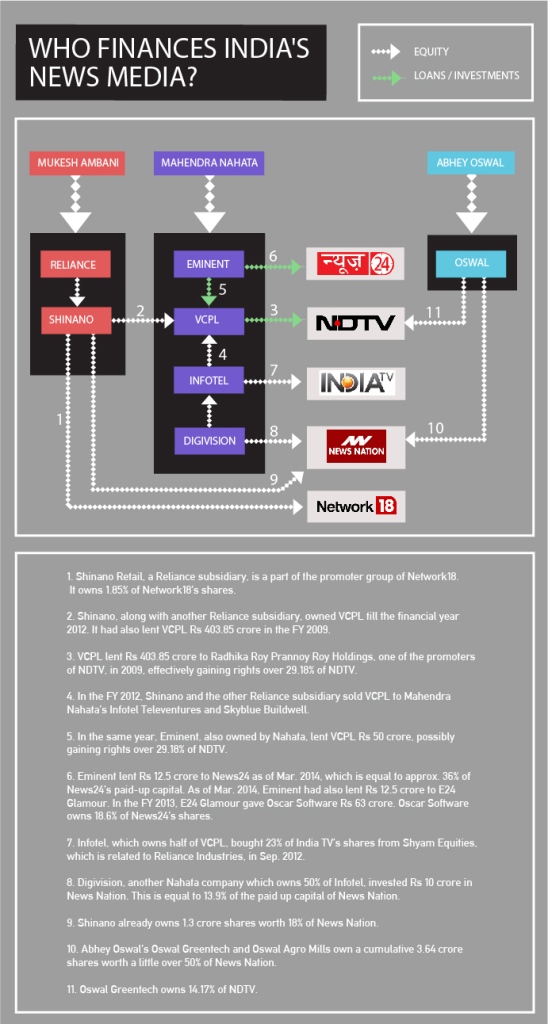
The last one requires a bit more information. This comes from V-Dem Institute which is an independent research institute based out of Department of Political Science, University of Gothenburg, Sweden. I am gonna leave the methods they use for another day as the blog post itself has become rather big/large. Apart from that is the Economists own Democracy Index -2019 Click to access democracy-index-2019.pdf Now for many people, both the V-Dem report and the Economist Index are some sort of attack against India. Doesn t matter that in V-Dem 200+ countries have been taken a variety of indicators and data or the Economist which has data from 150+- countries. Somehow India is supposed to be bigger than all these countries, they do think that other countries data specifically our neighbor China or any other neighbor, those are all accurate. How the dissonance is, has to be gauged from statements of various people. Update 11/12/20 Sadly, the newest V-Dem report marks India as getting into authoritarianism. Gag on Press and Media owners I had shared about the gag on the press especially with respect to western media or reports or anything. This news made its way to straitstimes which normally covers a wide-range of stories covering East Asia vis-a-vis India/South-East Asia. What has also been a big worry that most of the media has been in the hands of a few people. Caravan ran a story on the same in 2016, it has been four years, god only knows what the current situation might be. Any wonder that there is dearth of investigative journalism in India.
India media ownership 2016 Copyright Caravan
Incidentally, a reporter called Akarshan Uppal, who is a reporter on a channel called IBN24 had showecased just few days back how Adani has got land which was shot down for land change use in 2017 to 2020 around 100 acres. There seem to be very less details as to how the land was acquired, whose land it was etc. etc. The reporter was supposedly following a story on drugs on which he was attacked and is now lying in hospital.
Akarshan Uppal Reporter, IBN24 Copyright IBN24
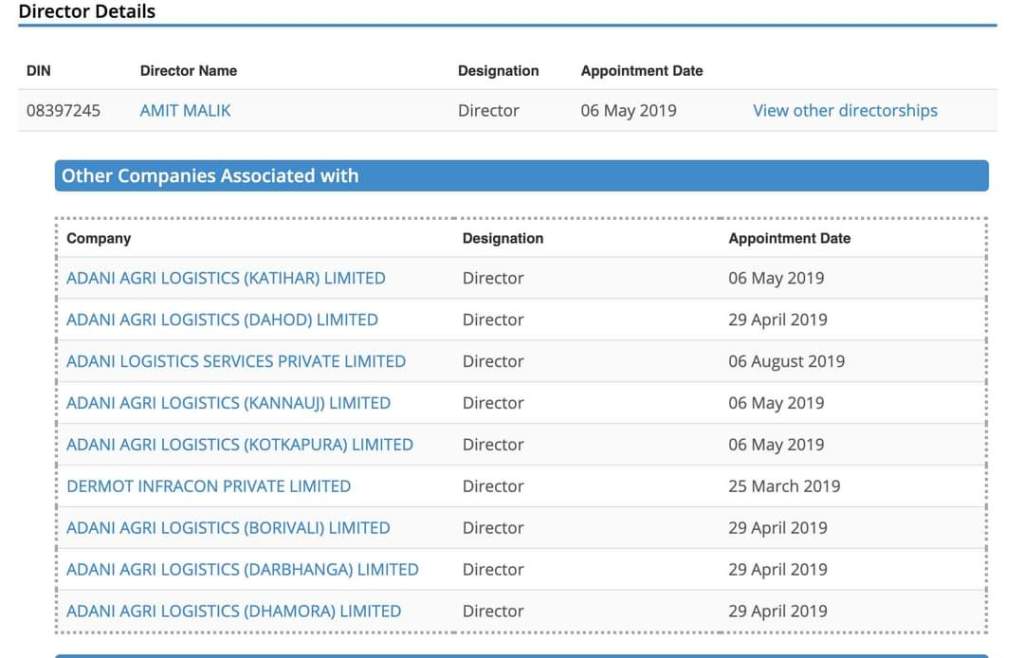
While it would take a whole article/blog post to talk about either Adani or Ambani, in the recent case, the land that has been taken over by Adani is 100 acres and there are private rail lines. And all of this was secret till few days back. The place where these massive godowns/silos have been made are Panipat s Jondhan Kalan and Naultha villages in Haryana. This is Adani AgiLogistics. Almost 7 odd companies have registered and come up in the last couple of years. As can be seen, almost all have come up within the last 2-3 years. Seems to be a lot of coincidence, isn t it?
Personal Anecdote on Data Collection and child marriages in India.

Around 1995 -96 when Internet had started to become a thing in India, there had been quite a few non-profits which were working on various issues. One of those which I initially came in contact with and which I found to be a bit absurd was non-profit which was working in the field of women against Violence. Now it is and was not the concept or the idea which was absurd to me, it was what these women were doing. Instead of the traditional ways in which you counsel women and try and figure out issues, these women were collecting data points from newspapers and magazines. This was way way before data science became a thing in India. They had their own structure where a story about violence against women which would be above the fold would be 5 points, the one below 2.5 points, in inner pages, it would be less and less. Patriarchy at that time was so strong, even today is but at that time it was such, that it felt a waste of time. I did consult them but never said that but did privately feel the above. In hindsight, they were doing the right thing and yet even today crimes against women goes unreported and is suppressed by both State and Central Governments as well as NCRB (National Crime Records Bureau). Interestingly, just few days back, the case against M.J. Akbar by Priya Ramani had taken a back seat and the defamation case by M.J. Akbar was taken forward. Even then, Priya Ramani s counsel s arguments were such that the court wound up in half an hour when they were expecting to do a whole day hearing. The next hearing would be happening today which I will look at in few hours from now. Why Priya Ramani was singled out rather than other tweets may probably be because she is an NRI and most NRI s usually do not want to be part of the bureaucratic Indian court system. This is also the reason that most companies from outside India especially those who are into startups prefer to change ownership, IPR etc. to their own or any country outside India which does make a loss to the exchequer. But this again is a story for another day. At the end, while I did not want to end on a negative note, it seems in many ways status-quo remains. For e.g. 2 years back, a BJP candidate (part of the ruling dispensation) had made a controversy saying that if they win the police won t interfere in child marriages. This is and was in Rajasthan where they have been trying to eradicate it forever. Till date, neither the NHRC (National Human Rights Commission) nor NCW (National Commission for Women) has taken cognizance of the statement. This is our state of democracy.

8 December 2020

Fran ois Marier: Opting your domain out of programmatic advertising

A few years ago, the advertising industry introduced the ads.txt project in order to defend against widespread domain spoofing vulnerabilities in programmatic advertising. I decided to use this technology to opt out of having ads sold for my domains, at least through ad exchanges which perform this check, by hosting a text file containing this:
contact=ads@fmarier.org
at the following locations: (In order to get this to work on my blog, running Ikiwiki on Branchable, I had to disable the txt plugin in order to get ads.txt to be served as a plain text file instead of being automatically rendered as HTML.)

Specification The key parts of the specification for our purposes are:
[3.1] If the server response indicates the resource does not exist (HTTP Status Code 404), the advertising system can assume no declarations exist and that no advertising system is unauthorized to buy and sell ads on the website. [3.2.1] Some publishers may choose to not authorize any advertising system by publishing an empty ads.txt file, indicating that no advertising system is authorized to buy and sell ads on the website. So that consuming systems properly read and interpret the empty file (differentiating between web servers returning error pages for the /ads.txt URL), at least one properly formatted line must be included which adheres to the format specification described above.
As you can see, the specification sadly ignores RFC8615 and requires that the ads.txt file be present directly in the root of your web server, like the venerable robots.txt file, but unlike the newer security.txt standard. If you don't want to provide an email address in your ads.txt file, the specification recommends using the following line verbatim:
placeholder.example.com, placeholder, DIRECT, placeholder

Validation A number of online validators exist, but I used the following to double-check my setup:

Russell Coker: Links December 2020

Business Insider has an informative article about the way that Google users can get locked out with no apparent reason and no recourse [1]. Something to share with clients when they consider putting everything in the cloud . Vice has an interestoing article about people jailbreaking used Teslas after Tesla has stolen software licenses that were bought with the car [2]. The Atlantic has an interesting article titled This Article Won t Change Your Mind [3]. It s one of many on the topic of echo chambers but has some interesting points that others don t seem to cover, such as regarding the benefits of groups when not everyone agrees. Inequality.org has lots of useful information about global inequality [4]. Jeffrey Goldberg has an insightful interview with Barack Obama for the Atlantic about the future course of American politics and a retrospective on his term in office [5]. A Game Designer s Analysis Of QAnon is an insightful Medium article comparing QAnon to an augmented reality game [6]. This is one of the best analysis of QAnon operations that I ve seen. Decrypting Rita is one of the most interesting web comics I ve read [7]. It makes good use of side scrolling and different layers to tell multiple stories at once. PC Mag has an article about the new features in Chrome 87 to reduce CPU use [8]. On my laptop I have 1/3 of all CPU time being used when it is idle, the majority of which is from Chrome. As the CPU has 2 cores this means the equivalent of 1 core running about 66% of the time just for background tabs. I have over 100 tabs open which I admit is a lot. But it means that the active tabs (as opposed to the plain HTML or PDF ones) are averaging more than 1% CPU time on an i7 which seems obviously unreasonable. So Chrome 87 doesn t seem to live up to Google s claims. The movie Bad President starring Stormy Daniels as herself is out [9]. Poe s Law is passe. Interesting summary of Parler, seems that it was designed by the Russians [10]. Wired has an interesting article about Indistinguishability Obfuscation, how to encrypt the operation of a program [11]. Joerg Jaspert wrote an interesting blog post about the difficulties packagine Rust and Go for Debian [12]. I think that the problem is many modern languages aren t designed well for library updates. This isn t just a problem for Debian, it s a problem for any long term support of software that doesn t involve transferring a complete archive of everything and it s a problem for any disconnected development (remote sites and sites dealing with serious security. Having an automatic system for downloading libraries is fine. But there should be an easy way of getting the same source via an archive format (zip will do as any archive can be converted to any other easily enough) and with version numbers.

Next.

Previous.