Review:
The Library of the Dead, by T.L. Huchu
| Series: |
Edinburgh Nights #1 |
| Publisher: |
Tor |
| Copyright: |
2021 |
| Printing: |
2022 |
| ISBN: |
1-250-76777-6 |
| Format: |
Kindle |
| Pages: |
329 |
The Library of the Dead is the first book in a post-apocalyptic
(sort of) urban fantasy series set in Edinburgh, written by Zimbabwean
author (and current Scotland resident) T.L. Huchu.
Ropa is a ghosttalker. This means she can see people who have died but
are still lingering because they have unfinished business. She can
stabilize them and understand what they're saying with the help of her
mbira. At the age of
fourteen, she's the sole source of income for her small family. She lives
with her grandmother and younger sister in a caravan (people in the US
call it an RV), paying rent to an enterprising farmer turned landlord.
Ropa's Edinburgh is much worse off than ours. Everything is poorer, more
run-down, and more tenuous, but other than a few hints about global
warming, we never learn the history. It reminded me a bit of the world in
Octavia Butler's
Parable of the Sower in
the feel of civilization crumbling without a specific cause. Unlike
that series,
The Library of the Dead is not about the collapse or
responses to it. The partial ruin of the city is the mostly unremarked
backdrop of Ropa's life.
Much of the book follows Ropa's daily life carrying messages for ghosts
and taking care of her family. She does discover the titular library when
a wealthier friend who got a job there shows it off to her, but it has no
significant role in the plot. (That was disappointing.) The core plot,
once Ropa is convinced by her grandmother to focus on it, is the missing
son of a dead woman, who turns out to not be the only missing child.
This is urban fantasy with the standard first-person perspective, so Ropa
is the narrator. This style of book needs a memorable protagonist, and
Ropa is certainly that. She's a talker who takes obvious delight in
narrating her own story alongside a constant patter of opinions,
observations, and Scottish dialect. Ropa is also poor.
That last may not sound that notable; a lot of urban fantasy protagonists
are not well-off. But most of them feel culturally middle-class in a way
that Ropa does not. Money may be a story constraint in other books, but
it rarely feels like a life constraint and experience the way it does
here. It's hard to describe the difference in tone succinctly, since it's
a lot of small things: the constant presence of money concerns, the
frustration of possessions that are stolen or missing and can't be
replaced, the tedious chores one has to do when there's no money, even the
language and vulgarity Ropa uses. This is rare in fantasy and excellent
characterization work.
Given that, I am still frustrated with myself over how much I struggled
with Ropa as a narrator. She's happy to talk about what is happening to
her and what she's learning about (she listens voraciously to non-fiction
while running messages), but she deflects, minimizes, or rushes past any
mention of what she's feeling. If you don't like the angst that's common
from urban fantasy protagonists, this may be the book for you. I have
complained about that angst before, and therefore feel like this should
have been the book for me, but apparently I need a minimum level of
emotional processing and introspection from the narrator. Ropa is utterly
unwilling to do any of that. It's possible to piece together what she's
feeling and worrying about, but the reader has to rely on hints and
oblique comments that she passes over quickly.
It didn't help that Ropa is not interested in the same things in her world
that I was interested in. She's not an unreliable narrator in the
conventional sense; she doesn't lie to the reader or intentionally hide
information. And yet, the experience of reading this book was, for me,
similar to reading a book with an unreliable narrator. Ropa consistently
refused to look at what I wanted her to look at or think about what I
wanted her to think about.
For example, when she has an opportunity to learn magic through books from
the titular library, her initial enthusiasm is infectious. Huchu does a
great job showing the excitement of someone who likes new ideas and likes
telling other people about the neat things she just learned. But when
things don't work the way she expected from the books, she doesn't follow
up, experiment, or try to understand why. When her grandmother tries to
explain something to her from a different angle, she blows her off and
refuses to pay attention. And when she does get magic to work, she never
tries to connect that to her previous understanding. I kept waiting for
Ropa to try to build her own mental model of magic, but she would only toy
with an idea for a few pages and then put it down and never mention it
again.
This is not a fault in the book, just a mismatch between the book and what
I wanted to read. All of this is consistent with Ropa's defensive
strategies, emotional resiliency, and approach to understanding the world.
(I strongly suspect Huchu was giving Ropa some ADHD characteristics, and
if so, I think he got it spot on.) Given that, I tried to pivot to
appreciating the characterization and the world, but that ran into another
mismatch I had with this book, and the reason why I passed on it when it
initially came out.
I tend to avoid fantasy novels about ghosts. This is not because I mind
ghosts themselves, but I've learned from experience that authors who write
about ghosts usually also write about other things that I don't want to
read about. That unfortunately was the case here;
The Library of
the Dead was too far into horror for me. There's child abuse, drugs,
body horror, and similar nastiness here, more than I wanted in my head.
Ropa's full-speed-ahead attitude and refusal to dwell on anything made it
a bit easier to read, but it was still too much for me.
Ropa is a great character who is refreshingly different than the typical
urban fantasy protagonist, and the few hints of the magical library and
world background we get were intriguing. This book was not for me, but I
can see why other people will love it.
Followed by
Our Lady of Mysterious Ailments.
Rating: 6 out of 10
 Just days after a
 Greetings from Viluppuram, Tamil Nadu, South India!
 As a preparation and warm-up for DebConf in September, the Debian
people in India have organized a miniDebConf. Well, I don t want to be
unfair to them They have been regularly organizing miniDebConfs for
over a decade, and while most of the attendees are students local to
this state in South India (the very tip of the country; Tamil Nadu
is the Eastern side, and Kerala, where Kochi is and DebConf will be
held, is the Western side), I have talked with attendees from very
different regions of this country.
This miniDebConf is somewhat similar to similarly-scoped events I have
attended in Latin America: It is mostly an outreach conference, but
it s also a great opportunity for DDs in India to meet in the famous
hallway track.
India is incredibly multicultural. Today at the hotel, I was somewhat
surprised to see people from Kerala trying to read a text written in
Tamil: Not only the languages are different, but the writing systems
also are. From what I read, Tamil script is a bit simpler to Kerala s
Mayalayam, although they come from similar roots.


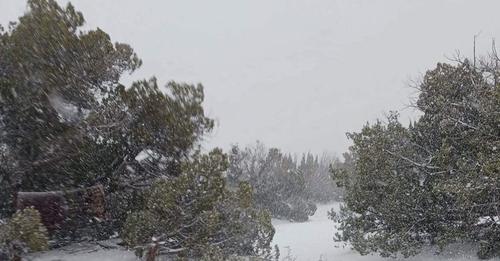 Witch Wells, AZ Snow

 After my

 For the fourth year in a row, I've asked Soci t de Transport de Montr al,
Montreal's transit agency, for the foot traffic data of Montreal's subway.
By clicking on a subway station, you'll be redirected to a graph of the
station's foot traffic.