Search Results: "agi"

21 October 2012

Gregor Herrmann: RC bugs 2012/42

as zack has mentioned earlier today, the count of RC bugs is falling. & the release team is again proposing RC buggy packages for removal from testing.

these were my RC bug related activities during the last week:

20 October 2012

Christoph Egger: Android

Hardware To make things clear: I'm having a Android 4.0.$recent tablet with considerably more horse-power than my Nokia n900 smartphone so don't tell me this is due to under-powered hardware the android is 3 years newer both in hardware and software.

Background Tasks Being somewhere with my Android Tablet. Network is kind of crappy and this site takes minutes again to load. So the most natural thing to do would be doing something else while the site continues loading in the background. This works really well on the n900. It might work with android. But of course when you switch to another Program the browser might also be shut down while you're doing something else and randomly when you switch back to your browser, not only the site hasn't loaded but the browser also forgot where you were heading. Now if you followed e.g. a link in a email you might have closed the mail program long ago (or the mail program has decided to stop) and you have to find the link again, wait again for the site to load. And remember not to background the browser or you might have to start over again. With the n900 Maemo smartphone I was able to load several pages in the background with whatever application in the foreground (like playing tuxracer) so don't tell me android has to do this to give enough power to the foreground process. If a Meamo device can load 5 pages in the background while a OpenGL game is running in the foreground there is no reason Android, with more CPU and RAM, can't load a single page in the background while I check email.

Software installation Can you imagine a system where you are unable to install software from your standard repository without registering an account first? Like after nearly two decades of Linux distributions? Maemo had this for mobile devices more than five years ago. Plus, on Maemo you'll easily find tons of good, free (as in freedom) and banner-add-free software try this on androids "Play Store".

Maximilian Attems: Basic understanding^Wmisconception of quantum physics

According to the release manager of Ubuntu the 10.12 release features the most minimal improvements: ''Doing is a quantum leap from imagining. Anyone having a minimal quantum physics exposure should be aware that a quantum leap is a very tiny leap. So according to the paraphrased intro this release should not even contain 'stable updates?!

19 October 2012

Ritesh Raj Sarraf: Reporting bugs with Apport - III

Hello World. This is the follow-up to the last 2 updates on the state of apport in Debian.
A lot has changed since the last update on Apport. Currently, in Experimental, we have version 2.6.1-2. With this version, and going forward, there will be no hacks to make it work for Debian. Thanks to Martin Pitt, with his assistance, Apport now has a very basic crashdb in place for Debian. The Debian crashdb provides Apport the interface to interact with the Debian BTS.
This change is already upstream as part of the 2.6.1 release. So for Debian, the packaging is a mere change of the crashdb from 'default' to 'debian'. Being Just Another CrashDB inside Apport, it leverage full support of future Apport releases, fixes and enhancements.
I would like to highlight some points, and some concerns, I have heard in my previous blog posts.
  • Direct email reports to the developer: This was a concern from the last blog post. There will be no such pop-up anymore. It has been knocked off.
  • Useless/Incomplete bug reports: With no proper backtrace, it is worried that the bug report will be useless. Apport has intellignece to check if the backtrace is complete. If it is not, it will not report the bug.

Pop-up for Incomplete backtrace

  • Opt-Out: What if the maintainer is not interested in apport reports? The maintainer can ship a blacklist hook into /etc/apport/blacklist.d/. See /etc/apport/blacklist.d/README.blacklist for details.
Keywords:

18 October 2012

Jonas Smedegaard: SOME DESCRIPTIVE TITLE

# Copyright (C) YEAR Free Software Foundation, Inc. # This file is distributed under the same license as the PACKAGE package. # FIRST AUTHOR <email>, YEAR. # #, fuzzy msgid "" msgstr "" "Project-Id-Version: PACKAGE VERSION\n" "POT-Creation-Date: 2012-10-12 12:27+0300\n" "PO-Revision-Date: YEAR-MO-DA HO:MI+ZONE\n" "Last-Translator: FULL NAME <email>\n" "Language-Team: LANGUAGE <ll>\n" "Language: \n" "MIME-Version: 1.0\n" "Content-Type: text/plain; charset=UTF-8\n" "Content-Transfer-Encoding: 8bit\n" #. type: Title # #, no-wrap msgid "Robot-driven phone theater" msgstr "" #. type: Plain text #, no-wrap msgid "\n" msgstr "" #. type: Plain text #, no-wrap msgid "\n" msgstr "" #. type: Plain text msgid "I collaborate with [Hello!earth][] on creating theater performances." msgstr "" #. type: Title ## #, no-wrap msgid "You've got a message!" msgstr "" #. type: Plain text msgid "" "Unlike traditional theater, however, the "stage" is everyday life. The " "familiar streets of your home town, the supermarket, or perhaps your own " "home. And the story is yours uniquely, like ancient storytelling at a " "campfire unfolding inside your head, imagined by you, only seeded by the " "storyteller." msgstr "" #. type: Plain text msgid " and the storyteller is robots, texting your cellphone." msgstr "" #. type: Title ## #, no-wrap msgid "Programming poems to be live-performed by machines" msgstr "" #. type: Plain text msgid "" "Vera and Jacob, the artists behind Hello!earth, compose "poems" that I " "program a system to "read" for the audience, triggered by a "dialogue" " "of words and actions of the audience." msgstr "" #. type: Plain text #, no-wrap msgid "[[!graph src="""\n" msgstr "" #. type: Plain text #, no-wrap msgid "" "rankdir=LR\n" "subgraph robot botphone poetrybot chatbot \n" "authors -> poetrybot -> botphone -> "phone net" -> audience;\n" "admin -> chatbot;\n" msgstr "" #. type: Plain text #, no-wrap msgid "#rank=same authors audience artists admin \n" msgstr "" #. type: Title ## #, no-wrap msgid "Who's behind the wheel?" msgstr "" #. type: Plain text msgid "When I say "robot-driven" I don't mean computers taking over." msgstr "" #. type: Plain text msgid "" "Like a car driven by the engine, these performances are driven by programs " "acting like agents with tiny missions. But like someone is (or should be!) " "steering the car to reach a sensible destination, the robot agents don't " "operate autonomously, but are steered throughout the performance." msgstr "" #. type: Plain text msgid "" "Our phone performances are guided by the plot and storyline(s) embedded " "into the robot system by HelloEarth and me. But the real beauty of it is " "that the one steering - the one really in control - are those traditionally " "called "audience", but here more accurately labelled "participants". " "Individually or collaboratively, depending on plot of each performance, the " "participants unfold the "play" in their minds, inspired by the weakest " "possible but accurately planted seeds of inspiration provided by our " "machinary." msgstr "" #. type: Plain text msgid "Theater performed by robots, controlled by the minds of the audience." msgstr "" #. type: Plain text #, no-wrap msgid "" "[hello!earth]: http://helloearth.cc/\n" " "hello!earth - platform for art projects crossing the edge of diverse performative practice"\n" msgstr ""

Jonas Smedegaard: Blended configuration

I want all my computing environments "furnished" similarly and as close to my personal taste as possible - be it big and small machines, self-administered and user accounts of others. and not only for myself - similar is needed for the environments I help maintain for my friends Siri, Erik and Peter. The environments are seldom fully equal, so simply copying things around is rarely useful. Here's a checklist of things that I need to customize and syncronize for me and my friends to feel at $HOME : Above is work-in-progress. I hope to later extend with more details - probably by linking to separate pages about each subtopic.

17 October 2012

Martin Pitt: Running a Samba server as normal user for testing

For writing tests for GVFS (current tests, proposed improvements) I want to run Samba as normal user, so that we can test gvfs smb backend without root privileges and thus can run them safely and conveniently in a make check environment for developers and in JHBuild for continuous integration testing. Before these tests could only run under gvfs-testbed, which needs root. Unlike other servers such as ssh or ftp, this turned out surprisingly non-obvious and hard, so I want to document it in this blog post for posterity s benefit. Running the server Running smbd itself is mainly an exercise of figuring out all the options that you need to set; Alex Larsson and I had some fun figuring out all the quirks and hiccups that happen between Ubuntu s and Fedora s packaging and 3.6 vs. 4.0, but finally arrived at something working. First, you need to create an empty directory where smbd can put all its databases and state files in. For tests you would use mkdtemp(), but for easier reading I just assume mkdir /tmp/samba here. The main knowledge is in the Samba configuration file, let s call it /tmp/smb.conf:
[global]
workgroup = TESTGROUP
interfaces = lo 127.0.0.0/8
smb ports = 1445
log level = 2
map to guest = Bad User
passdb backend = smbpasswd
smb passwd file = /tmp/smbpasswd
lock directory = /tmp/samba
state directory = /tmp/samba
cache directory = /tmp/samba
pid directory = /tmp/samba
private dir = /tmp/samba
ncalrpc dir = /tmp/samba
[public]
path = /tmp/public
guest ok = yes
[private]
path = /tmp/private
read only = no
For running this as a normal user you need to set a port > 1024, so this uses 1445 to resemble the original (privileged) port 445. The map to guest line makes anonymous logins work on Fedora/Samba 4.0 (I m not sure whether it s a distribution or a version issue). Don t ask about dir vs. directory , that s an inconsistency in Samba; with above names it works on both 3.6 and 4.0. We use the old smbpasswd backend as shipping large tdb files is usually too inconvenient and brittle for test suites. I created an smbpasswd file by running smbpasswd on a real Samba installation, and then using pdbedit to convert it to a smbpasswd file:
sudo smbpasswd -a martin
sudo pdbedit -i tdbsam:/var/lib/samba/passdb.tdb -e smbpasswd:/tmp/smbpasswd
The result for password foo is
myuser:0:XXXXXXXXXXXXXXXXXXXXXXXXXXXXXXXX:AC8E657F83DF82BEEA5D43BDAF7800CC:[U          ]:LCT-507C14C7:
which you are welcome to copy&paste (you can replace myuser with any valid user name, of course). This also defines two shares, one public, one authenticated. You need to create the directories and populate them a bit:
mkdir /tmp/public /tmp/private
echo hello > /tmp/public/hello.txt
echo secret > /tmp/private/myfile.txt
Now you can run the server with
smbd -iFS -s /tmp/smb.conf
The main problem with this approach is that smbd exits ( Server exit (failed to receive smb request) ) after a client terminates, so you need to write your tests in a way to only run one connection/request per test, or to start smbd in a loop. Running the client If you merely use the smbclient command line tool, this is rather simple: It has a -p option for specifying the port:
$ smbclient -p 1445 //localhost/private
Enter martin's password: [enter "foo" here]
Domain=[TESTGROUP] OS=[Unix] Server=[Samba 3.6.6]
smb: \> dir
  .                                   D        0  Wed Oct 17 08:28:23 2012
  ..                                  D        0  Wed Oct 17 08:31:24 2012
  myfile.txt                                   7  Wed Oct 17 08:28:23 2012
In the case of gvfs it wasn t so simple, however. Surprisingly, libsmbclient does not have an API to set the port, it always assumes 445. smbclient itself uses some internal libcli API which does have a way to change the port, but it s not exposed through libsmbclient. However, Alex and I found some mailing list posts ([1], [2]) that mention $LIBSMB_PROG, and it s also mentioned in smbclient s manpage. It doesn t quite work as advertised in the second ML post (you can t set it to smbd, smbd apparently doesn t speak the socket protocol over stdin/stdout), and it s not being used anywhere in the current Samba sources, but what does work is to use good old netcat:
export LIBSMB_PROG="nc localhost 1445"
with that, you can use smbclient or any program using libsmbclient to talk to our test smb server running as user.

15 October 2012

Eddy Petri&#537;or: HOWTO: sudo + cowbuilder (+git-buildpackage)

In case you tried to use git-buildpackage and wanted to use cowbuilder as a builder, you might have ran into the error

sudo: sorry, you are not allowed to preserve the environment

This is due to a change in sudo default configuration in version 1.7.4p4-2 (I know, is true since 2010) which doesn't allow the execution of commands via sudo using the parameter '-E' which means 'setenv'.

The news item even explicitly states pbuilder can be affected by this because it wants to port over to the pbuilder environment the HOME environment variable and suggests using

Defaults env_keep += HOME

But adding such a line to your /etc/sudoers.d/01_pbuilders file (/etc/sudoers is recommended to be touched only by the package) will do the same for all commands and users ran via sudo, which is, according to my preferences, too permissive.

The irony is that running git-buildpackage --git-pbuilder will invoke sudo -E cowbuilder so the env_keep suggested fix will not work because for -E to be allowed, setenv needs to be set in sudoers. This would defeat the purpose of env_reset, if done for all commands, but we can do a better job if we allow this kind of change only for the cowbuilder and pbuilder commands. You do have different commands that are allowed explicitly stated, don't you?

On my system I have made a group especially for people allowed to do packaging work, the group is called 'pack'. The only account in that group is my own.

Also, I have defined a command alias named PBUILDERS which looks something like this:

Cmnd_Alias PBUILDERS = /usr/sbin/pbuilder, /usr/sbin/cowbuilder

Running PBUILDERS is already restricted to the pack group. Here is an example that requires password on run:

%pack ALL=PBUILDERS

So all that needs to be done is to allow setenv for the PBUILDERS commands. Reading through the sudoers manpage and after some trial and error (use visudo for editting sudoers files - visudo -f /etc/sudoers.d/01_pbuilders) I found out that the symbols that distinguish between commands, users and groups in a 'Defaults' line needs to be right next to the 'Defaults' word. For command the sign is an exclamation sign '!' (for user lists it's ':') so since we want to link the exception to the command, not the user list, we'll use 'Defaults!':

Defaults! PBUILDERS setenv

Assuming you also have a PBUILDERS commands alias, this is what you need to be able to use git-buildpackage in conjunction with cowbuilder and sudo.

If there is a non-intrusive way to prevent sudo to use -E when invoking cowbuilder, please add your comment, I would be interested to know it.

14 October 2012

Michael Stapelberg: My recent systemd activity

I recently worked on the following systemd-related issues:

13 October 2012

Joachim Breitner: Creating a Debian source package without unpacking the source

There may be a situation where you want to create a Debian source package without having to unpack the upstream source. One case is where you store your debian/ directory in a version control system of its own and to build your package, you pass the .dsc file to a tool like pbuilder or some remote builder. Now a modern debian source package is just a text file (the .dsc file) that references two tarballs, one being the upstream source and the other being the Debian directory. Thanks to Niels Thykier on #debian, I found the magic invocation of dpkg-source that allows you to create the .dsc directly from the two tarballs, the control file and the changelog:

> apt-get source --download-only -t experimental haskell-mtl
Reading package lists... Done
Building dependency tree       
Reading state information... Done
NOTICE: 'haskell-mtl' packaging is maintained in the 'Darcs' version control system at:
http://darcs.debian.org/darcs/pkg-haskell/haskell-mtl
Need to get 18.8 kB of source archives.
Get:1 http://http.debian.net/debian/ experimental/main haskell-mtl 2.1.2-1 (dsc) [1616 B]
Get:2 http://http.debian.net/debian/ experimental/main haskell-mtl 2.1.2-1 (tar) [13.7 kB]
Get:3 http://http.debian.net/debian/ experimental/main haskell-mtl 2.1.2-1 (diff) [3509 B]
Fetched 18.8 kB in 0s (22.3 kB/s)    
Download complete and in download only mode
> cp ./haskell-mtl_2.1.2-1.dsc ./haskell-mtl_2.1.2-1.dsc-orig
> tar xzf haskell-mtl_2.1.2-1.debian.tar.gz
> dpkg-source -cdebian/control -ldebian/changelog --format="3.0 (custom)" --target-format="3.0 (quilt)" -b / haskell-mtl_2.1.2.orig.tar.gz haskell-mtl_2.1.2-1.debian.tar.gz
dpkg-source: info: using source format  3.0 (custom)'
dpkg-source: info: building haskell-mtl in haskell-mtl_2.1.2-1.dsc
> diff  -u haskell-mtl_2.1.2-1.dsc haskell-mtl_2.1.2-1.dsc-orig
--- haskell-mtl_2.1.2-1.dsc	2012-10-13 15:09:00.031695856 +0200
+++ haskell-mtl_2.1.2-1.dsc-orig	2012-10-13 15:08:47.267696329 +0200
@@ -1,3 +1,6 @@
+-----BEGIN PGP SIGNED MESSAGE-----
+Hash: SHA1
+
 Format: 3.0 (quilt)
 Source: haskell-mtl
 Binary: libghc-mtl-dev, libghc-mtl-prof, libghc-mtl-doc
@@ -23,3 +26,11 @@
 Files: 
  943c110524d96126bfa0e61f7df1ebcd 13723 haskell-mtl_2.1.2.orig.tar.gz
  dda5ded58a8d009ecddeed68058ca787 3509 haskell-mtl_2.1.2-1.debian.tar.gz
+
+-----BEGIN PGP SIGNATURE-----
+Version: GnuPG v1.4.12 (GNU/Linux)
+
+iEYEARECAAYFAlBzRQIACgkQ9ijrk0dDIGwymwCfW87jwCv5ZvAXPBwh0LbvYLP9
+n+wAn3TCJwPRuBDEWRYmcv3Opn1Kb9+F
+=/Llc
+-----END PGP SIGNATURE-----
As you can see, the resulting .dsc file is identical to the original one, so this approach works. The parameter to -b does not matter as long as it is some existing directory. Of course you can easily shoot yourself and others in the foot, almost as easily as hand-editing the .dsc file... but if you know what you are doing, then this can be quite handy. Next to do: Write a tool that takes an unpacked Debian directory as an argument, packs it, finds the original tarball using uscan and creates the .dsc file. Would this be something that people would want in the devscripts package?

10 October 2012

Jonathan Carter: LTSP By The Sea 2012


Last weekend I was in Southwest Harbour, Maine again for the annual LTSP hackfest (called By The Sea). It s a fun and productive event and as always it s been good catching up with LTSP folk, even though we were missing Oliver, Alkis and Vagrant. Here is a summary of what I can recall from the discussions of the weekend Recent Happenings in LTSP

  • New LTSP Website After a really long time, LTSP finally has a new website. It s a big improvement, there s a new success stories page and the wiki is now self-hosted.
  • LTSP PNP - This is a new package (ltsp-pnp) that can safely be installed on existing machines to allow a user to log into an LTSP server using LDM.
Going Forward
  • Libpamssh - This has been ongoing work in the LTSP project that will allow you to authenticate against another machine using SSH with local PAM. This will make it somewhat trivial to adapt LightDM (Light Display Manager) as a remote login manager and we can then do away with LDM (LTSP Display Manager) which currently has several big limitations. Scott Balneaves and St phane Graber made big progress on this over the weekend and it s close to an initial release.
  • New LTSP Cluster Control Center - Simon Poirier has been working on a new LTSP Cluster Control Center, the old one has been rusting away and other attempts at rewriting it didn t quite work out. He did a demonstration of the proof-of-concept code and it s looking quite nice already.
  • Squashed Bugs - Marc Gari py took some time to squash some bugs: LP: #996533, LP: #1048689 and LP: #1062947
  • Documentation - I m taking it upon myself to fix some problems we have with documentation. The lts.conf documentation is incomplete and difficult to maintain, so I will be going through the client/server code and tag all the possible settings that there are so that we can auto-generate documentation from it. David Trask will be helping out there and will be writing some nice descriptions for the config settings.
  • LTSP 6.0 and the Future of LTSP - There was a good opening discussion about the future of LTSP. The combination of all the recent partial rewrites that Alkis has been doing combined with the deprecation of LDM will culminate in what will be called LTSP 6.0. There was also some interest in having an LTSP standalone distribution again (that can be installed on none-integrated distributions) and things like an LTSP live client disc. We were also wondering about the future of pure thin clients, many upstreams are writing software that aren t at all thin client friendly (Clutter-based software like Gnome Shell and Totem, Unity, etc) and at the same time, thin client hardware is becoming increasingly powerful. It s possible that there may be a focus on making diskless fat clients working even better with LTSP and make it easier to use remote-apps for running only certain applications the application servers. We re also quite interested in projects like FreeRDP for users who would still require pure thin clients.
Social
  • On Friday, Chuck Liebow took us out for a boat ride around the harbour on the Sea Princess
  • On Saturday night we had the big lobster dinner as per BTS tradition (I had steak since I m not a big seafood person). We were to busy eating and telling stories to be taking any pictures :)
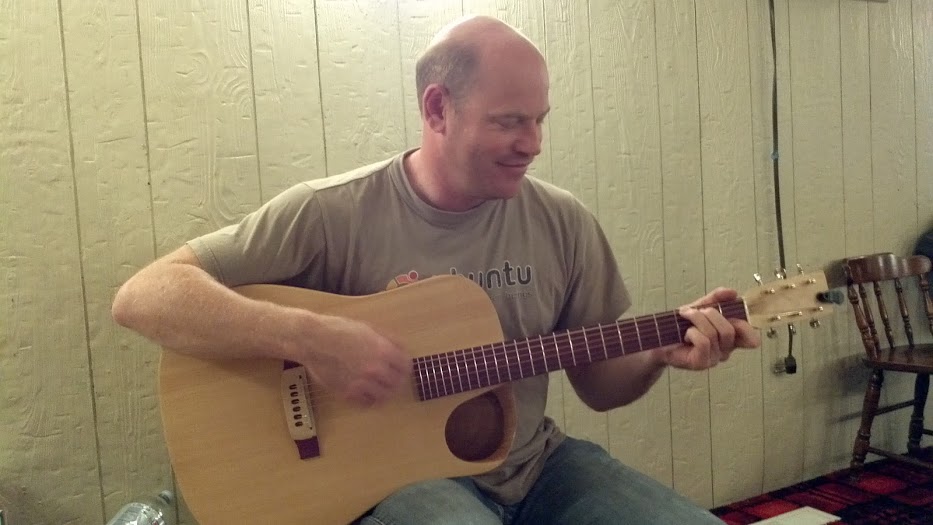
  • And last but certainly not least, I finally met Eric Harrisson, who did a lot of work on K12-LTSP in the Portland schools district. He has an awesome hobby where he builds guitars out of well, almost anything he can find.
    He brought along one of the experimental guitars he slapped together recently and told me all about how it s put together. Even more amazing, he said I could have it! I was planning on getting an acoustic guitar anyway so I m very thrilled about it. Not only is it a completely unique guitar but it sounds great too. I m going to have to think of something to make back for him!
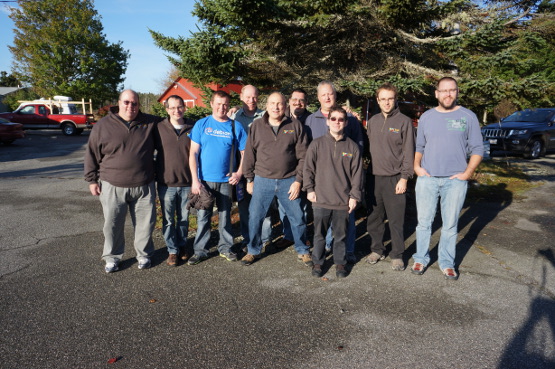
It was great seeing everyone again. I first started using LTSP around 9 years ago and never imagined back then that I d get to meet the people behind it. Ron Colcernian sourced us some really cool LTSP tops that you can see us wearing in the group photo. I hope to get to BTS again next year!

7 October 2012

Charles Plessy: Gathering metadata with Umegaya.

A Debian package contains some metadata about the packaged program. For instance, its homepage URL is stored in the source package control file (debian/control) and propagated through the Debian source control file (.dsc). The problem with this approach is that to update the metadata, one has to update the whole package. Today, thousands of Debian source packages are developed in a version control system, most often Subversion or Git. The repository's URL is also propagated through the control files mentioned above. It is then possible to monitor the main branch to detect and propagate changes without needing to upload to the Debian archive. In 2009, I proposed to centralise metadata about Upstream in a YAML-formatted file, debian/upstream. We are now using it in the Debian Med project to propagate bibliographic references about the manuscripts describing the packaged programs. The references can be seen on our web sentinels for our metapackages. The data transits through the Ultimate Debian Database (UDD). Let's imagine that the concept gains success and that thousands of packages provide a debian/upstream file. How can we avoid thousands of daily requests on Alioth to keep the database up to date ? I am developing a system called Umegaya, for Umegaya is a MEtadata GAtherer using YAml. Umegaya provides a web interface with a simple URL structure to retrieve data. For instance, http://upstream-metadata.debian.net/emboss/reference-year returns 2000, the year where the first scientific article describing EMBOSS was published. If at the time of retrieval, the previous update was older than one hour, the system will read the package's debian/upstream file again. It is therefore by reading the data that it is kept up to date. Conversely, to update the database after modifying debian/upstream, one just has to access it. Umegaya is still a draft, and many things may change. But the service is already up for more than a year at the address upstream-metadata.debian.net. It is used to fill the Subversion repository called packages-metadata, with gathers the debian/upstream, debian/control and debian/copyright files from recently uploaded packages (since a few months). One can see there that among the 3,646 copyright files, 1,218 declare themselves conformant to the machine-readable format 1.0. Because I like a lot the principle package what you use, use what you package, umegaya entered the Debian archive a few days ago.

Dominique Dumont: Dpkg source editor/checker is going native

Hello As Config::Model was becoming too big with too many dependencies, I ve moved all Debian stuff from Config::Model repository into a separate Debian repository. If you install only libconfig-model-perl 2.026-1 (from experimental), the command cme check dpkg will not work. You must also install libconfig-model-dpkg-perl to get it back. libconfig-model-dpkg-perl is currently in experimental. libconfig-model-dpkg-perl repository is hosted on Alioth in debian perl-packaging team and is a Debian native package. Nevertheless, it will be uploaded to CPAN. (just like dh-make-perl).
All people involved in packaging are welcome to hack it or suggest improvements I ll upload both packages into unstable once the dust settles. All the best
Tagged: config-model, debian, dpkg, Perl

6 October 2012

Lars Wirzenius: Obnam 1.2 (backup software)

I've just made release 1.2 of Obnam, my backup program. The NEWS file entry:
  • Added a note to --node-size that it only affects new B-trees. Thanks, Michael Brown.
  • New obnam diff subcommand to show differences (added/removed/modified files) between two generations, by Peter Valdemar M rch.
  • obnam backup now logs the names of files that are getting backed up at the INFO level rather than DEBUG.
  • The command synopsises for backup, restore, and verify commands now make it clearer that Obnam only accepts directories, not individual files, as arguments. (For now.)
  • The output from the show plugin can now be redirected with the --output=FILE option. Affected subcommands: clients, generations, genids, ls, diff, nagios-last-backup-age.
Bug fixes:
  • Notify user of errors during backups.
  • The SFTP plugin now manages to deal with repository paths starting with /~/ which already exist without crashing.
  • Character and block device nodes are now restored correctly. Thanks to Martin Dummer for the bug report.
  • The symmteric key for a toplevel repository directory is re-encrypted when a public key is added or removed to the toplevel using the add-key or remove-key subcommands.
  • Manual page typo fix. Thanks, Steve Kemp.
This release has been uploaded to my own apt repository on code.liw.fi, for squeeze and unstable. Due to the Debian freeze, I am not uploading this to Debian at this time, though some changes may eventually be uploaded there.

Timo Jyrinki: Light-weight security, Grub2 password setup problems 1.99 vs 2.00

I believe I'm not the only one who thinks that use case oriented Grub2 documentation is hard to find, and a lot of the documentation is obsolete or wrong. My main cause for writing this blog post is a currently unanswered question regarding 2.00, but meanwhile it seems months have passed and still most 1.99 documentation is wrong as well, which might be interesting to some.

The aim is to prevent grub entries from being edited, while not restricting actual booting. This protection is meant for computers not having any confidential stuff, but just wanting to do some light weight security with the assumption that the computer isn't physically opened.

Common setup

You will obviously want to disable any automatically generated root access giving entries, by for example uncommenting GRUB_DISABLE_RECOVERY="true" in /etc/default/grub on Debian or Ubuntu. Also you would disable allowing any external boot devices to be used in BIOS/EFI/coreboot, which you would also have protected with a password. And that often means you need to also disable USB legacy support, since some BIOSes tend to offer all USB devices as bootable without password otherwise (note that I guess that could also cause problems accessing setup on desktop computers if your only keyboard is USB).

1.99

So to first fix the false instructions in various places - no, setting the superuser in 00_header as instructed is not enough. It might be, but does not apply if eg. old kernels are put into submenu (Ubuntu bug 718670, Fedora bug 836259). The protection from editing does not apply there. And if you remove all but one kernel so that there is no submenu, a submenu will be automatically created when there is a new kernel installed via security updates. I didn't need the submenu feature anyway, so I used to comment out the following lines in /etc/grub.d/10_linux:

#if [ "$list" ] && ! $in_submenu; then
#echo "submenu \"Previous Linux versions\" "
#in_submenu=:
#fi
...
#if $in_submenu; then
# echo " "
#fi

I hope that was useful. I can imagine it causing a couple of family battles if the commonly instructed setup was the only protection used and there's for example a case of two computer savvy siblings that are eager to get to each others' computers...

2.00 & The Question

The problem with 2.00 is that the superusers setup yields a non-bootable system, ie. password is required for booting. But Google wasn't smiling at me today! Terrible. Can you help me (and others) with 2.00? The aim would be to have a 1.99-like setup where superuser password protects all entries from editing, but booting is fine without any passwords.

Update: Thanks, problem solved, see comments! Find the following line in /etc/grub.d/10_linux:

echo "menuentry '$(echo "$os" grub_quote)' $ CLASS \$menuentry_id_option 'gnulinux-simple-$boot_device_id' " sed "s/^/$submenu_indentation/"

And add --unrestricted there. Don't mix the line with the another menuentry line two lines earlier. The submenu problem doesn't exist anymore in 2.00.

5 October 2012

Mart&iacute;n Ferrari: KGB 1.16 is out!

It was a surprisingly busy week. The commit notification service CIA was shut down about a week ago, so I spammedsent some messages to announce that KGB could be used as a replacement, and Don Armstrong wrote a great tutorial on how to set it up. As a result, many people came to us to use our bots, or to set-up their own instances. Since then, 14 Debian sub-projects started using our bots, and we know of at least two other bots being run independently. For a small project that was mainly developed and maintained for our own use, this was quite some unexpected popularity! With bug reports and feature requests starting to flow in, Damyan Ivanov (who's basically the one doing most of the work these days) sat down and produced a new release. So, I present you, KGB 1.16! What's new
  • Added support for CVS.
  • Ability to pass a commit URL along with the commit, to provide a direct link to the change-set. This requires both client and server to be updated.
  • Some changes in the colour-scheme.
  • A new script, kgb-add-project, eases the addition of new projects to the server configuration.
Bug fixes
  • Honour 'repository' setting in client configuration file.
  • Make the server not die on reloading.
  • Re-open server log properly on reload.
  • Fix forced single-line commit mode.
  • Documentation fixes, brushed-up packaging.
Coming up soon
  • Short URL support!
  • Broadcast channels that report commits from all repositories (like CIA did on #commits).
  • New --fake option to kgb-client, to test configurations.
  • Add --save option to kgb-add-project to save changes to the config file.
  • Move URL shortening to bot (configurable).
  • Ability to use client-driven color schemes. Can be used to disable all color.
Tags: Planet Debian, KGB

Dirk Eddelbuettel: RProtoBuf 0.2.6

Release 0.2.6 of RProtoBuf arrived on CRAN earlier this morning. RProtoBuf provides GNU R bindings for the Google Protobuf data encoding library used and released by Google. This release was once more driven largely by Murray whom we have now added among the list of authors of the package too. The NEWS file entry follows below:
Changes in version 0.2.6 (2012-10-04)
  • Applied several more patches by Murray to
    • correct '_' and '__' mismatches in wrapper calls
    • update a few manual pages for style, and add examples
    • fix a bug where NAs were silently treated as TRUE for logical/bool types
    • fix a bug that caused crashes when adding vectors to optional fields
    • fix bugs in readASCII that returned empty protocol buffers when the file or connection could not be opened
    • distinguish between non-existant and not-set fieldswith has() by returning NULL in the former case.
    • fix a bug that caused non-deterministic behavior when setting a repeated message field in a protobuf to a single Message.
    • add unit tests for all of the above.
  • Added Murray to Authors: field in DESCRIPTION
  • Removed old and unconvincing example on RProtoBuf for storage and serialization in an imagined HighFrequencyFinance context
CRANberries also provides a diff to the previous release 0.2.5. More information is at the RProtoBuf page which has a draft package vignette, a 'quick' overview vignette and a unit test summary vignette. Questions, comments etc should go to the rprotobuf mailing list off the RProtoBuf page at R-Forge.

4 October 2012

Rapha&#235;l Hertzog: My Debian Activities in September 2012

This is my monthly summary of my Debian related activities. If you re among the people who made a donation to support my work (1086.48 , thanks everybody!), then you can learn how I spent your money. Otherwise it s just an interesting status update on my various projects. Dpkg I am subscribed to Launchpad s dpkg bug tracker and I was getting annoyed with the amount of noise I got under the form of bug reports that look like package foo failed to install/upgrade: package foo is already installed and configured . Those reports are a combination of a bug in APT and of random other failures (often hardware related like corrupted .deb files, or I/O errors, but sometimes also real problems in other packages) but they always end up assigned on dpkg (because dpkg is outputting an error message complaining about APT s decision to configure something that doesn t have to be configured). I simply don t have the time required to manually process and inspect all those reports, so I decided to filter them at the apport level with a new Ubuntu bug pattern that indicates that those reports are a duplicate of LP#541595. Thanks to this, the dpkg bug count quickly went down from 130 to about 80. Packaging I sponsored a new upstream version of ledgersmb. I quickly updated WordPress to version 3.4.2 since it contains security relevant fixes. I also pushed a small update of nautilus-dropbox fixing #686863 because upstream renamed the binary package that they hand out on their website from nautilus-dropbox to dropbox. Their dropbox package only conflicts with old versions of nautilus-dropbox and not with the version that Debian is shipping and thus I had to add a Conflicts on our side to forbid co-installation of both packages. Testing wheezy s installation I bought a new laptop (Lenovo Thinkpad X230) and used this as an excuse to test Wheezy s installation process. It worked mostly fine except for two things:

  1. First I noticed that it would not accept my passphrase for my encrypted partition during early boot this turned out to be already reported as #619711 but was no longer getting any attention from the package maintainer. After some IRC discussion with Julien Cristau, we prodded Michael Prokop who had apparently already offered to take care of this issue. I tested his updated package and the result got quickly uploaded.
  2. I had weird networking problems that turned out to be related to the lack of the loopback network (i.e. on localhost). This was the result of a broken /etc/network/interfaces: it had been incorrectly modified by NetworkManager. I reported this in #688355. This issue affects people with IPv6 enabled networks.
Debian France There s a resurgence of activity in Debian France. Sylvestre Ledru is leading the organization of a mini-debconf in Paris on November 24-25th. And Tanguy Ortolo is now taking care of some merchandising (Polo shirts, to change from the usual T-Shirt). I might give a talk during this mini-debconf, possibly about multi-arch. Misc It s been a few months that I noticed a 2 second lag of gnome-shell everytime that smuxi (my IRC client) sent a notification. It s very annoying, you have the impression that the entire machine freezes. So I contacted Mirco Bauer on #smuxi and we investigated a bit. It turns out that smuxi is using an old version of the notification protocol where the picture is sent as a bytestream leading to huge dbus messages. This is clearly sub-optimal so smuxi will be fixed to be able to send the path of the picture instead of the picture itself. On the other hand, it s really a bug of gnome-shell that it freezes during the time it takes to handle the bigger-than-usual dbus message. So I also filed a bug on GNOME Shell (Bugzilla #683829) to get this fixed. Librement: funding free software work I started a new project with the goal of helping free software developers to fund their free software work. It s still mostly vaporware for now but I have a public code repository, a nice logo and lots of ideas. If the topic is of interest to you, and you d like to be involved, feel free to get in touch. Otherwise stay tuned. Thanks See you next month for a new summary of my activities.

4 comments Liked this article? Click here. My blog is Flattr-enabled.

3 October 2012

Alberto Garc a: IndustryPack, QEMU and LinuxCon

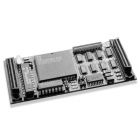
IndustryPack drivers for Linux In the past months we have been working at Igalia to give Linux support to IndustryPack devices. IndustryPack modules are small boards ( mezzanine ) that are attached to a carrier board, which serves as a bridge between them and the host bus (PCI, VME, ). We wrote the drivers for the TEWS TPCI200 PCI carrier and the GE IP-OCTAL-232 module.
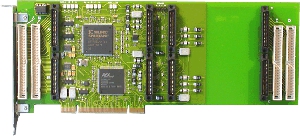
TEWS TPCI200
GE IP-OCTAL-232
My mate Samuel was the lead developer of the kernel drivers. He published some details about this work in his blog some time ago. The drivers are available in latest Linux release (3.6 as of this writing) but if you want the bleeding-edge version you can get it from here (make sure to use the staging-next branch). IndustryPack emulation for QEMU Along with Samuel s work on the kernel driver, I have been working to add emulation of the aformentioned IndustryPack devices to QEMU. The work consists on three parts:
  • TPCI200, the bridge between PCI and IndustryPack.
  • The IndustryPack bus.
  • IPOCTAL-232, an IndustryPack module with eight RS-232 serial ports.
I decided to split the emulation like this to be as close as possible to how the hardware works and to make it easier to reuse the code to implement other IndustryPack devices. The emulation is functional and can be used with the existing Linux driver. Just make sure to enable CONFIG_IPACK_BUS, CONFIG_BOARD_TPCI200 and CONFIG_SERIAL_IPOCTAL in the kernel configuration. I submitted the code to QEMU, but it hasn t been integrated yet, so if you want to test it you ll need to patch it yourself: get the QEMU source code and apply the TPCI200 patch and the IP-Octal 232 patch. Those patches have been tested with QEMU 1.2.0. And here s how you run QEMU with support for these devices:
$ qemu -device tpci200 -device ipoctal
The IP-Octal board implements eight RS-232 serial ports. Each one of those can be redirected to a character device in the host using the functionality provided by QEMU. The serial0 to serial7 parameters can be used to specify each one of the redirections. Example:
$ qemu -device tpci200 -device ipoctal,serial0=pty
With this, the first serial port of the IP-Octal board ( /dev/ipoctal.0.0.0 on the guest) will be redirected to a newly-allocated pty on the host. LinuxCon Europe Having virtual hardware allows us to test and debug the Linux driver more easily. In November I ll be in Barcelona with the rest of the Igalia OS team for LinuxCon Europe and the KVM Forum. I will be talking about how to use QEMU to improve the robustness of device drivers and speed up their development.. Some other Igalians will also be there, including Juan Su rez who will be talking about the Grilo multimedia framework. See you in Barcelona!

1 October 2012

Kees Cook: Link restrictions released in Linux 3.6

It s been a very long time coming, but symlink and hardlink restrictions have finally landed in the mainline Linux kernel as of version 3.6. The protection is at least old enough to have a driver s license in most US states, with some of the first discussions I could find dating from Aug 1996. While this protection is old (to ancient) news for anyone running Chrome OS, Ubuntu, grsecurity, or OpenWall, I m extremely excited that is can now benefit everyone running Linux. All the way from cloud monstrosities to cell phones, an entire class of vulnerability just goes away. Thanks to everyone that had a part in developing, testing, reviewing, and encouraging these changes over the years. It s quite a relief to have it finally done. I hope I never have to include the year in my patch revision serial number again. :)

2012, Kees Cook. This work is licensed under a Creative Commons Attribution-ShareAlike 3.0 License.
Creative Commons License

Next.

Previous.