Search Results: "ron"

5 July 2016

Joey Hess: twenty years of free software -- part 8 github-backup

github-backup is an attempt to take something I don't like -- github's centralization of what should be a decentralized techology -- and find a constrictive way to make it at least meet my baseline requirements for centralized systems. Namely that when they go away, I don't lose data. So, it was written partly with my ArchiveTeam hat on. A recent bug filed on it, Backup fails for repositories unavailable due to DMCA takedown made me happy, because it shows github-backup behaving more or less as intended, although perhaps not in the optimal way. By the way, this is the only one of my projects that uses github for issue tracking. Intentionally ironically. It was my second real Haskell program (after git-annex) and so also served as a good exercise in applying what I'd learned about writing Haskell up to that point. Next: twenty years of free software -- part 9 small projects

4 July 2016

Benjamin Mako Hill: Studying the relationship between remixing & learning

With more than 10 million users, the Scratch online community is the largest online community where kids learn to program. Since it was created, a central goal of the community has been to promote remixing the reworking and recombination of existing creative artifacts. As the video above shows, remixing programming projects in the current web-based version of Scratch is as easy is as clicking on the see inside button in a project web-page, and then clicking on the remix button in the web-based code editor. Today, close to 30% of projects on Scratch are remixes. Remixing plays such a central role in Scratch because its designers believed that remixing can play an important role in learning. After all, Scratch was designed first and foremost as a learning community with its roots in the Constructionist framework developed at MIT by Seymour Papert and his colleagues. The design of the Scratch online community was inspired by Papert s vision of a learning community similar to Brazilian Samba schools (Henry Jenkins writes about his experience of Samba schools in the context of Papert s vision here), and a comment Marvin Minsky made in 1984:
Adults worry a lot these days. Especially, they worry about how to make other people learn more about computers. They want to make us all computer-literate. Literacy means both reading and writing, but most books and courses about computers only tell you about writing programs. Worse, they only tell about commands and instructions and programming-language grammar rules. They hardly ever give examples. But real languages are more than words and grammar rules. There s also literature what people use the language for. No one ever learns a language from being told its grammar rules. We always start with stories about things that interest us.
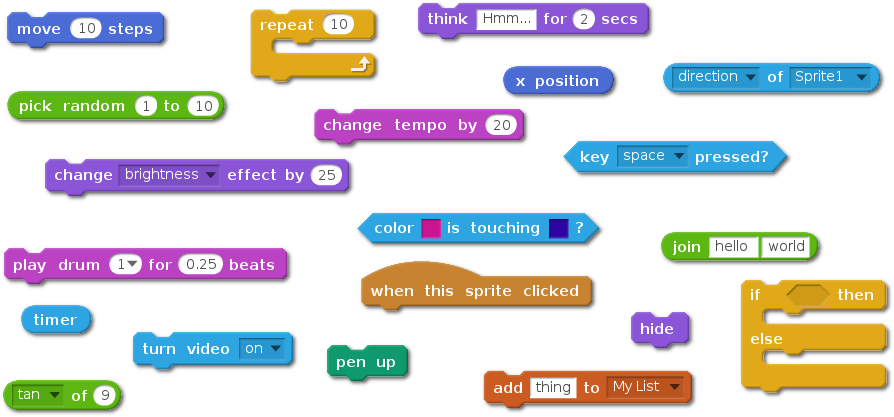
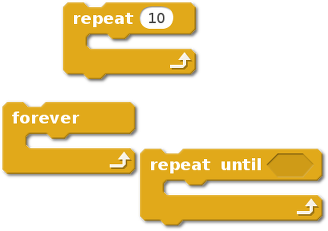
In a new paper titled Remixing as a pathway to Computational Thinking that was recently published at the ACM Conference on Computer Supported Collaborative Work and Social Computing (CSCW) conference, we used a series of quantitative measures of online behavior to try to uncover evidence that might support the theory that remixing in Scratch is positively associated with learning. scratchblocksOf course, because Scratch is an informal environment with no set path for users, no lesson plan, and no quizzes, measuring learning is an open problem. In our study, we built on two different approaches to measure learning in Scratch. The first approach considers the number of distinct types of programming blocks available in Scratch that a user has used over her lifetime in Scratch (there are 120 in total) something that can be thought of as a block repertoire or vocabulary. This measure has been used to model informal learning in Scratch in an earlier study. Using this approach, we hypothesized that users who remix more will have a faster rate of growth for their code vocabulary. Controlling for a number of factors (e.g. age of user, the general level of activity) we found evidence of a small, but positive relationship between the number of remixes a user has shared and her block vocabulary as measured by the unique blocks she used in her non-remix projects. Intriguingly, we also found a strong association between the number of downloads by a user and her vocabulary growth. One interpretation is that this learning might also be associated with less active forms of appropriation, like the process of reading source code described by Minksy. The second approach we used considered specific concepts in programming, such as loops, or event-handling. To measure this, we utilized a mapping of Scratch blocks to key programming concepts found in this paper by Karen Brennan and Mitchel Resnick. For example, in the image below are all the Scratch blocks mapped to the concept of loop . scratchblocksctWe looked at six concepts in total (conditionals, data, events, loops, operators, and parallelism). In each case, we hypothesized that if someone has had never used a given concept before, they would be more likely to use that concept after encountering it while remixing an existing project. Using this second approach, we found that users who had never used a concept were more likely to do so if they had been exposed to the concept through remixing. Although some concepts were more widely used than others, we found a positive relationship between concept use and exposure through remixing for each of the six concepts. We found that this relationship was true even if we ignored obvious examples of cutting and pasting of blocks of code. In all of these models, we found what we believe is evidence of learning through remixing. Of course, there are many limitations in this work. What we found are all positive correlations we do not know if these relationships are causal. Moreover, our measures do not really tell us whether someone has understood the usage of a given block or programming concept.However, even with these limitations, we are excited by the results of our work, and we plan to build on what we have. Our next steps include developing and utilizing better measures of learning, as well as looking at other methods of appropriation like viewing the source code of a project.

This blog post and the paper it describes are collaborative work with Sayamindu Dasgupta, Andr s Monroy-Hern ndez, and William Hale. The paper is released as open access so anyone can read the entire paper here. This blog post was also posted on Sayamindu Dasgupta s blog and on Medium by the MIT Media Lab.

Gunnar Wolf: Got the C.H.I.P.s for DebConf!

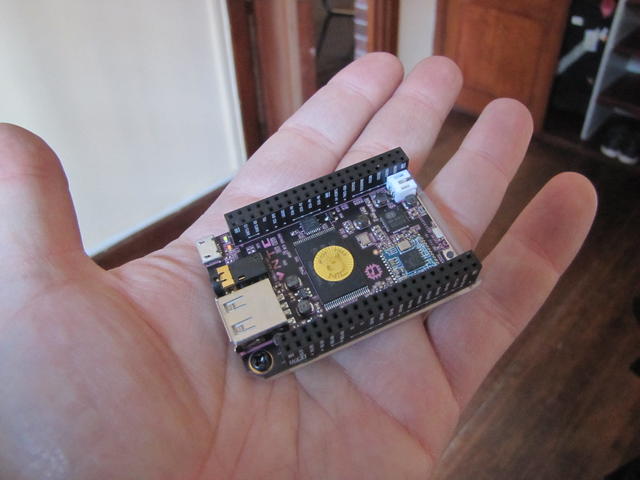
I had my strong doubts as to whether the shipment would be allowed through customs, and was happily surprised by a smiling Graham today before noon. He handed me a smallish box that arrived to his office, containing... Our fifty C.H.I.P. computers, those I offered to give away at DebConf! The little machines are quite neat. They are beautiful little devices, including even a plastic back (so you can safely work with it over a conductive surface or things like that). Quite smaller than the usual Raspberry-like format. It has more than enough GPIO to make several of my friends around here drool about the possibilities. So, what's to this machine besides a nice small ARM CPU, 512MB RAM, wireless connectivity (Wifi and bluetooth)? Although I have not yet looked into them (but intend to do so very soon!), it promises to have the freest available hardware around, and is meant for high hackability! And not that it matters But we managed to import them all, legally and completely hassle-free, into South Africa! That's right We are all used to the declaring commercial value as one dollar mindset. But... The C.H.I.P.s are actually priced at US$9 a piece. The declared commercial value is US$450. South Africans said all their customs are very hard to clear But we were able receive 50 legally shipped computers, declared at their commercial value, without any hassles! (yes, we might have been extremely lucky as well) Anyway, stay tuned By Thursday I will announce the list of people that get to take one home. I still have some left, so feel free to mail me at gwolf+chip@gwolf.org.

3 July 2016

Joey Hess: twenty years of free software -- part 7 git-annex

My first Haskell program, and the only software I've written that was inspired by living in a particular place, git-annex has received the lion's share of my time for five years. It was written just to solve my own problem, but in a general way, that turned out to be useful in lots of other situations. So over the first half a year or so, it started attracting some early adopters who made some very helpful suggestions. Then I did the git-annex assistant kickstarter, and started blogging about each day I worked on it. Four years of funding and seven hundred and twenty one posts later, the git-annex devblog is still going. So, I won't talk about technical details in this post, they've all been covered. One thing I wondered when starting git-annex -- besides whether I would be able to write it in Haskell at all -- was would that prevent it from getting many patches. I count roughly 65 "thanks" messages in the changelog, so it gets perhaps one patch contributed per month. It's hard to say if that's a lot or a little. Part of git-annex is supporting various cloud storage systems via "special remotes". Of those not written by me, only 1 was contributed in Haskell. Compare with 13 that use the plugin system that lets other programming languages be used. The other question about using Haskell is, did it make git-annex a better program. I think it did. The strong type system did prevent plenty of bugs, although there have still been some real howlers. The code is still not taking full advantage of the power of Haskell's type system, on the other hand it uses many Haskell libraries that do leverage the type system more. I've done more small and large refactorings of git-annex than on any other program I've written, because the strong types and referential transparency makes refactoring easier and safer in Haskell. And the code has turned out to be much more flexible, for all its static types, than the kind of code I was writing before. Examples include building the git-annex assistant, which uses the rest of git-annex as a library, and making git-annex run actions concurrently, thanks to there being no global variables to complicate things (and excellent support for concurrency and parallelism in Haskell). So: Glad I wrote it, glad I used Haskell for it, estatic that many other people have found it useful, and astounded that I've been funded to work on it for four years. Next: twenty years of free software -- part 8 github-backup

Iustin Pop: A relaxation week

A (forced) relaxation week This was an interesting week, much more so than I expected. The start of the week was the usual: on Monday a run, although at an easier pace after Sunday's longer indoor bike ride, on Tuesday a 30Km outside bike ride (flat, on road, with a mountain bike so not fast at all). On Wednesday however, I had a planned "intervention" at my dentist bone reconstruction (or regeneration, not sure what the right term is for the implantation of scaffolding). The dentist told me I won't be allowed to do sports, especially in the first few days after the procedure, so I knew I will have to take it easy; easy bike rides are fine, but not anything more (e.g. especially not running). The procedure went well and after that I went to work (the dentist looked at me in a funny way when I mentioned I'm not going home but instead back to work). There was a bit of pain a couple of hours after the local anaesthesia went away, but the painkillers did work, so I was able to function somewhat OK. Laughing was the only thing that caused pain, so I tried to be very serious; didn't work well On Thursday morning however, I did feel funny and when I looked into the mirror, I got a shock. The affected side of my face was heavily swollen, and I was feeling as bad as I looked. I had a followup checkup at the dentist, so I went there, and they told me Oh, this is normal. Bone reconstruction is much more difficult on the body as opposed to extraction, since the body actually has to rebuild stuff, instead of just healing the wound. And yes, you should just go back home and take the day off! . OK, logically that explanation makes sense, but my dental extraction had a very predictable pain/recovery curve (spike right at the extraction, plateau for that day, then slow recovery that went to faster recovery after a few days). This procedure was very different, with the first day easy, and the second day much worse. The dentist continued Oh, and by the way, expect this to be worse in the morning, as the body can work all night; also, this should go away by itself over the weekend, so let's meet again on Monday. At this point I realised than I'm not allowed to do sports is not by doctor's orders, but rather my condition doesn't allow me to do sport . Sad panda Friday was even worse; my face was swollen in a different way, such that I looked even more like a monster from the Witcher games. I had to stay at home again, not being able to do much, as the painkillers I got were mostly ineffective. From my usual ~10K steps a day (or more if I run), my Friday was a paltry sub-2K step day. The only thing I was able to do was watch anime. I found Log Horizon to be a pretty interesting anime, much more so than what the synopsis said; the ramification on politics and how to interaction between the two cultures unfolded was much more in-depth than I presumed. Didn't finish it yet, so this is a partial but very strong recommendation for it. Besides watching stuff, I also went to the shop to buy some food, which turned out to be an excuse for "junk food foraging!". The pain took my willpower away and instead of the planned and short grocery list, I found myself with lots of chocolate and ice cream on my hands. Funny how the brain works On Saturday I was a bit better; the swelling went partially away, so if you squinted you could pretend I look my normal-ugly, not the monster-ugly from before. I was able to go outside of the house, do some shopping, etc. so I was able to go back to a ~9K steps day. I also stopped taking painkillers since anyway they weren't of much help, and kept myself entertained with movies and other stuff (cough cough Grim Dawn , since it's a mindless click-kill-loot-repeat ARPG that one can play even when only partially functional). Today (Sunday) was swelling was slightly worse; however, I was feeling well enough to try to go back on the bike trainer (the first three days of "no sports" were over), and planned to do a slow/relaxing one hour Zwift ride. Right, as all the people who ever tried this, it works as long as only fast people overtake you (since you can't catch them anyway), or as long as you don't get to sprint sections. I did slightly improve my Watopia 300m sprint personal record (29.20s 28.29s), which was good enough. After the first lap I took it easier as in had to, since I was not really in shape. I was in any case very glad about ending my 4 days long break from sports! So, my dentist was right indeed. The swelling did by and large clear up over the weekend (although I'll have to see how tomorrow will be), and was also right about how much more difficult this was. On one hand makes sense (growing bone does sound complex), on the other hand, I couldn't imagine that the body works so hard that it puts you out. The dentist was however slightly wrong with the you should not do any strenuous activity, especially in the first three days ; they should have said, ha ha, you'll be flat out for the first days, take it easy and enjoy the painkillers instead. Looking forward now to get back into my regular routine; relaxation is good, but only when done by choice like most things in life

Paul Wise: DebConf16 Open Festival day 1

Today was day one of the DebConf16 Open Festival and I attended the open hardware panel, part of the talk about Code For South Africa, shirish's experiences and the DebConf new folks session. The open hardware panel was a wide ranging discussion between bdale, Andy and indiebio. bdate talked about the experiences he has had with his rocketry hardware. bdale said "Make concious decisions about what you are buying", referencing a case where he investigated, found a GPL violation and didn't buy. Various people care about openness of different layers of the hardware. Off-the-shelf products are very strongly integrated, which is great for makers but means that people who care about lower layers like CPU micro-architecture aren't able to participate. Andy said "We are just beginning to come out of the shareware stage [of open hardware]". bdale mentioned the companies who do hardware production as a service from design files. Later in the pub some folks mentioned j-core, an open re-implementation of SuperH processors. I missed most of the code4sa talk unfortunately, but it was about government services and open data. shirish covered his journey through life to Debian. His youth, how satellite TV and knowledge of the outside world came to India around the time of the Iraq war. His experience accessing the Internet for the first time, uncensored vs the usual censorship in India's media. His experiences of Windows 95 viruses and crashes. He learned of PCTwist Linux through a magazine cover. His initial install was not a success but eventually managed to break through and install a desktop, but experienced network and other issues. Eventually he encountered Ubuntu and began contributing bug reports. His experiences there led him to Debian. He began blogging about Debian. In the last few years he and others have been going around the country doing mini-DebConfs at institutes around India. The first question was predictably about having a DebConf in India and how shirish might like to get more involved. DebConf in India sounds like a possibility some day and shirish was thinking about getting involved in publicity, marketting and the Debian installer. The DebConf new folks session was a great intro to DebConf for folks new to the community. There were some quite excellent touches added to this year's version of the event by indiebio and Rhonda. I also got some things done. Usual spam reporting. Reviewed wiki RecentChanges. Talked to the chromium-bsu/MacPorts maintainer about AX_CHECK_GL brokenness. Filed Debian wishlist bug #829292 asking to update autoconf-archive. Redirected a Hurd porterbox request to the exodar admin and quickly found out I was wrong to do that, rectified. Then we found out the LDAP sync to exodar was broken. Replied to someone who intends to sell Debian pre-installs. Thanked BunsenLabs folks for joining the derivatives list. Applied reproducible builds patch for cats from Chris Lamb. Heard about awesome new terminal-mode screensaver. Moo! Prepared a blog post about check-all-the-things.

Lisandro Dami n Nicanor P rez Meyer: Upcoming KDEPIM changes in unstable (KMail, Kontact, KOrganizer, etc)

For those who care about kdepim (kmail, kontact, korganizer, etc)

Currently the latest version of kdepim is available in experimental. According to our limited tests it's working way better than kdepim 4.14 (more stable, more performant, less bugs). However migrating from one to the other is not a trivial process (distribution wise, hopefully not for our users).

Among the drawbacks in the new kdepim: knode, ktimetracker and kjots were dropped from the official kdepim components. kjots is now an independent project, not tied to the kdepim release cycle. But more importantly, knode and ktimetracker are not maintained upstream any more, we are temporarily still shipping the old KDE 4 versions, but we will drop them after stretch unless they get new upstream maintainers.

To iron out the wrinkles that are surely still there, we are now planning to start a transition for kdepim, effectively blocking all kdepim related packages in unstable until the transition is complete. This will allow us to keep the current kdepim in testing unchanged until kdepim 16.04 is ready to migrate fully to testing.

If you want to test the new kdepim versions right now, please use the version in experimental, as uploading all the packages to unstable will take some time until there is a working kdepim in unstable (mixing experimental and the unstable uploads should be fine).

If you depend on having a working kdepim, please avoid installing the new kdepim packages that will be landing in unstable in the following days, until all the components are available. We expect this will take a couple of weeks, we will post another entry when the packages are ready in unstable.

A list of the binary packages involved in the transition can be found [here].

If you find issues in the new packages, please let us know either via irc in #debian-kde, the kde mailing list debian-kde@lists.debian.org, or send us a bug report (please make sure that it wasn't reported before).

We'll send an updated note when kdepim is fully uploaded to unstable.

Happy hacking,

The Debian Qt/KDE Team.

2 July 2016

Joey Hess: twenty years of free software -- part 6 moreutils

moreutils is a little love letter to the Unix Tools philosophy. It was interesting to try to find new tools as basic as cat and ls. With sponge and vidir and ifne and chronic and others, we managed to find several such tools. So, it was fun to work on moreutils, but it also ran into inherent problems with the Unix Tools philosophy. One is namespacing; there are only so many good short names for commands, and a command like parallel can easily collide with something else. And since Unix Tools have a bigger surface area than a pure function, my parallel is not going to be quite compatible with your parallel, even if they were developed with (erm) parallel intentions. Partly due to that problem, I have gotten pickier about adding new tools to moreutils as it's gotten older, and so there's a lot of suggested additions that I will probably never get to. And as my mention of pure functions suggests, I have kind of moved on from being a big fan of the Unix Tools philosophy. Unix tools are a decent approximation of pure functions for their time, but they are not really pure, and not typed at all, and not usefully namespaced, and this limits them. Next: twenty years of free software -- part 7 git-annex

Paul Tagliamonte: Hello, InfluxDB

Last week, I posted about python-sense, and API wrapper for the internal Sense API. I wrote this so that I could pull data about myself into my own databases, allowing me to use that information for myself. One way I'm doing this is by pulling my room data into an InfluxDB database, letting me run time series queries against my environmental data.
#!/usr/bin/env python
from influxdb import InfluxDBClient
import json
import datetime as dt
from sense.service import Sense
api = Sense()
data = api.room_sensors(quantity=20)
def items(data):
    for flavor, series in data.items():
        for datum in reversed(series):
            value = datum['value']
            if value == -1:
                continue
            timezone = dt.timezone(dt.timedelta(
                seconds=datum['offset_millis'] / 1000,
            ))
            when = dt.datetime.fromtimestamp(
                datum['datetime'] / 1000,
            ).replace(tzinfo=timezone)
            yield flavor, when, value
client = InfluxDBClient(
    'url.to.host.here',
    443,
    'username',
    'password',
    'sense',
    ssl=True,
)
def series(data):
    for flavor, when, value in items(data):
        yield  
            "measurement": " ".format(flavor),
            "tags":  
                "user": "paultag"
             ,
            "time": when.isoformat(),
            "fields":  
                "value": value,
             
         
client.write_points(list(series(data)))
I'm able to run this on a cron, automatically loading data from the Sense API into my Influx database. I can then use that with something like Grafana, to check out what my room looks like over time.

1 July 2016

Thorsten Alteholz: My Debian Activities in June 2016

FTP assistant This month I marked 233 packages for accept and rejected 29. I also sent 11 emails to maintainers asking questions. Currently there are 33 packages in NEW and the minimum this week has been as low as 24 packages. Come on you fellow developers, where are your packages? I am sure you can do better :-) . Debian LTS This was my twenty-fourth month that I did some work for the Debian LTS initiative, started by Raphael Hertzog at Freexian. This month my all in all workload has been 18.75h. This resulted in patches for 13 CVEs and the following uploads: I also looked at mxml and libstruts1.2-java and marked CVEs for these packages as no-dsa . I also reviewed a patch of Salvatore for an embargoed CVE of xerces-c. Last but not least I looked at the remaining two CVEs for asterisk, but was not really able to create working patches This month I called again for testing php5. Thanks a lot to Stefan and anybody else who sent in their reports! As there are already new CVEs for php5 available, I am afraid I need your support again in July This month I also had another term of frontdesk work and answered questions or looked for CVEs that are important for Wheezy LTS or could be ignored. Other stuff I made some progress with the Alljoyn framework. Up to now the following packages are available: Unfortunately as some of those modules still need to be released in current versions, there are some gaps. Anyway, the next uploads will include an XMPP connector, to basically bridge a local AllJoyn bus to a remote AllJoyn bus over XMPP. Further, with the lighting module, real lamps can be switched on and off and much more. Also the Home Appliances and Entertainment Service Framework seems to be interesting as well. In the Javascript world I uploaded some new packages and uploaded new versions for the following packages:

Joachim Breitner: When to reroll a six

This is a story about counter-intuitive probabilities and how a small bit of doubt turned out to be very justified. It begins with the game To Court the King (German: Um Krone und Kragen ). It is a nice game with dice and cards, where you start with a few dice, and use your dice rolls to buy additional cards, which give you extra dice or special powers to modify the dice that you rolled. You can actually roll your dice many times, but every time, you have to set aside at least one die, which you can no longer change or reroll, until eventually all dice have been set aside. A few years ago, I have played this game a lot, both online (on yucata.de) as well as in real life. It soon became apparent that it is almost always better to go for the cards that give you an extra die, instead of those that let you modify the dice. Intuitively, this is because every additional die allows you to re-roll your dice once more. I concluded that if I have a certain number of dice (say, n), and I want to have a sum as high as possible at the end, then it may make sense to reroll as many dice as possible, setting aside only those showing a 6 (because that is the best you can get) or, if there is no dice showing a 6, then a single die with the best score. Besides for small number of dice (2 or 3), where even a 4 or 5 is worth keeping, this seemed to be a simple, obvious and correct strategy to maximize the expected outcome of this simplified game. It is definitely simple and obvious. But some doubt that it was correct remained. Having one more die still in the game (i.e. not set aside) definitely improves your expected score, because you can reroll the dice more often. How large is this advantage? What if it ever exceeds 6 then it would make sense to reroll a 6. The thought was strange, but I could not dismiss it. So I did what one does these days if one has a question: I posed it on the mathematics site of StackExchange. That was January 2015, and nothing happened. I tried to answer it myself a month later, or at least work towards at an answer, and did that by brute force. Using a library for probabilistic calculations for Haskell I could write some code that simply calculated the various expected values of n dice for up to n = 9 (beyond that, my unoptimized code would take too long):
1:  3.50000 (+3.50000)
2:  8.23611 (+4.73611)
3: 13.42490 (+5.18879)
4: 18.84364 (+5.41874)
5: 24.43605 (+5.59241)
6: 30.15198 (+5.71592)
7: 35.95216 (+5.80018)
8: 41.80969 (+5.85753)
9: 47.70676 (+5.89707)
Note that this calculation, although printed as floating point numbers, is performed using fractions of unbounded integers, so there are no rounding issues that could skew the result. The result supported the hypothesis that there is no point in rolling a 6 again: The value of an additional die grows and approaches 6 from beyond, but judging from these number is never going to reach it. Then again nothing happened. Until 14 month later, when some Byron Schmuland came along, found this an interesting puzzle, and set out a 500 point bounty to whoever solved this problem. This attracted a bit attention, and a few not very successful attempts at solving this. Eventually it reached twitter, where Roman Cheplyaka linked to it. Coincidally a day later some joriki came along, and he had a very good idea: Why not make our life easier and think about dice with less sides, and look at 3 instead of 6. This way, and using a more efficient implementation (but still properly using rationals), he could do a similar calculation for up to 50 dice. And it was very lucky that he went to 50, and not just 25, because up to 27, the results were very much as expected, approaching value of +3 from below. But then it surpassed +3 and became +3.000000008463403. In other words: If you have roll 28 dice, and you have exactly two dice showing a 3, then it gives you better expected score if you set aside only one 3, and not both of them. The advantage is minuscule, but that does not matter it is there. From then on, the results behaved strangely. Between 28 and 34, the additional value was larger than 3. Then, from 35 on again lower than 2. It oscillated. Something similar could be observed when the game is played with coins. Eventually, joriki improved his code and applied enough tricks so that he could solve it also for the 6-sided die: The difference of the expected value of 198 dice and having 199 dice is larger than 6 (by 10 21...)! The optimizations that allowed him to calculate these numbers in a reasonable amount of time unfortunately was to assume that my original hypothesis (never rerolling a 6 is optimal), which held until n < 199. But this meant that for n > 199, the code did not yield correct results. What is the rationale of the story? Don t trust common sense when it comes to statistics; don t judge a sequence just from a few initial numbers; if you have an interesting question, post it online and wait for 16 months.

Elena 'valhalla' Grandi: Busy/idle status indicator

Busy/idle status indicator


About one year ago, during my first http://debconf15.debconf.org/, I've felt the need for some way to tell people whether I was busy on my laptop doing stuff that required concentration or just passing some time between talks etc. and available for interruptions, socialization or context switches.

One easily available method of course would have been to ping me on IRC (and then probably go on chatting on it while being in the same room, of course :) ), but I wanted to try something that allowed for less planning and worked even in places with less connectivity.

My first idea was a base laptop sticker with two statuses and then a removable one used to cover the wrong status and point to the correct one, and I still think it would be nice, but having it printed is probably going to be somewhat expensive, so I shelved the project for the time being.

Immagine/foto

Lately, however, I've been playing with hexagonal stickers https://terinjokes.github.io/StickerConstructorSpec/ and decided to design something on this topic, whith the result in the figure above, with the hacking sticker being my first choice, and the concentrating alternative probably useful while surrounded by people who may misunderstand the term hacking .

While idly looking around for sticker printing prices I realized that it didn't necessarly have to be a sticker and started to consider alternatives.

One format I'm trying is inspired by "do not disturb" door signs: I've used some laminating pouches I already had around which are slightly bigger than credit-card format (but credit-card size would also work of course ) and cut a notch so that they can be attached to the open lid of a laptop.

Immagine/fotoImmagine/foto

They seem to fit well on my laptop lid, and apart from a bad tendency to attract every bit of lint in a radius of a few meters the form factor looks good. I'll try to use them at the next conference to see if they actually work for their intended purpose.

SVG sources (and a PDF) are available on my website http://www.trueelena.org/computers/projects/busy_idle_indicator.html under the CC-BY-SA license.

30 June 2016

Chris Lamb: Free software activities in June 2016

Here is my monthly update covering a large part of what I have been doing in the free software world (previously):
Debian My work in the Reproducible Builds project was covered in our weekly reports. (#58, #59 & #60)
Debian LTS

This month I have been paid to work 18 hours on Debian Long Term Support (LTS). In that time I did the following:
  • "Frontdesk" duties, triaging CVEs, etc.
  • Extended the lts-cve-triage.py script to ignore packages that are not subject to Long Term Support.

  • Issued DLA 512-1 for mantis fixing an XSS vulnerability.
  • Issued DLA 513-1 for nspr correcting a buffer overflow in a sprintf utility.
  • Issued DLA 515-1 for libav patching a memory corruption issue.
  • Issued DLA 524-1 for squidguard fixing a reflected cross-site scripting vulnerability.
  • Issued DLA 525-1 for gimp correcting a use-after-free vulnerability in the channel and layer properties parsing process.

Uploads
  • redis (2:3.2.1-1) New upstream bugfix release, plus subsequent upload to the backports repository.
  • python-django (1.10~beta1-1) New upstream experimental release.
  • libfiu (0.94-5) Misc packaging updates.


RC bugs

I also filed 170 FTBFS bugs against a7xpg, acepack, android-platform-dalvik, android-platform-frameworks-base, android-platform-system-extras, android-platform-tools-base, apache-directory-api, aplpy, appstream-generator, arc-gui-clients, assertj-core, astroml, bamf, breathe, buildbot, cached-property, calf, celery-haystack, charmtimetracker, clapack, cmake, commons-javaflow, dataquay, dbi, django-celery, django-celery-transactions, django-classy-tags, django-compat, django-countries, django-floppyforms, django-hijack, django-localflavor, django-markupfield, django-model-utils, django-nose, django-pipeline, django-polymorphic, django-recurrence, django-sekizai, django-sitetree, django-stronghold, django-taggit, dune-functions, elementtidy, epic4-help, fcopulae, fextremes, fnonlinear, foreign, fort77, fregression, gap-alnuth, gcin, gdb-avr, ggcov, git-repair, glance, gnome-twitch, gnustep-gui, golang-github-audriusbutkevicius-go-nat-pmp, golang-github-gosimple-slug, gprbuild, grafana, grantlee5, graphite-api, guacamole-server, ido, jless, jodreports, jreen, kdeedu-data, kdewebdev, kwalify, libarray-refelem-perl, libdbusmenu, libdebian-package-html-perl, libdevice-modem-perl, libindicator, liblrdf, libmail-milter-perl, libopenraw, libvisca, linuxdcpp, lme4, marble, mgcv, mini-buildd, mu-cade, mvtnorm, nose, octave-epstk, onioncircuits, opencolorio, parsec47, phantomjs, php-guzzlehttp-ringphp, pjproject, pokerth, prayer, pyevolve, pyinfra, python-asdf, python-ceilometermiddleware, python-django-bootstrap-form, python-django-compressor, python-django-contact-form, python-django-debug-toolbar, python-django-extensions, python-django-feincms, python-django-formtools, python-django-jsonfield, python-django-mptt, python-django-openstack-auth, python-django-pyscss, python-django-registration, python-django-tagging, python-django-treebeard, python-geopandas, python-hdf5storage, python-hypothesis, python-jingo, python-libarchive-c, python-mhash, python-oauth2client, python-proliantutils, python-pytc, python-restless, python-tidylib, python-websockets, pyvows, qct, qgo, qmidinet, quodlibet, r-cran-gss, r-cran-runit, r-cran-sn, r-cran-stabledist, r-cran-xml, rgl, rglpk, rkt, rodbc, ruby-devise-two-factor, ruby-json-schema, ruby-puppet-syntax, ruby-rspec-puppet, ruby-state-machine, ruby-xmlparser, ryu, sbd, scanlogd, signond, slpvm, sogo, sphinx-argparse, squirrel3, sugar-jukebox-activity, sugar-log-activity, systemd, tiles, tkrplot, twill, ucommon, urca, v4l-utils, view3dscene, xqilla, youtube-dl & zope.interface.

FTP Team

As a Debian FTP assistant I ACCEPTed 186 packages: akonadi4, alljoyn-core-1509, alljoyn-core-1604, alljoyn-gateway-1504, alljoyn-services-1504, alljoyn-services-1509, alljoyn-thin-client-1504, alljoyn-thin-client-1509, alljoyn-thin-client-1604, apertium-arg, apertium-arg-cat, apertium-eo-fr, apertium-es-it, apertium-eu-en, apertium-hbs, apertium-hin, apertium-isl, apertium-kaz, apertium-spa, apertium-spa-arg, apertium-tat, apertium-urd, arc-theme, argus-clients, ariba, beast-mcmc, binwalk, bottleneck, colorfultabs, dh-runit, django-modeltranslation, dq, dublin-traceroute, duktape, edk2, emacs-pdf-tools, eris, erlang-p1-oauth2, erlang-p1-sqlite3, erlang-p1-xmlrpc, faba-icon-theme, firefox-branding-iceweasel, golang-1.6, golang-defaults, golang-github-aelsabbahy-gonetstat, golang-github-howeyc-gopass, golang-github-oleiade-reflections, golang-websocket, google-android-m2repository-installer, googler, goto-chg-el, gr-radar, growl-for-linux, guvcview, haskell-open-browser, ipe, labplot, libalt-alien-ffi-system-perl, libanyevent-fcgi-perl, libcds-savot-java, libclass-ehierarchy-perl, libconfig-properties-perl, libffi-checklib-perl, libffi-platypus-perl, libhtml-element-library-perl, liblwp-authen-oauth2-perl, libmediawiki-dumpfile-perl, libmessage-passing-zeromq-perl, libmoosex-types-portnumber-perl, libmpack, libnet-ip-xs-perl, libperl-osnames-perl, libpodofo, libprogress-any-perl, libqtpas, librdkafka, libreoffice, libretro-beetle-pce-fast, libretro-beetle-psx, libretro-beetle-vb, libretro-beetle-wswan, libretro-bsnes-mercury, libretro-mupen64plus, libservicelog, libtemplate-plugin-datetime-perl, libtext-metaphone-perl, libtins, libzmq-ffi-perl, licensecheck, link-grammar, linux, linux-signed, lua-busted, magics++, mkalias, moka-icon-theme, neutron-vpnaas, newlisp, node-absolute-path, node-ejs, node-errs, node-has-flag, node-lodash-compat, node-strip-ansi, numba, numix-icon-theme, nvidia-graphics-drivers, nvidia-graphics-drivers-legacy-304xx, nvidia-graphics-drivers-legacy-340xx, obs-studio, opencv, pacapt, pgbackrest, postgis, powermock, primer3, profile-sync-daemon, pyeapi, pypandoc, pyssim, python-cutadapt, python-cymruwhois, python-fisx, python-formencode, python-hkdf, python-model-mommy, python-nanomsg, python-offtrac, python-social-auth, python-twiggy, python-vagrant, python-watcherclient, python-xkcd, pywps, r-bioc-deseq2, r-bioc-dnacopy, r-bioc-ensembldb, r-bioc-geneplotter, r-cran-adegenet, r-cran-adephylo, r-cran-distory, r-cran-fields, r-cran-future, r-cran-globals, r-cran-htmlwidgets, r-cran-listenv, r-cran-mlbench, r-cran-mlmrev, r-cran-pheatmap, r-cran-pscbs, r-cran-r.cache, refind, relatorio, reprotest, ring, ros-ros-comm, ruby-acts-as-tree, ruby-chronic-duration, ruby-flot-rails, ruby-numerizer, ruby-u2f, selenium-firefoxdriver, simgrid, skiboot, smtpping, snap-confine, snapd, sniffles, sollya, spin, subuser, superlu, swauth, swift-plugin-s3, syncthing, systemd-bootchart, tdiary-theme, texttable, tidy-html5, toxiproxy, twinkle, vmtk, wait-for-it, watcher, wcslib & xapian-core.

Russell Coker: Coalitions

In Australia we are about to have a federal election, so we inevitably have a lot of stupid commentary and propaganda about politics. One thing that always annoys me is the claim that we shouldn t have small parties. We have two large parties, Liberal (right-wing, somewhat between the Democrats and Republicans in the US) and Labor which is somewhat similar to Democrats in the US. In the US the first past the post voting system means that votes for smaller parties usually don t affect the outcome. In Australia we have Instant Runoff Voting (sometimes known as The Australian Ballot ) which has the side effect of encouraging votes for small parties. The Liberal party almost never wins enough seats to make government on it s own, it forms a coalition with the National party. Election campaigns are often based on the term The Coalition being used to describe a Liberal-National coalition and the expected result if The Coalition wins the election is that the leader of the Liberal party will be Prime Minister and the leader of the National party will be the Deputy Prime Minister. Liberal party representatives and supporters often try to convince people that they shouldn t vote for small parties and that small parties are somehow undemocratic , seemingly unaware of the irony of advocating for The Coalition but opposing the idea of a coalition. If the Liberal and Labor parties wanted to form a coalition they could do so in any election where no party has a clear majority, and do it without even needing the National party. Some people claim that it s best to have the major parties take turns in having full control of the government without having to make a deal with smaller parties and independent candidates but that s obviously a bogus claim. The reason we have Labor allying with the Greens and independents is that the Liberal party opposes them at every turn and the Liberal party has a lot of unpalatable policies that make alliances difficult. One thing that would be a good development in Australian politics is to have the National party actually represent rural voters rather than big corporations. Liberal policies on mining are always opposed to the best interests of farmers and the Liberal policies on trade aren t much better. If The Coalition wins the election then the National party could insist on a better deal for farmers in exchange for their continued support of Liberal policies. If Labor wins more seats than The Coalition but not enough to win government directly then a National-Labor coalition is something that could work. I think that the traditional interest of Labor in representing workers and the National party in representing farmers have significant overlap. The people who whinge about a possible Green-Labor alliance should explain why they aren t advocating a National-Labor alliance. I think that the Labor party would rather make a deal with the National party, it s just a question of whether the National party is going to do what it takes to help farmers. They could make the position of Deputy Prime Minister part of the deal so the leader of the National party won t miss out.

28 June 2016

Paul Wise: DebCamp16 day 5

Beat head against shiny cats (no animals were harmed). Discuss the spice of sillyness. Forward a wiki bounce to the person. Mention my gobby git mail cron job. Start adopting the adequate package. Discuss cats vs licensecheck with Jonas. Usual spam reporting. Review wiki RecentChanges. Whitelisted one user in the wiki anti-spam system. Finding myself longing for a web technology. Shudder and look at the twinklies.

27 June 2016

Jonathan McDowell: Hire me!

It s rare to be in a position to be able to publicly announce you re looking for a new job, but as the opportunity is currently available to me I feel I should take advantage of it. That s especially true given the fact I ll be at DebConf 16 next week and hope to be able to talk to various people who might be hiring (and will, of course, be attending the job fair). I m coming to the end of my Masters in Legal Science and although it s been fascinating I ve made the decision that I want to return to the world of tech. I like building things too much it seems. There are various people I ve already reached out to, and more that are on my list to contact, but I figure making it more widely known that I m in the market can t hurt with finding the right fit. I m on LinkedIn and OpenHUB, which should give a bit more info on my previous experience and skill set. I know I m light on details here, so feel free to email me to talk about what I might be able to specifically bring to your organisation.

Alessio Treglia: A not exactly United Kingdom

Island of Ventotene Roman harbour

There once was a Kingdom strongly United, built on the honours of the people of Wessex, of Mercia, Northumbria and East Anglia who knew how to deal with the invasion of the Vikings from the east and of Normans from the south, to come to unify the territory under an umbrella of common intents. Today, however, 48% of them, while keeping solid traditions, still know how to look forward to the future, joining horizons and commercial developments along with the rest of Europe. The remaining 52%, however, look back and can not see anything in front of them if not a desire of isolation, breaking the European dream born on the shores of Ventotene island in 1944 by Altiero Spinelli, Ernesto Rossi and Ursula Hirschmann through the Manifesto for a free and united Europe . An incurable fracture in the country was born in a referendum on 23 June, in which just over half of the population asked to terminate his marriage to the great European family, bringing the UK back by 43 years of history. <Read More [by Fabio Marzocca]>

Bits from Debian: DebConf16 schedule available

DebConf16 will be held this and next week in Cape Town, South Africa, and we're happy to announce that the schedule is already available. Of course, it is still possible for some minor changes to happen! The DebCamp Sprints already started on 23 June 2016. DebConf will open on Saturday, 2 July 2016 with the Open Festival, where events of interest to a wider audience are offered, ranging from topics specific to Debian to a wider appreciation of the open and maker movements (and not just IT-related). Hackers, makers, hobbyists and other interested parties are invited to share their activities with DebConf attendees and the public at the University of Cape Town, whether in form of workshops, lightning talks, install parties, art exhibition or posters. Additionally, a Job Fair will take place on Saturday, and its job wall will be available throughout DebConf. The full schedule of the Debian Conference thorough the week is published. After the Open Festival, the conference will continue with more than 85 talks and BoFs (informal gatherings and discussions within Debian teams), including not only software development and packaging but also areas like translation, documentation, artwork, testing, specialized derivatives, maintenance of the community infrastructure, and other. There will also be also a plethora of social events, such as our traditional cheese and wine party, our group photo and our day trip. DebConf talks will be broadcast live on the Internet when possible, and videos of the talks will be published on the web along with the presentation slides. DebConf is committed to a safe and welcome environment for all participants. See the DebConf Code of Conduct and the Debian Code of Conduct for more details on this. Debian thanks the commitment of numerous sponsors to support DebConf16, particularly our Platinum Sponsor Hewlett Packard Enterprise. About Hewlett Packard Enterprise Hewlett Packard Enterprise actively participates in open source. Thousands of developers across the company are focused on open source projects, and HPE sponsors and supports the open source community in a number of ways, including: contributing code, sponsoring foundations and projects, providing active leadership, and participating in various committees.

26 June 2016

Steinar H. Gunderson: Nageru 1.3.0 released

I've just released version 1.3.0 of Nageru, my live software video mixer. Things have been a bit quiet on the Nageru front recently, for two reasons: First, I've been busy with moving (from Switzerland to Norway) and associated job change (from Google to MySQL/Oracle). Things are going well, but these kinds of changes tend to take, well, time and energy. Second, the highlight of Nageru 1.3.0 is encoding of H.264 streams meant for end users (using x264), not just the Quick Sync Video streams from earlier versions, which work more as a near-lossless intermediate format meant for transcoding to something else later. Like with most things video, hitting such features really hard (I've been doing literally weeks of continuous stream testing) tends to expose weaknesses in upstream software. In particular, I wanted x264 speed control, where the quality is tuned up and down live as the content dictates. This is mainly because the content I want to stream this summer (demoscene competitions) varies from the very simple to downright ridiculously complex (as you can see, YouTube just basically gives up and creates gray blocks). If you have only one static quality setting, you will have the choice between something that looks like crap for everything, and one that drops frames like crazy (or, if your encoding software isn't all that, like e.g. using ffmpeg(1) directly, just gets behind and all your clients' streams just stop) when the tricky stuff comes. There was an unofficial patch for speed control, but it was buggy, not suitable for today's hardware and not kept at all up to date with modern x264 versions. So to get speed control, I had to work that patch pretty heavily (including making it so that it could work in Nageru directly instead of requiring a patched x264) and then it exposed a bug in x264 proper that would cause corruption when changing between some presets, and I couldn't release 1.3.0 before that fix had at least hit git. Similarly, debugging this exposed an issue with how I did streaming with ffmpeg and the MP4 mux (which you need to be able to stream H.264 directly to HTML5 <video> without any funny and latency-inducing segmenting business); to know where keyframes started, I needed to flush the mux before each one, but this messes up interleaving, and if frames were ever dropped right in front of a keyframe (which they would on the most difficult content, even at speed control's fastest presets!), the duration field of the frame would be wrong, causing the timestamps to be wrong and even having pts < dts in some cases. (VLC has to deal with flushing in exactly the same way, and thus would have exactly the same issue, although VLC generally doesn't transcode variable-framerate content so well to begin with, so the heuristics would be more likely to work. Incidentally, I wrote the VLC code for this flushing back in the day, to be able to stream WebM for some Debconf.) I cannot take credit for the ffmpeg/libav fixes (that was all done by Martin Storsj ), but again, Nageru had to wait for the new API they introduce (that just signals to the application when a keyframe is about to begin, removing the need for flushing) to get into git mainline. Hopefully, both fixes will get into releases soon-ish and from there one make their way into stretch. Apart from that, there's a bunch of fixes as always. I'm still occasionally (about once every two weeks of streaming or so) hitting what I believe is a bug in NVIDIA's proprietary OpenGL drivers, but it's nearly impossible to debug without some serious help from them, and they haven't been responding to my inquiries. Every two weeks means that you could be hitting it in a weekend's worth of streaming, so it would be nice to get it fixed, but it also means it's really really hard to make a reproducible test case. :-) But the fact that this is currently the worst stability bug (and that you can work around it by using e.g. Intel's drivers) also shows that Nageru is pretty stable these days.

Iustin Pop: Random things of the week - brexit and the pretzel

Random things of the week In no particular order (mostly). Coming back from the US, it was easier dealing with the jet-lag this time; doing sports in the morning or at noon and eating light on the evening helps a lot. The big thing of the week, that has everybody talking, is of course brexit. My thoughts, as written before on a facebook comment: Direct democracy doesn't really work if it's done once in a blue moon. Wikipedia says there have been thirteen referendums in UK since 1975, but most of them (10) on devolution issues in individual countries, and only three were UK-wide referendums (quoting from the above page): the first on membership of the European Economic Community in 1975, the second on adopting the Alternative vote system in parliamentary elections in 2011, and the third one is the current one. Which means that a referendum is done every 13 years or so. At this frequency, people are not a) used to inform themselves on the actual issues, b) believing that your vote actually will change things, and most likely c) not taking the "direct-democracy" aspect seriously (thinking beyond the issue at hand and how will it play together with all the rest of the political decisions). The result is what we've seen, leave politicians already backpedalling on issues, and confusion that yes, leave votes actually counted. My prognosis for what's going to happen: We'll see what happens though. Reading comments on various websites still make me cringe at how small some people think: "independence" from the EU when the real issue is EU versus the other big blocks US, China, in the future India; and "versus" not necessarily in a conflict sense, but simply as negotiating power, economic treaties, etc. Back to more down-to-earth things: this week was quite a good week for me. Including commutes, my calendar turned out quite nice: Week calendar The downside was that most of those were short runs or bike sessions. My runs are now usually 6.5K, and I'll try to keep to that for a few weeks, in order to be sure that bone and ligaments have adjusted, and hopefully keep injuries away. On the bike front, the only significant thing was that I did as well the Zwift Canyon Ultimate Pretzel Mission, on the last day of the contest (today): 73.5Km in total, 3h:27m. I've done 60K rides on Zwift before, so the first 60K were OK, but the last ~5K were really hard. Legs felt like logs of wood, I was only pushing very weak output by the end although I did hydrate and fuel up during the ride. But, I was proud of the fact that on the last sprint (about 2K before the end of the ride), I had ~34s, compared to my all-time best of 29.2s. Was not bad after ~3h20m of riding and 1300 virtual meters of ascent. Strava also tells me I got 31 PRs on various segments, but that's because I rode on some parts of Watopia that I never rode before (mostly the reverse ones). Overall, stats for this week: ~160Km in total (virtual and real, biking and running), ~9 hours spent doing sports. Still much lower than the amount of time I was playing computer games, so it's a net win Have a nice start of the week everyone, and keep doing what moves you forward!

Next.

Previous.