Search Results: "ean"

19 January 2016

Joey Hess: git-annex v6

Version 6 of git-annex, released last week, adds a major new feature; support for unlocked large files that can be edited as usual and committed using regular git commands. For example:
git init
git annex init --version=6
mv ~/foo.iso .
git add foo.iso
git commit -m "added hundreds of megabytes to git annex (not git)"
git remote add origin ssh://sever/dir
git annex sync origin --content # uploads foo.iso
Compare that with how git-annex has worked from the beginning, where git annex add is used to add a file, and then the file is locked, preventing further modifications of it. That is still a very useful way to use git-annex for many kinds of files, and is still supported of course. Indeed, you can easily switch files back and forth between being locked and unlocked. This new unlocked file mode uses git's smudge/clean filters, and I was busy developing it all through December. It started out playing catch-up with git-lfs somewhat, but has significantly surpassed it now in several ways. So, if you had tried git-annex before, but found it didn't meet your needs, you may want to give it another look now.
Now a few thoughts on git-annex vs git-lfs, and different tradeoffs made by them. After trying it out, my feeling is that git-lfs brings an admirable simplicity to using git with large files. File contents are automatically uploaded to the server when a git branch is pushed, and downloaded when a branch is merged, and after setting it up, the user may not need to change their git workflow at all to use git-lfs. But there are some serious costs to that simplicity. git-lfs is a centralized system. This is especially problimatic when dealing with large files. Being a decentralized system, git-annex has a lot more flexability, like transferring large file contents peer-to-peer over a LAN, and being able to choose where large quantities of data are stored (maybe in S3, maybe on a local archive disk, etc). The price git-annex pays for this flexability is you have to configure it, and run some additional commands. And, it has to keep track of what content is located where, since it can't assume the answer is "in the central server". The simplicity of git-lfs also means that the user doesn't have much control over what files are present in their checkout of a repository. git-lfs downloads all the files in the work tree. It doesn't have facilities for dropping the content of some files to free up space, or for configuring a repository to only want to get a subset of files in the first place. On the other hand, git-annex has excellent support for all those things, and this comes largely for free from its decentralized design. If git has showed us anything, it's perhaps that a little added complexity to support a fully distributed system won't prevent people using it. Even if many of them end up using it in a mostly centralized way. And that being decentralized can have benefits beyond the obvious ones.
Oh yeah, one other advantage of git-annex over git-lfs. It can use half as much disk space! A clone of a git-lfs repository contains one copy of each file in the work tree. Since the user can edit that file at any time, or checking out a different branch can delete the file, it also stashes a copy inside .git/lfs/objects/. One of the main reasons git-annex used locked files, from the very beginning, was to avoid that second copy. A second local copy of a large file can be too expensive to put up with. When I added unlocked files in git-annex v6, I found it needed a second copy of them, same as git-lfs does. That's the default behavior. But, I decided to complicate git-annex with a config setting:
git config annex.thin true
git annex fix
Run those two commands, and now only one copy is needed for unlocked files! How's it work? Well, it comes down to hard links. But there is a tradeoff here, which is why this is not the default: When you edit a file, no local backup is preserved of its old content. So you have to make sure to let git-annex upload files to another repository before editing them or the old version could get lost. So it's a tradeoff, and maybe it could be improved. (Only thin out a file after a copy has been uploaded?) This adds a small amount of complexity to git-annex, but I feel it's well worth it to let unlocked files use half the disk space. If the git-lfs developers are reading this, that would probably be my first suggestion for a feature to consider adding to git-lfs. I hope for more opportunities to catch-up to git-lfs in turn.

Jan Wagner: Trying icinga2 and icingaweb2 with Docker

In case you ever wanted to look at Icinga2, even into distributed features, without messing with installing whole server setups, this might interesting for you. At first, you need to have a running Docker on your system. For more information, have a look into my previous post!

Initiating Docker images
$ git clone https://github.com/joshuacox/docker-icinga2.git && \
  cd docker-icinga2
$ make temp
[...]
$ make grab
[...]
$ make prod
[...]

Setting IcingaWeb2 password (Or using the default one)
$ make enter
docker exec -i -t  cat cid  /bin/bash  
root@ce705e592611:/# openssl passwd -1 f00b4r  
$1$jgAqBcIm$aQxyTPIniE1hx4VtIsWvt/
root@ce705e592611:/# mysql -h mysql icingaweb2 -p -e \  
  "UPDATE icingaweb_user SET password_hash='$1$jgAqBcIm$aQxyTPIniE1hx4VtIsWvt/' WHERE name='icingaadmin';"
Enter password:  
root@ce705e592611:/# exit  

Setting Icinga Classic UI password
$ make enter
docker exec -i -t  cat cid  /bin/bash  
root@ce705e592611:/# htpasswd /etc/icinga2-classicui/htpasswd.users icingaadmin  
New password:  
Re-type new password:  
Adding password for user icingaadmin  
root@ce705e592611:/# exit  

Cleaning things up and making permanent
$ docker stop icinga2 && docker stop icinga2-mysql
icinga2  
icinga2-mysql  
$ cp -a /tmp/datadir ~/docker-icinga2.datadir
$ echo "~/docker-icinga2.datadir" > ./DATADIR
$ docker start icinga2-mysql && rm cid && docker rm icinga2 && \
  make runprod
icinga2-mysql  
icinga2  
chmod 777 /tmp/tmp.08c34zjRMpDOCKERTMP  
d34d56258d50957492560f481093525795d547a1c8fc985e178b2a29b313d47a  
Now you should be able to access the IcingaWeb2 web interface on http://localhost:4080/icingaweb2 and the Icinga Classic UI web interface at http://localhost:4080/icinga2-classicui. For further information about this Docker setup please consult the documentation written by Joshua Cox who has worked on this project. For information about Icinga2 itself, please have a look into the Icinga2 Documentation.

18 January 2016

David Pashley: NullPointerExceptions in Xerces-J

Xerces is an XML library for several languages, but if a very common library in Java. I recently came across a problem with code intermittently throwing a NullPointerException inside the library:
java.lang.NullPointerException
        at org.apache.xerces.dom.ParentNode.nodeListItem(Unknown Source)
        at org.apache.xerces.dom.ParentNode.item(Unknown Source)
        at com.example.xml.Element.getChildren(Element.java:377)
        at com.example.xml.Element.newChildElementHelper(Element.java:229)
        at com.example.xml.Element.newChildElement(Element.java:180)
         
 
You may also find the NullPointerException in ParentNode.nodeListGetLength() and other locations in ParentNode. Debugging this was not helped by the fact that the xercesImpl.jar is stripped of line numbers, so I couldn t find the exact issue. After some searching, it appeared that the issue was down to the fact that Xerces is not thread-safe. ParentNode caches iterations through the NodeList of children to speed up performance and stores them in the Node s Document object. In multi-threaded applications, this can lead to race conditions and NullPointerExceptions. And because it s a threading issue, the problem is intermittent and hard to track down. The solution is to synchronise your code on the DOM, and this means the Document object, everywhere you access the nodes. I m not certain exactly which methods need to be protected, but I believe it needs to be at least any function that will iterate a NodeList. I would start by protecting every access and testing performance, and removing some if needed.
/**
 * Returns the concatenation of all the text in all child nodes
 * of the current element.
 */
public String getText()  
StringBuilder result = new StringBuilder();
 
synchronized ( m_element.getOwnerDocument())  
NodeList nl = m_element.getChildNodes();
for (int i = 0; i < nl.getLength(); i++)  
Node n = nl.item(i);
 
if (n != null && n.getNodeType() == org.w3c.dom.Node.TEXT_NODE)  
result.append(((CharacterData) n).getData());


return result.toString();
 
Notice the synchronized ( m_element.getOwnerDocument()) block around the section that deals with the DOM. The NPE would normally be thrown on the nl.getLength() or nl.item() calls. Since putting in the synchronized blocks, we ve gone from having 78 NPEs between 2:30am and 3:00am, to having zero in the last 12 hours, so I think it s safe to say, this has drastically reduced the problem. The post NullPointerExceptions in Xerces-J appeared first on David Pashley.com.

Russ Allbery: wallet 1.3

It's been over a year since the last release of the wallet, a system for storing and retrieving secure credentials (currently relying on Kerberos authentication). There were a ton of pending changes, mostly thanks to work from Jon Robertson and Bill MacAllister. I'm still really itching to rewrite all of this code, which is also part of why I haven't uploaded packages to Debian proper yet. I no longer like the way that I designed it, particularly in the Perl modules used by the server side, and want to rewrite it rather substantially. Thankfully, I'm starting to use it for work again, although only as a supplement to another in-house key management system. I might just barely be able to justify investing some effort in that as part of my job. We'll see. In the meantime, it feels awkward and clunky to work with, which makes me itch when I'm preparing new releases. In any event, this release adds preliminary support for using Active Directory as a backend for Kerberos keytabs, and adds both nested (ACLs that are groups of other ACLs) and external (run an external command to make authorization decisions) ACLs. It also adds a root instance variant of ldap-attr, and a new object type: password, which will automatically generate a password if one wasn't already stored. There are a few new wallet commands: update, which will always change the content of an object even if marked unchanging, and acl replace, which will replace all instances of an ACL as an owner field with some other ACL. There are also multiple new wallet reports, and various bug fixes to how ACLs are displayed. You can get the latest version from the wallet distribution page.

16 January 2016

Russ Allbery: podlators 4.05

Getting all the details right in a highly portable Perl core module that tries to support very old versions of Perl is tricky! And I clearly didn't do a good job of documenting previous decisions. This release reintroduces pod2man.PL and pod2text.PL generator scripts to get the right Perl invocation. I thought ExtUtils::MakeMaker and Module::Build now took care of this, but apparently they only take care of this on UNIX platforms, not on the non-UNIX platforms that require special execution logic. Thanks to a patch by Niko Tyni, this version of Pod::Man also falls back to non-utf8 behavior if the utf8 option is specified but the Encode module doesn't exist. This can help with some cross-build situations. I also finally figured out the problem with occasional test failures on random platforms: I was trying to clean up the temporary directory used by tests after each test, but the CPAN test systems run all the tests in parallel, so the tests were racing with each other. This release just leaves the temporary directory around and deletes it in make clean. You can get the latest version from the podlators distribution page.

Steve Kemp: Lumail has IMAP .. almost

A couple of years ago I was dissatisfied with mutt, mostly because the mutt-sidebar patch was dropped from the Debian package. That lead to me thinking "How hard can it be to write a modal, console-based mail-client?" It turns out writing a client is pretty simple if you limit yourself solely to Maildirs, and as I typically read my mail over SSH on the mailhost itself that suited me pretty well. Recently I restarted the mail-client. Putting it together from scratch to simplify the implementation, and unify a lot of the adhoc scripting which is provided by Lua. People seem to like the client, but the single largest complaint was "Can't use it - no IMAP." This week I've mostly been adding IMAP support, and today I'll commit the last few bits that mean it is roughly-functional: The outstanding niggles will be relating to getting/setting the new/read/seen/unseen flags, and similar. But I'm pleased that the job wasn't insurmountable. I've used libcurl to provide the IMAP functionality because most of the IMAP libraries I looked at were big, scary, and complex. Using curl to access IMAP is pretty neat, simple, and straightforward. The downside is you're making a lot of "http" requests. So I might need to revisit things. Happily my imap wrapper doesn't need much functionality. So if I can find a better library swapping it out will be simple. In conclusion: Lumail almost has IMAP support, and that might mean it'll be more useful to others.

15 January 2016

Lars Wirzenius: Obnam 1.19 released (backup software)

I have just released version 1.19 of Obnam, the backup program. See the website at http://obnam.org for details on what the program does. The new version is available from git (see http://git.liw.fi) and as Debian packages from http://code.liw.fi/debian, and uploaded to Debian, and soon in unstable. The NEWS file extract below gives the highlights of what's new in this version. NOTE: Obnam has an EXPERIMENTAL repository format under development, called green-albatross. It is NOT meant for real use. It is likely to change in incompatible ways without warning. Do not use it unless you're willing to lose your backup. Version 1.19, released 2016-01-15 Bug fixes: Improvements to the manual: Improvements to functionality:

13 January 2016

Norbert Preining: Ian Buruma: Wages of Guilt

Since moving to Japan, I got more and more interested in history, especially the recent history of the 20th century. The book I just finished, Ian Buruma (Wiki, home page) Wages of Guilt Memories of War in Germany and Japan (Independent, NYRB), has been a revelation for me. As an Austrian living in Japan, I am experiencing the discrepancy between these two countries with respect to their treatment of war legacy practically daily, and many of my blog entries revolve around the topic of Japanese non-reconciliation.
Willy Brandt went down on his knees in the Warsaw ghetto, after a functioning democracy had been established in the Federal Republic of Germany, not before. But Japan, shielded from the evil world, has grown into an Oskar Matzerath: opportunistic, stunted, and haunted by demons, which it tries to ignore by burying them in the sand, like Oskar s drum.
Ian Buruma, Wages of Guilt, Clearing Up the Ruins
Buruma-Wages_of_Guilt The comparison of Germany and Japan with respect to their recent history as laid out in Buruma s book throws a spotlight on various aspects of the psychology of German and Japanese population, while at the same time not falling into the easy trap of explaining everything with difference in the guilt culture. A book of great depth and broad insights everyone having even the slightest interest in these topics should read.
This difference between (West) German and Japanese textbooks is not just a matter of detail; it shows a gap in perception.
Ian Buruma, Wages of Guilt, Romance of the Ruins
Only thinking about giving a halfway full account of this book is something impossible for me. The sheer amount of information, both on the German and Japanese side, is impressive. His incredible background (studies of Chinese literature and Japanese movie!) and long years as journalist, editor, etc, enriches the book with facets normally not available: In particular his knowledge of both the German and Japanese movie history, and the reflection of history in movies, were complete new aspects for me (see my recent post (in Japanese)). The book is comprised of four parts: The first with the chapters War Against the West and Romance of the Ruins; the second with the chapters Auschwitz, Hiroshima, and Nanking; the third with History on Trial, Textbook Resistance, and Memorials, Museums, and Monuments; and the last part with A Normal Country, Two Normal Towns, and Clearing Up the Ruins. Let us look at the chapters in turn: The boook somehow left me with a bleak impression of Japanese post-war times as well as Japanese future. Having read other books about the political ignorance in Japan (Norma Field s In the realm of a dying emperor, or the Chibana history), Buruma s characterization of Japanese politics is striking. He couldn t foresee the recent changes in legislation pushed through by the Abe government actually breaking the constitution, or the rewriting of history currently going on with respect to comfort women and Nanking. But reading his statement about Article Nine of the constitution and looking at the changes in political attitude, I am scared about where Japan is heading to:
The Nanking Massacre, for leftists and many liberals too, is the main symbol of Japanese militarism, supported by the imperial (and imperialist) cult. Which is why it is a keystone of postwar pacifism. Article Nine of the constitution is necessary to avoid another Nanking Massacre. The nationalist right takes the opposite view. To restore the true identity of Japan, the emperor must be reinstated as a religious head of state, and Article Nine must be revised to make Japan a legitimate military power again. For this reason, the Nanking Massacre, or any other example of extreme Japanese aggression, has to be ignored, softened, or denied.
Ian Buruma, Wages of Guilt, Nanking
While there are signs of resistance in the streets of Japan (Okinawa and the Hanako bay, the demonstrations against secrecy law and reversion of the constitution), we are still to see a change influenced by the people in a country ruled and distributed by oligarchs. I don t think there will be another Nanking Massacre in the near future, but Buruma s books shows that we are heading back to a nationalistic regime similar to pre-war times, just covered with a democratic veil to distract critics.
I close with several other quotes from the book that caught my attention: In the preface and introduction:
[ ] mainstream conservatives made a deliberate attempt to distract people s attention from war and politics by concentrating on economic growth.
The curious thing was that much of what attracted Japanese to Germany before the war Prussian authoritarianism, romantic nationalism, pseudo-scientific racialism had lingered in Japan while becoming distinctly unfashionable in Germany.
In Romance of the Ruins:
The point of all this is that Ikeda s promise of riches was the final stage of what came to be known as the reverse course, the turn away from a leftist, pacifist, neutral Japan a Japan that would never again be involved in any wars, that would resist any form of imperialism, that had, in short, turned its back for good on its bloody past. The Double Your Incomes policy was a deliberate ploy to draw public attention away from constitutional issues.
In Hiroshima:
The citizens of Hiroshima were indeed victims, primarily of their own military rulers. But when a local group of peace activists petitioned the city of Hiroshima in 1987 to incorporate the history of Japanese aggression into the Peace Memorial Museum, the request was turned down. The petition for an Aggressors Corner was prompted by junior high school students from Osaka, who had embarrassed Peace Museum officials by asking for an explanation about Japanese responsibility for the war.
The history of the war, or indeed any history, is indeed not what the Hiroshima spirit is about. This is why Auschwitz is the only comparison that is officially condoned. Anything else is too controversial, too much part of the flow of history .
In Nanking, by the governmental pseudo-historian Tanaka:
Unlike in Europe or China, writes Tanaka, you won t find one instance of planned, systematic murder in the entire history of Japan. This is because the Japanese have a different sense of values from the Chinese or the Westerners.
In History on Trial:
In 1950, Becker wrote that few things have done more to hinder true historical self-knowledge in Germany than the war crimes trials. He stuck to this belief. Becker must be taken seriously, for he is not a right-wing apologist for the Nazi past, but an eminent liberal.
There never were any Japanese war crimes trials, nor is there a Japanese Ludwigsburg. This is partly because there was no exact equivalent of the Holocaust. Even though the behavior of Japanese troops was often barbarous, and the psychological consequences of State Shinto and emperor worship were frequently as hysterical as Nazism, Japanese atrocities were part of a military campaign, not a planned genocide of a people that included the country s own citizens. And besides, those aspects of the war that were most revolting and furthest removed from actual combat, such as the medical experiments on human guinea pigs (known as logs ) carried out by Unit 731 in Manchuria, were passed over during the Tokyo trial. The knowledge compiled by the doctors of Unit 731 of freezing experiments, injection of deadly diseases, vivisections, among other things was considered so valuable by the Americans in 1945 that the doctors responsible were allowed to go free in exchange for their data.
Some Japanese have suggested that they should have conducted their own war crimes trials. The historian Hata Ikuhiko thought the Japanese leaders should have been tried according to existing Japanese laws, either in military or in civil courts. The Japanese judges, he believed, might well have been more severe than the Allied tribunal in Tokyo. And the consequences would have been healthier. If found guilty, the spirits of the defendants would not have ended up being enshrined at Yasukuni. The Tokyo trial, he said, purified the crimes of the accused and turned them into martyrs. If they had been tried in domestic courts, there is a good chance the real criminals would have been flushed out.
After it was over, the Nippon Times pointed out the flaws of the trial, but added that the Japanese people must ponder over why it is that there has been such a discrepancy between what they thought and what the rest of the world accepted almost as common knowledge. This is at the root of the tragedy which Japan brought upon herself.
Emperor Hirohito was not Hitler; Hitler was no mere Shrine. But the lethal consequences of the emperor-worshipping system of irresponsibilities did emerge during the Tokyo trial. The savagery of Japanese troops was legitimized, if not driven, by an ideology that did not include a Final Solution but was as racialist as Hider s National Socialism. The Japanese were the Asian Herrenvolk, descended from the gods.
Emperor Hirohito, the shadowy figure who changed after the war from navy uniforms to gray suits, was not personally comparable to Hitler, but his psychological role was remarkably similar.
In fact, MacArthur behaved like a traditional Japanese strongman (and was admired for doing so by many Japanese), using the imperial symbol to enhance his own power. As a result, he hurt the chances of a working Japanese democracy and seriously distorted history. For to keep the emperor in place (he could at least have been made to resign), Hirohito s past had to be freed from any blemish; the symbol had to be, so to speak, cleansed from what had been done in its name.
In Memorials, Museums, and Monuments:
If one disregards, for a moment, the differences in style between Shinto and Christianity, the Yasukuni Shrine, with its relics, its sacred ground, its bronze paeans to noble sacrifice, is not so very different from many European memorials after World War I. By and large, World War II memorials in Europe and the United States (though not the Soviet Union) no longer glorify the sacrifice of the fallen soldier. The sacrificial cult and the romantic elevation of war to a higher spiritual plane no longer seemed appropriate after Auschwitz. The Christian knight, bearing the cross of king and country, was not resurrected. But in Japan, where the war was still truly a war (not a Holocaust), and the symbolism still redolent of religious exultation, such shrines as Yasukuni still carry the torch of nineteenth-century nationalism. Hence the image of the nation owing its restoration to the sacrifice of fallen soldiers.
In A Normal Country:
The mayor received a letter from a Shinto priest in which the priest pointed out that it was un-Japanese to demand any more moral responsibility from the emperor than he had already taken. Had the emperor not demonstrated his deep sorrow every year, on the anniversary of Japan s surrender? Besides, he wrote, it was wrong to have spoken about the emperor in such a manner, even as the entire nation was deeply worried about his health. Then he came to the main point: It is a common error among Christians and people with Western inclinations, including so-called intellectuals, to fail to grasp that Western societies and Japanese society are based on fundamentally different religious concepts . . . Forgetting this premise, they attempt to place a Western structure on a Japanese foundation. I think this kind of mistake explains the demand for the emperor to bear full responsibility.
In Two Normal Towns:
The bust of the man caught my attention, but not because it was in any way unusual; such busts of prominent local figures can be seen everywhere in Japan. This one, however, was particularly grandiose. Smiling across the yard, with a look of deep satisfaction over his many achievements, was Hatazawa Kyoichi. His various functions and titles were inscribed below his bust. He had been an important provincial bureaucrat, a pillar of the sumo wrestling establishment, a member of various Olympic committees, and the recipient of some of the highest honors in Japan. The song engraved on the smooth stone was composed in praise of his rich life. There was just one small gap in Hatazawa s life story as related on his monument: the years from 1941 to 1945 were missing. Yet he had not been idle then, for he was the man in charge of labor at the Hanaoka mines.
In Clearing Up the Ruins:
But the question in American minds was understandable: could one trust a nation whose official spokesmen still refused to admit that their country had been responsible for starting a war? In these Japanese evasions there was something of the petulant child, stamping its foot, shouting that it had done nothing wrong, because everybody did it.
Japan seems at times not so much a nation of twelve-year-olds, to repeat General MacArthur s phrase, as a nation of people longing to be twelve-year-olds, or even younger, to be at that golden age when everything was secure and responsibility and conformity were not yet required.
For General MacArthur was right: in 1945, the Japanese people were political children. Until then, they had been forced into a position of complete submission to a state run by authoritarian bureaucrats and military men, and to a religious cult whose high priest was also formally chief of the armed forces and supreme monarch of the empire.
I saw Jew S ss that same year, at a screening for students of the film academy in Berlin. This showing, too, was followed by a discussion. The students, mostly from western Germany, but some from the east, were in their early twenties. They were dressed in the international uniform of jeans, anoraks, and work shirts. The professor was a man in his forties, a 68er named Karsten Witte. He began the discussion by saying that he wanted the students to concentrate on the aesthetics of the film more than the story. To describe the propaganda, he said, would simply be banal: We all know the what, so let s talk about the how. I thought of my fellow students at the film school in Tokyo more than fifteen years before. How many of them knew the what of the Japanese war in Asia.

Rapha&#235;l Hertzog: Freexian s report about Debian Long Term Support, December 2015

A Debian LTS logoLike each month, here comes a report about the work of paid contributors to Debian LTS. Individual reports In December, 113.50 work hours have been dispatched among 9 paid contributors. Their reports are available: Evolution of the situation We lost our first silver sponsor (Gandi.net, they prefer to give the same amount of money to Debian directly) and another sponsor reduced his sponsorship level. While this won t show in the hours dispatched in January, we will do a small jump backwards in February (unless we get new sponsors replacing those in the next 3 weeks). This is a bit unfortunate as we are rather looking at reinforcing the amount of sponsorship we get as we approach Wheezy LTS and we will need more support to properly support virtualization related packages and other packages that were formerly excluded from Squeeze LTS. Can you convince your company and help us reach our second goal? In terms of security updates waiting to be handled, the situation is close to last month. It looks like that having about 20 packages needing an update is the normal situation and that we can t really get further down given the time required to process some updates (sometimes we wait until the upstream authors provides a patch, and so on). Thanks to our sponsors We got one new bronze sponsor but he s not listed (he did not fill the form where we request their permission to be listed).

2 comments Liked this article? Click here. My blog is Flattr-enabled.

12 January 2016

Antoine Beaupr : The Downloadable Internet

How corporations killed the web I have read with fascination what we would have called before a blog post, except it was featured on The Guardian: Iran's blogfather: Facebook, Instagram and Twitter are killing the web The "blogfather" is Hossein Derakshan or h0d3r, an author from Teheran that was jailed for almost a decade for his blogging. The article is very interesting both because it shows how fast things changed in the last few years, technology-wise, but more importantly, how content-free the web have become, where Facebook's last acquisition, Instagram, is not even censored by Iran. Those platforms have stopped being censored, not because of democratic progress but because they have become totally inoffensive (in the case of Iran) or become a tool of surveillance for the government and targeted advertisement for companies (in the case of, well, most of the world). This struck a chord, personally, at the political level: we are losing control of the internet (if we ever had it). The defeat isn't directly political: we have some institutions like ICANN and the IETF that we can still have an effect on, even if only at the technological level. The defeat is economic, and, of course, through economy comes enormous power. That defeat meant that we have first lost free and open access to the internet (yes, dialup used to be free) and then free hosting of our content (no, Google and Facebook are not free, you are the product). This marked a major change in the way content is treated online. H0d3r explains this as the shift from a link-based internet to a stream-based internet, a "deparure from a books-internet towards a television-internet". I have been warning about this "television-internet" in my talks and conversation for a while and with Netflix taking the crown off Youtube (and making you pay for it, of course), we can assuredly say that H0d3r is right and the television, far from disappearing, is finally being resurrected and taking over the internet.

The Downloadable internet and open standards But I would like to add to that: it is not merely that we had "links" before. We had, and still have, open standards. This made the internet "downloadable" (and by extension, uploadable) and decentralized. (In fact, I still remember my earlier days on the web when I would actually download images (as in "right-click" and "Save as..." images, not just have the browser download and display it on the fly). I would download images because they were big! It could take a minute or sometimes more to download images on older modems. Later, I would do the same with music: I would download WAV files before the rise of the MP3 format, of which I ended up building a significant collection (just fair use copies from friends and owned CDs, of course) and eventually video files.) The downloadable internet is what still allows me to type this article in a text editor, without internet access, while reading H0d3r's blog post on my e-reader, because I downloaded his article off an RSS feed. It is what makes it possible for anyone to download a full copy of this blog post and connected web pages as a git repository and this way get the full history of modifications on all the pages, but also be able to edit it offline and push modifications back in. Wikipedia is downloadable (there are even offline apps for your phone). Open standards like RSS feeds and HTML are downloadable. Heck, even the Internet Archive is downloadable (and I mean, all of it, not just the parts you want), surprisingly enough.

The app-based internet and proprietary software App-based websites like Google Plus and Facebook are not really downloadable. They are meant to be browsed through an app, so what you actually see through your web browser is really more an application, downloaded software than a downloaded piece of content. If you turn off Javascript, you will see that visiting Facebook actually shows no content: everything is downloaded on the fly by an application itself downloaded, on the fly, by your browser. In a way, your browser has become an operating system that runs proprietary, untrusted and unverified applications from the web. (The software is generally completely proprietary, except some frameworks that are published as free software in what looks like the lenient act of a godly king, but is actually more an economic decision of a clever corporation which outsources, for free, R&D and testing to the larger free software community. The real "secret sauce" is basically always proprietary, if only so that we don't freak out on stuff like PRISM that reports everything we do to the government.) Technology is political. This new "app design" is not a simple optimization or an cosmetic accident of a fancy engineer: by moving content through an application, Facebook, Twitter and the like can see exactly what you do on a web page, what you actually read (as opposed to what you click on) and how long. By adding a proprietary interface between you and the content online, the advertisement-surveillance complex can track every move you make online. This is a very fine-tuned surveillance system, and because of the App, you cannot escape it. You cannot share the content outside of Facebook, as you can't download it. Or at least, it's not obvious how you can. Projects like youtube-dl are doing an amazing job reverse-engineering what is becoming the proprietary Youtube streaming protocol, which is constantly changing and is not really documented. But it's a hack: it's a Sisyphus struggle which is bound to fail, and it does, all the time, until we figure out how to either turn those corporations into good netizens respecting and contributing to open standards (unlikely) or destroy those corporations (most likely). You are trapped in their walled garden. No wonder internet.org is Facebook only: for most people nowadays, the internet is the web, and the web is Facebook, Twitter and Google, or an iPad with a bunch of apps, each their own cute little walled garden, crafted just for you. If you think you like the Internet, you should really reconsider what you are watching, what you are consuming, or rather, how it is consuming you. There are alternatives. Facebook is a though nut to crack for free software activists because we lack the critical mass. But Facebook it is also an addiction for a lot of people, and spending less time on that spying machine could be a great improvement for you I am sure. For everything else, we have good free software alternatives and open standards, use them. "Big brother ain't watching you, you're watching him." - CRASS, Nineteen Eighty Bore (audio)

Michal &#268;iha&#345;: Weekly phpMyAdmin contributions 2016-W01

Going back to real weekly report, this time covering first week of 2016. The biggest task was focused on codebase cleanup. As Microsoft is ending support for old Internet Explorer version, we've decided to do same thing for next major release. This allowed us to remove some compatibility code and also upgrade jQuery to 2.x branch, which removes support for older browsers as well. To continue in the cleanup tasks, I've revisited most of array iterating places and removed not needed reset() calls or generally cleanup up related code. Besides working directly on the code, I've improved our infrastructure a bit as well and we now have developer documentation online at https://develdocs.phpmyadmin.net/. It is generated using phpdox, but suggestions to improve it are welcome. All handled issues:

Filed under: English phpMyAdmin 2 comments

11 January 2016

Scott Kitterman: Python3.5 is default python3 in sid

As of today, python3 -> python3.5. There s a bit of a transition, but fortunately because most extensions are packaged to build for all supported python3 versions, we started this transition at about 80% done. Thank you do the maintainers that have done that. It makes these transitions much smoother. As part of getting ready for this transition, I reviewed all the packages that needed to be rebuilt for this stage of the transition to python3.5 and a few common errors stood out:
  1. For python3 it s python3:Depends not python:Depends .
  2. Do not use python3:Provides . This has never been used for python3 (go read the policy if you doubt me [1]).
  3. Almost for sure do not use python:Provides . The only time it should still be used is if some package depends on python2.7-$PACKAGE. It would surprise me if any of these are left in the archive. If so, since python2.7 is the last python2, then they should be adjusted. Work with the maintainer of such an rdepend and once it s removed, then drop the provides.
  4. Do not use XB-Python-Version. We no longer use this to manage transitions (there won t be any more python transitions).
  5. Do not use XB-Python3-Version. This was never used.
Now that we have robust transition trackers [2], the purpose for which XB-Python-Version is obsolete. In other news, pysupport was recently removed from the archive. This means that, following the previous removal of pycentral, we finally have one and only one python packaging helper (dh-python) that supports both python and python3. Thanks to everyone who made that possible. [1] https://www.debian.org/doc/packaging-manuals/python-policy/ [2] https://release.debian.org/transitions/html/python3.5.html

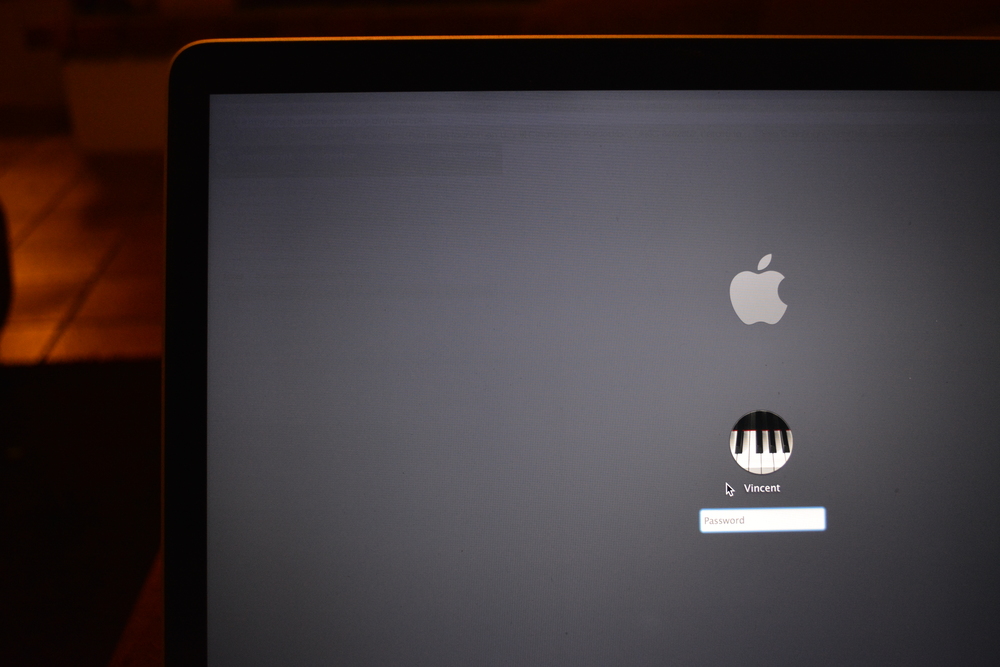
Vincent Fourmond: Ghost in the machine: faint remanence of screen contents across reboots in a Macbook pro retina

As was noted a few times before, I happen to own a Macbook Pro Retina laptop I mostly use under Linux. I had noticed from time to time weird mixes between two screens, i.e. I would be looking at a website, but, in some areas with uniform colors, I would see faint traces of other windows currently opened on another screen. These faint traces would not show up in a screenshot. It never really bothered me, and I attributed that to a weird specificity of the mac hardware (they often do that) that was not well handled by the nouveau driver, so I had simply dismissed that. Until, one day, I switch off the computer, switch back on, boot to MacOS and see this as a boot screen:
Here is a close-up view of the top-left corner of the screen:
If you look carefully, you can still see the contents of the page I was browsing just before switching off the computer ! So this problem is not Linux-specific, it also affects MacOS... To be honest, I don't have a clue about what's happening here, but it has to be a serious hardware malfunction. How can two video memory regions be composed upon display without the computer asking explicitly for it ? Why does that problem survives a reboot ? I mean, someone switches on my computer and can see the last thing I did on it ? I could actually read the address line without difficulty, although you'll have to take my word for it, since the picture does not show it that well. That's scary...

Thadeu Lima de Souza Cascardo: GNU on Smartphones (part II)

Some time ago, I wrote how to get GNU on a smartphone. This is going to be a long discussion on why and how we should work on more operating systems for more devices. On Android So, why should we bother if we already have Android, some might ask? If it's just because of some binary blobs, one could just use Replicant, right? Well, one of the problems is that Android development is done in hiding, and pushed downstream when a new version is launched. There is no community behind that anyone can join. Replicant ends up either following it or staying behind. It could do a fork and have its own innovations. And I am all for it. But the lack of manpower for supporting devices and keeping up with the latest versions and security fixes already takes most of the time for the one or two developers involved. Also, Android has a huge modularity problem, that I will discuss further below. But it's hard to replace many components in the system, unless you replace them all. And that also causes the problem that applications can hardly share extra components. I would rather see Debian running on my devices and supporting good environments and frameworks for all kinds of devices, like phones, tablets, TVs, cars, etc. It's developed by a community I can join, it allows a diverse set of frameworks and environments, and it's much easier to replace single components on such a system. On Copyleft Hardware I get it. Hardware is not free or libre. Its design is. I love the concept of copyleft hardware, where one applies the copyleft principles to a hardware design. Also, there is the concept of Hardware that Respects Your Freedom, that is, one that allows you to use it with only free software. Note that RYF hardware is not necessarily copyleft hardware. In fact, most of the time, the original vendor has not helped at all, and it required reverse engineering efforts by other people to be able to run free software on those systems. My point here is that we should not prevent people from running free software on hardware that does not RYF or that is not copyleft. We should continue the efforts of reverse engineering and of pushing hardware vendors to not only ship free software for their hardware, but also release their design under free licenses. But in the meantime, we need to make free software flourish in the plethora of devices on the hands of so many people around the world. On Diversity I won't go into details on this post about two things. One topic I love is retrocomputing and how Linux supported so many devices, and how many free or quasi-free operating systems ran on so many of them in the past. I could mention ucLinux, Familiar, PDAs, Palmtops, Motorolas, etc. But I will leave it to another time and go from Openmoko and Maemo forward. The other topic is application scalability. Even Debian with so many software available does not ship all free software there is available. And it doesn't support all third-party services out there. How can we solve that? It has to do with platforms, protocols, open protocols, etc. I will not go into that today. Because I believe that either way, it's healthy for our society to have diversity. I believe we should have other operating systems available for our devices. Even if application developers will not develop for all of them. That is already the case today. There are other ways to fix that, when that needs fixing. Sometimes, it's sufficient that you can have your own operating system on your device, that you can customize it, enhance it and share it with friends. And also, that would allow for innovation. It would make possible that some other operating system would have enough market share on some other niche. Other than Android and iOS, for example. But that requires that we can support that operating system on different devices. And that is the scalability that I want to talk about. How to support more devices with less effort. Options But before I go into that, let me write more about the alternatives we have out there. And some of the history around it. Openmoko Openmoko developed a set of devices that had some free design. And it has some free operating systems running on top. The community developed a lot of their own as well. Debian could (still can) run on it. There is SHR, which uses FSO, a mobile middleware based on D-Bus. It even spawned other devices to be developed, like GTA04, a successor board, that can be shipped inside a Neo Freerunner case. Maemo, Moblin, Meego and Tizen I remember the announcement of Nokia N770. During FISL in 2005, I even criticized a lot, because it shipped with proprietary drivers. And applications. But it was the first time we heard of Maemo. It was based on Debian and GNOME. The GNOME Mobile initiative was born from that, I believe, but died later on. But with the launch of N900, and later events, like the merge of Moblin with Maemo, to create Meego, we all had an operating system that was based on community developed components, that had some community participation, and was much more like the systems we were used to. You could run gcc on N900. You could install Das U-Boot and have other operating systems running there. But Nokia has gone a different path. Intel has started Tizen with Samsung. There is so much legacy there, that could still be developed upon. I am just sad that Jolla decided to put proprietary layers on top of that, to create SailfishOS. But we still have Mer, Nemo. But it looks like Cordia is gone. At least, (http://cordiahd.org) seems to have been registered by a domain seller. Not to forget, Neo900, a project to upgrade the board, in the same vein as GTA04. FirefoxOS and Ubuntu What can I say about FirefoxOS and Ubuntu Phone? In summary, I think we need more than Web, and Canonical has a history of not being too community oriented as we'd like. I won't go too much here in what I think about the Web as a platform. But I think we need a system that has more options for platforms. I haven't participated in projects directed by Mozilla either, so I can't say much about that. Ubuntu Phone should be a system more like what we are used to. But Canonical is going to set the directions to the project, it's not a community project. Nonetheless, I think they add to the diversity, and users should be able to try them, or their free parts or versions. But there are challenges there, that I think need to be discussed. So, both of these systems are based on Android. They don't use Dalvik or the application framework. But they use what is below that, which means device drivers in userspaces, like RIL, for the modem drivers, and EGL, for graphics drivers. The reason they do that is to build on top of all the existing vendor support for Android. If a SOC and phone vendor already supports Android, there should be not much needed to do to support FirefoxOS or Ubuntu Phone. In practice, this has not benefited the users or the projects. Porting should be as simple as getting a generic FirefoxOS or Ubuntu Phone image and run it on top of your Android or CyanogenMod port. Porting usually requires doing all the same work as porting Android. Even though one should be able to take advantage of existing ports, it still requires doing a lot of integration work and building an entire image, most of the time, including the upper layers, that should be equal in all devices. This process should require at most creating a new image based on other images and loading it on the device. I will discuss more about this below. I can't forget to mention the Matchstick TV project. It is based on FirefoxOS. I think it would have much more changes to succeed if it was easier for testers to have images available for all of their gadgets capable of running some form of Android. Replicant And then we have Replicant. It has a lot of the problems Android has. Even so, it's a tremendously important project. First, it offers a free version of Android, removing all proprietary pieces. This is very good for the community. But more than that, it tries to free the devices beyond that. What the project has been done is reverse engineer some of the pieces, mostly the modem drivers. That allows other projects to build upon that work, and support those modems. Without that, there is no telephony or celullar data available on any of these devices. Not without proprietary software, that is. They also have been working on free bootloaders, which is another important step for a completely free system. Next steps There are many challenges here, but I believe we should work on a set of steps that make it more palatable and produce intermediary results that can be used by users and other projects. One of the goals should be good modularity. The ability to replace some pieces with the least trouble necessary. The update of a single framework library should be just a package install, instead of building the entire framework again. If there is ABI breakage, users should still be able to have access to binaries (and accompanying source code) and only need to update the library and its reverse dependencies. If one layer does not have these properties, at least it should be possible to update this big chunk without interfering with the other layers. One example is FirefoxOS and Ubuntu Phone. Even if there is a big image with all system userspace and middleware, the porting, install and upgrade process should allow the user to keep the applications and to leverage porting already done by similar projects. Heck, these two projects should be able to share porting efforts without any trouble. So what follows is a quick discussion on Android builds, then suggestions on how to approach some of the challenges. On Android build The big problem with Android build is its non-modularity. You need to build the world and more to get a single image in the end. Instead of packages that could be built independently, that generated modular package images, that could be bundled in a single system image. Better yet would be the ability to pick only those components that matter. Certainly, portability would be just as interesting, being able to build certain components on top a GNU system with GNU libc. At times, it seems like this is done by design, to make it difficult for "fragmentation" and competition. Basically, making it difficult to exercise the freedom to modify the software and share your modifications with others. Imagine the possibilities of being able to: There are some dangers in promoting the use of Android like this. Since it promotes proprietary drivers, relying on such layers instead of better community oriented layers means giving an advantage to the first. So, the best plan would be to replace those layers, when they are used, for things like ofono and Wayland, for example. But, in the meantime, making it easier for users to experiment with FirefoxOS, Ubuntu Phone, Matchstick TV, Replicant on other devices, without resorting to building the entire Android system, would be a very nice thing. It is possible that there are some challenges with respect to API and ABI. That these layers are too intermingled that some changes present in one port would prevent FirefoxOS to run on top of it without changes in either of the layers. I can't confirm that is the case, but can't deny the possibility. Rooting One of the challenges we have that may have trouble in scaling is rooting devices. Unfortunately, most of the devices are owned by the vendor or carrier, not the user. The user is prevented from replacing software components in the system, by removing its permissions from replacing most of the files in the filesystem, or writing to block devices, or change boot parameters or write to the storage devices. Fortunately, there are many documents, guides, howtos, and whatnots out there instructing on how to root a lot of devices. In some cases, it depends on software bugs that can be patched by the users as instructed by vendors. Certainly, favoring devices that are built to allow rooting, hacking, etc, is a good thing. But we should still help those users out there who do not have such devices, and allow them to run free software on them. Booting Then, comes booting, which is a large discussion on its own, and also related to rooting, or how to allow users to replace their software. First, we have the topic of bootloaders, which are usually not free, and embedded in the chip, not on external storage. So, there are those pieces of the bootloader which we can replace more easily and those that we are not, because they would require changing a piece of ROM, for example. Das U-Boot would be one of the preferred options for a system. It supports a lot of hardware platforms out there, a lot of storage devices and filesystems, network booting, USB and serial booting, and a lot of other things. Porting is not an easy task, but it is possible. Meanwhile, using the bootloaders that ship with the system, when possible, would allow a path where other pieces of the system would be free. One of the challenges here is building single images that could boot everywhere. The lack of a single ARM boot environment is a curse and a blessing. It makes it hard to have this single boot image, but, on the other hand, it has allowed so much of the information for such systems to be free, to be embedded in copyleft software, instead of having blobs executed by our free systems, like ACPI encourages. Device trees have pushed this portability issue from the kernel to the bootloaders. Possibily encouraging vendors to now hide and copyright this information in the form of proprietary device trees. But it has made it easier for single images. In practice, we still need to see a lot of devices out there supporting this single kernel scenario. And this mechanism only brings us the possibility of a single kernel. We still need to ship bootable images that have pieces of bootloaders that are not as portable. This has caused lots of operating systems out there to be built for a single board. Or to support just a small set of boards. I struggle with the concept. Why are we not able to mix device-specific pieces with generic pieces and get a resulting image that will boot on our choice of board? Why does every project need to do all the porting work again, repeating the efforts? Or have one entier ISO image for every supported board? Check how Geexbox does it, for an example. Fortunately, I see Debian going in a good direction. Here, one can see how it instructs the user to combine a system-dependent part with a system-independent part. Installation Which brings us to the installation challenge. We should make this easy and also customizable by the user. Every project might have its own method, and that is part of the diversity that we should allow. The great challenge here is handling rooting and booting for the user. But it's also possible to leave that as separate efforts, as it would be nice to have good installers as we have in the desktop and server environments. Linux Linux is one of the most ported kernels out there. Of course, it would be healthy to the diversity I propose that other kernels and systems out there should work on those mobile devices. NetBSD, for example, has a reputation of being very portable and ported to many platforms. And GNU runs on many of them, either together with the original systems, or as the main system on top of other kernels, as proven by the Debian GNU/kFreeBSD port, which uses GNU libc. But, though I would love to see HURD running directly on those devices, Linux and its derivatives are already running on them. Easier to tackle is to get Linux-libre running on those systems. But though this looks like one of the easier tasks at hand, it is not. If you run a derivative version from Linux, provided by the vendor, things should go smooth. But most of the time, the vendor does not provide patches upstream, and leave their fork to rot, if you are lucky, in the earlier 3.x series. And some times, there is not even source code available. There are vendors out there who do not respect the GPL and that is one of the reasons why GPL enforcement is important. I take this opportunity to call attention to the work of Software Freedom Conservancy and its current efforts to raise funds to continue their work. Running an existing binary version of Linux on your device with a free userspace is part of the strategy of replacing pieces one at a time while allowing for good diversity and reaching more users. Drivers Then we have the matter of drivers. And in this case, it's not only Linux drivers, but drivers running in userspace. Though others exist, there are two important and common cases, which are modem and graphics drivers, both of which are usually provided by Android frameworks, and that other systems try to leverage, instead of using alternatives that are more community friendly. In the case of modem drivers, Android uses its RIL. Besides not using a Radio or Modem at all, there are two strategies for free versions. One is using free versions of the drivers for RIL. That's what Replicant does, because, well, it uses the other Android subsystems after all. The other one is using a system that is developed by the community. ofono is one that, even though it's an Intel iniative, looks more community governed or open to community participation than any Android subsystem ever was. As for Graphics, Canonical even built its Mir project with the goal of being able to use Android GPU drivers. Luckily, there has been a lot of reverse engineering efforts out there for a lot of those GPUs shipped with ARM SoCs. Then, we can use Mesa, Wayland and X.org. Other option, until then, is just using a framebuffer driver, possibly one that does not need any initialization, depending on one done by the bootloader, for example. Middleware and Shells Plasma Active, that I just found out now is Plasma Mobile, looks like a great system. Built by folks behind KDE, we can expect great freedom to come from it. Unfortunately, it suffers from what we have been discussing here, which is lack of good device support, or shipping images that run on top of single devices, without leveraging the porting that has come before of other systems. Fortunately, that is just what I want to accomplish with this effort. FSO, that I mentioned before, is a good middleware, that we should try to run on top of these devices. Running GNOME or Unity shell, and use rpm or deb based systems, that's all part of the plan on diversity. You could use systemd, or System V init systems, whatever gives you the kicks. It's not an easy task, since there are so many new things on these new kinds of devices. Besides touch, there is telephony, which as I mentioned, would be a good task for ofono. As for TV sets or dongles, I would love to see OpenFlint, created by the Matchstick TV guys, flourish out there and allow me to flint stuff from my mobile phone running Debian into my TV dongle running Debian. Project So, is there a project out there you can start contributing to? Well, I pointed out a lot of them. All of them make part of this plan. Contributing to reverse engineering GPUs, or to Plasma Mobile, ofono, GNOME, Linux-libre, bootloaders, Debian, and so many other projects. My plans are to contribute in the scope of Debian and make sure it works well on top of semi-liberated devices, and make sure there is a nice user interface and good applications when using either GNOME or Plasma. Integrating ofono is a good next step, but I am running ahead of myself. Right now, I don't think there is need for an integrated effort. If you think otherwise, please let me know. If you are doing something in this direction, I would love to know. Paul Wise reminded me to point out to the Debian Mobile, where I will probably contribute any documentation and other relevant results. Thanks There are some many people to thank, but I would like to remember Ian Murdock, who created Debian, one of the projects who inspires me the most. I think the best way to handle his passing is to celebrate what he has helped create, and move forward, taking more free software to more people in an easy and modular way. I have been wanting to write something like this for a long time, so I thank Chris Webber for inspiring me on doing it.

10 January 2016

Carl Chenet: Feed2tweet 0.2: power of the command line sending your Feed RSS to Twitter

Feed2tweet is a self-hosted Python app to send you RSS feed to Twitter. A long descriptions about why and how to use it is available in my last post about it. Feed2tweet is in production for Le Journal du hacker, a French Hacker News-style FOSS website. logo-journal-du-hacker Feed2tweet 0.2 brings a lot of new command line options, contributed by Antoine Beaupr @theanarcat. Taking a short extract of the Feed2tweet 0.2 changelog: Lots of issues from the previous project was also fixed. Using Feed2tweet? Send us bug reports/feature requests/push requests/comments about it!

Juliana Louback: NLP: Viterbi Named-Entity Tagger

During my MSc program, I was lucky to squeeze into Michael Collin s NLP class. We used his Coursera course as part of the program, which I d highly recommend. Recently I decided to review my NLP studies and I believe the best way to learn or relearn a subject is to teach it. This is one in a series of 4 posts with a walk-through of the algorithms we implemented during the course. I ll provide links to my code hosted on Github. Disclaimer: Before taking this NLP course, the only thing I knew about Python was that it s the one without curly brackets . I learned Python on the go while implementing these algorithms. So if I did anything against Python code conventions or flat-out heinous, I apologize and thank you in advance for your understanding. Feel free to write and let me know.

The Concept To quote Wikipedia, Named-entity recognition (I ve always known it as tagging) is a subtask of information extraction that seeks to locate and classify elements in text into predefined categories such as the names of persons, organizations, locations, expressions of times, quanitites, monetary values, percentages, etc. For example, the algorithm receives as input some text Bill Gates founded Microsoft in 1975. and outputs Bill Gates[person] founded Microsoft[organization] in 1975[date]. Off the top of my head, some useful applications are document matching (ex. a document containing Gates[person] may not be on the same topic as one containing gates[object]) and query searches. I m sure there are lots more, if you check out Collin s Coursera course he may discuss this in greater depth.

The Requirements Development data: The file ner_dev.dat provided by prof. Michael Collins has a series of sentences separated by an empty line, one word per line. Training data: The file ner_train.dat provided by prof. Michael Collins has a series of sentences separated by an empty line, one word and tag per line, speparated by a space. Word-tag count data: The file ner.counts has the format [count] [type of tag] [label] [word]. The tags used are RARE, O, I-MISC, I-PER, I-ORG, I-LOC, B-MISC, B-PER, B-ORG, B-LOC. The tag O means it s not an NE. This file is generated by count_freqs.py, a script provided by prof. Michael Collins. Run count_freqs.py on the training data ner_train.dat

The Algorithm Python code: viterbi.py Usage: python viterbi.py ner.counts ngram.counts [input_file] > [output_file] Summary: The Viterbi algorithm finds the maximum probability path for a series of observations, based on emission and transition probabilities. In a Markov Process, emission is the probability of an output given a state and transition is the probability of transitioning to the state given the previous states. In our case, the emission parameter e(x y) = the probability of the word being x given you attributed tag y. If your training data had 100 counts of person tags, one of which is the word London (I know a guy who named his kid London), e( London person ) = 0.01. Now with 50 counts of location tags, 5 of which are London , e( London location ) = 0.1 which clearly trumps 0.01. The transition parameter q(yi yi-1, yi-2) = the probability of putting tag y in position i given it s two previous tags. This is calculated by Count(trigram)/Count(bigram). For each word in the development data, he Viterbi algorithm will associate a score for a word-tag combo based on the emission and transition parameters it obtained from the training data. It does this for every possible tag and sees which is more likely. Clearly this won t be 100% correct as natural language is unpredictable, but you should get pretty high accuracy. Optional Preprocessing Re-label words in training data with frequency < 5 as RARE - This isn t required, but useful. Re-run count_freqs.py if used. Python code: label_rare.py Usage: python label_rare.py [input_file] Pseudocode:
  1. Uses Python Counter to obtain word counts in [input_file]; removes all word-count pairs with count < 5, store remaining pairs in a dictionary named rare_words.
  2. Iterates through each line in [input file], checks if word is in rare words dictionary, if so, replaces word with RARE.
Step 1. Get Count(y) and Count(x~y) Python code: emission_counts.py Pseudocode:
  1. Iterate through each line in ner.counts file and store each word-label-count combo in a dictionary count_xy and update the dictionary of count_y. For example count_xy[Peter][I-PER] returns the number of times the word Peter was labeled I-PER in the training data and count_y[I-PER] the total number of I-PER tags. The dictionary count_y contains 8 items, one for each label ( RARE , O, I-MISC, I-PER, I-ORG, I-LOC, B-MISC, B-PER, B-ORG, B-LOC);
  2. Return count_xy, count_y
Step 2. Get bigram and trigram counts Python code: transition_counts.py Pseudocode:
  1. Iterate through each line in the n-gram_counts file
  2. If the line contains 2-GRAM add an item to the bigram_counts dictionary using the bigram (two space-separated labels following the tag type 2-gram ) as key, count as value. This dictionary will contain Count(yi-2,yi-1).
  3. If the line contains 3-GRAM , add an item to the trigram_counts dictionary using the trigram as key, count as value. This dictionary will contain Count(yi-2, yi-1, yi).
  4. Return dictionaries of bigram and trigram counts.
Step 3. Viterbi (For each line in the [input_file]):
  1. If the word was seen in training data (present in the count_xy dictionary), for each of the possible labels for the word:
  2. Calculate emission = count_xy[word][label] / float(count_y[label]
  3. Calculate transition = trigram_counts[trigram])/float(bigram_counts[bigram] Note: yi-2 = *, yi-1 = * for the first round
  4. Set probability = emission x transition
  5. Update max(probability) and arg max if needed. 2 If the word was not seen in the training data:
  6. Calculate emission = count xy[RARE][label] / float(count y[label].
  7. Calculate q(yi yi-1, yi-2) = trigram counts[trigram])/float(bigram counts[bigram]. Note: yi-2 = , yi-1 = for the first round
  8. Set probability = emission transition
  9. Update max(probability) if needed, arg max = RARE
  10. Write arg max and log(max(probability)) to output file.
  11. Update yi-2, yi-1.
  12. Update yi-2, yi-1.
Evaluation Prof. Michael Collins provided an evaluation script eval_ne_tagger.py to verify the output of your Viterbi implementation. Usage: python eval_ne_tagger.py ner_dev.key [output_file]

9 January 2016

Daniel Pocock: Comments about people with mental illness

A quote:
As the Buddha said 2500 years ago... we're all out of our fucking minds. (Albert Ellis)
There have been a few occasions over the last year where people suffering mental illnesses have been the subject of much discussion. In March 2015 there was the tragic loss of Germanwings flight 9525. It was discovered that the co-pilot, Andreas Lubitz, had been receiving treatment for mental illness. Under strict privacy laws, nobody at his employer, the airline, had received any information about the diagnosis or treatment. During the summer, the private mailing list for a large online community discussed the mental illness of a contributor to a project. Various people expressed opinions that appeared to be generalizations about all those with mental illness. Some people hinted the illness was a lie to avoid work while others speculated about options for treatment. Nobody involved mentioned having any medical expertise. It is ironic that on the one hand, we have the dramatic example of an aircraft crashing at the hands of somebody who is declared unfit to work but working anyway and on the other hand when somebody else couldn't do something, the diagnosis is being disputed by people who find it inconvenient or don't understand it. More recently, there has been openly public discussion about whether another developer may have had mental illness. Once again, there doesn't appear to be any evidence from people with any medical expertise or documentation whatsoever. Some of the comments appear to be in the context of a grudge or justifying some other opinion. What's worse, some comments appear to suggest that mental illness can be blamed for anything else that goes wrong in somebody's life. If somebody is shot and bleeds to death, do you say low blood pressure killed him or do you just say he was shot? Likewise, if somebody is subject to some kind of bullying and abused, does this have no interaction with mental illness? In fact, Google reveals an enormous number of papers from experts in this field suggesting that mental illness can arise or be exacerbated by bad experiences. Although it may not have been clear at that point in time, when we look back at Alan Turing's death today, suicide was not a valid verdict and persecution was a factor. Statistics tell us that 1 in 4 people experience a mental health problem in the UK each year. In the USA it is 26% of the adult population, each year. These may be long term conditions or they may be short term conditions. They may arise spontaneously or they may be arising from some kind of trauma, abuse or harassment in the home, workplace or some other context. For large online communities, these statistics imply it is inevitable that some participants will be suffering from mental illness and others will have spouses, parents or children suffering from such conditions. These people will be acutely aware of the comments being made publicly about other people in the community. Social interaction also relates to the experience of mental illness, people who are supported by their community and society are more likely to recover while those who feel they are not understood or discriminated against may feel more isolated, compounding their condition. As a developer, I wouldn't really like the idea of doctors meddling with my code, so why is it that some people in the IT and business community are so happy to meddle around in the domain of doctors, giving such strong opinions about something they have no expertise in? Despite the tragic loss of life in Germanwings 9525, observing some of these other discussions that have taken place reminds me why Germany and some other countries do have such strict privacy laws for people who seek medical treatment. (You can Follow or Tweet about this blog on Twitter)

Iain R. Learmonth: Trust

This is not a new world, this is simply an extension of the old one. I'm not going to write here about sweeping changes that are happening now, but changes that have been taking place in plain sight for many decades. No one has flipped a switch, only tweaked and tuned variables here and there to lead us down this path. I'd like to reflect on where we are now but there is no way I could describe how it is we got here, the journey was far too complex and filled with ommissions, half-truths and outright lies. It's likely we will never know what has brought us here. I live in Scotland, a country that is a part of the United Kingdom and a member of the European Union. We have a Scottish Government, although certain matters are still handled by the UK Government. The European Government also handles some matters and these can take effect across the entire European Union. I do not feel that I can hold trust in any of these bodies anymore. The European Convention on Human Rights was, for me at least, a beacon of hope. A series of fundamental rights guaranteed to be upheld for every person within the European Union. A series of fundamental rights that has been ignored by governments repeatedly: This is not an exhaustive list, just select cross-sections of our recent history. It is important to remember that in each of these cases, it took a citizen to take the case to the European Court of Human Rights. These rights were violated by the UK government until the actions were challenged, the legislation that allowed them was currently enacted into UK law without regard for the ECHR. It should also be noted that the ban on prisoners voting is still in effect in the UK. We've learnt that the ECHR is not an effective safeguard against the abuse of powers by government. The UK government also sees the Human Rights Act as a problem, although at least scrapping it has been delayed for now. Much of these breaches of human rights are justified by the government as in the interest of the runaway train known as "national security". I have recently had direct contact with one aspect of this during my journey home from 32c3. You can read about my experiences with airport security here and here. My experiences at these airports angered me for a number of reasons. The first of which was that I was asked to expose my genitals as part of the routine screening, which I do not believe to be proportionate at all. At Luton, I was at the point where I was intending to leave the airport and take the train instead before I was allowed to excercise my right to opt-out of the nude body scanner. Since these incidents, I have conducted some research into these scanners and started an article on the Open Rights Group wiki. While the security officer at Luton had tried to tell me that the radio waves used could not penetrate clothing, they in fact can and this is the entire purpose of them. While the security officer at Luton told me that the machines did not generate an image, they are in fact doing exactly that, even if that image is processed by computer vision algorithms as opposed to being viewed by a human reviewer. A leaflet by the Department for Transport, made available on the Aberdeen Airport website, also states that no image is created, and yet this is exactly how the scanners work. I have never seen this leaflet printed and available in the airport itself, although I admit I do not fly regularly and may have missed it. That said, it does not provide a true representation of the scan process and I would go as far to say it contains an outright lie. In a document published by the UK Government titled "Response to the consultation on the use of security scanners in an aviation security environment", they state:

"nearly all passengers, if they fully understand the procedures, would be unlikely to opt for [the alternative of a private search]"
Even with this display of confidence that they believe the public are happy with the invasion of privacy brought by the security scanners, they have still chosen to not fully inform the public in the way in which the scanner operates. It is the lies that anger me the most. We claim to live in a democracy and you cannot have a democracy without transparency. It is not too late for the Government to earn back my trust, but for now, they haven't given me good reason to believe anything they produce. If you have read this article and you would like to support efforts for change in the United Kingdom, please consider joining the Open Rights Group and perhaps getting involved in their work.

Guido G nther: Debian Fun in December 2015

Debian LTS December was the eighth month I contributed to Debian LTS under the Freexian umbrella. It was a bit of a funny month since most of the time most open CVEs were already taken care of by other team members (which is nice) but it resulted in me not releasing a single DLA which feels weird. Nevertheless in total I spent nine hours working on: On unpaid time I introduced some usertags for tracking our non DLA related activities (although it seems I'm currently the only user). Other Debian stuff

Dirk Eddelbuettel: digest 0.6.9

A new release, now at version number 0.6.9, of the digest package is now on CRAN. I also just prepared the Debian upload. This release is very large part the work of Thierry Onkelinx who added stable sha1 support in a new function sha1(). Here, stable means that numerically equivalent numbers (in the sense of the semi-famous R FAQ entry 7.31) result in identical hashes. This is useful for hashing results from numerical analysis---where the representation may differ bitwise between, say, 32 and 64-bit platforms. We started to write a little more about this in a (at this very point still rather unfinished) little vignette. We also had a nice pull request from fellow Rcpp hacker Qiang Kou who updated the code to use XLENGTH so that large vectors can be supported. CRANberries provides the usual summary of changes to the previous version.

This post by Dirk Eddelbuettel originated on his Thinking inside the box blog. Please report excessive re-aggregation in third-party for-profit settings.

Next.

Previous.