Search Results: "agi"

9 November 2012

Gunnar Wolf: Road trip to ECSL 2012 in Guatemala

Encuentro Centroamericano de Software Libre! Guatemala! During a national (for us) holiday, so it's easy to go without missing too much work time! How would I miss the opportunity? Several years ago, I started playing with the idea of having a road trip Probably this was first prompted with the UK crew and the Three Intrepid Motorcycle Riders arriving by land to DebConf 9 I don't know. Fact is, I wanted to go to DebConf10 in New York by land, as well as to DebConf12 in Nicaragua. Mostly due to a lack of time, I didn't Although we did start making some longish trips. Of course, my desire to show Regina what Mexico is like also helped! So, up until a week ago, our (according to my standards) long distance driving experience included:

  • M xico Guanajuato Puerto Vallarta Guanajuato M xico, in early November 2011, for Festival de Software Libre and with Regina and our Blender friends Octavio and Claudia. Totalling almost 1900Km, mostly consisting of wide, toll highway.
  • M xico Xilitla San Luis Potos M xico, in April 2012, just for fun and for a nice short vacation, alone with Regina. Totalling almost 1200Km, but through Sierra Gorda de Quer taro, a very tough stretch of about 250Km which we did at about 50Km/h on average. Beautiful route for sure! We didn't originally intend to go through San Luis Potos , and it does not appear to make much sense, as it adds ~350Km to the total, but it was even quicker than going back by the same route and according to those who now, even faster than our planned route, via Tamazunchale and Ixmiquilpan!
  • M xico San Luis Potos Zacatecas Aguascalientes Guanajuato M xico, in May 2012, for Congreso Internacional de Software Libre, again with Octavio and Claudia. Totalling 1250Km, and following very good roads, although most of them were toll-free.
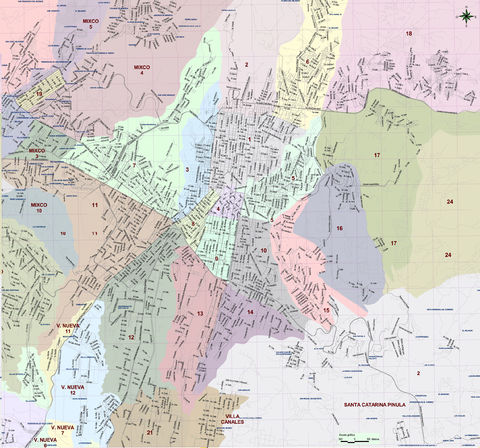
But there is always a certain halo over crossing a border, maybe more so in countries as large as Mexico. We convinced Pooka and Moni, and granted, with some aprehension, as we knew of some important security risks in the more rural areas we wanted to go through we decided to go to Guatemala. And, although we wanted to go with a bit more time, Real Life took its toll: We could not take more time than the intersection of what our respective jobs offered. So, here goes a short(?) recap of our six day long, 3200Km trip. Of course, we have a map detailing this. Mexico Veracruz I came to my office early on Wednesday (31-oct), and left with Regina around 10AM towards Veracruz. We agreed to meet there with Moni and Pooka, who would take the night bus, and continue together. Crossing Mexico City proved to be the longest obstacle We arrived to Veracruz already past 3PM, and spent a nice evening walking down the center and port of the city. Veracruz port can still be seen as part of central Mexico; I knew the road quite well. Veracruz San Andr s Tuxtla Catemaco San Cristobal de las Casas We met with our friends at the iconic Gran Caf de la Parroquia at 6:30AM. Had a nice breakfast with coffee, and by 7:30 we were heading south-west. The reason to have a road trip was to get to know the route, to enjoy the countryside So, given we "only" had to make 650Km this day, we took the non-toll road A narrow path stretching along the coastal plains of Veracruz, until Acayucan. Doing so, we also saved some money, as the equivalent toll road is around MX$300 (~US$25)! Veracruz is a hot state. We ended up all sweaty and tired by 19:00, when we reached San Cristobal. We had agreed not to drive at night, due to security issues, but fortunately there was quite a bit of traffic both ways between Tuxtla Guti rrez (Chiapas State capital, around 1hr from San Cristobal, where darkness got us) and our destination, so we carried on. Now, San Cristobal is a high city, almost as high as Mexico City (2100m), and being more humid, it was quite chilly. We went for a walk, and were convinced that at a later time, we had to stay for several days there. The city is beautiful, the region is breath-taking, there is a lot of great handicrafts as well, and it's overall very cheap. Really lovely place. San Cristobal de las Casas Cd. Cuauht moc La Mesilla Guatemala Once again, this day started early. We woke up ready to leave at 7AM, and not earlier because the hotel's parking didn't open earlier. After a very quick visit to San Cristobal downtown, to take some photos that were not right the night before, we took the road to Comit n, stopping just for some tamales de bola y chipil n for breakfast. Central Chiapas is almost continuously populated, differing from most of my experience in Mexico. It is all humid, and has some very beautiful landscapes. We passed Comit n, which is a much larger city than what we expected, went downhill after La Trinitaria, crossed a plain, and continued until hills started taking over again. We stopped in a very chaotic, dirty place: Just accross the border, where Ciudad Cuauht moc becomes La Mesilla. This border was basically what we expected: There is no half-official place to exchange money, so we had to buy quetzales from somebody who offered them on the street, at MX$2 per Q1 (where the real exchange should be around 1.50 to 1). While on the road, I was half-looking for exchange posts in Comit n and onwards, and found none (and being a festive day, they would probably be closed anyway). But we were expecting this, after all, and exchanged just the basic minimum: MX$600 (US$50, which by magic became Q300, US$40). The tramit consists of:
  • Spraying the car against diseases (which has a cost of Q18)
  • Each of us has to go through migration. Note, in case you cross this border: We didn't expressly cross Mexican migration, so officially there was no record of us going out. Be sure to go through migration to avoid problems at re-entry!
    Migration has no cost.
  • Customs. As we were entering by car, I had to purchase a permit for circulation. I don't remember the exact quote, but it was around Q150, and the permit is valid for 90 days.
  • That's it! Welcome to Guatemala!
La Mesilla is in Guatemala's Huehuetenango Department, and from all of the Departments we crossed until Guatemala city (Huehuetenango, Quetzaltenango, Totonicap n, Solol , Chimaltenango, Sacatep quez and Guatemala), this is the largest one. Huehuetenango is home to the Cuchumatanes mountain ridge. We found beautiful, really steep, really fertile mountains. It is plainly amazing: Mountains over 60 , and quite often full with agricultural use Even at their steepest points! The CA-1 highway is, in general, in very good shape. There are however many (many, many) speed bumps (or topes, in Mexican terminology. Or t mulos in Guatemalan), at least a couple at every village we crossed, not always painted. The road is narrow and quite winding; it follows river streams for most of the way. We feared it would be in much worse shape, from what we have heard, but during the whole way we found only three points where the road was unusable due to landslides and an alternative road was always in place when we needed it. After Totonicap n, the narrow road becomes a wide (four lane) highway. Don't let that fool you! It still goes through the center of every village along the road, so it's really not meant for speeding. Also, even though the pavement is in very good condition, it is really steep quite often. It is not the easiest road to drive, but it's (again) by far not as bad as we expected. We arrived to Guatemala City as dawn was falling, and got promptly lost. Guatemala has a very strange organization scheme: The city is divided in several zones, laid out in a swirl-like fashion. East-west roads are called Calle and North-south roads are called Avenida (except for zona 4, I think, where they are diagonal, and some are Rutas while the others are V as). I won't go into too much detail). Thing is, many people told us it's a foolproof design, and people from different countries understand the system perfectly. We didn't... At least not when we arrived. We got quite lost, and it took us around one hour to arrive to our hotel, at almost 19:00 Almost 12 hours since we left San Cristobal. Went for a quick dinner, and then waited for our friends to arrive after the first day of work of ECSL, which we missed completely. And, of course, we were quite tired, so we didn't stay up much longer. Antigua Guatemala On Saturday, ECSL's activities started after 14:00 so we almost-kidnapped Wences, the local organization lead, and took him to show us around Antigua Guatemala. Antigua was the capital of Guatemala until an earthquake destroyed it in the 1770s; the capital was moved to present-day Guatemala city, but Antigua was never completely abandoned. Today, it is a world heritage site, a beautiful city, where we could/should have stayed for several days. But we were there for the conference, so we were in Antigua just a couple of hours, and headed back to Guatemala. Word of caution: Going from Guatemala to Antigua, we went down via the steepest road I have ever driven. Again, a real four-lane highway... but quite scary! The main focus for this post is to give some roadtrip advice to potential readers... So, this time around, I won't give much detail regarding ECSL. It was quite interesting, we had some very good discussions... but it would take me too much space to talk about it! The road back: Guatemala Tec n Um n; Cd. Hidalgo Arriaga So, about the road back: Yes, we just spent three days getting to Guatemala City. We were there only for ~36 hours. And... We needed to be here by Tuesday morning no matter what. So, Sunday at noon we said goodbye to our good friends in ECSL and started the long way back. To get to know more of Guatemala, we went back by the CA-2 highway, which goes via the coastal plains Not close to the Pacific ocean, which we didn't get to see at all, but not through the mountains. To get to CA-2, we took CA-9 from Guatemala. If I am not mistaken, this is the only toll road in Guatemala (at least, the only we used, and we used some pretty good highways!) It is not expensive; I don't remember right now, but must have been around Q20 (US$3). Went South past Palin and until CA-2, just outside Escuintla city, and headed West. All of Escuintla and Suchitep quez it is again a four lane highway; somewhere in Retalhueu it becomes a two lane highway. We were strongly advised not to take this road at night because, as the population density is significantly lower than in CA-1, it can get lonely at times And there are several reports of robberies. We did feel the place much less populated, but saw nothing suspicious in any way. Something important: There are almost no speedbumps in CA-2! The terrain stayed quite flat and easy as we crossed Quetzaltenango, and only in San Marcos we found some interesting hills and a very strong rain that would intermitetntly accompany us for the rest of the ride. So, we finally arrived to the border city of Tec n Um n at around 16:30 Approximately four hours after leaving the capital. The Tec n Um n Cd. Hidalgo cities and border pass are completely different from the disorderly and dirty Cd. Cuauht moc La Mesilla ones. The city of Tec n Um n could be just a nice town anywhere in the country, it does not feel aggressive as most border cities I have seen in our continent. We stopped to eat at El pollo campero and headed to the border. In the Mexican side, we also saw a very well consolidated, big and ordered migration area. Migration officers were very kind and helpful As we left Cd. Cuauht moc, Regina didn't get a stamp of leaving Mexico, so technically she was ilegally out of the country (as she is not a national... They didn't care about the rest of us). The tramit to fix this was easy, simple, straightforward. We only paid for the fumigation again (MX$60, US$5), and were allowed to leave. Anyway, we crossed the border. There is a ~30Km narrow road between Cd. Hidalgo and Tapachula, but starting in Tapachula we went on Northwards via a very good, four lane and very straight highway. Even though we had agreed not to drive at night... Well, we were quite hurried and still too far from Mexico City, so we decided to push it for three more hours, following the coastline until the city of Arriaga, almost at the border between Chiapas and Oaxaca. Found a little hotel to sleep some hours and collapsed. Word of warning: This road (from Tapachula to Arriaga) is also known for its robberies. We saw only one suspicious thing: Two guys were pushing up their motorcycle, from which they had apparently fallen. We didn't stop, as they looked healthy and not much in need of help, but later on talked about this Even though this was at night, they were not moving as if they had just crashed; nothing was scratched, not the motorcycle and not their clothes. That might have been an attempt to mug us (or whoever stopped by). This highway is very lonely, and the two directions are separated by a wall of vegetation, so nobody would have probably seen us were we to stop for some minutes. Be aware if you use this road! The trip comes to an end: Arriaga Niltepec Istmo C rdoba M xico The next (last, finally!) day, we left at 6:30AM. After driving somewhat over one hour, we arrived to Niltepec, where a group of taxi drivers had the highway closed as a protest against their local government's tolerance of mototaxis. We evaluated going back to Arriaga and continue via the Tuxtla Guti rrez highway, but that would have been too long. We had a nice breakfast of tlayudas (which resulted in Pooka getting an alergic reaction shortly afterwards) and, talking with people here and there, were told about an alternative route by an agricultural road that surrounds the blockade. So, we took this road the best way we could, and after probably 1hr of driving at 20Km/h, finally came back to the main road. We planned on crossing the isthmus using the Acayucan-Juchit n road We were amazed at the La Ventosa ("the windy") area, where we crossed a huge eolic plant for electricity generation, so of course we got our good share of photos. From then onwards, not much more worth mention. Crossed the isthmus via a quite secondary road in not too good shape (although there is a lot of machinery, and the road will much likely improve in the next few months/years), then took the toll freeway along Veracruz until C rdoba. We stopped for a (delilcious and revigorizing!) cup of coffee in Hotel Zeballos, where Agust n de Iturbide signed with Viceroy Juan O'Donoj the treaties that granted Mexico the independence. Traveller, beware: When crossing between Puebla and Veracruz, there is a steep slope of almost 1000m where , you will almost always (except if it's close to noon) find very thick fog; taking the highway from C rdoba, this is in the region known as Cumbres de Maltrata. We had the usual fog, and just as we left it, a thin but constant rain that went on with us up until we got home. Crossed Puebla state with no further eventualities, and arrived to Pooka and Moni's house by 22:00. Less than one hour later, Regina and me arrived home as well. This was four days ago... and I have finally finished writing it all down ;-) Hope you find this useful, or if not, at least entertaining! If you read this post in my blog, you will find many pictures taken along the trip below (Well, if you are reading the right page, not in the general blog index...). If you are reading from a planet or other syndication service... Well, come to the blog! Dreamhost woes Oh, and... Yes, it sometimes happens: My blog is hosted at Dreamhost. This means that usually it works correctly... But sometimes, specially when many people request many nontrivial pages, it just gives an error. If you get an error, reload once or twice... Or until your patience manages ;-)

Joey Hess: git push over XMPP

Imagine if you could send git pushes to any of your friends on Google Talk or other Jabber (XMPP) servers. Even though you're in different places and your computers probably cannot talk to one-another directly, you can share a git repository, without relying on a git hosting provider such as GitHub.

To xmpp::joey@kitenet.net
  * [new branch]      master -> xmpp/master
That's what I've built over the past week. So far, it's only supported by the git-annex assistant, but it would not be very hard to make this into a separate git-remote-xmpp program, and a push listening daemon, that could be used with non-git-annex repisitories too. You can read about the details in my git-annex assistant dev blog:
  1. day 124 git push over xmpp groundwork
  2. day 125 xmpp push continues
  3. day 126 mr watson come here
And yes, I update that blog every single work day. If you're not getting enough blog updates from me, and are not scared by rather technical posts, you might want to subscribe to it. :)

Matthew Garrett: Last day at Red Hat

After four and a half years at Red Hat, I'm about to take the three weeks of holiday I've built up and am then heading off to Nebula at the beginning of December. I'm still planning on being active in UEFI and Secure Boot development, and don't expect anything to change in terms of my Fedora involvement. It's been a fun time here, so just imagine that I'm writing something about exciting future challenges while I go back to saying goodbye to people.

comment count unavailable comments

Michal Čihař: New documentation for phpMyAdmin

I was quite unhappy with shape of our documentation for some time, but this week I finally found some time to dig deeper into conversion into something more usable. Nowadays I'm mostly using Sphinx for writing documentation, which allows to easily write using RST and provides output to various formats. Together with Read the Docs service, it makes great combo for providing user documentation, which I use for example for Weblate. So with a little bit of magic in Python and Beautiful Soup I was able to convert most of the HTML documentation into RST without tons of manual work. The resulting source (and ugly conversion script) temporarily lives on my github and generated documentation is available on Read the Docs. There are of course still many things to improve, but I think even right now it is easier to navigate than previous monolithic HTML file. Now we need to decide if and how to integrate this into official repositories and I can then continue on improving the documentation content.

Filed under: English Phpmyadmin 0 comments Flattr this!

7 November 2012

Russell Coker: Rape Apology and LCA 2011

After a lecture at LCA 2011 included some inappropriate slides there was a long discussion on several mailing lists about the issues related to this. In February 2011 I wrote a blog post debunking some of the bogus arguments in question [1]. Of course the matter didn t end there, at LCA 2012 I was drawn into a few debates IRL about the issues, as long as there are more than a few men who want such porny pictures used in LCA talks the issue can t be properly resolved. The most serious aspect of the discussion in question is that of rape apology, the bad ideas that were presented have a real impact on the way people behave, merely making public statements saying that something is OK is going to increase the incidence of it happening. The Geek Feminism Wiki has a good page summarising the issue [2]. The Finally Feminism 101 post about Rape Culture is also worth reading in this context [3]. Recently Valeria Aurora wrote a post for the Ada Initiaive blog about the rape apology issue and how the community needs to act to prevent such behavior [4]. This inspired Matthew Garrett to write about the issue and state the position that In the absence of an apology and explanation from Ted, I ll be interacting with him to the bare minimum that I m compelled to as a result of my job [5]. I agree with Matthew s article, everything he writes is logical and I believe that it is all for the benefit of the FOSS community as a whole. I think that most guys have quietly defriended guys who are rape-positive in the past (for example when I was 12 I refused to play D&D with boys who were raping NPCs). But blogging about it, explaining the problem, and giving the offender the possibility to reform is a good idea and it s something that should be done more often. Sam Varghese has written about the issue for ITWire [6]. He has taken the wrong approach to this, he specifically claims that Matthew Garrett has kicked off what could be a damaging episode . I think that Matthew s approach is necessary and the situation demands it. If Matthew had been on holidays and I had read the TAI post earlier then I would probably have written a blog post which Sam could have described in a similar manner. So I don t think that Matthew kicked anything off (I think that someone had to do it). I also don t think that this has to be damaging it depends on how everyone reacts. On her personal blog Valerie says When I first read Ts o s comments, I couldn t sleep for two nights. I wanted to throw up every time I thought about it. I was furious and frightened at the same time. Every time I think about this, even now, I literally have nightmares. I can t bear the thought of working with him even over email, much less attending the same conferences [7]. I don t think that any of us who are seriously involved in the FOSS community have a way of avoiding this issue, allowing Valerie and other women who have the same understanding of the situation to go through that without any support is not a neutral action. I think we need to consider whether someone who gives other delegates and speakers nightmares should be welcome to attend a conference. Valerie s post makes sense to me and I can understand why she doesn t want to associated with Ted, my understanding of the issue isn t important or even required, I merely note this because I m sure that there are lots of readers who will ignore anything that a woman might say. ITWire has a follow-up article with Ted s response, Ted fails to address all the issues and seems to think that the people who disagree with him merely don t appreciate his nuance [8]. The thing is that the issue of the incidence of rape was raised in discussion to consider the probability that rape survivors would have been in the audience for the Mark Pesce talk in question. None of Ted s claims indicate that rape could be rare enough that a crowd of 500+ random people could be expected not to have multiple rape survivors so his comments weren t even relevant to the discussion. Ted seems unwilling to try to understand the position of all the people who disagree with him.

6 November 2012

Jon Dowland: Microsoft Windows Surface RT

Some quick first impressions of the Windows Surface RT I just can't figure out what Microsoft are aiming to achieve with this. They've overpriced it and sold it short at the same time by promising a much better amd64/x86_64 one in the future. The end-to-end secure code execution means they're stuck waiting for the app store goldrush but there's no market for people to bother porting software to it. Even the most basic apps (google link on home screen/whatever it's called) don't work/can't be installed. It's telling that Redhat, a multi-billion dollar company, don't feel it's worth investing the $99 required to get an ARM Fedora boot path signed so that you could run Fedora on the hardware. No doubt that is a convenient side effect for MS: As much as it would be nice to imagine they consider Linux enough of a threat to have purposefully locked it out, I suspect the resilient to viruses is the key reason. And indeed, in tablet land, poor Android is the most pest-ridden platform. Who would have seen that coming? The USP, if there is one, is "full office", but the text lag makes it a fairly unpleasant experience to write anything serious on it. The basic keyboard is utterly unusable, and the posh keyboard pushes the price deep into proper laptop territory. Heck, my beloved x121e, the machine I live on for work and play, cost less than the tablet with even the basic keyboard.

Michael Stapelberg: Debian Code Search

I hereby announce a new Debian project: Debian Code Search. Debian Code Search is a search engine for program source code within Debian.
It allows you to search all 17000 source packages, containing 130 GiB of
FLOSS source code (including Debian packaging) with regular expressions. You can use the search engine at http://codesearch.debian.net/
Here are a few sample queries: The corresponding thesis (and source code, of course) will be released soon
(2013-01-15 being the deadline, but I hope I can do it earlier).

Raphaël Hertzog: My Free Software Activities in October 2012

This is my monthly summary of my free software related activities. If you re among the people who made a donation to support my work (120.46 , thanks everybody!), then you can learn how I spent your money. Otherwise it s just an interesting status update on my various projects. Dpkg At the start of the month, I reconfigured dpkg s git repository to use KGB instead of the discontinued CIA to send out commit notices to IRC (on #debian-dpkg on OFTC, aka irc.debian.org). I didn t do anything else that affects dpkg and I must say that Guillem does not make it easy for others to get involved. He keeps all his work hidden in his private for 1.17.x branch and refuses to open an official jessie branch as can be seen from the lack of answer to this mail. On the bright side, he deals with almost all incoming bugs even before I have a chance to take care of them. But it s a pity that I can never review any of his fixes because they are usually pushed shortly before an upload. Misc packaging I helped to get #689336 fixed so that the initrd properly setups the keymap before asking for a passphrase for an encrypted partition. Related to this I filed #689722 so that cryptsetup gains a dependency ensuring that the required tools for keymap setup are available. I packaged a new upstream version of zim (0.57) and also a security update for python-django that affected both Squeeze and Wheezy. I uploaded an NMU of revelation (0.4.13-1.2) so that it doesn t get dropped from Wheezy (it was on the release team list of leaf packages that would be removed if unfixed) since my wife is using it to store her passwords. I sponsored a new upstream version of ledgersmb. Debian France We managed to elect new officers for Debian France. I m taking over the role of president, Sylveste Ledru is the new treasurer and Julien Danjou is the new secretary. Thank you very much to the former officers: Carl Chenet, Aur lien Jarno and Julien Cristau. We re in the process of managing this transition which will be completed during the next mini-Debconf in Paris so that we can exchange some papers and the like. In the first tasks that I have set myself, there s recruiting two new members for the boards of directors since we re only 7 and there are 9 seats. I made a call for volunteers and we have two volunteers. If you want to get involved and help Debian France, please candidate by answering that message as soon as possible. The Debian Handbook I merged the translations contributed on debian.weblate.org (which led me to file this wishlist bug on Weblate itself) and I fixed a number of small issues that had been reported. I made an upload to Debian to incorporate all those fixes But this is still the book covering Squeeze so I started to plan the work to update it for Wheezy and with Roland we have decided who is going to take care of updating each chapter. Librement Progress is annoyingly slow on this project. Handling money for others is highly regulated, at least in the EU apparently. I only wanted an escrow account to secure the money of users of the service but opening this account requires either to be certified as a payment institution by the Autorit de contr le prudentiel or to get an exemption from the same authority (covering only some special cases) or to sign a partnership with an established payment institution. Being certified is out of scope for now since it requires a minimum of 125000 EUR in capital (which I don t have). My bank can t sign the kind of partnership that I would need. So I have to investigate whether I can make it fit in the limited cases of exemption or I need to find another payment institution that is willing to work with me. Gittip uses Balanced a payment service specialized in market places but unfortunately it s US-only if you want to withdraw money from the system. I would love a similar service in Europe If I can t position Librement as a market place for the free software world (and save each contributor the hassle to open a merchant account), then I shall fallback to the solution where Librement only provides the infrastructure but no account, and developers who want to collect donations will have to use either Paypal or any other supported merchant account to collect funds. That s why my latest spec updates concerning the donation service and the payment service mentions Paypal and the possibility of choosing your payment service for your donation form. Thanks See you next month for a new summary of my activities.

5 comments Liked this article? Click here. My blog is Flattr-enabled.

5 November 2012

Russ Allbery: WebAuth 4.3.3

So, funny story. And by funny, I mean "doh." We had a production outage of our WebLogin servers a bit before I went on vacation because the hardware load balancer died, and then when it came back the load was so heavy that the WebLogin servers were overwhelmed with connections. WebLogin, due to the way that it involves accepting an Apache connection and then turning around and connecting back to itself to talk to the WebKDC, has a tendency to get into overload deadlocks. Worse, because the WebLogin script runs under FastCGI, when it deadlocks waiting for Apache to reply to it, mod_fastcgi decides that the script isn't responding and starts killing all the scripts. It's an obnoxious meltdown scenario. I want to find some way of getting around this (such as running WebLogin via ngnix and running the WebKDC on another port), but in the short term the best solution is to just increase MaxClients to handle more load. The limitation there is the amount of memory on the servers, which was a problem since they were built 32-bit (for historical reasons). So, this weekend I started working on rebuilding them all 64-bit. Imagine my surprise when I installed WebAuth and WebLogin on the newly-built 64-bit system and it segfaulted. It turns out that when allocating memory for a struct, it's good to allocate enough memory for the whole struct, not just for a pointer to the struct. (This is exactly the reason why I hate typedefs for structs in C, but in this case it was XS code where I don't have a good alternative, and I didn't pay close enough attention.) So, lots of debugging later, along with a detour to set up comprehensive valgrind testing of WebAuth (at least all the parts of it that aren't the Apache modules), this release fixes one uninitialized memory error and one memory allocation size error. The latter is theoretically exploitable, although since it's inside Perl XS code with pretty sharply bounded external inputs, it's going to be pretty complicated to figure out how to exploit it and therefore I decided it didn't warrant an explicit advisory. Obviously, anyone running earlier versions of mod_webkdc or WebLogin (4.2.0 or later, sigh) should upgrade to this release. You can get the latest release from the official WebAuth distribution site or from my WebAuth distribution pages.

4 November 2012

Russ Allbery: Review: Set This House in Order

Review: Set This House in Order, by Matt Ruff
Publisher: Perennial
Copyright: 2003
Printing: 2004
ISBN: 0-06-095485-X
Format: Trade paperback
Pages: 479
A textbook case history would say that Andy Gage has disassociative identity disorder (referred to here as the more common although medically inaccurate "multiple personality disorder" for reasons of clarity and to match casual speech, according to the author). However, that's a completely inadequate description. A better description would be that Andy Gage's body is inhabited by a large set of different personalities, who take turns being in control. The original Andy Gage is dead, shattered by horrific childhood abuse. Aaron became the dominant personality and gave structure to the internal geography of the mind they all share, with the help of extensive counselling. But Aaron was exhausted by being the public face and maintaining control of the shared body. Hence, Andrew. Andrew Gage is the first-person narrator of half of this book. He is twenty-eight, the same age as the body, but he's only existed for two years. He considers Aaron his father, since Aaron called him out of the lake inside their internal metal geography. His purpose is to run the body and be the public face of the family. He is by turns capable and naive, shy on personal experience, but able to get the help of the others. The one heard from most frequently is Adam, a rude and mischevious teenager who also has an uncanny ability to read other people, and who frequently watches through the body's eyes from what the family calls the "pulpit" and gives Andrew advice. Andrew works for Julie Sivik, a woman he met the day he quit his job at a big-box store because he couldn't explain his behavior to his boss without discussing being a multiple. Julie is a wholly impractical, slightly unethical, well-meaning force of chaos who serves as the thread that draws the plot of the book together. She's running a startup on ingenuity and borrowed money that is attempting to create a comprehensive and customizable virtual reality world. She's the one who finds Penny and hires her, in part for her skills, and in part to push Penny and Andrew together. Penny Driver has the same condition as Andrew, but Penny is only vaguely aware of it. The world for her is full of blackouts, lost time, waking up in strange and sometimes horrific situations, and attempting to structure her life based on notes left for herself that she didn't write. When she meets Andrew, she's barely making it through life; thankfully, one of her personalities is remarkably good at computers, and that has been enough to make a living despite the chaos. But Julie is the unintentional catalyst for her losing that job, the best job she's ever had, leaving her with no real alternative but to take the job with Julie's company. There are a few things that are important to say up-front about this book. First, neither I nor the author are actually multiples (or, put another way, neither of us have DID), and writing about atypical mental states is fraught with peril. It's very easy to misrepresent other people's experiences, and multiple personalities in particular are frequent material for dramas of all sorts. There's something people find inherently fascinating about the idea, and it's easy for that fascination to run away with reality and distort the lived experience. I recommend reading Ruff's FAQ about the book, which spells out what his goals are and what approach he took. I did some quick searches and didn't uncover a lot of anger or dislike of the book among either people who have DID or psychiatrists, and it seems true to the descriptions of internal reality I've heard from people who are multiples. But despite being more respectful of real experience than most fictional treatments of DID, this is still a work of fiction written by someone without first-hand experience, and it's worth keeping that in mind. Second, DID is an intensely controversial diagnosis among psychiatrists. There are, generally speaking, two major controversies. One is over whether or not DID can actually be caused by traumatic experiences such as childhood abuse, or whether it is a creation of psychiatrists, a mental model that they've imposed on their patients or convinced their patients to believe. Set This House in Order comes down firmly on the first side of that controversy: that DID can be created by abuse and is not a creation of psychotherapy. (So, I should note, does every multiple that I've ever talked to or read.) Second, there is significant controversy over treatment, with some psychiatrists believing that integration of the personalities into one is the only true treatment, and others believing that multiples can remain stable and functional as multiple personalities. Set This House in Order leans strongly towards the view that multiples can be stable as multiples and that while integration may be appropriate for some, it's not for all. Both of these viewpoints are presented very convincingly by the narrative in the book, and both are consistent with the beliefs of a lot of multiples, but it's worth remembering that these are active and often quite heated controversies and a novel is not evidence. It's good to be aware of both of those points, and to read Put This House in Order as something of a what-if, where much more is clear about DID than is actually clear in our world. But once one has done that, one is in for an excellent book. I loved this book from start to finish. (Well, okay, I felt some surprise at the nature of the ending, but it grew on me after further consideration.) It's simply a brilliant novel, with a little bit of everything: very good characterization, messy love affairs, the satisfying tension of someone overcoming great odds to put themselves together with the help of friends, a startlingly original perspective of the world, some excellent surprises, and some absolutely wonderful characters. Andrew is a good choice of narrator: he brings an earnest calm to a story that could otherwise be quite chaotic and provides a great vantage point for the reader. And I found Penny (and particularly some of her other souls) impossible not to like. Set This House in Order is a tense book in places, and it's a book where people's lives break down before they can get better. It's also a book about rather horrific abuse, and while nearly all of the specifics happen off-stage, imagination fills in some nasty details. But Ruff manages to write it with a structure and with enough calm assurance that I felt just reassured enough without taking away the tension. That's a tricky balance; few books do it better. And the supporting characters are a delight. One might think, with all the complexity happening for both Andrew and Penny, that Ruff wouldn't have room in the narrative for other characters, but one would be wrong. There are very few saints and demons here, just a lot of complex people, with their own problems and their own perspectives, who are generally trying to do the best they can from day to day. There are some clear-cut villains in the past Ruff wisely makes no attempt to add shades of grey to abusers but even there one can see some clear signs of untreated severe mental illness and chaotic lives rather than mustache-twirling pre-meditated villainy. This is, in short, a book full of people, in all their messy complications, which is what makes it so delightful. I'm not going to say anything more about the plot, or even the various personalities, since discovering the direction of the book was so much of the fun. I will say that, despite the subject matter and some of the events, the book is surprisingly gentle. One of the things about it that I loved the most was the emotional tone Ruff gave to being a multiple: the sense of a squabbling but tight-knit family looking out for each other. I can't judge the reality of this impression, but it makes for a wonderful story. Highly recommended. The best book I've read so far this year. Rating: 10 out of 10

1 November 2012

Antoine Beaupr : My short computing history

This is a long story. I wanted to document which tools I used on my desktop, but then realized it was difficult to do this without an historical context. This therefore, became a history of my computer usage and programming habits.

Before the desktop: vic 20 and apple My first contacts with computers were when my uncle showed me his Apple computers at his home. He was working at UQAM and had access to all sorts of crazy computers. My memory is vague, but I believe he showed me a turtle moving around the screen, which I suspect was Logo, and some rabbit game which I was quite fond of. Later, I hooked up with a Vic-20 (similar to a Commodore 64) and typed in my first programs. Back then, you would painstakingly transcribe the program from a book into the screen, type RUN at the end and really hope that you didn't make a typo. You could also read and write data off audio tape with an external tape drive, which was really amazing. To put things into perspective, the Vic-20 would plug into your television for a display, and the computer was "in the keyboard". Old school shit. The language was BASIC, which was awful. Later, we got luxurious and had the privilege of a Macintosh Plus computer. 3000$ plus the printer, that was quite something. Still, that modern system could run Word, had games, and a 9" black and white screen. But the best part, and where I really started to learn to program, is with Hypercard, the crazy software written by Bill Atkinson that became the inspiration for wikis, the Myst computer game and, to a certain extent, popularized the concept of hyperlinking, which is the basic principle of the World Wide Web.

The early years: afterstep and FreeBSD But my real computer life all started with FreeBSD 2.2.x (probably 2.2.5), around 1997, when I installed my first FLOSS operating system. This was just amazing: source code for everything, down to the compilers themselves, I was amazed, since I was coming from a Mac (still had that Mac Plus lying around) and Windows (95!) world. Back then, X11 (XFree86, it was called) was a fantasy. Something I would compile with the FreeBSD ports system and sometimes would be able to run. Window managers were some weird things I wasn't sure how to use, but I figured out twm (yuck!) but was still amazed. At the university, we had SGI workstations (remember the Indigo machines?) on which I started setting up the Afterstep window manager, which I used for a long time. The web browser was Netscape Communicator 4, and lo and behold, it also did email, although I mostly used Pine over a modem terminal to the university. Internet access at home was spotty and was dependent on students compiling discreetly copies of slirp which were allowing us, in a really clunky way, to run a PPP session over those terminal lines. That actually got my account suspended because I messed up my sendmail configuration and was sending emails that appeared to be coming as , which freaked out the sysadmins that be over there. The hardware was a Pentium 166Mhz with 32MB of ram and 20GB of disk space, which was a huge improvement over the 1MB of ram and 20MB of (external!) hard disk that the Mac Plus was proud of. By then, I started programming in more languages: I learned the basics of shell scripting, C programming and I had learned Pascal in a college class.

The real freedom: Debian and... enlightenment? I then switched to Debian, thanks to my friend scyrma, which showed me the power of dselect which, for a FreeBSD user, was really impressive. Imagine that: you could just install software and all dependencies without compiling anything! ;) I don't exactly remember when that was, but it was probably Woody. I probably still used afterstep, but at that time, changing window managers was like changing t-shirts and we would waste countless hours fiddling around with borders and background images and other silly things. I remember running Enlightenment and writing software for it, for example, but not much else. Back then, email was still over pine, but a new web browser was rearing its ugly head, Mozilla, and was quickly trimmed down to Phoenix, shortly lived as Mozilla Firebird, only to be finally renamed Mozilla Firefox, and was unleashed as a stable release to an unsuspecting Internet Explorer and Microsoft-dominated world. Throughout this chaos, I also used various Mozilla derivatives like Galeon since all of this was pretty unstable and heavy for my poor computers. This was probably around 2002 to 2005. By then, I had formal classes on programming languages, was forced to learn Java, discovered C++, and learned more C as the university assumed that you knew that language in the data structures and algorithm class, which some students really didn't find funny at all. I also learned some Prolog and Haskell back then. Through my experiences with free software, I discovered various eclectic programming languages like TCL, and kept an eye out for other languages like lisp (thanks to Emacs), Forth (thanks to the FreeBSD boot loader), HTML/CSS/Javascript (no thanks to the web). There are probably others I am forgetting here, voluntarily or not.

The years of the desktops: rox, sawfish and gnome Another stable increment on my desktop was the use of the sawfish window manager and the rox desktop, mostly because of the awesome Rox file manager that had no equal in the rest of the free software world. Gnome was an atrocity and KDE even more so: bloated and unstable. Eventually, however, KDE and Gnome not only matured, but simply took over the whole of the graphical environment psyche of the free world. People nowadays don't even know what a window manager is and assume that you now have a "desktop environment", which, for me, is a real desk with a bunch of papers, a radio transceiver and maybe a computer with a screen lying around. So I did use KDE, and then Gnome. I switched from KDE to Gnome because I felt that Gnome left me more space to run my own stuff without starting crazy daemons to preload everything. At this point, Firefox was the new thing and basically stable enough for daily use. This lasted until around 2009, I guess. On the programming side, I had picked up Perl because I had to learn it to work at Ericsson (don't ask) and learned PHP to pay my rent, which I consider one of the biggest professional mistakes I have made so far in that story. It is around that time that Koumbit was founded by me and other friends.

The tiles fall on the gnomes: awesome desktop and sysadmin programming At some point, friends (mostly comar and millette) introduced me to wmii as the best thing since sliced bread. I banged my head against it with great pains, but I really enjoyed the hands off approach to window management. Tiling window managers really got a hold on me there, and in fact we can say on the whole desktop, with recent Gnome 3 taking up some tiling concepts itself. I have since then switched to the Awesome Window Manager which is probably the worst name you can use for software (try googling for "Awesome crash" to get an idea). I have switched from Firefox to Chromium, after having repeated crashes from Firefox on a site that Chrome would load fine. I was expecting Chrome to crash only one tab, because of its design, and it turned out to not crash at all, and I have since given up on Firefox totally. I have also given up on desktop environments. While I have given them a chance in quick setups and still use them when forced to, I find them too bloated and single-minded for my needs. I want control over my desktop, and those tools work very hard to remove control and hide it behind user interfaces that treat me like a brain-dead dog. Finally, I have kept on programming in PHP for work, because that's what we do over there (unfortunately). Mostly because of Drupal and Aegir, in which I was and still am deeply involved. But I am quite fond of Python for my personnal project and still use shell scripting to get myself out of trouble or automate data processing from time to time. I have a rule though: once a program hits 100 lines of shell scripting, it needs to be rewritten, usually in Perl because the syntax is closer. During the years 2009 to 2012, I have started to work more and more on system administration however. In 2010, I became a Debian Developer and a lot of my work at Koumbit revolves around system administration, optimisation and maintenance. I work oncall and sometimes get called during the night to nurse servers (which is why I am up writing this right now).

The future of programming I have become seriously disgruntled with programming. I have seen the emergence of the web, where programmers felt it was relevant to rewrite 30 years of programs into the web framework (webmail? wtf?), and now we are seeing the same thing happen with mobile devices, the tracking devices they call phones and "pads", we should rather say. And again they are trying to make people pay for trivial software. I am tired of seeing our community reinvent the wheel every 10 years because of infatuated egos and marketing sprints. We are wasting great minds on this, a lot of energy and precious time. I would rather maintain 5 year old imperfect software than coordinate a 5 year project to rewrite that software into another imperfect software. That is what is happening right now, and it's going nowhere. So here's the current state of affairs, some perls, some tiles, but mostly system administration and less programming. Through all this time, the common pattern is that I have learned to solve problems and document my work, which are key concepts of the job of a system administrator, which is what I really am now. Somehow, that popped into my life like a natural fit. Maybe, one day, I will retire and become a shepherd in far away mountains, but I will always have in my mind the strong desire to fix shit up and make things right with the world. Maybe get involved in a project like Open Source Ecology and especially their Global Village Construction Set to make sure humankind survives all that stupidity.

31 October 2012

Mirco Bauer: Mono 3.0 Preview Packages for Debian and Ubuntu

Just after the Mono 3.0 release was announced I started working on Debian packages and after a couple of days of hard work I already have some preview packages for you. The preview packages are currently limited to the AMD64 architecture but can be installed on Debian/Testing (Wheezy), Debian/Unstable (Sid) and Ubuntu/Quantal (12.10). After these preview packages have received some successful feedback (please leave feedback via comments!), I will upload them to Debian/Experimental. In case you are shocked why I have packages in just 8 days after the official Mono 3.0 release, there are 3 factors that play a big role:
  1. New packaging workflow
    • Downstream patches are management in git branches
    • Release Early, Release Often: I no longer port and test every patch very carefully (especially with architecture specific patches), instead I port them with my best knowledge and upload them to debian.meebey.net and/or Debian/Experimental and use that as test ground. If regressions happen, let them happen, and make further uploads to address them.
  2. New packaging style
  3. Sponsored packaging
    • As my employer needs Mono packages for an upcoming software project, I was granted to work on Mono packages in worktime.
Install instructions OBLIGATORY WARNING: DO NOT USE THESE PREVIEW PACKAGES ON PRODUCTION SYSTEMS NOR BLAME ME IF YOUR MONO SOFTWARE NO LONGER WORKS! Add this line to your /etc/apt/sources.list file:
deb http://debian.meebey.net/experimental/mono /
Now update the APT database and install mono-complete from that repository:
apt-get update
apt-get install mono-complete

Russell Coker: Links October 2012

The F Word has an informative post about men commenting on Feminist blogs [1]. Most of it applies to any situation where a member of a powerful group comments on an issue related to a minority group. Near the end they say: I ll also paraphrase and flesh out the most useful piece of advice I ever read, when I made the effort to research white privilege: don t expect the minority to trust you. Trust is earned, and you re just another commenter who they can t tell apart from any other commenter. You re entering someone else s space, where different rules apply. You get to have the rest of the world for people to assume you re a wonderful person. Here, you re just another one of them , and given the track record of them , it s up to you to listen, learn and prove that you re being thoughtful and honestly trying to examine your privilege. Sociological Images has an interesting article on people s perception of the sky colour it seems that the blue sky meme is modern [2]. Charles Stross wrote an interesting article about the possible uses for future low power computers [3]. He gets a bit over-excited about the possibilities for sensing making a tiny computer that can sense so many things isn t going to be easy (DSLRs are big for a reason). But having lots of powerful computers everywhere does provide lots of interesting and potentially bad opportunities. Martin Bekkelund has an interesting article about Amazon wiping DRM infected books that it had sold to a customer without giving a refund or an explanation [4]. If you want to buy ebooks it seems that the sensible thing to do would be to immediately crack them or download them from The Pirate Bay so Amazon can t steal them back. Rebecca Saxe gave an interesting talk about trying to develop methods for conflict resolution through neuroscience [5]. Barry Eisler has written an interesting article about the corruption of journalists [6]. It s really worth reading, some of the methods of corruption apply to even the more casual bloggers. Krebs on Security has an informative article about the Microsoft Tech Support phone scams [7]

29 October 2012

Yves-Alexis Perez: Switching to OpenPGP smartcard

A friend of mine recently reminded me of the OpenPGP smartcard v2, and told me that it was perfectly able to handle 4096 bit RSA keys (provided you have GnuPG v2.0.18+). I had the opportunity to play with one a little, and notice it was super easy to use it for ssh authentication, especially since I already use gpg-agent as my ssh-agent (it should be easy to use a purely software authentication key as ssh key with GnuPG 2.1). So I decided to buy two of them and try to switch my main key (0x71ef0ba8) to it. The cards arrived this weekend, and I was able to play with it a little. I didn't log every command I typed, but it was pretty easy, in the end. What I decided to do was to use one smartcard for every day usage, and one only for key signing. So basically, I would generate three (signing, encryption, authentication) subkeys, put them on smartcard 1, then put the primary key on smartcard 2. Then erase the private parts, and only keep them on smartcards. In case it interests people, here the somehow detailed steps. Note that everywhere 'gpg' means 'gpg2' on Debian, we really need GnuPG v2 for correct smartcard handling. You'd better use gpg-agent too, although it doesn't seem mandatory.
  1. make a backup! As we're gonna play with private parts (!), it's always a good idea to have backups. And it'll be useful to have one later, in case there's a problem with the smartcards. You can do a copy of your complete ~/.gnupg folder, but I simply did:
    corsac@scapa: umask 066
    corsac@scapa: gpg -o 71ef0ba8.gpg --export-secret-keys 71ef0ba8
    
  2. Add three subkeys. Skip this is you already have subkeys (you usually already have an encryption subkey, but I wanted to switch to a new one too) --expert is needed in order to chose capabilities.
    corsac@scapa: gpg --expert --edit-key 71ef0ba8
    gpg> addkey
    Please select what kind of key you want:
       (3) DSA (sign only)
       (4) RSA (sign only)
       (5) Elgamal (encrypt only)
       (6) RSA (encrypt only)
       (7) DSA (set your own capabilities)
       (8) RSA (set your own capabilities)
    Your selection? 8
    Possible actions for a RSA key: Sign Encrypt Authenticate 
    Current allowed actions: Sign Encrypt 
       (S) Toggle the sign capability
       (E) Toggle the encrypt capability
       (A) Toggle the authenticate capability
       (Q) Finished
    Your selection? e
    Possible actions for a RSA key: Sign Encrypt Authenticate 
    Current allowed actions: Sign 
       (S) Toggle the sign capability
       (E) Toggle the encrypt capability
       (A) Toggle the authenticate capability
       (Q) Finished
    Your selection? Q
    RSA keys may be between 1024 and 4096 bits long.
    What keysize do you want? (2048) 
    Requested keysize is 2048 bits
    Please specify how long the key should be valid.
             0 = key does not expire
            = key expires in n days
          w = key expires in n weeks
          m = key expires in n months
          y = key expires in n years
    Key is valid for? (0) 1y
    Key expires at dim. 27 oct. 2013 20:38:44 CET
    Is this correct? (y/N) y
    Really create? (y/N) y
    We need to generate a lot of random bytes. It is a good idea to perform
    some other action (type on the keyboard, move the mouse, utilize the
    disks) during the prime generation; this gives the random number
    generator a better chance to gain enough entropy.
    
    Repeat this for encryption and authentication subkeys. Then save and send the key to keyservers
    gpg> save
    corsac@scapa: gpg --send-keys 71ef0ba8
    
  3. Next, we'll switch to the smartcard part. I use a Gemalto PC ExpressCard reader which is perfectly recognized under Debian. You just need few tools:
    root@scapa: ~# apt-get install pcscd scdaemon
    
    Plug the reader, insert the card, make sure it's detected:
    corsac@scapa: gpg --card-status
    Application ID ...: D2760001240102000005000016A10000
    Version ..........: 2.0
    Manufacturer .....: ZeitControl
    ...
    
    You can edit various parameter (name etc.) and change the PINs using gpg:
    corsac@scapa: gpg --change-pin
    corsac@scapa: gpg --card-edit
    
  4. Then we'll put the subkeys in the first smartcard. It might be a good idea to export again the private keys for backups.
    corsac@scapa: gpg -o 71ef0ba8.gpg --export-secret-keys 71ef0ba8
    
  5. We'll now use the keytocard gpg command to move the private parts on the smartcard:
    corsac@scapa: gpg --edit-key 71ef0ba8
    gpg> key 1 # select encryption subkey
    gpg> keytocard
    gpg> key 2 # select signature subkey
    gpg> keytocard
    gpg> key 3 # select authentication subkey
    gpg> keytocard
    gpg> save
    
    A quick check on the card now reveals that it's populated:
    corsac@scapa: gpg --card-status
    Application ID ...: D2760001240102000005000016A10000
    Version ..........: 2.0
    Manufacturer .....: ZeitControl
    Serial number ....: 000016A1
    Name of cardholder: Yves-Alexis Perez
    Language prefs ...: fr
    Sex ..............: unspecified
    URL of public key : http://www.corsac.net/71ef0ba8.asc
    Login data .......: corsac
    Signature PIN ....: forced
    Key attributes ...: 2048R 2048R 2048R
    Max. PIN lengths .: 32 32 32
    PIN retry counter : 3 3 3
    Signature counter : 7
    Signature key ....: 9745 B022 7323 81FE 9E7E  AFF5 6DDB 53F2 A675 C0A5
          created ....: 2012-10-27 11:24:07
    Encryption key....: F7E0 078F EA1A 5F23 92E0  20B3 A83A D136 D98D 0D9F
          created ....: 2012-10-27 11:27:01
    Authentication key: 8CFD D478 AB4A 16F8 F0EC  CD33 24E2 3B5C CC0E 273D
          created ....: 2012-10-17 14:29:18
    General key info..: pub  2048R/A675C0A5 2012-10-27 Yves-Alexis Perez 
    sec>  4096R/71EF0BA8  created: 2009-05-06  expires: never     
                          card-no: 0005 000016A2
    ssb   4096g/36E31BD8  created: 2009-05-06  expires: never     
    ssb>  2048R/CC0E273D  created: 2012-10-17  expires: 2013-10-27
                          card-no: 0005 000016A1
    ssb>  2048R/A675C0A5  created: 2012-10-27  expires: 2013-10-27
                          card-no: 0005 000016A1
    ssb>  2048R/D98D0D9F  created: 2012-10-27  expires: 2013-10-27
                          card-no: 0005 000016A1
    
  6. At that point, the private part is replaced by a stub in the secret keyring, so when you export them, you only export stubs which you can then use anywhere without actually giving your private key. So now is a good idea to export the subkeys so you can import them on other boxes:
    corsac@scapa: gpg -o 71ef0ba8-subkeys.gpg --export-secret-subkeys 71ef0ba8
    
    Note that only the subkeys private parts have been moved to the card, not the primary one, so you're still able to sign keys. Here, you have multiple choices. You can simply erase the private key (and later re-import the stubs) and use the offline copy made above when you need to sign another key.
  7. What I did is something else. I've put the primary key on my second OpenPGP smartcard. That way, I won't lose it, it'll be kept safely in my house, but still be on a hardware token where it won't come out. The procedure for doing is so is exactly the same as above. First take a backup (in case you didn't do it first, do it now since after the keytocard command you won't have a backup of your primary key and there'll be no way to extract it from the smartcard. Then put the new smartcard in the reader, edit the key (don't select a subkey) and run the keytocard command. After that, running gpg --export-secret-keys will export the stub and not the private part of your primary key.
In the end, it seems that everything is running fine. Only issue is that scdaemon is sometime not behaving nicely (especially after a card change or or suspend/resume cycle). I didn't yet report a bug but you might want to kill it in case it's stuck. You can also use the authentication subkey for ssh logins. When the card is inserted, the authentication subkey appears automatically (through the magic of gpg-agent):

corsac@scapa: ssh-add -L
ssh-rsa AAAAB3NzaC1yc2EA... cardno:0005000016A1 And now you can add it to your various authorized_keys and use the smartcard for SSH.

28 October 2012

Roland Mas: Guitar Hero drumkits and MIDI, again

Almost a year after my previous post, I felt inclined to spend another Sunday (this one was chilly rather than rainy) working on my script to integrate the drumkit of Guitar Hero World Tour for Wii within a MIDI environment. And wiigh2midi got, if not a rewrite, then at least a few enhancements since I last mentioned it here. It's still not something that I'd put in everyone's hands, but it's coming to be seriously usable. I wonder if there'd be any interest in me packaging that and uploading it to Debian? It would need some cleanup first (and a more generic name, since it's far from restricted to Guitar Hero controllers or drumkits), but I guess it could be useful. Ping me if you're interested.

Gregor Herrmann: RC bugs 2012/43

here's the short overview about my activities around release-critical bugs for the last week:
27 October 2012

Soeren Sonnenburg: Shogun at Google Summer of Code 2012

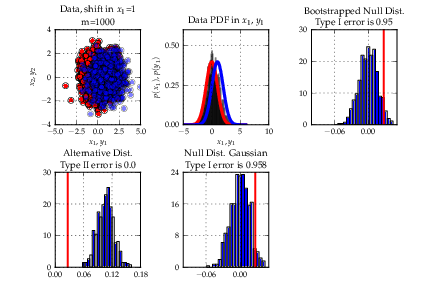
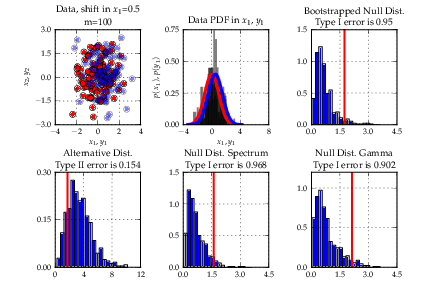
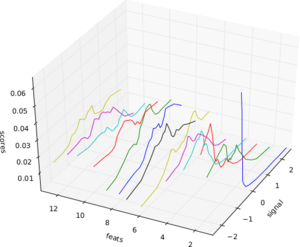
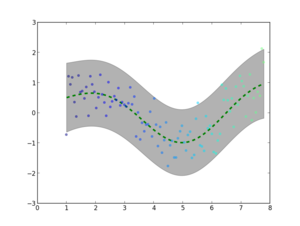
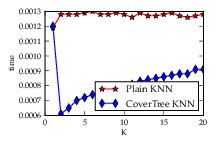
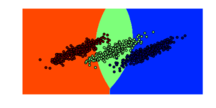
The summer came finally to an end and (yes in Berlin we still had 20 C end of October), unfortunately, so did GSoC with it. This has been the second time for SHOGUN to be in GSoC. For those unfamiliar with SHOGUN - it is a very versatile machine learning toolbox that enables unified large-scale learning for a broad range of feature types and learning settings, like classification, regression, or explorative data analysis. I again played the role of an org admin and co-mentor this year and would like to take the opportunity to summarize enhancements to the toolbox and my GSoC experience: In contrast to last year, we required code-contributions in the application phase of GSoC already, i.e., a (small) patch was mandatory for your application to be considered. This reduced the number of applications we received: 48 proposals from 38 students instead of 70 proposals from about 60 students last year but also increased the overall quality of the applications. In the end we were very happy to get 8 very talented students and have the opportunity of boosting the project thanks to their hard and awesome work. Thanks to google for sponsoring three more students compared to last GSoC. Still we gave one slot back to the pool for good to the octave project (They used it very wisely and octave will have a just-in-time compiler now, which will benefit us all!). SHOGUN 2.0.0 is the new release of the toolbox including of course all the new features that the students have implemented in their projects. On the one hand, modules that were already in SHOGUN have been extended or improved. For example, Jacob Walker has implemented Gaussian Processes (GPs) improving the usability of SHOGUN for regression problems. A framework for multiclass learning by Chiyuan Zhang including state-of-the-art methods in this area such as Error-Correcting Output Coding (ECOC) and ShareBoost, among others. In addition, Evgeniy Andreev has made very important improvements w.r.t. the accessibility of SHOGUN. Thanks to his work with SWIG director classes, now it is possible to use python for prototyping and make use of that code with the same flexibility as if it had been written in the C++ core of the project. On the other hand, completely new frameworks and other functionalities have been added to the project as well. This is the case of multitask learning and domain adaptation algorithms written by Sergey Lisitsyn and the kernel two-sample or dependence test by Heiko Strathmann. Viktor Gal has introduced latent SVMs to SHOGUN and, finally, two students have worked in the new structured output learning framework. Fernando Iglesias made the design of this framework introducing the structured output machines into SHOGUN while Michal Uricar has implemented several bundle methods to solve the optimization problem of the structured output SVM. It has been very fun and interesting how the work done in different projects has been put together very early, even during the GSoC period. Only to show an example of this dealing with the generic structured output framework and the improvements in the accessibility. It is possible to make use of the SWIG directors to implement the application specific mechanisms of a structured learning problem instance in python and then use the rest of the framework (written in C++) to solve this new problem. Students! You all did a great job and I am more than amazed what you all have achieved. Thank you very much and I hope some of you will stick around. Besides all these improvements it has been particularly challenging for me as org admin to scale the project. While I could still be deeply involved in each and every part of the project last GSoC, this was no longer possible this year. Learning to trust that your mentors are doing the job is something that didn't come easy to me. Having had about monthly all-hands meetings did help and so did monitoring the happiness of the students. I am glad that it all worked out nicely this year too. Again, I would like to mention that SHOGUN improved a lot code-base/code-quality wise. Students gave very constructive feedback about our (lack) of proper Vector/Matrix/String/Sparse Matrix types. We now have all these implemented doing automagic memory garbage collection behind scenes. We have started to transition to use Eigen3 as our matrix library of choice, which made quite a number of algorithms much easier to implement. We generalized the Label framework (CLabels) to be tractable for not just classification and regression but multitask and structured output learning. Finally, we have had quite a number of infrastructure improvements. Thanks to GSoC money we have a dedicated server for running the buildbot/buildslaves and website. The ML Group at TU Berlin does sponsor virtual machines for building SHOGUN on Debian and Cygwin. Viktor Gal stepped up providing buildslaves for Ubuntu and FreeBSD. Gunnar Raetschs group is supporting redhat based build tests. We have Travis CI running testing pull requests for breakage even before merges. Code quality is now monitored utilizing LLVMs scan-build. Bernard Hernandez appeared and wrote a fancy new website for SHOGUN. A more detailed description of the achievements of each of the students follows:

26 October 2012

Matthew Palmer: The e-mail PDA

I ve been a wannabe GTD afficionado for some years. I ve wanted to do it, but managing lists has always been something that has too much friction, overhead, or whatever. Finally, though, I think I might have found a way to manage lists that works. My use-case isn t unique, although I will concede I m perhaps being more dogmatic than most. I want something that: My previous attempt was a tool I called tagnote it was a vim-outliner file full of hierarchically organised outliner entries, with tags inlined. It was a neat idea, but it wasn t smooth to add/browse/delete items, and didn t work with my phone at all (trying to use vim for any length of time on a bottom-of-the-range Android phone would kill me). The current iteration, as the title of this post suggests, is a list manager that entirely uses e-mail. It really is a perfect symbiosis: So what have I got, exactly? It s fairly straightforward: That last point is the one I m really happy I achieved. I ve always been a fan of hide it until you need it , but my previous system didn t let me do that. Now, though, I have a separate list called tickler, and all the items in there have an X-Tickle header, which specifies the date I want to see them. Each night a cronjob runs through the tickler and moves anything for today into the INBOX. An X-Tickle-Repeat header lets me have things that repeat over and over again. So in short, using entirely open-source tools and a couple of hours of my time doing things I enjoy anyway (shell scripts! woo!), I ve now got a list manager that doesn t get in my way more than it absolutely has to. We ll see how long I last this time before I feel the urge to improve my lists again.

24 October 2012

Wouter Verhelst: Debian Bug Squashing Party Mechelen

Ever since my company moved offices back in June, I've been wanting to do this: organize a BSP. It just hadn't happened yet. Today, I decided that unless I start actually making this a concrete plan rather than some vague idea, it isn't going to happen. So, here we go: during the weekend of the 15th and 16th of December, I expect some people to show up and help stamping out those pesky RC bugs. If you've been wanting to help Debian somehow but don't know where to start, this is your chance! Don't worry about not knowing how all this works; there will be Debian Developers attending who can help you out (two DDs have told me that they'd like to attend, and of course I will be there too). If you've got some experience in Debian packaging, your help would of course be all the more appreciated. Even if you can't make it the whole weekend, that's fine too! Just be there for as long as you can, and help stamp out those pesky RC bugs. The more people help out, the better!

Jon Dowland: Debian Days #10 and #11

I've had a few weeks with very little time spent on Debian. I did set aside some time to try to find and fix an RC bug, to help the release. Steven C commented to let me know about the UDD Developer's Dashboard which is a great way to find RC bugs relevant to a team. I sat down to try and fix #648272 in 'Abuse' but sadly I didn't manage, instead finding another possible RC bug #689457 on the way. I was curious as to how long the version 1 web services API for musicbrainz will be kept around, in case there was a strong likelyhood it would be turned off during the lifetime of wheezy. If that were the case, then it might have been worth requesting freeze exceptions to patch the last few WS1 clients to use WS2 instead. However, the musicbrainz developers have no plans to turn off WS1 as long as there are people still using it. This is a bit of a chicken and egg situation for wheezy, but probably not strong enough grounds to persue it any further. So last night was my first "Debian Day" in a while, and by chance I've had a number of enquiries for software and packages which I haven't touched in a while. For the prboom package, we rebuild the upstream tarball to remove some material we don't have the right to distribute. The code that does the repackaging lives in a script called debian/fix_upstream.sh. Prboom upstream release very infrequently, so the script hasn't been run in a while. Fabian Greffrath noticed some bashisms which meant it would not work reliably with a non-bash /bin/sh. He also noticed that we couldn't build the binary lump data/prboom.wad using only free software since some changes that were made to freedoom. One possible fix was to expand the deutex package to recognise freedoom.wad, which I've now applied. Fabian has fixed the bashism issue, but I suspect a more robust solution long-term would be to always rebuild data/prboom.wad during package build, so that code gets exercised more often. The prboom changes are in the Git repository but I haven't release them yet. I need to decide whether it's worth requesting a freeze exception for the orig tarball build issue. It's not an FTBFS but it's similar: you could not rebuild a binary distributed in the source tarball using software only in Debian, at least not without some workarounds. We've had another request to package Prboom+. I've never been particularly interested in doing this myself, but it would probably be very little work, you could more-or-less take the prboom packaging as it stands. One thing I thought would be interesting to try would be to set up a git repository for the packaging and import the upstream Subversion repository in its entirety via git svn, rather than just import the released tarballs. Sadly their repository layout is not quite ideal for this. game-data-packager continues to grow. Following hot on the heels of Hexen 2 support, Markus Koschany has written preliminary support for LGeneral, a game which has been in Debian, at least in part, on and off. Hopefully we'll have that merged soon, and finish of Hexen 2 support whilst we're at it. On that note, here's a lazyweb question: what's the most convenient way to determine the length (at microsecond resolution) of a PCM WAV file from the command-line? Finally, we've been building Debian-based virtual machines at work, which meant dusting off some old preseed files and tweaking them to have unattended installs. This took a lot longer than I thought. It's certainly a lot more painful than kickstart and Redhat-based systems, and it's very unlikely that a preseed file that worked for one version of Debian would fully work for another. I'm not certain but I think even different releases of d-i targetting the same release "break" assumptions you might make, particularly about which questions you need to answer via the kernel command line, rather than in the preseed file. That's one thing we really need to sort. It's crazy having to specify keyboard layouts in the command line for VMs which won't ever have a keyboard. The disparity between what the user is asked, what value is written to the debconf database at that point in the install process, and what ends up in the debconf database at the end of the process is also a real pain: answering a question about keyboard layout sets half a dozen different debconf values in a cascade that is probably sensitive to other things like priority or whether d-i is in expert mode, too. So working backwards from the debconf database of an installed machine is an exercise in frustration, and figuring out which questions are asked prior to the preseed file being read for any given d-i or Debian release is a slow trial and error process. I'm going to get in touch with the d-i folks and see what kind of continuous integration systems they have in place. It would be great to have commit-level notification that you've broken preseed builds. If not for the d-i folks, then certainly at work.

Next.

Previous.