Search Results: freedom

14 October 2015

Rhonda D'Vine: Post DebConf15

There are some things that I didn't mention in my sort-of quickly written entry about DebConf15. So first things first. When I received the mail about the room allocation I was at first confused. I was put into a room with other ladies, which I didn't expect. Granted, two of the other three names were people that knew me since a while, but it still felt like a mistake might have happened. But after a while I realized what has happened: It wasn't a mistake, it was intentional, I was finally recognized as woman for the room allocation too, which made me extremely happy. I was just just concerned about the third person who would be in our room who doesn't know me yet and whether it would make them feel uncomfortable. In the end, that was no trouble at all. I felt so empowered and more accepted than ever in this community. And when finally being on-site there another thing happened with me. I started to use the women's restroom. Up to now I usually had the feeling of "it's fine for me to use the male one, and I don't want other women to feel uncomfortable", but somehow, with a skirt on, it in the end made me feeling uncomfortable. Additionally, there were only three times in total when I used the male toilet (and one was on the boat for the daytrip), and every single time of it I felt extremely uncomfortable with it, like others might think I'm just faking it. It at least in my mind doesn't help with accepting me as female when I go to the male restroom. And it's not a Good choice! as a woman did put it during the conference dinner when there was a longer queue infront of the male restroom. It's not so much of a choice over here. But I give her the doubt of not knowing how important these little steps became to me over time. Totally unrelated to the restroom question but interestingly featuring it a fair bit I was made aware of the Assigned Male cartoon. I instantly fell in love with it, and in case you want to enlighten yourself a bit more about how some things you might say or do get received by trans people, be very much invited to read it. Sophie is currently on European tour with her book, unfortunately Vienna/Austria doesn't seem to be part of europe in that respect so I hope someone will be able to visit one of her stations to pick up a book for me ... And then there was also a small inofficial Nail Polish BoF going on at DebConf. I left it on my fingers for the next two weeks, totally in love with it. Unfortunately the nail polish I got for myself after DebConf had a rather big brush so I wasn't able to work on it, I failed miserably. ... which brings me to the empowerment that DebConf meant for me this year, and the time since. Given that I left the nail polish on I even took the comfort in being myself to go to work in my skirt on a more regular basis. Also, a very nice friend did visit me and we went lipstick shopping. I loved the color she chose, even though in the meantime it isn't visible enough for me and I guess I'll get another one rather sooner than later. Also, about what I mentioned in my last blog post was that my name change within the Debian project was granted. A quick update on that is that also now my GPG key got replaced. I guess it's finally time for me to write a gpg transition statement, even though I don't follow those myself. I still prefer meeting up with people face-to-face for signing their new keys. But given that it's called a transition statement makes it more appealing to me on that grounds. :) And I got invited to a local podcast show. Actually I know the person who does the podcast since several years already, he's also part of the local free software community who attends various events, and he does a podcast since several years now called Biertaucher (named after cooling the beer in a fountain). It is held in German language, so if you don't understand German you might want to skip these links.
In the first episode that I joined in I talked about DebConf. Afterwards we were sitting together and talking about that they would like to have more social topics too, not just technical things. So we took that chance and talked in Biertaucher #221 about Polyamory, which was a quite interesting experience. The host intentionally asked questions coming from a quite ignorant point of view, but it went nice. We were three poly people sharing our views and insight how it works for us.
Then there was Biertaucher #223 where it was just me and one of the hosts. We didn't had much to talk about from the past week, so we agreed to talk about Transgender in the end. Granted, it's mostly my personal story, but I guess I got some important topics addressed in a useful way. And, after getting my name changed in Debian, I thought about what it might take to get my name changed officially, too (as if it could get more official than using it throughout my work environment, both payed and voluntary, but ...). I covered that in the podcast, but mostly it is either quite expensive or requires me to change my gender in the register of births, which require a lot of other hassles that include psychiatry. Or, settle for a so-called "gender neutral" name as first name, which both doesn't sound very convincing somehow ... Only time can tell I guess. Guess that's enough for now, if I forgot something I might come back to it. :) One last note: I consider the Debian project a very welcoming one, and that can only work for a fair amount of people if the tone is right. So yes, I wholeheartly agree with the Code of Conduct. And I'm very disappointed to see that there are still people in the project that are advocating for a freedom of expression, so to say. Respectful communication with each other is a must in a bigger community to make it work, not something that might be a nice to have, and calling someone names and ridiculing them for stating that is absolutely not acceptable. I encourage those people to watch How to Throughly Offend and Insult People in Open Source presentation (or at least read the slides) that Gina Likins gave earlier this year. It might give them an idea why it's important to communicate respectful with each other, and that includes banning degrading terms like "SJW" from your vocabulary because it actually speaks a lot more about your own attitude than about the one of the person you use it for.

/personal permanent link Comments: 8 Flattr this

8 October 2015

Mart n Ferrari: Pining for the good ol' days

Today, Norbert Preining wrote a blog post syndicated in planet talking about Sarah Sharp quitting Linux development, and making a parallel with the Debian community. Once again, he's complaining about how the fun from Debian has been lost because making sexist jokes, or treating other people like shit is not allowed any more. He seems to think the LKML is the ideal environment and that Debian should be more like it. He also celebrates that Ms Sharp12 left Linux, because evidently the freedom to be a jerk to each other is more important than the contributions that she -or any other person that finds that atmosphere toxic, like mjg- has produced or could have produced in the future.
I would like to tell readers of Planet Debian that this view is not the norm in Debian any more. We are working hard to make the project more inclusive, fun, and welcoming to everybody. Sadly, some people are still pining for the good ol' days, and won't give up so easily on their privilege.

  1. Whom he calls "one more SJW", I guess then that after all, this is just about ethics in FOSS development.
  2. At this point, using the term SJW in a discussion should equate to a Godwin, and mean that you lost the argument.
6 comments

23 September 2015

Daniel Pocock: The only way to ensure the VW scandal never happens again

The automotive industry has been in the spotlight after a massive scandal at Volkswagen, using code hidden in the engine management software to cheat emissions tests. What else is hidden in your new car's computer? Every technology we use in our lives is becoming more computerized, even light bulbs and toilet seats. In a large piece of equipment like a car, there are many opportunities for computerization. In most cases, consumers aren't even given a choice whether or not they want software in their car. It has long been known that such software is spying on the habits of the driver and this data is extracted from the car when it is serviced and uploaded to the car company. Car companies are building vast databases about the lifestyles, habits and employment activities of their customers. Computers aren't going away, so what can be done? Most people realize that computers aren't going to go away any time soon. That doesn't mean that people have to put up with these deceptions and intrusions on our lives. For years, many leading experts in the software engineering world have been promoting the benefits and principles of free software. What we mean by free is that users, regulators and other independent experts should have the freedom to see and modify the source code in the equipment that we depend on as part of modern life. In fact, experts generally agree that there is no means other than software freedom to counter the might of corporations like Volkswagen and their potential to misuse that power, as demonstrated in the emissions testing scandal. If Governments and regulators want to be taken seriously and protect society, isn't it time that they insisted that the car industry replaces all hidden code with free and open source software?

21 September 2015

Daniel Pocock: Skype outage? reSIProcate to the rescue!

On Friday, the reSIProcate community released the latest beta of reSIProcate 1.10.0. One of the key features of the 1.10.x release series is support for presence (buddy/status lists) over SIP, the very thing that is currently out of action in Skype. This is just more proof that free software developers are always anticipating users' needs in advance. reSIProcate 1.10.x also includes other cool things like support for PostgreSQL databases and Perfect Forward Secrecy on TLS. Real free software has real answers Unlike Skype, reSIProcate is genuine free software. You are free to run it yourself, on your own domain or corporate network, using the same service levels and support strategies that are important for you. That is real freedom. Not sure where to start? If you have deployed web servers and mail servers but you are not quite sure where to start deploying your own real-time communications system, please check out the RTC Quick Start Guide. You can read it online or download the PDF e-book. Is your community SIP and XMPP enabled? The Debian community has a federated SIP service, supporting standard SIP and WebRTC at rtc.debian.org for all Debian Developers. XMPP support was tested at DebConf15 and will be officially announced very soon now. A similar service has been developed for the Fedora community and it is under evaluation at fedrtc.org. Would you like to extend this concept to other free software and non-profit communities that you are involved in? If so, please feel free to contact me personally for advice about how you can replicate these successful initiatives. If your community has a Drupal web site, then you can install everything using packages and the DruCall module. Comment and discuss Please join the Free-RTC mailing list to discuss or comment

21 August 2015

Norbert Preining: The sins of the past adding Cyrillic glyphs without renaming fonts

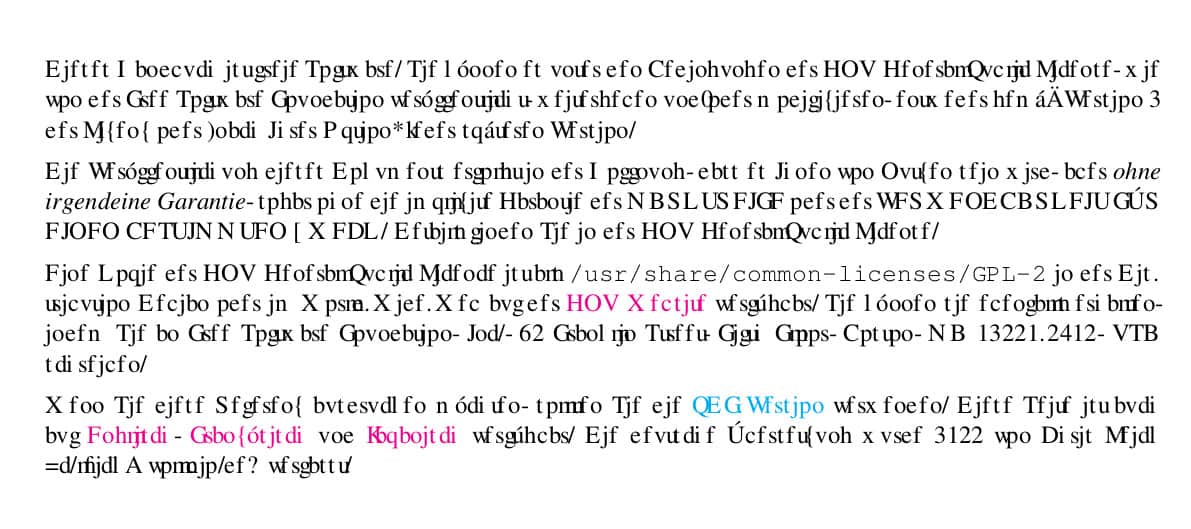
The URW Base35 fonts are a great set of fonts, available for free as in free software. They have been part of various distributions and systems since long time. Big thanks to URW for their work. But these fonts don t have Cyrillic or Greek glyphs. Be it as it is, world would be easy. People would need to use different fonts for these languages. Comes around someone who did the unthinkable namely adding the Cyrillic and Greek glyphs to the fonts (by now nothing bad), but then NOT renaming the fonts. Here we see one point of the stupidity of GPL and absolute freedom. Because what we now have is that documents produced several TeX engines (in particular XeTeX and LuaTeX) which use fontconfig to search the fonts, suddenly pick up these changed fonts that fake their identity, and what comes out is this, a complete rubbish: broken-fonts And now we are suffering huge pain from that. Look at the bug reports of that are coming in: Just to name a few. And there is a simple way to circumvent this: Don t install gsfonts which guarantees that fontconfig finds the real original URW fonts within the TeX Live tree first. I have now spent many hours to track down these problems, find the reason, and at the end of the day there is always gsfonts with its broken fonts with added Cyrillic glyphs. I honestly don t care about the history, there are now many fonts with Cyrillic and Greek glyphs, there is no need to fake fonts, and incorrectly take over font names. This should be a lesson to all the GPL zealots that require absolute freedom of each and everything. Unfortunately things don t work like that. Using AND RENAMING is ok, the Knuth license as I would say, but anything else is just a source of much pain. End for today, I have to go to work now. Real work instead of fighting sins of the past. Nothing to enjoy here. Additional information Just to let you know, before starting a flame war, I have already contacted the upstream developers, that is TeX Live, and explained them the situation. I don t see much chance for fixing, since the problem is with fonts without upstream and support, which are probably only used in Debian (I haven t seen them anywhere else but some mentioning in RH), and which are not officially supported or distributed. It really needs a nice developer to look into why this breakage appeared. Let us hope. And instead of flaming, anyone here is invited to dig into the code him/herself and search for changes. Additional information 2015-08-22 Just to back up my complaints and counteract several of the comments: I am quoting from an email of a colleague on the list where we are discussing the problem:
However, the fonts extended by Valek Filippov are quite problematic. The Type1 spec clearly requires that there may not exist two different fonts with the same /FontName. The modified fonts shipped with Ghostscript have the same /FontName as the original fonts donated by URW and not even the /UniqueID was changed. IMO they are broken because they don t comply with the Type1 specification.
I hope that convinced also the last in doubt.

18 August 2015

Enrico Zini: standup-comedy-notes

My semi serious stand up comedy notes Video Disclaimers
Someone has said that it requires less mental effort to condemn than to think. (Emma Goldman, on several things including mailing list flamewars)
Fascinating A da's "Dogging" song. Look for "dogging etiquette" for more examples of code of conducts. Just don't take your computer for repair immediately afterwards . Introduction
Every daring attempt to make a great change in existing conditions, every lofty vision of new possibilities for the human race, has been labeled Utopian. (Emma Goldman, on the Debian Social Contract)
I am going to talk about many topics that we all know have so much in common: They are all, after all: BDSM
A person is no less a slave because they are allowed to choose a new master once in a term of years. (Lysander Spooner about proprietary cloud service providers)
If you thought you've seen it all with recursive acronyms, here's a chain acronym: Bondage Discipline, Dominance Submission, Sado Masochism. Why I think BDSM is interesting: not (just) because of whips, but for having a lot of awareness about power releationships. Why should one accept from a coworker a level of abuse that would be considered a hard limit when negotiating with a trusted dom? The BDSM Free Software definition: "I refuse to be bound by software I cannot negotiate with". YKINMKBYKIOK (Your Kink Is Not My Kink But Your Kink Is Okay) is a nice example of dealing with diversity, and it also definitely solves the emacs vs vi debate. Comfort zones, safewords, traffic light flow control, safety. "No means no", unless there has been a long discussion first, and a safeword is in place, in which case "Fuzzy purple unicorn" means "no" "No means no", and if someone insists after a "no", it becomes harassment. "No means no" is a precondition for being able to say "yes": http://pervocracy.blogspot.de/2011/03/no-and-no-and-no-and-yes.html Aftercare! Aftercare! Release parties! High fives! Solidarity after flamewars or votes! Poliamory
If love does not know how to give and take without restrictions, it is not love, but a transaction that never fails to lay stress on a plus and a minus. (Emma Goldman, on volunteer projects)
Polyamory is the practice, desire, or acceptance of intimate relationships that are not exclusive with respect to other sexual or intimate relationships, with knowledge and consent of everyone involved. Compersion, n: the feeling you get when someone else also takes good care of one of your packages. We currently allow only one value in the Maintainer field: * takeover is traumatic, because values can only be replaced * if values could be added instead, and removed when they don't make sense anymore... What is your definition of love? My current one is: my world is better with you in it. Relationship anarchy is the practice of forming relationships which are not bound by rules aside from what the people involved mutually agree on. How do you call a relationship that is bound by rules that the people involved do not agree on? From discussions after the talk New Relationship Energy, the excitement when you start to maintain a new package, and the risk of been carried away by the excitement and neglecting all the other ones. Consent
Anarchism, to me, means not only the denial of authority, not only a new economy, but a revision of the principles of morality. It means the development of the individual as well as the assertion of the individual. It means self-responsibility, and not leader worship. (Voltairine de Cleyre about trusting lintian warnings)
You need to know what you are doing, and what situation you're putting yourself into. You need to know that the person asking a question really is able to accept any answer, and take it seriously. You need to feel that you have alternatives. Be selfish when you ask, honest when you reply, and when others reply, take them seriously. If any of this doesn't stand, I find it hard to trust that we are in a consensual situation. When is one supposed to learn about consent? Consent explained with tea. Practical advice
Anarchism has but one infallible, unchangeable motto, Freedom. Freedom to discover any truth, freedom to develop, to live naturally and fully. (Lucy Parsons about the DFSG)
Relationship advice and work advice have a lot in common: Relationship advice from 99 ways to ruin an open source project Online participation advice from How to Screw Up Your Relationship (and make everyone miserable while you re at it) Packaging advice from BDSM Basics: 20 Unsolicited Tips for New Dominants Advice about joining a new community from Advice to a newbie submissive about dominants Dear Debian, and dear everyone contributing to it: my world is better with you in it. I love you all :* <3

16 August 2015

Ana Beatriz Guerrero Lopez: Debconf15 and happy birthday Debian!

Debconf15 started yesterday and as expected, talk rooms are always fully crowded! I had to stand up in a couple of talks and I watched another couple of them from outside thanks to the real time streaming. Thanks to the fantastic work of the video team, video recordings of the talks from yesterday have started to be available at http://meetings-archive.debian.net/pub/debian-meetings/2015/debconf15/.
I would heartily recommend you to watch Debian s Central Role in the Future of Software Freedom by Bradley M. Kuhn (video available).
I was expecting a good talk and Bradley exceeded my expectations. I also got to meet again Simon Kainz and to get my DUCK branded lighter from the duck challenge :) After dinner, we celebrated Debian s 22 birthday, that s exactly today. We had a wonderful cake made by DebConf attendees made by small pieces of pastry with fruits drawing a mosaic with a Debian swirl.
While the cake was a very nice detail, the best part of it was watching the people making the cake. Everybody had a great time and this kind of things are what make Debian (and DebConf) great. When people work together to make something wonderful.

4 August 2015

Julien Danjou: Ceilometer, Gnocchi & Aodh: Liberty progress

It's been a while since I talked about Ceilometer and its companions, so I thought I'd go ahead and write a bit about what's going on this side of OpenStack. I'm not going to cover new features and fancy stuff today, but rather a shallow overview of the new project processes we initiated. Ceilometer growing Ceilometer has grown a lot since that time when we started it 3 years ago. It has evolved from a system designed to fetch and store measurements, to a more complex system, with agents, alarms, events, databases, APIs, etc. All those features were needed and asked for by users and operators, but let's be honest, some of them should never have ended up in the Ceilometer code repository, especially not all at the same time. The reality is we picked a pragmatic approach due to the rigidity of the OpenStack Technical Committee in regards to new projects to become OpenStack integrated and, therefore, blessed projects. Ceilometer was actually the first project to be incubated and then integrated. We had to go through the very first issues of that process. Fortunately, now that time has passed, and all those constraints have been relaxed. To me, the OpenStack Foundation is turning into something that looks like the Apache Foundation, and there's, therefore, no need to tie technical solutions to political issues. Indeed, the Big Tent now allows much more flexibility to all of that. Back a year ago, we were afraid to bring Gnocchi into Ceilometer. Was the Technical Committee going to review the project? Was the project going to be in the scope of Ceilometer for the Technical Committee? Now we don't have to ask ourselves those questions, now that we have that freedom, it empowers us to actually do what we think is good in term of technical design without worrying too much about political issues.
Ceilometer development activity
Acknowledging Gnocchi The first step in this new process was to continue working on Gnocchi (a timeserie database and resource indexer designed to overcome historical Ceilometer storage issue) and to decide that it was not the right call to merge it into Ceilometer as some REST API v3, but that it was better to keep it standalone. We managed to get traction to Gnocchi, getting a few contributors and users. We're even seeing talks proposed to the next Tokyo Summit where people leverage Gnocchi, such as "Service of predictive analytics on cost and performance in OpenStack", "Suveil" and "Cutting Edge NFV On OpenStack: Healing and Scaling Distributed Applications". We are also doing some progress on pushing Gnocchi outside of the OpenStack community, as it can be a self-sufficient timeserie and resource database that can be used without any OpenStack interaction. Branching Aodh Rather than continuing to grow Ceilometer, during the last summit we all decided that it was time to reorganize and split Ceilometer into the different components it is made of, leveraging a more service-oriented architecture. The alarm subsystem of Ceilometer being mostly untied to the rest of Ceilometer, we decided it was the first and perfect candidate to do that. I personally engaged into doing the work and created a new repository with only the alarm code from Ceilometer, named Aodh.
Aodh is an Irish word meaning fire. A word picked so it also had some relation to Heat, and because we have some Irish influence around the project .
This made sense for a lot of reason. First because Aodh can now work completely standalone, using either Ceilometer or Gnocchi as a backend or any new plugin you'd write. I love the idea that OpenStack projects can work standalone like Swift does for example without implying any other OpenStack component. I think it's a proof of good design. Secondly, because it allows us to resonate on a smaller chunk of software a reason really under-estimated today in OpenStack. I believe that the size of your software should match a certain ratio to the size of your team. Aodh is, therefore, a new project under the OpenStack Telemetry program (or what remains of OpenStack programs now), alongside Ceilometer and Gnocchi, forked from the original Ceilometer alarm feature. We'll deprecate the latter with the Liberty release, and we'll remove it in the Mitaka release. Lessons learned Actually, moving that code out of Ceilometer (in the case of Aodh), or not merging it in (in the case of Gnocchi) had a few side effects that I admit I think we probably under-estimated back then. Indeed, the code size of Gnocchi or Aodh ended up being much smaller than the entire Ceilometer project Gnocchi is 7 smaller and Aodh 5x smaller than Ceilometer and therefore much more easy to manipulate and to hack on. That allowed us to merge dozens of patches in a few weeks, cleaning-up and enhancing a lot of small things in the code. Those tasks are very much harder in Ceilometer, due to the bigger size of the code base and the small size of our team. By having our small team working on smaller chunks of changes even when it meant actually doing more reviews greatly improved our general velocity and the number of bugs fixed and features implemented. On the more sociological side, I think it gave the team the sensation of finally owning the project. Ceilometer was huge, and it was impossible for people to know every side of it. Now, it's getting possible for people inside a team to cover a much larger portion of those smaller project, which gives them a greater sense of ownership and caring. Which ends up being good for the project quality overall. That also means that we technically decided to have different core teams by project (Ceilometer, Gnocchi, and Aodh) as they all serve different purposes and can all be used standalone or with each others. Meaning we could have contributors completely ignoring other projects. All of that reminds me some discussion I heard about projects such as Glance, trying to fit new features in - some that are really orthogonal to the original purpose. It's now clear to me that having different small components interacting together that can be completely owned and taken care of by a (small) team of contributors is the way to go. People that can therefore trust each others and easily bring new people in, makes a project really incredibly more powerful. Having a project covering a too wide set of features make things more difficult if you don't have enough manpower. This is clearly an issue that big projects inside OpenStack are facing now, such as Neutron or Nova.

23 July 2015

Antoine Beaupr : Is it safe to use open wireless access points?

I sometimes get questions when people use my wireless access point, which, for as long as I can remember, has been open to everyone; that is without any form of password protection or encryption. I arguably don't use the access point much myself, as I prefer the wired connection for the higher bandwidth, security and reliability it provides. Apart from convenience for myself and visitors, the main reason why I leave my wireless access open is that I believe in a free (both as in beer and freedom) internet, built with principles of solidarity rather than exploitation and profitability. In these days of ubiquitous surveillance, freedom often goes hand in hand with anonymity, which implies providing free internet access to everyone. I also believe that, as more and more services get perniciously transferred to the global internet, access to the network is becoming a basic human right. This is therefore my small contribution to the struggle, now also part of the R seau Libre project. So here were my friends question, in essence:
My credit card info was stolen when I used a wifi hotspot in an airport... Should I use open wifi networks? Is it safe to use my credit card for shopping online?
Here is a modified version of an answer I sent to a friend recently which I thought could be useful to the larger internet community. The short answer is "sorry about that", "it depends, you generally can, but be careful" and "your credit card company is supposed to protect you".

Sorry! First off, sorry to hear that our credit card was stolen in an airport! That has to be annoying... Did the credit card company reimburse you? Normally, the whole point of credit cards is that they protect you in case of theft like this and they are supposed to reimburse you if you credit card gets stolen or abused...

The complexity and unreliability of passwords Now of course, securing every bit of your internet infrastructure helps in protecting against such attacks. However: there is a trade-off! First off, it does makes it more complicated for people to join the network. You need to make up some silly password (which has its own security problems: passwords can be surprisingly easy to guess!) that you will post on the fridge or worst, forget all the time! And if it's on the fridge, anyone with a view to that darn fridge, be it one-time visitor or sneaky neighbor, can find the password and steal your internet access (although, granted, that won't allow them to directly spy on your internet connection). In any case, if you choose to use a password, you should use the tricks I wrote in the koumbit wiki to generate the password and avoid writing it on the fridge.

The false sense of security of wireless encryption Second, it can also give a false sense of security: just because a wifi access point appears "secure" (ie. that the communication between your computer and the wifi access point is encrypted) doesn't mean the whole connection is secure. In fact, one attack that can be done against access points is exactly to masquerade as an existing access point, with no security security at all. That way, instead of connecting to the real secure and trusted access point, you connect to an evil one which spies on our connection. Most computers will happily connect to such a hotspot even with degraded security without warning. It may be what happened at the airport, in fact. Of course this particular attack would be less likely to happen if you live in the middle of the woods than an airport, but it's some important distinction to keep in mind, because the same attack can be performed after the wireless access point, for example by your countryside internet access provider or someone attacking it. Your best protection for your banking details is to rely on good passwords (for your back account) but also, and more importantly, what we call end-to-end encryption. That is usually implemented using the "HTTPS" with a pad lock icon in your address bar. This ensures that the communication between your computer and the bank or credit card company is secure, that is: that no wifi access point or attacker between your computer and them can intercept your credit card number.

The flaws of internet security Now unfortunately, even the HTTPS protocol doesn't bring complete security. For example, one attack that can be done is similar to the previous one and that is to masquerade as a legitimate bank site, but either strip out the encryption or even fake the encryption. So you also need to look at the address of the website you are visiting. Attackers are often pretty clever and will use many tricks to hide the real address of the website in the address bar. To work around this, I always explicitly type my bank website address (https://accesd.desjardins.com/ in my case) directly myself instead of clicking on links, bookmarks or using a search engine to find my bank site. In the case of credit cards, it is much trickier because when you buy stuff online, you end up putting that credit card number on different sites which you do not necessarily trust. There's no good solution but complaining to your credit card company if you believe a website you used has stolen your credit card details. You can also use services like Paypal, Dwolla or Bitcoin that hide your credit card details from the seller, if they support the service. I usually try to avoid putting my credit card details on sites I do not trust, and limit myself to known parties (e.g. Via Rail, Air Canada, etc). Also, in general, I try to assume the network connection between me and the website I visit is compromised. This forced me to get familiar with online security and use of encryption. It is more accessible to me than trying to secure the infrastructure i am using, because i often do not control it at all (e.g. internet cafes...). Internet security is unfortunately a hard problem, and things are not getting easier as more things move online. The burden is on us programmers and system administrators to create systems that are more secure and intuitive for our users so, as I said earlier, sorry the internet sucks so much, we didn't think so many people would join the acid trip of the 70s. ;)

15 July 2015

Matthew Garrett: Canonical's Ubuntu IP policy is garbage

(In order to avoid any ambiguity here, this is a personal opinion. The Free Software Foundation's opinion on this matter is here)

Canonical have a legal policy surrounding reuse of Intellectual Property they own in Ubuntu, and you can find it here. It's recently been modified to handle concerns raised by various people including the Free Software Foundation[1], who have some further opinions on the matter here. The net outcome is that Canonical made it explicit that if the license a piece of software is under explicitly says you can do something, you can do that even if the Ubuntu IP policy would otherwise forbid it.

Unfortunately, "Canonical have made it explicit that they're not attempting to violate the GPL" is about the nicest thing you can say about this. The most troubling statement is Any redistribution of modified versions of Ubuntu must be approved, certified or provided by Canonical if you are going to associate it with the Trademarks. Otherwise you must remove and replace the Trademarks and will need to recompile the source code to create your own binaries.. The apparent aim here is to avoid situations where people take Ubuntu, modify it and continue to pass it off as Ubuntu. But it reaches far further than that. Cases where this may apply include (but are not limited to):
In each of these cases, a strict reading of the policy indicates that you are distributing a modified version of Ubuntu and therefore must either get it approved by Canonical or remove the trademarks and rebuild everything. The strange thing is that this doesn't limit itself to rebuilding packages that include Canonical's trademarks - there's a requirement that you rebuild all binaries.

Now obviously this is good engineering practice in a whole bunch of ways, but it's a huge pain in the ass. And to make things worse, Canonical won't clarify what they consider to be use of their trademarks. Many Ubuntu packages rebuilt from Debian include the word "ubuntu" in their version string. Many Ubuntu packages will contain the word "ubuntu" in maintainer email addresses. Many Ubuntu packages include references to Ubuntu (for instance, documentation might say "This configuration file is located under /etc/default in Debian and Ubuntu"). And many Ubuntu packages will include the compiler version string, which will include the word "ubuntu". Realistically, there's no risk of confusion by using the trademarks in this way, and as a consequence there would be no infringement under trademark law. But Canonical aren't using trademark law here. Canonical assert that they hold copyright over binaries that they have built form source, and require that for you to have permission to redistribute these binaries under copyright law you must remove the trademarks. This means that it doesn't matter whether your use of the trademarks would be infringing or not - you're required to remove them, because fuck you that's why.

This is a huge overreach. It's hostile to free software, in that it makes it significantly more difficult to produce derivative works of Ubuntu and doesn't benefit the community in the process. It's hostile to our understanding of IP law, in that it claims that the mechanical process of turning source code into binaries creates an independently copyrightable work. And in some cases it may make it impossible to create derivative works that interoperate with Ubuntu due to applications making assumptions about the presence of strings.

It'd be easy write this off as an over the top misinterpretation of the policy if it hadn't been confirmed by the Ubuntu Community Manager that any binaries shipped by Ubuntu under licenses that don't grant an explicit right to redistribute the binaries can't be redistributed without permission or rebuilding. When I asked for clarification from Canonical over a year ago, I got no response[2]. Perhaps Canonical don't want to force you to remove every single use of the word Ubuntu from derivative works, but their policy is written such that the natural reading is that they do, and they've refused every single opportunity they've been given to clarify the point.

So, we're left with a policy that makes it hugely impractical to redistribute modified versions of Ubuntu unless Canonical approve of it. That's not freedom, and it's certainly not Ubuntu. If Canonical are serious about participating in the free software community then they need to demonstrate their willingness to continue improving this policy to bring it closer to our goals. Failure to do so will give a strong indication of their priorities.

[1] While I'm a member of the FSF's board of directors, I'm not involved in the majority of the FSF's day to day activities and was not part of this process
[2] Nebula's OS was a mixture of binary packages we pulled straight from Ubuntu and packages we rebuilt, so we were obviously pretty interested in what the answer was

comment count unavailable comments

10 July 2015

Chris Lamb: Where's the principled opposition to the "WhatsApp ban"?

The Independent reports that David Cameron wishes to ban the instant messaging application WhatsApp due its use of end-to-end encryption. That we might merely be pawns in manoeuvring for some future political compromise (or merely susceptible to cheap clickbait) should be cause for some concern, but what should worry us more is that if it takes scare stories about WhatsApp for our culture to awaken on the issues of privacy and civil liberties, then the central argument against surveillance was lost a long time ago. However, the situation worsens once you analyse the disapproval in more detail. One is immediately struck by a predominant narrative of technical considerations; a ban would be "unworkable" or "impractical". A robust defence of personal liberty or a warning about the insidious nature of chilling effects? Perhaps a prescient John Locke quote to underscore the case? No. An encryption ban would "cause security problems." The argument proceeds in a tediously predictable fashion: it was already difficult to keep track whether one should ipso facto be in favour of measures that benefit the economy, but we are suddenly co-opted as technocrats to consider the "damage" it could to do the recovery or the impact on a now-victimised financial sector. The coup-de-gr ce finally appeals to our already inflated self-regard and narcissism: someone could "steal your identity." Perhaps even more disappointing is the reaction from more technically-minded circles who, frankly, should know better. Here, they give the outward impression of metaphorically stockpiling copies of the GnuPG source code in their bunkers, perhaps believing the shallow techno-utopianist worldview that all social and cultural problems can probably be solved with Twitter and a JavaScript intepreter. The tragedy here is that I suspect that this isn't what the vast majority of people really believe. Given a hypothetical ban that could, somehow, bypass all of the stated concerns, I'm pretty upbeat and confident that most people would remain uncomfortable with it on some level. So what, exactly, does it take for us to oppose this kind of intervention on enduring principled grounds instead of transient and circumventable practical ones? Is the problem just a lack of vocabulary to discuss these issues on a social scale? A lack of courage? Whilst it's certainly easier to dissect illiberal measures on technical merit than to make an impassioned case for abstract freedoms, every time we gleefully cackle "it won't work" we are, in essence, conceding the central argument to the authoritarian and the censorious. If one is right but for the wrong reasons, were we even right to begin with?

17 June 2015

Norbert Preining: Gaming: Portal

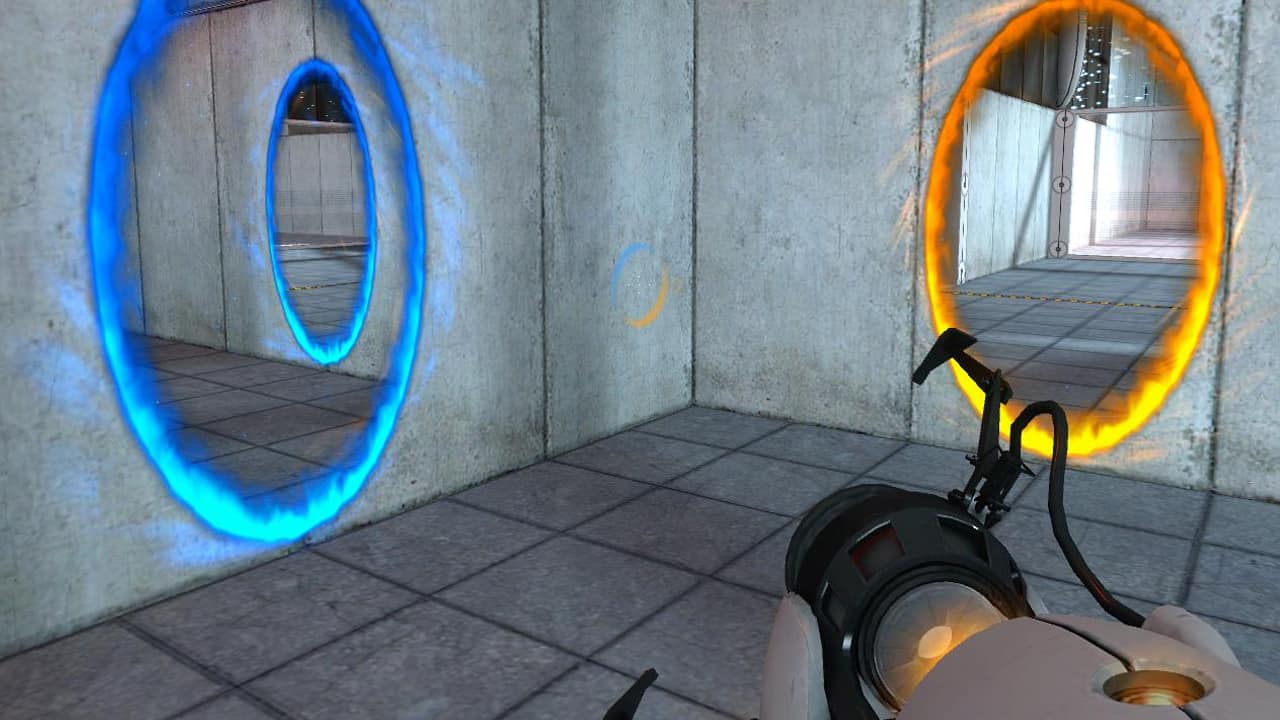
Ok, I have to admit, I sometimes do game and recently I finished Portal. Quite old (released in 2007), but still lots of fun. I started playing it about one year ago, off and on, until I recently finished the last level. Took me about 1 year of playing to finish the actual playing time of about 10h I guess you can see how much an addict I am  portalhazards I have never been a gamer, and I think there are only three set of games I played for extended periods of time:
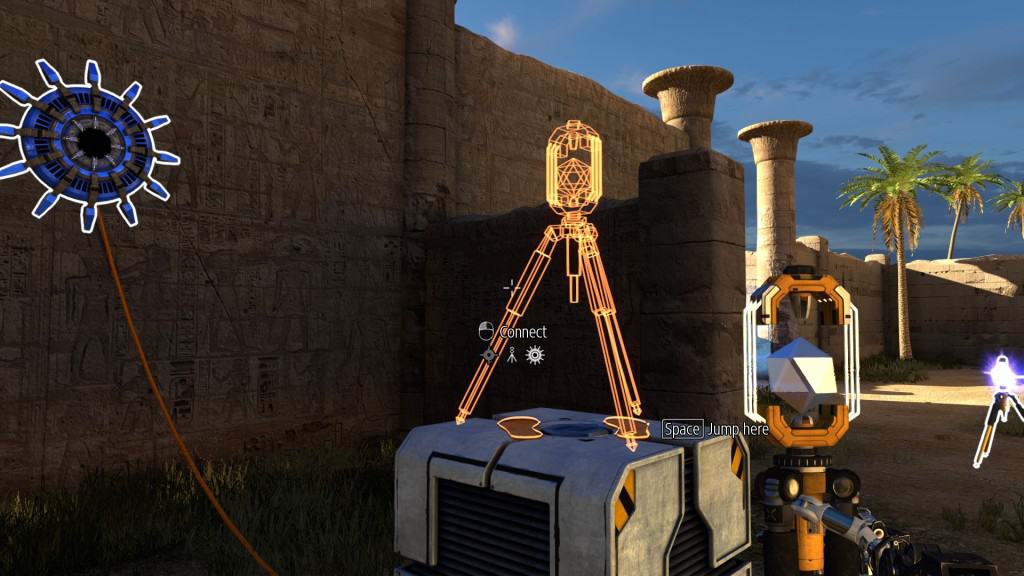
plus one more game, which got me hooked somehow: Hard-core board gamer who I am (I prefer playing with people real games without computer), I loved the Myst series for its crazy riddles, where solving them often needs a combination of logical thinking, recognizing patterns in images and sounds, and piecing together long list of hints. This is something a normal board game cannot provide. From the Descent series I loved the complete freedom of movement. Normal first-person shooters are just like humans running around, a bit of jumping and crouching, but Descent gives you 6D freedom which led to some people getting sick while watching me playing. From the Civilization series I don t know what I liked particularly, but it got you involved and allowed you to play long rounds. After these sins of youngsters, I haven t played for long long time, until a happy coincidence (of being Debian Developer) brought Steam onto my (Linux) machine together with a bunch of games I received for free. One of the games was Portal. Portal is in the style of Myst games one can place dual portals in various places, and by entering one of the portals, one leaves through the other. Using this one has to manage to solve loads of puzzle, evade being shot, dissolved in acid, crashed to death, etc etc, with the only aim to leave the underground station. portal-ex Besides shooting these portals there are some cubes that one can carry around and use for a variety of purposes, like putting them onto buttons, using them as stairs, protecting yourself from being shot, etc. But that s already all the tools one has. Despite of this, the levels pose increasingly difficult problems, and one is surprised how strange things one can achieve with these limited abilities and no, one cannot buy new power-ups, its not WoW. Logical thinking, tactic, and a certain level of reaction suffices. While not as philosophical as Myst, it was still a lot of fun. The only thing I am a bit unclear is, where to go from here. There are two possible successors: The logical one would be Portal 2. But I recently found a game that reminded me even more of the Myst series, combined with Portal: The Talos Principle, with stunning graphics: talos1 talos2 And filled with riddles again, maybe not as involved as in the Myst series (I don t know by now), but still a bit more challenging than Portal s one:
talos3 talos4 Difficult decision. If you have any other suggestions, please let me know!

13 June 2015

Gunnar Wolf: Almost free Some experiences with the Raspberry Pi, CI20, BananaPi, CuBox-i... And whatever will follow

I know very little about hardware. I think I have a good understanding on many aspects of what happens inside a computer, but my knowledge is clearly firmer on what happens once an operating system is already running. And even then, my understanding of the lower parts of reality is shaky at most At least according to my self-evaluation, of course, comparing to people I'm honored to call "my peers". During the last ~18 months, my knowledge of this part of reality, while still far from complete, has increased quite a bit Maybe mostly showing that I'm basically very cheap: As I have come across very cheap (or even free for me!) hardware, I have tried to understand and shape what happens in levels below those where I dwell. I have been meaning to do a writeup on the MIPS Creator CI20, which was shipped to me for free (thanks++!) by Imagination Technologies; I still want to get more familiar with the board and have better knowledge before reporting on it. Just as a small advance, as this has been keeping me somewhat busy: I got this board after their offer to Debian Developers, and prompted because I'll be teaching some modules on the Embedded Linux diploma course dictated by Facultad de Ingenier a, UNAM Again, I'll blog about that later. My post today follows Riku's, titled Dystopia of things, where he very clearly finds holes in the Internet of Things offering of one specific product and one specific company, but allows for generalizations on what we will surely see as the model. Riku says:
Today, the GPL sources for hub are available - at least the kernel and a patch for busybox. The proper GPL release is still only through written offer. The sources appeared online April this year while Hub has been sold for two years already. Even if I ordered the GPL CD, it's unlikely I could build a modified system with it - too many proprietary bits. The whole GPL was invented by someone who couldn't make a printer do what he wanted. The dystopian today where I have to rewrite the whole stack running on a Linux-based system if I'm not happy what's running there as provided by OEM.
This is not exactly the situation on the boards/products (it's a disservice to call the cute CuBox-i just a board!) I mention I'm using, but it's neither too far. Being used to the easy x86 world, I am used to bitching on specific hardware that does not get promptly recognized by the Linux kernel But even with the extra work UEFI+SecureBoot introduces, getting the kernel to boot is something we just take for granted. In the MIPS and ARM worlds, this is not so much of a given; I'm still treating the whole SPL and DeviceTree world as a black box, but that's where a lot of the work happens. The boards I am working on try to make a point they are Open Hardware. The CI20 is quite impressive in this regard, as not only it has a much more complete set of on-board peripherials than any other, but a wealth of schematics, datasheets and specifications for the different parts of its components. And, of course, the mere availability of the MIPSfpga program to universities worldwide is noteworthy Completely outside of my skillset, but looks most interesting. However... Despite being so much almost-Free-with-a-capital-F, all those boards fail our definitions of freedom in several ways. And yes, they lead us to a situation similar to what Riku describes, to what Stallman feared... To a situation not really better to where we stand on openly closed-source, commodity x86 hardware: Relying on binary blobs and on non-free portions of code to just use our hardware, or at least to use many of the features that would be available to us otherwise. As an example, both the CI20 and the CuBox-i vendors provide system images able to boot what they describe as a Debian 7 system, based on a 3.0 Linux kernel (which Debian never used; IIRC the CuBox-i site said it was derived from a known-good Android kernel)... Only that it's an image resulting of somebody else installing and configuring it. Why should we trust their image to be sane? Yes, the resulting installation is quite impressive (i.e. the CI20's 3D demos are quite impressive for a system that feels otherwise sluggish, and out of my ARM experience, I'd wager it feels sluggish mostly because of a slow SSD)... I have managed to do clean Debian installs on most of my ARM machines (the CuBox-i as described in my previous blog post; this post from Elena of Valhalla'' prompted me into trying the already well documented way of running the official Debian Installer, which worked like a charm and gave me a very nice and responsive Debian 8 install Modulo yes, the Banana's non-free video interface, which AFAICT uses the non-free Mail binary driver... And which I haven't had the time to play with yet. Of course, my CuBox is in a similar situation, where it works like a charm as a personal server, but is completely worthless as a set-top box. So, with those beautiful, small, cheap SoC systems, we are close to where we stood twenty years ago with x86 Linux: Good support for a small set of peripherials, but a far cry from having a functional system with exclusively free software. ,
Despite claims of being open source, this is not open source hardware. If you are thinking of getting this device, you should also try looking into the hardware from our Community instead.
Still... Playing with these boards has taught me a lot, and has clearly taught me I'm still standing on the first steps of the n00b level. I have a lot to learn to be able to responsibly teach my part of the diploma course, and I'm very thankful for the differences in hardware (and, of course, for the hardware manufacturers, specially for the MIPS Creator CI20 and the Lemaker Banana Pi for giving me boards to work on!) I shall keep posting on this topic.

12 June 2015

Riku Voipio: Dystopia of Things

The Thing on Internet
I've now had an "Internet of Things" device for about a year. It is Logitech Harmony HUB, an universal remote controller. It comes with a traditional remote, but the interesting part is that it allows me to use my smartphone/tablet as remote over WiFi. With the android app it provides a rather nice use experience, yet I can see the inevitable end in anger. Bare minimum GPL respectToday, the GPL sources for hub are available - at least the kernel and a patch for busybox. The proper GPL release is still only through written offer. The sources appeared online April this year while Hub has been sold for two years already. Even if I ordered the GPL CD, it's unlikely I could build a modified system with it - too many proprietary bits. The whole GPL was invented by someone who couldn't make a printer do what he wanted. The dystopian today where I have to rewrite the whole stack running on a Linux-based system if I'm not happy what's running there as provided by OEM.App onlyThe smartphone app is mandatory. The app is used to set up the hub. There is no HTML5 interface or any other way to control to the hub - just the bundled remote and phone apps. Fully proprietary apps, with limited customization options. And if app store update removes a feature you have used.. well you can't get it from anywhere anymore. The dystopian today where "Internet of Things" is actually "Smartphone App of Things".Locked APIMaybe instead of modifying the official app you could write your own UI? Like one screen with only the buttons you ever use when watching TV? There *is* an API with delightful headline "Better home experiences, together". However, not together with me, the owner of the harmony hub. The official API is locked to selected partners. And the API is not to control the hub - it's to let the hub connect to other IoT devices. Of course, for talented people, locked api is usually just undocumented api. People have reverse engineered how the app talks to the hub over wifi. Curiously it is actually Jabber based with some twists like logging credentials through Logitech servers. The dystopian today where I can't write programs to remotely control the internet connected thing I own without reverse engineering protocols.Central ServerDid someone say Logitech servers? Ah yes, all configuring of the remote happens via myharmony servers, where the database of remote controllers lives. There is some irony in calling the service *my* harmony when it's clearly theirs. The communication with cloud servers leaks at minimum back to Logitech what hardware I control with my hub. At the worst, it will become an avenue of exploits. And how long will Logitech manage these servers? The moment they are gone, harmony hub becomes a semi-brick. It will still work, but I can't change any configuration anymore. The dystopian future where the Internet of Thing will stop working *when* cloud servers get sunsetWhat nowThis is not just the Harmony hub - this is a pattern that many IoT products follow - Linux based gadget, smartphone app, cloud services, monetized apis. After the gadget is bought, the vendor has little incentive to provide any updates. After all, the next chance I'll carry them money is when the current gadget gets obsolete. I can see two ways out. The easy way is to get IoT gadgets as monthly paid service. Now the gadget vendor has the right incentive - instead of trying to convince me to buy their next gadget, their incentive is to keep me happily paying the monthly bill. The polar opposite is to start making open competing IoT's, and market to people the advantage of being yourself in control. I can see markets for both options. But half-way between is just pure dystopy.

10 June 2015

DebConf team: DebConf15 Invited speakers (Posted by DebConf Team)

This year, on top of the many excellent contributed talks, BoFs, and other events always part of DebConf (some of which have already been announced) we are excited to have confirmed the following keynote speakers. During the Open Weekend (Saturday, August 15th and Sunday, August 16th), we will have keynotes delivered by: On the last day of DebConf, we look forward to the closing keynote by: For more information about our invited speakers, please see http://debconf15.debconf.org/invited_speakers.xhtml Citizenfour Screening Additionally, there will be a screening of the Citizenfour movie, winner of the Best Documentary Feature Academy Award on the evening of Friday, August 21st. You still have time to submit your talk There are only a few days left before the end of the Call for Proposals on June 15th. Events submitted after that date might not be part of the official DebConf schedule. So, please, hurry, check out the proposal submission guide and submit your event. Regards from the DebConf Team

Norbert Preining: Tribute to Hermann Zapf

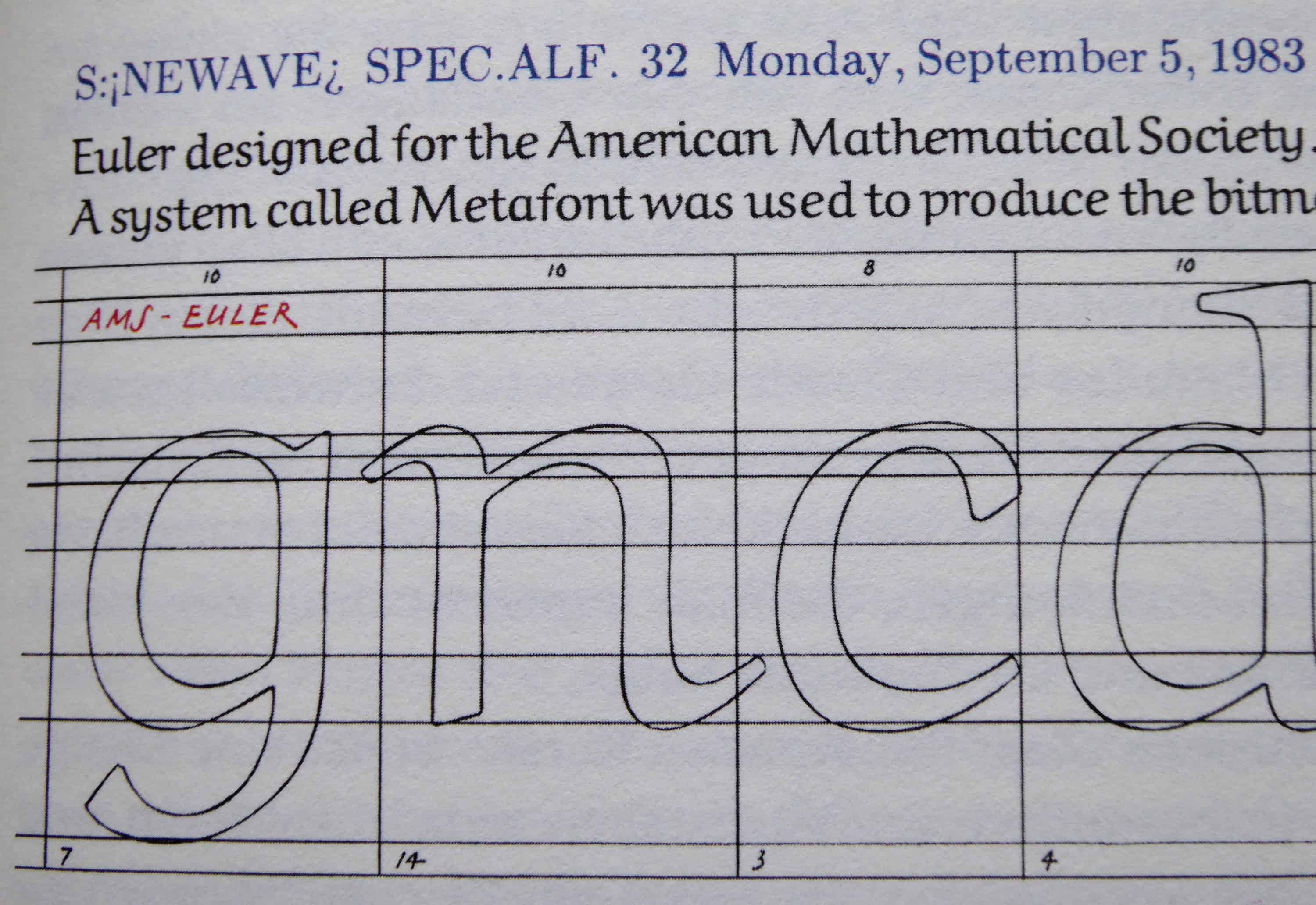
Last weekend Hermann Zapf, one of the greatest font designers and typographers of our times, has passed away at the age of 96. Much has been written about his life, his immense sphere of influence, his excellent typefaces, and some of the links to other obituaries can be found here at the end. There is nothing of value I can contribute, but let Hermann Zapf speak for himself with a few images from two books by or dedicated to him. zapf-heart-blood-ink The books I have taken these photos from are: zapf-books In his long life, Hermann Zapf has created a wide range of typefaces, some if which have become the main staple in the printing business, most notably Palatino, Janson, Optima, and Zapf Dingbats. But there are many more: zapf-alphabets While probably not as popular anymore as some years (decades?) ago, Palatino still is one of my favorite typefaces. I often wished to have the freedom to choose my own fonts for publications, but normally that doesn t happen. Palatino has found many offspring (or imitations?), and there are excellent renderings for use with (La)TeX, too. zapf-palatino Hermann Zapf also had connections with Don Knuth and the AMS (American Mathematical Society), and he designed for the AMS the Euler typeface, using Knuth s MetaFont program. zapf-euler Last weekend, when I heard of Hermann Zapf s death, I was at a conference at Tsukuba University. What a coincidence that all the signs in the building (floor numbers, indications, etc) were set optimain another of his great typefaces, the Optima. I had a strange feeling, and reset my presentation in Optima/Euler in honor of Hermann Zapf s great life. Although I never met Hermann Zapf personally I missed the TeX conferences where he participated it was to a great extent his influence that years ago I got started in typography. Living a life like he did, dedicating himself to the beauty and expressiveness of letters, design, calligraphy, seems like a dream for me. But beauty can be found even in the strangest equation in mathematics, the queerest theorem in logic. While not all of us are as gifted as Hermann Zapf in creating beauty, we should strive to increase our ability to appreciate the beauty. The beauty of letters is subtle, evasive, and needs training, that is practice, to be appreciated. Hermann Zapf taught us how even self-training can lead to excellence. His letters, which I meet every day, are a permanent reminder to strive for beauty and clarity, and never relent in our exercise. Thanks Hermann Zapf. zapf-letters Links to tributes around the world English Linotype (Type foundry where Zapf started working)
Bigelow and Holmes (Type designers)
New York Times (Newspaper)
Type Drawers
Quarz (News magazine)
Kaveh Bazargan (next president of TUG)
TeX Overflow (Q&A website concerning TeX) German FontShop (Type foundry and internet shop)
Deutschland Funk (News station)
S ddeutsche (Newspaper)
Echo (Newspaper)
Heise (Techology News page)

7 May 2015

Benjamin Mako Hill: DRM on Streaming Services

For the 2015 International Day Against DRM, I wrote a short essay on DRM for streaming services posted on the Defective by Design website. I m republishing it here. Between 2003 and 2009, most music purchased through Apple s iTunes store was locked using Apple s FairPlay digital restrictions management (DRM) software, which is designed to prevent users from copying music they purchased. Apple did not seem particularly concerned by the fact that FairPlay was never effective at stopping unauthorized distribution and was easily removed with publicly available tools. After all, FairPlay was effective at preventing most users from playing their purchased music on devices that were not made by Apple. No user ever requested FairPlay. Apple did not build the system because music buyers complained that CDs purchased from Sony would play on Panasonic players or that discs could be played on an unlimited number of devices (FairPlay allowed five). Like all DRM systems, FairPlay was forced on users by a recording industry paranoid about file sharing and, perhaps more importantly, by technology companies like Apple, who were eager to control the digital infrastructure of music distribution and consumption. In 2007, Apple began charging users 30 percent extra for music files not processed with FairPlay. In 2009, after lawsuits were filed in Europe and the US, and after several years of protests, Apple capitulated to their customers complaints and removed DRM from the vast majority of the iTunes music catalog. Fundamentally, DRM for downloaded music failed because it is what I ve called an antifeature. Like features, antifeatures are functionality created at enormous cost to technology developers. That said, unlike features which users clamor to pay extra for, users pay to have antifeatures removed. You can think of antifeatures as a technological mob protection racket. Apple charges more for music without DRM and independent music distributors often use DRM-free as a primary selling point for their products. Unfortunately, after being defeated a half-decade ago, DRM for digital music is becoming the norm again through the growth of music streaming services like Pandora and Spotify, which nearly all use DRM. Impressed by the convenience of these services, many people have forgotten the lessons we learned in the fight against FairPlay. Once again, the justification for DRM is both familiar and similarly disingenuous. Although the stated goal is still to prevent unauthorized copying, tools for stripping DRM from services continue to be widely available. Of course, the very need for DRM on these services is reduced because users don t normally store copies of music and because the same music is now available for download without DRM on services like iTunes. We should remember that, like ten years ago, the real effect of DRM is to allow technology companies to capture value by creating dependence in their customers and by blocking innovation and competition. For example, DRM in streaming services blocks third-party apps from playing music from services, just as FairPlay ensured that iTunes music would only play on Apple devices. DRM in streaming services means that listening to music requires one to use special proprietary clients. For example, even with a premium account, a subscriber cannot listen to music from their catalog using an alternative or modified music player. It means that their television, car, or mobile device manufacturer must cut deals with their service to allow each paying customer to play the catalog they have subscribed to. Although streaming services are able to capture and control value more effectively, this comes at the cost of reduced freedom, choice, and flexibility for users and at higher prices paid by subscribers. A decade ago, arguments against DRM for downloaded music focused on the claim that users should have control over the music they purchase. Although these arguments may not seem to apply to subscription services, it is worth remembering that DRM is fundamentally a problem because it means that we do not have control of the technology we use to play our music, and because the firms aiming to control us are using DRM to push antifeatures, raise prices, and block innovation. In all of these senses, DRM in streaming services is exactly as bad as FairPlay, and we should continue to demand better.

23 April 2015

Zlatan Todori : Internet freedom

Why did internet succeed and is growing by incredible pace? Because there were no politicians, no lawyers no economist or managers. Period.

19 April 2015

Laura Arjona: Six months selfhosting: my userop experiences

Note: In this post I mention some problems and ask questions (to myself, like thinking aloud ). The goal is not to get answers to those questions (I suppose that I will find them soon or later in the internet, manuals and so), but to show the kind of problems and questions that arise in my selfhosting adventures, which I suppose are common to other people trying to administer a home server with some web services. Am I an userop? Well I m something in the middle of (GNU/Linux) user and sysadmin: I have studied computer technical engineering but most of my experience has been in helpdesk, providing support for Windows users. I m running Debian in some LAMP boxes at work (without GUI) since 2008 or so, and in my desktops (with GUI) since 2010. I don t code nor package, but I don t mind trying to read code and understand it (or not). I know a bit of C, a bit of Python, of PHP, and enough Perl to open a Perl file and close it after two minutes, understanding that it s great, but too much for me :) I translate software, so I m not scared to clone a repository, edit files, commit or submit a patch. I m not scared of compiling a program (except if it s an Android app: I try to avoid setting up the development environment just to try some translation that I made but I built my Puma before it was the binary available for download or in F-Droid). In conclusion, I feel more like a GNU/Linux power user than a sysadmin . Sometimes just a user or even a newbie (for example, I don t know very well the Unix/Linux folder tree where are the wallpapers stored? Does it depend on the desktop that I use?). Anyway. I won t stop my free software + free networks digital life because I don t know many things. I bought a small server for home last September, and I wanted to try to selfhost some services, for me and for my family. I want to be a home sysadmin or something like that, so I joined the userops mailing list :) Here you have my experiences on selfhosting/being an userop until now. Mail I even didn t try to setup my mail server, because many people say it s a pain (although nice articles were published about how to do it, for example this series in ArsTechnica) and I need a static IP which is 14 /month more to my ISP, and Gandi, the place where I rented my domain name, provides mail, and they use Debian and Roundcube, and sponsor Debian too, so I decided to trust on them. So this is my strategy now, to try to keep mail under my control: MediaGoblin I ve setup two MediaGoblin instances (yes, two!). I managed to do it in Debian 7 stable (I think NodeJS npm was not needed then), but soon later I upgraded to Jessie so now it s even better. I installed Nginx and PostgreSQL via apt, to use them for both instances (and probably some more software later). One instance is public, and I use a Debian user, a PostgreSQL database, and it s running in http://media.larjona.net
I have requested an SSL cert to Gandi but I still didn t deployed it (lazy LArjona!!). The other instance is private, for family photos. I didn t know very well how much of my existing setup could reuse and how to keep both instances in case of downtimes or attack I know more or less the concept or chroot but I don t know how to deploy it in my machine. So I decided to use another Debian user, another PostgreSQL database, deploy MediaGoblin in a different folder, and create another virtual server in my Nginx to serve it. I managed to setup that virtual server to http-authenticate and to serve content via a different port, and use a self-signed SSL certificate (it s only for family, so it does not matter). I created another (unprivileged) Debian user with a password for the nginx authentication, and gave my family the URL in the form https://mediaprivate.larjona.net:PortNumber and the user and password (mediaprivate is a string, and PortNumber is a number). I think they don t use the instance too much, but at least I upload photos there from time to time and email the link instead of emailing the photos themselves (they don t use GPG either ). Upgrades I upgraded MediaGoblin from 0.7.1 to 0.8.0 successfully, I sent a report about how I did it to the mailing list. First I upgraded the public instance, when I figure out the process, I upgraded the second instance to test my instructions, and then, I sent the report with the instructions to the mailing list. Static site and LimeSurvey: the power of free software (with instructions) I wanted to act as a mirror of floss2013.libresoft.es and surveys.libresoft.es since they suffer a downtime and I participated in that project (not in the sysadmin part, but in the research and content creation). The static site floss2013.libresoft.es offered a zip with the whole website tree (since the website was licensed as AGPL), and I had access to the git repo holding the development copy of the website. So I just cloned the repository and setup another nginx virtual server in my machine, and tuned my DNS zone in Gandi website to serve floss2013.larjona.net from home. 10 minutes setup YAY! #inGitWeTrust #FreeSoftwareFTW :) For surveys.larjona.net I had to install a LimeSurvey instance. I knew how to do it because we use LimeSurvey at work, but at home I had Nginx instead of Apache, and PostgreSQL instead of MySQL. And no PHP I searched about how to install PHP in Nginx (I can use apt-get, nice!) and how to install LimeSurvey with Nginx and PostgreSQL (I had documentation about that, so I followed, and it worked). For making available the data (one survey and its results, so people can login as visitor to query and get statistics), I downloaded the LimeSurvey export dataset that we were providing in the static website, followed the replication instructions (hey, I wrote them!), and they worked #oleole! (And here, dear researchers, gets demonstrated that free software and free culture really empower your research and help spreading your results). Etherpad: not so easy, it seems! I m trying to install Etherpad-Lite, but I m suffering a bit. I think I did everything ok according to some guides but I get Bad Gateway and these kind of errors when trying to browse with Lynx in the host:
[error] 3615#0: *24 upstream timed out (110: Connection timed out) 
while reading response header from upstream, 
client: 127.0.0.1, 
server: pad.larjona.net, 
request: "GET / HTTP/1.0", 
upstream: "http://127.0.0.1:9001/", 
host: "pad.larjona.net"
2015/04/17 20:52:56 [error] 3615#0: *24 connect() failed 
(111: Connection refused) while connecting to upstream, 
client: 127.0.0.1, 
server: pad.larjona.net, 
request: "GET / HTTP/1.0", 
upstream: "http://[::1]:9001/", 
host: "pad.larjona.net"
I m not sure if I need to open some port in iptables, my router, or change my nginx configuration because the guides assume you re only serving one website in the port 80 (and I have several of them, now ), or what I ve spent three chunks of time (maybe ~2h each?) on this, in different days, and couldn t figure it out, so I decided to round-robin in my TODO list. Userops thoughts Debian brings peace of mind (for me) On one side, maintaining a Debian box it s quite easy, and the more software that it s packaged, the less time that I spend installing or upgrading. I like being in stable, I m in Jessie now (I migrated when it was frozen), but I ll stay in stable as much as I can. I like that I can use the software that I installed via apt-get for several services (nginx, PostgreSQL ). About the software that is not packaged (MediaGoblin, LimeSurvey, EtherPad, maybe others later), I wonder how dependencies and updates are handled. And maybe (probably) I have installed some components several times, one for each service (this sounds like a Windows box #grr). For example MediaGoblin uses PyPump. PyPump 0.5 is packaged in Debian Jessie. MediaGoblin uses PyPump 0.7+. What if PyPump 0.7+ gets, let s say, into Jessie-backports? Can I benefit from that? I know that MediaGoblin upgrade instructions includes upgrading the dependencies, but what about some security patch in one dependency? Should I upgrade the pip modules periodically? How to know if some upgrade is recommended because patches a vulnerability, or it s just new features (and maybe breaking my setup)? This kind of things are the peace of mind that Debian packaging brings to me: when some piece of software is packaged, I know maybe I need to care about proper setup and configuration, but later, it s kind-of-easy to maintain (since the Debian maintainers care about the rest). I don t mind about cloning a repo and compiling, I mind about later, or coexistance with other program/services. I trust in the MediaGoblin community and I m an active member (I m not developer, but hang on IRC, follow the mailing list, etc) but for example I don t know anything about the EtherPad project. And I don t feel like joining the community (I m already an active member in Debian, MediaGoblin, F-Droid, Pump.io, translator of LimeSurvey and many other small apps that I use, and in the future will use more services, like OwnCloud, XMPP ), joining the community of each software that I use is becoming not sustainable :s Free software is more than software I follow the userop mailing list, and it s becoming very technical. I mostly understand the problems (which are similar to the problems that I face: how to isolate different services, how to easily-configure them, how to make them installable by average user ) But I don t understand most of the solutions proposed, and I think that probably we need technical solutions, but in the meanwhile, some issues can be addressed not with software, but with other means: good documentation, community support, translations, beta-testers This is my conclusion until now. When a project is well documented, I think I can find my way to selfhost no matter if the software is packaged (or contained ) or not. MediaGoblin, and LimeSurvey, are well documented, and the user support channels are very responsive. I find lots of instructions that assume that you will use a whole machine for their service (and not for other things). And lots of documentation for the LAMP stack, but not for Nginx + PostgreSQL and Node instead of PHP So, for each particularity of my setup, I search the internet and try to pick good sources to help me do what I wanted to do. I m kind of privileged Some elements, not software related, to take into account as pre-requisites for succeed selfhosting services: These aspects are not present in a lot of people. If I look around to the computer users that I know (mostly Windows+Android, some GNU/Linux users, some Mac OSX users, some iOS users), I find that they search things like X does not work or they cannot write a proper search query in English. Or they trust some random person writing a recipe in their blog, without trying first to understand what the recipe does. Other people just say I m not a professional sysadmin, I ll just do what everybody does (aka use Google services or whatever). What if I try and I don t succeed? . Things like that. We may need some technical solutions (and hackers are thinking about that, and working on that). But I feel that we need (more) a huge group of beta-testers, dogfooding people, aventurers that try the half-cooked solutions and provide successful and unsuccessful experiences, to guide the research and make software technologies advance. I m not sure if I am an userop, but I feel part of that vanguard force , I want to be part of the future of free software and free networks. Comments? You can comment about this post on this pump.io thread.
Filed under: My experiences and opinion Tagged: Communities, Contributing to libre software, Debian, Developer motivations, English, free networks, Free Software, Freedom, innovation, MediaGoblin, Moving into free software, Project Management, selfhosting, sysadmin

7 April 2015

Thorsten Glaser: exciting news, or so

I implemented <? support (including <?php ) script embedding support for *.inc in MirWebseite today; the specific syntax was explicitely requested by Natureshadow. Ugh. My own hacking activities are progressing, even if slowly. I do some other interesting, funny, social, beneficial, etc. stuff in between, though. I ll even have to get some of my DD buddies to sponsor me some QA uploads of packages I formerly maintained, whereever changes are queued up such as better old-format repo compatibility in cvs(GNU) Though some of the stuff I do at work is currently done only there sorry. Also: prepare to be fully enlightened about just what evil (nice picture) Docker is. I especially liked the comparison of containers to a herd of cattle, mere numbers, replaceable, whereas VMs are cats, each with their individual name, lovely petted each day, etc. ObHint: Some may have noticed I do have a Twitter account now. I do not really use it much. I got it because I wanted to rant at someone who only gave Twitter as means to contact them (a European company running a lottery for USA citizens only). But I found one nice thing: @HourlyCats (though @FacesPics and @BahnAnsagen are funny too, and the Postillon anyway). The internet is there for cat content, anyway.
Ahem. Do not contact me there, use IRC, more specifically, the Freenode network, and possibly memoserv to mirabilos instead, I can t fit things into 140 chars, that s just ridiculous. Also, don t follow me. It may contain rants, it s NSFW, and I m not censoring there. As I said: I do not use it. So should you. (But kudos for having a mostly functional fallback site (the mobile one), which even works in PocketIE (Windows Mobile) and Opera 9, though not so much lynx(1) ) odc (from #!/bin/mksh on IRC) is hacking support to use mksh instead of GNU bash for bootstrapping pkgsrc (e.g. on Solaris). Nice! Good luck! propos mksh(1), dear Debian armel and armhf buildd maintainer colleagues, pretty please with strawberries and chocolate ice on top (I just had that on waffles at my favourite ice salon, so I may be biased), do like s390x and update your chroots and wanna-build give-back mksh, as we requested, so the privacy fix makes it into jessie. Thanks in advance! Oh, and Y_Plentyn and I both have been putting more and updated packages into my APT repository. XTaran held a talk at CLT 2015 mentioning it maybe I should write up some docs about how to use it for which purposes (e.g. how to avoid systemd but not get the other packages from it, or how to use it with systemd (trivial but has to be stated, it s freedom of choice after all), etc.)? Besides decent fanfiction (the stories in the Uzumaki Naruto universe seem, on average, to be much longer than those in the Harry Potter one), the weather is becoming good, so I ve already been enjoying going out for some geocaching and will have the bike fixed at the shop RSN (it suffers a bit each winter, as it stands outside, since our basement is mouldy, which is worse than a bit of rust IMHO) to get more activity in. Also planning to head to the GPS Maze in Mainz and, besides what time FrOSCon (including preparation) allows, heading to DebConf for a while. mirabilos  Waypoints

Next.

Previous.