Like many other people, I first became aware of Anne Helen Petersen's
journalism when her Buzzfeed article
"How Millennials Became the Burnout Generation" went viral. Can't
Even is the much-awaited (at least by me) book-length expansion of that
thesis: The United States is, as a society, burning out, and that burnout
is falling on millennials the hardest. We're not recognizing the symptoms
because we think burnout looks like something dramatic and flashy. But
for most people burnout looks less like a nervous breakdown and more like
constant background anxiety and lack of energy.
Laura, who lives in Chicago and works as a special ed teacher, never
wants to see her friends, or date, or cook she's so tired, she just
wants to melt into the couch. "But then I can't focus on what I'm
watching, and end up unfocused again, and not completely relaxing,"
she explained. "Here I am telling you I don't even relax right! I
feel bad about feeling bad! But by the time I have leisure time, I
just want to be alone!"
Petersen explores this idea across childhood, education, work, family, and
parenting, but the core of her thesis is the precise opposite of the
pervasive myth that millennials are entitled and lazy (a persistent
generational critique that Petersen points out was also leveled at their
Baby Boomer parents in the 1960s and 1970s). Millennials aren't slackers;
they're workaholics from childhood, for whom everything has become a
hustle and a second (or third or fourth) job. The struggle with
"adulting" is a symptom of the burnout on the other side of exhaustion,
the mental failures that happen when you've forced yourself to keep going
on empty so many times that it's left lingering damage.
Petersen is a synthesizing writer who draws together the threads of other
books rather than going deep on a novel concept, so if you've been reading
about work, psychology, stress, and productivity, many of the ideas here
will be familiar. But she's been reading the same authors that I've been
reading (Tressie McMillan Cottom,
Emily Guendelsberger, Brigid Schulte, and even Cal Newport), and
this was the book that helped me pull those analyses together into a
coherent picture.
That picture starts with the shift of risk in the 1970s and 1980s from
previously stable corporations with long-lasting jobs and retirement
pensions onto individual employees. The corresponding rise in precarity
and therefore fear led to a concerted effort to re-establish a feeling of
control. Baby Boomers doubled down on personal responsibility and
personal capability, replacing unstructured childhood for their kids with
planned activities and academic achievement. That generation, in turn,
internalized the need for constant improvement, constant grading, and
constant achievement, accepting an implied bargain that if they worked
very hard, got good grades, got into good schools, and got a good degree,
it would pay off in a good life and financial security.
They were betrayed. The payoff never happened; many millennials graduated
into the Great Recession and the worst economy since World War II. In
response, millennials doubled down on the only path to success they were
taught. They took on more debt, got more education, moved back in with
their parents to cut expenses, and tried even harder.
Even after watching our parents get shut out, fall from, or simply
struggle anxiously to maintain the American Dream, we didn't reject
it. We tried to work harder, and better, more efficiently, with more
credentials, to achieve it.
Once one has this framework in mind, it's startling how pervasive the
"just try harder" message is and how deeply we've internalized it. It is
at the center of the time management literature: Getting Things Done focuses almost entirely on individual
efficiency. Later time management work has become more aware of the
importance of pruning the to-do list and doing fewer things, but addresses
that through techniques for individual prioritization.
Cal Newport is more aware than most that
constant busyness and multitasking interacts poorly with the human brain,
and has taken a few tentative steps towards treating the problem as
systemic rather than individual, but his focus is still primarily on
individual choices. Even when tackling a problem that is clearly
societal, such as the monetization of fear and outrage on social media,
the solutions are all individual: recognize that those platforms are bad
for you, make an individual determination that your attention is being
exploited, and quit social media through your personal force of will.
And this isn't just productivity systems. Most of public discussion of
environmentalism in the United States is about personal energy
consumption, your individual carbon footprint, household recycling, and
whether you personally should eat meat. Discussions of monopoly and
monopsony become debates over whether you personally should buy from
Amazon. Concerns about personal privacy turn into advocacy for using an
ad blocker or shaming people for using Google products. Articles about
the growth of right-wing extremism become exhortations to take
responsibility for the right-wing extremist in your life and argue them
out of their beliefs over the dinner table. Every major systemic issue
facing society becomes yet another personal obligation, another place we
are failing as individuals, something else that requires trying harder,
learning more, caring more, doing more.
This advice is well-meaning (mostly; sometimes it is an intentional and
cynical diversion), and can even be effective with specific problems. But
it's also a trap. If you're feeling miserable, you just haven't found the
right combination of time-block scheduling, kanban, and bullet journaling
yet. If you're upset at corporate greed and the destruction of the
environment, the change starts with you and your household. The solution
is in your personal hands; you just have try a little harder, work a
little harder, make better decisions, and spend money more ethically
(generally by buying more expensive products). And therefore, when we're
already burned out, every topic becomes another failure, increasing our
already excessive guilt and anxiety.
Believing that we're in control, even when we're not, does have
psychological value. That's part of what makes it such a beguiling trap.
While drafting this review, I listened to Ezra Klein's interview with
Robert Sapolsky on poverty and stress, and one of the points he made is
that, when mildly or moderately bad things happen, believing you have
control is empowering. It lets you recast the setback as a larger
disaster that you were able to prevent and avoid a sense of futility. But
when something major goes wrong, believing you have control is actively
harmful to your mental health. The tragedy is now also a personal
failure, leading to guilt and internal recrimination on top of the effects
of the tragedy itself. This is why often the most comforting thing we can
say to someone else after a personal disaster is "there's nothing you
could have done."
Believing we can improve our lives if we just try a little harder does
work, until it doesn't. And because it does work for smaller things, it's
hard to abandon; in the short term, believing we're at the mercy of forces
outside our control feels even worse. So we double down on
self-improvement, giving ourselves even more things to attempt to do and
thus burning out even more.
Petersen is having none of this, and her anger is both satisfying and
clarifying.
In writing that article, and this book, I haven't cured anyone's
burnout, including my own. But one thing did become incredibly clear.
This isn't a personal problem. It's a societal one and it will not
be cured by productivity apps, or a bullet journal, or face mask skin
treatments, or overnight fucking oats. We gravitate toward those
personal cures because they seem tenable, and promise that our lives
can be recentered, and regrounded, with just a bit more discipline, a
new app, a better email organization strategy, or a new approach to
meal planning. But these are all merely Band-Aids on an open wound.
They might temporarily stop the bleeding, but when they fall off, and
we fail at our new-found discipline, we just feel worse.
Structurally, Can't Even is half summaries of other books and
essays put into this overall structure and half short profiles and quotes
from millennials that illustrate her point. This is Petersen's typical
journalistic style if you're familiar with her other work. It gains a lot
from the voices of individuals, but it can also feel like argument from
anecdote. If there's a epistemic flaw in this book, it's that Petersen
defends her arguments more with examples than with scientific study. I've
read enough of the other books she cites, many of which do go into the
underlying studies and statistics, to know that her argument is
well-grounded, but I think Can't Even works better as a roadmap and
synthesis than as a primary source of convincing data.
The other flaw that I'll mention is that although Petersen tries very hard
to incorporate poorer and non-white millennials, I don't think the effort
was successful, and I'm not sure it was possible within the structure
of this book. She frequently makes a statement that's accurate and
insightful for millennials from white, middle-class families, acknowledges
that it doesn't entirely apply to, for example, racial minorities, and
then moves on without truly reconciling those two perspectives. I think
this is a deep structural problem: One's experience of American life
is very different depending on race and class, and the phenomenon that
Petersen is speaking to is to an extent specific to those social classes
who had a more comfortable and relaxing life and are losing it.
One way to see the story of the modern economy is that white people are
becoming as precarious as everyone else already was, and are reacting by
making the lives of non-white people yet more miserable. Petersen is
accurately pointing to significant changes in relationships with
employers, productivity, family, and the ideology of individualism, but
experiencing that as a change is more applicable to white people than
non-white people. That means there are, in a way, two books here: one
about the slow collapse of the white middle class into constant burnout,
and a different book about the much longer-standing burnout of being
non-white in the United States and our systemic failure to address the
causes of it. Petersen tries to gesture at the second book, but she's not
the person to write it and those two books cannot comfortably live between
the same covers. The gestures therefore feel awkward and forced, and
while the discomfort itself serves some purpose, it lacks the insight that
Petersen brings to the rest of the book.
Those critiques aside, I found Can't Even immensely clarifying.
It's the first book that explained to me in a way I understood what's so
demoralizing and harmful about Instagram and its allure of cosplaying as a
successful person. It helped me understand how productivity and
individual political choices fit into a system that emphasizes individual
action as an excuse to not address collective problems. And it also gave
me a strange form of hope, because if something can't go on forever, it
will, at some point, stop.
Millennials have been denigrated and mischaracterized, blamed for
struggling in situations that set us up to fail. But if we have the
endurance and aptitude and wherewithal to work ourselves this deeply
into the ground, we also have the strength to fight. We have little
savings and less stability. Our anger is barely contained. We're a
pile of ashes smoldering, a bad memory of our best selves.
Underestimate us at your peril: We have so little left to lose.
Nothing will change without individual people making different decisions
and taking different actions than they are today. But we have gone much
too far down the path of individual, atomized actions that may produce
feelings of personal virtue but that are a path to ineffectiveness and
burnout when faced with systemic problems. We need to make different
choices, yes, but choices towards solidarity and movement politics rather
than personal optimization.
There is a backlash coming. If we let it ground itself in personal
grievance, it could turn ugly and take a racist and nationalist direction.
But that's not, by in large, what millennials have done, and that makes me
optimistic. If we embrace the energy of that backlash and help shape it
to be more inclusive, just, and fair, we can rediscover the effectiveness
of collective solutions for collective problems.
Rating: 8 out of 10
I've released a new version of my collection of utility libraries,
Autoconf macros, and similar support infrastructure, primarily to include
changes in the upcoming remctl and INN releases. Highlights:
Add a new RRA_PROG_LD_FLAG Autoconf macro to check whether
flags are supported by the linker, and add support for commas in flags
passed to RRA_PROG_C_FLAG.
NetBSD provides reallocarray but doesn't prototype it unless
_OPENBSD_SOURCE is set. Autoconf 2.70 will set that flag when
AC_USE_SYSTEM_EXTENSIONS is given, but it's not yet packaged
for Debian. Work around this in the meantime by prototyping
reallocarray if it's available but not prototyped. (NetBSD
prefers reallocarr, which does indeed have a better API, but
since no other operating system supports it, I'm sticking with
reallocarray for now.)
Fix the probe for AI_ADDRCONFIG on macOS.
Fix the test suite for the portable getnameinfo replacement on
musl libc, whose getaddrinfo returns the stringified version of
an IP address if there is no reverse DNS. This seems like odd
behavior and no other platform does this, but it's easy enough to work
around.
The general support policy for rra-c-util is now that I will drop support
for systems older than fifteen years if it becomes annoying to support
them. That's still extremely conservative, but may let me drop some more
support code that is essentially never used. The replacements for missing
IPv6 functions are probably next on the chopping block.
Thanks to Julien LIE and Bo Lindbergh for their contributions to this
release.
You can get the latest release from the rra-c-util distribution page.
Issues with Farm Laws
While I have written about the farm laws a bit sometime back. The issue is still in the nation s eye and that is due to the policies which have been done. I have been reading up on it quite a bit and also have been seeing what has been happening in here and now. The problems are with the three bills themselves which I have shared as below
Click to access farmers-produce-trade-and-commerce-promotion-and-facilation-bill.pdfClick to access farmers-empowerment-and-protection-bill.pdfClick to access essential-commodities-bill-2020.pdfBiggest issue with the laws
While there are many issues with the laws themselves but for me the biggest issue is that the fundamental right of the farmer to get justice via civil courts has been railroaded. From the laws itself. Standard disclaimer not a lawyer, please consult one for any issues per-se.
Farmers-produce-trade-and-commerce (promotion and facilitation-bill) 2020
Page 4 Chapter 3 Section 8 (1)8. (1) In case of any dispute arising out of a transaction between the farmer and a trader under section 4, the parties may seek a mutually acceptable solution through conciliation by filing an application to the Sub-Divisional Magistrate who shall refer such dispute to a Conciliation Board to be appointed by him for facilitating the binding settlement of the dispute.
(2) Every Board of Conciliation appointed by the Sub-Divisional Magistrate under sub-section (1), shall consist of a chairperson and such members not less than two and not more than four, as the Sub-Divisional Magistrate may deem fit.10
(5) If the parties to the transaction under sub-section (1) are unable to resolve the dispute within thirty days in the manner set out under this section, they may approach the Sub-Divisional Magistrate concerned who shall be the Sub-Divisional Authority for settlement of such dispute.
(8) Any party aggrieved by the order of the Sub-Divisional Authority may prefer an appeal before the Appellate Authority (Collector or Additional Collector nominated by the Collector) within thirty days of such order who shall dispose of the appeal within thirty days from the date of filing of such appeal.
10. (1) Any person aggrieved by an order under section 9 may, prefer an appeal within sixty days from the date of such order, to an officer not below the rank of Joint Secretary to the Government of India to be nominated by the Central Government for this purpose:
Page 6 of the bill. 13. No suit, prosecution or other legal proceedings shall lie against the Central Government or the State Government, or any officer of the Central Government or the State Government or any other person in respect of anything which is in good faith done or intended to be done under this Act or of any rules or orders made thereunder.
Page 7 of the bill, 15. No civil court shall have jurisdiction to entertain any suit or proceedings in respect of any matter, the cognizance of which can be taken and disposed of by any authority empowered by or under this Act or the rules made thereunder.
Now the same laws have been reiterated for the farmers (Empowerment and Protection) Agreement on Price Assurance and Farm Services Bill, 2020.
The problem is that too much power is being put into the hands of the executive. All the three, whether it is SDM (Sub-Divisional Magistrate) , the Appellate Authority or the Government Secretary directly are subservient to the whims and fancies of the Central Govt. They after all get their salaries from the Govt. itself. So there will be no independent oversight to any injustices done to the farmer.
The third bill i.e. the Essential Commodities Bill, 2020 does away with stock limits on traders and big players like Adani and Ambani. This means that both these players can take and keep produce at their end thereby forcing consumers like you and me who at the retail end would have to pay higher prices for fruits and vegetables while from the producer they will take at the lowest price possible.
While I have shared is just one of the points. That is the reason why even the Supreme Court bar association which almost never takes part in politics has been forced to take sides with the farmers. In many ways, one is forced to remember the Emergency
Update 11/12/20 Came across this article on the wire which tells how everybody s rights, not just the farmer s rights are being shod over. I think it depicts correctly the signs of time to come. While arguing on SM, also came to know about Article 300 (1), thanks to Sachin Kumar which shows multiple instances where Government was sued because somebody was working in official capacity and did mistakes, malafide or otherwise and it was the state who was made to pay.
FWIW, today farmers from Maharashtra, my state arrived at Delhi border where they were also kept at bay. I did come across an infographic which shows how the various states have fared. Most tellingly, is the state of Bihar. It was in 2006 (one of the most backward states) where APMC was taken off. While others have tried to paint a flattering picture of Bihar, they have failed to share that in the interim 15 odd years, there hasn t been any sort of infrastructure created for farmers which is the reason it is still the lowest earner. These are the last available figures we have about the farmer s income. From 2014 to 2020 there hasn t been any update.
Situation Assessment Survey of Agricultural Household 2013 Copyright GOI,
This concludes just one portion of the bill. I will take other parts of the bill. I may dwell on some other parts as and when I have the time. A cartoon which depicts the current issue
I stand with farmers Copyright Sanitary Panels Too much democracy Amitabh Kant
Yesterday, the Niti Aayog chief Amitabh Kant remarked that we are too much of a democracy at an event called for Atmanirbhar Bharat which is basically a coinage for import substitution. Whether this is desirable or not I have argued and if needed will re-argue the same later as well. What is and was interesting were the gentleman s context, the media reactions and our overall Democracy Index which has been going downhill for quite some years. Now the gentleman who is the Niti Aayog chief and who is supposed to have the ear of the Prime Minister had opined it in an event organized by Swarajya Magazine (a far-right magazine) known to be Islamophobic and all things undemocratic. It has been a target of defundthehate campaign and with good reason. But that s a different story altogether. His full statement was as below
Tough reforms are very difficult in the Indian context, as we are too much of a democracy but the government has shown courage and determination in pushing such reforms across sectors, including mining, coal, labour and agriculture. Niti Aayog chief. The upper quotation remarks and the statement has been from the article in Indian Express which I have linked to. I have archived it as a pdf just in case the link goes dead. Yesterday, after the statement became viraled, tweets of media houses which shared the tweet suddenly become unavailable. Seems too much democracy, became too little democracy all of a sudden. I think Mr. Amitabh Kant didn t visualize as the opposition as well as most people who are on Twitter to share their opinion on the same. Few examples
Too much Democracy copyright Satish Acharya
Too much democracy Illustration and Copyright Alok
Sterlite protest 13 dead, 100 injured Copyright Business Standard too much democracy
Erosion of Democracy V-dem institute Copyright The Hindu Web Team
The last one requires a bit more information. This comes from V-Dem Institute which is an independent research institute based out of Department of Political Science, University of Gothenburg, Sweden. I am gonna leave the methods they use for another day as the blog post itself has become rather big/large.
Apart from that is the Economists own Democracy Index -2019
Click to access democracy-index-2019.pdf
Now for many people, both the V-Dem report and the Economist Index are some sort of attack against India. Doesn t matter that in V-Dem 200+ countries have been taken a variety of indicators and data or the Economist which has data from 150+- countries. Somehow India is supposed to be bigger than all these countries, they do think that other countries data specifically our neighbor China or any other neighbor, those are all accurate. How the dissonance is, has to be gauged from statements of various people.
Update 11/12/20 Sadly, the newest V-Dem report marks India as getting into authoritarianism.
Gag on Press and Media owners
I had shared about the gag on the press especially with respect to western media or reports or anything. This news made its way to straitstimes which normally covers a wide-range of stories covering East Asia vis-a-vis India/South-East Asia. What has also been a big worry that most of the media has been in the hands of a few people. Caravan ran a story on the same in 2016, it has been four years, god only knows what the current situation might be. Any wonder that there is dearth of investigative journalism in India.
India media ownership 2016 Copyright Caravan
Incidentally, a reporter called Akarshan Uppal, who is a reporter on a channel called IBN24 had showecased just few days back how Adani has got land which was shot down for land change use in 2017 to 2020 around 100 acres. There seem to be very less details as to how the land was acquired, whose land it was etc. etc. The reporter was supposedly following a story on drugs on which he was attacked and is now lying in hospital.
Akarshan Uppal Reporter, IBN24 Copyright IBN24
While it would take a whole article/blog post to talk about either Adani or Ambani, in the recent case, the land that has been taken over by Adani is 100 acres and there are private rail lines. And all of this was secret till few days back. The place where these massive godowns/silos have been made are Panipat s Jondhan Kalan and Naultha villages in Haryana. This is Adani AgiLogistics. Almost 7 odd companies have registered and come up in the last couple of years. As can be seen, almost all have come up within the last 2-3 years. Seems to be a lot of coincidence, isn t it?
Personal Anecdote on Data Collection and child marriages in India.
Around 1995 -96 when Internet had started to become a thing in India, there had been quite a few non-profits which were working on various issues. One of those which I initially came in contact with and which I found to be a bit absurd was non-profit which was working in the field of women against Violence. Now it is and was not the concept or the idea which was absurd to me, it was what these women were doing. Instead of the traditional ways in which you counsel women and try and figure out issues, these women were collecting data points from newspapers and magazines. This was way way before data science became a thing in India. They had their own structure where a story about violence against women which would be above the fold would be 5 points, the one below 2.5 points, in inner pages, it would be less and less. Patriarchy at that time was so strong, even today is but at that time it was such, that it felt a waste of time. I did consult them but never said that but did privately feel the above. In hindsight, they were doing the right thing and yet even today crimes against women goes unreported and is suppressed by both State and Central Governments as well as NCRB (National Crime Records Bureau).
Interestingly, just few days back, the case against M.J. Akbar by Priya Ramani had taken a back seat and the defamation case by M.J. Akbar was taken forward. Even then, Priya Ramani s counsel s arguments were such that the court wound up in half an hour when they were expecting to do a whole day hearing. The next hearing would be happening today which I will look at in few hours from now. Why Priya Ramani was singled out rather than other tweets may probably be because she is an NRI and most NRI s usually do not want to be part of the bureaucratic Indian court system. This is also the reason that most companies from outside India especially those who are into startups prefer to change ownership, IPR etc. to their own or any country outside India which does make a loss to the exchequer. But this again is a story for another day.
At the end, while I did not want to end on a negative note, it seems in many ways status-quo remains. For e.g. 2 years back, a BJP candidate (part of the ruling dispensation) had made a controversy saying that if they win the police won t interfere in child marriages. This is and was in Rajasthan where they have been trying to eradicate it forever. Till date, neither the NHRC (National Human Rights Commission) nor NCW (National Commission for Women) has taken cognizance of the statement. This is our state of democracy.
The goblins are at war, a messy multi-sided war also involving humans,
elves, and orcs. The war was not exactly their idea, although the humans
would claim otherwise. Goblins kept moving farther and farther into the
wilderness to avoid human settlements, and then they ran out of
wilderness, and it wasn't clear what else to do. For the Nineteenth
Infantry, the war is a confusing business, full of boredom and screaming
and being miserable and following inexplicable orders. And then they run
into a wizard.
Wizards in this world are not right in the head, and by not right I mean
completely psychotic. That's the only way that you get magical powers.
Wizards are therefore incredibly dangerous and scarily unpredictable, so
when the Whinin' Nineteenth run into a human wizard who shoots blue out of
his mouth, making him stop shooting blue out of his mouth becomes a high
priority. Goblins have only one effective way of stopping things: charge
at them and hit them with something until they stop. Wizards have things
like emergency escape portals. And that's how the entire troop of nine
goblins ended up far, far behind enemy lines.
Sings-to-Trees's problems, in contrast, are rather more domestic. At the
start of the book, they involve, well:
Sings-to-Trees had hair the color of sunlight and ashes, delicately
pointed ears, and eyes the translucent green of new leaves. His shirt
was off, he had the sort of tanned muscle acquired from years of
healthy outdoor living, and you could have sharpened a sword on his
cheekbones.
He was saved from being a young maiden's fantasy unless she was a
very peculiar young maiden by the fact that he was buried up to the
shoulder in the unpleasant end of a heavily pregnant unicorn.
Sings-to-Trees is the sort of elf who lives by himself, has a healthy
appreciation for what nursing wild animals involves, and does it anyway
because he truly loves animals. Despite that, he was not entirely
prepared to deal with a skeleton deer with a broken limb, or at least with
the implications of injured skeleton deer who are attracted by magical
disturbances showing up in his yard.
As one might expect, Sings-to-Trees and the goblins run into each other
while having to sort out some problems that are even more dangerous than
the war the goblins were unexpectedly removed from. But the point of this
novella is not a deep or complex plot. It pushes together a bunch of
delightfully weird and occasionally grumpy characters, throws a challenge
at them, and gives them space to act like fundamentally decent people
working within their constraints and preconceptions. It is, in other
words, an excellent vehicle for Ursula Vernon (writing as T. Kingfisher)
to describe exasperated good-heartedness and stubbornly determined
decency.
Sings-to-Trees gazed off in the middle distance with a vague, pleasant
expression, the way that most people do when present at other people's
minor domestic disputes, and after a moment, the stag had stopped
rattling, and the doe had turned back and rested her chin trustingly
on Sings-to-Trees' shoulder.
This would have been a touching gesture, if her chin hadn't been made
of painfully pointy blades of bone. It was like being snuggled by an
affectionate plow.
It's not a book you read for the twists and revelations (the resolution is
a bit of an anti-climax). It's strength is in the side moments of
characterization, in the author's light-hearted style, and in descriptions
like the above. Sings-to-Trees is among my favorite characters in all of
Vernon's books, surpassed only by gnoles and a few characters in
Digger.
The Kingfisher books I've read recently have involved humans and magic and
romance and more standard fantasy plots. This book is from seven years
ago and reminds me more of Digger. There is less expected plot
machinery, more random asides, more narrator presence, inhuman characters,
no romance, and a lot more focus on characters deciding moment to moment
how to tackle the problem directly in front of them. I wouldn't call it a
children's book (all of the characters are adults), but it has a bit of
that simplicity and descriptive focus.
If you like Kingfisher in descriptive mode, or enjoy Vernon's descriptions
of D&D campaigns on Twitter, you are probably going to like this. If you
don't, you may not. I thought it was slight but perfect for my mood at
the time.
Rating: 7 out of 10
Once a year folks interested in Netfilter technologies gather together to discuss past, ongoing and
future works. The Netfilter Workshop is an opportunity to share and discuss new ideas, the state of
the project, bring people together to work & hack and to put faces to people who otherwise are just
email names. This is an event that has been happening since at least 2001, so we are
talking about a genuine community thing here.
It was decided there would be an online format, split in 3 short meetings, once per week on
Fridays. I was unable to attend the first session on 2020-11-06 due to scheduling conflict, but I
made it to the sessions on 2020-11-13 and 2020-11-20. I would say the sessions were joined by about
8 to 10 people, depending on the day. This post is a summary with some notes on what happened in
this edition, with no special order.
Pablo did the classical review of all the changes and updates that happened in all the Netfilter
project software components since last workshop. I was unable to watch this presentation, so I have
nothing special to comment. However, I ve been following the development of the project very
closely, and there are several interesting things going on, some of them commented below.
Florian Westphal brought to the table status on some open/pending work for mptcp option matching,
systemd integration and finally interfacing from nft with cgroupv2. I was unable to participate in
the talk for the first two items, so I cannot comment a lot more. On the cgroupv2 side, several
options were evaluated to how to match them, identification methods, the hierarchical tree that
cgroups present, etc. We will have to wait a bit more to see how the final implementation looks
like.
Also, Florian presented his concerns on conntrack hash collisions. There are no real-world known
issues at the moment, but there is an old paper that suggests we should keep and eye on
this and introduce improvements to prevent future DoS attack vectors. Florian mentioned
these attacks are not practical at the moment, but who knows in a few years. He wants to explore
introducing RB trees for conntrack. It will probably be a rbtree structure of hash
tables in order to keep supporting parallel insertions. He was encouraged by others to go ahead and
play/explore with this.
Phil Sutter shared his past and future iptables development efforts. He highlighted fixed bugs and
his short/midterm TODO list. I know Phil has been busy lately fixing iptables-legacy/iptables-nft
incompatibilities. Basically addressing annoying bugs discovered by all ruleset managers out there
(kubernetes, docker, openstack neutron, etc). Lots of work has been done to improve the situation;
moreover I myself reported, or forwarded from the Debian bug tracker, several bugs. Anyway I was
unable to attend this talk, only learnt a few bits in the following sessions, so I don t have a lot
to comment here.
But when I was fully present, I was asked by Phil about the status of netfilter components in
Debian, and future plans. I shared my information. The idea for the next Debian stable release is
to don t include iptables in the installer, and include nftables instead. Since Debian
Buster, nftables is the default firewalling tool anyway. He shared the plans for the RedHat-related
ecosystem, and we were able to confirm that we are basically in sync.
Pablo commented on the latest Netfilter flowtable enhancements happening. Using the flowtable
infrastructure, one can create kernel network bypasses to speed up packet throughput. The latest
changes are aimed for bridge and VLAN enabled setups. The flowtable component will now know how
to bypass in these 2 network architectures as well as the previously supported ingress hook. This
is basically aimed for virtual machines and containers scenarios. There was some debate on use
cases and supported setups. I commented that a bunch of virtual machines connected to a classic
linux bridge and then doing NAT is basically what Openstack Neutron does, specifically in DVR
setups. Same can be found in some container-based environments. Early/simple benchmarks done by
Pablo suggest there could be huge performance improvements for those use cases.
There was some inevitable comparison of this approach to what others, like DPDK/XDP can do. A
point was raised about this being a more generic and operating system-integrated solution, which
should make it more extensible and easier to use.
Stefano Bravio commented on several open topics for nftables that he is interested on working on.
One of them, issues related to concatenations + vmap issues. He also addressed concerns with
people s expectations when migrating from ipset to nftables. There are several corner features in
ipset that aren t currently supported in nftables, and we should document them. Stefano is also
wondering about some tools to help in the migration. A translation layer like there is in place
for iptables. Eric Gaver commented there are a couple of semantics that will not be suitable for
translation, such as global sets, or sets of sets. But ipset is way simpler than iptables, so a
translation mechanism should probably be created. In any case, there was agreement that anything
that helps people migrate is more than welcome, even if it doesn t support 100% of the use cases.
Stefano is planning to write documentation in the nftables wiki on how the pipapo algorithm
works and the supported use cases. Other plans by Stefano include to work on some optimisations for
faster matches. He mentioned using architecture specific instruction to speed up sets operations,
like lookups.
Finally, he commented that some folks working with eBPF have showed interest in reusing some parts
of the nftables sets infrastructure (pipapo) because they have detected performance issues in their
own data structures in some cases. It is not clear how to best achieve it, how to better bridge the
two things together. Probably the ideal is to generalize the pipapo data structures and integrate
it into the generic bitmap library or something which can be used by anyone. Anyway, he hopes to
get some more time to focus on Netfilter stuff begining with the next year, in a couple of months.
Moving a bit away from the pure software development topics, Pablo commented on the
netfilter.org infrastructure. Right now the servers are running on gandi.net,
on virtual machines that are being basically donated to us. He pointed that the plan is to
simplify the infrastructure. For that reason, for example, FTP services has been shut down. Rsync
services have been shut down as well, so basically we no longer have a mirrors infrastructure. The
bugzilla and wikis we have need some attention, given they are old software pieces, and we need
to migrate them to be more modern. Finally, the new logo that was created was presented.
Later on, we spent a good chunk of the meeting discussing options on how to address the inevitable
iptables deprecation situation. There are some open questions, and we discussed several approaches.
From doing nothing at all, which means keeping the current status-quo, to setting a deadline date
for the deprecation like the python community did with python2. I personally like this deadline
idea, but it is perceived like a negative push by other. We all agree that the current do nothing
approach is not sustainable either. Probably the way to go is basically to be more informative. We
need to clearly communicate that choosing iptables for anything in 2020 is a bad idea. There are
additional initiatives to help on this topic, without being too aggressive. A FAQ will probably be
introduced. Eric Garver suggested we should bring nftables front and center. Given the website
still mentions iptables everywhere, we will probably refresh the web content, introduce additional
informative banners and similar things.
There was an interesting talk on the topic of nft table ownership. The idea is to attach a table,
and all the child objects, to a process. Then, we prevent any modifications to the table or the
child objects by external entities. Basically, allocating and locking a table for a certain
netlink socket. This is a nice way for ruleset managers, like firewalld, to ensure
they have full control of what s happening to their ruleset, reducing the chances for ending with
an inconsistent configuration. There is a proof-of-concept patch by Pablo to support this, and Eric
mentioned he is pretty much interested in any improvements to support this use case.
The final time block in the final session day was dedicated to talk about the next workshop.
We are all very happy we could meet. Meeting virtually is way easier (and cheaper) than in person.
Perhaps we can make it online every 3 or 6 months instead of, or in addition to, one big annual
physical event. We will see what happens next year.
That s all on my side!
I had been thinking of doing a blog post on RCEP which China signed with 14 countries a week and a day back but this new story has broken and is being viraled a bit on the interwebs, especially twitter and is pretty much in our domain so thought would be better to do a blog post about it. Also, there is quite a lot packed so quite a bit of unpacking to do.
Whitehat, Greyhat and Blackhat
For those of you who may not, there are actually three terms especially in computer science that one comes across. Those are white hats, grey hats and black hats. Now clinically white hats are like the fiery angels or the good guys who basically take permissions to try and find out weakness in an application, program, website, organization and so on and so forth. A somewhat dated reference to hacker could be Sandra Bullock (The Net 1995) , Sneakers (1992), Live Free or Die Hard (2007) . Of the three one could argue that Sandra was actually into viruses which are part of computer security but still she showed some bad-ass skills, but then that is what actors are paid to do Sneakers was much more interesting for me because in that you got the best key which can unlock any lock, something like quantum computing is supposed to do. One could equate both the first movies in either as a White hat or a Grey hat . A Grey hat is more flexible in his/her moral values, and they are plenty of such people. For e.g. Julius Assange could be described as a Grey hat, but as you can see and understand those are moral issues.
A black hat on the other hand is one who does things for profit even if it harms the others. The easiest fictitious examples are all Die Hard series, all of them except the 4th one, all had bad guys or black hats. The 4th also had but is the odd one out as it had Matthew Farell (Justin Long) as a Grey hat hacker. In real life Kevin Mitnick, Kevin Poulsen, Robert Tappan Morris, George Hotz, Gary McKinnon are some examples of hackers, most of whom were black hats, most of them reformed into white hats and security specialists. There are many other groups and names but that perhaps is best for another day altogether.
Now why am I sharing this. Because in all of the above, the people who are using and working with the systems have better than average understanding of systems and they arguably would be better than most people at securing their networks, systems etc. but as we shall see in this case there has been lots of issues in the company.
WhiteHat Jr. and 300 Million Dollars
Before I start this, I would like to share that for me this suit in many ways seems to be similar to the suit filed against Krishnaraj Rao . Although the difference is that Krishnaraj Rao s case/suit is that it was in real estate while this one is in education although many things are similar to those cases but also differ in some obvious ways. For e.g. in the suit against Krishnaraj Rao, the plaintiff s first approached the High Court and then the Supreme Court. Of course Krishnaraj Rao won in the High Court and then in the SC plaintiff s agreed to Krishnaraj Rao s demands as they knew they could not win in SC. In that case, a compromise was reached by the plaintiff just before judgement was to be delivered.
In this case, the plaintiff have directly approached the Delhi High Court. The charges against Mr. Poonia (the defendant in this case) are very much similar to those which were made in Krishnaraj Rao s suit hence won t be going into those details. They have claimed defamation and filed a 20 crore suit. The idea is basically to silence any whistle-blowers.
Fictional Character Wolf Gupta
The first issue in this case or perhaps one of the most famous or infamous character is an unknown. While he has been reportedly hired by Google India, BJYU, Chandigarh. This has been reported by Yahoo News. I did a cursory search on LinkedIn to see if there indeed is a wolf gupta but wasn t able to find any person with such a name. I am not even talking the amount of money/salary the fictitious gentleman is supposed to have got and the various variations on the salary figures at different times and the different ads.
If I wanted to, I could have asked few of the kind souls whom I know are working in Google to see if they can find such a person using their own credentials but it probably would have been a waste of time. When you show a LinkedIn profile in your social media, it should come up in the results, in this case it doesn t. I also tried to find out if somehow BJYU was a partner to Google and came up empty there as well. There is another story done by Kan India but as I m not a subscriber, I don t know what they have written but the beginning of the story itself does not bode well.
While I can understand marketing, there is a line between marketing something and being misleading. At least to me, all of the references shared seems misleading at least to me.
Taking down dissent
One of the big no-nos at least from what I perceive, you cannot and should not take down dissent or critique. Indians, like most people elsewhere around the world, critique and criticize day and night. Social media like twitter, mastodon and many others would not exist in the place if criticisms are not there. In fact, one could argue that Twitter and most social media is used to drive engagements to a person, brand etc. It is even an official policy in Twitter. Now you can t drive engagements without also being open to critique and this is true of all the web, including of WordPress and me . What has been happening is that whitehatjr with help of bjyu have been taking out content of people citing copyright violation which seems laughable.
When citizens critique anything, we are obviously going to take the name of the product otherwise people would have to start using new names similar to how Tom Riddle was known as Dark Lord , Voldemort and He who shall not be named . There have been quite a few takedowns, I just provide one for reference, the rest of the takedowns would probably come in the ongoing suit/case.
Whitehat Jr. ad showing investors fighting Now a brief synopsis of what the ad. is about. The ad is about a kid named Chintu who makes an app. The app. Is so good that investors come to his house and right in the lawn and start fighting each other. The parents are enjoying looking at the fight and to add to the whole thing there is also a nosy neighbor who has his own observations. Simply speaking, it is a juvenile ad but it works as most parents in India, as elsewhere are insecure.
Jihan critiquing the whitehatjr ad
Before starting, let me assure that I asked Jihan s parents if it s ok to share his ad on my blog and they agreed. What he has done is broken down the ad and showed how juvenile the ad is and using logic and humor as a template for the same. He does make sure to state that he does not know how the product is as he hasn t used it. His critique was about the ad and not the product as he hasn t used that.
The Website
If you look at the website, sadly, most of the site only talks about itself rather than giving examples that people can look in detail. For e.g. they say they have few apps. on Google play-store but no link to confirm the same. The same is true of quite a few other things. In another ad a Paralympic star says don t get into sports and get into coding. Which athlete in their right mind would say that? And it isn t that we (India) are brimming with athletes at the international level. In the last outing which was had in 2016, India sent a stunning 117 athletes but that was an exception as we had the women s hockey squad which was of 16 women, and even then they were overshadowed in numbers by the bureaucratic and support staff. There was criticism about the staff bit but that is probably a story for another date.
Most of the site doesn t really give much value and the point seems to be driving sales to their courses. This is pressurizing small kids as well as teenagers and better who are in the second and third year science-engineering whose parents don t get that it is advertising and it is fake and think that their kids are incompetent. So this pressurizes both small kids as well as those who are learning, doing in whatever college or educational institution . The teenagers more often than not are unable to tell/share with them that this is advertising and fake. Also most of us have been on a a good diet of ads. Fair and lovely still sells even though we know it doesn t work.
This does remind me of a similar fake academy which used very much similar symptoms and now nobody remembers them today. There used to be an academy called Wings Academy or some similar name. They used to advertise that you come to us and we will make you into a pilot or an airhostess and it was only much later that it was found out that most kids were doing laundry work in hotels and other such work. Many had taken loans, went bankrupt and even committed suicide because they were unable to pay off the loans due to the dreams given by the company and the harsh realities that awaited them. They were sued in court but dunno what happened but soon they were off the radar so we never came to know what happened to those million of kids whose life dreams were shattered.
Security
Now comes the security part. They have alleged that Mr. Poonia broke into their systems. While this may be true, what I find funny is that with the name Whitehat, how can they justify it? If you are saying you are white hat you are supposed to be much better than this. And while I have not tried to penetrate their systems, I did find it laughable that the site is using an expired https:// certificate. I could have tried further to figure out the systems but I chose not to. How they could not have an automated script to get the certificate fixed is beyond me, this is known as certificate outage and is very well understood in the industry. There are tools like Let s Encrypt and Certbot (both EFF) and many others. But that is their concern, not mine.
Comparison
A similar offering would be unacademy but as can be seen they neither try to push you in any way and nor do they make any ridiculous claims. In fact how genuine unacademy is can be gauged from the fact that many of its learning resources are available to people to see on YT and if they have tools they can also download it. Now, does this mean that every educational website should have their content for free, of course not. But when a channel has 80% 90% of it YT content as ads and testimonials then they surely should give a reason to pause both for parents and students alike. But if parents had done that much research, then things would not be where they are now.
Allegations
Just to complete, there are allegations by Mr. Poonia with some screenshots which show the company has been doing a lot of bad things. For e.g. they were harassing an employee at night 2 a.m. who was frustrated and working in the company at the time. Many of the company staff routinely made sexist and offensive, sexual abusive remarks privately between themselves for prospective women who came to interview via webcam (due to the pandemic). There also seems to be a bit of porn on the web/mobile server of the company as well. There also have been allegations that while the company says refund is done next day, many parents who have demanded those refunds have not got it. Now while Mr. Poonia has shared some quotations of the staff while hiding the identities of both the victims and the perpetrators, the language being used in itself tells a lot. I am in two minds whether to share those photos or not hence atm choosing not to. Poonia has also contended that all teachers do not know programming, and they are given scripts to share. There have been some people who did share that experience with him
Suruchi Sethi
From the company s side they are alleging he has hacked the company servers and would probably be using the Fruit of the poisonous tree argument which we have seen have been used in many arguments.
Conclusion
Now that lies in the eyes of the Court whether the single bench chooses the literal meaning or use the spirit of the law or the genuine concerns of the people concerned. While in today s hearing while the company asked for a complete sweeping injunction they were unable to get it. Whatever may happen, we may hope to see some fireworks in the second hearing which is slated to be on 6.01.2021 where all of this plays out. Till later.
The theme "Homeworld" by Juliette Taka has been selected
as default theme for Debian 11 'bullseye'. Juliette says that this theme
has been inspired by the Bauhaus movement, an art style born in Germany in
the 20th century.
After the Debian Desktop Team made the
call for proposing themes,
a total of eighteen choices
have been submitted. The desktop artwork poll was open to the public,
and we received 5,613 responses ranking the different choices, of which
Homeworld has been ranked as the winner among them.
This is the third time that a submission by Juliette has won. Juliette is
also the author of the lines theme
that was used in Debian 8 and the
softWaves theme
that was used in Debian 9.
We'd like to thank all the designers that have participated and have submitted
their excellent work in the form of wallpapers and artwork for Debian 11.
Congratulations, Juliette, and thank you very much for your contribution to Debian!
Growing up framed as a somewhat nerdy male, I was exposed to a horrible
mainstream narrative for relationships. I really like how these two links
take some of it apart and make its serious problems visible:
While it s not much, this results in redundant work. For example reading/writing package database, potentially running triggers (man-page refresh, ldconfig, etc). The internal package dependency resolution stuff isn t actually different: install will also do upgrades of needed packages, etc. Combining them should be entirely possible, but I haven t found a clean way to do this yet.
The best I ve got so far is:
apt update
apt-cache dumpavail   dpkg --merge-avail -
(for i in pkg1 pkg2 pkg3; do echo "$i install")   dpkg --set-selections
apt-get dselect-upgrade
This gets me the effect of running install and upgrade at the same time, but not dist-upgrade (which has slightly different resolution logic that d I d prefer to use). Also, it includes the overhead of what should be an unnecessary update of dpkg s database. Anyone know a better way to do this?
Update: Julian Andres Klode pointed out that dist-upgrade actually takes package arguments too just like install. *face palm* I didn t even try it I believed the man-page and the -h output. It works perfectly!
Welcome to the September 2020 report from the Reproducible Builds project. In our monthly reports, we attempt to summarise the things that we have been up to over the past month, but if you are interested in contributing to the project, please visit our main website.
This month, the Reproducible Builds project was pleased to announce a donation from Amateur Radio Digital Communications (ARDC) in support of its goals. ARDC s contribution will propel the Reproducible Builds project s efforts in ensuring the future health, security and sustainability of our increasingly digital society. Amateur Radio Digital Communications (ARDC) is a non-profit which was formed to further research and experimentation with digital communications using radio, with a goal of advancing the state of the art of amateur radio and to educate radio operators in these techniques. You can view the full announcement as well as more information about ARDC on their website.
In August s report, we announced that Jennifer Helsby (redshiftzero) launched a new reproduciblewheels.com website to address the lack of reproducibility of Python wheels . This month, Kushal Das posted a brief follow-up to provide an update on reproducible sources as well.
The Threema privacy and security-oriented messaging application announced that within the next months , their apps will become fully open source, supporting reproducible builds :
This is to say that anyone will be able to independently review Threema s security and verify that the published source code corresponds to the downloaded app.
The previous year has seen great progress in Arch Linux to get reproducible builds in the hands of the users and developers. In this talk we will explore the current tooling that allows users to reproduce packages, the rebuilder software that has been written to check packages and the current issues in this space.
During the Reproducible Builds summit in Marrakesh, GNU Guix, NixOS and Debian were able to produce a bit-for-bit identical binary when building GNU Mes, despite using three different major versions of GCC. Since the summit, additional work resulted in a bit-for-bit identical Mes binary using tcc and this month, a fuller update was posted by the individuals involved.
diffoscopediffoscope is our in-depth and content-aware diff utility that can not only locate and diagnose reproducibility issues, it provides human-readable diffs of all kinds too.
In September, Chris Lamb made the following changes to diffoscope, including preparing and uploading versions 159 and 160 to Debian:
New features:
Show ordering differences only in strings(1) output by applying the ordering check to all differences across the codebase. []
Bug fixes:
Mark some PGP tests that they require pgpdump, and check that the associated binary is actually installed before attempting to run it. (#969753)
Don t raise exceptions when cleaning up after guestfs cleanup failure. []
Ensure we check FALLBACK_FILE_EXTENSION_SUFFIX, otherwise we run pgpdump against all files that are recognised by file(1) as data. []
Codebase improvements:
Add some documentation for the EXTERNAL_TOOLS dictionary. []
Abstract out a variable we use a couple of times. []
Improve the documentation on how to signup to Salsa. []
Add some more links to academic papers. []
Also include the general news in our RSS feed [] and drop including weekly reports from the RSS feed (they are never shown now that we have over 10 items) [].
Update ordering and location of various news and links to tarballs, etc. [][][]
In addition, Holger Levsen re-added the documentation link to the top-level navigation [] and documented that the jekyll-polyglot package is required []. Lastly, diffoscope.org and reproducible-builds.org were transferred to Software Freedom Conservancy. Many thanks to Brett Smith from Conservancy, J r my Bobbio (lunar) and Holger Levsen for their help with transferring and to Mattia Rizzolo for initiating this.
Upstream patches
The Reproducible Builds project detects, dissects and attempts to fix as many currently-unreproducible packages as possible. We endeavour to send all of our patches upstream where appropriate. This month, we wrote a large number of these patches, including:
Testing framework
The Reproducible Builds project operates a Jenkins-based testing framework to power tests.reproducible-builds.org. This month, Holger Levsen made the following changes:
Highlight important bad conditions in colour. [][]
Add support for detecting more problems, including Jenkins shutdown issues [], failure to upgrade Arch Linux packages [], kernels with wrong permissions [], etc.
Misc:
Delete old schroot sessions after 2 days, not 3. []
In addition, stefan0xC fixed a query for unknown results in the handling of Arch Linux packages [] and Mattia Rizzolo updated the template that notifies maintainers by email of their newly-unreproducible packages to ensure that it did not get caught in junk/spam folders []. Finally, build node maintenance was performed by Holger Levsen [][][][], Mattia Rizzolo [][] and Vagrant Cascadian [][][].
If you are interested in contributing to the Reproducible Builds project, please visit our Contribute page on our website. However, you can get in touch with us via:
Yesterday I got a fresh new Pixel 4a, to replace my dying OnePlus 6.
The OnePlus had developed some faults over time: It repeatedly loses connection to the AP and the network, and it got a bunch of scratches and scuffs from falling on various surfaces without any protection over the past year.
Why get a Pixel?
Camera: OnePlus focuses on stuffing as many sensors as it can into a phone, rather than a good main sensor, resulting in pictures that are mediocre blurry messes - the dreaded oil painting effect.
Pixel have some of the best camera in the smartphone world. Sure, other hardware is far more capable, but the Pixels manage consistent results, so you need to take less pictures because they don t come out blurry half the time, and the post processing is so good that the pictures you get are just great. Other phones can shoot better pictures, sure - on a tripod.
Security updates: Pixels provide 3 years of monthly updates, with security updates being published on the 5th of each month. OnePlus only provides updates every 2 months, and then the updates they do release are almost a month out of date, not counting that they are only 1st-of-month patches, meaning vendor blob updates included in the 5th-of-month updates are even a month older. Given that all my banking runs on the phone, I don t want it to be constantly behind.
Feature updates: Of course, Pixels also get Beta Android releases and the newest Android release faster than any other phone, which is advantageous for Android development and being nerdy.
Size and weight: OnePlus phones keep getting bigger and bigger. By today s standards, the OnePlus 6 at 6.18" and 177g is a small an lightweight device. Their latest phone, the Nord, has 6.44" and weighs 184g, the OnePlus 8 comes in at 180g with a 6.55" display. This is becoming unwieldy. Eschewing glass and aluminium for plastic, the Pixel 4a comes in at 144g.
First impressions
Accessories
The Pixel 4a comes in a small box with a charger, USB-C to USB-C cable, a USB-OTG adapter, sim tray ejector. No pre-installed screen protector or bumper are provided, as we ve grown accustomed to from Chinese manufacturers like OnePlus or Xiaomi. The sim tray ejector has a circular end instead of the standard oval one - I assume so it looks like the o in Google?
Google sells you fabric cases for 45 . That seems a bit excessive, although I like that a lot of it is recycled.
Haptics
Coming from a 6.18" phablet, the Pixel 4a with its 5.81" feels tiny. In fact, it s so tiny my thumb and my index finger can touch while holding it. Cute! Bezels are a bit bigger, resulting in slightly less screen to body. The bottom chin is probably impracticably small, this was already a problem on the OnePlus 6, but this one is even smaller. Oh well, form over function.
The buttons on the side are very loud and clicky. As is the vibration motor. I wonder if this Pixel thinks it s a Model M. It just feels great.
The plastic back feels really good, it s that sort of high quality smooth plastic you used to see on those high-end Nokia devices.
The finger print reader, is super fast. Setup just takes a few seconds per finger, and it works reliably. Other phones (OnePlus 6, Mi A1/A2) take like half a minute or a minute to set up.
Software
The software - stock Android 11 - is fairly similar to OnePlus' OxygenOS. It s a clean experience, without a ton of added bloatware (even OnePlus now ships Facebook out of box, eww). It s cleaner than OxygenOS in some way - there are no duplicate photos apps, for example. On the other hand, it also has quite a bunch of Google stuff I could not care less about like YT Music. To be fair, those are minor noise once all 130 apps were transferred from the old phone.
There are various things I miss coming from OnePlus such as off-screen gestures, network transfer rate indicator in quick settings, or a circular battery icon. But the Pixel has an always on display, which is kind of nice. Most of the cool Pixel features, like call screening or live transcriptions are unfortunately not available in Germany.
The display is set to display the same amount of content as my 6.18" OnePlus 6 did, so everything is a bit tinier. This usually takes me a week or two to adjust too, and then when I look at the OnePlus again I ll be like Oh the font is huge , but right now, it feels a bit small on the Pixel.
You can configure three colour profiles for the Pixel 4a: Natural, Boosted, and Adaptive. I have mine set to adaptive. I d love to see stock Android learn what OnePlus has here: the ability to adjust the colour temperature manually, as I prefer to keep my devices closer to 5500K than 6500K, as I feel it s a bit easier on the eyes. Or well, just give me the ability to load a ICM profile (though, I d need to calibrate the screen then - work!).
Migration experience
Restoring the apps from my old phone only restore settings for a few handful out of 130, which is disappointing. I had to spent an hour or two logging in to all the other apps, and I had to fiddle far too long with openScale to get it to take its data over. It s a mystery to me why people do not allow their apps to be backed up, especially something innocent like a weight tracking app. One of my banking apps restored its logins, which I did not really like. KeePass2Android settings were restored as well, but at least the key file was not restored.
I did not opt in to restoring my device settings, as I feel that restoring device settings when changing manufactures is bound to mess up some things. For example, I remember people migrating to OnePlus phones and getting their old DND schedule without any way to change it, because OnePlus had hidden the DND stuff. I assume that s the reason some accounts, like my work GSuite account were not migrated (it said it would migrate accounts during setup).
I ve setup Bitwarden as my auto-fill service, so I could login into most of my apps and websites using the stored credentials. I found that often that did not work. Like Chrome does autofill fine once, but if I then want to autofill again, I have to kill and restart it, otherwise I don t get the auto-fill menu. Other apps did not allow any auto-fill at all, and only gave me the option to copy and paste. Yikes - auto-fill on Android still needs a lot of work.
Performance
It hangs a bit sometimes, but this was likely due to me having set 2 million iterations on my Bitwarden KDF and using Bitwarden a lot, and then opening up all 130 apps to log into them which overwhelmed the phone a bit. Apart from that, it does not feel worse than the OnePlus 6 which was to be expected, given that the benchmarks only show a slight loss in performance.
Photos do take a few seconds to process after taking them, which is annoying, but understandable given how much Google relies on computation to provide decent pictures.
Audio
The Pixel has dual speakers, with the earpiece delivering a tiny sound and the bottom firing speaker doing most of the work. Still, it s better than just having the bottom firing speaker, as it does provide a more immersive experience. Bass makes this thing vibrate a lot. It does not feel like a resonance sort of thing, but you can feel the bass in your hands. I ve never had this before, and it will take some time getting used to.
Final thoughts
This is a boring phone. There s no wow factor at all. It s neither huge, nor does it have high-res 48 or 64 MP cameras, nor does it have a ton of sensors. But everything it does, it does well. It does not pretend to be a flagship like its competition, it doesn t want to wow you, it just wants to be the perfect phone for you. The build is solid, the buttons make you think of a Model M, the camera is one of the best in any smartphone, and you of course get the latest updates before anyone else. It does not feel like a only 350 phone, but yet it is. 128GB storage is plenty, 1080p resolution is plenty, 12.2MP is you guessed it, plenty.
The same applies to the other two Pixel phones - the 4a 5G and 5. Neither are particularly exciting phones, and I personally find it hard to justify spending 620 on the Pixel 5 when the Pixel 4a does job for me, but the 4a 5G might appeal to users looking for larger phones. As to 5G, I wouldn t get much use out of it, seeing as its not available anywhere I am. Because I m on Vodafone. If you have a Telekom contract or live outside of Germany, you might just have good 5G coverage already and it might make sense to get a 5G phone rather than sticking to the budget choice.
Outlook
The big question for me is whether I ll be able to adjust to the smaller display. I now have a tablet, so I m less often using the phone (which my hands thank me for), which means that a smaller phone is probably a good call.
Oh while we re talking about calls - I only have a data-only SIM in it, so I could not test calling. I m transferring to a new phone contract this month, and I ll give it a go then. This will be the first time I get VoLTE and WiFi calling, although it is Vodafone, so quality might just be worse than Telekom on 2G, who knows. A big shoutout to congstar for letting me cancel with a simple button click, and to @vodafoneservice on twitter for quickly setting up my benefits of additional 5GB per month and 10 discount for being an existing cable customer.
I m also looking forward to playing around with the camera (especially night sight), and eSIM. And I m getting a case from China, which was handed over to the Airline on Sep 17 according to Aliexpress, so I guess it should arrive in the next weeks. Oh, and screen protector is not here yet, so I can t really judge the screen quality much, as I still have the factory protection film on it, and that s just a blurry mess - but good enough for setting it up. Please Google, pre-apply a screen protector on future phones and include a simple bumper case.
I might report back in two weeks when I have spent some more time with the device.
Sun is the daughter and heir of the mercurial Queen-Marshal Eirene, ruler
of the Republic of Chaonia. Chaonia, thanks to Eirene and her ancestors,
has carved out a fiercely independent position between the Yele League and
the Phene Empire. Sun's father, Prince Jo o, is one of Eirene's three
consorts, all chosen for political alliances to shore up that fragile
position. Jo o is Gatoi, a civilization of feared fighters and supposed
barbarians from outside Chaonia who normally ally with the Phene, which
complicates Sun's position as heir. Sun attempts to compensate for that
by winning battles for the Republic, following in the martial footsteps of
her mother.
The publisher's summary of this book is not great (I'm a huge fan of
Princess Leia, but that is... not the analogy that comes to mind), so let
me try to help. This is gender-swapped Alexander the Great in space.
However, it is gender-swapped Alexander the Great in space with her
Companions, which means the DNA of this novel is half space opera and
half heist story (without, to be clear, an actual heist, although there
are some heist-like maneuvers). It's also worth mentioning that Sun, like
Alexander, is not heterosexual.
The other critical thing to know before reading, mostly because it will
get you through the rather painful start, is that the most interesting
viewpoint character in this book is not Sun, the Alexander analogue. It's
Persephone, who isn't introduced until chapter seven.
Significant disclaimer up front: I got a reasonably typical US grade
school history of Alexander the Great, which means I was taught that he
succeeded his father, conquered a whole swath of the middle of the
Eurasian land mass at a very young age, and then died and left his empire
to his four generals who promptly divided it into four uninteresting
empires that no one's ever heard of, and that's why Rome is more important
than Greece. (I put in that last bit to troll one specific person.)
I am therefore not the person to judge the parallels between this story
and known history, or to notice any damage done to Greek pride, or to pick
up on elements that might cause someone with a better grasp of that
history to break out in hives. I did enough research to know that one
scene in this book is lifted directly out of Alexander's life, but I'm not
sure how closely the other parallels track. Yele is probably southern
Greece and Phene is probably Persia, but I'm not certain even of that, and
some of the details don't line up. If I had to hazard a guess, I'd say
that Elliott has probably mangled history sufficiently to make it clear
that this isn't intended to be a retelling, but if the historical
parallels are likely to bother you, you may want to do more research
before reading.
What I can say is that the space opera setup, while a bit stock, has all
the necessary elements to make me happy. Unconquerable Sun is
firmly in the "lost Earth" tradition: The Argosy fleet fled the
now-mythical Celestial Empire and founded a new starfaring civilization
without any contact with their original home. Eventually, they invented
(or discovered; the characters don't know) the beacons, which allow for
instantaneous travel between specific systems without the long (but still
faster-than-light) journeys of the knnu drive. More recently, the beacon
network has partly collapsed, cutting off the characters' known world from
the civilization that was responsible for the beacons and guarded their
secrets. It's a fun space opera history with lots of lost knowledge to
reference and possibly discover, and with plot-enabling military choke
points at the surviving beacons that link multiple worlds.
This is all background to the story, which is the ongoing war between
Chaonia and the Phene Empire mixed with cutthroat political maneuvering
between the great houses of the Chaonian Republic. This is where the
heist aspects come in. Each house sends one representative to join the
household of the Queen-Marshal and (more to the point for this story)
another to join her heir. Sun has encouraged the individual and divergent
talents of her Companions and their cee-cees (an unfortunate term that I
suspect is short for Companion's Companion) and forged them into a good
working team. A team that's about to be disrupted by the maneuverings of
a rival house and the introduction of a new team member whom no one wants.
A problem with writing tactical geniuses is that they often aren't good
viewpoint characters. Sun's tight third-person chapters, which is a
little less than half the book, advance the plot and provide analysis of
the interpersonal dynamics of the characters, but aren't the strength of
the story. That lies with the interwoven first-person sections that
follow Persephone, an altogether more interesting character.
Persephone is the scion of the house that is Sun's chief rival, but she
has no interest in being part of that house or its maneuverings. When the
story opens, she's a cadet in a military academy for recruits from the
commoners, having run away from home, hidden her identity, and won a
position through the open entrance exams. She of course doesn't stay
there; her past catches up with her and she gets assigned to Sun, to a
great deal of mutual suspicion. She also is assigned an impeccably
dressed and stunningly beautiful cee-cee, Tiana, who has her own secrets
and who was my favorite character in the book.
Somewhat unusually for the space opera tradition, this is a book that
knows that common people exist and have interesting lives. It's primarily
focused on the ruling houses, but that focus is not exclusive and the
rulers do not have a monopoly on competence. Elliott also avoids
narrowing the political field too far; the Gatoi are separate from the
three rival powers, and there are other groups with traditions older than
the Chaonian Republic and their own agendas. Sun and her Companions are
following a couple of political threads, but there is clearly more going
on in this world than that single plot.
This is exactly the kind of story I think of when I think space opera.
It's not doing anything that original or groundbreaking, and it's not
going to make any of my lists of great literature, but it's a fun romp
with satisfyingly layered bits of lore, a large-scale setting with lots of
plot potential, and (once we get through the confusing and somewhat
tedious process of introducing rather too many characters in short
succession) some great interpersonal dynamics. It's the kind of book in
which the characters are in the middle of decisive military action in an
interstellar war and are also near-teenagers competing for ratings in an
ad hoc reality TV show, primarily as an excuse to create tactical
distractions for Sun's latest scheme. The writing is okay but not great,
and the first few chapters have some serious infodumping problems, but I
thoroughly enjoyed the whole book and will pre-order the sequel.
One Amazon review complained that Unconquerable Sun is not a space
opera like Hyperion or
Use of Weapons. That is entirely true,
but if that's your standard for space opera, the world may be a
disappointing place. This is a solid entry in a subgenre I love, with
some great characters, sarcasm, competence porn, plenty of pages to keep
turning, a few twists, and the promise of more to come. Recommended.
Followed by the not-yet-published Furious Heaven.
Rating: 7 out of 10
Lower Ed (subtitled The Troubling Rise of For-Profit Colleges
in the New Economy) is the first book by sociologist Tressie McMillan
Cottom. (I previously reviewed her second book, the excellent essay
collection Thick.) It is a deep look at
the sociology of for-profit higher education in the United States based on
interviews with students and executives, analysis of Wall Street filings,
tests of the admissions process, and her own personal experiences working
for two of the schools. One of the questions that McMillan Cottom tries
to answer is why students choose to enroll in these institutions,
particularly the newer type of institution funded by federal student loans
and notorious for being more expensive and less valuable than non-profit
colleges and universities.
I was hesitant to read this book because I find for-profit schools
depressing. I grew up with the ubiquitous commercials, watched the
backlash develop, and have a strongly negative impression of the industry,
partly influenced by having worked in traditional non-profit higher
education for two decades. The prevailing opinion in my social group is
that they're a con job. I was half-expecting a reinforcement of that
opinion by example, and I don't like reading infuriating stories about
people being defrauded.
I need not have worried. This is not that sort of book (nor, in
retrospect, do I think McMillan Cottom would approach a topic from that
angle). Sociology is broader than reporting. Lower Ed positions
for-profit colleges within a larger social structure of education,
credentialing, and changes in workplace expectations; takes a deep look at
why they are attractive to their students; and humanizes and complicates
the motives and incentives of everyone involved, including administrators
and employees of for-profit colleges as well as the students. McMillan
Cottom does of course talk about the profit motive and the deceptions
surrounding that, but the context is less that of fraud that people are
unable to see through and more a balancing of the drawbacks of a set of
poor choices embedded in institutional failures.
One of my metrics for a good non-fiction book is whether it introduces me
to a new idea that changes how I analyze the world. Lower Ed does
that twice.
The first idea is the view of higher education through the lens of risk
shifting. It used to be common for employers to hire people without prior
job-specific training and do the training in-house, possibly through an
apprenticeship structure. More notably, once one was employed by a
particular company, the company routinely arranged or provided ongoing
training. This went hand-in-hand with a workplace culture of long tenure,
internal promotion, attempts to avoid layoffs, and some degree of mutual
loyalty. Companies expected to invest significantly in an employee over
their career and thus also had an incentive to retain that employee rather
than train someone for a competitor.
However, from a purely financial perspective, this is a risk and an
inefficiency, similar to the risk of carrying a large inventory of parts
and components. Companies have responded to investor-driven focus on
profits and efficiency by reducing overhead and shifting risk. This leads
to the lean supply chain, where no one pays for parts to sit around in
warehouses and companies aren't caught with large stockpiles of
now-useless components, but which is more sensitive to any disruption
(such as from a global pandemic). And, for employment, it leads to a
desire to hire pre-trained workers, retain only enough workers to do the
current amount of work, and replace them with new workers who already have
appropriate training rather than retrain them.
The effect of the corporate decision to only hire pre-trained employees is
to shift the risk and expense of training from the company to the
prospective employee. The individual has to seek out training at their
own expense in the hope (not guarantee) that at the conclusion of that
training they will get or retain a job. People therefore turn to higher
education to both provide that training and to help them decide what type
of training will eventually be valuable. This has a long history with
certain professional fields (doctors and lawyers, for example), but the
requirements for completing training in those fields are relatively clear
(a professional license to practice) and the compensation reflects the
risk. What's new is the shift of training risk to the individual in more
mundane jobs, without any corresponding increase in compensation.
This, McMillan Cottom explains, is the background for the growth in demand
for higher education in general and the the type of education offered by
for-profit colleges in particular. Workers who in previous eras would be
trained by their employers are now responsible for their own training.
That training is no longer judged by the standards of a specific
workplace, but is instead evaluated by a hiring process that expects
constant job-shifting. This leads to increased demand by both workers and
employers for credentials: some simple-to-check certificate of completion
of training that says that this person has the skills to immediately start
doing some job. It also leads to a demand for more flexible class hours,
since the student is now often someone older with a job and a family to
balance. Their ongoing training used to be considered a cost of business
and happen during their work hours; now it is something they have to fit
around the contours of their life because their employer has shifted that
risk to them.
The risk-shifting frame makes sense of the "investment" language so common
in for-profit education. In this job economy, education as investment is
not a weird metaphor for the classic benefits of a liberal arts education:
broadened perspective, deeper grounding in philosophy and ethics, or
heightened aesthetic appreciation. It's an investment in the literal
financial sense; it is money that you spend now in order to get a
financial benefit (a job) in the future. People have to invest in their
own training because employers are no longer doing so, but still require
the outcome of that investment. And, worse, it's primarily a
station-keeping investment. Rather than an optional expenditure that
could reap greater benefits later, it's a mandatory expenditure to
prevent, at best, stagnation in a job paying poverty wages, and at worst
the disaster of unemployment.
This explains renewed demand for higher education, but why for-profit
colleges? We know they cost more and have a worse reputation (and
therefore their credentials have less value) than traditional non-profit
colleges. Flexible hours and class scheduling explains some of this but
not all of it. That leads to the second perspective-shifting idea I got
from Lower Ed: for-profit colleges are very good at what they focus
time and resources on, and they focus on enrolling students.
It is hard to enroll in a university! More precisely, enrolling in a
university requires bureaucracy navigation skills, and those skills are
class-coded. The people who need them the most are the least likely to
have them.
Universities do not reach out to you, nor do they guide you through the
process. You have to go to them and discover how to apply, something that
is often made harder by the confusing state of many university web sites.
The language and process is opaque unless other people in your family have
experience with universities and can explain it. There might be someone
you can reach on the phone to ask questions, but they're highly unlikely
to proactively guide you through the remaining steps. It's your
responsibility to understand deadlines, timing, and sequence of
operations, and if you miss any of the steps (due to, for example, the
overscheduled life of someone in need of better education for better job
prospects), the penalty in time and sometimes money can be substantial.
And admission is just the start; navigating financial aid, which most
students will need, is an order of magnitude more daunting. Community
colleges are somewhat easier (and certainly cheaper) than universities,
but still have similar obstacles (and often even worse web sites).
It's easy for people like me, who have long professional expertise with
bureaucracies, family experience with higher education, and a support
network of people to nag me about deadlines, to underestimate this. But
the application experience at a for-profit college is entirely different
in ways far more profound than I had realized. McMillan Cottom documents
this in detail from her own experience working for two different
for-profit colleges and from an experiment where she indicated interest in
multiple for-profit colleges and then stopped responding before signing
admission paperwork. A for-profit college is fully invested in helping a
student both apply and get financial aid, devotes someone to helping them
through that process, does not expect them to understand how to navigate
bureaucracies or decipher forms on their own, does not punish unexpected
delays or missed appointments, and goes to considerable lengths to try to
keep anyone from falling out of the process before they are enrolled.
They do not expect their students to already have the skills that one
learns from working in white-collar jobs or from being surrounded by
people who do. They provide the kind of support that an educational
institution should provide to people who, by definition, don't understand
something and need to learn.
Reading about this was infuriating. Obviously, this effort to help people
enroll is largely for predatory reasons. For-profit schools make their
money off federal loans and they don't get that money unless they can get
someone to enroll and fill out financial paperwork (and to some extent
keep them enrolled), so admissions is their cash cow and they act
accordingly. But that's not why I found it infuriating; that's just
predictable capitalism. What I think is inexcusable is that nothing they
do is that difficult. We could being doing the same thing for prospective
community college students but have made the societal choice not to. We
believe that education is valuable, we constantly advocate that people get
more job training and higher education, and yet we demand prospective
students navigate an unnecessarily baroque and confusing application
process with very little help, and then stereotype and blame them for
failing to do so.
This admission support is not a question of resources. For-profit
colleges are funded almost entirely by federally-guaranteed student loans.
We are paying them to help people apply. It is, in McMillan
Cottom's term, a negative social insurance program. Rather than buffering
people against the negative effects of risk-shifting of employers by
helping them into the least-expensive and most-effective training programs
(non-profit community colleges and universities), we are spending tax
dollars to enrich the shareholders of for-profit colleges while
underfunding the alternatives. We are choosing to create a gap that routes
government support to the institution that provides worse training at
higher cost but is very good at helping people apply. It's as if the
unemployment system required one to use payday lenders to get one's
unemployment check.
There is more in this book I want to talk about, but this review is
already long enough. Suffice it to say that McMillan Cottom's analysis
does not stop with market forces and the admission process, and the parts
of her analysis that touch on my own personal experience as someone with a
somewhat unusual college path ring very true. Speaking as a former
community college student, the discussion of class credit transfer
policies and the way that institutional prestige gatekeeping and the
desire to push back against low-quality instruction becomes a trap that
keeps students in the for-profit system deserves another review this
length. So do the implications of risk-shifting and credentialism on the
morality of "cheating" on schoolwork.
As one would expect from the author of the essay
"Thick" about bringing context to sociology, Lower Ed is personal
and grounded. McMillan Cottom doesn't shy away from including her own
experiences and being explicit about her sources and research. This is
backed up by one of the best methodological notes sections I've seen in a
book. One of the things I love about McMillan Cottom's writing is that
it's solidly academic, not in the sense of being opaque or full of jargon
(the text can be a bit dense, but I rarely found it hard to follow), but
in the sense of being clear about the sources of knowledge and her methods
of extrapolation and analysis. She brings her receipts in a refreshingly
concrete way.
I do have a few caveats. First, I had trouble following a structure and
line of reasoning through the whole book. Each individual point is
meticulously argued and supported, but they are not always organized into
a clear progression or framework. That made Lower Ed feel at times
like a collection of high-quality but somewhat unrelated observations
about credentials, higher education, for-profit colleges, their student
populations, their business models, and their relationships with
non-profit schools.
Second, there are some related topics that McMillan Cottom touches on but
doesn't expand sufficiently for me to be certain I understood them. One
of the big ones is credentialism. This is apparently a hot topic in
sociology and is obviously important to this book, but it's referenced
somewhat glancingly and was not satisfyingly defined (at least for me).
There are a few similar places where I almost but didn't quite follow a
line of reasoning because the book structure didn't lay enough foundation.
Caveats aside, though, this was meaty, thought-provoking, and eye-opening,
and I'm very glad that I read it. This is a topic that I care more about
than most people, but if you have watched for-profit colleges with
distaste but without deep understanding, I highly recommend Lower
Ed.
Rating: 8 out of 10
I have been late to adopt an on-premise cloud solution as the security of Owncloud a few years ago wasn't so stellar (cf. my comment from 2013 in Encryption files ... for synchronization across the Internet). But the follow-up product Nextcloud has matured quite nicely and we use it for collaboration both in the company and in FLOSS related work at multiple nonprofit organizations.
There is a very annoying "feature" in Nextcloud though that the designers think menu items for apps at the top need to be limited to eight or less to prevent information overload in the header. The whole item discussion is worth reading as it it an archetypical example of design prevalence vs. user choice.
And of course designers think they are right. That's a feature of the trade.
And because they know better there is no user configurable option to extend that 8 items to may be 12 or so which would prevent the annoying overflow menu we are seeing with 10 applications in use:
Luckily code can be changed and there are many comments floating around the Internet to change const minAppsDesktop = 8. In this case it is slightly complicated by the fact that the javascript code is distributed in compressed form (aka "minified") as core/js/dist/main.js and you probably don't want to build the whole beast locally to change one constant.
Basically
// show at least 2 apps in the popover if(appList.length-1- appCount >=1) appCount--
$('#more-apps a').removeClass('active') let lastShownApp for(let k =0; k < appList.length-1; k++) const name = $(appList[k]).data('id') if(k < appCount) $(appList[k]).removeClass('hidden') $('#apps li[data-id='+ name +']').addClass('in-header') lastShownApp = appList[k] else $(appList[k]).addClass('hidden') $('#apps li[data-id='+ name +']').removeClass('in-header') // move active app to last position if it is active if(appCount >0&& $(appList[k]).children('a').hasClass('active')) $(lastShownApp).addClass('hidden') $('#apps li[data-id='+ $(lastShownApp).data('id')+']').removeClass('in-header') $(appList[k]).removeClass('hidden') $('#apps li[data-id='+ name +']').addClass('in-header')
Welcome to the August 2020 report from the Reproducible Builds project.
In our monthly reports, we summarise the things that we have been up to over the past month. The motivation behind the Reproducible Builds effort is to ensure no flaws have been introduced from the original free software source code to the pre-compiled binaries we install on our systems. If you re interested in contributing to the project, please visit our main website.
This month, Jennifer Helsby launched a new reproduciblewheels.com website to address the lack of reproducibility of Python wheels.
To quote Jennifer s accompanying explanatory blog post:
One hiccup we ve encountered in SecureDrop development is that not all Python wheels can be built reproducibly. We ship multiple (Python) projects in Debian packages, with Python dependencies included in those packages as wheels. In order for our Debian packages to be reproducible, we need that wheel build process to also be reproducible
Reproducible builds at DebConf20
There were a number of talks at the recent online-only DebConf20 conference on the topic of reproducible builds.
Holger gave a talk titled Reproducing Bullseye in practice , focusing on independently verifying that the binaries distributed from ftp.debian.org are made from their claimed sources. It also served as a general update on the status of reproducible builds within Debian. The video (145 MB) and slides are available.
There were also a number of other talks that involved Reproducible Builds too. For example, the Malayalam language mini-conference had a talk titled , ? ( I want to join Debian, what should I do? ) presented by Praveen Arimbrathodiyil, the Clojure Packaging Team BoF session led by Elana Hashman, as well as Where is Salsa CI right now? that was on the topic of Salsa, the collaborative development server that Debian uses to provide the necessary tools for package maintainers, packaging teams and so on.
Jonathan Bustillos (Jathan) also gave a talk in Spanish titled Un camino verificable desde el origen hasta el binario ( A verifiable path from source to binary ). (Video, 88MB)
Development work
After many years of development work, the compiler for the Rust programming language now generates reproducible binary code. This generated some general discussion on Reddit on the topic of reproducibility in general.
Paul Spooren posted a request for comments to OpenWrt s openwrt-devel mailing list asking for clarification on when to raise the PKG_RELEASE identifier of a package. This is needed in order to successfully perform rebuilds in a reproducible builds context.
In openSUSE, Bernhard M. Wiedemann published his monthly Reproducible Builds status update.
Chris Lamb provided some comments and pointers on an upstream issue regarding the reproducibility of a Snap / SquashFS archive file. []
Debian
Holger Levsen identified that a large number of Debian .buildinfo build certificates have been tainted on the official Debian build servers, as these environments have files underneath the /usr/local/sbin directory []. He also filed against bug for debrebuild after spotting that it can fail to download packages from snapshot.debian.org [].
This month, several issues were uncovered (or assisted) due to the efforts of reproducible builds.
For instance, Debian bug #968710 was filed by Simon McVittie, which describes a problem with detached debug symbol files (required to generate a traceback) that is unlikely to have been discovered without reproducible builds. In addition, Jelmer Vernooij called attention that the new Debian Janitor tool is using the property of reproducibility (as well as diffoscope when applying archive-wide changes to Debian:
New merge proposals also include a link to the diffoscope diff between a vanilla build and the build with changes. Unfortunately these can be a bit noisy for packages that are not reproducible yet, due to the difference in build environment between the two builds. []
56 reviews of Debian packages were added, 38 were updated and 24 were removed this month adding to our knowledge about identified issues. Specifically, Chris Lamb added and categorised the nondeterministic_version_generated_by_python_param and the lessc_nondeterministic_keys toolchain issues. [][]
Holger Levsen sponsored Lukas Puehringer s upload of the python-securesystemslib pacage, which is a dependency of in-toto, a framework to secure the integrity of software supply chains. []
Lastly, Chris Lamb further refined his merge request against the debian-installer component to allow all arguments from sources.list files (such as [check-valid-until=no]) in order that we can test the reproducibility of the installer images on the Reproducible Builds own testing infrastructure and sent a ping to the team that maintains that code.
Upstream patches
The Reproducible Builds project detects, dissects and attempts to fix as many currently-unreproducible packages as possible. We endeavour to send all of our patches upstream where appropriate. This month, we wrote a large number of these patches, including:
diffoscopediffoscope is our in-depth and content-aware diff utility that can not only locate and diagnose reproducibility issues, it provides human-readable diffs of all kinds. In August, Chris Lamb made the following changes to diffoscope, including preparing and uploading versions 155, 156, 157 and 158 to Debian:
New features:
Support extracting data of PGP signed data. (#214)
Try files named .pgp against pgpdump(1) to determine whether they are Pretty Good Privacy (PGP) files. (#211)
Support multiple options for all file extension matching. []
Bug fixes:
Don t raise an exception when we encounter XML files with <!ENTITY> declarations inside the Document Type Definition (DTD), or when a DTD or entity references an external resource. (#212)
pgpdump(1) can successfully parse some binary files, so check that the parsed output contains something sensible before accepting it. []
Temporarily drop gnumeric from the Debian build-dependencies as it has been removed from the testing distribution. (#968742)
Correctly use fallback_recognises to prevent matching .xsb binary XML files.
Correct identify signed PGP files as file(1) returns data . (#211)
Logging improvements:
Emit a message when ppudump version does not match our file header. []
Don t use Python s repr(object) output in Calling external command messages. []
Include the filename in the not identified by any comparator message. []
Codebase improvements:
Bump Python requirement from 3.6 to 3.7. Most distributions are either shipping with Python 3.5 or 3.7, so supporting 3.6 is not only somewhat unnecessary but also cumbersome to test locally. []
Drop some unused imports [], drop an unnecessary dictionary comprehensions [] and some unnecessary control flow [].
Correct typo of output in a comment. []
Release process:
Move generation of debian/tests/control to an external script. []
Add some URLs for the site that will appear on PyPI.org. []
Update author and author email in setup.py for PyPI.org and similar. []
Testsuite improvements:
Update PPU tests for compatibility with Free Pascal versions 3.2.0 or greater. (#968124)
Mark that our identification test for .ppu files requires ppudump version 3.2.0 or higher. []
Add an assert_diff helper that loads and compares a fixture output. [][][][]
Misc:
Duplicate docker instructions in the Get diffoscope section of the diffoscope website. []
In addition, Mattia Rizzolo documented in setup.py that diffoscope works with Python version 3.8 [] and Frazer Clews applied some Pylint suggestions [] and removed some deprecated methods [].
Clarify & fix a few entries on the who page [][] and ensure that images do not get to large on some viewports [].
Clarify use of a pronoun re. Conservancy. []
Use View all our monthly reports over View all monthly reports . []
Move a is a suffix out of the link target on the SOURCE_DATE_EPOCH age. []
In addition, Javier Jard n added the freedesktop-sdk project [] and Kushal Das added SecureDrop project [] to our projects page. Lastly, Michael P hn added internationalisation and translation support with help from Hans-Christoph Steiner [].
Testing framework
The Reproducible Builds project operate a Jenkins-based testing framework to power tests.reproducible-builds.org. This month, Holger Levsen made the following changes:
System health checks:
Improve explanation how the status and scores are calculated. [][]
Update and condense view of detected issues. [][]
Query the canonical configuration file to determine whether a job is disabled instead of duplicating/hardcoding this. []
Detect several problems when updating the status of reporting-oriented metapackage sets. []
Detect when diffoscope is not installable [] and failures in DNS resolution [].
Mark that the u-boot Universal Boot Loader should not build architecture independent packages on the arm64 architecture anymore. []
Finally, build node maintenance was performed by Holger Levsen [], Mattia Rizzolo [][] and Vagrant Cascadian [][][][]
Mailing list
On our mailing list this month, Leo Wandersleb sent a message to the list after he was wondering how to expand his WalletScrutiny.com project (which aims to improve the security of Bitcoin wallets) from Android wallets to also monitor Linux wallets as well:
If you think you know how to spread the word about reproducibility in the context of Bitcoin wallets through WalletScrutiny, your contributions are highly welcome on this PR []
Julien Lepiller posted to the list linking to a blog post by Tavis Ormandy titled You don t need reproducible builds. Morten Linderud (foxboron) responded with a clear rebuttal that Tavis was only considering the narrow use-case of proprietary vendors and closed-source software. He additionally noted that the criticism that reproducible builds cannot prevent against backdoors being deliberately introduced into the upstream source ( bugdoors ) are decidedly (and deliberately) outside the scope of reproducible builds to begin with.
Chris Lamb included the Reproducible Builds mailing list in a wider discussion regarding a tentative proposal to include .buildinfo files in .deb packages, adding his remarks regarding requiring a custom tool in order to determine whether generated build artifacts are identical in a reproducible context. []
Jonathan Bustillos (Jathan) posted a quick email to the list requesting whether there was a list of To do tasks in Reproducible Builds.
Lastly, Chris Lamb responded at length to a query regarding the status of reproducible builds for Debian ISO or installation images. He noted that most of the technical work has been performed but there are at least four issues until they can be generally advertised as such . He pointed that the privacy-oriented Tails operation system, which is based directly on Debian, has had reproducible builds for a number of years now. []
If you are interested in contributing to the Reproducible Builds project, please visit our Contribute page on our website. However, you can get in touch with us via:
Dealing with the void during MiniDebConf Online #1
Between 28 and 31 May this year, we set out to create our first ever online MiniDebConf for Debian. Many people have been meaning to do something similar for a long time, but it just didn t work out yet. With many of us being in lock down due to COVID-19, and with the strong possibility looming that DebConf20 might have had to become an online event, we rushed towards organising the first ever Online MiniDebConf and put together some form of usable video stack for it.
I could go into all kinds of details on the above, but this post is about a bug that lead to a pretty nifty feature for DebConf20. The tool that we use to capture Jitsi calls is called Jibri (Jitsi Broadcasting Infrustructure). It had a bug (well, bug for us, but it s an upstream feature) where Jibri would hang up after 30s of complete silence, because it would assume that the call has ended and that the worker can be freed up again. This would result in the stream being ended at the end of every talk, so before the next talk, someone would have to remember to press play again in their media player or on the video player on the stream page. Hrmph.
Easy solution on the morning that the conference starts? I was testing a Debian Live image the night before in a KVM and thought that I might as well just start a Jitsi call from there and keep a steady stream of silence so that Jibri doesn t hang up.
It worked! But the black screen and silence on stream was a bit eery. Because this event was so experimental in nature, and because we were on such an incredibly tight timeline, we opted not to seek sponsors for this event, so there was no sponsors loop that we d usually stream during a DebConf event. Then I thought Ah! I could just show the schedule! .
The stream looked bright and colourful (and was even useful!) and Jitsi/Jibri didn t die. I thought my work was done. As usual, little did I know how untrue that was.
The silence was slightly disturbing after the talks, and people asked for some music. Playing music on my VM and capturing the desktop audio in to Jitsi was just a few pulseaudio settings away, so I spent two minutes finding some freely licensed tracks that sounded ok enough to just start playing on the stream. I came across mini-albums by Captive Portal and Cinema Noir, During the course of the MiniDebConf Online I even started enjoying those. Someone also pointed out that it would be really nice to have a UTC clock on the stream. I couldn t find a nice clock in a hurry so I just added a tmux clock in the meantime while we deal with the real-time torrent of issues that usually happens when organising events like this.
Speaking of issues, during our very first talk of the last day, our speaker had a power cut during the talk and abruptly dropped off. Oops! So, since I had a screenshare open from the VM to the stream, I thought I d just pop in a quick message in a text editor to let people know that we re aware of it and trying to figure out what s going on.
In the end, MiniDebConf Online worked out all right. Besides the power cut for our one speaker, and another who had a laptop that was way too under-powered to deal with video, everything worked out very well. Even the issues we had weren t show-stoppers and we managed to work around them.
DebConf20 Moves Online
For DebConf, we usually show a sponsors loop in between sessions. It s great that we give our sponsors visibility here, but in reality people see the sponsors loop and think Talk over! and then they look away. It s also completely silent and doesn t provide any additional useful information. I was wondering how I could take our lessons from MDCO#1 and integrate our new tricks with the sponsors loop. That is, add the schedule, time, some space to type announcements on the screen and also add some loopable music to it.
I used OBS before in making my videos, and like the flexibility it provides when working with scenes and sources. A scene is what you would think of as a screen or a document with its own collection of sources or elements. For example, a scene might contain sources such as a logo, clock, video, image, etc. A scene can also contain another scene. This is useful if you want to contain a banner or play some background music that is shared between scenes.
The above screenshots illustrate some basics of scenes and sources. First with just the DC20 banner, and then that used embedded in another scene.
For MDCO#1, I copied and pasted the schedule into a LibreOffice Impress slide that was displayed on the stream. Having to do this for all 7 days of DebConf, plus dealing with scheduling changes would be daunting. So, I started to look in to generating some schedule slides programmatically. Stefano then pointed me to the Happening Now page on the DebConf website, where the current schedule block is displayed. So all I would need to do in OBS was to display a web page. Nice!
Unfortunately the OBS in Debian doesn t have the ability to display web pages out of the box (we need to figure out CEF in Debian), but fortunately someone provides a pre-compiled version of the plugin called Linux Browser that works just fine. This allowed me to easily add the schedule page in its own scene.
Being able to display a web page solved another problem. I wasn t fond of having to type / manage the announcements in OBS. It would either be a bit prone to user error, and if you want to edit the text while the loop is running, you d have to disrupt the loop, go to the foreground scene, and edit the text before resuming the loop. That s a bit icky. Then I thought that we could probably just get that from a web page instead. We could host some nice html snippet in a repository in salsa, and then anyone could easily commit an MR to update the announcement.
But then I went a step further, use an etherpad! Then anyone in the orga team can quickly update the announcement and it would be instantly changed on the stream. Nice! So that small section of announcement text on the screen is actually a whole web browser with an added OBS filter to crop away all the pieces we don t want. Overkill? Sure, but it gave us a decent enough solution that worked in time for the start of DebConf. Also, being able to type directly on to the loop screen works out great especially in an emergency. Oh, and uhm the clock is also a website rendered in its own web browser :-P
So, I had the ability to make scenes, add elements and add all the minimal elements I wanted in there. Great! But now I had to figure out how to switch scenes automatically. It s probably worth mentioning that I only found some time to really dig into this right before DebConf started, so with all of this I was scrambling to find things that would work without too many bugs while also still being practical.
Now I needed the ability to switch between the scenes automatically / programmatically. I had never done this in OBS before. I know it has some API because there are Android apps that you can use to control OBS with from your phone. I discovered that it had an automatic scene switcher, but it s very basic. It can only switch based on active window, which can be useful in some cases, but since we won t have any windows open other than OBS, this tool was basically pointless.
After some quick searches, I found a plugin called Advanced Scene Switcher. This plugin can do a lot more, but has some weird UI choices, and is really meant for gamers and other types of professional streamers to help them automate their work flow and doesn t seem at all meant to be used for a continuous loop, but, it worked, and I could make it do something that will work for us during the DebConf.
I had a chicken and egg problem because I had to figure out a programming flow, but didn t really have any content to work with, or an idea of all the content that we would eventually have. I ve been toying with the idea in my mind and had some idea that we could add fun facts, postcards (an image with some text), time now in different timezones, Debian news (maybe procured by the press team), cards that contain the longer announcements that was sent to debconf-announce, perhaps a shout out or two and some photos from previous DebConfs like the group photos. I knew that I wouldn t be able to build anything substantial by the time DebConf starts, but adding content to OBS in between talks is relatively easy, so we could keep on building on it during DebConf.
Nattie provided the first shout out, and I made 2 video loops with the DC18/19 pictures and also two Did you know cards. So the flow I ended up with was: Sponsors -> Happening Now -> Random video (which would be any of those clips) -> Back to sponsors. This ended up working pretty well for quite a while. With the first batch of videos the sponsor loop would come up on average about every 2 minutes, but as much shorter clips like shout outs started to come in faster and faster, it made sense to play a few 2-3 shout-outs before going back to sponsors.
So here is a very brief guide on how I set up the sequencing in Advanced Scene Switcher.
If no condition was met, a video would play from the Random tab.
Then in the Random tab, I added the scenes that were part of the random mix. Annoyingly, you have to specify how long it should play for. If you don t, the no condition thingy is triggered and another video is selected. The time is also the length of the video minus one second, because
You can t just say that a random video should return back to a certain scene, you have to specify that in the sequence tab for each video. Why after 1 second? Because, at least in my early tests, and I didn t circle back to this, it seems like 0s can randomly either mean instantly, or never. Yes, this ended up being a bit confusing and tedious, and considering the late hours I worked on this, I m surprised that I didn t manage to screw it up completely at any point.
I also suspected that threads would eventually happen. That is, when people create video replies to other videos. We had 3 threads in total. There was a backups thread, beverage thread and an impersonation thread. The arrow in the screenshot above points to the backups thread. I know it doesn t look that complicated, but it was initially somewhat confusing to set up and make sense out of it.
For the next event, the Advanced Scene Switcher might just get some more taming, or even be replaced entirely. There are ways to drive OBS by API, and even the Advanced Scene Switcher tool can be driven externally to some degree, but I think we definitely want to replace it by the next full DebConf. We had the problem that when a talk ended, we would return to the loop in the middle of a clip, which felt very unnatural and sometimes even confusing. So Stefano helped me with a helper script that could read the socket from Vocto, which I used to write either Loop or Standby to a file, and then the scene switcher would watch that file and keep the sponsors loop ready for start while the talks play. Why not just switch to sponsors when the talk ends? Well, the little bit of delay in switching would mean that you would see a tiny bit of loop every time before switching to sponsors. This is also why we didn t have any loop for the ad-hoc track (that would have probably needed another OBS instance, we ll look more into solutions for this for the future).
Then for all the clips. There were over 50 of them. All of them edited by hand in kdenlive. I removed any hard clicks, tried to improve audibility, remove some sections at the beginning and the end that seemed extra and added some music that would reduce in volume when someone speaks. In the beginning, I had lots of fun with choosing music for the clips. Towards the end, I had to rush them through and just chose the same tune whether it made sense or not. For comparison of what a difference the music can make, compare the original and adapted version for Valhalla s clip above, or this original and adapted video from urbec. This part was a lot more fun than dealing with the video sequencer, but I also want to automate it a bit. When I can fully drive OBS from Python I ll likely instead want to show those cards and control music volume from Python (what could possibly go wrong ).
The loopy name happened when I requested an @debconf.org alias for this. I was initially just thinking about loop@debconf.org but since I wanted to make it clear that the purpose of this loop is also to have some fun, I opted for loopy instead:
I was really surprised by how people took to loopy. I hoped it would be good and that it would have somewhat positive feedback, but the positive feedback was just immense. The idea was that people typically saw it in between talks. But a few people told me they kept it playing after the last talk of the day to watch it in the background. Some asked for the music because they want to keep listening to it while working (and even for jogging!?). Some people also asked for recordings of the loop because they want to keep it for after DebConf. The shoutouts idea proved to be very popular. Overall, I m very glad that people enjoyed it and I think it s safe to say that loopy will be back for the next event.
Also throughout this experiment Loopy Loop turned into yet another DebConf mascot. We gain one about every DebConf, some by accident and some on purpose. This one was not quite on purpose. I meant to make an image for it for salsa, and started with an infinite loop symbol. That s a loop, but by just adding two more solid circles to it, it looks like googly eyes, now it s a proper loopy loop!
I like the progress we ve made on this, but there s still a long way to go, and the ideas keep heaping up. The next event is quite soon (MDCO#2 at the end of November, and it seems that 3 other MiniDebConf events may also be planned), but over the next few events there will likely be significantly better graphics/artwork, better sequencing, better flow and more layout options. I hope to gain some additional members in the team to deal with incoming requests during DebConf. It was quite hectic this time! The new OBS also has a scripting host that supports Python, so I should be able to do some nice things even within OBS without having to drive it externally (like, display a clock without starting a web browser).
The Loopy Loop Music
The two mini albums that mostly played during the first few days were just a copy and paste from the MDCO#1 music, which was:
I have much more things to say about DebConf20, but I ll keep that for another post, and hopefully we can get all the other video stuff in a post from the video team, because I think there s been some real good work done for this DebConf. Also thanks to Infomaniak who was not only a platinum sponsor for this DebConf, but they also provided us with plenty of computing power to run all the video stuff on. Thanks again!
The Debian Janitor is an automated
system that commits fixes for (minor) issues in Debian packages that can be
fixed by software. It gradually started proposing merges in early
December. The first set of changes sent out ran lintian-brush on sid packages maintained in
Git. This post is part of a series about the progress of the
Janitor.
Scheduling Lintian Fixes
To determine which packages to process, the Janitor looks at the import of lintian output across the archive that is available
in UDD[1]. It
will prioritize those packages with the most and more severe issues that it has
fixers for.
Once a package is selected, it will clone the packaging repository and run
lintian-brush
on it. Lintian-brush provides a framework for applying a set of fixers to a
package. It will run each of a set of fixers in a pristine version of the
repository, and handles most of the heavy lifting.
The Inner Workings of a Fixer
Each fixer is just an executable which gets run in a clean
checkout of the package, and can make changes there. Most
of the fixers are written in Python or shell, but they
can be in any language.
The contract for fixers is pretty simple:
If the fixer exits with non-zero, the changes are reverted and fixer is
considered to have failed
If it exits with zero and made changes, then it should write a summary of its
changes to standard out
If a fixer is uncertain about the changes it has made, it should report so on
standard output using a pseudo-header. By default, lintian-brush will discard
any changes with uncertainty but if you are running it locally you can still
apply them by specifying --uncertain.
The summary message on standard out will be used for the commit message and
(possibly) the changelog message, if the package doesn t use gbp dch.
Example Fixer
Let s look at an example. The package priority extra is deprecated since
Debian Policy 4.0.1 (released August 2 017) see
Policy 2.5 "Priorities".
Instead, most packages should use the optional priority.
Lintian will warn when a package uses the deprecated extra value for the
Priority - the associated tag is
priority-extra-is-replaced-by-priority-optional.
Lintian-brush has a fixer script that can automatically replace extra with
optional .
On systems that have lintian-brush installed, the source for the fixer lives in
/usr/share/lintian-brush/fixers/priority-extra-is-replaced-by-priority-optional.py,
but here is a copy of it for reference:
 1
 2
 3
 4
 5
 6
 7
 8
 9
10
11
12
13
#!/usr/bin/python3fromdebmutate.controlimportControlEditorfromlintian_brush.fixerimportreport_result,fixed_lintian_tagwithControlEditor()asupdater:forparainupdater.paragraphs:ifpara.get("Priority")=="extra":para["Priority"]="optional"fixed_lintian_tag(para,'priority-extra-is-replaced-by-priority-optional')report_result("Change priority extra to priority optional.")
In this release of my utility library for my other packages, I finally
decided to drop support for platforms without a working snprintf.
This dates back to the early 2000s and a very early iteration of this
package. At the time, there were still some older versions of UNIX
without snprintf at all. More commonly, it was buggy. The most
common problem was that it would return -1 if the buffer wasn't large
enough rather than returning the necessary size of the buffer. Or, in
some cases, it wouldn't support a buffer size of 0 and a NULL buffer to
get the necessary size.
At the time I added this support for INN and some other packages, Solaris
had several of these issues. But C99 standardized the correct
snprintf behavior, and slowly every maintained operating system was
fixed. (I forget whether it was fixed in Solaris 8 or Solaris 9, but
regardless, Solaris has had a working snprintf for many years.)
Meanwhile, the replacement function (Patrick Powell's version, also used
by mutt and other packages) was a huge wad of code and a corresponding
test suite. Over time, I've increased the aggressiveness of linters to
try to catch more dangerous C pitfalls, and that's required carrying more
and more small modifications plus a preamble to disable various warnings
that I didn't want to try to fix.
The straw that broke the camel's back was Clang's new case fallthrough
warning. Clang stopped supporting the traditional /* fallthrough
*/ comment. It now prefers [[clang:fallthrough]] syntax, but of
course older compilers choke on that. It does support the GCC
__attribute__((__fallthrough__)) syntax, but older compilers don't
like that construction because they think it's an empty statement. It was
a mess, and I decided the time had come to drop this support effort.
At this point, if you're still running an operating system without C99
snprintf, I think it's essentially a retrocomputing or at least
extremely stable legacy production situation, and you're unlikely to want
the latest and greatest releases of new software. Hopefully that
assumption is correct, or at least correct enough.
(I realize the right solution to this problem is probably for me to use
Gnulib for portability. But
converting to it is a whole other project with a lot of other implications
and machinery, and I'm not sure that's what I want to spend time on.)
Also in this release is a fix for network tests on hosts with no IPv4
addresses (more on this when I release the next version of
remctl), fixes for style issues found by
Perl::Critic::Freenode, and some other test suite improvements.
You can get the latest version from the rra-c-util distribution page.
Welcome to the July 2020 report from the Reproducible Builds project.
In these monthly reports, we round-up the things that we have been up to over the past month. As a brief refresher, the motivation behind the Reproducible Builds effort is to ensure no flaws have been introduced from the original free software source code to the pre-compiled binaries we install on our systems. (If you re interested in contributing to the project, please visit our main website.)
I ve accidentally shipped broken updates to users in the past because the build system was feature-tested and the final binary assumed the instructions would be present without further runtime checks
Website
On our website this month, Chris Lamb updated the main Reproducible Builds website and documentation to drop a number of unused Javascript files [][][] and added unminified versions of Bootstrap and jQuery []. He also fixed a number of broken URLs [][].
Gonzalo Bulnes Guilpain made a large number of grammatical improvements [][][][][] as well as some misspellings, case and whitespace changes too [][][].
Lastly, Holger Levsen updated the README file [], marked the Alpine Linux continuous integration tests as currently disabled [] and linked the Arch Linux Reproducible Status page from our projects page [].
diffoscopediffoscope is our in-depth and content-aware diff utility that can not only locate and diagnose reproducibility issues, it provides human-readable diffs of all kinds. In July, Chris Lamb made the following changes to diffoscope, including releasing versions 150, 151, 152, 153 & 154:
New features:
Add support for flash-optimised F2FS filesystems. (#207)
Don t require zipnote(1) to determine differences in a .zip file as we can use libarchive. []
Allow --profile as a synonym for --profile=-, ie. write profiling data to standard output. []
Increase the minimum length of the output of strings(1) to eight characters to avoid unnecessary diff noise. []
Drop some legacy argument styles: --exclude-directory-metadata and --no-exclude-directory-metadata have been replaced with --exclude-directory-metadata= yes,no . []
Bug fixes:
Pass the absolute path when extracting members from SquashFS images as we run the command with working directory in a temporary directory. (#189)
Correct adding a comment when we cannot extract a filesystem due to missing libguestfs module. []
Don t crash when listing entries in archives if they don t have a listed size such as hardlinks in ISO images. (#188)
Output improvements:
Strip off the file offset prefix from xxd(1) and show bytes in groups of 4. []
Don t emit javap not found in path if it is available in the path but it did not result in an actual difference. []
Fix ... not available in path messages when looking for Java decompilers that used the Python class name instead of the command. []
Logging improvements:
Add a bit more debugging info when launching libguestfs. []
Reduce the --debug log noise by truncating the has_some_content messages. []
Fix the compare_files log message when the file does not have a literal name. []
Codebase improvements:
Rewrite and rename exit_if_paths_do_not_exist to not check files multiple times. [][]
Add an add_comment helper method; don t mess with our internal list directly. []
Replace some simple usages of str.format with Python f-strings [] and make it easier to navigate to the main.py entry point [].
In the RData comparator, always explicitly return None in the failure case as we return a non-None value in the success one. []
Tidy some imports [][][] and don t alias a variable when we do not use it. []
Clarify the use of a separate NullChanges quasi-file to represent missing data in the Debian package comparator [] and clarify use of a null diff in order to remember an exit code. []
Clarify and correct our contributing info. [][][][][][]
Jean-Romain Garnier also made the following changes:
Allow passing a file with a list of arguments via diffoscope @args.txt. (!62)
Improve the output of side-by-side diffs by detecting added lines better. (!64)
Remove offsets before instructions in objdump [][] and remove raw instructions from ELF tests [].
Other tools
strip-nondeterminism is our tool to remove specific non-deterministic results from a completed build. It is used automatically in most Debian package builds. In July, Chris Lamb ensured that we did not install the internal handler documentation generated from Perl POD documents [] and fixed a trivial typo []. Marc Herbert added a --verbose-level warning when the Archive::Cpio Perl module is missing. (!6)
reprotest is our end-user tool to build same source code twice in widely differing environments and then checks the binaries produced by each build for any differences. This month, Vagrant Cascadian made a number of changes to support diffoscope version 153 which had removed the (deprecated) --exclude-directory-metadata and --no-exclude-directory-metadata command-line arguments, and updated the testing configuration to also test under Python version 3.8 [].
Distributions
Debian
In June 2020, Timo R hling filed a wishlist bug against the debhelper build tool impacting the reproducibility status of hundreds of packages that use the CMake build system. This month however, Niels Thykier uploaded debhelper version 13.2 that passes the -DCMAKE_SKIP_RPATH=ON and -DBUILD_RPATH_USE_ORIGIN=ON arguments to CMake when using the (currently-experimental) Debhelper compatibility level 14.
According to Niels, this change:
should fix some reproducibility issues, but may cause breakage if packages run binaries directly from the build directory.
34 reviews of Debian packages were added, 14 were updated and 20 were removed this month adding to our knowledge about identified issues. Chris Lamb added and categorised the nondeterministic_order_of_debhelper_snippets_added_by_dh_fortran_mod [] and gem2deb_install_mkmf_log [] toolchain issues.
Lastly, Holger Levsen filed two more wishlist bugs against the debrebuild Debian package rebuilder tool [][].
Other distributions
In Arch Linux, there was a mass rebuild of old packages in an attempt to make them reproducible. This was performed because building with a previous release of the pacman package manager caused file ordering and size calculation issues when using the btrfs filesystem.
A system was also implemented for Arch Linux packagers to receive notifications if/when their package becomes unreproducible, and packagers now have access to a dashboard where they can all see all their unreproducible packages (more info).
Paul Spooren sent two versions of a patch for the OpenWrt embedded distribution for adding a build system revision to the packages manifest so that all external feeds can be rebuilt and verified. [][]
Upstream patches
The Reproducible Builds project detects, dissects and attempts to fix as many currently-unreproducible packages as possible. We endeavour to send all of our patches upstream where appropriate. This month, we wrote a large number of these patches, including:
Bernhard M. Wiedemann:
afl (fix an incorrectly built manual page varied from kernel boot options)
Vagrant Cascadian also reported two issues, the first regarding a regression in u-boot boot loader reproducibility for a particular target [] and a non-deterministic segmentation fault in the guile-ssh test suite []. Lastly, Jelle van der Waa filed a bug against the MeiliSearch search API to report that it embeds the current build date.
Testing framework
We operate a large and many-featured Jenkins-based testing framework that powers tests.reproducible-builds.org.
This month, Holger Levsen made the following changes:
Add notes explaining all the issues that hosts are experiencing [] and handle zipped job log files correctly [].
Separate nodes which have been automatically marked as down [] and show status icons for jobs with issues [].
Misc:
Disable all Alpine Linux jobs until they are or Alpine is fixed. []
Perform some general upkeep of build nodes hosted by OSUOSL. [][][][]
In addition, Mattia Rizzolo updated the init_node script to suggest using sudo instead of explicit logout and logins [][] and the usual build node maintenance was performed by Holger Levsen [][][][][][], Mattia Rizzolo [][] and Vagrant Cascadian [][][][].
If you are interested in contributing to the Reproducible Builds project, please visit our Contribute page on our website. However, you can get in touch with us via:
rejected
autotalent (not the package),
bart (logo),
mumble-server (client UI),
hpcc (not a screenshot)
approved deletion of
theli (replacing incorrect screenshot)
rejected deletion of
gnome-bluetooth/aptitude/torbrowser-launcher (unintelligible),
phpbb3/hashcat/onboard/kcharselect (spam),
various packages (not the place to report abuse),
vim (not the place to send kudos)
Administration
Debian wiki:
unblock IP addresses,
approve accounts,
reset email addresses

 Update 11/12/20 Came across this article on the wire which tells how everybody s


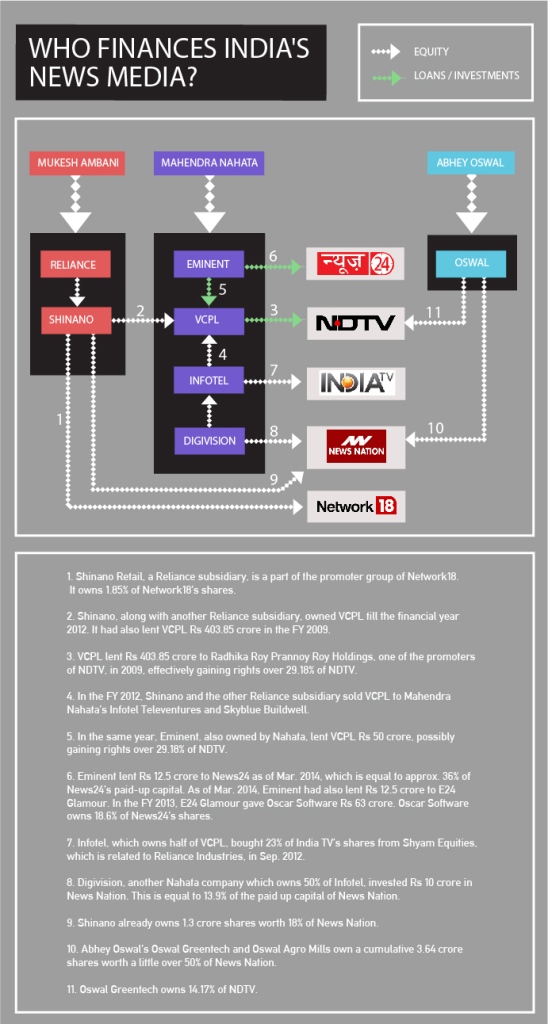
 Akarshan Uppal Reporter, IBN24 Copyright IBN24
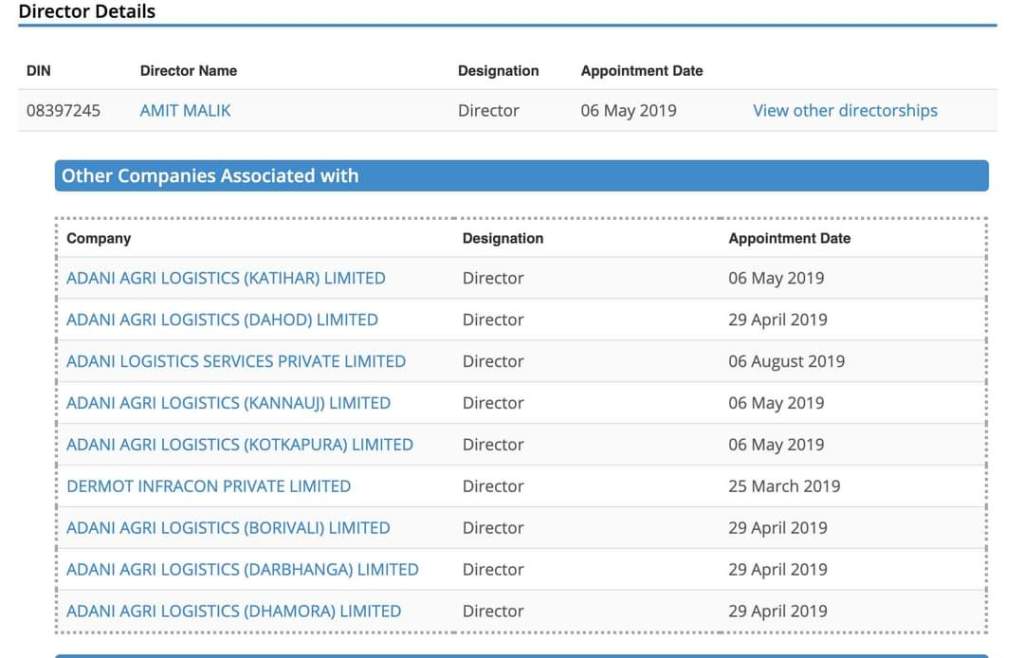
 Once a year folks interested in Netfilter technologies gather together to discuss past, ongoing and
future works. The Netfilter Workshop is an opportunity to share and discuss new ideas, the state of
the project, bring people together to work & hack and to put faces to people who otherwise are just
email names. This is an event that
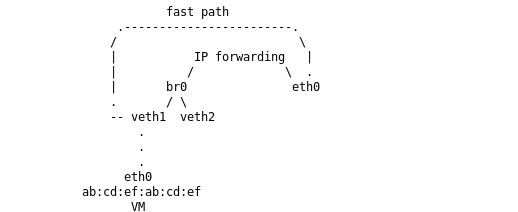 Stefano Bravio commented on several open topics for nftables that he is interested on working on.
One of them, issues related to concatenations + vmap issues. He also addressed concerns with
people s expectations when migrating from ipset to nftables. There are several corner features in
ipset that aren t currently supported in nftables, and we should document them. Stefano is also
wondering about some tools to help in the migration. A translation layer like there is in place
for iptables. Eric Gaver commented there are a couple of semantics that will not be suitable for
translation, such as global sets, or sets of sets. But ipset is way simpler than iptables, so a
translation mechanism should probably be created. In any case, there was agreement that anything
that helps people migrate is more than welcome, even if it doesn t support 100% of the use cases.
Stefano is planning to write documentation in the
 Sneakers was much more interesting for me because in that you got the best key which can unlock any lock, something like quantum computing is supposed to do. One could equate both the first movies in either as a White hat or a Grey hat . A Grey hat is more flexible in his/her moral values, and they are plenty of such people. For e.g. Julius Assange could be described as a Grey hat, but as you can see and understand those are moral issues.

 The theme


 I frequently see a pattern in image build/refresh scripts where a set of packages is installed, and then all packages are updated:











 I have been late to adopt an on-premise cloud solution as the security of Owncloud a few years ago wasn't so stellar (cf. my comment from 2013 in
 Luckily code can be changed and there are many comments floating around the Internet to change