Search Results: "tats"

12 September 2013

Steve Kemp: The blogspam code is live.

Living dangerously I switched DNS to point to the new codebase on my lunch hour. I found some problems immediately; but nothing terribly severe. Certainly nothing that didn't wait until I'd finished work to attend to. I've spent an hour or so documenting the new API this evening, and now I'm just going to keep an eye on things over the next few days. The code is faster, definitely. The load is significantly lower than it would have been under the old codebase - although it isn't a fair comparison: The old XML-RPC API is still present, but now it just proxies to the JSON-version, which is a cute hack. How long it stays alive is an open question, but at least a year I guess. God knows what my wordpress developer details are. I suspect its not worth my updating the wordpress plugin, since nobody ever seemed to love it. These days the consumers of the API seem to be, in rough order of popularity: There are few toy-users, like my own blog, and a few other similar small blogs. All told since lunchtime I've had hits from 189 distinct sources, the majority of which don't identify themselves. (Tempted to not process their requests in the future, but I don't think I can make such a change now without pissing off the world. Oops.) PS. Those ~200 users? rejected 12,000 spam comments since this afternoon. That's cool, huh?

9 September 2013

Kurt Roeckx: State of encryption

With all the articles about the NSA going around it seems to be hard to follow what is still safe. After reading various things it boils down to:
I don't think this should really surprise anybody. There is also speculation that maybe the NSA has better algorithms for reducing the complexity of public key cryptography or that maybe RC4 might be broken. Those things clearly are possible, but it's not clear. Nobody has suggested that AES has any problems, and I think that's still safe to use. One of the question becomes what does properly done encryption mean. There are various factors to this and many applications using various protocols. SSL/TLS is the most used, so I'm going to concentrate on the parts in that. Bit sizes As far as I understand it, 80 bit of security is around what is currently the upper practical limit of a brute force attack. In 2003 NIST said to stop using 80 bit by 2015, in 2005 they said to stop using it by 2010. When using something like SSL/TLS you using various things each having it's own size. So it's important to known which is the weakest part. Public key encryption (RSA, DSA, DH) doesn't offer the same amount of security per bit than symmetric keys. The equivalent sizes I find are:
Symmetric Public
80 1024
112 2048
128 3072
256 15360
There are other sources that have other numbers, but they're similar So this basically means you really should stop using 80 bit symmetric and 1024 bit public keys and that your public key really should be at least 2048 bit, and should maybe even consider going to 3072 bit. There seems to be a push to moving Diffie-Hellman (DH) to provide Perfect Forward Secrecy (PFS). There are many variants to this. We want to use ephemeral (temporary) keys. But it basically boils down to 2 variants:
With DHE you first negotiate a temporary DH key for this session (hopefully) using a random number on both sides, and then using that DH key to exchange a normal symmetric key for the session. This temporary DH key is what provides the PFS, assuming that this temporary key is thrown away. The drawback of this is that creating a sessions takes a lot more CPU time. The standard DH has the same security as other public key encryption. So we really also want to stop using 1024 keys for that. With ECDHE the key size needs to be the double of the symmetric size. This is also faster than DHE, so people want to move to this. There are various curves that can be used for this, and some of them are generated the the NSA and people have no trust in them. Some people even don't trust any of the curves. Most people seem to think that ECDH is the way forward, but then limit the curves they support. There are also hashes used for various things including signatures and MACs. Depending on how it's used the properties of the hash are important. They have 2 important properties collision resistance and preimage resistance. For a collision attack the upper limit is a little more than the output size over 2. But there are attacks that are known to give worst results. I found those numbers:
MD5 2^20
SHA-1 2^60
SHA-2 No known attack (so SHA-256 would have 1.2 * 2^128)
For preimage attacks I found:
MD5 2^123
SHA-1 No known attack (2^160)
SHA-256 No known attack (2^256)
So I think that MD5 is still safe when a collision attack isn't possible, but should really be avoided for anything else and SHA-1 should probably be considered the same. So you want to avoid them in things like certificates. SSL/TLS also use MD5 / SHA-1, but as part of a HMAC. I understand that those are not vulnerable to the collision attack but preimage resistance is important then and so are still considered safe. Randomness A lot of the algorithms depend on good random numbers. That is that the attacker can't guess what a (likely) random number you've selected. There have been many cases of bad RNG that then resulted in things getting broken. It's hard to tell from the output of most random number generators that they are secure or not. One important thing is that the RNGs gets seeded with random information (entropy) to begin with. If it gets no random information, very limited amount of possible inputs or information that is guessable as input it can appear to give random numbers, but they end up being predictable There have been many cases where this was broken. Ciphers There are various encryption algorithms. But since the public key algorithms take a lot of time we usually want to limit the amount we do with them and do most with a symmetric key encryption. There are basically 2 types of symmetric ciphers: stream and block ciphers. For block ciphers there are various ways of combining the blocks. The most popular was CBC. But in combination with TLS 1.0 it was vulnerable to the BEAST attack, but there is a workaround for this. An other mode is GCM but it's not yet widely deployed. This resulted in the stream cipher RC4 suddenly getting popular again. Some ciphers have known weaknesses. For instance triple DES has 3*56=168 bits, but only provides for 2*56=112 bits of security. Other attacks make this even less. The algorithms them self might be secure, but they might be attacked by other mechanism known as sidechannel attacks. The most important of that is timing attacks. If the algorithm has branches they might result in different amount of time taking in each branch. This might result in an attacker finding out some information about the secret key that is being used. It's important that the difference should be reduced as much as possible. This is usually not a problem if it's implemented in hardware. SSL/TLS Session A typical SSL/TLS session uses those things:
Important aspects of using certificates:
The client sends it's list of supported ciphers to the server and the server will then pick one. This is usually the first from that list that is supported by the server, but it might also be the order that is configured on the server that is used. Current status in software If you go looking at all of those things, you find problems in most if not all software. Some of that is to be compatible with old clients or servers, but most of it is not. If you want to test web servers for various of those properties you can do that at ssllabs. Based on that there are stats available at SSL-pulse. Apache only supports 1024 bit DHE keys and they don't want to apply a patch to support other bit size. Apache 2.2 doesn't offer ECDHE but 2.4 does. I don't know of any good site has lists which browser supports which ciphers, but you can test your own browser here. It lacks information about EC curves that your client offers. You can of course as look at this with wireshark. Mozilla currently has a proposal to change it's list of supported ciphers here. They currently don't have TLS 1.1 or 1.2 enabled yet, but as far as I understand the NSS library should support it. They should now have support for GCM, but they still have an open bug for a constant time patch. In general Mozilla seems to be moving very slowly with adopting things. Last I heard Apple still didn't patch Safari for the BEAST attack. For XMPP see client to server, server to server, clients.

For TOR see here.

17 August 2013

Christian Perrier: More French pages than English pages on Debian web site

As of today, thanks to the tremendous work of the French localization team in Debian, there are more web pages in French than there are in English, on Debian web site. How can this happen? Indeed, the Debian web site is not always made of pages primarily written in English. There are some French, Spanish, Chinese pages. These are not translated into English because.....there is no translation team for English (the debian-l10n-english mailing list more acts as a review board). So, given that French translators nearly translated ALL English web pages and because there are quite a few French pages, we currently have 5802 web pages in French, while there are only 5801 in English. The French Cabal definitely reached its goal: we have the DPL, we have the web site. Toutes vos possessions nous appartiennent d sormais. I'm now preparing a GR in order to turn French into the official communication language in Debian. PS: merci Thomas Vincent qui a largement contribu ce succ s ces derniers jours !

16 August 2013

Richard Hartmann: Release Critical Bug report for Week 33

One more for DebConf. The UDD bugs interface currently knows about the following release critical bugs: How do we compare to the Squeeze release cycle?
Week Squeeze Wheezy Diff
43 284 (213+71) 468 (332+136) +184 (+119/+65)
44 261 (201+60) 408 (265+143) +147 (+64/+83)
45 261 (205+56) 425 (291+134) +164 (+86/+78)
46 271 (200+71) 401 (258+143) +130 (+58/+72)
47 283 (209+74) 366 (221+145) +83 (+12/+71)
48 256 (177+79) 378 (230+148) +122 (+53/+69)
49 256 (180+76) 360 (216+155) +104 (+36/+79)
50 204 (148+56) 339 (195+144) +135 (+47/+90)
51 178 (124+54) 323 (190+133) +145 (+66/+79)
52 115 (78+37) 289 (190+99) +174 (+112/+62)
1 93 (60+33) 287 (171+116) +194 (+111/+83)
2 82 (46+36) 271 (162+109) +189 (+116/+73)
3 25 (15+10) 249 (165+84) +224 (+150/+74)
4 14 (8+6) 244 (176+68) +230 (+168/+62)
5 2 (0+2) 224 (132+92) +222 (+132/+90)
6 release! 212 (129+83) +212 (+129/+83)
7 release+1 194 (128+66) +194 (+128/+66)
8 release+2 206 (144+62) +206 (+144/+62)
9 release+3 174 (105+69) +174 (+105/+69)
10 release+4 120 (72+48) +120 (+72/+48)
11 release+5 115 (74+41) +115 (+74/+41)
12 release+6 93 (47+46) +93 (+47/+46)
13 release+7 50 (24+26) +50 (+24/+26)
14 release+8 51 (32+19) +51 (+32/+19)
15 release+9 39 (32+7) +39 (+32/+7)
16 release+10 20 (12+8) +20 (+12/+8)
17 release+11 24 (19+5) +24 (+19/+5)
18 release+12 2 (2+0) +2 (+2/+0)
Graphical overview of bug stats thanks to azhag:

13 August 2013

Kees Cook: TPM providing /dev/hwrng

A while ago, I added support for the TPM s pRNG to the rng-tools package in Ubuntu. Since then, Kent Yoder added TPM support directly into the kernel s /dev/hwrng device. This means there s no need to carry the patch in rng-tools any more, since I can use /dev/hwrng directly now:
# modprobe tpm-rng
# echo tpm-rng >> /etc/modules
# grep -v ^# /etc/default/rng-tools
RNGDOPTIONS="--fill-watermark=90%"
# service rng-tools restart
And as before, once it s been running a while (or you send SIGUSR1 to rngd), you can see reporting in syslog:
# pkill -USR1 rngd
# tail -n 15 /var/log/syslog
Aug 13 09:51:01 linux rngd[39114]: stats: bits received from HRNG source: 260064
Aug 13 09:51:01 linux rngd[39114]: stats: bits sent to kernel pool: 216384
Aug 13 09:51:01 linux rngd[39114]: stats: entropy added to kernel pool: 216384
Aug 13 09:51:01 linux rngd[39114]: stats: FIPS 140-2 successes: 13
Aug 13 09:51:01 linux rngd[39114]: stats: FIPS 140-2 failures: 0
Aug 13 09:51:01 linux rngd[39114]: stats: FIPS 140-2(2001-10-10) Monobit: 0
Aug 13 09:51:01 linux rngd[39114]: stats: FIPS 140-2(2001-10-10) Poker: 0
Aug 13 09:51:01 linux rngd[39114]: stats: FIPS 140-2(2001-10-10) Runs: 0
Aug 13 09:51:01 linux rngd[39114]: stats: FIPS 140-2(2001-10-10) Long run: 0
Aug 13 09:51:01 linux rngd[39114]: stats: FIPS 140-2(2001-10-10) Continuous run: 0
Aug 13 09:51:01 linux rngd[39114]: stats: HRNG source speed: (min=10.433; avg=10.442; max=10.454)Kibits/s
Aug 13 09:51:01 linux rngd[39114]: stats: FIPS tests speed: (min=73.360; avg=75.504; max=86.305)Mibits/s
Aug 13 09:51:01 linux rngd[39114]: stats: Lowest ready-buffers level: 2
Aug 13 09:51:01 linux rngd[39114]: stats: Entropy starvations: 0
Aug 13 09:51:01 linux rngd[39114]: stats: Time spent starving for entropy: (min=0; avg=0.000; max=0)us
I m pondering getting this running in Chrome OS too, but I want to make sure it doesn t suck too much battery.

2013, Kees Cook. This work is licensed under a Creative Commons Attribution-ShareAlike 3.0 License.
Creative Commons License

9 August 2013

Richard Hartmann: Release Critical Bug report for Week 32

As a more or less random data point for DebConf13, here's the current bug stats for Debian. Hope to see you there, and if you want to attend the BoF Gitify ALL the things or the talk Gitify your life you can do so on site, via IRC in #vcs-home on OFTC, or simply follow the live streams. If you see my in person, I have two crates of Scheider Aventinus with me and don't plan on bringing home any full bottles. The UDD bugs interface currently knows about the following release critical bugs: Graphical overview of bug stats thanks to azhag:

8 August 2013

Francois Marier: Server Migration Plan

I recently had to migrate the main Libravatar server to a new virtual machine. In order to minimize risk and downtime, I decided to write a migration plan ahead of time. I am sharing this plan here in case it gives any ideas to others who have to go through a similar process.

Prepare DNS
  • Change the TTL on the DNS entry for libravatar.org to 3600 seconds.
  • Remove the mirrors I don't control from the DNS load balancer (cdn and seccdn).
  • Remove the main server from cdn and seccdn in DNS.

Preparing the new server
  • Setup the new server.
  • Copy the database from the old site and restore it.
  • Copy /var/lib/libravatar from the old site.
  • Hack my local /etc/hosts file to point to the new server's IP address:
    xxx.xxx.xxx.xxx www.libravatar.org stats.libravatar.org cdn.libravatar.org
    
  • Test all functionality on the new site.

Preparing the old server
  • Prepare a static "under migration" Apache config in /etc/apache2/sites-enables.static/:
    <VirtualHost *:80>
        RewriteEngine On
        RewriteRule ^ https://www.libravatar.org [redirect=301,last]
    </VirtualHost>
    <VirtualHost *:443>
        SSLEngine on
        SSLProtocol TLSv1
        SSLHonorCipherOrder On
        SSLCipherSuite RC4-SHA:HIGH:!kEDH
        SSLCertificateFile /etc/libravatar/www.crt
        SSLCertificateKeyFile /etc/libravatar/www.pem
        SSLCertificateChainFile /etc/libravatar/www-chain.pem
        RewriteEngine On
        RewriteRule ^ /var/www/migration.html [last]
        <Directory /var/www>
            Allow from all
            Options -Indexes
        </Directory>
    </VirtualHost>
    
  • Put this static file in /var/www/migration.html:
    <html>
    <body>
    <p>We are migrating to a new server. See you soon!</p>
    <p>- <a href="http://identi.ca/libravatar">@libravatar</a></p>
    </body>
    </html>
    
  • Enable the rewrite module:
    a2enmod rewrite
    
  • Prepare an Apache config proxying to the new server in /etc/apache2/sites-enabled.proxy/:
    <VirtualHost *:80>
        RewriteEngine On
        RewriteRule ^ https://www.libravatar.org [redirect=301,last]
    </VirtualHost>
    <VirtualHost *:443>
        SSLEngine on
        SSLProtocol TLSv1
        SSLHonorCipherOrder On
        SSLCipherSuite RC4-SHA:HIGH:!kEDH
        SSLCertificateFile /etc/libravatar/www.crt
        SSLCertificateKeyFile /etc/libravatar/www.pem
        SSLCertificateChainFile /etc/libravatar/www-chain.pem
        SSLProxyEngine on
        ProxyPass / https://www.libravatar.org/
        ProxyPassReverse / https://www.libravatar.org/
    </VirtualHost>
    
  • Enable the proxy-related modules for Apache:
    a2enmod proxy
    a2enmod proxy_connect
    a2enmod proxy_http
    

Migrating servers
  • Tweet and dent about the upcoming migration.
  • Enable the static file config on the old server (disabling the Django app).
  • Copy the database from the old server and restore it on the new server.
  • Copy /var/lib/libravatar from the old server to the new one.

Disable mirror sync
  • Log into each mirror and comment out the sync cron jobs in /etc/cron.d/libravatar-slave.
  • Make sure mirrors are no longer able to connect to the old server by deleting /var/lib/libravatar/master/.ssh/authorized_keys on the old server.

Testing the main site
  • Hack my local /etc/hosts file to point to the new server's IP address:
    xxx.xxx.xxx.xxx www.libravatar.org stats.libravatar.org cdn.libravatar.org
    
  • Test all functionality on the new site.
  • If testing is successful, update DNS to point to the new server with a short TTL (in case we need to revert).
  • Enable the proxy config on the old server.
  • Hack my local /etc/hosts file to point to the old server's IP address.
  • Test basic functionality going through the proxy.
  • Remove local /etc/hosts/ hacks.

Re-enable mirror sync
  • Build a new libravatar-slave package with an updated known_hosts file for the new server.
  • Log into each server I control and update that package.
  • Test the connection to the master (hacking /etc/hosts on the mirror if needed):
    sudo -u libravatar-slave ssh libravatar-master@0.cdn.libravatar.org
    
  • Uncomment the sync cron jobs in /etc/cron.d/libravatar-slave.
  • An hour later, make sure that new images are copied over and that the TLS certs are still working.
  • Remove /etc/hosts hacks from all mirrors.

Post migration steps
  • Tweet and dent about the fact that the migration was successful.
  • Send a test email to the support address included in the tweet/dent.
  • Take a backup of config files and data on the old server in case I forgot to copy something to the new one.
  • Get in touch with mirror owners to tell them to update libravatar-slave package and test ssh configuration.
  • Add third-party controlled mirrors back to the DNS load-balancer once they are up to date.
  • A few days later, change the TTL for the main site back to 43200 seconds.
  • A week later, kill the proxy on the old server by shutting it down.

4 August 2013

Dirk Eddelbuettel: RcppArmadillo 0.3.900.7

A bug-fix release 3.900.7 of Armadillo was provided by Conrad a few days ago. It has been rolled into a new RcppArmadillo release 0.3.900.7 which, after a brief delay, is now on CRAN and in Debian. The main bug fix is a change in the in-place version of reshape(). This in turn caused the CRAN package Amelia to fail, but some diligent debugging by Conrad (which was much appreciated) revealed that the error was in fact in RcppArmadillo where we did not set the matrix flag properly in the constructor. The corresponding one-character fix had been made in this release. Another package exhibiting an issue is unmarked. It needs to make the target variable of reshape a matrix object in a handful of places. I sent the authors a small patch addressing this but have not yet heard back. The complete list of changes is below. In the meantime, I have also done some work on a new as() and wrap() converters for sparse matrices; a first implementation is in SVN.
Changes in RcppArmadillo version 0.3.900.7 (2013-08-02)
  • Upgraded to Armadillo release Version 3.900.7 (Bavarian Sunflower)
    • minor fix for inplace reshape()
    • minor corrections for compilation issues under GCC 4.8+ and MSVC
  • Corrected setting of vec_stats in intialization of row, vector and matrix objects
  • The inline package is no longer used in the examples and unit tests which have all been converted to using Rcpp attributes
Courtesy of CRANberries, there is also a diffstat report for the most recent release As always, more detailed information is on the RcppArmadillo page. Questions, comments etc should go to the rcpp-devel mailing list off the R-Forge page.

23 July 2013

Ritesh Raj Sarraf: Power consumption on Linux 3.10

The power consumption on the Linux kernel 3.10 is pretty bad. On kernel 3.10, with the follwing config, the PowerTop results are:
#
# Timers subsystem
#
CONFIG_TICK_ONESHOT=y
CONFIG_NO_HZ_COMMON=y
# CONFIG_HZ_PERIODIC is not set
CONFIG_NO_HZ_IDLE=y
# CONFIG_NO_HZ_FULL is not set
CONFIG_NO_HZ=y
CONFIG_HIGH_RES_TIMERS=y
PowerTOP v2.0 Overview Idle stats Frequency stats Device stats Tunables
The battery reports a discharge rate of 28.0 W
The estimated remaining time is 23 minutes
Summary: 1785.5 wakeups/second, 0.0 GPU ops/second, 0.0 VFS ops/sec and 22.1% CPU use
Power est. Usage Events/s Category Description
16.3 W 2915 rpm Device Laptop fan
5.11 W 100.0% Device USB device: WALTON Primo-X1 Primo-X1
1.70 W 33.3% Device Display backlight
849 mW 33.3% Device Display backlight
425 mW 86.0 ms/s 330.7 Process /usr/bin/konsole
316 mW 63.9 ms/s 66.1 Process /usr/bin/plasma-desktop
142 mW 28.6 ms/s 396.8 Process /usr/bin/X :0 -auth /var/run/lightdm/root/:0 -nolisten tcp vt7
64.1 mW 13.0 ms/s 198.4 Process kwin -session 101261418fe3000136103713100000053880000_13746081
53.6 mW 10.8 ms/s 0.00 Process powertop
35.9 mW 7.3 ms/s 66.1 Process /usr/lib/chromium/chromium --type=plugin --plugin-path=/usr/li
24.3 mW 4.9 ms/s 396.8 Interrupt PS/2 Touchpad / Keyboard / Mouse
6.92 mW 1.4 ms/s 0.00 Interrupt [48] i915
5.94 mW 1.2 ms/s 66.1 Interrupt [9] RCU(softirq)
3.98 mW 0.8 ms/s 0.00 kWork flush_to_ldisc
3.78 mW 0.8 ms/s 66.1 Process [ksoftirqd/2]
3.33 mW 673.3 us/s 66.1 Process [rcu_sched]
1.80 mW 363.1 us/s 66.1 Interrupt [1] timer(softirq)
1.79 mW 363.0 us/s 0.00 Process [ksoftirqd/4]
Where as on the 3.9 kernel:
The battery reports a discharge rate of 13.2 W
The estimated remaining time is 43 minutes
Summary: 611.5 wakeups/second, 0.0 GPU ops/second, 0.0 VFS ops/sec and 14.2% CPU use
Power est. Usage Events/s Category Description
14.0 W 2722 rpm Device Laptop fan
1.72 W 33.3% Device Display backlight
862 mW 33.3% Device Display backlight
255 mW 65.7 ms/s 58.0 Process /usr/bin/plasma-desktop
91.9 mW 23.7 ms/s 27.5 Process /usr/lib/chromium/chromium --type=renderer --lang=en-US --forc
60.1 mW 15.5 ms/s 96.1 Process /usr/lib/chromium/chromium --type=plugin --plugin-path=/usr/li
25.0 mW 6.4 ms/s 25.1 Process kwin -session 101261418fe3000136103713100000053880000_13746094
21.5 mW 5.6 ms/s 34.2 Process /usr/bin/X :0 -auth /var/run/lightdm/root/:0 -nolisten tcp vt7
13.1 mW 3.4 ms/s 5.6 Process /usr/bin/konsole
9.82 mW 2.5 ms/s 53.7 Process [irq/48-iwlwifi]
9.11 mW 2.4 ms/s 2.2 Process /usr/bin/knemo
8.62 mW 2.2 ms/s 12.3 Process /usr/lib/chromium/chromium --password-store=detect
8.32 mW 2.1 ms/s 45.5 Interrupt [48] iwlwifi
6.96 mW 1.8 ms/s 35.3 Interrupt [7] sched(softirq)
5.13 mW 1.3 ms/s 57.1 Interrupt [47] i915
4.24 mW 1.1 ms/s 0.4 Process powertop
3.38 mW 0.9 ms/s 1.5 Timer tcp_keepalive_timer
2.85 mW 0.7 ms/s 11.9 Process /usr/sbin/mysqld --basedir=/usr --datadir=/var/lib/mysql --plu
<section class="field field-name-taxonomy-vocabulary-1 field-type-taxonomy-term-reference field-label-above view-mode-rss">

Categories: </section><section class="field field-name-taxonomy-vocabulary-2 field-type-taxonomy-term-reference field-label-above view-mode-rss">

Keywords: </section>

31 May 2013

Richard Hartmann: Release Critical Bug report for Week 21

Hopefully hiding this post will work this time. Apologies if not. The UDD bugs interface currently knows about the following release critical bugs: How do we compare to the Squeeze release cycle?
Week Squeeze Wheezy Diff
43 284 (213+71) 468 (332+136) +184 (+119/+65)
44 261 (201+60) 408 (265+143) +147 (+64/+83)
45 261 (205+56) 425 (291+134) +164 (+86/+78)
46 271 (200+71) 401 (258+143) +130 (+58/+72)
47 283 (209+74) 366 (221+145) +83 (+12/+71)
48 256 (177+79) 378 (230+148) +122 (+53/+69)
49 256 (180+76) 360 (216+155) +104 (+36/+79)
50 204 (148+56) 339 (195+144) +135 (+47/+90)
51 178 (124+54) 323 (190+133) +145 (+66/+79)
52 115 (78+37) 289 (190+99) +174 (+112/+62)
1 93 (60+33) 287 (171+116) +194 (+111/+83)
2 82 (46+36) 271 (162+109) +189 (+116/+73)
3 25 (15+10) 249 (165+84) +224 (+150/+74)
4 14 (8+6) 244 (176+68) +230 (+168/+62)
5 2 (0+2) 224 (132+92) +222 (+132/+90)
6 release! 212 (129+83) +212 (+129/+83)
7 release+1 194 (128+66) +194 (+128/+66)
8 release+2 206 (144+62) +206 (+144/+62)
9 release+3 174 (105+69) +174 (+105/+69)
10 release+4 120 (72+48) +120 (+72/+48)
11 release+5 115 (74+41) +115 (+74/+41)
12 release+6 93 (47+46) +93 (+47/+46)
13 release+7 50 (24+26) +50 (+24/+26)
14 release+8 51 (32+19) +51 (+32/+19)
15 release+9 39 (32+7) +39 (+32/+7)
16 release+10 20 (12+8) +20 (+12/+8)
17 release+11 24 (19+5) +24 (+19/+5)
18 release+12 2 (2+0) +2 (+2/+0)
Graphical overview of bug stats thanks to azhag:

28 May 2013

Johannes Schauer: New bootstrap analysis results

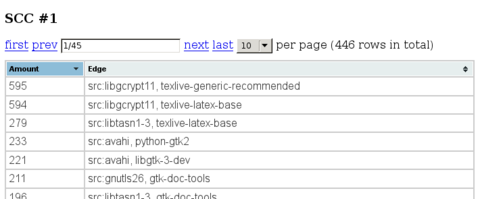
I wrote a small wiki page for botch. It includes links to some hopefully useful resources like my FOSDEM 2013 talk or my master thesis about botch. The final goal of botch is to generate a build order with which Debian can be bootstrapped from zero to more than 18000 source packages. But such a build order can only be generated once enough source packages (by now the number is around 70) incorporate build profiles which allow to compile them with less build dependencies and thereby break all build dependency cycles. So an intermediary goal of botch is, to find a "good" (i.e. a close to minimal amount) selection of such build dependencies that should be dropped from their source packages. So far, the results of all heuristics we use for this task were just dumped to standard output. Since this textual format was hard to read for a human developer and even worse machine readable, that tool now outputs its results in JSON. This data is then converted by another tool to a more human readable format. One such format is HTML and with the help of javascript for sortable and pageable tables, the data can then be presented without producing too much visual clutter (at least compared to the initial textual format). Another advantage of HTML is, that the data can now easily be shared with other developers without them having to run botch or install any other program first. So without further ado, please find the result of running our heuristics on Debian Sid as of 2013-01-01 here: http://mister-muffin.de/bootstrap/stats/ Here is a screenshot of what you can expect (you can see part of the table of edges with most cycles through them): As a developer uses this information to add build profiles to source packages, this HTML page can be regenerated and will show which strongly connected components are now left in the graph and how to best make them acyclic as well. Besides other improvements I also updated the data I used to generate the graphs from this post. I found this update to be necessary since we found and fixed several implementation bugs since October 2012, so this new plot should be more accurate. Here a graph which shows the amount of vertices in the biggest strongly connected component of Debian Sid by date. Some datapoints are missing for dates for which important source packages in Sid were not compilable.

17 May 2013

Richard Hartmann: Release Critical Bug report for Week 20

If I did everything right, this post will not appear on any RSS feed yet still make it to my blog to maintain history. The UDD bugs interface currently knows about the following release critical bugs: How do we compare to the Squeeze release cycle?
Week Squeeze Wheezy Diff
43 284 (213+71) 468 (332+136) +184 (+119/+65)
44 261 (201+60) 408 (265+143) +147 (+64/+83)
45 261 (205+56) 425 (291+134) +164 (+86/+78)
46 271 (200+71) 401 (258+143) +130 (+58/+72)
47 283 (209+74) 366 (221+145) +83 (+12/+71)
48 256 (177+79) 378 (230+148) +122 (+53/+69)
49 256 (180+76) 360 (216+155) +104 (+36/+79)
50 204 (148+56) 339 (195+144) +135 (+47/+90)
51 178 (124+54) 323 (190+133) +145 (+66/+79)
52 115 (78+37) 289 (190+99) +174 (+112/+62)
1 93 (60+33) 287 (171+116) +194 (+111/+83)
2 82 (46+36) 271 (162+109) +189 (+116/+73)
3 25 (15+10) 249 (165+84) +224 (+150/+74)
4 14 (8+6) 244 (176+68) +230 (+168/+62)
5 2 (0+2) 224 (132+92) +222 (+132/+90)
6 release! 212 (129+83) +212 (+129/+83)
7 release+1 194 (128+66) +194 (+128/+66)
8 release+2 206 (144+62) +206 (+144/+62)
9 release+3 174 (105+69) +174 (+105/+69)
10 release+4 120 (72+48) +120 (+72/+48)
11 release+5 115 (74+41) +115 (+74/+41)
12 release+6 93 (47+46) +93 (+47/+46)
13 release+7 50 (24+26) +50 (+24/+26)
14 release+8 51 (32+19) +51 (+32/+19)
15 release+9 39 (32+7) +39 (+32/+7)
16 release+10 20 (12+8) +20 (+12/+8)
17 release+11 24 (19+5) +24 (+19/+5)
18 release+12 2 (2+0) +2 (+2/+0)
Graphical overview of bug stats thanks to azhag:

14 May 2013

M nica Ram rez Arceda: Outreach Program for Women talk

Last Saturday (2013-05-11), I gave a talk about Outreach Program for Women (OPW) at the Ubuntu Party Festa Raring Ringtail. I was invited to give this talk because I'm one of the coordinators of this program in Debian side. This was a small talk and was split in three parts. During the first part I talked about the problem in general: lack of women in technology world. In the second part I talked about the paradox that there are even less women in FLOSS, giving Debian as an example: a very wonderful project, where techie (or non-techie) women should be in love with (at least I am!), has only about 1.6% of women DD. The last part was focused in OPW itself, the successful experience of GNOME with an increasing number of women in their organization and how the program works. I hope that women attendees will think about applying to OPW or collaborating actively in FLOSS :-) Here you have the slides (in Catalan): talk_debian_opw

10 May 2013

Richard Hartmann: Release Critical Bug report for Week 19

Still not sure what to do with this whole thing, but preserving the sharp increase in RC bug count for posterity can't hurt either way. Not sure if it's sad that so many issues may have been overlooked, if this means that Debian is very much alive, either. The UDD bugs interface currently knows about the following release critical bugs: How do we compare to the Squeeze release cycle?
Week Squeeze Wheezy Diff
43 284 (213+71) 468 (332+136) +184 (+119/+65)
44 261 (201+60) 408 (265+143) +147 (+64/+83)
45 261 (205+56) 425 (291+134) +164 (+86/+78)
46 271 (200+71) 401 (258+143) +130 (+58/+72)
47 283 (209+74) 366 (221+145) +83 (+12/+71)
48 256 (177+79) 378 (230+148) +122 (+53/+69)
49 256 (180+76) 360 (216+155) +104 (+36/+79)
50 204 (148+56) 339 (195+144) +135 (+47/+90)
51 178 (124+54) 323 (190+133) +145 (+66/+79)
52 115 (78+37) 289 (190+99) +174 (+112/+62)
1 93 (60+33) 287 (171+116) +194 (+111/+83)
2 82 (46+36) 271 (162+109) +189 (+116/+73)
3 25 (15+10) 249 (165+84) +224 (+150/+74)
4 14 (8+6) 244 (176+68) +230 (+168/+62)
5 2 (0+2) 224 (132+92) +222 (+132/+90)
6 release! 212 (129+83) +212 (+129/+83)
7 release+1 194 (128+66) +194 (+128/+66)
8 release+2 206 (144+62) +206 (+144/+62)
9 release+3 174 (105+69) +174 (+105/+69)
10 release+4 120 (72+48) +120 (+72/+48)
11 release+5 115 (74+41) +115 (+74/+41)
12 release+6 93 (47+46) +93 (+47/+46)
13 release+7 50 (24+26) +50 (+24/+26)
14 release+8 51 (32+19) +51 (+32/+19)
15 release+9 39 (32+7) +39 (+32/+7)
16 release+10 20 (12+8) +20 (+12/+8)
17 release+11 24 (19+5) +24 (+19/+5)
18 release+12 2 (2+0) +2 (+2/+0)
Graphical overview of bug stats thanks to azhag:

3 May 2013

Richard Hartmann: Release Critical Bug report for Week 18

Releezy Tomorrow morning at around 0900 UTC, a lot of very dedicated people will start working on the actual release of Debian 7.0 (wheezy). A huge thank you to everyone who worked on getting Debian to this point. I for one welcome our new penguin overlord! Housekeeping These will obviously be the last rc bug stats in this release cycle. I am still unsure what to do with this particular series until the next freeze and feedback would be appreciated. Possible approaches are continuing as is, putting this into its own specific feed, decreasing the frequency to once a month, or to simply stop until jessie is frozen. An ikiwiki poll may be overkill. Or not. Remaining bugs As of right now, there are two bugs open: Both relate to weird behaviour by apt when upgrading from squeeze to wheezy. These bugs will not be truly closed, but merely ignored, for wheezy's release. If you happen to encounter the message above, it's best to consult the release notes for possible workarounds. Stats The UDD bugs interface currently knows about the following release critical bugs: How do we compare to the Squeeze release cycle?
Week Squeeze Wheezy Diff
43 284 (213+71) 468 (332+136) +184 (+119/+65)
44 261 (201+60) 408 (265+143) +147 (+64/+83)
45 261 (205+56) 425 (291+134) +164 (+86/+78)
46 271 (200+71) 401 (258+143) +130 (+58/+72)
47 283 (209+74) 366 (221+145) +83 (+12/+71)
48 256 (177+79) 378 (230+148) +122 (+53/+69)
49 256 (180+76) 360 (216+155) +104 (+36/+79)
50 204 (148+56) 339 (195+144) +135 (+47/+90)
51 178 (124+54) 323 (190+133) +145 (+66/+79)
52 115 (78+37) 289 (190+99) +174 (+112/+62)
1 93 (60+33) 287 (171+116) +194 (+111/+83)
2 82 (46+36) 271 (162+109) +189 (+116/+73)
3 25 (15+10) 249 (165+84) +224 (+150/+74)
4 14 (8+6) 244 (176+68) +230 (+168/+62)
5 2 (0+2) 224 (132+92) +222 (+132/+90)
6 release! 212 (129+83) +212 (+129/+83)
7 release+1 194 (128+66) +194 (+128/+66)
8 release+2 206 (144+62) +206 (+144/+62)
9 release+3 174 (105+69) +174 (+105/+69)
10 release+4 120 (72+48) +120 (+72/+48)
11 release+5 115 (74+41) +115 (+74/+41)
12 release+6 93 (47+46) +93 (+47/+46)
13 release+7 50 (24+26) +50 (+24/+26)
14 release+8 51 (32+19) +51 (+32/+19)
15 release+9 39 (32+7) +39 (+32/+7)
16 release+10 20 (12+8) +20 (+12/+8)
17 release+11 24 (19+5) +24 (+19/+5)
18 release+12 2 (2+0) +2 (+2/+0)
Graphical overview of bug stats thanks to azhag:

26 April 2013

Richard Hartmann: Release Critical Bug report for Week 17

The UDD bugs interface currently knows about the following release critical bugs: How do we compare to the Squeeze release cycle?
Week Squeeze Wheezy Diff
43 284 (213+71) 468 (332+136) +184 (+119/+65)
44 261 (201+60) 408 (265+143) +147 (+64/+83)
45 261 (205+56) 425 (291+134) +164 (+86/+78)
46 271 (200+71) 401 (258+143) +130 (+58/+72)
47 283 (209+74) 366 (221+145) +83 (+12/+71)
48 256 (177+79) 378 (230+148) +122 (+53/+69)
49 256 (180+76) 360 (216+155) +104 (+36/+79)
50 204 (148+56) 339 (195+144) +135 (+47/+90)
51 178 (124+54) 323 (190+133) +145 (+66/+79)
52 115 (78+37) 289 (190+99) +174 (+112/+62)
1 93 (60+33) 287 (171+116) +194 (+111/+83)
2 82 (46+36) 271 (162+109) +189 (+116/+73)
3 25 (15+10) 249 (165+84) +224 (+150/+74)
4 14 (8+6) 244 (176+68) +230 (+168/+62)
5 2 (0+2) 224 (132+92) +222 (+132/+90)
6 release! 212 (129+83) +212 (+129/+83)
7 release+1 194 (128+66) +194 (+128/+66)
8 release+2 206 (144+62) +206 (+144/+62)
9 release+3 174 (105+69) +174 (+105/+69)
10 release+4 120 (72+48) +120 (+72/+48)
11 release+5 115 (74+41) +115 (+74/+41)
12 release+6 93 (47+46) +93 (+47/+46)
13 release+7 50 (24+26) +50 (+24/+26)
14 release+8 51 (32+19) +51 (+32/+19)
15 release+9 39 (32+7) +39 (+32/+7)
16 release+10 20 (12+8) +20 (+12/+8)
17 release+11 24 (19+5) +24 (+19/+5)
18 release+12
Graphical overview of bug stats thanks to azhag:

19 April 2013

Richard Hartmann: Release Critical Bug report for Week 16

Seems I was off by two weeks. Week 18, it is/should be. Yay. The UDD bugs interface currently knows about the following release critical bugs: How do we compare to the Squeeze release cycle?
Week Squeeze Wheezy Diff
43 284 (213+71) 468 (332+136) +184 (+119/+65)
44 261 (201+60) 408 (265+143) +147 (+64/+83)
45 261 (205+56) 425 (291+134) +164 (+86/+78)
46 271 (200+71) 401 (258+143) +130 (+58/+72)
47 283 (209+74) 366 (221+145) +83 (+12/+71)
48 256 (177+79) 378 (230+148) +122 (+53/+69)
49 256 (180+76) 360 (216+155) +104 (+36/+79)
50 204 (148+56) 339 (195+144) +135 (+47/+90)
51 178 (124+54) 323 (190+133) +145 (+66/+79)
52 115 (78+37) 289 (190+99) +174 (+112/+62)
1 93 (60+33) 287 (171+116) +194 (+111/+83)
2 82 (46+36) 271 (162+109) +189 (+116/+73)
3 25 (15+10) 249 (165+84) +224 (+150/+74)
4 14 (8+6) 244 (176+68) +230 (+168/+62)
5 2 (0+2) 224 (132+92) +222 (+132/+90)
6 release! 212 (129+83) +212 (+129/+83)
7 release+1 194 (128+66) +194 (+128/+66)
8 release+2 206 (144+62) +206 (+144/+62)
9 release+3 174 (105+69) +174 (+105/+69)
10 release+4 120 (72+48) +120 (+72/+48)
11 release+5 115 (74+41) +115 (+74/+41)
12 release+6 93 (47+46) +93 (+47/+46)
13 release+7 50 (24+26) +50 (+24/+26)
14 release+8 51 (32+19) +51 (+32/+19)
15 release+9 39 (32+7) +39 (+32/+7)
16 release+10 20 (12+8) +20 (+12/+8)
17 release+11
18 release+12
Graphical overview of bug stats thanks to azhag:

17 April 2013

Daniel Pocock: Switzerland Schilthorn with 007 (leg 3)

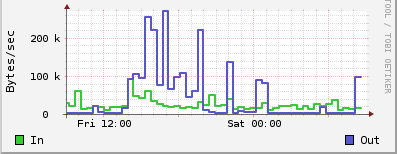
Friday's video of the 2nd leg of the cable car journey was quite popular, Ganglia stats for the video server can't be wrong: The first leg was skipped because of the low cloud cover. Weather reports in Switzerland, such as www.meteosuisse.ch often show a distinction between the low clouds and high clouds, because many Swiss mountain resorts are high enough to enjoy ample sunshine by virtue of their altitude even when cities like Zurich and Geneva are overcast. Now for the third leg, rising up to Berg. In the video, it is hard to gauge the size of the rocky cliffs along the route, but looking at the cable car's shadow will give a clue. As the cable car approaches the station in Berg, it feels like it takes forever to complete the journey. That is because the rocks are so much bigger than they appear from a distance. <video controls="" height="340" poster="http://upload.wikimedia.org/wikipedia/commons/thumb/0/03/Schilthorn_with_Bernese_Alps%2C_2012_August.jpg/800px-Schilthorn_with_Bernese_Alps%2C_2012_August.jpg" width="560">
<source src="http://video.danielpocock.com/VID_20121025_122453.m4v" type="video/mp4"></source>
<source src="http://video.danielpocock.com/VID_20121025_122453.webm" type="video/webm"></source>
</video> The final leg to the Schilthorn summit will appear shortly. I understand many people are starting to contemplate their DebConf13 travel and summer holidays - please feel free to email me if you'd like me to post a video of some other feature in Switzerland.
AttachmentSize
ganglia-schilthorn2.png8.71 KB

14 April 2013

Richard Hartmann: Release Critical Bug report for Week 15

This week: Monday 47, Tuesday 47, Wednesday 41, Thursday 39, Friday 37 Addendum: the bug count was at 37 around Friday noon and that's what I am tracking with the short stats above. The UDD bugs interface currently knows about the following release critical bugs: How do we compare to the Squeeze release cycle?
Week Squeeze Wheezy Diff
43 284 (213+71) 468 (332+136) +184 (+119/+65)
44 261 (201+60) 408 (265+143) +147 (+64/+83)
45 261 (205+56) 425 (291+134) +164 (+86/+78)
46 271 (200+71) 401 (258+143) +130 (+58/+72)
47 283 (209+74) 366 (221+145) +83 (+12/+71)
48 256 (177+79) 378 (230+148) +122 (+53/+69)
49 256 (180+76) 360 (216+155) +104 (+36/+79)
50 204 (148+56) 339 (195+144) +135 (+47/+90)
51 178 (124+54) 323 (190+133) +145 (+66/+79)
52 115 (78+37) 289 (190+99) +174 (+112/+62)
1 93 (60+33) 287 (171+116) +194 (+111/+83)
2 82 (46+36) 271 (162+109) +189 (+116/+73)
3 25 (15+10) 249 (165+84) +224 (+150/+74)
4 14 (8+6) 244 (176+68) +230 (+168/+62)
5 2 (0+2) 224 (132+92) +222 (+132/+90)
6 release! 212 (129+83) +212 (+129/+83)
7 release+1 194 (128+66) +194 (+128/+66)
8 release+2 206 (144+62) +206 (+144/+62)
9 release+3 174 (105+69) +174 (+105/+69)
10 release+4 120 (72+48) +120 (+72/+48)
11 release+5 115 (74+41) +115 (+74/+41)
12 release+6 93 (47+46) +93 (+47/+46)
13 release+7 50 (24+26) +50 (+24/+26)
14 release+8 51 (32+19) +51 (+32/+19)
15 release+9 39 (32+7) +39 (+32/+7)
16 release+10
17 release+11
18 release+12
Graphical overview of bug stats thanks to azhag:

5 April 2013

Richard Hartmann: Release Critical Bug report for Week 14

Over the week, around noon CEST, we had: The UDD bugs interface currently knows about the following release critical bugs: How do we compare to the Squeeze release cycle?
Week Squeeze Wheezy Diff
43 284 (213+71) 468 (332+136) +184 (+119/+65)
44 261 (201+60) 408 (265+143) +147 (+64/+83)
45 261 (205+56) 425 (291+134) +164 (+86/+78)
46 271 (200+71) 401 (258+143) +130 (+58/+72)
47 283 (209+74) 366 (221+145) +83 (+12/+71)
48 256 (177+79) 378 (230+148) +122 (+53/+69)
49 256 (180+76) 360 (216+155) +104 (+36/+79)
50 204 (148+56) 339 (195+144) +135 (+47/+90)
51 178 (124+54) 323 (190+133) +145 (+66/+79)
52 115 (78+37) 289 (190+99) +174 (+112/+62)
1 93 (60+33) 287 (171+116) +194 (+111/+83)
2 82 (46+36) 271 (162+109) +189 (+116/+73)
3 25 (15+10) 249 (165+84) +224 (+150/+74)
4 14 (8+6) 244 (176+68) +230 (+168/+62)
5 2 (0+2) 224 (132+92) +222 (+132/+90)
6 release! 212 (129+83) +212 (+129/+83)
7 release+1 194 (128+66) +194 (+128/+66)
8 release+2 206 (144+62) +206 (+144/+62)
9 release+3 174 (105+69) +174 (+105/+69)
10 release+4 120 (72+48) +120 (+72/+48)
11 release+5 115 (74+41) +115 (+74/+41)
12 release+6 93 (47+46) +93 (+47/+46)
13 release+7 50 (24+26) +50 (+24/+26)
14 release+8 51 (32+19) +51 (+32/+19)
15 release+9
16 release+10
17 release+11
18 release+12
Graphical overview of bug stats thanks to azhag:

Next.

Previous.