Memorial Day weekend so following the annual
JPMorgan Chase CC run
on Thursday, it was once again time for the annual
Bike The Drive on Chicago's
beautiful Lakeshore Drive. The weather was craptastic---following a fog (!!)
warning we had dense fog along the lake making it somewhat moist and
chilly. Once we were done this was followed by an impressive thunderstorm warnings and rather
heavy rain. But the girls were troopers and we did both halfes for a total
of thirty miles as shown on this
Google Maps record of the ride.
This summer, I ll be taking a bit of time off, moving back to San Francisco and starting a new job. I can t wait to get back to work. Here s why.
Me and my data

One pragmatic answer is that I can simply do more with my data when I have a copy. I can work with it using any software I want, including software that I write myself. I don t have to worry about whether I can transfer it from one web service to another. I m never stuck using yesterday s services because my data is never trapped in them. My personal data is always available to me me, always raw, ready and waiting for the next wave of software to come along. When it does, I can load my data into it and keep going. The fact that Facebook and Google disagree over sharing their users data doesn t bother me in the least.
Another reason is that I want to be in control of it. I decide who to share my data with, and when. Some of it, I prefer not to share at all, with any person or company, and I have that choice. Even if a powerful government wants to access my data, I am afforded certain protection under the law, at least in the countries where I ve lived. If I turned over my data to service providers, my choices and protection would likely be much more limited.
I have a deeper emotional attachment to my data as well. Enfolded within that vast pattern of bits is some part of my self. By sharing my personal data with other people, I show them something of who I am. Increasingly, my personal data is part of my identity. This is more than just a state of mind: it s been shown that even our non-identifying personal data can reveal who we are.
In other words, it s not just my data it s me data .
Singly
I m joining Singly because I want to take this concept much further, and combine people, data and software into a different shape with people at the center.
Today, we are creating vastly greater amounts of personal data, and it s stored in many more places. We leave our trail on the Internet in the form of activity streams, messages and content, spread across different web sites, each with their own inscrutable terms of service and (if we re lucky) their own API. These disconnected silos prevent us from using all of this information effectively.
Meanwhile, we want and need to connect with each other in more ways than ever before. We need applications which can connect us, through our personal data, to the services we need.
Singly is building the technology to make this possible. It will be designed with the deepest respect for the relationship that we have with our personal data, and with a vision for truly personal computing.
Singly is
Long time no blogging.
Earlier, I wrote a blog post about transporting data to mobile phones. I have since then extracted the Data Matrix code I wrote there into a separate library, prison and added support for QR Code as well. So from KDE s next feature release, versioned 4.7 arriving around first of august, you have DataMatrix and QRCode support in Klipper.
While on a barcode spree, I also added barcode support to the KDE Addressbooks for easy transfer of contacts. Also using libprison. Also available from 4.7 onwards.
Few minutes ago, libprison 1.0 was tagged and hopefully soon, the KDE Sysadmins will publish my tarball.
And about the weather. Some nice people wrote Debian Weather which in simple ways shows if it is unsafe to upgrade. Quite recently there have been thunderstorms and heavy rain in Debian Unstable. Perl rain.

Two weeks ago, Maria and I completed
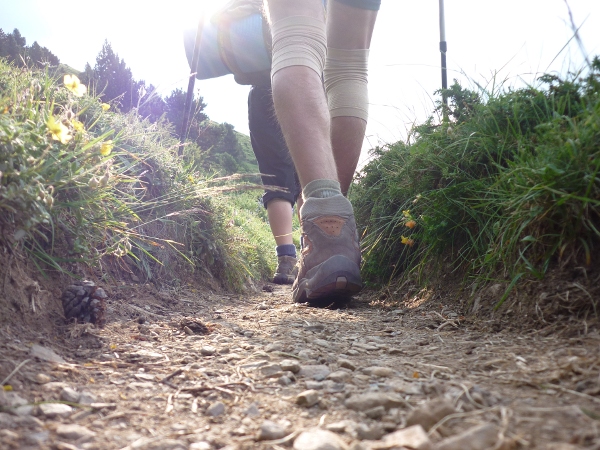
one of our dreams
when we arrived in Cap de Creus, where the Pyrenean range sinks in the
Mediterranean. To get there, we walked hundreds of kilometres during a month,
crossed dozens of steep valleys and enjoyed one of the richest experiences
of our lives.
We managed to complete this challenge without facing major problems or
pains, and after the first five our six days, our legs seemed to have
gotten used to the daily effort and it started to be easier and easier.
Our morale kept growing as days passed and we advanced east. When I
started walking on a cold and rainy morning in Hondarribia, after barely
no rest in the night bus to Ir n, I thought for myself that it was
improbable that we'd manage to get anywhere near Catalunya, that one of
us would get injuried way before, or we'd just give up and go for the easy
beach vacation in the Basque Country.
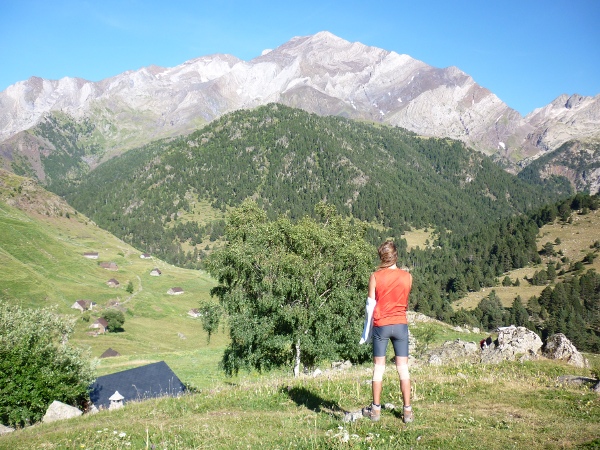
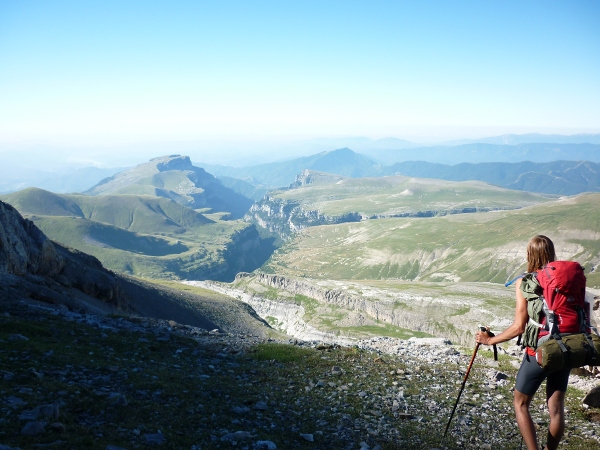
Biad s refuge, under Posets
But we didn't, and after a somewhat painful start, with our boots soaking
wet during the stages that crossed the enchanting Selva de Irati
which ended up with me getting the biggest blister I've ever seen, we
started to walk farther every day, extending the stages when we
felt strong after reaching their official end. When we crossed from
Nafarroa to Aragonese territory, the mental wall that I had built over the
toughest stages in our quest started to fall apart. Days later, we found
ourselves climbing down to Pineta, leaving Ordesa behind and enjoying a
feeling that our adventure could not go better. The weather had been
perfect for over a week and our legs and back were strong to go all over
the way to the sea.

Ca n de A isclo, on our way to Pineta
When we finally saw that huge blue stain on the horizon, the day before
getting to the last mark, we got really excited. We had made it, but as we
walked towards the cape, happiness slowly got mixed with melancholy. An
unforgettable adventure was about to end, and we didn't want to face our
return to the city and our routines. It had been many days surrounded only by
awesome landscapes, and living without watches, with only sunlight and
weariness marking the time to get in our sleeping bags.

At the very last red and white mark of our journey
We've had plenty of time to meet great people. Starting with
the Navarrian brothers we met in the early stage, which provided us with a
good pace to follow while our leg muscles were still building up; or Kike
and Ana, who drove from Pamplona to visit us during the first Aragonese
stages (thanks for the supplies!). Tom s and Roger, young hikers from
Matar , surprised us with their maturity and experience as mountaineers;
we had the pleasure to join forces during four days, walking a really cool
variant through the Infiernos and Collado del Letrero
which avoided going through the ghost city of Panticosa. Roger and Tom s,
we really hope to meet you soon! Andreu, Manel, Ghandi and Ga la visited us
at the Vall de N ria and were unlucky to suffer a frightening
hail and thunder storm when they left our shelter on their way back to
their car. Thanks! All of you have been a very special part of our
experience!
This adventure through GR 11 has been incredibly positive for us for
several reasons. We've learned a lot about ourselves and strengthened our
relation, and now I know how powerful drive can be; to get somewhere, no
matter how far, it's really easy if you just believe you can do it and
desire to get there.
Maria and I are proud of what we've done, and no wonder we're looking
for new challenges. An obvious one would be repeating this experience,
going through the French side of the Pyrenees, but for now, the Corsican
GR 20 seems the most appealing. We'll see, next summer!
The Google books ngram datasets
are a nice resource for playing with text generation. I've created
a program that will, given a starting phrase, blather on by
connecting phrases from the datasets.
The results are much more varied, and seem to more often
make sense than most Markov text generators I've seen before, such as
dadadodo. It had better be -- it's
working with data derived from 4% of all books ever written!
Some examples. Do they tell a story?
(The starting phrase I entered is in italics.)
As I mentioned recently, the Ubuntu Technical Board is reviewing the most popular topics in Ubuntu Brainstorm and coordinating official responses on behalf of the project. This means that the most popular topics on Ubuntu Brainstorm receive expert answers from the people working in these areas.
This is the first batch, and we plan to repeat this process each quarter. We ll use feedback and experiences from this run to improve it for next time, so let us know what you think.
Power management (idea #24782)
Laptops are now outselling desktops globally, and laptop owners want to get the most out of their expensive and heavy batteries. So it s no surprise that people are wondering about improved power management in Ubuntu. This is a complex topic which spans the Linux software stack, and certainly isn t an issue which will be solved in the foreseeable future, but we see a lot of good work being done in this area.
To tell us about it, Amit Kucheria, Ubuntu kernel developer and leader of the Linaro working group on Power Management, contributed a great writeup on this topic, with technical analysis, tips and recommendations, and a look at what s coming next.
I am going to attempt to summarize the various use profiles and what Ubuntu does (or can do) to prolong battery life in those profiles. Power management, when done right, should not require the user to make several (difficult) choices. It should just work providing a good balance of performance and battery life.IP address conflicts (idea #25648) IP addressing is a subject that most people should never have to think about. When something isn t working, and two computers end up with the same IP address, it can be hard to tell what s wrong. I was personally surprised to find this one near the top of the list on Ubuntu Brainstorm, since it seems unlikely to be a very common problem. Nonetheless, it was voted up, and we re listening. There is a tool called ipwatchd which is already available in the package repository, and was created specifically to address this problem. This seems like a further indication that this problem may be more widespread than I might assume. The idea has already been marked as implemented in Brainstorm based on the existence of this package, but that doesn t help people who have never heard of ipwatchd, much less found and installed it. What do you think? Have you ever run into this problem? Would it have helped you if your computer had told you what was wrong, or would it have only confused you further? Is it worth considering this for inclusion in the default install? Post your comments in Brainstorm. Selecting the only available username to login (idea #6974) Although Linux is designed as a multi-user operating system, most Ubuntu systems are only used by one person. In that light, it seems a bit redundant to ask the user to identify themselves every time they login, by clicking on their username. Why not just preselect it? Indeed, this would be relatively simple to implement, but the real question is whether it is the right choice for users. Martin Pitt of the Ubuntu Desktop Team notes that consistency is an important factor in ease of use, and asks for further feedback.
So in summary, we favored consistency and predictablility over the extra effort to press Enter once. This hasn t been a very strong opinion or decision, though, and the desktop team would be happy to revise it.Icon for .deb packages (idea #25197) Building on the invaluable efforts of Debian developers, we work hard to make sure that people can get all of the software they need from Ubuntu repositories through Software Center and APT, where they are authenticated and secure. However, in practice, it is occasionally necessary for users to work with .deb files directly. Brainstorm idea 25197 suggests that the icon used to represent .deb packages in the file manager is not ideal, and can be confusing. Matthew Paul Thomas of the Canonical Design Team responds with encouragement for deb-thumbnailer, which makes the icon both more distinctive and more informative. He has opened bug 685851 to track progress on getting it packaged and into the main repository.
I have reviewed the proposed solutions with Michael Vogt, our packaging expert. Solution #1 is straightforward, but we particularly like solutions #5 and #10, using a thumbnailer to show the application icon from inside each package.Keeping the time accurate over the Internet by default (idea #25301) It s important for an Internet connected computer to know the correct time of day, which is why Ubuntu has included automatic Internet time synchronization with NTP since the very first release (4.10 warty ). So some of us were a little surprised to see this as one of the most popular ideas on Ubuntu Brainstorm. Colin Watson of the Ubuntu Technical Board investigated and discovered a case where this wasn t working correctly. It s now fixed for Ubuntu 11.04, and Colin has sent the patches upstream to Debian and GNOME.
My first reaction was hey, that s odd I thought we already did that? . We install the ntpdate package by default (although it s deprecated upstream in favour of other tools, but that shouldn t be important here). ntpdate is run from /etc/network/if-up.d/ntpdate, in other words every time you connect to a network, which should be acceptably frequent for most people, so it really ought to Just Work by default. But this is one of the top ten problems where users have gone to the trouble of proposing solutions on Brainstorm, so it couldn t be that simple. What was going on?More detail in GNOME system monitor (idea #25887) Under System, Preferences, System Monitor, you can find a tool to peek under the hood at the Linux processes which power every Ubuntu system. Power users, hungry for more detail on their systems inner workings, voted to suggest that more detail be made available through this interface. Robert Ancell of the Ubuntu Desktop Team answered their call by offering to mentor a volunteer to develop a patch, and someone has already stepped up with a first draft. Help the user understand when closing a window does not close the app (idea #25801) When the user clicks the close button, most applications obediently exit. A few, though, will just hide, and continue running, because they assume that s what the user actually wants, and it can be hard to tell which has happened. Ivanka Majic, Creative Strategy Lead at Canonical, shares her perspective on this issue, with a pointer to work in progress to resolve it.
This is more than a good idea, it s an important gap in the usability of most of the desktop operating systems in widespread use today.Ubuntu Software Centre Removal of Configuration Files (idea #24963) One feature of the Debian packaging system used in Ubuntu is that it draws a distinction between removing a package and purging it. Purging should remove all traces of the package, such that installing and then immediately purging a package should return the system to the same state. Removing will leave certain files behind, including system configuration files and sometimes runtime data. This subtle distinction is useful to system administrators, but only serves to confuse most end users, so it s not exposed by Software Center: it just defaults to removing packages. This proposal in Ubuntu Brainstorm suggests that Software Center should purge packages by default instead. Michael Vogt of the Ubuntu Foundations Team explains the reasoning behind this default, and offers an alternative suggestion based on his experience with the package management system.
This is not a easy problem and we need to carefully balance the needs to keep the UI simple with the needs to keep the system from accumulating cruft.Ubuntu One file sync progress (idea #25417) Ubuntu One file synchronization works behind the scenes, uploading and downloading as needed to replicate your data to multiple computers. It does most of its work silently, and it can be hard to tell what it is doing or when it will be finished. John Lenton, engineering manager for the Ubuntu One Desktop+ team, posts on the AskUbuntu Q&A site with tools and tips which work today, and their plans to address this issue comprehensively in the future. Multimedia performance (idea #24878) With a cornucopia of multimedia content available online today, it s important that users be able to access it quickly and easily. Poor performance in the audio, video and graphics subsystems can spoil the experience, if resource-hungry multimedia applications can t keep up with the flow of data. Allison Randal, Ubuntu Technical Architect, answers with an analysis of the problem and the proposed solutions, an overview of current activity in this area, and pointers for getting involved.
The fundamental concern is a classic one for large systems: changes in one part of the system affect the performance of another part of the system. It s modestly difficult to measure the performance effects of local changes, but exponentially more difficult to measure the network effects of changes across the system.
The relationship between Debian and Ubuntu has been the subject of many
vigorous debates over the years, ever since Ubuntu s launch in 2004.
Six years later, the situation has improved and both projects
are communicating better. The Natty Narwhal Ubuntu Developer
Summit (UDS) featured like all UDS for more than 2 years a Debian
Health Check session where current cooperation issues and projects are
discussed. A few days after that session, Lucas Nussbaum gave a talk
during the mini-Debconf
Paris detailing the relationship between both projects, both at the
technical and social level. He also shared some concerns for Debian s
future and gave his point of view on how Debian should address them.
Both events give valuable insights on the current state of
the relationship.
Lucas Nussbaum s Debian-Ubuntu talk
Lucas started by introducing himself. He s an Ubuntu developer since 2006
and a Debian developer since 2007. He has worked to improve the collaboration
between both projects, notably by extending the Debian infrastructure to show
Ubuntu-related information. He attended conferences for both projects
(Debconf, UDS) and has friends in both communities. For all of these reasons,
he believes himself to be qualified to speak on this topic.
Collaboration at the technical level
He then quickly explained the task of a distribution: taking upstream
software, integrating it in standardized ways, doing quality assurance on
the whole, delivering the result to users, and assuring some support
afterward. He pointed out that in the case of Ubuntu, the distribution
has one special upstream: Debian.
Indeed Ubuntu gets most of its software from Debian (89%), and
only 7% are new packages coming from other upstream projects (the
remaining 4% are unknown, they are newer upstream releases of software
available in Debian but he was not able to find out whether the Debian
packaging had been reused or not). From all the packages imported from
Debian, 17% have Ubuntu-specific changes. The reasons for those changes
are varied: bugfixes, integration with Launchpad/Ubuntu One/etc., or
toolchain changes. The above figures are based on Ubuntu Lucid (10.04) while
excluding many Ubuntu-specific packages (language-pack-*, language-support-*,
kde-l10n-*, *ubuntu*, *launchpad*).
The different agendas and the differences in philosophy (Debian
often seeking perfect solutions to problems; Ubuntu accepting
temporary suboptimal workarounds) also explain why so many packages are
modified on the Ubuntu side. It s simply not possible to always do the
work in Debian first. But keeping changes in Ubuntu requires a lot of work
since they merge with Debian unstable every 6 months. That s why they have
a strong incentive to push changes to upstream and/or to Debian.
There are 3 channels that Ubuntu uses to push changes to Debian: they
file bug reports (between 250 to 400 during each Ubuntu release cycle),
they interact directly with Debian maintainers (often the case when
there s a maintenance team), or they do nothing and hope that the Debian
maintainer will pick up the patch directly from the Debian
Package Tracking System (it relays information provided by patches.ubuntu.com).
Lucas pointed out that those changes are not the only thing that
Debian should take back. Ubuntu has a huge user base resulting in lots of
bug reports sitting in Launchpad, often without anyone taking care of
them. Debian maintainers who already have enough bugs on their
packages are obviously not interested in even more bugs, but those who are
maintaining niche packages, with few reports, might be interested by the
user feedback available in Launchpad. Even if some of the reports are
Ubuntu-specific, many of them are advance warnings of problems
that will affect Debian later on, when the toolchain catches up with
Ubuntu s aggressive updates. To make this easier for Debian maintainers,
Lucas improved the Debian Package Tracking System so that they can easily
get Ubuntu bug reports for their packages even without interacting with
Launchpad.
Human feelings on both sides
Lucas witnessed a big evolution in the perception of Ubuntu on the Debian
side. The initial climate was rather negative: there were feelings of its work
being stolen, claims of giving back that did not match the observations of
the Debian maintainers, and problems with specific Canonical employees
that reflected badly on Ubuntu as a whole. These days most Debian developers find
something positive in Ubuntu: it brings a lot of new users to Linux, it
provides something that works for their friends and family, it brings new
developers to Debian, and it serves as a technological playground for
Debian.
On the Ubuntu side, the culture has changed as well. Debian is no
longer so scary for Ubuntu contributors and contributing to Debian is The
Right Thing to do. More and more Ubuntu developers are getting involved in Debian
as well. But at the package level there s not always much to contribute, as
many bugfixes are only temporary workarounds. And while Ubuntu s
community follows this philosophy, Canonical is a for-profit company that
contributes back mainly when it has compelling reasons to do so.
Consequences for Debian
In Lucas s eyes, the success of Ubuntu creates new problems. For many
new users Linux is a synonym for Ubuntu, and since much innovation happens
in Ubuntu first, Debian is overshadowed by its most popular derivative.
He goes as far as saying that because of that Debian becomes less
relevant .
He went on to say that Debian needs to be relevant because the
project defends important values that Ubuntu does not. And it needs to
stay as an independent partner that filters what comes out of Ubuntu,
ensuring that quality prevails in the long term.
Fixing this problem is difficult, and the answer should not be
to undermine Ubuntu. On the contrary, more cooperation is needed. If
Debian developers are involved sooner in Ubuntu s projects, Debian will
automatically get more credit. And if Ubuntu does more work in
Debian, their work can be showcased sooner in the Debian context as
well.
The other solution that Lucas proposed is that Debian needs to
communicate on why it s better than Ubuntu. Debian might not be better for
everybody but there are many reasons why one could prefer Debian over
Ubuntu. He listed some of them: Debian has better values
since it s a volunteer-based project where decisions are made publicly
and it has advocated the free software philosophy since 1993. On the other hand,
Ubuntu is under control of Canonical where some decisions are imposed, it
advocates some proprietary web services (Ubuntu One), the installer
recommends adding proprietary software, and copyright assignments are
required to contribute to Canonical projects.
Debian is also better in terms of quality because every package has a
maintainer who is often an expert in the field of the package. As a
derivative, Ubuntu does not have the resources to do the same and instead
most packages are maintained on a best effort basis by a limited set of
developers who can t know everything about all packages.
In conclusion, Lucas explained that Debian can neither ignore Ubuntu
nor fight it. Instead it should consider Ubuntu as a
chance and should leverage it to get back in the center
of the FLOSS ecosystem .
The Debian health check UDS session
While this session has existed for some time, it s only the second
time that a Debian Project Leader was present at UDS to discuss collaboration
issues. During UDS-M (the previous summit), this increased involvement
from Debian was a nice surprise to many. Stefano
Zacchiroli the Debian leader collected and shared the
feedback of Debian developers and the session ended up being very
productive. Six months later is a good time to look back and verify
if decisions made during UDS-M (see blueprint)
have been followed through.
Progress has been made
On the Debian side, Stefano set up a Derivatives
Front Desk so that derivative distributions (not just Ubuntu)
have a clear point of
contact when they are trying to cooperate but don t know where to start.
It s also a good place to share experiences among the various
derivatives. In parallel, a #debian-ubuntu channel has been started on OFTC (the
IRC network used by Debian). With more than 50 regulars coming from both
distributions, it s a good place for quick queries when you need advice
on how to interact with the distribution that you re not familiar
with.
Ubuntu has updated its documentation to prominently feature how to
cooperate with Debian. For example, the sponsorship process
documentation explains how to forward patches both to the upstream
developers and to Debian. It also recommends ensuring that the patch
is not Ubuntu-specific and gives some explanation on how to do it (which
includes checking against a list of common packaging
changes made by Ubuntu). The Debian Derivative Front Desk is
mentioned as a fallback when the Debian maintainer is unresponsive.
While organizing Ubuntu Developer
Week, Ubuntu now reaches out to Debian developers and tries to have
sessions on working with Debian . Launchpad has also been extended to provide a list of bugs with
attached patches and that information has been integrated in the Debian
Package Tracking system by Lucas Nussbaum.
Still some work to do
Some of the work items have not been completed yet: many
Debian maintainers would like a simpler way to issue a sync request (a
process used to inject a package from Debian into Ubuntu).
There s a requestsync command line tool provided by the ubuntu-dev-tools package (which is available in Debian) but it s not yet usable because
Launchpad doesn t know the GPG keys of Debian maintainers.
Another issue concerns packages which are first introduced in Ubuntu.
Most of them have no reason to be Ubuntu-specific and should also end up
in Debian. It has thus been suggested that people packaging new software
for Ubuntu also upload them to Debian. They could however
immediately file a request
for adoption (RFA) to find another Debian maintainer if they
don t plan to maintain it in the long term. If Ubuntu doesn t make
this effort, it can take a long time until someone decides to reintegrate
the Ubuntu package into Debian just because nobody knows about it.
This represents an important shift in the Ubuntu process and it s not
certain that it s going to work out. As with any important policy change,
it can take several years until people are used to it.
Both issues have been rescheduled for this release cycle, so they re still on the agenda.
This time the UDS session was probably less interesting than the
previous one. Stefano explained
once more what Debian considers good collaboration practices: teams
with members from both distributions, and forwarding of bugs
if they have been well triaged and are known to apply to Debian. He also
invited Ubuntu to discuss big changes with Debian before implementing
them.
An interesting suggestion that came up was that some Ubuntu developers could
participate in Debcamp (one week hack-together before Debconf) to work
with some Debian developers, go through Ubuntu patches, and merge the
interesting bits. This would nicely complement Ubuntu s increased presence
at Debconf: for the first time, community management team member Jorge Castro was at DebConf 10 giving a talk on
collaboration between Debian and Ubuntu.
There was also some brainstorming on how to identify packages where the
collaboration is failing. A growing number of Ubuntu revisions (identified
for example by a version like 1.0-1ubuntu62) could indicate that no
synchronization was made with Debian, but it would also identify packages
which are badly maintained on the Debian side. If Ubuntu consistently has
a newer upstream version compared to Debian, it can also indicate a
problem: maybe the person maintaining the package for Ubuntu would be better
off doing the same work in Debian directly since the maintainer is lagging or not
doing their work. Unfortunately this doesn t hold true for all packages
since many Gnome packages are newer in Ubuntu but are actively maintained
on both sides.
Few of those discussions led to concrete decisions. It seems most
proponents are reasonably satisfied with the current situation. Of course,
one can always do better and Jono Bacon is going to ensure that all
Canonical teams working on Ubuntu are aware of how to properly cooperate
with Debian. The goal is to avoid heavy package modifications without
coordination.
Conclusion
The Debian-Ubuntu relationships used to be a hot topic, but that s no
longer the case thanks to regular efforts made on both sides. Conflicts
between individuals still happen, but there are multiple places where they
can be reported and discussed (#debian-ubuntu channel, Derivatives
Front Desk at derivatives@debian.org on the
Debian side or debian@ubuntu.com on
the Ubuntu side). Documentation and infrastructure are in place to
make it easier for volunteers to do the right thing.
Despite all those process improvements, the best results still come out
when people build personal relationships by discussing what they
are doing. It often leads to tight cooperation, up to commit rights to the
source repositories. Regular contacts help build a real sense of
cooperation that no automated process can ever hope to achieve.
This article was first published in Linux Weekly News. You can get my monthly summary of the Debian/Ubuntu news, all you have to do is to click here to subscribe to my free newsletter.
5 comments Liked this article? Click here. My blog is Flattr-enabled.
The Ubuntu Technical Board is currently conducting a review of the top ten Brainstorm issues users have raised about Ubuntu, and Matt asked me to investigate and respond to Idea #25301: Keeping the time accurate over the Internet by default.
My first reaction was "hey, that's odd - I thought we already did that?". We install the ntpdate package by default (although it's deprecated upstream in favour of other tools, but that shouldn't be important here). ntpdate is run from /etc/network/if-up.d/ntpdate, in other words every time you connect to a network, which should be acceptably frequent for most people, so it really ought to Just Work by default. But this is one of the top ten problems where users have gone to the trouble of proposing solutions on Brainstorm, so it couldn't be that simple. What was going on?
I brought up a clean virtual machine with a development version of Natty (the current Ubuntu development version, which will eventually become 11.04), and had a look in its logs: it was indeed synchronising its time from ntp.ubuntu.com, and I didn't think anything in that area had changed recently. On the other hand, I had occasionally noticed that my own laptop wasn't always synchronising its time quite right, but I'd put it down to local weirdness as my network isn't always very stable. Maybe this wasn't so local after all?
So, I started tracing through the scripts to figure out what was going on. It turned out that I had an empty /etc/ntp.conf file on my laptop. The /usr/sbin/ntpdate-debian script assumed that that meant I had a full NTP server installed (I don't), and fetched the list of servers from it; since the file was empty, it ended up synchronising time from no servers, that is, not synchronising at all. I removed the file and all was well.
That left the question of where that file came from. It didn't seem to be owned by any package; I was pretty sure I hadn't created it by hand either. I had a look through some bug reports, and soon found ntpdate 1:4.2.2.p4+dfsg-1ubuntu2 has a flawed configuration file. It turns out that time-admin (System -> Administration -> Time and Date) creates an empty /etc/ntp.conf file if you press the reload button (tooltip: "Synchronise now"), as part of an attempt to update NTP configuration. Aha!
Once I knew where the problems were, it was easy to fix them. I've uploaded the following changes, which will be in the 11.04 release:
ntp.conf files in ntpdate-debian./etc/ntp.conf file on fresh installation of the ntp package, so that it doesn't interfere with creating the normal configuration file.time-admin backend if it doesn't exist already.ntp.ubuntu.com then you'll have to change the value of NTPSERVERS in /etc/default/ntpdate. Furthermore, the time-admin interface is confusing and makes it seem as though the default is not to synchronise the time automatically; this interface is being redesigned at the moment, which should be a good opportunity to make it less confusing, and I will contact the designers to mention this problem. On the whole, though, I think that many fewer people should have this kind of problem in Ubuntu 11.04.
It's always possible that I missed some other problem that breaks automatic time synchronisation for people. Please do file a bug report if it still doesn't work for you in 11.04, or contact me directly (cjwatson at ubuntu.com).
While I share Alex s law [is] boring view, this also attracted my attention because it s (slightly) about statistics software. I feel the SAS v WPL case mentioned on his blog deserves a wider airing:
The basic story is that the Judge in this case is deeply unsure of the boundary of copyright. [...] has sent a number of questions to the European Court of Justice (ECJ). The questions are hypothetical, but clearly designed to test the waters and figure out where this line falls.Now will this re-affirm what I ve always been told, that copyright s border is between ideas and expressions, and copyright only covers expressions? Or will it draw a different boundary? It seems that those most likely to be affected are those who are at the edges of acceptability of licences like LGPL, or trying to provide workalikes of hostile proprietary companies, but please, read it for yourself.
In my professional role as Ubuntu CTO, I take on a number of different perspectives, which sometimes compete for my attention, including:
In our first few years, Ubuntu experienced explosive growth, from zero to millions of users. Because Ubuntu is an open project, these people don t just use Ubuntu, but can see what s happening next and influence it through suggestions and contributions. The volume of suggestions quickly became unmanageable through ad hoc discussion, because the volume of feedback overwhelmed the relatively few people who were actively developing Ubuntu.
In order to better manage user feedback at this scale, Ubuntu Brainstorm was created in 2008. It s a collaborative filtering engine which allows anyone to contribute an idea, and have it voted on by others. Since then, it s been available to Ubuntu developers and leaders as an information source, which has been used in various ways. The top ideas are printed in the Ubuntu Weekly Newsletter each week. We experimented with producing a report each release cycle and sharing it with the developer community. People have been encouraged to take these suggestions to the Ubuntu Developer Summits. We continue to look for new and better ways to process the feedback provided by the user community.
Most recently, I asked my colleagues on the Ubuntu Technical Board in a meeting whether we should take responsibility for responding to the feedback available in Ubuntu Brainstorm. They agreed that this was worth exploring, and I put forward a proposal for how it might work. The proposal was unanimously accepted at a later meeting, and I m working on the first feedback cycle now.
In short, the Technical Board will ensure that, every three months, the highest voted topics on Ubuntu Brainstorm receive an official response from the Ubuntu project. The Technical Board won t respond to all of them personally, but will identify subject matter experts within the project, ask them to write a short response, and compile these responses for publication.
My hope is that this approach will bring more visibility to common user concerns, help users understand what we re doing with their feedback, and generally improve transparency in Ubuntu. We ve already selected the topics for the first iteration based on the most popular items of the past six months, and are organizing responses now. Please visit brainstorm.ubuntu.com and cast your votes for next time!
For some time now, we ve been gearing up to begin development on Ubuntu 11.04. While some folks have been putting the finishing touches on the 10.10 release, and bootstrapping the infrastructure for 11.04, others have been meeting with Canonical stakeholders, coordinating community brainstorm sessions, and otherwise collecting information about what our priorities should be in the next cycle.
We re using what we ve learned to plan the Ubuntu Developer Summit next week in Orlando, where we ll refine these ideas into a plan for the cycle. We re organizing UDS a little bit differently this time, with the main program divided into the following tracks to reflect the key considerations for Ubuntu today:
Two weeks ago, Maria and I completed
one of our dreams
when we arrived in Cap de Creus, where the Pyrenean range sinks in the
Mediterranean. To get there, we walked hundreds of kilometres during a month,
crossed dozens of steep valleys and enjoyed one of the richest experiences
of our lives.
We managed to complete this challenge without facing major problems or
pains, and after the first five our six days, our legs seemed to have
gotten used to the daily effort and it started to be easier and easier.
Our morale kept growing as days passed and we advanced east. When I
started walking on a cold and rainy morning in Hondarribia, after barely
no rest in the night bus to Ir n, I thought for myself that it was
improbable that we'd manage to get anywhere near Catalunya, that one of
us would get injuried way before, or we'd just give up and go for the easy
beach vacation in the Basque Country.
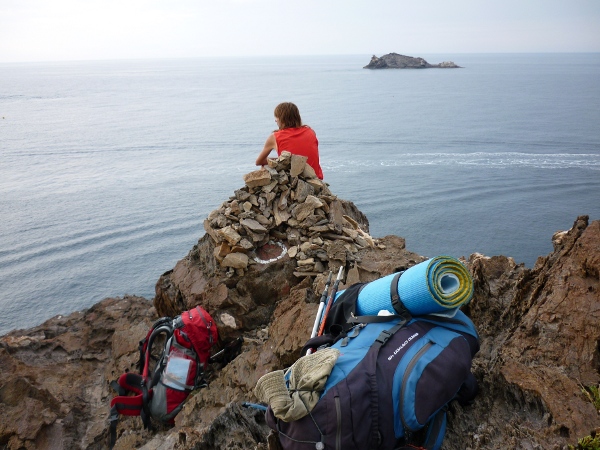
Biad s refuge, under Posets
But we didn't, and after a somewhat painful start, with our boots soaking
wet during the stages that crossed the enchanting Selva de Irati
which ended up with me getting the biggest blister I've ever seen, we
started to walk farther every day, extending the stages when we
felt strong after reaching their official end. When we crossed from
Nafarroa to Aragonese territory, the mental wall that I had built over the
toughest stages in our quest started to fall apart. Days later, we found
ourselves climbing down to Pineta, leaving Ordesa behind and enjoying a
feeling that our adventure could not go better. The weather had been
perfect for over a week and our legs and back were strong to go all over
the way to the sea.

Ca n de A isclo, on our way to Pineta
When we finally saw that huge blue stain on the horizon, the day before
getting to the last mark, we got really excited. We had made it, but as we
walked towards the cape, happiness slowly got mixed with melancholy. An
unforgettable adventure was about to end, and we didn't want to face our
return to the city and our routines. It had been many days surrounded only by
awesome landscapes, and living without watches, with only sunlight and
weariness marking the time to get in our sleeping bags.

At the very last red and white mark of our journey
We've had plenty of time to meet great people. Starting with
the Navarrian brothers we met in the early stage, which provided us with a
good pace to follow while our leg muscles were still building up; or Kike
and Ana, who drove from Pamplona to visit us during the first Aragonese
stages (thanks for the supplies!). Tom s and Roger, young hikers from
Matar , surprised us with their maturity and experience as mountaineers;
we had the pleasure to join forces during four days, walking a really cool
variant through the Infiernos and Collado del Letrero
which avoided going through the ghost city of Panticosa. Roger and Tom s,
we really hope to meet you soon! Andreu, Manel, Ghandi and Ga la visited us
at the Vall de N ria and were unlucky to suffer a frightening
hail and thunder storm when they left our shelter on their way back to
their car. Thanks! All of you have been a very special part of our
experience!
This adventure through GR 11 has been incredibly positive for us for
several reasons. We've learned a lot about ourselves and strengthened our
relation, and now I know how powerful drive can be; to get somewhere, no
matter how far, it's really easy if you just believe you can do it and
desire to get there.
Maria and I are proud of what we've done, and no wonder we're looking
for new challenges. An obvious one would be repeating this experience,
going through the French side of the Pyrenees, but for now, the Corsican
GR 20 seems the most appealing. We'll see, next summer!
I had planned long for this Debconf and with the experience from the previous times I did all I could to reach one goal minimise stress. I think I got it right this time.
First of all I got my company (Accenture) pay for the whole thing, so I did not have to worry about sponsorship queue (but instead I must gather and deliver them back some knowledge gained from the conference should be easy). I also managed to get a direct flight there is a weekly flight Tashkent-Riga-New York on Sundays and I got a ticket for that both ways. This took many hours off the travel time and reduced the stress a ton. Then I also did all the prudent travelling things: mostly reading the New York page on Wikitravel. This told me (among other things) what metro line to take to get the best view of the city. And for luggage I took a backpack (for the laptop and walking around) and a roller (for the clothes). I learned a lot from the Up in the air movie, it really teaches one how to take stress out of travel.
This went very well in the beginning I took a bus to the airport early, checked in, breezed trough security and then waited and waited. The boarding only started half an hour after we were scheduled to depart. But I can not complain, because the flight attendant called my name (among a few others) just before boarding and changed my ticket I was bumped up to business class
Yesterday, I've arrived in New York City for the annual Debconf.
Well, that is, today's the first day of Debcamp, and obviously not that
many people have arrived yet. Since I arrived a day early, I'd also
booked a hotel room for one night. But that's okay, it allowed me to
sleep off my jetlag not that I had much of it, but anyway.
Today, then, I signed in to the dormroom. Turned out I was the first
non-organizer to do so, and that there wasn't even anyone in the hacklab
yet. Well, that's what you get for being so early, I guess.
Not quite sure yet what to make of the weather. When the plane
touched down yesterday, the captain announced over the PA that the
outside temperature was 99 degrees Fahrenheit (some 37 degrees Celcius),
which is hot, especially when added to the rather high
humidity. You walk outside for five minutes, and you're sweating like a
pig. Today started off on the same foot, but then about an hour ago or
so it started raining, and it hasn't stopped yet; and it doesn't feel
like what I would call a regular summer thunderstorm, either. Bit
weird.
But then, who cares about rain at a computer conference, right?
Right.
Next.