Excited to share that xptr is back on
CRAN! The xptr package
helps to create, check, modify, use, share, external pointer
objects.
External pointers are used quite extensively throughout R to manage external resources
such as datanbase connection objects and alike, and can be very useful
to pass pointers to just about any C / C++ data structure around. While
described in Writing
R Extensions (notably Section
5.13), they can be a little bare-bones and so this package can be
useful. It had been created by Randy
Lai and maintained by him during 2017 to 2020, but then fell off
CRAN. In work with nanoarrow and
its clean and minimal Arrow interface xptr came in
handy so I adopted it.
Several extensions and updates have been added: (compiled) function
registration, continuous integration, tests, refreshed and extended
documentation as well as a print format extension useful for PyCapsule
objects when passing via reticulate. The
package documentation
site was switched to altdoc driving the
most excellent Material for
MkDocs framework (providing my first test case of altdoc replacing my
older local scripts; I should post some more about that ).
The first NEWS entry follow.
Changes in version 1.2.0
(2025-10-03)
New maintainer
Compiled functions are now registered, .Call()
adjusted
README.md and DESCRIPTION edited and update
Simple unit tests and continunous integration have been
added
The package documentation site has been recreated using altdoc
All manual pages for functions now contain \value
sections
It s always nice to have container images of Debian releases to test things,
run applications or explore a bit without polluting your host machine. From
some Brazilian friends (you know who you are ;-), I ve learned the best way to
debug a problem or test a fix is spinning up an incus container, getting to it
and finding the minimum reproducer. So the combination incus + Debian is
something that I m very used to, but the problem is there are no images for
Debian ELTS and testing security fixes to see if they actually fix the
vulnerability and don t break anything else is very important.
Well, the regular images don t materialize out of thin air, right? So we can
learn how they are made and try to generate ELTS images in the same way -
shouldn t be that difficult, right? Well, kinda ;-)
The images available by default in incus come from
images.linuxcontainers.org and are built
by Jenkins using distrobuilder. If you follow the links, you will find the
repository containing the yaml image definitions used by distrobuilder at
github.com/lxc/lxc-ci. With a bit of
investigation work, a fork, an incus
VM with distrobuilder installed and some magic (also called trial and error) I
was able to build a buster image! Whooray, but VM and stretch images are still
work in progress.
Anyway, I wanted to share how you can build your images and document this
process so I don t forget, so here we are
Building Instructions
We will use an incus trixie VM to perform the build so we don t clutter our own
machine.
Then let s hop into the machine and install the dependencies.
incus shell <instance-name>
And
apt install git distrobuilder
Let s clone the repository with the yaml definition to build a buster
container.
git clone --branch support-debian-buster https://github.com/charles2910/lxc-ci.git
# and cd into itcd lxc-ci
Then all we need is to pass the correct arguments to distrobuilder so it can build
the image. It can output the image in the current directory or in a pre-defined
place, so let s create an easy place for the images.
mkdir-p /tmp/images/buster/container
# and perform the build
distrobuilder build-incus images/debian.yaml /tmp/images/buster/container/ \-o image.architecture=amd64 \-o image.release=buster \-o image.variant=default \-o source.url="http://archive.debian.org/debian"
It requires a build definition written in yaml format to perform the build. If
you are curious, check the images/ subdir.
If all worked correctly, you should have two files in your pre-defined target
directory. In our case, /tmp/images/buster/container/ contains:
incus.tar.xz rootfs.squashfs
Let s copy it to our host so we can add the image to our incus server.
incus file pull <instance-name>/tmp/images/buster/container/incus.tar.xz .
incus file pull <instance-name>/tmp/images/buster/container/rootfs.squashfs .# and import it as debian/10
incus image import incus.tar.xz rootfs.squashfs --alias debian/10
If we are lucky, we can run our Debian buster container now!
About 90% of my Debian contributions this month were
sponsored by Freexian.
You can also support my work directly via
Liberapay or GitHub
Sponsors.
Some months I feel like I m pedalling furiously just to keep everything in a
roughly working state. This was one of those months.
Python team
I upgraded these packages to new upstream versions:
I had to spend a fair bit of time this month chasing down build/test
regressions in various packages due to some other upgrades, particularly to
pydantic, python-pytest-asyncio, and rust-pyo3:
I updated dh-python to suppress generated dependencies that would be
satisfied by python3 >=
3.11.
pkg_resources is
deprecated. In most cases
replacing it is a relatively simple matter of porting to
importlib.resources,
but packages that used its old namespace package support need more
complicated work to port them to implicit namespace
packages. We had quite a few bugs about
this on zope.* packages, but fortunately upstream did the hard part of
this recently. I went
round and cleaned up most of the remaining loose ends, with some help from
Alexandre Detiste. Some of these aren t completely done yet as they re
awaiting new upstream releases:
I fixed
jupyter-client
so that its autopkgtests would work in Debusine.
I fixed waitress to build with the
nocheck profile.
I fixed several other build/test failures:
A new version 0.3.5 of the RPushbullet
package arrived on CRAN. It
marks the first release in 4 1/2 years for this mature and
feature-stable package. RPushbullet
interfaces the neat Pushbullet
service for inter-device messaging, communication, and more. It lets you
easily send (programmatic) alerts like the one to the left to your
browser, phone, tablet, or all at once.
This releases reflects mostly internal maintenance and updates to the
documentation
site, to continuous integration, to package metadata, and one code
robustitication. See below for more details.
Changes in version 0.3.5
(2025-10-08)
URL and BugReports fields have been added to DESCRIPTION
The pbPost function deals more robustly with the
case of multiple target emails
The continuous integration and the README badge have been
updated
The DESCRIPTION file now use Authors@R
The (encrypted) unit test configuration has been adjusted to
reflect the current set of active devices
The mkdocs-material documentation site is now generated via altdoc
Courtesy of my CRANberries, there
is a diffstat
report relative to previous release. More detailed information is on
the repo where
comments and suggestions are welcome.
Brief note to maybe spare someone else the trouble. If you want to
hide e.g. a huge table in Backstage (techdocs/mkdocs) behind a
collapsible element you need the md_in_html extension and use the
markdown attribute for it to kick in on the <details> html tag.
Add the extension to your mkdocs.yaml:
markdown_extensions:
  - md_in_html
Hide the table in your markdown document in a collapsible element
like this:
It's also required to have an empty line between the html tag and starting
the markdown part. Rendered for me that way in VSCode, GitHub and Backstage.
Welcome to post 53 in the R4 series.
Continuing with posts #51
from Tuesday and #52
from Wednesday and their stated intent of posting some more here
is another quick one. Earlier today I helped another package developer
who came to the r-package-devel list asking for help with a build error
on the Fedora machine at CRAN running recent / development
clang. In such situations, the best first step is often to
replicate the issue. As I pointed out on the list, the LLVM team behind
clang maintains an apt repo
at apt.llvm.org/ making it a good resource to add to Debian-based
container such as Rocker r-base or the offical r-base (the two
are in fact interchangeable, and I take care of both).
A small pothole, however, is that the documentation at the top of apt.llvm.org site is a bit stale and
behind two aspects that changed on current Debian systems
(i.e. unstable/testing as used for r-base). First,
apt now prefers files ending in .sources (in a
nicer format) and second, it now really requires a key (which is good
practice). As it took me a few minutes to regather how to meet both
requirements, I reckoned I might as well script this.
Et voil the following script does that:
it can update and upgrade the container (currently
commented-out)
it fetches the repository key in ascii form from the llvm.org
site
it creates the sources entry for, here tagged for llvm current (22
at time of writing)
it sets up the required ~/.R/Makevars to use that
compiler
it installs clang-22 (and clang++-22)
(still using the g++ C++ library)
#!/bin/sh## Update does not hurt but is not strictly needed#apt update --quiet --quiet#apt upgrade --yes## wget -qO- https://apt.llvm.org/llvm-snapshot.gpg.key sudo tee /etc/apt/trusted.gpg.d/apt.llvm.org.asc## or as we are root in containerwget-qO- https://apt.llvm.org/llvm-snapshot.gpg.key > /etc/apt/trusted.gpg.d/apt.llvm.org.asccat<<EOF>/etc/apt/sources.list.d/llvm-dev.sourcesTypes: debURIs: http://apt.llvm.org/unstable/# for clang-21 # Suites: llvm-toolchain-21# for current clangSuites: llvm-toolchainComponents: mainSigned-By: /etc/apt/trusted.gpg.d/apt.llvm.org.ascEOFtest-d ~/.R mkdir ~/.Rcat<<EOF>~/.R/MakevarsCLANGVER=-22# CLANGLIB=-stdlib=libc++CXX=clang++\$(CLANGVER) \$(CLANGLIB)CXX11=clang++\$(CLANGVER) \$(CLANGLIB)CXX14=clang++\$(CLANGVER) \$(CLANGLIB)CXX17=clang++\$(CLANGVER) \$(CLANGLIB)CXX20=clang++\$(CLANGVER) \$(CLANGLIB)CC=clang\$(CLANGVER)SHLIB_CXXLD=clang++\$(CLANGVER) \$(CLANGLIB)EOFapt updateapt install --yes clang-22
Once the script is run, one can test a package (or set of packages)
against clang-22 and clang++-22. This may help
R package developers. The script is also generic enough for other
development communities who can ignore (or comment-out / delete) the bit
about ~/.R/Makevars and deploy the compiler differently.
Updating the softlink as apt-preferences does is one way
and done in many GitHub Actions recipes. As we only need
wget here a basic Debian container should work, possibly
with the addition of wget. For R users r-base
hits a decent sweet spot.
Another short status update of what happened on my side last
month. Nothing stands out too much, I enjoyed doing the OSK changes
the most as that helped to improve the typing experience further. Also
doing a small bit of kernel work again was fun (still need to figure out
the 6mq's touch controller repsonsiveness though).
See below for details on the above and more:
phosh
A tiniest of tiny violins micro maintenance release 0.0.4 of our tinythemes arrived
on CRAN today. tinythemes
provides the theme_ipsum_rc() function from hrbrthemes by Bob Rudis in a zero (added) dependency way. A
simple example is (also available as a demo inside the package)
contrasts the default style (on the left) with the one added by this
package (on the right):
This version adjusts to the fact that hrbrthemes is no
longer on CRAN so the help page
cannot link to its documentation. No other changes were made.
The set of changes since the last release follows.
Changes in
tinythemes version 0.0.4 (2025-10-02)
No longer \link to now-archived hrbrthemes
Courtesy of my CRANberries, there
is a diffstat
report relative to previous release. More detailed information is on
the repo where
comments and suggestions are welcome.
Welcome to post 52 in the R4 series.
Following up on the post #51
yesterday and its stated intent of posting some more here The r-ci setup (which was
introduced in post
#32 and updated in post
#45) offers portable continuous integration which can take
advantage of different backends: Github Actions, Azure Pipelines,
GitLab, BitBuckets, and possibly as it only requires a basic Ubuntu
shell after which it customizes itself and runs via shell script.
Portably. Now, most of us, I suspect still use it with GitHub Actions
but it is reassuring to know that one can take it elsewhere should the
need or desire arise.
One thing many repos did, and which stopped working reliably is
coverage analysis. This is made easy by the covr package, and
made fast, easy, reliable (as we quip) thanks to r2u. But transmission to
codecov stopped working a while back so
I had mostly commented it out in my repos, rendering the reports more
and more stale. Which is not ideal.
A few weeks ago I gave this another look, and it turns that that codecov now requires an API token
to upload. Which one can generate in the user -> settings menu on
their website under the access tab. Which in turn then needs to be
stored in each repo wanting to upload. For Github, this is
under settings -> secrets and variables -> actions as a
repository secret . I suggest using CODECOV_TOKEN for its
name.
After that the three-line block in the yaml file can reference it as
a secret as in the following snippet, now five lines, taken from one of
my ci.yaml files:
It assigns the secret we stored on the website, references it by
prefix secrets. and assigns it to the environment variable
CODECOV_TOKEN. After this reports flow as one can see on
repositories where I re-enabled this as for example here for
RcppArmadillo.
Welcome to post 51 in the R4 series.
A while back I realized I should really just post a little more as
not all post have to be as deep and introspective as for example the
recent-ish two
cultures post #49.
So this post is a neat little trick I (somewhat belatedly) realized
somewhat recently. The context is the ongoing transition from
(Rcpp)Armadillo 14.6.3 and earlier to (Rcpp)Armadillo 15.0.2 or later.
(I need to write a bit more about that, but that may require a bit more
time.) (And there are a total of seven (!!) issue tickets managing the
transition with issue
#475 being the main parent issue, please see there for more
details.)
In brief, the newer and current Armadillo no longer allows C++11
(which also means it no longer allowes suppression of deprecation
warnings ). It so happens that around a decade ago packages were
actively encouraged to move towards C++11 so many either set an
explicit SystemRequirements: for it, or set CXX_STD=CXX11
in src/Makevars .win . CRAN has for some time now issued
NOTEs asking for this to be removed, and more recently enforced this
with actual deadlines. In RcppArmadillo I opted to accomodate old(er)
packages (using this by-now anti-pattern) and flip to Armadillo 14.6.3
during a transition period. That is what the package does now: It gives
you either Armadillo 14.6.3 in case C++11 was detected (or this legacy
version was actively selected via a compile-time #define),
or it uses Armadillo 15.0.2 or later.
So this means we can have either one of two versions, and may want to
know which one we have. Armadillo carries its own version macros, as
many libraries or projects do (R of course included). Many many years
ago (git blame points to sixteen and twelve for a revision)
we added the following helper function to the package (full source here,
we show it here without the full roxygen2 comment header)
// [[Rcpp::export]]Rcpp::IntegerVector armadillo_version(bool single)// These are declared as constexpr in Armadillo which actually does not define them// They are also defined as macros in arma_version.hpp so we just use thatconstunsignedint major = ARMA_VERSION_MAJOR;constunsignedint minor = ARMA_VERSION_MINOR;constunsignedint patch = ARMA_VERSION_PATCH;if(single)return Rcpp::wrap(10000* major +100* minor + patch);elsereturn Rcpp::IntegerVector::create(Rcpp::Named("major")= major, Rcpp::Named("minor")= minor, Rcpp::Named("patch")= patch);
It either returns a (named) vector of the standard major , minor ,
patch form of the common package versioning pattern, or a single
integer which can used more easily in C(++) via preprocessor macros. And
this being an Rcpp-using package, we can of course access either easily
from R:
>library(RcppArmadillo)>armadillo_version(FALSE)major minor patch 1502>armadillo_version(TRUE)[1] 150002>
Perfectly valid and truthful. But cumbersome at the R level. So
when preparing for these (Rcpp)Armadillo changes in one of my package, I
realized I could alter such a function and set the S3 type to
package_version. (Full version of one such variant here)
// [[Rcpp::export]]Rcpp::List armadilloVersion()// create a vector of major, minor, patchauto ver = Rcpp::IntegerVector::create(ARMA_VERSION_MAJOR, ARMA_VERSION_MINOR, ARMA_VERSION_PATCH);// and place it in a list (as e.g. packageVersion() in R returns)auto lst = Rcpp::List::create(ver);// and class it as 'package_version' accessing print() etc methods lst.attr("class")= Rcpp::CharacterVector::create("package_version","numeric_version");return lst;
Three statements each to
create the integeer vector of known dimensions and compile-time
known value
embed it in a list (as that is what the R type expects)
set the S3 class which is easy because Rcpp accesses attributes and
create character vectors
and return the value. And now in R we can operate more easily on this
(using three dots as I didn t export it from this package):
An object of class package_version inheriting from
numeric_version can directly compare against a (human- but
not normally machine-readable) string like 15.0.0 because the simple
S3 class defines appropriate operators, as well as print()
/ format() methods as the first expression shows. It is
these little things that make working with R so smooth, and we can
easily (three statements !!) do so from Rcpp-based packages too.
The underlying object really is merely a list containing a
vector:
but the S3 glue around it makes it behave nicely.
So next time you are working with an object you plan to return to R,
consider classing it to take advantage of existing infrastructure (if it
exists, of course). It s easy enough to do, and may smoothen the
experience at the R side.
Deep Black is a far-future science fiction novel and the direct
sequel to Artifact Space. You do not
want to start here. I regretted not reading the novels closer together and
had to refresh my memory of what happened in the first book.
The shorter fiction in Beyond the Fringe
takes place between the two series novels and leads into some of the
events in this book, although reading it is optional.
Artifact Space left Marca Nbaro at the farthest point of the voyage
of the Greatship Athens, an unexpected heroine and now
well-integrated into the crew. On a merchant ship, however, there's always
more work to be done after a heroic performance. Deep Black opens
with that work: repairs from the events of the first book, the
never-ending litany of tasks required to keep the ship running smoothly,
and of course the trade with aliens that drew them so far out into the
Deep Black.
We knew early in the first book that this wouldn't be the simple, if long,
trading voyage that most of the crew of the Athens was expecting,
but now they have to worry about an unsettling second group of aliens on
top of a potential major war between human factions. They don't yet have
the cargo they came for, they have to reconstruct their trading post, and
they're a very long way from home. Marca also knows, at this point in the
story, that this voyage had additional goals from the start. She will
slowly gain a more complete picture of those goals during this novel.
Artifact Space was built around one of the most satisfying plots in
military science fiction (at least to me): a protagonist who benefits
immensely from the leveling effect and institutional inclusiveness of the
military slowly discovering that, when working at its best, the military
can be a true meritocracy. (The merchant marine of the Athens is
not military, precisely, since it's modeled on the trading ships of
Venice, but it's close enough for the purposes of this plot.) That's not a
plot that lasts into a sequel, though, so Cameron had to find a new spine
for the second half of the story. He chose first contact (of a sort) and
space battle.
The space battle parts are fine. I read a ton of children's World War II
military fiction when I was a boy, and I always preferred the naval
battles to the land battles. This part of Deep Black reminded me of
those naval battles, particularly a book whose title escapes me about the
Arctic convoys to the Soviet Union. I'm more interested in character than
military adventure these days, but every once in a while I enjoy reading
about a good space battle. This was not an exemplary specimen of the
genre, but it delivered on all the required elements.
The first contact part was more original, in part because Cameron chose an
interesting medium ground between total incomprehensibility and universal
translators. He stuck with the frustrations of communication for
considerably longer than most SF authors are willing to write, and it
worked for me. This is the first book I've read in a while where
superficial alien fluency with the mere words of a human language masks
continuing profound mutual incomprehension. The communication difficulties
are neither malicious nor a setup for catastrophic misunderstanding, but
an intrinsic part of learning about a truly alien species. I liked this,
even though it makes for slower and more frustrating progress. It felt
more believable than a lot of first contact, and it forced the characters
to take risks and act on hunches and then live with the consequences.
One of the other things that Cameron does well is maintain the steady
rhythm of life on a working ship as a background anchor to the story. I've
read a lot of science fiction that shows the day-to-day routine only until
something more interesting and plot-focused starts happening and then
seems to forget about it entirely. Not here. Marca goes through intense
and adrenaline-filled moments requiring risk and fast reactions, and then
has to handle promotion write-ups, routine watches, and studying for
advancement. Cameron knows that real battles involve long periods of
stressful waiting and incorporates them into the book without making them
too boring, which requires a lot of writing skill.
I prefer the emotional magic of finding a place where one belongs, so I
was not as taken with Deep Black as I was with Artifact
Space, but that's the inevitable result of plot progression and not
really a problem with this book. Marca is absurdly central to the story in
ways that have a whiff of "chosen one" dynamics, but if one can suspend
one's disbelief about that, the rest of the book is solid. This is,
fundamentally, a book about large space battles, so save it when you're in
the mood for that sort of story, but it was a satisfying continuation of
the series. I will definitely keep reading.
Recommended if you enjoyed Artifact Space. If you didn't,
Deep Black isn't going to change your mind.
Followed by Whalesong, which is not yet released (and is currently
in some sort of limbo for pre-orders in the US, which I hope will clear
up).
Rating: 7 out of 10
A new version 0.1.6 of the tint package
arrived at CRAN today.
tint provides a style not unlike Tufte for use in html
and pdf documents created from markdown. The github repo shows
several examples in its README, more as usual in the package
documentation.
This release addresses a small issue where in pdf mode,
pandoc (3.2.1 or newer) needs a particular macros defined
when static (premade) images or figure files are included. No other
changes.
Changes in tint
version 0.1.6 (2025-09-25)
An additional LaTeX command needed by pandoc (>= 3.2.1) has been defined for the two pdf
variants.
rebuilderd v0.25.0 was recently released, this version has improved in-toto support for cryptographic attestations that this blog post briefly outlines.
As a quick recap, rebuilderd is an automatic build scheduler that emerged in 2019/2020 from the Reproducible Builds project doing the following:
Track binary packages available in a Linux distribution
Attempt to compile the official binary packages from their (alleged) source code
Check if the package we compiled is bit-for-bit identical
If so, mark it GOOD, issue an attestation
In every other case, mark it BAD, generate a diffoscope
The binary packages in question are explicitly the packages users would also fetch and install.
This project has caught the attention of Arch Linux, Debian and Fedora.
Before this version
The original in-toto integration was added 4 years ago by Joy Liu during GSoC 2021, with help from Santiago Torres and Aditya Sirish (shoutout to the real ones!). Each rebuilderd-worker had its own cryptographic key and included a signed attestation along with the build result that could then be fetched from /api/v0/builds/ id /attestation.
Since these workers are potentially ephemeral, and the list of worker public keys wasn t publicly known, it was difficult to make use of those signatures.
Since this version
This version introduces the following:
The rebuilderd daemon itself generates a long-term signing key
All attestations signed by a trusted worker also get signed by the rebuilderd daemon
The rebuilderd daemon gets a new endpoint that can be used to query the public-key this instance identifies with: /api/v0/public-keys
An example of this new endpoint can be found here:
https://reproducible.archlinux.org/api/v0/public-keys
The response looks something like this (this is the real long-term signing key used by reproducible.archlinux.org):
"current":["-----BEGIN PUBLIC KEY-----\r\nMCwwBwYDK2VwBQADIQBLNcEcgErQ1rZz9oIkUnzc3fPuqJEALr22rNbrBK7iqQ==\r\n-----END PUBLIC KEY-----\r\n"]
It s a list so keys can potentially be rolled over time, and in future versions it should also list the public keys the instance has used in the past.
I haven t develop any integrations for this yet (partially also to allow deployments to catch up with the new release), but I m planning to do so using the in-toto crate.
Closing words
To give credit where credit is due (and because people pointed out I tend to end my blog posts too abruptly), rebuilderd is only the scheduler software, the actual build in the correct build-environment is outsourced to external tooling like archlinux-repro and debrebuild.
For further reading on applied reproducible builds, see also my previous blogpost Disagreeing rebuilders and what that means.
Also, there are currently efforts by the European Commission to outlaw unregulated end-to-end encrypted chat, so this may be a good time to prepare for (potential) impact and check what tools you have available to reduce unchecked trust in (open source) software authorities, to keep them operating honest and accountable.
Never lose the plot~
Sincerely yours
If you are like me that you are installing machines with testing and then go and flip them over to the current stable for a while using APT::Default-Release, you might not be receiving all relevant updates. In fact this setting is kind of discouraged in favor of more extensive pinning configuration.However, the field does support regexps, so instead of just specifying, say, "trixie", you can put this in place:
APT::Default-Release "/^trixie( -security -proposed-updates -updates)$/";That should bring the security and stable updates back in.It feels like we are recently learning a lot about the drawbacks of these overlays and how they need to be configured properly...
In December 2024, I went on a trip through four countries - Singapore, Malaysia, Brunei, and Vietnam - with my friend Badri. This post covers our experiences in Singapore.
I took an IndiGo flight from Delhi to Singapore, with a layover in Chennai. At the Chennai airport, I was joined by Badri. We had an early morning flight from Chennai that would land in Singapore in the afternoon. Within 48 hours of our scheduled arrival in Singapore, we submitted an arrival card online. At immigration, we simply needed to scan our passports at the gates, which opened automatically to let us through, and then give our address to an official nearby. The process was quick and smooth, but it unfortunately meant that we didn t get our passports stamped by Singapore.
Before I left the airport, I wanted to visit the nature-themed park with a fountain I saw in pictures online. It is called Jewel Changi, and it took quite some walking to get there. After reaching the park, we saw a fountain that could be seen from all the levels. We roamed around for a couple of hours, then proceeded to the airport metro station to get to our hotel.
A shot of Jewel Changi. Photo by Ravi Dwivedi. Released under the CC-BY-SA 4.0.
There were four ATMs on the way to the metro station, but none of them provided us with any cash. This was the first country (outside India, of course!) where my card didn t work at ATMs.
To use the metro, one can tap the EZ-Link card or bank cards at the AFC gates to get in. You cannot buy tickets using cash. Before boarding the metro, I used my credit card to get Badri an EZ-Link card from a vending machine. It was 10 Singapore dollars ( 630) - 5 for the card, and 5 for the balance. I had planned to use my Visa credit card to pay for my own fare. I was relieved to see that my card worked, and I passed through the AFC gates.
We had booked our stay at a hostel named Campbell s Inn, which was the cheapest we could find in Singapore. It was 1500 per night for dorm beds. The hostel was located in Little India. While Little India has an eponymous metro station, the one closest to our hostel was Rochor.
On the way to the hostel, we found out that our booking had been canceled.
We had booked from the Hostelworld website, opting to pay the deposit in advance and to pay the balance amount in person upon reaching. However, Hostelworld still tried to charge Badri s card again before our arrival. When the unauthorized charge failed, they sent an automatic message saying we tried to charge and to contact them soon to avoid cancellation, which we couldn t do as we were in the plane.
Despite this, we went to the hostel to check the status of our booking.
The trip from the airport to Rochor required a couple of transfers. It was 2 Singapore dollars (approx. 130) and took approximately an hour.
Upon reaching the hostel, we were informed that our booking had indeed been canceled, and were not given any reason for the cancelation. Furthermore, no beds were available at the hostel for us to book on the spot.
We decided to roam around and look for accommodation at other hostels in the area. Soon, we found a hostel by the name of Snooze Inn, which had two beds available. It was 36 Singapore dollars per person (around 2300) for a dormitory bed. Snooze Inn advertised supporting RuPay cards and UPI. Some other places in that area did the same. We paid using my card. We checked in and slept for a couple of hours after taking a shower.
By the time we woke up, it was dark. We met Praveen s friend Sabeel to get my FLX1 phone. We also went to Mustafa Center nearby to exchange Indian rupees for Singapore dollars. Mustafa Center also had a shopping center with shops selling electronic items and souvenirs, among other things. When we were dropping off Sabeel at a bus stop, we discovered that the bus stops in Singapore had a digital board mentioning the bus routes for the stop and the number of minutes each bus was going to take.
In addition to an organized bus system, Singapore had good pedestrian infrastructure. There were traffic lights and zebra crossings for pedestrians to cross the roads. Unlike in Indian cities, rules were being followed. Cars would stop for pedestrians at unmanaged zebra crossings; pedestrians would in turn wait for their crossing signal to turn green before attempting to walk across. Therefore, walking in Singapore was easy.
Traffic rules were taken so seriously in Singapore I (as a pedestrian) was afraid of unintentionally breaking them, which could get me in trouble, as breaking rules is dealt with heavy fines in the country. For example, crossing roads without using a marked crossing (while being within 50 meters of it) - also known as jaywalking - is an offence in Singapore.
Moreover, the streets were litter-free, and cleanliness seemed like an obsession.
After exploring Mustafa Center, we went to a nearby 7-Eleven to top up Badri s EZ-Link card. He gave 20 Singapore dollars for the recharge, which credited the card by 19.40 Singapore dollars (0.6 dollars being the recharge fee).
When I was planning this trip, I discovered that the World Chess Championship match was being held in Singapore. I seized the opportunity and bought a ticket in advance. The next day - the 5th of December - I went to watch the 9th game between Gukesh Dommaraju of India and Ding Liren of China. The venue was a hotel on Sentosa Island, and the ticket was 70 Singapore dollars, which was around 4000 at the time.
We checked out from our hostel in the morning, as we were planning to stay with Badri s aunt that night. We had breakfast at a place in Little India. Then we took a couple of buses, followed by a walk to Sentosa Island. Paying the fare for the buses was similar to the metro - I tapped my credit card in the bus, while Badri tapped his EZ-Link card. We also had to tap it while getting off.
If you are tapping your credit card to use public transport in Singapore, keep in mind that the total amount of all the trips taken on a day is deducted at the end. This makes it hard to determine the cost of individual trips. For example, I could take a bus and get off after tapping my card, but I would have no way to determine how much this journey cost.
When you tap in, the maximum fare amount gets deducted. When you tap out, the balance amount gets refunded (if it s a shorter journey than the maximum fare one). So, there is incentive for passengers not to get off without tapping out. Going by your card statement, it looks like all that happens virtually, and only one statement comes in at the end. Maybe this combining only happens for international cards.
We got off the bus a kilometer away from Sentosa Island and walked the rest of the way. We went on the Sentosa Boardwalk, which is itself a tourist attraction. I was using Organic Maps to navigate to the hotel Resorts World Sentosa, but Organic Maps route led us through an amusement park. I tried asking the locals (people working in shops) for directions, but it was a Chinese-speaking region, and they didn t understand English. Fortunately, we managed to find a local who helped us with the directions.
A shot of Sentosa Boardwalk. Photo by Ravi Dwivedi. Released under the CC-BY-SA 4.0.
Following the directions, we somehow ended up having to walk on a road which did not have pedestrian paths. Singapore is a country with strict laws, so we did not want to walk on that road. Avoiding that road led us to the Michael Hotel. There was a person standing at the entrance, and I asked him for directions to Resorts World Sentosa. The person told me that the bus (which was standing at the entrance) would drop me there! The bus was a free service for getting to Resorts World Sentosa. Here I parted ways with Badri, who went to his aunt s place.
I got to the Resorts Sentosa and showed my ticket to get in. There were two zones inside - the first was a room with a glass wall separating the audience and the players. This was the room to watch the game physically, and resembled a zoo or an aquarium. :) The room was also a silent room, which means talking or making noise was prohibited. Audiences were only allowed to have mobile phones for the first 30 minutes of the game - since I arrived late, I could not bring my phone inside that room.
The other zone was outside this room. It had a big TV on which the game was being broadcast along with commentary by David Howell and Jovanka Houska - the official FIDE commentators for the event. If you don t already know, FIDE is the authoritative international chess body.
I spent most of the time outside that silent room, giving me an opportunity to socialize. A lot of people were from Singapore. I saw there were many Indians there as well. Moreover, I had a good time with Vasudevan, a journalist from Tamil Nadu who was covering the match. He also asked questions to Gukesh during the post-match conference. His questions were in Tamil to lift Gukesh s spirits, as Gukesh is a Tamil speaker.
Tea and coffee were free for the audience. I also bought a T-shirt from their stall as a souvenir.
After the game, I took a shuttle bus from Resorts World Sentosa to a metro station, then travelled to Pasir Ris by metro, where Badri was staying with his aunt. I thought of getting something to eat, but could not find any caf s or restaurants while I was walking from the Pasir Ris metro station to my destination, and was positively starving when I got there.
Badri s aunt s place was an apartment in a gated community. On the gate was a security guard who asked me the address of the apartment. Upon entering, there were many buildings. To enter the building, you need to dial the number of the apartment you want to go to and speak to them. I had seen that in the TV show Seinfeld, where Jerry s friends used to dial Jerry to get into his building.
I was afraid they might not have anything to eat because I told them I was planning to get something on the way. This was fortunately not the case, and I was relieved to not have to sleep with an empty stomach.
Badri s uncle gave us an idea of how safe Singapore is. He said that even if you forget your laptop in a public space, you can go back the next day to find it right there in the same spot. I also learned that owning cars was discouraged in Singapore - the government imposes a high registration fee on them, while also making public transport easy to use and affordable. I also found out that 7-Eleven was not that popular among residents in Singapore, unlike in Malaysia or Thailand.
The next day was our third and final day in Singapore. We had a bus in the evening to Johor Bahru in Malaysia. We got up early, had breakfast, and checked out from Badri s aunt s home. A store by the name of Cat Socrates was our first stop for the day, as Badri wanted to buy some stationery. The plan was to take the metro, followed by the bus. So we got to Pasir Ris metro station. Next to the metro station was a mall. In the mall, Badri found an ATM where our cards worked, and we got some Singapore dollars.
It was noon when we reached the stationery shop mentioned above. We had to walk a kilometer from the place where the bus dropped us. It was a hot, sunny day in Singapore, so walking was not comfortable. We had to go through residential areas in Singapore. We saw some non-touristy parts of Singapore.
After we were done with the stationery shop, we went to a hawker center to get lunch. Hawker centers are unique to Singapore. They have a lot of shops that sell local food at cheap prices. It is similar to a food court. However, unlike the food courts in malls, hawker centers are open-air and can get quite hot.
This is the hawker center we went to. Photo by Ravi Dwivedi. Released under the CC-BY-SA 4.0.
To have something, you just need to buy it from one of the shops and find a table. After you are done, you need to put your tray in the tray-collecting spots. I had a kaya toast with chai, since there weren t many vegetarian options. I also bought a persimmon from a nearby fruit vendor. On the other hand, Badri sampled some local non-vegetarian dishes.
Table littering at the hawker center was prohibited by law. Photo by Ravi Dwivedi. Released under the CC-BY-SA 4.0.
Next, we took a metro to Raffles Place, as we wanted to visit Merlion, the icon of Singapore. It is a statue having the head of a lion and the body of a fish. While getting through the AFC gates, my card was declined. Therefore, I had to buy an EZ-Link card, which I had been avoiding because the card itself costs 5 Singapore dollars.
From the Raffles Place metro station, we walked to Merlion. The place also gave a nice view of Marina Bay Sands. It was filled with tourists clicking pictures, and we also did the same.
Merlion from behind, giving a good view of Marina Bay Sands. Photo by Ravi Dwivedi. Released under the CC-BY-SA 4.0.
After this, we went to the bus stop to catch our bus to the border city of Johor Bahru, Malaysia. The bus was more than an hour late, and we worried that we had missed the bus. I asked an Indian woman at the stop who also planned to take the same bus, and she told us that the bus was late. Finally, our bus arrived, and we set off for Johor Bahru.
Before I finish, let me give you an idea of my expenditure. Singapore is an expensive country, and I realized that expenses could go up pretty quickly. Overall, my stay in Singapore for 3 days and 2 nights was approx. 5500 rupees. That too, when we stayed one night at Badri s aunt s place (so we didn t have to pay for accomodation for one of the nights) and didn t have to pay for a couple of meals. This amount doesn t include the ticket for the chess game, but includes the costs of getting there. If you are in Singapore, it is likely you will pay a visit to Sentosa Island anyway.
Stay tuned for our experiences in Malaysia!
Credits: Thanks to Dione, Sahil, Badri and Contrapunctus for reviewing the draft. Thanks to Bhe for spotting a duplicate sentence.
If you're still using Vagrant (I am) and try to boot a box that uses UEFI (like boxen/debian-13),
a simple vagrant init boxen/debian-13 and vagrant up will entertain you with a nice traceback:
% vagrantup
Bringing machine 'default' up with 'libvirt' provider...==> default: Checking if box 'boxen/debian-13' version '2025.08.20.12' is up to date...==> default: Creating image (snapshot of base box volume).==> default: Creating domain with the following settings...==> default: -- Name: tmp.JV8X48n30U_default==> default: -- Description: Source: /tmp/tmp.JV8X48n30U/Vagrantfile==> default: -- Domain type: kvm==> default: -- Cpus: 1==> default: -- Feature: acpi==> default: -- Feature: apic==> default: -- Feature: pae==> default: -- Clock offset: utc==> default: -- Memory: 2048M==> default: -- Loader: /home/evgeni/.vagrant.d/boxes/boxen-VAGRANTSLASH-debian-13/2025.08.20.12/libvirt/OVMF_CODE.fd==> default: -- Nvram: /home/evgeni/.vagrant.d/boxes/boxen-VAGRANTSLASH-debian-13/2025.08.20.12/libvirt/efivars.fd==> default: -- Base box: boxen/debian-13==> default: -- Storage pool: default==> default: -- Image(vda): /home/evgeni/.local/share/libvirt/images/tmp.JV8X48n30U_default.img, virtio, 20G==> default: -- Disk driver opts: cache='default'==> default: -- Graphics Type: vnc==> default: -- Video Type: cirrus==> default: -- Video VRAM: 16384==> default: -- Video 3D accel: false==> default: -- Keymap: en-us==> default: -- TPM Backend: passthrough==> default: -- INPUT: type=mouse, bus=ps2==> default: -- CHANNEL: type=unix, mode===> default: -- CHANNEL: target_type=virtio, target_name=org.qemu.guest_agent.0==> default: Creating shared folders metadata...==> default: Starting domain.==> default: Removing domain...==> default: Deleting the machine folder/usr/share/gems/gems/fog-libvirt-0.13.1/lib/fog/libvirt/requests/compute/vm_action.rb:7:in 'Libvirt::Domain#create': Call to virDomainCreate failed: internal error: process exited while connecting to monitor: 2025-09-22T10:07:55.081081Z qemu-system-x86_64: -blockdev "driver":"file","filename":"/home/evgeni/.vagrant.d/boxes/boxen-VAGRANTSLASH-debian-13/2025.08.20.12/libvirt/OVMF_CODE.fd","node-name":"libvirt-pflash0-storage","auto-read-only":true,"discard":"unmap" : Could not open '/home/evgeni/.vagrant.d/boxes/boxen-VAGRANTSLASH-debian-13/2025.08.20.12/libvirt/OVMF_CODE.fd': Permission denied (Libvirt::Error) from /usr/share/gems/gems/fog-libvirt-0.13.1/lib/fog/libvirt/requests/compute/vm_action.rb:7:in 'Fog::Libvirt::Compute::Shared#vm_action' from /usr/share/gems/gems/fog-libvirt-0.13.1/lib/fog/libvirt/models/compute/server.rb:81:in 'Fog::Libvirt::Compute::Server#start' from /usr/share/vagrant/gems/gems/vagrant-libvirt-0.11.2/lib/vagrant-libvirt/action/start_domain.rb:546:in 'VagrantPlugins::ProviderLibvirt::Action::StartDomain#call' from /usr/share/vagrant/gems/gems/vagrant-2.3.4/lib/vagrant/action/warden.rb:48:in 'Vagrant::Action::Warden#call' from /usr/share/vagrant/gems/gems/vagrant-libvirt-0.11.2/lib/vagrant-libvirt/action/set_boot_order.rb:22:in 'VagrantPlugins::ProviderLibvirt::Action::SetBootOrder#call' from /usr/share/vagrant/gems/gems/vagrant-2.3.4/lib/vagrant/action/warden.rb:48:in 'Vagrant::Action::Warden#call' from /usr/share/vagrant/gems/gems/vagrant-libvirt-0.11.2/lib/vagrant-libvirt/action/share_folders.rb:22:in 'VagrantPlugins::ProviderLibvirt::Action::ShareFolders#call' from /usr/share/vagrant/gems/gems/vagrant-2.3.4/lib/vagrant/action/warden.rb:48:in 'Vagrant::Action::Warden#call' from /usr/share/vagrant/gems/gems/vagrant-libvirt-0.11.2/lib/vagrant-libvirt/action/prepare_nfs_settings.rb:21:in 'VagrantPlugins::ProviderLibvirt::Action::PrepareNFSSettings#call' from /usr/share/vagrant/gems/gems/vagrant-2.3.4/lib/vagrant/action/warden.rb:48:in 'Vagrant::Action::Warden#call' from /usr/share/vagrant/gems/gems/vagrant-2.3.4/lib/vagrant/action/builtin/synced_folders.rb:87:in 'Vagrant::Action::Builtin::SyncedFolders#call' from /usr/share/vagrant/gems/gems/vagrant-2.3.4/lib/vagrant/action/warden.rb:48:in 'Vagrant::Action::Warden#call' from /usr/share/vagrant/gems/gems/vagrant-2.3.4/lib/vagrant/action/builtin/delayed.rb:19:in 'Vagrant::Action::Builtin::Delayed#call' from /usr/share/vagrant/gems/gems/vagrant-2.3.4/lib/vagrant/action/warden.rb:48:in 'Vagrant::Action::Warden#call' from /usr/share/vagrant/gems/gems/vagrant-2.3.4/lib/vagrant/action/builtin/synced_folder_cleanup.rb:28:in 'Vagrant::Action::Builtin::SyncedFolderCleanup#call' from /usr/share/vagrant/gems/gems/vagrant-2.3.4/lib/vagrant/action/warden.rb:48:in 'Vagrant::Action::Warden#call' from /usr/share/vagrant/gems/gems/vagrant-2.3.4/plugins/synced_folders/nfs/action_cleanup.rb:25:in 'VagrantPlugins::SyncedFolderNFS::ActionCleanup#call' from /usr/share/vagrant/gems/gems/vagrant-2.3.4/lib/vagrant/action/warden.rb:48:in 'Vagrant::Action::Warden#call' from /usr/share/vagrant/gems/gems/vagrant-libvirt-0.11.2/lib/vagrant-libvirt/action/prepare_nfs_valid_ids.rb:14:in 'VagrantPlugins::ProviderLibvirt::Action::PrepareNFSValidIds#call' from /usr/share/vagrant/gems/gems/vagrant-2.3.4/lib/vagrant/action/warden.rb:48:in 'Vagrant::Action::Warden#call' from /usr/share/vagrant/gems/gems/vagrant-2.3.4/lib/vagrant/action/warden.rb:127:in 'block in Vagrant::Action::Warden#finalize_action' from /usr/share/vagrant/gems/gems/vagrant-2.3.4/lib/vagrant/action/warden.rb:48:in 'Vagrant::Action::Warden#call' from /usr/share/vagrant/gems/gems/vagrant-2.3.4/lib/vagrant/action/builder.rb:180:in 'Vagrant::Action::Builder#call' from /usr/share/vagrant/gems/gems/vagrant-2.3.4/lib/vagrant/action/runner.rb:101:in 'block in Vagrant::Action::Runner#run' from /usr/share/vagrant/gems/gems/vagrant-2.3.4/lib/vagrant/util/busy.rb:19:in 'Vagrant::Util::Busy.busy' from /usr/share/vagrant/gems/gems/vagrant-2.3.4/lib/vagrant/action/runner.rb:101:in 'Vagrant::Action::Runner#run' from /usr/share/vagrant/gems/gems/vagrant-2.3.4/lib/vagrant/action/builtin/call.rb:53:in 'Vagrant::Action::Builtin::Call#call' from /usr/share/vagrant/gems/gems/vagrant-2.3.4/lib/vagrant/action/warden.rb:48:in 'Vagrant::Action::Warden#call' from /usr/share/vagrant/gems/gems/vagrant-2.3.4/lib/vagrant/action/warden.rb:127:in 'block in Vagrant::Action::Warden#finalize_action' from /usr/share/vagrant/gems/gems/vagrant-2.3.4/lib/vagrant/action/warden.rb:48:in 'Vagrant::Action::Warden#call' from /usr/share/vagrant/gems/gems/vagrant-2.3.4/lib/vagrant/action/builder.rb:180:in 'Vagrant::Action::Builder#call' from /usr/share/vagrant/gems/gems/vagrant-2.3.4/lib/vagrant/action/runner.rb:101:in 'block in Vagrant::Action::Runner#run' from /usr/share/vagrant/gems/gems/vagrant-2.3.4/lib/vagrant/util/busy.rb:19:in 'Vagrant::Util::Busy.busy' from /usr/share/vagrant/gems/gems/vagrant-2.3.4/lib/vagrant/action/runner.rb:101:in 'Vagrant::Action::Runner#run' from /usr/share/vagrant/gems/gems/vagrant-2.3.4/lib/vagrant/action/builtin/call.rb:53:in 'Vagrant::Action::Builtin::Call#call' from /usr/share/vagrant/gems/gems/vagrant-2.3.4/lib/vagrant/action/warden.rb:48:in 'Vagrant::Action::Warden#call' from /usr/share/vagrant/gems/gems/vagrant-libvirt-0.11.2/lib/vagrant-libvirt/action/create_network_interfaces.rb:197:in 'VagrantPlugins::ProviderLibvirt::Action::CreateNetworkInterfaces#call' from /usr/share/vagrant/gems/gems/vagrant-2.3.4/lib/vagrant/action/warden.rb:48:in 'Vagrant::Action::Warden#call' from /usr/share/vagrant/gems/gems/vagrant-libvirt-0.11.2/lib/vagrant-libvirt/action/create_networks.rb:40:in 'VagrantPlugins::ProviderLibvirt::Action::CreateNetworks#call' from /usr/share/vagrant/gems/gems/vagrant-2.3.4/lib/vagrant/action/warden.rb:48:in 'Vagrant::Action::Warden#call' from /usr/share/vagrant/gems/gems/vagrant-libvirt-0.11.2/lib/vagrant-libvirt/action/create_domain.rb:452:in 'VagrantPlugins::ProviderLibvirt::Action::CreateDomain#call' from /usr/share/vagrant/gems/gems/vagrant-2.3.4/lib/vagrant/action/warden.rb:48:in 'Vagrant::Action::Warden#call' from /usr/share/vagrant/gems/gems/vagrant-libvirt-0.11.2/lib/vagrant-libvirt/action/resolve_disk_settings.rb:143:in 'VagrantPlugins::ProviderLibvirt::Action::ResolveDiskSettings#call' from /usr/share/vagrant/gems/gems/vagrant-2.3.4/lib/vagrant/action/warden.rb:48:in 'Vagrant::Action::Warden#call' from /usr/share/vagrant/gems/gems/vagrant-libvirt-0.11.2/lib/vagrant-libvirt/action/create_domain_volume.rb:97:in 'VagrantPlugins::ProviderLibvirt::Action::CreateDomainVolume#call' from /usr/share/vagrant/gems/gems/vagrant-2.3.4/lib/vagrant/action/warden.rb:48:in 'Vagrant::Action::Warden#call' from /usr/share/vagrant/gems/gems/vagrant-libvirt-0.11.2/lib/vagrant-libvirt/action/handle_box_image.rb:127:in 'VagrantPlugins::ProviderLibvirt::Action::HandleBoxImage#call' from /usr/share/vagrant/gems/gems/vagrant-2.3.4/lib/vagrant/action/warden.rb:48:in 'Vagrant::Action::Warden#call' from /usr/share/vagrant/gems/gems/vagrant-2.3.4/lib/vagrant/action/builtin/handle_box.rb:56:in 'Vagrant::Action::Builtin::HandleBox#call' from /usr/share/vagrant/gems/gems/vagrant-2.3.4/lib/vagrant/action/warden.rb:48:in 'Vagrant::Action::Warden#call' from /usr/share/vagrant/gems/gems/vagrant-libvirt-0.11.2/lib/vagrant-libvirt/action/handle_storage_pool.rb:63:in 'VagrantPlugins::ProviderLibvirt::Action::HandleStoragePool#call' from /usr/share/vagrant/gems/gems/vagrant-2.3.4/lib/vagrant/action/warden.rb:48:in 'Vagrant::Action::Warden#call' from /usr/share/vagrant/gems/gems/vagrant-libvirt-0.11.2/lib/vagrant-libvirt/action/set_name_of_domain.rb:34:in 'VagrantPlugins::ProviderLibvirt::Action::SetNameOfDomain#call' from /usr/share/vagrant/gems/gems/vagrant-2.3.4/lib/vagrant/action/warden.rb:48:in 'Vagrant::Action::Warden#call' from /usr/share/vagrant/gems/gems/vagrant-2.3.4/lib/vagrant/action/builtin/provision.rb:80:in 'Vagrant::Action::Builtin::Provision#call' from /usr/share/vagrant/gems/gems/vagrant-2.3.4/lib/vagrant/action/warden.rb:48:in 'Vagrant::Action::Warden#call' from /usr/share/vagrant/gems/gems/vagrant-libvirt-0.11.2/lib/vagrant-libvirt/action/cleanup_on_failure.rb:21:in 'VagrantPlugins::ProviderLibvirt::Action::CleanupOnFailure#call' from /usr/share/vagrant/gems/gems/vagrant-2.3.4/lib/vagrant/action/warden.rb:48:in 'Vagrant::Action::Warden#call' from /usr/share/vagrant/gems/gems/vagrant-2.3.4/lib/vagrant/action/warden.rb:127:in 'block in Vagrant::Action::Warden#finalize_action' from /usr/share/vagrant/gems/gems/vagrant-2.3.4/lib/vagrant/action/warden.rb:48:in 'Vagrant::Action::Warden#call' from /usr/share/vagrant/gems/gems/vagrant-2.3.4/lib/vagrant/action/builder.rb:180:in 'Vagrant::Action::Builder#call' from /usr/share/vagrant/gems/gems/vagrant-2.3.4/lib/vagrant/action/runner.rb:101:in 'block in Vagrant::Action::Runner#run' from /usr/share/vagrant/gems/gems/vagrant-2.3.4/lib/vagrant/util/busy.rb:19:in 'Vagrant::Util::Busy.busy' from /usr/share/vagrant/gems/gems/vagrant-2.3.4/lib/vagrant/action/runner.rb:101:in 'Vagrant::Action::Runner#run' from /usr/share/vagrant/gems/gems/vagrant-2.3.4/lib/vagrant/action/builtin/call.rb:53:in 'Vagrant::Action::Builtin::Call#call' from /usr/share/vagrant/gems/gems/vagrant-2.3.4/lib/vagrant/action/warden.rb:48:in 'Vagrant::Action::Warden#call' from /usr/share/vagrant/gems/gems/vagrant-2.3.4/lib/vagrant/action/builtin/box_check_outdated.rb:93:in 'Vagrant::Action::Builtin::BoxCheckOutdated#call' from /usr/share/vagrant/gems/gems/vagrant-2.3.4/lib/vagrant/action/warden.rb:48:in 'Vagrant::Action::Warden#call' from /usr/share/vagrant/gems/gems/vagrant-2.3.4/lib/vagrant/action/builtin/config_validate.rb:25:in 'Vagrant::Action::Builtin::ConfigValidate#call' from /usr/share/vagrant/gems/gems/vagrant-2.3.4/lib/vagrant/action/warden.rb:48:in 'Vagrant::Action::Warden#call' from /usr/share/vagrant/gems/gems/vagrant-2.3.4/lib/vagrant/action/builder.rb:180:in 'Vagrant::Action::Builder#call' from /usr/share/vagrant/gems/gems/vagrant-2.3.4/lib/vagrant/action/runner.rb:101:in 'block in Vagrant::Action::Runner#run' from /usr/share/vagrant/gems/gems/vagrant-2.3.4/lib/vagrant/util/busy.rb:19:in 'Vagrant::Util::Busy.busy' from /usr/share/vagrant/gems/gems/vagrant-2.3.4/lib/vagrant/action/runner.rb:101:in 'Vagrant::Action::Runner#run' from /usr/share/vagrant/gems/gems/vagrant-2.3.4/lib/vagrant/machine.rb:248:in 'Vagrant::Machine#action_raw' from /usr/share/vagrant/gems/gems/vagrant-2.3.4/lib/vagrant/machine.rb:217:in 'block in Vagrant::Machine#action' from /usr/share/vagrant/gems/gems/vagrant-2.3.4/lib/vagrant/environment.rb:631:in 'Vagrant::Environment#lock' from /usr/share/vagrant/gems/gems/vagrant-2.3.4/lib/vagrant/machine.rb:203:in 'Method#call' from /usr/share/vagrant/gems/gems/vagrant-2.3.4/lib/vagrant/machine.rb:203:in 'Vagrant::Machine#action' from /usr/share/vagrant/gems/gems/vagrant-2.3.4/lib/vagrant/batch_action.rb:86:in 'block (2 levels) in Vagrant::BatchAction#run'
The important part here is
Call to virDomainCreate failed: internal error: process exited while connecting to monitor:
2025-09-22T10:07:55.081081Z qemu-system-x86_64: -blockdev  "driver":"file","filename":"/home/evgeni/.vagrant.d/boxes/boxen-VAGRANTSLASH-debian-13/2025.08.20.12/libvirt/OVMF_CODE.fd","node-name":"libvirt-pflash0-storage","auto-read-only":true,"discard":"unmap" :
Could not open '/home/evgeni/.vagrant.d/boxes/boxen-VAGRANTSLASH-debian-13/2025.08.20.12/libvirt/OVMF_CODE.fd': Permission denied (Libvirt::Error)
Of course we checked that the file permissions on this file are correct (I'll save you the ls output), so what's next?
Yes, of course, SELinux!
A process in the svirt_t domain tries to access something in the user_home_t domain and is denied by the kernel.
So far, SELinux is both working as designed and preventing us from doing our work, nice.
For "normal" (non-UEFI) boxes, Vagrant uploads the image to libvirt, which stores it in ~/.local/share/libvirt/images/ and boots fine from there.
For UEFI boxen, one also needs loader and nvram files, which Vagrant keeps in ~/.vagrant.d/boxes/<box_name> and that's what explodes in our face here.
As ~/.local/share/libvirt/images/ works well, and is labeled svirt_home_t let's see what other folders use that label:
# semanagefcontext-lgrepsvirt_home_t
/home/[^/]+/\.cache/libvirt/qemu(/.*)? all files unconfined_u:object_r:svirt_home_t:s0/home/[^/]+/\.config/libvirt/qemu(/.*)? all files unconfined_u:object_r:svirt_home_t:s0/home/[^/]+/\.libvirt/qemu(/.*)? all files unconfined_u:object_r:svirt_home_t:s0/home/[^/]+/\.local/share/gnome-boxes/images(/.*)? all files unconfined_u:object_r:svirt_home_t:s0/home/[^/]+/\.local/share/libvirt/boot(/.*)? all files unconfined_u:object_r:svirt_home_t:s0/home/[^/]+/\.local/share/libvirt/images(/.*)? all files unconfined_u:object_r:svirt_home_t:s0
Okay, that all makes sense, and it's just missing the Vagrant-specific folders!
% restorecon-rv~/.vagrant.d/boxes/boxen-VAGRANTSLASH-debian-13
Relabeled /home/evgeni/.vagrant.d/boxes/boxen-VAGRANTSLASH-debian-13 from unconfined_u:object_r:user_home_t:s0 to unconfined_u:object_r:svirt_home_t:s0Relabeled /home/evgeni/.vagrant.d/boxes/boxen-VAGRANTSLASH-debian-13/metadata_url from unconfined_u:object_r:user_home_t:s0 to unconfined_u:object_r:svirt_home_t:s0Relabeled /home/evgeni/.vagrant.d/boxes/boxen-VAGRANTSLASH-debian-13/2025.08.20.12 from unconfined_u:object_r:user_home_t:s0 to unconfined_u:object_r:svirt_home_t:s0Relabeled /home/evgeni/.vagrant.d/boxes/boxen-VAGRANTSLASH-debian-13/2025.08.20.12/libvirt from unconfined_u:object_r:user_home_t:s0 to unconfined_u:object_r:svirt_home_t:s0Relabeled /home/evgeni/.vagrant.d/boxes/boxen-VAGRANTSLASH-debian-13/2025.08.20.12/libvirt/box_0.img from unconfined_u:object_r:user_home_t:s0 to unconfined_u:object_r:svirt_home_t:s0Relabeled /home/evgeni/.vagrant.d/boxes/boxen-VAGRANTSLASH-debian-13/2025.08.20.12/libvirt/metadata.json from unconfined_u:object_r:user_home_t:s0 to unconfined_u:object_r:svirt_home_t:s0Relabeled /home/evgeni/.vagrant.d/boxes/boxen-VAGRANTSLASH-debian-13/2025.08.20.12/libvirt/Vagrantfile from unconfined_u:object_r:user_home_t:s0 to unconfined_u:object_r:svirt_home_t:s0Relabeled /home/evgeni/.vagrant.d/boxes/boxen-VAGRANTSLASH-debian-13/2025.08.20.12/libvirt/OVMF_CODE.fd from unconfined_u:object_r:user_home_t:s0 to unconfined_u:object_r:svirt_home_t:s0Relabeled /home/evgeni/.vagrant.d/boxes/boxen-VAGRANTSLASH-debian-13/2025.08.20.12/libvirt/OVMF_VARS.fd from unconfined_u:object_r:user_home_t:s0 to unconfined_u:object_r:svirt_home_t:s0Relabeled /home/evgeni/.vagrant.d/boxes/boxen-VAGRANTSLASH-debian-13/2025.08.20.12/libvirt/box_update_check from unconfined_u:object_r:user_home_t:s0 to unconfined_u:object_r:svirt_home_t:s0Relabeled /home/evgeni/.vagrant.d/boxes/boxen-VAGRANTSLASH-debian-13/2025.08.20.12/libvirt/efivars.fd from unconfined_u:object_r:user_home_t:s0 to unconfined_u:object_r:svirt_home_t:s0
And it works!
% vagrantup
Bringing machine 'default' up with 'libvirt' provider...==> default: Checking if box 'boxen/debian-13' version '2025.08.20.12' is up to date...==> default: Creating image (snapshot of base box volume).==> default: Creating domain with the following settings...==> default: -- Name: tmp.JV8X48n30U_default==> default: -- Description: Source: /tmp/tmp.JV8X48n30U/Vagrantfile==> default: -- Domain type: kvm==> default: -- Cpus: 1==> default: -- Feature: acpi==> default: -- Feature: apic==> default: -- Feature: pae==> default: -- Clock offset: utc==> default: -- Memory: 2048M==> default: -- Loader: /home/evgeni/.vagrant.d/boxes/boxen-VAGRANTSLASH-debian-13/2025.08.20.12/libvirt/OVMF_CODE.fd==> default: -- Nvram: /home/evgeni/.vagrant.d/boxes/boxen-VAGRANTSLASH-debian-13/2025.08.20.12/libvirt/efivars.fd==> default: -- Base box: boxen/debian-13==> default: -- Storage pool: default==> default: -- Image(vda): /home/evgeni/.local/share/libvirt/images/tmp.JV8X48n30U_default.img, virtio, 20G==> default: -- Disk driver opts: cache='default'==> default: -- Graphics Type: vnc==> default: -- Video Type: cirrus==> default: -- Video VRAM: 16384==> default: -- Video 3D accel: false==> default: -- Keymap: en-us==> default: -- TPM Backend: passthrough==> default: -- INPUT: type=mouse, bus=ps2==> default: -- CHANNEL: type=unix, mode===> default: -- CHANNEL: target_type=virtio, target_name=org.qemu.guest_agent.0==> default: Creating shared folders metadata...==> default: Starting domain.==> default: Domain launching with graphics connection settings...==> default: -- Graphics Port: 5900==> default: -- Graphics IP: 127.0.0.1==> default: -- Graphics Password: Not defined==> default: -- Graphics Websocket: 5700==> default: Waiting for domain to get an IP address...==> default: Waiting for machine to boot. This may take a few minutes... default: SSH address: 192.168.124.157:22 default: SSH username: vagrant default: SSH auth method: private key default: default: Vagrant insecure key detected. Vagrant will automatically replace default: this with a newly generated keypair for better security. default: default: Inserting generated public key within guest... default: Removing insecure key from the guest if it's present... default: Key inserted! Disconnecting and reconnecting using new SSH key...==> default: Machine booted and ready!
Akvorado 2.0 was released today! Akvorado collects network flows with
IPFIX and sFlow. It enriches flows and stores them in a ClickHouse database.
Users can browse the data through a web console. This release introduces an
important architectural change and other smaller improvements. Let s dive in!
New outlet service
The major change in Akvorado 2.0 is splitting the inlet service into two
parts: the inlet and the outlet. Previously, the inlet handled all flow
processing: receiving, decoding, and enrichment. Flows were then sent to Kafka
for storage in ClickHouse:
Akvorado flow processing before the introduction of the outlet service
Network flows reach the inlet service using UDP, an unreliable protocol. The
inlet must process them fast enough to avoid losing packets. To handle a
high number of flows, the inlet spawns several sets of workers to receive flows,
fetch metadata, and assemble enriched flows for Kafka. Many configuration
options existed for scaling, which increased complexity for users. The code
needed to avoid blocking at any cost, making the processing pipeline complex
and sometimes unreliable, particularly the BMP receiver.1 Adding new
features became difficult without making the problem worse.2
In Akvorado 2.0, the inlet receives flows and pushes them to Kafka without
decoding them. The new outlet service handles the remaining tasks:
Akvorado flow processing after the introduction of the outlet service
This change goes beyond a simple split:3 the outlet now reads flows from
Kafka and pushes them to ClickHouse, two tasks that Akvorado did not handle
before. Flows are heavily batched to increase efficiency and reduce the load
on ClickHouse using ch-go, a low-level Go client for ClickHouse. When
batches are too small, asynchronous inserts are used (e20645). The number of
outlet workers scales dynamically (e5a625) based on the target batch
size and latency (50,000 flows and 5 seconds by default).
This new architecture also allows us to simplify and optimize the code. The
outlet fetches metadata synchronously (e20645). The BMP component becomes
simpler by removing cooperative multitasking (3b9486). Reusing the same
RawFlow object to decode protobuf-encoded flows from Kafka reduces pressure on
the garbage collector (8b580f).
The effect on Akvorado s overall performance was somewhat uncertain, but a
user reported 35% lower CPU usage after migrating from the previous
version, plus resolution of the long-standing BMP component issue.
Other changes
This new version includes many miscellaneous changes, such as completion for
source and destination ports (f92d2e), and automatic restart of the
orchestrator service (0f72ff) when configuration changes to avoid a common
pitfall for newcomers.
Let s focus on some key areas for this release: observability,
documentation, CI,
Docker, Go, and JavaScript.
Observability
Akvorado exposes metrics to provide visibility into the processing pipeline and
help troubleshoot issues. These are available through Prometheus HTTP metrics
endpoints, such as /api/v0/inlet/metrics. With the introduction
of the outlet, many metrics moved. Some were also renamed (4c0b15) to match
Prometheus best practices. Kafka consumer lag was added as a new metric
(e3a778).
If you do not have your own observability stack, the Docker Compose setup
shipped with Akvorado provides one. You can enable it by activating the profiles
introduced for this purpose (529a8f).
The prometheus profile ships Prometheus to store metrics and Alloy
to collect them (2b3c46, f81299, and 8eb7cd). Redis and Kafka
metrics are collected through the exporter bundled with Alloy (560113).
Other metrics are exposed using Prometheus metrics endpoints and are
automatically fetched by Alloy with the help of some Docker labels, similar to
what is done to configure Traefik. cAdvisor was also added (83d855) to
provide some container-related metrics.
The loki profile ships Loki to store logs (45c684). While Alloy
can collect and ship logs to Loki, its parsing abilities are limited: I could
not find a way to preserve all metadata associated with structured logs produced
by many applications, including Akvorado. Vector replaces Alloy (95e201)
and features a domain-specific language, VRL, to transform logs. Annoyingly,
Vector currently cannot retrieve Docker logs from before it was
started.
Finally, the grafana profile ships Grafana, but the shipped dashboards are
broken. This is planned for a future version.
Documentation
The Docker Compose setup provided by Akvorado makes it easy to get the web
interface up and running quickly. However, Akvorado requires a few mandatory
steps to be functional. It ships with comprehensive documentation, including
a chapter about troubleshooting problems. I hoped this documentation would
reduce the support burden. It is difficult to know if it works. Happy users
rarely report their success, while some users open discussions asking for help
without reading much of the documentation.
In this release, the documentation was significantly improved.
The documentation was updated (fc1028) to match Akvorado s new architecture.
The troubleshooting section was rewritten (17a272). Instructions on how to
improve ClickHouse performance when upgrading from versions earlier than 1.10.0
was added (5f1e9a). An LLM proofread the entire content (06e3f3).
Developer-focused documentation was also improved (548bbb, e41bae, and
871fc5).
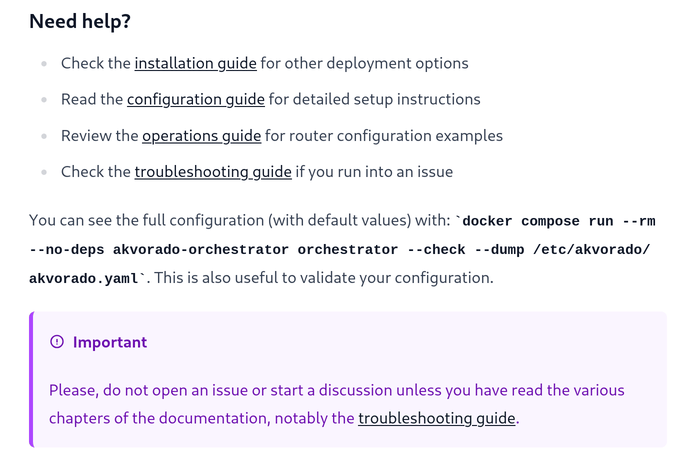
From a usability perspective, table of content sections are now collapsable
(c142e5). Admonitions help draw user attention to important points
(8ac894).
Example of use of admonitions in Akvorado's documentation
Continuous integration
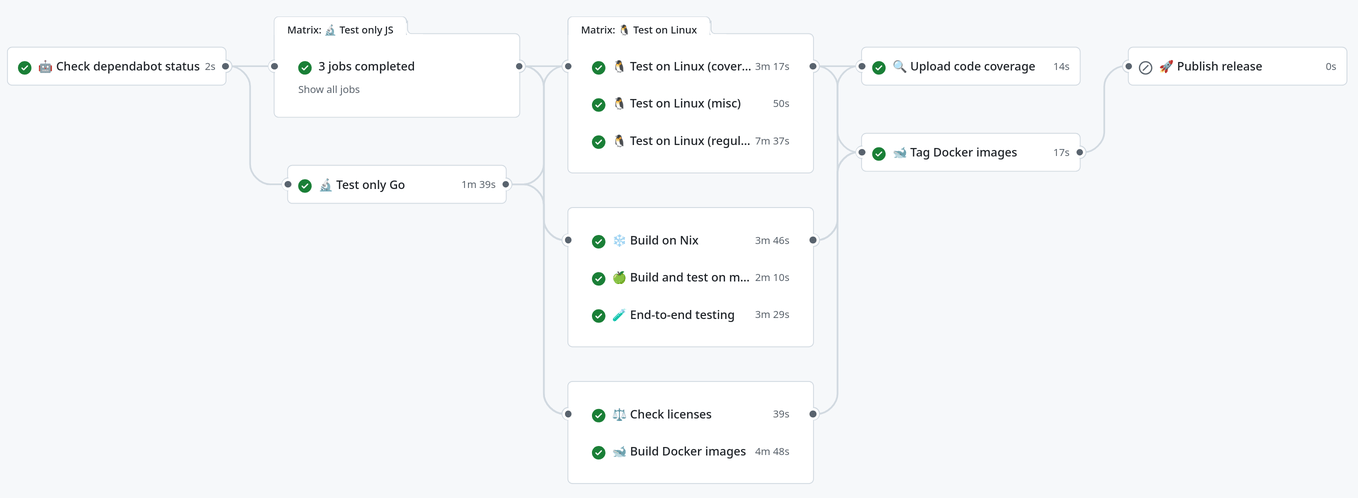
This release includes efforts to speed up continuous integration on GitHub.
Coverage and race tests run in parallel (6af216 and fa9e48). The Docker
image builds during the tests but gets tagged only after they succeed
(8b0dce).
GitHub workflow to test and build Akvorado
End-to-end tests (883e19) ensure the shipped Docker Compose setup works as
expected. Hurl runs tests on various HTTP endpoints, particularly to verify
metrics (42679b and 169fa9). For example:
## Test inlet has received NetFlow flowsGEThttp://127.0.0.1:8080/prometheus/api/v1/query[Query]query:sum(akvorado_inlet_flow_input_udp_packets_total job="akvorado-inlet",listener=":2055" )
HTTP200[Captures]inlet_receivedflows:jsonpath "$.data.result[0].value[1]" toInt
[Asserts]variable"inlet_receivedflows">10## Test inlet has sent them to KafkaGEThttp://127.0.0.1:8080/prometheus/api/v1/query[Query]query:sum(akvorado_inlet_kafka_sent_messages_total job="akvorado-inlet" )
HTTP200[Captures]inlet_sentflows:jsonpath "$.data.result[0].value[1]" toInt
[Asserts]variable"inlet_sentflows">=inlet_receivedflows
Docker
Akvorado ships with a comprehensive Docker Compose setup to help users get
started quickly. It ensures a consistent deployment, eliminating many
configuration-related issues. It also serves as a living documentation of the
complete architecture.
This release brings some small enhancements around Docker:
Previously, many Docker images were pulled from the Bitnami Containers
library. However, VMWare acquired Bitnami in 2019 and Broadcom acquired
VMWare in 2023. As a result, Bitnami images were deprecated in less than a
month. This was not really a surprise4. Previous versions of Akvorado
had already started moving away from them. In this release, the Apache project s
Kafka image replaces the Bitnami one (1eb382). Thanks to the switch to KRaft
mode, Zookeeper is no longer needed (0a2ea1, 8a49ca, and f65d20).
Akvorado s Docker images were previously compiled with Nix. However, building
AArch64 images on x86-64 is slow because it relies on QEMU userland emulation.
The updated Dockerfile uses multi-stage and multi-platform builds: one
stage builds the JavaScript part on the host platform, one stage builds the Go
part cross-compiled on the host platform, and the final stage assembles the
image on top of a slim distroless image (268e95 and d526ca).
# This is a simplified versionFROM--platform=$BUILDPLATFORMnode:20-alpineASbuild-js
RUNapkadd--no-cachemake
WORKDIR/buildCOPYconsole/frontendconsole/frontend
COPYMakefile.
RUNmakeconsole/data/frontend
FROM--platform=$BUILDPLATFORMgolang:alpineASbuild-go
RUNapkadd--no-cachemakecurlzip
WORKDIR/buildCOPY..
COPY--from=build-js/build/console/data/frontendconsole/data/frontend
RUNgomoddownload
RUNmakeall-indep
ARGTARGETOSTARGETARCHTARGETVARIANTVERSION
RUNmake
FROMgcr.io/distroless/static:latestCOPY--from=build-go/build/bin/akvorado/usr/local/bin/akvorado
ENTRYPOINT["/usr/local/bin/akvorado"]
When building for multiple platforms with --platform
linux/amd64,linux/arm64,linux/arm/v7, the build steps until the highlighted
line execute only once for all platforms. This significantly speeds up the
build.
Akvorado now ships Docker images for these platforms: linux/amd64,
linux/amd64/v3, linux/arm64, and linux/arm/v7. When requesting
ghcr.io/akvorado/akvorado, Docker selects the best image for the current CPU.
On x86-64, there are two choices. If your CPU is recent enough, Docker
downloads linux/amd64/v3. This version contains additional optimizations and
should run faster than the linux/amd64 version. It would be interesting to
ship an image for linux/arm64/v8.2, but Docker does not support the same
mechanism for AArch64 yet (792808).
Go
This release includes many changes related to Go but not visible to the users.
Toolchain
In the past, Akvorado supported the two latest Go versions, preventing immediate
use of the latest enhancements. The goal was to allow users of stable
distributions to use Go versions shipped with their distribution to compile
Akvorado. However, this became frustrating when interesting features, like go
tool, were released. Akvorado 2.0 requires Go 1.25 (77306d) but can be
compiled with older toolchains by automatically downloading a newer one
(94fb1c).5 Users can still override GOTOOLCHAIN to revert this
decision. The recommended toolchain updates weekly through CI to ensure we get
the latest minor release (5b11ec). This change also simplifies updates to
newer versions: only go.mod needs updating.
Thanks to this change, Akvorado now uses wg.Go() (77306d) and I have
started converting some unit tests to the new test/synctest package
(bd787e, 7016d8, and 159085).
Testing
When testing equality, I use a helper function Diff() to display the
differences when it fails:
This function uses kylelemons/godebug. This package is
no longer maintained and has some shortcomings: for example, by default, it does
not compare struct private fields, which may cause unexpectedly successful
tests. I replaced it with google/go-cmp, which is stricter
and has better output (e2f1df).
Another package for Kafka
Another change is the switch from Sarama to franz-go to interact with
Kafka (756e4a and 2d26c5). The main motivation for this change is to
get a better concurrency model. Sarama heavily relies on channels and it is
difficult to understand the lifecycle of an object handed to this package.
franz-go uses a more modern approach with callbacks6 that is both more
performant and easier to understand. It also ships with a package to spawn fake
Kafka broker clusters, which is more convenient than the mocking functions
provided by Sarama.
Improved routing table for BMP
To store its routing table, the BMP component used
kentik/patricia, an implementation of a patricia tree
focused on reducing garbage collection pressure.
gaissmai/bart is a more recent alternative using an
adaptation of [Donald Knuth s ART algorithm][] that promises better
performance and delivers it: 90% faster lookups and 27% faster
insertions (92ee2e and fdb65c).
Unlike kentik/patricia, gaissmai/bart does not help efficiently store values
attached to each prefix. I adapted the same approach as kentik/patricia to
store route lists for each prefix: store a 32-bit index for each prefix, and use
it to build a 64-bit index for looking up routes in a map. This leverages Go s
efficient map structure.
gaissmai/bart also supports a lockless routing table version, but this is not
simple because we would need to extend this to the map storing the routes and to
the interning mechanism. I also attempted to use Go s new unique package to
replace the intern package included in Akvorado, but performance was
worse.7
Miscellaneous
Previous versions of Akvorado were using a custom Protobuf encoder for
performance and flexibility. With the introduction of the outlet service,
Akvorado only needs a simple static schema, so this code was removed. However,
it is possible to enhance performance with
planetscale/vtprotobuf (e49a74, and 8b580f).
Moreover, the dependency on protoc, a C++ program, was somewhat annoying.
Therefore, Akvorado now uses buf, written in Go, to convert a Protobuf
schema into Go code (f4c879).
Another small optimization to reduce the size of the Akvorado binary by
10 MB was to compress the static assets embedded in Akvorado in a ZIP file. It
includes the ASN database, as well as the SVG images for the documentation. A
small layer of code makes this change transparent (b1d638 and e69b91).
JavaScript
Recently, two large supply-chain attacks hit the JavaScript ecosystem: one
affecting the popular packages chalk and debug and another
impacting the popular package @ctrl/tinycolor. These attacks also
exist in other ecosystems, but JavaScript is a prime target due to heavy use of
small third-party dependencies. The previous version of Akvorado relied on 653
dependencies.
npm-run-all was removed (3424e8, 132 dependencies). patch-package was
removed (625805 and e85ff0, 69 dependencies) by moving missing
TypeScript definitions to env.d.ts. eslint was replaced with oxlint, a
linter written in Rust (97fd8c, 125 dependencies, including the plugins).
I switched from npm to Pnpm, an alternative package manager (fce383).
Pnpm does not run install scripts by default8 and prevents installing
packages that are too recent. It is also significantly faster.9 Node.js
does not ship Pnpm but it ships Corepack, which allows us to use Pnpm
without installing it. Pnpm can also list licenses used by each dependency,
removing the need for license-compliance (a35ca8, 42 dependencies).
For additional speed improvements, beyond switching to Pnpm and Oxlint, Vite
was replaced with its faster Rolldown version (463827).
After these changes, Akvorado only pulls 225 dependencies.
Next steps
I would like to land three features in the next version of Akvorado:
Add Grafana dashboards to complete the observability stack. See issue
#1906 for details.
Integrate OVH s Grafana plugin by providing a stable API for such
integrations. Akvorado s web console would still be useful for browsing
results, but if you want to build and share dashboards, you should switch to
Grafana. See issue #1895.
Move some work currently done in ClickHouse (custom dictionaries, GeoIP and IP
enrichment) back into the outlet service. This should give more flexibility
for adding features like the one requested in issue #1030. See issue #2006.
I started working on splitting the inlet into two parts more than one year ago.
I found more motivation in recent months, partly thanks to Claude Code,
which I used as a rubber duck. Almost none of the produced code was
kept:10 it is like an intern who does not learn.
Many attempts were made to make the BMP component both performant and
not blocking. See for example PR #254, PR #255, and PR #278.
Despite these efforts, this component remained problematic for most users.
See issue #1461 as an example.
Some features have been pushed to ClickHouse to avoid the
processing cost in the inlet. See for example PR #1059.
Broadcom is known for its user-hostile moves. Look at what happened
with VMWare.
As a Debian developer, I dislike these mechanisms that circumvent
the distribution package manager. The final straw came when Go 1.25 spent one month in the Debian NEW queue, an arbitrary mechanism I
don t like at all.
In the early years of Go, channels were heavily promoted. Sarama
was designed during this period. A few years later, a more nuanced approach
emerged. See notably Go channels are bad and you should feel bad.
This should be investigated further, but my theory is that the
intern package uses 32-bit integers, while unique uses 64-bit pointers.
See commit 74e5ac.
This is also possible with npm. See commit dab2f7.
An even faster alternative is Bun, but it is less available.
The exceptions are part of the code for the admonition blocks,
the code for collapsing the table of content, and part of the documentation.
 Excited to share that xptr is back on
CRAN! The xptr package
helps to create, check, modify, use, share, external pointer
objects.
External pointers are used quite extensively throughout R to manage external resources
such as datanbase connection objects and alike, and can be very useful
to pass pointers to just about any C / C++ data structure around. While
described in Writing
R Extensions (notably Section
5.13), they can be a little bare-bones and so this package can be
useful. It had been created by Randy
Lai and maintained by him during 2017 to 2020, but then fell off
CRAN. In work with nanoarrow and
its clean and minimal Arrow interface xptr came in
handy so I adopted it.
Several extensions and updates have been added: (compiled) function
registration, continuous integration, tests, refreshed and extended
documentation as well as a print format extension useful for PyCapsule
objects when passing via reticulate. The
package documentation
site was switched to altdoc driving the
most excellent Material for
MkDocs framework (providing my first test case of altdoc replacing my
older local scripts; I should post some more about that ).
The first NEWS entry follow.
 About 90% of my Debian contributions this month were
 A new version 0.3.5 of the
 Another short status update of what happened on my side last
month. Nothing stands out too much, I enjoyed doing the OSK changes
the most as that helped to improve the typing experience further. Also
doing a small bit of kernel work again was fun (still need to figure out
the 6mq's touch controller repsonsiveness though).
See below for details on the above and more:
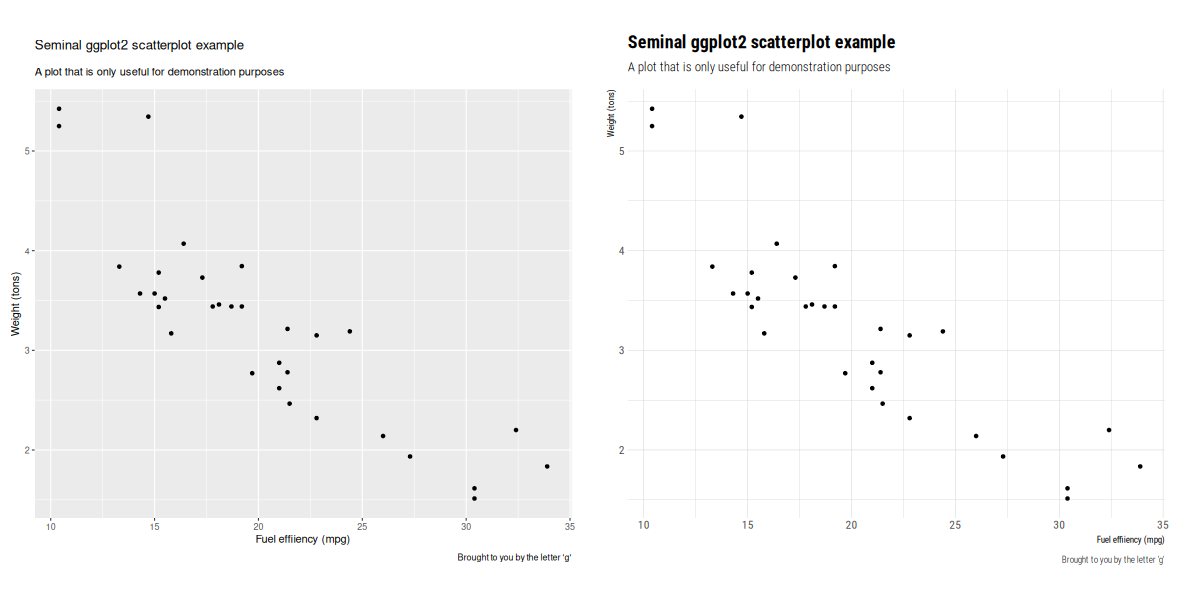 A tiniest of tiny violins micro maintenance release 0.0.4 of our
 Last month I attended and spoke at
 If you are like me that you are installing machines with testing and then go and flip them over to the current stable for a while using APT::Default-Release, you might not be receiving all relevant updates. In fact
 A shot of Jewel Changi. Photo by Ravi Dwivedi. Released under the CC-BY-SA 4.0.
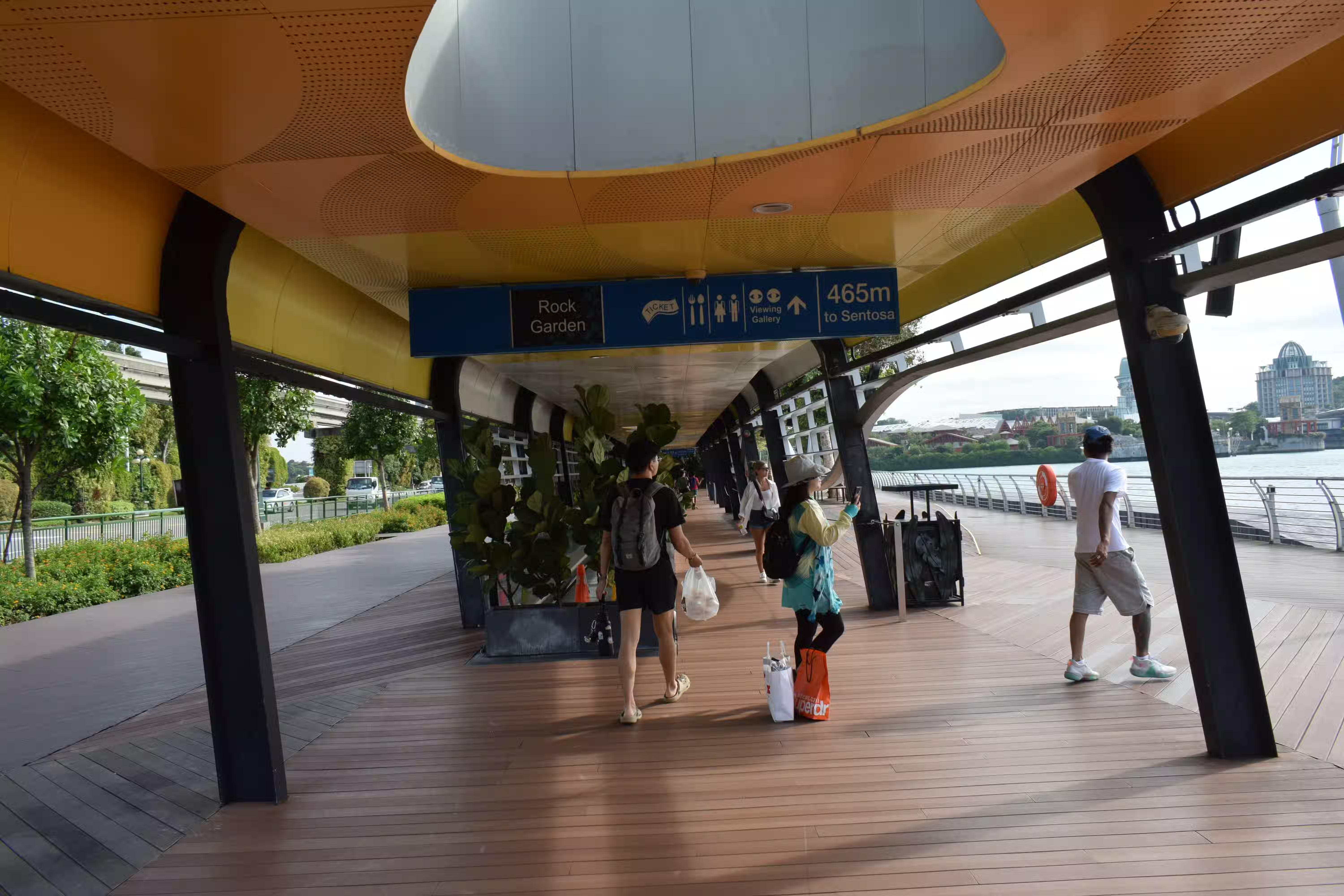 A shot of Sentosa Boardwalk. Photo by Ravi Dwivedi. Released under the CC-BY-SA 4.0.
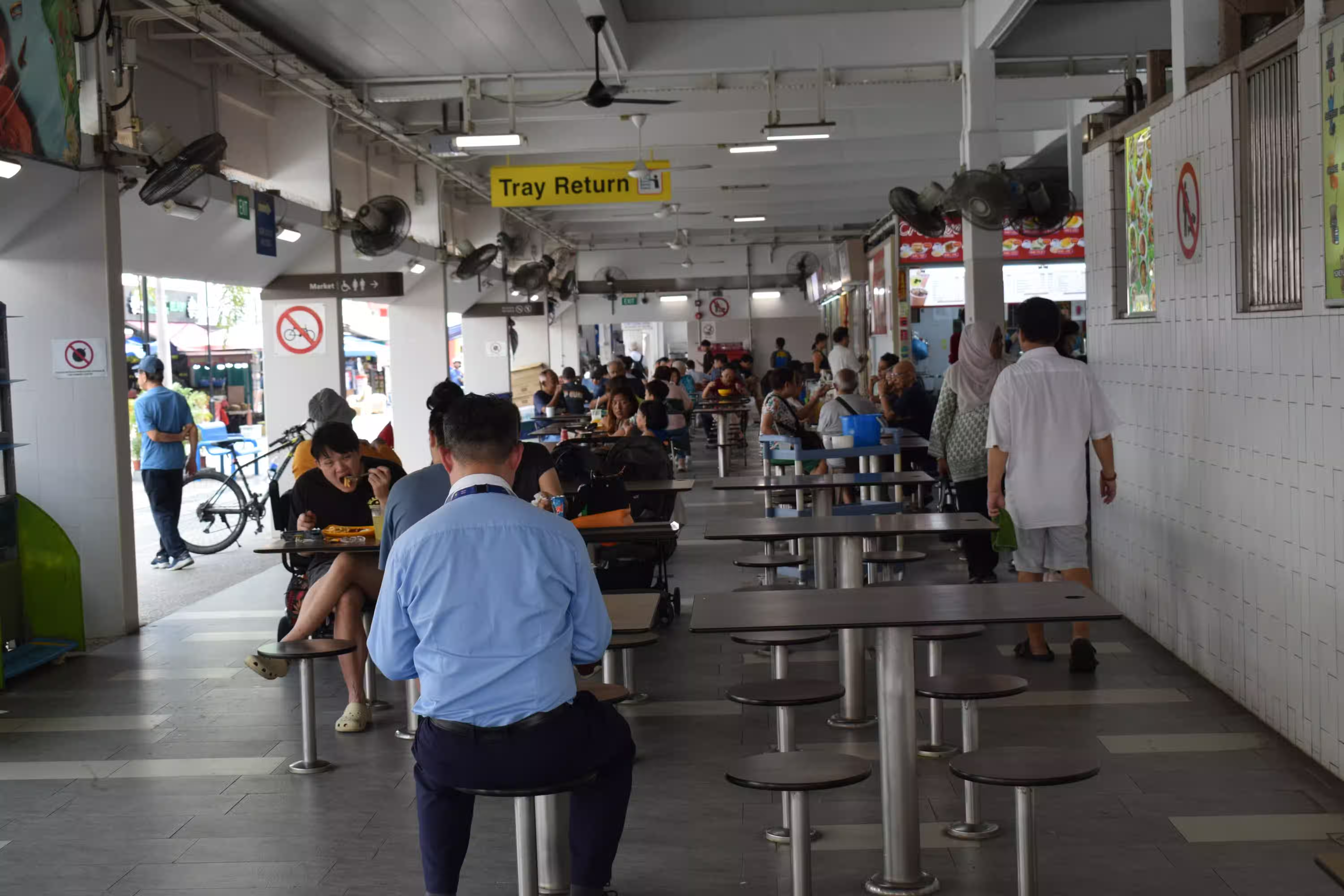 This is the hawker center we went to. Photo by Ravi Dwivedi. Released under the CC-BY-SA 4.0.
 Table littering at the hawker center was prohibited by law. Photo by Ravi Dwivedi. Released under the CC-BY-SA 4.0.
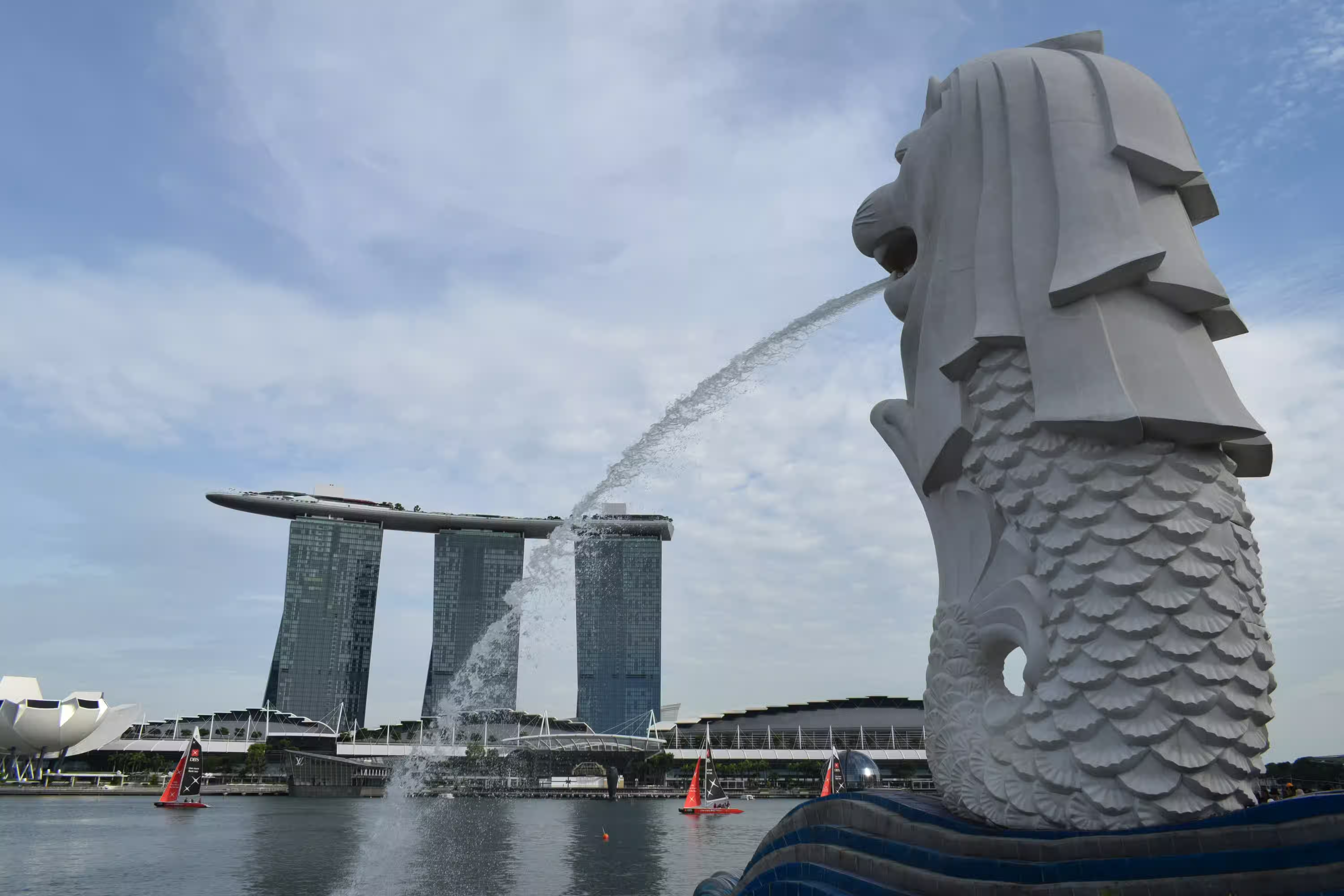 Merlion from behind, giving a good view of Marina Bay Sands. Photo by Ravi Dwivedi. Released under the CC-BY-SA 4.0.

 If you're still using Vagrant (I am) and try to boot a box that uses UEFI (like