rra-c-util is my library of supporting functions, code, Autoconf macros,
and similar portability and build machinery helpers. This is a very minor
release, made mostly because I haven't done a non-work free software
release in rather too long.
This release adds serial numbers to all of the provided Autoconf macros,
which enables some features in Automake's aclocal tool. It properly fixes
the portable/getnameinfo test that the last release tried to fix (thanks
again to Julien LIE). And it incorporates some new perltidy flags into
my standard perltidy configuration that were added in the 20230309 release
(also thanks to Julien LIE for the heads up).
You can get the latest release from the rra-c-util distribution page.
I ve used hardware-backed OpenPGP keys since 2006 when I imported newly generated rsa1024 subkeys to a FSFE Fellowship card. This worked well for several years, and I recall buying more ZeitControl cards for multi-machine usage and backup purposes. As a side note, I recall being unsatisfied with the weak 1024-bit RSA subkeys at the time my primary key was a somewhat stronger 1280-bit RSA key created back in 2002 but OpenPGP cards at the time didn t support more than 1024 bit RSA, and were (and still often are) also limited to power-of-two RSA key sizes which I dislike.
I had my master key on disk with a strong password for a while, mostly to refresh expiration time of the subkeys and to sign other s OpenPGP keys. At some point I stopped carrying around encrypted copies of my master key. That was my main setup when I migrated to a new stronger RSA 3744 bit key with rsa2048 subkeys on a YubiKey NEO back in 2014. At that point, signing other s OpenPGP keys was a rare enough occurrence that I settled with bringing out my offline machine to perform this operation, transferring the public key to sign on USB sticks. In 2019 I re-evaluated my OpenPGP setup and ended up creating a offline Ed25519 key with subkeys on a FST-01G running Gnuk. My approach for signing other s OpenPGP keys were still to bring out my offline machine and sign things using the master secret using USB sticks for storage and transport. Which meant I almost never did that, because it took too much effort. So my 2019-era Ed25519 key still only has a handful of signatures on it, since I had essentially stopped signing other s keys which is the traditional way of getting signatures in return.
None of this caused any critical problem for me because I continued to use my old 2014-era RSA3744 key in parallel with my new 2019-era Ed25519 key, since too many systems didn t handle Ed25519. However, during 2022 this changed, and the only remaining environment that I still used my RSA3744 key for was in Debian and they require OpenPGP signatures on the new key to allow it to replace an older key. I was in denial about this sub-optimal solution during 2022 and endured its practical consequences, having to use the YubiKey NEO (which I had replaced with a permanently inserted YubiKey Nano at some point) for Debian-related purposes alone.
In December 2022 I bought a new laptop and setup a FST-01SZ with my Ed25519 key, and while I have taken a vacation from Debian, I continue to extend the expiration period on the old RSA3744-key in case I will ever have to use it again, so the overall OpenPGP setup was still sub-optimal. Having two valid OpenPGP keys at the same time causes people to use both for email encryption (leading me to have to use both devices), and the WKD Key Discovery protocol doesn t like two valid keys either. At FOSDEM 23 I ran into Andre Heinecke at GnuPG and I couldn t help complain about how complex and unsatisfying all OpenPGP-related matters were, and he mildly ignored my rant and asked why I didn t put the master key on another smartcard. The comment sunk in when I came home, and recently I connected all the dots and this post is a summary of what I did to move my offline OpenPGP master key to a Nitrokey Start.
First a word about device choice, I still prefer to use hardware devices that are as compatible with free software as possible, but the FST-01G or FST-01SZ are no longer easily available for purchase. I got a comment about Nitrokey start in my last post, and had two of them available to experiment with. There are things to dislike with the Nitrokey Start compared to the YubiKey (e.g., relative insecure chip architecture, the bulkier form factor and lack of FIDO/U2F/OATH support) but as far as I know there is no more widely available owner-controlled device that is manufactured for an intended purpose of implementing an OpenPGP card. Thus it hits the sweet spot for me.
Nitrokey Start
The first step is to run latest firmware on the Nitrokey Start for bug-fixes and important OpenSSH 9.0 compatibility and there are reproducible-built firmware published that you can install using pynitrokey. I run Trisquel 11 aramo on my laptop, which does not include the Python Pip package (likely because it promotes installing non-free software) so that was a slight complication. Building the firmware locally may have worked, and I would like to do that eventually to confirm the published firmware, however to save time I settled with installing the Ubuntu 22.04 packages on my machine:
$ sha256sum python3-pip*
ded6b3867a4a4cbaff0940cab366975d6aeecc76b9f2d2efa3deceb062668b1c  python3-pip_22.0.2+dfsg-1ubuntu0.2_all.deb
e1561575130c41dc3309023a345de337e84b4b04c21c74db57f599e267114325  python3-pip-whl_22.0.2+dfsg-1ubuntu0.2_all.deb
$ doas dpkg -i python3-pip*
...
$ doas apt install -f
...
$
Installing pynitrokey downloaded a bunch of dependencies, and it would be nice to audit the license and security vulnerabilities for each of them. (Verbose output below slightly redacted.)
jas@kaka:~$ pip3 install --user pynitrokey
Collecting pynitrokey
  Downloading pynitrokey-0.4.34-py3-none-any.whl (572 kB)
Collecting frozendict~=2.3.4
  Downloading frozendict-2.3.5-cp310-cp310-manylinux_2_17_x86_64.manylinux2014_x86_64.whl (113 kB)
Requirement already satisfied: click<9,>=8.0.0 in /usr/lib/python3/dist-packages (from pynitrokey) (8.0.3)
Collecting ecdsa
  Downloading ecdsa-0.18.0-py2.py3-none-any.whl (142 kB)
Collecting python-dateutil~=2.7.0
  Downloading python_dateutil-2.7.5-py2.py3-none-any.whl (225 kB)
Collecting fido2<2,>=1.1.0
  Downloading fido2-1.1.0-py3-none-any.whl (201 kB)
Collecting tlv8
  Downloading tlv8-0.10.0.tar.gz (16 kB)
  Preparing metadata (setup.py) ... done
Requirement already satisfied: certifi>=14.5.14 in /usr/lib/python3/dist-packages (from pynitrokey) (2020.6.20)
Requirement already satisfied: pyusb in /usr/lib/python3/dist-packages (from pynitrokey) (1.2.1.post1)
Collecting urllib3~=1.26.7
  Downloading urllib3-1.26.15-py2.py3-none-any.whl (140 kB)
Collecting spsdk<1.8.0,>=1.7.0
  Downloading spsdk-1.7.1-py3-none-any.whl (684 kB)
Collecting typing_extensions~=4.3.0
  Downloading typing_extensions-4.3.0-py3-none-any.whl (25 kB)
Requirement already satisfied: cryptography<37,>=3.4.4 in /usr/lib/python3/dist-packages (from pynitrokey) (3.4.8)
Collecting intelhex
  Downloading intelhex-2.3.0-py2.py3-none-any.whl (50 kB)
Collecting nkdfu
  Downloading nkdfu-0.2-py3-none-any.whl (16 kB)
Requirement already satisfied: requests in /usr/lib/python3/dist-packages (from pynitrokey) (2.25.1)
Collecting tqdm
  Downloading tqdm-4.65.0-py3-none-any.whl (77 kB)
Collecting nrfutil<7,>=6.1.4
  Downloading nrfutil-6.1.7.tar.gz (845 kB)
  Preparing metadata (setup.py) ... done
Requirement already satisfied: cffi in /usr/lib/python3/dist-packages (from pynitrokey) (1.15.0)
Collecting crcmod
  Downloading crcmod-1.7.tar.gz (89 kB)
  Preparing metadata (setup.py) ... done
Collecting libusb1==1.9.3
  Downloading libusb1-1.9.3-py3-none-any.whl (60 kB)
Collecting pc_ble_driver_py>=0.16.4
  Downloading pc_ble_driver_py-0.17.0-cp310-cp310-manylinux_2_17_x86_64.manylinux2014_x86_64.whl (2.9 MB)
Collecting piccata
  Downloading piccata-2.0.3-py3-none-any.whl (21 kB)
Collecting protobuf<4.0.0,>=3.17.3
  Downloading protobuf-3.20.3-cp310-cp310-manylinux_2_12_x86_64.manylinux2010_x86_64.whl (1.1 MB)
Collecting pyserial
  Downloading pyserial-3.5-py2.py3-none-any.whl (90 kB)
Collecting pyspinel>=1.0.0a3
  Downloading pyspinel-1.0.3.tar.gz (58 kB)
  Preparing metadata (setup.py) ... done
Requirement already satisfied: pyyaml in /usr/lib/python3/dist-packages (from nrfutil<7,>=6.1.4->pynitrokey) (5.4.1)
Requirement already satisfied: six>=1.5 in /usr/lib/python3/dist-packages (from python-dateutil~=2.7.0->pynitrokey) (1.16.0)
Collecting pylink-square<0.11.9,>=0.8.2
  Downloading pylink_square-0.11.1-py2.py3-none-any.whl (78 kB)
Collecting jinja2<3.1,>=2.11
  Downloading Jinja2-3.0.3-py3-none-any.whl (133 kB)
Collecting bincopy<17.11,>=17.10.2
  Downloading bincopy-17.10.3-py3-none-any.whl (17 kB)
Collecting fastjsonschema>=2.15.1
  Downloading fastjsonschema-2.16.3-py3-none-any.whl (23 kB)
Collecting astunparse<2,>=1.6
  Downloading astunparse-1.6.3-py2.py3-none-any.whl (12 kB)
Collecting oscrypto~=1.2
  Downloading oscrypto-1.3.0-py2.py3-none-any.whl (194 kB)
Collecting deepmerge==0.3.0
  Downloading deepmerge-0.3.0-py2.py3-none-any.whl (7.6 kB)
Collecting pyocd<=0.31.0,>=0.28.3
  Downloading pyocd-0.31.0-py3-none-any.whl (12.5 MB)
Collecting click-option-group<0.6,>=0.3.0
  Downloading click_option_group-0.5.5-py3-none-any.whl (12 kB)
Collecting pycryptodome<4,>=3.9.3
  Downloading pycryptodome-3.17-cp35-abi3-manylinux_2_17_x86_64.manylinux2014_x86_64.whl (2.1 MB)
Collecting pyocd-pemicro<1.2.0,>=1.1.1
  Downloading pyocd_pemicro-1.1.5-py3-none-any.whl (9.0 kB)
Requirement already satisfied: colorama<1,>=0.4.4 in /usr/lib/python3/dist-packages (from spsdk<1.8.0,>=1.7.0->pynitrokey) (0.4.4)
Collecting commentjson<1,>=0.9
  Downloading commentjson-0.9.0.tar.gz (8.7 kB)
  Preparing metadata (setup.py) ... done
Requirement already satisfied: asn1crypto<2,>=1.2 in /usr/lib/python3/dist-packages (from spsdk<1.8.0,>=1.7.0->pynitrokey) (1.4.0)
Collecting pypemicro<0.2.0,>=0.1.9
  Downloading pypemicro-0.1.11-py3-none-any.whl (5.7 MB)
Collecting libusbsio>=2.1.11
  Downloading libusbsio-2.1.11-py3-none-any.whl (247 kB)
Collecting sly==0.4
  Downloading sly-0.4.tar.gz (60 kB)
  Preparing metadata (setup.py) ... done
Collecting ruamel.yaml<0.18.0,>=0.17
  Downloading ruamel.yaml-0.17.21-py3-none-any.whl (109 kB)
Collecting cmsis-pack-manager<0.3.0
  Downloading cmsis_pack_manager-0.2.10-py2.py3-none-manylinux1_x86_64.whl (25.1 MB)
Collecting click-command-tree==1.1.0
  Downloading click_command_tree-1.1.0-py3-none-any.whl (3.6 kB)
Requirement already satisfied: bitstring<3.2,>=3.1 in /usr/lib/python3/dist-packages (from spsdk<1.8.0,>=1.7.0->pynitrokey) (3.1.7)
Collecting hexdump~=3.3
  Downloading hexdump-3.3.zip (12 kB)
  Preparing metadata (setup.py) ... done
Collecting fire
  Downloading fire-0.5.0.tar.gz (88 kB)
  Preparing metadata (setup.py) ... done
Requirement already satisfied: wheel<1.0,>=0.23.0 in /usr/lib/python3/dist-packages (from astunparse<2,>=1.6->spsdk<1.8.0,>=1.7.0->pynitrokey) (0.37.1)
Collecting humanfriendly
  Downloading humanfriendly-10.0-py2.py3-none-any.whl (86 kB)
Collecting argparse-addons>=0.4.0
  Downloading argparse_addons-0.12.0-py3-none-any.whl (3.3 kB)
Collecting pyelftools
  Downloading pyelftools-0.29-py2.py3-none-any.whl (174 kB)
Collecting milksnake>=0.1.2
  Downloading milksnake-0.1.5-py2.py3-none-any.whl (9.6 kB)
Requirement already satisfied: appdirs>=1.4 in /usr/lib/python3/dist-packages (from cmsis-pack-manager<0.3.0->spsdk<1.8.0,>=1.7.0->pynitrokey) (1.4.4)
Collecting lark-parser<0.8.0,>=0.7.1
  Downloading lark-parser-0.7.8.tar.gz (276 kB)
  Preparing metadata (setup.py) ... done
Requirement already satisfied: MarkupSafe>=2.0 in /usr/lib/python3/dist-packages (from jinja2<3.1,>=2.11->spsdk<1.8.0,>=1.7.0->pynitrokey) (2.0.1)
Collecting asn1crypto<2,>=1.2
  Downloading asn1crypto-1.5.1-py2.py3-none-any.whl (105 kB)
Collecting wrapt
  Downloading wrapt-1.15.0-cp310-cp310-manylinux_2_5_x86_64.manylinux1_x86_64.manylinux_2_17_x86_64.manylinux2014_x86_64.whl (78 kB)
Collecting future
  Downloading future-0.18.3.tar.gz (840 kB)
  Preparing metadata (setup.py) ... done
Collecting psutil>=5.2.2
  Downloading psutil-5.9.4-cp36-abi3-manylinux_2_12_x86_64.manylinux2010_x86_64.manylinux_2_17_x86_64.manylinux2014_x86_64.whl (280 kB)
Collecting capstone<5.0,>=4.0
  Downloading capstone-4.0.2-py2.py3-none-manylinux1_x86_64.whl (2.1 MB)
Collecting naturalsort<2.0,>=1.5
  Downloading naturalsort-1.5.1.tar.gz (7.4 kB)
  Preparing metadata (setup.py) ... done
Collecting prettytable<3.0,>=2.0
  Downloading prettytable-2.5.0-py3-none-any.whl (24 kB)
Collecting intervaltree<4.0,>=3.0.2
  Downloading intervaltree-3.1.0.tar.gz (32 kB)
  Preparing metadata (setup.py) ... done
Collecting ruamel.yaml.clib>=0.2.6
  Downloading ruamel.yaml.clib-0.2.7-cp310-cp310-manylinux_2_17_x86_64.manylinux2014_x86_64.manylinux_2_24_x86_64.whl (485 kB)
Collecting termcolor
  Downloading termcolor-2.2.0-py3-none-any.whl (6.6 kB)
Collecting sortedcontainers<3.0,>=2.0
  Downloading sortedcontainers-2.4.0-py2.py3-none-any.whl (29 kB)
Requirement already satisfied: wcwidth in /usr/lib/python3/dist-packages (from prettytable<3.0,>=2.0->pyocd<=0.31.0,>=0.28.3->spsdk<1.8.0,>=1.7.0->pynitrokey) (0.2.5)
Building wheels for collected packages: nrfutil, crcmod, sly, tlv8, commentjson, hexdump, pyspinel, fire, intervaltree, lark-parser, naturalsort, future
  Building wheel for nrfutil (setup.py) ... done
  Created wheel for nrfutil: filename=nrfutil-6.1.7-py3-none-any.whl size=898520 sha256=de6f8803f51d6c26d24dc7df6292064a468ff3f389d73370433fde5582b84a10
  Stored in directory: /home/jas/.cache/pip/wheels/39/2b/9b/98ab2dd716da746290e6728bdb557b14c1c9a54cb9ed86e13b
  Building wheel for crcmod (setup.py) ... done
  Created wheel for crcmod: filename=crcmod-1.7-cp310-cp310-linux_x86_64.whl size=31422 sha256=5149ac56fcbfa0606760eef5220fcedc66be560adf68cf38c604af3ad0e4a8b0
  Stored in directory: /home/jas/.cache/pip/wheels/85/4c/07/72215c529bd59d67e3dac29711d7aba1b692f543c808ba9e86
  Building wheel for sly (setup.py) ... done
  Created wheel for sly: filename=sly-0.4-py3-none-any.whl size=27352 sha256=f614e413918de45c73d1e9a8dca61ca07dc760d9740553400efc234c891f7fde
  Stored in directory: /home/jas/.cache/pip/wheels/a2/23/4a/6a84282a0d2c29f003012dc565b3126e427972e8b8157ea51f
  Building wheel for tlv8 (setup.py) ... done
  Created wheel for tlv8: filename=tlv8-0.10.0-py3-none-any.whl size=11266 sha256=3ec8b3c45977a3addbc66b7b99e1d81b146607c3a269502b9b5651900a0e2d08
  Stored in directory: /home/jas/.cache/pip/wheels/e9/35/86/66a473cc2abb0c7f21ed39c30a3b2219b16bd2cdb4b33cfc2c
  Building wheel for commentjson (setup.py) ... done
  Created wheel for commentjson: filename=commentjson-0.9.0-py3-none-any.whl size=12092 sha256=28b6413132d6d7798a18cf8c76885dc69f676ea763ffcb08775a3c2c43444f4a
  Stored in directory: /home/jas/.cache/pip/wheels/7d/90/23/6358a234ca5b4ec0866d447079b97fedf9883387d1d7d074e5
  Building wheel for hexdump (setup.py) ... done
  Created wheel for hexdump: filename=hexdump-3.3-py3-none-any.whl size=8913 sha256=79dfadd42edbc9acaeac1987464f2df4053784fff18b96408c1309b74fd09f50
  Stored in directory: /home/jas/.cache/pip/wheels/26/28/f7/f47d7ecd9ae44c4457e72c8bb617ef18ab332ee2b2a1047e87
  Building wheel for pyspinel (setup.py) ... done
  Created wheel for pyspinel: filename=pyspinel-1.0.3-py3-none-any.whl size=65033 sha256=01dc27f81f28b4830a0cf2336dc737ef309a1287fcf33f57a8a4c5bed3b5f0a6
  Stored in directory: /home/jas/.cache/pip/wheels/95/ec/4b/6e3e2ee18e7292d26a65659f75d07411a6e69158bb05507590
  Building wheel for fire (setup.py) ... done
  Created wheel for fire: filename=fire-0.5.0-py2.py3-none-any.whl size=116951 sha256=3d288585478c91a6914629eb739ea789828eb2d0267febc7c5390cb24ba153e8
  Stored in directory: /home/jas/.cache/pip/wheels/90/d4/f7/9404e5db0116bd4d43e5666eaa3e70ab53723e1e3ea40c9a95
  Building wheel for intervaltree (setup.py) ... done
  Created wheel for intervaltree: filename=intervaltree-3.1.0-py2.py3-none-any.whl size=26119 sha256=5ff1def22ba883af25c90d90ef7c6518496fcd47dd2cbc53a57ec04cd60dc21d
  Stored in directory: /home/jas/.cache/pip/wheels/fa/80/8c/43488a924a046b733b64de3fac99252674c892a4c3801c0a61
  Building wheel for lark-parser (setup.py) ... done
  Created wheel for lark-parser: filename=lark_parser-0.7.8-py2.py3-none-any.whl size=62527 sha256=3d2ec1d0f926fc2688d40777f7ef93c9986f874169132b1af590b6afc038f4be
  Stored in directory: /home/jas/.cache/pip/wheels/29/30/94/33e8b58318aa05cb1842b365843036e0280af5983abb966b83
  Building wheel for naturalsort (setup.py) ... done
  Created wheel for naturalsort: filename=naturalsort-1.5.1-py3-none-any.whl size=7526 sha256=bdecac4a49f2416924548cae6c124c85d5333e9e61c563232678ed182969d453
  Stored in directory: /home/jas/.cache/pip/wheels/a6/8e/c9/98cfa614fff2979b457fa2d9ad45ec85fa417e7e3e2e43be51
  Building wheel for future (setup.py) ... done
  Created wheel for future: filename=future-0.18.3-py3-none-any.whl size=492037 sha256=57a01e68feca2b5563f5f624141267f399082d2f05f55886f71b5d6e6cf2b02c
  Stored in directory: /home/jas/.cache/pip/wheels/5e/a9/47/f118e66afd12240e4662752cc22cefae5d97275623aa8ef57d
Successfully built nrfutil crcmod sly tlv8 commentjson hexdump pyspinel fire intervaltree lark-parser naturalsort future
Installing collected packages: tlv8, sortedcontainers, sly, pyserial, pyelftools, piccata, naturalsort, libusb1, lark-parser, intelhex, hexdump, fastjsonschema, crcmod, asn1crypto, wrapt, urllib3, typing_extensions, tqdm, termcolor, ruamel.yaml.clib, python-dateutil, pyspinel, pypemicro, pycryptodome, psutil, protobuf, prettytable, oscrypto, milksnake, libusbsio, jinja2, intervaltree, humanfriendly, future, frozendict, fido2, ecdsa, deepmerge, commentjson, click-option-group, click-command-tree, capstone, astunparse, argparse-addons, ruamel.yaml, pyocd-pemicro, pylink-square, pc_ble_driver_py, fire, cmsis-pack-manager, bincopy, pyocd, nrfutil, nkdfu, spsdk, pynitrokey
  WARNING: The script nitropy is installed in '/home/jas/.local/bin' which is not on PATH.
  Consider adding this directory to PATH or, if you prefer to suppress this warning, use --no-warn-script-location.
Successfully installed argparse-addons-0.12.0 asn1crypto-1.5.1 astunparse-1.6.3 bincopy-17.10.3 capstone-4.0.2 click-command-tree-1.1.0 click-option-group-0.5.5 cmsis-pack-manager-0.2.10 commentjson-0.9.0 crcmod-1.7 deepmerge-0.3.0 ecdsa-0.18.0 fastjsonschema-2.16.3 fido2-1.1.0 fire-0.5.0 frozendict-2.3.5 future-0.18.3 hexdump-3.3 humanfriendly-10.0 intelhex-2.3.0 intervaltree-3.1.0 jinja2-3.0.3 lark-parser-0.7.8 libusb1-1.9.3 libusbsio-2.1.11 milksnake-0.1.5 naturalsort-1.5.1 nkdfu-0.2 nrfutil-6.1.7 oscrypto-1.3.0 pc_ble_driver_py-0.17.0 piccata-2.0.3 prettytable-2.5.0 protobuf-3.20.3 psutil-5.9.4 pycryptodome-3.17 pyelftools-0.29 pylink-square-0.11.1 pynitrokey-0.4.34 pyocd-0.31.0 pyocd-pemicro-1.1.5 pypemicro-0.1.11 pyserial-3.5 pyspinel-1.0.3 python-dateutil-2.7.5 ruamel.yaml-0.17.21 ruamel.yaml.clib-0.2.7 sly-0.4 sortedcontainers-2.4.0 spsdk-1.7.1 termcolor-2.2.0 tlv8-0.10.0 tqdm-4.65.0 typing_extensions-4.3.0 urllib3-1.26.15 wrapt-1.15.0
jas@kaka:~$
Then upgrading the device worked remarkable well, although I wish that the tool would have printed URLs and checksums for the firmware files to allow easy confirmation.
jas@kaka:~$ PATH=$PATH:/home/jas/.local/bin
jas@kaka:~$ nitropy start list
Command line tool to interact with Nitrokey devices 0.4.34
:: 'Nitrokey Start' keys:
FSIJ-1.2.15-5D271572: Nitrokey Nitrokey Start (RTM.12.1-RC2-modified)
jas@kaka:~$ nitropy start update
Command line tool to interact with Nitrokey devices 0.4.34
Nitrokey Start firmware update tool
Platform: Linux-5.15.0-67-generic-x86_64-with-glibc2.35
System: Linux, is_linux: True
Python: 3.10.6
Saving run log to: /tmp/nitropy.log.gc5753a8
Admin PIN:
Firmware data to be used:
- FirmwareType.REGNUAL: 4408, hash: ...b'72a30389' valid (from ...built/RTM.13/regnual.bin)
- FirmwareType.GNUK: 129024, hash: ...b'25a4289b' valid (from ...prebuilt/RTM.13/gnuk.bin)
Currently connected device strings:
Device:
    Vendor: Nitrokey
   Product: Nitrokey Start
    Serial: FSIJ-1.2.15-5D271572
  Revision: RTM.12.1-RC2-modified
    Config: *:*:8e82
       Sys: 3.0
     Board: NITROKEY-START-G
initial device strings: [ 'name': '', 'Vendor': 'Nitrokey', 'Product': 'Nitrokey Start', 'Serial': 'FSIJ-1.2.15-5D271572', 'Revision': 'RTM.12.1-RC2-modified', 'Config': '*:*:8e82', 'Sys': '3.0', 'Board': 'NITROKEY-START-G' ]
Please note:
- Latest firmware available is:
  RTM.13 (published: 2022-12-08T10:59:11Z)
- provided firmware: None
- all data will be removed from the device!
- do not interrupt update process - the device may not run properly!
- the process should not take more than 1 minute
Do you want to continue? [yes/no]: yes
...
Starting bootloader upload procedure
Device: Nitrokey Start FSIJ-1.2.15-5D271572
Connected to the device
Running update!
Do NOT remove the device from the USB slot, until further notice
Downloading flash upgrade program...
Executing flash upgrade...
Waiting for device to appear:
  Wait 20 seconds.....
Downloading the program
Protecting device
Finish flashing
Resetting device
Update procedure finished. Device could be removed from USB slot.
Currently connected device strings (after upgrade):
Device:
    Vendor: Nitrokey
   Product: Nitrokey Start
    Serial: FSIJ-1.2.19-5D271572
  Revision: RTM.13
    Config: *:*:8e82
       Sys: 3.0
     Board: NITROKEY-START-G
device can now be safely removed from the USB slot
final device strings: [ 'name': '', 'Vendor': 'Nitrokey', 'Product': 'Nitrokey Start', 'Serial': 'FSIJ-1.2.19-5D271572', 'Revision': 'RTM.13', 'Config': '*:*:8e82', 'Sys': '3.0', 'Board': 'NITROKEY-START-G' ]
finishing session 2023-03-16 21:49:07.371291
Log saved to: /tmp/nitropy.log.gc5753a8
jas@kaka:~$
jas@kaka:~$ nitropy start list
Command line tool to interact with Nitrokey devices 0.4.34
:: 'Nitrokey Start' keys:
FSIJ-1.2.19-5D271572: Nitrokey Nitrokey Start (RTM.13)
jas@kaka:~$
Before importing the master key to this device, it should be configured. Note the commands in the beginning to make sure scdaemon/pcscd is not running because they may have cached state from earlier cards. Change PIN code as you like after this, my experience with Gnuk was that the Admin PIN had to be changed first, then you import the key, and then you change the PIN.
jas@kaka:~$ gpg-connect-agent "SCD KILLSCD" "SCD BYE" /bye
OK
ERR 67125247 Slut p  fil <GPG Agent>
jas@kaka:~$ ps auxww grep -e pcsc -e scd
jas        11651  0.0  0.0   3468  1672 pts/0    R+   21:54   0:00 grep --color=auto -e pcsc -e scd
jas@kaka:~$ gpg --card-edit
Reader ...........: 20A0:4211:FSIJ-1.2.19-5D271572:0
Application ID ...: D276000124010200FFFE5D2715720000
Application type .: OpenPGP
Version ..........: 2.0
Manufacturer .....: unmanaged S/N range
Serial number ....: 5D271572
Name of cardholder: [not set]
Language prefs ...: [not set]
Salutation .......:
URL of public key : [not set]
Login data .......: [not set]
Signature PIN ....: forced
Key attributes ...: rsa2048 rsa2048 rsa2048
Max. PIN lengths .: 127 127 127
PIN retry counter : 3 3 3
Signature counter : 0
KDF setting ......: off
Signature key ....: [none]
Encryption key....: [none]
Authentication key: [none]
General key info..: [none]
gpg/card> admin
Admin commands are allowed
gpg/card> kdf-setup
gpg/card> passwd
gpg: OpenPGP card no. D276000124010200FFFE5D2715720000 detected
1 - change PIN
2 - unblock PIN
3 - change Admin PIN
4 - set the Reset Code
Q - quit
Your selection? 3
PIN changed.
1 - change PIN
2 - unblock PIN
3 - change Admin PIN
4 - set the Reset Code
Q - quit
Your selection? q
gpg/card> name
Cardholder's surname: Josefsson
Cardholder's given name: Simon
gpg/card> lang
Language preferences: sv
gpg/card> sex
Salutation (M = Mr., F = Ms., or space): m
gpg/card> login
Login data (account name): jas
gpg/card> url
URL to retrieve public key: https://josefsson.org/key-20190320.txt
gpg/card> forcesig
gpg/card> key-attr
Changing card key attribute for: Signature key
Please select what kind of key you want:
   (1) RSA
   (2) ECC
Your selection? 2
Please select which elliptic curve you want:
   (1) Curve 25519
   (4) NIST P-384
Your selection? 1
The card will now be re-configured to generate a key of type: ed25519
Note: There is no guarantee that the card supports the requested size.
      If the key generation does not succeed, please check the
      documentation of your card to see what sizes are allowed.
Changing card key attribute for: Encryption key
Please select what kind of key you want:
   (1) RSA
   (2) ECC
Your selection? 2
Please select which elliptic curve you want:
   (1) Curve 25519
   (4) NIST P-384
Your selection? 1
The card will now be re-configured to generate a key of type: cv25519
Changing card key attribute for: Authentication key
Please select what kind of key you want:
   (1) RSA
   (2) ECC
Your selection? 2
Please select which elliptic curve you want:
   (1) Curve 25519
   (4) NIST P-384
Your selection? 1
The card will now be re-configured to generate a key of type: ed25519
gpg/card>
jas@kaka:~$ gpg --card-edit
Reader ...........: 20A0:4211:FSIJ-1.2.19-5D271572:0
Application ID ...: D276000124010200FFFE5D2715720000
Application type .: OpenPGP
Version ..........: 2.0
Manufacturer .....: unmanaged S/N range
Serial number ....: 5D271572
Name of cardholder: Simon Josefsson
Language prefs ...: sv
Salutation .......: Mr.
URL of public key : https://josefsson.org/key-20190320.txt
Login data .......: jas
Signature PIN ....: not forced
Key attributes ...: ed25519 cv25519 ed25519
Max. PIN lengths .: 127 127 127
PIN retry counter : 3 3 3
Signature counter : 0
KDF setting ......: on
Signature key ....: [none]
Encryption key....: [none]
Authentication key: [none]
General key info..: [none]
jas@kaka:~$
Once setup, bring out your offline machine and boot it and mount your USB stick with the offline key. The paths below will be different, and this is using a somewhat unorthodox approach of working with fresh GnuPG configuration paths that I chose for the USB stick.
jas@kaka:/media/jas/2c699cbd-b77e-4434-a0d6-0c4965864296$ cp -a gnupghome-backup-masterkey gnupghome-import-nitrokey-5D271572
jas@kaka:/media/jas/2c699cbd-b77e-4434-a0d6-0c4965864296$ gpg --homedir $PWD/gnupghome-import-nitrokey-5D271572 --edit-key B1D2BD1375BECB784CF4F8C4D73CF638C53C06BE
gpg (GnuPG) 2.2.27; Copyright (C) 2021 Free Software Foundation, Inc.
This is free software: you are free to change and redistribute it.
There is NO WARRANTY, to the extent permitted by law.
Secret key is available.
sec  ed25519/D73CF638C53C06BE
     created: 2019-03-20  expired: 2019-10-22  usage: SC
     trust: ultimate      validity: expired
[ expired] (1). Simon Josefsson <simon@josefsson.org>
gpg> keytocard
Really move the primary key? (y/N) y
Please select where to store the key:
   (1) Signature key
   (3) Authentication key
Your selection? 1
sec  ed25519/D73CF638C53C06BE
     created: 2019-03-20  expired: 2019-10-22  usage: SC
     trust: ultimate      validity: expired
[ expired] (1). Simon Josefsson <simon@josefsson.org>
gpg>
Save changes? (y/N) y
jas@kaka:/media/jas/2c699cbd-b77e-4434-a0d6-0c4965864296$
At this point it is useful to confirm that the Nitrokey has the master key available and that is possible to sign statements with it, back on your regular machine:
jas@kaka:~$ gpg --card-status
Reader ...........: 20A0:4211:FSIJ-1.2.19-5D271572:0
Application ID ...: D276000124010200FFFE5D2715720000
Application type .: OpenPGP
Version ..........: 2.0
Manufacturer .....: unmanaged S/N range
Serial number ....: 5D271572
Name of cardholder: Simon Josefsson
Language prefs ...: sv
Salutation .......: Mr.
URL of public key : https://josefsson.org/key-20190320.txt
Login data .......: jas
Signature PIN ....: not forced
Key attributes ...: ed25519 cv25519 ed25519
Max. PIN lengths .: 127 127 127
PIN retry counter : 3 3 3
Signature counter : 1
KDF setting ......: on
Signature key ....: B1D2 BD13 75BE CB78 4CF4  F8C4 D73C F638 C53C 06BE
      created ....: 2019-03-20 23:37:24
Encryption key....: [none]
Authentication key: [none]
General key info..: pub  ed25519/D73CF638C53C06BE 2019-03-20 Simon Josefsson <simon@josefsson.org>
sec>  ed25519/D73CF638C53C06BE  created: 2019-03-20  expires: 2023-09-19
                                card-no: FFFE 5D271572
ssb>  ed25519/80260EE8A9B92B2B  created: 2019-03-20  expires: 2023-09-19
                                card-no: FFFE 42315277
ssb>  ed25519/51722B08FE4745A2  created: 2019-03-20  expires: 2023-09-19
                                card-no: FFFE 42315277
ssb>  cv25519/02923D7EE76EBD60  created: 2019-03-20  expires: 2023-09-19
                                card-no: FFFE 42315277
jas@kaka:~$ echo foo gpg -a --sign gpg --verify
gpg: Signature made Thu Mar 16 22:11:02 2023 CET
gpg:                using EDDSA key B1D2BD1375BECB784CF4F8C4D73CF638C53C06BE
gpg: Good signature from "Simon Josefsson <simon@josefsson.org>" [ultimate]
jas@kaka:~$
Finally to retrieve and sign a key, for example Andre Heinecke s that I could confirm the OpenPGP key identifier from his business card.
jas@kaka:~$ gpg --locate-external-keys aheinecke@gnupg.com
gpg: key 1FDF723CF462B6B1: public key "Andre Heinecke <aheinecke@gnupg.com>" imported
gpg: Total number processed: 1
gpg:               imported: 1
gpg: marginals needed: 3  completes needed: 1  trust model: pgp
gpg: depth: 0  valid:   2  signed:   7  trust: 0-, 0q, 0n, 0m, 0f, 2u
gpg: depth: 1  valid:   7  signed:  64  trust: 7-, 0q, 0n, 0m, 0f, 0u
gpg: next trustdb check due at 2023-05-26
pub   rsa3072 2015-12-08 [SC] [expires: 2025-12-05]
      94A5C9A03C2FE5CA3B095D8E1FDF723CF462B6B1
uid           [ unknown] Andre Heinecke <aheinecke@gnupg.com>
sub   ed25519 2017-02-13 [S]
sub   ed25519 2017-02-13 [A]
sub   rsa3072 2015-12-08 [E] [expires: 2025-12-05]
sub   rsa3072 2015-12-08 [A] [expires: 2025-12-05]
jas@kaka:~$ gpg --edit-key "94A5C9A03C2FE5CA3B095D8E1FDF723CF462B6B1"
gpg (GnuPG) 2.2.27; Copyright (C) 2021 Free Software Foundation, Inc.
This is free software: you are free to change and redistribute it.
There is NO WARRANTY, to the extent permitted by law.
pub  rsa3072/1FDF723CF462B6B1
     created: 2015-12-08  expires: 2025-12-05  usage: SC
     trust: unknown       validity: unknown
sub  ed25519/2978E9D40CBABA5C
     created: 2017-02-13  expires: never       usage: S
sub  ed25519/DC74D901C8E2DD47
     created: 2017-02-13  expires: never       usage: A
The following key was revoked on 2017-02-23 by RSA key 1FDF723CF462B6B1 Andre Heinecke <aheinecke@gnupg.com>
sub  cv25519/1FFE3151683260AB
     created: 2017-02-13  revoked: 2017-02-23  usage: E
sub  rsa3072/8CC999BDAA45C71F
     created: 2015-12-08  expires: 2025-12-05  usage: E
sub  rsa3072/6304A4B539CE444A
     created: 2015-12-08  expires: 2025-12-05  usage: A
[ unknown] (1). Andre Heinecke <aheinecke@gnupg.com>
gpg> sign
pub  rsa3072/1FDF723CF462B6B1
     created: 2015-12-08  expires: 2025-12-05  usage: SC
     trust: unknown       validity: unknown
 Primary key fingerprint: 94A5 C9A0 3C2F E5CA 3B09  5D8E 1FDF 723C F462 B6B1
     Andre Heinecke <aheinecke@gnupg.com>
This key is due to expire on 2025-12-05.
Are you sure that you want to sign this key with your
key "Simon Josefsson <simon@josefsson.org>" (D73CF638C53C06BE)
Really sign? (y/N) y
gpg> quit
Save changes? (y/N) y
jas@kaka:~$
This is on my day-to-day machine, using the NitroKey Start with the offline key. No need to boot the old offline machine just to sign keys or extend expiry anymore! At FOSDEM 23 I managed to get at least one DD signature on my new key, and the Debian keyring maintainers accepted my Ed25519 key. Hopefully I can now finally let my 2014-era RSA3744 key expire in 2023-09-19 and not extend it any further. This should finish my transition to a simpler OpenPGP key setup, yay!
Review: The Kaiju Preservation Society, by John Scalzi
Publisher:
Tor
Copyright:
2022
ISBN:
0-7653-8913-4
Format:
Kindle
Pages:
264
As this novel opens, Jamie Gray, our first-person narrator, is working for
the business side of a startup food delivery service named f dm d. He's
up for his six month performance review and has some great ideas for how
to improve the company's market standing going into pandemic lockdown.
His boss has other ideas: Jamie at the bottom of the corporate ladder,
delivering food door-to-door.
Tom is working for a semi-secret organization with a last-minute,
COVID-induced worker shortage. He needs someone who can lift things.
Jamie used to go to some of the same parties, can lift things, and is
conveniently available. And that's how Jamie ends up joining the Kaiju
Preservation Society, because it turns out the things that need lifting
are in a different dimension.
This book was so bad. I think this may be the worst-written novel at a
technical level that I have read since I started writing book reviews.
It's become trendy in some circles to hate Scalzi, so I want to be clear
that I normally get along fine with his writing. Scalzi is an unabashedly
commercial writer of light, occasionally humorous popcorn SF. It's not
great literature, and he's unlikely to write a new favorite novel, but his
books are easy to read and reliably deliver a few hours of comfortable
entertainment. The key word is "reliably"; Scalzi doesn't have a lot of
dynamic range, but you know what you're getting and can decide to read him
when that matches your mood.
When I give a book a bad review, it's usually because I found the ideas
deeply unpleasant (genocidal theology, for
instance, or creepy voyeuristic sexism). That's
not the problem here. The ideas are fine: a variation on the
Jurassic Park setup but with
kaiju and less commercialism,
an everyman narrator to look at everything for the reader, a few assholes
thrown in to provide some conflict sure, sign me up, sounds like the
kind of light entertainment I expect from a Scalzi novel. The excuse for
interdimensional portals was clever (and consistent with kaiju story
themes), and the biological handwaving created a lot of good story hooks.
The material for a fun novel is all present.
The problem, instead, is that this book was not finished. It's the bare
skeleton of a story with almost-nonexistent characters and plot, stuck in
a novel-shaped box and filled in with repetitive banter and dad jokes of
the approximate consistency of styrofoam packing material.
When I complain about the characterization, I fear people who haven't read
the book won't understand what I mean. He's always had dialogue quirks
that tend to show up in all of his characters and make them sound similar.
I noticed this in other books, but it wasn't a
big deal.
The characterization problems in this book are a big deal.
I can identify four characters, total, from the entire novel: the
first-person protagonist, the villain, the pilot, and the woman who does
the forest floor safety training. None of those characters are memorable
or interesting, but at least they're somewhat distinct. Apart from them,
you could write a computer program that randomly selected character names
for each dialogue line and I wouldn't be able to tell the
difference. I have never given up on character identity and started
ignoring all the dialogue tags in a book before. Everyone says the same
thing, makes the same jokes, has the same emotional reactions, and has the
same total lack of interiority or distinguishing characteristics. The
only way I can imagine telling the characters apart is if you memorized
the association between names and professions, and I have no idea why
you'd bother.
The descriptions are, if anything, worse. Scalzi is not a heavily
descriptive author, but usually he gives me something to hang my
imagination on. You would think that if you were writing a book about
kaiju one where kaiju are quite actively involved in the story,
fighting, roaring, menacing, being central to the plot you would
describe a kaiju at some point during the novel. They're visually
impressive giant monsters! This is an inherently visual story genre! And
at no point in this entire novel does Scalzi ever describe a kaiju in any
detail. Not once! The most we get is that one has tentacles and a sort
of eye spot. And sometimes there are wings. There are absolutely no
overall impressions, comparisons, attempts to sketch what the characters
are seeing, nothing.
Or, for another example, consider the base, the place where the characters
live for most of the story and where much of the dialogue happens. Here
is the sum total of all sensory information I can recall about the
characters' home: it has stairs, and there's a plant in Jamie's room.
(The person who left the plant, who never appears on screen, gets more
characterization in two pages than anyone else gets in the whole novel.)
What does the base look like from the outside? The inside? How many
stories does it have? What are the common spaces like? What does it
smell like? Does it feel institutional, or welcoming, or dirty, or
sparkling? How long does it take to get from one end of it to the other?
Does it make weird noises at night? I have no impressions of this place
whatsoever. Maybe a few of these things were mentioned in passing and I
missed them, but that's because the narrator of this book never describes
his surroundings in detail, stops to look at something eye-catching,
thinks about how he feels about a place, or otherwise gives the reader any
meaningful emotional engagement with the spaces around him.
And it's not like this story was instead stuffed with action. There is
barely a novelette's worth of plot and most of that is predictable: the
setup, the initial confrontation, the discovery of the evil plan, the
final confrontation. For most of the book, nothing of any consequence
happens. It's just endless pages of vaguely bantering dialogue between
totally indistinguishable characters while Jamie repeats "I lift things."
(That was funny the first couple of times; by the fifth time, the funny
wore off.) The climax, when it finally happens, is mostly monologuing and
half-hearted repartee that is cringeworthy and vaguely embarrassing for
everyone involved.
I don't really blame Scalzi for this book. I wish he had realized that it
was half-baked at best and needed some major revisions, but the author's
note at the end makes it clear that the process of bringing this book into
the world was a train wreck. It was written in two months, in a rush,
after Scalzi had already missed a deadline for a different book that
failed to come together. Life happens, and in 2020 and early 2021 a whole
lot of life was happening. The tone of the author's note is vaguely
apologetic; I think Scalzi realizes at some level that this is not his
best work.
The person I do blame is Patrick Nielsen Hayden, Scalzi's editor,
who is a multiple-Hugo-award-winning book editor and the managing editor
of science fiction at Tor and absolutely should have known better. It was
his responsibility to look at this book and say "this is not ready yet";
this is part of the function of the traditional publishing apparatus.
This could have been a good book. The ideas and the hook were there; it
just needed some actual substance in the middle and a whole lot of
character work. Instead, he was the one who made the decision to publish
the book in this state.
But, well, the joke's on me, because The Kaiju Preservation Society
sold a ton of copies, got nominated for several awards, won an
Alex Award, and made
Amazon's best of 2022 list, so I guess this was a brilliant publishing
decision and the book was everything it needed to be? Maybe I'm just bad
at reading and have no sense of humor? I have no explanation; I am truly
and completely baffled.
There are books that I don't like but that have obvious merits for people
who are not me. There are styles of writing that I don't like and other
people do. But I would have sworn this book was objectively unfinished
and half-assed at a craft and construction level, in ways that don't
depend as much on personal taste. I recommend quietly forgetting it was
ever published and waiting for a better Scalzi novel, but it has a 4.04
star rating on Goodreads with nearly 32,000 reviews, so what do I know.
Anyway, I was warned that I wasn't going to like this book and I read it
anyway for silly reasons because I figured it was a Scalzi novel and how
bad could it be, really. I brought this on myself, and I at least got the
fun of ranting about it. Apparently this book found its people and they
got a lot of joy out of it, and good for them.
Rating: 2 out of 10
Ken MacLeod is a Scottish science fiction writer who has become amusingly
famous for repeatedly winning the libertarian Prometheus Award despite
being a (somewhat libertarian-leaning) socialist. The Star
Fraction is the first of a loose series of four novels about future solar
system politics and was nominated for the Clarke Award (as well as winning the Prometheus). It was MacLeod's
first novel.
Moh Kohn is a mercenary, part of the Felix Dzerzhinsky Workers' Defence
collective. They're available for hire to protect research labs and
universities against raids from people such as animal liberationists and
anti-AI extremists (or, as Moh calls them, creeps and cranks). As
The Star Fraction opens, he and his smart gun are protecting a lab
against an attack.
Janis Taine is a biologist who is currently testing a memory-enhancing
drug on mice. It's her lab that is attacked, although it isn't vandalized
the way she expected. Instead, the attackers ruined her experiment by
releasing the test drug into the air, contaminating all of the controls.
This sets off a sequence of events that results in Moh, Janis, and Jordon
Brown, a stock trader for a religious theocracy, on the run from the US/UN
and Space Defense.
I had forgotten what it was like to read the uncompromising old-school
style of science fiction novel that throws you into the world and explains
nothing, leaving it to the reader to piece the world together as you go.
It's weirdly fun, but I'm either out of practice or this was a
particularly challenging example of the genre. MacLeod throws a lot of
characters at you quickly, including some that have long and complicated
personal histories, and it's not until well into the book that the pieces
start to cohere into a narrative. Even once that happens, the
relationship between the characters and the plot is unobvious until late
in the book, and comes from a surprising direction.
Science fiction as a genre is weirdly conservative about political
systems. Despite the grand, futuristic ideas and the speculation about
strange alien societies, the human governments rarely rise to the
sophistication of a modern democracy. There are a lot of empires,
oligarchies, and hand-waved libertarian semi-utopias, but not a lot of
deep engagement with the speculative variety of government systems humans
have proposed. The rare exceptions therefore get a lot of attention from
those of us who find political systems fascinating.
MacLeod has a reputation for writing political SF in that sense, and
The Star Fraction certainly delivers. Moh (despite the name of his
collective, which is explained briefly in the book) is a Trotskyist with a
family history with the Fourth International that is central to the plot.
The setting is a politically fractured Britain full of autonomous zones
with wildly different forms of government, theoretically ruled by a
restored monarchy. That monarchy is opposed by the Army of the New
Republic, which claims to be the legitimate government of the United
Kingdom and is considered by everyone else to be terrorists. Hovering in
the background is a UN entirely subsumed by the US, playing global
policeman over a chaotic world shattered by numerous small-scale wars.
This satisfyingly different political world is a major plus for me. The
main drawback is that I found the world-building and politics more
interesting than the characters. It's not that I disliked them; I found
them enjoyably quirky and odd. It's more that so much is happening and
there are so many significant characters, all set in an unfamiliar and
unexplained world and often divided into short scenes of a few pages, that
I had a hard time keeping track of them all. Part of the point of
The Star Fraction is digging into their tangled past and connecting
it up with the present, but the flashbacks added a confused timeline on
top of the other complexity and made it hard for me to get lost in the
story. The characters felt a bit too much like puzzle pieces until the
very end of the book.
The technology is an odd mix with a very 1990s feel. MacLeod is one of
the SF authors who can make computers and viruses believable, avoiding the
cyberpunk traps, but AI becomes relevant to the plot and the conception of
AI here feels oddly retro. (Not MacLeod's fault; it's been nearly 30
years and a lot has changed.) On-line discussion in the book is still
based on newsgroups, which added to the nostalgic feel. I did like the
eventual explanation for the computing part of the plot, though; I can't
say much while avoiding spoilers, but it's one of the more believable
explanations for how a technology could spread in a way required for the
plot that I've read.
I've been planning on reading this series for years but never got around
to it. I enjoyed my last try at a MacLeod
series well enough to want to keep reading, but not well enough to keep
reading immediately, and then other books happened and now it's been 19
years. I feel similarly about The Star Fraction: it's good enough
(and in a rare enough subgenre of SF) that I want to keep reading, but not
enough to keep reading immediately. We'll see if I manage to get to the
next book in a reasonable length of time.
Followed by The Stone Canal.
Rating: 6 out of 10
The Framework is a 13.5" laptop body with swappable parts, which
makes it somewhat future-proof and certainly easily repairable,
scoring an "exceedingly rare" 10/10 score from ifixit.com.
There are two generations of the laptop's main board (both compatible
with the same body): the Intel 11th and 12th gen chipsets.
I have received my Framework, 12th generation "DIY", device in late
September 2022 and will update this page as I go along in the process
of ordering, burning-in, setting up and using the device over the
years.
Overall, the Framework is a good laptop. I like the keyboard, the
touch pad, the expansion cards. Clearly there's been some good work
done on industrial design, and it's the most repairable laptop I've
had in years. Time will tell, but it looks sturdy enough to survive me
many years as well.
This is also one of the most powerful devices I ever lay my hands
on. I have managed, remotely, more powerful servers, but this is the
fastest computer I have ever owned, and it fits in this tiny case. It
is an amazing machine.
On the downside, there's a bit of proprietary firmware required (WiFi,
Bluetooth, some graphics) and the Framework ships with a proprietary
BIOS, with currently no Coreboot support. Expect to need the
latest kernel, firmware, and hacking around a bunch of things to get
resolution and keybindings working right.
Like others, I have first found significant power management issues,
but many issues can actually be solved with some configuration. Some
of the expansion ports (HDMI, DP, MicroSD, and SSD) use power when
idle, so don't expect week-long suspend, or "full day" battery while
those are plugged in.
Finally, the expansion ports are nice, but there's only four of
them. If you plan to have a two-monitor setup, you're likely going to
need a dock.
Read on for the detailed review. For context, I'm moving from the
Purism Librem 13v4 because it
basically exploded on me. I
had, in the meantime, reverted back to an old ThinkPad X220, so I
sometimes compare the Framework with that venerable laptop as well.
This blog post has been maturing for months now. It started in
September 2022 and I declared it completed in March 2023. It's the
longest single article on this entire website, currently clocking at
about 13,000 words. It will take an average reader a full hour to go
through this thing, so I don't expect anyone to actually do
that. This introduction should be good enough for most people, read
the first section if you intend to actually buy a Framework. Jump
around the table of contents as you see fit for after you did buy the
laptop, as it might include some crucial hints on how to make it work
best for you, especially on (Debian) Linux.
Advice for buyers
Those are things I wish I would have known before buying:
consider buying 4 USB-C expansion cards, or at least a mix of 4
USB-A or USB-C cards, as they use less power than other cards and
you do want to fill those expansion slots otherwise they snag
around and feel insecure
you will likely need a dock or at least a USB hub if you want a
two-monitor setup, otherwise you'll run out of ports
you have to do some serious tuning to get proper (10h+ idle, 10
days suspend) power savings
in particular, beware that the HDMI, DisplayPort and
particularly the SSD and MicroSD cards take a significant amount
power, even when sleeping, up to 2-6W for the latter two
beware that the MicroSD card is what it says: Micro, normal SD
cards won't fit, and while there might be full sized one
eventually, it's currently only at the prototyping stage
Current status
I have the framework! It's setup with a fresh new Debian bookworm
installation. I've ran through a large number of tests and burn in.
I have decided to use the Framework as my daily driver, and had to buy
a USB-C dock to get my two monitors
connected, which was own adventure.
Update: Framework just (2023-03-23) just announced a whole bunch of
new stuff:
The recording is available in this video and it's not your
typical keynote. It starts ~25 minutes late, audio is crap, lightning
and camera are crap, clapping seems to be from whatever staff they
managed to get together in a room, decor is bizarre, colors are
shit. It's amazing.
Specifications
Those are the specifications of the 12th gen, in general terms. Your
build will of course vary according to your needs.
CPU: i5-1240P, i7-1260P, or i7-1280P (Up to 4.4-4.8 GHz, 4+8
cores), Iris Xe graphics
4 x USB-C user-selectable expansion ports, including
USB-C
USB-A
HDMI
DP
Ethernet
MicroSD
250-1000GB SSD
3.5mm combo headphone jack
Kill switches for microphone and camera
Battery: 55Wh
Camera: 1080p 60fps
Biometrics: Fingerprint Reader
Backlit keyboard
Power Adapter: 60W USB-C (or bring your own)
ships with a screwdriver/spludger
1 year warranty
base price: 1000$CAD, but doesn't give you much, typical builds
around 1500-2000$CAD
Actual build
This is the actual build I ordered. Amounts in CAD. (1CAD =
~0.75EUR/USD.)
Base configuration
CPU: Intel Core i5-1240P (AKA Alder Lake P 8 4.4GHz
P-threads, 8 3.2GHz E-threads, 16 total, 28-64W), 1079$
Memory: 16GB (1 x 16GB) DDR4-3200, 104$
Customization
Keyboard: US English, included
Expansion Cards
2 USB-C $24
3 USB-A $36
2 HDMI $50
1 DP $50
1 MicroSD $25
1 Storage 1TB $199
Sub-total: 384$
Accessories
Power Adapter - US/Canada $64.00
Total
Before tax: 1606$
After tax and duties: 1847$
Free shipping
Quick evaluation
This is basically the TL;DR: here, just focusing on broad pros/cons of
the laptop.
Pros
easily repairable (complete with QR codes pointing to repair
guides!), the 11th gen received a 10/10 score from
ifixit.com, which they call "exceedingly rare", the 12th gen
has a similar hardware design and would probably rate similarly
replaceable motherboard!!! can be reused as a NUC-like device, with a
3d-printed case, 12th gen board can be bought standalone and
retrofitted into an 11th gen case
not a passing fad: they made a first laptop with the 11th gen Intel
chipset in 2021, and a second motherboard with the 12th Intel
chipset in 2022
four modular USB-C ports which can fit HDMI, USB-C (pass-through,
can provide power on both sides), USB-A, DisplayPort, MicroSD,
external storage (250GB, 1TB), active modding community
nice power led indicating power level (charging, charged, etc) when
plugged
they used to have some difficulty keeping up with the orders: first
two batches shipped, third batch sold out, fourth batch should have
shipped in October 2021. they generally seem to keep up with
shipping. update (august 2022): they rolled out a second line of
laptops (12th gen), first batch shipped, second batch shipped
late, September 2022 batch was generally on time, see this
spreadsheet for a crowdsourced effort to track those
supply chain issues seem to be under control as of early 2023. I
got the Ethernet expansion card shipped within a week.
compared to my previous laptop (Purism Librem
13v4), it feels strangely
bulkier and heavier; it's actually lighter than the purism (1.3kg
vs 1.4kg) and thinner (15.85mm vs 18mm) but the design of the
Purism laptop (tapered edges) makes it feel thinner
no space for a 2.5" drive
rather bright LED around power button, but can be dimmed in the
BIOS (not low enough to my taste) I got used to it
fan quiet when idle, but can be noisy when running, for example if
you max a CPU for a while
battery described as "mediocre" by Ars Technica (above), confirmed
poor in my tests (see below)
no RJ-45 port, and attempts at designing ones are failing
because the modular plugs are too thin to fit (according to Linux
After Dark), so unlikely to have one in the future
Update: they cracked that nut and ship an 2.5 gbps Ethernet
expansion card with a realtek chipset, without any
firmware blob
a bit pricey for the performance, especially when compared to the
competition (e.g. Dell XPS, Apple M1)
12th gen Intel has glitchy graphics, seems like Intel hasn't fully
landed proper Linux support for that chipset yet
Initial hardware setup
A breeze.
Accessing the board
The internals are accessed through five TorX screws, but there's a nice
screwdriver/spudger that works well enough. The screws actually hold in
place so you can't even lose them.
The first setup is a bit counter-intuitive coming from the Librem
laptop, as I expected the back cover to lift and give me access to the
internals. But instead the screws is release the keyboard and touch
pad assembly, so you actually need to flip the laptop back upright and
lift the assembly off to get access to the internals. Kind of
scary.
I also actually unplugged a connector in lifting the assembly because
I lifted it towards the monitor, while you actually need to lift it
to the right. Thankfully, the connector didn't break, it just
snapped off and I could plug it back in, no harm done.
Once there, everything is well indicated, with QR codes all over the
place supposedly leading to online instructions.
Bad QR codes
Unfortunately, the QR codes I tested (in the expansion card slot, the
memory slot and CPU slots) did not actually work so I wonder how
useful those actually are.
After all, they need to point to something and that means a URL, a
running website that will answer those requests forever. I bet those
will break sooner than later and in fact, as far as I can tell, they
just don't work at all. I prefer the approach taken by the MNT reform
here which designed (with the 100 rabbits folks) an actual paper
handbook (PDF).
The first QR code that's immediately visible from the back of the
laptop, in an expansion cord slot, is a 404. It seems to be some
serial number URL, but I can't actually tell because, well, the page
is a 404.
I was expecting that bar code to lead me to an introduction page,
something like "how to setup your Framework laptop". Support actually
confirmed that it should point a quickstart guide. But in a
bizarre twist, they somehow sent me the URL with the plus (+) signs
escaped, like this:
(They have also "let the team know about this for feedback and help
resolve the problem with the link" which is a support code word for
"ha-ha! nope! not my problem right now!" Trust me, I know, my own
code word is "can you please make a ticket?")
Seating disks and memory
The "DIY" kit doesn't actually have that much of a setup. If you
bought RAM, it's shipped outside the laptop in a little plastic case,
so you just seat it in as usual.
Then you insert your NVMe drive, and, if that's your fancy, you also
install your own mPCI WiFi card. If you ordered one (which was my
case), it's pre-installed.
Closing the laptop is also kind of amazing, because the keyboard
assembly snaps into place with magnets. I have actually used the
laptop with the keyboard unscrewed as I was putting the drives in and
out, and it actually works fine (and will probably void your warranty,
so don't do that). (But you can.) (But don't, really.)
Hardware review
Keyboard and touch pad
The keyboard feels nice, for a laptop. I'm used to mechanical keyboard
and I'm rather violent with those poor things. Yet the key travel is
nice and it's clickety enough that I don't feel too disoriented.
At first, I felt the keyboard as being more laggy than my normal
workstation setup, but it turned out this was a graphics driver
issues. After enabling a composition manager, everything feels snappy.
The touch pad feels good. The double-finger scroll works well enough,
and I don't have to wonder too much where the middle button is, it
just works.
Taps don't work, out of the box: that needs to be enabled in Xorg,
with something like this:
But be aware that once you enable that tapping, you'll need to deal
with palm detection... So I have not actually enabled this in the end.
Power button
The power button is a little dangerous. It's quite easy to hit, as
it's right next to one expansion card where you are likely to plug in
a cable power. And because the expansion cards are kind of hard to
remove, you might squeeze the laptop (and the power key) when trying
to remove the expansion card next to the power button.
So obviously, don't do that. But that's not very helpful.
An alternative is to make the power button do something else. With
systemd-managed systems, it's actually quite easy. Add a
HandlePowerKey stanza to (say)
/etc/systemd/logind.conf.d/power-suspends.conf:
And the power button will suspend! Long-press to power off doesn't
actually work as the laptop immediately suspends...
Note that there's probably half a dozen other ways of doing this,
see this, this, or that.
Special keybindings
There is a series of "hidden" (as in: not labeled on the key)
keybindings related to the fn keybinding that I actually
find quite useful.
Key
Equivalent
Effect
Command
p
Pause
lock screen
xset s activate
b
Break
?
?
k
ScrLk
switch keyboard layout
N/A
It looks like those are defined in the microcontroller so it
would be possible to add some. For example, the SysRq key
is almost bound to fns in there.
Note that most other shortcuts like this are clearly documented
(volume, brightness, etc). One key that's less obvious is
F12 that only has the Framework logo on it. That actually
calls the keysym XF86AudioMedia which, interestingly, does
absolutely nothing here. By default, on Windows, it opens your
browser to the Framework website and, on Linux, your "default
media player".
The keyboard backlight can be cycled with fn-space. The
dimmer version is dim enough, and the keybinding is easy to find in
the dark.
A skinny elephant would be performed with altPrtScr (above F11) KEY, so for
example altfnF11b
should do a hard reset. This comment suggests you need to hold
the fnonly if "function lock" is on, but that's
actually the opposite of my experience.
Out of the box, some of the fn keys don't work. Mute,
volume up/down, brightness, monitor changes, and the airplane mode key
all do basically nothing. They don't send proper keysyms to Xorg at
all.
This is a known problem and it's related to the fact that the
laptop has light sensors to adjust the brightness
automatically. Somehow some of those keys (e.g. the brightness
controls) are supposed to show up as a different input device, but
don't seem to work correctly. It seems like the solution is for the
Framework team to write a driver specifically for this, but so far no
progress since July 2022.
In the meantime, the fancy functionality can be supposedly disabled with:
echo 'blacklist hid_sensor_hub' sudo tee /etc/modprobe.d/framework-als-blacklist.conf
Kill switches
The Framework has two "kill switches": one for the camera and the
other for the microphone. The camera one actually disconnects the USB
device when turned off, and the mic one seems to cut the circuit. It
doesn't show up as muted, it just stops feeding the sound.
Both kill switches are around the main camera, on top of the monitor,
and quite discreet. Then turn "red" when enabled (i.e. "red" means
"turned off").
Monitor
The monitor looks pretty good to my untrained eyes. I have yet to do
photography work on it, but some photos I looked at look sharp and the
colors are bright and lively. The blacks are dark and the screen is
bright.
I have yet to use it in full sunlight.
The dimmed light is very dim, which I like.
Screen backlight
I bind brightness keys to xbacklight in i3, but out of the box I get
this error:
sep 29 22:09:14 angela i3[5661]: No outputs have backlight property
It just requires this blob in /etc/X11/xorg.conf.d/backlight.conf:
This way I can control the actual backlight power with the brightness
keys, and they do significantly reduce power usage.
Multiple monitor support
I have been able to hook up my two old monitors to the HDMI and
DisplayPort expansion cards on the laptop. The lid closes without
suspending the machine, and everything works great.
I actually run out of ports, even with a 4-port USB-A hub, which gives
me a total of 7 ports:
power (USB-C)
monitor 1 (DisplayPort)
monitor 2 (HDMI)
USB-A hub, which adds:
keyboard (USB-A)
mouse (USB-A)
Yubikey
external sound card
Now the latter, I might be able to get rid of if I switch to a
combo-jack headset, which I do have (and still need to test).
But still, this is a problem. I'll probably need a powered USB-C dock
and better monitors, possibly with some Thunderbolt chaining, to
save yet more ports.
But that means more money into this setup, argh. And figuring out my
monitor situation is the kind of thing I'm not that big
of a fan of. And neither is shopping for USB-C (or is it Thunderbolt?)
hubs.
My normal autorandr setup doesn't work: I have tried saving a
profile and it doesn't get autodetected, so I also first need to do:
autorandr -l framework-external-dual-lg-acer
The magic:
autorandr -l horizontal
... also works well.
The worst problem with those monitors right now is that they have a
radically smaller resolution than the main screen on the laptop, which
means I need to reset the font scaling to normal every time I switch
back and forth between those monitors and the laptop, which means I
actually need to do this:
Expansion ports
I ordered a total of 10 expansion ports.
I did manage to initialize the 1TB drive as an encrypted storage,
mostly to keep photos as this is something that takes a massive amount
of space (500GB and counting) and that I (unfortunately) don't work on
very often (but still carry around).
The expansion ports are fancy and nice, but not actually that
convenient. They're a bit hard to take out: you really need to crimp
your fingernails on there and pull hard to take them out. There's a
little button next to them to release, I think, but at first it feels
a little scary to pull those pucks out of there. You get used to it
though, and it's one of those things you can do without looking
eventually.
There's only four expansion ports. Once you have two monitors, the
drive, and power plugged in, bam, you're out of ports; there's nowhere
to plug my Yubikey. So if this is going to be my daily driver, with a
dual monitor setup, I will need a dock, which means more crap firmware
and uncertainty, which isn't great. There are actually plans to make a
dual-USB card, but that is blocked on designing an actual
board for this.
I can't wait to see more expansion ports produced. There's a ethernet
expansion card which quickly went out of stock basically the day
it was announced, but was eventually restocked.
I would like to see a proper SD-card reader. There's a MicroSD card
reader, but that obviously doesn't work for normal SD cards, which
would be more broadly compatible anyways (because you can have a
MicroSD to SD card adapter, but I have never heard of the
reverse). Someone actually found a SD card reader that fits and
then someone else managed to cram it in a 3D printed case, which
is kind of amazing.
Still, I really like that idea that I can carry all those little
adapters in a pouch when I travel and can basically do anything I
want. It does mean I need to shuffle through them to find the right
one which is a little annoying. I have an elastic band to keep them
lined up so that all the ports show the same side, to make it easier
to find the right one. But that quickly gets undone and instead I have
a pouch full of expansion cards.
Another awesome thing with the expansion cards is that they don't just
work on the laptop: anything that takes USB-C can take those cards,
which means you can use it to connect an SD card to your phone, for
backups, for example. Heck, you could even connect an external display
to your phone that way, assuming that's supported by your phone of
course (and it probably isn't).
The expansion ports do take up some power, even when idle. See the
power management section below, and particularly the power usage
tests for details.
USB-C charging
One thing that is really a game changer for me is USB-C charging. It's
hard to overstate how convenient this is. I often have a USB-C cable
lying around to charge my phone, and I can just grab that thing and
pop it in my laptop. And while it will obviously not charge as fast as
the provided charger, it will stop draining the battery at least.
(As I wrote this, I had the laptop plugged in the Samsung charger that
came with a phone, and it was telling me it would take 6 hours to
charge the remaining 15%. With the provided charger, that flew down to
15 minutes. Similarly, I can power the laptop from the power grommet
on my desk, reducing clutter as I have that single wire out there
instead of the bulky power adapter.)
I also really like the idea that I can charge my laptop with a power
bank or, heck, with my phone, if push comes to shove. (And
vice-versa!)
This is awesome. And it works from any of the expansion ports, of
course. There's a little led next to the expansion ports as well,
which indicate the charge status:
red/amber: charging
white: charged
off: unplugged
I couldn't find documentation about this, but the forum
answered.
This is something of a recurring theme with the Framework. While it
has a good knowledge base and repair/setup guides (and the
forum is awesome) but it doesn't have a good "owner manual" that
shows you the different parts of the laptop and what they do. Again,
something the MNT reform did well.
Another thing that people are asking about is an external sleep
indicator: because the power LED is on the main keyboard assembly,
you don't actually see whether the device is active or not when the
lid is closed.
Finally, I wondered what happens when you plug in multiple power
sources and it turns out the charge controller is actually pretty
smart: it will pick the best power source and use it. The only
downside is it can't use multiple power sources, but that seems like
a bit much to ask.
Multimedia and other devices
Those things also work:
webcam: splendid, best webcam I've ever had (but my standards are
really low)
onboard mic: works well, good gain (maybe a bit much)
onboard speakers: sound okay, a little metal-ish, loud enough to be
annoying, see this thread for benchmarks, apparently pretty
good speakers
Combo jack mic tests
The Framework laptop ships with a combo jack on the left side, which
allows you to plug in a CTIA (source) headset. In human
terms, it's a device that has both a stereo output and a mono input,
typically a headset or ear buds with a microphone somewhere.
It works, which is better than the Purism (which only had audio
out), but is on par for the course for that kind of onboard
hardware. Because of electrical interference, such sound cards very
often get lots of noise from the board.
With a Jabra Evolve 40, the built-in USB sound card generates
basically zero noise on silence (invisible down to -60dB in Audacity)
while plugging it in directly generates a solid -30dB hiss. There is
a noise-reduction system in that sound card, but the difference is
still quite striking.
On a comparable setup (curie, a 2017 Intel NUC), there is
also a his with the Jabra headset, but it's quieter, more in the order
of -40/-50 dB, a noticeable difference. Interestingly, testing with my
Mee Audio Pro M6 earbuds leads to a little more hiss on curie, more on
the -35/-40 dB range, close to the Framework.
Also note that another sound card, the Antlion USB adapter that comes
with the ModMic 4, also gives me pretty close to silence on a quiet
recording, picking up less than -50dB of background noise. It's
actually probably picking up the fans in the office, which do make
audible noises.
In other words, the hiss of the sound card built in the Framework
laptop is so loud that it makes more noise than the quiet fans in the
office. Or, another way to put it is that two USB sound cards (the
Jabra and the Antlion) are able to pick up ambient noise in my office
but not the Framework laptop.
See also my audio page.
Performance tests
Compiling Linux 5.19.11
On a single core, compiling the Debian version of the Linux kernel
takes around 100 minutes:
I had to plug the normal power supply after a few minutes because
battery would actually run out using my desk's power grommet (34
watts).
During compilation, fans were spinning really hard, quite noisy, but
not painfully so.
The laptop was sucking 55 watts of power, steadily:
  Time    User  Nice   Sys  Idle    IO  Run Ctxt/s  IRQ/s Fork Exec Exit  Watts
-------- ----- ----- ----- ----- ----- ---- ------ ------ ---- ---- ---- ------
 Average  87.9   0.0  10.7   1.4   0.1 17.8 6583.6 5054.3 233.0 223.9 233.1  55.96
 GeoMean  87.9   0.0  10.6   1.2   0.0 17.6 6427.8 5048.1 227.6 218.7 227.7  55.96
  StdDev   1.4   0.0   1.2   0.6   0.2  3.0 1436.8  255.5 50.0 47.5 49.7   0.20
-------- ----- ----- ----- ----- ----- ---- ------ ------ ---- ---- ---- ------
 Minimum  85.0   0.0   7.8   0.5   0.0 13.0 3594.0 4638.0 117.0 111.0 120.0  55.52
 Maximum  90.8   0.0  12.9   3.5   0.8 38.0 10174.0 5901.0 374.0 362.0 375.0  56.41
-------- ----- ----- ----- ----- ----- ---- ------ ------ ---- ---- ---- ------
Summary:
CPU:  55.96 Watts on average with standard deviation 0.20
Note: power read from RAPL domains: package-0, uncore, package-0, core, psys.
These readings do not cover all the hardware in this device.
memtest86+
I ran Memtest86+ v6.00b3. It shows something like this:
Software setup
Once I had everything in the hardware setup, I figured, voil , I'm
done, I'm just going to boot this beautiful machine and I can get back
to work.
I don't understand why I am so na ve some times. It's mind boggling.
Obviously, it didn't happen that way at all, and I spent the best of
the three following days tinkering with the laptop.
Secure boot and EFI
First, I couldn't boot off of the NVMe drive I transferred from the
previous laptop (the Purism) and the
BIOS was not very helpful: it was just complaining about not finding
any boot device, without dropping me in the real BIOS.
At first, I thought it was a problem with my NVMe drive, because it's
not listed in the compatible SSD drives from upstream. But I
figured out how to enter BIOS (press F2 manically, of
course), which showed the NVMe drive was actually detected. It just
didn't boot, because it was an old (2010!!) Debian install without
EFI.
So from there, I disabled secure boot, and booted a grml image to
try to recover. And by "boot" I mean, I managed to get to the grml
boot loader which promptly failed to load its own root file system
somehow. I still have to investigate exactly what happened there, but
it failed some time after the initrd load with:
Unable to find medium containing a live file system
This, it turns out, was fixed in Debian lately, so a daily GRML
build will not have this problems. The upcoming 2022 release
(likely 2022.10 or 2022.11) will also get the fix.
I did manage to boot the development version of the Debian
installer which was a surprisingly good experience: it mounted the
encrypted drives and did everything pretty smoothly. It even offered
me to reinstall the boot loader, but that ultimately (and correctly, as
it turns out) failed because I didn't have a /boot/efi partition.
At this point, I realized there was no easy way out of this, and I
just proceeded to completely reinstall Debian. I had a spare NVMe
drive lying around (backups FTW!) so I just swapped that in, rebooted
in the Debian installer, and did a clean install. I wanted to switch
to bookworm anyways, so I guess that's done too.
Storage limitations
Another thing that happened during setup is that I tried to copy over
the internal 2.5" SSD drive from the Purism to the Framework 1TB
expansion card. There's no 2.5" slot in the new laptop, so that's
pretty much the only option for storage expansion.
I was tired and did something wrong. I ended up wiping the partition
table on the original 2.5" drive.
Oops.
It might be recoverable, but just restoring the partition table
didn't work either, so I'm not sure how I recover the data
there. Normally, everything on my laptops and workstations is designed
to be disposable, so that wasn't that big of a problem. I did manage
to recover most of the data thanks to git-annexreinit, but
that was a little hairy.
Bootstrapping Puppet
Once I had some networking, I had to install all the packages I
needed. The time I spent setting up my workstations with Puppet has
finally paid off. What I actually did was to restore two critical
directories:
/etc/ssh
/var/lib/puppet
So that I would keep the previous machine's identity. That way I could
contact the Puppet server and install whatever was missing. I used my
Puppet optimization
trick to do a batch
install and then I had a good base setup, although not exactly as it
was before. 1700 packages were installed manually on angela before
the reinstall, and not in Puppet.
I did not inspect each one individually, but I did go through /etc
and copied over more SSH keys, for backups and SMTP over SSH.
LVFS support
It looks like there's support for the (de-facto) standard LVFS
firmware update system. At least I was able to update the UEFI
firmware with a simple:
Those instructions come from the beta forum post. I performed the
BIOS update on 2023-01-16T16:00-0500.
Resolution tweaks
The Framework laptop resolution (2256px X 1504px) is big enough to
give you a pretty small font size, so welcome to the marvelous world
of "scaling".
The Debian wiki page has a few tricks for this.
Console
This will make the console and grub fonts more readable:
Xorg
Adding this to your .Xresources will make everything look much bigger:
! 1.5*96
Xft.dpi: 144
Apparently, some of this can also help:
! These might also be useful depending on your monitor and personal preference:
Xft.autohint: 0
Xft.lcdfilter:  lcddefault
Xft.hintstyle:  hintfull
Xft.hinting: 1
Xft.antialias: 1
Xft.rgba: rgb
It my experience it also makes things look a little fuzzier, which is
frustrating because you have this awesome monitor but everything looks
out of focus. Just bumping Xft.dpi by a 1.5 factor looks good to me.
The Debian Wiki has a page on HiDPI, but it's not as good as the
Arch Wiki, where the above blurb comes from. I am not using the
latter because I suspect it's causing some of the "fuzziness".
TODO: find the equivalent of this GNOME hack in i3? (gsettings set
org.gnome.mutter experimental-features
"['scale-monitor-framebuffer']"), taken from this Framework
guide
Issues
BIOS configuration
The Framework BIOS has some minor issues. One issue I personally
encountered is that I had disabled Quick boot and Quiet boot in
the BIOS to diagnose the above boot issues. This, in turn, triggers a
bug where the BIOS boot manager (F12) would just hang
completely. It would also fail to boot from an external USB drive.
The current fix (as of BIOS 3.03) is to re-enable both Quick
boot and Quiet boot. Presumably this is something that will get
fixed in a future BIOS update.
Note that the following keybindings are active in the BIOS POST
check:
Key
Meaning
F2
Enter BIOS setup menu
F12
Enter BIOS boot manager
Delete
Enter BIOS setup menu
WiFi compatibility issues
I couldn't make WiFi work at first. Obviously, the default Debian
installer doesn't ship with proprietary firmware (although that might
change soon) so the WiFi card didn't work out of the box. But even
after copying the firmware through a USB stick, I couldn't quite
manage to find the right combination of ip/iw/wpa-supplicant
(yes, after repeatedly copying a bunch more packages over to get
those bootstrapped). (Next time I should probably try something like
this post.)
Thankfully, I had a little USB-C dongle with a RJ-45 jack lying
around. That also required a firmware blob, but it was a single
package to copy over, and with that loaded, I had network.
Eventually, I did managed to make WiFi work; the problem was more on
the side of "I forgot how to configure a WPA network by hand from the
commandline" than anything else. NetworkManager worked fine and got
WiFi working correctly.
Note that this is with Debian bookworm, which has the 5.19 Linux
kernel, and with the firmware-nonfree (firmware-iwlwifi,
specifically) package.
Battery life
I was having between about 7 hours of battery on the Purism Librem
13v4, and that's after a year or two of battery life. Now, I still
have about 7 hours of battery life, which is nicer than my old
ThinkPad X220 (20 minutes!) but really, it's not that good for a new
generation laptop. The 12th generation Intel chipset probably improved
things compared to the previous one Framework laptop, but I don't have
a 11th gen Framework to compare with).
(Note that those are estimates from my status bar, not wall clock
measurements. They should still be comparable between the Purism and
Framework, that said.)
The battery life doesn't seem up to, say, Dell XPS 13, ThinkPad X1, and
of course not the Apple M1, where I would expect 10+ hours of battery
life out of the box.
That said, I do get those kind estimates when the machine is fully
charged and idle. In fact, when everything is quiet and nothing is
plugged in, I get dozens of hours of battery life estimated (I've
seen 25h!). So power usage fluctuates quite a bit depending on usage,
which I guess is expected.
Concretely, so far, light web browsing, reading emails and writing
notes in Emacs (e.g. this file) takes about 8W of power:
Expansion cards matter a lot in the battery life (see below for a
thorough discussion), my normal setup is 2xUSB-C and 1xUSB-A (yes,
with an empty slot, and yes, to save power).
Interestingly, playing a video in a (720p) window in a window takes up
more power (10.5W) than in full screen (9.5W) but I blame that on my
desktop setup (i3 + compton)... Not sure if mpv hits the
VA-API, maybe not in windowed mode. Similar results with 1080p,
interestingly, except the window struggles to keep up altogether. Full
screen playback takes a relatively comfortable 9.5W, which means a
solid 5h+ of playback, which is fine by me.
Fooling around the web, small edits, youtube-dl, and I'm at around 80%
battery after about an hour, with an estimated 5h left, which is a
little disappointing. I had a 7h remaining estimate before I started
goofing around Discourse, so I suspect the website is a pretty
big battery drain, actually. I see about 10-12 W, while I was probably at
half that (6-8W) just playing music with mpv in the background...
In other words, it looks like editing posts in Discourse with Firefox
takes a solid 4-6W of power. Amazing and gross.
(When writing about abusive power usage generates more power usage, is
that an heisenbug? Or schr dinbug?)
Power management
Compared to the Purism Librem 13v4, the ongoing power usage seems to
be slightly better. An anecdotal metric is that the Purism would take
800mA idle, while the more powerful Framework manages a little over
500mA as I'm typing this, fluctuating between 450 and 600mA. That is
without any active expansion card, except the storage. Those numbers
come from the output of tlp-stat -b and, unfortunately, the "ampere"
unit makes it quite hard to compare those, because voltage is not
necessarily the same between the two platforms.
TODO: i915 driver has a lot of parameters, including some about
power saving, see, again, the arch wiki, and particularly
enable_fbc=1
TL:DR; power management on the laptop is an issue, but there's various
tweaks you can make to improve it. Try:
powertop --auto-tune
apt install tlp && systemctl enable tlp
nvme.noacpi=1 mem_sleep_default=deep on the kernel command line
may help with standby power usage
keep only USB-C expansion cards plugged in, all others suck power
even when idle
consider upgrading the BIOS to latest beta (3.06 at the time of
writing), unverified power savings
latest Linux kernels (6.2) promise power savings as well
(unverified)
Update: also try to follow the official optimization guide. It
was made for Ubuntu but will probably also work for your distribution
of choice with a few tweaks. They recommend using tlpui but it's
not packaged in Debian. There is, however, a Flatpak
release. In my case, it resulted in the following diff to
tlp.conf: tlp.patch.
Background on CPU architecture
There were power problems in the 11th gen Framework laptop, according
to this report from Linux After Dark, so the issues with power
management on the Framework are not new.
The 12th generation Intel CPU (AKA "Alder Lake") is a big-little
architecture with "power-saving" and "performance" cores. There
used to be performance problems introduced by the scheduler in Linux
5.16 but those were eventually fixed in 5.18, which uses
Intel's hardware as an "intelligent, low-latency hardware-assisted
scheduler". According to Phoronix, the 5.19 release improved the
power saving, at the cost of some penalty cost. There were also patch
series to make the scheduler configurable, but it doesn't look
those have been merged as of 5.19. There was also a session about this
at the 2022 Linux Plumbers, but they stopped short of
talking more about the specific problems Linux is facing in Alder
lake:
Specifically, the kernel's energy-aware scheduling heuristics don't
work well on those CPUs. A number of features present there
complicate the energy picture; these include SMT, Intel's "turbo
boost" mode, and the CPU's internal power-management mechanisms. For
many workloads, running on an ostensibly more power-hungry Pcore can
be more efficient than using an Ecore. Time for discussion of the
problem was lacking, though, and the session came to a close.
All this to say that the 12gen Intel line shipped with this Framework
series should have better power management thanks to its
power-saving cores. And Linux has had the scheduler changes to make
use of this (but maybe is still having trouble). In any case, this
might not be the source of power management problems on my laptop,
quite the opposite.
Also note that the firmware updates for various chipsets are
supposed to improve things eventually.
On the other hand, The Verge simply declared the whole P-series
a mistake...
Attempts at improving power usage
I did try to follow some of the tips in this forum post. The
tricks powertop --auto-tune and tlp's
PCIE_ASPM_ON_BAT=powersupersave basically did nothing: I was stuck
at 10W power usage in powertop (600+mA in tlp-stat).
Apparently, I should be able to reach the C8 CPU power state (or
even C9, C10) in powertop, but I seem to be stock at
C7. (Although I'm not sure how to read that tab in powertop: in the
Core(HW) column there's only C3/C6/C7 states, and most cores are 85%
in C7 or maybe C6. But the next column over does show many CPUs in
C10 states...
As it turns out, the graphics card actually takes up a good chunk of
power unless proper power management is enabled (see below). After
tweaking this, I did manage to get down to around 7W power usage in
powertop.
Expansion cards actually do take up power, and so does the screen,
obviously. The fully-lit screen takes a solid 2-3W of power compared
to the fully dimmed screen. When removing all expansion cards and
making the laptop idle, I can spin it down to 4 watts power usage at
the moment, and an amazing 2 watts when the screen turned off.
Caveats
Abusive (10W+) power usage that I initially found could be a problem
with my desktop configuration: I have this silly status bar that
updates every second and probably causes redraws... The CPU certainly
doesn't seem to spin down below 1GHz. Also note that this is with an
actual desktop running with everything: it could very well be that
some things (I'm looking at you Signal Desktop) take up unreasonable
amount of power on their own (hello, 1W/electron, sheesh). Syncthing
and containerd (Docker!) also seem to take a good 500mW just sitting
there.
Beyond my desktop configuration, this could, of course, be a
Debian-specific problem; your favorite distribution might be better at
power management.
Idle power usage tests
Some expansion cards waste energy, even when unused. Here is a summary
of the findings from the powerstat page. I also include other
devices tested in this page for completeness:
Device
Minimum
Average
Max
Stdev
Note
Screen, 100%
2.4W
2.6W
2.8W
N/A
Screen, 1%
30mW
140mW
250mW
N/A
Backlight 1
290mW
?
?
?
fairly small, all things considered
Backlight 2
890mW
1.2W
3W?
460mW?
geometric progression
Backlight 3
1.69W
1.5W
1.8W?
390mW?
significant power use
Radios
100mW
250mW
N/A
N/A
USB-C
N/A
N/A
N/A
N/A
negligible power drain
USB-A
10mW
10mW
?
10mW
almost negligible
DisplayPort
300mW
390mW
600mW
N/A
not passive
HDMI
380mW
440mW
1W?
20mW
not passive
1TB SSD
1.65W
1.79W
2W
12mW
significant, probably higher when busy
MicroSD
1.6W
3W
6W
1.93W
highest power usage, possibly even higher when busy
Ethernet
1.69W
1.64W
1.76W
N/A
comparable to the SSD card
So it looks like all expansion cards but the USB-C ones are active,
i.e. they draw power with idle. The USB-A cards are the least concern,
sucking out 10mW, pretty much within the margin of error. But both the
DisplayPort and HDMI do take a few hundred miliwatts. It looks like
USB-A connectors have this fundamental flaw that they necessarily draw
some powers because they lack the power negotiation features of
USB-C. At least according to this post:
It seems the USB A must have power going to it all the time, that
the old USB 2 and 3 protocols, the USB C only provides power when
there is a connection. Old versus new.
Apparently, this is a problem specific to the USB-C to USB-A
adapter that ships with the Framework. Some people have actually
changed their orders to all USB-C because of this problem, but I'm
not sure the problem is as serious as claimed in the forums. I
couldn't reproduce the "one watt" power drains suggested elsewhere,
at least not repeatedly. (A previous version of this post did show
such a power drain, but it was in a less controlled test
environment than the series of more rigorous tests above.)
The worst offenders are the storage cards: the SSD drive takes at
least one watt of power and the MicroSD card seems to want to take all
the way up to 6 watts of power, both just sitting there doing
nothing. This confirms claims of 1.4W for the SSD (but not
5W) power usage found elsewhere. The former post has
instructions on how to disable the card in software. The MicroSD card
has been reported as using 2 watts, but I've seen it as high as 6
watts, which is pretty damning.
The Framework team has a beta update for the DisplayPort adapter
but currently only for Windows (LVFS technically possible, "under
investigation"). A USB-A firmware update is alsounder
investigation. It is therefore likely at least some of those power
management issues will eventually be fixed.
Note that the upcoming Ethernet card has a reported 2-8W power usage,
depending on traffic. I did my own power usage tests in
powerstat-wayland and they seem lower than 2W.
The upcoming 6.2 Linux kernel might also improve battery usage when
idle, see this Phoronix article for details, likely in early
2023.
Idle power usage tests under Wayland
Update: I redid those tests under Wayland, see powerstat-wayland
for details. The TL;DR: is that power consumption is either smaller or
similar.
Idle power usage tests, 3.06 beta BIOS
I redid the idle tests after the 3.06 beta BIOS update and ended
up with this results:
Device
Minimum
Average
Max
Stdev
Note
Baseline
1.96W
2.01W
2.11W
30mW
1 USB-C, screen off, backlight off, no radios
2 USB-C
1.95W
2.16W
3.69W
430mW
USB-C confirmed as mostly passive...
3 USB-C
1.95W
2.16W
3.69W
430mW
... although with extra stdev
1TB SSD
3.72W
3.85W
4.62W
200mW
unchanged from before upgrade
1 USB-A
1.97W
2.18W
4.02W
530mW
unchanged
2 USB-A
1.97W
2.00W
2.08W
30mW
unchanged
3 USB-A
1.94W
1.99W
2.03W
20mW
unchanged
MicroSD w/o card
3.54W
3.58W
3.71W
40mW
significant improvement! 2-3W power saving!
MicroSD w/ card
3.53W
3.72W
5.23W
370mW
new measurement! increased deviation
DisplayPort
2.28W
2.31W
2.37W
20mW
unchanged
1 HDMI
2.43W
2.69W
4.53W
460mW
unchanged
2 HDMI
2.53W
2.59W
2.67W
30mW
unchanged
External USB
3.85W
3.89W
3.94W
30mW
new result
Ethernet
3.60W
3.70W
4.91W
230mW
unchanged
Note that the table summary is different than the previous table: here
we show the absolute numbers while the previous table was doing a
confusing attempt at showing relative (to the baseline) numbers.
Conclusion: the 3.06 BIOS update did not significantly change idle
power usage stats except for the MicroSD card which has
significantly improved.
The new "external USB" test is also interesting: it shows how the
provided 1TB SSD card performs (admirably) compared to existing
devices. The other new result is the MicroSD card with a card which,
interestingly, uses less power than the 1TB SSD drive.
That's 8mAh per 10 minutes (and 2 seconds), or 48mA, or, with this
battery, about 127 hours or roughly 5 days of standby. Not bad!
In comparison, here is my really old x220, before:
sep 29 22:13:54 emma systemd-sleep[176315]: /sys/class/power_supply/BAT0/energy_now = 5070 [mWh]
... after:
sep 29 22:23:54 emma systemd-sleep[176486]: /sys/class/power_supply/BAT0/energy_now = 4980 [mWh]
... which is 90 mwH in 10 minutes, or a whopping 540mA, which was
possibly okay when this battery was new (62000 mAh, so about 100
hours, or about 5 days), but this battery is almost dead and has
only 5210 mAh when full, so only 10 hours standby.
And here is the Framework performing a similar test, before:
... which is 49mAh in a little over 10 minutes (and 4 seconds), or
292mA, much more than the Purism, but half of the X220. At this rate,
the battery would last on standby only 12 hours!! That is pretty
bad.
Note that this was done with the following expansion cards:
2 USB-C
1 1TB SSD drive
1 USB-A with a hub connected to it, with keyboard and LAN
Preliminary tests without the hub (over one minute) show that it
doesn't significantly affect this power consumption (300mA).
This guide also suggests booting with nvme.noacpi=1 but this
still gives me about 5mAh/min (or 300mA).
Adding mem_sleep_default=deep to the kernel command line does make a
difference. Before:
... which is 2mAh in 74 seconds, which is 97mA, brings us to a more
reasonable 36 hours, or a day and a half. It's still above the x220
power usage, and more than an order of magnitude more than the Purism
laptop. It's also far from the 0.4% promised by upstream, which
would be 14mA for the 3500mAh battery.
It should also be noted that this "deep" sleep mode is a little more
disruptive than regular sleep. As you can see by the timing, it took
more than 10 seconds for the laptop to resume, which feels a little
alarming as your banging the keyboard to bring it back to life.
You can confirm the current sleep mode with:
# cat /sys/power/mem_sleep
s2idle [deep]
In the above, deep is selected. You can change it on the fly with:
... better! 6 mAh in about 6 minutes, works out to 63.5mA, so more
than two days standby.
A longer test:
oct 01 09:22:56 angela systemd-sleep[62978]: /sys/class/power_supply/BAT1/charge_now                     =   3327 [mAh]
oct 01 12:47:35 angela systemd-sleep[63219]: /sys/class/power_supply/BAT1/charge_now                     =   3147 [mAh]
That's 180mAh in about 3.5h, 52mA! Now at 66h, or almost 3 days.
I wasn't sure why I was seeing such fluctuations in those tests, but
as it turns out, expansion card power tests show that they do
significantly affect power usage, especially the SSD drive, which can
take up to two full watts of power even when idle. I didn't control
for expansion cards in the above tests running them with whatever
card I had plugged in without paying attention so it's likely the
cause of the high power usage and fluctuations.
It might be possible to work around this problem by disabling USB
devices before suspend. TODO. See also this post.
In the meantime, I have been able to get much better suspend
performance by unplugging all modules. Then I get this result:
oct 04 11:15:38 angela systemd-sleep[257571]: /sys/class/power_supply/BAT1/charge_now                     =   3203 [mAh]
oct 04 15:09:32 angela systemd-sleep[257866]: /sys/class/power_supply/BAT1/charge_now                     =   3145 [mAh]
Which is 14.8mA! Almost exactly the number promised by Framework! With
a full battery, that means a 10 days suspend time. This is actually
pretty good, and far beyond what I was expecting when starting down
this journey.
So, once the expansion cards are unplugged, suspend power usage is
actually quite reasonable. More detailed standby tests are available
in the standby-tests page, with a summary below.
There is also some hope that the Chromebook edition
specifically designed with a specification of 14 days standby
time could bring some firmware improvements back down to the
normal line. Some of those issues were reported upstream in April
2022, but there doesn't seem to have been any progress there
since.
TODO: one final solution here is suspend-then-hibernate, which
Windows uses for this
TODO: consider implementing the S0ix sleep states , see also troubleshooting
TODO: consider https://github.com/intel/pm-graph
Standby expansion cards test results
This table is a summary of the more extensive standby-tests I have performed:
Device
Wattage
Amperage
Days
Note
baseline
0.25W
16mA
9
sleep=deep nvme.noacpi=1
s2idle
0.29W
18.9mA
~7
sleep=s2idle nvme.noacpi=1
normal nvme
0.31W
20mA
~7
sleep=s2idle without nvme.noacpi=1
1 USB-C
0.23W
15mA
~10
2 USB-C
0.23W
14.9mA
same as above
1 USB-A
0.75W
48.7mA
3
+500mW (!!) for the first USB-A card!
2 USB-A
1.11W
72mA
2
+360mW
3 USB-A
1.48W
96mA
<2
+370mW
1TB SSD
0.49W
32mA
<5
+260mW
MicroSD
0.52W
34mA
~4
+290mW
DisplayPort
0.85W
55mA
<3
+620mW (!!)
1 HDMI
0.58W
38mA
~4
+250mW
2 HDMI
0.65W
42mA
<4
+70mW
Conclusions:
USB-C cards take no extra power on suspend, possibly less
than empty slots, more testing required
USB-A cards take a lot more power on suspend
(300-500mW) than on regular idle (~10mW, almost negligible)
1TB SSD and MicroSD cards seem to take a reasonable
amount of power (260-290mW), compared to their runtime
equivalents (1-6W!)
DisplayPort takes a surprising lot of power (620mW), almost
double its average runtime usage (390mW)
HDMI cards take, surprisingly, less power (250mW) in
standby than the DP card (620mW)
and oddly, a second card adds less power usage (70mW?!) than the
first, maybe a circuit is used by both?
Standby expansion cards test results, 3.06 beta BIOS
Framework recently (2022-11-07) announced that they will publish
a firmware upgrade to address some of the USB-C issues, including
power management. This could positively affect the above result,
improving both standby and runtime power usage.
The update came out in December 2022 and I redid my analysis with
the following results:
Device
Wattage
Amperage
Days
Note
baseline
0.25W
16mA
9
no cards, same as before upgrade
1 USB-C
0.25W
16mA
9
same as before
2 USB-C
0.25W
16mA
9
same
1 USB-A
0.80W
62mA
3
+550mW!! worse than before
2 USB-A
1.12W
73mA
<2
+320mW, on top of the above, bad!
Ethernet
0.62W
40mA
3-4
new result, decent
1TB SSD
0.52W
34mA
4
a bit worse than before (+2mA)
MicroSD
0.51W
22mA
4
same
DisplayPort
0.52W
34mA
4+
upgrade improved by 300mW
1 HDMI
?
38mA
?
same
2 HDMI
?
45mA
?
a bit worse than before (+3mA)
Normal
1.08W
70mA
~2
Ethernet, 2 USB-C, USB-A
Full results in standby-tests-306. The big takeaway for me is that
the update did not improve power usage on the USB-A ports which is a
big problem for my use case. There is a notable improvement on the
DisplayPort power consumption which brings it more in line with the
HDMI connector, but it still doesn't properly turn off on suspend
either.
Even worse, the USB-A ports now sometimes fails to resume after
suspend, which is pretty annoying. This is a known problem
that will hopefully get fixed in the final release.
I looked at building this myself but failed to run it. I opened a
RFP in Debian so that we can ship this in Debian, and also documented
my work there.
Note that there is now a counter that tracks charge/discharge
cycles. It's visible in tlp-stat -b, which is a nice
improvement:
Ethernet expansion card
The Framework ethernet expansion card is a fancy little doodle:
"2.5Gbit/s and 10/100/1000Mbit/s Ethernet", the "clear housing lets
you peek at the RTL8156 controller that powers it". Which is another
way to say "we didn't completely finish prod on this one, so it kind
of looks like we 3D-printed this in the shop"....
The card is a little bulky, but I guess that's inevitable considering
the RJ-45 form factor when compared to the thin Framework laptop.
I have had a serious issue when trying it at first: the link LEDs
just wouldn't come up. I made a full bug report in the forum and
with upstream support, but eventually figured it out on my own. It's
(of course) a power saving issue: if you reboot the machine, the links
come up when the laptop is running the BIOS POST check and even when
the Linux kernel boots.
I first thought that the problem is likely related to the
powertop service which I run at boot time to tweak some power saving
settings.
It seems like this:
By default, USB power saving is active in the kernel, but not
force-enabled for incompatible drivers. That is, devices that
support suspension will suspend, drivers that do not, will not.
So the fix is actually to uninstall tlp or disable that setting by
adding this to /etc/tlp.conf:
USB_AUTOSUSPEND=0
... but that disables auto-suspend on all USB devices, which may
hurt other power usage performance. I have found that a a
combination of:
USB_AUTOSUSPEND=1
USB_DENYLIST="0bda:8156"
and this on the kernel commandline:
usbcore.quirks=0bda:8156:k
... actually does work correctly. I now have this in my
/etc/default/grub.d/framework-tweaks.cfg file:
# net.ifnames=0: normal interface names ffs (e.g. eth0, wlan0, not wlp166
s0)
# nvme.noacpi=1: reduce SSD disk power usage (not working)
# mem_sleep_default=deep: reduce power usage during sleep (not working)
# usbcore.quirk is a workaround for the ethernet card suspend bug: https:
//guides.frame.work/Guide/Fedora+37+Installation+on+the+Framework+Laptop/
108?lang=en
GRUB_CMDLINE_LINUX="net.ifnames=0 nvme.noacpi=1 mem_sleep_default=deep usbcore.quirks=0bda:8156:k"
# fix the resolution in grub for fonts to not be tiny
GRUB_GFXMODE=1024x768
Other than that, I haven't been able to max out the card because I
don't have other 2.5Gbit/s equipment at home, which is strangely
satisfying. But running against my Turris Omnia
router, I could pretty much max a gigabit fairly easily:
The card doesn't require any proprietary firmware blobs which is
surprising. Other than the power saving issues, it just works.
In my power tests (see powerstat-wayland), the Ethernet card seems
to use about 1.6W of power idle, without link, in the above "quirky"
configuration where the card is functional but without autosuspend.
Proprietary firmware blobs
The framework does need proprietary firmware to operate. Specifically:
the WiFi network card shipped with the DIY kit is a AX210 card that
requires a 5.19 kernel or later, and the firmware-iwlwifi non-free firmware package
the Bluetooth adapter also loads the firmware-iwlwifi
package (untested)
the graphics work out of the box without firmware, but certain
power management features come only with special proprietary
firmware, normally shipped in the firmware-misc-nonfree
but currently missing from the package
Note that, at the time of writing, the latest i915 firmware from
linux-firmware has a serious bug where loading all the
accessible firmware results in noticeable I estimate 200-500ms lag
between the keyboard (not the mouse!) and the display. Symptoms also
include tearing and shearing of windows, it's pretty nasty.
One workaround is to delete the two affected firmware files:
cd /lib/firmware && rm adlp_guc_70.1.1.bin adlp_guc_69.0.3.bin
update-initramfs -u
You will get the following warning during build, which is good as
it means the problematic firmware is disabled:
W: Possible missing firmware /lib/firmware/i915/adlp_guc_69.0.3.bin for module i915
W: Possible missing firmware /lib/firmware/i915/adlp_guc_70.1.1.bin for module i915
But then it also means that critical firmware isn't loaded, which
means, among other things, a higher battery drain. I was able to move
from 8.5-10W down to the 7W range after making the firmware work
properly. This is also after turning the backlight all the way down,
as that takes a solid 2-3W in full blast.
The proper fix is to use some compositing manager. I ended up using
compton with the following systemd unit:
compton is orphaned however, so you might be tempted to use
picom instead, but in my experience the latter uses much
more power (1-2W extra, similar experience). I also tried
compiz but it would just crash with:
anarcat@angela:~$ compiz --replace
compiz (core) - Warn: No XI2 extension
compiz (core) - Error: Another composite manager is already running on screen: 0
compiz (core) - Fatal: No manageable screens found on display :0
When running from the base session, I would get this instead:
Also note that the iwlwifi firmware also looks incomplete. Even with
the package installed, I get those errors in dmesg:
[   19.534429] Intel(R) Wireless WiFi driver for Linux
[   19.534691] iwlwifi 0000:a6:00.0: enabling device (0000 -> 0002)
[   19.541867] iwlwifi 0000:a6:00.0: firmware: failed to load iwlwifi-ty-a0-gf-a0-72.ucode (-2)
[   19.541881] iwlwifi 0000:a6:00.0: firmware: failed to load iwlwifi-ty-a0-gf-a0-72.ucode (-2)
[   19.541882] iwlwifi 0000:a6:00.0: Direct firmware load for iwlwifi-ty-a0-gf-a0-72.ucode failed with error -2
[   19.541890] iwlwifi 0000:a6:00.0: firmware: failed to load iwlwifi-ty-a0-gf-a0-71.ucode (-2)
[   19.541895] iwlwifi 0000:a6:00.0: firmware: failed to load iwlwifi-ty-a0-gf-a0-71.ucode (-2)
[   19.541896] iwlwifi 0000:a6:00.0: Direct firmware load for iwlwifi-ty-a0-gf-a0-71.ucode failed with error -2
[   19.541903] iwlwifi 0000:a6:00.0: firmware: failed to load iwlwifi-ty-a0-gf-a0-70.ucode (-2)
[   19.541907] iwlwifi 0000:a6:00.0: firmware: failed to load iwlwifi-ty-a0-gf-a0-70.ucode (-2)
[   19.541908] iwlwifi 0000:a6:00.0: Direct firmware load for iwlwifi-ty-a0-gf-a0-70.ucode failed with error -2
[   19.541913] iwlwifi 0000:a6:00.0: firmware: failed to load iwlwifi-ty-a0-gf-a0-69.ucode (-2)
[   19.541916] iwlwifi 0000:a6:00.0: firmware: failed to load iwlwifi-ty-a0-gf-a0-69.ucode (-2)
[   19.541917] iwlwifi 0000:a6:00.0: Direct firmware load for iwlwifi-ty-a0-gf-a0-69.ucode failed with error -2
[   19.541922] iwlwifi 0000:a6:00.0: firmware: failed to load iwlwifi-ty-a0-gf-a0-68.ucode (-2)
[   19.541926] iwlwifi 0000:a6:00.0: firmware: failed to load iwlwifi-ty-a0-gf-a0-68.ucode (-2)
[   19.541927] iwlwifi 0000:a6:00.0: Direct firmware load for iwlwifi-ty-a0-gf-a0-68.ucode failed with error -2
[   19.541933] iwlwifi 0000:a6:00.0: firmware: failed to load iwlwifi-ty-a0-gf-a0-67.ucode (-2)
[   19.541937] iwlwifi 0000:a6:00.0: firmware: failed to load iwlwifi-ty-a0-gf-a0-67.ucode (-2)
[   19.541937] iwlwifi 0000:a6:00.0: Direct firmware load for iwlwifi-ty-a0-gf-a0-67.ucode failed with error -2
[   19.544244] iwlwifi 0000:a6:00.0: firmware: direct-loading firmware iwlwifi-ty-a0-gf-a0-66.ucode
[   19.544257] iwlwifi 0000:a6:00.0: api flags index 2 larger than supported by driver
[   19.544270] iwlwifi 0000:a6:00.0: TLV_FW_FSEQ_VERSION: FSEQ Version: 0.63.2.1
[   19.544523] iwlwifi 0000:a6:00.0: firmware: failed to load iwl-debug-yoyo.bin (-2)
[   19.544528] iwlwifi 0000:a6:00.0: firmware: failed to load iwl-debug-yoyo.bin (-2)
[   19.544530] iwlwifi 0000:a6:00.0: loaded firmware version 66.55c64978.0 ty-a0-gf-a0-66.ucode op_mode iwlmvm
Some of those are available in the latest upstream firmware package
(iwlwifi-ty-a0-gf-a0-71.ucode, -68, and -67), but not all
(e.g. iwlwifi-ty-a0-gf-a0-72.ucode is missing) . It's unclear what
those do or don't, as the WiFi seems to work well without them.
I still copied them in from the latest linux-firmware package in the
hope they would help with power management, but I did not notice a
change after loading them.
There are also multiple knobs on the iwlwifi and iwlmvm
drivers. The latter has a power_schmeme setting which defaults to
2 (balanced), setting it to 3 (low power) could improve
battery usage as well, in theory. The iwlwifi driver also has
power_save (defaults to disabled) and power_level (1-5, defaults
to 1) settings. See also the output of modinfo iwlwifi and
modinfo iwlmvm for other driver options.
Graphics acceleration
After loading the latest upstream firmware and setting up a
compositing manager (compton, above), I tested the classic
glxgears.
Running in a window gives me odd results, as the gears basically grind
to a halt:
Running synchronized to the vertical refresh.  The framerate should be
approximately the same as the monitor refresh rate.
137 frames in 5.1 seconds = 26.984 FPS
27 frames in 5.4 seconds =  5.022 FPS
Ouch. 5FPS!
But interestingly, once the window is in full screen, it does hit the
monitor refresh rate:
300 frames in 5.0 seconds = 60.000 FPS
I'm not really a gamer and I'm not normally using any of that fancy
graphics acceleration stuff (except maybe my browser does?).
I installed intel-gpu-tools for the intel_gpu_top
command to confirm the GPU was engaged when doing those simulations. A
nice find. Other useful diagnostic tools include glxgears and
glxinfo (in mesa-utils) and (vainfo in vainfo).
Following to this post, I also made sure to have those settings
in my about:config in Firefox, or, in user.js:
user_pref("media.ffmpeg.vaapi.enabled", true);
Note that the guide suggests many other settings to tweak, but those
might actually be overkill, see this comment and its parents. I
did try forcing hardware acceleration by setting gfx.webrender.all
to true, but everything became choppy and weird.
The guide also mentions installing the intel-media-driver package,
but I could not find that in Debian.
The Arch wiki has, as usual, an excellent reference on hardware
acceleration in Firefox.
Chromium / Signal desktop bugs
It looks like both Chromium and Signal Desktop misbehave with my
compositor setup (compton + i3). The fix is to add a persistent
flag to Chromium. In Arch, it's conveniently in
~/.config/chromium-flags.conf but that doesn't actually work in
Debian. I had to put the flag in
/etc/chromium.d/disable-compositing, like this:
It's possible another one of the hundreds of flags might fix this
issue better, but I don't really have time to go through this entire,
incomplete, and unofficial list (!?!).
Signal Desktop is a similar problem, and doesn't reuse those flags
(because of course it doesn't). Instead I had to rewrite the wrapper
script in /usr/local/bin/signal-desktop to use this instead:
exec /usr/bin/flatpak run --branch=stable --arch=x86_64 org.signal.Signal --disable-gpu-compositing "$@"
This was mostly done in this Puppet commit.
I haven't figured out the root of this problem. I did try using
picom and xcompmgr; they both suffer from the same issue. Another
Debian testing user on Wayland told me they haven't seen this problem,
so hopefully this can be fixed by switching to
wayland.
Graphics card hangs
I believe I might have this bug which results in a total
graphical hang for 15-30 seconds. It's fairly rare so it's not too
disruptive, but when it does happen, it's pretty alarming.
The comments on that bug report are encouraging though: it seems this
is a bug in either mesa or the Intel graphics driver, which means many
people have this problem so it's likely to be fixed. There's actually
a merge request on mesa already (2022-12-29).
It could also be that bug because the error message I get is
actually:
Jan 20 12:49:10 angela kernel: Asynchronous wait on fence 0000:00:02.0:sway[104431]:cb0ae timed out (hint:intel_atomic_commit_ready [i915])
Jan 20 12:49:15 angela kernel: i915 0000:00:02.0: [drm] GPU HANG: ecode 12:0:00000000
Jan 20 12:49:15 angela kernel: i915 0000:00:02.0: [drm] Resetting chip for stopped heartbeat on rcs0
Jan 20 12:49:15 angela kernel: i915 0000:00:02.0: [drm] GuC firmware i915/adlp_guc_70.1.1.bin version 70.1
Jan 20 12:49:15 angela kernel: i915 0000:00:02.0: [drm] HuC firmware i915/tgl_huc_7.9.3.bin version 7.9
Jan 20 12:49:15 angela kernel: i915 0000:00:02.0: [drm] HuC authenticated
Jan 20 12:49:15 angela kernel: i915 0000:00:02.0: [drm] GuC submission enabled
Jan 20 12:49:15 angela kernel: i915 0000:00:02.0: [drm] GuC SLPC enabled
It's a solid 30 seconds graphical hang. Maybe the keyboard and
everything else keeps working. The latter bug report is quite long,
with many comments, but this one from January 2023 seems to say
that Sway 1.8 fixed the problem. There's also an earlier patch to
add an extra kernel parameter that supposedly fixes that too. There's
all sorts of other workarounds in there, for example this:
from this comment... So that one is unsolved, as far as the
upstream drivers are concerned, but maybe could be fixed through Sway.
Weird USB hangs / graphical glitches
I have had weird connectivity glitches better described in this
post, but basically: my USB keyboard and mice (connected over a
USB hub) drop keys, lag a lot or hang, and I get visual glitches.
The fix was to tighten the screws around the CPU on the motherboard
(!), which is, thankfully, a rather simple repair.
USB docks are hell
Note that the monitors are hooked up to angela through a USB-C /
Thunderbolt dock from Cable Matters, with the lovely name of
201053-SIL. It has issues, see this blog
post for an in-depth discussion.
Shipping details
I ordered the Framework in August 2022 and received it about a month
later, which is sooner than expected because the August batch was
late.
People (including me) expected this to have an impact on the September
batch, but it seems Framework have been able to fix the delivery
problems and keep up with the demand.
As of early 2023, their website announces that laptops ship "within 5
days". I have myself ordered a few expansion cards in November 2022,
and they shipped on the same day, arriving 3-4 days later.
The supply pipeline
There are basically 6 steps in the Framework shipping pipeline, each
(except the last) accompanied with an email notification:
pre-order
preparing batch
preparing order
payment complete
shipping
(received)
This comes from the crowdsourced spreadsheet, which should be
updated when the status changes here.
I was part of the "third batch" of the 12th generation laptop, which
was supposed to ship in September. It ended up arriving on my door
step on September 27th, about 33 days after ordering.
It seems current orders are not processed in "batches", but in real
time, see this blog post for details on shipping.
Shipping trivia
I don't know about the others, but my laptop shipped through no less
than four different airplane flights. Here are the hops it took:
I can't quite figure out how to calculate exactly how much mileage
that is, but it's huge. The ride through Alaska is surprising enough
but the bounce back through Winnipeg is especially weird. I guess
the route happens that way because of Fedex shipping hubs.
There was a related oddity when I had my Purism laptop shipped: it
left from the west coast and seemed to enter on an endless, two week
long road trip across the continental US.
Review: An Informal History of the Hugos, by Jo Walton
Publisher:
Tor
Copyright:
August 2018
ISBN:
1-4668-6573-3
Format:
Kindle
Pages:
564
An Informal History of the Hugos is another collection of Jo
Walton's Tor.com posts. As with What
Makes This Book So Great, these are blog posts that are still available
for free on-line. Unlike that collection, this series happened after
Tor.com got better at tags, so it's
much easier to
find. Whether to buy it therefore depends on whether having it in
convenient book form is worth it to you.
Walton's previous collection was a somewhat random assortment of reviews
of whatever book she felt like reviewing. As you may guess from the
title, this one is more structured. She starts at the first year that the
Hugo Awards were given out (1953) and discusses the
winners for each year up through 2000. Nearly all of that discussion is
about the best novel Hugo, a survey of other good books for that year,
and, when other awards (Nebula,
Locus, etc.) start up, comparing them to the
winners and nominees of other awards. One of the goals of each discussion
is to decide whether the Hugo nominees did a good job of capturing the
best books of the year and the general feel of the genre at that time.
There are a lot of pages in this book, but that's partly because there's a
lot of filler. Each post includes all of the winners and (once a
nomination system starts) nominees in every Hugo category. Walton offers
an in-depth discussion of the novel in every year, and an in-depth
discussion of the John W. Campbell Award for Best New Writer (technically
not a Hugo but awarded with them and voted on in the same way) once those
start. Everything else gets a few sentences at most, so it's mostly just
lists, all of which you can readily find elsewhere if you cared.
Personally, I would have omitted categories without commentary when this
was edited into book form.
Two other things are included in this book. Most helpfully, Walton's
Tor.com reviews of novels in the shortlist are included after the
discussion of that year. If you like Walton's reviews, this is great for
all the reasons that What Makes This Book
So Great was so much fun. Walton has a way of talking about books with
infectious enthusiasm, brief but insightful technical analysis, and a
great deal of genre context without belaboring any one point. They're
concise and readable and never outlast my attention span, and I wish I
could write reviews half as well.
The other inclusion is a selection of the comments from the original blog
posts. When these posts originally ran, they turned into a community
discussion of the corresponding year of SF, and Tor included a selection
of those comments in the book. Full disclosure: one of those comments is
mine, about the way that cyberpunk latched on to some incorrect ideas of
how computers work and made them genre conventions to such a degree that
most cyberpunk takes place in a parallel universe with very different
computer technology. (I suppose that technically makes me a published
author to the tune of a couple of pages.) While I still largely agree
with the comment, I blamed Neuromancer
for this at the time, and embarrassingly discovered when re-reading it that
I had been unfair. This is why one should never express opinions in
public where someone might record them.
Anyway, there is a general selection of comments from random people, but
the vast majority of the comments are discussions of the year's short
fiction by Rich Horton and Gardner Dozois. I understand why this was
included; Walton doesn't talk about the short fiction, Dozois was a
legendary SF short fiction editor and multiple Hugo winner, and both
Horton and Dozois reviewed short fiction for Locus. But they don't
attempt reviews. For nearly all stories under discussion, unless you
recognized the title, you would have no idea even what sub-genre it was
in. It's just a sequence of assertions about which title or author was
better.
Given that there are (in most years) three short fiction categories to the
one novel category and both Horton and Dozois write about each category, I
suspect there are more words in this book from Horton and Dozois than
Walton. That's a problem when those comments turn into tedious catalogs.
Reviewing short fiction, particularly short stories, is inherently
difficult. I've tried to do a lot of that myself, and it's tricky to find
something useful to say that doesn't spoil the story. And to be fair to
Horton and Dozois, they weren't being paid to write reviews; they were
just commenting on blog posts as part of a community conversation, and I
doubt anyone thought this would turn into a book. But when read as a
book, their inclusion in this form wasn't my favorite editorial decision.
This is therefore a collection of Walton's commentary on the selections
for best novel and best new writer alongside a whole lot of boring lists.
In theory, the padding shouldn't matter; one can skip over it and just
read Walton's parts, and that's still lots of material. But Walton's
discussion of the best novels of the year also tends to turn into long
lists of books with no commentary (particularly once the very-long
Locus recommended list starts appearing), adding to the tedium.
This collection requires a lot of skimming.
I enjoyed this series of blog posts when they were first published, but
even at the time I skimmed the short fiction comments. Gathered in book
form with this light of editing, I think it was less successful. If you
are curious about the history of science fiction awards and never read the
original posts, you may enjoy this, but I would rather have read another
collection of straight reviews.
Rating: 6 out of 10
Interested in future updates? Follow me on mastodon at
@paul@soylent.green. Posts about
hz.tools will be tagged
#hztools.
If you're on the Fediverse, I'd very much appreciate boosts on
my announcement toot!
Ever since 2019, I ve been learning about how radios work, and trying to learn
about using them the hard way by writing as much of the stack as is
practical (for some value of practical) myself. I wrote my first Hello World
in 2018, which was a simple FM radio player, which used librtlsdr to read in
an IQ stream, did some filtering, and played the real valued audio stream via
pulseaudio. Over 4 years this has slowly grown through persistence, lots of
questions to too many friends to thank (although I will try), and the eternal
patience of my wife hearing about radios nonstop for years into a number
of Go repos that can do quite a bit, and support a handful of radios.
I ve resisted making the repos public not out of embarrassment or a desire to
keep secrets, but rather, an attempt to keep myself free of any maintenance
obligations to users so that I could freely break my own API, add and remove
API surface as I saw fit. The worst case was to have this project feel like
work, and I can t imagine that will happen if I feel frustrated by PRs
that are getting ahead of me solving problems I didn t yet know about, or
bugs I didn t understand the fix for.
As my rate of changes to the most central dependencies has slowed, i ve begun
to entertain the idea of publishing them. After a bit of back and forth, I ve
decided
it s time to make a number of them public,
and to start working on them in the open, as I ve built up a bit of knowledge
in the space, and I and feel confident that the repo doesn t contain overt
lies. That s not to say it doesn t contain lies, but those lies are likely
hidden and lurking in the dark. Beware.
That being said, it shouldn t be a surprise to say I ve not published
everything yet for the same reasons as above. I plan to open repos as the
rate of changes slows and I understand the problems the library solves well
enough or if the project dead ends and I ve stopped learning.
Intention behind hz.tools
It s my sincere hope that my repos help to make Software Defined Radio (SDR)
code a bit easier to understand, and serves as an understandable framework to
learn with. It s a large codebase, but one that is possible to sit down and
understand because, well, it was written by a single person. Frankly, I m also
not productive enough in my free time in the middle of the night and on
weekends and holidays to create a codebase that s too large to understand, I
hope!
I remain wary of this project turning into work, so my goal is to be very
upfront about my boundaries, and the limits of what classes of contributions
i m interested in seeing.
Here s some goals of open sourcing these repos:
I do want this library to be used to learn with. Please go through it
all and use it to learn about radios and how software can control them!
I am interested in bugs if there s a problem you discover. Such bugs
are likely a great chance for me to fix something I ve misunderstood or
typoed.
I am interested in PRs fixing bugs you find. I may need a bit of a
back and forth to fully understand the problem if I do not understand
the bug and fix yet. I hope you may have some grace if it s taking a long
time.
Here s a list of some anti-goals of open sourcing these repos.
I do not want this library to become a critical dependency of an
important project, since I do not have the time to deal with the maintenance
burden. Putting me in that position is going to make me very uncomfortable.
I am not interested in feature requests, the features have grown as
I ve hit problems, I m not interested in building or maintaining features
for features sake. The API surface should be exposed enough to allow others
to experiment with such things out-of-tree.
I m not interested in clever code replacing clear code without a very
compelling reason.
I use GNU/Linux (specifically Debian
),
and from time-to-time I ve made sure that my code runs on OpenBSD
too.
Platforms beyond that will likely not be supported at the expense of either
of those two. I ll take fixes for bugs that fix a problem on another
platform, but not damage the code to work around issues / lack of features
on other platforms (like Windows).
I m not saying all this to be a jerk, I do it to
make sure I can continue on my journey to learn about how radios work without
my full time job becoming maintaining a radio framework single-handedly for
other people to use even if it means I need to close PRs or bugs without
merging it or fixing the issue.
With all that out of the way, I m very happy to announce that the repos are now
public under github.com/hztools.
Should you use this?
Probably not. The intent here is not to provide a general purpose Go SDR
framework for everyone to build on, although I am keenly aware it looks and
feels like it, since that what it is to me. This is a learning project, so for
any use beyond joining me in learning should use something like
GNU Radio
or a similar framework that has a community behind it.
In fact, I suspect most contributors ought to be contributing to GNU Radio, and
not this project. If I can encourage people to do so,
contribute to GNU Radio!
Nothing makes me happier than seeing GNU Radio continue to be the go-to, and
well supported. Consider
donating to GNU Radio!
hz.tools/rf - Frequency types
The hz.tools/rf library contains the abstract concept of frequency, and
some very basic helpers to interact with frequency ranges (such as helpers
to deal with frequency ranges, or frequency range math) as well as frequencies
and some very basic conversions (to meters, etc) and parsers (to parse values
like 10MHz). This ensures that all the hz.tools libraries have a shared
understanding of Frequencies, a standard way of representing ranges of
Frequencies, and the ability to handle the IO boundary with things like CLI
arguments, JSON or YAML.
The git repo can be found at
github.com/hztools/go-rf, and is
importable as hz.tools/rf.
// Parse a frequency using hz.tools/rf.ParseHz, and print it to stdout.
freq:=rf.MustParseHz("-10kHz")
fmt.Printf("Frequency: %s\n", freq+rf.MHz)
// Prints: 'Frequency: 990kHz'
// Return the Intersection between two RF ranges, and print
// it to stdout.
r1:=rf.Rangerf.KHz, rf.MHzr2:=rf.Rangerf.Hz(10), rf.KHz*100fmt.Printf("Range: %s\n", r1.Intersection(r2))
// Prints: Range: 1000Hz->100kHz
These can be used to represent tons of things - ranges can be used for things
like the tunable range of an SDR, the bandpass of a filter or the frequencies
that correspond to a bin of an FFT, while frequencies can be used for things
such as frequency offsets or the tuned center frequency.
hz.tools/sdr - SDR I/O and IQ Types
This is the big one. This library represents the majority of the shared
types and bindings, and is likely the most useful place to look at when
learning about the IO boundary between a program and an SDR.
The git repo can be found at
github.com/hztools/go-sdr, and is
importable as hz.tools/sdr.
This library is designed to look (and in some cases, mirror) the Go io idioms
so that this library feels as idiomatic as it can, so that Go builtins interact
with IQ in a way that s possible to reason about, and to avoid reinventing the
wheel by designing new API surface. While some of the API looks (and is even
called) the same thing as a similar function in io, the implementation is
usually a lot more naive, and may have unexpected sharp edges such as
concurrency issues or performance problems.
The following IQ types are implemented using the sdr.Samples interface. The
hz.tools/sdr package contains helpers for conversion between types, and some
basic manipulation of IQ streams.
IQ Format
hz.tools Name
Underlying Go Type
Interleaved uint8 (rtl-sdr)
sdr.SamplesU8
[][2]uint8
Interleaved int8 (hackrf, uhd)
sdr.SamplesI8
[][2]int8
Interleaved int16 (pluto, uhd)
sdr.SamplesI16
[][2]int16
Interleaved float32 (airspy, uhd)
sdr.SamplesC64
[]complex64
The following SDRs have implemented drivers in-tree.
SDR
Format
RX/TX
State
rtl
u8
RX
Good
HackRF
i8
RX/TX
Good
PlutoSDR
i16
RX/TX
Good
rtl kerberos
u8
RX
Old
uhd
i16/c64/i8
RX/TX
Good
airspyhf
c64
RX
Exp
The following major packages and subpackages exist at the time of writing:
Import
What is it?
hz.tools/sdr
Core IQ types, supporting types and implementations that interact with the byte boundary
hz.tools/sdr/rtl
sdr.Receiver implementation using librtlsdr.
hz.tools/sdr/rtl/kerberos
Helpers to enable coherent RX using the Kerberos SDR.
hz.tools/sdr/rtl/e4k
Helpers to interact with the E4000 RTL-SDR dongle.
hz.tools/sdr/fft
Interfaces for performing an FFT, which are implemented by other packages.
sdr.Transceiver implementation for the PlutoSDR using libiio.
hz.tools/sdr/uhd
sdr.Transceiver implementation for UHD radios, specifically the B210 and B200mini
hz.tools/sdr/hackrf
sdr.Transceiver implementation for the HackRF using libhackrf.
hz.tools/sdr/mock
Mock SDR for testing purposes.
hz.tools/sdr/airspyhf
sdr.Receiver implementation for the AirspyHF+ Discovery with libairspyhf.
hz.tools/sdr/internal/simd
SIMD helpers for IQ operations, written in Go ASM. This isn t the best to learn from, and it contains pure go implemtnations alongside.
hz.tools/sdr/stream
Common Reader/Writer helpers that operate on IQ streams.
hz.tools/fftw - hz.tools/sdr/fft implementation
The hz.tools/fftw package contains bindings to libfftw3 to implement
the hz.tools/sdr/fft.Planner type to transform between the time and
frequency domain.
The git repo can be found at
github.com/hztools/go-fftw, and is
importable as hz.tools/fftw.
This is the default throughout most of my codebase, although that default is
only expressed at the leaf package libraries should not be hardcoding the
use of this library in favor of taking an fft.Planner, unless it s used as
part of testing. There are a bunch of ways to do an FFT out there, things like
clFFT or a pure-go FFT implementation could be plugged in depending on what s
being solved for.
hz.tools/ fm,am - analog audio demodulation and modulation
The hz.tools/fm and hz.tools/am packages contain demodulators for
AM analog radio, and FM analog radio. This code is a bit old, so it has
a lot of room for cleanup, but it ll do a very basic demodulation of IQ
to audio.
The git repos can be found at
github.com/hztools/go-fm and
github.com/hztools/go-am,
and are importable as
hz.tools/fm and
hz.tools/am.
As a bonus, the hz.tools/fm package also contains a modulator, which has been
tested on the air and with some of my handheld radios. This code is a bit
old, since the hz.tools/fm code is effectively the first IQ processing code
I d ever written, but it still runs and I run it from time to time.
// Basic sketch for playing FM radio using a reader stream from
// an SDR or other IQ stream.
bandwidth:=150*rf.KHzreader, err = stream.ConvertReader(reader, sdr.SampleFormatC64)
iferr!=nil...demod, err:=fm.Demodulate(reader, fm.DemodulatorConfigDeviation: bandwidth/2,
Downsample: 8, // some value here depending on sample rate
Planner: fftw.Plan,
)
iferr!=nil...speaker, err:=pulseaudio.NewWriter(pulseaudio.ConfigFormat: pulseaudio.SampleFormatFloat32NE,
Rate: demod.SampleRate(),
AppName: "rf",
StreamName: "fm",
Channels: 1,
SinkName: "",
)
iferr!=nil...buf:= make([]float32, 1024*64)
fori, err:=demod.Read(buf)
iferr!=nil...ifi==0
panic("...")
iferr:=speaker.Write(buf[:i]); err!=nil...
hz.tools/rfcap - byte serialization for IQ data
The hz.tools/rfcap package is the reference implementation of the
rfcap spec , and is how I store IQ captures
locally, and how I send them across a byte boundary.
The git repo can be found at
github.com/hztools/go-rfcap, and is
importable as hz.tools/rfcap.
If you re interested in storing IQ in a way others can use, the better approach
is to use SigMFrfcap exists for cases
like using UNIX pipes to move IQ around, through APIs, or when I send
IQ data through an OS socket, to ensure the sample format (and other metadata)
is communicated with it.
rfcap has a number of limitations, for instance, it can not express a change
in frequency or sample rate during the capture, since the header is fixed at
the beginning of the file.
I have mentioned several times in this blog, as well as by other
communication means, that I am very happy with the laptop I bought
(used) about a year and a half ago: an ARM-based Lenovo Yoga
C630.
Yes, I knew from the very beginning that using this laptop would pose
a challenge to me in many ways, as full hardware support for ARM
laptops are nowhere as easy as for plain boring x86 systems. But the
advantages far outweigh the inconvenience (i.e. the hoops I had to
jump through to handle video-out when I started teaching
presentially,
which are fortunately a thing of the past now).
Anyway This post is not about my laptop.
Back in 2018, I was honored to be appointed as a member of the Debian
Technical
Committee. Of
course, that meant (due to the very clear and clever point 6.2.7.1 of
the Debian
Constitution that
my tenure in the Committee (as well as Niko Tyni s) finished in
January 1, 2023. We were invited to take part of a Jitsi call as a
last meeting, as well as to welcome Matthew Garrett to the Committee.
Of course, I arranged so I would be calling from my desktop system at
work (for which I have an old, terrible webcam but as long as I
don t need to control screen sharing too finely, mostly works). Out of
eight people in the call, two had complete or quite crippling failures
with their multimedia setup, and one had a frozen image (at least as
far as I could tell).
So Yes, Debian is indeed good and easy and simple and reliable for
most nontechnical users using standard tools.
But I guess that we power users enjoy tweaking our setup to our
precise particular liking. Or that we just don t care about
frivolities such as having a working multimedia setup.
Or I don t know what happens.
But the fact that close to half of the Technical Committee, which
should consist of Debian Developers who know their way around
technical obstacles, cannot get a working multimedia setup for a
simple, easy WebRTC call (even after a pandemic that made us all work
via teleconferencing solutions on a daily basis!) is just Beautiful
The Dell T320
Almost 2 years ago I made a Dell PowerEdge T320 my home server [1]. It was a decent upgrade from the PowerEdge T110 II that I had used previously. One benefit of that system was that I needed more RAM and the PowerEdge T1xx series use unbuffered ECC RAM which is unreasonably expensive as well as the DIMMs tending to be smaller (no Load Reduced DIMMS) and only having 4 slots. As I had bought two T320s I put all the RAM in a single server getting a total of 96G and then put some cheap DIMMs in the other one and sold it with 48G.
The T320 has all the server reliability features including hot-swap redundant PSUs and hot-swap hard drives. One thing it doesn t have redundancy on is the motherboard management system known as iDRAC. 3 days ago my suburb had a power outage and when power came back on the T320 gave an error message about a failure to initialise the iDRAC and put all the fans on maximum speed, which is extremely loud. When a T320 is running in a room that s not particularly hot and it doesn t have SAS disks it s a very quiet server, one of the quietest I ve ever owned. When it goes into emergency cooling mode due to iDRAC failure it s loud enough to be heard from the other end of the house with doors closed in between.
Googling this failure gave a few possible answers. One was for some combinations of booting with the iDRAC button held down, turning off for a while and booting with the iDRAC button held down, etc (this didn t work). One was for putting a iDRAC firmware file on the SD card so iDRAC could automatically load it (which I tested even though I didn t have the flashing LED which indicates that it is likely to work, but it didn t do anything). The last was to enable serial console and configure the iDRAC to load new firmware via TFTP, I didn t get a iDRAC message from the serial console just the regular BIOS stuff.
So it looks like I ll have to sell the T320 for parts or find someone who wants to run it in it s current form. Currently to boot it I have to press F1 a few times to bypass BIOS messages (someone on the Internet reported making a device to key-jam F1). Then when it boots it s unreasonably loud, but apparently if you are really keen you can buy fans that have temperature sensors to control their own speed and bypass the motherboard control.
I d appreciate any advice on how to get this going. At this stage I m not going to go back to it but if I can get it working properly I can sell it for a decent price.
The HP Z640
I ve replaced the T320 with a HP Z640 workstation with 32G of RAM which I had recently bought to play with Stable Diffusion. There were hundreds of Z640 workstations with NVidia Quadro M6000 GPUs going on eBay for under $400 each, it looked like a company that did a lot of ML work had either gone bankrupt or upgraded all their employees systems. The price for the systems was surprisingly cheap, at regular eBay prices it seems that the GPU and the RAM go for about the same price as the system. It turned out that Stable Diffusion didn t like the video card in my setup for unknown reasons but also that the E5-1650v3 CPU could render an image in 15 minutes which is fast enough to test it out but not fast enough for serious use. I had been planning to blog about that.
When I bought the T320 server the DDR3 Registered ECC RAM it uses cost about $100 for 8*8G DIMMs, with 16G DIMMs being much more expensive. Now the DDR4 Registered ECC RAM used by my Z640 goes for about $120 for 2*16G DIMMs. In the near future I ll upgrade that system to 64G of RAM. It s disappointing that the Z640 only has 4 DIMM sockets per CPU so if you get a single-CPU version (as I did) and don t get the really expensive Load Reduced RAM then you are limited to 64G. So the supposed capacity benefit of going from DDR3 to DDR4 doesn t seem to apply to this upgrade.
The Z640 I got has 4 bays for hot-swap SAS/SATA 2.5 SSD/HDDs and 2 internal bays for 3.5 hard drives. The T320 has 8*3.5 hot swap bays and I had 3 hard drives in them in a BTRFS RAID-10 configuration. Currently I ve got one hard drive attached via USB but that s obviously not a long-term solution. The 3 hard drives are 4TB, they have worked since 4TB was a good size. I have a spare 8TB disk so I could buy a second ($179 for a shingle HDD) to make a 8TB RAID-1 array. The other option is to pay $369 for a 4TB SSD (or $389 for a 4TB NVMe + $10 for the PCIe card) to keep the 3 device RAID-10. As tempting as 4TB SSDs are I ll probably get a cheap 8TB disk which will take capacity from 6TB to 8TB and I could use some extra 4TB disks for backups.
I haven t played with the AMT/MEBX features on this system, I presume that they will work the same way as AMT/MEBX on the HP Z420 I ve used previously [2].
Update:
HP has free updates for the BIOS etc available here [3]. Unfortunately it seems to require loading a kernel module supplied by HP to do this. This is a bad thing, kernel code that isn t in the mainline kernel is either of poor quality or isn t licensed correctly.
I had to change my monitoring system to alert on temperatures over 100% of the high range while on the T320 I had it set at 95% of high and never got warnings. This is disappointing, enterprise class gear running in a reasonably cool environment (ambient temperature of about 22C) should be able to run all CPU cores at full performance without hitting 95% of the high temperature level.
Very few highly-anticipated movies appear in January and February, as the bigger releases are timed so they can be considered for the Golden Globes in January and the Oscars in late February or early March, so film fans have the advantage of a few weeks after the New Year to collect their thoughts on the year ahead. In other words, I'm not actually late in outlining below the films I'm most looking forward to in 2023...
Barbie
No, seriously! If anyone can make a good film about a doll franchise, it's probably Greta Gerwig. Not only was Little Women (2019) more than admirable, the same could be definitely said for Lady Bird (2017). More importantly, I can't help feel she was the real 'Driver' behind Frances Ha (2012), one of the better modern takes on Claudia Weill's revelatory Girlfriends (1978). Still, whenever I remember that Barbie will be a film about a billion-dollar toy and media franchise with a nettlesome history, I recall I rubbished the "Facebook film" that turned into The Social Network (2010). Anyway, the trailer for Barbie is worth watching, if only because it seems like a parody of itself.
Blitz
It's difficult to overstate just how important the aerial bombing of London during World War II is crucial to understanding the British psyche, despite it being a constructed phenomenon from the outset. Without wishing to underplay the deaths of over 40,000 civilian deaths, Angus Calder pointed out in the 1990s that the modern mythology surrounding the event "did not evolve spontaneously; it was a propaganda construct directed as much at [then neutral] American opinion as at British." It will therefore be interesting to see how British Grenadian Trinidadian director Steve McQueen addresses a topic so essential to the British self-conception. (Remember the controversy in right-wing circles about the sole Indian soldier in Christopher Nolan's Dunkirk (2017)?) McQueen is perhaps best known for his 12 Years a Slave (2013), but he recently directed a six-part film anthology for the BBC which addressed the realities of post-Empire immigration to Britain, and this leads me to suspect he sees the Blitz and its surrounding mythology with a more critical perspective. But any attempt to complicate the story of World War II will be vigorously opposed in a way that will make the recent hullabaloo surrounding The Crown seem tame. All this is to say that the discourse surrounding this release may be as interesting as the film itself.
Dune, Part II
Coming out of the cinema after the first part of Denis Vileneve's adaptation of Dune (2021), I was struck by the conception that it was less of a fresh adaptation of the 1965 novel by Frank Herbert than an attempt to rehabilitate David Lynch's 1984 version and in a broader sense, it was also an attempt to reestablish the primacy of cinema over streaming TV and the myriad of other distractions in our lives. I must admit I'm not a huge fan of the original novel, finding within it a certain prurience regarding hereditary military regimes and writing about them with a certain sense of glee that belies a secret admiration for them... not to mention an eyebrow-raising allegory for the Middle East. Still, Dune, Part II is going to be a fantastic spectacle.
Ferrari
It'll be curious to see how this differs substantially from the recent Ford v Ferrari (2019), but given that Michael Mann's Heat (1995) so effectively re-energised the gangster/heist genre, I'm more than willing to kick the tires of this about the founder of the eponymous car manufacturer. I'm in the minority for preferring Mann's Thief (1981) over Heat, in part because the former deals in more abstract themes, so I'd have perhaps prefered to look forward to a more conceptual film from Mann over a story about one specific guy.
Indiana Jones and the Dial of Destiny
Given I had a strong dislike of Indiana Jones and the Kingdom of the Crystal Skull (2008), I seriously doubt I will enjoy anything this film has to show me, but with 1981's Raiders of the Lost Ark remaining one of my most treasured films (read my brief homage), I still feel a strong sense of obligation towards the Indiana Jones name, despite it feeling like the copper is being pulled out of the walls of this franchise today.
Kafka
I only know Polish filmmaker Agnieszka Holland through her Spoor (2017), an adaptation of Olga Tokarczuk's 2009 eco-crime novel Drive Your Plow Over the Bones of the Dead. I wasn't an unqualified fan of Spoor (nor the book on which it is based), but I am interested in Holland's take on the life of Czech author Franz Kafka, an author enmeshed with twentieth-century art and philosophy, especially that of central Europe. Holland has mentioned she intends to tell the story "as a kind of collage," and I can hope that it is an adventurous take on the over-furrowed biopic genre. Or perhaps Gregor Samsa will awake from uneasy dreams to find himself transformed in his bed into a huge verminous biopic.
The Killer
It'll be interesting to see what path David Fincher is taking today, especially after his puzzling and strangely cold Mank (2020) portraying the writing process behind Orson Welles' Citizen Kane (1941). The Killer is said to be a straight-to-Netflix thriller based on the graphic novel about a hired assassin, which makes me think of Fincher's Zodiac (2007), and, of course, Se7en (1995). I'm not as entranced by Fincher as I used to be, but any film with Michael Fassbender and Tilda Swinton (with a score by Trent Reznor) is always going to get my attention.
Killers of the Flower Moon
In Killers of the Flower Moon, Martin Scorsese directs an adaptation of a book about the FBI's investigation into a conspiracy to murder Osage tribe members in the early years of the twentieth century in order to deprive them of their oil-rich land. (The only thing more quintessentially American than apple pie is a conspiracy combined with a genocide.) Separate from learning more about this disquieting chapter of American history, I'd love to discover what attracted Scorsese to this particular story: he's one of the few top-level directors who have the ability to lucidly articulate their intentions and motivations.
Napoleon
It often strikes me that, despite all of his achievements and fame, it's somehow still possible to claim that Ridley Scott is relatively underrated compared to other directors working at the top level today. Besides that, though, I'm especially interested in this film, not least of all because I just read Tolstoy's War and Peace (read my recent review) and am working my way through the mind-boggling 431-minute Soviet TV adaptation, but also because several auteur filmmakers (including Stanley Kubrick) have tried to make a Napoleon epic and failed.
Oppenheimer
In a way, a biopic about the scientist responsible for the atomic bomb and the Manhattan Project seems almost perfect material for Christopher Nolan. He can certainly rely on stars to queue up to be in his movies (Robert Downey Jr., Matt Damon, Kenneth Branagh, etc.), but whilst I'm certain it will be entertaining on many fronts, I fear it will fall into the well-established Nolan mould of yet another single man struggling with obsession, deception and guilt who is trying in vain to balance order and chaos in the world.
The Way of the Wind
Marked by philosophical and spiritual overtones, all of Terrence Malick's films are perfumed with themes of transcendence, nature and the inevitable conflict between instinct and reason. My particular favourite is his stunning Days of Heaven (1978), but The Thin Red Line (1998) and A Hidden Life (2019) also touched me ways difficult to relate, and are one of the few films about the Second World War that don't touch off my sensitivity about them (see my remarks about Blitz above). It is therefore somewhat Malickian that his next film will be a biblical drama about the life of Jesus. Given Malick's filmography, I suspect this will be far more subdued than William Wyler's 1959 Ben-Hur and significantly more equivocal in its conviction compared to Paolo Pasolini's ardently progressive The Gospel According to St. Matthew (1964). However, little beyond that can be guessed, and the film may not even appear until 2024 or even 2025.
Zone of Interest
I was mesmerised by Jonathan Glazer's Under the Skin (2013), and there is much to admire in his borderline 'revisionist gangster' film Sexy Beast (2000), so I will definitely be on the lookout for this one. The only thing making me hesitate is that Zone of Interest is based on a book by Martin Amis about a romance set inside the Auschwitz concentration camp. I haven't read the book, but Amis has something of a history in his grappling with the history of the twentieth century, and he seems to do it in a way that never sits right with me. But if Paul Verhoeven's Starship Troopers (1997) proves anything at all, it's all in the adaption.
Protocol Buffers are a popular choice for serializing structured data
due to their compact size, fast processing speed, language independence, and
compatibility. There exist other alternatives, including Cap n Proto,
CBOR, and Avro.
Usually, data structures are described in a proto definition file
(.proto). The protoc compiler and a language-specific plugin convert it into
code:
Akvorado collects network flows using IPFIX or sFlow, decodes them
with GoFlow2, encodes them to Protocol Buffers, and sends them to
Kafka to be stored in a ClickHouse database. Collecting a new field,
such as source and destination MAC addresses, requires modifications in multiple
places, including the proto definition file and the ClickHouse migration code.
Moreover, the cost is paid by all users.1 It would be nice to have an
application-wide schema and let users enable or disable the fields they
need.
While the main goal is flexibility, we do not want to sacrifice performance. On
this front, this is quite a success: when upgrading from 1.6.4 to 1.7.1, the
decoding and encoding performance almost doubled!
Faster Protocol Buffers encoding
I use the following code to benchmark both the decoding and
encoding process. Initially, the Decode() method is a thin layer above
GoFlow2 producer and stores the decoded data into the in-memory structure
generated by protoc. Later, some of the data will be encoded directly during
flow decoding. This is why we measure both the decoding and the
encoding.2
The canonical Go implementation for Protocol Buffers,
google.golang.org/protobuf is not the most
efficient one. For a long time, people were relying on gogoprotobuf.
However, the project is now deprecated. A good replacement is
vtprotobuf.3
Dynamic Protocol Buffers encoding
We have our baseline. Let s see how to encode our Protocol Buffers without a
.proto file. The wire format is simple and rely a lot on variable-width
integers.
Variable-width integers, or varints, are an efficient way of encoding unsigned
integers using a variable number of bytes, from one to ten, with small values
using fewer bytes. They work by splitting integers into 7-bit payloads and using
the 8th bit as a continuation indicator, set to 1 for all payloads
except the last.
Variable-width integers encoding in Protocol Buffers
For our usage, we only need two types: variable-width
integers and byte sequences. A byte sequence is encoded by prefixing it by its
length as a varint. When a message is encoded, each key-value pair is turned
into a record consisting of a field number, a wire type, and a payload. The
field number and the wire type are encoded as a single variable-width integer
called a tag.
Message encoded with Protocol Buffers
We use the following low-level functions to build the output buffer:
Our schema abstraction contains the appropriate information to encode a message
(ProtobufIndex) and to generate a proto definition file (fields starting with
Protobuf):
typeColumnstructKeyColumnKeyNamestringDisabledbool// [ ]// For protobuf.ProtobufIndexprotowire.NumberProtobufTypeprotoreflect.Kind// Uint64Kind, Uint32Kind, ProtobufEnummap[int]stringProtobufEnumNamestringProtobufRepeatedbool
We have a few helper methods around the protowire functions to directly
encode the fields while decoding the flows. They skip disabled fields or
non-repeated fields already encoded. Here is an excerpt of the sFlow
decoder:
For fields that are required later in the pipeline, like source and destination
addresses, they are stored unencoded in a separate structure:
typeFlowMessagestructTimeReceiveduint64SamplingRateuint32// For exporter classifierExporterAddressnetip.Addr// For interface classifierInIfuint32OutIfuint32// For geolocation or BMPSrcAddrnetip.AddrDstAddrnetip.AddrNextHopnetip.Addr// Core component may override themSrcASuint32DstASuint32GotASPathbool// protobuf is the protobuf representation for the information not contained above.protobuf[]byteprotobufSetbitset.BitSet
The protobuf slice holds encoded data. It is initialized with a capacity of
500 bytes to avoid resizing during encoding. There is also some reserved room at
the beginning to be able to encode the total size as a variable-width integer.
Upon finalizing encoding, the remaining fields are added and the message length
is prefixed:
func(schema*Schema)ProtobufMarshal(bf*FlowMessage)[]byteschema.ProtobufAppendVarint(bf,ColumnTimeReceived,bf.TimeReceived)schema.ProtobufAppendVarint(bf,ColumnSamplingRate,uint64(bf.SamplingRate))schema.ProtobufAppendIP(bf,ColumnExporterAddress,bf.ExporterAddress)schema.ProtobufAppendVarint(bf,ColumnSrcAS,uint64(bf.SrcAS))schema.ProtobufAppendVarint(bf,ColumnDstAS,uint64(bf.DstAS))schema.ProtobufAppendIP(bf,ColumnSrcAddr,bf.SrcAddr)schema.ProtobufAppendIP(bf,ColumnDstAddr,bf.DstAddr)// Add length and move it as a prefixend:=len(bf.protobuf)payloadLen:=end-maxSizeVarintbf.protobuf=protowire.AppendVarint(bf.protobuf,uint64(payloadLen))sizeLen:=len(bf.protobuf)-endresult:=bf.protobuf[maxSizeVarint-sizeLen:end]copy(result,bf.protobuf[end:end+sizeLen])returnresult
Minimizing allocations is critical for maintaining encoding performance. The
benchmark tests should be run with the -benchmem flag to monitor allocation
numbers. Each allocation incurs an additional cost to the garbage collector. The
Go profiler is a valuable tool for identifying areas of code that can be
optimized:
$ gotest-run=__nothing__-bench=Netflow/with_encoding\> -benchmem-cpuprofileprofile.out\> akvorado/inlet/flow
goos: linuxgoarch: amd64pkg: akvorado/inlet/flowcpu: AMD Ryzen 5 5600X 6-Core ProcessorNetflow/with_encoding-12 143953 7955 ns/op 8256 B/op 134 allocs/opPASSok akvorado/inlet/flow 1.418s$ gotoolpprofprofile.out
File: flow.testType: cpuTime: Feb 4, 2023 at 8:12pm (CET)Duration: 1.41s, Total samples = 2.08s (147.96%)Entering interactive mode (type "help" for commands, "o" for options)(pprof)web
After using the internal schema instead of code generated from the
proto definition file, the performance improved. However, this comparison is not
entirely fair as less information is being decoded and previously GoFlow2 was
decoding to its own structure, which was then copied to our own version.
As for testing, we use github.com/jhump/protoreflect: the
protoparse package parses the proto definition file we generate and the
dynamic package decodes the messages. Check the ProtobufDecode()
method for more details.4
To get the final figures, I have also optimized the decoding in GoFlow2. It
was relying heavily on binary.Read(). This function may use
reflection in certain cases and each call allocates a byte array to read data.
Replacing it with a more efficient version provides the following
improvement:
It is now easier to collect new data and the inlet component is faster!
Notice
Some paragraphs were editorialized by ChatGPT, using
editorialize and keep it short as a prompt. The result was proofread by a
human for correctness. The main idea is that ChatGPT should be better at
English than me.
While empty fields are not serialized to Protocol Buffers, empty
columns in ClickHouse take some space, even if they compress well.
Moreover, unused fields are still decoded and they may clutter the
interface.
There is a similar function using NetFlow. NetFlow and IPFIX
protocols are less complex to decode than sFlow as they are using a simpler
TLV structure.
vtprotobuf generates more optimized Go code by removing an
abstraction layer. It directly generates the code encoding each field to
bytes:
In 2022 I read 34 books (-19% on last year).
In 2021 roughly a quarter of the books I read were written by women. I was
determined to push that ratio in 2022, so I made an effort to try and only
read books by women. I knew that I wouldn't manage that, but by trying to, I
did get the ratio up to 58% (by page count).
I'm not sure what will happen in 2023. My to-read pile has some back-pressure
from books by male authors I postponed reading in 2022 (in particular new works
by Christopher Priest and Adam Roberts). It's possible the ratio will swing
back the other way, which would mean it would not be worth repeating the
experiment. At least if the ratio is the point of the exercise. But perhaps it
isn't: perhaps the useful outcome is more qualitative than quantitative.
I tried to read some new (to me) authors. I really enjoyed Shirley Jackson (The
Haunting of Hill House, We Have Always Lived In The Castle). I Struggled with
Angela Carter's Heroes and Villains although
I plan to return to her other work, in particular, The Bloody Chamber. I
also got through Donna Tartt's The Secret History on the recommendation of a
friend. I had to push through the first 15% or so but it turned out to be worth
it.
I finally read (and loved) The Handmaid's Tale, which I had never read
despite loving Atwood.
My top non-fiction book was The Nanny State Made Me by Stuart Maconie. I still
read far more fiction than non-fiction. Or perhaps I'm not keeping track of non-
fiction as well. I feel non-fiction requires a different approach to reading: not
necessarily linear; it's not always important to read the whole book; it's often
important to re-read sections. It might not make sense to consider them in the
same bracket.
My favourite novels this year were Sea of Tranquility by Emily St. John Mandel,
a standalone sort-of sequel to The Glass House but in a very different genre;
and The This by Adam Roberts, which was equally remarkable. The This has an
interesting narrative device in the first third where a stream of tweets is
presented in parallel with the main text. This works well, and does a good job
of capturing the figurative river of tweet-like stuff that is woven into our
lives at the moment. But I can't help but wonder how they tackle that in the
audiobook.
To achieve my goal of publishing one high-quality piece of writing per week this year, I ve put together a draft writing plan and a few organisational notes.
Please let me know what you think - what s missing? what would you like to read more/less of from me?
I aim for each piece of writing to generate discussion, inspire further writing, and raise my visibility and profile with potential customers and peers. Some of the writing will be opinion, but I expect a majority of it will take a learning by teaching approach - aiming to explain and present useful information to the reader while helping me learn more!
Topic Backlog
The majority of my writing is going to fit into 4 series, allowing me to plan out a set of posts and narrative rather than having to come up with something novel to write about every week. To start with for Feb, my aim is to get an initial post in each series out the door. Long-term, it s likely that the order of posts will reflect my work focus (e.g. if I m spending a few weeks deep-diving into a particular product idea then expect more writing on that), but I will try and maintain some variety across the different series as well.
This backlog will be maintained as a living page at https://www.mattb.nz/w/queue.
Thoughts on SRE
This series of posts will be pitched primarily at potential consulting customers who want to understand how I approach the development and operations of distributed software systems. Initial topics to cover include:
What is SRE? My philosophy on how it relates to DevOps, Platform Engineering and various other hot terms.
How SRE scales up and down in size.
My approach to managing oncall responsibilities, toil and operational work.
How to grow an SRE team, including the common futility of SRE transformations .
Learning from incidents, postmortems, incident response, etc.
Business plan drafts
I have an ever-growing list of potential software opportunities and products which I think would be fun to build, but which generally don t ever leave my head due to lack of time to develop the idea, or being unable to convince myself that there s a viable business case or market for it.
I d like to start sharing some very rudimentary business plan sketches for some of these ideas as a way of getting some feedback on my assessment of their potential. Whether that s confirmation that it s not worth pursuing, an expression of interest in the product, or potential partnership/collaboration opportunities - anything is better than the idea just sitting in my head.
Initial ideas include:
Business oriented Mastodon hosting.
PDF E-signing - e.g. A Docusign competitor, but with a local twist through RealMe or drivers license validation.
A framework to enable simple, performant per-tenant at-rest encryption for SaaS products - stop the data leaks.
Product development updates
For any product ideas that show merit and develop into a project, and particularly for the existing product ideas I ve already committed to exploring, I plan to document my product investigation and market research findings as a way of structuring and driving my learning in the space.
To start with this will involve:
A series of explanatory posts diving into how NZ s electricity system works with a particular focus on how operational data that will be critical to managing a more dynamic grid flows (or doesn t flow!) today, and what opportunities or needs exist for generating, managing or distributing data that might be solvable with a software system I could build.
A series of product reviews and deep dives into existing farm management software and platforms in use by NZ farmers today, looking at the functionality they provide, how they integrate and generally testing the anecdotal feedback I have to date that they re clunky, hard to use and not well integrated.
For co2mon.nz the focus will be less on market research and more on exploring potential distribution channels (e.g. direct advertising vs partnership with air conditioning suppliers) and pricing models (e.g. buy vs rent).
Debugging walk-throughs
Being able to debug and fix a system that you re not intimately familiar with is valuable skill and something that I ve always enjoyed, but it s also a skill that I observe many engineers are uncomfortable with. There s a set of techniques and processes that I ve honed and developed over the years for doing this which I think make the task of debugging an unfamiliar system more approachable.
The idea, is that each post will take a problem or situation I ve encountered, from the initial symptom or problem report and walk through the process of how to narrow down and identify the trigger or root cause of the behaviour. Along the way, discussing techniques used, their pros and cons. In addition to learning about the process of debugging itself, the aim is to illustrate lessons that can be applied when designing and building software systems that facilitate and improve our experiences in the operational stage of a systems lifecycle where debugging takes place.
Miscellaneous topics
In addition the regular series above, stand-alone posts on the other topics may include:
The pros/cons I see of bootstrapping a business vs taking VC or other funding.
Thoughts on remote work and hiring staff.
AI - a confessional on how I didn t think it would progress in my lifetime, but maybe I was wrong.
Reflections on 15 years at Google and thoughts on subsequent events since my departure.
AWS vs GCP. Fight! Or with less click-bait, a level-headed comparison of the pros/cons I see in each platform.
Logistics
Discussion and comments
A large part of my motivation for writing regularly is to seek feedback and generate discussion on these topics. Typically this is done by including comment functionality within the website itself. I ve decided not to do this - on-site commenting creates extra infrastructure to maintain, and limits the visibility and breadth of discussion to existing readers and followers.
To provide opportunities for comment and feedback I plan to share and post notification and summarised snippets of selected posts to various social media platforms. Links to these social media posts will be added to each piece of writing to provide a path for readers to engage and discuss further while enabling the discussion and visibility of the post to grow and extend beyond my direct followers and subscribers.
My current thinking is that I ll distribute via the following platforms:
Twitter @xleem - selected posts. I m trying to reduce Twitter usage in favour of Mastodon, but there s no denying that it s still where a significant number of people and discussions are happening.
LinkedIn - probably primarily for posts in the business plan series, and notable milestones in the product development process.
In all cases, my aim will be to post a short teaser or summary paragraph that poses an question or relays an interesting fact to give some immediate value and signal to readers as to whether they want to click through rather than simply spamming links into the feed.
Feedback
In addition to social media discussion I also plan to add a direct feedback path, particularly for readers who don t have time or inclination to participate in written discussion, by providing a simple thumbs up/thumbs down feedback widget to the bottom of each post, including those delivered via RSS and email.
Organisation
To enable subscription to subsets of my writing (particularly for places like Planet Debian, etc where the more business focused content is likely to be off-topic), I plan to place each post into a set of categories:
Business
Technology
General
In addition to the categories, I ll also use more free-form tags to group writing with linked themes or that falls within one of the series described above.
I ve always found the operation of apt software package repositories to be a mystery. There appears to be a lack of transparency into which people have access to important apt package repositories out there, how the automatic non-human update mechanism is implemented, and what changes are published. I m thinking of big distributions like Ubuntu and Debian, but also the free GNU/Linux distributions like Trisquel and PureOS that are derived from the more well-known distributions.
As far as I can tell, anyone who has the OpenPGP private key trusted by a apt-based GNU/Linux distribution can sign a modified Release/InRelease file and if my machine somehow downloads that version of the release file, my machine could be made to download and install packages that the distribution didn t intend me to install. Further, it seems that anyone who has access to the main HTTP server, or any of its mirrors, or is anywhere on the network between them and my machine (when plaintext HTTP is used), can either stall security updates on my machine (on a per-IP basis), or use it to send my machine (again, on a per-IP basis to avoid detection) a modified Release/InRelease file if they had been able to obtain the private signing key for the archive. These are mighty powers that warrant overview.
I ve always put off learning about the processes to protect the apt infrastructure, mentally filing it under so many people rely on this infrastructure that enough people are likely to have invested time reviewing and improving these processes . Simultaneous, I ve always followed the more free-software friendly Debian-derived distributions such as gNewSense and have run it on some machines. I ve never put them into serious production use, because the trust issues with their apt package repositories has been a big question mark for me. The enough people part of my rationale for deferring this is not convincing. Even the simple question of is someone updating the apt repository is not easy to understand on a running gNewSense system. At some point in time the gNewSense cron job to pull in security updates from Debian must have stopped working, and I wouldn t have had any good mechanism to notice that. Most likely it happened without any public announcement. I ve recently switched to Trisquel on production machines, and these questions has come back to haunt me.
The situation is unsatisfying and I looked into what could be done to improve it. I could try to understand who are the key people involved in each project, and may even learn what hardware component is used, or what software is involved to update and sign apt repositories. Is the server running non-free software? Proprietary BIOS or NIC firmware? Are the GnuPG private keys on disk? Smartcard? TPM? YubiKey? HSM? Where is the server co-located, and who has access to it? I tried to do a bit of this, and discovered things like Trisquel having a DSA1024 key in its default apt trust store (although for fairness, it seems that apt by default does not trust such signatures). However, I m not certain understanding this more would scale to securing my machines against attacks on this infrastructure. Even people with the best intentions, and the state of the art hardware and software, will have problems.
To increase my trust in Trisquel I set out to understand how it worked. To make it easier to sort out what the interesting parts of the Trisquel archive to audit further were, I created debdistdiff to produce human readable text output comparing one apt archive with another apt archive. There is a GitLab CI/CD cron job that runs this every day, producing output comparing Trisquel vs Ubuntu and PureOS vs Debian. Working with these output files has made me learn more about how the process works, and I even stumbled upon something that is likely a bug where Trisquel aramo was imported from Ubuntu jammy while it contained a couple of package (e.g., gcc-8, python3.9) that were removed for the final Ubuntu jammy release.
After working on auditing the Trisquel archive manually that way, I realized that whatever I could tell from comparing Trisquel with Ubuntu, it would only be something based on a current snapshot of the archives. Tomorrow it may look completely different. What felt necessary was to audit the differences of the Trisquel archive continously. I was quite happy to have developed debdistdiff for one purpose (comparing two different archives like Trisquel and Ubuntu) and discovered that the tool could be used for another purpose (comparing the Trisquel archive at two different points in time). At this time I realized that I needed a log of all different apt archive metadata to be able to produce an audit log of the differences in time for the archive. I create manually curated git-repositories with the Release/InRelease and the Packages files for each architecture/component of the well-known distributions Trisquel, Ubuntu, Debian and PureOS. Eventually I wrote scripts to automate this, which are now published in the debdistget project.
At this point, one of the early question about per-IP substitution of Release files were lingering in my mind. However with the tooling I now had available, coming up with a way to resolve this was simple! Merely have apt compute a SHA256 checksum of the just downloaded InRelease file, and see if my git repository had the same file. At this point I started reading the Apt source code, and now I had more doubts about the security of my systems than I ever had before. Oh boy how the name Apt has never before felt more Apt?! Oh well, we must leave some exercises for the students. Eventually I realized I wanted to touch as little of apt code basis as possible, and noticed the SigVerify::CopyAndVerify function called ExecGPGV which called apt-key verify which called GnuPG s gpgv. By setting Apt::Key::gpgvcommand I could get apt-key verify to call another tool than gpgv. See where I m going? I thought wrapping this up would now be trivial but for some reason the hash checksum I computed locally never matched what was on my server. I gave up and started working on other things instead.
Today I came back to this idea, and started to debug exactly how the local files looked that I got from apt and how they differed from what I had in my git repositories, that came straight from the apt archives. Eventually I traced this back to SplitClearSignedFile which takes an InRelease file and splits it into two files, probably mimicking the (old?) way of distributing both Release and Release.gpg. So the clearsigned InRelease file is split into one cleartext file (similar to the Release file) and one OpenPGP signature file (similar to the Release.gpg file). But why didn t the cleartext variant of the InRelease file hash to the same value as the hash of the Release file? Sadly they differ by the final newline.
Having solved this technicality, wrapping the pieces up was easy, and I came up with a project apt-canary that provides a script apt-canary-gpgv that verify the local apt release files against something I call a apt canary witness file stored at a URL somewhere.
I m now running apt-canary on my Trisquel aramo laptop, a Trisquel nabia server, and Talos II ppc64el Debian machine. This means I have solved the per-IP substitution worries (or at least made them less likely to occur, having to send the same malicious release files to both GitLab and my system), and allow me to have an audit log of all release files that I actually use for installing and downloading packages.
What do you think? There are clearly a lot of work and improvements to be made. This is a proof-of-concept implementation of an idea, but instead of refining it until perfection and delaying feedback, I wanted to publish this to get others to think about the problems and various ways to resolve them.
Btw, I m going to be at FOSDEM 23 this weekend, helping to manage the Security Devroom. Catch me if you want to chat about this or other things. Happy Hacking!
The Library of the Dead is the first book in a post-apocalyptic
(sort of) urban fantasy series set in Edinburgh, written by Zimbabwean
author (and current Scotland resident) T.L. Huchu.
Ropa is a ghosttalker. This means she can see people who have died but
are still lingering because they have unfinished business. She can
stabilize them and understand what they're saying with the help of her
mbira. At the age of
fourteen, she's the sole source of income for her small family. She lives
with her grandmother and younger sister in a caravan (people in the US
call it an RV), paying rent to an enterprising farmer turned landlord.
Ropa's Edinburgh is much worse off than ours. Everything is poorer, more
run-down, and more tenuous, but other than a few hints about global
warming, we never learn the history. It reminded me a bit of the world in
Octavia Butler's Parable of the Sower in
the feel of civilization crumbling without a specific cause. Unlike
that series, The Library of the Dead is not about the collapse or
responses to it. The partial ruin of the city is the mostly unremarked
backdrop of Ropa's life.
Much of the book follows Ropa's daily life carrying messages for ghosts
and taking care of her family. She does discover the titular library when
a wealthier friend who got a job there shows it off to her, but it has no
significant role in the plot. (That was disappointing.) The core plot,
once Ropa is convinced by her grandmother to focus on it, is the missing
son of a dead woman, who turns out to not be the only missing child.
This is urban fantasy with the standard first-person perspective, so Ropa
is the narrator. This style of book needs a memorable protagonist, and
Ropa is certainly that. She's a talker who takes obvious delight in
narrating her own story alongside a constant patter of opinions,
observations, and Scottish dialect. Ropa is also poor.
That last may not sound that notable; a lot of urban fantasy protagonists
are not well-off. But most of them feel culturally middle-class in a way
that Ropa does not. Money may be a story constraint in other books, but
it rarely feels like a life constraint and experience the way it does
here. It's hard to describe the difference in tone succinctly, since it's
a lot of small things: the constant presence of money concerns, the
frustration of possessions that are stolen or missing and can't be
replaced, the tedious chores one has to do when there's no money, even the
language and vulgarity Ropa uses. This is rare in fantasy and excellent
characterization work.
Given that, I am still frustrated with myself over how much I struggled
with Ropa as a narrator. She's happy to talk about what is happening to
her and what she's learning about (she listens voraciously to non-fiction
while running messages), but she deflects, minimizes, or rushes past any
mention of what she's feeling. If you don't like the angst that's common
from urban fantasy protagonists, this may be the book for you. I have
complained about that angst before, and therefore feel like this should
have been the book for me, but apparently I need a minimum level of
emotional processing and introspection from the narrator. Ropa is utterly
unwilling to do any of that. It's possible to piece together what she's
feeling and worrying about, but the reader has to rely on hints and
oblique comments that she passes over quickly.
It didn't help that Ropa is not interested in the same things in her world
that I was interested in. She's not an unreliable narrator in the
conventional sense; she doesn't lie to the reader or intentionally hide
information. And yet, the experience of reading this book was, for me,
similar to reading a book with an unreliable narrator. Ropa consistently
refused to look at what I wanted her to look at or think about what I
wanted her to think about.
For example, when she has an opportunity to learn magic through books from
the titular library, her initial enthusiasm is infectious. Huchu does a
great job showing the excitement of someone who likes new ideas and likes
telling other people about the neat things she just learned. But when
things don't work the way she expected from the books, she doesn't follow
up, experiment, or try to understand why. When her grandmother tries to
explain something to her from a different angle, she blows her off and
refuses to pay attention. And when she does get magic to work, she never
tries to connect that to her previous understanding. I kept waiting for
Ropa to try to build her own mental model of magic, but she would only toy
with an idea for a few pages and then put it down and never mention it
again.
This is not a fault in the book, just a mismatch between the book and what
I wanted to read. All of this is consistent with Ropa's defensive
strategies, emotional resiliency, and approach to understanding the world.
(I strongly suspect Huchu was giving Ropa some ADHD characteristics, and
if so, I think he got it spot on.) Given that, I tried to pivot to
appreciating the characterization and the world, but that ran into another
mismatch I had with this book, and the reason why I passed on it when it
initially came out.
I tend to avoid fantasy novels about ghosts. This is not because I mind
ghosts themselves, but I've learned from experience that authors who write
about ghosts usually also write about other things that I don't want to
read about. That unfortunately was the case here; The Library of
the Dead was too far into horror for me. There's child abuse, drugs,
body horror, and similar nastiness here, more than I wanted in my head.
Ropa's full-speed-ahead attitude and refusal to dwell on anything made it
a bit easier to read, but it was still too much for me.
Ropa is a great character who is refreshingly different than the typical
urban fantasy protagonist, and the few hints of the magical library and
world background we get were intriguing. This book was not for me, but I
can see why other people will love it.
Followed by Our Lady of Mysterious Ailments.
Rating: 6 out of 10
This is another Amazon collection of short fiction, this time mostly at
novelette length. (The longer ones might creep into novella.) As before,
each one is available separately for purchase or Amazon Prime "borrowing,"
with separate ISBNs. The sidebar cover is for the first in the sequence.
(At some point I need to update my page templates so that I can add
multiple covers.)
N.K. Jemisin's "Emergency Skin" won the 2020 Hugo Award for Best
Novelette, so I wanted to read and review it, but it would be too short
for a standalone review. I therefore decided to read the whole collection
and review it as an anthology.
This was a mistake. Learn from my mistake.
The overall theme of the collection is technological advance, rapid
change, and the ethical and social question of whether we should slow
technology because of social risk. Some of the stories stick to that
theme more closely than others. Jemisin's story mostly ignores it, which
was probably the right decision.
"Ark" by Veronica Roth: A planet-killing asteroid has been on
its inexorable way towards Earth for decades. Most of the planet has been
evacuated. A small group has stayed behind, cataloging samples and
filling two remaining ships with as much biodiversity as they can find
with the intent to leave at the last minute. Against that backdrop, two
of that team bond over orchids.
If you were going "wait, what?" about the successful evacuation of Earth,
yeah, me too. No hint is offered as to how this was accomplished. Also,
the entirety of humanity abandoned mutual hostility and national borders
to cooperate in the face of the incoming disaster, which is, uh, bizarrely
optimistic for an otherwise gloomy story.
I should be careful about how negative I am about this story because I am
sure it will be someone's favorite. I can even write part of the positive
review: an elegiac look at loss, choices, and the meaning of a life, a
moving look at how people cope with despair. The writing is fine, the
story structure works; it's not a bad story. I just found it monumentally
depressing, and was not engrossed by the emotionally abused protagonist's
unresolved father issues. I can imagine a story around the same facts and
plot that I would have liked much better, but all of these people need
therapy and better coping mechanisms.
I'm also not sure what this had to do with the theme, given that the
incoming asteroid is random chance and has nothing to do with
technological development. (4)
"Summer Frost" by Blake Crouch: The best part of this story is
the introductory sequence before the reader knows what's going on, which
is full of evocative descriptions. I'm about to spoil what is going on,
so if you want to enjoy that untainted by the stupidity of the rest of the
plot, skip the rest of this story review.
We're going to have a glut of stories about the weird and obsessive form
of AI risk invented by the fevered imaginations of the "rationalist"
community, aren't we. I don't know why I didn't predict that. It's going
to be just as annoying as the glut of cyberpunk novels written by people
who don't understand computers.
Crouch lost me as soon as the setup is revealed. Even if I believed that
a game company would use a deep learning AI still in learning mode
to run an NPC (I don't; see
Microsoft's Tay for an obvious reason why not), or that such an NPC
would spontaneously start testing the boundaries of the game world (this
is not how deep learning works), Crouch asks the reader to believe that
this AI started as a fully scripted NPC in the prologue with a
fixed storyline. In other words, the foundation of the story is that this
game company used an AI model capable of becoming a general intelligence
for barely more than a cut scene.
This is not how anything works.
The rest of the story is yet another variation on a science fiction plot
so old and threadbare that Isaac Asimov invented the Three Laws of
Robotics to avoid telling more versions of it. Crouch's contribution is
to dress it up in the terminology of the excessively online. (The middle
of the story features a detailed discussion of
Roko's basilisk;
if you recognize that, you know what you're in for.) Asimov would not
have had a lesbian protagonist, so points for progress I guess, but the AI
becomes more interesting to the protagonist than her wife and kid because
of course it does. There are a few twists and turns along the way, but
the destination is the bog-standard hard-takeoff general intelligence
scenario.
One more pet peeve: Authors, stop trying to illustrate the growth of your
AI by having it move from broken to fluent English. English grammar is so
much easier than self-awareness or the Turing test that we had programs
that could critique your grammar decades before we had believable
chatbots. It's going to get grammar right long before the content of the
words makes any sense. Also, your AI doesn't sound dumber, your AI sounds
like someone whose native language doesn't use pronouns and helper verbs
the way that English does, and your decision to use that as a marker for
intelligence is, uh, maybe something you should think about. (3)
"Emergency Skin" by N.K. Jemisin: The protagonist is a
heavily-augmented cyborg from a colony of Earth's diaspora. The founders
of that colony fled Earth when it became obvious to them that the planet
was dying. They have survived in another star system, but they need a
specific piece of technology from the dead remnants of Earth. The
protagonist has been sent to retrieve it.
The twist is that this story is told in the second-person perspective by
the protagonist's ride-along AI, created from a consensus model of the
rulers of the colony. We never see directly what the protagonist is doing
or thinking, only the AI reaction to it. This is exactly the sort of
gimmick that works much better in short fiction than at novel length.
Jemisin uses it to create tension between the reader and the narrator, and
I thoroughly enjoyed the effect. (As shown in the
Broken Earth trilogy, Jemisin is one of the few
writers who can use second-person effectively.)
I won't spoil the revelation, but it's barbed and biting and vicious and I
loved it. Jemisin does deliver the point with a sledgehammer, so be aware
of that if you want subtlety in your short fiction, but I prefer the
bluntness. (This is part of why I usually don't get along with literary
short stories.) The reader of course can't change the direction of the
story, but the second-person perspective still provides a hit of vicarious
satisfaction. I can see why this won the Hugo; it's worth seeking out.
(8)
"You Have Arrived at Your Destination" by Amor Towles: Sam and
his wife are having a child, and they've decided to provide him with an
early boost in life. Vitek is a fertility lab, but more than that, it can
do some gene tweaking and adjustment to push a child more towards one
personality or another. Sam and his wife have spent hours filling out
profiles, and his wife spent hours weeding possible choices down to three.
Now, Sam has come to Vitek to pick from the remaining options.
Speaking of literary short stories, Towles is the non-SFF writer of this
bunch, and it's immediately obvious. The story requires the SFnal
premise, but after that this is a character piece. Vitek is an elite,
expensive company with a condescending and overly-reductive attitude
towards humanity, which is entirely intentional on the author's part.
This is the sort of story that gets resolved in an unexpected conversation
in a roadside bar, and where most of the conflict happens inside the
protagonist's head.
I was initially going to complain that Towles does the standard literary
thing of leaving off the denouement on the grounds that the reader can
figure it out, but when I did a bit of re-reading for this review, I found
more of the bones than I had noticed the first time. There's enough
subtlety that I had to think for a bit and re-read a passage, but not too
much. It's also the most thoughtful treatment of the theme of the
collection, the only one that I thought truly wrestled with the weird
interactions between technological capability and human foresight. Next
to "Emergency Skin," this was the best story of the collection. (7)
"The Last Conversation" by Paul Tremblay: A man wakes up in a
dark room, in considerable pain, not remembering anything about his life.
His only contact with the world at first is a voice: a woman who is
helping him recover his strength and his memory. The numbers that head
the chapters have significant gaps, representing days left out of the
story, as he pieces together what has happened alongside the reader.
Tremblay is the horror writer of the collection, so predictably this is
the story whose craft I can admire without really liking it. In this
case, the horror comes mostly from the pacing of revelation, created by
the choice of point of view. (This would be a much different story from
the perspective of the woman.) It's well-done, but it has the tendency
I've noticed in other horror stories of being a tightly closed system. I
see where the connection to the theme is, but it's entirely in the
setting, not in the shape of the story.
Not my thing, but I can see why it might be someone else's. (5)
"Randomize" by Andy Weir: Gah, this was so bad.
First, and somewhat expectedly, it's a clunky throwback to a 1950s-style
hard SF puzzle story. The writing is atrocious: wooden, awkward, cliched,
and full of gratuitous infodumping. The characterization is almost
entirely through broad stereotypes; the lone exception is the female
character, who at least adds an interesting twist despite being forced to
act like an idiot because of the plot. It's a very old-school type of
single-twist story, but the ending is completely implausible and falls
apart if you breathe on it too hard.
Weir is something of a throwback to an earlier era of scientific puzzle
stories, though, so maybe one is inclined to give him a break on the
writing quality. (I am not; one of the ways in which science fiction has
improved is that you can get good scientific puzzles and good
writing these days.) But the science is also so bad that I was literally
facepalming while reading it.
The premise of this story is that quantum computers are commercially
available. That will cause a serious problem for Las Vegas casinos,
because the generator for keno
numbers is vulnerable to quantum algorithms. The solution proposed by the
IT person for the casino? A quantum random number generator. (The words
"fight quantum with quantum" appear literally in the text if you're
wondering how bad the writing is.)
You could convince me that an ancient keno system is using a pseudorandom
number generator that might be vulnerable to some quantum algorithm and
doesn't get reseeded often enough. Fine. And yes, quantum computers can
be used to generate high-quality sources of random numbers. But this
solution to the problem makes no sense whatsoever. It's like swatting a
house fly with a nuclear weapon.
Weir says explicitly in the story that all the keno system needs is an
external source of high-quality random numbers. The next step is to go to
Amazon and buy a hardware random number generator. If you want to
splurge, it might cost you $250. Problem solved. Yes, hardware random
number generators have various limitations that may cause you problems if
you need millions of bits or you need them very quickly, but not for
something as dead-simple and with such low entropy requirements as keno
numbers! You need a trivial number of bits for each round; even the
slowest and most conservative hardware random number generator would be
fine. Hell, measure the noise levels on the casino floor.
Point a camera at a lava
lamp. Or just buy one of the physical ball machines they use for the
lottery. This problem is heavily researched, by casinos in
particular, and is not significantly changed by the availability of
quantum computers, at least for applications such as keno where the
generator can be reseeded before each generation.
You could maybe argue that this is an excuse for the IT guy to get his
hands on a quantum computer, which fits the stereotypes, but that still
breaks the story for reasons that would be spoilers. As soon as any other
casino thought about this, they'd laugh in the face of the characters.
I don't want to make too much of this, since anyone can write one bad
story, but this story was dire at every level. I still owe Weir a proper
chance at novel length, but I can't say this added to my enthusiasm. (2)
Rating: 4 out of 10
Night and Silence is the 12th book in Seanan McGuire's long-running
October Daye Celtic-inspired urban fantasy series. This is a "read the
books in order" sort of series; you definitely do not want to start here.
Gillian, Toby's estranged daughter, has been kidnapped. Her ex-husband
and his new wife turn to her in desperation (although Miranda suspects
Toby is the one who kidnapped her). Toby of course drops everything to
find her, which she would have done regardless, but the obvious fear is
that Gillian may have been kidnapped specifically to get at Toby.
Meanwhile, the consequences of The
Brightest Fell have put a severe strain on one of Toby's most important
relationships, at the worst possible time.
Once again, this is when I say that McGuire's writing has a lot of obvious
flaws, and then say that this book kept me up way past my bedtime for two
nights in a row because it was nearly impossible to put down.
The primary quality flaw in these books, at least for me, is that Toby's
thought processes have some deeply-worn grooves that she falls into time
and time again. Since she's the first-person narrator of the series, that
produces some repetitive writing. She feels incredibly lucky for her
chosen family, she worries about her friends, she prizes loyalty very
highly, she throws herself headlong into danger, and she thinks about
these things in a background hum through every book. By this point, the
reader knows all of this, so there's a lot of "yes, yes, we know"
muttering that tends to happen.
McGuire also understands the importance of plot and character recaps at
the start of each book for those of us who have forgotten what was
happening (thank you!) but awkwardly writes them into the beginning of
each book. That doesn't help with the sense of repetitiveness. If only
authors would write stand-alone synopses of previous books in a series, or
hire someone to do that if they can't stand to, the world would be a much
better place. But now I'm repeating myself.
Once I get into a book, though, this doesn't matter at all. When Toby
starts down a familiar emotional rut, I just read faster until I get to
the next bit. Something about these books is incredibly
grabby
to me; once I get started on one, I devour it, and usually want to read
the next one as soon as possible. Some of this is the cast, which at this
point in the series is varied, entertaining, and full of the sort of
casual banter that only people who have known each other for a long time
can do. A lot of it is that Toby constantly moves forward. She ruminates
and angsts and worries, but she never sits around and mopes. She does her
thinking on the move. No matter how preoccupied she is with some
emotional thread, something's going to happen on the next page.
Some of it is intangible, or at least beyond my ability to put a finger
on. Some authors are good at writing grabby books, and at least for me
McGuire is one of those authors.
Describing the plot in any detail without spoilers is hopeless this far
into the series, but this is one of the big revelation books, and I
suspect it's also going to be a significant tipping point in Toby's life.
We finally find out what broke faerie, which has rather more to do
with Toby and her family than one might have expected, explains some
things about Amandine, and also (although this hasn't been spelled out
yet) seems likely to explain some things about the Luidaeg's involvement
in Toby's adventures. And there is another significant realignment of one
of Toby's relationships that isn't fully developed here, but that I hope
will be explored in future books.
There's also a lot about Tybalt that to be honest I found tedious and kind
of frustrating (although not half as frustrating as Toby found it). I
appreciate what McGuire was doing; some problems are tedious, frustrating,
and repetitive because that's how one gets through them. The problem that
Toby and Tybalt are wrestling with is realistic and underdiscussed in
fiction of this type, so I respect the effort, and I'm not sure there was
way to write through this that would have been more engrossing (and a bit
less cliched). But, still, not my favorite part of this book.
Thankfully, it was a mostly-ignorable side thread.
This was a substantial improvement over The Brightest Fell, which
was both infuriating and on rails. Toby has much more agency here, the
investigation was more interesting, and the lore and character fallout has
me eager to read the next book. It's fun to see McGuire's world-building
come together over this long of a series, and so far it has not
disappointed.
Followed by The Unkindest Tide.
As has become usual, the book ends with a novella telling a story from a
different perspective.
"Suffer a Sea-Change": The main novel was good. This was
great.
"Suffer a Sea-Change" retells a critical part of the novel from Gillian's
perspective, and then follows that thread of story past the end of the
novel. I loved absolutely everything about this. Gillian is a great
protagonist, similar to Toby but different enough to be a fresh voice.
There is a ton of the Luidaeg, and through different eyes than Toby's
which is fun. There's some great world-building and a few very memorable
scenes. And there's also the beginning, the very small beginning, of the
healing of a great injustice that's been haunting this series since the
very beginning, and I am very much here for that. Great stuff. (9)
Rating: 8 out of 10
The Truth is the 25th Discworld novel. Some reading order guides
group it loosely into an "industrial revolution" sequence following
Moving Pictures, but while there are
thematic similarities I'll talk about in a moment, there's no real plot
continuity. You could arguably start reading Discworld here, although
you'd be spoiled for some character developments in the early Watch
novels.
William de Worde is paid to write a newsletter. That's not precisely what
he calls it, and it's not clear whether his patrons know that he publishes
it that way. He's paid to report on news of Ankh-Morpork that may be of
interest of various rich or influential people who are not in
Ankh-Morpork, and he discovered the best way to optimize this was to write
a template of the newsletter, bring it to an engraver to make a plate of
it, and run off copies for each of his customers, with some minor
hand-written customization. It's a comfortable living for the estranged
younger son of a wealthy noble. As the story opens, William is dutifully
recording the rumor that dwarfs have discovered how to turn lead into
gold.
The rumor is true, although not in the way that one might initially
assume.
The world is made up of four elements: Earth, Air, Fire, and Water.
This is a fact well known even to Corporal Nobbs. It's also wrong.
There's a fifth element, and generally it's called Surprise.
For example, the dwarfs found out how to turn lead into gold by doing
it the hard way. The difference between that and the easy way is that
the hard way works.
The dwarfs used the lead to make a movable type printing press, which is
about to turn William de Worde's small-scale, hand-crafted newsletter into
a newspaper.
The movable type printing press is not unknown technology. It's banned
technology, because the powers that be in Ankh-Morpork know enough to be
deeply suspicious of it. The religious establishment doesn't like it
because words are too important and powerful to automate. The nobles and
the Watch don't like it because cheap words cause problems. And the
engraver's guild doesn't like it for obvious reasons. However, Lord
Vetinari knows that one cannot apply brakes to a volcano, and commerce
with the dwarfs is very important to the city. The dwarfs can continue.
At least for now.
As in Moving Pictures, most of The Truth is an idiosyncratic
speedrun of the social effects of a new technology, this time newspapers.
William has no grand plan; he's just an observant man who likes to write,
cares a lot about the truth, and accidentally stumbles into editing a
newspaper. (This, plus being an estranged son of a rich family, feels
very on-point for journalism.) His naive belief is that people want to
read true things, since that's what his original patrons wanted. Truth,
however, may not be in the top five things people want from a newspaper.
This setup requires some narrative force to push it along, which is
provided by a plot to depose Vetinari by framing him for murder. The most
interesting part of that story is Mr. Pin and Mr. Tulip, the people hired
to do the framing and then dispose of the evidence. They're a classic
villain type: the brains and the brawn, dangerous, terrifying, and willing
to do horrible things to people. But one thing Pratchett excels at is
taking a standard character type, turning it a bit sideways, and stuffing
in things that one wouldn't think would belong. In this case, that's
Mr. Tulip's deep appreciation for, and genius grasp of, fine art. It
should not work to have the looming, awful person with anger issues be
able to identify the exact heritage of every sculpture and fine piece of
goldsmithing, and yet somehow it does.
Also as in Moving Pictures (and, in a different way,
Soul Music), Pratchett tends to
anthropomorphize technology, giving it a life and motivations of its own.
In this case, that's William's growing perception of the press as an
insatiable maw into which one has to feed words. I'm usually dubious of
shifting agency from humans to things when doing social analysis (and
there's a lot of social analysis here), but I have to concede that
Pratchett captures something deeply true about the experience of feedback
loops with an audience. A lot of what Pratchett puts into this book about
the problematic relationship between a popular press and the truth is
obvious and familiar, but he also makes some subtle points about the way
the medium shapes what people expect from it and how people produce
content for it that are worthy of
Marshall McLuhan.
The interactions between William and the Watch were less satisfying. In
our world, the US press is, with only rare exceptions, a thoughtless PR
organ for police propaganda and the
exonerative tense. Pratchett tackles that here... sort of. William
vaguely grasps that his job as a reporter may be contrary to the job of
the Watch to maintain order, and Vimes's ambivalent feelings towards
"solving crimes" push the story in that direction. But this is also
Vimes, who is clearly established as one of the good sort and therefore is
a bad vehicle for talking about how the police corrupt the press.
Pratchett has Vimes and Vetinari tacitly encourage William, which works
within the story but takes the pressure off the conflict and leaves
William well short of understanding the underlying politics. There's a
lot more that could be said about the tension between the press and the
authorities, but I think the Discworld setup isn't suitable for it.
This is the sort of book that benefits from twenty-four volumes of
backstory and practice. Pratchett's Ankh-Morpork cast ticks along like a
well-oiled machine, which frees up space that would otherwise have to be
spent on establishing secondary characters. The result is a lot of plot
and social analysis shoved into a standard-length Discworld novel, and a
story that's hard to put down. The balance between humor and plot is just
about perfect, the references and allusions aren't overwhelming, and the
supporting characters, both new and old, are excellent. We even get a
good Death sequence. This is solid, consistent stuff: Discworld as a
mature, well-developed setting with plenty of stories left to tell.
Followed by Thief of Time in publication order, and later by
Monstrous Regiment in the vaguely-connected industrial revolution
sequence.
Rating: 8 out of 10
Recently, we managed to get secnet and hippotat into Debian. They are on track to go into Debian bookworm. This completes in Debian the set of VPN/networking tools I (and other Greenend) folks have been using for many years.
The Sinister Greenend Organisation s suite of network access tools consists mainly of:
secnet - VPN.
hippotat - IP-over-HTTP (workaround for bad networks)
userv ipif - user-created network interfaces
secnet
secnet is our very mature VPN system.
Its basic protocol idea is similar to that in Wireguard, but it s much older. Differences from Wireguard include:
Comes with some (rather clumsy) provisioning tooling, supporting almost any desired virtual network topology. In the SGO we have a complete mesh of fixed sites (servers), and a number of roaming hosts (clients), each of which can have one or more sites as its home.
No special kernel drivers required. Everything is userspace.
An exciting polypath mode where packets are sent via multiple underlying networks in parallel, offering increased reliability for roaming hosts.
Portable to non-Linux platforms.
A much older, and less well audited, codebase.
Very flexible configuration arrangements, but things are also under-documented and to an extent under-productised.
Hasn t been ported to phones/tablets.
secnet was originally written by Stephen Early, starting in 1996 or so. I inherited it some years ago and have been maintaining it since. It s mostly written in C.
Hippotat
Hippotat is best described by copying the intro from the docs:
Hippotat is a system to allow you to use your normal VPN, ssh, and other applications, even in broken network environments that are only ever tested with web stuff .
Packets are parcelled up into HTTP POST requests, resembling form submissions (or JavaScript XMLHttpRequest traffic), and the returned packets arrive via the HTTP response bodies.
It doesn t rely on TLS tunnelling so can work even if the local network is trying to intercept TLS. I recently rewrote Hippotat in Rust.
userv ipifuserv ipif is one of the userv utilities.
It allows safe delegation of network routing to unprivileged users. The delegation is of a specific address range, so different ranges can be delegated to different users, and the authorised user cannot interfere with other traffic.
This is used in the default configuration of hippotat packages, so that an ordinary user can start up the hippotat client as needed.
On chiark userv-ipif is used to delegate networking to users, including administrators of allied VPN realms. So chiark actually runs at least 4 VPN-ish systems in production: secnet, hippotat, Mark Wooding s Tripe, and still a few links managed by the now-superseded udptunnel system.
uservuserv ipif is a userv service. That is, it is a facility which uses userv to bridge a privilege boundary.
userv is perhaps my most under-appreciated program. userv can be used to straightforwardly bridge (local) privilege boundaries on Unix systems.
So for example it can:
Allow a sysadmin to provide a shell script to be called by unprivileged users, but which will run as root. sudo can do this too but it has quite a few gotchas, and you have to be quite careful how you use it - and its security record isn t great either.
Form the internal boundary in a privilege-separated system service. So, for example, the hippotat client is a program you can run from the command line as a normal user, if the relevant network addresses have been delegated to you. On chiark, CGI programs run as the providing user - not using suexec (which I don t trust), but via userv.
userv services can be defined by the called user, not only by the system administrator. This allows a user to reconfigure or divert a system-provided default implementation, and even allows users to define and implement ad-hoc services of their own. (Although, the system administrator can override user config.)
Acknowledgements
Thanks for the help I had in this effort.
In particular, thanks to Sean Whitton for encouragement, and the ftpmaster review; and to the Debian Rust Team for their help navigating the complexities of handling Rust packages within the Debian Rust Team workflow.
Review: Black Stars, edited by Nisi Shawl & Latoya Peterson
Publisher:
Amazon Original Stories
Copyright:
August 2021
ISBN:
1-5420-3272-5
ISBN:
1-5420-3270-9
ISBN:
1-5420-3271-7
ISBN:
1-5420-3273-3
ISBN:
1-5420-3268-7
ISBN:
1-5420-3269-5
Format:
Kindle
Pages:
168
This is a bit of an odd duck from a metadata standpoint. Black
Stars is a series of short stories (maybe one creeps into novelette
range) published by Amazon for Kindle and audiobook. Each one can be
purchased separately (or "borrowed" with Amazon Prime), and they have
separate ISBNs, so my normal practice would be to give each its own
review. They're much too short for that, though, so I'm reviewing the
whole group as an anthology.
The cover in the sidebar is for the first story of the series. The other
covers have similar designs. I think the one for "We Travel the
Spaceways" was my favorite.
Each story is by a Black author and most of them are science fiction.
("The Black Pages" is fantasy.) I would classify them as
afrofuturism, although
I don't have a firm grasp on its definition.
This anthology included several authors I've been meaning to read and was
conveniently available, so I gave it a try, even though I'm not much of a
short fiction reader. That will be apparent in the forthcoming grumbling.
"The Visit" by Chimamanda Ngozi Adichie: This is a me problem
rather than a story problem, and I suspect it's partly because the story
is not for me, but I am very done with gender-swapped sexism. I get the
point of telling stories of our own society with enough alienation to
force the reader to approach them from a fresh angle, but the problem with
a story where women are sexist and condescending to men is that you're
still reading a story of condescending sexism. That's particularly true
when the analogies to our world are more obvious than the internal logic
of the story world, as they are here.
"The Visit" tells the story of a reunion between two college friends, one
of whom is now a stay-at-home husband and the other of whom has stayed
single. There's not much story beyond that, just obvious political
metaphor (the Male Masturbatory Act to ensure no potential child is
wasted, blatant harrassment of the two men by female cops) and depressing
character studies. Everyone in this story is an ass except maybe Obinna's
single friend Eze, which means there's nothing to focus on except the
sexism. The writing is competent and effective, but I didn't care in the
slightest about any of these people or anything that was happening in
their awful, dreary world. (4)
"The Black Pages" by Nnedi Okorafor: Issaka has been living in
Chicago, but the story opens with him returning to Timbouctou where he
grew up. His parents know he's coming for a visit, but he's a week early
as a surprise. Unfortunately, he's arriving at the same time as an
al-Qaeda attack on the library. They set it on fire, but most of the
books they were trying to destroy were already saved by his father and are
now in Issaka's childhood bedroom.
Unbeknownst to al-Qaeda, one of the books they did burn was imprisoning a
djinn. A djinn who is now free and resident in Issaka's iPad.
This was a great first chapter of a novel. The combination of a modern
setting and a djinn trapped in books with an instant affinity with
technology was great. Issaka is an interesting character who is
well-placed to introduce the reader to the setting, and I was fully
invested in Issaka and Faro negotiating their relationship. Then the
story just stopped. I didn't understand the ending, which was probably me
being dim, but the real problem was that I was not at all ready for an
ending. I would read the novel this was setting up, though. (6)
"2043... (A Merman I Should Turn to Be)" by Nisi Shawl: This is
another story that felt like the setup for a novel, although not as good
of a novel. The premise is that the United States has developed
biological engineering that allows humans to live underwater for extended
periods (although they still have to surface occasionally for air, like
whales). The use to which that technology is being put is a rerun of
Liberia with less colonialism: Blacks are given the option to be modified
into merpeople and live under the sea off the US coast as a solution.
White supremacists are not happy, of course, and try to stop them from
claiming their patch of ocean floor.
This was fine, as far as it went, but I wasn't fond of the lead character
and there wasn't much plot. There was some sort of semi-secret plan that
the protagonist stumbles across and that never made much sense to me. The
best parts of the story were the underwater setting and the semi-realistic
details about the merman transformation. (6)
"These Alien Skies" by C.T. Rwizi: In the far future, humans
are expanding across the galaxy via automatically-constructed wormhole
gates. Msizi's job is to be the first ship through a new wormhole to
survey the system previously reached only by the AI construction ship.
The wormhole is not supposed to explode shortly after he goes through,
leaving him stranded in an alien system with only his companion Tariro,
who is not who she seems to be.
This was a classic SF plot, but I still hadn't guessed where it was going,
or the relevance of some undiscussed bits of Tariro's past. Once the plot
happens, it's a bit predictable, but I enjoyed it despite the depressed
protagonist. (6)
"Clap Back" by Nalo Hopkinson: Apart from "The Visit," this was
the most directly political of the stories. It opens with Wenda, a
protest artist, whose final class project uses nanotech to put racist
tchotchkes to an unexpected use. This is intercut with news clippings
about a (white and much richer) designer who has found a way to embed
memories into clothing and is using this to spread quotes of rather
pointed "forgiveness" from a Malawi quilt.
This was one of the few entries in this anthology that fit the short story
shape for me. Wenda's project and Burri's clothing interact fifty years
later in a surprising way. This was the second-best story of the group.
(7)
"We Travel the Spaceways" by Victor LaValle: Grimace (so named
because he wears a huge purple coat) is a homeless man in New York who
talks to cans. Most of his life is about finding food, but the cans
occasionally give him missions and provide minor assistance. Apart from
his cans, he's very much alone, but when he comforts a woman in McDonalds
(after getting caught thinking about stealing her cheeseburger), he hopes
he may have found a partner. If, that is, she still likes him when she
discovers the nature of the cans' missions.
This was the best-written story of the six. Grimace is the first-person
narrator, and LaValle's handling of characterization and voice is
excellent. Grimace makes perfect sense from inside his head, but the
reader can also see how unsettling he is to those around him. This could
have been a disturbing, realistic story about a schitzophrenic man. As
one may have guessed from the theme of the anthology, that's not what it
is.
I admired the craft of this story, but I found Grimace's missions too
horrific to truly like it. There is an in-story justification for them;
suffice it to say that I didn't find it believable. An expansion with
considerably more detail and history might have bridged that gap, but
alas, short fiction. (6)
Rating: 6 out of 10
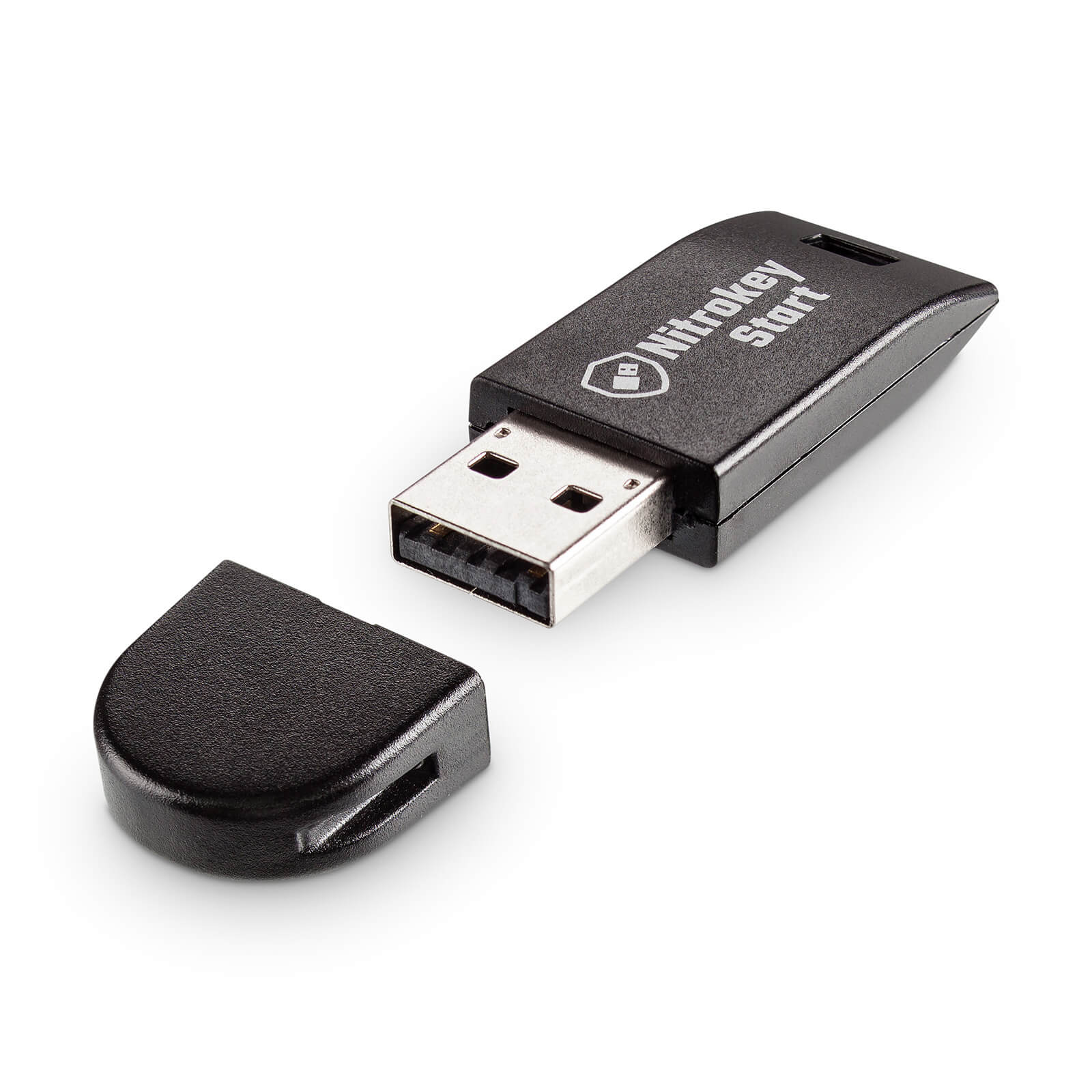 Nitrokey Start
 (no site yet)
 in October 2021. they generally seem to keep up with
shipping. update (august 2022): they rolled out a second line of
laptops (12th gen), first batch shipped, second batch

 ),
and from time-to-time I ve made sure that my code runs on OpenBSD
 too.
Platforms beyond that will likely not be supported at the expense of either
of those two. I ll take fixes for bugs that fix a problem on another
platform, but not damage the code to work around issues / lack of features
on other platforms (like Windows).
 I have mentioned several times in this blog, as well as by other
communication means, that I am very happy with the laptop I bought
(used) about a year and a half ago:
 Yes, I knew from the very beginning that using this laptop would pose
a challenge to me in many ways, as full hardware support for ARM
laptops are nowhere as easy as for plain boring x86 systems. But the
advantages far outweigh the inconvenience (i.e.
 Very few highly-anticipated movies appear in January and February, as the bigger releases are timed so they can be considered for the


 In 2022 I read 34 books (-19% on last year).
In 2021 roughly a quarter of the books I read were written by women. I was
determined to push that ratio in 2022, so I made an effort to try and only
read books by women. I knew that I wouldn't manage that, but by trying to, I
did get the ratio up to 58% (by page count).
I'm not sure what will happen in 2023. My to-read pile has some back-pressure
from books by male authors I postponed reading in 2022 (in particular new works
by Christopher Priest and Adam Roberts). It's possible the ratio will swing
back the other way, which would mean it would not be worth repeating the
experiment. At least if the ratio is the point of the exercise. But perhaps it
isn't: perhaps the useful outcome is more qualitative than quantitative.
I tried to read some new (to me) authors. I really enjoyed Shirley Jackson (The
Haunting of Hill House, We Have Always Lived In The Castle). I Struggled with
Angela Carter's Heroes and Villains although
I plan to return to her other work, in particular, The Bloody Chamber. I
also got through Donna Tartt's The Secret History on the recommendation of a
friend. I had to push through the first 15% or so but it turned out to be worth
it.




 To achieve my