Search Results: "nma"

22 December 2014

Michael Prokop: Ten years of Grml

* On 22nd of October 2004 an event called OS04 took place in Seifenfabrik Graz/Austria and it marked the first official release of the Grml project. Grml was initially started by myself in 2003 I registered the domain on September 16, 2003 (so technically it would be 11 years already :)). It started with a boot-disk, first created by hand and then based on yard. On 4th of October 2004 we had a first presentation of grml 0.09 Codename Bughunter at Kunstlabor in Graz. I managed to talk a good friend and fellow student Martin Hecher into joining me. Soon after Michael Gebetsroither and Andreas Gredler joined and throughout the upcoming years further team members (Nico Golde, Daniel K. Gebhart, Mario Lang, Gerfried Fuchs, Matthias Kopfermann, Wolfgang Scheicher, Julius Plenz, Tobias Klauser, Marcel Wichern, Alexander Wirt, Timo Boettcher, Ulrich Dangel, Frank Terbeck, Alexander Steinb ck, Christian Hofstaedtler) and contributors (Hermann Thomas, Andreas Krennmair, Sven Guckes, Jogi Hofm ller, Moritz Augsburger, ) joined our efforts. Back in those days most efforts went into hardware detection, loading and setting up the according drivers and configurations, packaging software and fighting bugs with lots of reboots (working on our custom /linuxrc for the initrd wasn t always fun). Throughout the years virtualization became more broadly available, which is especially great for most of the testing you need to do when working on your own (meta) distribution. Once upon a time udev became available and solved most of the hardware detection issues for us. Nowadays X.org doesn t even need a xorg.conf file anymore (at least by default). We have to acknowledge that Linux grew up over the years quite a bit (and I m wondering how we ll look back at the systemd discussions in a few years). By having Debian Developers within the team we managed to push quite some work of us back to Debian (the distribution Grml was and still is based on), years before the Debian Derivatives initiative appeared. We never stopped contributing to Debian though and we also still benefit from the Debian Derivatives initiative, like sharing issues and ideas on DebConf meetings. On 28th of May 2009 I myself became an official Debian Developer. Over the years we moved from private self-hosted infrastructure to company-sponsored systems, migrated from Subversion (brr) to Mercurial (2006) to Git (2008). Our Zsh-related work became widely known as grml-zshrc. jenkins.grml.org managed to become a continuous integration/deployment/delivery home e.g. for the dpkg, fai, initramfs-tools, screen and zsh Debian packages. The underlying software for creating Debian packages in a CI/CD way became its own project known as jenkins-debian-glue in August 2011. In 2006 I started grml-debootstrap, which grew into a reliable method for installing plain Debian (nowadays even supporting installation as VM, and one of my customers does tens of deployments per day with grml-debootstrap in a fully automated fashion). So one of the biggest achievements of Grml is from my point of view that it managed to grow several active and successful sub-projects under its umbrella. Nowadays the Grml team consists of 3 Debian Developers Alexander Wirt (formorer), Evgeni Golov (Zhenech) and myself. We couldn t talk Frank Terbeck (ft) into becoming a DM/DD (yet?), but he s an active part of our Grml team nonetheless and does a terrific job with maintaining grml-zshrc as well as helping out in Debian s Zsh packaging (and being a Zsh upstream committer at the same time makes all of that even better :)). My personal conclusion for 10 years of Grml? Back in the days when I was a student Grml was my main personal pet and hobby. Grml grew into an open source project which wasn t known just in Graz/Austria, but especially throughout the German system administration scene. Since 2008 I m working self-employed and mainly working on open source stuff, so I m kind of living a dream, which I didn t even have when I started with Grml in 2003. Nowadays with running my own business and having my own family it s getting harder for me to consider it still a hobby though, instead it s more integrated and part of my business which I personally consider both good and bad at the same time (for various reasons). Thanks so much to anyone of you, who was (and possibly still is) part of the Grml journey! Let s hope for another 10 successful years! Thanks to Max Amanshauser and Christian Hofstaedtler for reading drafts of this.

29 November 2014

Dirk Eddelbuettel: CRAN Task Views for Finance and HPC now (also) on GitHub

The CRAN Task View system is a fine project which Achim Zeileis initiated almost a decade ago. It is described in a short R Journal article in Volume 5, Number 1. I have been editor / maintainer of the Finance task view essentially since the very beginning of these CRAN Task Views, and added the High-Performance Computing one in the fall of 2008. Many, many people have helped by sending suggestions or even patches; email continues to be the main venue for the changes. The maintainers of the Web Technologies task view were, at least as far as I know, the first to make the jump to maintaining the task view on GitHub. Karthik and I briefly talked about this when he was in town a few weeks ago for our joint Software Carpentry workshop at Northwestern. So the topic had been on my mind, but it was only today that I realized that the near-limitless amount of awesome that is pandoc can probably help with maintenance. The task view code by Achim neatly converts the very regular, very XML, very boring original format into somewhat-CRAN-website-specific html. Pandoc, being as versatile as it is, can then make (GitHub-flavoured) markdown out of this, and with a minimal amount of sed magic, we get what we need. And hence we now have these two new repos: Contributions are now most welcome by pull request. You can run the included converter scripts, it differs between both repos only by one constant for the task view / file name. As an illustration, the one for Finance is below.
#!/usr/bin/r
## if you do not have /usr/bin/r from littler, just use Rscript
ctv <- "Finance"
ctvfile  <- paste0(ctv, ".ctv")
htmlfile <- paste0(ctv, ".html")
mdfile   <- "README.md"
## load packages
suppressMessages(library(XML))          # called by ctv
suppressMessages(library(ctv))
r <- getOption("repos")                 # set CRAN mirror
r["CRAN"] <- "http://cran.rstudio.com"
options(repos=r)
check_ctv_packages(ctvfile)             # run the check
## create html file from ctv file
ctv2html(read.ctv(ctvfile), htmlfile)
### these look atrocious, but are pretty straight forward. read them one by one
###  - start from the htmlfile
cmd <- paste0("cat ", htmlfile,
###  - in lines of the form  ^<a href="Word">Word.html</a>
###  - capture the 'Word' and insert it into a larger URL containing an absolute reference to task view 'Word'
  "   sed -e 's ^<a href=\"\\([a-zA-Z]*\\)\\.html <a href=\"http://cran.rstudio.com/web/views/\\1.html\" '   ",
###  - call pandoc, specifying html as input and github-flavoured markdown as output
              "pandoc -s -r html -w markdown_github   ",
###  - deal with the header by removing extra  , replacing  ** with ** and **  with **:              
              "sed -e's/ //g' -e's/ \\*\\*/\\*\\*/g' -e's/\\*\\* /\\*\\* /g' -e's/ $/  /g' ",
###  - make the implicit URL to packages explicit
              "-e's ../packages/ http://cran.rstudio.com/web/packages/ g' ",
###  - write out mdfile
              "> ", mdfile)
system(cmd)                             # run the conversion
unlink(htmlfile)                        # remove temporary html file
cat("Done.\n")
I am quite pleased with this setup---so a quick thanks towards the maintainers of the Web Technologies task view; of course to Achim for creating CRAN Task Views in the first place, and maintaining them all those years; as always to John MacFarlance for the magic that is pandoc; and last but not least of course to anybody who has contributed to the CRAN Task Views.

This post by Dirk Eddelbuettel originated on his Thinking inside the box blog. Please report excessive re-aggregation in third-party for-profit settings.

29 October 2014

Mike Gabriel: Join us at "X2Go: The Gathering 2014"

TL;DR; Those of you who are not able to join "X2Go: The Gathering 2014"... Join us on IRC (#x2go on Freenode) over the coming weekend. We will provide information, URLs to our TinyPads, etc. there. Spontaneous visitors are welcome during the working sessions (please let us know if you plan to come around), but we don't have spare beds anymore for accomodation. (We are still trying hard to set up some sort of video coverage--may it be life streaming or recorded sessions, this is still open, people who can offer help, see below). Our event "X2Go: The Gathering 2014" is approaching quickly. We will meet with a group of 13-15 people (number of people is still slightly fluctuating) at Linux Hotel, Essen. Thanks to the generous offerings of the Linux Hotel [1] to FLOSS community projects, costs of food and accommodation could be kept really low and affordable to many people. We are very happy that people from outside Germany are coming to that meeting (Michael DePaulo from the U.S., Kjetil Fleten (http://fleten.net) from Denmark / Norway). And we are also proud that Martin Wimpress (Mr. Ubuntu MATE Remix) will join our gathering. In advance, I want to send a big THANK YOU to all people who will sponsor our weekend, either by sending gift items, covering travel expenses or providing help and knowledge to make this event a success for the X2Go project and its community around. read more

19 September 2014

Paul Tagliamonte: Docker PostgreSQL Foreign Data Wrapper

For the tl;dr: Docker FDW is a thing. Star it, hack it, try it out. File bugs, be happy. If you want to see what it's like to read, there's some example SQL down below. The question is first, what the heck is a PostgreSQL Foreign Data Wrapper? PostgreSQL Foreign Data Wrappers are plugins that allow C libraries to provide an adaptor for PostgreSQL to talk to an external database. Some folks have used this to wrap stuff like MongoDB, which I always found to be hilarous (and an epic hack). Enter Multicorn During my time at PyGotham, I saw a talk from Wes Chow about something called Multicorn. He was showing off some really neat plugins, such as the git revision history of CPython, and parsed logfiles from some stuff over at Chartbeat. This basically blew my mind. All throughout the talk I was coming up with all sorts of things that I wanted to do -- this whole library is basically exactly what I've been dreaming about for years. I've always wanted to provide a SQL-like interface into querying API data, joining data cross-API using common crosswalks, such as using Capitol Words to query for Legislators, and use the bioguide ids to JOIN against the congress api to get their Twitter account names. My first shot was to Multicorn the new Open Civic Data API I was working on, chuckled and put it aside as a really awesome hack. Enter Docker It wasn't until tianon connected the dots for me and suggested a Docker FDW did I get really excited. Cue a few hours of hacking, and I'm proud to say -- here's Docker FDW. This lets us ask all sorts of really interesting questions out of the API, and might even help folks writing webapps avoid adding too much Docker-aware logic. Abstractions can be fun! Setting it up I'm going to assume you have a working Multicorn, PostgreSQL and Docker setup (including adding the postgres user to the docker group) So, now let's pop open a psql session. Create a database (I called mine dockerfdw, but it can be anything), and let's create some tables. Before we create the tables, we need to let PostgreSQL know where our objects are. This takes a name for the server, and the Python importable path to our FDW.
CREATE SERVER docker_containers FOREIGN DATA WRAPPER multicorn options (
    wrapper 'dockerfdw.wrappers.containers.ContainerFdw');
CREATE SERVER docker_image FOREIGN DATA WRAPPER multicorn options (
    wrapper 'dockerfdw.wrappers.images.ImageFdw');
Now that we have the server in place, we can tell PostgreSQL to create a table backed by the FDW by creating a foreign table. I won't go too much into the syntax here, but you might also note that we pass in some options - these are passed to the constructor of the FDW, letting us set stuff like the Docker host.
CREATE foreign table docker_containers (
    "id"          TEXT,
    "image"       TEXT,
    "name"        TEXT,
    "names"       TEXT[],
    "privileged"  BOOLEAN,
    "ip"          TEXT,
    "bridge"      TEXT,
    "running"     BOOLEAN,
    "pid"         INT,
    "exit_code"   INT,
    "command"     TEXT[]
) server docker_containers options (
    host 'unix:///run/docker.sock'
);
CREATE foreign table docker_images (
    "id"              TEXT,
    "architecture"    TEXT,
    "author"          TEXT,
    "comment"         TEXT,
    "parent"          TEXT,
    "tags"            TEXT[]
) server docker_image options (
    host 'unix:///run/docker.sock'
);
And, now that we have tables in place, we can try to learn something about the Docker containers. Let's start with something fun - a join from containers to images, showing all image tag names, the container names and the ip of the container (if it has one!).
SELECT docker_containers.ip, docker_containers.names, docker_images.tags
  FROM docker_containers
  RIGHT JOIN docker_images
  ON docker_containers.image=docker_images.id;
     ip                   names                               tags                   
-------------+-----------------------------+-----------------------------------------
                                              ruby:latest 
                                              paultag/vcs-mirror:latest 
                /de-openstates-to-ocd         sunlightlabs/scrapers-us-state:latest 
                /ny-openstates-to-ocd         sunlightlabs/scrapers-us-state:latest 
                /ar-openstates-to-ocd         sunlightlabs/scrapers-us-state:latest 
 172.17.0.47    /ms-openstates-to-ocd         sunlightlabs/scrapers-us-state:latest 
 172.17.0.46    /nc-openstates-to-ocd         sunlightlabs/scrapers-us-state:latest 
                /ia-openstates-to-ocd         sunlightlabs/scrapers-us-state:latest 
                /az-openstates-to-ocd         sunlightlabs/scrapers-us-state:latest 
                /oh-openstates-to-ocd         sunlightlabs/scrapers-us-state:latest 
                /va-openstates-to-ocd         sunlightlabs/scrapers-us-state:latest 
 172.17.0.41    /wa-openstates-to-ocd         sunlightlabs/scrapers-us-state:latest 
                /jovial_poincare              <none>:<none> 
                /jolly_goldstine              <none>:<none> 
                /cranky_torvalds              <none>:<none> 
                /backstabbing_wilson          <none>:<none> 
                /desperate_hoover             <none>:<none> 
                /backstabbing_ardinghelli     <none>:<none> 
                /cocky_feynman                <none>:<none> 
                                              paultag/postgres:latest 
                                              debian:testing 
                                              paultag/crank:latest 
                                              <none>:<none> 
                                              <none>:<none> 
                /stupefied_fermat             hackerschool/doorbot:latest 
                /focused_euclid               debian:unstable 
                /focused_babbage              debian:unstable 
                /clever_torvalds              debian:unstable 
                /stoic_tesla                  debian:unstable 
                /evil_torvalds                debian:unstable 
                /foo                          debian:unstable 
(31 rows)
OK, let's see if we can bring this to the next level now. I finally got around to implementing INSERT and DELETE operations, which turned out to be pretty simple to do. Check this out:
DELETE FROM docker_containers;
DELETE 1
This will do a stop + kill after a 10 second hang behind the scenes. It's actually a lot of fun to spawn up a container and terminate it from PostgreSQL.
INSERT INTO docker_containers (name, image) VALUES ('hello', 'debian:unstable') RETURNING id;
                                id                                
------------------------------------------------------------------
 0a903dcf5ae10ee1923064e25ab0f46e0debd513f54860beb44b2a187643ff05
INSERT 0 1
(1 row)
Spawning containers works too - this is still very immature and not super practical, but I figure while I'm showing off, I might as well go all the way.
SELECT ip FROM docker_containers WHERE id='0a903dcf5ae10ee1923064e25ab0f46e0debd513f54860beb44b2a187643ff05';
     ip      
-------------
 172.17.0.12
(1 row)
Success! This is just a taste of what's to come, so please feel free to hack on Docker FDW, tweet me @paultag, file bugs / feature requests. It's currently a bit of a hack, and it's something that I think has long-term potential after some work goes into making sure that this is a rock solid interface to the Docker API.

6 September 2014

Joachim Breitner: ICFP 2014

Another on-my-the-journey-back blog post; this time from the Frankfurt Airport Train Station my flight was delayed (if I knew that I could have watched the remaining Lightning Talks), and so was my train, but despite 5min of running through the Airport just not enough. And now that the free 30 Minutes of Railway Station Internet are used up, I have nothing else to do but blog... Last week I was attending ICFP 2014 in Gothenburg, followed by the Haskell Symposium and the Haskell Implementors Workshop. The justification to attend was the paper on Safe Coercions (joint work with Richard Eisenberg, Simon Peyton Jones and Stephanie Weirich), although Richard got to hold the talk, and did so quite well. So I got to leisurely attend the talks, while fighting the jet-lag that I brought from Portland. There were as expected quite a few interesting talks. Among them the first keynote, Kathleen Fisher on the need for formal methods in cars and toy-quadcopters and unmanned battle helicopters, which made me conclude that my Isabelle skills might eventually become relevant in practical applications. And did you know that if someone gains access to your car s electronics, they can make the seat belt pull you back hard? Stefanie Weirich s keynote (and the subsequent related talks by Jan Stolarek and Richard Eisenberg) on what a dependently typed Haskell would look like and what we could use it for was mouth-watering. I am a bit worried that Haskell will be become a bit obscure for newcomers and people that simply don t want to think about types too much, on the other hand it seems that Haskell as we know it will always stay there, just as a subset of the language. Similarly interesting were refinement types for Haskell (talks by Niki Vazou and by Eric Seidel), in the form of LiquidTypes, something that I have not paid attention to yet. It seems to be a good way for more high assurance in Haskell code. Finally, the Haskell Implementors Workshop had a truckload of exciting developments in and around Haskell: More on GHCJS, Partial type signatures, interactive type-driven development like we know it from Agda, the new Haskell module system and amazing user-defined error messages the latter unfortunately only in Helium, at least for now. But it s not the case that I only sat and listened. During the Haskell Implementors Workshop I held a talk Contributing to GHC with a live demo of me fixing a (tiny) bug in GHC, with the aim of getting more people to hack on GHC (slides, video). The main message here is that it is not that big of deal. And despite me not actually saying much interesting in the talk, I got good feedback afterwards. So if it now actually motivates someone to contribute to GHC, I m even more happier. And then there is of course the Hallway Track. I discussed the issues with fusing a left fold (unfortunately, without a great solution). In order to tackle this problem more systematically, John Wiegley and I created the beginning of a List Fusion Lab , i.e. a bunch of list benchmark and the possibility to compare various implementations (e.g. with different RULES) and various compilers. With that we can hopefully better assess the effect of a change to the list functions. PS: The next train is now also delayed, so I ll likely miss my tram and arrive home even later... PPS: I really have to update my 10 year old picture on my homepage (or redesign it completely). Quite a few people knew my name, but expected someone with shoulder-long hair... PPPS: Haskell is really becoming mainstream: I just talked to a randomly chosen person (the boy sitting next to me in the train), and he is a Haskell enthusiast, building a structured editor for Haskell together with his brother. And all that as a 12th-grader...

23 August 2014

Daniel Pocock: Want to be selected for Google Summer of Code 2015?

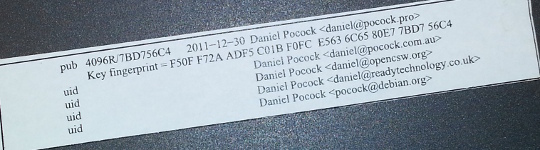
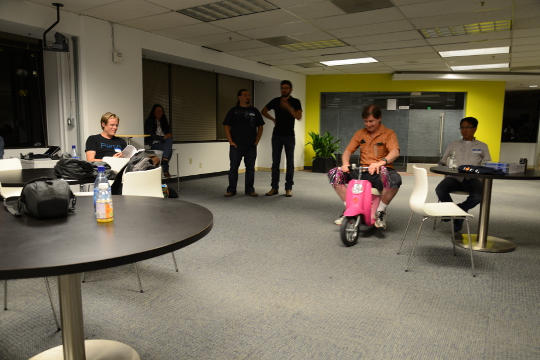
I've mentored a number of students in 2013 and 2014 for Debian and Ganglia and most of the companies I've worked with have run internships and graduate programs from time to time. GSoC 2014 has just finished and with all the excitement, many students are already asking what they can do to prepare and be selected in 2015. My own observation is that the more time the organization has to get to know the student, the more confident they can be selecting that student. Furthermore, the more time that the student has spent getting to know the free software community, the more easily they can complete GSoC. Here I present a list of things that students can do to maximize their chance of selection and career opportunities at the same time. These tips are useful for people applying for GSoC itself and related programs such as GNOME's Outreach Program for Women or graduate placements in companies. Disclaimers There is no guarantee that Google will run the program again in 2015 or any future year. There is no guarantee that any organization or mentor (including myself) will be involved until the official list of organizations is published by Google. Do not follow the advice of web sites that invite you to send pizza or anything else of value to prospective mentors. Following the steps in this page doesn't guarantee selection. That said, people who do follow these steps are much more likely to be considered and interviewed than somebody who hasn't done any of the things in this list. Understand what free software really is You may hear terms like free software and open source software used interchangeably. They don't mean exactly the same thing and many people use the term free software for the wrong things. Not all open source projects meet the definition of free software. Those that don't, usually as a result of deficiencies in their licenses, are fundamentally incompatible with the majority of software that does use genuinely free licenses. Google Summer of Code is about both writing and publishing your code and it is also about community. It is fundamental that you know the basics of licensing and how to choose a free license that empowers the community to collaborate on your code well after GSoC has finished. Please review the definition of free software early on and come back and review it from time to time. The The GNU Project / Free Software Foundation have excellent resources to help you understand what a free software license is and how it works to maximize community collaboration. Don't look for shortcuts There is no shortcut to GSoC selection and there is no shortcut to GSoC completion. The student stipend (USD $5,500 in 2014) is not paid to students unless they complete a minimum amount of valid code. This means that even if a student did find some shortcut to selection, it is unlikely they would be paid without completing meaningful work. If you are the right candidate for GSoC, you will not need a shortcut anyway. Are you the sort of person who can't leave a coding problem until you really feel it is fixed, even if you keep going all night? Have you ever woken up in the night with a dream about writing code still in your head? Do you become irritated by tedious or repetitive tasks and often think of ways to write code to eliminate such tasks? Does your family get cross with you because you take your laptop to Christmas dinner or some other significant occasion and start coding? If some of these statements summarize the way you think or feel you are probably a natural fit for GSoC. An opportunity money can't buy The GSoC stipend will not make you rich. It is intended to make sure you have enough money to survive through the summer and focus on your project. Professional developers make this much money in a week in leading business centers like New York, London and Singapore. When you get to that stage in 3-5 years, you will not even be thinking about exactly how much you made during internships. GSoC gives you an edge over other internships because it involves publicly promoting your work. Many companies still try to hide the potential of their best recruits for fear they will be poached or that they will be able to demand higher salaries. Everything you complete in GSoC is intended to be published and you get full credit for it. Imagine a young musician getting the opportunity to perform on the main stage at a rock festival. This is how the free software community works. It is a meritocracy and there is nobody to hold you back. Having a portfolio of free software that you have created or collaborated on and a wide network of professional contacts that you develop before, during and after GSoC will continue to pay you back for years to come. While other graduates are being screened through group interviews and testing days run by employers, people with a track record in a free software project often find they go straight to the final interview round. Register your domain name and make a permanent email address Free software is all about community and collaboration. Register your own domain name as this will become a focal point for your work and for people to get to know you as you become part of the community. This is sound advice for anybody working in IT, not just programmers. It gives the impression that you are confident and have a long term interest in a technology career. Choosing the provider: as a minimum, you want a provider that offers DNS management, static web site hosting, email forwarding and XMPP services all linked to your domain. You do not need to choose the provider that is linked to your internet connection at home and that is often not the best choice anyway. The XMPP foundation maintains a list of providers known to support XMPP. Create an email address within your domain name. The most basic domain hosting providers will let you forward the email address to a webmail or university email account of your choice. Configure your webmail to send replies using your personalized email address in the From header. Update your ~/.gitconfig file to use your personalized email address in your Git commits. Create a web site and blog Start writing a blog. Host it using your domain name. Some people blog every day, other people just blog once every two or three months. Create links from your web site to your other profiles, such as a Github profile page. This helps reinforce the pages/profiles that are genuinely related to you and avoid confusion with the pages of other developers. Many mentors are keen to see their students writing a weekly report on a blog during GSoC so starting a blog now gives you a head start. Mentors look at blogs during the selection process to try and gain insight into which topics a student is most suitable for. Create a profile on Github Github is one of the most widely used software development web sites. Github makes it quick and easy for you to publish your work and collaborate on the work of other people. Create an account today and get in the habbit of forking other projects, improving them, committing your changes and pushing the work back into your Github account. Github will quickly build a profile of your commits and this allows mentors to see and understand your interests and your strengths. In your Github profile, add a link to your web site/blog and make sure the email address you are using for Git commits (in the ~/.gitconfig file) is based on your personal domain. Start using PGP Pretty Good Privacy (PGP) is the industry standard in protecting your identity online. All serious free software projects use PGP to sign tags in Git, to sign official emails and to sign official release files. The most common way to start using PGP is with the GnuPG (GNU Privacy Guard) utility. It is installed by the package manager on most Linux systems. When you create your own PGP key, use the email address involving your domain name. This is the most permanent and stable solution. Print your key fingerprint using the gpg-key2ps command, it is in the signing-party package on most Linux systems. Keep copies of the fingerprint slips with you. This is what my own PGP fingerprint slip looks like. You can also print the key fingerprint on a business card for a more professional look. Using PGP, it is recommend that you sign any important messages you send but you do not have to encrypt the messages you send, especially if some of the people you send messages to (like family and friends) do not yet have the PGP software to decrypt them. If using the Thunderbird (Icedove) email client from Mozilla, you can easily send signed messages and validate the messages you receive using the Enigmail plugin. Get your PGP key signed Once you have a PGP key, you will need to find other developers to sign it. For people I mentor personally in GSoC, I'm keen to see that you try and find another Debian Developer in your area to sign your key as early as possible. Free software events Try and find all the free software events in your area in the months between now and the end of the next Google Summer of Code season. Aim to attend at least two of them before GSoC. Look closely at the schedules and find out about the individual speakers, the companies and the free software projects that are participating. For events that span more than one day, find out about the dinners, pub nights and other social parts of the event. Try and identify people who will attend the event who have been GSoC mentors or who intend to be. Contact them before the event, if you are keen to work on something in their domain they may be able to make time to discuss it with you in person. Take your PGP fingerprint slips. Even if you don't participate in a formal key-signing party at the event, you will still find some developers to sign your PGP key individually. You must take a photo ID document (such as your passport) for the other developer to check the name on your fingerprint but you do not give them a copy of the ID document. Events come in all shapes and sizes. FOSDEM is an example of one of the bigger events in Europe, linux.conf.au is a similarly large event in Australia. There are many, many more local events such as the Debian France mini-DebConf in Lyon, 2015. Many events are either free or free for students but please check carefully if there is a requirement to register before attending. On your blog, discuss which events you are attending and which sessions interest you. Write a blog during or after the event too, including photos. Quantcast generously hosted the Ganglia community meeting in San Francisco, October 2013. We had a wild time in their offices with mini-scooters, burgers, beers and the Ganglia book. That's me on the pink mini-scooter and Bernard Li, one of the other Ganglia GSoC 2014 admins is on the right. Install Linux GSoC is fundamentally about free software. Linux is to free software what a tree is to the forest. Using Linux every day on your personal computer dramatically increases your ability to interact with the free software community and increases the number of potential GSoC projects that you can participate in. This is not to say that people using Mac OS or Windows are unwelcome. I have worked with some great developers who were not Linux users. Linux gives you an edge though and the best time to gain that edge is now, while you are a student and well before you apply for GSoC. If you must run Windows for some applications used in your course, it will run just fine in a virtual machine using Virtual Box, a free software solution for desktop virtualization. Use Linux as the primary operating system. Here are links to download ISO DVD (and CD) images for some of the main Linux distributions: If you are nervous about getting started with Linux, install it on a spare PC or in a virtual machine before you install it on your main PC or laptop. Linux is much less demanding on the hardware than Windows so you can easily run it on a machine that is 5-10 years old. Having just 4GB of RAM and 20GB of hard disk is usually more than enough for a basic graphical desktop environment although having better hardware makes it faster. Your experiences installing and running Linux, especially if it requires some special effort to make it work with some of your hardware, make interesting topics for your blog. Decide which technologies you know best Personally, I have mentored students working with C, C++, Java, Python and JavaScript/HTML5. In a GSoC program, you will typically do most of your work in just one of these languages. From the outset, decide which language you will focus on and do everything you can to improve your competence with that language. For example, if you have already used Java in most of your course, plan on using Java in GSoC and make sure you read Effective Java (2nd Edition) by Joshua Bloch. Decide which themes appeal to you Find a topic that has long-term appeal for you. Maybe the topic relates to your course or maybe you already know what type of company you would like to work in. Here is a list of some topics and some of the relevant software projects:


  • System administration, servers and networking: consider projects involving monitoring, automation, packaging. Ganglia is a great community to get involved with and you will encounter the Ganglia software in many large companies and academic/research networks. Contributing to a Linux distribution like Debian or Fedora packaging is another great way to get into system administration.
  • Desktop and user interface: consider projects involving window managers and desktop tools or adding to the user interface of just about any other software.
  • Big data and data science: this can apply to just about any other theme. For example, data science techniques are frequently used now to improve system administration.
  • Business and accounting: consider accounting, CRM and ERP software.
  • Finance and trading: consider projects like R, market data software like OpenMAMA and connectivity software (Apache Camel)
  • Real-time communication (RTC), VoIP, webcam and chat: look at the JSCommunicator or the Jitsi project
  • Web (JavaScript, HTML5): look at the JSCommunicator
Before the GSoC application process begins, you should aim to learn as much as possible about the theme you prefer and also gain practical experience using the software relating to that theme. For example, if you are attracted to the business and accounting theme, install the PostBooks suite and get to know it. Maybe you know somebody who runs a small business: help them to upgrade to PostBooks and use it to prepare some reports. Make something Make some small project, less than two week's work, to demonstrate your skills. It is important to make something that somebody will use for a practical purpose, this will help you gain experience communicating with other users through Github. For an example, see the servlet Juliana Louback created for fixing phone numbers in December 2013. It has since been used as part of the Lumicall web site and Juliana was selected for a GSoC 2014 project with Debian. There is no better way to demonstrate to a prospective mentor that you are ready for GSoC than by completing and publishing some small project like this yourself. If you don't have any immediate project ideas, many developers will also be able to give you tips on small projects like this that you can attempt, just come and ask us on one of the mailing lists. Ideally, the project will be something that you would use anyway even if you do not end up participating in GSoC. Such projects are the most motivating and rewarding and usually end up becoming an example of your best work. To continue the example of somebody with a preference for business and accounting software, a small project you might create is a plugin or extension for PostBooks. Getting to know prospective mentors Many web sites provide useful information about the developers who contribute to free software projects. Some of these developers may be willing to be a GSoC mentor. For example, look through some of the following: Getting on the mentor's shortlist Once you have identified projects that are interesting to you and developers who work on those projects, it is important to get yourself on the developer's shortlist. Basically, the shortlist is a list of all students who the developer believes can complete the project. If I feel that a student is unlikely to complete a project or if I don't have enough information to judge a student's probability of success, that student will not be on my shortlist. If I don't have any student on my shortlist, then a project will not go ahead at all. If there are multiple students on the shortlist, then I will be looking more closely at each of them to try and work out who is the best match. One way to get a developer's attention is to look at bug reports they have created. Github makes it easy to see complaints or bug reports they have made about their own projects or other projects they depend on. Another way to do this is to search through their code for strings like FIXME and TODO. Projects with standalone bug trackers like the Debian bug tracker also provide an easy way to search for bug reports that a specific person has created or commented on. Once you find some relevant bug reports, email the developer. Ask if anybody else is working on those issues. Try and start with an issue that is particularly easy and where the solution is interesting for you. This will help you learn to compile and test the program before you try to fix any more complicated bugs. It may even be something you can work on as part of your academic program. Find successful projects from the previous year Contact organizations and ask them which GSoC projects were most successful. In many organizations, you can find the past students' project plans and their final reports published on the web. Read through the plans submitted by the students who were chosen. Then read through the final reports by the same students and see how they compare to the original plans. Start building your project proposal now Don't wait for the application period to begin. Start writing a project proposal now. When writing a proposal, it is important to include several things:
  • Think big: what is the goal at the end of the project? Does your work help the greater good in some way, such as increasing the market share of Linux on the desktop?
  • Details: what are specific challenges? What tools will you use?
  • Time management: what will you do each week? Are there weeks where you will not work on GSoC due to vacation or other events? These things are permitted but they must be in your plan if you know them in advance. If an accident or death in the family cut a week out of your GSoC project, which work would you skip and would your project still be useful without that? Having two weeks of flexible time in your plan makes it more resilient against interruptions.
  • Communication: are you on mailing lists, IRC and XMPP chat? Will you make a weekly report on your blog?
  • Users: who will benefit from your work?
  • Testing: who will test and validate your work throughout the project? Ideally, this should involve more than just the mentor.
If your project plan is good enough, could you put it on Kickstarter or another crowdfunding site? This is a good test of whether or not a project is going to be supported by a GSoC mentor. Learn about packaging and distributing software Packaging is a vital part of the free software lifecycle. It is very easy to upload a project to Github but it takes more effort to have it become an official package in systems like Debian, Fedora and Ubuntu. Packaging and the communities around Linux distributions help you reach out to users of your software and get valuable feedback and new contributors. This boosts the impact of your work. To start with, you may want to help the maintainer of an existing package. Debian packaging teams are existing communities that work in a team and welcome new contributors. The Debian Mentors initiative is another great starting place. In the Fedora world, the place to start may be in one of the Special Interest Groups (SIGs). Think from the mentor's perspective After the application deadline, mentors have just 2 or 3 weeks to choose the students. This is actually not a lot of time to be certain if a particular student is capable of completing a project. If the student has a published history of free software activity, the mentor feels a lot more confident about choosing the student. Some mentors have more than one good student while other mentors receive no applications from capable students. In this situation, it is very common for mentors to send each other details of students who may be suitable. Once again, if a student has a good Github profile and a blog, it is much easier for mentors to try and match that student with another project. GSoC logo generic Conclusion Getting into the world of software engineering is much like joining any other profession or even joining a new hobby or sporting activity. If you run, you probably have various types of shoe and a running watch and you may even spend a couple of nights at the track each week. If you enjoy playing a musical instrument, you probably have a collection of sheet music, accessories for your instrument and you may even aspire to build a recording studio in your garage (or you probably know somebody else who already did that). The things listed on this page will not just help you walk the walk and talk the talk of a software developer, they will put you on a track to being one of the leaders. If you look over the profiles of other software developers on the Internet, you will find they are doing most of the things on this page already. Even if you are not selected for GSoC at all or decide not to apply, working through the steps on this page will help you clarify your own ideas about your career and help you make new friends in the software engineering community.


29 July 2014

Christian Perrier: Developers per country (July 2014)

This is time again for my annual report about the number of developers per country. This is now the sixth edition of this report. Former editions: So, here we are with the July 2014 version, sorted by the ratio of *active* developers per million population for each country.
Act: number of active developers
Dev: total number of developers
A/M: number of active devels per million pop.
D/M: number of devels per million pop.
2009: rank in 2009
2010: rank in 2010
2011: rank in 2011 (June)
2012: rank in 2012 (June)
2013: rank in 2012 (July)
2014: rank now
Code Name Population Act Dev Dev Act/Million Dev/Million 2009 2010 June 2011 June 2012 July 2013 July 2014
fi Finland 5259250 19 31 3,61 5,89 1 1 1 1 1 1
ie Ireland 4670976 13 17 2,78 3,64 13 9 6 2 2 2
nz New Zealand 4331600 11 15 2,54 3,46 4 3 5 7 7 3 *
mq Martinique 396404 1 1 2,52 2,52

3 4 4 4
se Sweden 9088728 22 37 2,42 4,07 3 6 7 5 5 5
ch Switzerland 7870134 19 29 2,41 3,68 2 2 2 3 3 6 *
no Norway 4973029 11 14 2,21 2,82 5 4 4 6 6 7 *
at Austria 8217280 18 29 2,19 3,53 6 8 10 10 10 8 *
de Germany 81471834 164 235 2,01 2,88 7 7 9 9 8 9 *
lu Luxemburg 503302 1 1 1,99 1,99 8 5 8 8 9 10 *
fr France 65350000 101 131 1,55 2 12 12 11 11 11 11
au Australia 22607571 32 60 1,42 2,65 9 10 12 12 12 12
be Belgium 11071483 14 17 1,26 1,54 10 11 13 13 13 13
uk United-Kingdom 62698362 77 118 1,23 1,88 14 14 14 14 14 14
nl Netherlands 16728091 18 40 1,08 2,39 11 13 15 15 15 15
ca Canada 33476688 34 63 1,02 1,88 15 15 17 16 16 16
dk Denmark 5529888 5 10 0,9 1,81 17 17 16 17 17 17
es Spain 46754784 34 56 0,73 1,2 16 16 19 18 18 18
it Italy 59464644 36 52 0,61 0,87 23 22 22 19 19 19
hu Hungary 10076062 6 12 0,6 1,19 18 25 26 20 24 20 *
cz Czech Rep 10190213 6 6 0,59 0,59 21 20 21 21 20 21 *
us USA 313232044 175 382 0,56 1,22 19 21 25 24 22 22
il Israel 7740900 4 6 0,52 0,78 24 24 24 25 23 23
hr Croatia 4290612 2 2 0,47 0,47 20 18 18 26 25 24 *
lv Latvia 2204708 1 1 0,45 0,45 26 26 27 27 26 25 *
bg Bulgaria 7364570 3 3 0,41 0,41 25 23 23 23 27 26 *
sg Singapore 5183700 2 2 0,39 0,39


33 33 27 *
uy Uruguay 3477778 1 2 0,29 0,58 22 27 28 28 28 28
pl Poland 38441588 11 15 0,29 0,39 29 29 30 30 30 29 *
jp Japan 127078679 36 52 0,28 0,41 30 28 29 29 29 30 *
lt Lithuania 3535547 1 1 0,28 0,28 28 19 20 22 21 31 *
gr Greece 10787690 3 4 0,28 0,37 33 38 34 35 35 32 *
cr Costa Rica 4301712 1 1 0,23 0,23 31 30 31 31 31 33 *
by Belarus 9577552 2 2 0,21 0,21 35 36 39 39 32 34 *
ar Argentina 40677348 8 10 0,2 0,25 34 33 35 32 37 35 *
pt Portugal 10561614 2 4 0,19 0,38 27 32 32 34 34 36 *
sk Slovakia 5477038 1 1 0,18 0,18 32 31 33 36 36 37 *
rs Serbia 7186862 1 1 0,14 0,14


38 38
tw Taiwan 23040040 3 3 0,13 0,13 37 34 37 37 39 39
br Brazil 192376496 18 21 0,09 0,11 36 35 38 38 40 40
cu Cuba 11241161 1 1 0,09 0,09
38 41 41 41 41
co Colombia 45566856 4 5 0,09 0,11 41 44 46 47 46 42 *
kr South Korea 48754657 4 6 0,08 0,12 39 39 42 42 42 43 *
gt Guatemala 13824463 1 1 0,07 0,07


43 44 *
ec Ecuador 15007343 1 1 0,07 0,07
40 43 43 45 45
cl Chile 16746491 1 2 0,06 0,12 42 41 44 44 47 46 *
za South Africa 50590000 3 10 0,06 0,2 38 48 48 48 48 47 *
ru Russia 143030106 8 9 0,06 0,06 43 42 47 45 49 48 *
mg Madagascar 21281844 1 1 0,05 0,05 44 37 40 40 50 49 *
ro Romania 21904551 1 2 0,05 0,09 45 43 45 46 51 50 *
ve Venezuela 28047938 1 1 0,04 0,04 40 45 50 49 44 51 *
my Malaysia 28250000 1 1 0,04 0,04

49 50 52 52
pe Peru 29907003 1 1 0,03 0,03 46 46 51 51 53 53
tr Turkey 74724269 2 2 0,03 0,03 47 47 52 52 54 54
ua Ukraine 45134707 1 1 0,02 0,02 48 53 58 59 55 55
th Thailand 66720153 1 2 0,01 0,03 50 50 54 54 56 56
eg Egypt 80081093 1 3 0,01 0,04 51 51 55 55 57 57
mx Mexico 112336538 1 1 0,01 0,01 49 49 53 53 58 58
cn China 1344413526 10 14 0,01 0,01 53 53 57 56 59 59
in India 1210193422 8 9 0,01 0,01 52 52 56 57 60 60
sv El Salvador 7066403 0 1 0 0,14

36 58 61 61


969 1561 62,08%


A few interesting facts:

Russell Coker: Happiness and Lecture Questions

I just attended a lecture about happiness comparing Australia and India at the Australia India Institute [1]. The lecture was interesting but the questions were so bad that it makes a good case for entirely banning questions from public lectures. Based on this and other lectures I ve attended I ve written a document about how to recognise worthless questions and cut them off early [2]. As you might expect from a lecture on happiness there were plenty of stupid comments from the audience about depression, as if happiness is merely the absence of depression. Then they got onto stupidity about suicide. One question claimed that Australia has a high suicide rate, Wikipedia however places Australia 49th out of 110 countries, that means Australia is slightly above the median for suicide rates per country. Given some of the dubious statistics in the list (for example the countries claiming to have no suicides and the low numbers reported by some countries with extreme religious policies) I don t think we can be sure that Australia would be above the median if we had better statistics. Another question claimed that Sweden had the highest suicide rate in Europe, while Greenland, Belgium, Finland, Austria, France, Norway, Denmark, Iceland, and most of Eastern Europe are higher on the list. But the bigger problem in regard to discussing suicide is that the suicide rate isn t about happiness. When someone kills themself because they have a terminal illness that doesn t mean that they were unhappy for the majority of their life and doesn t mean that they were any unhappier than the terminally ill people who don t do that. Some countries have a culture that is more positive towards suicide which would increase the incidence, Japan for example. While people who kill themselves in Japan are probably quite unhappy at the time I don t think that there is any reason to believe that they are more unhappy than people in other countries who only keep living because suicide is considered to be wrong. It seems to me that the best strategy when giving or MCing a lecture about a potentially contentious topic is to plan ahead for what not to discuss. For a lecture about happiness it would make sense to rule out all discussion of suicide, anti-depressants, and related issues as they aren t relevant to the discussion and can t be handled in an appropriate manner in question time.

27 July 2014

Christian Perrier: Developers per country (July 2014)

This is time again for my annual report about the number of developers per country. This is now the sixth edition of this report. Former editions: So, here we are with the July 2014 version, sorted by the ratio of *active* developers per million population for each country.
Act: number of active developers
Dev: total number of developers
A/M: number of active devels per million pop.
D/M: number of devels per million pop.
2009: rank in 2009
2010: rank in 2010
2011: rank in 2011 (June)
2012: rank in 2012 (June)
2013: rank in 2012 (July)
2014: rank now
Code Name Population Act Dev Dev Act/Million Dev/Million 2009 2010 June 2011 June 2012 July 2013 July 2014
fi Finland 5259250 19 31 3,61 5,89 1 1 1 1 1 1
ie Ireland 4670976 13 17 2,78 3,64 13 9 6 2 2 2
nz New Zealand 4331600 11 15 2,54 3,46 4 3 5 7 7 3 *
mq Martinique 396404 1 1 2,52 2,52

3 4 4 4
se Sweden 9088728 22 37 2,42 4,07 3 6 7 5 5 5
ch Switzerland 7870134 19 29 2,41 3,68 2 2 2 3 3 6 *
no Norway 4973029 11 14 2,21 2,82 5 4 4 6 6 7 *
at Austria 8217280 18 29 2,19 3,53 6 8 10 10 10 8 *
de Germany 81471834 164 235 2,01 2,88 7 7 9 9 8 9 *
lu Luxemburg 503302 1 1 1,99 1,99 8 5 8 8 9 10 *
fr France 65350000 101 131 1,55 2 12 12 11 11 11 11
au Australia 22607571 32 60 1,42 2,65 9 10 12 12 12 12
be Belgium 11071483 14 17 1,26 1,54 10 11 13 13 13 13
uk United-Kingdom 62698362 77 118 1,23 1,88 14 14 14 14 14 14
nl Netherlands 16728091 18 40 1,08 2,39 11 13 15 15 15 15
ca Canada 33476688 34 63 1,02 1,88 15 15 17 16 16 16
dk Denmark 5529888 5 10 0,9 1,81 17 17 16 17 17 17
es Spain 46754784 34 56 0,73 1,2 16 16 19 18 18 18
it Italy 59464644 36 52 0,61 0,87 23 22 22 19 19 19
hu Hungary 10076062 6 12 0,6 1,19 18 25 26 20 24 20 *
cz Czech Rep 10190213 6 6 0,59 0,59 21 20 21 21 20 21 *
us USA 313232044 175 382 0,56 1,22 19 21 25 24 22 22
il Israel 7740900 4 6 0,52 0,78 24 24 24 25 23 23
hr Croatia 4290612 2 2 0,47 0,47 20 18 18 26 25 24 *
lv Latvia 2204708 1 1 0,45 0,45 26 26 27 27 26 25 *
bg Bulgaria 7364570 3 3 0,41 0,41 25 23 23 23 27 26 *
sg Singapore 5183700 2 2 0,39 0,39


33 33 27 *
uy Uruguay 3477778 1 2 0,29 0,58 22 27 28 28 28 28
pl Poland 38441588 11 15 0,29 0,39 29 29 30 30 30 29 *
jp Japan 127078679 36 52 0,28 0,41 30 28 29 29 29 30 *
lt Lithuania 3535547 1 1 0,28 0,28 28 19 20 22 21 31 *
gr Greece 10787690 3 4 0,28 0,37 33 38 34 35 35 32 *
cr Costa Rica 4301712 1 1 0,23 0,23 31 30 31 31 31 33 *
by Belarus 9577552 2 2 0,21 0,21 35 36 39 39 32 34 *
ar Argentina 40677348 8 10 0,2 0,25 34 33 35 32 37 35 *
pt Portugal 10561614 2 4 0,19 0,38 27 32 32 34 34 36 *
sk Slovakia 5477038 1 1 0,18 0,18 32 31 33 36 36 37 *
rs Serbia 7186862 1 1 0,14 0,14


38 38
tw Taiwan 23040040 3 3 0,13 0,13 37 34 37 37 39 39
br Brazil 192376496 18 21 0,09 0,11 36 35 38 38 40 40
cu Cuba 11241161 1 1 0,09 0,09
38 41 41 41 41
co Colombia 45566856 4 5 0,09 0,11 41 44 46 47 46 42 *
kr South Korea 48754657 4 6 0,08 0,12 39 39 42 42 42 43 *
gt Guatemala 13824463 1 1 0,07 0,07


43 44 *
ec Ecuador 15007343 1 1 0,07 0,07
40 43 43 45 45
cl Chile 16746491 1 2 0,06 0,12 42 41 44 44 47 46 *
za South Africa 50590000 3 10 0,06 0,2 38 48 48 48 48 47 *
ru Russia 143030106 8 9 0,06 0,06 43 42 47 45 49 48 *
mg Madagascar 21281844 1 1 0,05 0,05 44 37 40 40 50 49 *
ro Romania 21904551 1 2 0,05 0,09 45 43 45 46 51 50 *
ve Venezuela 28047938 1 1 0,04 0,04 40 45 50 49 44 51 *
my Malaysia 28250000 1 1 0,04 0,04

49 50 52 52
pe Peru 29907003 1 1 0,03 0,03 46 46 51 51 53 53
tr Turkey 74724269 2 2 0,03 0,03 47 47 52 52 54 54
ua Ukraine 45134707 1 1 0,02 0,02 48 53 58 59 55 55
th Thailand 66720153 1 2 0,01 0,03 50 50 54 54 56 56
eg Egypt 80081093 1 3 0,01 0,04 51 51 55 55 57 57
mx Mexico 112336538 1 1 0,01 0,01 49 49 53 53 58 58
cn China 1344413526 10 14 0,01 0,01 53 53 57 56 59 59
in India 1210193422 8 9 0,01 0,01 52 52 56 57 60 60
sv El Salvador 7066403 0 1 0 0,14

36 58 61 61


969 1561 62,08%


A few interesting facts:

24 July 2014

Martin Pitt: vim config for Markdown+LaTeX pandoc editing

I have used LaTeX and latex-beamer for pretty much my entire life of document and presentation production, i. e. since about my 9th school grade. I ve always found the LaTeX syntax a bit clumsy, but with good enough editor shortcuts to insert e. g. \begin itemize \item...\end itemize with just two keystrokes, it has been good enough for me. A few months ago a friend of mine pointed out pandoc to me, which is just simply awesome. It can convert between a million document formats, but most importantly take Markdown and spit out LaTeX, or directly PDF (through an intermediate step of building a LaTeX document and calling pdftex). It also has a template for beamer. Documents now look soo much more readable and are easier to write! And you can always directly write LaTeX commands without any fuss, so that you can use markdown for the structure/headings/enumerations/etc., and LaTeX for formulax, XYTex and the other goodies. That s how it should always should have been! So last night I finally sat down and created a vim config for it:

"-- pandoc Markdown+LaTeX -------------------------------------------
function s:MDSettings()
    inoremap <buffer> <Leader>n \note[item] <Esc>i
    noremap <buffer> <Leader>b :! pandoc -t beamer % -o %<.pdf<CR><CR>
    noremap <buffer> <Leader>l :! pandoc -t latex % -o %<.pdf<CR>
    noremap <buffer> <Leader>v :! evince %<.pdf 2>&1 >/dev/null &<CR><CR>
    " adjust syntax highlighting for LaTeX parts
    "   inline formulas:
    syntax region Statement oneline matchgroup=Delimiter start="\$" end="\$"
    "   environments:
    syntax region Statement matchgroup=Delimiter start="\\begin .* " end="\\end .* " contains=Statement
    "   commands:
    syntax region Statement matchgroup=Delimiter start=" " end=" " contains=Statement
endfunction
autocmd BufRead,BufNewFile *.md setfiletype markdown
autocmd FileType markdown :call <SID>MDSettings()
That gives me good enough (with some quirks) highlighting without trying to interpret TeX stuff as Markdown, and shortcuts for calling pandoc and evince. Improvements appreciated!

21 July 2014

Steve Kemp: An alternative to devilspie/devilspie2

Recently I was updating my dotfiles, because I wanted to ensure that media-players were "always on top", when launched, as this suits the way I work. For many years I've used devilspie to script the placement of new windows, and once I googled a recipe I managed to achieve my aim. However during the course of my googling I discovered that devilspie is unmaintained, and has been replaced by something using Lua - something I like. I'm surprised I hadn't realized that the project was dead, although I've always hated the configuration syntax it is something that I've used on a constant basis since I found it. Unfortunately the replacement, despite using Lua, and despite being functional just didn't seem to gell with me. So I figured "How hard could it be?". In the past I've written softare which iterated over all (visible) windows, and obviously I'm no stranger to writing Lua bindings. However I did run into a snag. My initial implementation did two things: This worked. This worked well. This worked too well. The problem I ran into was that if I wrote something like "Move window 'emacs' to desktop 2" that action would be applied, over and over again. So if I launched emacs, and then manually moved the window to desktop3 it would jump back! In short I needed to add a "stop()" function, which would cause further actions against a given window to cease. (By keeping a linked list of windows-to-ignore, and avoiding processing them.) The code did work, but it felt wrong to have an ever-growing linked-list of processed windows. So I figured I'd look at the alternative - the original devilspie used libwnck to operate. That library allows you to nominate a callback to be executed every time a new window is created. If you apply your magic only on a window-create event - well you don't need to bother caching prior-windows. So in conclusion : I think my code is better than devilspie2 because it is smaller, simpler, and does things more neatly - for example instead of a function to get geometry and another to set it, I use one. (e.g. "xy()" returns the position of a window, but xy(3,3) sets it.). kpie also allows you to run as a one-off job, and using the simple primitives I wrote a file to dump your windows, and their size/placement, which looks like this:
shelob ~/git/kpie $ ./kpie --single ./samples/dump.lua
-- Screen width : 1920
-- Screen height: 1080
..
if ( ( window_title() == "Buddy List" ) and
     ( window_class() == "Pidgin" ) and
     ( window_application() == "Pidgin" ) ) then
     xy(1536,24 )
     size(384,1032 )
     workspace(2)
end
if ( ( window_title() == "feeds" ) and
     ( window_class() == "Pidgin" ) and
     ( window_application() == "Pidgin" ) ) then
     xy(1,24 )
     size(1536,1032 )
     workspace(2)
end
..
As you can see that has dumped all my windows, along with their current state. This allows a simple starting-point - Configure your windows the way you want them, then dump them to a script file. Re-run that script file and your windows will be set back the way they were! (Obviously there might be tweaks required.) I used that starting-point to define a simple recipe for configuring pidgin, which is more flexible than what I ever had with pidgin, and suits my tastes. Bug-reports welcome.

19 July 2014

Vasudev Kamath: Stop messing with my settings Network Manager

I use a laptop with Atheros wifi card with ath9k driver. I use hostapd to convert my laptop wifi into AP (Access point) so I can share network with my Nexus 7 and Kindle. This has been working fine for quite some time till my recent update. After recent system update (I use Debian Sid), I couldn't for some reason convert my wifi into AP so my device can connect. I can't find anything in log nor in hostapd debug messages which is useful to trouble shoot the issue. Every time I start the laptop my wifi card will be blocked by RF-KILL and I have manually unblock (both hard and soft). The script which I use to convert my Wifi into AP is below

#Initial wifi interface configuration
ifconfig "$1" up 192.168.2.1 netmask 255.255.255.0
sleep 2
# start dhcp
sudo systemctl restart dnsmasq.service
iptables --flush
iptables --table nat --flush
iptables --delete-chain
iptables -t nat -A POSTROUTING -o "$2" -j MASQUERADE
iptables -A FORWARD -i "$1" -j ACCEPT
sysctl -w net.ipv4.ip_forward=1
#start hostapd
hostapd /etc/hostapd/hostapd.conf  &> /dev/null &
I tried rebooting the laptop and for some time I managed to convert my wifi into AP, I noticed at same time that Network Manager is not started once laptop is booted, yeah this also started happening after recent upgrade which I guess is the black magic of systemd. After some time I noticed wifi has went down and now I can't bring it up because its blocked by RF-KILL. After checking the syslog I noticed following lines.
Jul 18 23:09:30 rudra kernel: [ 1754.891060] IPv6: ADDRCONF(NETDEV_CHANGE): wlan0: link becomes ready
Jul 18 23:09:30 rudra NetworkManager[5485]: <info> (mon.wlan0): using nl80211 for WiFi device control
Jul 18 23:09:30 rudra NetworkManager[5485]: <info> (mon.wlan0): driver supports Access Point (AP) mode
Jul 18 23:09:30 rudra NetworkManager[5485]: <info> (mon.wlan0): new 802.11 WiFi device (driver: 'ath9k' ifindex: 10)
Jul 18 23:09:30 rudra NetworkManager[5485]: <info> (mon.wlan0): exported as /org/freedesktop/NetworkManager/Devices/8
Jul 18 23:09:30 rudra NetworkManager[5485]: <info> (mon.wlan0): device state change: unmanaged -> unavailable (reason 'managed') [10 20 2]
Jul 18 23:09:30 rudra NetworkManager[5485]: <info> (mon.wlan0): preparing device
Jul 18 23:09:30 rudra NetworkManager[5485]: <info> devices added (path: /sys/devices/pci0000:00/0000:00:1c.1/0000:04:00.0/net/mon.wlan0, iface: mon.wlan0)
Jul 18 23:09:30 rudra NetworkManager[5485]: <info> device added (path: /sys/devices/pci0000:00/0000:00:1c.1/0000:04:00.0/net/mon.wlan0, iface: mon.wlan0): no ifupdown configuration found.
Jul 18 23:09:33 rudra ModemManager[891]: <warn>  Couldn't find support for device at '/sys/devices/pci0000:00/0000:00:1c.1/0000:04:00.0': not supported by any plugin
Well I couldn't figure out much but it looks like NetworkManager has come up and after seeing interface mon.wlan0, a monitoring interface created by hostapd to monitor the AP goes mad and tries to do something with it. I've no clue what it is doing and don't have enough patience to debug that. Probably some expert can give me hints on this. So as a last resort I purged the NetworkManager completely from the system and settled back to good old wicd and rebooted the system. After reboot wifi card is happy and is not blocked by RF-KILL and now I can convert it AP and use it as long as I wish without any problems. Wicd is not a great tool but its good enough to get the job done and does only what is asked to it unlike the NetworkManager. So in short
NetworkManager please stop f***ing with my settings and stop acting oversmart.

16 July 2014

Matthias Klumpp: AppStream 0.7 specification and library released

appstream-logoToday I am very happy to announce the release of AppStream 0.7, the second-largest release (judging by commit number) after 0.6. AppStream 0.7 brings many new features for the specification, adds lots of good stuff to libappstream, introduces a new libappstream-qt library for Qt developers and, as always, fixes some bugs. Unfortunately we broke the API/ABI of libappstream, so please adjust your code accordingly. Apart from that, any other changes are backwards-compatible. So, here is an overview of what s new in AppStream 0.7: Specification changes Distributors may now specify a new <languages/> tag in their distribution XML, providing information about the languages a component supports and the completion-percentage for the language. This allows software-centers to apply smart filtering on applications to highlight the ones which are available in the users native language. A new addon component type was added to represent software which is designed to be used together with a specific other application (think of a Firefox addon or GNOME-Shell extension). Software-center applications can group the addons together with their main application to provide an easy way for users to install additional functionality for existing applications. The <provides/> tag gained a new dbus item-type to expose D-Bus interface names the component provides to the outside world. This means in future it will be possible to search for components providing a specific dbus service:
$ appstream-index what-provides dbus org.freedesktop.PackageKit.desktop system
(if you are using the cli tool) A <developer_name/> tag was added to the generic component definition to define the name of the component developer in a human-readable form. Possible values are, for example The KDE Community , GNOME Developers or even the developer s full name. This value can be (optionally) translated and will be displayed in software-centers. An <update_contact/> tag was added to the specification, to provide a convenient way for distributors to reach upstream to talk about changes made to their metadata or issues with the latest software update. This tag was already used by some projects before, and has now been added to the official specification. Timestamps in <release/> tags must now be UNIX epochs, YYYYMMDD is no longer valid (fortunately, everyone is already using UNIX epochs). Last but not least, the <pkgname/> tag is now allowed multiple times per component. We still recommend to create metapackages according to the contents the upstream metadata describes and place the file there. However, in some cases defining one component to be in multiple packages is a short way to make metadata available correctly without excessive package-tuning (which can become difficult if a <provides/> tag needs to be satisfied). As small sidenote: The multiarch path in /usr/share/appdata is now deprecated, because we think that we can live without it (by shipping -data packages per library and using smarter AppStream metadata generators which take advantage of the ability to define multiple <pkgname/> tags) Documentation updates In general, the documentation of the specification has been reworked to be easier to understand and to include less duplication of information. We now use excessive crosslinking to show you the information you need in order to write metadata for your upstream project, or to implement a metadata generator for your distribution. Because the specification needs to define the allowed tags completely and contain as much information as possible, it is not very easy to digest for upstream authors who just want some metadata shipped quickly. In order to help them, we now have Quickstart pages in the documentation, which are rich of examples and contain the most important subset of information you need to write a good metadata file. These quickstart guides already exist for desktop-applications and addons, more will follow in future. We also have an explicit section dealing with the question How do I translate upstream metadata? now. More changes to the docs are planned for the next point releases. You can find the full project documentation at Freedesktop. AppStream GObject library and tools The libappstream library also received lots of changes. The most important one: We switched from using LGPL-3+ to LGPL-2.1+. People who know me know that I love the v3 license family of GPL licenses I like it for tivoization protection, it s explicit compatibility with some important other licenses and cosmetic details, like entities not loosing their right to use the software forever after a license violation. However, a LGPL-3+ library does not mix well with projects licensed under other open source licenses, mainly GPL-2-only projects. I want libappstream to be used by anyone without forcing the project to change its license. For some reason, using the library from proprietary code is easier than using it from a GPL-2-only open source project. The license change was also a popular request of people wanting to use the library, so I made the switch with 0.7. If you want to know more about the LGPL-3 issues, I recommend reading this blogpost by Nikos (GnuTLS). On the code-side, libappstream received a large pile of bugfixes and some internal restructuring. This makes the cache builder about 5% faster (depending on your system and the amount of metadata which needs to be processed) and prepares for future changes (e.g. I plan to obsolete PackageKit s desktop-file-database in the long term). The library also brings back support for legacy AppData files, which it can now read. However, appstream-validate will not validate these files (and kindly ask you to migrate to the new format). The appstream-index tool received some changes, making it s command-line interface a bit more modern. It is also possible now to place the Xapian cache at arbitrary locations, which is a nice feature for developers. Additionally, the testsuite got improved and should now work on systems which do not have metadata installed. Of course, libappstream also implements all features of the new 0.7 specification. With the 0.7 release, some symbols were removed which have been deprecated for a few releases, most notably as_component_get/set_idname, as_database_find_components_by_str, as_component_get/set_homepage and the pkgname property of AsComponent (which is now a string array and called pkgnames ). API level was bumped to 1. Appstream-Qt A Qt library to access AppStream data has been added. So if you want to use AppStream metadata in your Qt application, you can easily do that now without touching any GLib/GObject based code! Special thanks to Sune Vuorela for his nice rework of the Qt library! And that s it with the changes for now! Thanks to everyone who helped making 0.7 ready, being it feedback, contributions to the documentation, translation or coding. You can get the release tarballs at Freedesktop. Have fun!

2 July 2014

Tanguy Ortolo: PayPal cut a secure email project's funds

It should be no news that PayPal have made an habit of opposing to projects that fight for the respect of freedom and democracy by cutting their funds. Anyway, they have just provided us another example of such an abuse, against the ProtonMail project.ProtonMail is a secure email service project, similar to the defunct Lavabit service, with characteristics that should allow it a greater resistance to external pressure: it is based in Switzerland (which has specific privacy laws and with a strong democratic control) and developed by CERN and MIT researchers. Well, it seems that this project was not appreciated by some organization, for which PayPal is just a puppet. Long story short, PayPal cut ProtonMail's funds without prior warning nor real explanation. When pressed to explain themselves, they eventually asked them if their email encryption project was approved by the government (which one, by the way?)! As I said in introduction, this is not really a surprise, but it remind us that PayPal's major position is a threat to freedom and democracy as they still behave as enemies of these values (or as collaborator to known harmful organization, which is close enough) and that no project should rely on them. Fortunately, ProtonMail does not.,

30 June 2014

Russell Coker: Links June 2014

Russ Albery wrote an insightful blog post about trust, computer security, and training programmers [1]. He makes a good case that social problems in our community decrease the availability of skilled people to write and audit security code. The Lawfare blog has an insightful article by Dan Geer about Heartbleed as a Metaphor [2]. He makes some good points about security and design, ways of potentially solving some flaws and problems with the various solutions. Eben Moglen wrote an insightful article for The Guardian about the way that the NSA spying is a direct threat to democracy [3] The TED blog has an interesting interview with Kitra Cahana about her work living with and photographing nomads in the US [4]. I was surprised to learn that there s an active nomad community in the US based on the culture that started in the Great Depression. Apparently people are using Youtube to learn about nomad culture before joining. Dave Johnson wrote an interesting Salon article about why CEOs make 300* as much money as workers [5]. Note that actually contributing to the financial success of the company is not one of the reasons. Maia Szalavitz wrote an interesting Slate article about Autism and Anorexia [6]. Apparently some people on the Autism Spectrum are mis-diagnosed with Anorexia due to food intolerance. Groups of four professors have applied for the job of president and vice-chancellor of the University of Alberta [7]. While it was a joke to apply in that way, 1/4 of the university president s salary is greater than the salary of a professor and the university would get a team of 4 people to do the job so it would really make sense to hire them. Of course the university could just pay a more reasonable salary for the president and hire an extra 3 professors. But the same argument applies for lots of highly paid jobs. Is a CEO who gets paid $10M per annim really going to do a better job than a team of 100 people who are paid $100K? Joel on Software wrote an insightful article explaining why hiring 1/200 applicants doesn t mean you hire the top 0.5% of workers [8]. He suggests that the best employees almost never apply through regular channels so an intern program is the only way to get a chance of hiring the best people. Chaotic Idealism has an interesting article on some of the bogus claims about autism and violence [9]. Salon has an interesting articleby Lindsay Abrams about the way the food industry in the US lobbies for laws to prevent employees from reporting animal cruelty or contamination of the food supply and how drones will now be used for investigative journalism [10]. Jacobin Mag has an interesting article by Geoff Shullenberger about the Voluntariat , the people who volunteer their time to help commercial organisations [11]. I don t object to people voluntarily helping companies, but when they are exploited or when the company also requires voluntary help from the government it becomes a problem. We need some legislation about this. Laura Hudson wrote an insightful article about how Riot Games solved their online abuse problem [12]. There are ideas in this that can apply to all online communities. Matt LeMay wrote an interesting article for Medium titled What (Else) Can Men Do? Grow The Fuck Up [13]. It s a general commentary on the treatment of women in geek communities (and most other places). Foz Meadows wrote an insightful analysis of the attempts of bigots to influence science-fiction [14]. If I had more spare time I d read some of the books by bigoted authors on the Sad Puppy Slate (from a library of course) and see if they lack talent in the same way that Orson Scott Card does. Racialicious has an interesting article by Phenderson Djeli Clark about the horrible racism and bigotry of H.P. Lovecraft [15]. I have only read two HP Lovecraft stories, one was mediocre and the other (The Horroe at Red Hook) was quite poor largely due to his inability to write about non-white people. Grace Wyler wrote an insightful article for Vice magazine about the right-wing terrorists in the US killing cops [16]. Paul Rosenberg wrote an interesting and amusing (for people outside the US) article about the gun crazies in the US [17]. Maybe the gun crazies should have a loaded assault rifles and tequila party to follow up on their gun appreciation day . A US TV show made a 4 minute clip of some of the stupid things that Tony Abbott has done [18]. Tony is almost as stupid as Dubya.

11 June 2014

Daniel Pocock: Protest or Uber marketing stunt?

London's taxi "strike" today has been so successful that Uber claims to have had an 850% increase in new customer registrations this week. Well, that is a big success if you believe the strike may have been a guerrilla marketing tactic organised by Uber itself. No sympathy Personally, I have no sympathy for the taxi drivers. There is no city I have ever visited where I haven't encountered at least one taxi driver who tried to overcharge me. Honest drivers who give their customers value for money have less to fear from new technology than those who are unscrupulous. When I broke a leg a few years ago and was getting about on crutches for 6 weeks we decided to go out for dinner one night. This was the first time I went anywhere after having a long stint in hospital followed by a period of time I was confined to the house. The taxi driver deliberately skipped two turns leading directly to the restaurant, went another 1km past it and then followed a small street that winds back and forth and eventually demanded I pay him double what the fare should have been. This is exactly the type of abusive and despicable practice that is being eradicated by Uber's live GPS mapping technology. Although not every driver behaves so shamefully, this type of abuse of the weak or vulnerable is replicated in one way or another the world over. For example, in Melbourne, Australia, wheelchair taxis that have worked out they can make more money collecting families with suitcases at the airport leave genuine wheelchair users without a ride. Will Google be targeted next week? Google has just announced a step-change in plans to build their own self driving cars. Will Google offices around the world, including London be targetted by these crude blockades too? Political protest or anti-competitive mischief? Why were taxi drivers not arrested for their protest today? Given that the roads are the place where taxis and their competitors do business, can this blockade really be considered a political protest or is it an anti-competitive practice in blatant disregard of the law? Weapons of mass destruction Before even having breakfast you could probably find 10,000 cyclists in central London willing to sign a petition declaring taxis are a weapon of mass destruction. Once again, while there are honest drivers, there is a more than trivial number of taxi drivers who are a genuine danger to the lives of cyclists, scooters, motorcycles and occasionally pedestrians. I have personally experienced one of these thugs ramming my bicycle from behind (his hard-nosed insurer eventually paid up but without admitting liability). The police who attended the incident even told me they had seen so many accidents like this they wouldn't dare cycle themselves. The web is full of examples that appear to show malicious and criminal behavior by taxi drivers, thanks to Youtube and helmet cams: Will hotels protest about AirBNB? Now the taxi drivers have had their chance to cause mayhem, will hotel operators be next? What could they do though? Will they seek out AirBNB apartments and try to obstruct them somehow? Making mischief outside somebody's home is not a good way to make a point. Chances are, they would be prosecuted or served with restraining orders. So why do the taxi drivers get to jam up whole cities and get away with it? The Uber taxi meter loophole Will the courts decide that the Uber app is a taxi meter? This is actually a tough question. Even if courts rule against apps that perform live metering, Uber could simply remove all metering functions from the app itself and perform the metering calculations in the cloud. The app would just send start and finish locations to the cloud and the cloud would send a message back to the phone confirming the charge. The phone is then nothing more than a communication and positioning device. Remember the elevator man? When the automobile was first invented, laws were made requiring every car to be accompanied through public streets by a man carrying a flag. That job, like many others, no longer exists. elevator attendant In the good old days, every elevator had a man or woman who would sit on a stool and press buttons to operate the doors and motors. Some up-market department stores and hotels still have an elevator man to add a touch of nostalgia. The vast majority, however, have eliminated these jobs thanks to automatic elevators. Now, even aircraft can land automatically on a ship at sea. Look at all those people manning the deck in the video and contemplate how many of them might potentially be out of a job too in 50 years time as Terminator-style automated battleships patrol the seas. Technology, like the Terminator, is not going to stop.

2 June 2014

B lint R czey: I Can Hear Music again (thanks to forked-daapd/Debian)

When I started looking for a lightweight solution of serving a music library over LAN I did not expect so many complications. I expected it not to be a unique need to have something running on a SheevaPlug straight from the Debian repository. Apparently it kind of was. Debian used to have mt-daapd (popcon: 165), but now it is available from oldstable only and upstream is dead. There is tangerine (popcon: 98) with its Mono dependencies and GUI which seemed to me overkill and more like a demo of a networked application written in Mono than a music library server. The most promising candidate was forked-daapd (popcon: 220) but it was far from being a true winner. First, it had a series of dead upstreams. At the beginning it was forked from mt-daapd (hence the name) by Julien Blache who also served as the prior Debian maintainer. Then the code base was forked and converted to use Grand Central Dispatch. Then the GCD fork died off slowly as well a few years ago. When I found the package it had been unmaintained for a few years and was based on the GCD branch which prevented building it on many architectures and the server itself was crashing or quitting occasionally. Luckily there still existed a fork thanks to Espen J rgensen which was well maintained and could serve as a way out but examining it closely it turned out that it had switched to libevent from GCD but to a version (1.4) which is present only in oldstable! And some say Debian s software versions are ancient ;-). Moreover it was not simply libevent 1.4-based, but it included some heavily patched parts of it. Espen also liked the idea of packaging his version in Debian and we extracted the patches to libevent and slowly got them accepted to libevent s master. Forked-daapd s master works best with libevent 2.1.4-alpha, but thanks to Espen the development branch now also works with libevent 2.0.x giving up some performance and a little feature. This was a long journey, but finally Espen s forked-daapd became ready for being used as a new upstream of the Debian package thus please welcome 20.0+git20140530+gc740e6e-1, the first version of forked-daapd building on all architectures for a very long time and a prime candidate for being the music library server in Jessie (and wheezy-backports, soon)! Testing, bug reports are always welcome! From the package description:
 forked-daapd is an iTunes-compatible media server, originally intended
 as a rewrite of Firefly Media Server (also known as mt-daapd).
 It supports a wide range of audio formats, can stream video to iTunes,
 FrontRow and other compatible clients, has support for Apple's Remote
 iPhone/iPod application and can stream music to AirTunes devices like
 the AirPort Express.
 It also features RSP support for Roku's SoundBridge devices.
 Built-in, on-the-fly decoding support enables serving popular free music
 formats like FLAC, Ogg Vorbis or Musepack to those clients that do not
 otherwise support them.

14 May 2014

Olivier Berger: Using RDFAlchemy together with RDFLib s SPARQLStore to query DBPedia and process resources in OO way

I ve been searching for interesting ways to manipulate RDF graphs in Python, to create an application that would handle Linked Data Resources in an OO-way, i.e. using Python classes and not tables/sets/lists of triples. The data will be persisted in graphs in a triple store, accessed through a SPARQL enpoint. In this post, I ll illustrate how I managed to tie RDFLib s SPARQLStore plugin and RDFAlchemy to reach a rather nice looking result.
RDFLib provides tools to manipulate graphs, but most of the examples I found didn t load Graph instances from SPARQL, and generally used SPARQLWrapper results (tables) manually. Here comes a first tool to the rescue : SPARQLStore, which allows to dynamically query a remote SPARQL endpoint when navigating an RDFLib graph. I couldn t find a lot of documentation about it, but I found some hints in slide 51 of the excellent presentation by Tatiana Al-Chueyr Linking the world with Python and Semantics. Now, I know how I can manipulate the RDFLib Graphs queried from a remote SPARQL endpoint with the usual methods, I m still not satisfied, because I want OO stuff, not lists of (predicate, object) tuples. Here comes the second tool, RDFAlchemy, which allows to create descriptor classes mapping RDF Resources to Python classes. Here again, there isn t much docs available, but I found the excellent tutorial by Ted Lawless Reading and writing RDF for VIVO with RDFAlchemy. Now we can put the 2 pieces together, modulo a few precautions : the SPARQLStore plugin of RDFLib will generate SPARQL queries everytime a graph is navigated, whereas RDFAlchemy expects the graph to be in memory (at least AFAIU). So we ll have to manually pre-load the contents of the graphs that we need for all the attributes of the descriptor classes. I ve written an example code that illustrates this by trying to query french films in Wikipedia. Here s a copy of the gist. Attention, it will query DBPedia a lot, so pay attention to the bandwidth and memory if you change parameters. It isn t perfect, and I still need to investigate benefits and limitations of the approach. On clear limitation is the number of SPARQL queries made on the endpoint, instead of a smarter pre-loading. Also, on a side note, during tests I could spot a few issues with SPARQLStore, which seems lagging behind probably not used by so many people. The RDFAlchemy project doesn t seem to be in great health, mostly unmaintained from what I can see (and notice that I linked to the GitHub clone/fork that seemed to be the latest maintained while the original author s seems dead), but nevertheless, the code works with a more recent RDFLib, so that s not so bad. Stay tuned for more adventures in Linked Data land in Python.

13 May 2014

Thorsten Glaser: L gen haben lange Leitern

Photo von Laternenmast mit Wahlplakaten, oben Pro NRW, unten Endlich tut mal jemand was gegen die rechte Hetzpartei! Ein Arbeitskollege fragt, ob man die nicht einfach mit einem langen Heckenschneider abmachen kann aber sie so l cherlich zu machen hat auch was

Finally, someone is doing something against this Nazi party! A coworker wondered whether it s legal to cut them off with a long tool, but making them ridiculous like this is also funny

(Explanation: the Pro NRW people put their campaign thingies (sorry, I don t speak English well) up on lamp posts very high, because they are taken down by other citizens immediately otherwise, so there s now people making fun of them for using long ladders (to put them up there, so the offended citizens need equally long ladders or tools with long arms) in leaning on the saying that lies have long legs here: ladders.)

22 April 2014

Ritesh Raj Sarraf: Basis B1

Starting yesterday, I am a happy user of the Basis B1 (Carbon Edition) Smart Watch The company recently announced being acquired by Intel. Overall I like the watch. The price is steep, but if you care of a watch like that, you may as well try Basis. In case you want to go through the details, there's a pretty comprehensive review here. Since I've been wearing it for just over 24hrs, there's not much data to showcase a trend. But the device was impressively precise in monitoring my sleep.

Pain points - For now, sync is the core of the pains. You need either a Mac or a Windows PC. I have a Windows 7 VM with USB Passthru, but that doesn't work. There's also an option to sync over mobile (iOS and Android). That again does not work for my Chinese Mobile Handset running MIUI.

AddThis:

Categories:

Keywords:

Next.

Previous.


