Search Results: "jab"

27 October 2006

Scott James Remnant: What I want in edgy+1

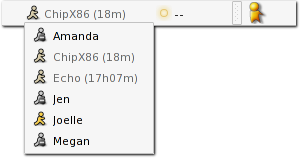
Now that edgy has been frozen for the beta release in a week’s time, and the next developer summit, where the plans for the next release will be discussed, has been announced, I think it’s the perfect time to start thinking about the kinds of features we want to see in that release. At our recent sprint in Wiesbaden, Mark reminded us that when Ubuntu first released we were leading the field in many of the components we installed by default. Many users came to us because we provided Linux 2.6, hotplug/udev and Project Utopia by default; along with the latest GNOME release and development framework. Now everybody does that, butwe led the way. With the dapper release, we produced something that could be supported for a long time. With edgy we’ve scratched our itches and fixed things under the hood that have been causing us problems. edgy+1 seems a good time to integrate the hottest new technologies and lead the way again. So what do I think is exciting, and what do I want in edgy+1? telepathy, farsight and galago Anybody who has used the 2006 software release for the Nokia 770 Internet Tablet will have seen these in action already. They’re, in my opinion, some of the most exciting projects currently being worked on; and ripe for integration into Ubuntu. Telepathy is a communication framework built on DBus that allows any application to establish communication with users all around the world, using any protocol from IRC to MSN to VoIP. It uses Farsight to provide the codecs and protocol support on top of the (GStreamer)[http://gstreamer.freedesktop.org/] media framework. And Galago glues it all together; providing presence information about contacts and allowing users to specify their own status. Galago Presence Applet This means that you’ll be able to contact your contacts. Your calendar alarm tells you that it’s a colleague’s birthday, you’d be able to click their name and see a selection of different ways that you can contact that person right now. From e-mail, opening an MSN or Jabber window or even establishing a VoIP or SIP call to them. The most exciting thing is that because every application on the desktop has easy access to this, people are coming up with fantastic ideas for using it! zeroconf By this, I mean zero configuration networking. Something the OLPC project appears to be going to do very well indeed. Where no existing network infrastructure exists, your computer should still be able to communicate with other nearby computers. It should use ad-hoc wireless networks, link-local IP addresses and server-free DNS resolution with libnss-mdns. Play games with your friends on the train without touching a button. Chat with other people in a lecture hall or at a conference where the existing network is unavailable. Hassle-free home and office networking without any complicated set up. Networking that “just works”. avahi Whether your computer is on an infrastructure or ad-hoc network, it should be able to locate resources on the network and share its own to other people. Avahi allows applications to, via DBus, do this by using a mulicast form of DNS; compatible with Apple’s Bonjour protocol. The immediately obvious benefits of this are that one can locate such things as file servers without any complicated directory; more fun things can be done too, such as sharing your music from RhythmBox with other users on the network. Combine it with telepathy, etc. and you can establish communication with anyone else, with a wide range of different protocols. The immediate problem here is that we currently have a “no open ports” policy, which if we’re going to give the users the opportunity to establish ad-hoc networks is almost certainly a very good thing. We already have exceptions for that policy for DNS and DHCP, it may be that Avahi (mDNS) joins that list. Another option is a “mobile-phone like” interface for enabling and disabling discovery and sharing. Bluetooth I don’t think we should stop discovery and sharing at 802.* networking either. Linux actually has a pretty decent bluetooth stack, it’s something that we should start taking advantage of. Your computer should be able to discover paired or known bluetooth devices when in range without intervention and communicate with them. If I attempt to establish a network connection, and my phone is nearby, that should be offered as a method for getting on the Internet. If possible, it should also be offered through telepathy as a method for contacting people in my address book! Synchronisation These technologies together give us a really big possibility, automatic synchronisation of user’s information. When I bring my laptop home, it should automatically update my desktop with any changes I’ve made to my address book or calendar, and any shared files, etc. Likewise it should be automatically be updated with any changes made on the network, to a company address book on a server, for example. And why stop there? Don’t use share your music, synchronise it so that your laptop, desktop and iPod have the same selection available at all times. Hassle-free backups is an obvious win here. But we’re stopping again. Why is my mobile phone, and PDA excluded from this? Via bluetooth, my address book and calendar should be automatically updated from these and these should be automatically updated themselves. If I add a new number to my phone’s memory, it should appear in my computer address book; and my computer should offer me the ability to contact that person (using VoIP, for example).
24 October 2006

Ben Armstrong: Apt verb

In the English language, it is so trivial to create new words. In no domain is this quite so evident as the world of computers. Thus, informally amongst Debian users, you’ll often hear “apt-get it” or simply “apt it” which has the virtue of being equally apt a term for using aptitude. Now, I have no problem with people using these verbs. They’re precise, if a bit geeky. But really, shouldn’t there be a more general verb to cover this activity? Back when apt was new, and nobody else was installing packages this way, the lack of a general term made sense. But these days, in certain user communities, you might hear “yum it” instead. How many variants does the English language need? One per apt-like installer? Compare this with the evolution of instant messaging. Back when ICQ dominated the field, “ICQ” was synonymous with instant messaging. These days, although you might occasionally still hear people say “ICQ me” or “Jabber me” (where the protocol is important, because both participants must have access to that specific service) we can more generally say “message me,” encompassing in one fell swoop all possible protocols. Or if you prefer, the awkwardly geeky but more precise term, “IM me” (though arguably slightly less useful than “message me” because it seems to exclude irc, the king of all chat systems). So, what’s the equivalent verb that means “conveniently installing software from one or more software repositories by merely asking for the package by name”? My mind draws a blank.

23 September 2006

Lucas Nussbaum: Random chat using XMPP/Jabber, anyone ?

A Random Chat applet hit digg recently. It allows you to chat with a random stranger visiting the website at the same time as you. It’s a good idea, but it would really be much better to have something similar based on Jabber (and maybe it could become a Jabber killer app’ ?) Some thoughts: So, is somebody interested in working on this ? It would be quite easy to do with XMPP4R or another Ruby library. (This was from my list of things that I would really like to see implemented, but I won’t have time to work on it myself) Related links:

18 September 2006

Paul van Tilburg: Moved Jabber Server

I finally decided to move the Jabber server of luon.net to a different server. Our main luon.net server was being fairly loaded for weeks because of the business of the S2S component. The transition was a lot easier than I had expected and everyone got to keep his/her JID. Some tips/hints concerning the steps I took: It’s a pity that SRV records aren’t used more these days. But I guess the whole sub-domain and multiplex-by-CNAME stuff came earlier (why doesn’t your website start with ‘www.’?).

1 I thank Google for introducing the gmail.com JIDs <-> talk.google.com server discrepancy so that now all clients can configure the server separately from the JID.

6 August 2006

Ross Burton: Cornish Bliss (part 1)

Let's start this with a cliché: A Short History of Tractors in Ukrainian: £8
Best Of by Nina Simone: £14
One week in a rather swish house just outside St. Ives: about £200
No email. No Jabber. No Subversion. No Bugzilla: priceless For the last week Vicky and myself were in Cornwall, staying in a house just outside St. Ives with her family. The house was much nicer than we expected, very tastefully decorated and well equipped, with a DVD player, hi-fi, coffee machine, and so on. Settling In The house was in Carbis Bay, about a twenty minute walk from St. Ives along the costal path that was directly off the bottom of the garden. The path towards St. Ives is also the nicest stretch of costal path I've been on: it is surfaced and wide enougth to drive on, unlike the paths we've been on previously which are often no more than a foot wide cutting in the earth, next to a sheer cliff. St. Ives The Sea Our first impression of Cornwall was one of chill: when the taxi dropped me off at the train station to start the journey down the thermometer said 38°C, but at the same time the next day it was only 23°C. Brrrr. The traditional Cornish summer proceeded to roll in a few days later, with heavy rain, gusty wind and general grimness for a day. Yay for DVD players! Typical Cornish Summer St. Ives is a lovely town. Unlike Newquay which was got far too popular for it's own good (the two-carriage train had both a Stag and Hen party on board en route to Newquay, trying not that subtly to pull each other), St. Ives is busy but not crammed. There is no demographic that dominates the tourists, a mix of families young and old, surfers, twenty-somethings and pensioners means it doesn't feel like a tourist hotspot, and it manages to cater for everyone. The habour front has lounge bars, traditional pubs, restaurants and cornish pasty shops, catering for everyone. The town has become quite a focal point for artists recently (since 1928, Wikipedia tells me), and there seems to be more independent art galleries than pasty shops (!), including the Cornwish outpost of the Tate. Tate St. Ives is pretty small for anyone who has been to Tate Modern, but it's damn good: due to the size it is very focused (there are just two galleries) and the building itself is a wonderful modern piece of art deco architecture. We went with the intention of getting some more pictures for the house and did quite well: a print of Horizontal Stripes by Patrick Heron, and a limited run print (427/600) by a local artist. I'm too lazy to remember the name of the picture or the artist, but I'll take a photo of it later. Our Grand Plan of having more individual art in the house is going well, we've an original oil-on-canvas abstract to collect from the framers that we bought in Paris too. To be continued...

2 August 2006

Evan Prodromou: 15 Thermidor CCXIV

I'm at the Wikimania hacking days today. We drove down from wt:Montreal through wt:Vermont and wt:New Hampshire on Monday, stopping overnight in the beautiful town of wt:Lincoln (New Hampshire) in the White Mountains. Amita June had a crappy ride on Monday -- she was unhappy and uncomfortable and let us know it at every possible opportunity. We stopped in wt:Saint Johnsbury, VT for dinner, and she got some time to walk around and play, but beside that she was crabby. Tuesday morning was much better -- she had a big bagel from the Comfort Inn's breakfast buffet, and her Sleepy Bear teddy bear, and she was happy. Sleepy Bear is winning the war for hearts and minds in our house -- it's the bear that she's starting to sleep with more and more, and she makes a happy squeal when she sees it. This could be good or bad news. Anyways, we made it down to wt:Cambridge (Massachusetts) aaaalmost in time for the beginning of Hacking Days. HD is the technical pre-conference for the more sociological and content-oriented Wikimania. I thought it was going to be mostly MW committers and Wikimedia sysadmins, but it's turned out to be huge. I think there are about 40-50 people here -- a just gigantic group. Anyways, I was sitting in the One Laptop Per Child office meeting room with about 30 hackers yesterday morning. I was about 20 minutes late, but I managed to find a seat anyways. Everyone was giving introductions, and up stand David Recordon, Jonathan Daugherty, and David Strauss, all of whom say they're there to help me with the OpenID MediaWiki extension. As everyone's talking, I realize wp:Ward Cunningham is sitting right in front of me. The guy sitting next to me stands up to introduce himself, and says, "I'm Dan Bricklin, who many of you may know as the inventor of the spreadsheet..." Jeez. Anyways, the talk has been fast and furious. Yesterday was a long discussion about the state of Wikimedia servers, the upshot of which, for me, was: Holy Shit, Wikimedia is a big project. I managed to talk to a ton of people, including Travis Derouin of wikiHow, Jason from Wikia, all the OpenID folks, etc. etc. Jonathan Daugherty and I actually got some hacking done, which was great. tags:

The future of MediaWiki This morning Brion Vibber and Tim Starling gave a discussion about the future of MediaWiki. The story? More cool features, I think. The OpenID will be part of it; incorporating a WYSIWYG editor like WikiWyg or FCKEditor into the software. Also, more [[wp:AJAX]-y features, which are coming up through the codebase right now. I think in a large way MW's future is going to be outside of Wikipedia proper. Some of the cooler developments using the MW as a platform include WiktionaryZ and Semantic MediaWiki, both of which provide a structured data substrate to wiki pages. They're not compatible, which I think is something that needs to happen at some point in the future, but they're very promising for future projects. Another big class of projects is bots -- like PyWikipediabot or some of the "vandal fighting" bots and interfaces, e.g. Tawkerbot. I think that MediaWiki is drifting from being a monolithic browser app more into a Web-based service, which will be really productive from a content-production and -maintenance point of view, but which is extremely challenging from the social point of view. Finally, I think the great explosion in the world of customized MW extensions and skins is meaning a real marketplace for expanding the software is happening. I think this is pretty fabu, also. Some people have been discussing formalizing this ecology into a CPAN or JabberStudio-style site for hosting and organizing MW extensions. We'll see what happens with that, but if it comes around, I hope that it's named $wgForge. Maj and Amita June are running around Boston today... very slowly and carefully. They've got a brutal heat wave on here, and people are fainting and collapsing like wilting flowers. I think they're going to go places that have air conditioning, like museums and so forth. tags:

Isaac Clerencia: eBox platform is out!

So, at last, after lots of months of frenzy development, eBox Platform is out, released under the GPL. Basically eBox platform includes a framework to create modules which control system services and lots of already available modules to setup network configuration, firewall,
NTP, DHCP, proxy cache, Jabber, file sharing, mail, … and more! Of course, using Debian as base distribution :) And yup, it has been developed by my company. We really expect somebody find it useful and step into eBox development. For a quick run, you can consider trying the eBox Live CD (btw, mirrors are welcome).
:) Update: For those interested, eBox is written in Perl, using Mason to write the HTML templates, thanks to Rhonda for talking me about Mason for the first time

13 June 2006

Bartosz Fe&#324;ski: do engineers test their ideas?

I doubt it... how often did you swear at guys that designed something?
Sometime I think that the guy that invented something extremely stupid and uncomfortable should be convicted to use it during rest of his life.
How long did he think before he figured out that the best place for headphones jack in my laptop would be front side of it? Now plugging there anything is very, very, very awkward and I really don't like wires around my navel using laptop while laying in bed.
Well... maybe it's some marketing hack, cause now I wonder about buying usb/pcmcia sound card ;)

Bartosz Fe&#324;ski: Debian GNU/kFreeBSD

When I bought notebook I had to find out some use for previous box. It was great opportunity to test etch installer (and my Polish translation at the same time) so I did it several times using miscellaneous settings. Eventually it was time to find out some real use for this box. I decided to try out some non-Linux port of Debian. The most stable and actively developed seemed to be kFreeBSD.
I installed it about month ago. I must admit it works great despite some initial stability problems related to buggy mount, quickly workarounded with help from people from #gnu-kbsd channel. (thanks!)
I use it mainly as a backup machine and small www server, but since it handles it without a hitch I'm probably going to make it also print and Samba server.
I was sceptical to GNU userland used with non-Linux kernels, but admittedly we're getting closer and closer to the day when switching between kernels would be piece of cake ;)
(fenio@kfbsd)~#uptime
 15:36:57 up 21 days,  6:23,  1 user,  load average: 0.23, 0.08, 0.04
(fenio@kfbsd)~#
As you can see it works. It lays in one of my wardrobe, without the case and unplugged from any external devices. I couldn't remove graphic card due to some weird BIOS limits, so it has some PCI card worth less than the beer I'm drinking now ;)
Here's its photo. Sorry for quality, but I don't have any camera around, so it's made with my cellphone.
bsd
If someone wondered if non-Linux Debian ports are worth try, then I have to say YES, THEY ARE!
Using this opportunity I would like to thank everyone involved in their development. Keep up the good work!
Now it's time to give a try to Debian GNU/Hurd... have to start gathering the hardware for that ;)

Bartosz Fe&#324;ski: 2.6.15 and ipw2200

Did anybody try to use ipw2200 driver included in recent kernels?
I found out that most recent version of kernel includes this driver so I decided to switch from self-compiled 2.6.14.4 and ipw2200-source package for module to new version of kernel and driver compiled in it.
Unfortunatelly such compiled kernel can't find firmware either in /usr/local/lib/firmware nor /lib/firmware, although according to /lib/udev/hotplug.functions these directories are checked and firmware seems to be ok cause works fine with 2.6.14.4.
Is it at all possible to use this driver compiled in kernel (not as a module)?

Bartosz Fe&#324;ski: rest in peace Radar

As usual something sorrowful has to happen at the beginning of the year, when I'm hopeful that's going to be better year than previous. Today my dog has been knocked down and that f*cking driver didn't even stop to see what he made.
Radar was only four year old and now unfortunately he's six feet under :(
I miss you Radar.

Bartosz Fe&#324;ski: orphaning games related packages

I'm going to orphan all my games related packages. We've got now Debian Games team so I think that would be better to leave maintaining these packages to them. That's list of packages: update I'm not sure wether I should simply upload all packages with Debian QA Team as owner or maybe someone from Debian Games team could "hijack" these packages to save some power on our autobuilders?

Bartosz Fe&#324;ski: binaries on Mac OS X

First alpha version of Firefox 2.0 has just been released. I'm going to give it a try soon, but looking at system requirenments I found out that minimal free hard disk space is 52MB on Windows and Linux, while 4GB on Mac OS X. Either this is simple typo or compilators under OS X needs many improvements in size of files produced by them ;)

Bartosz Fe&#324;ski: my webpage

I was in Warsaw today for some interviews (yeah I'm looking for a job) and I had some spare time before transport to home (small city near Cracow). I went to internet caffe to check mail and read some news. Of course there was only Internet Explorer as a browser and owner didn't allow me to run Knoppix on that box. Anyway... I tried to view my own webpage. It looks terribly in IE. I was aware that it doesn't look perfect, but I didn't know it looks so terribly. Blog part is the worst one, commenting entry is almost impossible. I don' t remember which version of IE was installed there, but I suppose that all versions have such problems with valid xhtml. No, I'm not going to fix that ;P Update: Seems that blog part of my webpage is not valid xhtml anymore. Some templates were changed and they're not xhtml compliant. Yes, that's something I'm gonna fix ;)

Bartosz Fe&#324;ski: wiki2txt?

Before I start searching or writing some script to convert Wiki to text file, maybe someone could recommend something? I'm thinking about the way to convert sshfs FAQ to something more usable in text mode. Any hints? I'm not an expert in html/xml/xhtml stuff, so quick hint could save me some time for reinventing wheel.

Bartosz Fe&#324;ski: What package is eating up my disk space?

What about something like that?
$dpkg-query -W --showformat='$ Installed-Size  $ Package \n'   sort -n

Bartosz Fe&#324;ski: X.org 7.0

I switched to modularized X last night and it went quite well. Thanks to whole X team for their tremendous work on it. I had only two problems. First one was not-working my beloved font for xterm (xfonts-terminus), but that's effect of some changes in paths. Second one is still not-solved... xev stopped printing symbol names for multimedia keys of my keyboard and installing xkb-data as I was told on #debian-devel didn't help to fix that. I suppose because of that my fvwm behaves strange and I'm not sure whether fvwm have to be fixed or the problem is new X. Update: As usual fix was trivial. I chose wrong keyboard layout.

Bartosz Fe&#324;ski: spring finally

We've got a spring in Poland at last! 20 centigrades is temperature I'm able to bear with. I really hate winter and cold in general. There's only one thing I don't like in spring... insects. Flies started to fly everywhere. Now it's time to bees for waking up. Anyway spring is great even with them. Can't say that about summer especially when there's 35 centigrades in shade and I'm far from a lake or swimming pool. In addition it's my nameday today! 

Bartosz Fe&#324;ski: right-wing prime minister in Poland?

Christian you must be kidding if you think that our current government has something to do with true right-wing. In fact everyone name them like that cause they call themself this way. In fact we've got here now the most socialist and populist government after changes in 1989. Now it will be even worse cause recently nominated ministers are as you said very anti-european and nationalist. Most young and educated people from cities think about emigration. So rest of the Europe: prepare for many people escaping from free, democratic Poland. I don't know who will pay taxes in Poland if the only people that are gonna left here will be pious old ladies. I always thought that democration sucks... stupid people shouldn't have right to vote. Ok... enough politics on planet today ;)

Bartosz Fe&#324;ski: new apt

I've just upgraded my unstable box with new apt which downloads only differences between Packages.gz files. You guys simply rocks! About 100kB instead of 4MB. Congratulations to everyone involved in creation of this new apt feature. 

Next.

Previous.