
Search Results: "Ben Hutchings"

23 May 2011

Ben Hutchings: Testing new hardware support for Debian 6.0.2

The Debian kernel team regularly backports driver updates to the Linux kernel in stable releases to add support for new hardware, and I've prepared several updates intended for point release 6.0.2. Since the kernel team does not have a large collection of hardware on which to test driver changes, we would appreciate test reports from users. It is important to test not just that new devices are supported properly, but that there are no regressions in support for older devices. Changes I have updated these drivers to the versions found in Linux 2.6.38, modulo driver API changes: I have also cherry-picked some small changes: There are more drivers that I think should be added or updated (see #624794) but they will probably have to wait for release 6.0.3. Packages The source package and binary packages for i386 and amd64 are available on people.debian.org. They can be verified by the checksums in the signed changes file. The current packages are version 2.6.32-35~test1, but there may be further test versions before an official stable update. How to test For network drivers, I suggest the following regression tests:
  1. If the driver tries to load firmware (only required for some chips), does this work once the firmware file(s) are installed?
  2. Can you receive and transmit VLAN-tagged frames after creating a VLAN interface?
  3. Does the interface work after suspend and resume?
  4. Does the interface work after removing the cable for 10 seconds and reinserting it?
  5. Does multicast configuration work? (IPv6 autoconfiguration or mDNS will cover this.)
  6. Can the interface send and receive TCP/IP across a LAN at the same speed, before and after these changes? (Use e.g. netperf to test this, but don't forget to remove the netperf package after use.)
  7. Are any warnings or errors logged by the kernel during the preceding tests?
For storage drivers, unfortunately I don't have a good idea of what tests would be suitable. In any case, please don't test on disks storing valuable data! Please send test reports to the bug reports linked above, stating the driver name, the PCI ID for the device you tested (from lspci -n) and any other device identification that the kernel log (for example, r8169 logs the 'XID' of the device).

16 May 2011

Christoph G hre: Gosh - I'm became DD on Saturday

After nearly two years of answering questions and mostly didn't find time to do so, I'm a DD now. Thanks to all involved people, specifically to Ben Hutchings - my AM and Torsten Werner who advocate me.

13 May 2011

Maximilian Attems: initramfs-tools release 0.99 "scarpe rotte e pur bisogna andar"

This new release features /run usage and xz support. For the details see the release announcement of latest initramfs-tools. The upload itself fixes 18 (19) bugs in the Debian BTS and has also a cute lilo support patch hiding under "initramfs-tools: Fix handling of numeric root= arguments to be udev-friendly" coming from Ubuntu. (; Ben Hutchings revamped the bootloader linux-2.6 hooks in order that update-initramfs no longer calls any bootloader by itself. Thank you for all the contributions. The development docs got nicely refreshed too.

24 April 2011

Ben Hutchings: Upcoming changes in Debian Linux packages for i386

The major upcoming configuration change in Linux 2.6.39 is to get rid of the '686' flavour. This may be surprising, because it's the most widely used flavour of the 4 we have a present:
Name Minimum CPU features Maximum total CPU threads Physical address space
486 486-class 1 4 GiB
686 686-class; CMOV instruction 32 4 GiB
686-bigmem 686-class; PAE 32 64 GiB
amd64 x86-64 512 64 TiB
However, the physical address limitation means that an increasing proportion of new PCs and the majority of PC servers need the '686-bigmem' flavour. Even those that have less than 4 GiB RAM do support PAE and can run the '686-bigmem' flavour. There is a small cost (up to about 0.1% of RAM) in the use of larger hardware page tables. There is also an important benefit on recent processors: the larger page table entries include an NX bit (also known as XD) which provides protection against some buffer overflow attacks, both in the kernel and in user-space.. Q: What about 686 processors without PAE? There are only a few 686-class processors that support CMOV but not PAE: most Intel Pentium M models, the VIA C3 'Nehemiah' and the AMD Geode LX. These also all lack SMP support, which means the '486' flavour is suitable for them. Some benchmarking on two of those - a Pentium M model 745 and a C3 'Nehemiah' - indicated that they run the '486' flavour slightly faster than the '686' flavour. It appears that the performance gain from using plain uniprocessor code (rather than SMP-alternatives, which are patched with NOPs on uniprocessor systems) outweighs the performance loss from avoiding use of some newer instructions. Q: Why get rid of '686' but keep the 'amd64' flavour? We intend to get rid of 'amd64' too, but we need to ensure that upgrades from linux-image-2.6-amd64:i386 to linux-image-2.6-amd64:amd64 work properly. Q: If '686-bigmem' will be the default, isn't 'bigmem' redundant? Yes, it is. Therefore '686-bigmem' will be renamed to '686-pae'.

23 April 2011

Ben Hutchings: Recent changes in Debian Linux packages

Linux 2.6.38 and 2.6.39 As you've probably seen, the testing suite finally got a new upstream kernel version (Linux 2.6.38) and is currently synchronised with unstable. I'm just about to upload a new version of linux-2.6 based on upstream stable update 2.6.38.4. Linux 2.6.39 is well on its way to release, so 2.6.39-rc4 should soon be in experimental. The Debian source package will add support for the new armhf (ARM with hardware floating-point) architecture. Splitting linux-2.6 The linux-base package, introduced to handle transitions and other support functions for 'image' packages, is now built from a separate source package. It won't be changed very often, so you will no longer need to upgrade linux-base every time you upgrade an 'image' package. (This doesn't apply within 'squeeze', but I may have a way to work around that.) The firmware-linux-free package, containing a few firmware and configuration blobs from Linux that are DFSG-compliant, is also now built from a separate source package. These blobs have not changed for a very long time, so again you will no longer be recommended to upgrade this package every time you upgrade an 'image' package. Secondly, this allows us to remove the entire 'firmware' directory from the upstream source rather than carefully removing and patching to leave just the DFSG-compliant bits. Wireless regulations The '2.4 GHz' and '5 GHz' ISM bands used for wifi are not defined identically around the world. The exact frequency ranges and maximum permitted power levels vary between countries. Radio equipment manufacturers have a legal responsibility to ensure their equipment operates within these regulations. Since it is expensive to implement such regulations in hardware (including many different variants for different regions), these restrictions are usually implemented in the driver using a country code retrieved from the hardware's EEPROM or flash. So this is now our responsibility. We need to be able to look up regulations by country codes, and we also need to support the case where a device sold in one country is used in another country with tighter regulations. For some time, the wifi configuration library (cfg80211) included regulatory information for a small number of countries and regions. However, the default since Linux 2.6.34 has been to build-in only the 'world' domain (intersection of all the restrictions) and to request information from user-space. In Debian, we didn't have anything to provide this information, so for example channels 12-13 became unavailable for users in Europe. The regulatory information should be provided by the Central Regulatory Domain Agent (CRDA) from a current database. These are now packaged as crda and wireless-regdb respectively. Drivers that do not use cfg80211 (mostly those from the 'staging' area) will not be affected, and may or may not implement correct regulations. When you travel to another country or use an imported wifi device with an incorrect country code (I hear 'CN' is common), you can use iw reg set to ensure that your wifi devices operate within the regulations of the country you are in. Set the REGDOMAIN variable in /etc/default/crda to make this persistent. These will be intersected with the regulations specified by the hardware.

26 March 2011

Philipp Kern: Debian ftpmaster Meeting Almost over

So since the last progress report I also got round to take a look at the following issues:
It was a productive hacking event for me, that for sure. But now it's almost over and they're actually stealing us an hour tonight. I would've liked to go home with less items on my to-do list, though (i.e. it just grew, it didn't shrink).

18 February 2011

Ben Hutchings: Distinguishing Ethernet-like net device types

David Paleino asks:
I'm still missing how to reliably detect if a device is a "wired" or a "wireless" one. I suspect that checking the existence of /phy80211 would be enough, but I can't really tell, and seems like I'm not able to find an exhaustive sysfs reference manual.
Sadly there is no exhaustive manual, but many attributes found in sysfs are documented under Documentation/ABI/. In this case you need the DEVTYPE name from the net device's uevent, which may be e.g. 'wlan' or 'wwan' (and is absent for wired Ethernet devices). I don't know why this isn't also exposed as an attribute in its own right.

17 February 2011

Raphaël Hertzog: People behind Debian: Maximilian Attems, member of the kernel team

Maximilian, along with the other members of the Debian kernel team, has the overwhelming job of maintaining the Linux kernel in Debian. It s one of the largest package and certainly one where dealing with bug reports is really difficult as most of them are hardware-specific, and thus difficult to reproduce. He s very enthusiastic and energetic, and does not fear criticizing when something doesn t please him. You ll see. My questions are in bold, the rest is by Maximilian. Who are you? My name is Maximilian Attems. I am a theoretical physicist in my last year of PhD at the Technical University of Vienna. My main research area is the early phase of a Quark-Gluon Plasma as produced in heavy ion collisions at the LHC at CERN. I am developing simulations that take weeks on the Vienna Scientific Cluster (in the TOP 500 list). The rest of the lab is much less fancy and boils down to straight intel boxes without any binary blobs or external drivers (although lately we add radeon graphics for decent free 3D). Mathematica and Maple are the rare exceptions to the many dev tools of Debian (LaTeX, editors, git, IDE s, Open MPI, ..) found at the institute, as those are unfortunately yet unmatched in Free Software for symbolic computations. The lab mostly runs a combination of Debian stable (testing starting from freeze) for desktops and oldstable/stable for servers. Debian is in use for more than 10 years. So people in the institute know some ups and downs of the project. Newcomers like my room neighbors are always surprised how functional a free Debian Desktop is. :) What s your biggest achievement within Debian? Building lots and lots of kernels together with an growing uptake of the officially released linux images. I joined the Debian kernel team shortly after Herbert Xu departed. I had been upstream Maintainer of the linux-2.6 janitor project for almost a year brewing hundreds of small cleanups with quilt in a tree named kjt for early linux-2.6. In Debian we had lots of fun in sorting out the troubles that the long 2.5 freeze had imposed: Meaning we were sitting on a huge diverging monolithic semi-good patchset. It was great fun to prepare 2.6.8 for Sarge with a huge team enthusiastic in shipping something real close to mainline (You have to imagine that back then you had no stable or longterm release nor any useful free tools like git. This involved passing patches around, hand editing them and seeing what the result does.) From the Sarge install reports a common pattern emerged that the current Debian early userspace was causing lots of boot failures. This motivated me to develop an alternative using the new upstream initramfs features. So I got involved in early userspace. Thanks to large and active development team initramfs-tools got a nice ecosystem. It still tries to be as generic and flexible as possible and thus gains many nice features. Also H. Peter Anvin (hpa) gave me the official co-maintenance of klibc. klibc saw uptake and good patches from Google in the last 2 years. I am proud that the early userspace is working out fairly well these days, meaning you can shuffle discs around and see your box boot. Later on we focused on 2.6.18 for Etch, which turned out to a be good release and picked up by several other distributions. Only very much later we would see such a sync again. With 2.6.26 for Lenny we got somehow unlucky as we just missed the new longterm release by one release. We also pushed for another update very late (during freeze) in the release cycle, which turned out to semi-work as too much things depend on linux-2.6. For Squeeze 2.6.32 got picked thanks to discussions at Portland Linux Plumbers and it turned out to be a good release picked up by many distributions and external patchsets. The long-term support is going very well. Greg KH is doing a great job in collecting various needed fixes for it. Somehow we had hoped that the Squeeze freeze would start sooner and that the freeze duration would be shorter, since we were ready for a release starting from the actual freeze on. The only real big bastard on the cool 2.6.32 sync is Red Hat. Red Hat Enterprise 6.0 is shipping the linux-2.6 2.6.32 in obfuscated form. They released their linux-2.6 as one big tarball clashing with the spirit of the GPL. One can only mildly guess from the changelog which patches get applied. This is in sharp contrast to any previous Red Hat release and has not yet generated the sharp and snide comments in press it deserves. Red Hat should really step back and not make such stupid management moves. Next to them even the semi-maintained Oracle Unbreakable 2.6.32 branch looks better: It is git fetchable. What are your plans and those of the kernel team for Debian Wheezy? Since 2.6.32 many of the used patches landed upstream or are on the way (speakup, Kbuild Debian specific targets, ..). The proper vfs based unionfs is something we d be looking forward. We haven t yet picked the next upstream release we will base Wheezy on, so currently we can happily jump to the most recent ones. There are plans for better interaction with Debian Installer thanks to generating our udebs properly in linux-2.6 source itself. Also we are looking forward to using git as tool of maintenance. We d hope that this will also allow for even better cross distribution collaboration. Concerning early userspace I plan to release an initramfs-tools with more generic userspace for the default case and finally also a klibc only for embedded or tuning cases. What do you like most in Debian? For one thing I do like the 2 year release cycle. It is not too long to have completely outdated software and on the other hand it gives enough time to really see huge progress from release to release. Also at my institute the software is is recent enough without too much admin overhead. For servers the three years support are a bit short, but on the manageable side. I do enjoy a lot the testing distribution. For my personal use it is very stable and thus I mainly run testing on my desktop and work boxes. (Occasionally mixing in things from sid for unbreaking transition or newer security fixes). Debian is independent and not a commercial entity. I think this is its main force and even more important these days. I enjoy using the Debian platform a lot at work thus in return this motivates me to contribute to Debian itself. I also like the fact that we strive for technical correctness. Is there some recurrent problem that hinders the progress of Debian? The New Maintainer process is a strange way to discourage people to contribute to Debian. It is particularly bureaucratic and a huge waste of time both for the applicant and his manager. It should be completely thrown overboard. One needs a more scalable approach for trust and credibility that also enhances the technical knowledge for coding and packaging of the applicant. NM is currently set in stone as any outside critics is automatically rejected. Young and energetic people are crucial for Debian and the long-term viability of the project, this is the reason why I d consider the New Maintainer process as Debian s biggest problem. Note from Rapha l Hertzog: I must say I do not share this point of view on the New Maintainer process, I have witnessed lots of improvements lately thanks to the addition of the Debian Maintainer status, and to the fact that a good history of contribution can easily subsume the annoying Tasks & Skills questionnaire. Another thing I miss is professional graphics input both for the desktop theme and the website. I know that effort has been done there lately and it is good to see movement there, but the end result is still lacking. Another trouble of Debian is its marketing capabilities. It should learn to better sell itself. It is the distribution users want to run and use not the rebranded copies of itself with lock-in sugar . Debian is about choice and it offers plenty of it: it is a great default Desktop. Linus Torvalds doesn t find Debian (and/or Ubuntu) a good platform to hack on the kernel. Do you know why and what can we do about this? The Fedora linux-2.6 receives contributions from several Red Hat employed upstream sub-Maintainers. Thus it typically carries huge patches which are not yet upstream. As a consequence eventual userland troubles get revealed quite quickly and are often seen there first. The cutting edge nature of Fedora rawhide is appealing for many developers. The usual Debian package division of library development files and the library itself is traditionally an entry barrier for dev on Debian. Debian got pretty easily usable these days, although we could and should again improve a lot more in this sector. Personally I think that Linus hasn t tried Debian for years. I have the feeling that the implication of the Debian Kernel team in LKML has been on the rise. Is that true and how do you explain this? Ben Hutchings is the Nr.1 contributor for 2.6.33. He also is top listed as author of patches on stable 2.6.32. Debian is not listed as organization as many send their linux-2.6 patches from their corporate or personal email address and thus it won t be attributed to Debian. There is currently no means to see how many patches get forwarded for the stable tree, but I certainly forwarded more then fifty patches. I was very happy when Greg KH personally thanked me in the 2.6.32.12 release. In the Squeeze kernel, the firmwares have been stripped and moved into separate packages in the non-free section. What should a user do to ensure his system keeps working? There is a debconf warning on linux-2.6 installation. It is quite clear that the free linux-2.6 can t depend on the firmware of the non-free archive (also there is no strict dependency there technically). On the terminal you d also see warnings by update-initramfs on the initramfs generation for drivers included in the initramfs. The debconf warning lists the filename(s) of the missing firmware(s). One can then apt-cache search for the firmware package name and install it via the non-free repository. The check runs against the current loaded modules. The match is not 100% accurate for special cases as the one where the device might be handled well by this driver without firmware, but is accurate enough to warrant the warning. The set of virtualization technologies that the official Debian kernel supports seems to change regularly. Which of the currently available options would you recommend to users who want to build on something that will last? KVM has been a smooth ride from day zero. It almost got included instantly upstream. The uptake it has is great as it sees both dev from Intel and AMD. Together with libvirt it s management is easy. Also the performance of virtio is very good. The linux containers are the thing we are looking forward for enhanced chroots in the Wheezy schedule. They are also manageable by libvirt. Xen being the bad outside boy has an incredible shrinking patchset, thus is fair to expect to see it for Wheezy and beyond. For many it may come a bit late, but for old hardware without relevant CPU it is there. Many tend to overstate the importance of the virtualization tech. I d be much more looking forward to the better Desktop support in newer linux-2.6. The Desktop is important for linux and something that is in heavy use. The much better graphics support of the radeon and nouveau drivers: The performance optimizations thanks to dcache scalability work and the neat automatic task-grouping for the CPU scheduler are very promising features for the usability of the linux desktop. Another nice to have feature is the online defrag of ext4 and its faster mkfs. Even cooler would be better scalability in ext4 (This side seems to have seen not enough effort lately). Is there someone in Debian that you admire for their contributions? Hans Peter Anvin and Ted Tso are a huge source of deep linux-2.6 knowledge and personal wisdom. I do enjoy all sorts of interactions with them. Christoph Hellwig with Matthew Wilcox and also William Irwin for setting up the Debian kernel Team. Several Debian leaders including the previous and the current one for their engagement, which very often happens behind the scene. The Debian Gnome Team work is great, also the interactions have always been always easy and a pleasure. Martin Michlmayr and previously Thiemo Seufer do an incredible job in porting Debian on funny and interesting ARM and MIPS boxes. Debian has a lot of upcoming potential on this area. I m looking forward to other young enthusiastic people in that area. Colin Watson is bridging Debian and Ubuntu, which is an immense task. Michael Prokop bases on Debian an excellent recovery boot CD: http://www.grml.org. I d be happy if any Debian Developer would work as carefully coding and working.
Thank you to Maximilian for the time spent answering my questions. I hope you enjoyed reading his answers as I did. Subscribe to my newsletter to get my monthly summary of the Debian/Ubuntu news and to not miss further interviews. You can also follow along on Identi.ca, Twitter and Facebook.

One comment Liked this article? Click here. My blog is Flattr-enabled.

5 December 2010

Ben Hutchings: USB serial console

Andrew Pollock writes:
If you're trying to use a USB serial adapter as your Linux kernel console... The kernel needs to be compiled with CONFIG_USB_SERIAL_SERIAL=y
That's CONFIG_USB_SERIAL_CONSOLE.
Debian kernels do not appear to be. Somewhat strangely, the config option doesn't even wind up in the config file in the typical commented-out manner, so you don't even know the option exists until you discover it from random Web searching, and then looking at drivers/usb/serial/Kconfig in the kernel source.
Console drivers need to be built-in, so CONFIG_USB_SERIAL_CONSOLE depends on CONFIG_USB_SERIAL=y. We build the USB serial code as a module so CONFIG_USB_SERIAL_CONSOLE is not an available option. This is unlikely to change, as a built-in feature takes memory from every Debian GNU/Linux installation.

1 November 2010

Ben Hutchings: RCBW(eekend) 2010-11-01

28 August 2010

Ben Hutchings: Boot loader disruption in sid

IN UR DISTRO BRAKIN UR PACKAGEZ Something was bound to go wrong when changing the policy for boot loaders. Let me try that again.

6 August 2010

Ben Hutchings: 'This Week in Debian' podcast

A few weeks ago Zack wrote about preparations for a new podcast to be called 'This Week in Debian'. I volunteered to be interviewed, and have now talked with Jonathan Nadeau for about 30 minutes about the work of the kernel team and the release process. Hopefully he'll be editing down my rambling so the first episode won't be too boring! If you do work on Debian that you'd like to talk about to an interested audience, follow the link above and yourself to the list of potential interviewees.

5 June 2010

Russell Coker: Bugs in Google Chrome

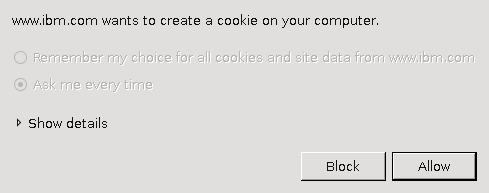
I m currently running google-chrome-beta version 5.0.375.55-r47796 on Debian/Unstable. It s the fastest web browser I ve used in recent times it s the first time that I ve run a browser that feels faster than my recollection of running IBM WebExplorer for OS/2 on a 486-66 system! It has a good feature set, and it s the only browser I ve used that in a typical configuration will make proper use of the screen space by not having a permanent status bar at the bottom of the sceen and by having tabs in the title-bar. But it s not perfect, here is a list of some bugs: Chrome Titlebar when maximisedChrome Titlebar when not maximisedRight of Chrome Titlebar when not maximised Above are three partial screen captures of Chrome, the first is when maximised and the second is when the window isn t maximised. Notice the extra vertical space above the tab in the title bar in the second picture. The third picture shows the right side of the titlebar and you can see a space below the three buttons where you can drag the window around no matter how many tabs you open that space below the three buttons is reserved. If the Chrome developers had removed the extra vertical space in the titlebar and reserved slightly more horizontal space then you would be able to drag the window around. While an anonymous commentator made a good point that the extra vertical space can be used to drag the window around when the maximum number of tabs are open, it seems that there are other ways of achieving that goal without wasting ~18 vertical pixels. Doing so would be a lot less ugly than what they did with finding text in the page. When I visit a web site that uses cookies from an Incognito Window (which means that cookies etc aren t stored) there is no option to say allow all cookies . This is really annoying when you get to a web site such as the IBM one which stores 5 cookies when you first load the page and then at least one new cookie write for every page you visit. Given that cookie data will be discarded as soon as the window is closed it seems like a good idea to have an option to allow all cookies for Incognito Windows even if all cookies aren t allowed for regular windows. Blocking all cookies would be OK too, anything but having to click on Block or Allow multiple times for each page load. The J and K keys don t work in a view of Venus version 0~bzr95-2+lenny1 (the latest version in Debian/Lenny). I once had a situation where I entered a . at the end of a domain name (which is quite legal there is always an implied dot) and Chrome then wouldn t take note of my request to accept all cookies from the domain. I haven t been able to reproduce that bug, but I have noticed that it stores the settings for whether cookies should be stored separately for domains that end in . , so www.cnn.com. is different from www.cnn.com . Iceweasel seems to just quietly strip the trailing dot. Of course this is better than Konqueror which won t even load a URL with a dot at the end. Chrome can be relied on to restore all windows rapidly after a crash, unlike Iceweasel which restores them at it s normal load speed (slow) and Konqueror which doesn t tend to restore windows. This is good as it does seem to crash regularly. In a response to my post about Chrome and SE Linux [1] Ben Hutchings pointed out that the --no-sandbox option to chrome disables the creation of a PID namespace and therefore makes debugging a lot easier, if I get a lot of spare time I ll try and track down some of the Chrome SEGVs. The JavaScript compiler is either buggy or it s not buggy in situations where people expect IE bugs. When using the Dell Australia web site I can t always order all options. When trying to order a Dell R300 1RU server with hot-plug disks in a hardware RAID array it seems impossible to get all the necessary jumpers which is a precondition to completing the order fortunately I only wanted to blog about how cheap Dell servers are so I don t actually need to complete an order. Dell s web site is also difficult in Iceweasel on occasion, so it s obviously more demanding than most sites. It might be a good test site for people who work on browsers as it s both demanding and important. When I select a URL to be opened in a new window (or when JavaScript does this) then the new tab is opened with about:blank listed as the URL. If the URL is for a PDF file (or something else that is to be downloaded) then the URL entry field is never updated to give the real URL. I believe that this is wrong, either the new tab shouldn t be opened or it should have the correct URL on display there is no benefit with a tab open to show nothing but about:blank in the URL entry field. Also if a URL takes some time to load then it may keep about:blank in the URL entry field for some time. This means that if you use the middle mouse button to rapidly open a few new tabs you won t be able to see what is to be loaded in each one. Sometimes I have several tabs loading and I m happy to close some unimportant ones if they are slow but some are worth waiting for. Overall that s not too bad. I can use Dell s site in Iceweasel, so the only critical bug is the cookies issue in Incognito Windows which makes the Incognito feature almost unusable for some sites.
22 May 2010

Ben Hutchings: Cancelling a command in bash

Rog rio Brito writes:
[...] whenever I was typing a command line, changed my mind and pressed C-c, I got a ^C printed on the screen, usually overwriting one or two characters of what I had typed. And this prevented me from automatically copying and pasting the command that I had typed.
There is an alternative to using C-c, and that is M-#. This adds a '#' to the start of the line, commenting it out, and then behaves as if you pressed Return. The result is that the command is cancelled but still remains on-screen and in your history. You can then copy the command later using the mouse or keyboard.

25 March 2010

Gerfried Fuchs: dpkg source format 3.0

Ben Hutchings writes:
You are missing the point - debian/source/format allows you to make it explicit that the source format is 1.0, if you want to stick with that.
You are missing the point - the planned switch of the default format isn't considered a good approach by quite some people. If something new gets introduced, switching to it should be done in wake manner. Other tools do that too, so why can't a central package as dpkg use that approach? I especially want to mention that a point release update for stable was required to get it working in stable like it should.

Ben Hutchings: Adding debian/source/format

Neil Williams writes:
The new lintian addition "missing-debian-source-format" is starting to remind me of a pestering nanny. I use source format 3.0 only where I see a technical benefit and that - so far - is restricted to packages that use a .tar.bz2 upstream and one or two with really tricky patching requirements.
You are missing the point - debian/source/format allows you to make it explicit that the source format is 1.0, if you want to stick with that.

23 March 2010

Debian News: Brief updates: release team, eclipse and Debian related events

21 March 2010

Russell Coker: Xen and Debian/Squeeze

Ben Hutchings announced that the Debian kernel team are now building Xen flavoured kernels for Debian/Unstable [1]. Thanks to Max Attems and the rest of the kernel team for this and all their other great work! Thanks Ben for announcing it. The same release included OpenVZ, updated DRM, and the kernel mode part of Nouveau but Xen is what interests me most. I ve upgraded the Xen server that I use for my SE Linux Play Machine [2] to test this out. To get this working you first need to remove xen-tools as the Testing version of bash-completion has an undeclared conflict, see Debian bug report #550590. Then you need to upgrade to Unstable, this requires upgrading the kernel first as udev won t upgrade without it. If you have an existing system you need to install xen-hypervisor-3.4-i386 and purge xen-hypervisor-3.2-1-i386 as the older Xen hypervisor won t boot the newer kernel. This also requires installing xen-utils-3.4 and removing xen-utils-3.2-1 as the utilities have to match the kernel. You don t strictly need to remove the old hypervisor and utils packages as it should be possible to have dual-boot configured with old and new versions of Xen and matching Linux kernels. But this would be painful to manage as update-grub doesn t know how to match Xen and Linux kernel versions so you will get Grub entries that are not bootable it s best to just do a clean break and keep a non-Xen version of the older kernel installed in case it doesn t initially boot. A apt-get dist-upgrade operation will result in installing the grub-pc package. The update-grub2 command doesn t generate Xen entries. I ve filed Debian bug report #574666 about this. Because the Linux kernel doesn t want to reduce in size to low values I use xenhopt=dom0_mem=142000 in my GRUB 0.98 configuration so that the kernel doesn t allocate as much RAM to it s internal data structures. In the past I ve encountered a kernel memory management bug related to significantly reducing the size of the Dom0 memory after boot [3]. Before I upgraded I had the dom0_mem size set to 122880 but when running Testing that seems to get me a kernel Out Of Memory condition from udev in the early stages of boot which prevents LVM volumes from being scanned and therefore prevents swap from being enabled so the system doesn t work correctly (if at all). I had this problem with 138000M of RAM so I chose 142000 as a safe number. Now I admit that the system would probably boot with less RAM if I disabled SE Linux, but the SE Linux policy size of the configuration I m using in the Dom0 has dropped from 692K to 619K so it seems likely that the increase in required memory is not caused by SE Linux. The Xen Dom0 support on i386 in Debian/Unstable seems to work quite well. I wouldn t recommend it for any serious use, but for something that s inherently designed for testing (such as a SE Linux Play Machine) then it works well. My Play Machine has been offline for the last few days while I ve been working on it. It didn t take much time to get Xen working, it took a bit of time to get the SE Linux policy for Unstable working well enough to run Xen utilities in enforcing mode, and it took three days because I had to take time off to work on other projects.

18 March 2010

Ben Hutchings: Debian Linux packages: the 'Big Bang' release

Max Attems uploaded a new version of the Linux kernel package (linux-2.6) today. This includes the last major changes to the package before Debian 6.0 'squeeze', which led me to label it the 'Big Bang' release:

16 March 2010

Ben Hutchings: KVM reliability

Russell Coker writes:
I had also hoped that it would be really reliable and work with the latest kernels (unlike Xen) but it is giving me problems with 2.6.32 on Opteron.
This is a regression caused by a recent security fix (CVE-2010-0298, "KVM: x86 emulator: fix memory access during x86 emulation"). It appears to affect only recent Linux kernels running as guests on AMD systems, and it will probably be fixed soon.

Next.

Previous.