Search Results: "spa"

29 February 2016

Chris Lamb: Free software activities in February 2016

Here is my monthly update covering a large part of what I have been doing in the free software world (previously):
Debian
  • Updated travis.debian.net a hosted script to easily test and build Debian packages on the Travis CI continuous integration platform to support:
    • Automatic bumping of the version number in debian/changelog based on TRAVIS_BUILD_NUMBER. (#14)
    • Security repositories. Thanks to Stefan Jenkner for the initial pull request. These are additionally now enabled by default. (#15)
    • The backports repositories. (#13)
  • Applied #812830 and #812830 from James Clark to the Debian Archive Kit to improve the interface of various webpages it generates.
  • Updated the SSL certificate for try.diffoscope.org, a hosted version of the diffoscope in-depth and content-aware diff utility. Thanks to Bytemark for sponsoring the hardware.
  • Worked on my slides for Reproducible Builds - fulfilling the original promise of free software, to be presented at FOSSASIA '16.
My work in the Reproducible Builds project was also covered in more depth in Lunar's weekly reports (#40, #41, #42, #43)
LTS

This month I have been paid to work 18 hours on Debian Long Term Support (LTS). In that time I did the following:
  • "Frontdesk" duty for the week of 22nd 28th, triaging CVEs, etc.
  • Proofread announcements, etc. for the upcoming migration to wheezy-lts.
  • Issued DLA 417-1 for xdelta3 to fix a buffer overflow that allowed arbitrary code execution from input files.
  • Issued DLA 420-1 for libmatroska, correcting a heap information leak.
  • Issued DLA 428-1 for websvn fixing a cross-site scripting vulnerability.
  • Issued DLA 429-1 for pixman fixing a buffer overflow issue.
  • Issued DLA 430-1 & DLA 431-1 for libfcgi and libfcgi-perl respectfully, fixing a remote denial-of-service (DoS) vulnerability.

Uploads
  • redis (2:3.0.7-2) Correcting my SOURCE_DATE_EPOCH reproducibility patch as the conditional was accidentally inverted. Thanks to Reiner Herrmann (deki).
  • disque (1.0~rc1-5) Making the parallel SOURCE_DATE_EPOCH patch change and additionally tidying the packaging after introducing procps as a build-dependency.


RC bugs


I also filed 137 FTBFS bugs against aac-tactics, angular.js, astyle, bcftools, blacs-mpi, bogofilter, boxes, caldav-tester, ccdproc, ckeditor, coq-float, cqrlog, dasher, django-recurrence, dspdfviewer, eclipse-egit, ess, etcd, felix-latin, fio, flexml, funny-manpages, gap-atlasrep, garmin-plugin, gitlab, gnome-mines, graphicsmagick, haskell-nettle, healpy, hg-git, hunspell, hwloc, ijs, ipset, janest-core-extended, jpathwatch, kcompletion, kcompletion, keyrings.alt, kodi-pvr-hts, kodi-pvr-vdr-vnsi, libcommons-compress-java, libgnome2-wnck-perl, libkate, liblrdf, libm4ri, libnet-server-mail-perl, libsis-jhdf5-java, libspectre, libteam, libwnck, libwnckmm, libxkbcommon, lombok, lombok-patcher, mako, maven-dependency-analyzer, mopidy-mpris, mricron, multcomp, netty-3.9, numexpr, ocaml-textutils, openimageio, openttd-openmsx, osmcoastline, osmium-tool, php-guzzle, php-net-smartirc, plexus-component-metadata, polari, profitbricks-client, pyentropy, pynn, pyorbital, pypuppetdb, python-aioeventlet, python-certifi, python-hglib, python-kdcproxy, python-matplotlib-venn, python-mne, python-mpop, python-multipletau, python-pbh5tools, python-positional, python-pydot-ng, python-pysam, python-snuggs, python-tasklib, r-cran-arm, r-cran-httpuv, r-cran-tm, rjava, ros-geometry-experimental, ros-image-common, ros-pluginlib, ros-ros-comm, rows, rr, ruby-albino, ruby-awesome-print, ruby-default-value-for, ruby-fast-gettext, ruby-github-linguist, ruby-gruff, ruby-hipchat, ruby-omniauth-crowd, ruby-packetfu, ruby-termios, ruby-thinking-sphinx, ruby-tinder, ruby-versionomy, ruby-zentest, sbsigntool, scikit-learn, scolasync, sdl-image1.2, signon-ui, sisu-guice, sofa-framework, spykeutils, ssreflect, sunpy, tomcat-maven-plugin, topmenu-gtk, trocla, trocla, tzdata, verbiste, wcsaxes, whitedune, wikidiff2, wmaker, xmlbeans, xserver-xorg-input-aiptek & zeroc-icee-java.

FTP Team

As a Debian FTP assistant I ACCEPTed 107 packages: androguard, android-platform-dalvik, android-platform-development, android-platform-frameworks-base, android-platform-frameworks-native, android-platform-libnativehelper, android-platform-system-core, android-platform-system-extras, android-platform-tools-base, android-sdk-meta, apktool, armci-mpi, assertj-core, bart, bind9, caja, caldav-tester, clamav, class.js, diamond, diffoscope, django-webpack-loader, djangocms-admin-style, dnsvi, esptool, fuel-astute, gcc-6-cross, gcc-6-cross-ports, gdal, giella-core, gnupg, golang-github-go-ini-ini, golang-github-tarm-serial, gplaycli, gradle-jflex-plugin, haskell-mountpoints, haskell-simple, hurd, iceweasel, insubstantial, intellij-annotations, jetty9, juce, keyrings.alt, leptonlib, libclamunrar, libdate-pregnancy-perl, libgpg-error, libhtml5parser-java, libica, libvoikko, linux, llvm-toolchain-3.8, lombok-patcher, mate-dock-applet, mate-polkit, mono-reference-assemblies, mxt-app, node-abab, node-array-equal, node-array-flatten, node-array-unique, node-bufferjs, node-cors, node-deep-extend, node-original, node-setimmediate, node-simplesmtp, node-uglify-save-license, node-unpipe, oar, openjdk-8, openjdk-9, pg8000, phantomjs, php-defaults, php-random-compat, php-symfony-polyfill, pnetcdf, postgresql-debversion, pulseaudio-dlna, pyconfigure, pyomo, pysatellites, python-fuelclient, python-m3u8, python-pbh5tools, python-qtpy, python-shellescape, python-tunigo, pyutilib, qhull, r-cran-rjsonio, r-cran-tm, reapr, ruby-fog-dynect, scummvm-tools, symfony, talloc, tesseract, twextpy, unattended-upgrades, uwsgi, vim-command-t, win-iconv, xkcdpass & xserver-xorg-video-ast. I additionally REJECTed 4 packages.

Antonio Terceiro: Debian Ruby Sprint 2016 - day 1

This year s Debian Ruby team sprint started today here at Curitiba. Everyone arrived fine, and we started working at the meeting room we have booked for the week at Curitiba campus of the Federal Technical University of Paran . The room is at the Department of Business and Community Relations , what makes a lot of sense! :-) The day started with a quick setup, with a simple 8-port switch, and a couple of power strips. It tooks us a few minutes to figure what was blocked or not on the corporate network, and almost everyone who needs connections that are usually blocked in such environments already had their VPN setups so we were able to get started right after that. We are taking notes live on mozilla s piblic etherpad site Today we accomplished quite a lot:

Norbert Preining: Debian/TeX Live full update 20160223

Only one week has passed since the last Debian/TeX Live update, and there is already a new one? The explanation is simple: consolidation of packages and preparation for 2016. The update comprises of uploads of texlive-base, texlive-lang, texlive-extra, texlive-bin, musixtex, pmx, m-tx, xmltex, jadetex. Besides the usual changes it brings a merge back in of several hitherto separately packaged packages. Debian - TeX Live 2015 The details are as follows: Furthermore, since some packages ship binaries, texlive-bin has been updated to build the new binaries, too. Lots of changes, but in the long run I see less work and better upgrades. Especially keeping the music-related packages uptodate was a bit a pain, and using the standard TeX Live update mechanisms looks much more promising. And, not to forget, a few more new and updated packages: New packages bibletext, cochineal, hyphen-occitan, libertinegc, lroundrect, miama, mparrows, scrlttr2copy, visualpstricks. Updated packages animate, babel-friulan, babel-russian, bxjscls, caption, celtic, cmtiup, crimson, crossrefware, droit-fr, dvips, fibeamer, fira, fithesis, forest, geschichtsfrkl, gost, hobby, hyperxmp, hyphen-base, hyph-utf8, inconsolata, ipaex-type1, mcf2graph, media9, reledmac, roundrect, showhyphens, spath3, splitindex, unicode-data. Enjoy.

Scott Kitterman: Debian LTS Work February 2016

This was my tenth month as a Freexian sponsored LTS contributor. I was assigned 8 hours for the month of February. As I did last month, I worked on updating clamav in wheezy and squeeze-lts. As with previous updates to clamav, we updated it to the new upstream version[1]. As an added complexity, this version bumped soname, so it s now libclamav7 instead of libclamav6. This bump necessitated a small transition in jessie/wheezy-proposed-updates and squeeze-lts. The update for Jessie (included for completeness here) was done early in the month by other pkg-clamav team members. It and the rebuilt/update libclamav reverse-depends will be included in the next Jessie point release. For wheezy, I uploaded libclamunrar (which bumped soname as well) and worked with other pkg-clamav team members on getting clamav to build on sparc and preparing a fix for c-icap. It and the rebuilt/update libclamav reverse-depends will be included in the next Wheezy point release. As a result of the amount of time it took, the squeeze-lts update landed later than I hoped it would, but it is there. As documented in DLA 437-1, there are new packages for clamav, libclamunrar, python-clamav, and klamav. The last squeeze libclamav reverse-depend, dansguardian, took more work, but it too is updated, see DLA 440-1.
[1] The primary reason for this is that anti-virus is an arms race. Unlike other types of packages being stable with only fixes for severe bugs and security issues does not result in a stable capability. It will regress over time. In order to keep up, the new version is needed.

Daniel Silverstone: Kicad hacking - Intra-sheet links and ERC

This is a bit of an odd posting since it's about something I've done but is also here to help me explain why I did it and thus perhaps encourage some discussion around the topic within the Kicad community...
Recently (as you will know if you follow this blog anywhere it is syndicated) I have started playing with Kicad for the development of some hardware projects I've had a desire for. In addition, some of you may be aware that I used to work for a hardware/software consultancy called Simtec, and there I got to play for a while with an EDA tool called Mentor Designview. Mentor was an expensive, slow, clunky, old-school EDA tool, but I grew to understand and like the workflow. I spent time looking at gEDA and Eagle when I wanted to get back into hardware hacking for my own ends; but neither did I really click with. On the other hand, a mere 10 minutes with Kicad and I knew I had found the tool I wanted to work with long-term. I designed the beer'o'meter project (a flow meter for the pub we are somehow intimately involved with) and then started on my first personal surface-mount project -- SamDAC which is a DAC designed to work with our HiFi in our study at home. As I worked on the SamDAC project, I realised that I was missing a very particular thing from Mentor, something which I had low-level been annoyed by while looking at other EDA tools -- Kicad lacks a mechanism to mark a wire as being linked to somewhere else on the same sheet. Almost all of the EDA tools I've looked at seem to lack this nicety, and honestly I miss it greatly, so I figured it was time to see if I could successfully hack on Kicad. Kicad is written in C++, and it has been mumble mumble years since I last did any C++, either for personal hacking or professionally, so it took a little while for that part of my brain to kick back in enough for me to grok the codebase. Kicad is not a small project, taking around ten minutes to build on my not-inconsiderable computer. And while it beavered away building, I spent time looking around the source code, particularly the schematic editor eeschema. To skip ahead a bit, after a couple of days of hacking around, I had a proof-of-concept for the intra-sheet links which I had been missing from my days with Mentor, and some ERC (electrical rules checking) to go alongside that to help produce schematics without unwanted "sharp corners". In total, I added: I forked the Kicad mirror on Github and pushed my own branch with this work to my Kicad fork. All of this is meant to allow schematic capture engineers to more clearly state their intentions regarding what they are drawing. The intra-sheet link could be thought of like a no-connect element, except instead of saying "this explicitly goes nowhere" we're saying "this explicitly goes somewhere else on this sheet, you can go look for it". Obviously, people who dislike (or simply don't want to use) such intra-sheet link elements can just disable that ERC tickybox and not be bothered by them in the least (well except for the toolbar button and menu item I suppose). Whether this work gets accepted into Kicad, or festers and dies on the vine, it was good fun developing it and I'd like to illustrate how it could help you, and why I wrote it in the first place:

A contrived story
Note, while this story is meant to be taken seriously, it is somewhat contrived, the examples are likely electrical madness, but please just think about the purpose of the checks etc.
To help to illustrate the feature and why it exists, I'd like to tell you a somewhat contrived story about Fred. Fred is a schematic capture engineer and his main job is to review schematics generated by his colleagues. Fred and his colleagues work with Kicad (hurrah) but of late they've been having a few issues with being able to cleanly review schematics. Fred's colleagues are not the neatest of engineers. In particular they tend to be quite lazy when it comes to running busses, which are not (for example) address and data busses, around their designs and they tend to simply have wires which end in mid-space and pick up somewhere else on the sheet. All this is perfectly reasonable of course, and Kicad handles it with aplomb. Sadly it seems quite error prone for Fred's workplace. As an example, Fred's colleague Ben has been designing the power supply for a particular board. As with most power supplies, plenty of capacitors are needed to stabilise the regulators and smooth the output. In the example below, the intent is that all of the capacitors are on the FOO net. Contrived problem example 1 Sadly there's a missing junction and/or slightly misplaced label in the upper section which means that C2 and C3 simply don't join to the FOO net. This could easily be missed, but the ERC can't spot it at all since there's more than one thing on each net, so the pins of the capacitors are connected to something. Fred is very sad that this kind of problem can sometimes escape notice by the schematic designer Ben, Fred himself, and the layout engineer, resulting in boards which simply do not work. Fred takes it upon himself to request that the strict wiring checks ERC is made mandatory for all designs, and that the design engineers be required to use intra-sheet link symbols when they have signals which wander off to other parts of the sheet like FOO does in the example. Without any further schematic changes, strict wiring checks enabled gives the following points of ERC concern for Ben to think about: Contrived problem example 2 As you can see, the ERC is pointing at the wire ends and the warnings are simply that the wires are dangling and that this is not acceptable. This warning is very like the pin-not-connected warnings which can be silenced with an explicit no-connect schematic element. Ben, being a well behaved and gentle soul, obeys the design edicts from Fred and seeks out the intra-sheet link symbols, clearing off the ERC markers and then adding intra-sheet links to his design: Contrived problem example 3 This silences the dangling end ERC check, which is good, however it results in another ERC warning: Contrived problem example 4 This time, the warning for Ben to deal with is that the intra-sheet links are pointless. Each exists without a companion to link to because of the net name hiccough in the top section. It takes Ben a moment to realise that the mistake which has been made is that a junction is missing in the top section. He adds the junction and bingo the ERC is clean once more: Contrived problem example 5 Now, this might not seem like much gain for so much effort, but Ben can now be more confident that the FOO net is properly linked across his design and Fred can know, when he looks at the top part of the design, that Ben intended for the FOO net to go somewhere else on the sheet and he can look for it.

Why do this at all? Okay, dropping out of our story now, let's discuss why these ERC checks are worthwhile and why the intra-sheet link schematic element is needed.
Note: This bit is here to remind me of why I did the work, and to hopefully explain a little more about why I think it's worth adding to Kicad...
Designers are (one assumes) human beings. As humans we (and I count myself here too) are prone to mistakes. Sadly mistakes are often subtle and could easily be thought of as deliberate if the right thought processes are not followed carefully when reviewing. Anyone who has ever done code review, proofread a document, or performed any such activity, will be quite familiar with the problems which can be introduced by a syntactically and semantically valid construct which simply turns out to be wrong in the greater context. When drawing designs, I often end up with bits of wire sticking out of schematic sections which are not yet complete. Sadly if I sleep between design sessions, I often lose track of whether such a dangling wire is meant to be attached to more stuff, or is simply left because the net is picked up elsewhere on the sheet. With intra-sheet link elements available, if I had intended the latter, I'd have just dropped such an element on the end of the wire before I stopped for the day. Also, when drawing designs, I sometimes forget to label a wire, especially if it has just passed through a filter or current-limiting resistor or similar. As such, even with intra-sheet link elements to show me when I mean for a net to go bimbling off across the sheet, I can sometimes end up with unnamed nets whose capacitors end up not used for anything useful. This is where the ERC comes in. By having the ERC complain if a wire dangles -- the design engineer won't forget to add links (or check more explicitly if the wire is meant to be attached to something else). By having junctions which don't actually link anything warned about, the engineer can't just slap a junction blob down on the end of a wire to silence that warning, since that doesn't mean anything to a reviewer later down the line. By having the ERC warn if a net has exactly one intra-sheet link attached to it, missing net names and errors such as that shown in my contrived example above can be spotted and corrected. Ultimately this entire piece of work is about ensuring that the intent of the design engineer is captured clearly in the schematic. If the design engineer meant to leave that wire dangling because it's joining to another bit of wire elsewhere on the sheet, they can put the intra-sheet links in to show this. The associated ERC checks are there purely to ensure that the validation of this intent is not bypassed accidentally, or deliberately, in order to make the use of this more worthwhile and to increase the usefulness of the ERC on designs where signals jump around on sheets where wiring them up directly would just create a mess.

28 February 2016

Ian Campbell: Hotswapping a failed RAID device

Recently I started getting SMART warnings from on of the disks in my home NAS (a QNAP TS-419P II armel/kirkwood device running Debian Jessie):
Device: /dev/disk/by-id/ata-ST3000DM001-1CH166_W1F2QSV6 [SAT], Self-Test Log error count increased from 0 to 1
Meaning it was now time to switch out that disk from the RAID5 array. Since everytime this happens I have to go and lookup again what to do I've decided to write it down this time. I configure SMART to talk about devices by-id (giving me their name and model number) so first I needed to figure out what the kernel was calling this device (although mdadm is happy with the by-id path, various other bits are not):
# readlink /dev/disk/by-id/ata-ST3000DM001-1CH166_W1F2QSV6 
../../sdd
Next I needed to mark the device as failed in the array:
# mdadm --detail /dev/md0 
/dev/md0:
[...]
          State : clean 
 Active Devices : 4
Working Devices : 4
 Failed Devices : 0
  Spare Devices : 0
[...]
    Number   Major   Minor   RaidDevice State
       5       8       48        0      active sync   /dev/sdd
       1       8       32        1      active sync   /dev/sdc
       6       8       16        2      active sync   /dev/sdb
       4       8        0        3      active sync   /dev/sda
# mdadm --fail /dev/md0 /dev/disk/by-id/ata-ST3000DM001-1CH166_W1F2QSV6 
mdadm: set /dev/disk/by-id/ata-ST3000DM001-1CH166_W1F2QSV6 faulty in /dev/md0
# mdadm --detail /dev/md0 
/dev/md0:
[...]
 Active Devices : 3
Working Devices : 3
 Failed Devices : 1
  Spare Devices : 0
[...]
Number   Major   Minor   RaidDevice State
   0       0        0        0      removed
   1       8       32        1      active sync   /dev/sdc
   6       8       16        2      active sync   /dev/sdb
   4       8        0        3      active sync   /dev/sda
   5       8       48        -      faulty   /dev/sdd
If it had been the RAID subsystem rather than SMART monitoring which had first spotted the issue then this would have happened already (and I would had received a different mail from the RAID checks instead of SMART). Once the disk is marked as failed then actually remove it from the array:
# mdadm --remove /dev/md0 /dev/disk/by-id/ata-ST3000DM001-1CH166_W1F2QSV6 
mdadm: hot removed /dev/disk/by-id/ata-ST3000DM001-1CH166_W1F2QSV6 from /dev/md0
And finally tell the kernel to delete the device:
# echo 1 > /sys/block/sdd/device/delete 
At this point I can physically swap the disks. At this point I noticed there were some interesting messages in dmesg, either from the echo to the delete node in sysfs or from the physical switch of the disks:
[1779238.656459] md: unbind<sdd>
[1779238.659455] md: export_rdev(sdd)
[1779258.686720] sd 3:0:0:0: [sdd] Synchronizing SCSI cache
[1779258.700507] sd 3:0:0:0: [sdd] Stopping disk
[1779259.377589] ata4.00: disabled
[1779371.126202] ata4: exception Emask 0x10 SAct 0x0 SErr 0x180000 action 0x6 frozen
[1779371.133740] ata4: edma_err_cause=00000020 pp_flags=00000000, SError=00180000
[1779371.141003] ata4: SError:   10B8B Dispar  
[1779371.145309] ata4: hard resetting link
[1779371.468708] ata4: SATA link down (SStatus 0 SControl 300)
[1779371.474340] ata4: EH complete
[1779557.416735] ata4: exception Emask 0x10 SAct 0x0 SErr 0x4010000 action 0xe frozen
[1779557.424356] ata4: edma_err_cause=00000010 pp_flags=00000000, dev connect
[1779557.431264] ata4: SError:   PHYRdyChg DevExch  
[1779557.436008] ata4: hard resetting link
[1779563.357089] ata4: link is slow to respond, please be patient (ready=0)
[1779567.449096] ata4: SRST failed (errno=-16)
[1779567.453316] ata4: hard resetting link
I wonder if I should have used another method to detach the disk, perhaps poking the controller rather than the disk (which rang a vague bell in my memory from last time this happened) but in the end the disk is broken and the kernel seems to have coped so I'm not too worried about it. It looked like the new disk had already been recognised:
[1779572.593471] scsi 3:0:0:0: Direct-Access     ATA      HGST HDN724040AL A5E0 PQ: 0 ANSI: 5
[1779572.604187] sd 3:0:0:0: [sdd] 7814037168 512-byte logical blocks: (4.00 TB/3.63 TiB)
[1779572.612171] sd 3:0:0:0: [sdd] 4096-byte physical blocks
[1779572.618252] sd 3:0:0:0: Attached scsi generic sg3 type 0
[1779572.626754] sd 3:0:0:0: [sdd] Write Protect is off
[1779572.631771] sd 3:0:0:0: [sdd] Mode Sense: 00 3a 00 00
[1779572.632588] sd 3:0:0:0: [sdd] Write cache: enabled, read cache: enabled, doesn't support DPO or FUA
[1779572.665609]  sdd: unknown partition table
[1779572.671522] sd 3:0:0:0: [sdd] Attached SCSI disk
[1779855.362331]  sdd: unknown partition table
So I skipped trying to figure out how to perform a SCSI rescan and went straight to identifying that the new disk was called:
/dev/disk/by-id/ata-HGST_HDN724040ALE640_PK1338P4GY8ENB
and then tried to do a SMART conveyancing self-test with:
# smartctl -t conveyance /dev/disk/by-id/ata-HGST_HDN724040ALE640_PK1338P4GY8ENB
But this particular drive seems to not support that, so I went straight to editing /etc/smartd.conf to replace the old disk with the new one and:
# service smartmontools reload
With all that I was ready to add the new disk to the array:
# mdadm --add /dev/md0 /dev/disk/by-id/ata-HGST_HDN724040ALE640_PK1338P4GY8ENB
mdadm: added /dev/disk/by-id/ata-HGST_HDN724040ALE640_PK1338P4GY8ENB
# mdadm --detail /dev/md0 
/dev/md0:
[...] 
      State : clean, degraded, recovering 
 Active Devices : 3
Working Devices : 4
 Failed Devices : 0
  Spare Devices : 1
[...]
 Rebuild Status : 0% complete
[...]
Number   Major   Minor   RaidDevice State
   5       8       48        0      spare rebuilding   /dev/sdd
   1       8       32        1      active sync   /dev/sdc
   6       8       16        2      active sync   /dev/sdb
   4       8        0        3      active sync   /dev/sda
# cat /proc/mdstat 
Personalities : [raid6] [raid5] [raid4] 
md0 : active raid5 sdd[5] sda[4] sdb[6] sdc[1]
      5860538880 blocks super 1.2 level 5, 512k chunk, algorithm 2 [4/3] [_UUU]
      [>....................]  recovery =  0.0% (364032/1953512960) finish=1162.4min speed=28002K/sec
So now all that was left was to wait about 20 hours (with fingers crossed a second disk didn't die! spoiler: it didn't)

24 February 2016

Arturo Borrero Gonz lez: Playing with the HA stack in Debian strecth


Given the HA stack is now in very good shape in Debian stretch [testing by now] we can start playing a bit with these tools.

There are 2 main points in doing so now:
  1. reporting bugs
  2. systemd integration
The last HA stack was in Debian wheezy, which didn't include systemd. Good to take that into account.

My hardware: 2 virtual machines with 1 NIC each. I called them node01 and node02.
Packages
Using aptitude. install debian packages corosync, pacemaker, pacemaker-cli-utils and crmsh.

The installation of the packages is enough for corosync to start working.

$ sudo systemctl status corosync
corosync.service - Corosync Cluster Engine
Loaded: loaded (/lib/systemd/system/corosync.service; enabled; vendor preset: enabled)
Active: active (running) since mar 2016-02-09 11:01:24 CET; 3h 7min ago
Main PID: 14610 (corosync)
CGroup: /system.slice/corosync.service
14610 /usr/sbin/corosync -f
$ sudo crm status
Last updated: Tue Feb 9 14:11:33 2016 Last change: Tue Feb 9 11:01:48 2016 by hacluster via crmd on node01
Stack: corosync
Current DC: node01 (version 1.1.14-70404b0) - partition WITHOUT quorum
1 node and 0 resources configured
Online: [ node01 ]

Full list of resources:

Basic configurationYou will need to edit the /etc/corosync/corosync.conf file:

totem
version: 2
cluster_name: lbcluster
transport: udpu
interface
ringnumber: 0
bindnetaddr: 10.0.0.0
mcastaddr: 239.255.1.1
mcastport: 5405
ttl: 1
quorum
provider: corosync_votequorum
two_node: 1
nodelist
node
ring0_addr: 10.0.0.1
name: node01
nodeid: 1
node
ring0_addr: 10.0.0.2
name: node02
nodeid: 2
logging
to_logfile: yes
logfile: /var/log/corosync/corosync.log
to_syslog: yes
timestamp: on

Note that if you choose the proper bindnetaddr directive, you can use the exact same file for all the nodes (see corosync.conf(5))

System, daemons, servicesYou may want to check that the corosync and pacemaker services are auto-started at boot time by systemd.
Do a reboot and check it:

$ sudo systemctl status corosync grep active
Active: active (running) since mi 2016-02-24 18:54:37 CET; 3min 11s ago
$ sudo systemctl status pacemaker grep active
Active: active (running) since mi 2016-02-24 18:54:38 CET; 3min 10s ago

Also, check that no firewall blocks the communication between both nodes.

Now, the status of the cluster should show both nodes working together (with no resources):

$ sudo crm status
Last updated: Wed Feb 24 19:01:13 2016 Last change: Wed Feb 24 18:43:32 2016 by hacluster via crmd on node01
Stack: corosync
Current DC: node02 (version 1.1.14-70404b0) - partition with quorum
2 nodes and 0 resources configured
Online: [ node01 node02 ]
Full list of resources:

ResourcesNow, you can start playing with the cluster resources. Below is an example of a virtual IPv6 address:

$ sudo crm configure primitive test ocf:heartbeat:IPv6addr params ipv6addr="fe00::200" cidr_netmask="64" nic="eth0"

Which should give this cluster status:

$ sudo crm status
Last updated: Wed Feb 24 19:13:46 2016 Last change: Wed Feb 24 19:11:45 2016 by root via cibadmin on node02
Stack: corosync
Current DC: node02 (version 1.1.14-70404b0) - partition with quorum
2 nodes and 1 resource configured
Online: [ node01 node02 ]
Full list of resources:
test (ocf::heartbeat:IPv6addr): Started node01

Congratulations, now you have a working HA cluster with a virtual IP address, using an active/backup approach.

Please, report any bug you may find.

Norbert Preining: Switching from iOS to Android

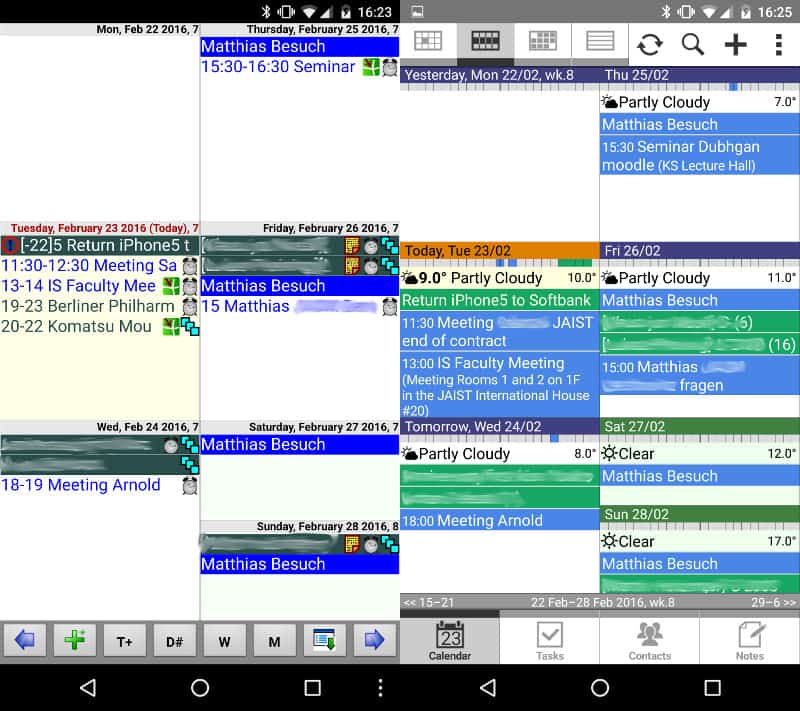
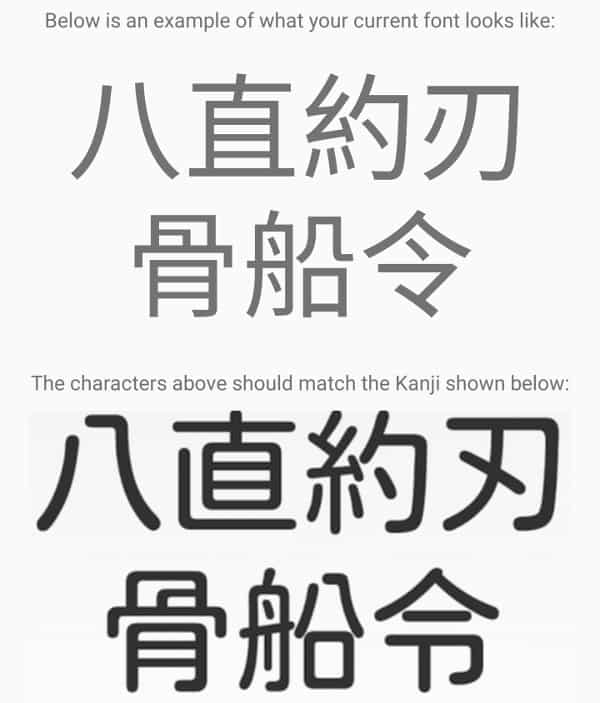
This article starts a series of blogs on my ventures into Android land after having used iOS devices for 6 years. I have never been a strong believer in the Apple ecosystem, and my trials to convince myself to MacBooks and MacPros always ended with installing Linux on them, so I guess I wasn t really the ideal target for iOS. Thus, my iOS devices were also permanently in jailbroken state, otherwise I would feel amputated. But as much as I disliked the lock-in and closed environment of the iOS world, it was from the user perspective surprisingly well done and smooth. So it was with a certain level of tension when I finally switched to Linux^WAndroid. android-ios If you don t want to read on, here the preliminary conclusion: Why didn t I do it earlier! But before we go into details, let me start with my background: History of my devices Originally I was a big opponent of smart phones and preferred the Unix-way, one device for one thing. So I had a normal phone and (various) Palm devices (Tungsten X, Tungsten C, and above all my beloved Handera TRGpro). I loved the Palm world and considered it superior to the then smart phone world, until I came to Japan, where the challenge of a proper input method for Japanese and proper Japanese support posed a big hurdle. The Palm devices had a stick and written input fields, but Japanese input was practically impossible and a huge pain. Searching for a word in Japanese was more hurdle then looking it up in a printed dictionary. In addition, I needed a phone in Japan, so I plunged into the smart phone world and got myself a iPhone (3g). What a world did open for me: easy typing of Japanese, dictionaries, on-the-fly translation, woooow! And above all, I discovered my most beloved and till now one of my most important programs: Flashcards Deluxe. Thanks, and I have to say to 80% thanks to this program my Japanese learning speed has accelerated considerably. There is nothing more important for me than getting drilled in a systematic way. But I derail, anyway, having Flashcard Deluxe on the iPhone within rather short time I had about 10000 or more flashcards created, and moving on to a different architecture (Android) was for quite some time practically impossible without loosing years of statistics and learning, so I renewed my contract after 2 years together with a iPhone 4s. Another two years passed, and these years brought an Android version of Flashcards Deluxe, as well as Dropbox syncing, so I had no excuse anymore to remain in iOS land, wouldn t it be for an iPhone 5s that was passed to me near the end of my forth year, so I again extended the contract for two years. Finally, after 6 years of iPhone devices, this January I finally decided it is time to switch to Android. After lots of thinking, comparing, and requesting advice from good friends with more experience in the smart phone market I went for a Google Nexus 6p. Google Nexus 6p I will not repeat the specs of this phone as they are widely available on the net. My original plan was a Samsung S6, but after consultation with an expert I decided for an original Google phone for better security support. That left me with the option between a Nexus 5x and 6p, and due to prize differences (prizes of mobiles are ridiculously strange in Japan) I went for the 6p instead of the 5x. One point that made the decision for this slight too big device easy was the fact that it uses a great AMOLED display. Moving the data Since I was using Google Calendar and Google Contacts already on the iPhone, moving to the Android phone was far less a hassle than I thought. My contacts and events showed up without a hiccup. Most of the usual apps are nowadays available on both iOS and Android, so the most difficult thing was remembering all the passwords to log into the applications again (SNS like G+, FB, Twitter etc). The same is more or less true for messengers of all kinds (Line, WhatsApp, Threema, etc), but here one is advised to check with the respective web site first to make sure one does not loose all of the important data. Line for example is a stupid ***** that deletes all previous chats on the old phone and does not make them available on the new one. WhatsApp can be converted with a special conversion program. Threema, too allows for transfer of ids. Move of applications After that came the hunt for replacement applications for those that are not available as is on Android: Mail At first like probably everyone I used the shipped GMail program. It might be good for Google Mail accounts, but for anything else it is just a real pain. Thus, I have searched a bit and finally settled (for now) for K-9 Mail: it is open source, open development, feature rich, and more a hackers type email program, perfectly suited to me. There is a commercial variant called K@-Mail that says that it improves the user interface and some usability items as well as features, but I didn t see much of an advantage over the original version (which is completely free) and in fact some of my accounts didn t work at all. So I remain with K9 Mail and I think this is a good decision. Calendar Managing Calendars is one of the most important task for me. I have been a fervent supporter of DateBk4, DateBk 5, and DateBk 6 on the original Palm series, and when I left the Palm World it was with great pain that I had to loose DateBk. Not only because it was a simply fantastic calendar program that allowed me to keep track of all my climbing routes, festivities, in a much more advanced way than any other Calendering application, but also because the programmer of the DateBk series is running the Dewar Wildlife Trust, a Gorilla rescue group and a lot of the money he makes from the app sales is going to rescue Gorillas. With the switch to iOS this option was gone, and I first used the built-in calendar application (which is so weak) and later and for long time Pocket Informant Pro. This is a very good program and probably the only one that can compete with DateBk with respect to functionality and usefulness. During the time of me being locked in in iOS I realized that the world has moved on and a new version of DateBk series for Java was developed, called Pimlical. First only available on Windows, it became later available also on Android and Linux, too. The following screen shot puts Pimlical on the left, and Pocket Informant on the right. I will write a more detailed comparison in future, in short: PInformant is more streamlined and polished, Pimlical has more configuration option. Practically everything can be adjusted to one s need, and in addition there is also a Desktop application that sync either with Google and the phone, or only with the phone if you want to live off the grid. pimlical-pinformant So nowadays on Android I have both Pocket Informant Pro as well as Pimlical, but after a short time I have now switched practically exclusively to Pimlical. Notes Here there is pain HUGE PAIN!!! iOS has an excellent applications for notes, called simply Notebooks. This little pearl was my work horse for everything (more or less) memorable. From poems and song texts to bus time tables, from PDF to GIFs, from MarkDown to HTML, everything could be saved into Notebooks, displayed, edited, ordered. And above all it had automatic background sync with Dropbox. So I could drop new files into the respective sub-folder of my Dropbox folder and could be sure I have the files available on my phone when I leave for a trip. And there is a huge bag of features that I haven t even tapped into! Android is unfortunately not on the list of supported architectures of Notebooks. So I searched far and wide, and without any success. There are all kind of notes, flash colors, overly simple, fast and slow, stylish and plain, but none of them did even provide half of the features of Notebooks. None, not even half. I still hope I might find the ultimate notes application, or even better would be an Android version of the original Notebooks application (but this is not high on the developers todo list), but for now I am in despair The Rest As I said, most apps are nowadays available on both platforms, so there is not much more to do than download the respective Android app and log in again. That worked very nice across practically all apps. Things I don t like (i.e., which are broken!) on Android Although a very convenient system and perfectly made to fit my taste, there are some things that are a huge pain (and a big shame on Google to not being able to fix that for long time!): Japanese fonts when the device is in English interface language In case you are a foreigner living in Japan and want your Android phone in English, but still read emails, news, etc in Japanese, then Android provides you with the worst, namely Chinese fonts: chinese-japanese-mix This is a well known problem and I have blogged about fixing the very same problem on Linux (Debian), and the solution is a simple reshuffling in the fontconfig configuration files. There is even an application for it in the Google store, Kanji Fix, but it needs a rooted device (which I haven t done till now my failure!). I can only hope that Google fixes this completely stupid problem in a future version. The Me problem Another of these beasty problems: The Android Contacts application has an entry for Me , which unfortunately, no idea why, cannot be linked with my normal me in the list of contacts. There are reports all over the Internet, strange suggestions, and no real solution. Again, a simple thing that should work but doesn t. Invisible Images folder in MTP mode A more annoying problem is that the camera folder under Photos does not show up when connecting the device in MTP mode to my computer, and as consequence me being unable to copy photos from the device to my computer. The solution I am using at the moment is moving the photos with a file manager to a new folder which is visible during MTP communcation, and copy the photos from there. But this, too, should be something trivial, but alas, despite a lot of posts on the internet I couldn t find a proper solution. Google Music As written somewhere else, Google Music has switched from 5 star system to up/down system, which is a huge pain and PITA. Things I do like (or I discovered) on Android There are some things I haven t been used/tried on iOS they might be possible which I really like: Yubikey Neo support I will write about this in a different blog, but nowadays I have my GPG keys on an hardware token (Yubikey Neo) and the application OpenKeychain on Android works nicely with both K9 Mail and via NFC with my Yubikey. That is a great tool! Bluetooth streaming Bluetooth on iOS devices was always a bit broken for me, so connecting my phone to my old car radio I needed radio transmitter that was connected to the cable port of the iPhone. With Android I use a Bluetooth Radio device (receives data via bluetooth, and sends music out via radio waves for a car stereo to receive them). Now if my monthly data limit wouldn t be that low  Debian on Android Yes, you can have a full Debian system running in your terminal on Android. There are several applications providing this feature, and I am rather surprised how smooth it works. Conclusion My preliminary conclusion is that the switch to Android at this time was perfectly timed, and from the technological side I should have done much earlier. In future blogs I will discuss particular instances of this transition in more details. If you have any suggestion for me, in particular for a good notes taking application, please let me know!
23 February 2016

Enrico Zini: pdftk-inkscape

In praise of pdftk and inkscape To appease the utterly evil, capricious and monstrous gods of Italian bureaucracy, I needed to craft several PDF files to sacrifice to the altar of the Italian Certified Email. Three of those PDFs (let's call them A.pdf, B.pdf and C.pdf) are copies of multi-page PDFs where I need to sign each page and then send them back. One of them (let's say C.pdf) needs to be signed on each page except the last, which needs instead to be signed twice in two special blank spaces. I have a transparent png with my signature (let's call it signature.png). Let's start with C.pdf:
# Split C.pdf into single-page PDFs
pdftk C.pdf burst
# Edit a random page in inkscape, add a signature to the corner of the
    # page, delete the rest of the contents and save as signature.pdf
    inkscape pg_0001.pdf
# Edit the last page in inkscape, add the signatures where needed, save
    # as pg_0005-signed.pdf
    inkscape pg_0005.pdf
# Stamp the signatures all over all pages but the last one
for f in pg_000[1-4].pdf
do
    pdftk $f stamp signature.pdf output  basename $f .pdf -signed.pdf
done
# Put it all together
pdftk pg_000*-signed.pdf cat output C-signed.pdf
And now that I have signature.pdf, I can easily process A and B:
pdftk A.pdf stamp signature.pdf output A-signed.pdf
pdftk B.pdf stamp signature.pdf output B-signed.pdf
pdftk is much smarted than that, and it would have been able to extract a single document with all pages of C.pdf except the last one, but with Italian bureaucracy it is painful enough to get the job done that afterwards one is more likely to need eating chocolate to avoid depression, rather than to try and redo it all again more elegantly. So, there are times when bureaucracy calls for printing a pile of sheets, mindlessly sign them all, scan them again, shred them, plant a new tree, and then finally book a MRI scan of your wrist to assess the state of your carpal tunnel. In those times, pdftk and inkscape can save the day.

Enrico Zini: In praise of pdftk and inkscape

To appease the utterly evil, capricious and monstrous gods of Italian bureaucracy, I needed to craft several PDF files to sacrifice to the altar of the Italian Certified Email. Three of those PDFs (let's call them A.pdf, B.pdf and C.pdf) are copies of multi-page PDFs where I need to sign each page and then send them back. One of them (let's say C.pdf) needs to be signed on each page except the last, which needs instead to be signed twice in two special blank spaces. I have a transparent png with my signature (let's call it signature.png). Let's start with C.pdf:
# Split C.pdf into single-page PDFs
pdftk C.pdf burst
# Edit a random page in inkscape, add a signature to the corner of the
    # page, delete the rest of the contents and save as signature.pdf
    inkscape pg_0001.pdf
# Edit the last page in inkscape, add the signatures where needed, save
    # as pg_0005-signed.pdf
    inkscape pg_0005.pdf
# Stamp the signatures all over all pages but the last one
for f in pg_000[1-4].pdf
do
    pdftk $f stamp signature.pdf output  basename $f .pdf -signed.pdf
done
# Put it all together
pdftk pg_000*-signed.pdf cat output C-signed.pdf
And now that I have signature.pdf, I can easily process A and B:
pdftk A.pdf stamp signature.pdf output A-signed.pdf
pdftk B.pdf stamp signature.pdf output B-signed.pdf
pdftk is much smarted than that, and it would have been able to extract a single document with all pages of C.pdf except the last one, but with Italian bureaucracy it is painful enough to get the job done that afterwards one is more likely to need eating chocolate to avoid depression, rather than to try and redo it all again more elegantly. So, there are times when bureaucracy calls for printing a pile of sheets, mindlessly sign them all, scan them again, shred them, plant a new tree, and then finally book a MRI scan of your wrist to assess the state of your carpal tunnel. In those times, pdftk and inkscape can save the day.

21 February 2016

Mario Lang: Generating C++ from a DTD with Jinja2 and lxml

I recently stumbled across an XML format specified in a DTD that I wanted to work with from within C++. The XML format is document centric, which is a bit of a pain with existing data binding compilers according to my limited experience. So to learn something new, and to keep control over generated code, I started to investigate what it would take to write my own little custom data binding compiler.
Writing a program that writes a program It turns out that there are two very helpful libraries in Python which can really make your life a lot easier:
To keep my life simple, I am focusing on generating accessors for XML attributes only for now. I leave it up to the library client to figure out how to deal with child elements.
A highly simplified DOM Inspired by the hybrid example from libstudxml, we define a simple base class that can store raw XML elements.
class element  
public:
  using attributes_type = std::map<xml::qname, std::string>;
  using elements_type = std::vector<std::shared_ptr<element>>;
  element(const xml::qname& name) : tag_name_(name)  
  virtual ~element() = default;
  xml::qname const& tag_name() const   return tag_name_;  
  attributes_type const& attributes() const   return attributes_;  
  attributes_type&       attributes()         return attributes_;  
  std::string const& text() const   return text_;  
  void text(std::string const& text)   text_ = text;  
  elements_type const& elements() const  return elements_; 
  elements_type&       elements()         return elements_;  
  element(xml::parser&, bool start_end = true);
  void serialize (xml::serializer&, bool start_end = true) const;
  template<typename T> static std::shared_ptr<element> create(xml::parser& p)  
    return std::make_shared<T>(p, false);
   
private:
  xml::qname tag_name_;
  attributes_type attributes_;
  std::string text_;           // Simple content only.
  elements_type elements_;     // Complex content only.
 ;
For each element name in the DTD, we're going to define a class that inherits from the element class, implementing special methods to make attribute access easier. The element(xml::parser&) constructor is going to create the corresponding class whenever it sees a certain element name. This calls for some sort of factory:
class factory  
public:
  static std::shared_ptr<element> make(xml::parser& p);
protected:
  struct element_info  
    xml::content content_type;
    std::shared_ptr<element> (*construct)(xml::parser&);
   ;
  using map_type = std::map<xml::qname, element_info>;
  static map_type *get_map()  
    if (!map) map = new map_type;
    return map;
   
private:
  static map_type *map;
 ;
template<typename T>
struct register_element : factory  
  register_element(xml::qname const& name, xml::content const& content)  
    get_map()->insert( name, element_info content, &element::create<T> );
   
 ;
shared_ptr<element> factory::make(xml::parser& p)  
  auto name = p.qname();
  auto iter = get_map()->find(name);
  if (iter == get_map()->end())  
    // No subclass found, so store plain data so we do not loose on roundtrip.
    return std::make_shared<element>(p, false);
   
  auto const& element = iter->second;
  p.content(element.content_type);
  return element.create(p);
 
The header template Now that we have our required infrastructure, we can finally start writing Jinja2 templates to generate classes for all elements in our DTD:
 %- for elem in dtd.iterelements() % 
   %- if elem.name in forwards_for % 
     %- for forward in forwards_for[elem.name] % 
class  forward ;
     %- endfor % 
   %- endif % 
class  elem.name  : public dom::element  
  static register_element< elem.name > factory_registration;
public:
   elem.name (xml::parser& p, bool start_end = true) : dom::element(p, start_end)  
   
   %- for attr in elem.iterattributes() % 
     %- if attr is required_string_attribute % 
  std::string  attr.name () const;
  void  attr.name (std::string const&);
     %- elif attr is implied_string_attribute % 
  optional<std::string>  attr.name () const;
  void  attr.name (optional<std::string>);
     # more branches to go here # 
     %- endif % 
   %- endfor % 
 ;
 %- endfor % 
required_string_attribute and implied_string_attribute are so-called Jinja2 tests. They are a nice way to isolate predicates such that the Jinja2 templates can stay relatively free of complicated expressions:
templates.tests['required_string_attribute'] = lambda a: \
  a.type in ['id', 'cdata', 'idref'] and a.default == 'required'
templates.tests['implied_string_attribute'] = lambda a: \
  a.type in ['id', 'cdata', 'idref'] and a.default == 'implied'
That is nice, but we have only seen C++ header declarations so far. Lets have a look into the implementation of some of our attribute accessors.
Enum conversion One interesting aspect of DTD based code generation is the fact that attributes can have enumerations specified. Assume that we have some extra data-structure in Python which helps us to define a nice name for each individual enumeration attribute. Then, a part of the Jinja2 template to generate the implementation for an enumeration attribute looks like:
     %- elif attr is known_enumeration_attribute % 
       %- set enum = enumerations[tuple(attr.values())]['name'] % 
       %- if attr.default == 'required' % 
 enum   elem.name :: attr.name () const  
  auto iter = attributes().find(qname " attr.name " );
  if (iter != attributes().end())  
         %- for value in attr.values() % 
     % if not loop.first % else  % else %       % endif -% 
    if (iter->second == " value ") return  enum :: value   mangle ;
         %- endfor % 
    throw illegal_enumeration ;
   
  throw missing_attribute ;
 
void  elem.name :: attr.name ( enum  value)  
  static qname const attr " attr.name " ;
  switch (value)  
         %- for value in attr.values() % 
  case  enum :: value   mangle :
    attributes()[attr] = " value ";
    break;
         %- endfor % 
  default:
    throw illegal_enumeration ;
   
 
       %- elif attr.default == 'implied' % 
 # similar implementation using boost::optional # 
       %- endif % 
     %- endif % 
Putting it all together The header for the library is generated like this:
from jinja2 import DictLoader, Environment
from lxml.etree import DTD
LIBRARY_HEADER = """
 # Our template code # 
"""
bmml = DTD('bmml.dtd')
templates = Environment(loader=DictLoader(globals()))
templates.filters['mangle'] = lambda ident: \
   '8th_or_128th': 'eighth_or_128th',
   '256th': 'twohundredfiftysixth',
   'continue': 'continue_'
   .get(ident, ident)
def template(name):
  return templates.get_template(name)
def hpp():
  print(template('LIBRARY_HEADER').render(
     'dtd': bmml,
     'enumerations': enumerations,
     'forwards_for':  'ornament': ['ornament_type'],
                      'score': ['score_data', 'score_header'] 
     ))
With all of this in place, we can have a look at a small use case for our library.
Printing document content I haven't really explained anything about the document format we're working with until now. Braille Music Markup Language is an XML based plain text markup language. Its purpose is to be able to enhance plain braille music scores with usually hard-to-calcuate meta information. Almost all element text content is supposed to be printed as-is to reconstruct the original plain text. So we could at least define one very basic operation in our library: printing the plain text content of an element. I found an XML stylesheet that is supposed to convert BMML documents to HTML. This stylesheet apparently has a bug, insofar as it forgets to treat the rest_data element in the same way as it already treats the note_data element. note to self, I wish I would've done a code review before the EU-project that developed BMML was finished. It looks like resurrecting maintainance is one of the things I might be able to look into in a meeting in Pisa in the first three days of March this year. If we keep this in mind, we can easily reimplement what the stylesheet does in idiomatic C++:
template<typename T>
typename std::enable_if<std::is_base_of<element, T>::value, std::ostream&>::type
operator<<(std::ostream &out, std::shared_ptr<T> elem)  
  if (!std::dynamic_pointer_cast<note_data>(elem) &&
      !std::dynamic_pointer_cast<rest_data>(elem) &&
      !std::dynamic_pointer_cast<score_header>(elem))
   
    auto const& text = elem->text();
    if (text.empty()) for (auto child : *elem) out << child; else out << text;
   
  return out;
 
The use of std::enable_if is necessary here so that operator<< is defined on the element class and all of its subclasses. Without the std::enable_if magic, client code would be forced to manually make sure it is passing std::shared_ptr<element> each time it wants to use the operatr<< on any of our specially defined subclasses. Now we can easily print BMML documents and get their actual plain text representation.
#include <fstream>
#include <iostream>
#include <xml/parser>
#include <xml/serializer>
#include "bmml.hxx"
using namespace std;
using namespace xml;
int main (int argc, char *argv[])  
  if (argc < 2)  
    cerr << "usage: " << argv[0] << " [<filename.bmml>...]" << endl;
    return EXIT_FAILURE;
   
  try  
    for (int i = 1; i < argc; ++i)  
      ifstream ifs argv[i] ;
      if (ifs.good())  
        parser p ifs, argv[i] ;
        p.next_expect(parser::start_element, "score", content::complex);
        cout << make_shared<bmml::score>(p, false) << endl;
        p.next_expect(parser::end_element, "score");
        else  
        cerr << "Unable to open '" << argv[i] << "'." << endl;
        return EXIT_FAILURE;
       
     
    catch (xml::exception const& e)  
    cerr << e.what() << endl;
    return EXIT_FAILURE;
   
 
That's it for now. The full source for the actual library which inspired this posting can be found on github in my bmmlcxx project. If you have an comments or questions, send me mail. If you like bmmlcxx, don't forget to star it :-).

Vincent Sanders: Stack 'em, pack 'em and rack 'em.

As you may be aware I have a bit of a problem with Single Board Computers in that I have a lot of them. Keeping them organised has turned into a bit of a problem.

cluttered shelf of SBC
I designed clip cases for many of these systems giving me a higher storage density on my rack shelves and built a power supply to reduce the cabling complexity. These helped but I still ended up with a cluttered shelf full of SBC.

I decided I would make a rack enclosure to hold the SBC, I was limited to material I could easily CNC machine which limited me to acrylic plastics or wood.

laser cutting the design, viewed through heavily tinted filterInitially I started with the idea of housing the individual boards in a toast rack arrangement. This would mean that the enclosure would have to be at least 2U high to fit the boards all the existing cases would have to be discarded. This approach was dropped when the drawbacks of having no flexibility and only being able to fit the units that were selected at design time became apparent (connector cutouts and mounting hole placement.

Instead I changed course to try and incorporate the existing cases which already solved the differing connector and mounting placement problem and gave me a uniform size to consider. Once I had this approach the design came pretty quickly. I used a tube girder construction 1U in height to get as much strength as possible from the 3mm acrylic plastic I would use.

laser cut pieces arranged for assembly still with protective film on
The design was simply laser cut from sheet stock and fastened together with M3 nut and bolts. Once I corrected the initial design errors (I managed to get almost every important dimension wrong on the first attempt) the result was a success.

working prototype resting on initial version
The prototype is a variety of colours because makespace ran out of suitably sized clear acrylic stock but the colouring has no effect on the result other than aesthetical. The structure gives a great deal of rigidity and there is no sagging or warping, indeed testing on the prototype got to almost 50Kg loading without a failure (one end clamped and the other end loaded at 350mm distance)

I added some simple rotating latches at the front which keep the modules held in place and allow units to be removed quickly if necessary.

rack slots installed and in use
Overall this project was successful and I can now pack five SBC per U neatly. It does limit me to using systems cased in my "slimline" designs (68x30x97mm) which currently means the Raspberry Pi B+ style and the Orange Pi PC.

Once small drawback is access to I/O and power connectors. These need to be right angled and must be unplugged before unit removal which can be a little fiddly. Perhaps a toast rack design of cases would have given easier connector access but I am happy with this trade off of space for density.

As usual the design files are freely available, perhaps they could be useful as a basis for other laser cut rack enclosure designs.

20 February 2016

Mark Brown: Expedient ABIs

The biggest change we ve seen in the Linux kernel for ARM over the past few years has been the transition to providing descriptions of the hardware in systems via device tree. This splits out the description of the devices in the system that can t be automatically enumerated from the kernel into a separate binary instead of being part of the kernel binary. Currently for most systems that are actively used upstream the device tree source code is kept in the kernel but the goal is to allow people to use device trees that are distributed separately to the kernel, especially device trees that are shipped as part of the board firmware. This is something that other platforms have done for a long time, PowerPC Macs and Sun SPARC systems use device tree as the mechanism for describing the hardware to the operating system. One consequence of this desire to allow the kernel and device tree to be shipped separately is that the device tree becomes an ABI. This is a really big change for people working in the embedded and consumer electronics areas where ARM has been most widely deployed, it means that any descriptions of the hardware need to be something that can stand the test of time. Anything we release is something we have to expect to carry code for indefinitely. When everything was done as part of the kernel binary we could easily do something that doesn t quite represent the hardware with the intention of replacing it later, now it is much harder to do that. An example of this is the SAW in Qualcomm SoCs. This is a block in the SoC which provides control of some regulators used for the CPU cores in the PMIC in very low power states and also allows the CPU to control the regulator with fast memory mapped registers rather than the slower buses used to control the PMIC. Unfortunately it doesn t fully replace direct access to the PMIC, it supports a subset of the control we need for the PMIC but not all of it. We could represent the SAW as an independent regulator but from a system integration point of view it is functioning as an extra control interface for the external PMIC and if we want to use the extra functionality that is only available via direct access to the PMIC we need to consider that and represent the SAW as an extension of it. If we don t need that extra PMIC functionality at the current time this means we need to do some extra work to make sure we describe the PMIC before we can use the SAW even if we have no intention to use anything other than the SAW. Now, few if any people are actually using the device tree as an ABI at present so those working on enabling platforms often forget about the requirement and find it an obstacle to getting things done they have pressure to get things done, they don t have quite the same pressure to make sure that attention is paid to device tree compatibility so it can easily get forgotten. Over time this may change, especially if people start to take advantage of the device tree as an ABI that become more and more important, but for now if we want to enable that in the future it s something we have to actively think about and work on, accepting that this means we won t always be able to do the most expedient thing.

16 February 2016

Norbert Preining: Debian/TeX Live 2015.20160215-1

About one month has passed and here is the usual updated of TeX Live packages for Debian. While I am not really calling for testers at the moment, building of preliminary packages for TeX Live 2016 has begone. The binaries are already uploaded to experimental, and arch=all packages for experimental will follow soon. Debian - TeX Live 2015 As with the last time, here is the list of new and updated pacakges with (auto-generated) links to the package pages on CTAN. New packages adtrees, babel-occitan, crimson, emisa, glossaries-extra, gloss-occitan, libertinus, luatex-def, mynsfc, nihbiosketch, signchart, smartunits, tikz-feynman, uhrzeit, xduthesis. Updated packages achemso, acro, animate, apnum, archaeologie, babel, babel-french, babel-greek, babel-macedonian, bangorcsthesis, biblatex-bookinarticle, biblatex-gost, biblatex-manuscripts-philology, br-lex, caption, chemgreek, chemmacros, chemnum, cmtiup, csplain, csquotes, ctanify, ctex, cweb, datatool, datetime2, datetime2-english, delimseasy, droit-fr, dvips, erewhon, exsheets, fibeamer, fira, fontspec, forest, geschichtsfrkl, glossaries, graphics, greek-fontenc, greektonoi, hyph-utf8, inconsolata, isodoc, l2tabu, l3build, l3experimental, l3kernel, l3packages, latex, latex-bin, latex-make, leadsheets, leaflet, luaotfload, luatexja, mathastext, mcf2graph, mcmthesis, media9, metrix, mhchem, ndsu-thesis, newpx, newtx, ocgx2, pas-tableur, pdftex, pdfx, pict2e, pst-perspective, pstricks, pstricks-add, ptex, quran, ran_toks, realscripts, schemata, showhyphens, siunitx, sr-vorl, sttools, tempora, tetex, tex4ht, texfot, texlive-scripts, thinsp, thuthesis, tkz-orm, tools, uantwerpendocs, ulthese, unicode-data, uptex, xassoccnt, xcjk2uni, xebaposter, xecjk, xetex, xetexko, xltxtra, xpinyin, zhnumber, zhspacing. Enjoy.

14 February 2016

Rapha&#235;l Hertzog: Freexian s report about Debian Long Term Support, January 2016

A Debian LTS logoLike each month, here comes a report about the work of paid contributors to Debian LTS. Individual reports In December, 113.50 work hours have been dispatched among 9 paid contributors. Their reports are available: Evolution of the situation As expected, we had a small drop in the amount of hours sponsored. New sponsors (re-)joined but others stopped too (Gree this time) mostly balancing the result. We only lost 2 hours of sponsored work. It would be nice if we could invert that curve and actually start again to get closer to our objective of funding the equivalent of a full time position. Let s hope that the switch to wheezy as the version supported by the LTS team will motivate many companies relying on Debian 7 in their IT system. In terms of security updates waiting to be handled, the situation is close to last month(17 packages in dla-needed.txt, 27 in the list of CVE). It looks like that having about 20 packages needing an update is the normal situation and that we can t really get further down given the time required to process some updates (sometimes we wait until the upstream authors provides a patch, and so on). Thanks to our sponsors New sponsors are in bold.

No comment Liked this article? Click here. My blog is Flattr-enabled.

Elena 'valhalla' Grandi: Happy #ilovefs

Happy #ilovefs

Happy I love Free Software Day https://fsfe.org/campaigns/ilovefs/2016/!

Immagine/fotohttp://ilovefs.org

My life has been full of Free Software for more than 15 years and listing all the software and projects I've used or interacted with would take a long post (and I would be sure to forget someone), so if you are reading this and are involved in Free Software: thank you! I may have used your work in the past, I may be using it some time in the future, or I may never use it personally, but you are making the world I live in a better place anyway.

Special thanks go to the local LUGs, where I've met my SO and to the @Debian project, where I've met a few people I can call friends.

@LIFO @Gruppo Linux Como #ilovefs

13 February 2016

Norbert Preining: OpenPHT 1.5.1 for Debian/sid

I have updated the openpht repository with builds of OpenPHT 1.5.1 for Debian/sid for both amd64 and i386 architecture. For those who have forgotten it, OpenPHT is the open source fork of Plex Home Theater that is used on RasPlex, see my last post concerning OpenPHT for details. plex-debian-new sid and testing For sid use the following lines:
deb http://www.preining.info/debian/ openpht-sid main
deb-src http://www.preining.info/debian/ openpht-sid main
You can also grab the binary for amd64 directly here for amd64 and i386, you can get the source package with
dget http://www.preining.info/debian/pool/main/o/openpht/openpht_1.5.1.508-1.dsc
jessie Builds for Debian stable release jessie are not done by now. The release file and changes file are signed with my official Debian key 0x860CDC13. Now be ready for enjoying the next movie!

11 February 2016

Jose M. Calhariz: Preview of amanda 3.3.8-1, second try.

I found a bug in amanda-3.3.8 that was quickly fixed by upstream. Please upgrade to this version. The updates will go to collab-maint.The debs files for jessie are here: amanda-common_3.3.8-1_cal1_i386.deb amanda-server_3.3.8-1_cal1_i386.deb amanda-client_3.3.8-1_cal1_i386.deb Here comes the changelog:
amanda (1:3.3.8-1~cal1) unstable; urgency=low
  * New Upstream version
    * Changes for 3.3.8
      * s3 devices
          New NEARLINE S3-STORAGE-CLASS for Google storage.
          New AWS4 STORAGE-API
      * amcryptsimple
          Works with newer gpg2.
      * amgtar
          Default SPARSE value is NO if tar < 1.28.
          Because a bug in tar with some filesystem.
      * amstar
          support include in backup mode.
      * ampgsql
          Add FULL-WAL property.
      * Many bugs fix.
    * Changes for 3.3.7p1
      * Fix build in 3.3.7
    * Changes for 3.3.7
      * amvault
          new --no-interactivity argument.
          new --src-labelstr argument.
      * amdump
          compute crc32 of the streams and write them to the debug files.
      * chg-robot
          Add a BROKEN-DRIVE-LOADED-SLOT property.
      * Many bugs fix.
  * Refreshed patches.
  * Dropped patches that were applied by the upstream: fix-misc-typos,
    automake-add-missing, fix-amcheck-M.patch,
    fix-device-src_rait-device.c, fix-amreport-perl_Amanda_Report_human.pm
  * Change the email of the maintainer.
  * "wrap-and-sort -at" all control files.
  * swig is a new build depend.
  * Bump standard version to 3.9.6, no changes needed.
  * Replace deprecated dependency perl5 by perl, (Closes: #808209), thank
    you Gregor Herrmann for the NMU.
  * New patch fix-amgtar-exclude to fix amgtar when the exclude file don't
    exist.
 -- Jose M Calhariz <jose@calhariz.com>  Thu, 11 Feb 2016 17:52:08 +0000

Next.

Previous.