Search Results: "ah"

24 January 2009

Sami Haahtinen: New tricks

"You never call, you never write. I hardly know you anymore." Yes, I've been meaning to write up on several things. For some time now, I've been a happy VIM user and a while back I ran in to a blog post where someone mentioned a new feature they found in VIM which got me to explore the vim-scripts package. There are a lot of scripts out there that extend VIM far beyond what it can do by default. And it's quite powerful even without the scripts. One of the neat little scripts I decided to install by default was surround, it allows one to easily replace surrounding parenthesis, tags or quotation marks. There are a lot of scripts in the vim-scripts package, but it's not always clear how to enable the scripts. Thats where vim-addon-manager comes to play, it provides a vim-addon command that allows you to easily enable or disable the scripts. I'm still trying to grasp the full potential of all the new commands available, but it certainly appears that I'll be having even more fun writing stuff. It's kind of odd, at first when you start to use vi-like editors, you struggle. But in the end it's just such a convenient way of editing files that it really does grow on you.

23 January 2009

Daniel Kahn Gillmor: target disk mode (sbp-2 mass storage host mode?)

One very convenient feature of Apple's hardware is the ability for their workstations to enter target disk mode. This effectively transforms the machine into a glorified ieee1394 (firewire) block device, which can then be manipulated from outside the machine using the standard SBP-2 protocol. Is there a way to provide this same functionality from a running GNU/Linux machine? For example, i have a GNU/Linux system with a block device attached to it. I would prefer if the block device was available to a neighboring machine, but (for whatever reason) i'm unable to physically move it. However, i'm able to link the two machines via a simple ieee1394 connection. A "virtual target disk mode" server (or would it be better to say "an SBP-2 mass storage target service over an ieee1394 link"?) would be really useful. One thing that occurs to me is that i could do some sort of networking abstraction over the link (using eth1394?), and then use something like vblade (an ATA-over-Ethernet target service) to provide a virtual block device to the remote host. However, this requires the remote host to run an operating system capable of dealing with these (more obscure) protocols, and i'd like this to work for any remote machine that knows how to deal with generic SBP-2 ieee1394 mass storage. I know that in general GNU/Linux is at least as powerful and capable as the firmware that Apple ships ;) But it's possible that our community just hasn't gotten around to implementing something like this. Is this the case? My attempts to search for it haven't turned up anything, but it's entirely possible that i'm reading the wrong docs (or reading the docs wrong). Any pointers?Tags: firewire, ieee1394, sbp2, vblade

Y Giridhar Appaji Nag: Gurudwara Tarn Taran Sahib

About 25KM from Amritsar is Tarn Taran. Tarn Taran was founded by the fifth Sikh Guru, Guru Arjun Dev who also built a Gurudwara there and named it after the town. The Gurudwara has the largest Sarovar (lake) among all the Sarovar's across all Gurudwaras. The place is calm, peaceful and a treat to the senses. I was there one winter morning and took some pictures.

The Sarovar:

Tarn Taran Sahib Sarovar

And a few more pictures from the Gurudwara:

Tarn Taran Sahib Tarn Taran Sahib Tarn Taran Sahib Tarn Taran Sahib

Axel Beckert: MBC09: The Day Before

Helped my parents moving the first half of the week. Left there at Thurdays around 9am. Drove 45min to Zurich. Removed everything bicycle related from my daypack. Left the TomTom at home. (Google Maps on the E51 has to sufficed and sufficed so far.) Crammed cloths for three days in. Was at Zurich Main Station around 11:40am. My plan was to take the direct ICE train from Zurich to Hamburg Dammtor. Bought a Rivella for the journey. First suprise at the platform: No ICE train. Instead a Swiss InterCity. The staff told us due to a defect in the ICE train, we have to go to Basel SBB with this train, then switch trains there. No carriage numbers and reservations valid here. Hrmpf. For luck, there where not that many people in the train. No power sockets though. Next surprise at Basel SBB: No ICE train here either. We re advised to switch to a German InterCity and then switch again a few kilometers later at Basel Badischer Bahnhof (aka Basel, German Station ). There then finally waited an ICE labelled as the initially expected ICE 72 from Zurich to Hamburg Altona. Even the reservations were displayed, departure was though 20min later than the original ICE 72. The voice from the speakers told us that this is a replacement train which came empty from Zurich. WTF? The next time the voice explained the situation, it was a replacement train coming from Interlaken Ok, DB is not as insane as I believed for about half an hour. ;-) Worked though the git tutorial and the git glossary on the train since in future I ll use git in some of the OSS project I m working together with Conkeror beyond others. Also had a conversation with some doctor from University Hospital Zurich who has chasing as hobby. (WTF?) The train arrived about 45 minutes late at Dammtor, so I first checked in in my hotel ( Hotel am Dammtor , very close to the MBC09 venue) and then walked to Hamburger Botschaft where the twitter reading was already running, hoping to meet someone I know and having dinner afterwards. Guided by Google Maps on my Nokia E51 it took longer than expected to walk there. And it was windy and raining. The twitter reading venue was quite full, but I still found a place where I saw most of the screen. At least the reminder of reading was quite funny: #famouslasttweets. They closed with a tweet similar to And then there s also identi.ca . :-) I was told it wasn t that funny at the beginning. Didn t find anyone I really knew, just sticked to a group talking about being hungry. When we met @igorette on our way to some restaurant and he recognised me, I found out that @muhh was also in the group I m heading though Hamburg. We had a nice dinner at Schmitt Foxyfood, I had GrillGold (Pommes Frites) with WuchtBrumme (Currywurst) and Fritz Cola. After dinner, @moeffju drove me and some other guy to our hotels. So the first evening was already very interesting despite the usual lateness of Deutsche Bahn.

22 January 2009

Jose Luis Rivas Contreras: new libtorrent and rtorrent (beta, again!)

I think Jari reads my blog haha. There are shiny new packages for libtorrent and rtorrent. The same place as ever: My debian-playground: http://debian.rivco.info/ My private repo: deb ,-src http://reprepro.deb.rivco.info/ experimental main And of course, git (checkout master-experimental and upstream-experimental): http://git.debian.org/?p=collab-maint/libtorrent.git http://git.debian.org/?p=collab-maint/rtorrent.git

Y Giridhar Appaji Nag: The Mozart of Madras

I have been listening to music from the Laya project since a few days. It is a set of CDs I picked up from an interesting hippie-ish place called Psybabas on Castle street. Actually, one rarely gets to listen to such sounds. Ideas of similar music can be found scattered in the movies from the early 90s; Hai la sa reminds me of ETilOni sEpalanTa from donga donga. My favorite track though is LA ilAha ill-Allah which sounds very fresh and different from how one would expect it to be.

On a related noted, ETilOni sEpalanTa was composed by A. R. Rahman. I have great respect for the gentleman and recently H pointed me to an article in Tehelka titled The Mystic Master. While a lot has been written about him recently, mostly in the backdrop of The Golden Globe that he won, this article dwells on the person unlike probably anybody did before. Must read.

Daniel Kahn Gillmor: Trancendental Nonsense and the Functional Approach

Poking around the web site for Law in Contemporary Society, a class taught this semester by Eben Moglen, (who is counsel for the Free Software Foundation and founder of the Software Freedom Law Center), i found Felix Cohen's Trancendental Nonsense and the Functional Approach, which (according to wikipedia) is one of "the most-cited law review articles ever written". I haven't read the whole thing yet (and i'm neither a lawyer nor a philosopher) but it's fascinating reading. And from what i've read so far, it's a strong push toward directly addressing the values that lie hidden beneath our technical or mechanical decisions, and to avoid mistaking technical success or skill with a worthwhile outcome and clear goals at a societal level. This is something we software developers and system administrators struggle with as well (or at least i think we should). It's neat to get my head around these concepts from a different intellectual sphere, and a different era (74 years ago!) when the technical and mechanical tools i work with didn't exist in anything like their present form. This kind of reading makes me wonder what works from Computer Science or Systems Engineering or Information Technology will have this kind of exhortative power and social relevance so far into the future. Do you have a favorite (or abhorred?) text from your field that offers the kind of moral and technical challenges that Cohen's work does?Tags: law, moglen, philosophy

21 January 2009

Kyle McMartin: fudcon f11

I was in Boston last week for FUDcon F11. As usual, despite bringing several tonnes of camera gear, I couldn t be bothered to pull it out aside from a few (terrible) casual shots. But hey, I m not big on being spontaneous. Anyway, the two hackfest days were really productive (as were the days I managed to make it out to the Red Hat office.) Although sadly we didn t make it into MIT for the Sunday hackfest day, due to the weather and the Sunday bus schedule in Arlington. paul's intro session Instead of DaveJ doing his usual what s going on in the kernel for F$next I pitched that session and Dave held a session on dracut, he and Jeremy s new framework for building initramfs. My session was well attended and got a lot of questions about various things like the new drivers/staging policy (though, that s a post for another time.) dcbw and notting The rest of the time was productively spent poking at updates for the kernel for F9 and F10, rebasing them to 2.6.28, and poking at 2.6.29-rc1 for rawhide. This meant btrfs, while not ready for your critical data, was in mainline! After pushing out the new build, I spent most of the weekend doing some btrfs testing, and pushing out a new btrfsprogs build. Once they were composed into rawhide, I believe Fedora became the first to ship the mainline working btrfs in a distro. paul's closing session All said, it was a fairly productive weekend, and FUDPub on Saturday night was a great chance to catch up with a bunch of my coworkers who I rarely get to see. I kind of wish I had bothered to set up an umbrella and get some decent shots of my friends, colleagues and coworkers having a raucous good time, but oh well, there s always next release. off-topic
I absolutely hate being politic, and desperately hate posting about life or whatever, since I don t care about yours and don t see why you should care about mine, but the callous arrogance of these striking transit workers here in Ottawa is beginning to irritate me. These are people who ve threatened to picket students attempting to get to school if the universities accepted funding from the municipal government to continue to run replacement shuttles, and (though they ve reached a side agreement now) had threatened to picket for attempting to hire more drivers to increase their ParaTranspo service which provides shuttle services for the elderly and less-able-bodied residents of Ottawa. My point is, one of the shops I walked past on the high street yesterday said it best: Caution, possibly NSFW depending on your point of view. Given that I live in a (fairly) suburban part of Ottawa, this means I get to enjoy a forty minute walk to the nearest (competent) grocery store or coffee shop, and haven t bothered much. But hey, wonderful North American urban planning strikes again. Huzzah.

Miriam Ruiz: In support of Patio Maravillas

Patio Maravillas is a self-managed government-independent social center in Madrid, placed in a squatted building that long ago belonged to school. The place currently belongs to a Real Estate company, Grupo 2 Reunidos. According to the law, the place has to be used for providing services to the community, which hasn t happened for 10 years. Nobody knows what plans they do have for the building, but there are suspicions that it might be related to property speculation. Nothing new on the horizon. The police are throwing them out of the building tomorrow morning, incidentally coinciding with the opening of the Foro Social Mundial (World Social Forum), for which Patio Maravillas was going to be one of the hosting buildings. Madrid isn t really known for supporting social movements in general, and has a conservative government, so feel free to think that the coincidence is not random. Patio Maravillas has been giving courses and workshops to the community since July 2007, and is very well considered and supported by different organizations. Supposedly whatever happens tomorrow will be without violence, but knowing how the Spanish Police behaves in this situations that is not very likely. The event will be streamed and probably recorded, and information will be twittered, so hopefully nothing serious will happen. I really hope the best for them. I d love to be able to be there with them, but as it is really not possible for me, I m giving them all my support from here. Good luck! Keep up the good work!

20 January 2009

Erich Schubert: Congratulations to the US and their new president

There are hard times ahead, but I figure that Obama might be just the right man at the right time to handle these issues. He gives the impression of being exceptionally smart and able to gather smart advisors around him. So I'm amazed at this huge step the US has made the previous weeks - one of the pictures of the year 2008 was Jesse Jackson crying after Barack Obama had been pronounced election winner. You do get the impression that after years of stagnation, the US is now trying to get ahead of the curve again when it comes to civil and human rights.I must admit that I really envy the US for this election result. We could definitely use some of that spirit in politics as well. And we also could use some smart people there ...

Obey Arthur Liu: Debian Summer of Code 08 : Where are they now (part 1/3)

It s been a while now since the 2008 Summer of Code ended. This year, twelve (?) projects were selected. That s twelve students working full time on a Debian-related project during the summer. The Google Summer of Code has sometimes been criticized in the past for having a poor student-developer retention rate inside the host projects. One of the goals of the program has always been to bring new people to budding or established free software organizations and it s a pity that some would leave the project as soon as the program ends. On the other end, poor integration of created code within the project leads to work that is hard to merge in, or worse, doesn t get merged in at all. That s a waste of time and resources and a probably cause of global warming as well. Hopefully, it s not always the case. Some people choose to stay committed within the organization in the long-term. Useful code gets merged in and pushed to the public. I am going to give a talk about this at FOSDEM (go to FOSDEM!) so I m giving you a little preview. I need your help to collect information for my talk. As you know, information is always hard to come by with these kinds of projects so anything can be useful. Without further ado, let s have a look at the cast of the Debian Google Summer of Code 2008: Netconf, a network configuration management system Presentation Netconf is a network configuration management system designed with modern network infrastructures and the needs of roaming users in mind. It is a personal project of Martin Krafft that he started in 2007. He did some presentations about it that you can find on the dev website. The project proposal was introduced by the mentor. The work was mainly about completing the roadmap items for version 1.0. Most of the design was done and code fleshed out. The stated goal was to have netconf ready for lenny. Martin noted that due to lack of regular free time, he couldn t reach that goal by himself. Student Jonathan Roes was a computer science graduate student from the University of North Carolina at Charlotte. He had programming experience as a hobby for a long time and wrote some free games and libraries for the Nintendo DS and some proprietary webapps. He submitted a few little patches in mid-march right after the publication of accepted mentoring organizations and went on to work from mid-may to mid-august. He wrote a lot of code right into the trunk since the whole project was a prototype. Result The last commit by Jonathan was also the last to date in the main netconf git repository. No further progress has been made and obviously netconf didn t get into lenny. I couldn t find any further public involvement of Jonathan within Debian. The ultimate Debian database, all things Debian in a SQL database Presentation The Ultimate Debian database wants to reunite all Debian data sources in a SQL database The project was mentored by Lucas Nussbaum and co-mentored by Stefano Zacchiroli and Marc HE Brockschmidt. The project proposal was introduced by Lucas. Student Christian Neronus Von Essen is.. well, there wasn t much information readily available on him. Result The whole project is coded up and working well with a whole bunch of data sources. There will be a talk at FOSDEM about this so I ll leave it to Lucas to talk about it in detail. I couldn t find any further public involvement of Christian within Debian. Security-beta, a beta testing for Debian security updates Presentation The task is to improve the quality assurance process for security updates by providing a public security update beta test program in addition to the existing QA done for security updates. During the preparation of security updates, there s an inherent delay between the initial upload of the fixed packages and the time until the packages have been built on porter machines. This time gap will be used for a new security update beta program. The project was supposed to be mentored by Moritz M hlenhoff. Student The project was supposed to be done by Nico Nion Golde. He is studying computer sciences at the Technical University of Berlin. He s also a DD. Result There s no nothing. Nico, what happened ? And obviously, he s still developing for Debian. Debgraph, a generic infrastructure for the development of packages management tools Presentation In a large software ecosystem such as Debian Linux, there is the potential for dependencies among software packages to create complex management and technical problems. For example, dependency loops (cycles) in which a package directly or indirectly depends on itself can confuse package management tools as they determine the proper order of package installation. debgraph helps developers to solve this problem by enabling generic queries (e.g., Give me all the nodes that depend on package X ) against the graph of packages and thus automating much of the manual labor that is typically involved in resolving dependency problems. The project was mentored by Robert Lemmen, who introduced the project proposal. The project was already started and the C++ code foundation was done by the time it was proposed. Student The project was executed by Adam Jensen, research assistant in the Software Engineering and Network Systems Laboratory at Michigan State University. Result Adam maintained a blog about his progress and finished ahead of schedule. However, the resulting work seems to be unused, which is a pity since the code could be used within other programs (package managers?). I couldn t find any further public involvement of Adam within Debian.
That s all for now. The information is quite fragmented I admit. Most of it was pulled from Google, mailing lists, commit logs, blogs, whatever. If some projects are lacking in information here, it s because I couldn t find it readily (which is an issue in itself!). In my next post, I ll try to analyze the success and failures to extract some insight. Teaser: pet projects!
If you re a student or a mentor mentioned above, feel free to fill any of the blanks in my report. It s much appreciated. You re not a student or mentor mentioned above and have an opinion on how to improve the next Debian Summer of Code ? Feel free to comment.
Sledge, ping! Here s a list of projects to be described in my next posts:

19 January 2009

Stefano Zacchiroli: gitweb vs DSA 1708-1 on lenny

packages backported by yours truly Just in case you need backported packages for DSA 1708-1 affecting backported gitweb to Etch (and in case you trust my as a builder), I've made available mines (arch amd64, signed with my DD GPG key, together with backports of build-deps). No, sorry, no upload to bpo: I did the rebuilds in a hurry, without bothering to check the backports guidelines as I usually do before uploading to bpo. Packages tested and working properly on medium-sized machines, including a forge-like service. Ah, right, beware that gitweb.css changed location since the last version in bpo, the new location is /usr/share/gitweb/gitweb.css, upgrade your links / alises / whatever to avoid a 80's theme for your brand new gitweb.

Stefano Zacchiroli: debcheckout hacking

New features for debcheckout, ... now with TopGit support! Today I've spent some time hacking on debcheckout, which for weird reasons happens to be at the bottom of a stack of chained things that I need to do in the forthcoming days. Also, I had neglected debcheckout for a while, and the other devscripts folks where ready to shout at me because of that :-) . Well, it has been fun, and beside having fixed all the outstanding bugs, debcheckout has grown some cute new features: Enjoy! (ah, of course all this is not uploaded yet, but you can grab a preview from devscripts' VCS or, better, doing debcheckout devscripts which is soooo bootstrapy. SCNR.)

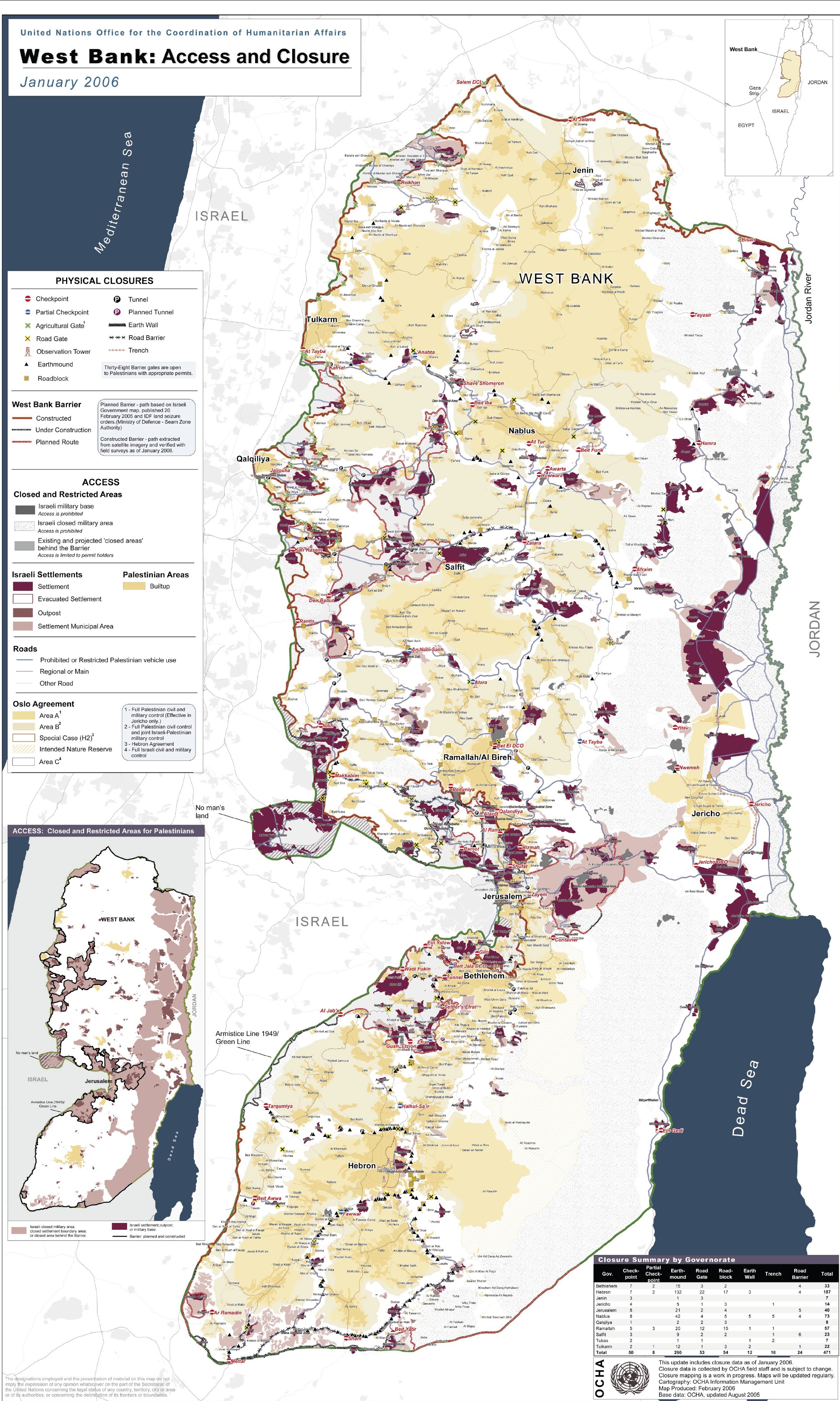
Gunnar Wolf: About the recent events and possible outcomes in Israel and Palestine

Several friends, from different groups and backgrounds and with different points of view regarding the current war in Israel (and regarding the Arab-Israeli conflict in general) have asked me for an explanation on what is happening there, what is (my view of) the real conflict, its causes... and any possible answers. And yet I am quite far from being an authority, I do want to write something about it. Be prepared, as this post is quite long.
And yet, after writing frankly a lot more than what I expected... It is by far not enough. I have still much more to add, but I have to say "stop" at some point. So, here you have it: My points of view, as well as some explanation on why are we standing where we currently are.
I am writing this based just on my personal experiencie and, of course, my personal point of view. Furthermore, I wrote a good part of this text while riding a bus, with no network access, so I am offering very few references - In any case, it will allow me to make much more progress. References always take as much time as the text itself! About me Why am I writing this? Why do people ask for my opinion? I must start by explaining who I am, so the rest of this makes sense. I am a Mexican Jew. That means, I was born in a Jewish (albeit secular) family, and grew up in an environment with general Jewish culture. My direct family (say, my parents and brother, and to a lesser degree my closest cousins) are not at all religious, I'd even venture to say most of us are complete atheists. Yet, besides the cultural belonging (which is a mixture of a Eastern European culture with lots of Idish words and dishes and general humor), my family has a strong national identification - In other words, I grew up in a fully Zionist environment, which traces back to Poland.
My grandmother was member of Hashomer Hatzair in Poland, since the early years of its existence, late 1910s and early 1920s. What is it? To make it short, a Zionist Socialist, Kibbutzian youth movement. It has many similarities (and somewhat stems indirectly from) the Scouts many of you will be familiar with, but -obviously- has a way lengthier agenda. And, yes, nowadays I feel it is somewhat out of reach with the current state of the world - It was founded in 1913, and only slightly adjusted its principles since then.
I will talk more about Hashomer later on.
My grandmother arrived in the late 1920s to Mexico, for familiar and economic reasons, but still dreamt about living in Israel for a long time. As they grew up, first my uncle joined Hashomer in Mexico in the late 1940s, when it still pursued a very much Soviet-style ideals for Israel (one of the core points that changed during the 1950s); both my father and my mother joined in the late 1950s (in fact, that's where they met). My cousins and myself were very active in the 1980s and 1990s.
The Iszaevich family has something very unusual, I'd say, engraved in our genes. We live very deeply our ideologies. That's the only explanation I can find to the way we all have led our lives. I won't go into the other family members' details, but just into mine: I was fully convinced of all we taught to our younger members and what we discussed among ourselves. I am among the very few people who really learnt Hebrew at my school, and that was only because I really cared - I know some people that just after 12 years of pseudo-learning could maybe utter a few phrases.
After finishing high school I went with my Hashomer group, together with people my age from other similar-minded Mexican Zionist youth groups, to live and learn for a year in Israel, on what is usually known as shnat hajshar - A year to get ready. To get ready to what? But of course, to come and give back go the younger groups of the movement, and finally go back to Israel and settle there definitively. I came back to Mexico, and after one year I did the only thing that was logical: I became an Israeli and went to live to a kibutz - Zikim, a beautiful place just between Ashkelon and Gaza, very near the sea shore. It was a beautiful period in my life, and I really enjoyed it - But it didn't last for very long - I quickly grew to hate the Israeli society at large. A society full of rage, of hatred. Not just between Arabs and Israelis, as many would think from the outside, but between religious and seculars. And between immigrants and locals. And between leftists and rightists (in several dimensions, as it is one of the countries where you can most easily be a economic leftist while being a political rightist - a complex society it is). A society full of disrespect and intolerance. A very hypocritical society. And one of the things that most shocked me: I wanted to live in a society of proud of its existence, that's what I had learnt Israel was - But Israelis aspire and dream of being anything else (and mostly US-Americans) in a way that made me sick, more than anything I had previously seen in Mexico.
I loved the life at the Kibutz, and I loved being an agricultor, doing hard work every day and literally getting the fruit of it. However, I cannot live isolated to a 300-people universe - At least once a week you have to go to the city if you don't want to become insane. And I could not stand the sick Israeli society.
Anyway, to make things short: After six months as an Israeli, I came back to Mexico. I went through a long period of finding myself, as I could not uphold anymore my Hashomer ideology (if I am not going to live by it, how can I continue teaching it?). Many people do anyway, but for the first months, where my Hashomer work was basically all of my life, I felt really uncomfortable. So, in short, I severed all of my relations to the Jewish community, and even denied for a long time my Jewishness until I found a (I think) better balance.
Today I am at peace. But anyway, I wanted to talk about myself in the critical period that marked me in this regard: The 1990s. Enough, lets get down to business. Zionism 1870-1920 Many people argue that the Jews invaded the Palestinians homeland - And yes, nowadays I cannot counter this. But we cannot judge what happened then based on what we see now.
Modern Zionism started around the 1870s. The Jewish history is full of pogroms and persecution, in different countries all over Europe - And a group of young people decided the only solution was to build a place to call their own. And yes, this was full of idealism and in no small part the foolishness of youth. For several centuries and up to 1920, all of current Middle East were provinces of the Ottoman Empire. Before Zionism began, the population of today-Israel was very sparse, not more than 400,000 people - up to 5% of them Jewish, around 10% Christian Arabs, and the remainder, Muslim Arabs. Of course, the low population was mostly because the country was mostly hostile - A desert in the South, mostly swamps in the North, and some minor towns mostly in the hills. It was a mostly forgotten province, away from the central Turkish rule, and there had been no frictions with the local population. It was a nice place to go, thinking -again- as a fool youngster, or as an idealist. They said, lets take a folk without a land to a land without a folk.
The number of accomplishing Zionists (this is, people who actually went to Israel instead of just talking about doing so) was not high during the first decades. But towards the 1890s, it gained critical mass. The political Zionist movement was born, with Theodor Herzl as a leader, and they started pushing -politically- for different governments to concede a territory to Jews. They went to the Turks, and didn't really get much echo. Went to other colonial powers of the time, and got unfeasible promises with no real backing (i.e. Birobidjan in Eastern Russia, Uganda in Africa)... And, as it happens in strongly ideologized movements, the movement started splitting into different groups with slightly different positions.
And no, I am not talking about the People Front for the Liberation of Judea and the People Judean Liberation Front, but I very well could. Sometimes the differences are as ridiculous as that. But hey, I take that most of my readers are acquinted with the Free Software issues, right? Think BSD vs. GPL vs. OpenSource. To give a broad idea - Only in Mexico City, with a very small Jewish community (~30,000 people), in the mid-1990s we had over 10 such movements, with 50-150 youngsters attending each. And even though some were local, and even though some very important ideologies are not represented in this country, they are all different enough to exist as separate entities. British Mandate The Ottoman empire was divided after the first World War. Its possesions in Europe became independent states, while in Asia (and Africa, if you take the semi-independent Egypt and part of Sudan into account) they were taken over as colonies or protectorates by France and the UK - Evidently, attempting to secure a long-term dominion over the area. In some aspects, they failed. In some aspects, they were (and still are) tremendously successful. The division of people by setting arbitrary boundaries has led to countries sustainable only by force and a harsh rule (such as Iraq, Lebanon and Syria), or doomed to poverty (and thus submission) due to lack of natural resources (as Jordan). Focusing on Israel/Palestine, the UK entered the area by making mutually incompatible promises to arabs and Jews - i.e. the Hussein-McMahon letters and the Balfour declaration, both ambiguous enough to lead to... Well, today. The UK rule was disastrous to the region, both in giving (and taking away) power from all sorts of puppet regimes, and swiftly going away as soon as things started looking too complicated. Yes, typical colonialism.
So, while up to the 1920s there was no real animosity between Arabs and Jews (as i.e. the Faisal-Weizmann agreement shows), during the next decades the seeds of hatred started growing, from both sides.
Many people still quote the 1947 partition plan as the direct antecedent towards Israel's real existence - That was not the first partition plan that existed. Ten years earlier, the Peel commision suggested a similar partition involving forceful population transfer. And many people see the separation of Transjordan (now Jordan) from Palestine in 1922 as a first partition. It is understandable that both partition plans (much more the 1947 than the 1937 one) were accepted by Zionists: Going from having nothing to having something (and against all odds in the environment they lived) is acceptable.
From the Zionist side, two main groups rejected the partitions: The right-wing and religious groups, insisting that the whole of the Mandate should become Israel, and the left-wing groups, which advocated for a single, bi-national state, with equal rights for all of its population. Go over and read this last link, as it was quite interesting (to me at least) to see how this solution has kept existing and regarded by (relatively) many people, and has many interesting links. 1948 onwards: Where did the refugees come from? The November 1947 partition didn't exactly translate to a planned, smooth Israeli independence - It led to six months of revolts (basically, a civil war). By mid May, the UK government and troops abandoned the territory, and one day later, Israel declared its independence. And, of course, all neighbouring countries (and Iraq) sent their troops to invade Israel. The war lasted for over six months (cease-fire was signed in January 1949). There was an intense Arab campaign indicating the armies would enter Israel and devastate it, leaving no stone in place, indicating Arab population to temporarily leave the Jewish-destined areas. The war, they said, would not take more than a couple of months, and they would be able to go back home.
Only that... When the war ended, the results were far from what the Arab governments expected. Not only Israel continued to exist, but it conquered important territories.
Of course, the Israelis were not innocent from said exodus: During the 1947-1948 civil war, and the independence war, some of the existing so-called self-defense forces (some of them were really defensive, while some were quite aggressive, even terrorist) attacked Arab villages in strategic or predominantly Jewish areas to prompt them to leave - yes, what we today call ethnic cleansing.
I had (in my head) the number of 650,000 Arabs (from a total of slightly over a million) fleeing to neighbouring countries. Wikipedia states that it is somewhere between 367,000 and 950,000. A similar number of Jews were expelled from Arab countries, many of which arrived to settle at Israel (and many others went elsewhere - For instance, a good part of the Mexican Jewish community is from Syrian origins - Many of them fleed in those years). Israel didn't accept back the (relatively few) Arabs that requested to resettle, as they were seen as hostile population - but neither did the countries that "temporarily" accepted the Palestinians accepted them as citizens. The Palestinian refugee camps today, mainly in in Lebanon, Syria, and the occupied territories held by Israel have terrible living conditions, and its population -despite living there for over 60 years- have no civil rights at all. Note that I'm omitting Jordan here, although it has several camps as well, as their situation is way better.
The Arab population that didn't leave did receive full Israeli citizenship. No, their living standards are not up to level with the average Israeli. The country and the society do have a sensible degree of racism and segregation. But the situation is nowhere as terrible as it is in the camps.
The areas which were originally to become Palestinian and were not conquered by Israel -this is, current-day West Bank and Gaza- bacame respectively Jordan and Egyptian territory. While Jordan did fully extend its soverignty covering the West Bank, Egypt didn't - Gaza is, since 1949, occupied military territory. Gaza, among the most densely populated areas in the world, has had their inhabitants under military rule ever since. When Israel returned the Sinai after signing the peace treaty with President Sadat, Egypt didn't accept Gaza back - And that's where today's greatest problem is born.
Now, Israel conquered those territories in 1967, along with the very sparsely populated Sinai and Golan. For the first ten years, the territories were basically only administered (yes, under a military rule). In 1977, with the first right-wing Israeli government, an extensive settlement policy began (and led partly to today's seemingly unsolvable situation). In 1980-1982, Israel withdrew from the Sinai. In 1981, Israel claimed full soverignty over the whole of Jerusalem and the Golan. In 1993, the "Oslo Agreement" was signed between Israel and the PLO, and it seemed we were heading towards a bright future. I lived in Israel between 1994 and 1996 - Yes, the most hope-filled period in the country's life.
Since 1996, I have tried to keep up to date with the country's evolution. All in all, even if I won't live there again, it is a country I learnt to love, a society I have long studied (even if in the end I did include many references, I wrote most of this text just off the top of my head, with the data I remember - so it might have several big errata). And yes, I keep the political stand I had 12 years ago: The only solution is to dialogue, to treat the current enemies -and not only their governments- with respect, recognizing their dignity and right to life, to self-determination. Only then we will change the status quo. How not to fight hatred Since 1993, the dream of peaceful coexistence seems to have faded. What we saw during the past three weeks, along to what we saw in Lebanon in 2006, is plainly a gross mistake if the goal is to achieve good, lasting peace.
Try to imagine how could life in Gaza be, even in the total absence of Israeli attacks. Just to set some numbers first: The Gaza strip hosts almost 1.5 million people on 360 km . When I lived in Israel, I was constantly surprised at how small a country it is - Israel tops at 550Km North to South, 150Km east to West (it is amazing, almost wherever you stand, except in the middle of the Negev, you can see the country's borders. Yes, I recognize as the border the so-called Green Line); over half of the territory is a desert, and it hosts seven million inhabitants. And it is hard to imagine how that country can be economically viable.
I do not find it feasible to imagine Gaza and the West Bank integrating a single country, and not only because they are separated by ~40Km, but because they are so sociologically different. People in the West Bank, yes, live opressed under military rule and subject to a much more constant, more visible apartheid-like state (as the territory is truly sprinkled with Jewish outposts which many Israelis refuse to recognize as their own, but still, which have incredibly higher living standards). The best land has been taken away from them, yes, but they have some space between cities to have some farming, to communicate, to... Breathe. Besides, West Bank inhabitants -even those in refugee camps- have much better living standards than anybody in Gaza. It is still an overpopulated area, but not nearly as much as Gaza.
Gazan population have been driven towards extremism. And yes, there was a civil war between Palestinian factions, as the world views between both populations are completely different - However hostile a Jenin inhabitant can be towards Israel, he does not lead the life -if it can so be called- you see at Khan Yunis.
But back to Gaza... What Israel is doing (and not only during this military operation terror campaign is wrong, from any rational point of view. Israel wants Hamas to become weaker? Then don't drive the population into supporting them!
Palestinians started giving over 50% of their support to Fatah (ex-PLO), and under 20% to Hamas. That was less than 15 years ago. However, Fatah has shown to be corrupt and inefficient at building infrastructure and improving life conditions, ineffective at negotiating a permanent agreement which secures dignity and sustainability to their people. Hamas stands as a religious, righteous organization. There are no serious corruption charges against any Hamas leaders. Hamas is clearly still at war - They didn't subscribe any peace agreement so far, and their stated #1 goal is to build a Muslim State in the whole of Israel. And the Hamas movement -like Hizbollah in Lebanon- has built quite a bit of infrastructure in the areas they control - Mainly housing. Yes, housing where they mix their own offices, many will accuse, getting human shields for free. But still, they are benefactors to a dehumanized, pauperized population.
I find it obvious that, if living conditions were at a basic level in the region, support of Hamas would decrease. Even more, of course, if they improved due to Israeli support. Israel controls this territory, so it is responsible for the well-being of its population, like it or not. And Gaza is simply too small and low on resources to survive by itself.
I was a bit surprised to find mention -although very brief- of a three state solution - And yes, this is close to what I would expect as a viable outcome. It is clear that Israel will not ever grant full citizenship to the Palestinians, as they would -euphemistically speaking- challenge the Jewish character of the State. Dropping the euphemism, Israel relies on apartheid in order not to become an Arab majority country. I might have some numbers wrong, but AFAIK, there are ~7 million Israelis, 20% of which are Arab citizens (which means, 1.4 million Arabs and probably 5 million Jews, with many other minor denominations for the difference), and ~4 million Palestinians live in the territories. Today, the country is already predominantly Arab, or at least is close to being so. So, Israel should permanently, formally disengage from all of the occupied territories. And in order to ensure violence stops, start a comprehensive, unconditional, long-term aid program. Start with giving them autonomy to regain their sea, as the Gaza port has long been closed. Allow the airport to operate again. Instead of bombing tunnels in the Egypt-Gaza borders, allow Gaza to trade with Egypt - Perhaps even to integrate territorialy, if the conditions are met. Treat their people with respect, and help them ease the terrible situation they have lived for so many decades - and then, undoubtely, terror will stop.
The West Bank? Possibly it could become a Palestinian state by itself. Possibly, it could integrate back to Jordan. That would be up to Jordans and Palestinians to decide. Of course, Jordan has already a large segment of its population defining itself as Palestinians, which counts both for and against. So, I won't venture into this supposition.
But anyway - Back to what prompted me to write this text -yes, a very or maybe even too long text - I hope somebody even takes the time to read it!- is to explain what is my point of view on the current situation, and why.
Today, a cease-fire was announced, after 23 days of murder and destruction. I sadly do not hold very high hopes for it to be lasting, much the less to be enough, to lead to what they call a de-escalation of the conflict. The most I can currently do is to voice my opinion, and hope that mine is just one more voice pointing to a sane solution, to a permanent, dignifying way out, for all people involved. Every people has the right for survival and for safety. We cannot deny this to any others. And certainly, we cannot expect anybody not to fight for their right to live.

Axel Beckert: Traveling plans for the first half of 2009

Since the time between the years is traditionally family time for me, I never were at the Chaos Communication Congress. So I wasn t at 25C3 either. All the more I look forward to HAR2009 this summer (13th to 16th of August near Vierhouten in the Netherlands), but also because, for the last three years I always have been in the Netherlands for one week in summer, sailing with friends on the sselmeer. But before HAR2009, there will be a bunch of other events to visit and people to meet in real life: Then there will be the big summer holidays driving around in the middle of Europe with the 2CV and taking part in most likely: This also means that I ll probably miss: at least unless one of the other events I plan to visit doesn t take place as expected or my plans change heavily. P.S.: Anyone thinks this amount of events justifies a Dopplr account? ;-) Or is there somewhere a free online service similar to Dopplr, but runs software under the GNU Affero General Public License like e.g. identi.ca and many other Laconica instances do for microblogging?

Axel Beckert: How I use my virtual desktops

Many months ago I stumbled upon this German written meme about how users use their virtual desktops. I use virtual desktops since my very early Unix times (tvtwm on Sun Sparc SLC/ELC/IPX with greyscale screens running SunOS 4.x), so in the meanwhile I use them nearly everywhere the same way. Short Summary 3x5, no overlapping windows, either tiling or fullscreen, keyboard navigation, xterms, yeahconsole, FVWM, panel for systray. Window Manager of Choice My window manager of choice is FVWM since more than a decade. I tried others like Sawfish, Metacity and Compiz, but I couldn t get them behave like the FVWM I got used to, so I always came back. Since I hate overlapping windows, I use FVWM a lot like a tiling window manager. FVWM has this nice function to maximize windows so that they occupy as much space as available, but do not overlap other windows. This function was also often missing when I tried other window managers. I though do not want to use real tiling window managers since I have a few sticky windows around (e.g. the panner with the virtual desktops and xosview) and they shouldn t be overlapped either. Virtual Desktops Switching between virtual desktops is done with the keyboard only with Ctrl-Shift as modifier and the cursor keys. The cursor keys are usually pressed with thumb, ring and small finger of the right hand. Which hand presses Ctrl and Shift depend on the situation and keyboard layout, but it s usually either ring and small finger of the left hand, or pointer and middle finger of the right hand. So I m able to switch the virtual desktop with only one hand. I have always three rows of virtual desktops and usually four or five columns. The top row is usually occupied with xterms. It s my work space. The top left workspace usually contains at least one xterms with a shell and one with mutt, my favourite e-mail client since nearly a decade. At home the second left virtual desktop in the top row usually contains a full-screen Liferea (my preferred feed reader) while at work it contains the GNU Emacs main window besides two xterms. Emacs and the emacs server are automatically started at login. This also means that I switch the virtual desktops when I switch between mutt and Emacs for typing the content of an e-mail. Did this already during my studies. (At home mutt runs inside a screen, so there I just switch the virtual terminal with Ctrl-A Ctrl-A instead of the virtual desktop. Not that big difference ;-) The other virtual desktops of the the top row get filled with xterms as needed. Usually one virtual desktop per task. The middle row is for web browsers. One full screen browser (usually Conkeror or Opera) per virtual desktop, often opened with many tabs (tabs in Opera, buffers in Conkeror) related to the task I m accomplishing in the xterms in the virtual deskop directly above. The third row usually contains root shells for maintenance tasks, either permanently open ones on machines I need an administrate often (e.g. daily updates of Debian testing or Debian unstable machines), or for temporary mass administration (Linux workstations on the job, all Xen DomUs of one Xen server, etc.) using pconsole. yeahconsole Additionally I have a sticky yeahconsole running, an xterm which slides down from the top like the console in Quake. (It s the only overlapping thing I use. :-) My yeahconsole can be activated on every virtual desktop by pressing Ctrl-Alt-Z (with QWERTY layout, Ctrl-Alt-Y with QWERTZ layout). It s the terminal for those one-line jobs then and when, e.g. calling ccal, translate, wget or clive. Changes over time Of course the desktop usage changes from time to time: At work I have more than one monitor, so in the meanwhile the second row with the web browsers moved to the second screen with independent virtual desktops (multiple X servers, no Xinerama). The second row on the main screen at work is now used the same way as the third row with a slight preference for the permanently open shells while the third row is more used for mass administration with pconsole. At home I used XMMS respective Audacious for a long time (my FVWM panner and xosview are exactly as wide as WinAmp2/XMMS/Audacious, guess why:-) which usually was sticky the same way as the panner and xosview are. But when I started using last.fm recently, I moved to Rhythmbox (after testing some other music players like e.g. Amarok) which I use in fullscreen as I do with web browsers and the feed reader. So it occupies a complete virtual desktop, usually the second one in the middle row below the feed reader because I don t need a corresponding web browser for the feed reader. (Just found out that there is a last.fm player for text-mode, so maybe that will change again. :-) Another thing which changed my virtual desktop usage was the switch from a classical tabbed web browser (Galeon, Kazehakase, Opera) to the buffer oriented Conkeror. With a tabbed web browser I have either no overview over all open tabs (one row tab bar or truncated tab menu) or they occupy too much space of the browser window. That was another reason for more than one browser window and therefore more than one virtual desktop with fullscreen web browser windows. With Conkeror tabs are optional (and not even enabled by default), Conkeror uses buffer like Emacs and if you want to switch to another buffer, you press C-x b and then start typing parts of the buffer s name (e.g. parts of the URL or the web page title) to narrow down the list of buffers until only one is left or until you have spotted the wanted buffer in the list and choose it with the cursor keys. So the need for more than one browser window is gone. For a long time I didn t need any task/menu/start/whatever bar on my desktop. But since neither NetworkManager nor wicd have a comand-line interface (yet) and bluetooth seems also easier handled from the system tray my laptops also use either gnome-panel (big screen, long sessions with FVWM) or lxpanel (formerly used trayer; use it on small screen, short sessions with ratpoison or matchbox) on my laptops. It s sticky and always visible. (No overlapping, remember? ;-) The panel is usually at the bottom on the screen as by default with Windows or KDE, not at top as with GNOME and MacOS. Only on the OpenMoko, I have the panel at the top to be close to what I m used from Nokia mobile phones. Things I tried but didn t survive in my setup: Systems without Virtual Desktops Anyway, there are systems where I don t use virtual desktops at all. On systems with a screen resolution so small that there s not enough space for two non-overlapping, fixed font 80x25 xterms on the screen (e.g. on my MicroClient with 8 touch screen, the 7 EeePC or the OpenMoko) I do not use virtual desktops at all. On such systems I use all applications in fullscreen, so switching between applications is like switching virtual desktops anyway. My window managers of choice for such systems are ratpoison for systems with keyboard and matchbox for system without keyboard. With ratpoison you treat windows like terminals in GNU screen, so there are no new keybindings to learn if you re already used to screen (which I use nearly daily since more than a decade).

Axel Beckert: Mini-ITX based Home Server: Hardware Review

Mostly for my backups needs, I planned a Mini-ITX based home server around the Chenbro ES34069 Mini-ITX case which features four hot-swap S-ATA bays. I wanted a low-consumption motherboard and CPU in there (not only because of the default 120W power supply) and since low-consumption mainboards with 4 S-ATA connectors are quite seldom I ve chosen the not so cheap VIA EPIA SN18000G mainboard with actively cooled 1.8 GHz VIA C7 processor and a maximum power consumption of less than 30W (including CPU). Waiting for delivery While the Chenbro ES34069 case I ordered at digitec only needed a few weeks to deliver, the VIA EPIA SN18000G mainboard from Brack took over eleven weeks to deliver, it finally has been delivered on Wednesday, 5th of November 2008. I initially ordered the VIA board for CHF 324, now it s at CHF 397 (without rebate even at CHF 439) because Brack seems to have had a lot of hassles to get some of them at all. Although they usually sell for the prices at the time they ship the hardware (market price), they sold it to me at their purchase price, so it became only about CHF 15 more expensive than when I ordered. And since the RAM price dropped by one third during those eleven weeks, the whole order became about CHF 25 cheaper, the order was CHF 10 cheaper overall than when ordered. :-) (Still waiting for the according voucher, though.) So I ve joined the two main components together, installed Debian Lenny on it, crammed four 400 GB Samsung S-ATA disks (formerly in a TheCus N4100) and the 160 GB 2.5 harddisk from my MicroClient JrSX (I never really used it in there, it always runs from CF card) into it, created a software RAID-5 and now fill it with music, games and backups. But not everything was as easy as it sounds above. Although Chenbro lists the VIA EPIA SN18000G as officially compatible mainboard for the ES34069, not everything really fitted as expected. So here s my review of this hardware combination. Chenbro ES34069 It s really awesome how much features you can stuff in such a small case. Of course it s not as small as a thin client case or the mCubed HFX micro case, but it s smaller than most book-size cases like the ASUS Pundits, just a little bit thicker. Inside the case (laying on its left side) there are two decks. The lower deck contains the 3.5 hot-swappable S-ATA harddisk bays, the internal part of the power supply and the two fans for cooling the interal power supply components and the disks. The upper deck has space for the mainboard, a 2.5 harddisk, a slim-line optical drive slot and all the front-panel stuff (card reader, LEDs, USB sockets). Both decks are divided in two section. The front section belongs to the case itself and the back section containing the mainboard mount points and the two fans can be easily unplugged after removing four screws and keeping an eye on the cables from the lower to the upper deck. That way the mainboard can be mounted very easily. So far a very convincing design. To mount the 2.5 harddisk in between the mainboard and the front panel, it s not really necessary, but convenient to remove the slim-line optical drive slot, since you then have better access to the harddisk s IDE socket. To remove the slot, you need to remove the front cover. That sounded easier than it actually was and I nearly broke of one its catches. :-/ Although all parts of the case seems to fitting very well together, the bays for the hot-swappable drives weren t perfect: The drive slots not always connected even if the latch iss already closed. This was definitely better with the TheCus N4100. Additionally the bays seem to be made for slightly larger disks, so mine had play and the screws pressed the it together and you need to take care that the screws don t cant. A big positive point of the case was that there were all necessary screws included and they were fitting. This was a bigger problem with the TheCus N4100, since many harddisks ship with their own screws, but those are seldom the needed flat-head ones. Even a P-ATA to slim-line optical drive adapter was included, so I don t need to buy one. (Would have costed CHF 42 at digitec.) VIA EPIA SN18000G While it s surely not the most performant board out there, I m quite satisfied with its performance. I installed BackupPC 3.1.0 as backup system on it and it works like a charm. It daily backs up up to 14 machines over ssh tunnels more to come) and is way more performant than expected. But I probably had very low expectations due to everyone arguing about the bad performance of the VIA C7. ;-) Not nice, but known is the problem that most (but not all) USB connectors on the SN mainboard have 2.00mm pitch while all the case s plugs have 2.54mm pitch. Apropriate adaptors are available from Mini-ITX.com. Thanks to Akim for this tip! Power consumption I hoped to get more details into this posting, e.g. measured power consumption, etc. But then I recently read in the c t magazine how inexact my watt meter (from Brennenstuhl) is, so its values would probably bring more confusion than help. Additionally I don t feel like powering down the server just for measurement. Feedback I got quite a few mails with hints to further Mini-ITX boards and TDP but also with questions about the case. I hope that this blog post asnwers some of the questions also for other readers. Thanks to all who replied to my initial blog post about my Chenbro/VIA based home server, either by mail, or comment, or both. :-) Further plans For deploying music to my other computers I tried both, mediatomb and gmediaserver but none really convinced me. Currently I just mount the media directory using the FUSE and ssh based sshfs. Not sure if I ll add NFS due to it s user base syncing hell. Further plans are an HTTP proxy with ad filtering and caching capabilities, it ll be Privoxy combined with either Squid or Polipo. Maybe even a Tor SOCKS proxy.

18 January 2009

Wouter Verhelst: FOSDEM Debian Devroom: annotated schedule

FOSDEM is a 2-day weekend of insanity. 218 talks this year; if you want to understand exactly how insane that is, have a look at the schedule grid. There are 19 rooms where events are held; possibly more, since I understand not every devroom has sent in its schedule yet. Might be hard for people to make a choice that way, I guess. Now there're supposed to be abstracts of each talk on the FOSDEM website, but reading them all can be quite tedius. In an effort to help, at least for the Debian devroom, here's the schedule for our devroom with a bit of explanation of what it's about. Note that this is mainly aimed at people not familiar with Debian; those who are should probably understand it enough by looking at the titles. Saturday: 13:00 - 14:00: 'Outside broadcast on a budget - the DebConf video team and DVswitch'. DVswitch is the software used to create those excellent Debian videos. The best ones yet, IMO, are the ones of Debconf8. Check them out. There's nothing Debian-specific about DVswitch, except that it was written by Debian people. It's a great way to do live Internet .ogg streaming by using nothing more than DV cams, Firewire, and plain old Ethernet. 14:00 - 15:00: 'Ultimate Debian Database: datamining Debian made easy!'. UDD is a SQL database containing a shitload of data related to Debian, and which should allow easy datamining. Hence the title. This probably won't be of any interest to people who are not either a Debian Developer or a statistician, but I might be mistaken. 15:00 - 16:00: 'Introducing DDE, Debian Data Export'. This is a new project Enrico came up with, and which is related to the same subject as the previous talk. I don't know much more beyond what's in the abstract. However, given the fact that Enrico is going to be doing this talk, it can't be bad. Seriously. 16:00 - 17:00: 'The Debian status quo on the Openmoko Neo Freerunner'. Yup, Debian runs on the OpenMoko, and has done so since Debconf8, last august. This talk should give some more insight; if you have an OpenMoko, this definately is for you. 17:00 - 17:30: 'Running Debian on Inexpensive Network Storage Devices'. I've been running Debian on a Thecus N2100 for a few years now, and it's great. There are more options, however, and Martin does most of the hard work related to these devices. He's done a similar talk on the two previous FOSDEMs (go check out the videos), and this one will mainly be an update on what's going to be new in Lenny. 17:30 - 18:15: 'Grid Computing with Debian, Globus and ARC'. These guys are a group of academics from three different universities who've been doing grid computing (i.e., something like 'SETI@Home', but then somewhat different) with Debian and some other technologies. They'll be explaining how, exactly. I don't know much about this talk; it could be great, or it could fail miserably. I guess we'll see. 18:15 - 19:00: 'What does the DPL do?'. This is really firmly targetted at Debian people. If you're not in the least interested in how Debian does things, you'll be bored. Sunday 09:15 - 10:00: 'The state of Virtualization in Debian'. If you're a Debian user interested in virtualization, this talk is for you. Henning will explain what virtualization options exist in the upcoming 'Lenny' release, and how to use them. 10:00 - 11:00: 'TDebs'. This might not be too interesting to you unless you happen to be involved in Debian infrastructure. TDebs don't exist yet, but will sometime soon; Neil will be explaining how, why, and what. 11:00 - 12:00: 'Internationalization in Debian: How to improve further?' If you're interested in i18n, this is probably for you. 12:00 - 13:00: 'The Common Debian Build System (CDBS)'. CDBS is one way to build a Debian package. This is probably only of interest to Debian people. 13:00 - 14:00: 'Release management in Debian - can we do better?'. Frans isn't a member of the release team, but has some criticism on how they function. He intends to present his arguments in order to start a discussion. This is Debian internal kitchery, really. 14:00 - 15:00: 'Lenny - the road to release'. Neil is a member of the release team, and is going to explain how we got to the current state. I hope he'll also explain why we still haven't released. I guess we'll see :-) 15:00 - 16:00: 'The long road to KDE4 in Debian'. Um, yeah. I'm not a KDE guy, but I understand some other people are. In any case, might be an interesting talk even if you don't use Debian, since I understand it will look at some of the new features in KDE (and how they relate to packaging). 16:00 - 17:00: 'Debian and Google Summer of Code 2008: wrap-up and insights'. I guess Leslie will be there. The speaker was a student working on Debian during this year's SoC, and he will present what's been accomplished. There, that's it. Now my only hope is that there'll be many people attending. If previous editions are any indication, however, that won't be a problem.

15 January 2009

Antti-Juhani Kaijanaho: Randomness, or not

Rules of the game:
Link to the person who tagged you.
Post the rules on your blog.
Write six random things about yourself.
Tag six people at the end of your post and link to them.
Let each person know they ve been tagged and leave a comment on their blog.
Let the tagger know when your entry is up. I have no idea how to select random things about myself, but I can select some non-randomly, by my own whim:
  1. I m 31 years old and I m only now in the process of getting my driving license (as my Finnish readers well know).
  2. I eat too much canned fish.
  3. I think I found perfection when I bought my current winter shoes they have extra-friction soles and they have saved me from many falls due to bad walking weather.
  4. I tend to get bored when I don t have way too much to do and when I do, I tend to get stressed.
  5. I could do better in my apartment cleaning.
  6. I was a teenager when the Finnish banking system (almost) collapsed in the early 1990 s. The current difficulties seem a bit ho-hum after that.
Via Niobe. I don t feel like tagging anybody just now feel free to consider yourself tagged if you feel like it.

14 January 2009

Jonathan McDowell: Yet another missed FOSDEM

I managed to go to FOSDEM in 2005. I enjoyed myself. I'd like to go again. No, really, I would.

In 2006 I drew the short straw while working for Black Cat; Simon and Dom went, I remained the person on the same landmass as the servers.

In 2007 I had a wedding to go to.

Last year I was too disorganised to sort out suitable transport from Northern Ireland.

I'd resigned myself to having to take off the Friday and Monday this year and fly. Except it's been moved to near the start of February, which thus conflicts with an annual dinner that gets to have higher priority. Bah.

Maybe I'll manage 2010, but I'll not be holding my breath.

Next.

Previous.