Search Results: "ads"

31 January 2021

Paul Wise: FLOSS Activities January 2021

Focus This month I didn't have any particular focus. I just worked on issues in my info bubble.

Changes

Issues

Review

Administration
  • Debian ports: fix header on incoming.ports.d.o/buildd
  • Debian wiki: unblock IP addresses, approve accounts

Communication
  • Initiate discussions about aptly, Linux USB gadgets maintenance
  • Respond to queries from Debian users and contributors on the mailing lists and IRC
  • Invite organisations to post on FOSSjobs

Sponsors The samba work, apt-listchanges work, pytest-rerunfailures upload, python-testfixtures/python-scrapy bugs and python-scrapy related backports were sponsored by my employer. All other work was done on a volunteer basis.

Junichi Uekawa: February.

February. It's still cold and feels like winter but the days feel already longer.

Sean Whitton: gemini:// space

Recently I have become curious about the Gemini Project and the content that people have made available to be retrieved over the gemini:// protocol. I m not convinced by the arguments for not just using http, and mostly it s just that I typically find more things that I am interested in casually reading through on people s gemlogs than I would on, say, reddit, and similar aggregators. But presumably advocates of gemini:// and the text/gemini format would argue that it s various respects in which it differs from the web that makes geminispace conducive to the production of the sort of content you find there. So I m remaining open minded about the possibility that having a completely separate protocol is important, and not just an annoyance because rss2email doesn t work and I had to spend time writing gmi2email. I now have a games console at home for the first time in some years, which I bought in response to the ongoing pandemic, and one thing that I have noticed is that using it feels like being offline in a way that playing games on a regular computer never would. It has a WiFi connection but it doesn t have a web browser, and I am glad that using it provides an opportunity to be disconnected from the usual streams of information. And perhaps something similar ought to be said in favour of how the Gemini project does not just use http. There is, perhaps, a positive psychological effect induced by making the boundary between text/gemini and the web as hard as it is made by using gemini:// rather than http. Something about which I find myself much more sceptical is how the specification for gemini:// and text/gemini is not extensible. Advocates of Gemini have this idea that they can t include, say, a version number in the protocol, because the extensibility of the web is what has led to the problems they think it has, so they want to make it impossible. Now on the one hand perhaps the people behind Gemini are in the best position that anyone is in to come up with a spec which they will finalise and render effectively unchangeable, because a lot of them have been using Gopher for decades, and so they have enough experience to be able to say exactly what Gopher is missing, and be confident that they ve not missed anything. But on the other hand, Gemini is one technological piece in attempts to make a version of the Internet which is healthier for humans the so-called small Internet movement and maybe there will be new ideas about how the small Internet should be which would benefit from a new version of the Gemini specification. So it seems risky to lock-in to one version. Comments on Hacker News.

Chris Lamb: Free software activities in January 2021

Here is my monthly update covering what I have been doing in the free software world during January 2021 (previous month):

Reproducible Builds One of the original promises of open source software is that distributed peer review and transparency of process results in enhanced end-user security. However, whilst anyone may inspect the source code of free and open source software for malicious flaws, almost all software today is distributed as pre-compiled binaries. This allows nefarious third-parties to compromise systems by injecting malicious code into ostensibly secure software during the various compilation and distribution processes. The motivation behind the Reproducible Builds effort is to ensure no flaws have been introduced during this compilation process by promising identical results are always generated from a given source, thus allowing multiple third-parties to come to a consensus on whether a build was compromised. This month, I:
I also made the following changes to diffoscope, our in-depth and content-aware diff utility that can locate and diagnose reproducibility issues, releasing version 164, version 165 and version 166 as well as triaging and merging many contributions from others:

Debian Uploads Debian LTS This month I worked 18 hours on Debian Long Term Support (LTS) and 12 hours on its sister Extended LTS project. You can find out more about the project via the following video:

30 January 2021

Emmanuel Kasper: Playing Tetris over serial console

Today I played Tetris over a serial console connection, on a Vax 4000 running OpenBSD. I haven't felt that 1337 since a long time.
I am going to get rid of that Vax system though. If that's your stuff, contact me privately.

asciinema in its greatness:

Dirk Eddelbuettel: RcppDate 0.0.2: Regular Update

RcppDate wraps the date library by Howard Hinnant for use with R. This header-only modern C++ library has been in pretty wide-spread use for a while now, and adds to C++11/C++14/C++17 what will be (with minor modifications) the date library in C++20. Since the original 0.0.1 CRAN release I have also added this package along with RcppCCTZ and nanotime (which uses / requires both) to Debian so an apt based install is also possible for some. Release 0.0.2 arrived on CRAN yesterday. It simply updates the included library to version upstream version 3.0.0, and touches up some packaging internals for continued integration.

Changes in version 0.0.2 (2021-01-29)
  • Added GitHub Actions CI via run.sh from r-ci
  • Updated to upstream version 3.0.0 (plus newer commits)

If you like this or other open-source work I do, you can now sponsor me at GitHub.

This post by Dirk Eddelbuettel originated on his Thinking inside the box blog. Please report excessive re-aggregation in third-party for-profit settings.

Junichi Uekawa: I wanted to learn about audio spectrograms of instruments.

I wanted to learn about audio spectrograms of instruments. I wrote a web app because I could. Not sure if I should be fine-tuning some of the axes yet because I haven't looked at many actual waveforms to know if this is useful. But here is the web app. Handles the default input only, and discovered that my electric piano sound is not picked up via USB C and maybe I need to add some configuration option.

29 January 2021

Jamie McClelland: So... is Signal good or bad?

After Facebook updated their Whatsapp privacy policy, and a certain rich capitalist who doesn't like Facebook for reasons different then mine told the world to use Signal, Signal's downloads went up by 4,200%. As often happens when something becomes popular, the criticisms start to fly! For the record, I currently think promoting Signal is an important tactical strategy for the left. [I also think we should promote and install federated chat apps like conversations and element and delta chat whereever it is possible.] Here are some of the main criticisms I hear that I think are a distraction: Here are some criticisms that I think are nuanced: These last two are not exactly two sides of the same coin, but they are related. How Signal manages to balance privacy and protection from abuse will be the real test as to whether promoting Signal continues to be a useful strategy for the left.

Jonathan McDowell: Working better with an online whiteboard

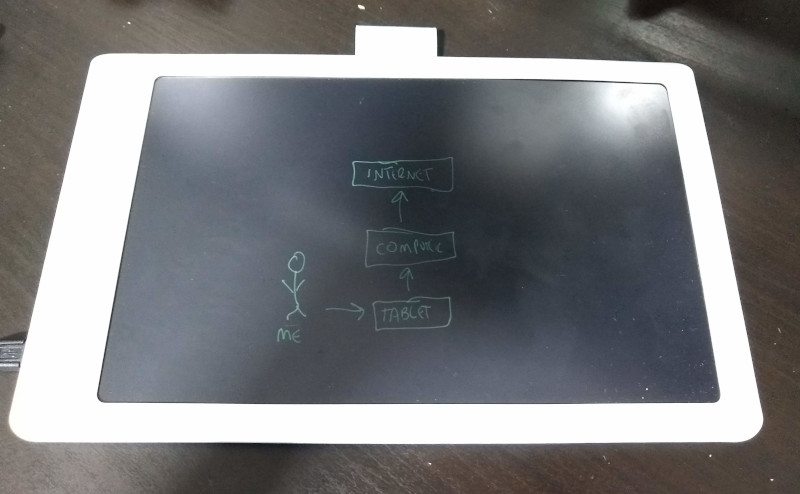
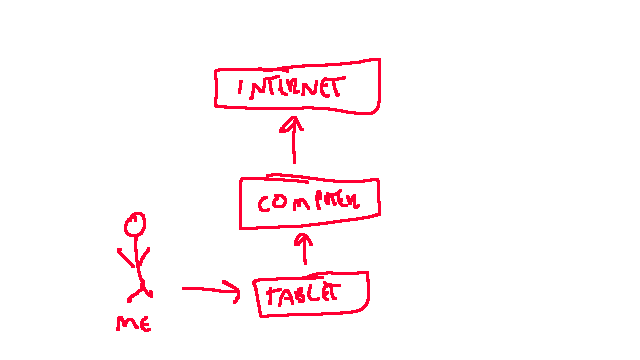
LCD Writing Tablet One of the challenges I find about being fully remote is that one of the ways I think while I explain things is I draw diagrams. I m not artistic in any manner (my brothers got that skillset), but a set of boxes and lines and some text scribbled as I talk really helps. I do think even for myself, which is obviously as easy to replicate at home as in the office; I have plenty of paper and a whiteboard in my study. It s not so easy when having a design discussion with someone remotely. Doodling with a mouse doesn t quite work; my art skills are bad enough without then factoring in the fact it s not a pen-like device I m using to do it. I ve previously tried a proper graphics tablet, but there s a disconnect between where you are writing and where the output appears. That makes doing things like labelling within a diagram, or going back to draw an update, quite difficult. Or it does if you re me anyway. The modern solution is probably a laptop with a stylus capable touchscreen, but I ve shied away from such things because I don t want fingerprints all over my screen and don t want to pay extra for something I haven t previously thought I d use. An alternative is a tablet with a stylus capable screen, but those turn out to be premium models these days (remember when resistive was the cheap option because no one wanted to use the stylus?) and mine doesn t support it. You can get capacitive styli (styluses?) but then when you lean on the tablet it all gets confused. When I m due a technology refresh of my laptop or tablet I ll perhaps factor such things in, but what to do now, when I m not entirely sure how much usage I ll get out of such a device and thus can t justify a major expense on it? Buy a random thing from the internet, of course! It turns out there are a range of LCD writing tablets out there, which let you scribble on a screen and then erase it at the press of a button. An electronic etch-a-sketch, as it were. Most of them don t count as smart , with power only needed for the erase, but there appears to have been a device called the Boogie Board Sync in the past which offered some ability to save things. Searching around I found the NEWYES 10 Bluetooth Archive Writing Tablet from BangGood. Which looked like it had enough smarts to be able to send the images over bluetooth and therefore might be hackable in some manner. At 45 it seemed a reasonable punt, so I ordered one. It arrived within 2 weeks and I was surprised to find that when plugged in as a USB device it actually presented as a tablet. So much for a hackery requirement! It was detected by the kernel fine:
kernel dmesg output
usb 1-1.2: new full-speed USB device number 19 using xhci_hcd
usb 1-1.2: New USB device found, idVendor=6161, idProduct=4d15, bcdDevice=30.00
usb 1-1.2: New USB device strings: Mfr=5, Product=6, SerialNumber=0
usb 1-1.2: Product: LetSketch
usb 1-1.2: Manufacturer: LetSketch
hid-generic 0003:6161:4D15.0010: hiddev0,hidraw4: USB HID v1.11 Device [LetSketch LetSketch] on usb-0000:00:14.0-1.2/input0
input: LetSketch LetSketch as /devices/pci0000:00/0000:00:14.0/usb1/1-1/1-1.2/1-1.2:1.1/0003:6161:4D15.0011/input/input35
hid-generic 0003:6161:4D15.0011: input,hidraw5: USB HID v1.11 Device [LetSketch LetSketch] on usb-0000:00:14.0-1.2/input1
lsusb output
Bus 001 Device 016: ID 6161:4d15  
Device Descriptor:
  bLength                18
  bDescriptorType         1
  bcdUSB               1.00
  bDeviceClass            0 
  bDeviceSubClass         0 
  bDeviceProtocol         0 
  bMaxPacketSize0        64
  idVendor           0x6161 
  idProduct          0x4d15 
  bcdDevice           30.00
  iManufacturer           5 LetSketch
  iProduct                6 LetSketch
  iSerial                 0 
  bNumConfigurations      1
  Configuration Descriptor:
    bLength                 9
    bDescriptorType         2
    wTotalLength       0x003b
    bNumInterfaces          2
    bConfigurationValue     1
    iConfiguration          0 
    bmAttributes         0xa0
      (Bus Powered)
      Remote Wakeup
    MaxPower              480mA
    Interface Descriptor:
      bLength                 9
      bDescriptorType         4
      bInterfaceNumber        0
      bAlternateSetting       0
      bNumEndpoints           1
      bInterfaceClass         3 Human Interface Device
      bInterfaceSubClass      1 Boot Interface Subclass
      bInterfaceProtocol      2 Mouse
      iInterface              0 
        HID Device Descriptor:
          bLength                 9
          bDescriptorType        33
          bcdHID               1.11
          bCountryCode            0 Not supported
          bNumDescriptors         1
          bDescriptorType        34 Report
          wDescriptorLength      18
         Report Descriptors: 
           ** UNAVAILABLE **
      Endpoint Descriptor:
        bLength                 7
        bDescriptorType         5
        bEndpointAddress     0x81  EP 1 IN
        bmAttributes            3
          Transfer Type            Interrupt
          Synch Type               None
          Usage Type               Data
        wMaxPacketSize     0x0010  1x 16 bytes
        bInterval               2
    Interface Descriptor:
      bLength                 9
      bDescriptorType         4
      bInterfaceNumber        1
      bAlternateSetting       0
      bNumEndpoints           1
      bInterfaceClass         3 Human Interface Device
      bInterfaceSubClass      1 Boot Interface Subclass
      bInterfaceProtocol      2 Mouse
      iInterface              0 
        HID Device Descriptor:
          bLength                 9
          bDescriptorType        33
          bcdHID               1.11
          bCountryCode            0 Not supported
          bNumDescriptors         1
          bDescriptorType        34 Report
          wDescriptorLength      83
         Report Descriptors: 
           ** UNAVAILABLE **
      Endpoint Descriptor:
        bLength                 7
        bDescriptorType         5
        bEndpointAddress     0x82  EP 2 IN
        bmAttributes            3
          Transfer Type            Interrupt
          Synch Type               None
          Usage Type               Data
        wMaxPacketSize     0x0010  1x 16 bytes
        bInterval               2
Device Status:     0x0003
  Self Powered
  Remote Wakeup Enabled
Nice. X wasn t happy though:
non-working Xorg log
(II) config/udev: Adding input device LetSketch LetSketch (/dev/input/event8)
(**) LetSketch LetSketch: Applying InputClass "libinput tablet catchall"
(II) Using input driver 'libinput' for 'LetSketch LetSketch'
(II) systemd-logind: got fd for /dev/input/event8 13:72 fd 34 paused 0
(**) LetSketch LetSketch: always reports core events
(**) Option "Device" "/dev/input/event8"
(**) Option "_source" "server/udev"
(II) event8  - LetSketch LetSketch: is tagged by udev as: Tablet
(EE) event8  - LetSketch LetSketch: libinput bug: missing tablet capabilities: resolution. Ignoring this device.
(II) event8  - LetSketch LetSketch: device is a tablet
(II) event8  - failed to create input device '/dev/input/event8'.
(EE) libinput: LetSketch LetSketch: Failed to create a device for /dev/input/event8
(EE) PreInit returned 2 for "LetSketch LetSketch"
(II) UnloadModule: "libinput"
I ended up digging into the libinput source to figure out what was going on here, and it turned out to be the fact there was no report of the physical size of the tablet, so no indication of what the resolution was. That s solvable with an entry in the udev hwdb for evdev devices, so I sent a patch upstream and with that applied (or just dropped into /etc/udev/hwdb.d/61-evdev-local.hwdb and then running systemd-hwdb update and replugging the device) everything looks much happier:
working Xorg log
(II) config/udev: Adding input device LetSketch LetSketch (/dev/input/event8)
(**) LetSketch LetSketch: Applying InputClass "libinput tablet catchall"
(II) Using input driver 'libinput' for 'LetSketch LetSketch'
(II) systemd-logind: got fd for /dev/input/event8 13:72 fd 86 paused 0
(**) LetSketch LetSketch: always reports core events
(**) Option "Device" "/dev/input/event8"
(**) Option "_source" "server/udev"
(II) event8  - LetSketch LetSketch: is tagged by udev as: Tablet
(II) event8  - LetSketch LetSketch: tablet 'LetSketch LetSketch' unknown to libwacom
(II) event8  - LetSketch LetSketch: device is a tablet
(II) event8  - LetSketch LetSketch: device removed
(**) Option "config_info" "udev:/sys/devices/pci0000:00/0000:00:08.1/0000:04:00.3/usb1/1-1/1-1.2/1-1.2:1.1/0003:6161:4D15.000A/input/input24/event8"
(II) XINPUT: Adding extended input device "LetSketch LetSketch" (type: TABLET, id 20)
(II) event8  - LetSketch LetSketch: is tagged by udev as: Tablet
(II) event8  - LetSketch LetSketch: tablet 'LetSketch LetSketch' unknown to libwacom
(II) event8  - LetSketch LetSketch: device is a tablet
(II) libinput: LetSketch LetSketch: needs a virtual subdevice
(**) LetSketch LetSketch Pen (0): Applying InputClass "libinput tablet catchall"
(II) Using input driver 'libinput' for 'LetSketch LetSketch Pen (0)'
(II) systemd-logind: returning pre-existing fd for /dev/input/event8 13:72
(**) LetSketch LetSketch Pen (0): always reports core events
(**) Option "Device" "/dev/input/event8"
(**) Option "_source" "_driver/libinput"
(II) libinput: LetSketch LetSketch Pen (0): is a virtual subdevice
(**) Option "config_info" "udev:/sys/devices/pci0000:00/0000:00:08.1/0000:04:00.3/usb1/1-1/1-1.2/1-1.2:1.1/0003:6161:4D15.000A/input/input24/event8"
(II) XINPUT: Adding extended input device "LetSketch LetSketch Pen (0)" (type: STYLUS, id 21)
(**) Option "AccelerationScheme" "none"
(**) LetSketch LetSketch Pen (0): (accel) selected scheme none/0
(**) LetSketch LetSketch Pen (0): (accel) acceleration factor: 2.000
(**) LetSketch LetSketch Pen (0): (accel) acceleration threshold: 4
The only additional piece I ve done is tie the tablet to a single screen, so I can then full screen whichever whiteboard system I m using on that screen and have it map to the tablet - haven t worked out how to tie it to just the application window yet, but the fullscreen approach works fine, using my smaller laptop screen. To do that I use xinput list to figure out the ID of the tablet and then xinput map-to-output 23 eDP-1 to map it to the eDP-1 output (the internal laptop screen), assuming the ID that comes out of the list is 23. But is it any good? Well, the quality of the screen isn t fantastic - no fine art or anything here - but the tablet part seems fine (complete with some pressure sensitivity) and the fact I can see what I ve drawn where I m trying to draw something new makes it a lot more useful for me. I ve had a play with just screen sharing the GIMP and doodling in that, but equally work has an O365 subscription and the Microsoft Whiteboard turns out to be pretty good without anyone I m sharing with needing to install anything. Of course my artistic skills are still dreadful, but I have actually managed to use it for drawing out a couple of things while discussing them, so I m considering that a win. Saved Tablet image
28 January 2021

Daniel Lange: Compiling and installing the Gentoo Linux kernel on emerge without genkernel

Gentoo emerges of sys-kernel/gentoo-sources will nicely install the current kernel into /usr/src/linux-* but it will not compile them. The Gentoo wiki kernel documentation has a script snippet to automate the kernel build with genkernel. I do not like to use genkernel as it brings in lots of firmware files to build initrds that are not needed on virtual hardware. It also makes building the kernel slower. So, the plain approach: Make emerge sys-kernel/gentoo-sources symlink the latest kernel to /usr/src/linux so we can find it easily:
echo "sys-kernel/gentoo-sources symlink" >> /etc/portage/package.use/gentoo-sources
Create /etc/portage/env/sys-kernel/gentoo-sources with the following:
post_pkg_postinst()
CURRENT_KV=$(uname -r)
unset ARCH
if [[ -f "$ EROOT:-/ usr/src/linux-$ CURRENT_KV /.config" ]] ; then
cp -n "$ EROOT:-/ usr/src/linux-$ CURRENT_KV /.config" "$ EROOT:-/ usr/src/linux/.config"
cd "$ EROOT:-/ usr/src/linux/" && \
make olddefconfig && \
make -j5 && make modules_install && make install && \
grub-mkconfig -o /boot/grub/grub.cfg
fi
This will compile the next kernel on the basis of the config of the currently running kernel, install the modules and the kernel bzImage and update grub so it knows about the new kernel for the next reboot. If you forget to unset ARCH the Linux build system will complain like:
Makefile:583: arch/amd64/Makefile: No such file or directory
make: *** No rule to make target 'arch/amd64/Makefile'.  Stop.
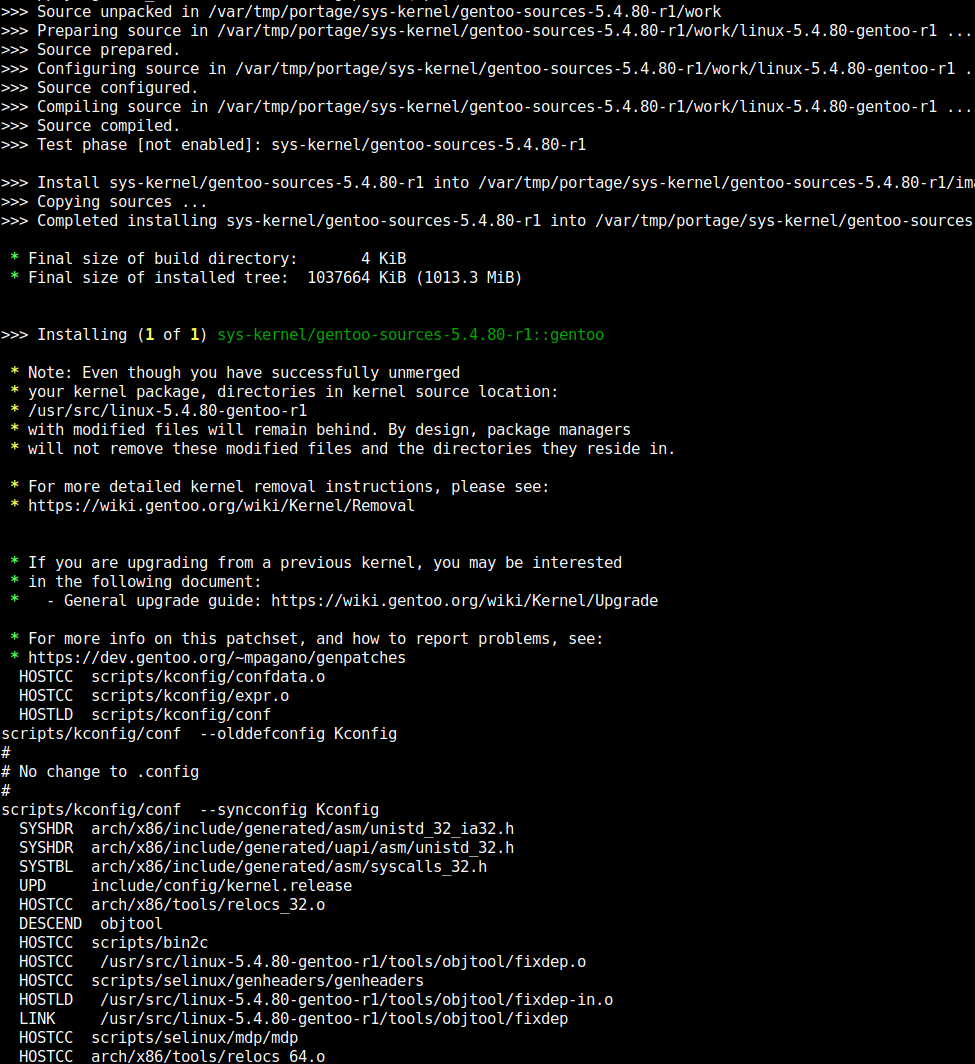
You can test the new magic by re-emerging the latest kernel, e.g. currently emerge =sys-kernel/gentoo-sources-5.4.80-r1:

Daniel Lange: Compiling and installing the Gentoo Linux kernel on emerge without genkernel (part 1)

Gentoo emerges of sys-kernel/gentoo-sources will nicely install the current kernel into /usr/src/linux-* but it will not compile them. The Gentoo wiki kernel documentation has a script snippet to automate the kernel build with genkernel. I do not like to use genkernel as it brings in lots of firmware files to build initrds that are not needed on virtual hardware. It also makes building the kernel slower. So, the plain approach: Make emerge sys-kernel/gentoo-sources symlink the latest kernel to /usr/src/linux so we can find it easily:
echo "sys-kernel/gentoo-sources symlink" >> /etc/portage/package.use/gentoo-sources
Create /etc/portage/env/sys-kernel/gentoo-sources with the following:
post_pkg_postinst()
CURRENT_KV=$(uname -r)
unset ARCH
if [[ -f "$ EROOT:-/ usr/src/linux-$ CURRENT_KV /.config" ]] ; then
cp -n "$ EROOT:-/ usr/src/linux-$ CURRENT_KV /.config" "$ EROOT:-/ usr/src/linux/.config"
cd "$ EROOT:-/ usr/src/linux/" && \
make olddefconfig && \
make -j5 && make modules_install && make install && \
grub-mkconfig -o /boot/grub/grub.cfg
fi
This will compile the next kernel on the basis of the config of the currently running kernel, install the modules and the kernel bzImage and update grub so it knows about the new kernel for the next reboot. If you forget to unset ARCH the Linux build system will complain like:
Makefile:583: arch/amd64/Makefile: No such file or directory
make: *** No rule to make target 'arch/amd64/Makefile'.  Stop.
You can test the new magic by re-emerging the latest kernel, e.g. currently emerge =sys-kernel/gentoo-sources-5.4.80-r1:

27 January 2021

Jonathan Dowland: 2020 in Fiction

Cover for Susanna Clarke's Piranesi
Cover for Emily St. John Mandel's Station 11
I managed to read 31 "books" in 2020. I'm happy with that. I thought the Pandemic would prevent me reaching my goal (30), since I did most of my reading on the commute to the Newcastle office, pre-pandemic. Somehow I've managed to compensate. I started setting a goal for books read per year in 2012 when I started to use goodreads. Doing so started to influence the type of reading I do (which is the reason I stopped my Interzone subscription in 2014, although I resumed it again sometime afterwards). Once I realised that I've been a bit more careful to ensure setting a goal was a worthwhile thing to do and not just another source of stress in my life. Two books I read were published in 2020. The first was Robert Galbraith's (a.k.a. J K Rowling's) Troubled Blood, the fifth (and largest) in the series of crime novels featuring Cormoran Strike (and the equally important Robin Ellacott). Nowadays Rowling is a controversial figure, but I'm not writing about that today, or the book itself, in much detail: briefly, it exceeded expectations, and my wife and I really enjoyed it. The other was Susanna Clarke's Piranesi: an utterly fantastic modern-fantasy story, quite short, completely different to her successful debut novel Jonathan Strange & Mr Norrell. I really loved this book, partly because it appeals to my love of fantasy geography, but also because it is very well put together, with a strong sense of the value of people's lives. A couple of the other books I read were quite Pandemic-appropriate. I tore through Josh Malerman's Bird Box, a fast-paced post-apocalyptic style horror/suspense story. The appeal was mostly in the construction and delivery: the story itself was strong enough to support the book at the length that it is, but I don't really feel it could have lasted much longer, and so I've no idea how the new sequel (Malorie) will work. The other was Station Eleven by Emily St. John Mandel. This was a story about a group of travelling musicians in a post-apocalyptic (post-pandemic) North America. A cast of characters all revolve around their relationship (or six degrees of separation) to an actor who died just prior to the Pandemic. The world-building in this book was really strong, and I felt sufficiently invested in the characters that I would love to read more about them in another book. However, I think that (although I'm largely just guessing here), in common with Bird Box, the setting was there to support the novel and the ideas that the author wanted to get across, and so I (sadly) doubt she will return to it. Finally I read a lot of short fiction. I'll write more about that in a separate blog post.

Daniel Lange: Installing System Rescue (CD) to a flash drive

System Rescue, the project formerly known as System Rescue CD, has moved from being based on Gentoo to being built on Arch Linux packages. With this their ISO layout changed substantially so when updating my trusty recue USB flash drive, I could not just update the kernel, initrd and the root filesystem image as I had typically done every other year before. The "Installing on a USB memory stick" documentation is good for Windows (use Rufus, it's nice) but rather useless for Linux. They recommend a dd or the fancy graphical version of that, called usbimager. I much prefer to have a flash drive that I can write to over an image of a CD (ISO) written 1:1 onto the flash media. The basic idea is to use the bulk of the System Rescue ISO contents but amend these with your own grub and syslinux so they work as intended over the supplied ones that are bound to the ISO layout a bit too much. I did this on Debian Buster but with some adjustments to paths and what packages to install, any recent Linux distribution should do: Continue reading "Installing System Rescue (CD) to a flash drive"

26 January 2021

Thomas Lange: Making Debian available

This is the subject of an interesting thread on the debian-devel mailing list. It started with ".. The current policy of hiding other versions of Debian is limiting the adoption of your OS by people like me.." It seems that this user managed to contact us developers and give us some important information how we can improve the user experience. The following discussion shows that all our users need non-free firmware to get their wireless network cards run. Do we provide such installation images for our users? Sure. We build them regularly, host them on our servers, we also sign the hash sum with our official signing key. But we hide them very well and still call them unofficial. Why? I would like to have a more positive name for those images. Ubuntu has the HWE (Hardware Enablement) kernel. Maybe Debian firmware enablement images? We should better promote the images that fits best for our users. BTW, the URL for all these useful images is https://cdimage.debian.org/cdimage/unofficial/non-free/images-including-firmware/ Since I'm not using the Debian installer or live image often, I thought my own installation tool would already do better. In FAI , I install the package firmware-linux-nonfree if I need some nonfree firmware. But it appears that this package does not depend on any WiFi firmware package. Oops. So, I've filed a bug report #980758 and propose to add another meta package that depends on a list of firmware packages for WiFi cards. I've now added a workaround to the FAIme service. You can now generate fully automated customized installation images including nonfree firmware for the stable and testing release. The stable release images can also use a newer kernel and firmware from backports. All other package are still from stable. Another useful image variant in my opinion. Debian FAIme

Gunnar Wolf: Back to school... As a student

Although it was a much larger step when I made a similar announcement seven years ago, when I started my Specialization, it is still a big challenge ahead, and I am very happy to pursue this: I have been admitted to a PhD program at UNAM, the university I have worked at for almost 20 years, and one of the top universities in Latin America. What program will I be part of? Doctorado en Ciencia e Ingenier a de la Computaci n (Computer Science and Engineering Doctorate Quite a broad program name, yes, sounds like anything goes). I am happy to say I managed to do as I hoped seven years ago. As that blog post says, I managed to keep an eye on my keyring-maint duties as well Will even try to link that work with what I do at school. Over the years I spent pursuing my Specialization and Masters degrees at IPN ESIME, I managed to publish two academic papers on the keyring-maint work: Strengthening a Curated Web of Trust in a Geographically Distributed Project and Insights on the large-scale deployment of a curated Web-of-Trust: the Debian project s cryptographic keyring. Since that time, several relevant things have happened. Mainly, the SKS Keyserver panorama started looking quite bleak: Various attacks such as the poisoned certificates or *certificate flooding have been mounted against the keyserver network, having as a direct outcome the questioning of the future of the decentralized transitional trust model we take for granted in the OpenPGP world. The global SKS keyserver network has quickly eroded, and its continued functioning is no longer something we can take as a given. Different methods have come up, attempting to answer to this situation, such as WKD and DANE, but they all lose something that can be seen as the essence, almost the heart of the distributed, decentralized Web-of-Trust paradigm: The ability to carry the full certificates for the keys. And that s the problem I will try to tackle with my work: How can we, in the light of the known weaknesses, keep a working, decentralized, distributed trust scheme?

25 January 2021

Martin-Éric Racine: Help needed: clean up and submit KMS driver for Geode LX to LKML

Ever since X.org switched to rootless operation, the days of the Geode X.org driver have been numbered. The old codebase dates back from Geode's early days at Cyrix, was then updated by NSC to add support for their new GX2 architecture, from which AMD dropped GX1 support and added support for their new LX architecture. To put it mildly, that codebase is a serious mess. However, at least the LX code comes with plenty of niceties, such as being able to detect when it runs on an OLPC XO-1 and to probe DCC pins to determine the optimal display resolution on other hardware. This still doesn't make the codebase cruft-free. Anyhow, most Linux distributions have dropped support for anything older than i686 with PAE, which essentially means that the GX2 code is just for show. Debian is one of very few distributions whose x86-32 port still ships with i686 without PAE. In fact, the lowest common denominator kernel on i386 is configured for Geode (LX). A while back, someone had started working on a KMS driver for the Geode LX. Through word of mouth, I got my hands on a copy of their Git tree. The driver worked reasonably well, but the codebase needs some polishing before it could be included in the Linux kernel tree. Hence this call for help: Is there anyone with good experience of the LKML coding standards who would be willing to clean up the driver's code and submit the patch to the LKML?

Iustin Pop: Raspbian/Raspberry PI OS with initrd

Background While Raspbian, ahem, Raspberry PI OS is mostly Debian, the biggest difference is the kernel, both in terms of code and packaging. The packaging is weird since it needs to deal with the fact that there s no bootloader per se, the firmware parses /boot/config.txt and depending on the setting of 64bit and/or kernel line, it loads a specific file. Normally, one of kernel7.img, kernel7l.img or kernel8.img. While this configuration file supports an initrd, it doesn t have a clean way to associate an initrd with a kernel, but rather you have to (like for the actual kernel) settle on a hard-coded initrd name. Due to this, the normal way of using an initrd doesn t work, and one has to do two things:
  • enable building initrd s at all
  • settle on the naming for the initrd
  • ensure the initrd is updated correctly
There are quite a few of forum threads about this, but there s no official support for this. The best link I found was this Stack Exchange post, which goes most of the way, but fails at the third point above.

My trivial solution Instead of naming tricks the above post suggests, I settled on having a fixed name. It risks boot failure when the kernel architecture will change, which could be worked around with hard-coded kernel too, but I haven t done that yet. First, enable initrd creation/update in /etc/default/raspberrypi-kernel, like the post says. Uncomment INITRD=yes, but not the RPI_INITRD. This will enable creating/updating the initrd when the kernel package is installed and/or other packages trigger it via hooks. Second, naming: choose an initrd name. I have simply this in my config.txt:
initramfs initrd.img followkernel
So the value is fully hard-coded, and the actual work is done in the next part. Last, add an initramfs-hook in (e.g.) /etc/initramfs/post-update.d/rpi-initrd. Note that, by default (unless other packages have created it), the /etc/initramfs directory doesn t exist. It s not the confusingly-named /etc/initramfs-tools/ directory, which is related to building the initrd, but rather to doing things with the (already built) initrd. This directory is briefly explain in the Debian kernel-handbook guide. This is my contents:
#!/bin/bash

ABI="$1"
INITRD="$2"
BOOTDIR="$(dirname "$INITRD")"

# Note: the match below _must_ be synced with the boot kernel
if [[ "$ABI" == *-v8+ ]]; then
        echo "Building v8l+ image, updating top initrd"
        cp -p "$INITRD" "$BOOTDIR/initrd.img"
fi
This script seems to me much simpler, so in principle less chance of bugs, than all the renaming and editing config.txt I saw in that stack exchange post. As far as I know, all one needs to care about is to sync the ABI passed to this hook with the kernel one is running, and since there is only one kernel version installed at a time on Raspbian (as there s no versioning in the kernel names), this should work correctly. With this hook, the update also works correctly when packages trigger initrd updates, not only when new kernels are installed. Note that the cp there is needed since the book partition is FAT, so no symbolic links/hard links allowed. Happy initrd ing!

23 January 2021

Dirk Eddelbuettel: prrd 0.0.4: More tweaks

prrd facilitates the parallel running [of] reverse dependency [checks] when preparing R packages. It is used extensively for Rcpp, RcppArmadillo, RcppEigen, BH, and possibly others. prrd screenshot image The key idea of prrd is simple, and described in some more detail on its webpage and its GitHub repo. Reverse dependency checks are an important part of package development that is easily done in a (serial) loop. But these checks are also generally embarassingly parallel as there is no or little interdependency between them (besides maybe shared build depedencies). See the (dated) screenshot (running six parallel workers, arranged in split byobu session). This release brings several smaller tweaks and improvements to the summary report that had accumulated in my use since the last realease last April. We also updated the CI runners as one does these days. The release is summarised in the NEWS entry:

Changes in prrd version 0.0.4 (2021-01-23)
  • Report summary mode is now compact, more robust and reports extended CRAN summaries. (Dirk via several changes)
  • Continuous Integration now uses run.sh from r-ci

My CRANberries provides the usual summary of changes to the previous version. See the aforementioned webpage and its repo for details. For more questions or comments use the issue tracker off the GitHub repo. If you like this or other open-source work I do, you can now sponsor me at GitHub.

This post by Dirk Eddelbuettel originated on his Thinking inside the box blog. Please report excessive re-aggregation in third-party for-profit settings.

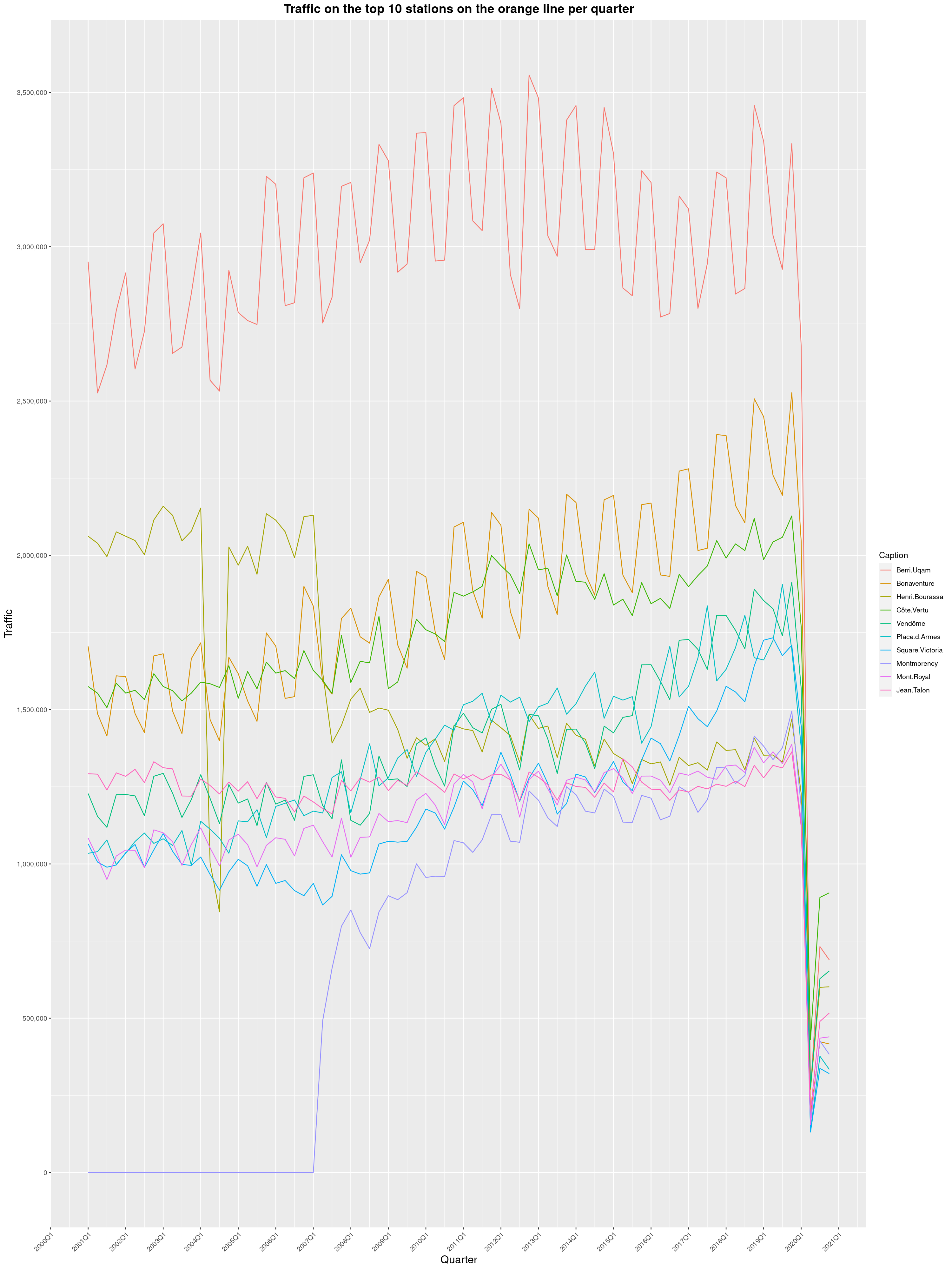
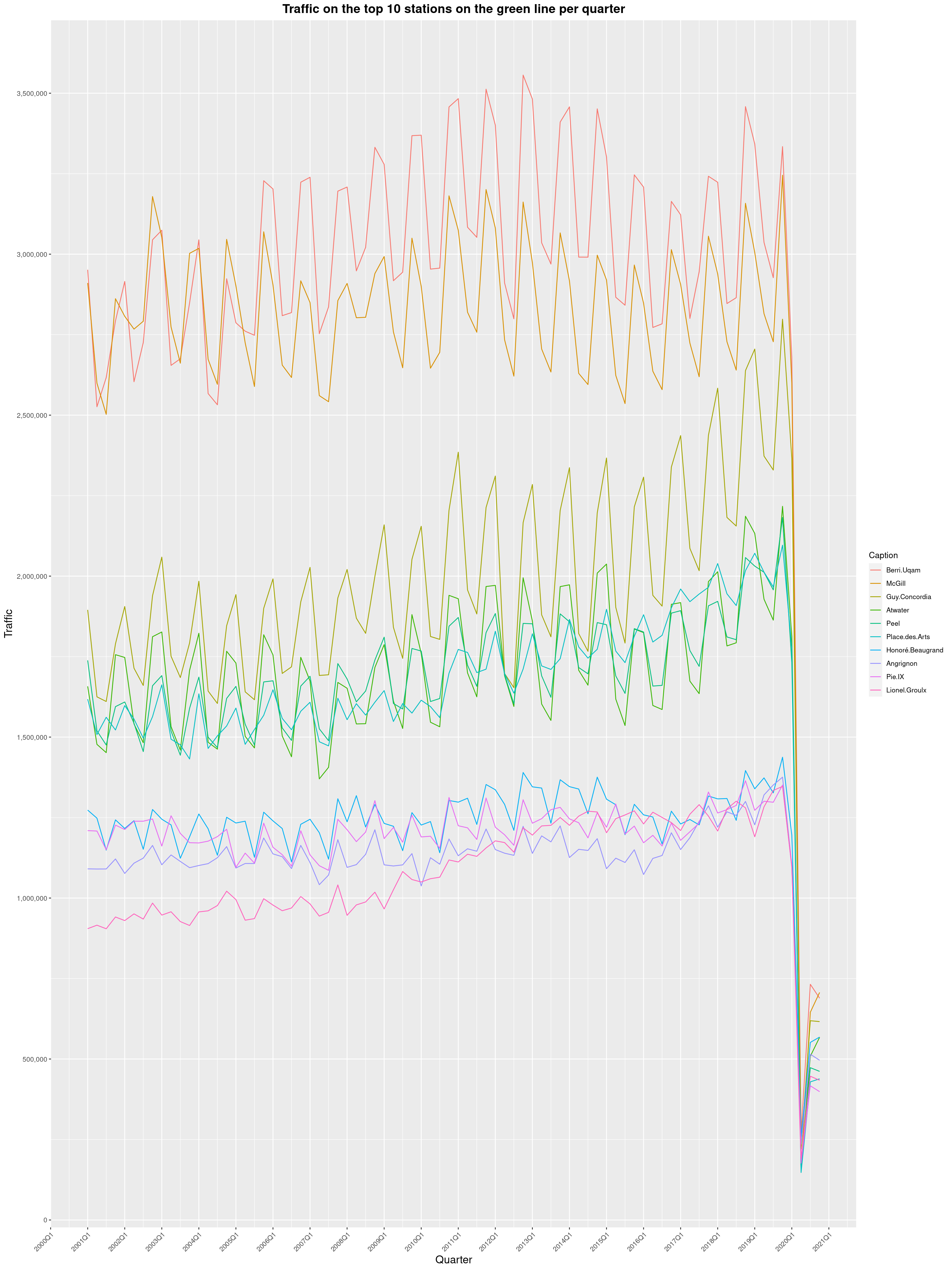
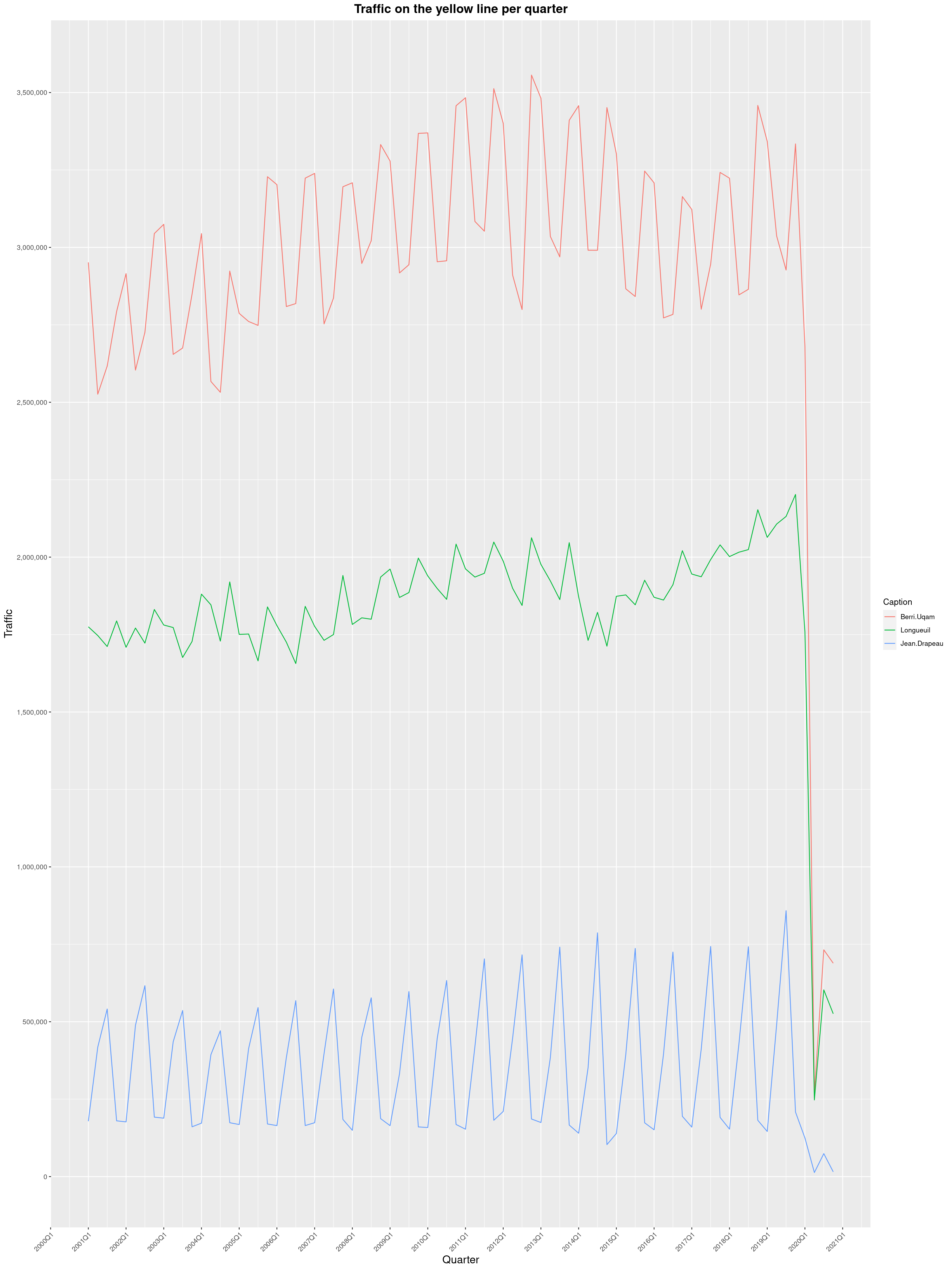
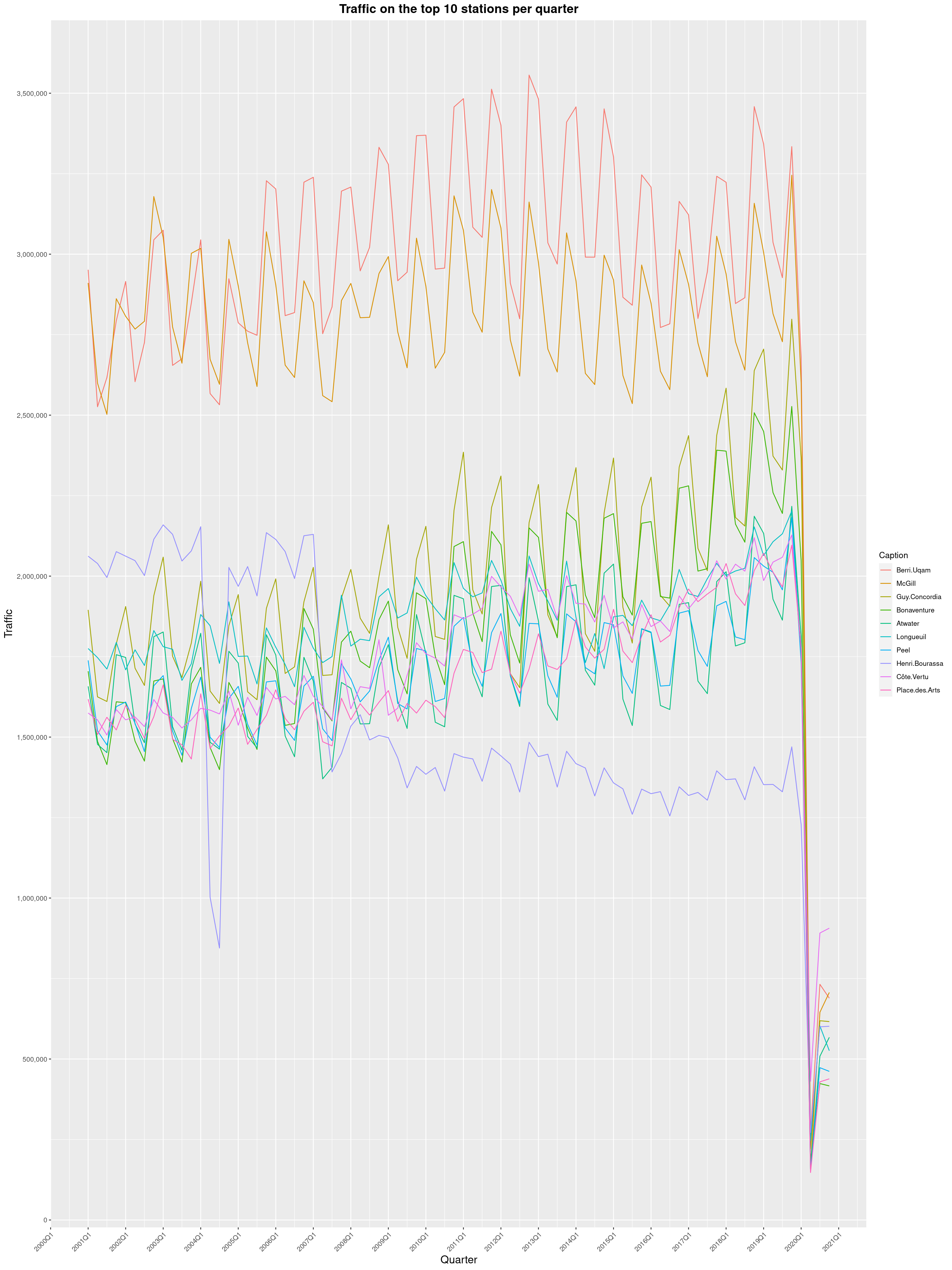
Louis-Philippe V ronneau: Montreal Subway Foot Traffic Data, Revisited

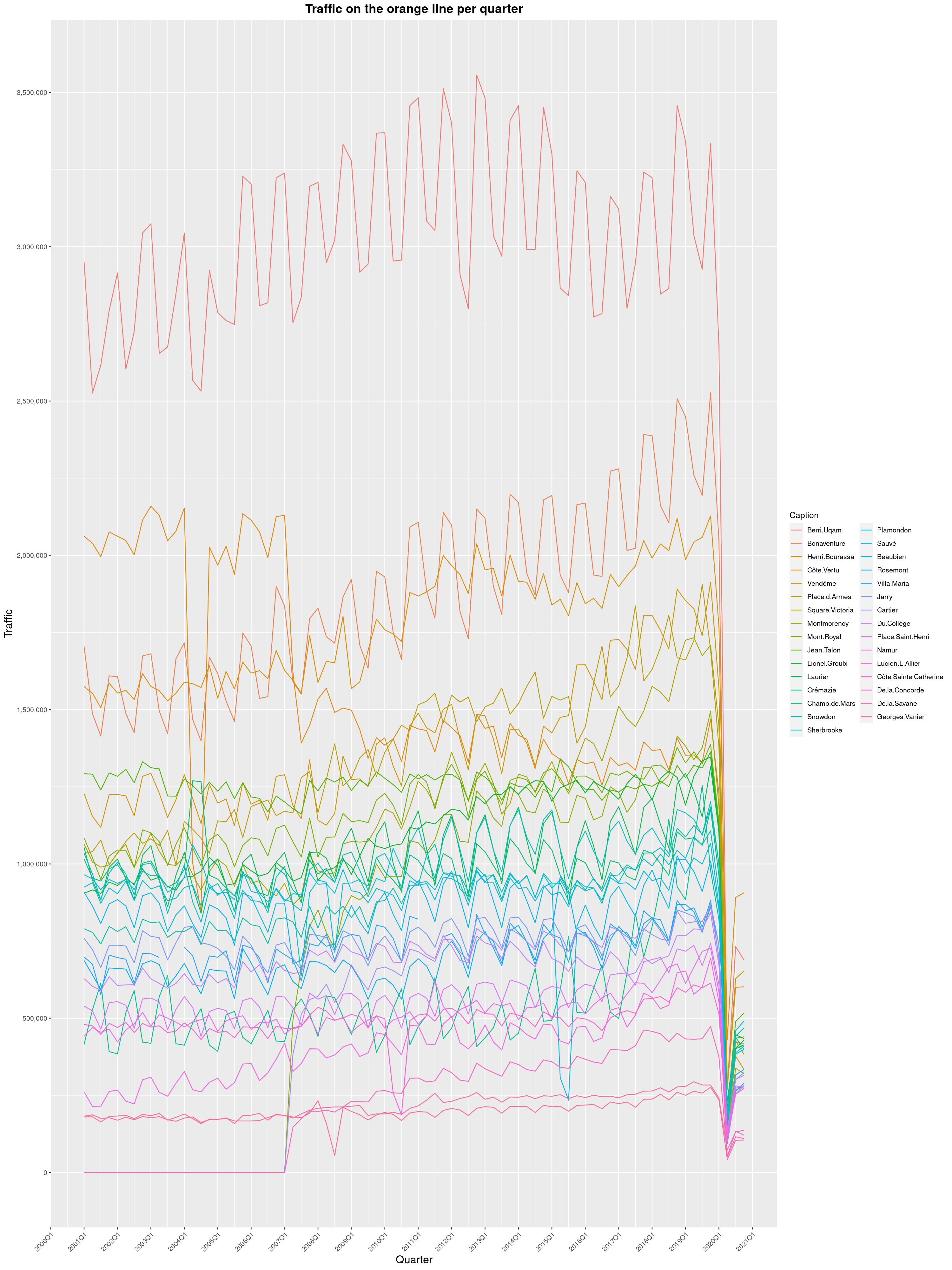
In 2019, I got curious and asked Soci t de Transport de Montr al, Montreal's transit agency, for the foot traffic data of Montreal's subway. Since then, two years has passed and with COVID-19 still going strong, I wanted to see what impact the pandemic had had. And oh boy, what an impact it is. So here it is, data from 2001 to 2020, graphed the same way as in the original 2019 blog post. I could certainly juice this data, graph the pandemic using daily figures and come up with a long and interesting blog post analysing the main trends. I start teaching next Monday though and I still have prep work to do, so I'll leave that to someone else. By clicking on a subway station, you'll be redirected to a graph of the station's foot traffic. Interactive Map of Montreal's Subway Licences

22 January 2021

Robert McQueen: Launching Endless OS Foundation

Passion Led Us Here

How our for-profit company became a nonprofit, to better tackle the digital divide. Originally posted on the Endless OS Foundation blog.

An 8-year journey to a nonprofit On the 1st of April 2020, our for-profit Endless Mobile officially became a nonprofit as the Endless OS Foundation. Our launch as a nonprofit just as the global pandemic took hold was, predictably, hardly noticed, but for us the timing was incredible: as the world collectively asked What can we do to help others in need? , we framed our mission statement and launched our .org with the same very important question in mind. Endless always had a social impact mission at its heart, and the challenges related to students, families, and communities falling further into the digital divide during COVID-19 brought new urgency and purpose to our team s decision to officially step in the social welfare space.
On April 1st 2020, our for-profit Endless Mobile officially became a nonprofit as the Endless OS Foundation, focused on the #DigitalDivide.
Our updated status was a long time coming: we began our transformation to a nonprofit organization in late 2019 with the realization that the true charter and passions of our team would be greatly accelerated without the constraints of for-profit goals, investors and sales strategies standing in the way of our mission of digital access and equity for all. But for 8 years we made a go of it commercially, headquartered in Silicon Valley and framing ourselves as a tech startup with access to the venture capital and partnerships on our doorstep. We believed that a successful commercial channel would be the most efficient way to scale the impact of bringing computer devices and access to communities in need. We still believe this we ve just learned through our experience that we don t have the funding to enter the computer and OS marketplace head-on. With the social impact goal first, and the hope of any revenue a secondary goal, we have had many successes in those 8 years bridging the digital divide throughout the world, from Brazil, to Kenya, and the USA. We ve learned a huge amount which will go on to inform our strategy as a nonprofit.
Endless always had a social impact mission at its heart. COVID-19 brought new urgency and purpose to our team s decision to officially step in the social welfare space.
Our unique perspective One thing we learned as a for-profit is that the OS and technology we ve built has some unique properties which are hugely impactful as a working solution to digital equity barriers. And our experience deploying in the field around the world for 8 years has left us uniquely informed via many iterations and incremental improvements.
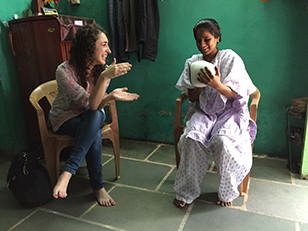
Endless OS designer in discussion with prospective user
With this knowledge in-hand, we ve been refining our strategy throughout 2020 and now starting to focus on what it really means to become an effective nonprofit and make that impact. In many ways it is liberating to abandon the goals and constraints of being a for-profit entity, and in other ways it s been a challenging journey for me and the team to adjust our way of thinking and let these for-profit notions and models go. Previously we exclusively built and sold a product that defined our success; and any impact we achieved was a secondary consequence of that success and seen through that lens. Now our success is defined purely in terms of social impact, and through our actions, those positive impacts can be made with or without our product . That means that we may develop and introduce technology to solve a problem, but it is equally as valid to find another organization s existing offering and design a way to increase that positive impact and scale.
We develop technology to solve access equity issues, but it s equally as valid to find another organization s offering and partner in a way that increases their positive impact.
The analogy to Free and Open Source Software is very strong while Endless has always used and contributed to a wide variety of FOSS projects, we ve also had a tension where we ve been trying to hold some pieces back and capture value such as our own application or content ecosystem, our own hardware platform necessarily making us competitors to other organisations even though they were hoping to achieve the same things as us. As a nonprofit we can let these ideas go and just pick the best partners and technologies to help the people we re trying to reach.
School kids writing on paper
Digital equity 4 barriers we need to overcome In future, our decisions around which projects to build or engage with will revolve around 4 barriers to digital equity, and how our Endless OS, Endless projects, or our partners offerings can help to solve them. We define these 4 equity barriers as: barriers to devices, barriers to connectivity, barriers to literacy in terms of your ability to use the technology, and barriers to engagement in terms of whether using the system is rewarding and worthwhile.
We define the 4 digital equity barriers we exist to impact as:
1. barriers to devices
2. barriers to connectivity
3. barriers to literacy
4. barriers to engagement
It doesn t matter who makes the solutions that break these barriers; what matters is how we assist in enabling people to use technology to gain access to the education and opportunities these barriers block. Our goal therefore is to simply ensure that solutions exist building them ourselves and with partners such as the FOSS community and other nonprofits proving them with real-world deployments, and sharing our results as widely as possible to allow for better adoption globally. If we define our goal purely in terms of whether people are using Endless OS, we are effectively restricting the reach and scale of our solutions to the audience we can reach directly with Endless OS downloads, installs and propagation. Conversely, partnerships that scale impact are a win-win-win for us, our partners, and the communities we all serve. Engineering impact Our Endless engineering roots and capabilities feed our unique ability to build and deploy all of our solutions, and the practical experience of deploying them gives us evidence and credibility as we advocate for their use. Either activity would be weaker without the other.
Our engineering roots and capabilities feed our unique ability to build and deploy digital divide solutions.
Our partners in various engineering communities will have already seen our change in approach. Particularly, with GNOME we are working hard to invest in upstream and reconcile the long-standing differences between our experience and GNOME. If successful, many more people can benefit from our work than just users of Endless OS. We re working with Learning Equality on Kolibri to build a better app experience for Linux desktop users and bring content publishers into our ecosystem for the first time, and we ve also taken our very own Hack, the immersive and fun destination for kids learning to code, released it for non-Endless systems on Flathub, and made it fully open-source.
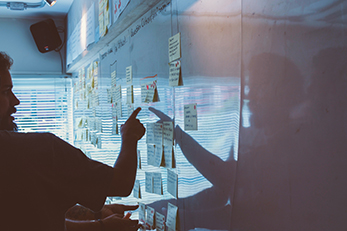
Planning tasks with sticky notes on a whiteboard
What s next for our OS? What then is in store for the future of Endless OS, the place where we have invested so much time and planning through years of iterations? For the immediate future, we need the capacity to deploy everything we ve built all at once, to our partners. We built an OS that we feel is very unique and valuable, containing a number of world-firsts: first production OS shipped with OSTree, first Flatpak-only desktop, built-in support for updating OS and apps from USBs, while still providing a great deal of reliability and convenience for deployments in offline and educational-safe environments with great apps and content loaded on every system. However, we need to find a way to deliver this Linux-based experience in a more efficient way, and we d love to talk if you have ideas about how we can do this, perhaps as partners. Can the idea of Endless OS evolve to become a spec that is provided by different platforms in the future, maybe remixes of Debian, Fedora, openSUSE or Ubuntu? Build, Validate, Advocate Beyond the OS, the Endless OS Foundation has identified multiple programs to help underserved communities, and in each case we are adopting our build, validate, advocate strategy. This approach underpins all of our projects: can we build the technology (or assist in the making), will a community in-need validate it by adoption, and can we inspire others by telling the story and advocating for its wider use?
We are adopting a build, validate, advocate strategy.
1. build the technology (or assist in the making)
2. validate by community adoption
3. advocate for its wider use
As examples, we have just launched the Endless Key (link) as an offline solution for students during the COVID-19 at-home distance learning challenges. This project is also establishing a first-ever partnership of well-known online educational brands to reach an underserved offline audience with valuable learning resources. We are developing a pay-as-you-go platform and new partnerships that will allow families to own laptops via micro-payments that are built directly into the operating system, even if they cannot qualify for standard retail financing. And during the pandemic, we ve partnered with Teach For America to focus on very practical digital equity needs in the USA s urban and rural communities. One part of the world-wide digital divide solution We are one solution provider for the complex matrix of issues known collectively as the #DigitalDivide, and these issues will not disappear after the pandemic. Digital equity was an issue long before COVID-19, and we are not so naive to think it can be solved by any single institution, or by the time the pandemic recedes. It will take time and a coalition of partnerships to win. We are in for the long-haul and we are always looking for partners, especially now as we are finding our feet in the nonprofit world. We d love to hear from you, so please feel free to reach out to me I m ramcq on IRC, RocketChat, Twitter, LinkedIn or rob@endlessos.org.

Next.

Previous.