Search Results: "rra"

14 December 2005

Uwe Hermann: EU adopts Big Brother data retention directive, ignores industry and civil society [update]

Heise (and many other sources) report that the EU parliament has voted for the abysmal data retention directive, simply ignoring objections from the industry and the civil society. The EU has turned into a police state where more than 450 million citizens are treated as criminals by default now! 1984 is a joke compared to this. We're all fucked! Bigtime! Please, someone go out and sue the shit out of the fucking idiots who are responsible for this kindly remind the responsible politicians that this directive is a really bad idea! Update 2005-12-15: OK, so I might have overreacted. My first answer to the accusations would probably be (abusing an unrelated quote from Jonathan McDowell): "I exaggerate for effect". But honestly, while it's not as bad as 1984, I really do think that this law will bring us all a big step nearer to a 1984-type horror scenario. (via netzpolitik.org)

12 December 2005

Martin F. Krafft: IBM unsuck

In a previous entry, I conveyed that I thought IBM sucks. For fairness, I gotta set this straight: In my case, the problem is more with the vendor, Pathworks. They should have warned me of the warranty problems, and they should now offer to handle the issue with IBM directly. IBM has, in the meanwhile, tried to be helpful, but they did not budge a centimetre; their systems still limit their business processes. I will now contact the vendor and ask them to settle the issue without me in between.

10 December 2005

Martin F. Krafft: Palm is going down, +1 for Amazon

The German Technology Review magazine is running an article on the last 10 years of Palm, manufacturer of the classic PDA. Basically the story is that Palm was doing alright until smart phones came along, and now they are just going down. No wonder, I say to myself, looking at the current state of affairs in a support case not too different from Edd's. pilot-xfer at one point started to report errors writing to the device:
error (-202, PalmOS 0x0000).
I suspect a broken EEPROM, and since the device is only half a year old, I wanted a warranty replacement. Writing to Palm yielded a response delayed by one week, advising me to hard-reset the device, then to try again. I had stated in my original problem report that I already tried hard-resets. A little annoyed, I wrote back telling them that... and got another reply advising me to hard-reset. Believe it or not, this went through a third iteration, at which point I gave up -- in part also because it was then that I read Edd's account of his experience. No wonder Palm is going down (which is somewhat of a shame, I do appreciate Palm OS). Anyway, I bought the device via Amazon, and thus prodded them about it. After some complications related to the fact that all the paper stuff and CDs of the Palm are in my house in Germany, which I won't see for a while, I now reached an agreement with them allowing me to order a new one, for which I'll then be refunded when I send in the broken Palm in February. And as if that was not enough (+6 months warranty after all), I also got a 35 EUR price discount.

9 December 2005

Adam Rosi-Kessel: Windows Live Maps

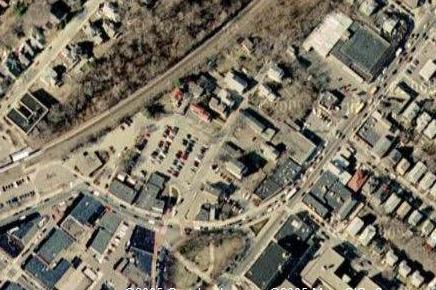
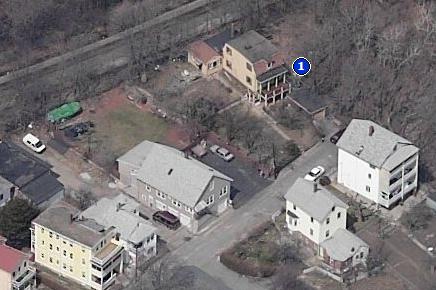
I just checked out the new Windows Live Local—Microsoft’s answer to Google Maps. The interface is a little clunky, but the flyby image quality is amazing. Here’s my house on Windows Live (by the number 1): The same location, at the maximum magnification from Google Maps: Google is going to need to invest in some better images. I think what this proves is that even Google needs some competition. Interestingly, neither of these images shows the 9-unit condominium complex that replaced the duplex across the street from us. The duplex was demolished more than a year ago.

8 December 2005

Martin F. Krafft: IBM and warranty contracts

When I got my Thinkpad X40, I was all happy to finally be customer of a company (or pair of companies) who understood the business, and made great hardware despite being a clearly support-oriented company. Since I travel a lot and the laptop is crucial for my business, I bought a 3-year on-site 24 hour service plan with the laptop. I ordered the Thinkpad with the extension bay, after confirmation by the vendor that I could swap it for the USB DVD drive if I didn't like it. Well, I didn't like it, and thus completed the swap within few days. So far, so good. Unfortunately, the USB DVD drive died the other day. No biggie, I thought, I'll just get it replaced within 24 hours... ... yeah right! IBM's warranty database lists me as owner of an X40+extension bay. Thus, that is what is covered by the expensive 3 year plan, and nothing more. Even though I managed to provide the invoices, they seem to be unable^W unwilling to do anything about it. "Sorry, sir, but we cannot change anything in our database. We are not allowed to." "Well, who is allowed then?" "I don't know. I am afraid there is nothing I can do." Since the drive is new, it's covered by a one-year warranty anyway, so now I can send it in an expect a replacement "within 3-6 weeks". Great! Don't you guys understand that this is exactly why I paid extra money, so that I could have an advance replacement, and subito? What's worse is that if the drive breaks again, 14 months from now, I can buy a new one, because the drive is not covered by the 3 year plan. It would well be covered, had it been bought at the same time. "Sorry, sir, but we cannot do anything about that. I mean, I would love to ship you a replacement unit immediately, but the system does not allow it." Why do consumers at large accept excuses from companies, claiming that it's "the system's" fault? Did those companies lose control over their IT infrastructure? I thought only SAP forces you to mold your company according to the software requirements, when usually you make the software fit your business processes? Does IBM run SAP? I am not going to give this up. And I'll do my best to alert the media to this as much as I can. Sorry, IBM, you were a twinkling star in my universe, but you just went up in flames. Support-oriented, my ass.

7 December 2005

Paul van Tilburg: Arrival In Edinburgh

The flight to Edinburgh went just fine. I believe it’s my first time flying 10 minutes ahead of schedule because everyone was already in the plane. I left on 12:35 CET, landed on 12:35 GMT, so no time lost :). After arriving I was dying for something to eat (which I took with me in my coat but it wasn’t really reachable in the plane). So I ate, got some money and took a taxi to the Heriot-Watt University campus. The university campus Main reception of the Heriot-Watt University I got dropped off on the campus at the main reception. There I was able to store my luggage and I was kindly directed to the Mountbatten building, home of the school of MACS. There I met Fairouz Kamareddine and two of my direct colleagues: Manuel Maarek and Krzysztof Retel. Fairouz quickly arranged that I got registered as a HW(Heriot-Watt) student, got my MACS account, the accommodation, etc. The Thomson Hall where I live in With keys, luggage and instructions I took off to the Lord Thomson Hall to find my room. At 17:00 I was completely settled in already. I met my (all Chinese) four kitchmates (yes, it’s a strange word) and went back to the university refectory for dinner. My room is a quite small, at least, smaller than I am used to (about half the area), but it has a bathroom (with shower), gets cleaned weekly and all the heating is included… so I am not complaining. I must say that the people on campus are very nice. I can ask anyone if I need to know something and I always get help or a kind reply. There are really a lot of foreign students here (about 25%) who all share the same fate.

Meike Reichle: A new member in the family

Since this weekend there's a new member in my little computer family :)
After serving as my bedside table for over three months (ever since I moved here) my regular PC is now finally reassembled, equipped with a new hard drive and DVD drive and back in action! It's got a new name, too: Undine. For the illiterate among you, a Undine is a water spirit and this particular one is called after the Undine in the story of Friedrich de la Motte Fouqué. (Full text from the Gutenberg Project, and a summary.)
It's not all set up yet. (Is a machine ever?) Aplayer and xmms still throw errors and it won't go into any kind of standby (sleep or hibernate). But nevertheless the increase in quality of my life has since been enormous. Until then I used my beloved 12" Thinkpad (Dropkick, got it's name from them and the way I treat it) for daily work, which was okay, but somewhat unhandy at times. Now I got 21" instead of 12", a lot more power, sound, and a decent (but filthy) keyboard again. Yay!
Downside: I had totally forgotten how *INCREDIBLY LOUD* that thing is. Maybe I'll go buy a set of these insulating mats. This high-pitched noise drives me insane!

Regarding my last post: I noticed there's an extra-i-that-bears-witness-to-my-favourite-editor in it but decided to leave it as a statement ;) Maybe I'll start a new trend?
The Skatalites concert was as great as expected but unfortunately very full. People where standing shoulder to shoulder all the way to the back wall. So all you could do was stand and listen, dancing was rather difficult or even impossible. :( Also, we left a bit earlier since those $%*# ing regular work hours have turned me into a total sissy when it comes to staying up late. This needs to be undone!!

In other news: My increasing enthusiasm for Leipzig experienced a first drop when I noticed this morning that somewhen in the last few days someone must have stolen the bungee cord from my bike. :(

I am disappointed and indignant about this!!!

(Especially since only my new springy one is gone, the old, f***ed-up one is still there. Haha!! You me too!)

Last but not least: I got my Christmas leave confirmed! I am off work from christmas until new-year. This means that I can go South over the holidays and be with my ifamily who totally rocks and I very much look forward to seeing again :) (Mom, should you read this: We are having fondue again this Christmas, arent we? Pleeaaase??)

5 December 2005

Jonathan McDowell: Toshiba++

As I've previously said I bought a http://uk.computers.toshiba-europe.com/ Port g R200 a few months ago. It's lovely and wonderful and makes my old laptop (a Compaq N200) look tiny, but is still quite small. However I discovered it wouldn't hold charge. If I unplugged it and used it I'd quite happily get 3-4 hours use off the battery, but if I charged it up while off, then unplugged it (leaving it off) and didn't touch it for a couple of days it wouldn't power on and needed fully charged again. This is a bit of a bummer, but I hadn't got round to sorting it out as I wasn't finding it too inconvenient. I decided I should really get it dealt with before I go back to my parents' for Christmas, so rang up Toshiba's repair line a few weeks ago. Told them what the problem was and they said they'd ring back in the morning to arrange a pickup time. Except they actually rang back that afternoon. It was too late for collection the next day, but they said they'd pick it up the following day in the afternoon. Also I wasn't to pack it or provide any of the accessories; just the bare laptop. Handy. Lo and behold the nice man from DHL turned up when Toshiba said he would, had a piece of paper with the right reference number on it (though in quite small print) and didn't want the laptop packed up as he had a suitable box already prepared. Time passed and I heard nothing. I was getting a bit worried, but Tosh say it can take 5 working days and it hadn't been that long (and given the nature of the fault I guessed they'd need to charge and discharge to check). But it was a bit weird that they'd not asked me to do any of the stupid things you're normally asked to do. (Have you rebooted? Reinstalled? Repented?) Plus the laptop only has Linux on it, so I was worried they'd be freaked by that (though they'd been fine when I mentioned it on the phone). It came to day 5 and I decided I'd ring them the following day. And then the nice man from DHL turned up with a big, well padded, box containing my laptop. At first glance it appeared to only contain my laptop, but when I opened up the laptop there was an A4 sheet saying that the battery had been replaced and the BIOS upgraded. Since then the laptop has actually held charge, so it looks like they did the job. So, congrats to Toshiba. More communication would have been nice, but it got fixed, you didn't wipe my Linux install (though I'd backed it up and removed any personal data anyway) and it was done within the period you claimed. I've not had to get a laptop fixed before, but iDunno hasn't had fun with Acer in the past, so I was prepared for the worst.

MJ Ray: About slef-reflections

With Planet Scheme and more referrals, I seem to have gained many new readers recently, so here's a quick description of this blog. I'll post before noon each day if I'm in the office (where the computer that I use for writing is), usually at least Monday to Friday. I post about: scheme programming (also in scheme.rss), gnu/linux free software support (also in hacks.rss), koha development (also in koha.rss), creativity and copyright (also in affs.rss), running a non-traditional business, bicycling, events around Lynn, Norfolk and other events I take part in. If you would like to contact me about it, I prefer trackback: some posts include trackback URLs (and others aren't hard to guess); or my email info is linked from the top of my blog page now. Stuart wonders how to track use, reuse and repurposing - from when I was writing for "real" publications, I'd say that the same problem is faced by anyone doing a news release. All you can do is monitor the outlets and see where it goes. If you're lucky, you'll get pinged, but I think that happens only for about 1 in 10 or less. Anyone know real numbers for that? Can anyone expect audience statistics to be sorted out when even the copyright aspect of online syndication is still being figured out?

Martin 'Joey' Schulze: Past LinuxTag Commitment

For me this year's event was the most successful and wonderful LinuxTag I've eve been to. I've worked during LinuxTag as much as I could and did my best to make it the best event ever. If I commit myself to something, I try to work properly and generate proper results. This was the same for LinuxTag. As a result, this year I had many tasks to work on. First of all I managed the community and free projects so that they had an opportunity to present themselves to the broad audience during LinuxTag. This required months of communication with members of all attending projects and negotiating their needs. It also required to gather information about the various parts of LinuxTag that also affected projects. Since it is boring having to answer the same questions all the time I decided not doing that anymore and once started to maintain an FAQ that intends to contain all important information for exhibiting projects. Last year I've also added an location plan with information about shops and restaurants nearby and this year I contributed a map for getting to the AKK where the legendary KaLUG party was organised. Being responsible for the projects I was required to decide which project are suited to get a sponsored booth, its size and its location. This year we have had the opportunity to use the ground floor of the conference building in addition to the regular exhibition ground, so that we've could use about 700m in total for the projects exhibition. I've worked nearly two entire weekends to get the booths assigned properly and to have proper graphics. For the conference building I also created the "official" booth map, booth naming, booth signs and booth numbering. One weekend was planned, the other was an accident since we had to rearrange some booths. Exhibiting projects and other community and Free Software oriented projects also had the opportunity to use two workshop rooms for workshops, BoF sessions, meetings and talks. For these I maintained the schedule and negotiated with the speakers and projects, and also acquired moderators for both rooms for the entire time. The people who organised the Accessibility booth people managed to get green light for building a large booth and a so called forum, which is an open talk area, but without any support. Since they couldn't fill in all slots and you can't dismantle a forum in the middle of the show, I've taken over its maintenance and schedule and managed to complete it with interesting talks, setting up, looking for moderators and dismantling. One of these talks I've even held on my own. Fortunately, a DJ contacted us and was able to provide his PA, boxes, microphone and stuff. Without him, the forum would have been an utter disaster. To support the projects we had to build up the network in the main exhibition hall for them on our own. Otherwise it would have cost us several thousand euro, which we didn't have. So I had to draw plans containing the cables we had to lay, calculated the length and decide where to deposit switches and stuff. On the day before the show opened, several supporters went around with a large ladder laying the cable. In the conference building this was done by the KaLUG. I've also coached the supporters during LinuxTag, and was even present at a special short meeting for and with supporters in order to reflect the past day and talk about the next day. This year was the first time I really had the time to attend the meeting and thank our supporters. Before the show started I've also negotiated food arrangements with a restaurant and a colleague so that we had lunch during the show. I ate from it as well, but didn't manage to eat every day unfortunately. Most additional signs of A4 and A3 size that we used during LinuxTag in order to help visitors and officials to find their way were designed and printed by me. Many of them were the result of last year's aftermath. Most of them were fixed with adhesive tape by our supporters. The Coding Marathon was supervised by me as LinuxTag representative. It was organised by HP, intel and Red Hat and, of course, negotiated with the acquise team of LinuxTag. The Coding Marathon was a half day programming session for visitors. The resulting code is released under the GNU GPL and winners were awarded with prizes at the end of each day. This required me to attend several phone conferences, name one or two interested people from "LinuxTag" who would propose a task and head the marathon during one day. Last year already, when I took over this job, With p2 and Arne I've already found two competent people, and this year also added Alex Schmehl for a task I proposed. Naturally, it was not possible for me to moderate the Coding Marathon during LinuxTag due to other obligations. When I arrived at LinuxTag the week before it officially started my first job was to build up the office and prepare the rooms so that the entire "team" could work inside properly. The first office should be used by supporters for general requests and customers, with a desk for me as well. The next room was meant to host the speakers office and the other rooms were intended to be back offices or private rooms. In order to be able to work properly in the office I've also brought with my some of my network equipment and set up the office LAN, server and printer. I had already experienced cable problems last year, that prevented us to use 100MBit/s switches, so that antiquated 10MBit/s hubs had to be used. I've also supervised our daily shopping tours and collected demand for various items from others. The most important items were fluids since it was quite warm during LinuxTag and collapsing core members and supporters are no fun. Other food had to be fetched as well. A lot of other items had to be purchased as well, in order to run LinuxTag and be able to fix or improve various areas. One or two supporters were taking the car for the shopping tours. When I arrived in Karlsruhe the HP booth was already being built. The other, smaller booths followed on Monday. Hence, on Monday and Tuesday I also supervised the building of the booths. It's important that somebody is around for questions, both from booth builders and from officials of the fairground. One also has to check if the booths are built properly and that they don't cause a risk for the exhibition hall, neighbour booths, smoke detectors and stuff. Issues should be corrected as soon as possible so that they don't become problems later. As soon as I arrived I also took over our own storage area and maintained deliveries for booths that haven't built up yet. Several companies negotiated with me before the show so that I knew which deliveries to expect and could move them to their respective booths as soon as they were built up. This year the first X.Org developers conference took place right before LinuxTag as well. I negotiated with both the X.Org people and the fairground people so that this developers conference could really take place. Unfortunately the plans and acknowledgements were sent out quite late so we were in a hurry getting everything set up and organised. Since we experienced network problems this year, they had not network as well, so did we in the office. Two days without a network connection. Pure horror. On Thursday the legendary KaLUG party took place. The location had to be prepared for the party, for which several supporters went there before the party has started. It was planned that I attend the party, so I went there at about 1 a.m. For some reason I didn't manage to leave the fairground earlier, and on the way to the AKK some of my friends who were also supporters were on their way home, excusing themselves for leaving before I arrived. Eumh... When I arrived at the party I first checked the situation and saw loads of uncleaned pots and stuff. Since nobody was cleaning them, I jumped into the mobile kitchen and started cleaning before I even ate or drank anything. That was fun, though a bit unplanned. The social event on Friday was organised by Claudia from a service provider who got some support from me before the show and during the show. Several supporters helped her clean the area that was unused for several years. During the evening I only gave away free tickets for the supporters and moved inside afterwards, always looking around if everything was ok, negotiating with her, of course. Very well managed, I can only say. This year I gave three talks during LinuxTag. Usually I only give zero or one during such an event, due to my other obligations. However, this time I felt, that I should make a maximum use of LinuxTag, anticipating the future. Hence, it started with Debian Security held during this year's Debian day, followed by Howto LinuxTag on the following day and finally Debian Internals together with other Debian developers. After the last talk I had about two hours to calm down again and initiate the general dismantling. Fortunately I've already planned a lot before the event because after my final talk I was a bit exhausted and needed to calm down and get into LinuxTag organisation again. Dismantling is the most parallel work at LinuxTag because all booths are dismantled at once and many people are running around with arbitrary stuff. One really has to take care of ones own stuff or it gets lost faster than one can shout. During the evening the entire fairground was cleaned, from all conference rooms the audio and video technique was removed again, all bottles and glasses were moved back into the office, the movable walls collected and moved back to their owners, the Internet caf was dismantled and computers moved back into their respective boxes. Some exhibitors had to use extra storage space temporarily. The Community forum in the conference hall had to be dismantled and chairs stacked properly. The same goes for tables and chairs used by the projects booths in both, the exhibition hall and the conference building. The network for projects had to be removed again, cables and switches secured. All additional signs had to be removed again. Since we have used some durable signs that could be used for future events again these had to be removed carefully and secured again. We've also ordered a container for paper since a lot of paper had to be thrown away and throwing away large amounts of junk is expensive. This way we were able to get rid of paper stuff a bit cheaper, but had to take extra care so that only paper went into this container. Hence, we needed a supporter who stayed with the container until it was fetched again. When the internal LinuxTag party in the office was nearly over, I came back into the office with all other areas finished, ready to start dismantling the office - usually the colleagues don't let me because they want to party and don't have any obligations anymore. That sucks a lot. So, again the internal party went on nearly without notice by me, but I'm used to that. This year I had already taken this into account and organised some stuff for an after work party (contrary to the other while-others-work party) outside of the office with supporters, friends and some team members that were still sober. This night we went to bed after 5a.m. and hence had a chance to get a quick breakfast already (we didn't use it, though). It was when we thought "Yes, this was a hell of an event!" I usually went to bed at 1 to 3a.m. and got up again at 5 or 6a.m. so that I was able to work on the important stuff that I committed myself to, and so that I was able to chat with friends and supporters in the evening. That was something I really missed on past events. Last year I probably wouldn't have spoken to Alfie if he hadn't placed himself into my way as a brake block. Thanks Alfie! This year such a maneuver wasn't required. In order to be able to work on so many areas during LinuxTag I tried to optimise the workflow and the processing as much as I could. I also used several sheets and paper to write down stuff for later processing so that my brain was kept clear and I don't become insane (or more insane, for what it's worth). That worked quite well and all areas I worked in worked fine as well, since I had time to talk to people even during the day. Even after my talks I wasn't flooded by phone requests like last year. After the event I had to drive some 750km back, after having only little sleep. Getting to Karlsruhe is always the easy part. Driving back is exhausting because I'm usually quite exhausted and in need of a lot of sleep. I won't disclose how long it took me to reach Oldenburg but it was faster than last year.
2 December 2005

Martin 'Joey' Schulze: Volunteer LinuxTag Work

Without the vast number of voluntary supporters past LinuxTag events wouldn't have been possible at all. On the financial side LinuxTag has always made only little profit after the event. Without these nearly 100 volunteers who have supported us directly during the event and during its preparation the show wouldn't have been possible. Without the help of so many supporters during the event, the entire show isn't possible. Hence, it is important to either generate more income and be able to pay for hostesses and callboys or manage a proper environment in which many supporters want to help. For this, accepting the importance of the supporters, acknowledging their work and supporting them with food, fluids, fun and other advantages is very important. To my regret, I have to admit that this has not always been the case inside the core team. I have argued in favour of the supporters several times, so hopefully not much of it has been noticed by them. Supporters have worked in several different areas. I'll try to list them below but I'm sure I already forgot half of them even though I have coached most supporters directly or indirectly. We have maintained the parking ground so we were able to ensure that the Festplatz in the middle of LinuxTag is not abused as a parking place during the event. This required us to maintain a gate with at least one gatekeeper from 6 a.m. to 10 p.m. This was a lot of work, and it wasn't that interesting, but good for people who want to read or hack in the gatekeeper pavilion. We have manually built the projects network in the exhibition halls. In the conference building it was built by the KaLUG. All information signs and plans had to be drawn, printed, magnified and fixed at their respective locations. There are a lot of additional signs that we have maintained to help visitors find their way. I'm sure still a lot of signs were missing. I have used the opportunity to prepare most of them after the last event, so that we have less work for the new one. Our own office had to be set up, since we've used naked rooms with only some cupboards, tables and chairs inside. More furniture had to be arranged, the network had to be built up, the server had to be installed or configured, the printer had to be attached, the network configuration needed testing, the desks had to be set up. For some years now one to three volunteers have helped us in the office in order to support the core team and so that we are able to present visitors, exhibitors, the press etc. We've had an an additional human firewall who worked for two or three days usually and was able to support most people already without clogging the office room. The firewall (Arne) himself had the idea to become a firewall several years ago and I have to agree that it was a very good idea. However, with the exhibitor support maintained at a special booth at the entrance less work had to be done for the firewall this year. Several large and self-standing signs had to be prepared or repaired after the had been broken at the last event or their content has been obsoleted. Signs for the gate from above had to be printed and fixed at proper locations so that exhibitors find their way. We have built up the entire audio and video equipment on our own with a service provider from Bremen. Since this affected up to six rooms a lot of equipment and cables had to be moved, installed and dismantled after the show. For this we've helped J rg and Sven with several volunteers. The business congress had to be prepared as well. Stuff for the attendees had to be created and taken to the conference building. The entrance counter for it had to be maintained and staffed. Doors had to be secured. Deliveries had to be maintained in a storage area, since before LinuxTag a lot of stuff is delivered to LinuxTag without the target booth built up already. During setting up the booth, the booth builders also had to be supported and problems detected, discussed and corrected. During the entire time of our siege of the fairground we've had to maintain our own storage of fluids and food. Due to the high temperatures having around enough fluids was very important. In addition to this demands for several goods also required us to send somebody out for shopping each day. In order not to die of starvation during the event we have also organised a delicious lunch for all supporters and core team members. Kudos to Thomas we were able to order large pots of salad and cooked food for two years so that we didn't have to eat unhealthy food (such as fat pizza for six days) and everybody could decide on their own how much they want to eat. In the years before we've had rented a cook and even ordered Pizza. The food had to be fetched from the restaurant, arranged, together with table clothes, cutlery and stuff, and finally taken back at the evening. Cutlery had to be cleaned regularly as well. For the social event the location had to be cleaned and prepared. This year we've had the great opportunity to use the Nancy Caf which was unused for about 10 years, and hence required a lot of cleaning. As it turned out just before the show began, it required a lot more cleaning than expected. However, thanks to the competent and highly motivated supporters the location was cleaned in time. Kudos to Claudia, this year's social event was also one of the most successful. For the legendary KaLUG party the location had to be prepared as well and the food cooked. Looking at the pictures, the pavilions had to be built, tables and chairs arranged, cutlery and fluids organised. In the evening all the stuff had to be cleaned as well. This year KaLUG had organised a so called "Sp lmobil" that helped with doing the washing-up, but somebody had to work in it as well. The KaLUG has maintained the Internet caf in the conference building and has set up the network for the exhibiting projects in the conference building. For this they have acquired a lot of computers and network equipment that had to be built up and dismantled after the show. They have also acquired a number of movable walls for separating booths and providing poster space. During the show we have distributed fluids for the conference rooms and exchanged information posters and flyers with the daily schedules. When you're giving a talk, your throat often gets quite dry, hence, a cup of fresh water is a good cure, but requires the organisator to maintain water and cups. Since the conference program changed daily posters and handouts had to be exchanged during the evening. Project exhibitors were supported directly by us while company exhibitors were supported by a service provider. Additionally all speakers had to be supported as well. The conference rooms were also maintained by a moderator who supported the speaker, announced the talks and speakers, ran (!) around with a microphone, helped in case of technical problems and maintained the schedule. Even though it may look strange for an outsider there are a lot of costs that emerge when such an event is organised at a commercial fairground. LinuxTag has always had the problem of only little yield after all bills have been paid after the show but had to start preparing the event for the upcoming year. In the past years it was always a struggle to continue with only little financial substance trying to get the next event set up properly. LinuxTag has been unique in its configuration, looking at its history, its organisation structure, its size and its components. There are basically only three ways of creating income: commercial exhibition, business congress and sponsoring. All three have obviously been on the descending path for several years now, reducing a lot of flexibility for the organisation. This income has had to be used for all expenses. On the other side there are a lot of areas that just cost money, such as the conference building, exhibition hall, hotel, travel reimbursements, projects booths, advertising. In addition to that we've had two service providers that have taken over some tasks and needed to be paid as well. A very rough overview is in my Howto LinuxTag talk from this summer.

1 December 2005

MJ Ray: Translation of article about VU/SACEM/BSA amendment

I was too tired to do this really, but I wrote a translation of an article about the French anti-free software law which I mentioned earlier. So, remember: E&OE, no refunds, no warranty.

Matthew Palmer: A trace mixin for Python

Although I am by means an expert Python programmer, I do dabble -- at the moment, I'm dabbling fairly heavily in a project for work. I had need, as you do on occasion, for a call trace (I called this method, it returned X, I then called this other method, it returned Y, and so on). Astoundingly, I got no answer when I asked on #python, as I would have expected this sort of thing to be a gimme -- even possibly including it as a core language feature. But nary an answer was forthcoming. Searches for mixins or magic function calls which might solve my problem were similarly fruitless. I resigned myself to manually sticking print wrappers around the function calls of interest, but that got old real fast (especially after I spent about a half-hour chasing my tail because I'd forgotten to return the return value after I printed it). As usual, my subconscious saved the day. On the train home this afternoon, I suddenly had a brainwave, and the code which I've reproduced below appeared almost fully-formed at my fingertips. It's times like this that I really enjoy programming. Now, of course, someone will pop up and say "oh here it is over here", or "you just set the __trace_me_baby__ attribute on your object", but I can console myself with the fact that I know a lot more about grubby Python internals than I did before. The code: (a pre-saved version is also available).
# tracemixin.py
#
# A python mixin to trace the calling of methods.
#
# Copyright (C) 2005 Matthew Palmer 
#
#   This program is free software; you can redistribute it and/or modify
#   it under the terms of the GNU General Public License as published by
#   the Free Software Foundation; either version 2 of the License, or
#   (at your option) any later version.
#
#   This program is distributed in the hope that it will be useful,
#   but WITHOUT ANY WARRANTY; without even the implied warranty of
#   MERCHANTABILITY or FITNESS FOR A PARTICULAR PURPOSE.  See the
#   GNU General Public License for more details.
#
#   You should have received a copy of the GNU General Public License
#   along with this program; if not, write to the Free Software
#   Foundation, Inc., 51 Franklin St, Fifth Floor, Boston, MA  02110-1301 USA
#   or see http://www.gnu.org/licenses/gpl.html
#   
"""
A mixin class to permit the tracing of method calls on an object.
This class, when mixed in, overrides the default operation of method calls
so that requests to call methods which have been listed in the
self._traced_methods list will be printed with their arguments and return
values.  Also included is a simple call depth indication, using indents.
Tracing of particular methods can be turned on and off on a per-object basis
by simply including or removing the method's name in the _traced_methods
list on the particular object.  Whole classes can be traced by setting
the list as a class attribute.
To include this class, simply make it the first class name in the list of
parent classes when defining a new class, like so:
class Something(TraceMixin, RealParentClass):
You could probably leave the TraceMixin in your production code, although
it'll slow execution down by a bit.
Complete usage example:
from tracemixin import TraceMixin
class RandomTask(TraceMixin):
	def x(self):
		print "X!"
	
	def y(self, arg):
		print "%s Y!" % arg
		self.x()
x = RandomTask()
x.x()
x._traced_methods = ['x', 'y']
x.y('why?')
Output:
X!
::y(why?)
why? Y!
  ::x()
X!
  =>None
=>None
"""
class TraceMixin(object):
	_traced_methods = []
	_depth = 0
	def __getattribute__(self, attr):
		if attr in object.__getattribute__(self, '_traced_methods'):
			self.method = attr
			attr = '_trace_proxy'
		return object.__getattribute__(self, attr)
	
	def _trace_proxy(self, *args):
		realmethod = object.__getattribute__(self, self.method)
		if realmethod and realmethod.__class__ == self._trace_proxy.__class__:
			print "%s::%s(%s)" % (self._depth*'  ', self.method, ', '.join(args))
			self._depth += 1
			rv = realmethod(*args)
			self._depth -= 1
			print "%s=>%s" % (self._depth*'  ', rv)
			return rv
		else:
			raise AttributeError

30 November 2005

Paul van Tilburg: Leaving

I’m getting ready for my departure to Edinburgh, everything is arranged. I will leave for my parents this afternoon. They will bring me to the airport tomorrow around 9:00. My flight (number 6922) is at 12:25 (CET) and will arrive at Edinburgh Airport on 13:00 (GMT). There, I will take a taxi to the campus, meet the people I will be working with and get my room (which should have a permanent Internet connection). Last night I had a good dinner of soup, lots of pancakes and dessert with my flatmates. Afterwards friends and my brother visited for a last cup of tea and the traditional finishing bite at the kebab place. Thanks for stopping by guys! I hope to be able to report frequently about what’s happening and what I am doing if time allows me too, stay tuned…

28 November 2005

Radu Spineanu: Shoot the movie industry

A couple of years ago i watched a really interesting movie. It was apparently about nothing, but in fact it was rather deep, and not a cliche. The story of two persons, stuck in an unfamiliar place who found each other and started spending time together in this pretty magic place. The action was placed in Tokyo, and the whole idea was based around it's beatiful scenery. The movie is called 'Lost in Translation'.
'.

I really enjoyed the movie, and most of all the two actors. One of them was Bill Murray, and the other one Scarlet Johansson. Scarlet Johansson, even though she was only 18 (i think) when she shot the movie, portreyed a young woman left alone in this unknown universe, who tries to find herself (sounds cheesy, but it's not).

And then came this day, when i had some free time and dediced to see 'The Island'. I have never wanted to kill myself more. Basically ObiWan finds out he's a clone, escapes from the military bunker while in the proccess taking his cloned girlfriend with him, and then frees all the other clones. Also in the movie you can find out that MSN will rule the world, Cisco the telephony, and Puma the shoes industry.

Now about Obiwan's girlfriend who is interpreted by miss Johansson. She is the regular stupid innocent blonde (too many adjectives?), who everyone wants to have sex with. Her role in the movie is probably to look good and have a sex scene with Obi. I mean what the hell ?

The movie thing is probably nothing new under the sun, and i accept the quality of today's movies. I think it was just sad to see somebody i really liked, and thought maybe i would enjoy nice movies with, become another random actor.

Bleah...

27 November 2005

Sean Harshbarger: 27 Nov 2005

The holiday season is here. Seems to me like we just finished up last year. Man the years are starting to fly by fast. Got a decent deal on a Sirius receiver at Best Buy this weekend. So far I like it and it integrates in the car and at home pretty well. Now all I need to do is figure out how I want to integrate the ipod into the car system. Can you say Wired Car? Soon we will be able to find affordable solutions to having internet in the car. It is only a matter of time. Spent most of my time the last few weeks working on the car. Between tires, coolant leaks, and bad alternators the thing has had soon good work done on it. She is running good now tho and I feel like she will make the winter ok. All I have left that is not a need now situation, but a I want to do it just to get it done, is replace the front brakes and rotors and bleed the lines. Suppose to be decent temp. wise Monday so maybe then. Been working on the desktop backing up data so that I could set the two sata 160gb hard drives into a Raid0 array. I cant install Ubuntu using d-i because of dmraid. I have to use the live cd to go in and install dmraid to access the drives in the raid then bootstrap it. There has been some talk recently about putting dmraid into the d-i so that it works out of the box. Maybe that is something I would like to get into. Currently I have grub installed and placed dmraid scripts in the initramfs. Now I just have to solve why it can not find init. Looks like it is not able to mount / and /dev off the cuff. More time pending, I will play around with it and make notes if need be then turn that around into the d-i stuff in debian.

26 November 2005

Anthony Towns: Queue Building

The biggest difference between the hypothetical security queues and the existing byhand and new queues is that they need to be autobuilt; it’s not really feasible to try saying whether a security update is acceptable if there’s still some possibility it’s not going to build on half our architectures. Additionally, it means that there are two queues that need to be built, rather than just one. The way accepted autobuilding works isn’t too complicated, fortunately. There’s a directory where symlinks are made to uploaded packages and sources, and a Packages files (for all architectures) is generated, as is a Sources file, all of which are made available to buildds. They’re also added to the regular unstable Packages and Sources files and passed to quinn-diff and wanna-build. In order to avoid unnecessary breakage at transitional points (such as when a package moves from accepted to unstable proper), packages are kept in the accepted autobuild directory for a day or so afterwards. There’s also the issue of including the .orig.tar.gz from the archive along with the .dsc and .diff.gz from accepted for uploads that aren’t new upstream versions. Security accepted autobuilding adds two extra wrinkles. The first is that packages being autobuilt can’t be generally visible to other users on the security host, which includes the web server that’s supposed to get the packages to the security buildds. So instead of symlinking, copies have to be made, and care has to be taken to ensure that doesn’t accidently leak information in the process. The second trick is that security needs autobuilding of multiple suites (oldstable and stable, and hopefully testing as well), whereas for the regular archive, it’s sufficient to autobuild unstable packages from accepted, and leave the rest until the daily pulse run. This particularly means that uploads from accepted need to be moved into separate directories depending on the target suite, so that the buildds don’t accidently build a package for woody against the libc from sarge. At a gross level, generalising to supporting autobuilding of multiple queues is therefore straightforward: extend the “accepted_autobuild” table to include information of what queue the files are from (which implies a name change is appropriate), extend the configuration file to allow you to specify which queues should get autobuild handling for which suites, and finally add the code to actually do this when packages are moved into and out of the appropriate queues. Hurray for simplicity! But there’s one little bit of complexity still to bother us. We know we need different directories and Packages files for different suites, but do we need it for different queues as well? Worse, we need different chroots on each autobuilder for each suite, do we need different chroots for each suite for each queue? The latter could well be a complete showstopper. One reason why we might need to treat the queues we’re considering separately is that they have different secrecy requirements: embaroged updates can’t be visible to anyone, even people working on the unembargoed security updates in parallel, and yet the buildd has to forward its logs on to someone to be signed. If embargoed and unembargoed packages are built in the same chroot, by the same buildd, from the same queue, how do the logs magically go to the right person? That’s not necessarily easily answered; currently the hope is that it’ll be okay to have a single shared queue and set of buildds and chroots, and have all the logs forwarded to a single address, at which point they can be redirected to the appropriate security team members by procmail. The assumption this is based on is that there’ll already need to be some magic to do that for the builds themselves once they’re uploaded and need to be moved into either the embargoed or unembargoed queue, so the same thing should be possible with the build logs. Pending further surprises though, that’s enough to move onto the next phases, which is generalising dak to cope with arbitrary queues.

Erich Schubert: Laptop battery dead

My IBM Thinkpad A31ps main system battery is dead. It won't charge any more, instead the battery light starts flashing. The battery is over three years old, but should still have like half of its original capacity. This sucks. My secondary battery, more useful than having two CD drives I never use, is also down to two thirds, giving me a battery run time of less than 90 minutes. Also other stuff has started breaking, starting with an USB port being damaged, bluetooth that never worked etc. - and the laptop is out of warranty by now. I really need to get myself a new laptop (and especially a lighter one), but I know I'll miss the great 135 dpi display my A31p had... :-( also the built-in prism2.5 11 mBit wireless is excellent, good range. My favourites include the ThinkPad X-series, but there are other options which are less expensive... or at least somewhat nonstandard like the Samsung X1, which has impressive specs, too. Or of course an Apple. Debian really needs something like this "Laptop Mission" Ubuntu had... some free laptops for developers if they help on making the distribution work out of the box on their model. I'd apply right away now. ;-)

25 November 2005

Benjamin Mako Hill: Buy Yesterday Day

Buy Nothing Day is upon us again. As usual, it's being held in the US on Black Friday and elsewhere either on Friday or the day after. I'm a supporter of BND and try to celebrate each year. Unfortunately, it usually ends up turning into, "buy everything you would buy today the day before day." This arrangement is certainly more convenient for those who like to eat but perhaps not entirely in the spirit of things.

24 November 2005

Andrew Pollock: [life] My E-3 visa experiences

I've already fielded enquiries from two people who have found my blog via Google, and given the 10,500 visas a year being issued, there's only going to be more, so in the interests of not spending too much time answering questions individually, I'm going to write a detailed account of things. Disclaimer: This article is not a replacement for doing your own homework. I expressly disclaim any responsibility for you getting your visa application denied, being cavity searched when you attempt to enter the US, or being sent to Guantanamo Bay. In particular, this information is subject to change, and as I'm not applying for a new visa every day, I'm not going to know about the changes. If you find something here that is blatantly wrong, or out of date, please let me know, but at the moment, I'm writing about my experiences. I'm undecided about maintaining a website devoted to capturing the state of the art in E-3 visa applications. If in doubt, spend the money (and I do mean spend, it's not a cheap phone call) and call the information line - 1902 941 641 - to speak to a human being, and ask all the questions. Resources What's the process? Your potential employer (sponsor) needs to file a Labor Condition Application (see the form here). At present, this form hasn't been brought up to date with respect to E-3 visas, it's the same form used for H1-B visas. Your employer needs to have written at the top of each page "E-3 - Australia - to be processed". This bit of handwriting is apparently key. You need to have the signed LCA in your hot little hand before you roll up at the US Consulate to apply for your visa. As for how long these take to be processed by the Department of Labor, the FAQ says a week for postal applications. From my experience, and the experience of a couple of other people I've spoken to, it takes anything up to about four weeks. Generally speaking, you do not have to concern yourself with the LCA process, unless for some reason, you're sweating on the LCA so you can apply for your visa. My personal opinion is that the whole process is so long, bureaucratic and unpredictable, that you really don't want to be making any firm plans based on any assumptions on when you think anything is going to happen. Start your planning from when you have been issued your visa, not when you expect you will be issued your visa. Once the LCA has been issued, your sponsor will send it to you along with a wad of paperwork, most of which you just take with you to the consulate. You can make an appointment online. Paperwork-wise, you need to take a completed DS-156 and a DS-157 if you are male between 16 and 45. These forms are available here. You can make an appointment online, the links to make an appointment at each of the US Consulates are also here. I found that the lead time to an appointment was around a month, so if you know the LCA application has been made, you can probably make the booking at the Consulate, so as to try and parallelise things a little bit. What do you need to take to the interview? You need to take your completed DS-156 and DS-157 forms. You need one for each person. So if you are the principal (i.e. the person being hired), you need a DS-156 for yourself, and your spouse, and whichever of you is male needs a DS-157. Bring the sponsor's offer letter too. You need a receipt for a non-refundable visa application fee. You need one receipt per person applying for a visa. You get these receipts by paying $130 per person at any Australia Post outlet. As the visa is non-immigrant, you need to be able show some sort of ongoing connection with Australia. If you own property here, and are planning to continue owning it while in the US, bring a rates notice. I don't know what else is useful to demonstrate an ongoing connection. Also bring a bank statement, as you need to demonstrate an ability to support yourself while in the US. Bring birth certificates and marriage certificates. Also bring a copy of your University transcript, and any assessments that your employer may have had done that state that you hold the equivalent of a US degree. I'm not sure how hard and fast the whole degree thing is. I have an incomplete degree and about 10 years of work experience. This was sufficient. I don't know how you'd go with absolutely no degree and lots of work experience. Finally, you need to bring two US-sized passport photos. These are 5cm x 5cm, which are not what your average passport photo is like if you go somewhere and ask for a passport photo. Processing takes about 3 days, although you get an indication on the day as to whether you are successful or not. If you don't want to come back to collect your passport with the visa in it, you need to leave sufficient stamped, self-addressed envelopes so that the Consulate can mail the passports back to you. It's a bit hazy as to what constitutes 3 days, but assume 3 full working days, plus whatever time it takes for the postage, so up to 5 working days. Good luck with your visa application. Let me know how it goes, and if this has been of assistance.

Next.

Previous.