Search Results: "ag"

17 January 2007

Edd Dumbill: External SATA storage for the Macbook Pro

Here's a mini-review of my new external storage arrangements for the Macbook Pro.Thanks to my music collection, an appetite for shooting photos in RAW format, and general untidiness I'm not exactly blessed with spare space. Something had to be done.
The solution I came up with was an IcyBox IB-360StUS-BL external SATA/USB2 enclosure, wired to a Sonnet Tempo Express 34 SATA adapter. Icybox HD enclosure
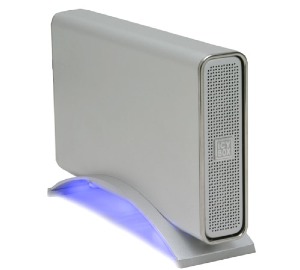
Icybox IB-360StUS-BL enclosureEnclosure The IcyBox is such an affordable little box that it seems silly not to have one to hand as a precaution, especially given the cheapness of hard drives these days. The enclosure is convection cooled, so has no noisy fan, and is an a reasonably attractive alumnium package that fits in with the look of the Macbook Pro quite well. The blue LED is switchable, just in case you don't want that bling look on your desktop.Inside the enclosure there's both PATA and SATA connectors. I chose to use a SATA drive, a Samsung HD400LJ. There are two headers for connecting a SATA drive. One goes to the USB 2 adapter, one straight to the outside of the enclosure for wiring to a SATA port on the computer.Four screws secure the hard drive in its tray. The tray then slides into the frame and is secured by four screws in the base. I didn't find it that easy to get these in, but they seemed secure enough once screwed in.The IcyBox comes with plenty of cables, including a SATA-SATA cable, a bracket to relocate an internal SATA port to the PCI card cover on a regular PC, and a USB cable. The power supply is of the external brick sort. SATA adapterThe other half of the equation is the Sonnet Tempo Express 34 SATA adapter. This fits into the Macbook Pro's Express Card port — you knew that something had to eventually, eh? The Tempo card features two eSATA ports, which are of a different design to the  SATA ports featured on the Icybox. This means you need to buy an eSATA-SATA cable. You can either spend $20 on one from Sonnet themselves, or get a cheaper unbranded one for about the tenth of the price: just make sure its reasonably well shielded.Once plugged in, the external drive shows up on the Mac as a SCSI device, and behaves like any removable media. As such, it needs to be unmounted from the desktop before you eject the Tempo card.The only bug with the Tempo card I've found is that things don't seem to work that well if you boot the machine with the card inserted. The very helpful people from Sonnet tell me this is an issue with the underlying Silicon Image chipset, and they're working on sorting it out. (I was very impressed with the technical knowledge, friendliness and speed of response from Sonnet's support department.)PerformanceI'm no benchmarking guru, but it's clear that the external Samsung HD400LJ outperforms my internal 7200rpm SATA drive on the Macbook Pro. Brief experiments with XBench suggested that this performance boost was probably between 20 and 40%. It's certainly vastly preferable to the performance hit you get when you use a USB or Firewire 400 drive with the MBP.ConclusionIt's early days yet, but I'm happy with my new setup. The extra port on the Tempo adapter allows for the connection of another drive, or if I use Sonnet's own products, up to 10 drives! I feel happier knowing the disk isn't competing for attention with all the other USB gadgets I have plugged in. The other big plus point for me is the quietness of the Icybox/Samsung combination.Links: 
David Welton: Clockwork languages

Steve Yegge posts an article about this that, the other thing, and statically typed functional programming languages. In it, he compares Haskell to something you can:
"build beautiful, lithe marionettes with"
Unfortunately, I haven't had the time or inclination to learn Haskell (yet), but I have used Erlang professionally, so I do have a bit of experience using a functional programming language. What comes to my mind isn't marionettes, but clockwork. That's a purposefully neutral word, in case you were wondering. An enthusiast might say "a finely crafted swiss watch", and a detractor might grumble "a windup toy". In my mind's eye, the concept is that in functional languages you get this succession of things happening one after the other that happen precisely the same way, if the program is wound up just the same each time. To paraphrase:
Do this with the result of this with what this produces when given  
this input that is derived from this function which takes the  
result of this other thing after calculating the result of 
something that is derived from the output of a function that ...
And so on and so forth...tick, tock, tick, tock. While I can appreciate that in some ways, this is likely to produce clean programming, in other ways I am less convinced of its practicality. If you'll bear with a poor comparison, sometimes programming is like a song. You do the tricky section, then you go back to an easier section and catch your breath for a bit. That seems to work out in a language like Ruby or Java fairly well, depending on how densely you like your code. You get sections with DoThisAndThisAndThatWithTheResultsOfSelectThisFromTableXYZ that you have to slow down to think through. And then: GoToTheNextTrickyBit where ManyThingsHappen. All in all, you wind up with a sort of ebb and flow that works out pretty well if you're in tune with the code being written, going from intense calculations, to a line or two where you do no more than store things in a variable, take a breather, and prepare for the next important stanza. In my limited experience, I have to say that I didn't always get that sensation from Erlang (which in some ways is apparently less "hair shirt" oriented than Haskell). You always had to be writing something with an eye to where it was coming from, and where it was going. Without a doubt, this produces code that is more compact in terms of meaning and functionality, but at times it leaves a guy like me, who grew up with Basic, C, Python, and so on with the desire to say "woah there, nelly", let's take a breather and sort things out a bit in a few variables before moving on to the next bit of fancy code gymnastics. What I'm curious about is what will catch on from academically oriented programming languages like Haskell. The people working on them are without doubt very smart, and there are some interesting concepts being bandied about (pattern matching is pretty cool, just to cite one). But academia doesn't always produce things that catch on with the average Joe programmer, either, and while the more elitist out there may attribute this to simplistic reasoning such as 'well then Joe is just stupid', I think that the more thoughtful language crafters will attempt to ascertain what works, and what doesn't, and perhaps we will see the Ruby of functional languages emerge from Haskell, the Smalltalk of functional languages. What do you think?

Russell Coker: political compass

It appears that some people don't understand what right-wing means in terms of politics, apart from using it as a general term of abuse.

I recommend visiting the site http://www.politicalcompass.org/ to see your own political beliefs (as determined by a short questionnaire) graphed against some famous people. The unique aspect of the Political Compass is that they separate economic and authoritarian values. Stalinism is listed as extreme authoritarian-left and Thatcherism as medium authoritarian-right. Nelson Mandela and the Dalai Lama are listed as liberal-left.

I score -6.5 on the economic left/right index and -6.46 on the social libertarian/authoritarian index, this means that I am fairly strongly liberal-left. Previously the Political Compass site would graph resulta against famous people but they have since removed the combined graph feature and the scale from the separate graphs. Thus I can't determine whether their analysis of the politics of Nelson Mandela and the Dalai Lama indicate that one of those men has beliefs that more closely match mine than the other. I guess that this is because the famous politicians did not take part in the survey and an analysis of their published material was used to assess their beliefs, this would lead to less accuracy.

The Wikipedia page on Right-Wing Politics provides some useful background information. Apparently before the French revolution in the Estates General the nobility sat on the right of the president's chair. The tradition of politically conservative representatives sitting on the right of the chamber started there, I believe that such seating order is still used in France while in the rest of the world the terms left and right are used independently of seating order.

Right-wing political views need not be associated with intolerance. If other Debian developers decide to publish their political score as determined by the Political Compass quiz then I'm sure that we'll find that most political beliefs are represented, and I'm sure that most people will discover that someone who they like has political ideas that differ significantly from their own.

Daniel Burrows: Mini-Review: mythtv for non-TV viewers

Several months ago, I set up a low-powered box to act as a fileserver and media center. I don't get cable TV and I have no interest in doing so, so I don't need a PVR. However, I do have a rather large music collection (and new speakers to play it on); I want to be able to put Internet radio on in the background (since we can't get NPR over the air), and a quick-and-dirty slideshow program for my digital camera photos could be nice too. So, I decided to try out the free media center, mythtv. I've summarized the notes I took here for the benefit of other people who don't watch TV.

Setup was fairly straightforward -- I installed the packages from debian-multimedia.org and configured them. I had a bit of trouble getting myth to actually start, but looking over the documentation apparently resolved it (my notes contain no details).

Mythtv has some very well-thought-out aspects. By all accounts, it makes an excellent PVR; since I don't watch TV, this is the last time I'll mention PVRs in this post. :) The interface looks exactly the way you want a TV-based system to look, with bright colors, big fonts and big interface elements. There's even a cute OpenGL mode with fancy screen transitions (I left them disabled because my video driver is unstable even without 3d effects running -- thank Via).

However, it became painfully obvious after a bit of use that MythTV is really meant as a TV program, with everything else being an afterthought. Here are just a few of the problems I noted:


That's just a small sampling of the problems I ran into. I ended up just setting up a normal desktop system with a wireless keyboard/mouse, and I'd recommend the same thing for anyone else who doesn't need a PVR. The non-TV features in Myth have a strong smell of being extras for people who occasionally switch away from the TV, rather than a well-integrated media system in their own right.

Martin F. Krafft: Stuff I forgot to pack

After an amazingly stressless journey [0], I've arrived yesterday evening in Limerick and met Daren and Mel, two alumni of UL who let me move into a spare room in the house they're renting. To be exact, Mel actually lives next door, but who cares about details. After a bit of unpacking, we headed for the pub and returned for an extensive session of Guitar Hero on the Playstation II, which is a truly fun and excellent game.
[0]

I brought my bike along, for transport and exploring. This involved packing a bit of extra stuff, borrowing a friend's Tranzbag, arriving early at the airport to get it boxed to ensure a safer journey, picking it up in Dublin, and somehow getting it to Limerick, where I'd have to reassemble it. I wasn't really looking forward to the trip. It turned out to be stressless, as I said. The boxing cost me 10 Franks at the airport and was completed in less than 5 minutes, nobody at the check-in counter said anything, as if it was the most normal thing for them to check in bikes, some dude retrieved the box in Dublin and placed it on my cart, and while I was waiting, I found out that I wouldn't have to hop on a coach (bus) to go to the Dublin train station, catch a train to Limerick, and then finish the last mile in a taxi: a bus operates fairly regularly directly from Dublin airport to Limerick, taking four hours for the journey. That's about how long it would have taken me via the train station, but I only had to pay 19 the train itself would have been 25 , plus the taxi charges.

The coach driver was curious when he saw the box, but I didn't have to pay extra, and after watching Airport on my laptop and listening to the new Katatonia album, I found myself with my bag and the bike next to the university's main entrance, with Mel and Daren on the way to pick me up. Five minutes later, I was in my home-to-be-for-five-weeks.

I dropped into bed at around 4am and promptly overslept the next morning, then decided to use the day for errands, hitched a ride from Laura (the stressed-out Skynet president and Skycon organiser) to an excellent nearby bike store where I reassembled the bike, got myself a lock (see below) and a mud guard for the front wheel, then headed off for the campus bank to open an account, rode back and forth between the Lero building and the bank to satisfy their bureaucratic thirsts and finally obtained the details for my very own Irish bank account. And I squeezed a bit of grocery shopping in between. Meeting Brian (my supervisor) in the hallway, we agreed on a meeting on Monday, so the remainder of this week is for finishing the various proposals and papers on my to-do list, preparing for the meeting by getting back to speed with my research, as well as getting to know the local party crowd exams are about to end in Limerick and I've been told to have picked quite an excellent time of year for my visit because the university will become a mad house this weekend. We'll see how compatible those tasks are, but boy am I glad that I am not living anywhere near the student villages, or as I put it last night: I don't mind going to parties, but if the party comes to where I am, I'd rather not have it be every night. So this would bring me to the title of this post: stuff that I forgot to pack:
  • A second sweater, it's pretty cold here and I don't want to be wearing the same sweater every day (even though it's merino wool and thus woudn't start to smell).
  • A pair of windcheater gloves, the thin wool ones I have aren't exactly made for cycling.
  • Rain trousers to wear over my regular pants. It's raining and wet and the light colours of the pants I am wearing are a high-contrast basis for the mud.
  • My bike's lock key. Fortunately I left it unlocked, but still had to go out and buy a new lock (which was more painless than having the key sent here).
  • Comfy sneakers for home use, as it's too cold to just be wearing socks.
Due to popular request, I shall be back here with pictures of my surroundings one of these days. NP: I Love You but I've Chosen Darkness / Fear Is on Our Side

Alexander Schmehl: Bjoern Graebe...

... was in the unlucky situation to get a topic for a short talk assigned by his English teacher, he felt uncomfortable with. Luckily he found some skilled IT people via a mailing list, who helped him regarding this topic. The final version of his slides about the advantages of the Windows operating system are more or less funny, so you might want to take a look at them yourself. No, I don't know why English teacher assign such topics.

Russell Coker: lifetime failures (LF)

This morning at LCA Andrew Tanenbaum gave a talk about Minix 3 and his work on creating reliable software.

He cited examples of consumer electronics devices such as TVs that supposedly don't crash. However in the past I have power-cycled TVs after they didn't behave as desired (not sure if it was a software crash - but that seems like a reasonable possibility) and I have had a DVD player crash when dealing with damaged disks.

It seems to me that there are two reasons that TV and DVD failures aren't regarded as a serious problem. One is that there is hardly any state in such devices, and most of that is not often changed (long-term state such as frequencies used for station tuning is almost never written and therefore unlikely to be lost on a crash). The other is that the reboot time is reasonably short (generally less than two seconds). So when (not if) a TV or DVD player crashes the result is a service interruption of two seconds plus the time taken to get to the power point and no loss of important data. If this sort of thing happens less than once a month then it's likely that it won't register as a failure with someone who is used to rebooting their PC once a day!

Another example that was cited was cars. I have been wondering whether there are any crash situations for a car electronic system that could result in the engine stalling. Maybe sometimes when I try to start my car and it stalls it's really doing a warm-boot of the engine control system.

Later in his talk Andrew produced the results of killing some Minix system processes which show minimal interruption to service (killing an Ethernet device driver every two seconds decreased network performance by about 10%). He also described how some service state is stored so that it can be used if the service is restarted after a crash. Although he didn't explicitely mention it in his talk it seems that he has followed the minimal data loss plus fast recovery features that we are used to seeing in TVs and DVD players.

The design of Minix also has some good features for security. When a process issues a read request it will grant the filesystem driver access to the memory region that contains the read buffer - and nothing else. It seems likely that many types of kernel security bug that would compromise systems such as Linux would not be a serious problem on the HURD. Compromising a driver for a filesystem that is mounted nosuid and nodev would not allow any direct attacks on applications.

Every delegate of LCA was given a CD with Minix 3, I'll have to install it on one of my machines and play with it. I may put a public access Minux machine online at some time if there is interest.

MJ Ray: koha 2.2.8 installer

This email in French asks after my ITP Koha bug and mentions using the list of debian package deps to build most of the dependencies which I only finished building like 3 days ago. You wait ages for a koha/debian developer, then two come along at once.

Ian Murdock: Couldn t have said it better myself

Me: “The hard part of building a standard is getting the right people at the table — those who are in a position to make that standard actionable. You can sit around all day and agree that there should be a standard, you can even agree what the standard will look like, but if you don’t have buy-in and participation from the people who can actually implement it and get the standard to be widely used, then you’re wasting your time.”

Ian Murdock: Inconceivable!

Robert Scoble: “Wait a second. You mean there s a billion phones with Java on them and Cingular s network hasn t gone down yet? Damn, how did that happen?”

MJ Ray: Merseyside Cyclist Killed

Cycle shop owner and long-time club rider Mel Vasey was knocked down and killed by a car while on a club ride. Report from icLiverpool The comment about the road being dangerous because of a lack of cycle track sounds like a misquote or misunderstanding. The road is dangerous because car drivers aren't driving within their ability. Adding a cycle track won't change the road: if the driver really was blinded by low sun and driving beyond their ability, they could easily have strayed into a cycle track. Also, roadside cycle tracks are often kept to a damned sight worse standard than the roads (often 18mph top unladen speed on wide tyres - less if you're carrying or on road tyres) so end up being no safer in total.

MJ Ray: Debian: Fun with no builder 3: pbuilder fans to the rescue

Erich commented:
"Pbuilder is great (and cowbuilder even more so). First of all, it makes setting up and upgrading chroots easier (even easier than dchroot etc.), but it will also handle dependencies and do install/removals (well, technically it won't remove stuff, the chroot is just thrown away afterwards). That way, pbuilder helps getting build dependencies right, and ensures the package is currently buildable (not with some library package you still happen to have on your system, but that has been removed from Debian; not uninstallable for some reason etc.). This makes the job easier for porters, since a FTBFS is less likely to be an error in packaging by the maintainer... At some point I had like 6 pbuilder chroots... woody, sarge, unstable, woody with some backports, sarge with SELinux backports, unstable with experimental. Sure, we don't need debhelper either? After all, it just does some cp and mvs, doesn't it? There IS some benefit in having stuff automatized in a standard way; even though we could all do our chroots ourselves, I want to express my thanks to the pbuilder (and cowbuilder) authors and maintainers for making life EASIER for me. A lot easier. I could live without, but I would probably not keep that many chroots."
Ken Bloom added:
"One important feature of a pbuilder chroot is that pbuilder installs build-dependencies as you ask it to build debian packages, and removes them as soon as it finishes building the packages. In this sense, pbuilder is specifically intended to replicate the buildd environment, so you can find out whether your packages will break on a buildd (e.g. whether you've remembered to include all of the build-deps in debian/control, because things will break on the buildds if you forgot to add a build-dep because the build-dep was just lying around on your system (or in your unstable chroot)."
Sven M ller wrote:
"Well, pbuilder has several benefits, but the most important one to me is that it restarts from a clean system (only base packages + build-essentials installed) on each build. Sure this adds to the time needed for the build, but it also makes sure that I get all build-deps right and that the whole build process is as reproducible as possible."
Ben Hutchings commented:
"The major difference between pbuilder's approach and simply building in a chroot'ed installation is that pbuilder tries to build on a minimal system plus the specified build-dependencies. If you always build with pbuilder or similar it's much less likely that you will miss a build-dependency or otherwise produce a package that can't be auto-built elsewhere."
I take the clean chroot point as a clear benefit, but it still strikes me that there are easier ways to do the same thing (rsync --delete) without all the waiting around for pbuilder on my slow mipsel. I guess that's the difference with debhelper: debhelper use doesn't seem to slow me down.

MJ Ray: Wikipedia China 2

Update: it seems that comment also appeared at Newsome.Org flyte blog and c net. There are more posts apparently by the same author at ZDnet

MJ Ray: SPI: Communications 2

Even less surprisingly, my request that the Software in the Public Interest board try to repair SPI's member communications was postponed. The request was submitted before the December 2006 meeting and now won't be heard until February at soonest. SPI president Bdale Garbee apologised. At least the Spanish resolution was decided (referred to board 2005-11, resolved 2007-01). Meanwhile, on the mailing lists, SPI board member Ian Jackson flamed me again and proposed a resolution which adds lots of red tape, unnecessarily links submissions to announcements and ignores SPI's email and web problems. On the previous post, Bruce Byfield commented:
"I'm sure my bias creeps into many stories, no matter how fair I try to be, but I really don't have much of an opinion on the domain name issue. My main interest is that it's newsworthy. Under these circumstances, I have a hard time seeing how I could have much of a different view from anyone."
I agree. It's hard to see how the newsforge article could have been much different. Is it newsworthy that SPI's board continued voting without discussion at yesterday's (2007-01-16) meeting? No-one wants meetings to last hours, but it's essential that the board put something of their views into the official proceedings. Votes should not be totally set in advance. Otherwise, how can SPI members oversee? How can they make a well-informed decision whether or not to re-elect a member? Now members have to hope they are on the right mailing lists (open or closed) at the right time because the public record is so incomplete.

Eddy Petrișor: disable the pcspkr - hacks

I blogged 5 days ago about the annoying beeper and different methods that were supposed to turn it off.

I asked for a clean solution, but I received suggestions for some hacks. Now I decided to make a new post since there was a comment added today and I remembered about a possible hack (dpkg-divert) I was thinking about.

Now here are some of those hacks and the reason behind rejecting them.

Still, the question remains, why don't the originally proposed methods work, especially blacklisting?

Update: the headphones jack works with some small changes, bug submitted (#407252)

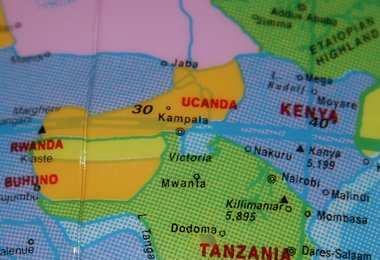
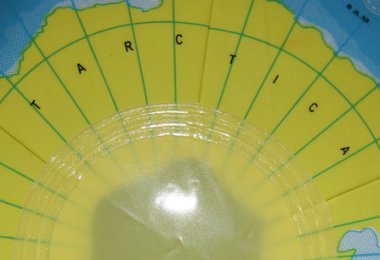
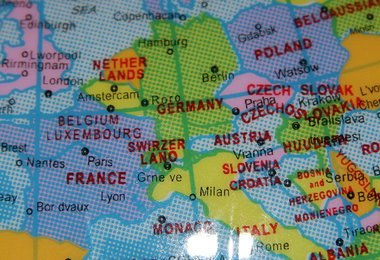
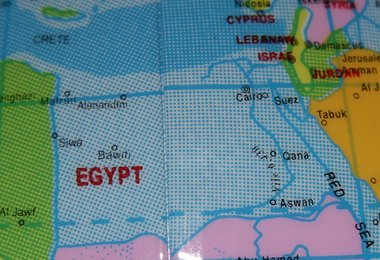
Benjamin Mako Hill: Geography Lesson (Part II)

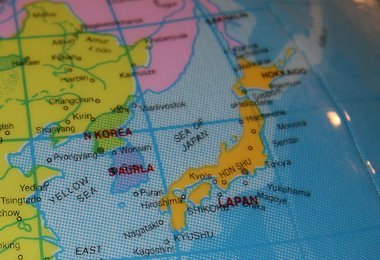
Yesterday, I received many requests to post pictures of my rather inaccurate globe. I'm pleased to oblige. Please read the summary I posted yesterday for a list of some of the errors you should have little trouble picking out. You can click on each cropped thumbnail to see much larger, higher resolution versions of the area and the surrounding continent or region.
/copyrighteous/images/bad_map-1-thumb.jpg
/copyrighteous/images/bad_map-2-thumb.jpg
/copyrighteous/images/bad_map-3-thumb.jpg
/copyrighteous/images/bad_map-4-thumb.jpg
/copyrighteous/images/bad_map-5-thumb.jpg
Enrico suggested that if the globe was manufactutered in China, Taiwan would be the same color as China and Taipei would be marked as a provincial, rather than national capital. Sure enough, I now have both a good idea of the globe's origin plus an idea of how to spell Taipei with an o.

Andrew Pollock: [tech] Initial impressions of Microsoft Optical Desktop Elite for Bluetooth and Linux

After some hiccups with delivery, the bluetooth keyboard and mouse I ordered had miraculously turned up at the leasing office on Sunday, when we poked our head in on the way home in the early evening. I had a quick play at getting them working. The USB Bluetooth adapter was recognised by Debian Etch's 2.6.17 kernel without and problems, and I installed all of the BlueZ packages and had it happily looking around for devices. I tried to get the mouse working first, as the documentation said that it didn't require a passkey. I successfully paired it using hidd --connect bdaddr whilst having it in discoverable mode. Sure enough, some extra stuff turned up in /dev/input (interestingly, whenever the mouse (or keyboard) puts itself to sleep, everything vanishes again, and when it reawakens, it scores a new numbered "input" entry in /sys/class/input, so I wonder if that's going to do anything unpleasant when the number gets sufficiently high). I next tried to get the keyboard working, expecting more of a fight, because it required a passkey. Turns out, I could get it connected and working with exactly the same procedure. No passkey required. That bothers me slightly. So at this point, I added what was essentially a second mouse device to my xorg.conf (which I suspect became redundant after I disconnected the USB mouse), restarted X, and hey presto, either mouse worked. I then removed the USB keyboard and mouse, restarted X again for good measure, and everything continued to work. As I haven't touched a config file yet, restarting the bluetooth services loses the pairing and I have to repeat everything, so I need to figure out how to make this all "just work" at bootup, but it's not high on the list of things to do, as I don't reboot my MythTV box very often, and I use the keyboard and mouse even less. In terms of functionality, the wheel on the mouse isn't working. This appears to be a bluetooth-level problem, as doing a hcidump shows no activity whilst the wheel is being used. Interestingly, it works as a button, just not as a scroll-wheel. Similarly, on the keyboard, none of the grey extra buttons work (nor does the wheel). Some preliminary Googling shows people having similar problems, and there are mentions of kernel patches. I need to do more research. I also need to do some bluetooth pen-testing with my laptop to figure out if the keyboard is really as secure as I'd like it to be. Oh, and "Windows XP only" be damned, the thing works fine (enough) on Linux :-)

Brett Parker: Some complete randomness...

So, today (other than work, where I've mostly been battling Java), I've been battling in my mind between 2 things that are (probably) never going to happen - in both cases I've been told at various points that they're never going to happen, so I mostly believe that - but being an optimist at heart (and a pessimist by trade), I can't garantee that either isn't going to happen, and that makes my head hurt. Lots. I can't understand what anyone would ever see in me being one of the greatest problems, I'm not particularly good at chatting, I have a limited experience of the world, I don't understand football, I don't understand religion (I can see merits in it, but also a whole lot of downsides), and I'm generally (mostly) boring... so, with all that in mind, the probably from the first paragraph mostly disappears and we're sorted! Anyways - it's gone 1.30am, there's work at 9am, and there's lots to do when I get there, so I should stop thinking and start sleeping for the good of everyone. Night all.

16 January 2007

Julien Danjou: I KID YOU NOT!

c

Evan Prodromou: 26 Niv se CCXV

I had my first day of class at the Montreal Goethe-Institut today. It was a great walk down through Parc LaFontaine and rue Cherrier out to St. Denis. There were footprints in the snow over the pond in the parc, so I assume the ice is frozen. It'd be great if the lake were open for skating sometime this winter; it was liquid last week. The class itself was great. The building itself is like the office of a dot-com with good VC backing -- indirect lighting and modern furniture and quiet carpeting. My lehrerin is a nice woman from Freiburg. We had about 8 people in the class, a good mix of men and women, young and old, Quebecois and eux autres. We spent most of the class time practicing how to introduce ourselves, say hello and where we were from and where we lived and such and so. I haven't taken a class in so long, it was a little hard to get back in the swing of things. I didn't even have a notebook with me -- just my Moleskine notebook, which it seems a waste to fill up with irregular verbs. But we'll see. I got home and sang the song we learned to Maj and Amita June, just so they knew how Deutsch I am now. Here's the song (to the tune of "Twinkle, Twinkle, Little Star"):
 "Guten Abend! Ich hei e Knabe!"
 "Freut mich! Jonny Watanabe."
 "Kommen Sie aus Tokio?"
 "Nein! Ich komm' aus Buffalo!"
I also updated my Wikitravel German user page with my newly-learned personal information. We'll see how that progresses over the next few weeks. tags:

Next.

Previous.