If you have a personal domain, it is nice if you can redirect
webfinger requests so you
can be easily found via your email. This is hardly a new idea, but
the growth of Mastodon recently
has made this more prominent.
I wanted to redirect webfinger endpoints to a Mastondon host I am
using, but only my email and only standard Apache rewrites. Below,
replace xxx@yyy\.com with your email and zzz.social with the
account to be redirected to. There are a couple of tricks in being
able to inspect the query-string and quoting, but the end result that
works for me is
This year had a lot of things happen in it, world-wide, as is always the case.
Being more selfish here are the things I remember, in brief unless there are comments/questions:
I learned more Finnish.
Lots of things with our child.
I helped teach him to swim.
He learned to tell the time with an analog clock/watch.
I took him to a circus for the first (only) time ever.
He cut his hair for the first time in six years.
He spent his a birthday with my parents, in the UK - His languages skills were on top-form, understanding the various UK accents.
And another with family here in Finland - Where he watched me roll, naked, in the snow after sauna, and then he asked "Daddy why you did that?"
On the topic of Finnish I'm getting pretty damn good at understanding, albeit less good in speaking. Finnish is all about the suffixes, so:
A car
auto
My car
autoni
In a car
autossa
In my car
autossani
With my car
autoll ni
From a car
autosta
Car-less
autoton
Most of this is regular, so you can be childless via the "ton" suffix - lapsiton is "lapsi" (child) "ton" (less). The hard part in communication is thus twofold:
Knowing the word you want to use, be it car, cake, spoon, or smile.
Getting the appropriate suffix for the use you want.
Our child turned six recently, and most of the year was spent doing things with him, for him, and to him. He's on the verge of learning to read (English and Finnish), he's interested in maths and completes little puzzles freely and happily. He likes to help with Sodoku, for example and not just the child-versions.
In the past couple of weeks I let him play Super Mario & Super Mario Bros 3, on a NES Classic, and he dies constantly, with a smile on his face. But he does love to tell me what to do when he watches me play!
He's learned to ice-skate, and ski, and almost learned to swim. (I'll say he can swim 3m inside a pool, without aid, but then he starts to sink.) We've got a couple of regular rituals with each other - including going to sauna every week or two, and other similar things.
He's gotten more interested in helping me cook, and his mother too. (My wife and I live in separate houses..)
I guess the next big milestone will be him walking to school by himself, which will start next year. As things stand I wake up early, go over to his house, and do all the morning-things, before I take him there. I expect I'll still want to go there, give him his breakfast, his medicine, and help him get dressed. After that I guess I kick him out, and he makes his own way there.
Happily the walk to school is a few hundred meters, and doesn't involve crossing any roads. But of course it does bring other complications: if he's not collected, and walks home himself, then he needs a key to one/other house, and there's the potential need for a phone to say "I'm late", "I'm lost", or us to say "Where are you?".
Anyway .. interesting year .. good year. Despite everything else.
A few years ago, I downsized my personal infrastructure. Until 2018, there were
a dozen containers running on a single Hetzner server.1 I migrated
my emails to Fastmail and my DNS zones to Gandi. It left me with only my
blog to self-host. As of today, my low-scale infrastructure is composed of 4
virtual machines running NixOS on Hetzner Cloud and Vultr, a handful
of DNS zones on Gandi and Route 53, and a couple of Cloudfront
distributions. It is managed by CDK for Terraform (CDKTF), while NixOS
deployments are handled by NixOps.
In this article, I provide a brief introduction to Terraform, CDKTF, and the
Nix ecosystem. I also explain how to use Nix to access these tools within
your shell, so you can quickly start using them.
CDKTF: infrastructure as codeTerraform is an infrastructure-as-code tool. You can define your
infrastructure by declaring resources with the HCL language. This language
has some additional features like loops to declare several resources from a
list, built-in functions you can call in expressions, and string templates.
Terraform relies on a large set of providers to manage resources.
Managing servers
Here is a short example using the Hetzner Cloud provider to spawn a virtual
machine:
HCL expressiveness is quite limited and I find a general-purpose language more
convenient to describe all the resources. This is where CDK for Terraform
comes in: you can manage your infrastructure using your preferred programming
language, including TypeScript, Go, and Python. Here is the previous example
using CDKTF and TypeScript:
Running cdktf synth generates a configuration file for Terraform, terraform
plan previews the changes, and terraform apply applies them. Now that you
have a general-purpose language, you can use functions.
Managing DNS records
While using CDKTF for 4 web servers may seem a tad overkill, this is quite
different when it comes to managing a few DNS zones. With DNSControl, which
is using JavaScript as a domain-specific language, I was able to define the
bernat.ch zone with this snippet of code:
All the magic is in the code that I did not show you. You can check the
dns.ts file in the cdktf-take1 repository to see how it works. Here is a
quick explanation:
Route53Zone() creates a new zone hosted by Route 53,
sign() signs the zone with the provided master key,
registrar() registers the zone to the registrar of the domain and sets up DNSSEC,
www() creates A and AAAA records for the provided name pointing to the web servers,
fastmailMX() creates the MX records and other support records to direct emails to Fastmail.
Here is the content of the fastmailMX() function. It generates a few records
and returns the current zone for chaining:
I encourage you to browse the repository if you need more
information.
About Pulumi
My first tentative around Terraform was to use Pulumi. You can find this
attempt on GitHub. This is quite similar to what I currently do
with CDKTF. The main difference is that I am using Python instead of TypeScript
because I was not familiar with TypeScript at the time.2Pulumi predates CDKTF and it uses a slightly different approach. CDKTF
generates a Terraform configuration (in JSON format instead of HCL), delegating
planning, state management, and deployment to Terraform. It is therefore bound
to the limitations of what can be expressed by Terraform, notably when you
need to transform data obtained from one resource to another.3Pulumi needs specific providers for each resource. Many Pulumi providers are
thin wrappers encapsulating Terraform providers.
While Pulumi provides a good user experience, I switched to CDKTF because
writing providers for Pulumi is a chore. CDKTF does not require such a step.
Outside the big players (AWS, Azure and Google Cloud), the existence, quality,
and freshness of the Pulumi providers are inconsistent. Most providers rely on
a Terraform provider and they may lag a few versions behind, miss a few
resources, or have a few bugs of their own.
When a provider does not exist, you can write one with the help of the
pulumi-terraform-bridge library. The Pulumi project provides a
boilerplate for this purpose. I had a bad experience with it when writing
providers for Gandi and Vultr: the
Makefileautomatically installs Pulumi using a curl sh
pattern and does not work with /bin/sh. There is a lack of
interest for community-based contributions4 or even for providers for
smaller players.
NixOS & NixOpsNix is a functional, purely-functional programming language.
Nix is also the name of the package manager that is built on top of
the Nix language. It allows users to declaratively install packages.
nixpkgs is a repository of packages. You can install Nix on
top of a regular Linux distribution. If you want more details, a good resource
is the official website, and notably the learn section. There is a steep learning curve, but the reward is tremendous.
NixOS: declarative Linux distributionNixOS is a Linux distribution built on top of the Nix package manager.
Here is a configuration snippet to add some packages:
It is possible to alter an existing derivation5 to use a different version, enable a
specific feature, or apply a patch. Here is how I enable and configure Nginx
to disable the stream module, add the Brotli compression module, and add the
IP address anonymizer module. Moreover, instead of using OpenSSL 3, I keep
using OpenSSL 1.1.6
If you need to add some patches, it is also possible. Here are the patches I
added in 2019 to circumvent the DoS vulnerabilities in Nginx
until they were fixed in NixOS:7
services.nginx.package = pkgs.nginxStable.overrideAttrs (old:patches = oldAttrs.patches ++[# HTTP/2: reject zero length headers with PROTOCOL_ERROR.(pkgs.fetchpatch url =https://github.com/nginx/nginx/commit/dbdd[].patch;sha256 ="a48190[ ]"; )# HTTP/2: limited number of DATA frames.(pkgs.fetchpatch url =https://github.com/nginx/nginx/commit/94c5[].patch;sha256 ="af591a[ ]"; )# HTTP/2: limited number of PRIORITY frames.(pkgs.fetchpatch url =https://github.com/nginx/nginx/commit/39bb[].patch;sha256 ="1ad8fe[ ]"; )]; );
If you are interested, have a look at my relatively small configuration:
common.nix contains the configuration to be applied to any host
(SSH, users, common software packages), web.nix contains the
configuration for the web servers, isso.nix runs Isso into a
systemd container.
NixOps: NixOS deployment tool
On a single node, NixOS configuration is in the /etc/nixos/configuration.nix
file. After modifying it, you have to run nixos-rebuild switch. Nix fetches
all possible dependencies from the binary cache and builds the remaining
packages. It creates a new entry in the boot loader menu and activates the new
configuration.
To manage several nodes, there exists several options, including NixOps,
deploy-rs, Colmena, and morph. I do not know all of them, but from
my point of view, the differences are not that important. It is also possible to
build such a tool yourself as Nix provides the most important building blocks:
nix build and nix copy. NixOps is one of the first tools available but I
encourage you to explore the alternatives.
NixOps configuration is written in Nix. Here is a simplified configuration
to deploy znc01.luffy.cx, web01.luffy.cx, and web02.luffy.cx, with the
help of the server and web functions:
Tying everything together with Nix
The Nix ecosystem is a unified solution to the various problems around
software and configuration management. A very interesting feature is the
declarative and reproducible developer environments. This is similar to
Python virtual environments, except it is not language-specific.
Brief introduction to Nix flakes
I am using flakes, a new Nix feature improving reproducibility by pinning
all dependencies and making the build hermetic. While the feature is marked as
experimental,8 it is widely used and you may see flake.nix and
flake.lock at the root of some repositories.
As a short example, here is the flake.nix content shipped with Snimpy, an
interactive SNMP tool for Python relying on libsmi, a C library:
Nix and CDKTF
At the root of the repository I use for CDKTF, there is a
flake.nix file to set up a shell with Terraform and
CDKTF installed and with the appropriate environment variables to automate my
infrastructure.
Terraform is already packaged in nixpkgs. However, I need to apply a patch
on top of the Gandi provider. Not a problem with Nix!
CDKTF is written in TypeScript. I have a
package.json file with all the dependencies
needed, including the ones to use TypeScript as the language to define
infrastructure:
The next step is to generate the CDKTF providers from the Terraform providers
and turn them into a derivation:
cdktfProviders = pkgs.stdenvNoCC.mkDerivation name ="cdktf-providers";nativeBuildInputs =[
pkgs.nodejs
terraform
];src = nix-filter root =./.;include =[./cdktf.json./tsconfig.json]; ;buildPhase ='' export HOME=$(mktemp -d) export CHECKPOINT_DISABLE=1 export DISABLE_VERSION_CHECK=1 export PATH=$ nodeEnv/node_modules/.bin:$PATH ln -nsf $ nodeEnv/node_modules node_modules # Build all providers we have in terraform for provider in $(cd $ terraform/libexec/terraform-providers; echo */*/*/*); do version=''$ provider##*/ provider=''$ provider%/* echo "Build $provider@$version" cdktf provider add --force-local $provider@$version cat done echo "Compile TS JS" tsc '';installPhase ='' mv .gen $out ln -nsf $ nodeEnv/node_modules $out/node_modules ''; ;
Finally, we can define the development environment:
devShells.default = pkgs.mkShell name ="cdktf-take1";buildInputs =[
pkgs.nodejs
pkgs.yarn
terraform
];shellHook ='' # No telemetry export CHECKPOINT_DISABLE=1 # No autoinstall of plugins export CDKTF_DISABLE_PLUGIN_CACHE_ENV=1 # Do not check version export DISABLE_VERSION_CHECK=1 # Access to node modules export PATH=$PWD/node_modules/.bin:$PATH ln -nsf $ nodeEnv/node_modules node_modules ln -nsf $ cdktfProviders .gen # Credentials for p in \ njf.nznmba.pbz/Nqzvavfgengbe \ urgmare.pbz/ivaprag@oreang.pu \ ihyge.pbz/ihyge@ivaprag.oreang.pu; do eval $(pass show $(echo $p tr 'A-Za-z' 'N-ZA-Mn-za-m') grep '^export') done eval $(pass show personal/cdktf/secrets grep '^export') export TF_VAR_hcloudToken="$HCLOUD_TOKEN" export TF_VAR_vultrApiKey="$VULTR_API_KEY" unset VULTR_API_KEY HCLOUD_TOKEN ''; ;
The derivations listed in buildInputs are available in the provided shell.
The content of shellHook is sourced when starting the shell. It sets up some
symbolic links to make the JavaScript environment built at an earlier step
available, as well as the generated CDKTF providers. It also exports all the
credentials.10
I am also using direnv with an .envrc to
automatically load the development environment. This also enables the
environment to be available from inside Emacs, notably when using lsp-mode
to get TypeScript completions. Without direnv, nix develop . can activate
the environment.
I use the following commands to deploy the infrastructure:11
As for CDKTF, at the root of the repository I use for NixOps,
there is a flake.nix file to set up a shell with
NixOps configured. Because NixOps do not support rollouts, I usually use the
following commands to deploy on a single server:12
nixops deploy rolls out all servers in parallel and therefore could cause a
short outage where all Nginx are down at the same time.
This post has been a work-in-progress for the past three years, with the content
being updated and refined as I experimented with different solutions. There is
still much to explore13 but I feel there is enough content to publish now.
It was an AMD Athlon 64 X2 5600+ with 2 GB of RAM and 2 400 GB disks
with software RAID. I was paying something around 59 per month for it.
While it was a good deal in 2008, by 2018 it was no longer cost-effective.
It was running on Debian Wheezy with Linux-VServer for isolation, both
of which were outdated in 2018.
I also did not use Python because Poetry support in Nix was a bit
broken around the time I started hacking around CDKTF.
Pulumi can apply arbitrary functions with the apply()
method on an output. It makes it easy to transform data that are not known
during the planning stage. Terraform has functions to
serve a similar purpose, but they are more limited.
The two mentioned pull requests are not merged yet. The second one is
superseded by PR #61, submitted two months later, which
enforces the use of /bin/bash. I also submitted PR #56,
which was merged 4 months later and quickly reverted without
an explanation.
You may consider packages and derivations to be synonyms in the
Nix ecosystem.
NixOS can be a bit slow to integrate patches since they need to
rebuild parts of the binary cache before releasing the fixes. In this
specific case, they were fast: the vulnerability and patches were released
on August 13th 2019 and available in NixOS on August 15th. As a
comparison, Debian only released the fixed version on August 22nd, which is unusually late.
Because flakes are experimental, many documentations do not
use them and it is an additional aspect to learn.
It is possible to replace . with github:vincentbernat/snimpy,
like in the other commands, but having Snimpy dependencies without
Snimpy source code is less interesting.
I am using pass as a password manager. The password names are
only obfuscated to avoid spam.
The cdktf command can wrap the terraform commands, but I
prefer to use them directly as they are more flexible.
If the change is risky, I disable the server with CDKTF. This
removes it from the web service DNS records.
I would like to replace NixOps with an alternative handling
progressive rollouts and checks. I am also considering switching to
Nomad or Kubernetes to deploy workloads.
podlators is the Perl distribution providing Pod::Man and Pod::Text, along
with related modules and supporting scripts.
The primary change in this release is the addition of configurable
guesswork for Pod::Text, paralleling Pod::Man. I had forgotten that
Pod::Text also had complex heuristics for whether to quote C<> text that
have the same Perl-specific properties as Pod::Man. This is now
configurable via a guesswork option, the same as in Pod::Man, although the
only type of guesswork supported is quoting. I also updated the default
regexes, which include some fixes from Pod::Man.
Thanks to discussion with G. Branden Robinson, I now understand quoting in
roff considerably better, which let me fix a few obscure bugs with strange
page titles or configured quote characters. Pod::Man now avoids quoting
macro arguments when the quoting is unnecessary, which should hopefully
produce slightly more readable output.
Finally, I had started using a Pod::Simple feature introduced in 3.26 in
Pod::Text but forgot to update the dependency, resulting in test failures
on some old versions of Perl. (The same tests didn't fail in GitHub CI,
which is probably related to how I install dependencies.) That's been
fixed in this release.
You can get the latest version from CPAN or from the
podlators distribution page.
This is a minor feature and bug fix release of my collection of utilities
and tests intended for copying into other packages I maintain.
The new feature is an additional Perl test using Test::Kwalitee to check a
few more things about the Perl packaging, and a MANIFEST.SKIP file
that is suitable for copying as-is into most Perl packages.
On the bug fix side, the portable/getnameinfo test now skips some tests
rather than failing on systems that are strange enough that someone has
put 0.0.0.0 into DNS, and some small fixes for M4 macros. All the bug
fixes are thanks to Julien LIE.
You can get the latest release from the rra-c-util distribution page.
Spiffy new terminal emulators seem to come with their own terminfo
definitions. Venerable hosts that I ssh into tend not to know about
those. kitty comes with a thing to transfer that definition, but it
breaks if the remote host is running tcsh (don't ask). Similary the
one liner for alacritty on the arch wiki seems to assume the remote
shell is bash. Forthwith, a dumb shell script that works to send the
terminfo of the current terminal emulator to the remote host.
EDIT: Jakub Wilk worked out this can be replaced with the oneliner
I use GnuPG to compute cryptographic signatures for my emails, git commits/tags, and software release artifacts (tarballs). Part of GnuPG is gpg-agent which talks to OpenSSH, which I login to remote servers and to clone git repositories. I dislike storing cryptographic keys on general-purpose machines, and have used hardware-backed OpenPGP keys since around 2006 when I got a FSFE Fellowship Card. GnuPG via gpg-agent handles this well, and the private key never leaves the hardware. The ZeitControl cards were (to my knowledge) proprietary hardware running some non-free operating system and OpenPGP implementation. By late 2012 the YubiKey NEO supported OpenPGP, and while the hardware and operating system on it was not free, at least it ran a free software OpenPGP implementation and eventually I setup my primary RSA key on it. This worked well for a couple of years, and when I in 2019 wished to migrate to a new key, the FST-01G device with open hardware running free software that supported Ed25519 had become available. I created a key and have been using the FST-01G on my main laptop since then. This little device has been working, the signature counter on it is around 14501 which means around 10 signatures/day since then!
Currently I am in the process of migrating towards a new laptop, and moving the FST-01G device between them is cumbersome, especially if I want to use both laptops in parallel. That s why I need to setup a new hardware device to hold my OpenPGP key, which can go with my new laptop. This is a good time to re-visit alternatives. I quickly decided that I did not want to create a new key, only to import my current one to keep everything working. My requirements on the device to chose hasn t changed since 2019, see my summary at the end of the earlier blog post. Unfortunately the FST-01G is out of stock and the newer FST-01SZ has also out of stock. While Tillitis looks promising (and I have one to play with), it does not support OpenPGP (yet). What to do? Fortunately, I found some FST-01SZ device in my drawer, and decided to use it pending a more satisfactory answer. Hopefully once I get around to generate a new OpenPGP key in a year or so, I will do a better survey of options that are available on the market then. What are your (freedom-respecting) OpenPGP hardware recommendations?
FST-01SZ circuit board
Similar to setting up the FST-01G, the FST-01SZ needs to be setup before use. I m doing the following from Trisquel 11 but any GNU/Linux system would work. When the device is inserted at first time, some kernel messages are shown (see /var/log/syslog or use the dmesg command):
usb 3-3: new full-speed USB device number 39 using xhci_hcd
usb 3-3: New USB device found, idVendor=234b, idProduct=0004, bcdDevice= 2.00
usb 3-3: New USB device strings: Mfr=1, Product=2, SerialNumber=3
usb 3-3: Product: Fraucheky
usb 3-3: Manufacturer: Free Software Initiative of Japan
usb 3-3: SerialNumber: FSIJ-0.0
usb-storage 3-3:1.0: USB Mass Storage device detected
scsi host1: usb-storage 3-3:1.0
scsi 1:0:0:0: Direct-Access     FSIJ     Fraucheky        1.0  PQ: 0 ANSI: 0
sd 1:0:0:0: Attached scsi generic sg2 type 0
sd 1:0:0:0: [sdc] 128 512-byte logical blocks: (65.5 kB/64.0 KiB)
sd 1:0:0:0: [sdc] Write Protect is off
sd 1:0:0:0: [sdc] Mode Sense: 03 00 00 00
sd 1:0:0:0: [sdc] No Caching mode page found
sd 1:0:0:0: [sdc] Assuming drive cache: write through
 sdc:
sd 1:0:0:0: [sdc] Attached SCSI removable disk
Interestingly, the NeuG software installed on the device I got appears to be version 1.0.9:
jas@kaka:~$ head /media/jas/Fraucheky/README
NeuG - a true random number generator implementation
						  Version 1.0.9
						     2018-11-20
					           Niibe Yutaka
			      Free Software Initiative of Japan
What's NeuG?
============
jas@kaka:~$
I could not find version 1.0.9 published anywhere, but the device came with a SD-card that contain a copy of the source, so I uploaded it until a more canonical place is located. Putting the device in the serial mode can be done using a sudo eject /dev/sdc command which results in the following syslog output.
usb 3-3: reset full-speed USB device number 39 using xhci_hcd
usb 3-3: device firmware changed
usb 3-3: USB disconnect, device number 39
sdc: detected capacity change from 128 to 0
usb 3-3: new full-speed USB device number 40 using xhci_hcd
usb 3-3: New USB device found, idVendor=234b, idProduct=0001, bcdDevice= 2.00
usb 3-3: New USB device strings: Mfr=1, Product=2, SerialNumber=3
usb 3-3: Product: NeuG True RNG
usb 3-3: Manufacturer: Free Software Initiative of Japan
usb 3-3: SerialNumber: FSIJ-1.0.9-42315277
cdc_acm 3-3:1.0: ttyACM0: USB ACM device
Now download Gnuk, verify its integrity and build it. You may need some additional packages installed, try apt-get install gcc-arm-none-eabi openocd python3-usb. As you can see, I m using the stable 1.2 branch of Gnuk, currently on version 1.2.20. The ./configure parameters deserve some explanation. The kdf_do=required sets up the device to require KDF usage. The --enable-factory-reset allows me to use the command factory-reset (with admin PIN) inside gpg --card-edit to completely wipe the card. Some may consider that too dangerous, but my view is that if someone has your admin PIN it is game over anyway. The --vidpid=234b:0000 is specifies the USB VID/PID to use, and --target=FST_01SZ is critical to set the platform (you ll may brick the device if you pick the wrong --target setting).
jas@kaka:~/src$ rm -rf gnuk neug
jas@kaka:~/src$ git clone https://gitlab.com/jas/neug.git
Cloning into 'neug'...
remote: Enumerating objects: 2034, done.
remote: Counting objects: 100% (2034/2034), done.
remote: Compressing objects: 100% (603/603), done.
remote: Total 2034 (delta 1405), reused 2013 (delta 1405), pack-reused 0
Receiving objects: 100% (2034/2034), 910.34 KiB   3.50 MiB/s, done.
Resolving deltas: 100% (1405/1405), done.
jas@kaka:~/src$ git clone https://salsa.debian.org/gnuk-team/gnuk/gnuk.git
Cloning into 'gnuk'...
remote: Enumerating objects: 13765, done.
remote: Counting objects: 100% (959/959), done.
remote: Compressing objects: 100% (337/337), done.
remote: Total 13765 (delta 629), reused 907 (delta 599), pack-reused 12806
Receiving objects: 100% (13765/13765), 12.59 MiB   3.05 MiB/s, done.
Resolving deltas: 100% (10077/10077), done.
jas@kaka:~/src$ cd neug
jas@kaka:~/src/neug$ git describe
release/1.0.9
jas@kaka:~/src/neug$ git tag -v  git describe
object 5d51022a97a5b7358d0ea62bbbc00628c6cec06a
type commit
tag release/1.0.9
tagger NIIBE Yutaka <gniibe@fsij.org> 1542701768 +0900
Version 1.0.9.
gpg: Signature made Tue Nov 20 09:16:08 2018 CET
gpg:                using EDDSA key 249CB3771750745D5CDD323CE267B052364F028D
gpg:                issuer "gniibe@fsij.org"
gpg: Good signature from "NIIBE Yutaka <gniibe@fsij.org>" [unknown]
gpg:                 aka "NIIBE Yutaka <gniibe@debian.org>" [unknown]
gpg: WARNING: This key is not certified with a trusted signature!
gpg:          There is no indication that the signature belongs to the owner.
Primary key fingerprint: 249C B377 1750 745D 5CDD  323C E267 B052 364F 028D
jas@kaka:~/src/neug$ cd ../gnuk/
jas@kaka:~/src/gnuk$ git checkout STABLE-BRANCH-1-2
Branch 'STABLE-BRANCH-1-2' set up to track remote branch 'STABLE-BRANCH-1-2' from 'origin'.
Switched to a new branch 'STABLE-BRANCH-1-2'
jas@kaka:~/src/gnuk$ git describe
release/1.2.20
jas@kaka:~/src/gnuk$ git tag -v  git describe
object 9d3c08bd2beb73ce942b016d4328f0a596096c02
type commit
tag release/1.2.20
tagger NIIBE Yutaka <gniibe@fsij.org> 1650594032 +0900
Gnuk: Version 1.2.20
gpg: Signature made Fri Apr 22 04:20:32 2022 CEST
gpg:                using EDDSA key 249CB3771750745D5CDD323CE267B052364F028D
gpg: Good signature from "NIIBE Yutaka <gniibe@fsij.org>" [unknown]
gpg:                 aka "NIIBE Yutaka <gniibe@debian.org>" [unknown]
gpg: WARNING: This key is not certified with a trusted signature!
gpg:          There is no indication that the signature belongs to the owner.
Primary key fingerprint: 249C B377 1750 745D 5CDD  323C E267 B052 364F 028D
jas@kaka:~/src/gnuk/src$ git submodule update --init
Submodule 'chopstx' (https://salsa.debian.org/gnuk-team/chopstx/chopstx.git) registered for path '../chopstx'
Cloning into '/home/jas/src/gnuk/chopstx'...
Submodule path '../chopstx': checked out 'e12a7e0bb3f004c7bca41cfdb24c8b66daf3db89'
jas@kaka:~/src/gnuk$ cd chopstx
jas@kaka:~/src/gnuk/chopstx$ git describe
release/1.21
jas@kaka:~/src/gnuk/chopstx$ git tag -v  git describe
object e12a7e0bb3f004c7bca41cfdb24c8b66daf3db89
type commit
tag release/1.21
tagger NIIBE Yutaka <gniibe@fsij.org> 1650593697 +0900
Chopstx: Version 1.21
gpg: Signature made Fri Apr 22 04:14:57 2022 CEST
gpg:                using EDDSA key 249CB3771750745D5CDD323CE267B052364F028D
gpg: Good signature from "NIIBE Yutaka <gniibe@fsij.org>" [unknown]
gpg:                 aka "NIIBE Yutaka <gniibe@debian.org>" [unknown]
gpg: WARNING: This key is not certified with a trusted signature!
gpg:          There is no indication that the signature belongs to the owner.
Primary key fingerprint: 249C B377 1750 745D 5CDD  323C E267 B052 364F 028D
jas@kaka:~/src/gnuk/chopstx$ cd ../src
jas@kaka:~/src/gnuk/src$ kdf_do=required ./configure --enable-factory-reset --vidpid=234b:0000 --target=FST_01SZ
Header file is: board-fst-01sz.h
Debug option disabled
Configured for bare system (no-DFU)
PIN pad option disabled
CERT.3 Data Object is NOT supported
Card insert/removal by HID device is NOT supported
Life cycle management is supported
Acknowledge button is supported
KDF DO is required before key import/generation
jas@kaka:~/src/gnuk/src$ make   less
jas@kaka:~/src/gnuk/src$ cd ../regnual/
jas@kaka:~/src/gnuk/regnual$ make   less
jas@kaka:~/src/gnuk/regnual$ cd ../../
jas@kaka:~/src$ sudo python3 neug/tool/neug_upgrade.py -f gnuk/regnual/regnual.bin gnuk/src/build/gnuk.bin
gnuk/regnual/regnual.bin: 4608
gnuk/src/build/gnuk.bin: 109568
CRC32: b93ca829
Device:
Configuration: 1
Interface: 1
20000e00:20005000
Downloading flash upgrade program...
start 20000e00
end   20002000
# 20002000: 32 : 4
Run flash upgrade program...
Wait 1 second...
Wait 1 second...
Device:
08001000:08020000
Downloading the program
start 08001000
end   0801ac00
jas@kaka:~/src$
The kernel log will contain the following, and the card is ready to use as an OpenPGP card. You may unplug it and re-insert it as you wish.
usb 3-3: reset full-speed USB device number 41 using xhci_hcd
usb 3-3: device firmware changed
usb 3-3: USB disconnect, device number 41
usb 3-3: new full-speed USB device number 42 using xhci_hcd
usb 3-3: New USB device found, idVendor=234b, idProduct=0000, bcdDevice= 2.00
usb 3-3: New USB device strings: Mfr=1, Product=2, SerialNumber=3
usb 3-3: Product: Gnuk Token
usb 3-3: Manufacturer: Free Software Initiative of Japan
usb 3-3: SerialNumber: FSIJ-1.2.20-42315277
Setting up the card is the next step, and there are many tutorials around for this, eventually I settled with the following sequence. Let s start with setting the admin PIN. First make sure that pcscd nor scdaemon is running, which is good hygien since those processes cache some information and with a stale connection this easily leads to confusion. Cache invalidation sigh.
jas@kaka:~$ gpg-connect-agent "SCD KILLSCD" "SCD BYE" /bye
jas@kaka:~$ ps auxww grep -e pcsc -e scd
jas        30221  0.0  0.0   3468  1692 pts/3    R+   11:49   0:00 grep --color=auto -e pcsc -e scd
jas@kaka:~$ gpg --card-edit
Reader ...........: 234B:0000:FSIJ-1.2.20-42315277:0
Application ID ...: D276000124010200FFFE423152770000
Application type .: OpenPGP
Version ..........: 2.0
Manufacturer .....: unmanaged S/N range
Serial number ....: 42315277
Name of cardholder: [not set]
Language prefs ...: [not set]
Salutation .......:
URL of public key : [not set]
Login data .......: [not set]
Signature PIN ....: forced
Key attributes ...: rsa2048 rsa2048 rsa2048
Max. PIN lengths .: 127 127 127
PIN retry counter : 3 3 3
Signature counter : 0
KDF setting ......: off
Signature key ....: [none]
Encryption key....: [none]
Authentication key: [none]
General key info..: [none]
gpg/card> admin
Admin commands are allowed
gpg/card> kdf-setup
gpg/card> passwd
gpg: OpenPGP card no. D276000124010200FFFE423152770000 detected
1 - change PIN
2 - unblock PIN
3 - change Admin PIN
4 - set the Reset Code
Q - quit
Your selection? 3
PIN changed.
1 - change PIN
2 - unblock PIN
3 - change Admin PIN
4 - set the Reset Code
Q - quit
Your selection?
Now it would be natural to setup the PIN and reset code. However the Gnuk software is configured to not allow this until the keys are imported. You would get the following somewhat cryptical error messages if you try. This took me a while to understand, since this is device-specific, and some other OpenPGP implementations allows you to configure a PIN and reset code before key import.
Your selection? 4
Error setting the Reset Code: Card error
1 - change PIN
2 - unblock PIN
3 - change Admin PIN
4 - set the Reset Code
Q - quit
Your selection? 1
Error changing the PIN: Conditions of use not satisfied
1 - change PIN
2 - unblock PIN
3 - change Admin PIN
4 - set the Reset Code
Q - quit
Your selection? q
Continue to configure the card and make it ready for key import. Some settings deserve comments. The lang field may be used to setup the language, but I have rarely seen it use, and I set it to sv (Swedish) mostly to be able to experiment if any software adhears to it. The URL is important to point to somewhere where your public key is stored, the fetch command of gpg --card-edit downloads it and sets up GnuPG with it when you are on a clean new laptop. The forcesig command changes the default so that a PIN code is not required for every digital signature operation, remember that I averaged 10 signatures per day for the past 2-3 years? Think of the wasted energy typing those PIN codes every time! Changing the cryptographic key type is required when I import 25519-based keys.
gpg/card> name
Cardholder's surname: Josefsson
Cardholder's given name: Simon
gpg/card> lang
Language preferences: sv
gpg/card> sex
Salutation (M = Mr., F = Ms., or space): m
gpg/card> login
Login data (account name): jas
gpg/card> url
URL to retrieve public key: https://josefsson.org/key-20190320.txt
gpg/card> forcesig
gpg/card> key-attr
Changing card key attribute for: Signature key
Please select what kind of key you want:
   (1) RSA
   (2) ECC
Your selection? 2
Please select which elliptic curve you want:
   (1) Curve 25519
   (4) NIST P-384
Your selection? 1
The card will now be re-configured to generate a key of type: ed25519
Note: There is no guarantee that the card supports the requested size.
      If the key generation does not succeed, please check the
      documentation of your card to see what sizes are allowed.
Changing card key attribute for: Encryption key
Please select what kind of key you want:
   (1) RSA
   (2) ECC
Your selection? 2
Please select which elliptic curve you want:
   (1) Curve 25519
   (4) NIST P-384
Your selection? 1
The card will now be re-configured to generate a key of type: cv25519
Changing card key attribute for: Authentication key
Please select what kind of key you want:
   (1) RSA
   (2) ECC
Your selection? 2
Please select which elliptic curve you want:
   (1) Curve 25519
   (4) NIST P-384
Your selection? 1
The card will now be re-configured to generate a key of type: ed25519
gpg/card>
Reader ...........: 234B:0000:FSIJ-1.2.20-42315277:0
Application ID ...: D276000124010200FFFE423152770000
Application type .: OpenPGP
Version ..........: 2.0
Manufacturer .....: unmanaged S/N range
Serial number ....: 42315277
Name of cardholder: Simon Josefsson
Language prefs ...: sv
Salutation .......: Mr.
URL of public key : https://josefsson.org/key-20190320.txt
Login data .......: jas
Signature PIN ....: not forced
Key attributes ...: ed25519 cv25519 ed25519
Max. PIN lengths .: 127 127 127
PIN retry counter : 3 3 3
Signature counter : 0
KDF setting ......: on
Signature key ....: [none]
Encryption key....: [none]
Authentication key: [none]
General key info..: [none]
gpg/card>
The device is now ready for key import! Bring out your offline laptop and boot it and use the keytocard command on the subkeys to import them. This assumes you saved a copy of the GnuPG home directory after generating the master and subkeys before, which I did in my own previous tutorial when I generated the keys. This may be a bit unusual, and there are simpler ways to do this (e.g., import a copy of the secret keys into a fresh GnuPG home directory).
$ cp -a gnupghome-backup-mastersubkeys gnupghome-import-fst01sz-42315277-2022-12-24
$ ps auxww grep -e pcsc -e scd
$ gpg --homedir $PWD/gnupghome-import-fst01sz-42315277-2022-12-24 --edit-key B1D2BD1375BECB784CF4F8C4D73CF638C53C06BE
...
Secret key is available.
gpg: checking the trustdb
gpg: marginals needed: 3  completes needed: 1  trust model: pgp
gpg: depth: 0  valid:   1  signed:   0  trust: 0-, 0q, 0n, 0m, 0f, 1u
sec  ed25519/D73CF638C53C06BE
     created: 2019-03-20  expired: 2019-10-22  usage: SC
     trust: ultimate      validity: expired
ssb  cv25519/02923D7EE76EBD60
     created: 2019-03-20  expired: 2019-10-22  usage: E
ssb  ed25519/80260EE8A9B92B2B
     created: 2019-03-20  expired: 2019-10-22  usage: A
ssb  ed25519/51722B08FE4745A2
     created: 2019-03-20  expired: 2019-10-22  usage: S
[ expired] (1). Simon Josefsson <simon@josefsson.org>
gpg> key 1
sec  ed25519/D73CF638C53C06BE
     created: 2019-03-20  expired: 2019-10-22  usage: SC
     trust: ultimate      validity: expired
ssb* cv25519/02923D7EE76EBD60
     created: 2019-03-20  expired: 2019-10-22  usage: E
ssb  ed25519/80260EE8A9B92B2B
     created: 2019-03-20  expired: 2019-10-22  usage: A
ssb  ed25519/51722B08FE4745A2
     created: 2019-03-20  expired: 2019-10-22  usage: S
[ expired] (1). Simon Josefsson <simon@josefsson.org>
gpg> keytocard
Please select where to store the key:
   (2) Encryption key
Your selection? 2
sec  ed25519/D73CF638C53C06BE
     created: 2019-03-20  expired: 2019-10-22  usage: SC
     trust: ultimate      validity: expired
ssb* cv25519/02923D7EE76EBD60
     created: 2019-03-20  expired: 2019-10-22  usage: E
ssb  ed25519/80260EE8A9B92B2B
     created: 2019-03-20  expired: 2019-10-22  usage: A
ssb  ed25519/51722B08FE4745A2
     created: 2019-03-20  expired: 2019-10-22  usage: S
[ expired] (1). Simon Josefsson <simon@josefsson.org>
gpg> key 1
sec  ed25519/D73CF638C53C06BE
     created: 2019-03-20  expired: 2019-10-22  usage: SC
     trust: ultimate      validity: expired
ssb  cv25519/02923D7EE76EBD60
     created: 2019-03-20  expired: 2019-10-22  usage: E
ssb  ed25519/80260EE8A9B92B2B
     created: 2019-03-20  expired: 2019-10-22  usage: A
ssb  ed25519/51722B08FE4745A2
     created: 2019-03-20  expired: 2019-10-22  usage: S
[ expired] (1). Simon Josefsson <simon@josefsson.org>
gpg> key 2

sec  ed25519/D73CF638C53C06BE
     created: 2019-03-20  expired: 2019-10-22  usage: SC
     trust: ultimate      validity: expired
ssb  cv25519/02923D7EE76EBD60
     created: 2019-03-20  expired: 2019-10-22  usage: E
ssb* ed25519/80260EE8A9B92B2B
     created: 2019-03-20  expired: 2019-10-22  usage: A
ssb  ed25519/51722B08FE4745A2
     created: 2019-03-20  expired: 2019-10-22  usage: S
[ expired] (1). Simon Josefsson <simon@josefsson.org>
gpg> keytocard
Please select where to store the key:
   (3) Authentication key
Your selection? 3
sec  ed25519/D73CF638C53C06BE
     created: 2019-03-20  expired: 2019-10-22  usage: SC
     trust: ultimate      validity: expired
ssb  cv25519/02923D7EE76EBD60
     created: 2019-03-20  expired: 2019-10-22  usage: E
ssb* ed25519/80260EE8A9B92B2B
     created: 2019-03-20  expired: 2019-10-22  usage: A
ssb  ed25519/51722B08FE4745A2
     created: 2019-03-20  expired: 2019-10-22  usage: S
[ expired] (1). Simon Josefsson <simon@josefsson.org>
gpg> key 2
sec  ed25519/D73CF638C53C06BE
     created: 2019-03-20  expired: 2019-10-22  usage: SC
     trust: ultimate      validity: expired
ssb  cv25519/02923D7EE76EBD60
     created: 2019-03-20  expired: 2019-10-22  usage: E
ssb  ed25519/80260EE8A9B92B2B
     created: 2019-03-20  expired: 2019-10-22  usage: A
ssb  ed25519/51722B08FE4745A2
     created: 2019-03-20  expired: 2019-10-22  usage: S
[ expired] (1). Simon Josefsson <simon@josefsson.org>
gpg> key 3
sec  ed25519/D73CF638C53C06BE
     created: 2019-03-20  expired: 2019-10-22  usage: SC
     trust: ultimate      validity: expired
ssb  cv25519/02923D7EE76EBD60
     created: 2019-03-20  expired: 2019-10-22  usage: E
ssb  ed25519/80260EE8A9B92B2B
     created: 2019-03-20  expired: 2019-10-22  usage: A
ssb* ed25519/51722B08FE4745A2
     created: 2019-03-20  expired: 2019-10-22  usage: S
[ expired] (1). Simon Josefsson <simon@josefsson.org>
gpg> keytocard
Please select where to store the key:
   (1) Signature key
   (3) Authentication key
Your selection? 1
sec  ed25519/D73CF638C53C06BE
     created: 2019-03-20  expired: 2019-10-22  usage: SC
     trust: ultimate      validity: expired
ssb  cv25519/02923D7EE76EBD60
     created: 2019-03-20  expired: 2019-10-22  usage: E
ssb  ed25519/80260EE8A9B92B2B
     created: 2019-03-20  expired: 2019-10-22  usage: A
ssb* ed25519/51722B08FE4745A2
     created: 2019-03-20  expired: 2019-10-22  usage: S
[ expired] (1). Simon Josefsson <simon@josefsson.org>
gpg> quit
Save changes? (y/N) y
$
Now insert it into your daily laptop and have GnuPG and learn about the new private keys and forget about any earlier locally available card bindings this usually manifests itself by GnuPG asking you to insert a OpenPGP card with another serial number. Earlier I did rm -rf ~/.gnupg/private-keys-v1.d/ but the scd serialno followed by learn --force is nicer. I also sets up trust setting for my own key.
jas@kaka:~$ gpg-connect-agent "scd serialno" "learn --force" /bye
...
jas@kaka:~$ echo "B1D2BD1375BECB784CF4F8C4D73CF638C53C06BE:6:"   gpg --import-ownertrust
jas@kaka:~$ gpg --card-status
Reader ...........: 234B:0000:FSIJ-1.2.20-42315277:0
Application ID ...: D276000124010200FFFE423152770000
Application type .: OpenPGP
Version ..........: 2.0
Manufacturer .....: unmanaged S/N range
Serial number ....: 42315277
Name of cardholder: Simon Josefsson
Language prefs ...: sv
Salutation .......: Mr.
URL of public key : https://josefsson.org/key-20190320.txt
Login data .......: jas
Signature PIN ....: not forced
Key attributes ...: ed25519 cv25519 ed25519
Max. PIN lengths .: 127 127 127
PIN retry counter : 5 5 5
Signature counter : 3
KDF setting ......: on
Signature key ....: A3CC 9C87 0B9D 310A BAD4  CF2F 5172 2B08 FE47 45A2
      created ....: 2019-03-20 23:40:49
Encryption key....: A9EC 8F4D 7F1E 50ED 3DEF  49A9 0292 3D7E E76E BD60
      created ....: 2019-03-20 23:40:26
Authentication key: CA7E 3716 4342 DF31 33DF  3497 8026 0EE8 A9B9 2B2B
      created ....: 2019-03-20 23:40:37
General key info..: sub  ed25519/51722B08FE4745A2 2019-03-20 Simon Josefsson <simon@josefsson.org>
sec#  ed25519/D73CF638C53C06BE  created: 2019-03-20  expires: 2023-09-19
ssb>  ed25519/80260EE8A9B92B2B  created: 2019-03-20  expires: 2023-09-19
                                card-no: FFFE 42315277
ssb>  ed25519/51722B08FE4745A2  created: 2019-03-20  expires: 2023-09-19
                                card-no: FFFE 42315277
ssb>  cv25519/02923D7EE76EBD60  created: 2019-03-20  expires: 2023-09-19
                                card-no: FFFE 42315277
jas@kaka:~$
Verify that you can digitally sign and authenticate using the key and you are done!
jas@kaka:~$ echo foo gpg -a --sign gpg --verify
gpg: Signature made Sat Dec 24 13:49:59 2022 CET
gpg:                using EDDSA key A3CC9C870B9D310ABAD4CF2F51722B08FE4745A2
gpg: Good signature from "Simon Josefsson <simon@josefsson.org>" [ultimate]
jas@kaka:~$ ssh-add -L
ssh-ed25519 AAAAC3NzaC1lZDI1NTE5AAAAILzCFcHHrKzVSPDDarZPYqn89H5TPaxwcORgRg+4DagE cardno:FFFE42315277
jas@kaka:~$
So time to relax and celebrate christmas? Hold on not so fast! Astute readers will have noticed that the output said PIN retry counter: 5 5 5 . That s not the default PIN retry counter for Gnuk! How did that happen? Indeed, good catch and great question, my dear reader. I wanted to include how you can modify the Gnuk source code, re-build it and re-flash the Gnuk as well. This method is different than flashing Gnuk onto a device that is running NeuG so the commands I used to flash the firmware in the start of this blog post no longer works in a device running Gnuk. Fortunately modern Gnuk supports updating firmware by specifying the Admin PIN code only, and provides a simple script to achieve this as well. The PIN retry counter setting is hard coded in the openpgp-do.c file, and we run a a perl command to modify the file, rebuild Gnuk and upgrade the FST-01SZ. This of course wipes all your settings, so you will have the opportunity to practice all the commands earlier in this post once again!
jas@kaka:~/src/gnuk/src$ perl -pi -e 's/PASSWORD_ERRORS_MAX 3/PASSWORD_ERRORS_MAX 5/' openpgp-do.c
jas@kaka:~/src/gnuk/src$ make   less
jas@kaka:~/src/gnuk/src$ cd ../tool/
jas@kaka:~/src/gnuk/tool$ ./upgrade_by_passwd.py
Admin password:
Device:
Configuration: 1
Interface: 0
../regnual/regnual.bin: 4608
../src/build/gnuk.bin: 110592
CRC32: b93ca829
Device:
Configuration: 1
Interface: 0
20002a00:20005000
Downloading flash upgrade program...
start 20002a00
end   20003c00
Run flash upgrade program...
Waiting for device to appear:
  Wait 1 second...
  Wait 1 second...
Device:
08001000:08020000
Downloading the program
start 08001000
end   0801b000
Protecting device
Finish flashing
Resetting device
Update procedure finished
jas@kaka:~/src/gnuk/tool$
Now finally, I wish you all a Merry Christmas and Happy Hacking!
Merry Christmas to you all. Here is a small gift to all those with
IP cameras following the ONVIF
specification. There is finally a nice command line and GUI tool
in Debian to manage ONVIF IP cameras. After working with upstream for
a few months and sponsoring the upload, I am very happy to report that
the libonvif package
entered Debian Sid last night.
The package provide a C library to communicate with such cameras, a
command line tool to locate and update settings of (like password) the
cameras and a GUI tool to configure and control the units as well as
preview the video from the camera. Libonvif is available on Both
Linux and Windows and the GUI tool uses the Qt library. The main
competitors are non-free software, while libonvif is GNU GPL licensed.
I am very glad Debian users in the future can control their cameras
using a free software system provided by Debian. But the ONVIF world
is full of slightly broken firmware, where the cameras pretend to
follow the ONVIF specification but fail to set some configuration
values or refuse to provide video to more than one recipient at the
time, and the onvif project is quite young and might take a while
before it completely work with your camera. Upstream seem eager to
improve the library, so handling any broken camera might be just a bug report away.
The package just cleared NEW, and need a new source only upload
before it can enter testing. This will happen in the next few
days.
As usual, if you use Bitcoin and want to show your support of my
activities, please send Bitcoin donations to my address
15oWEoG9dUPovwmUL9KWAnYRtNJEkP1u1b.
I have been quite busy! I have been working on several projects so my cover image is a lovely sunset where I live.
Debian:
I have updated and uploaded several packages and working on more.
Umbrello
Squashfuse with the help of Scott Moser ( Thanks! )
libappimage
plasma-bigscreen WIP
KDE Snaps:
I have reworked the CI to now do Core22 snaps! They will publish to the beta channel until we get them tested. First snap completed is the ever important KDE Frameworks / QT content snap + SDK! Applications will start after I tackle the kde-neon extention in snapcraft.
GUI-Testing:
I have begun learning/writing some GUI tests using python and https://invent.kde.org/sdk/selenium-webdriver-at-spi/, inspired by one of my favorite people, Harald. See https://apachelog.wordpress.com/2022/12/14/selenium-at-spi-gui-testing/ for more info and I hope to get these in repos near you soon!
In closing, I am still seeking employment/sponsor amidst this terrible layoff season. If anyone knows of anyone with my diverse skill set please let me know.
In the meantime if you can spare anything to keep the lights on I would be ever so grateful.
Patreon: https://www.patreon.com/sgmoore
Cash App: $ScarlettMoore0903
Stripe: https://buy.stripe.com/28o16y3PHcISfaE8ww
Thank you,
I want to wish everyone a very merry < insert your holiday here > !!!
One of my main musical 'discoveries' in 2022 was British electronic band
Underworld.
I m super late to the party. Underworld s commercial high point was the mid
nineties. And I was certainly aware of them then: the use of
Born Slippy .NUXX in 1996 s Trainspotting soundtrack was ubiquitous, but it
didn t grab me.
In more recent years my colleague and friend Andrew Dinn (with whom I enjoyed
many pre-pandemic conversations about music) enthusiastically advocated for
Underworld (and furnished me with some rarities). This started to get them
under my skin.
It took a bit longer for me to truly get them, though, and the final straw was
revisiting their BBC 6 Music Festival performance from
2016
(with Rez and it's companion piece "Cowgirl" standing out)
So where to start? There s something compelling about their whole catalogue.
This is a group with which you can go deep, if you wish.
The only album which hasn t grabbed me is 100 days off and it s probably only
a matter of time before it does (Andrew advocates the Extended Ansum Edition
bootleg here). Here are four career-spanning personal highlights:
With the end of the year approaching fast, I thought putting my year in
retrospective via music would be a fun thing to do.
Albums
In 2022, I added 51 new albums to my collection nearly one a week! I listed
them below in the order in which I acquired them.
I purchased most of these albums when I could and borrowed the rest at
libraries. If you want to browse though, I added links to the album covers
pointing either to websites where you can buy them or to Discogs when digital
copies weren't available1.
Browsing through the albums, I can see my tastes really shifted a lot in the
last few years. I used to listen to a lot of Hip-Hop, but the recent trends in
this genre2 really turn me off. In fact, it seems I didn't add a single
Hip-Hop album to my collection this year...
Metal also continues to dominate the list. Many thanks to Angry Metal
Guy for being the best metal reviewing website out there.
Concerts
2022 was also a big change for me, as I started going to much more concerts than
I previously did. metalfinder has been working great and I'm really happy
with it.
Here are the concerts I went to in 2022:
April 26th: Arch Enemy, Unto Others, Behemoth, Napalm Death
September 16th: NOFX
November 4th: Aeternam
November 7th: Jordi Savall & Hesp rion XXI
November 13th: VOLA
November 19th: Vulgaires Machins, Anti-Flag
November 26th: Soen
December 12h: Oddisee
December 16th: Jail, B ton Arm , Reckless Upstarts, Union Thugs, La Gachette
I'm looking forward continuing to go to a lot of concerts in 2023!
Some of the albums especially the O ! ones are pretty
underground. For most of those, I actually have physical copies I bought
and ripped.
Mostly mumble rap, beats than are less and less sample-based,
extreme commercialisation and lyrics that are less and less political and
engaged.
Shutdown is a history of the world macroeconomic response to
COVID-19, covering 2020 and the very beginning of 2021.
But wait, you might be saying. It's only the end of 2022 right now, and
this book was published in September of 2021. That's not history, that's
journalism. And yes, I think that's a valid critique. Shutdown is
doing something rather odd, and I'm not certain it was a good idea, but I
do think it has a (somewhat narrow) audience.
Descriptions first. After an awkward introduction (more on that later),
Tooze launches into an essentially chronological history in four parts:
the initial viral spread and early political and public health response,
the economic hard stop and macroeconomic response, the summer fallout and
political complications, and the more-organized aftershocks of the fall.
The early chapters are closer to a history, with a clear timeline and the
tracery of cause and effect. The closer the narrative comes to the time
Tooze was writing it, the more that clarity drops away. The last few
chapters feel like a collection of simultaneous events that may or may not
be related or have long-term significance.
Everyone reading this lived through those events, and if you're at all
like me, consumed far more news coverage of them than was healthy. The
obvious question, then, is why read a book that rehashes all of that? For
me, there are two answers: Tooze pays attention to more of the world than
makes it into the local headlines and tries to synthesize a larger
picture, and the focus of this book is the macroeconomic facilities used
in the response. I remember the fights over school closures in the US. I
didn't know about the impact of unprecedented Federal Reserve action on
the bond market for emerging market government debt.
If you're the sort of person who reads The Economist religiously
(which I am not), you may not learn anything new here. If you're not, and
you have a general interest in international finance, there were probably
some wrinkles you missed. Even if you stay up-to-date on the more
technical news, Shutdown provides an intermediate consolidation and
restructuring. It's not ready to be a history in the traditional sense,
but it's a first pass at putting events in order and tracing the
implications for the global financial system.
Read in that sense, Shutdown felt like a continuation of Tooze's
Crashed, following the same themes of a
hegemonic but unstable dollar system and a Federal Reserve that has
increasingly taken on the role of backstop to the entire world (and how
the only tools it has available tend to increase wealth inequality). If
you've not read Crashed, read it first. I think it's the stronger
and more thorough book (not the least because it had more time and data to
construct a coherent history), and it's the best introduction to the
international macroeconomic risks that Tooze traces in Shutdown.
This book was, for me, an update of the Tooze's thinking in Crashed
for the COVID era.
Tooze is very good at clearly describing macroeconomic shocks. I recently
read Lev Menand's The Fed Unbound, which
is in part about the same intervention during the COVID shock that Tooze
describes here, and yet it wasn't until I read Shutdown that I
grasped that the Treasury purchases by the Fed had arguably crossed the
political red line of monetizing government debt, even though the Fed
probably had no choice and few people noticed in the middle of the crisis.
This is where Tooze's background as a historian is helpful. Most people
writing on this topic are either economists, who seem to take inferences
like that for granted and dive into the technical debate, or journalists,
who rarely understand the nuance and often jump to facile conclusions.
Tooze is a historian with an extensive economics background; he can
explain the mechanics while still focusing on the limitations of politics,
which is the sort of analysis that I want to read.
The problem with this book as a history is that it necessarily raises more
questions than it answers. In the conclusion, Tooze writes:
A severe tightening in U.S. monetary policy or even a full-fledged
taper tantrum would put global resilience to a stern test. So too
would a violent escalation of geopolitical tension in one of the major
regions of the world economy.
Both of those events have subsequently happened, which throws any
tentative conclusions Tooze can offer into question.
For another example, when Tooze wrote Shutdown, China's zero COVID
policy was widely celebrated inside China and had enabled a fast economic
recovery while the rest of the world was still in serious difficulty.
Before Omicron, it was conceivable (if extremely risky) that China could
continue to avoid a major COVID surge. In December of 2022, it's obvious
they only managed to delay, and while delay meant vaccination and the
price in deaths may well be smaller than was paid for the route taken by
most of the rest of the world, the trade-offs are now even harder to
analyze.
There are, of course, other examples, the most obvious of which is the
rise of global inflation simultaneous with a strengthening dollar. A
history written from a distance of several decades would have included
that aftermath. A snap history with a distance of only a few months
cannot.
The other problem with this book is that it's not as polished. Viking did
an amazing job turning publication around in roughly six months,
dramatically faster than publishing normally works, but there are parts
that could have used more editing. The introduction, in particular, reads
more like a blog post than an edited book, and while I'm a happy reader of
Tooze's Chartbook, the recap of
COVID's impact was a bit trite and Tooze's abstract musings on polycrisis
could have used tightening and clarity. The meat of the book is better,
but there is a messy stream-of-consciousness feel that is inherent in a
book written to this tight of a timeline.
I think the audience of this book is, narrowly, people who have read
Crashed and want to follow that line of reasoning into the COVID
era. Crashed is one of the better books on macroeconomic history
that I've read, and I did indeed want to follow that train of thought, so
I am part of that audience. This is not the sort of book that I would
widely recommend, however. If you want to read it, you probably know that
already; if you are new to Tooze's analysis, Crashed is the place
to start.
Rating: 7 out of 10
The first fresh release of our RcppDE package in over four years (!!) is now on CRAN.
RcppDE is a port of DEoptim, a popular package for derivative-free optimisation using differential evolution optimization, from plain C to C++. By using RcppArmadillo the code becomes a lot shorter and more legible. Our other main contribution is to leverage some of the excellence we get for free from using Rcpp, in particular the ability to optimise user-supplied compiled objective functions which can make things a lot faster than repeatedly evaluating interpreted objective functions as DEoptim does (and which, in fairness, most other optimisers do too). The gains can be quite substantial.
This release brings two helpful patches from Max Coulter who spotted two distinct areas for improvement, based on how DEoptim how changed in recent years. I updated a number of aspects of continuous integration since the last release, and also streamlined and simplified the C++ interface (and in doing so also squashed a bug or two).
Courtesy of my CRANberries, there is also a diffstat report. More detailed information is on the RcppDE page, or the repository.
If you like this or other open-source work I do, you can sponsor me at GitHub.
Tess of the Road is the first book of a YA fantasy duology set in
the same universe as Seraphina and
Shadow Scale.
It's hard to decide what to say about reading order (and I now appreciate
the ambiguous answers I got). Tess of the Road is a sequel to
Seraphina and Shadow Scale in the sense that there are
numerous references to the previous duology, but it has a different
protagonist and different concerns. You don't need to read the other
duology first, but Tess of the Road will significantly spoil the
resolution of the romance plot in Seraphina, and it will be obvious
that you've skipped over background material. That said, Shadow
Scale is not a very good book, and this is a much better book.
I guess the summary is this: if you're going to read the first duology,
read it first, but don't feel obligated to do so.
Tess was always a curious, adventurous, and some would say unmanageable
girl, nothing like her twin. Jeanne is modest, obedient, virtuous, and
practically perfect in every way. Tess is not; after a teenage love
affair resulting in an out-of-wedlock child and a boy who disappeared
rather than marry her, their mother sees no alternative but to lie about
which of the twins is older. If Jeanne can get a good match among the
nobility, the family finances may be salvaged. Tess's only remaining use
is to help her sister find a match, and then she can be shuffled off to a
convent.
Tess throws herself into court politics and does exactly what she's
supposed to. She engineers not only a match, but someone Jeanne sincerely
likes. Tess has never lacked competence. But this changes nothing about
her mother's view of her, and Tess is depressed, worn, and desperately
miserable in Jeanne's moment of triumph. Jeanne wants Tess to stay and
become the governess of her eventual children, retaining their twin bond
of the two of them against the world. Their older sister Seraphina, more
perceptively, tries to help her join an explorer's expedition. Tess, in a
drunken spiral of misery, insults everyone and runs away, with only a new
pair of boots and a pack of food.
This is going to be one of those reviews where the things I didn't like
are exactly the things other readers liked. I see why people loved this
book, and I wish I had loved it too. Instead, I liked parts of it a great
deal and found other parts frustrating or a bit too off-putting. Mostly
this is a preference problem rather than a book problem.
My most objective complaint is the pacing, which was also my primary
complaint about Shadow Scale. It was not hard to see where Hartman
was going with the story, I like that story, I was on board with going
there, but getting there took for-EV-er. This is a 536 page book that I
would have edited to less than 300 pages. It takes nearly a hundred pages
to get Tess on the road, and while some of that setup is necessary, I did
not want to wallow in Tess's misery and appalling home life for quite that
long.
A closely related problem is that Hartman continues to love flashbacks.
Even after Tess has made her escape, we get the entire history of her
awful teenage years slowly dribbled out over most of the book. Sometimes
this is revelatory; mostly it's depressing. I had guessed the outlines of
what had happened early in the book (it's not hard), and that was more
than enough motivation for me, but Hartman was determined to make the
reader watch every crisis and awful moment in detail. This is exactly
what some readers want, and sometimes it's even what I want, but not here.
I found the middle of the book, where the story is mostly flashbacks and
flailing, to be an emotional slog.
Part of the problem is that Tess has an abusive mother and goes through
the standard abuse victim process of being sure that she's the one who's
wrong and that her mother is justified in her criticism. This is
certainly realistic, and it eventually lead to some satisfying catharsis
as Tess lets go of her negative self-image. But Tess's mother is a
narcissistic religious fanatic with a persecution complex and not a single
redeeming quality whatsoever, and I loathed reading about her, let
alone reading Tess tiptoeing around making excuses for her. The point of
this in the story is for Tess to rebuild her self-image, and I get it, and
I'm sure this will work for some readers, but I wanted Tess's mother (and
the rest of her family except her sisters) to be eaten by dragons. I do
not like the emotional experience of hating a character in a book this
much.
Where Tess of the Road is on firmer ground is when Tess has an
opportunity to show her best qualities, such as befriending a quigutl in
childhood and, in the sort of impulsive decision that shows her at her
best, learning their language. (For those who haven't read the previous
books, quigutls are a dog-sized subspecies of dragon that everyone usually
treats like intelligent animals, although they're clearly more than that.)
Her childhood quigutl friend Pathka becomes her companion on the road,
which both gives her wanderings some direction and adds some useful
character interaction.
Pathka comes with a plot that is another one of those elements that I
think will work for some readers but didn't work for me. He's in search
of a Great Serpent, a part of quigutl mythology that neither humans or
dragons pay attention to. That becomes the major plot of the novel apart
from Tess's emotional growth. Pathka also has a fraught relationship with
his own family, which I think was supposed to parallel Tess's
relationships but never clicked for me. I liked Tess's side of this
relationship, but Pathka is weirdly incomprehensible and apparently fickle
in ways that I found unsatisfying. I think Hartman was going for an alien
tone that didn't quite work for me.
This is a book that gets considerably better as it goes along, and the
last third of the book was great. I didn't like being dragged through the
setup, but I loved the character Tess became. Once she reaches the road
crew, this was a book full of things that I love reading about. The
contrast between her at the start of the book and the end is satisfying
and rewarding. Tess's relationship with her twin Jeanne deserves special
mention; their interaction late in the book is note-perfect and much
better than I had expected.
Unfortunately, Tess of the Road doesn't have a real resolution.
It's only the first half of Tess's story, which comes back to that pacing
problem. Ah well.
I enjoyed this but I didn't love it. The destination was mostly worth the
journey, but I thought the journey was much too long and I had to spend
too much time in the company of people I hated far more intensely than was
comfortable. I also thought the middle of the book sagged, a problem I
have now had with two out of three of Hartman's books. But I can see why
other readers with slightly different preferences loved it. I'm probably
invested enough to read the sequel, although I'm a bit grumbly that the
sequel is necessary.
Followed by In the Serpent's Wake.
Rating: 7 out of 10
I have reviewed, updated and revised my short book about the Rust programming language, Rust for the Polyglot Programmer.
It now covers some language improvements from the past year (noting which versions of Rust they re available in), and has been updated for changes in the Rust library ecosystem.
With (further) assistance from Mark Wooding, there is also a new table of recommendations for numerical conversion.
Recap about Rust for the Polyglot Programmer
There are many introductory materials about Rust. This one is rather different. Compared to much other information about Rust, Rust for the Polyglot Programmer is:
Dense: I assume a lot of starting knowledge. Or to look at it another way: I expect my reader to be able to look up and digest non-Rust-specific words or concepts.
Broad: I cover not just the language and tools, but also the library ecosystem, development approach, community ideology, and so on.
Frank: much material about Rust has a tendency to gloss over or minimise the bad parts. I don t do that. That also frees me to talk about strategies for dealing with the bad parts.
Non-neutral: I m not afraid to recommend particular libraries, for example. I m not afraid to extol Rust s virtues in the areas where it does well.
Terse, and sometimes shallow: I often gloss over what I see as unimportant or fiddly details; instead I provide links to appropriate reference materials.
After reading Rust for the Polyglot Programmer, you won t know everything you need to know to use Rust for any project, but should know where to find it.
Comments are welcome of course, via the Dreamwidth comments or Salsa issue or MR. (If you re making a contribution, please indicate your agreement with the Developer Certificate of Origin.)
edited 2022-12-20 01:48 to fix a typo
Foreword
Freexian has been using Tryton for a few years
to handle its invoicing and accounting. We have thus also been using
the Debian packages maintained by Mathias
Behrle and
we have been funding some of his work because maintaining an ERP with more
than 50 source packages was too much for him to handle alone on his free
time.
When Mathias discovered our Project
Funding
initiative, it was quite natural for him to consider applying to be able
to bring some much needed improvements to Tryton s Debian packaging.
He s running his own consulting company
(MBSolutions) so it s easy for him to invoice
Freexian to get the money for the funded projects.
What follows is Mathias Behrle s description of the projects that he
submitted and of the work that he achieved.
If you want to contact him, you can reach out to
mathiasb@m9s.biz or
mbehrle@debian.org. You can also follow him
on Mastodon.
Report
In January 2022 I applied for two projects in the Freexian Project Funding
Initiative.
The starting point of this project was Debian Bug
#998319: tryton-server should provide
a ready-to-use production-grade server config.
To address this problem instead of only providing configuration
snippets the idea was to provide a full featured guided setup of a
Tryton production environment, thus eliminating the risks of trial and
error for the system administrator.
The goal of this project was to complete the available Tryton modules
in Debian main with the latest set available from tryton.org and to
automate the task of creating new Debian packages from Tryton modules
as much as possible.
Accomplishments
As the result of Task
1,
several new packages emerged:
tryton-server-postgresql provides the guided setup of a PostgreSQL
database backend.
tryton-server-uwsgi provides the installation and configuration of a
robust WSGI server on top of tryton-server.
tryton-server-nginx provides the configuration of a scalable web
frontend to the uwsgi server, including the optional setup of secure
access by Letsencrypt certificates.
tryton-server-all-in-one puts it all together to provide a fully
functional Tryton production environment, including a database filled
with basic static data. With the installation of this package a robust
and secure production grade setup is possible from scratch, all
configuration leg work is done in the background.
The work was thoroughly reviewed by Neil Williams. Thanks go to him for his
detailed feedback providing very valuable information from the view of a
fresh Tryton user getting in first contact with the software. A cordial
thank you as well goes to the translation teams providing initial reviews
and translations for the configuration questions.
The efforts of Task 1 were completed with Task
2:
A Tryton specific version of
PyPi2deb was
created to help in the preparation of new Debian packages for new Tryton
modules.
All missing Tryton modules for the current series were packaged for Debian.
On top of those two planned projects, I completed an additional task: the
packaging of the Tryton Web
Client.
The Web Client is a quite important feature to access a Tryton server with
the browser and even a crucial requirement for some companies.
Unfortunately the packaging of the Web Client for Debian was problematic
from the beginning. tryton-sao requires exact versions of JavaScript
libraries that are almost never guaranteed to be available in the
different targeted Debian releases. Therefore a package with vendored
libraries has been created and will hopefully soon hit the Debian main
archive. The package is already available from the Tryton
Backport Mirror for the usually
supported Debian releases.
Summary
I am very pleased that the Tryton suite in Debian has gained full coverage
of Tryton modules and a user-friendly installation. The completion of the
project represents a huge step forward in the state-of-the-art deployment
of a production grade Tryton environment. Without the monetary support of
Freexian s project funding the realization of this project wouldn t have
been possible in this way and to this extent.
The diffoscope maintainers are pleased to announce the release of diffoscope
version 229. This version includes the following changes:
[ Chris Lamb ]
* Skip test_html.py::test_diff if html2text is not installed.
  (Closes: #1026034)
[ Holger Levsen ]
* Bump standards version to 4.6.2, no changes needed.
While my first impression of Guix 1.4rc2 on NV41PZ was only days ago, the final Guix 1.4 release has happened. I thought I should give it a second try, although being at my summer house with no wired ethernet I realized this may be overly optimistic. However I am happy to say that a guided graphical installation on my new laptop went smooth without any problem. Practicing OS installations has a tendency to make problems disappear.
My WiFi issues last time was probably due to a user interface mistake on my part: you have to press a button to search for wireless networks before seeing them. I m not sure why I missed this the first time, but maybe the reason was that I didn t really expect WiFi to work on this laptop with one Intel-based WiFi card without firmware and a USB-based WiFi dongle. I haven t went back to the rc2 image, but I strongly believe it wasn t a problem with that image but my user mistake. Perhaps some more visual clues could be given that Guix found a usable WiFi interface, as this isn t completely obvious now.
My main pet problem with the installation is the language menu. It contains a bazillion languages, and I want to find Swedish in it. However the list is half-sorted so it looks like it is alphabetized but paging through the list I didn t find svenska , but did notice that the sorting restarts after a while. Eventually I find my language of chose, but a better search interface would be better. Typing s to find it jumps around in the list. This may be a user interface misunderstanding on my part: I may be missing whatever great logic I m sure there is to find my language in that menu.
I did a simple installation, enabling GNOME, Cups and OpenSSH. Given the experience with sharing /home with my Trisquel installation last time, I chose to not mount it this time, fixing this later on if I want to share files between OSes. Watching the installation proceed with downloading packages over this slow WiFi was meditative, and I couldn t help but wonder what logic there was to the many steps where it says it is going to download X MB of software, downloads a set of packages, and then starts another iteration saying it is going to download Y MB and then downloads another set of packages. Maybe there is a package dependency tree being worked out while I watch.
After logging into GNOME I had to provide the WiFi password another time, it seems it wasn t saved during installation, or I was too impatient to wait for WiFi to come up automatically. Using the GNOME WiFi selection menu worked fine. The webcam issue is still present, the image is distorted and it doesn t happen in Trisquel. Other than that, everythings appear to work, but it has to be put through more testing.
Upgrading Guix after installation is still suffering from the same issue I noticed with the rc2 images, this time I managed to save the error message in case someone wants to provide an official fix or workaround. The initial guix pull command also takes forever, even on this speedy laptop, but after the initial run it is faster. Here are the error messages (pardon the Swedish):
jas@kaka ~$ sudo -i
...
root@kaka ~# guix pull
...
root@kaka ~# guix system reconfigure /etc/config.scm
guix system: fel: aborting reconfiguration because commit 8e2f32cee982d42a79e53fc1e9aa7b8ff0514714 of channel 'guix' is not a descendant of 989a3916dc8967bcb7275f10452f89bc6c3389cc
tips: Use  --allow-downgrades' to force this downgrade.
root@kaka ~#
I ll avoid using allow-downgrades this time to see if there is a better solution available.
Update: Problem resolved: my muscle memory typed sudo -i before writing the commands above. If I stick to the suggestedguix pull (as user) followed by sudo guix system reconfigure /etc/config.scm everything works. I ll leave this in case someone else runs into this problem.
I m using the Evolution mail/calendar/contacts application, and it was not installed via GNOME so I had to manually install it using guix package -i evolution . Following the guided setup worked remarkable well (it auto-detects all my email settings after giving it my email address), although at the end I get a surprising error message:
Puzzling error message from Evolution
If I didn t know a bit about how Evolution works internally, I would have been stuck here the solution is to install the evolution data server package. This should probably be a dependency from the main package? Fix it by guix package -i evolution-data-server . It works directly, no need to even restart Evolution or go through the configuration dialog again. After this, I m happily using email against my Dovecot server and contacts/calendars against my Nextcloud server via GNOME s builtin Nextcloud connector which was straight-forward to setup.
Artifact Space is a military (mostly) science fiction novel, the
first of an expected trilogy. Christian Cameron is a prolific author of
historical fiction under that name, thrillers under the name Gordon Kent,
and historical fantasy under the name Miles Cameron. This is his first
science fiction novel.
Marca Nbaro is descended from one of the great spacefaring mercantile
families, but it's not doing her much good. She is a ward of the
Orphanage, the boarding school for orphaned children of the DHC, generous
in theory and a hellhole in practice. Her dream to serve on one of the
Greatships, the enormous interstellar vessels that form the backbone of
the human trading network, has been blocked by the school authorities, a
consequence of the low-grade war she's been fighting with them throughout
her teenage years. But Marca is not a person to take no for an answer.
Pawning her family crest gets her just enough money to hire a hacker to
doctor her school records, adding the graduation she was denied and
getting her aboard the Greatship Athens as a new Midshipper.
I don't read a lot of military science fiction, but there is one type of
story that I love that military SF is uniquely well-suited to tell. It's
not the combat or the tactics or the often-trite politics. It's the
experience of the military as a system, a collective human endeavor.
One ideal of the military is that people come to it from all sorts of
backgrounds, races, and social classes, and the military incorporates them
all into a system built for a purpose. It doesn't matter who you are or
what you did before: if you follow the rules, do your job, and become part
of a collaboration larger than yourself, you have a place and people to
watch your back whether or not they know you or like you. Obviously, like
any ideal, many militaries don't live up to this, and there are many
stories about those failures. But the story of that ideal, told well, is
a genre I like a great deal and is hard to find elsewhere.
This sort of military story shares some features with found family, and
it's not a coincidence that I also like found family stories. But found
family still assumes that these people love you, or at least like you.
For some protagonists, that's a tricky barrier both to cross and to
believe one has crossed. The (admittedly idealized) military doesn't
assume anyone likes you. It doesn't expect that you or anyone around you
have the right feelings. It just expects you to do your job and work with
other people who are doing their job. The requirements are more concrete,
and thus in a way easier to believe in.
Artifact Space is one of those military science fiction stories. I
was entirely unsurprised to see that the author is a former US Navy career
officer.
The Greatships here are, technically, more of a merchant marine than a
full-blown military. (The author noted in an interview that he based
them on the merchant ships of Venice.) The weapons are used primarily for
defense; the purpose of the Greatships is trade, and every crew member has
a storage allotment in the immense cargo area that they're encouraged to
use. The setting is in the far future, after a partial collapse and
reconstruction of human society, in which humans have spread through
interstellar space, settled habitable planets, and built immense orbital
cities. The Athens is trading between multiple human settlements,
but its true destination is far into the deep black: Tradepoint, where it
can trade with the mysterious alien Starfish for xenoglas, a material that
humans have tried and failed to reproduce and on which much of human
construction now depends.
This is, to warn, one of those stories where the scrappy underdog of noble
birth makes friends with everyone and is far more competent than anyone
expects. The story shape is not going to surprise you, and you have to
have considerable tolerance for it to enjoy this book. Marca is
ridiculously, absurdly central to the plot for a new Middie. Sometimes
this makes sense given her history; other times, she is in the middle of
improbable accidents that felt forced by the author. Cameron doesn't
entirely break normal career progression, but Marca is very special in a
way that you only get to be as the protagonist of a novel.
That said, Cameron does some things with that story shape that I liked.
Marca's hard-won survival skills are not weirdly well-suited for
her new life aboard ship. To the contrary, she has to unlearn a lot of
bad habits and let go of a lot of anxiety. I particularly liked her
relationship with her more-privileged cabin mate, which at first seemed to
only be a contrast between Thea's privilege and Marca's background, but
turned into both of them learning from each other. There's a great mix of
supporting characters, with a wide variety of interactions with Marca and
a solid sense that all of the characters have their own lives and their
own concerns that don't revolve around her.
There is, of course, a plot to go with this. I haven't talked about it
much because I think the summaries of this book are a bit of a spoiler,
but there are several layers of political intrigue, threats to the ship,
an interesting AI, and a good hook in the alien xenoglas trade. Cameron
does a deft job balancing the plot with Marca's training and her
slow-developing sense of place in the ship (and fear about discovery of
her background and hacking). The pacing is excellent, showing all the
skill I'd expect from someone with a thriller background and over forty
prior novels under his belt. Cameron portrays the tedious work of
learning a role on a ship without boring the reader, which is a tricky
balancing act.
I also like the setting: a richly multicultural future that felt like it
included people from all of Earth, not just the white western parts. That
includes a normalized androgyne third gender, which is the sort of thing
you rarely see in military SF. Faster-than-light travel involves typical
physics hand-waving, but the shape of the hand-waving is one I've not seen
before and is a great excuse for copying the well-known property of
oceangoing navies that longer ships can go faster.
(One tech grumble, though: while Cameron does eventually say that this is
a known tactic and Marca didn't come up with anything novel, deploying
spread sensors for greater resolution is sufficiently obvious it should be
standard procedure, and shouldn't have warranted the character reactions
it got.)
I thoroughly enjoyed this. Artifact Space is the best military SF
that I've read in quite a while, at least back to John G. Hemry's
JAG in space novels and probably better than
those. It's going to strike some readers, with justification, as cliched,
but the cliches are handled so well that I had only minor grumbling at a
few absurd coincidences. Marca is a great character who is easy to care
about. The plot was tense and satisfying, and the feeling of military
structure, tradition, jargon, and ship pride was handled well. I had a
very hard time putting this down and was sad when it ended.
If you're in the mood for that class of "learning how to be part of a
collaborative structure" style of military SF, recommended.
Artifact Space reaches a somewhat satisfying conclusion, but leaves
major plot elements unresolved. Followed by Deep Black, which
doesn't have a release date at the time of this writing.
Rating: 9 out of 10
 This year had a lot of things happen in it, world-wide, as is always the case.
Being more selfish here are the things I remember, in brief unless there are comments/questions:
 Spiffy new terminal emulators seem to come with their own terminfo
definitions. Venerable hosts that I ssh into tend not to know about
those.
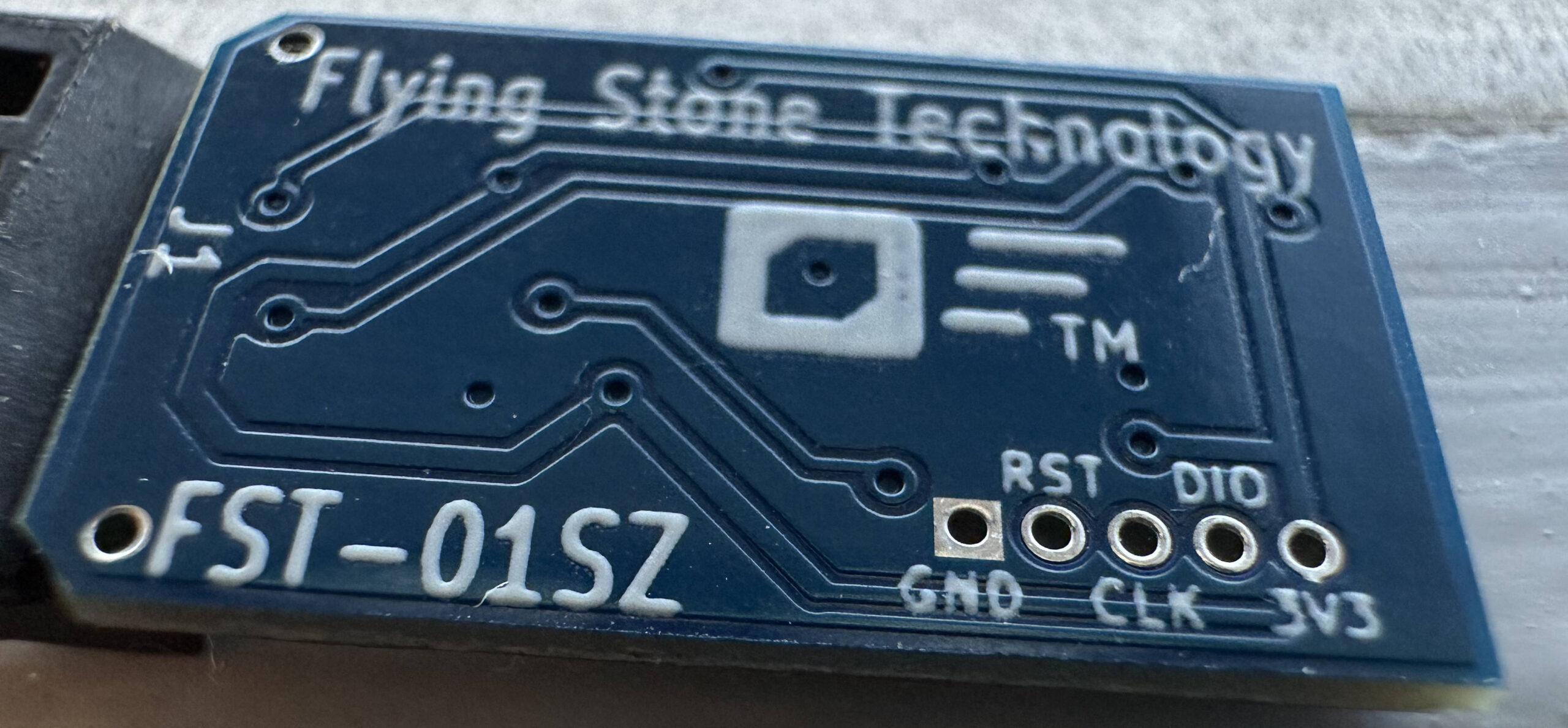
 One of my main musical 'discoveries' in 2022 was British electronic band
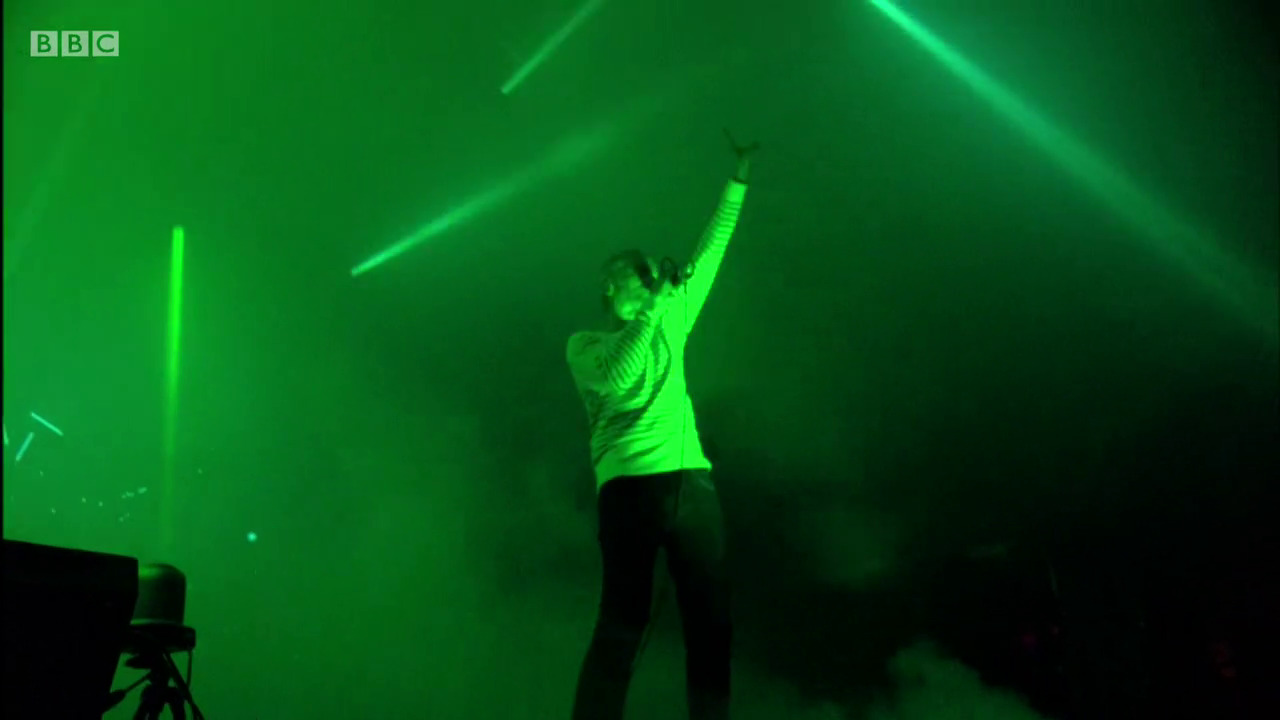

 With the end of the year approaching fast, I thought putting my year in
retrospective via music would be a fun thing to do.
Albums
In 2022, I added 51 new albums to my collection nearly one a week! I listed
them below in the order in which I acquired them.
I purchased most of these albums when I could and borrowed the rest at
libraries. If you want to browse though, I added links to the album covers
pointing either to websites where you can buy them or to Discogs when digital
copies weren't available

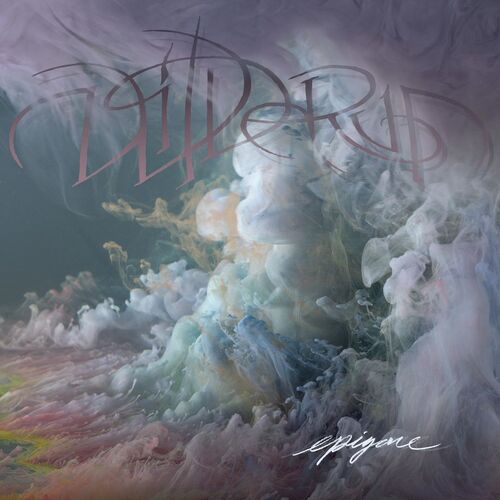






























 The first fresh release of our