Search Results: "nate"

14 August 2014

Daniel Pocock: Bug tracker or trouble ticket system?

One of the issues that comes up from time to time in many organizations and projects (both community and commercial ventures) is the question of how to manage bug reports, feature requests and support requests. There are a number of open source solutions and proprietary solutions too. I've never seen a proprietary solution that offers any significant benefit over the free and open solutions, so this blog only looks at those that are free and open. Support request or bug? One common point of contention is the distinction between support requests and bugs. Users do not always know the difference. Some systems, like the Github issue tracker, gather all the requests together in a single list. Calling them "Issues" invites people to submit just about anything, such as "I forgot my password". At the other extreme, some organisations are so keen to keep support requests away from their developers that they operate two systems and a designated support team copies genuine bugs from the customer-facing trouble-ticket/CRM system to the bug tracker. This reduces the amount of spam that hits the development team but there is overhead in running multiple systems and having staff doing cut and paste. Will people use it? Another common problem is that a full bug report template is overkill for some issues. If a user is asking for help with some trivial task and if the tool asks them to answer twenty questions about their system, application version, submit log files and other requirements then they won't use it at all and may just revert to sending emails or making phone calls. Ideally, it should be possible to demand such details only when necessary. For example, if a support engineer routes a request to a queue for developers, then the system may guide the support engineer to make sure the ticket includes attributes that a ticket in the developers' queue should have. Beyond Perl Some of the most well known systems in this space are Bugzilla, Request Tracker and OTRS. All of these solutions are developed in Perl. These days, Python, JavaScript/Node.JS and Java have taken more market share and Perl is chosen less frequently for new projects. Perl skills are declining and younger developers have usually encountered Python as their main scripting language at university. My personal perspective is that this hinders the ability of Perl projects to attract new blood or leverage the benefits of new Python modules that don't exist in Perl at all. Bugzilla has fallen out of the Debian and Ubuntu distributions after squeeze due to its complexity. In contrast, Fedora carries the Bugzilla packages and also uses it as their main bug tracker. Evaluation I recently started having a look at the range of options in the Wikipedia list of bug tracking systems. Some of the trends that appear:
  • Many appear to be bug tracking systems rather than issue tracking / general-purpose support systems. How well do they accept non-development issues and keep them from spamming the developers while still providing a useful features for the subset of users who are doing development?
  • A number of them try to bundle other technologies, like wiki or FAQ systems: but how well do they work with existing wikis? This trend towards monolithic products is slightly dangerous. In my own view, a wiki embedded in some other product may not be as well supported as one of the leading purpose-built wikis.
  • Some of them also appear to offer various levels of project management. For development tasks, it is just about essential for dependencies and a roadmap to be tightly integrated with the bug/feature tracker but does it make the system more cumbersome for people dealing with support requests? Many support requests, like "I've lost my password", don't really have any relationship with project management or a project roadmap.
  • Not all appear to handle incoming requests by email. Bug tracking systems can be purely web/form-based, but email is useful for helpdesk systems.
Questions This leaves me with some of the following questions:
  • Which of these systems can be used as a general purpose help-desk / CRM / trouble-ticket system while also being a full bug and project management tool for developers?
  • For those systems that don't work well for both use cases, which combinations of trouble-ticket system + bug manager are most effective, preferably with some automated integration?
  • Which are more extendable with modern programming practices, such as Python scripting and using Git?
  • Which are more future proof, with choice of database backend, easy upgrades, packages in official distributions like Debian, Ubuntu and Fedora, scalability, IPv6 support?
  • Which of them are suitable for the public internet and which are only considered suitable for private access?

11 August 2014

Ian Donnelly: dpkg Woes

Hi Everybody, The original plan for my Google Summer of Code project involved creating a merge tool for Elektra including a kdb merge command, that part is all finished and integrated into the newest release of Elektra, 0.8.7 already. The next step was to patch dpkg to add an option for conffile merging. The basic overview of how this would work is: Obviously, all of these things require patching dpkg, although not in too large away. Luckily, we found a previous attempt to patch dpkg for a three-way merge hook, however it is a few years old and was never included in dpkg. Felix decided to update this patch to work with the new versions of dpkg and cleaned up a bit of redundancy, he then resubmitted it to see if the dpkg maintainers would be interested in such a patch, and to start a dialogue about including all the patches we need. Unfortunately there has been no response from the dpkg team, any many bugs on their tracker have been sitting unanswered for years. Additionally, dpkg s source can be quite complex and it would require a ton of effort for us to make all these patches with no guarantee of integration. As a result, we have decided to go another route (which I will be posting about soon). I just wanted to update anybody interested on the progress of my Google Summer of Code Project by letting them know the experience with dpkg. We have come up with a new solution that is already looking great and you will hear a lot more about it this final week of Google Summer of Code. Stay Tuned!
- Ian S. Donnelly

10 August 2014

Cyril Brulebois: Why is my package blocked?

A bit of history: A while ago udeb-producing packages were getting frozen on a regular fashion, when a d-i release was about to be cut. While I wasn t looking at the time, I can easily understand the reasons behind that: d-i is built upon many components, it takes some time to make sure it s basically in shape for a release, and it s very annoying when a regression sneaks in right before the installation images get built. I took over d-i release maintenance in May 2012 and only a few uploads happened before the wheezy freeze. I was only discovering the job at the time, and I basically released whatever was in testing then. The freeze began right after that (end of June), so I started double checking things affecting d-i (in addition to or instead of the review performed by other release team members), and unblocking packages when changes seemed safe, or once they were tested. A few uploads happened after the wheezy release and there s already a Jessie Alpha 1 release. I was about to release Jessie Beta 1 after some fair bits of testing, a debian-installer upload, and the only remaining bits were: building installation images (hello Steve), and of course communication (mail announce and website update). Unfortunately a new upstream release reached testing in the meanwhile, breaking the installer in several ways. I ll give details below, of course not because I want to point finger at the maintainer, but to illustrate the ramifications that a single package s migrating to testing can induce. Since I d like to avoid such experience in the future, I ll probably reintroduce the old method and freeze all udeb-producing packages during next d-i releases. So you know why it might happen. Your next question might be: What to do when your package is getting caught in that net? . In that case, please get in touch with both debian-release@ and debian-boot@ asking for an unblock. I ll then review your particular package, and either let it migrate to testing, or delay it until after the release. Update: official announcement.

9 August 2014

Steve Kemp: Rebooting the CMS

I run a cluster for the Debian Administration website, and the code is starting to show its age. Unfortunately the code is not so modern, and has evolved a lot of baggage. Given the relatively clean separation between the logical components I'm interested in trying something new. In brief the current codebase allows: It crossed my mind the other night that it might make sense to break this code down into a number of mini-servers - a server to handle all article-related things, a server to handle all poll-related things, etc. If we have a JSON endpoint that will allow: Then we could have a very thin shim/server on top of that whihc would present the public API. Of course the internal HTTP overhead might make this unworkable, but it is an interesting approach to the problem, and would allow the backend storage to be migrated in the future without too much difficulty. At the moment I've coded up two trivial servers, one for getting user-data (to allow login requests to succeed), and one for getting article data. There is a tiny presentation server written to use those back-end servers and it seems like an approach that might work. Of course deployment might be a pain.. It is still an experiment rather than a plan, but it could work out: http://github.com/skx/snooze/.

8 August 2014

Sune Vuorela: Fun and joy with .bat files

Occasionally, one gets in touch with kind of foreign technologies and needs to get stuff working anyways. Recently, I had to do some various hacking with and around .bat files. Bat files are a kind of script files for Microsoft Windows. Calling external commands Imagine need to call some other command, let s say git diff. So from a cmd thing, you would write
git diff
similar to writing shell scripts on unixes. But there is a catch. If the thing you want to call is another bat-script, just calling it ensures it replaces the current script and never returns. So you need
call git diff
if the command you want to run is a bat file and you want to return to your script. Calling an external helper next to your script
If you for some reason needs to call some external helper placed next to your script, there is a helpful thing to do that as well. Imagine your helper is called helper.bat
call %~dp0helper.bat
is the very self-explanatory way of doing that. Stopping execution of your script If you somehow encounter some condition in your script that requires you to stop your script, there is a command exit handy. It even takes a argument for what error code there is.
exit 2
stops your script with return code 2. But it also have the nice added feature that if you do it in a script you run by hand in a terminal, it also exits the terminal. Luckily there is also a fix for that:
exit /b 2
and it doesn t exit your interactive terminal, and it sets the %ERRORLEVEL% variable to the exit code. Fortunately, the fun doesn t stop here. If the script is run non-interactively, exit /b doesn t set the exit code for for example perl s system() call. You need to use exit without /b for that. So now you need two scripts. one for interactive use that calls exit /b and a similar one using exit for use by other apps/scripts. Or, we can combine some of our knowledge and add a extra layer of indirection. and then success. Oh. and on a unrelated note. Windows can t schedule tasks for users that aren t logged in and don t have a password set. The response Access Denied is the only clue given.

7 August 2014

Jordi Mallach: A pile of reasons why GNOME should be Debian jessie s default desktop environment

GNOME has, for some reason or another, always been the default desktop environment in Debian since the installer is able to install a full desktop environment by default. Release after release, Debian has been shipping different versions of GNOME, first based on the venerable 1.2/1.4 series, then moving to the time-based GNOME 2.x series, and finally to the newly designed 3.4 series for the last stable release, Debian 7 wheezy . During the final stages of wheezy s development, it was pointed out that the first install CD image would not longer hold all of the required packages to install a full GNOME desktop environment. There was lots of discussion surrounding this bug or fact, and there were two major reactions to it. The Debian GNOME team rebuilt some key packages so they would be compressed using xz instead of gzip, saving the few megabytes that were needed to squeeze everything in the first CD. In parallel, the tasksel maintainer decided switching to Xfce as default desktop was another obvious fix. This change, unannounced and two days before the freeze, was very contested and spurred the usual massive debian-devel threads. In the end, and after a few default desktop flip flops, it was agreed that GNOME would remain as the default for the already frozen wheezy release, and this issue would be revisited later on during jessie s development. And indeed, some months ago, Xfce was again reinstated as Debian s default desktop for jessie as announced:
Change default desktop to xfce.
This will be re-evaluated before jessie is frozen. The evaluation will
start around the point of DebConf (August 2014). If at that point gnome
looks like a better choice, it ll go back as the default.
Some criteria for that choice will include:
* Popcon numbers for gnome on jessie. If gnome installations continue to
  rise fast enough despite xfce being the default (compared with, say
  kde installations), then we ll know that users prefer gnome.
  Currently we have no data about how many users would choose gnome when
  it s not the default. Part of the reason for switching to xfce now
  is to get such data.
* The state of accessability support, particularly for the blind.
* How well the UI works for both new and existing users. Gnome 3
  seems to be adding back many gnome 2 features that existing users
  expect, as well as making some available via addons. If it feels
  comfortable to gnome 2 (and xfce) users, that would go a long way
  toward switching back to it as the default. Meanwhile, Gnome 3 is also
  breaking new ground in its interface; if the interface seems more
  welcoming to new users, or works better on mobile devices, etc, that
  would again point toward switching back.
* Whatever size constraints exist for CD or other images at the time.
--
Hello to all the tech journalists out there. This is pretty boring.
Why don t you write a story about monads instead?
Joey Hess in dfca406eb694e0ac00ea04b12fc912237e01c9b5.
Suffice to say that the Debian GNOME team participants have never been thrilled about how the whole issue is being handled, and we ve been wondering if we should be doing anything about it, or just move along and enjoy the smaller amount of bug reports against GNOME packages that this change would bring us, if it finally made it through to the final release. During our real life meet-ups in FOSDEM and the systemd+GNOME sprint in Antwerp, most members of the team did feel Debian would not be delivering a graphical environment with the polish we think our users deserve, and decided we at least should try to convince the rest of the Debian project and our users that Debian will be best suited by shipping GNOME 3.12 by default. Power users, of course, can and know how to get around this default and install KDE, Xfce, Cinnamon, MATE or whatever other choice they have. For the average user, though, we think we should be shipping GNOME by default, and tasksel should revert the above commit again. Some of our reasons are: In short, we think defaulting to GNOME is the best option for the Debian release, and in contrast, shipping Xfce as the default desktop could mean delivering a desktop experience that has some incomplete or rough edges, and not on par with Debian quality standards for a stable release. We believe tasksel should again revert the change and be uploaded as soon as possible, in order to get people testing images with GNOME the sooner the better, with the freeze only two months away. We would also like that in the future, changes of this nature will not be announced in a git commit log, but widely discussed in debian-project and the other usual development/decision channels, like the change of init system happened recently. We will, whichever the final decision is, continue to package GNOME with great care to ensure our users get the best possible desktop experience Debian can offer.

Dirk Eddelbuettel: Rcpp now used by 250 CRAN packages

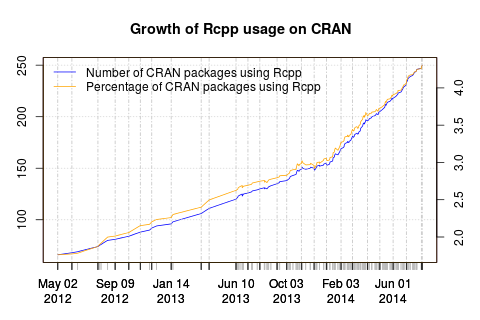
Rcpp growth
Rcpp reached a nice round milestone yesterday: 250 packages on CRAN now depend on it (as measured by Depends, Imports and LinkingTo declarations). The graph is on the left depicts the growth of Rcpp over time. Or at least since I started to write down some usage numbers: first informally, then via a script. Also displayed is the relative proportion of CRAN packages using it. Rcpp cleared the four per-cent hurdle just before useR! 2014 where I showed a similar graph (as two distinct graphs) in my invited talk. 250 is a pretty impressive, and rather humbling, number. From everybody behind Rcpp, I would like to say a heartfelt Thank You! to all the users and of course contributors.

This post by Dirk Eddelbuettel originated on his Thinking inside the box blog. Please report excessive re-aggregation in third-party for-profit settings.

Craig Small: WordPress 3.9.2 for Debian

WordPress released today a security release 3.9.2 which they fix several security issues, including a denial of service issue around XML. The corresponding Debian package 3.9.2+dfsg-1 is currently being uploaded to the Debian ftp-master server as I write this and should be available on the mirrors soon. Unfortunately at the time of writing, there are no CVE identifiers to match these problems up with, but refer to the wordpress page for details about these bugs. Andrew Nacin from WordPress has kindly outlined what versions are susceptible and it looks like the Debian squeeze (3.6.1+dfsg-1~deb6u4) and wheezy (3.6.1+dfsg-1~deb7u3) are vulnerable to at least some of these bugs which means for me its patch reading and back-porting time

6 August 2014

Chris Lamb: Strava Enhancement Suite update

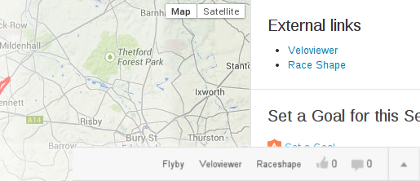
https://chris-lamb.co.uk/wp-content/2014/strava/chrome_web_store.png I've been told I don't blog about my projects often enough, so here's a feature update on my Chrome Extension that adds various improvements to the Strava.com fitness tracker. All the features are optional and can be individually enabled in the options panel.

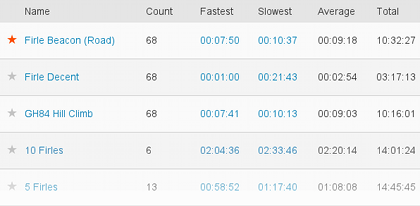
Repeated segments This adds aggregate data (fastest, slowest, average, etc.) when segments are repeated within an activity. It's particularly useful for laps or like this Everesting attempt hill repeats: https://chris-lamb.co.uk/wp-content/2014/strava/repeated_segments3.png

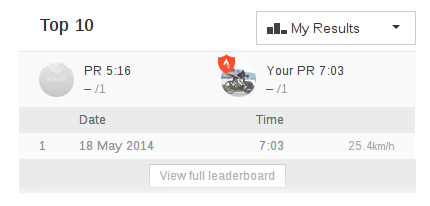
Leaderboard default Changes the default leaderboard away from "Overall" when viewing a segment effort. The most rewarding training often comes from comparing your own past performances rather than those of others, so viewing your own results by default can make more sense. You can select any of Men, Women, I'm Following or My Results: https://chris-lamb.co.uk/wp-content/2014/strava/leaderboard_default.png

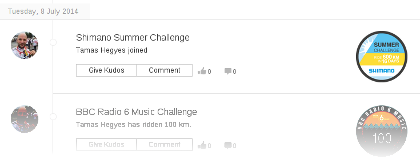
Hide feed entries Hides various entry types in the activity feed that can get annoying. You currently have the option of hiding challenges, route creations, goals created or club memberships: https://chris-lamb.co.uk/wp-content/2014/strava/hide_challenge_feed_entries.png

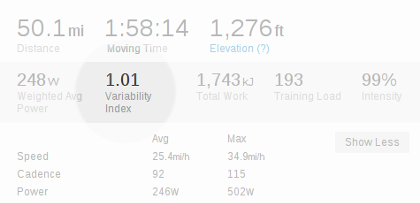
Variability Index Calculates a Variability Index (VI) from the weighted average power and the average power, an indication of how "smooth" a ride was. Required a power meter. A VI of 1.0 would mean a ride was paced "perfectly", with very few surges of effort: https://chris-lamb.co.uk/wp-content/2014/strava/variability_index.png

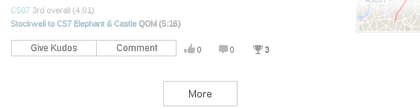
Infinite scroll Automatically loads more dashboard entries when reaching the bottom, saving a tedious click on the "More" button: https://chris-lamb.co.uk/wp-content/2014/strava/infinite_scroll.png

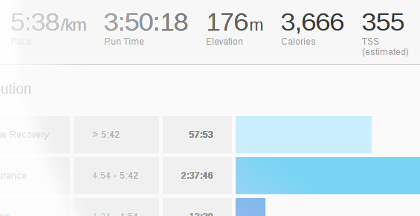
Running TSS Estimates a run's Training Stress Score (TSS) from its Grade Adjusted Pace distribution, a measure of that workout's duration and intensity relative to the athletes's capability, providing an insight into correct recovery time and overall training load over time: https://chris-lamb.co.uk/wp-content/2014/strava/running_tss.png

Hide "find friends" Hides social networking buttons, including invitations to invite or find further friends: https://chris-lamb.co.uk/wp-content/2014/strava/hide_invite_friends.png

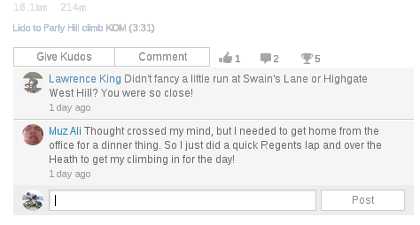
"Enter" posts comment Immediately posts comment when pressing Enter/Return key in the edit box rather than adding a newline: https://chris-lamb.co.uk/wp-content/2014/strava/comment_post_on_enter.png

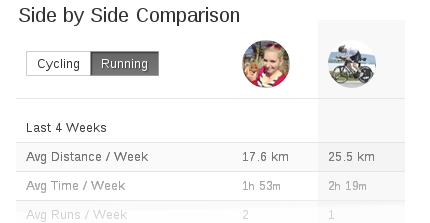
Compare running Changes the default sport for the "Side by Side comparison" module to running when viewing athlete profiles: https://chris-lamb.co.uk/wp-content/2014/strava/side_by_side_running.png

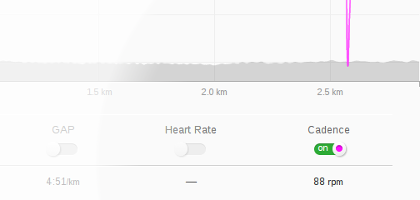
Running cadence Shows running cadence by default in the elevation profile: https://chris-lamb.co.uk/wp-content/2014/strava/running_cadence.png

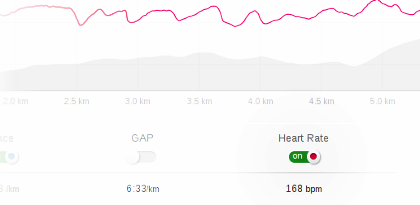
Running heart rate Shows running heart rate by default in elevation profile: https://chris-lamb.co.uk/wp-content/2014/strava/running_heart_rate.png

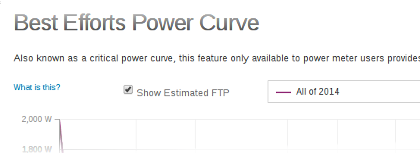
Estimated FTP Selects "Show Estimated FTP" by default on the Power Curve page: https://chris-lamb.co.uk/wp-content/2014/strava/estimated_ftp.png

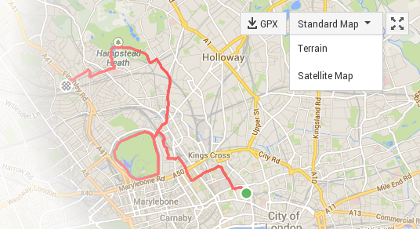
Standard Google map Prefer the "Standard" Google map over the "Terrain" view: https://chris-lamb.co.uk/wp-content/2014/strava/standard_google_map.png

Let me know if you have any comments, suggestions or if you have any other feedback. If you find this software useful, please consider donating via Paypal to support further development. You can also view the source and contribute directly on GitHub. https://chris-lamb.co.uk/wp-content/2014/strava/chrome_web_store.png

5 August 2014

Dirk Eddelbuettel: BH release 1.54.0-3

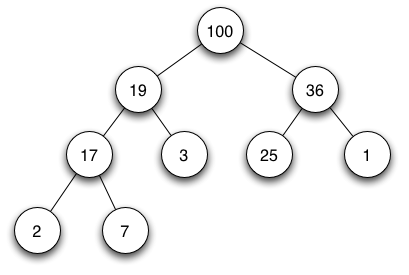
A new release of our BH package providing Boost headers for use by R is now on the CRAN mirrors. max-heap image This release is the third based on Boost 1.54.0. At the request of the maintainer of the recent added RcppMLPACK package, it adds the Boost.Heap library. Boost.Heap implements priority queues which extend beyond the corresponding (and somewhat simpler) class in the STL. Key features of the Boost.Heap priority queues are mutability, iterators, ability to merge, stable sort, and comparison. No other changes were made.
Changes in version 1.54.0-3 (2014-08-03)
  • Added Boost Heap library which will be needed by the next version of RcppMLPACK
Courtesy of CRANberries, there is also a diffstat report for the most recent release. Comments and suggestions are welcome via the mailing list or issue tracker at the GitHub repo.

This post by Dirk Eddelbuettel originated on his Thinking inside the box blog. Please report excessive re-aggregation in third-party for-profit settings.

4 August 2014

Konstantinos Margaritis: SIMD book, "Sponsored by ARM"!

Ok, took a while but I got the final word about this and can announce that the sponsor who donated 500 EUR to the Indiegogo campaign was ARM itself! I have to thank my friends at ARM@Cambridge and especially Dr Monika Biddulph, General Manager, Partner Enablement Group at ARM. When the book goes to print you can be sure it will include "Sponsored by ARM" somewhere! :) Also a friendly reminder that even if the campaign is over, I still welcome the support in the form of preorders/sponsorships.

Russ Allbery: Review: Parasite

Review: Parasite, by Mira Grant
Series: Parasitology #1
Publisher: Orbit
Copyright: October 2013
ISBN: 0-316-21893-6
Format: Kindle
Pages: 504
It's 2027, and a company named Symbogen has revolutionized medicine and health. They manufacture a genetically-engineered parasite based on a tapeworm that can stabilize and protect the health of just about anyone. It can synthesize medication, fix chronic medical problems, and be adapted to different conditions. (Yes, I know biological systems don't work this way. That's not going to be the only suspension of disbelief problem.) This has made Symbogen one of the most powerful corporations in the country, aided by the skill at marketing and self-promotion shown by one of the founders. Sal, the protagonist of the novel, is one of Symbogen's most famous success stories. Sally was the victim of a horrible car crash that put her into an apparently irreversible coma. But as her family was debating whether to turn off life support, she woke up. She had no memory of her previous life at all, and had to relearn fine motor control, reading, and many other skills. She was essentially a new person. But she was alive; her symbiont had saved her. When the story proper starts, Sal is still a ward of her parents. She has generally adult skills despite still struggling with reading, but she still has occasional attacks and is under intensive monitoring by Symbogen. That means periodic mandatory appointments with Symbogen, which she hates, but she's otherwise started building a life for herself: a job in an animal shelter, an interest in exotic predatory plants, and, most notably, a boyfriend. There are things about her life she doesn't like, and she wants to be free of Symbogen, but she doesn't have a bad life. But then a mysterious illness begins sweeping through the population, causing people to go blank, apparently lose their minds, and then start attacking those near them. Some of you have doubtless already figured out the key plot revelation. It's not hard; even if you didn't from the summary, you will probably figure it out shortly into the book. And therein lies a large problem with this novel: it's hopelessly predictable. Creepy evil corporation that supposedly has your best interests at heart, check. Plucky mad scientist opposition who understands exactly what's going on, check. Well-meaning but heavy-handed government agents who try to get involved but mostly make everything worse, check. (Although it's unusual to have those agents as part of the protagonist's family, and I thought that added some additional depth.) Mostly clueless protagonist sucked into the plot and becoming critical to its resolution, check. Very few readers are going to be surprised by this story. This is not, by itself, a fatal flaw. Predictable story structures can carry satisfying variations, or introduce the reader to enjoyable characters. And I think Grant manages both here. Seanan McGuire, both as herself and under her Mira Grant pseudonym, tends to write damaged and struggling characters. Both her Newsflesh and October Daye series feature protagonists that have been hurt badly, but are coping and muddling through in their own ways. In Parasite, I think she takes a more daring and intriguing approach: a protagonist that other people in the story perceive as damaged and struggling, but who actually isn't. Sal is not a badly injured Sally, and she's quite a bit healthier than those around her think she is. Her thought processes don't work quite the same as those around her, but that's not because she's hurt. That's because she's a different person. This makes Parasite partly a novel about identity, about Sal claiming ownership of her own life. Grant drags this out longer than I wish she had, but I liked the idea. In Sal, she strikes a good balance between gratitude and genuine affection for her family and the need to become her own person unconstrained by other people's expectations. As with the Newsflesh series, Grant uses quotes and excerpts from interviews to fill in the world background: a few at the start of each chapter, and more around each part boundary. I like this technique, and Grant uses it well. By the end of the book, the Rolling Stone interview with the head of Symbogen has added a lot of insight into how Symbogen manages its public relations. Grant also throws in a few of her trademark dangerously off-beat characters: hyper-competent, wise-cracking, but eerily skewed. I loved those in Blackout and I loved Tansy and Dr. Cale here. (Adam was much less successful.) A whole book from Tansy's perspective wouldn't work, since she needs Sal as a straight woman, but I thought she stole every scene she was in. However, I agree wholeheartedly with Tansy on another point: Sal is remarkably, irritatingly dim about what is apparently intended to be the critical revelation of the book. I won't state it outright; given its significant presence in the final scene, apparently it is intended to be a spoiler. But I figured it out about 50 pages into the book. Grant telegraphs this revelation heavily, and Tansy considers it painfully obvious (with quite a bit of justification). But Sal doesn't figure it out for the entire book, ignores all the signs, and is apparently willfully blind. In a book written from the first-person perspective by an otherwise-reliable narrator, this is highly annoying. It significantly undermined my enjoyment of the book. I spent much of the novel ahead of the narrator in my understanding of the plot and waiting, in vain, for her to get on with it already. That unfortunately makes Parasite a mixed bag. I really liked many of the characters, and I think Grant did some interesting things with family dynamics and with claiming one's own identity. But this is undermined by a very predictable plot, the protagonist deciding to be dumber than a sack of hammers about a critical plot point, and some rather dubious world logic. (For example, why is Sal terrified of bad driving? It makes sense as a post-traumatic stress reaction... except it's a critical point to her characterization that she never went through that stress.) Sometimes I wanted to like this book and sometimes I wanted to shake it, and sometimes I felt both reactions at the same time. I like Grant's writing and characterization well enough that I will probably read the sequel, but this is more like the later books in the Newsflesh series than it is like the spectacular Feed. Worth reading, at least for me, but it could have been better. Rating: 7 out of 10

3 August 2014

Dirk Eddelbuettel: Introducing sanitizers 0.1.0

A new package sanitizers is now on CRAN. It provides test cases for Address Sanitizers, and Undefined Behaviour Sanitizers. These are two recent features of both g++ and clang++, and described in the Checking Memory Access section of the Writing R Extension manual. I set up a new web page for the sanitizers package which illustrates their use case via pre-built Docker images, similar to what I presented at the end of my useR! 2014 keynote a few weeks ago. So instead of repeating this over here, I invite you to read the detailed discussion on the sanitizers page.

This post by Dirk Eddelbuettel originated on his Thinking inside the box blog. Please report excessive re-aggregation in third-party for-profit settings.

2 August 2014

Don Armstrong: ErgoDox keyboard assembly

I routinely use a Kinesis Advantage Pro keyboard, which is a split, ergonomic keyboard with thumb clusters that uses brown cherryMX switches. Over the thirteen years that I've been using it, I've become a huge fan of this style of keyboard. However, I have two major annoyances with the Kinesis. First, while the firmware is good, remapping the keys is complicated and producing more complicated keyboard layouts with layers and keycodes that are not present in the original layout is not possible. Secondly, the interconnect between the main key wells and the controller board in the middle occasionally fails, and requires disassembly and occasional re-tinning of the circuit board interconnect connector. 1 About a year ago, I became aware of the ErgoDox keyboard, which is a keyboard design which mimics the kinesis to some degree, but with completely separated key halves (useful, because I'm substantially bigger than the average human), programmable firmware (so I can finally have the layers and missing keys) and with slightly more elegant interconnects (TRRS cables). Unfortunately, at the time I first heard about it (and other custom keyboards), making it required sourcing circuit boards, parts, and finding someone to cut a case for the keyboard. Then, a few months ago, I learned about MassDrop, a company who puts together groups of people to do buys of products at near-wholesale level prices, and their offer of all of the parts to build an ErgoDox. After waiting for a group buy of the keyboard to become available, I put in an order, and received the parts two months later. Over a few hours yesterday, I learned how to do surface mount soldering of the 78 diodes (one for each key), and finished assembling and flashing the firmware. This morning, I fixed up the few key bindings that I needed to be productive, and viola, my laptop at home now has a brand new ergonomic keyboard.

1 August 2014

Raphaël Hertzog: My Free Software Activities in July 2014

This is my monthly summary of my free software related activities. If you re among the people who made a donation to support my work (548.59 , thanks everybody!), then you can learn how I spent your money. Otherwise it s just an interesting status update on my various projects. Distro Tracker Now that tracker.debian.org is live, people reported bugs (on the new tracker.debian.org pseudo-package that I requested) faster than I could fix them. Still I spent many, many hours on this project, reviewing submitted patches (thanks to Christophe Siraut, Joseph Herlant, Dimitri John Ledkov, Vincent Bernat, James McCoy, Andrew Starr-Bochicchio who all submitted some patches!), fixing bugs, making sure the code works with Django 1.7, and started the same with Python 3. I added a tox.ini so that I can easily run the test suite in all 4 supported environments (created by tox as virtualenv with the combinations of Django 1.6/1.7 and Python 2.7/3.4). Over the month, the git repository has seen 73 commits, we fixed 16 bugs and other issues that were only reported over IRC in #debian-qa. With the help of Enrico Zini and Martin Zobel, we enabled the possibility to login via sso.debian.org (Debian s official SSO) so that Debian developers don t even have to explicitly create their account. As usual more help is needed and I ll gladly answer your questions and review your patches. Misc packaging work Publican. I pushed a new upstream release of publican and dropped a useless build-dependency that was plagued by a difficult to fix RC bug (#749357 for the curious, I tried to investigate but it needs major work for make 4.x compatibility). GNOME 3.12. With gnome-shell 3.12 hitting unstable, I had to update gnome-shell-timer (and filed an upstream ticket at the same time), a GNOME Shell extension to start some run-down counters. Django 1.7. I packaged python-django 1.7 release candidate 1 in experimental (found a small bug, submitted a ticket with a patch that got quickly merged) and filed 85 bugs against all the reverse dependencies to ask their maintainers to test their package with Django 1.7 (that we want to upload before the freeze obviously). We identified a pain point in upgrade for packages using South and tried to discuss it with upstream, but after closer investigation, none of the packages are really affected. But the problem can hit administrators of non-packaged Django applications. Misc stuff. I filed a few bugs (#754282 against git-import-orig uscan, #756319 against wnpp to see if someone would be willing to package loomio), reviewed an updated package for django-ratelimit in #755611, made a non-maintainer upload of mairix (without prior notice) to update the package to a new upstream release and bring it to modern packaging norms (Mako failed to make an upload in 4 years so I just went ahead and did what I would have done if it were mine). Kali work resulting in Debian contributions Kali wants to switch from being based on stable to being based on testing so I did try to setup britney to manage a new kali-rolling repository and encountered some problems that I reported to debian-release. Niels Thykier has been very helpful and even managed to improve britney thanks to the very specific problem that the kali setup triggered. Since we use reprepro, I did write some Python wrapper to transform the HeidiResult file in a set of reprepro commands but at the same time I filed #756399 to request proper support of heidi files in reprepro. While analyzing britney s excuses file, I also noticed that the Kali mirrors contains many source packages that are useless because they only concern architectures that we don t host (and I filed #756523 against reprepro). While trying to build a live image of kali-rolling, I noticed that libdb5.1 and db5.1-util were still marked as priority standard when in fact Debian already switched to db5.3 and thus should only be optional (I filed #756623 against ftp.debian.org). When doing some upgrade tests from kali (wheezy based) to kali-rolling (jessie based) I noticed some problems that were also affecting Debian Jessie. I filed #756629 against libfile-fcntllock-perl (with a patch), and also #756618 against texlive-base (missing Replaces header). I also pinged Colin Watson on #734946 because I got a spurious base-passwd prompt during upgrade (that was triggered because schroot copied my unstable s /etc/passwd file in the kali chroot and the package noticed a difference on the shell of all system users). Thanks See you next month for a new summary of my activities.

One comment Liked this article? Click here. My blog is Flattr-enabled.

Gunnar Wolf: Wow. Just rejected an editorial offer...

Yes, I've been bragging about the Operating Systems book all over... Today, a colleague handed me a phone call from somebody at Editorial Patria, a well known educational editorial in Mexico. They are looking for material similar to what I wrote, but need the material to be enfocado a competencias Focused on skills, a pedagogic fashion. I was more than interested, of course. As it currently stands, I am very happy that our book is being used already at three universities in three countries (by the different authors) and have heard other people saying they would recommend it, and of course I'm interested in making our work have as big an impact as possible. Of course, we'd have to modify several aspects of the book to cater to the skills focus... But it would be great to have the book available at commercial bookstores. After all, university editions are never as widely circulated as commercial ones. I had just one hard request to accept this: Our work must be distributed under a free licensing. Explicitly allow book photocopies and electronic distribution (didn't get into the "and modification" part, but I would eventually get there ;-) ) And... Of course, the negotiation immediately fell down. Editorials, this person says, live from selling individual books. She says she was turned down by another university professor and for another subject this same week. So, yes, I took the opportunity to explain things as I (and the people that think as I do Fortunately, not so few) see them. Yes, of course, editorials have to make a living. But text books are often photocopied as it is. Who buys a book? Whoever needs it. On one hand, if somebody will be using a book throughout a semester and it's reasonably priced (say, up to 3 cost of photocopies), they will probably buy it because it just works better (it is more comfortable to use and nicer to read). If a teacher likes the explanation for a particular topic, it should be completely legal for him to distribute photocopies (or digital copies) of the specific material And quite probably, among the students, more than one will end up appreciating the material enough to go look for the book in the library. And, as I have done throughout my life, if I read (in copies, electronically or in a library) a book I like... Quite probably I will go buy it. So... Of course, she insisted it was against their corporate policy. I insisted on my explanation. I hope they meet many stubborn teachers refusing to distribute books under a non-free licensing. I hope I contributed to making a dent in an industry that must change. Yes, a very very small dent, but one that helps them break free from their obsolete mindset ;-) (But yes, I don't know how long I will regret not being part of their very nice catalog of science and engineering books) ;-) )

Russell Coker: More BTRFS Fun

I wrote a BTRFS status report yesterday commenting on the uneventful use of BTRFS recently [1]. Early this morning the server that stores my email (which had 93 days uptime) had a filesystem related problem. The root filesystem became read-only and then the kernel message log filled with unrelated messages so there was no record of the problem. I m now considering setting up rsyslogd to log the kernel messages to a tmpfs filesystem to cover such problems in future. As RAM is so cheap it wouldn t matter if a few megs of RAM were wasted by that in normal operation if it allowed me to extract useful data when something goes really wrong. It s really annoying to have a system in a state where I can login as root but not find out what went wrong. After that I tried 2 kernels in the 3.14 series, both of which had kernel BUG assertions related to Xen networking and failed to network correctly, I filed Debian Bug #756714. Fortunately they at least had enough uptime for me to run a filesystem scrub which reported no errors. Then I reverted to kernel 3.13.10 but the reboot to apply that kernel change failed. Systemd was unable to umount the root filesystem (maybe because of a problem with Xen) and then hung the system instead of rebooting, I filed Debian Bug #756725. I believe that if asked to reboot a system there is no benefit in hanging the system with no user space processes accessible. Here are some useful things that systemd could have done:
  1. Just reboot without umounting (like reboot -nf does).
  2. Pause for some reasonable amount of time to give the sysadmin a possibility of seeing the error and then rebooting.
  3. Go back to a regular runlevel, starting daemons like sshd.
  4. Offer a login prompt to allow the sysadmin to login as root and diagnose the problem.
Options 1, 2, and 3 would have saved me a bit of driving. Option 4 would have allowed me to at least diagnose the problem (which might be worth the drive). Having a system on the other side of the city which has no remote console access just hang after a reboot command is not useful, it would be near the top of the list of things I don t want to happen in that situation. The best thing I can say about systemd s operation in this regard is that it didn t make the server catch fire. Now all I really know is that 3.14 kernels won t work for my server, 3.13 will cause problems that no-one can diagnose due to lack of data, and I m now going to wait for it to fail again. As an aside the server has ECC RAM and it s hardware is known to be good, so I m sure that BTRFS is at fault.

31 July 2014

Russell Coker: Links July 2014

Dave Johnson wrote an interesting article for Salon about companies ripping off the tax system by claiming that all their income is produced in low tax countries [1]. Seb Lee-Delisle wrote an insightful article about how to ask to get paid to speak [2]. I should do that. Daniel Pocock wrote an informative article about the reConServer simple SIP conferencing server [3]. I should try it out, currently most people I want to conference with are using Google Hangouts, but getting away from Google is a good thing. Fran ois Marier wrote an informative post about hardening ssh servers [4]. S. E. Smith wrote an interesting article I Am Tired of Hearing Programmers Defend Gender Essentialism [5]. Bert Archer wrote an insightful article about lazy tourism [6]. His initial example of love locks breaking bridges was a bit silly (it s not difficult to cut locks off a bridge) but his general point about lazy/stupid tourism is good. Daniel Pocock wrote an insightful post about new developments in taxis, the London Taxi protest against Uber, and related changes [7]. His post convinced me that Uber is a good thing and should be supported. I checked the prices and unfortunately Uber is more expensive than normal taxis for my most common journey. Cory Doctorow wrote an insightful article for The Guardian about the moral issues related to government spying [8]. The Verge has an interesting review of the latest Lytro Lightbox camera [9]. Not nearly ready for me to use, but interesting technology. Prospect has an informative article by Kathryn Joyce about the Protestant child sex abuse scandal in the US [10]. Billy Graham s grandson is leading the work to reform churches so that they protect children instead of pedophiles. Prospect also has an article by Kathryn Joyce about Christians home-schooling kids to try and program them to be zealots and how that hurts kids [11]. The Daily Beast has an interesting article about the way that the extreme right wing in the US are trying to kill people, it s the right wing death panel [12]. Jay Michaelson wrote an informative article for The Daily Beast about right-wing hate groups in the US who promote the extreme homophobic legislation in Russia and other countries [13]. It also connects to the Koch brothers who seem to be associated with most evil. Elias Isquith wrote an insightful article for Salon about the current right-wing obsession with making homophobic discrimination an issue of religious liberty will hurt religious people [14]. He also describes how stupid the right-wing extremists are in relation to other issues too. EconomixComix.com has a really great comic explaning the economics of Social Security in the US [15]. They also have a comic explaining the TPP which is really good [16]. They sell a comic book about economics which I m sure is worth buying. We need to have comics explaining all technical topics, it s a good way of conveying concepts. When I was in primary school my parents gave me comic books covering nuclear physics and other science topics which were really good. Mia McKenzie wrote an insightful article for BlackGirlDangerous.com about dealing with racist white teachers [17]. I think that it would be ideal to have a school dedicated to each minority group with teachers from that group.

Wouter Verhelst: Using your Belgian eID with SSH mark two

Several years ago, I blogged about how to use a Belgian electronic ID card with SSH. I never really used it myself, but was interested in figuring out if it would still work. The good news is that since then, you don't need to recompile OpenSSH anymore to get PKCS#11 support; this is now compiled in by default. The slightly bad news is that there will be some more typework. Rather than entering ssh-add -D 0 (to access the PKCS#11 certificate in slot 0), you should now enter something along the lines of ssh-add -s /usr/lib/libbeidpkcs11.so.0. This will ask for your passphrase, but it isn't necessary to enter the correct pin code at this point in time. The first time you try to log on, you'll get a standard beid dialog box where you should enter your pin code; this will then work. The next time, you'll be logged on and you can access servers without having to enter a pin code. The worse news is that there seems to be a bug in ssh-agent, making it impossible to unload a PKCS#11 library. Doing ssh-add -D will remove your keys from the agent; the next time you try to add them again, however, ssh-agent will simply report SSH_AGENT_FAILURE. I suspect the dlopen()ed modules aren't being unloaded when the keys are removed. Unfortunately, the same (or at least, a similar) bug appears to occur when one removes the card from the cardreader. As such, I don't currently recommend trying to use this. Update: fix command-line options to ssh-add invocation above.

29 July 2014

Russell Coker: Android Screen Saving

Just over a year ago I bought a Samsung Galaxy Note 2 [1]. About 3 months ago I noticed that some of the Ingress menus had burned in to the screen. Back in ancient computer times there were screen saver programs that blanked the screen to avoid this, then the screen saver programs transitioned to displaying a variety of fancy graphics which didn t really fulfill the purpose of saving the screen. With LCD screens I have the impression that screen burn wasn t an issue, but now with modern phones we have LED displays which have the problem again. Unfortunately there doesn t seem to be a free screen-saver program for Android in the Google Play store. While I can turn the screen off entirely there are some apps such as Ingress that I d like to keep running while the screen is off or greatly dimmed. Now I sometimes pull the notification menu down when I m going to leave Ingress idle for a while, this doesn t stop the screen burning but it does cause different parts to burn which alleviates the problem. It would be nice if apps were designed to alleviate this. A long running app should have an option to change the color of it s menus, it would be ideal to randomly change the color on startup. If the common menus such as the COMM menu would appear in either red, green, or blue (the 3 primary colors of light) in a ratio according to the tendency to burn (blue burns fastest so should display least) then it probably wouldn t cause noticable screen burn after 9 months. The next thing that they could do is to slightly vary the position of the menus, instead of having a thin line that s strongly burned into the screen there would be a fat line lightly burned in which should be easier to ignore. It s good when apps have an option of a dark theme, that involves less light coming from the screen that should reduce battery use and screen burn. A dark theme should be at least default and probably mandatory for long running apps, a dark theme is fortunately the only option for Ingress. I am a little disappointed with my phone. I m not the most intensive Ingress player so I think that the screen should have lasted for more than 9 months before being obviously burned.

Next.

Previous.