Search Results: "bod"

4 March 2011

Cyril Brulebois: Debian XSF News #7

Time for a seventh Debian XSF News issue!

3 March 2011

Adrian von Bidder: Btrfs data deduplication

Apparently, it's coming. Haven't tested these patches, though (and why yet another btrfs-foo command rather than something integrated with the btrfs command?), but together with my hacked up dirvish (added support to create btrfs snapshots instead of hardlinked trees) this will save me a couple of gigabytes for all those backups of various servers (which I pretty much keep at the same releases.) The discussion on the btrfs mailing list got quite heated on the online vs. offline dedup issue (and also very silly IMO since nobody said online dedup shouldn't be supported. It's just not written yet...); What nobody mentioned was: how much memory is the hash index of an online dedup daemon going to consume, and how much CPU cache will it burn? This would be my main concern since my NAS only has 512M memory, and also needs to do NAT, VPN and DNS (yes, I'm a home user. I'd like to get the public IP off the NAS, but I'll have to buy some box to do this first...)

Kai Wasserb ch: Extending Chronicle

This little blog is created/compiled with Chronicle, coded by Steve Kemp, and one of the cool features is that you can specify a command run before/after your blog gets compiled from the input files. This presents us with one problem and a lot of opportunities. First to the problem: the singular "a command" (from the manual page) might not be enough. Maybe you want to run more than one command. This can be achieved by creating a directory for the commands you want to run before the compilation and one for the commands you want to run after the chronicle run. Then you create a small shell script one directory above and call that from chronicle, the script for the post-run might look like:
#!/bin/sh
set -e
WORKDIR=" dirname $ 0  /post"
find $ WORKDIR  -name "*.sh" -exec " " ";"
This script makes the assumption, that the scripts to run have a .sh suffix and are in a subdirectory named "post". But you can surely adapt this to your needs. Now to one of the oppurtunities this offers: you can now, for example, create static pages, which share the general visual appearance with your blog entries but don't show up in the tags or archive system. I'm using this to generate an imprint for this blog. The script to generate the imprint looks like:
#!/bin/sh
set -e
OUTPUT_PATH= grep output $ HOME /.chroniclerc   cut -d= -f2   tr -d [:blank:] 
sed -ne'/<\?xml version/,/blosxomFirstDayDiv/  /blosxomFirstDayDiv/b;p ' \
        $ OUTPUT_PATH /index.html > $ HOME /tmp/imprint.html
cat  dirname $ 0  /imprint.data >> $ HOME /tmp/imprint.html
echo -e "\n" >> $ HOME /tmp/imprint.html
sed -ne'/imprint_match/,$p' $ OUTPUT_PATH /index.html >> $ HOME /tmp/imprint.html
mv $ HOME /tmp/imprint.html $ OUTPUT_PATH /imprint.html
There are again some assumptions made here, which you'd need to adopt to your setup: Now you have a very powerful system to modify/extend your chronicle-generated blog. I hope you enjoy it as much as I do! A little P.S.: you might want to use version 4.5, as 4.4 had a nasty encoding bug.

Kai Wasserb ch: Extending Chronicle (Updated)

This little blog is created/compiled with Chronicle, coded by Steve Kemp, and one of the cool features is that you can specify a command run before/after your blog gets compiled from the input files. This presents us with one problem and a lot of opportunities. First to the problem: the singular "a command" (from the manual page) might not be enough. Maybe you want to run more than one command. This can be achieved by creating a directory for the commands you want to run before the compilation and one for the commands you want to run after the chronicle run. [UPDATE]Then just add run-parts /path/to/ before,post .d to your .chroniclerc for the pre,post -build configuration entries.[/UPDATE] (Thanks to Steve for pointing the obvious out to me, don't know why I didn't think of run-parts myself.) Now to one of the oppurtunities this offers: you can now, for example, create static pages, which share the general visual appearance with your blog entries but don't show up in the tags or archive system. I'm using this to generate an imprint for this blog. The script to generate the imprint looks like:
#!/bin/sh
set -e
OUTPUT_PATH= grep output $ HOME /.chroniclerc   cut -d= -f2   tr -d [:blank:] 
sed -nre'/<\?xml version/,/blosxomFirstDayDiv/  /blosxomFirstDayDiv/b;p ' \
        $ OUTPUT_PATH /index.html > $ HOME /tmp/imprint.html
cat  dirname $ 0  /imprint.data >> $ HOME /tmp/imprint.html
echo -e "\n" >> $ HOME /tmp/imprint.html
sed -ne'/imprint_match/,$p' $ OUTPUT_PATH /index.html >> $ HOME /tmp/imprint.html
mv $ HOME /tmp/imprint.html $ OUTPUT_PATH /imprint.html
There are again some assumptions made here, which you'd need to adopt to your setup: Now you have a very powerful system to modify/extend your chronicle-generated blog. I hope you enjoy it as much as I do! A little P.S.: you might want to use version 4.5, as 4.4 had a nasty encoding bug.

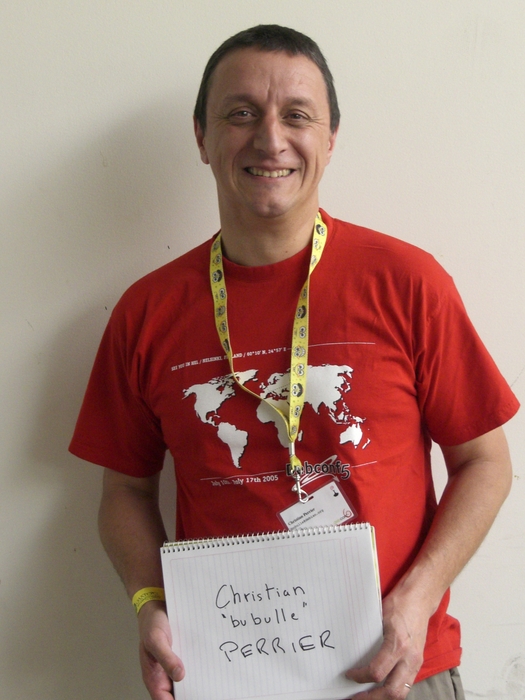
Rapha&#235;l Hertzog: People behind Debian: Christian Perrier, translation coordinator

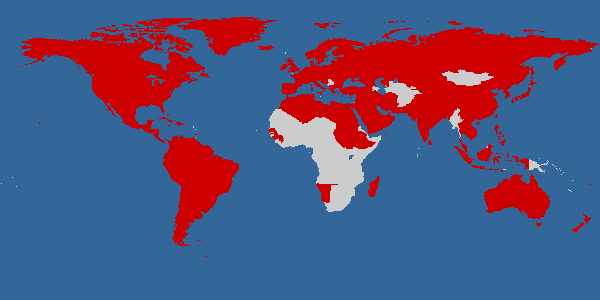
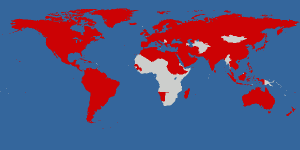
Christian is a figure of Debian, not only because of the tremendous coordination work that he does within the translation project, but also because he s very involved at the social level. He s probably in the top 5 of the persons who attended most often the Debian conference. Christian is a friend (thanks for hosting me so many times when I come to Paris for Debian related events) and I m glad that he accepted to be interviewed. He likes to speak and that shows in the length of his answers :-) but you ll be traveling the world while reading him. My questions are in bold, the rest is by Christian. Who are you? I am a French citizen (which is easy to guess unless you correct my usual mistakes in what follows). I m immensely proud of being married for nearly 26 years with Elizabeth (who deserves a statue from Debian for being so patient with my passion and my dedication to the project). I m also the proud father of 3 wonderful kids , aged 19 to 23. I work as team manager in the Networks and Computers Division of Onera the French Aerospace lab , a public research institute about Aeronautics, Space and Defense. My team provides computer management services for research divisions of Onera, with a specific focus put on individual computing. I entered the world of free software as one of the very first users of Linux in France. Back in the early 1990 s, I happened (though the BBS users communities) to be a friend of several early adopters of Linux and/or BSD386/FreeBSD/NetBSD in France. More specifically, I discovered Linux thanks with my friend Ren Cougnenc (all my free software talks are dedicated to Ren , who passed away in 1996). You re not a programmer, not even a packager. How did you come to Debian? I m definitely not a programmer and I never studied computing (I graduated in Materials Science and worked in that area for a few years after my PhD). However, my daily work always involved computing (I redesigned the creep testing laboratory and its acquisition system all by myself during my thesis research work). An my hobbies often involved playing with home computers, always trying to learn about something new. So, first learning about a new operating system then trying to figure out how to become involved in its development was quite a logical choice. Debian is my distro of choice since it exists. I used Slackware on work machines for a while, but my home server, kheops, first ran Debian 1.1 when I stopped running a BBS on an MS-DOS machine to host a news server. That was back in October 1996. I then happened to be a user, and more specifically a user of genealogy software, also participating very actively in Usenet from this home computer and server, that was running this Debian thing. So, progressively, I joined mailing lists and, being a passionate person, I tried to figure out how I could bring my own little contribution to all this. This is why I became a packager (yes, I am one!) by taking over the geneweb package, which I was using to publish my genealogy research. I applied as DD in January 2001, then got my account in July 2001. My first upload to the Debian archive occurred on August 22nd 2001: that was of course geneweb, which I still maintain. Quite quickly, I became involved in the work on French localization. I have always been a strong supporter of localized software (I even translated a few BBS software back in the early 90 s) as one of the way to bring the power and richness of free software to more users. Localization work lead me to work on the early version of Debian Installer, during those 2003-2005 years where the development of D-I was an incredibly motivating and challenging task, lead by Joey Hess and his inspiring ideas. From user to contributor to leader, I suddenly discovered, around 2004, that I became the coordinator of D-I i18n (internationalization) without even noticing :-) You re the main translation coordinator in Debian. What plans and goals have you set for Debian Wheezy? As always: paint the world in red. Indeed, this is my goal for years. I would like our favorite distro to be able to be used by anyone in the world, whether she speaks English, Northern Sami, Wolof, Uyghur or Secwepemcts n. As a matter of symbol, I use the installer for this. My stance is that one should be able to even install Debian in one s own language. So, for about 7 years, I use D-I as a way to attract new localization contributors. This progress is represented on this page where the world is gradually painted in red as long as the installer supports more languages release after release. The map above tries to illustrate this by painting in red countries when the most spoken language in the country is supported in Debian Installer. However, that map does not give enough reward to many great efforts made to support very different kind of languages. Not only various national languages, but also very different ones: all regional languages of Spain, many of the most spoken languages in India, minority languages such as Uyghur for which an effort is starting, Northern Sami because it is taught in a few schools in Norway, etc., etc. Still, the map gives a good idea of what I would like to see better supported: languages from Africa, several languages in Central Asia. And, as a very very personal goal, I m eagerly waiting for support of Tibetan in Debian Installer, the same way we support its sister language, Dzongkha from Bhutan. For this to happen, we have to make contribution to localization as easy as possible. The very distributed nature of Debian development makes this a challenge, as material to translate (D-I components, debconf screens, native packages, packages descriptions, website, documentation) is very widely spread. A goal, for years, is to set a centralized place where translators could work easily without even knowing about SVN/GIT/BZR or having to report bugs to send their work. The point, however, would be to have this without making compromises on translation quality. So, with peer review, use of thesaurus and translation memory and all such techniques. Tools for this exist: we, for instance, worked with the developers of Pootle to help making it able to cope with the huge amount of material in Debian (think about packages descriptions translations). However, as of now, the glue between such tools and the raw material (that often lies in packages) didn t come. So, currently, translation work in Debian requires a great knowledge of how things are organized, where is the material, how it can be possible to make contribution reach packages, etc. And, as I m technically unable to fulfill the goal of building the infrastructure, I m fulfilling that role of spreading out the knowledge. This is how I can define my coordinator role. Ubuntu uses a web-based tool to make it easy to contribute translations directly in Launchpad. At some point you asked Canonical to make it free software. Launchpad has been freed in the mean time. Have you (re)considered using it? Why not? After all, it more or less fills in the needs I just described. I still don t really figure out how we could have all Debian material gathered in Rosetta/Launchpad .and also how Debian packagers could easily get localized material back from the framework without changing their development processes. I have always tried to stay neutral wrt Ubuntu. As many people now in Debian, I feel like we have reached a good way to achieve our mutual development. When it comes at localization work, the early days where the everything in Rosetta and translates who wants stanza did a lot of harm to several upstream localization projects is, I think, way over. Many people who currently contribute to D-I localization were indeed sent to me by Ubuntu contributors .and by localizing D-I, apt, debconf, package descriptions, etc., they re doing translation work for Ubuntu as well as for Debian. Let s say I m a Debian user and I want to help translate Debian in my language. I can spend 1 hour per week on this activity. What should I do to start? Several language teams use Debian mailing lists to coordinate their work. If you re lucky enough to be a speaker of one of these languages, try joining debian-l10n-<yourlanguage> and follow what s happening there. Don t try to immediately jump in some translation work. First, participate to peer reviews: comment on others translations. Learn about the team s processes, jargon and habits. Then, progressively, start working on a few translations: you may want to start with translations of debconf templates: they are short, often easy to do. That s perfect if you have few time. If no language team exists for your language, try joining debian-i18n and ask about existing effort for your language. I may be able to point you to individuals working on Debian translations (very often along with other free software translation efforts). If I am not, then you have just been named coordinator for your language :-) I may even ask you if you want to work on translating the Debian Installer. What s the biggest problem of Debian? We have no problems, we only have solutions :-) We are maybe facing a growth problem for a few years. Despite the increased welcoming aspects of our processes (Debian Maintainers), Debian is having hard times in growing. The overall number of active contributors is probably stagnating for quite a while. I m still amazed, however, to see how we can cope with that and still be able to release over the years. So, after all, this is maybe not a problem :-) Many people would point communication problems here. I don t. I think that communication inside the Debian project is working fairly well now. Our famous flame wars do of course still happen from time to time, but what large free software project doesn t have flame wars? In many areas, we indeed improved communication very significantly. I want to take as an example the way the release of squeeze has been managed. I think that the release team did, even more this time, a very significant and visible effort to communicate with the entire project. And the release of squeeze has been a great success in that matter. So, there s nearly nothing that frustrates me in Debian. Even when a random developer breaks my beloved 100% completeness of French translations, I m not frustrated for more than 2 minutes. You re known in the Debian community as the organizer of the Cheese & Wine Party during DebConf. Can you tell us what this is about? This is an interesting story about how things build themselves in Debian. It all started in July 2005, before DebConf 5 in Helsinki. Denis Barbier, Nicolas Fran ois and myself agreed to bring at Debconf a few pieces of French cheese as well as 1 or 2 bottles of French wine and share them with some friends. Thus, we settled an informal meeting in the French room where we invited some fellows: from memory, Benjamin Mako Hill, Hannah Wallach, Matt Zimmermann and Moray Allan. All of us fond of smelly cheese, great wine plus some extra p t home-made by Denis in Toulouse. It finally happened that, by word of mouth, a few dozens of other people slowly joined in that French room and turned the whole thing into an improvized party that more or less lasted for the entire night. The tradition was later firmly settled in 2006, first in Debconf 6 in Mexico where I challenged the French DDs to bring as many great cheese as possible, then during the Debian i18n meeting in Extremadura (Sept 2006) where we reached the highest amount of cheese per participant ever. I think that the Creofonte building in Casar de C ceres hasn t fully recovered from it and is still smelling cheese 5 years after. This party later became a real tradition for DebConf, growing over and over each year. I see it as a wonderful way to illustrate the diversity we have in Debian, as well as the mutual enrichment we always felt during DebConfs. My only regret about it is that it became so big over the years that organizing it is always a challenge and I more and more feel pressure to make it successful. However, over the years, I always found incredible help by DebConf participants (including my own son, last year a moment of sharing which we will both remember for years, i think). And, really, in 2010, standing up on a chair, shouting (because the microphone wasn t working) to thank everybody, was the most emotional moment I had at Debconf 10. Is there someone in Debian that you admire for their contributions? So many people. So, just like it happens in many awards ceremonies, I will be very verbose to thank people, sorry in advance for this. The name that comes first is Joey Hess. Joey is someone who has a unique way to perceive what improvements are good for Debian and a very precise and meticulous way to design these improvements. Think about debconf. It is designed for so long now and still reaching its very specific goal. So well designed that it is the entire basis for Joey s other achievement: designing D-I. Moreover, I not only admire Joey for his technical work, but also for his interaction with others. He is not he loudest person around, he doesn t have to .just giving his point in discussion and, guess what? Most of the time, he s right. Someone I would like to name here, also, is Colin Watson. Colin is also someone I worked with for years (the D-I effect, again ) and, here again, the very clever way he works on technical improvements as well as his very friendly way to interact with others just make it. And, how about you, Rapha l? :-) I m really admirative of the way you work on promoting technical work on Debian. Your natural ability to explain things (as good in English as it is in French) and your motivation to share your knowledge are a great benefit for the project. Not to mention the technical achievements you made with Guillem on dpkg of course! Another person I d like to name here is Steve Langasek. We both maintain samba packages for years and collaboration with him has always been a pleasure. Just like Colin, Steve is IMHO a model to follow when it comes at people who work for Canonical while continuing their involvment in Debian. And, indeed, Steve is so patient with my mistakes and stupid questions in samba packaging that he deserves a statue. We re now reaching the end of the year where Stefano Zacchiroli was the Debian Project Leader. And, no offense intended to people who were DPL before him (all of them being people I consider to be friends of mine), I think he did the best term ever. Zack is wonderful in sharing his enthusiasm about Debian and has a unique way to do it. Up to the very end of his term, he has always been working on various aspects of the project and my only hope is that he ll run again (however, I would very well understand that he wants to go back to his hacking activities!). Hat off, Zack!I again have several other people to name in this Bubulle hall of Fame : Don Armstrong, for his constant work on improving Debian BTS, Margarita Manterola as one of the best successes of Debian Women (and the most geeky honeymoon ever), Denis Barbier and Nicolas Fran ois because i18n need really skilled people, Cyril Brulebois and Julien Cristau who kept X.org packaging alive in lenny and squeeze, Otavio Salvador who never gave up on D-I even when we were so few to care about it. I would like to make a special mention for Frans Pop. His loss in 2010 has been a shock for many of us, and particularly me. Frans and I had a similar history in Debian, both mostly working on so-called non technical duties. Frans has been the best release manager for D-I (no offense intended, at all, to Joey or Otavio .I know that both of them share this feeling with me). His very high involvment in his work and the very meticulous way he was doing it lead to great achievements in the installer. The Installation Guide work was also a model and indeed a great example of non technical work that requires as many skills as more classical technical work. So, and even though he was sometimes so picky and, I have to admit, annoying, that explains why I m still feeling sad and, in some way, guilty about Frans loss. One of my goals for wheezy is indeed to complete some things Frans left unachieved. I just found one in bug #564441: I will make this work reach the archive, benefit our users and I know that Frans would have liked that.

Thank you to Christian for the time spent answering my questions. I hope you enjoyed reading his answers as I did. Subscribe to my newsletter to get my monthly summary of the Debian/Ubuntu news and to not miss further interviews. You can also follow along on Identi.ca, Twitter and Facebook.

7 comments Liked this article? Click here. My blog is Flattr-enabled.

2 March 2011

Steve Kemp: I updated my redis-based filesystem

In July last year I made a brief post about a simple filesystem I'd put together which used Redis for the storage. At that time I thought it was a cute hack, and didn't spend too much time with it. But recently I found a use for it so I cleaned it up, synced up the C client for Redis which I used and generally started to care again. If it is useful you can now find it online: The basic idea is the same as it was before, except I did eventually move to an INODE-like system. Each file/directory entry receives a unique identifier (integer) - and then I store the meta-data in a key based off that name. This means for a file I might have keys, and values,like this:
KeyValue
INODE:1:NAMEThe name of the file (e.g. "passwd").
INODE:1:SIZEThe size of the file (e.g. "1661" )
INODE:1:GIDThe group ID of the file's owner (e.g. "0")
INODE:1:UIDThe user ID of the file's owner (e.g. "0")
INODE:1:MODEThe mode of the file (e.g. 0755)
To store these things I use a Redis "SET" which allows me to easily iterate over all the entries in each directory. ObQuote: "They fuck up, they get beat. We fuck up, they give us pensions. " - The Wire

28 February 2011

Kai Wasserb ch: On the unofficial wine-unstable packages on dev.carbon-project.org

I've been building unofficial wine-unstable packages for some time now and the amount of people apparently using them has become noticable (not only traffic-wise). Thus the amount of questions send to me has also risen quite a bit. In this post I try to address most of the questions in the hope it'll help people understand my motives for building these packages and potential pit falls for users. First of all: I'll stop building those packages as soon as Debian has a for my purposes recent enough version in the archives. This is expected to happen soon as most/all of the blocking issues should be sorted out now/soon. See e.g. #557783 for some insight into the problems. It might happen after updated packages are in Debian, that I'll build one version or the other occasionally to test a certain patch or version. The bottom line of this is: don't rely on me to provide always the latest packages. (This, by the way, is also explanation enough to the question, whether I'm going to build the "official" (I consider only those entering Debian's archives official) Debian packages for upstream (WineHQ).) Another question, which is seen every now and then in my inbox, is, whether I could add patch xyz to the packages. The answer is no. I maintain those packages for myself and if you want to use them, you're welcome. If you need another patch applied, just download the source package and add the patch with quilt to the series. When a certain version/build doesn't work for you, you can ask me for help, but please don't expect me to handle "doesn't work" reports like I would handle bug reports for my packages. The wine-unstable packages are for myself and if they work for me, that's all I aim for. Before spreading the word about my packages, make sure, you and those who read your post/message/whatever about my packages understand, that it is generally a very bad idea to install third-party packages, even though I'm a Debian Developer. Make also sure everybody understands that only the source package is signed with my key. Please don't download all packages (binary and source), unless you really need all of them. Please pick the ones, you need and just download them. Even though this might sound like begging, which I'm not, it'd be nice, if you could consider donating (via PayPal) something, to help cover the traffic costs. The traffic for just the wine-unstable packages has risen dramatically in the last few months. Thanks! Now, I hope I've answered most questions, if not, feel free to contact me.

27 February 2011

Adnan Hodzic: What s the best Xperia X10 custom ROM?

Everybody hates Xperia When I first got Sony Ericsson Xperia X10 it was running on Android Donut (1.6), my frustrations followed soon after mostly because it was greatly lagging with release of Android 2.1. Finally official 2.1 was released, but troubles didn t stop there, because everybody was waiting for multi-touch support I could go on like this for a very long time. However, to sum it up Sony has no plans of updating X10 anymore, they are releasing brand new phone (Arc) and they are hoping people will pay money to get it after X10 horrors. Even tho 2.1 isn t that old, (31.4% of overall Android users is using it on it), Sony changed its UI to make it look better, but all they actually did is make it look pretty bad + made it abnormally slow. Xperia ROMs From hardware aspect, it s a pretty awesome phone, but from software aspect it waste of nerves. It s obvious that Sony needs to hire more Linux people, because as it seems they have no idea what they are doing. There are of course, 2.2 Froyo and 2.3 Gingerbread straight from Google ROMs, but to be honest phone is only half usable with those. The feeling I get when using these is plain awkward. All these ROMs are stuck on 2.6.29, since as it seems Sony did a very good job protecting its bootloader, what I suggest is to use these for strictly development purposes, and have them dual boot with your working 2.1 2.2.1 Froyo (beta)
http://forum.xda-developers.com/showthread.php?t=917956 Gingerbread 2.3.1 (alpha)
http://forum.xda-developers.com/showthread.php?t=931934 So what is the best ROM? Out of all the ones I tried (and I tried many) it s definitely: kX10 Custom 2.1 SE ROM R2B001
http://forum.xda-developers.com/showthread.php?t=913610 My main argument on what this is the best ROM is because, everything is working, and it s working fast. Author stripped it to the minimum, and what I definitely suggest is that you go with the R2B001 Lite because the Full version comes with too much apps. with it, kinda making this great ROM feel bit bloated. I made a video for you to experience its speed: <iframe allowfullscreen="allowfullscreen" frameborder="0" height="390" src="http://www.youtube.com/embed/8xe0hUx2k28?rel=0" title="YouTube video player" width="480"></iframe> Modifications:
  • 2.1 Generic Firmware (2.1.A.0.435), Rooted with xRecovery, JIT v2, SuperUser, and busybox installed;
  • SuperCircle Battery / Reboot option mod;
  • Ubuntu system fonts with Emoji support (display only)
  • All APKs zipaligned / All non-essential system APKs moved to /data/app for easy uninstall and apps2sd support
build.prop Modifications
  • windowsmgr.max_events_per_sec=260 Makes scrolling smoother
  • wifi.supplicant_scan_interval=180 Slows down the WiFi scan to every 3 minutes, saves battery
  • dalvik.vm.heapsize=26m Optimal heapsize for most X10s
  • mot.proximity.delay=100 Makes the screen off/on proximity sensor more responsive
Surprisingly I m getting much lower score Quadrant score, but also getting a much higher Linpack score: benchmark results of hacked Stock SE 2.1 ROM (2.0.2.A.0.24 root + JIT) Even though, the phone s much much faster. A couple of screenshots, including Linpack/Quadrant benchmark results. Nexus S This is how I m planning to live my remaining days on this phone, if it wasn t for this ROM, I would ve crashed my X10 long time ago. In meantime I m eagerly waiting to put my hands on Nexus S, whose official release we re still waiting for in Europe Thinking Google, please hurry up Smile

26 February 2011

Neil Williams: Why software patents differ from pharmaceutical patents

I was going to make this a comment against Ritesh Raj Sarraf's post about patents and pharmaceuticals but the comment got way too long.

The basic problem is that patents on pharmaceuticals cannot be directly compared to patents on software and the explanation gets a bit involved. It's worse than apples and oranges, it's more like comparing an algorithm to a piece of DNA.

Patented pharmaceuticals must declare the precise chemical formula of the molecule (and a whole lot else besides) before the molecule can be brought to market but the company holding the patent is legally prevented from protecting themselves against slightly different molecules which are blatantly based on the protected molecule. All modification results in a new patentable product, legally separated from the original.

Therefore, the first company to patent a molecule from a new class is instantly joined in the field by other companies who are (obviously) watching the research news channels very carefully. (In their shoes, you would do the same or you go bust.) These companies simply add a flourine ion or change a hydrogen to a hydroxl group or any other number of minor, apparently inconsequential, changes. Changes which, in software, would be deemed a derivative work and would be roughly equivalent to changing a single local variable from a 16bit integer to a 32bit integer in a single function in a single file in the entire codebase. i.e. a trivial bug fix or even a typo.

A molecule with a couple of hundred atoms can have a change affecting one atom and be a completely new patentable item without any risk of the other company being sued for patent infringement, plagiarism, copyright violation (there is no copyright) or any other barrier. It's common to find that molecule foo is joined on the market by a desoxyfoo and a flourofoo etc. with a chlorofoo just around the corner, within months of the class-leader being launched. It can't be compared to software - effectively, every new release gets a new patent which covers the entirety of everything contained in that release, even if 99.999999999% of it is precisely the same as is covered under other several other patents held by extremely litigious competitors.

Modification is simply not prohibited - copying without making any changes whatsoever to the active molecule is prohibited. Changes to the inactive ingredients will be prosecuted - changes to the active ingredient will not. Comparing this with software is likely to drive you insane.

For example, the mere process of packaging an upstream release for a distribution would be patent infringement in pharmaceutical terms - UNLESS you deliberately patch the original source to make an utterly trivial and apparently pointless change. At that point, the upstream completely disown your entire release and you would have to fix every bug yourself - without the original upstream even telling you whether they fixed the same bug themselves, because they aren't ABLE to modify the upstream code without starting a whole new project and they won't tell you why or how they changed things. There is no such thing as an alpha-release of a molecule. Every release is final and no subsequent modification is possible - unless it only affects the inactive ingredients, e.g. by adding a slow release coating. These changes can affect the way that the molecule acts on the test subject / patient but must not change the active ingredient itself in any identifiable way. So the upstream can make a new wrapper (new packaging) but nobody else is allowed to do so until the patent expires. Once the patent expires, every one and their dog is allowed to make identical copies of the active ingredient in their own inactive packaging and these are called generics. Generics still need testing to ensure that the active ingredient truly is the same and that the generic behaves in the same way as the original but this process is cheaper than making a change to the active molecule.

A changed active molecule is an entirely new substance, it gets a new patent and it needs to go through largely the same amount of testing as the patented original but the new company still gets a head start on what the molecule is likely to do and what side-effects (by now noticeable with the class-leader product which is in large scale trials or even on the market) would be harmful to the future usefulness of their new, derivative, molecule. The new company simply jumps onto the bandwagon shouting "I want a piece of that action!" and there is absolutely nothing the original company can do about it, except try to show that their original molecule is better than the new competitors and to try and build a substantial market share before everyone switches to the new derivative. (Prescribers are human and tend therefore to be lazy, so unless there's a reason to change, the class leader will still have substantial share even after several derivatives exist.)

It's an arms race - each company tries to create as many of these potential "me-too" variants as possible in-house, put as many as can be (financially) supported through trials, keep pursuing those which don't have prohibitive side-effects / problems in tests and hope that, at the end, one of their versions will actually turn out to have better effectiveness or fewer side-effects. If not, they just have to market one as "as-effective-and-no-more-harmful-but-CHEAPER-than" the class leader. The majority of "me-too" molecules come under this category - even if the company concerned would try to point to infinitesimal differences in trial data to pretend otherwise. All this with the knowledge that the very hour that the patent expires, a dozen generic manufacturers will flood the market with copies which do not need to recover the massive costs of the original research and are therefore massively cheaper.

How much cheaper? patented molecules may cost 30 for 28 doses on Monday and one generic may cost 3p for 500, another may cost 40p for 10,000 on Tuesday, the day after the patent expiry. Generic houses only need to cover the actual costs of manufacture, not the costs of the original patent etc. and by the time the patent expires, the efforts of the patent holder to generate market share mean that economies of scale become evident. The absolute cheapest isn't necessarily the one who gets the contract either, these things all have expiry dates and all 10,000 have to be sold / supplied from a single location within that date to actually deliver the full savings. So then you get satellite generics who buy in quantities of a few million and pack down into 56 or less so that the total purchased quantity can sit on many shelves instead of just one. It's the same tablet in the end, with the same markings too. All that differs is the marking on the foil and the colour of the cardboard. (Oh and the same foil and colour cardboard can contain tablets with different markings from different manufacturers from one batch to the next, all within the branding of the same repackaging company.)

The original patent-holding company also has an interest in generating their own "me-too" derivatives, sometimes marketed under the name of a company which turns out to be solely owned by the parent of the original company. It can get horribly recursive.
Sometimes, the derivative from the sibling company hits the market before the "true" competitor from a different company - simply because all companies try to have many molecules in development at any one time (because most changed molecules fail in testing) and sometimes they get lucky and come up with two v.similar molecules and have to do something to justify the cost of developing both. That can turn out to be a poisoned chalice rather than two golden geese.

Sometimes, the company fails to get enough variants through testing and the company then gets bought out by a rival - who then gains their research and continues experimenting with other derivative molecules based on the ones already tested and dismissed. The limiting factor is the money.

At this point, I must now declare my cards. I used to be a pharmacist and although I am still entitled to call myself the holder of a Batchelor of Sciences degree in Pharmaceutical Sciences I am most definitely no longer a pharmacist. I therefore defer to my still-registered colleagues in case I've messed up any of the detail here. The above cannot be declared as the opinion of a pharmacist. I am an ex-pharmacist who voluntarily chose to resign his registration to take up full time work as a software developer rather than pay the exorbitant costs of maintaining such registration and all the "proof-of-competency" requirements which such registration requires.

Finally, before you ask, I am very happy to be an ex-pharmacist - my erstwhile colleagues have my ongoing sympathy but no matter how much some of them may beg, they all know that I will not be rejoining them on that side of the dispensary bench if I've got any choice in the matter.

Software is just better. It's all just recycled electrons.

Rapha&#235;l Hertzog: February 2011 wrap up

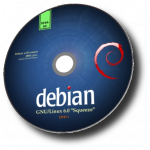
February has been again a busy month for me. Here s a quick summary of what I did: Multi-Arch work I have spent many days implementing and refining dpkg s Multi-Arch support with Guillem Jover (dpkg co-maintainer) and Steve Langasek (beta-tester of my code ;-) ). Early testers can try what s in my latest pu/multiarch/snapshot/* branch in my personal git repository. A Debian DVD shop I m always exploring new options to fund my Debian work (besides direct donations) and this month with the Debian Squeeze release I saw an opportunity in selling Debian DVD. Nobody provides DVD with included firmwares and quite a few people would like to avoid the SpaceFun theme. So I built unofficial Debian DVDs that integrate firmware and that install a system with the old theme (MoreBlue Orbit). Click here to learn more about my unofficial DVDs. On my blog In my People behind Debian series, I interviewed Mike Hommey (Iceweasel maintainer) and Maximiliam Attems (member of the kernel team). I started a Debian Cleanup Tip series and already published 4 installments: For contributors, I wrote two articles: the first gives a set of (suggested) best practices for sponsoring Debian packages and adapted my article as a patch for the Developers Reference. In the second article, I shared some personal advice for people who are considering participating on Debian mailing list: 7 mistakes to avoid when participating to Debian mailing lists.
Click here to subscribe to my free newsletter and get my monthly analysis on what s going on in Debian and Ubuntu. Or just follow along via the RSS feed, Identi.ca, Twitter or Facebook.

No comment Liked this article? Click here. My blog is Flattr-enabled.

25 February 2011

Evgeni Golov: Desktop in a shell: mutt

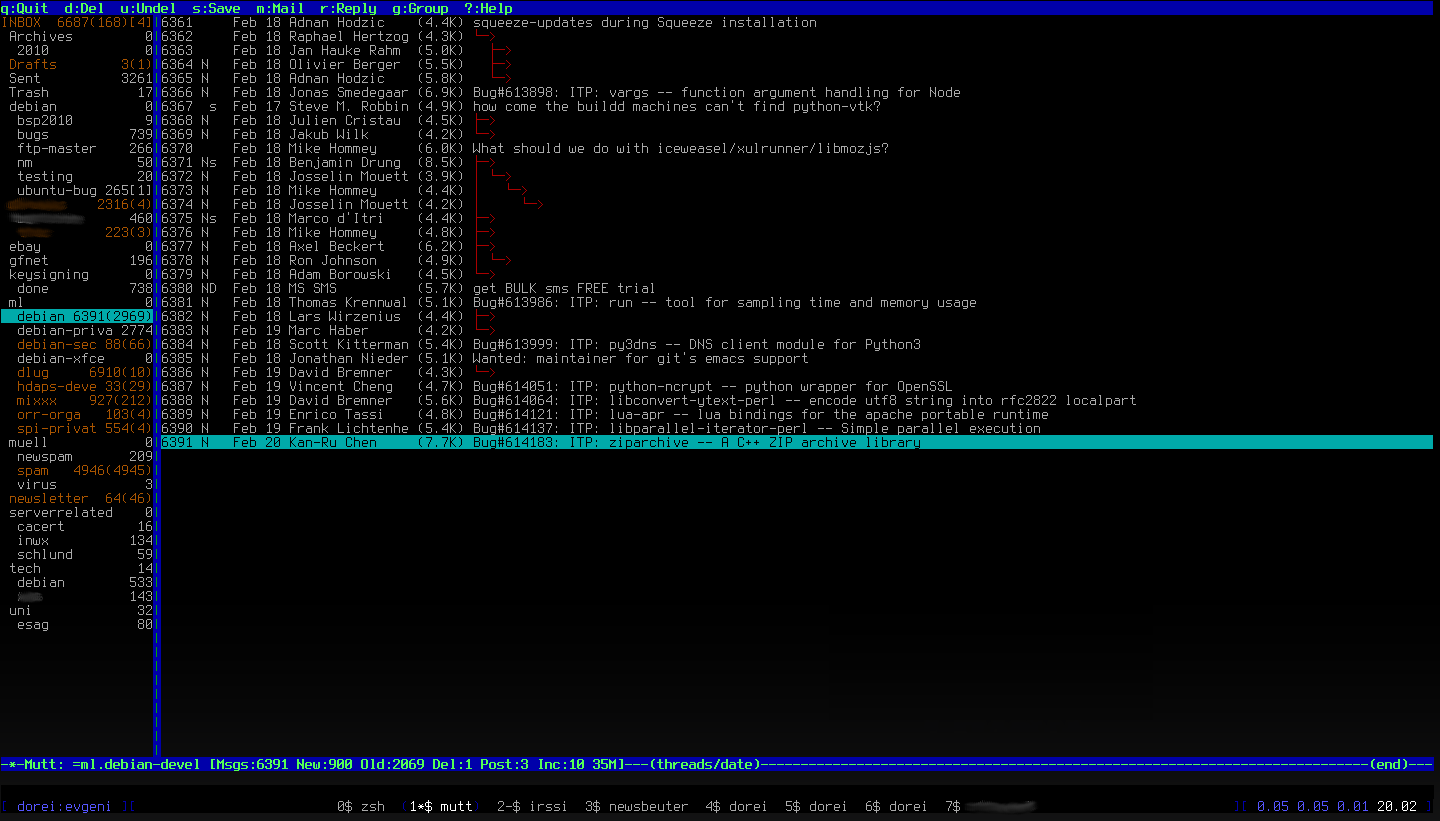
Continuing my series about a desktop in a shell, today I will present you my mutt setup. I use mutt because it has no bugs and is a really good MUA for people loving consoles ;)First of all you have to know, that all my mail is forwarded to my server and sorted into Maildirs via maildrop, so I do not care about sorting on my desktop , which just fetches the mail via IMAP from the server ;)I m running mutt-patched from Debian Squeeze, so not all options may be available for you if you do not have the same patchset as I do.First, tell mutt to fetch mail from imap.die-welt.net via IMAP:
set imap_user=username
set imap_pass=password
set folder="imaps://imap.die-welt.net/INBOX"
set spoolfile="imaps://imap.die-welt.net/INBOX"
Now, enable IMAP-IDLE, list subscribed folders, reconnect to the server if needed and mark mail as read when you open it:
set imap_idle
set imap_check_subscribed
unset imap_passive
unset imap_peek
Let mutt save sent mail to the Sent directory on the IMAP server, and postponed mail to Drafts:
set record=+Sent
set postponed=+Drafts
Read mail should stay where it is:
set mbox="!"
We use IMAP-IDLE, thus check for new mail manually only every 90 seconds:
set mail_check=90
Instead timeout after 15 seconds if no user input is given:
set timeout=15
Set default mail from address to my default mail address:
set from=evgeni@golov.de
And send mail via mstmp (see below for mstmp configuration):
set sendmail="/usr/bin/msmtp"
Tell mutt which addresses I recieve mail to (danger, ugly regex!):
alternates (evgeni@(debian.org golov.(de eu)) sargentd@(die-welt sargentd).net evgeni.golov@uni-duesseldorf.de)
As mutt knows where I receive mail, let it set From accordingly:
set reverse_name
Let mutt cache some stuff and find its certificates:
set header_cache="~/.mutt/cache/headers"
set message_cachedir="~/.mutt/cache/bodies"
set certificate_file=~/.mutt/certificates
set ssl_ca_certificates_file=/etc/ssl/certs/ca-certificates.crt
Show only interesting headers in an useful order:
ignore headers *
unignore headers from to subject date cc
hdr_order from to cc subject date
Fix stupid MUAs behaviour (e.g. filenames like =?iso-8859-1?Q?file=5F=E4=5F991116=2Ezip?=):
set rfc2047_parameters
Beep on new mail, will generate a ! in the window name in screen:
set beep_new
mutt-patched has the great sidebar patch, assign ctrl-n, ctrl-p to select next, prev folder, ctrl-o to open selected folder:
bind index \Cp sidebar-prev
bind index \Cn sidebar-next
bind index \Co sidebar-open
And toggle sidebar visibility with ctrl-b:
macro index \Cb '<enter-command>toggle sidebar_visible<enter><refresh>'
macro pager \Cb '<enter-command>toggle sidebar_visible<enter><redraw-screen>'
Since 1.5.20-2, mutt patched contains my sidebar-dotted and sidebar-sorted patches.
Let mutt shorten the displayed path (e.g. debian-devel instead of INBOX.ml.debian-devel) and sort the folders (the are returned in random order when using imap_check_subscribed):
set sidebar_shortpath
set sidebar_sort
Now let s set some colors (that match the rest of my desktop ):
color sidebar_new yellow default
color normal white default
color hdrdefault brightcyan default
color signature green default
color attachment brightyellow default
color quoted green default
color quoted1 white default
color tilde blue default
And add some useful macros for marking new and old messages as read:
macro index .n "<tag-pattern>~N<enter><tag-prefix><clear-flag>N<clear-flag>*" "Catchup all new messages"
macro index .o "<tag-pattern>~O<enter><tag-prefix><clear-flag>O<clear-flag>*" "Catchup all old messages"
When forwarding mail, I like it to be forwarded as an attachment (YMMV):
set mime_forward=yes
I m using goobook in mutt to fetch my addressbook from Google. As there is no Debian package for goobook (yet), you have to install it yourself (via easy_install):
apt-get install python-argparse python-gdata python-simplejson python-keyring python-nose
easy_install goobook
Configuration is easy via ~/.goobookrc:
[DEFAULT]
# If not given here, email and password is taken from .netrc using
# machine google.com
email: me@gmail.com
password: password
And then add the following to your .muttrc:
set query_command="goobook query '%s'"
bind editor  complete-query
macro index,pager a "<pipe-message>goobook add<return>" "add the sender address to Google contacts"
That s all for mutt, but We are running mutt in a screen, so let s add the following to .screenrc to fix transparency and cut&paste (see http://wiki.mutt.org/?MuttFaq/Appearance):
 defbce on
 term screen-bce
And as mutt uses mstmp (yes, I know, mutt can handle SMTP itself ), this is my .msmtprc:
defaults
domain dorei.kerker.die-welt.net
tls on
account die-welt.net
host smtp.die-welt.net
from sargentd@die-welt.net
auth on
user username
password password
tls_starttls on
tls_certcheck off
# Set a default account
account default : die-welt.net
C est tout! That is my personal mutt configuration, you can download it as one file here: my .muttrc. And as everyone loves screenshots, here is one:the default view of my muttOh, the next chapter will be about irssi, but not before next Sunday (March 6th) as I ll be offline for a week, skiing in Austria :)

23 February 2011

Thomas Koch: I've been young - I needed the money

Yesterday I had my last day at $company and today is my first day in freedom. I'll write about my future plans in another blog post. Here I just want to express the joy I had yesterday afternoon when I did:
CODE:
aptitude purge php5

I've started using PHP in 2006 and used it almost exclusively until the end of 2009. I believe I've learned most of what one can learn about PHP in this time. In 2010 I started to work in Java and only started to understand how limited PHP is.
I know that java is far from perfect. So I don't stop there and already started to learn Scala and looking forward to learn other languages too. But Java is for sure a better answer then PHP, regardless what the question was.
There are many reasons, why you should not, never, for no project ever use PHP. I'll only tell you my personal top reasons:
I once advocated PHP as a serious plattform and even gave three talks about PHP. I feel ashamed of this now and apologize. Please forgive me. It's not worth arguing about this post. Its just to make me feel less guilty about my foolishness in the past.

Joachim Breitner: Goodbye server4you

My server, which is among other things hosting this weblog, is a dedicated server originally hosted by the German webhoster webperoni. It was a bargain at that time, and still a good price, and I was satisfied with webperoni s performance and reliability. Unfortunately, they were taken over by another web hosting company, best known for their server4you brand. They moved my server to a different data center and continued to run it there. Unfortunately, server4you was less reliable and less flexible than my original hoster: For example, when one sector on the hard drive turned bad, they were not able to put in a new drive in my system, let me mirror the content, and then remove the old drive. In another, even worse, instance, my second IP address, which I bought from webperoni, was given to another customer. When I finally noticed and complained, they refunded me the charges that I paid for the IP. But understandably, I wanted to get away from that hoster. The contract is automatically prolonged for one year if not canceled in time, and I missed the deadline last year. This year, I finally got around to rent a slightly better and slightly more expensive server from Hetzner, which whom I already made good experience. I would have preferred to switch when I am back from India, but server4you would not even let me prolong the contract by just two months only a whole year or nothing. So they got nothing, and I started to work on the move yesterday. At first I set off installing the new system from scratch, setting up all the various services and copying over data and configuration. But quickly, I gave up and moved the system by completely by copying programs, configuration and data from the old server. The new system has its root partition on a LVM share on software RAID, and now uses grub2 to boot. I had a hard time to get it booting, and a hard time to debug the issues without access to the physical console. I finally understood the problem by running kvm -hda /dev/sda -hdb /dev/sdb -curses from the recovery system and observing that the initial ramdisk is having problems finding the root partition. The problem was that I thought addressing partitions via file system labels is the way to go now and manually added root=LABEL=root to the Linux command line in /etc/default/grub. But then the initial ramdisk would not activate the logical volume. If I had just left it to the grub package, which inserted root=/dev/mapper/vg-root, everything would work fine. The new IP address (88.198.48.143) has not propagated throughout the Internet yet. Running the following command for a variety of ports on the old machine (80.86.81.20) makes sure nobody notices:
port=443
iptables -t nat -A POSTROUTING -p tcp --dst 88.198.48.143 --dport $port -j SNAT --to-source 80.86.81.20
iptables -t nat -A PREROUTING -p tcp --dst 80.86.81.20 --dport $port -j DNAT --to-destination 88.198.48.143:$port
The only question remaining is: What to do with the old server for the remaining six weeks? I am considering to erase the system, set up a plain Debian system and run a tor/freenet/whatelse node at full speed.

21 February 2011

Stefano Zacchiroli: Squeeze, Debian, and the FSF

Short version: Dear FSF, thanks for your appreciation of Debian Squeeze achievements in getting rid of non-free firmware blobs. We still disagree on the overall freeness assessment of Debian, but I'm positive that steps like this one can further future collaboration, in the interest of both projects. Long version follows.
Historically, the relationships among Debian and the FSF have gone through mixed fortune (and that's quite an euphemism). On the one hand, Debian is committed to 100% Free Software, is an open project explicitly inspired by "the spirit of GNU", has been sponsored by FSF in its infancy, and properly calls itself "GNU/Linux" (or even "GNU/kFreeBSD"). On the other hand, Debian is the project who considers the GNU FDL license to be only conditionally free and which is not considered to be an entirely Free system according to FSF.
So much for the history corner. As a long time member of the Debian Project, as well as an FSF(E) fellow, I've always felt a bit sad about this state of affairs. Not because the two projects should have aligned goals; they clearly focus on different aspects of the quest for a Free (Software) world. Not even because they should agree on how to build a Free distribution: history has shown that FSF technical positions do not always get along with Debian's more "pragmatic" style, as embodied by point 5 of the Social Contract. Rather, my sadness is rooted in the belief that not getting along have encouraged duplication of efforts which could have been easily avoided (e.g. multiple distributions concurrently freeing up kernels). Furthermore, I'm more and more convinced that Debian nowadays enjoys a rather privileged position among Free Software vendors. Indeed, even though GNU/Linux distributions have reached a popularity we didn't dare to imagine 15 years ago or so, most distributions are under the direct or indirect control of commercial vendors. Those commercial vendors play a very important role in the promotion of Free Software. For instance, they are structured in ways that enable them to seal OEM deals with hardware manufacturers to sell computers with GNU/Linux pre-installed. Commercial vendors, by their own nature, are also in general better at marketing than non-commercial vendors. On the flip side however, commercial vendors are not yet relevant enough to drive proprietary drivers out of the market and, as a consequence, cannot yet afford not to support hardware which need such proprietary bits to work. Among mainstream GNU/Linux distributions[1] Debian is one of the very few vendors if not the only one that is both very relevant and, thanks to its independence, can afford taking Free Software's side: no commercial urgency can force Debian to negotiate on that. That is quite an asset to be used in the promotion of Free Software, especially to a public that is interested in and willing to understand what Free Software really is about. Such an "aware" public is on the rise as of lately, together with the general awareness increase of risks entailed by living a digital life, when that life is not under our control (think, as an example, at how often the "Facebook privacy debate" has hit mainstream medias in the last year). The "aware" public is the natural target of both Debian and the FSF. Dividing it would not serve well the cause of Free Software. With all that in mind, last August I took the chance of being on the "right" side of the Atlantic Ocean for DebConf10, to discuss possible venues of collaboration among Debian and the FSF. I sat down and discussed at length with John Sullivan, who I happen to know for his Debian involvement, in his capacities of FSF representative and operations manager. We discussed various topics, with the intention of bringing them up to the respective communities[2]. Then, inevitably, we ended up talking about the overall freeness of Debian and his exclusion from FSF listing of Free systems. (FSF is of course entitled to such judgements, pretty much as Debian is entitled to its own judgements on FSF licenses. Nevertheless those judgements contribute to dividing our public and might lead to wasteful duplication of efforts, where Free Software could better be served by collaboration.) The main ground for exclusion from that list used to be the compromises Debian has made in the past about non-free firmware blobs. But, as I pointed out back in August, those compromises would have been gone starting with Squeeze, making that argument moot. Today 6 months later I'm delighted to cheer at FSF's decision to publicly recognize the achievements Debian has delivered with Squeeze.
Thanks! It's a nice gesture that I've very much appreciated. I'm confident steps like this one will help future collaboration if, on both sides, we will be able to spot actual venues for collaboration. Needlessly to say, I still disagree with the overall FSF assessment of Debian non-freeness. Apparently, it still stands on the basis that Debian also provides a repository of nonfree software [ ] [which] is not part of the Debian system. [ ] but users would be hard-pressed to make a distinction and that people can readily learn about software available through it by browsing Debian's online package database. I respect the principle of non advertising non-free software and I even agree that it is a good principle. But unfortunately it's also a very blurry principle on which, in my opinion, Debian actually scores very well. No non-free software is offered to users by Debian; it's just for users that really want to have non-free software (or need to, in order to run a Free OS on their computers), that Debian tries to stay out of their way. For the "aware" public discussed above, I think it's much better to draw the line where software freedom ends and use that line to explain what does crossing it entails, than locking them up pretending non-free software do not exist. But fair enough: for the time being, I guess, we will need to agree to disagree on this one. Getting a little bit closer in the occasion of the Squeeze release is still an important step forward. It's up to each of us now to seek out initiatives which attract the interest of both projects and that can benefit from synergies.
[1] Sorry, I've no decent definition of "mainstream distribution" to offer, besides folklore and well-established distribution review sites. (Heck, I don't even have a decent definition of "well-established distribution review site" to offer!).
[2] which hasn't happened yet, due to the proverbial amount of available spare time.

Lucas Nussbaum: Debian Spring Cleanup

We have many orphaned packages in Debian. Those are packages that no longer have a maintainer willing to care for them. They are a problem for several reasons. Often, there have better alternatives (that s often why the maintainer gave up maintenance), but users keep installing them because they show up in apt-cache search. Or, they might be broken, without anybody noticing because they only have a few users. Also, developers need to take them into account. They might slow down transitions, have RC bugs that need fixing, etc. So, there are good reasons to remove some of the orphaned packages from the Debian archive. Not all of them. But those that have been orphaned for a long time without anybody stepping up to take over the maintenance, have very few users according to popcon, etc. Removing some of them also makes it easier to expose the ones that should really find an adopter. Also, that removal is not final. The good reason to do this now is that we are at the beginning of a release cycle, and that it will be easy to reintroduce packages that are really needed during the next two years. Also, packages (both source and binaries) are still available on snapshot.debian.org, so users can still install them from there, and re-uploading them to Debian is very easy if someone wants to adopt them. So, how do I proceed? I use bapase, and go through specific sets of packages (using a custom version of bapase to restrict the list to those packages). For example, orphaned packages that have a popcon lower than 50, have been orphaned for more than 500 days, and whose orphaning bugs have not been modified in the last 100 days. Then, I read the bug log, and decide if there s a reason to keep the package. If there s not, I request the removal. As of today, there are 471 orphaned packages in Debian. The goal is not to get down to zero, but it s certainly possible to get down to 200 or 250. How can you help? Start from the list, and find some easy targets. You can take a look at bug #483252 if you want to re-use my template. Also, one thing that is currently missing in the process is that orphaned packages that have reverse-dependencies should not be removed without removing their dependencies (if appropriate). An easy and efficient way to know if a given package has reverse (build-)?dependencies would be great, so I could integrate this info into bapase and exclude those packages from the list, or mark them somehow.

20 February 2011

Joey Hess: the fate of the orphans

(Non-Debian readers can stop reading now, I'm talking about so-called "orphaned packages" and not anything of real-world importance.) In 2008 I stopped maintaining non-native packages in Debian. At the time I maintained a fair amount of stuff. It's interesting to see what happened to it after I gave it up, partly because some of the results seem so random and partly because some of what has happened seems to point at weaknesses in Debian. First, the success stories. More than half of my packages are now being maintained by others: xaos, longrun, fbreader, liblinebreak, analog, xgalaga, znc, sysnews, metastore, bsdgames, uqm, oneko, kobodeluxe, archivemail, unclutter I still use much of this stuff, some only occasionally, and other daily, and am glad it's being kept alive. (It's surprising that someone still care about longrun.) I was unhappy to have to NMU procmeter3 just before the release of Debian 6.0 to fix a trivial to debug RC bug that almost got it removed from the release. I hope that was just a bump in its road. Also, splitvt is now maintained again after being orphaned a long time. I'm not sure if it makes sense to keep it in Debian, since screen can do the same thing, and it has a security history, but someone wants to, so that's fine. Two packages are left on life support. I'm surprised nobody wants to maintain grepmail, unless we're all using notmuch or mairix now? And dgen is the best Sega emulator I know of. Several games were not picked up by the games team, despite them showing some interest originally, and were removed: xtris, xjewel, xemeraldia, xbl Of those, xemeraldia in particular is a lot of fun, I'm surprised nobody cared to keep it. Also, the nestra Nintendo emulator was shipped with squeeze, but now is removed as it never got a maintainer. I don't know if there is a better NES emulator in Debian. The intercal programming language was removed. Surprising. Debian does at least still have clc-intercal for all our pressing Intercal needs. Finally, sparkline-php was removed today despite never having had any bugs, needing no maintenance, and being a suggests of ikiwiki, which is now more buggy (broken relationships, outdated docs) and less featureful in Debian.

16 February 2011

Gunnar Wolf: Responsible biking: We are not exempt from the traffic rules!

As you know, I very often advocate using the bycicle as the main means of transportation in Mexico City. The city is very apt for biking through it, and contrary to the fears of mostly everybody, the city is neither aggressive nor as dangerous as people say. However, I have seen cyclists which seem to be looking for the best ways to be hit by a car, or to hit a pedestrian. Yesterday, I read this note in La Jornada: The local Environment Secretary calls cyclists to respect vial regulations. Many cyclists assume they are a special case of pedestrians, and zig-zag as they please between the road and the walkway, or just stay in the walkway. That is dangerous, both to pedestrians and to themselves. You might find children, elderly or motion-challenged people on your way. Also, not only will pedestrians only expect other people in the walkway, moving at their pace or slightly more, but cars will also not expect somebody moving at 10-20Km/h. A car driver pulling out of his garage, or crossing a street, will not have enough warning when he sees you, and you are very likely to end up in an accident. Since ~5 years ago, Mexico City is growing a grid of Metrob s and confined troleb s cero emisiones (trolleybus) lanes. Many cyclists use those lanes That is VERY dangerous. Public transport vehicles are large, have a lot of inertia, and will take longer to react to finding you ahead of them. Besides, they can go way faster than a regular bike (~60Km/h for metrob s, ~40Km/h for troleb s), and have to stop every couple of blocks. So, you will be uncomfortable if trailing them, and you will be a liability to ~100 people if you go ahead of them. Besides, it is illegal to drive in the confined lanes if you are not a public, semimassive transport vehicle! Surprisingly many people have argued they prefer riding their bicycles against the traffic I think they prefer staring at Death into its blue, glowing eyes (or into its long, thin whiskers)... By far, most cars that hit a bicycle do so from the side, when crossing a road. And if you arrive at a crossing from the wrong way, the way a driver does not expect you, don't expect the driver to be aware of you. Also, in the much less likely event of a car running into you, would it be better to be hit at 80Km/h (60Km/h of the car plus 20Km/h of your own speed on a full frontal crash), or at 40Km/h (substracting instead of adding)? Yes, some people say that looking at the car will allow you to maneuver How far in advance would you know a car coming from the front will hit you? One second? That's 22 meters at 80Km/h (again, if you realize the 60Km/h car is heading straight to you, at 20Km/h). Too short notice for you to do anything Any maneuver will most likely end in an accident. And the driver would not be so much to blame, as he would not be anticipating you riding against the traffic. Make sure you get seen. By night, always use proper lights (red on the back, white on the front, and reflective material to the sides). Day or night, wear bright, reflective clothes (or over-clothes material). Act in a predictable fashion. Remember you are riding a vehicle and are subject to the same rules any driver is A cyclist is not exempt from driving correctly! Do not jump red lights. Never ride on the walkway. Do your best to enjoy the ride. And ride. Yes, ride, take the streets, enjoy the streets. But don't attempt to drive the traffic out of it The streets belong to us all, and we can all share them. PS I also saw this note in the same paper: Sunday Rides in "Campo Militar N mero Uno". The main military field was open as a park this weekend! I have to make sure it is regularly open I am definitively going there!

15 February 2011

Joey Hess: recently, in pictures

Maggie in hollow tree I found
my new car on Roan Mountain
a knot from inside the tree
Beware the Joey in its natural habitat.

Lucas Nussbaum: Re: please send a patch

It seems that Matthew Palmer misread my blog post as a complaint against developers asking for patches in exchange of pet feature requests. He really should pay more attention, since I gave pet feature requests as an example of case where it would be appropriate to ask for a patch:
Of course, there are cases where it s perfectly reasonable to ask for a patch: when the task is expected to take hours, or when the result is of limited interest to everybody except the demander.
But even then, it s not clear. This morning I got an email from a someone involved in PHP packages maintenance, who said that Bugs Search @ UDD was a great tool, but that he would love to have a way to list all bugs affecting packages with the implemented-in::php debtag.
To produce a working patch for this would probably take him at least an hour. You need to set up a copy of the CGI on alioth, understand the DB structure, dig into the code, etc. If you don t understand SQL and Ruby, it could be a really difficult process. Also, it s probably quite uninteresting for him to do that, since he is unlikely to stick around developing UDD.
Instead, it didn t take me more than 5 minutes to produce a one-liner.
The net result for Debian in that case? 55 minutes saved by a developer. Update:
Torsten Werner wrote an angry reply to my post. It s true that yesterday s episode triggered my blog post, because I felt quite frustrated to have to provide a patch for something that simple, and would have preferred to use the time for a Debian task where I would be more efficient. But I was not particularly angry at that episode, since that s something I ve seen on several occasions. That s also why I did not mention any team in particular.
The feature request I was making was reasonable, and cannot really be considered a pet feature request (though I might be biased with my QA hat on): mentionning in the dak templates used for bug closure that packages removed from Debian can still be found on snapshot.d.o. The fact that he thinks that addressing this himself turns him into a slave raises interesting questions.

Lucas Nussbaum: Please send a patch

There s a frequent pattern in the Debian community where someone would suggest an improvement to some package or service, and the person responsible for it would reply with please send a patch . Of course, there are cases where it s perfectly reasonable to ask for a patch: when the task is expected to take hours, or when the result is of limited interest to everybody except the demander.
But often, it would be much more efficient for the person responsible for the service to take 5 or 10 minutes to make the change, than for the demander to spend half an hour learning how to contribute to this service, writing an untestable patch, and sending it back to the person responsible for the service for integration. It is important to see this problem as the issue of maximizing the usefulness of the resources we have. Often, we are in a situation where we could either: It would be much better if, instead of saying Please send a patch , people would say Are you interested in contributing a patch, or should I make the change myself? . Remember that each time you ask someone to take some time to contribute a patch in an area where he is not an efficient contributor, you take some time away from him that could be used to contribute something in an area where he is efficient.

Next.

Previous.