Search Results: "pm"

30 June 2012

Raphael Geissert: One week later

It's been over a week since I publicly announced the Debian mirrors redirector.
It was covered in several places, including Linux Magazin and mentioned in the latest Debian Project News.

Thanks to all that, and quite a number of early testers of the wheezy image for the Raspberry Pi, http.debian.net has processed over one million requests from APT clients alone. This figure doesn't count users of apt-cacher/apt-cacher-ng/approx, or those who happen to be mirroring Debian with wget. Oh, and this is only the number of requests since last Sunday, when the logs were rotated.

By the way, if you are going to Debconf12 in Nicaragua, why don't you give http.debian.net a try and forget about switching mirrors?

I'm happy to see how it was welcomed and the many emails, blog comments, IRC messages, and other sorts of messages I've received about it. There are surely some rough edges but the service is still under development and all the feedback helps.

In some cases there appear to be some confusion as to how exactly it chooses the mirrors and why sometimes some mirrors are not used. I'll try to cover some of those topics in this blog, hoping the

P.S. If you've sent me an email about http.d.n and I haven't replied, please rest assured I try to take a quick look at them but I can't reply to every single message fast enough.

Thanks to everyone!

Jose Luis Rivas Contreras: Newer Node.js + NPM installed separately, execvp() error

I got an awfull bug with npm after installing Node.js 0.8.0 and trying to do an npm -g update. The solution was deleting npm from /usr/local and with nave reinstall 0.8.0. After this my npm was working perfectly but that made me loose like 12 hours. (I thought was a bug in an app I m writing, I totally forgot I ran npm -g update.)

29 June 2012

Jo Shields: How to build a bungalow begin with the chimney

Whilst nobody was looking, Mono became the most important framework in the world of games. And I mean that with only a smidge more than my usual levels of hyperbole. It really is fantastically important, as far as game development goes. I blogged a long time ago about its use inside EA s multi-million-selling The Sims 3. And the massive performance gains in Second Life when they switched from their in-house scripting language to Mono are well documented. But I m not talking about those, I m talking about the now, the recent stuff. First up is Unity 3D. Not to be confused with the Ubuntu user interface, Unity 3D is a proprietary game development tool which began life for Mac, and has now managed to become the single most popular game engine amongst smartphone developers. It targets a bunch of new platforms not just Android and Windows and iOS, but in the new 4.0 release, Linux too for the first time. And every Unity 3D game is a Mono game the core of Unity is a fork of Mono, which enables it to have the performance and ease of development which it does. A reasonably large percentage of the cross-platform games on Kickstarter, such as Wasteland 2 and Super Retro Squad, are cross-platform because Unity 3D makes it easy and each of those games is powered by Mono. However, I have better things to do today than gush about a proprietary tool. No, far more important are the Free ways to develop games. So today I m going to talk about MonoGame. MonoGame is an implementation of Microsoft XNA a high level framework for developing in .NET languages, originally designed to allow indie developers access to the Xbox 360. XNA covers many of the bases covered by SDL sound, graphics, input, and so on, but can go onto platforms where SDL isn t an option, such as the aforementioned Xbox 360. And with MonoGame, any game written for XNA is a game which can not only run on Microsoft s approved platforms Windows, Xbox 360, Windows Phone but also on other platforms such as Mac OS X, iPhone, iPad, Android, and Linux. Cross-platform is good. More games are good. And MonoGame enables every Xbox 360 indie developer to throw a Linux port out of the door with a relative minimum of fuss. There are 2,521 games on the Xbox Live Indie Games store (games by individuals or small groups, with no major publisher) and each of those can become a game for Debian and Ubuntu with very little work. Not to mention the games with actual publishers (some portion of the 492 games on XBLA), not to mention the mobile games written for Windows Phone, Android and iOS. All of these developers have an easy route to Linux releases, as long as the effort remains low. And with today s publishing in the Debian archive of MonoGame 2.5.1, the effort is as low as can be. Anyone who purchased the recent Humble Indie Bundle 5, and played Bastion, has seen MonoGame in action Bastion began life as an XNA game for Xbox 360, and the Linux port was made possible only by MonoGame. Bastion s 100+ industry awards should indicate the possibilities open to a creative mind with decent developer tools. MonoGame is Free Software, built on top of other Free Software, with an active upstream development team genuinely responsive to the needs of Linux distributions. It s well worth a look not just for porting, but for new projects too. And I m delighted that it will be available to all users of Debian 7.0, as well as Ubuntu 12.10.
28 June 2012

Michal Čihař: Preview of Weblate 1.1

Upcoming Weblate 1.1 is now installed on both http://demo.weblate.org and http://l10n.cihar.com. There release is almost ready (I plan to add only one minor feature) and this setup was done to get more testing in real life setup before making actual release. As you can see from list of changes, there are no big changes from user point of view. In case indexing offloading is enabled (what is the case for l10n.cihar.com), the interface should respond more quickly while translating (and not produce errors in some setups). The rest of changes are even more hidden, like smarter handling of merges and commits (still there is place for improvements here) or better validation of admin forms. Anyway I hope to complete missing features and do possible bug fixes in first two week of July and you can expect 1.1 to be released around Friday 13th.

Filed under: English Phpmyadmin Weblate 0 comments Flattr this!

27 June 2012

Michal Čihař: Weblate - over 20000 translations in 3 months

Today, I wondered how much translations were done using Weblate since it was born. Of course I can give only numbers for services I maintain, the biggest one being translation server for phpMyAdmin, Gammu and Weblate. Looking at the logs, the server l10n.cihar.com helped to contribute over 20000 (actually little bit more as tracked are only changes after releasing Weblate 0.8), what is quite impressive number. Of course biggest amount of contributions came in time of preparing phpMyAdmin 3.5.0 release, where I gave it huge amount of publicity (AKA spamming my blog), but number of people accessing the website still grows since then (still number of submitted translations is slightly lower). Now as 1.0 release proved to be quite stable, it's time to focus on 1.1 development, which will bring offloading of fulltext indexing (it was proven to be unreliable to update index online for bigger sites). Almost all issues targeted for 1.1 are already fixed and all what needs to be done is testing in real life situations.

Filed under: English Phpmyadmin Weblate 0 comments Flattr this!

25 June 2012

Raphaël Hertzog: Test Driven Development with CppUTest, now in Debian

I have recently read Test Driven Development with Embedded C by James W. Grenning and published by Pragmatic Programmers. I really enjoyed the book: while I was aware of the huge benefits of having a comprehensive test suite, I never studied seriously the principles behind Test Driven Development (TDD) and this book makes a good introduction to the topic. At the same time it focuses on the C language and contains lots of examples on how you can create tests even for projects which have to interact with hardware or other unpredictable components (the key is to create many abstractions) using all the possibilities that C offers. The author convincingly argues that developing code with TDD forces you to create a modular design that is easier to evolve when the underlying requirements change. He also highlights how the tests serve as reference documentation of the API. James W. Grenning recommends CppUTest as his xUnit test framework of choice. When I wanted to try this test framework, I discovered that it was not available in Debian. I decided to package it because it has some interesting features not offered by the contenders (at least not to my knowledge). It s now available in Debian and in Ubuntu. First, it doesn t require any explicit registration of tests and has a very lightweight syntax. The small downside is that CppUTest requires the usage of C++ for the tests. But C++ is compatible with C so it doesn t matter much if you have a C++ compiler for your target. On the contrary, usage of variables and methods scoped to the test group makes it easy to write clear tests. Here s a short sample of test code:
extern "C"  
#include "timer.h"
#include "timefn.h"
 
 
#include "CppUTest/TestHarness.h"
 
static Time the_time;
static const int start_sec = 123;
static const int start_nsec = 456789000;
static const int delay_sec = 8;
static const int delay_nsec = 111111000; // start_nsec + delay_nsec < 10^9
 
TEST_GROUP(Timer)
 
    /* Class variables available to all tests in the group */
    Timer timer;
    Delay remaining;
 
    /* Standard setup/teardown methods of xUnit tests */
    void setup()  
        timer = timer_new();
        time_set(&the_time, start_sec, start_nsec);
        /* [...] */
     
 
    void teardown()  
        timer_free(timer);
        /* [...] */
     
 
    /* Helper functions specific to the test group */
    void start_timer_with_delay(long sec, long nsec)
     
        timer_set_real_delay(timer, sec, nsec);
        timer_start(timer);
     
 
    void ensure_remaining_is(long sec, long nsec)
     
        CHECK_EQUAL(sec, delay_get_seconds(remaining));
        CHECK_EQUAL(nsec, delay_get_nanoseconds(remaining));
     
 ;
 
TEST(Timer, NewIsNotStarted)
 
    CHECK(!timer->started);
 
/* [...] */
TEST(Timer, GetRemainingTimeWithNanosecondPrecision_ShiftOfSeconds)
 
    start_timer_with_delay(delay_sec, delay_nsec);
    time_set(&the_time, start_sec + delay_sec - 5, start_nsec + delay_nsec + 1000);
 
    remaining = timer_get_remaining_time(timer);
 
    ensure_remaining_is(4, 999999000);
 
To run those tests, you just need this boilerplate code in a main.cpp:
#include "CppUTest/CommandLineTestRunner.h"
 
int main(int argc, char** argv)
 
   return CommandLineTestRunner::RunAllTests(argc, argv);
 
Another interesting feature is its integrated memory leak detection system. Any test that hasn t released allocated memory at the end of the teardown process will be marked as failed. The upstream developers have made some unusual choices (static library only, installation in a private directory) but this will likely change with the switch to an automake and autoconf-based build system. I have reported the oddities that I found and I requested them to provide a pkg-config file to make it easier to compile and link unit tests exploiting CppUTest. I already used CppUTest to develop a small application running on an embedded Linux. At some point, I might try to use CppUTest for dpkg development. I believe that it makes for a good fit. dpkg is already C++ ready since dselect is written in C++ and reuses a good part of dpkg s code. In any case, if you like Test Driven Development and are writing C or C++ based applications, I invite you to try CppUTest.

No comment Liked this article? Click here. My blog is Flattr-enabled.

24 June 2012

Gregor Herrmann: RC bugs 2012/25

good news of the RCBW week: more & more patches from people I haven't seen before in the BTS. keep them coming!

23 June 2012

Dirk Eddelbuettel: Rcpp 0.9.11

Release 0.9.11 of Rcpp arrived on CRAN this morning and in Debian later today. This is a somewhat incremental release with a few internal improvements and few new features. One interesting new development has been contributed by John Chambers who is extending 'Rcpp modules' into 'Rcpp classes' which allows R code to modify and extend C++ classes loaded via Rcpp modules; see help(setRcppClass) for more. This also lead to some changes in the code for loading modules which however requires the brand-new R version 2.15.1 released today as well. The complete NEWS entry for 0.9.11 is below; more details are in the ChangeLog file in the package and on the Rcpp Changelog page.
0.9.11  2012-06-22
    o   New member function for vectors (and lists etc) containsElementNamed() 
        which returns a boolean indicating if the given element name is present
    o   Updated the Rcpp.package.skeleton() support for Rcpp modules by
        carrying functions already present from the corresponding unit test
        which was also slightly expanded; and added more comments to the code 
    o   Rcpp modules can now be loaded via loadRcppModules() from .onLoad(),
        or via loadModule("moduleName") from any R file 
    o   Extended functionality to let R modify C++ clases imported via modules
        documented in help(setRcppClass)
    o   Support compilation in Cygwin thanks to a patch by Dario Buttari
    o   Extensions to the Rcpp-FAQ and the Rcpp-modules vignettes
    o   The minium version of R is now 2.15.1 which is required for some of
        the Rcpp modules support 
Thanks to CRANberries, you can also look at a diff to the previous release 0.9.10. As always, even fuller details are on the Rcpp Changelog page and the Rcpp page which also leads to the downloads, the browseable doxygen docs and zip files of doxygen output for the standard formats. A local directory has source and documentation too. Questions, comments etc should go to the rcpp-devel mailing list off the R-Forge page

22 June 2012

Michael Casadevall: Announcement of Calxeda Highbank Images for Quantal

Hello all,

As many of you are aware, Canonical, in coordination with Calxeda and others have been working to bring Ubuntu to this new class of high-performance cluster yet low power-consumption computers built around ARM processors. Many of you who were in attendance at UDS in Oakland may remember seeing Calxeda's talks and demonstration live, and the exciting news that this represents. The full presentation is available here.

In line of this work, I'm am extremely pleased to announce that the initial images for the Calxeda Highbank platform are now available for download, with installation instructions available here. Please remember that Quantal is still in alpha development, and is not currently recommended for use in a production environment. As development of 12.10 continues, we will continue to refine these images, and our tools to fully embrace MAAS on ARM, and make 12.10 to be our best release yet.


As an additional note, Highbank support for Ubuntu 12.04 LTS will be released as part of the 12.04.1 update in mid-August and will join our support for ArmadaXP from Marvell, which was released as part of 12.04.

---
Michael Casadevall
ARM Server Tech Lead
Professional Engineering and Services, Canonical
michael.casadevall@canonical.com

19 June 2012

Neil Williams: subversion 1.7.5 insane upgrade requirement wasting days and days of effort

Upgrading the local version of subversion against a large subversion repository has so far taken three DAYS. It goes through this multi-gigabyte repository in no perceivable order, it goes through every single directory in every single tag and every single branch and refuses to run in any sub-directory. (Even after clearing out some older tags, the tags/ directory is still nearly 8Gb and that doesn't include any binary files.) Each tag within tags/ is 500Mb and contains nearly 6000 sub-directories. Yes, it's large but svn upgrade should still be able to handle it without crippling every machine.

I can't image how svn is going to manage when the server finally gets upgraded. Probably be quicker to dump the entire repo and reimport it.

When I finally give up the will to proceed or simply need to use this LAPTOP for something else, I have to interrupt it with Ctrl-C at which point is starts all over again!

This isn't a slow machine, it's a i5 quad-core T410 with 8Gb of RAM and 1Tb of storage - and svn has made it crawl for days. The only way to pair down the working copy is to delete every tag and branch which means losing data like old build logs and old packages. The repository is this large because it's tracking the development of multiple commercial products which share common code but which also have numerous releases and release updates.

I can't even use svn st on this repo without this completing - I haven't been able to work on this repo since this started. Absolutely insane.

Pondering filing an RC bug on the basis of unjustifiable data loss. We have many machines at work with this repository checked out and if we ever migrate to Wheezy, it's going to mean a WEEK of lost work!!

subversion                    1.7.5-1


So, a warning for anyone else using subversion 1.7.5 with a very large repository: DELETE ALL TAGS and BRANCHES and any other directory anywhere in every single working copy tree on every machine which ever wants to use that copy again before even thinking about upgrading to 1.7.5.

The tags directories don't even need to be upgraded because we only use those to rebuild the code as it was in chroots.

Unspeakably furious about such a completely dumb tool being thrown into the mix DAYS before the Wheezy freeze. Now I have to kill it AGAIN just so that I can suspend the laptop. IDIOTS.

Joey Hess: I work for The Internet now

I have an interesting problem: How do I shoehorn "hired by The Internet for a full year to work on Free Software" into my resume? Yes, the git-annex Kickstarter went well. :) I had asked for enough to get by for three months. Multiple people thought I should instead work on it for a full year and really do the idea justice. Jason Scott was especially enthusiastic about this idea. So I added new goals and eventually it got there. graph: up and to the right, to 800% funded Don Marti thinks the success of my Kickstarter validates crowdfunding for Free Software. Hard to say; this is not the first Free Software to be funded on Kickstarter. Remember Diaspora? Here's what I think worked to make this a success: I've already put two weeks work into developing the git-annex assistant. I'm blogging about my progress every day on its development blog. The first new feature, a git annex watch command that automatically commits changes to git, will be in the next release of git-annex. I can already tell this is going to be a year of hard work, difficult problems, and great results. Thank you for helping make it happen.

Jo Shields: Enormity

(This blog post is a more firm version of a series of tweets and forum posts I made a few weeks ago. This should also be considered a refresh of this post by Mirco Bauer a few years ago) It has been said that Mono is bloated, and that people should use lighter frameworks that don t pull in hundreds of meg . How much basis in reality is there for those comments? Well, let s do a little thought exercise. How much space is the minimum space needed for several languages to work? For this experiment, we will be looking at the required installation size on disk of several language frameworks, each time installing the bare minimum for a command-line hello world app in that language to run. For example, the Ruby result is the minimum install required to run:
puts 'Hello world'
and the Mono result is the minimum install required to run the following code, which has been compiled on a different machine using dmcs :
public class Hello1
 
   public static void Main()
    
      System.Console.WriteLine("Hello, World!");
    
 
Obviously, for dynamic languages like Ruby and Python, there is no compiler step needed. For languages like C# and Java, it is fair to compile these on a different machine as end-users of packages running these frameworks receive binaries, not source they do not need a development environment. So, on to the test environment. This is a bare bootstrapped AMD64 Debian Unstable system, as of today (i.e. debootstrap sid /tmp/badger ). Its install size is 275MB. So how much space? Ruby 1.9 Test code is as follows:
puts 'Hello world'
Install requirements are as follows:
root@dream:/# aptitude install ruby1.9.1
The following NEW packages will be installed:
  libffi5 a  libruby1.9.1 a  libyaml-0-2 a  ruby1.9.1 
0 packages upgraded, 4 newly installed, 0 to remove and 0 not upgraded.
Need to get 4703 kB of archives. After unpacking 13.1 MB will be used.
OpenJDK 7 Test code is as follows:
class HelloWorldApp  
    public static void main(String[] args)  
        System.out.println("Hello world");
     
 
Install requirements are as follows:
root@dream:/# aptitude install openjdk-7-jre-headless
The following NEW packages will be installed:
  ca-certificates a  ca-certificates-java a  dbus a  fontconfig-config a  
  icedtea-7-jre-cacao a  icedtea-7-jre-jamvm a  java-common a  
  krb5-locales a  libavahi-client3 a  libavahi-common-data a  
  libavahi-common3 a  libcap2 a  libcups2 a  libdbus-1-3 a  libexpat1 a  
  libffi5 a  libfontconfig1 a  libfreetype6 a  libglib2.0-0 a  
  libglib2.0-data a  libgssapi-krb5-2 a  libjpeg8 a  libk5crypto3 a  
  libkeyutils1 a  libkrb5-3 a  libkrb5support0 a  liblcms2-2 a  libnspr4 a  
  libnss3 libnss3-1d a  libpcre3 a  libpcsclite1 a  libsystemd-login0 a  
  libxml2 a  openjdk-7-jre-headless openjdk-7-jre-lib a  openssl a  
  sgml-base a  shared-mime-info a  ttf-dejavu-core a  tzdata-java a  ucf a  
  xml-core a  
0 packages upgraded, 43 newly installed, 0 to remove and 0 not upgraded.
Need to get 51.5 MB of archives. After unpacking 137 MB will be used.
Python 3.2 Test code is as follows:
print ("Hello world")
Install requirements are as follows:
root@dream:/# aptitude install python3.2-minimal
The following NEW packages will be installed:
  file a  libexpat1 a  libffi5 a  libmagic1 a  mime-support a  python3.2 a  python3.2-minimal 
0 packages upgraded, 7 newly installed, 0 to remove and 0 not upgraded.
Need to get 4853 kB of archives. After unpacking 17.7 MB will be used.
Mono 2.10 (C#) Test code is as follows:
public class Hello
 
   public static void Main()
    
      System.Console.WriteLine("Hello world");
    
 
Install requirements are as follows:
root@dream:/# aptitude install mono-runtime
The following NEW packages will be installed:
  binfmt-support a  cli-common a  libmono-corlib4.0-cil a  libmono-i18n-west4.0-cil a  libmono-i18n4.0-cil a  
  libmono-security4.0-cil a  libmono-system-configuration4.0-cil a  libmono-system-security4.0-cil a  
  libmono-system-xml4.0-cil a  libmono-system4.0-cil a  mono-4.0-gac a  mono-gac a  mono-runtime 
0 packages upgraded, 13 newly installed, 0 to remove and 0 not upgraded.
Need to get 4383 kB of archives. After unpacking 11.5 MB will be used.
Of course, every time I try to make the argument that Mono is much leaner than what people propose as an alternative, the anti-Mono brigade go on the defensive and insist that nobody in their right minds uses Python or Ruby either everything ever should be written in Qt. So, hypothetically Qt 4.8 (C++) Test code is as follows:
#include <QTextStream>
int main(int argc, char **argv)
 
   QTextStream s(stdout);
   s << "Hello, world!\n";
   return 0;
 
Install requirements are as follows:
root@dream:/# aptitude install libqtcore4
The following NEW packages will be installed:
  libffi5 a  libglib2.0-0 a  libglib2.0-data a  libpcre3 a  libqtcore4 
  libxml2 a  sgml-base a  shared-mime-info a  xml-core a  
0 packages upgraded, 9 newly installed, 0 to remove and 0 not upgraded.
Need to get 10.3 MB of archives. After unpacking 27.8 MB will be used.
Presented without comment for your consideration. Edit: There are complaints that these numbers are misleading, because they show default package manager behaviour, rather than what happens when passing extra flags or config file settings to Apt. When disabling installation of Recommends: packages, the numbers change as follows:

17 June 2012

Russell Coker: Debian SE Linux Status June 2012

It s almost the Wheezy freeze time and I ve been working frantically to get things working properly. Policy Status At the moment I m preparing an upload of the policy which will support KDE (and probably most desktop environment) logins and many little fixes related to server operations (particularly MTAs). I would like to get another version done before Wheezy is released, but if Wheezy releases with version 2.20110726-6 of the policy that will be OK. It will work well enough for most things that users will be able to use local changes for the things that don t work. One significant lack with the current policy is that systemd won t work. I ve included most of the policy changes needed, but haven t done any of the testing and tweaking that is necessary to make it work properly. I would like to see policy support for systemd in a Wheezy update if I don t get it done in time for the first release. If I don t get it done in time for the release and if the release team don t accept it for an update then I ll put it in my own repository so anyone who needs it can get it. /run Labelling One significant change for Wheezy is to use a tmpfs mounted on /run instead of /var/run. This means that lots of daemon start scripts create subdirectories of /run at boot time which need to have SE Linux labels applied for correct operation. The way things work is that usually the daemon will write to the directory immediately after the init script has created it, so I can t just have my own script recursively relabel all of /run. Some packages that need to be patched are x11-common #677831, clamav-daemon #677686, sasl2-bin #677685, dkim-filter #677684, and cups #677580. I am sure that there are others. [ -x /sbin/restorecon ] && /sbin/restorecon -R $DIR Generally if you are writing an init script and creating a directory under /run then you need to have some shell code like the above immediately after it s created. Also the same applies for directories under /tmp and any other significant directories that are created at boot time. Upgrading Currently there are some potential problems with the upgrade process, I m working on them at the moment. Ideally an apt-get dist-upgrade would cleanly upgrade everything. But at the moment it seems likely that the upgrade might initially go wrong and then work on the second try. There are some complications such as the selinux-policy-default package owning a config file which is used by mcstransd (which is part of the policycoreutils package), when the config file format changes you get order dependencies for the upgrade. Kernel Support My aim when developing a new SE Linux release for Debian is that the policy should work as much as possible with the user-space from the previous release. So if you upgrade from Squeeze to Wheezy you should be able to start the process by upgrading the SE Linux policy (which drags in the utilities and lots of libraries). This means that if you have a server running you don t have to put it out of action for the entire upgrade, you can get the policy going and then get other things going. I haven t tested this yet but I don t expect any problems (apart from all the dependencies). Also the policy should work with the kernel from the previous release. So if you have a virtual server where it s not convenient to upgrade the kernel then that shouldn t stop you from upgrading the user-space and the SE Linux policy. I ve tested this and found one bug, the sepolgen-ifgen utility that you need to run before audit2allow -R won t work if the kernel is older than the utilities #677730. I don t know if it will be possible to get this fixed. Anyway it s not that important, you can always copy the audit log to another system running the same policy to run audit2allow, it s not convenient but not THAT difficult either. The End Result I think that the result of using SE Linux in Wheezy will be quite good for the people who get the upgrade done and who modify a few init scripts that don t get the necessary changes in time. I anticipate that someone who doesn t know much about SE Linux will be able to get a basic workstation or small server installation done in considerably less than an hour if they read the documentation and someone who knows what they are doing will get it done in a matter of minutes (plus download and install time which can be significant on old hardware). At the moment I m in the process of upgrading all of my systems to Unstable (currently Testing has versions of some SE Linux packages that are too broken). While doing this I will keep discovering bugs and fix as many of them as possible. But it seems that I ve already fixed most things that affect common users. Also BTRFS works well. Not that supporting a new filesystem is a big deal (all that s needed is XATTR support), but having all the nice new features on one system is a good thing. Now I just need to get systemd working. Related posts:
  1. SE Linux Status in Debian 2012-01 Since my last SE Linux in Debian status report [1]...
  2. SE Linux Status in Debian 2012-03 I have just finished updating the user-space SE Linux code...
  3. SE Linux Status in Debian 2011-10 Debian/Unstable Development deb http://www.coker.com.au wheezy selinux The above APT sources.list...

C.J. Adams-Collier: Service Interruption

They heard my internets were down BEGIN PGP SIGNED MESSAGE
Hash: SHA256 , During the month of June, we experienced a service interruption which
has caused our mutual customer, School, an
inability to initiate outgoing calls. CenturyLink has also caused the
interruption of the school s DSL Internet service. During the interim
period, I have installed a VoIP phone and tied in to one of my backup
providers so that the school can function during the CenturyLink outage. My understanding is that will begin paying CenturyLink
directly for its service again due to the service interruption. Until
such time as I receive acknowledgment from you, we will continue paying
roughly $27/mo for the school s phone service. Once the transfer has
been completed to the satisfaction of the school board, Collier
Technologies LLC will discontinue payment for the DID - - ,
leaving a single DID, - - . I expect that the DID will be
moved back into the school s name within the next week. Please confirm
this or provide information as to why this will not happen. I have CC d
and , who represent the school board on this
email. Please include them in the reply. Since the DSL service has been interrupted at both the School s address
and at ours, and since CenturyLink has failed to provision the remaining
two $14.99/mo 10Mbit DSL circuits which Collier Technologies LLC has
been paying for despite their un-provisioned state, we will be reducing
the monthly payment from $150 to $70. My understanding is that $70 will
be more than sufficient to cover the two voice lines, inside wire
maintenance and regulatory fees. If this is not the case, please keep
us appraised of the situation. Do note that our decision to stop payment for service which is not being
provided does not, in our estimation, relieve CenturyLink from the three
year contract period negotiated verbally by you on its behalf on October
4th 2011. We currently consider CenturyLink to be in breach of
contract. Sincerely, C.J. Adams-Collier BEGIN PGP SIGNATURE
Version: GnuPG v1.4.12 (GNU/Linux) iQEcBAEBCAAGBQJP3TqdAAoJEEyimPmPQm23qqoH/jRmiIVHNCnH8EqgzsNQiUIm
LVrFg7kvpRIM692mzrGgkZTxG9KlVK+1/dZl1aPsmMP5Q6ni3NigzRDnywJZI53a
yTwTZhid8B4Tf+JOrhUhKPpmm+2YoHTYaobwgxk+rRgUGUHEMCZMPnjKNGGPDCgO
2jNz5fSnI6IinRz4nXwhAtGQRUXVJWXGrUCX1kQXGH4pNvjbgE8n6yAsC6sixlPa
ljDaNjxUEjUY4PmQdKNetkzQLxlq/OGJgRHZXHzfg37cJEF4L28DJBYvf8CHbt2K
87ELXGs6nDn54yI4q4ojODln9k/GzC+NY6MDXYdof7dNbeEPujvjQCiyRgjLc9E=
=uLKs
END PGP SIGNATURE

14 June 2012

John Goerzen: How to debugging Linux failure to resume from suspend?

I m running a computer with a Gigabyte Z68A-D3H-B3 motherboard, and have never been able to get it to properly resume from suspend to RAM in Linux. It has worked fine on the rare occasion I ve tried it in Windows 7. My somewhat limited usual for debugging aren t particularly helpful. The system appears to suspend perfectly fine. It just doesn t resume. To be more precise, when I push the button to resume, the power comes up (fans whir, HDD spins up, etc.) but nothing happens. The USB keyboard and mouse don t respond, Caps Lock doesn t toggle any LEDs, it doesn t respond on the wired LAN, and the display stays off. Although it s a desktop, I d really like to save power on this thing by suspending it when it s not in use. There s no sense in wasting power I don t need to be consuming. I ve tried what I used to try on laptops. I tried running in single-user mode, without X, or even the kernel modules for video acceleration loaded. I tried unloading whatever hardware modules I thought I could without completely destabilizing the system. I updated the BIOS to the latest release. I tried various combinations of video tweaks. I tried using s2ram from uswsusp instead of pm-suspend. Nothing made any difference. They all behaved exactly the same. Googling showed a lot of resources for people that had trouble getting their machines to go to sleep. And also for people whose machines would wake up but just wouldn t re-activate the display. But precious little for people with my particular symptoms. What s a good place to start looking to fix something like this? Some details CPU is Core i5-2400. Kernel is wheezy s 3.2.0-2-amd64, though this problem has persisted as long as I ve had this machine, which was running squeeze at install time. Video is NVidia GeForce GTX 560 (GF114). Hard drives are SATA, Ethernet is integrated RTL8111/8168B. Userland is up-to-date amd64 wheezy.

10 June 2012

C.J. Adams-Collier: Spinning up a telco with Asterisk

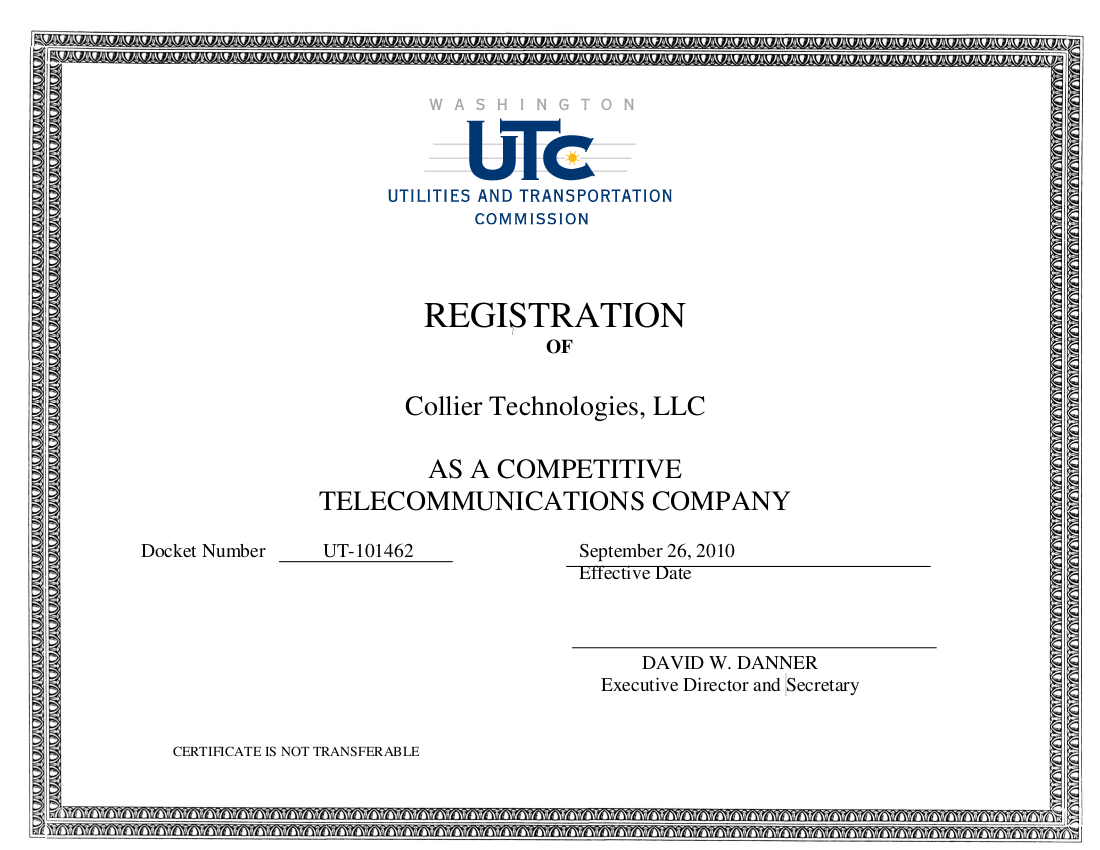
Back in 2010 our family moved to an island in an archipelago in the very top left of the US s continental 48. Before moving, we did some research regarding high speed network access. There are a number of ISPs in the county, and even one headquartered on our particular island. But we found that the location where we were moving was in a location that was only serviced by 1.5Mbit DSL. We had been spoiled in our previous two locations and had seen bittorrent swarms reach over 1 megabyte (8Mbit) per second. Our bill said 12 down and 2 up and I wouldn t be surprised if we achieved that. At any rate, we were disappointed by the speeds available and I wanted to do something to increase the availability of higher speed network access. Some of my friends from the North American Network Operators Group (NANOG) told me that one way to improve the infrastructure would be to get involved with telecommunications provisioning as a Competitive Local Exchange Carrier (CLEC). With the above in mind, I did some research and found that in my state, the authority which certifies and regulates telecommunication companies is the Washington Utilities and Transportation Commission (UTC). I found the application forms on their web site, filled them in, filed the appropriate documents with the appropriate departments and received a certificate in the mail shortly thereafter. We have since filed annual reports as required by regulations. And with the regulatory bits out of the way, we re now left with only the technical details. We have established collocation of some equipment near our state s central telecommunications facility at the Westin Building. Technically speaking, the equipment is not in the Westin, but at a facility connected to the Westin by multiple 10Gbit links. Close enough for me. On this equipment, we re running a Debian Squeeze Xen virtual machine and Digium s Asterisk packages:
cjac@sip0:/etc/asterisk$ grep -B1 -A3 Digium /etc/apt/sources.list
#
#  Digium asterisk packages
#
deb http://packages.asterisk.org/deb squeeze main
deb-src http://packages.asterisk.org/deb squeeze main
cjac@sip0:/etc/asterisk$ dpkg -l   grep digium
ii  asterisk                           1:1.8.11.1-1digium1~squeeze  Open Source Private Branch Exchange (PBX)
ii  asterisk-config                    1:1.8.11.1-1digium1~squeeze  Configuration files for Asterisk
ii  asterisk-core-sounds-en-gsm        1.4.21-1digium1~squeeze      asterisk PBX sound files - English/gsm
ii  asterisk-voicemail                 1:1.8.11.1-1digium1~squeeze  simple voicemail support for the Asterisk PBX
We saved up our nickles and dimes to purchase a 24-port analog telephony adapter (ATA). At the recommendation of one of the denizens of the #asterisk IRC channel on Freenode, we decided on the GrandStream GXW4024. It is pretty simple to configure them to register with the Asterisk server using SIP. The only problem we had was getting the RTP streams, and specifically their dynamically negotiated service ports, to traverse the NATting routers. We currently have no public IPv4 address space at the facility which hosts the ATA and so the rest of the internet sees all traffic originating from this facility as sourced from a single IP address. In order for this to work, the edge NAT/router device (in our case, BIG-IP LTM) needs to map its external L4 ports (TCP and UDP) to the ports of internal hosts so that traffic can flow correctly. This works fine for traffic which originates from internal hosts and is destined to hosts on the outside, but does not work so well when hosts on the outside wish to establish connections to hosts on the inside. Call management sessions established with the SIP protocol fall in the former category, but call media (voice, video, txt) sessions established with the RTP protocol fall into the latter; the host and port used to carry the media data are negotiated during the SIP session and the media socket is established out of band. The problem occurs when the call server (on the outside) attempts to establish an RTP stream with the caller (on the inside). The call server attempts to connect to the caller using the IP address from which it connected. The problem is that this address belongs to the NATting router, not the caller, and the router is not expecting the incoming request. To get around the NAT problem, we temporarily configured an OpenVPN tunnel to extend our L2 network segment. Our long-term solution will be to provision an Asterisk server in the same facility as the ATA and then register with it instead of the server in the exterior facility. Calls will then be switched at the local facility and the upstream link will be established using the IAX2 protocol, which does not suffer from the same NAT problems. All of the above provides us with the ability to make voice calls between the 24 channels of the ATA and any other SIP client which happens to be registered with our call server. This is all well and good, but we want to allow our customers to call the rest of the world. Enter our upstream provider, Threshold Communications, Inc. These folks are experienced and professional and have helped us successfully establish both outbound and inbound calling for very reasonable monthly costs. The call quality is indistinguishable from the lines provisioned by the local bell company, and inter-operates flawlessly with the Asterisk call server stack. Because calls transit our Asterisk server, we can add additional features such voicemail, speech to text, DTMF-driven menus, or call forwarding, for instance. We could even theoretically set up autopatch service using amateur frequencies or launch perl scripts to automate arbitrary fancyness. Our next step is to finish configuration of our 12-channel ZyXEL AAM1212 DSLAM modules so that we can deliver ADSL service over the same copper pairs as we deliver voice.

8 June 2012

Joey Hess: going to DebConf 12

going to Debconf button Nicaragua here I come! I plan to be at DebCamp for a few days too, taking advantage of some time on internet-better-than-dialup to work on fixing the tasks on the CDs. Also will be available for one-on-one sessions on debhelper, debconf, debian-installer development, pristine-tar, or git-annex. Give me a yell if you'd like to spend some time learning about any of these. Also, my git-annex Kickstarter ends in 3 days. It has reached heights that will fund me, at a modest rate, for a full year of development! (I'm also about to start renting my house for the first time. Whee!)

Lars Wirzenius: Obnam 1.0 (backup software); a story in many words

tl;dr: Version 1.0 of Obnam, my snapshotting, de-duplicating, encrypting backup program is released. See the end of this announcement for the details. Where we see the hero in his formative years; parental influence From the very beginning, my computing life has involved backups. In 1984, when I was 14, my father was an independent telecommunications consultant, which meant he needed a personal computer for writing reports. He bought a Luxor ABC-802, a Swedish computer with a Z80 microprocessor and two floppy drives. My father also taught me how to use it. When I needed to save files, he gave me not one, but two floppies, and explained that I should store my files one one, and then copy them to the other one every now and then. Later on, over the years, I've made backups from a hard disk (30 megabytes!) to a stack of floppies, to a tape drive installed into a floppy interface (400 megabytes!), to a DAT drive, and various other media. It was always a bit tedious. The start of the quest; lengthy justification for NIH In 2004, I decided to do a full backup, by burning a copy of all my files onto CD-R disks. It took me most of the day. Afterwards, I sat admiring the large stack of disks, and realized that I would not ever do that again. I'm too lazy for that. That I had done it once was an aberration in the space-time continuum. Switching to DVD-Rs instead CD-Rs would reduce to the number of disks to burn, but not enough: it would still take a stack of them. I needed something much better. I had a little experience with tape drives, and that was enough to convince me that I didn't want them. Tape drives are expensive hardware, and the tapes also cost money. If the drive goes bad, you have to get a compatible one, or all your backups are toast. The price per gigabyte was coming down fast for hard drives, and it was clear that they were about to be very competitive with tapes for price. I looked for backup programs that I could use for disk based backups. rsync, of course, was the obvious choice, but there were others. I ended up doing what many geeks do: I wrote my own wrapper around rsync. There's hundred, possibly thousands, of such wrappers around the Internet. I also got the idea that doing a startup to provide online backup space would be a really cool thing. However, I didn't really do anything about that until 2007. More on that later. The rsync wrapper script I wrote used hardlinked directory trees to provide a backup history, though not in the smart way that backuppc does it. The hardlinks were wonderful, because they were cheap, and provided de-duplication. They were also quite cumbersome, when I needed to move my backups to a new disk the first time. It turned out that a lot of tools deal very badly with directory trees with large numbers of hardlinks. I also decided I wanted encrypted backups. This led me to find duplicity, which is a nice program that does encrypted backups, but I had issues with some of its limitations. To fix those limitations, I would have had to re-design and possibly re-implement the entire program. The biggest limitation was that it treated backups as full backup, plus a sequence of incremental backups, which were deltas against the previous backup. Delta based incrementals make sense for tape drives. You run a full backup once, then incremental deltas for every day. When enough time has passed since the full backup, you do a new full backup, and then future incrementals are based on that. Repeat forever. I decided that this makes no sense for disk based backups. If I already have backed up a file, there's no point in making me backup it again, since it's already there on the same hard disk. It makes even less sense for online backups, since doing a new full backup would require me to transmit all the data all over again, even though it's already on the server. The first battle I could not find a program that did what I wanted to do, and like every good NIHolic, I started writing my own. After various aborted attempts, I started for real in 2006. Here is the first commit message:
revno: 1
committer: Lars Wirzenius <liw@iki.fi>
branch nick: wibbr
timestamp: Wed 2006-09-06 18:35:52 +0300
message:
  Initial commit.
wibbr was the placeholder name for Obnam until we came up with something better. We was myself and Richard Braakman, who was going to be doing the backup startup with me. We eventually founded the company near the end of 2006, and started doing business in 2007. However, we did not do very much business, and ran out of money in September 2007. We ended the backup startup experiment. That's when I took a job with Canonical, and Obnam became a hobby project of mine: I still wanted a good backup tool. In September 2007, Obnam was working, but it was not very good. For example, it was quite slow and wasteful of backup space. That version of Obnam used deltas, based on the rsync algorithm, to backup only changes. It did not require the user to do full and incremental backups manually, but essentially created an endless sequence of incrementals. It was possible to remove any generation, and Obnam would manage the deltas as necessary, keeping the ones needed for the remaining generations, and removing the rest. Obnam made it look as if each generation was independent of each other. The wasteful part was the way in which metadata about files was stored: each generation stored the full list of filenames and their permissions and other inode fields. This turned out to be bigger than my daily delta. The lost years; getting lost in the forest For the next two years, I did a little work on Obnam, but I did not make progress very fast. I changed the way metadata was stored, for example, but I picked another bad way of doing it: the new way was essentially building a tree of directory and file nodes, and any unchanged subtrees were shared between generations. This reduced the space overhead per generation, but made it quite slow to look up the metadata for any one file. The final battle; finding cows in the forest In 2009 I decided to leave Canonical and after that, my Obnam hobby picked up in speed again. Below is a table of the number of commits per year, from the very first commit (bzr log -n0 awk '/timestamp:/ print $3 ' sed 's/-.*//' uniq -c awk ' print $2, $1 ' tac):
2006 466
2007 353
2008 402
2009 467
2010 616
2011 790
2012 282
During most of 2010 and 2011 I was unemployed, and happily hacking Obnam, while moving to another country twice. I don't recommend that as a way to hack on hobby projects, but it worked for me. After Canonical, I decided to tackle the way Obnam stores data from a new angle. Richard told me about the copy-on-write (or COW) B-trees that btrfs uses, originally designed by Ohad Rodeh (see his paper for details), and I started reading about that. It turned out that they're pretty ideal for backups: each B-tree stores data about one generation. To start a new generation, you clone the previous generation's B-tree, and make any modifications you need. I implemented the B-tree library myself, in Python. I wanted something that was flexible about how and where I stored data, which the btrfs implementation did not seem to give me. (Also, I worship at the altar of NIH.) With the B-trees, doing file deltas from the previous generation no longer made any sense. I realized that it was, in any case, a better idea to store file data in chunks, and re-use chunks in different generations as needed. This makes it much easier to manage changes to files: with deltas, you need to keep a long chain of deltas and apply many deltas to reconstruct a particular version. With lists of chunks, you just get the chunks you need. The spin-off franchise; lost in a maze of dependencies, all alike In the process of developing Obnam, I have split off a number of helper programs and libraries: I have found it convenient to keep these split off, since I've been able to use them in other projects as well. However, it turns out that those installing Obnam don't like this: it would probably make sense to have a fat release with Obnam and all dependencies, but I haven't bothered to do that yet. The blurb; readers advised about blatant marketing The strong points of Obnam are, I think: Backups may be stored on local hard disks (e.g., USB drives), any locally mounted network file shares (NFS, SMB, almost anything with remotely Posix-like semantics), or on any SFTP server you have access to. What's not so strong is backing up online over SFTP, particularly with long round trip times to the server, or many small files to back up. That performance is Obnam's weakest part. I hope to fix that in the future, but I don't want to delay 1.0 for it. The big news; readers sighing in relief I am now ready to release version 1.0 of Obnam. Finally. It's been a long project, much longer than I expected, and much longer than was really sensible. However, it's ready now. It's not bug free, and it's not as fast as I would like, but it's time to declare it ready for general use. If nothing else, this will get more people to use it, and they'll find the remaining problems faster than I can do on my own. I have packaged Obnam for Debian, and it is in unstable, and will hopefully get into wheezy before the Debian freeze. I provide packages built for squeeze on my own repository, see the download page. The changes in the 1.0 release compared to the previous one: The future; not including winning lottery numbers I expect to get a flurry of bug reports in the near future as new people try Obnam. It will take a bit of effort dealing with that. Help is, of course, welcome! After that, I expect to be mainly working on Obnam performance for the foreseeable future. There may also be a FUSE filesystem interface for restoring from backups, and a continous backup version of Obnam. Plus other features, too. I make no promises about how fast new features and optimizations will happen: Obnam is a hobby project for me, and I work on it only in my free time. Also, I have a bunch of things that are on hold until I get Obnam into shape, and I may decide to do one of those things before the next big Obnam push. Where; the trail of an errant hacker I've developed Obnam in a number of physical locations, and I thought it might be interesting to list them: Espoo, Helsinki, Vantaa, Kotka, Raahe, Oulu, Tampere, Cambridge, Boston, Plymouth, London, Los Angeles, Auckland, Wellington, Christchurch, Portland, New York, Edinburgh, Manchester, San Giorgio di Piano. I've also hacked on Obnam in trains, on planes, and once on a ship, but only for a few minutes on the ship before I got seasick. Thank you; sincerely SEE ALSO

5 June 2012

Axel Beckert: Finding similar but not identical files

There are quite some tools to find duplicate files in Debian and depending on the task I use either hardlink (see this blog posting), fdupes (if I need output with all identical files on one line; see example below), or duff (if it has to be performant). But for code deduplication in historically grown code you sometimes need a tool which does not only find identical files, but also those which just differ in a few blanks or blank lines. I found two tools in Debian which can give you some kind of percentage of similarity: simhash (which is btw. orphaned; upstream homepage) and similarity-tester (upstream homepage). simhash has the shorter name and hecne sounds more usable on the command-line. But it seems only be able to compare two files at once and also only after first computing and writing down its similarity hash to a file. Not really usable for those one-liner cases on the command-line. similarity-tester has the longer name (and one which made me suspect that it may be a GUI tool), but provides what I was looking for:
$ find . -type f   sim_text -ipTt 75
This lists all files in the current directory which have at 75% ( -t 75 ) in common with another file in the list of files. The option -i causes sim_text to read the files to compare from standard input; -p causes sim_text to just output the similarity percentage; and -T suppresses the per-file list of found tokens. I used similarity-tester s sim_text tool to compare natural langauge as most of the files, I had to test, are shell scripts. But similarity-tester also provides tools to test the similarity of code in specific programming languages, namely C, Java, Pascal, Modula-2, Lisp and Miranda. Example output from the xen-tools project (after I already did a lot of code deduplication):
./intrepid/30-disable-gettys consists for 100 % of ./edgy/30-disable-gettys material
./edgy/30-disable-gettys consists for 100 % of ./intrepid/30-disable-gettys material
./common/90-make-fstab-rpm consists for 98 % of ./centos-5/90-make-fstab material
./centos-5/90-make-fstab consists for 98 % of ./common/90-make-fstab-rpm material
./gentoo/55-create-dev consists for 91 % of ./dapper/55-create-dev material
./dapper/55-create-dev consists for 90 % of ./gentoo/55-create-dev material
./gentoo/55-create-dev consists for 88 % of ./common/55-create-dev material
./common/90-make-fstab-deb consists for 87 % of ./common/90-make-fstab-rpm material
./common/90-make-fstab-rpm consists for 85 % of ./common/90-make-fstab-deb material
./common/30-disable-gettys consists for 81 % of ./karmic/30-disable-gettys material
./intrepid/80-install-kernel consists for 78 % of ./edgy/80-install-kernel material
./edgy/30-disable-gettys consists for 76 % of ./karmic/30-disable-gettys material
./karmic/30-disable-gettys consists for 76 % of ./edgy/30-disable-gettys material
./common/50-setup-hostname-rpm consists for 76 % of ./gentoo/50-setup-hostname material
Depending on the length of possible filenames and amount of files this can be made more readable using the column utility from the bsdmainutils package and reversed by using tac from the coreutils package:
$ find . -type f   sim_text -ipTt 75   tac   column -t
./common/50-setup-hostname-rpm  consists  for  76   %  of  ./gentoo/50-setup-hostname    material
./karmic/30-disable-gettys      consists  for  76   %  of  ./edgy/30-disable-gettys      material
./edgy/30-disable-gettys        consists  for  76   %  of  ./karmic/30-disable-gettys    material
./intrepid/80-install-kernel    consists  for  78   %  of  ./edgy/80-install-kernel      material
./common/30-disable-gettys      consists  for  81   %  of  ./karmic/30-disable-gettys    material
./common/90-make-fstab-rpm      consists  for  85   %  of  ./common/90-make-fstab-deb    material
./common/90-make-fstab-deb      consists  for  87   %  of  ./common/90-make-fstab-rpm    material
./gentoo/55-create-dev          consists  for  88   %  of  ./common/55-create-dev        material
./dapper/55-create-dev          consists  for  90   %  of  ./gentoo/55-create-dev        material
./gentoo/55-create-dev          consists  for  91   %  of  ./dapper/55-create-dev        material
./centos-5/90-make-fstab        consists  for  98   %  of  ./common/90-make-fstab-rpm    material
./common/90-make-fstab-rpm      consists  for  98   %  of  ./centos-5/90-make-fstab      material
./edgy/30-disable-gettys        consists  for  100  %  of  ./intrepid/30-disable-gettys  material
./intrepid/30-disable-gettys    consists  for  100  %  of  ./edgy/30-disable-gettys      material
Compared to that, fdupes only finds the two 100% identical files:
$ fdupes -r1 . 
./intrepid/30-disable-gettys ./edgy/30-disable-gettys 
But fdupes helped me already a lot to find the first bunch of identical files in xen-tools. :-)

Anand Kumria: Internet-o! Or why the Internode Business SLA is not worth a damn.

Last week (28th May), I had five Internet services across two countries. This week, I have seven (7), with two new ones in Australia. It all begin, when Internode decided that in their own best interest to migrate me from my existing DSLAM to one of their own infrastructure. They had sent an email indicating when it was likely to occur. And they were sending invoices to the same address. Naturally, they would send the date of the migration to the same address they had used for the past 9 months to communicate to me with, right? Wrong. Internode still do not understand why they never sent the notification email, as it turns out. Compare the response time, update times, and restore times they specify to what actually occurred.
2012-05-28 12:05 BST
I'm informed of an outage. In the past, the problem has been at my end, so I run through the standard diagnostic procedure. Everything seems to be normal, so I call Internode. Sure enough, our service dropped off the Internet. According to Timothy, that happened at 11:15 AEST because of a migration to their own DSLAM. After some diagnosis from Internode, they realise that whilst the migration has successfully disconnected the service, they have not reconnected anything. There is no sync. Ticket #454448 raised - which is when I'm informed that I'm on the business SLA. I've asked for updated to both an Australian and UK mobile. "Not a problem". Estimated time of resolution: 48 hours. Yes, 48 hours. There goes the first SLA milestone.
2012-05-30 07:28 BST
I ring and speak with Carl. He indicates that as best he knows, the service is to be 7pm. for those keeping score, no updates have occurred during this time. To either number. I query him about the SLA period. He says the response time is 2hrs and restore time is 10hrs. He also indicates that this can all be checked online and that we can apply for a refund.
2012-05-30 10:27 BST
I ring, again, and this time speak with Justin. I ask why I've not have an updated, since 7pm AEST has well and truly gone. He authenticates me and places me on hold to investigate. Advises that the issue is fixed, says he sees sync on the line. I indicate that I do not. He asks me to turn off the ADSL modem, we do, and he still sees sync. on the line. Believes there is another problem at the exchange, another issue raised with wholesaler. No ticket number issues to me. ETA to fix 7pm 2nd June. Note:This was a 1 hour International call
2012-06-01 04:00 BST
I happened to check, and notice I have connectivity to the external interfaces (and thus, obviously, line sync.) again. No notification though.
2012-06-01 14:31 BST
Amidst all this, I also have to to source two external connections - Telstra & Optus, get them setup, reconfigure routing, email delivery and other network services so that the businesses which are relying on the Internet, still work. Not fun. Especially when I have no access to the routers. I had to get multiple people on site.
2012-06-04 11:XX CEST
I'm told that the second site has gone done. Inexplicably. After some round-trip and diagnosis, we determine that the routing change has occurred. However it has been done incorrectly. And, of course, no notice / or update occurred either. Multiple tickets are raised by multiple people, amongst them: #4562559 from my mobile phone whilst I am in Zurich.
2012-06-04 16:56 CEST
I am informed, and it is confirmed, that the attempted routing change has been reverted and we are back to how things were on 2012-06-01.
2012-06-05 05:44 CEST
I wake up, and find out that of at least three hours ago, they appear to have called (finally!) and actually fixed the routing to both sites. That is a week of down time, multiple people (4 people) around in various countries around the World and hundreds of dollars in calls between us all to get things working. Now, to look into compensation.
2012-06-05 09:43 CEST
I receive a missed call, which I later learn is Internode actually calling me (for once!). At that moment, I'm actually giving a lightening talk on Django-PaaS
And that, dear reader, is why Internode Business SLA is a waste of money. The services were broken by a change of no net benefit to me, was over a week ago. Also, during this process. My UK home Internet went down. My UK Three post-paid service "ran out of money" and Vodafone has a service outage for half a day. A perfect storm of Internet dis-connectivity. So, if you have been wondering, that is why I've been offline for various parts of the last week.

Next.

Previous.