Ingo Juergensmann: Letsencrypt: challenging challenges
On December 3rd 2015 the Letsencrypt project went to public beta and this is a good thing! Having more and more websites running on good and valid SSL certificates for their HTTPS is a good thing, especially because Letsencrypt takes care of renewing the certs every now and then. But there are still some issues with Letsencrypt. Some people criticize the Python client needing root priviledges and such. Others complain that Letsencrypt currently only supports webservers.
Well, I think for a public beta this is what we could have expected from the start: the Letsencrypt project focussed on a reference implementation and there are already other implementations being available. But one thing seems to a problem within the design of how Letsencrypt works as it uses a challenge response method to verify that the requesting user is controlling the domain for which the certificate shall be issued. This might work well in simple deployments, but what about a little more complex setups like multiple virtual machines and different protocols involved.
For example: you're using domain A for your communication like user@example.net for your mail, XMPP and SIP. Your mailserver runs on one virtual machine, whereas the webserver is running on a different virtual machine. The same for XMPP and SIP: a seperate VM as well.
Usually the Letsencrypt approach would be that you configure your webserver (by configure /.well-known/acme-challenge/* location or use a standalone server on port 443) to handle the challenge response requests. This would give you a SSL cert for your webserver example.net. Of course you could copy this cert to your mail-, XMPP- and SIP-server, but then again you have to do this everytime the SSL cert gets renewed.
Another challenge is of course that you are not only have one or two domains, but a bunch of domains. In my case I host approximately >60 domains. Basically the mail for all domains are handled by my mailserver running on its own virtual machine. The webserver is located on a different VM. For some domains I offer XMPP accounts on a third VM.
What is the best way to solve this problem? Moving everything to just one virtual machine? Naaah! Writing some scripts to copy the certs as needed? Not very smart as well. Using a network share for the certs between all VMs? Hmmm... would that work?
And what about TLSA entries of your DNSSEC setup? When a SSL cert is renewed than the fingerprint might need an update in your DNS zone - for several protocols like mail, XMPP, SIP and HTTPS. At least the Bash implementation of Letsencrypt offers a "hook" which is called after the SSL cert has been issued.
What are you ways to deal with this kind of handling the ACME protocol challenges and multi-domain, multi-VM setup?
Kategorie:


 Sites like Twitter and Facebook are not fundamentally free platforms, despite the fact they don't ask their users for money. Look at how Facebook's censors
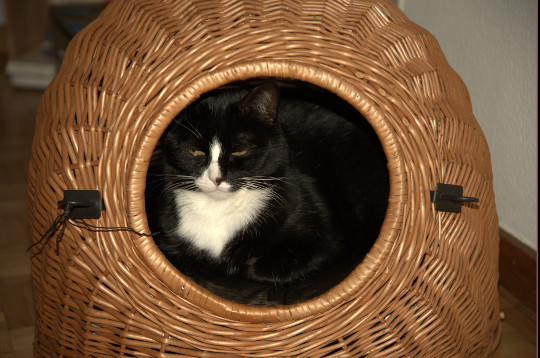 Many marketing campaigns that have been successful today, whether they are crowdfunding, political activism or just finding a lost cat claim to have had great success because of Twitter or Facebook. Is this true? In reality, many users of those platforms follow hundreds of different friends and if they only check-in once a day, filtering algorithms show them only a small subset of what all their friends posted. Against these odds, just posting your great idea on Facebook doesn't mean that more than five people are actually going to see it. Those campaigns that have been successful have usually had something else going in their favour, perhaps it was a friend working in the media who gave their campaign a plug on his radio show or maybe they were lucky enough to be

 In January 2014 the open-vm-tools package was orphaned and I took the chance to take over the maintenance.
Unfortunately the package is still not 100% in the shape I d like to see it, but I m getting closer.
I have to say Thank You for a lot of good bug reports, especially for those use cases which are
hard to test/reproduce for me (running Debian in a Windows-based VMware Workstation Player for example .).
At
 What happened in the


 Driving on, briefly stopping at Cascade Lake (I also stopped on the
way back, the view is nice), then reaching the parking at the Twin
Lakes trail on the shore of Mountain Lake. Good think I arrived
somewhat early the parking was quite full already. I also got a bit
confused on which way the hike starts, since it's not well marked, but
after that I started the hike. It's also possible to drive up to Mount
Constitution, but that's just lame; hiking from the base it's quite
easy, if you find how to start the hike. Anyway:


 Small price
though!
 Improvements are


 My monthly report covers a large part of what I have been doing in the free software world. I write it for
 Amb el cor compungit, Debian lamenta la p rdua d'Ian Murdock, ferm
partidari del programari lliure i de codi obert, pare, fill i l'"ian"
a Debian.
L'Ian va comen ar el projecte Debian l'agost de 1993, i va publicar les
primeres versions m s tard el mateix any. Debian es convertiria en el
sistema operatiu universal pel m n, que funciona en tot tipus de
dispositius, des de sistemes encastats fins a l'estaci especial.
L'Ian es va centrar en crear una distribuci i una cultura de comunitat
que fessin el correcte, ticament o t cnica. Publicar quan estigui a
punt i la ferma posici sobre la llibertat de programari s n les regles
d'or en el m n del programari lliure i de codi obert.
La seva devoci per fer el correcte va guiar la seva feina, tant a
Debian com els seg ents anys, sempre treball per assolir el millor
futur possible.
El somni de l'Ian est viu, la comunitat de Debian continua
incre blement activa, amb milers de desenvolupadors que treballen
innumerables hores per proporcionar un sistema operatiu segur i fiable.
Els pensaments de la comunitat de Debian s n amb la fam lia de l'Ian en
aquests moments tant durs.
La seva fam lia ens ha demanat privacitat en aquests moments dif cils i
volem respectar-ho. Des de Debian i des de la comunitat de Linux en
general podem enviar mostres de condol a in-memoriam-ian@debian.org;
seran guardades i arxivades.
 In my old flat I had a couple of simple radio-controlled switches,
which allowed me to toggle power to a pair of standing lamps - one at
each side of the bed. This was very lazy, but also really handy and
I've always been curious about automation..
When it comes to automation there seems to be three main flavours:

 initramfs-tools version 0.121~rc2 and dracut version 044+3-2 have
moved most of what was in their main binary packages into a 'core'
package (dracut-core, initramfs-tools-core), leaving only automation
hooks in the main package. The core packages can be coinstalled
without conflicts and without creating any initramfs images at
installation time.
If you're been wondering how they compare but were afraid to break
your system by overwriting your current working initramfs, now is
the time to try the other option.
Testing dracut, for initramfs-tools users