Search Results: "nate"

6 October 2014

Julian Andres Klode: A weekend with the Acer Chromebook 13 FHD (AKA nyan-big)

I spent the weekend using almost exclusively my Chromebook 13, on a single charge Saturday and Sunday. Keyboard I think I like the keyboard better now than I used to when I first tried it. It gets nowhere near the ThinkPad X230 one, though; appart from the coating, which my (backlit) X230 unfortunately does not have. Screen While the screen appeared very grainy to me on first sight, having only used IPS screens in the past year, I got used to it over the weekend. I now do not notice much graininess anymore. The contrast still seems extremely poor, the colors are not vivid, and the vertical viewing angles are still a disaster, though. Battery life I think the battery life is awesome. I have 30% remaining now while I am writing this blog post and Chrome OS tells me I still have 3 hours and 19 minutes remaining. It could probably still be improved though, I notice that Chrome OS uses 7-14% CPU in idle normally (and up to 20% in exceptional cases). The maximum power usage I measured using the battery s internal sensor was about 9.2W, that was with 5 Big Buck Bunny 1080p videos played in parallel. Average power consumption is around 3-5W (up to 6.5 with single video playing), depending on brightness, and use. Performance While I do notice a performance difference to my much more high-end Ivy Bridge Core i5 laptop, it turns out to be usable enough to not make me want to throw it at a wall. Things take a bit longer than I am used to, but it is still acceptable. Input: Software Part The user interface is great. There are a lot of gestures available for navigating between windows, tabs, and in the history. For example, horizontally swiping with two finger moves in history, three fingers moves between tabs; and swiping down (or up for Australian scrolling) gives an overview of all windows (like expose on Mac, GNOME s activities, or the multi-tasking thing Maemo used to have). What I miss is a keyboard shortcut like Meta + Left/Right on GNOME which moves the active window to the left/right side of the screen. That would be very useful for mult-tasking situations. Issues I noticed some performance issues. For example, I can easily get the Chromebook to use 85% of a CPU by scrolling on a page with the touchpad or 70% for scrolling by keeping a key pressed (crbug.com/420452). While watching Big Buck Bunny on YouTube, I noticed some (micro) stuttering in the beginning of the film, as well as each time I move in or out of the video area when not in full-screen mode (crbug.com/420582). It also increases CPU usage to about 70%. Running a proper Linux? Today, I tried to play around a bit with Debian wheezy and Ubuntu trusty systems, in a chroot for now. I was trying to find out if I can get an accelerated X server with the standard ChromeOS kernel. The short answer is: No. I tried two things:
  1. Debian wheezy with the binaries from ChromeOS (they have the same xserver version)
  2. Ubuntu trusty with the Nvidia drivers
Unfortunately, they did not work. Option 1 failed because ChromeOS uses glibc 2.15 whereas wheezy uses 1.13. Option 2 failed because the sysfs interface is different between the ChromeOS and Linux4Tegra kernels. I guess I ll have to wait. I also tried booting a custom kernel from USB, but given that the u-boot always sets console= and there is no non-verified u-boot available yet, I could not see any output on the screen :( Maybe I should build a u-boot myself?
Filed under: Chromebook

5 October 2014

Stefano Zacchiroli: je code

je.code(); promoting programming (in French) jecode.org is a nice initiative by, among others, my fellow Debian developer and university professor Martin Quinson. The goal of jecode.org is to raise awareness about the importance of learning the basics of programming, for everyone in modern societies. jecode.org targets specifically francophone children (hence the name, for "I code"). I've been happy to contribute to the initiative with my thoughts on why learning to program is so important today, joining the happy bunch of "codeurs" on the web site. If you read French, you can find them reposted below. If you also write French, you might want to contribute your thoughts on the matter. How? By forking the project of course!
Pourquoi codes-tu ? Tout d'abord, je code parce que c'est une activit passionnante, dr le, et qui permet de prouver le plaisir de cr er. Deuxi mement, je code pour automatiser les taches r p titives qui peuvent rendre p nibles nos vies num riques. Un ordinateur est con u exactement pour cela: lib rer les tres humains des taches stupides, pour leur permettre de se concentrer sur les taches qui ont besoin de l'intelligence humaine pour tre r solues. Mais je code aussi pour le pur plaisir du hacking, i.e., trouver des utilisations originelles et inattendues pour des logiciels existants. Comment as-tu appris ? Compl tement au hasard, quand j' tais gamin. 7 ou 8 ans, je suis tomb dans la biblioth que municipale de mon petit village, sur un livre qui enseignait programmer en BASIC travers la m taphore du jeu de l'oie. partir de ce jour j'ai utilis le Commodore 64 de mon p re beaucoup plus pour programmer que pour les jeux vid o: coder est tellement plus dr le! Plus tard, au lyc e, j'ai pu appr cier la programmation structur e et les avantages normes qu'elle apporte par rapport aux GO TO du BASIC et je suis devenu un accro du Pascal. Le reste est venu avec l'universit et la d couverte du Logiciel Libre: la caverne d'Ali Baba du codeur curieux. Quel est ton langage pr f r ? J'ai plusieurs langages pr f r s. J'aime Python pour son minimalisme syntactique, sa communaut vaste et bien organis e, et pour l'abondance des outils et ressources dont il dispose. J'utilise Python pour le d veloppement d'infrastructures (souvent quip es d'interfaces Web) de taille moyenne/grande, surtout si j'ai envie des cr er une communaut de contributeurs autour du logiciel. J'aime OCaml pour son syst me de types et sa capacit de capturer les bonnes propri t s des applications complexes. Cela permet au compilateur d'aider norm ment les d veloppeur viter des erreurs de codage comme de conception. J'utilise aussi beaucoup Perl et le shell script (principalement Bash) pour l'automatisation des taches: la capacit de ces langages de connecter d'autres applications est encore in gal e. Pourquoi chacun devrait-il apprendre programmer ou tre initi ? On est de plus en plus d pendants des logiciels. Quand on utilise une lave-vaisselle, on conduit une voiture, on est soign dans un h pital, quand on communique sur un r seau social, ou on surfe le Web, nos activit s sont constamment ex cut es par des logiciels. Celui qui contr le ces logiciels contr le nos vies. Comme citoyens d'un monde qui est de plus en plus num rique, pour ne pas devenir des esclaves 2.0, nous devons pr tendre le contr le sur le logiciel qui nous entoure. Pour y parvenir, le Logiciel Libre---qui nous permet d'utiliser, tudier, modifier, reproduire le logiciel sans restrictions---est un ingr dient indispensable. Aussi bien qu'une vaste diffusion des comp tences en programmation: chaque bit de connaissance dans ce domaine nous rende tous plus libres.

Thomas Goirand: OpenStack packaging activity: September 2014

I decided I d post this monthly. It may be a bit boring, sorry, but I think it s a nice thing to have this public. The log starts on the 6th, because on the 4th I was back from Debconf (after a day in San Francisco, plus 20 hours of traveling and 15 hours of time gap). It is to be noted that every time something is uploaded in Debian for Icehouse (in Sid), or for Juno (in Experimental), there s also a corresponding backport produced for Wheezy. Saturday 6th & Sunday 7th:
packaged libjs-twitter-bootstrap-wizard (in new queue)
Uploaded python-pint after reviewing the debian/copyright
Worked on updating python-eventlet in Experimental, and adding Python3 support. It seems Python3 support isn t ready yet, so I will probably remove that feature from the package update.
Tried to apply the Django 1.7 patches for python-django-bootstrap-form. They didn t work, but Raphael came back on Monday morning with new versions
of the patches, which should be good this time.
Helped the DSA (Debian System Administrators) with the Debian OpenStack cloud. It s looking good and working now (note: I helped them during Debconf 14).
Started a page about adding more tasksel tasks: https://wiki.debian.org/tasksel/MoreTasks. It s looking like Joey Hess is adding new tasks by default in Tasksel, with OpenStack compute node and OpenStack proxy node . It will be nice to have them in the default Debian installer! :)
Packaged and uploaded python-dib-utils, now in NEW queue. Monday 8th:
Uploaded fixed python-django-bootstrap-form with patch for Django 1.7.
Packaged and uploaded python-pysaml2.
Finilized and uploaded python-jingo which is needed for python-django-compressor unit tests
Finalized and uploaded python-coffin which is needed for python-django-compressor unit tests
Worked on running the unit tests for python-django-compressor, as I needed to know if it could work with Django 1.7. It was hard to find the correct way to run the unit tests, but finally, they all passed. I will add the unit tests once coffin and jingo will be accepted in Sid.
Applied patches in the Debian BTS for python-django-openstack-auth and Django 1.7. Uploaded the fixed package.
Fixed python-django-pyscss compat with Django 1.7, uploaded the result.
Updated keystone to Juno b3.
Built Wheezy backports of some JS libs needed for Horizon in Juno, which I already uploaded to Sid last summer:
o libjs-twitter-bootstrap-datepicker
o libjs-jquery.quicksearch
o libjs-spin.js
Upstreamed the Django 1.7 patch for python-django-openstack-auth: https://review.openstack.org/119972 Tuesday 9:
Updated and uploaded Swift 2.1.0. Added swift-object-expirer package to it, together with init script. Wednesday 10:
Basically, cleaned the Debian BTS of almost all issues today :P
Added it.po update to nova (Closes: #758305).
Backported libvirt 1.2.7 to Wheezy, to be able to close this bug: https://bugs.debian.org/757548 (eg: changed dependency from libvirt-bin to libvirt-daemon-system)
Uploaded the fixed nova package using libvirt-daemon-system
Upgraded python-trollius to 1.0.1
Fixed tuskar-ui to work with Django 1.7. Disabled pep8 tests during build. Added build-conflicts: python-unittest2.
Fixed python-django-compressor for Django 1.7, and now running unit tests with it, after python-coffin and python-jingo got approved in Sid by FTP masters.
Fixed python-xstatic wrong upstream URLs.
Added it.po debconf translation to Designate.
Added de.po debconf translation to Tuskar.
Fixed copyright holders in python-xstatic-rickshaw
Added python-passlib as dependency for python-cinder. Remaining 3 issues in the BTS: ceilometer FTBFS, Horizon unit test with Django 1.7, Designate fail to install. All of the 3 are harder to fix, and I may try to do so later this week. Thursday 11:
Fixed python-xstatic-angular and python-xstatic-angular-mock to deal with the new libjs-angularjs version (closes 2 Debian RC bugs: uninstallable).
Fixed ceilometer FTBFS (Closes rc bug) Friday 12:
Fixed wrong copyright file for libjs-twitter-bootstrap-wizard after the FTP masters told me, and reuploaded to Sid.
Reuploaded wrong upload of ceilometer (wrong hash for orig.tar.xz)
Packaged and uploaded python-xstatic-bootstrap-scss
Packaged and uploaded python-xstatic-font-awesome
Packaged and uploaded ntpstat Monday 15:
packaged and uploaded python-xstatic-jquery.bootstrap.wizard
Fixed python-xstatic-angular-cookies to use new libjs-angularjs version (fixed version dependencies)
Fixed Ceilometer FTBFS (Closes: #759967)
Backported all python-xtatic packages to Wheezy, including all dependencies. This includes backporting of a bunch of packages from nodejs which were needed as build-dependencies (around 70 packages ). Filed about 5 or 6 release critical bugs as some nodejs packages were not buildable as-is.
Fixed some too restrictive python-xstatic-angular* dependencies on the libjs-angularjs (the libjs-angularjs increased version). Tuesday 16:
Uploaded updates to Experimental:
o python-eventlet 0.15.2 (this one took a long time as it needed maintenance)
o oslo-config
o python-oslo.i18n
Uploaded to Sid:
o python-diskimage-builder 0.1.30-1
o python-django-pyscss 1.0.2-1
Fixed horizon libapache-mode-wsgi to be a dependency of openstack-dashboard-apache and not just openstack-dashboard (in both Icehouse & Juno).
Removed the last failing Django 1.7 unit test from Horizon. It doesn t seem relevant anyway.
Backported python-netaddr 0.7.12 to Wheezy (needed by oslo-config).
Started working on oslo.rootwrap, though it failed to build in Wheezy with a unit test failure. Wednesday 17:
To experimental:
o Uploaded oslo.rootwrap 1.3.0.0~a1. It needed a build-depends on iproute2 because of a new test.
o Uploaded python-oslo.utils 0.3.0
o Uploaded python-oslo.vmware 0.6.0, fixed sphinx-build conf.py and filed a bug about it: https://bugs.launchpad.net/oslo.vmware/+bug/1370370 plus emailed the commiter of the issue (which appeared 2 weeks ago).
o Uploaded python-pycadf 0.6.0
o Uploaded python-pyghmi 0.6.17
o Uploaded python-oslotest 1.1.0.0~a2, including patch for Wheezy, which I also submited upstream: https://review.openstack.org/122171/
o Uploaded glanceclient 0.14.0, added a patch to not use the embedded version of urllib3 in requests: https://review.openstack.org/122184
To Sid:
o Uploaded python-zake_0.1.6-1 Thesday 18:
Backported zeromq3-4.0.4+dfs, pyzmq-14.3.1, pyasn1-0.1.7, python-pyasn1-modules-0.0.5
Uploaded keystoneclient 0.10.1, fixed the saml2 unit tests which were broken using testtools >= 0.9.39. Filed bug, and warned code author: https://bugs.launchpad.net/python-keystoneclient/+bug/1371085
Uploade swiftclient 2.3.0 to experimental.
Uploaded ironicclient 0.2.1 to experimental.
Uploaded saharaclient, filed bug with saharaclient expecting an up and running keystone server: https://bugs.launchpad.net/python-saharaclient/+bug/1371177 Friday 19:
Uploaded keystone Juno b3, filed but about unit tests downloading with git, while no network access should be performed during package build (forbidden by
Debian policy)
Uploaded python-oslo.db 1.0.0 which I forgot in the dependency list, and which was needed for Neutron.
Uploaded nova 2014.2~b3-1 (added a new nova-serialproxy service daemon to the nova-consoleproxy) Saturday 20:
Uploaded Neutron Juno b3.
Uploaded python-retrying 1.2.3 (was missing from depends upload)
Uploaded Glance Juno b3.
Uploaded Cinder Juno b3.
Fixed python-xstatic-angular-mock which had a .pth packaged, as well as the data folder (uploaded debian release -3).
Fixed missing depends and build-conflicts in python-xstatic-jquery. Sunday 21:
Dropped python-pil & python-django-discover-runner from runtime Depends: of python-django-pyscss, as it s only needed for tests. It also created a conflicts, because python-django-discover-runner depends on python-unittest2 and horizon build-conflicts with it.
Forward-ported the Django 1.7 patches for Horizon. Opened new patch: https://review.openstack.org/122992 (since the old fix has gone away after a refactor of the unit test).
Uploaded Horizon Juno b3.
Applied https://review.openstack.org/#/c/122768/ to the keystone package, so that it doesn t do git clone of the keystoneclient during build.
Uploaded oslo.messaging 1.4.0.0 (which really is 1.4.0) to experimental
Uploaded oslo.messaging 1.4.0.0+really+1.3.1-1 to fix the issue in Sid/Jessie after the wrong upload (due to Zul wrong tagging of Keystone in the 2014.1.2 point release). Monday 22:
Uploaded ironic 2014.2~b3-1 to experimental
Uploaded heat 2014.2~b3-1 (with some fixes for sphinx doc build)
Uploaded ceilometer 2014.2~b3-1 to experimental
Uploaded openstack-doc-tools 0.19-1 to experimental
Uploaded openstack-trove 2014.2~b3-1 to experimental Tuesday 23:
Uploaded python-neutronclient with fixed version number for cliff and six. This missing requirement for cliff version produced an error in Trove, which I don t want to happen again.
Added fix for unit tests in Trove: https://review.openstack.org/#/c/123450/1,publish
Uploaded oslo.messaging 1.4.1 in Experimental, fixing the version conflicts with the one in Sid/Jessie. Thanks to Doug Hellman for doing the tagging. I will need to upload new versions of the following packages with the >= 1.4.1 depends:
> ceilometer
> ironic
> keystone
> neutron
> nova
> oslo-config
> oslo.rootwrap
> oslo.i18n
> python-pycadf
See http://lists.openstack.org/pipermail/openstack-dev/2014-September/046795.html for more explanation about the mess I m repairing
Uploaded designate Juno b3. Wednesday 24:
Uploaded oslosphinx 2.2.0.0
Uploaded update to django-openstack-auth (new last minute requirement for Horizon).
Uploaded final oslo-config package version 1.4.0.0 (really is 1.4.0)
Packaged and uploaded Sahara. This needs some tests by someone else as I don t even know how it works. Thuesday 25:
Uploaded python-keystonemiddleware 1.0.0-3, fixing CVE-2014-7144] TLS cert verification option not honoured in paste configs. https://bugs.debian.org/762748
Packaged and uploaded python-yaql, sent pull request for fixing print statements into Python3 compatible print function calls: https://github.com/ativelkov/yaql/pull/15
Packaged and uploaded python-muranoclient.
Started the packaging of Murano (not finished yet).
Uploaded python-keystoneclient 0.10.1-2 with the CVE-2014-7144 fix to Sid, with urgency=high. Uploaded 0.11.1-1 to Experimental.
Uploaded python-keystonemiddleware fix for CVE-2014-7144.
Uploaded openstack-trove 2014.2~b3-3 with last unit test fix from https://review.openstack.org/#/c/123450/ Friday 26:
Uploaded a fix for murano-agent, which makes it run as root.
Finished the packaging of Murano
Started packaging murano-dashboard, sent this patch to fix the wrong usage of the /usr/bin/coverage command: https://review.openstack.org/124444
Fixed wrong BASE_DIR in python-xstatic-angular and python-xstatic-angular-mock Saturday 27:
uploaded python-xstatic-boostrap-scss which I forgot to upload :(
uploaded python-pyscss 1.2.1 Sunday 28:
After a long investigation, I found out that the issue when installing the openstack-dasboard package was due to a wrong patch I did for Python 3.2 in Wheezy in python-pyscss. Corrected the patch from version 1.2.1-1, and uploaded version 1.2.1-2, the dashboard now installs correctly. \o/
Did a new version of an Horizon patch at https://review.openstack.org/122992/ to address Django 1.7 compat. Monday 29:
Uploaded new version of python-pyscss fixing the last issue with Python 3 (there was a release critical bug on it).
Uploaded fixup for python-django-openstack-auth fail to build in the Sid version, which was broken since the last upload of keystoneclient (which makes some of its API now as private).
Uploaded python-glance-store 0.1.8, including Ubuntu patch to fix unit tests.
Reviewed the packaging of python-strict-rfc3339 (see https://bugs.debian.org761152).
Uploaded Sheepdog with fix in the init script to start after corosync (Closes: #759216).
Uploaded pt_BR.po Brazilian Portuguese debconf templates translation for nova Icehouse in Sid (only commited it in Git for Juno).
Same for Glance. Tuesday 30:
Added Python3 support in python-django-appconf, uploaded to Sid
Upgraded to python-django-pyscss 1.0.3, and fixed broken unit tests with this new release under Django 1.7. Created pull request: https://github.com/fusionbox/django-pyscss/pull/22
Fixed designate requirements.txt in Sid (Icehouse) to allow SQLA 0.9.x. Uploaded resulting package to Sid.
Uploaded new Debian fix for python-tooz: kills memcached only if the package scripts started it (plus cleans .testrepository on clean).
Uploaded initial release of murano
Uploaded python-retrying with patch from Ubuntu to remove embedded copy of six.py code.
Uploaded python-oslo.i18n 1.0.0 to experimental (same as before, just bump of version #)
Uploaded python-oslo.utils 1.0.0 to experimental (same as before, just bump of version #)
Uploaded Keystone Juno RC1
Uploaded Glance Juno RC1


2 October 2014

Matthew Garrett: Actions have consequences (or: why I'm not fixing Intel's bugs any more)

A lot of the kernel work I've ended up doing has involved dealing with bugs on Intel-based systems - figuring out interactions between their hardware and firmware, reverse engineering features that they refuse to document, improving their power management support, handling platform integration stuff for their GPUs and so on. Some of this I've been paid for, but a bunch has been unpaid work in my spare time[1].


Recently, as part of the anti-women #GamerGate campaign[2], a set of awful humans convinced Intel to terminate an advertising campaign because the site hosting the campaign had dared to suggest that the sexism present throughout the gaming industry might be a problem. Despite being awful humans, it is absolutely their right to request that a company choose to spend its money in a different way. And despite it being a dreadful decision, Intel is obviously entitled to spend their money as they wish. But I'm also free to spend my unpaid spare time as I wish, and I no longer wish to spend it doing unpaid work to enable an abhorrently-behaving company to sell more hardware. I won't be working on any Intel-specific bugs. I won't be reverse engineering any Intel-based features[3]. If the backlight on your laptop with an Intel GPU doesn't work, the number of fucks I'll be giving will fail to register on even the most sensitive measuring device.

On the plus side, this is probably going to significantly reduce my gin consumption.

[1] In the spirit of full disclosure: in some cases this has resulted in me being sent laptops in order to figure stuff out, and I was not always asked to return those laptops. My current laptop was purchased by me.

[2] I appreciate that there are some people involved in this campaign who earnestly believe that they are working to improve the state of professional ethics in games media. That is a worthy goal! But you're allying yourself to a cause that disproportionately attacks women while ignoring almost every other conflict of interest in the industry. If this is what you care about, find a new way to do it - and perhaps deal with the rather more obvious cases involving giant corporations, rather than obsessing over indie developers.

For avoidance of doubt, any comments arguing this point will be replaced with the phrase "Fart fart fart".

[3] Except for the purposes of finding entertaining security bugs

comment count unavailable comments

Raphaël Hertzog: My Free Software Activities in September 2014

This is my monthly summary of my free software related activities. If you re among the people who made a donation to support my work (26.6 , thanks everybody!), then you can learn how I spent your money. Otherwise it s just an interesting status update on my various projects. Django 1.7 Since Django 1.7 got released early September, I updated the package in experimental and continued to push for its inclusion in unstable. I sent a few more patches to multiple reverse build dependencies who had asked for help (python-django-bootstrap-form, horizon, lava-server) and then sent the package to unstable. At that time, I bumped the severity of all bug filed against packages that were no longer building with Django 1.7. Later in the month, I made sure that the package migrated to testing, it only required a temporary removal of mumble-django (see #763087). Quite a few packages got updated since then (remaining bugs here). Debian Long Term Support I have worked towards keeping Debian Squeeze secure, see the dedicated article: My Debian LTS report for September 2014. Distro Tracker The pace of development on tracker.debian.org slowed down a bit this month, with only 30 new commits in the repository, closing 6 bugs. Some of the changes are noteworthy though: the news now contain true links on bugs, CVE and plain URLs (example here). I have also fixed a serious issue with the way users were identified when they used their Alioth account credentials to login via sso.debian.org. On the development side, we re now able to generate the test suite code coverage which is quite helpful to identify parts of the code that are clearly missing some tests (see bin/gen-coverage.sh in the repository). Misc packaging Publican. I have been behind packaging new upstream versions of Publican and with the freeze approaching, I decided to take care of it. Unfortunately, it wasn t as easy as I had hoped and found numerous issues that I have filed upstream (invalid public identifier, PDF build fails with noNumberLines function available, build of the manual requires the network). Most of those have been fixed upstream in the mean time but the last issue seems to be a problem in the way we manage our Docbook XML catalogs in Debian. I have thus filed #763598 (docbook-xml: xmllint fails to identify local copy of docbook entities file) which is still waiting an answer from the maintainer. Package sponsorship. I have sponsored new uploads of dolibarr (RC bug fix), tcpdf (RC bug fix), tryton-server (security update) and django-ratelimit. GNOME 3.14. With the arrival of GNOME 3.14 in unstable, I took care of updating gnome-shell-timer and also filed some tickets for extensions that I use: https://github.com/projecthamster/shell-extension/issues/79 and https://github.com/olebowle/gnome-shell-timer/issues/25 git-buildpackage. I filed multiple bugs on git-buildpackage for little issues that have been irking me since I started using this tool: #761160 (gbp pq export/switch should be smarter), #761161 (gbp pq import+export should preserve patch filenames), #761641 (gbp import-orig should be less fragile and more idempotent). Thanks See you next month for a new summary of my activities.

No comment Liked this article? Click here. My blog is Flattr-enabled.

1 October 2014

Thorsten Alteholz: My Debian Activities in September 2014

FTP assistant Starting an article with self laudation might be bad style, but this month I was busy as a bee and could accept 312 packages, 75 packages more than last month. 34 times I contacted the maintainer to ask a question and 51 times I had to reject a package. These numbers remain constant. The number of packages in NEW dropped to about 180. If you want your package included in Jessie, please double-check it and upload an improved version. Squeeze LTS This was my third month that I did some work for the Squeeze LTS initiative, started by Raphael Hertzog at Freexian. All in all I got assigned a workload of 11h for September and I spent these hours to upload new versions of I further tried to upload a new version of python-django. Unfortunately I could not figure out why some of the internal tests of the package failed. So I fowarded the package to Raphael, who could resolve all issues. The Squeeze version of PHP5 contains 140 patches. According to quilt 47 of them are identified to be already in 5.3.29 and 48 patches need to be revised. Some of them are really big, rather old and not really supported in the new 5.3.n version.
As nobody will talk about Squeeze LTS in a few months, I better better avoid the hassle of preparing a point release and concentrate only on security patches further on. Other packages This month I uploaded a new version of net-dns-fingerprint, which closes an RC bug. Unfortunately the package does not work with all DNS servers anymore. Patches or hints what happened are very welcome :-) . Support If you would like to support my Debian work you could either be part of the Freexian initiative (see above) or consider to send some bitcoins to 1JHnNpbgzxkoNexeXsTUGS6qUp5P88vHej. Contact me at donation@alteholz.eu if you prefer another way to donate. Every kind of support is most appreciated.

Matt Zimmerman: Join me in supporting The Ada Initiative

When I first read that Linux kernel developer Valerie Aurora would be changing careers to work full-time on behalf of women in open source communities, I never imagined it would lead so far so fast. Today, The Ada Initiative is a non-profit organization with global reach, whose programs have helped create positive change for women in a wide range of communities beyond open source. Building on this foundation, imagine how much more they can do in the next four years! That s why I m pledging my continuing support, and asking you to join me. For the next 7 days, I will personally match your donations up to $4,096. My employer, Heroku (Salesforce.com), will match my donations too, so every dollar you contribute will be tripled! My goal is that together we will raise over $12,000 toward The Ada Initiative s 2014 fundraising drive. Donate now Since about 1999, I had been working in open source communities like Debian and Ubuntu, where women are vastly underrepresented even compared to the professional software industry. Like other men in these communities, I had struggled to learn what I could do to change this. Such a severe imbalance can only be addressed by systemic change, and I hardly knew where to begin. I worked to raise awareness by writing and speaking, and joined groups like Debian Women, Ubuntu Women and Geek Feminism. I worked on my own bias and behavior to avoid being part of the problem myself. But it never felt like enough, and sometimes felt completely hopeless. Perhaps worst of all, I saw too many women burning out from trying to change the system. It was often taxing just to participate as a woman in a male-dominated community, and the extra burden of activism seemed overwhelming. They were all volunteers, doing this work in evenings and weekends around work or study, and it took a lot of time, energy and emotional reserve to deal with the backlash they faced for speaking out about sexism. Valerie Aurora and Mary Gardiner helped me to see that an activist organization with full-time staff could be part of the solution. I joined the Ada Initiative advisory board in February 2011, and the board of directors in April. founders_laughing Today, The Ada Initiative is making a difference not only in my community, but in my workplace as well. When I joined Heroku in 2012, none of the engineers were women, and we clearly had a lot of work to do to change that. In 2013, I attended AdaCamp SF along with my colleague Peter van Hardenberg, joining the first allies track , open to participants of any gender, for people who wanted to learn the skills to support the women around them. We ve gone on to host two ally skills workshops of our own for Heroku employees, one taught by Ada Initiative staff and another by a member of our team, security engineer Leigh Honeywell. These workshops taught interested employees simple, everyday ways to take positive action to challenge sexism and create a better workplace for women. The Ada Initiative also helped us establish a policy for conference sponsorship which supports our gender diversity efforts. Today, Heroku engineering includes about 10% women and growing. The Ada Initiative s programs are helping us to become the kind of company we want to be.leigh-eeoc-ally-skills-workshop
I attended the workshop with a group of Heroku colleagues, and it was a powerful experience to see my co-workers learning tactics to support women and intervene in sexist situations. Hearing them discuss power and privilege in the workplace, and the various a-ha! moments people had, were very encouraging and made me feel heard and supported.
Leigh Honeywell
If you want to see more of these programs from The Ada Initiative, please contribute now:
Donate now

Vincent Sanders: It is a bad plan that admits of no modification

I find it somewhat interesting that thousands of years later that our society still uses Publilius Syrus sententiae though I imagine the tendency to leave well enough alone means such phrases stay in usage.

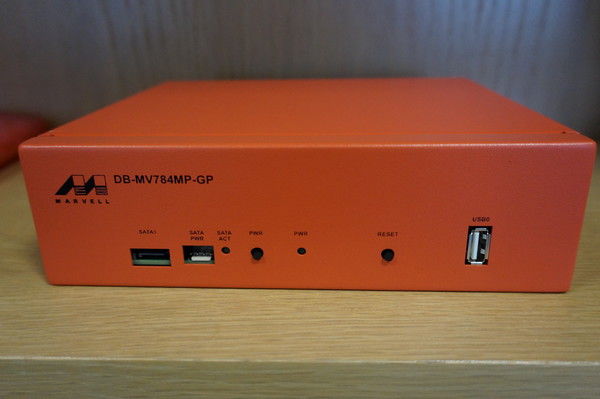
Marvell ARM system - Photo from Steve McIntyre
One weekend Steve McIntyre asked me if I could find a source of some of some 40mm fans for some systems with some pretty strict requirements. They needed to be long life and shift a lot of air to combat a persistent overheating issue.

I sat with him and went through the Farnell utterly hateful parametric web interface and eventually came up with a couple of options which were very expensive. Only then did I stop and ask what the actual problem was.

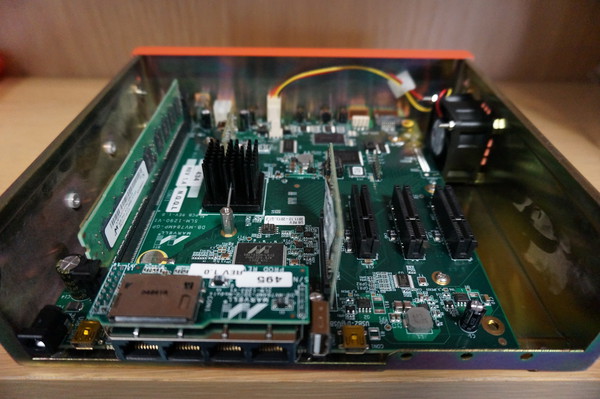
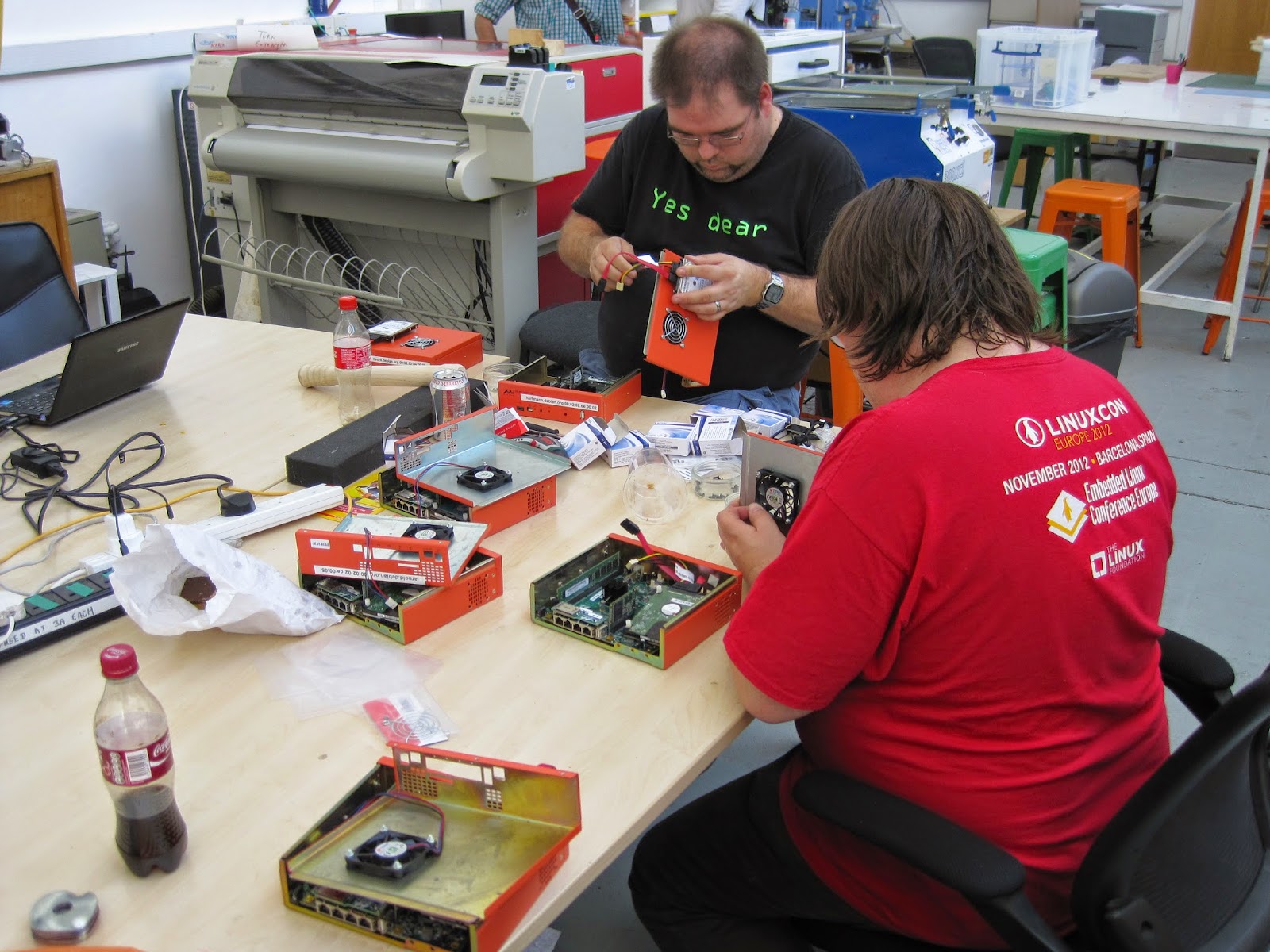
Marvell ARM system Original internal cooling arrangement - Photo from Steve McIntyre
Steve showed me one of the Debian ARM buildd boxes which are Marvell development machines. These systems are powerful quad core machines housed in compact steel enclosures.

There is a single 40mm fan trying to provide cooling for the entire enclosure. When the units are placed horizontally and used intermittently this proves adequate. Unfortunately when the system are arranged vertically in a rack and run at full load continuously they often overheat and have to be restarted. In addition the small high speed fans need replacing frequently as their bearings wore out quickly.

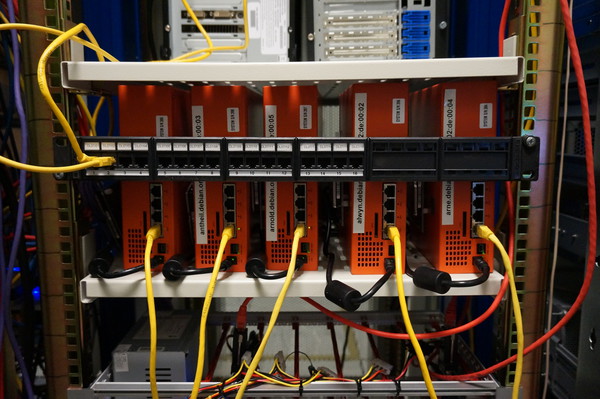
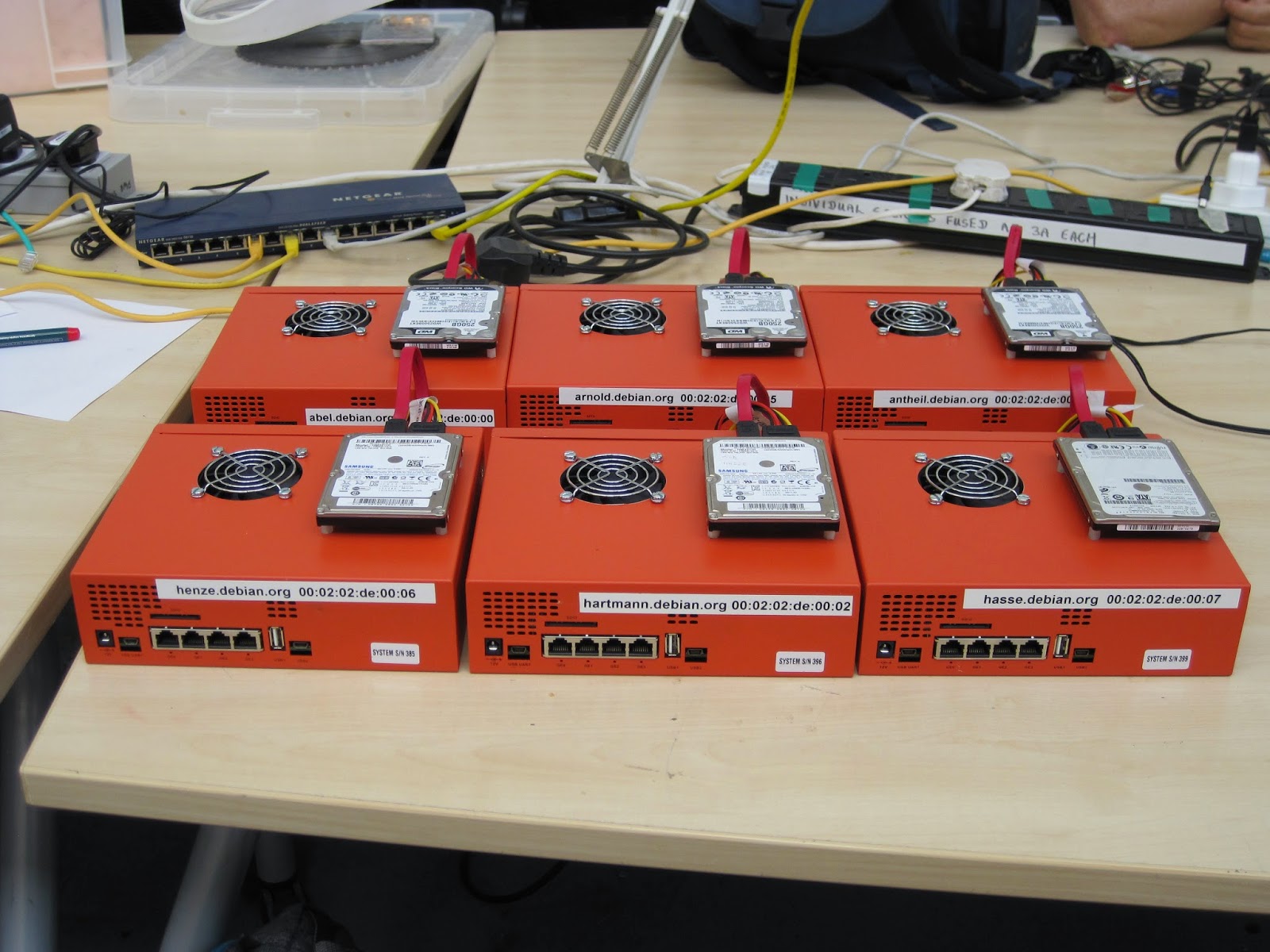
Debian ARM buildd systems - Photo from Steve McIntyreThis was obviously causing some issues for the ARM Debian ports which Steve wanted to rectify. After talking the problem through for a while we came to the conclusion we could use much larger 60mm fans to blow air directly through the top of the case onto the cpu heatsink.

Larger fans can be run much more slowly to move a similar volume of air to the smaller 40mm fans which gives a much longer service life.

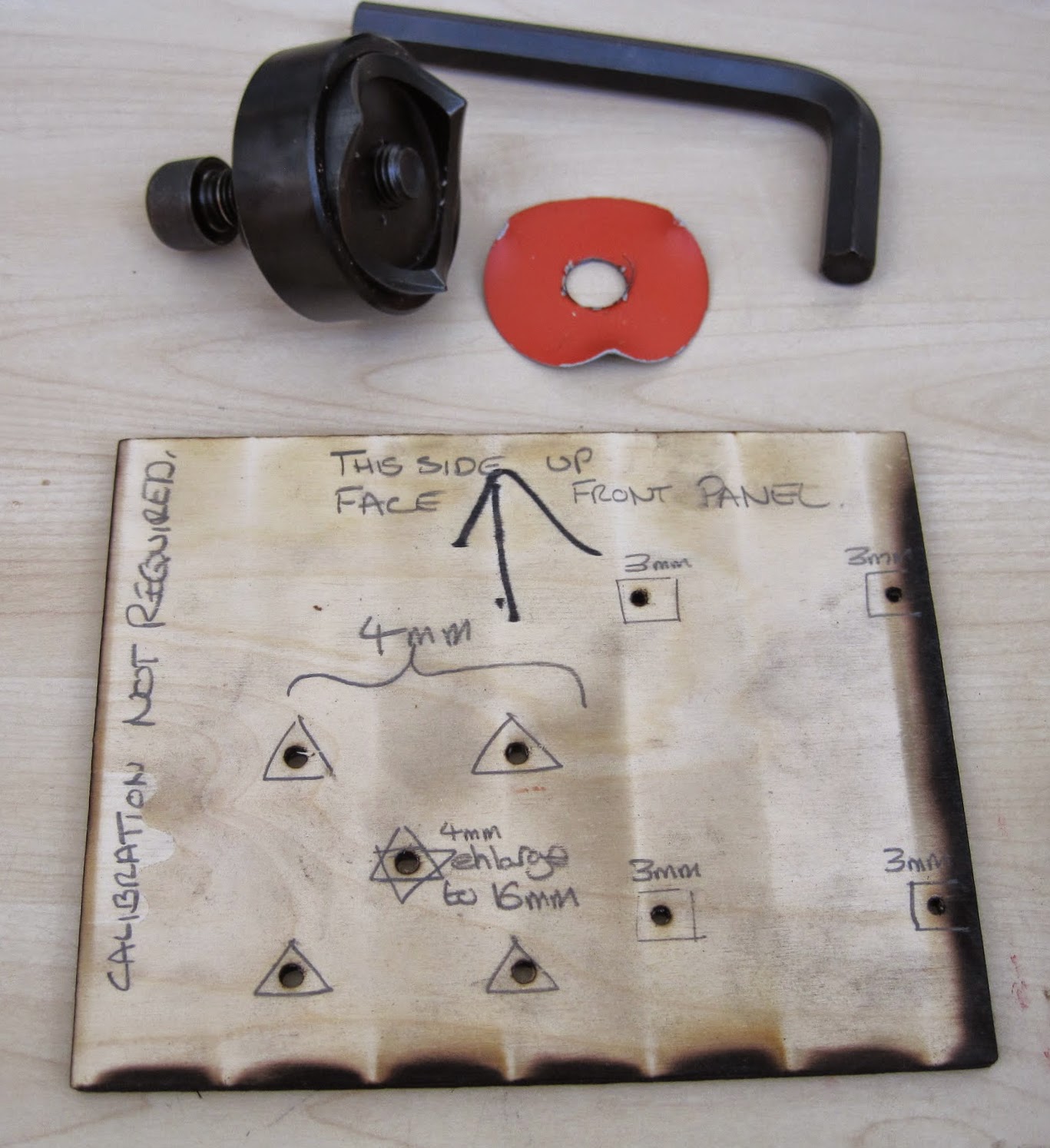
Hole punch and Drilling template
Steve proceeded to order enough parts to allow us to modify all the Debian systems, this worked out cheaper than a single "special" 40mm high volume fan.

I acquired a rather large steel hole punch, I chose this tool because it produces a much superior finish to a hole cutter and this project demanded a high level of finish (not to mention I loved having a valid excuse to own and use a huge allen key!)

If we had simply been modifying a single case I would have measured and marked up by hand. With the prospect of altering at least eight I laser cut a template from plywood which Andy Simpkins took great glee in excessively annotating.

We also used the opportunity to add bolt holes to securely attach the 2.5 inch SATA drives instead of using sticky pads.

Steve and I modified a single system to begin with both to check our alignment and the efficacy of the change. We were pleasantly surprised to discover that hoiby could now repeatedly do kernel compiles with all four cores flat out which was not possible before. The measured CPU temperature, which had previously been around 90 C, did not rise above 40 C

Steve and Andy on the assembly line
Steve, Andy and I then arranged a day where we took all the remaining units out of the rack at ARM, modified and returned them. We used the facilities at the Cambridge Makespace where I am a member to do the modifications.

I broke two 3mm drill bits and dulled a 4mm bit drilling all the holes, Roger Smith was good enough to loan us the use of his "Christmas tree bit" to ream the fan hole out to 16mm so we could thread the hole punch and cut the 60mm fan aperture out.

six modified systems ready to be re-racked.
We managed to get quite an assembly line going and, in my opinion, the results look pretty professional.

It has been several months since we did this work and these systems continue to run without issue. To complete the story we can see some graphs courtesy of the DSA munin instance.

CPU load on arnold.debian.org
You can clearly see the huge drop in temperature at the end of Week 25 despite the continuously high CPU load. Also there is only a single gap in the data after the changes (these indicate crashes where data was not recorded) where before there were frequent and extensive times where the systems were simply unusable.

CPU Temperature of arnold.debian.org
One reason I continue to enjoy Debian so much is the wide variety of ways in which I can contribute not only by maintaining my packages. Sometimes this kind of work does not receive the credit it deserves and hopefully highlights a small part of the frantic paddling that goes on under the serene surface of the Debian project to keep things "just working".

30 September 2014

Raphaël Hertzog: My Debian LTS report for September

Thanks to the sponsorship of multiple companies, I have been paid to work 11 hours on Debian LTS this month. CVE triagingI started by doing lots of triage in the security tracker (if you want to help, instructions are here) because I noticed that the dla-needed.txt list (which contains the list of packages that must be taken care of via an LTS security update) was missing quite a few packages that had open vulnerabilities in oldstable. In the end, I pushed 23 commits to the security tracker. I won t list the details each time but for once, it s interesting to let you know the kind of things that this work entailed: And when I say I reviewed it s a simplification for this kind of process: CVE triaging is often almost half the work in the general process: once you know that you are affected and that you have a patch, the process to release an update is relatively straightforward (sometimes there s still work to do to backport the patch). Once I was over that first pass of triaging, I had already spent more than the 11 hours paid but I still took care of preparing the security update for python-django. Thorsten Alteholz had started the work but got stuck in the process of backporting the patches. Since I m co-maintainer of the package, I took over and finished the work to release it as DLA-65-1.

No comment Liked this article? Click here. My blog is Flattr-enabled.

Francois Marier: Encrypted mailing list on Debian and Ubuntu

Running an encrypted mailing list is surprisingly tricky. One of the first challenges is that you need to decide what the threat model is. Are you worried about someone compromising the list server? One of the subscribers stealing the list of subscriber email addresses? You can't just "turn on encryption", you have to think about what you're trying to defend against. I decided to use schleuder. Here's how I set it up.

Requirements What I decided to create was a mailing list where people could subscribe and receive emails encrypted to them from the list itself. In order to post, they need to send an email encrypted to the list' public key and signed using the private key of a subscriber. What the list then does is decrypt the email and encrypts it individually for each subscriber. This protects the emails while in transit, but is vulnerable to the list server itself being compromised since every list email transits through there at some point in plain text.

Installing the schleuder package The first thing to know about installing schleuder on Debian or Ubuntu is that at the moment it unfortunately depends on ruby 1.8. This means that you can only install it on Debian wheezy or Ubuntu precise: trusty and jessie won't work (until schleuder is ported to a more recent version of ruby). If you're running wheezy, you're fine, but if you're running precise, I recommend adding my ppa to your /etc/apt/sources.list to get a version of schleuder that actually lets you create a new list without throwing an error. Then, simply install this package:
apt-get install schleuder

Postfix configuration The next step is to configure your mail server (I use postfix) to handle the schleuder lists. This may be obvious but if you're like me and you're repurposing a server which hasn't had to accept incoming emails, make sure that postfix is set to the following in /etc/postfix/main.cf:
inet_interfaces = all
Then follow the instructions from /usr/share/doc/schleuder/README.Debian and finally add the following line (thanks to the wiki instructions) to /etc/postfix/main.cf:
local_recipient_maps = proxy:unix:passwd.byname $alias_maps $transport_maps

Creating a new list Once everything is set up, creating a new list is pretty easy. Simply run schleuder-newlist list@example.org and follow the instructions After creating your list, remember to update /etc/postfix/transports and run postmap /etc/postfix/transports. Then you can test it by sending an email to LISTNAME-sendkey@example.com. You should receive the list's public key.

Adding list members Once your list is created, the list admin is the only subscriber. To add more people, you can send an admin email to the list or follow these instructions to do it manually:
  1. Get the person's GPG key: gpg --recv-key KEYID
  2. Verify that the key is trusted: gpg --fingerprint KEYID
  3. Add the person to the list's /var/lib/schleuder/HOSTNAME/LISTNAME/members.conf:
    - email: francois@fmarier.org
      key_fingerprint: 8C470B2A0B31568E110D432516281F2E007C98D1
    
  4. Export the public key: gpg --export -a KEYID
  5. Paste the exported key into the list's keyring: sudo -u schleuder gpg --homedir /var/lib/schleuder/HOSTNAME/LISTNAME/ --import

Dirk Eddelbuettel: Rcpp 0.11.3

A new release 0.11.3 of Rcpp is now on the CRAN network for GNU R, and an updated Debian package has been uploaded too. Rcpp has become the most popular way of enhancing GNU R with C++ code. As of today, 273 packages on CRAN depend on Rcpp for making analyses go faster and further. This release brings a fairly large number of continued enhancements, fixes and polishing to Rcpp. These were provided by a total of seven different contributors---which is a new record as well. See below for a detailed list of changes extracted from the NEWS file, but some highlights included in this release are One sore point, however, is that we missed that packages using Rcpp Modules appear to require a rebuild. We are sorry for the inconvenience; this has highlighted a shortcoming in our fairly robust and extensive tests. While we test our packages against all known CRAN dependents, such tests check for the ability to compile and run freshly and not whether previously built packages still run. We intend to augment our testing in this direction to avoid a repeat occurrence of such a misfeature.
Changes in Rcpp version 0.11.3 (2014-09-27)
  • Changes in Rcpp API:
    • The deprecation of RCPP_FUNCTION_* which was announced with release 0.10.5 last year is proceeding as planned, and the file macros/preprocessor_generated.h has been removed.
    • Timer no longer records time between steps, but times from the origin. It also gains a get_timers(int) methods that creates a vector of Timer that have the same origin. This is modelled on the Rcpp11 implementation and is more useful for situations where we use timers in several threads. Timer also gains a constructor taking a nanotime_t to use as its origin, and a origin method. This can be useful for situations where the number of threads is not known in advance but we still want to track what goes on in each thread.
    • A cast to bool was removed in the vector proxy code as inconsistent behaviour between clang and g++ compilations was noticed.
    • A missing update(SEXP) method was added thanks to pull request by Omar Andres Zapata Mesa.
    • A proxy for DimNames was added.
    • A no_init option was added for Matrices and Vectors.
    • The InternalFunction class was updated to work with std::function (provided a suitable C++11 compiler is available) via a pull request by Christian Authmann.
    • A new_env() function was added to Environment.h
    • The return value of range eraser for Vectors was fixed in a pull request by Yixuan Qiu.
  • Changes in Rcpp Sugar:
    • In ifelse(), the returned NA type was corrected for operator[].
  • Changes in Rcpp Attributes:
    • Include LinkingTo in DESCRIPTION fields scanned to confirm that C++ dependencies are referenced by package.
    • Add dryRun parameter to sourceCpp.
    • Corrected issue with relative path and R chunk use for sourceCpp.
  • Changes in Rcpp Documentation:
    • The Rcpp-FAQ vignette was updated with respect to OS X issues.
    • A new entry in the Rcpp-FAQ clarifies the use of licenses.
    • Vignettes build results no longer copied to /tmp to please CRAN.
    • The Description in DESCRIPTION has been shortened.
  • Changes in Rcpp support functions:
    • The Rcpp.package.skeleton() function will now use pkgKitten package, if available, to create a package which passes R CMD check without warnings. A new Suggests: has been added for pkgKitten.
    • The modules=TRUE case for Rcpp.package.skeleton() has been improved and now runs without complaints from R CMD check as well.
  • Changes in Rcpp unit test functions:
    • Functions from the RUnit package are now prefixed with RUnit::
    • The testRcppModule and testRcppClass sample packages now pass R CMD check --as-cran cleanly with NOTES or WARNINGS
Thanks to CRANberries, you can also look at a diff to the previous release As always, even fuller details are on the Rcpp Changelog page and the Rcpp page which also leads to the downloads page, the browseable doxygen docs and zip files of doxygen output for the standard formats. A local directory has source and documentation too. Questions, comments etc should go to the rcpp-devel mailing list off the R-Forge page.

This post by Dirk Eddelbuettel originated on his Thinking inside the box blog. Please report excessive re-aggregation in third-party for-profit settings.

28 September 2014

Ean Schuessler: RoboJuggy at JavaOne

A few months ago I was showing my friend Bruno Souza the work I had been doing with my childhood friend and robotics genius, David Hanson. I had been watching what David was going through in his process of creating life-like robots with the limited industrial software available for motor control. I had suggested to David that binding motors to Blender control structures was a genuinely viable possibility. David talked with his forward looking CEO, Jong Lee, and they were gracious enough to invite me to Hong Kong to make this exciting idea a reality. Working closely the HRI team (Vytas, Gabrielos, Fabien and Davide) with David s friend and collaborators at OpenCog (Ben Goertzel, Mandeep, David, Jamie, Alex and Samuel) a month long creative hack-fest yielded pretty amazing results. Bruno is an avid puppeteer, a global organizer of java user groups and creator of Juggy the Java Finch, mascot of Java users and user groups everywhere. We started talking about how cool it would be to have a robot version of Juggy. When I was in China I had spent a little time playing with Mark Tilden s RSMedia and various versions of David s hobby servo based emotive heads. Bruno and I did a little research into the ROS Java bindings for the Robot Operating System and decided that if we could make that part of the picture we had a great and fun idea for a JavaOne talk. Hunting and gathering I tracked down a fairly priced RSMedia in Alaska, Bruno put a pair of rubber Juggy puppet heads in the mail and we were on our way.
We had decided that we wanted RoboJuggy to be able to run about untethered and the new RaspberryPi B+ seemed like the perfect low power brain to make that happen. I like the Debian based Raspbian distributions but had lately started using the netinst Pi images. These get your Pi up and running in about 15 minutes with a nicely minimalistic install instead of a pile of dependencies you probably don t need. I d recommend anyone interested I m duplicating our work to stay their journey there: Raspbian UA Net Installer Robots seem like an embedded application but ROS only ships packages for Ubuntu. I was pleasantly surprised that there are very good instructions for building ROS from source on the Pi. I ended up following these instructions: Setting up ROS Hydro on the Raspberry Pi Building from source means that all your install ends up being isolated (in ROS speak) and your file locations and build instructions end up being subtly current. As explained in the linked article, this process is also very time consuming. One thing I would recommend once you get past this step is to use the UNIX dd command to back up your entire SD card to a desktop. This way if you make a mess of things in later steps you can restore your install to a pristine Raspbian+ROS install. If your SD drive was on /dev/sdb you might use something like this to do the job:
sudo dd bs=4M if=/dev/sdb   gzip > /home/your_username/image date +%d%m%y .gz
Getting Java in the mix Once you have your Pi all set up with minimal Raspbian and ROS you are going to want a Java VM. The Pi runs the ARM CPU so you need the corresponding version of Java. I tried getting things going initially with OpenJDK and I had some issues with that. I will work on resolving that in the future because I would like to have a 100% Free Software kit for this but since this was for JavaOne I also wanted JDK8, which isn t available in Debian yet. So, I downloaded the Oracle JDK8 package for ARM. Java 8 JDK for ARM At this point you are ready to start installing the ROS Java packages. I m pretty sure the way I did this initially is wrong but I was trying to reconcile the two install procedures for ROS Java and ROS Hydro for Raspberry Pi. I started by following these directions for ROS Java but with a few exceptions (you have to click the install from source link in the page to see the right stuff: Installing ROS Java on Hydro Now these instructions are good but this is a Pi running Debian and not an Ubuntu install. You won t run the apt-get package commands because those tools were already installed in your earlier steps. Also, this creates its own workspace and we really want these packages all in one workspace. You can apparently chain workspaces in ROS but I didn t understand this well enough to get it working so what I did was this:
> mkdir -p ~/rosjava 
> wstool init -j4 ~/rosjava/src https://raw.github.com/rosjava/rosjava/hydro/rosjava.rosinstall
> source ~/ros_catkin_ws/install_isolated/setup.bash > cd ~/rosjava # Make sure we've got all rosdeps and msg packages.
> rosdep update 
> rosdep install --from-paths src -i -y
and then copied the sources installed into ~/rosjava/src into my main ~/ros_catkin_ws/src. Once those were copied over I was able to run a standard build.
> catkin_make_isolated --install
Like the main ROS install this process will take a little while. The Java gradle builds take an especially long time. One thing I would recommend to speed up your workflow is to have an x86 Debian install (native desktop, QEMU instance, docker, whatever) and do these same build from source installs there. This will let you try your steps out on a much faster system before you try them out in the Pi. That can be a big time saver. Putting together the pieces Around this time my RSMedia had finally showed up from Alaska. At first I thought I had a broken unit because it would power up, complain about not passing system tests and then shut back down. It turns out that if you just put the D batteries in and miss the four AAs that it will kind of pretend to be working so watch for that mistake. Here is a picture of the RSMedia when it first came out of the box: wpid-20140911_142904.jpg Other parts were starting to roll in as well. The rubber puppet heads had made their way through Brazilian customs and my Pololu Mini Maestro 24 had also shown up as well as the my servo motors and pan and tilt camera rig. I had previously bought a set of 10 motors for goofing around so I bought the pan and tilt rig by itself for about $5(!) but you can buy a complete set for around $25 from a number of EBay stores. Complete pan and tilt rig with motors for $25 A bit more about the Pololu. This astonishing little motor controller costs about $25 and gives you control of 24 motors with an easy to use and high level serial API. It is probably also possible to control these servos directly from the Pi and eliminate this board but that will be genuinely difficult because of the real-time timing issues. For $25 this thing is a real gem and you won t regret buying it. Now it was time to start dissecting the RSMedia and getting control of its brain. Unfortunately a lot of great information about the RSMedia has floated away since it was in its heyday 5 years ago but there is still some solid information out there that we need to round up and preserve. A great resource is the SourceForge based website here at http://rsmediadevkit.sourceforge.net. That site has links to a number of useful sites. You will definitely want to check out their wiki. To disassemble the RSMedia I followed their instructions. I will say, it would be smart to take more pictures as you are going because they don t take as many as they should. I took pictures of each board and its associated connections as dismantled the unit and that helped me get things back together later. Another important note is that if all you want to do is solder onto the control board and not replace the head then its feasible to solder the board in place without completely disassembling the unit. Here are some photos of the dis-assembly: wpid-20140921_114742.jpg wpid-20140921_113054.jpg wpid-20140921_112619.jpg Now I also had to start adjusting the puppet head, building an armature for the motors to control it and hooking it into the robot. I need to take some more photos of the actual armature. I like to use cardboard for this kind of stuff because it is so fast to work with and relatively strong. One trick I have also learned about cardboard is that if you get something going with it and you need it to be a little more production strength you can paint it down with fiberglass resin from your local auto store. Once it dries it becomes incredibly tough because it soaks through the fibers of the cardboard and hardens around them. You will want to do this in a well ventilated area but its a great way to build super tough prototypes. Another prototyping trick I can suggest is using a combination of Velcro and zipties to hook things together. The result is surprisingly strong and still easy to take apart if things aren t working out. Velcro self-adhesive pads stick to rubber like magic and that is actually how I hooked the jaw servo onto the mask. You can see me torturing its first initial connection here: Since the puppet head had come all the way from Brazil I decided to cook some chicken hearts in the churrascaria style while I worked on them in the garage. This may sound gross but I m telling you, you need to try it! I soaked mine in soy sauce, Sriracha and chinese cooking wine. Delicious but I digress. wpid-20140920_191551.jpg As I was eating my chicken hearts I was also connecting the pan and tilt armature onto the puppet s jaw and eye assembly. It took me most of the evening to get all this going but by about one in the morning things were starting to look good! I only had a few days left to hack things together before JavaOne and things were starting to get tight. I had so much to do and had also started to run into some nasty surprises with the ROS Java control software. It turns out that ROS Java is less than friendly with ROS message structures that are not built in . I had tried to follow the provided instructions but was not (and still have not) been able to get that working. Using unofficial messages with ROS Java I still needed to get control of the RSMedia. Doing that required the delicate operation of soldering to its control board. On the board there are a set of pins that provide a serial interface to the ARM based embedded Linux computer that controls the robot. To do that I followed these excellent instructions: Connecting to the RSMedia Linux Console Port After some sweaty time bent over a magnifying glass I had success: wpid-20140921_143327.jpg I had previously purchased the USB-TTL232 accessory described in the article from Dallas awesome Tanner Electronics store in Dallas. If you are a geek I would recommend that you go there and say hi to its proprietor (and walking encyclopedia of electronics knowledge) Jim Tanner. It was very gratifying when I started a copy of minicom, set it to 115200, N, 8, 1, plugged in the serial widget to the RSMedia and booted it up. I was greeted with a clearly recognizable Linux startup and console prompt. At first I thought I had done something wrong because I couldn t get it to respond to commands but I quickly realized I had flow control turned on. Once turned off I was able to navigate around the file system, execute commands and have some fun. A little research and I found this useful resource which let me get all kinds of body movements going: A collection of useful commands for the RSMedia At this point, I had a usable set of controls for the body as well as the neck armature. I had a controller running the industry s latest and greatest robotics framework that could run on the RSMedia without being tethered to power and I had most of a connection to Java going. Now I just had to get all those pieces working together. The only problem is that time was running out and I only had a couple of days until my talk and still had to pack and square things away at work. The last day was spent doing things that I wouldn t be able to do on the road. My brother Erik (and fantastic artist) came over to help paint up the juggy head and fix the eyeball armature. He used a mix of oil paint, rubber cement which stuck to the mask beautifully. I bought battery packs for the USB Pi power and the 6v motor control and integrated them into a box that could sit below the neck armature. I fixed up a cloth neck sleeve that could cover everything. Luckily during all this my beautiful and ever so supportive girlfriend Becca had helped me get packed or I probably wouldn t have made it out the door. Welcome to San Francisco THIS ARTICLE IS STILL BEING WRITTEN

Benjamin Mako Hill: Community Data Science Workshops Post-Mortem

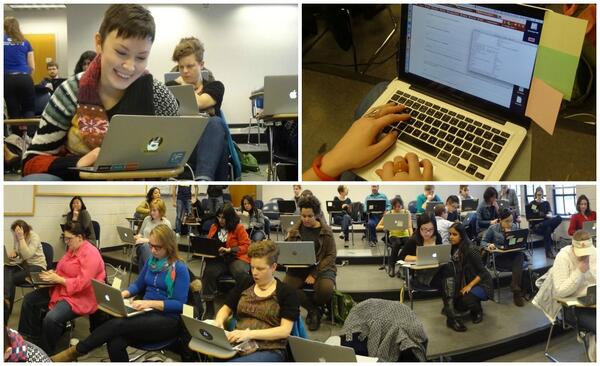
Earlier this year, I helped plan and run the Community Data Science Workshops: a series of three (and a half) day-long workshops designed to help people learn basic programming and tools for data science tools in order to ask and answer questions about online communities like Wikipedia and Twitter. You can read our initial announcement for more about the vision. The workshops were organized by myself, Jonathan Morgan from the Wikimedia Foundation, long-time Software Carpentry teacher Tommy Guy, and a group of 15 volunteer mentors who taught project-based afternoon sessions and worked one-on-one with more than 50 participants. With overwhelming interest, we were ultimately constrained by the number of mentors who volunteered. Unfortunately, this meant that we had to turn away most of the people who applied. Although it was not emphasized in recruiting or used as a selection criteria, a majority of the participants were women. The workshops were all free of charge and sponsored by the UW Department of Communication, who provided space, and the eScience Institute, who provided food. cdsw_combo_images-1The curriculum for all four session session is online: The workshops were designed for people with no previous programming experience. Although most our participants were from the University of Washington, we had non-UW participants from as far away as Vancouver, BC. Feedback we collected suggests that the sessions were a huge success, that participants learned enormously, and that the workshops filled a real need in the Seattle community. Between workshops, participants organized meet-ups to practice their programming skills. Most excitingly, just as we based our curriculum for the first session on the Boston Python Workshop s, others have been building off our curriculum. Elana Hashman, who was a mentor at the CDSW, is coordinating a set of Python Workshops for Beginners with a group at the University of Waterloo and with sponsorship from the Python Software Foundation using curriculum based on ours. I also know of two university classes that are tentatively being planned around the curriculum. Because a growing number of groups have been contacting us about running their own events based on the CDSW and because we are currently making plans to run another round of workshops in Seattle late this fall I coordinated with a number of other mentors to go over participant feedback and to put together a long write-up of our reflections in the form of a post-mortem. Although our emphasis is on things we might do differently, we provide a broad range of information that might be useful to people running a CDSW (e.g., our budget). Please let me know if you are planning to run an event so we can coordinate going forward.
27 September 2014

DebConf team: Wrapping up DebConf14 (Posted by Paul Wise, Donald Norwood)

The annual Debian developer meeting took place in Portland, Oregon, 23 to 31 August 2014. DebConf14 attendees participated in talks, discussions, workshops and programming sessions. Video teams captured a lot of the main talks and discussions for streaming for interactive attendees and for the Debian video archive. Between the video, presentations, and handouts the coverage came from the attendees in blogs, posts, and project updates. We ve gathered a few articles for your reading pleasure: Gregor Herrmann and a few members of the Debian Perl group had an informal unofficial pkg-perl micro-sprint and were very productive. Vincent Sanders shared an inspired gift in the form of a plaque given to Russ Allbery in thanks for his tireless work of keeping sanity in the Debian mailing lists. Pictures of the plaque and design scheme are linked in the post. Vincent also shared his experiences of the conference and hopes the organisers have recovered. Noah Meyerhans adventuring to Debian by train, (Inter)netted some interesting IPv6 data for future road and railwarriors. Hideki Yamane sent a gentle reminder for English speakers to speak more slowly. Daniel Pocock posted of GSoC talks at DebConf14, highlights include the Java Project Dependency Builder and the WebRTC JSCommunicator. Thomas Goirand gives us some insight into a working task list of accomplishments and projects he was able to complete at DebConf14, from the OpenStack discussion to tasksel talks, and completion of some things started last year at DebConf13. Antonio Terceiro blogged about debci and the Debian Continuous Integration project, Ruby, Redmine, and Noosfero. His post also shares the atmosphere of being able to interact directly with peers once a year. Stefano Zacchiroli blogged about a talk he did on debsources which now has its own HACKING file. Juliana Louback penned: DebConf 2014 and How I Became a Debian Contributor. Elizabeth Krumbach Joseph s in-depth summary of DebConf14 is a great read. She discussed Debian Validation & CI, debci and the Continuous Integration project, Automated Validation in Debian using LAVA, and Outsourcing webapp maintenance. Lucas Nussbaum by way of a blog post releases the very first version of Debian Trivia modelled after the TCP/IP Drinking Game. Fran ois Marier s shares additional information and further discussion on Outsourcing your webapp maintenance to Debian. Joachim Breitner gave a talk on Haskell and Debian, created a new tool for binNMUs for Haskell packages which runs via cron job. The output is available for Haskell and for OCaml, and he still had a small amount of time to go dancing. Jaldhar Harshad Vyas was not able to attend DebConf this year, but he did tune in to the videos made available by the video team and gives an insightful viewpoint to what was being seen. J r my Bobbio posted about Reproducible builds in Debian in his recap of DebConf14. One of the topics at hand involved defining a canonical path where packages must be built and a BOF discussion on reproducible builds from where the conversation moved to discussions in both Octave and Groff. New helpers dh_fixmtimes and dh_genbuildinfo were added to BTS. The .buildinfo format has been specified on the wiki and reviewed. Lots of work is being done in the project, interested parties can help with the TODO list or join the new IRC channel #debian-reproducible on irc.debian.org. Steve McIntyre posted a Summary from the d-i / debian-cd BoF at DC14, with some of the session video available online. Current jessie D-I needs some help with the testing on less common architectures and languages, and release scheduling could be improved. Future plans: Switching to a GUI by default for jessie, a default desktop and desktop choice, artwork, bug fixes and new architecture support. debian-cd: Things are working well. Improvement discussions are on selecting which images to make I.E. netinst, DVD, et al., debian-cd in progress with http download support, Regular live test builds, Other discussions and questions revolve around which ARM platforms to support, specially-designed images, multi-arch CDs, and cloud-init based images. There is also a call for help as the team needs help with testing, bug-handling, and translations. Holger Levsen reports on feedback about the feedback from his LTS talk at DebConf14. LTS has been perceived well, fits a demand, and people are expecting it to continue; however, this is not without a few issues as Holger explains in greater detail the lacking gatekeeper mechanisms, and how contributions are needed from finance to uploads. In other news the security-tracker is now fixed to know about old stable. Time is short for that fix as once jessie is released the tracker will need to support stable, oldstable which will be wheezy, and oldoldstable. Jonathan McDowell s summary of DebConf14 includes a fair perspective of the host city and the benefits of planning of a good DebConf14 location. He also talks about the need for facetime in the Debian project as it correlates with and improves everyone s ability to work together. DebConf14 also provided the chance to set up a hard time frame for removing older 1024 bit keys from Debian keyrings. Steve McIntyre posted a Summary from the State of the ARM BoF at DebConf14 with updates on the 3 current ports armel, armhf and arm64. armel which targets the ARM EABI soft-float ARMv4t processor may eventually be going away, while armhf which targets the ARM EABI hard-float ARMv7 is doing well as the cross-distro standard. Debian is has moved to a single armmp kernel flavour using Device Tree Blobs and should be able to run on a large range of ARMv7 hardware. The arm64 port recently entered the main archive and it is hoped to release with jessie with 2 official builds hosted at ARM. There is talk of laptop development with an arm64 CPU. Buildds and hardware are mentioned with acknowledgements for donated new machines, Banana Pi boards, and software by way of ARM s DS-5 Development Studio - free for all Debian Developers. Help is needed! Join #debian-arm on irc.debian.org and/or the debian-arm mailing list. There is an upcoming Mini-DebConf in November 2014 hosted by ARM in Cambridge, UK. Tianon Gravi posted about the atmosphere and contrast between an average conference and a DebConf. Joseph Bisch posted about meeting his GSOC mentors, attending and contributing to a keysigning event and did some work on debmetrics which is powering metrics.debian.net. Debmetrics provides a uniform interface for adding, updating, and viewing various metrics concerning Debian. Harlan Lieberman-Berg s DebConf Retrospective shared the feel of DebConf, and detailed some of the work on debugging a build failure, work with the pkg-perl team on a few uploads, and work on a javascript slowdown issue on codeeditor. Ana Guerrero L pez reflected on Ten years contributing to Debian.

Niels Thykier: Lintian Upcoming API making it easier to write correct and safe code

The upcoming version of Lintian will feature a new set of API that attempts to promote safer code. It is hardly a ground-breaking discovery , just a much needed feature. The primary reason for this API is that writing safe and correct code is simply too complicated that people get it wrong (including yours truly on occasion). The second reason is that I feel it is a waste having to repeat myself when reviewing patches for Lintian. Fortunately, the kind of issues this kind of mistake creates are usually minor information leaks, often with no chance of exploiting it remotely without the owner reviewing the output first[0]. Part of the complexity of writing correct code originates from the fact that Lintian must assume Debian packages to be hostile until otherwise proven[1]. Consider a simplified case where we want to read a file (e.g. the copyright file):
package Lintian::cpy_check;
use strict; use warnings; use autodie;
sub run  
  my ($pkg, undef, $info) = @_;
  my $filename = "usr/share/doc/$pkg/copyright";
  # BAD: This is an example of doing it wrong
  open(my $fd, '<', $info->unpacked($filename));
  ...;
  close($fd);
  return;
 
This has two trivial vulnerabilities[2].
  1. Any part of the path (usr,usr/share, ) can be asymlink to somewhere else like /
    1. Problem: Access to potentially any file on the system with the credentials of the user running Lintian. But even then, Lintian generally never write to those files and the user has to (usually manually) disclose the report before any information leak can be completed.
  2. The target path can point to a non-file.
    1. Problem: Minor inconvenience by DoS of Lintian. Examples include a named pipe, where Lintian will get stuck until a signal kills it.

Of course, we can do this right[3]:
package Lintian::cpy_check;
use strict; use warnings; use autodie;
use Lintian::Util qw(is_ancestor_of);
sub run  
  my ($pkg, undef, $info) = @_;
  my $filename = "usr/share/doc/$pkg/copyright";
  my $root = $info->unpacked
  my $path = $info->unpacked($filename);
  if ( -f $path and is_ancestor_of($root, $path))  
    open(my $fd, '<', $path);
    ...;
    close($fd);
   
  return;
 
Where is_ancestor_of is the only available utility to assist you currently. It hides away some 10-12 lines of code to resolve the two paths and correctly asserting that $path is (an ancestor of) $root. Prior to Lintian 2.5.12, you would have to do that ancestor check by hand in each and every check[4]. In the new version, the correct code would look something like this:
package Lintian::cpy_check;
use strict; use warnings; use autodie;
sub run  
  my ($pkg, undef, $info) = @_;
  my $filename = "usr/share/doc/$pkg/copyright";
  my $path = $info->index_resolved_path($filename);
  if ($path and $path->is_open_ok)  
    my $fd = $path->open;
    ...;
    close($fd);
   
  return;
 
Now, you may wonder how that promotes safer code. At first glance, the checking code is not a lot simpler than the previous correct example. However, the new code has the advantage of being safer even if you forget the checks. The reasons are:
  1. The return value is entirely based on the file index of the package (think: tar vtf data.tar.gz). At no point does it use the file system to resolve the path. Whether your malicious package trigger an undef warning based on the return value of index_resolved_index leaks nothing about the host machine.
    1. However, it does take safe symlinks into account and resolves them for you. If you ask for foo/bar and foo is a symlink to baz and baz/bar exists in the package, you will get baz/bar . If baz/bar happens to be a symlink, then it is resolved as well.
    2. Bonus: You are much more likely to trigger the undef warning during regular testing, since it also happens if the file is simply missing.
  2. If you attempt to call $path->open without calling $path->is_open_ok first, Lintian can now validate the call for you and stop it on unsafe actions.
It also has the advantage of centralising the code for asserting safe access, so bugs in it only needs to be fixed in one place. Of course, it is still possible to write unsafe code. But at least, the new API is safer by default and (hopefully) more convenient to use. [0] Lintian.debian.org being the primary exception here. [1] This is in contrast to e.g. piuparts, which very much trusts its input packages by handing the package root access (albeit chroot ed, but still). [2] And also a bug. Not all binary packages have a copyright instead some while have a symlink to another package. [3] The code is hand-typed into the blog without prior testing (not even compile testing it). The code may be subject to typos, brown-paper-bag bugs etc. which are all disclaimed (of course). [4] Fun fact, our documented example for doing it correctly prior to implementing is_ancestor_of was in fact not correct. It used the root path in a regex (without quoting the root path) fortunately, it just broke lintian when your TMPDIR / LINTIAN_LAB contained certain regex meta-characters (which is pretty rare).

25 September 2014

Aigars Mahinovs: Distributing third party applications via Docker?

Recently the discussions around how to distribute third party applications for "Linux" has become a new topic of the hour and for a good reason - Linux is becoming mainstream outside of free software world. While having each distribution have a perfectly packaged, version-controlled and natively compiled version of each application installable from a per-distribution repository in a simple and fully secured manner is a great solution for popular free software applications, this model is slightly less ideal for less popular apps and for non-free software applications. In these scenarios the developers of the software would want to do the packaging into some form, distribute that to end-users (either directly or trough some other channels, such as app stores) and have just one version that would work on any Linux distribution and keep working for a long while. For me the topic really hit at Debconf 14 where Linus voiced his frustrations with app distribution problems and also some of that was touched by Valve. Looking back we can see passionate discussions and interesting ideas on the subject from systemd developers (another) and Gnome developers (part2 and part3). After reading/watching all that I came away with the impression that I love many of the ideas expressed, but I am not as thrilled about the proposed solutions. The systemd managed zoo of btrfs volumes is something that I actually had a nightmare about. There are far simpler solutions with existing code that you can start working on right now. I would prefer basing Linux applications on Docker. Docker is a convenience layer on top of Linux cgroups and namespaces. Docker stores its images in a datastore that can be based on AUFS or btrfs or devicemapper or even plain files. It already has a semantic for defining images, creating them, running them, explicitly linking resources and controlling processes. Lets play a simple scenario on how third party applications should work on Linux. Third party application developer writes a new game for Linux. As his target he chooses one of the "application runtime" Docker images on Docker Hub. Let's say he chooses the latest Debian stable release. In that case he writes a simple Dockerfile that installs his build-dependencies and compiles his game in "debian-app-dev:wheezy" container. The output of that is a new folder containing all the compiled game resources and another Dockerfile - this one describes the runtime dependencies of the game. Now when a docker image is built from this compiled folder, it is based on "debian-app:wheezy" container that no longer has any development tools and is optimized for speed and size. After this build is complete the developer exports the Docker image into a file. This file can contain either the full system needed to run the new game or (after #8214 is implemented) just the filesystem layers with the actual game files and enough meta-data to reconstruct the full environment from public Docker repos. The developer can then distribute this file to the end user in the way that is comfortable for them. The end user would download the game file (either trough an app store app, app store website or in any other way) and import it into local Docker instance. For user convenience we would need to come with an file extension and create some GUIs to launch for double click, similar to GDebi. Here the user would be able to review what permissions the app needs to run (like GL access, PulseAudio, webcam, storage for save files, ...). Enough metainfo and cooperation would have to exist to allow desktop menu to detect installed "apps" in Docker and show shortcuts to launch them. When the user does so, a new Docker container is launched running the command provided by the developer inside the container. Other metadata would determine other docker run options, such as whether to link over a socket for talking to PulseAudio or whether to mount in a folder into the container to where the game would be able to save its save files. Or even if the application would be able to access X (or Wayland) at all. Behind the scenes the application is running from the contained and stable libraries, but talking to a limited and restricted set of system level services. Those would need to be kept backwards compatible once we start this process. On the sandboxing part, not only our third party application is running in a very limited environment, but also we can enhance our system services to recognize requests from such applications via cgroups. This can, for example, allow a window manager to mark all windows spawned by an application even if the are from a bunch of different processes. Also the window manager can now track all processes of a logical application from any of its windows. For updates the developer can simply create a new image and distribute the same size file as before, or, if the purchase is going via some kind of app-store application, the layers that actually changed can be rsynced over individually thus creating a much faster update experience. Images with the same base can share data, this would encourage creation of higher level base images, such as "debian-app-gamegl:wheezy" that all GL game developers could use thus getting a smaller installation package. After a while the question of updating abandonware will come up. Say there is is this cool game built on top of "debian-app-gamegl:wheezy", but now there was a security bug or some other issue that requires the base image to be updated, but that would not require a recompile or a change to the game itself. If this Docker proposal is realized, then either the end user or a redistributor can easily re-base the old Docker image of the game on a new base. Using this mechanism it would also be possible to handle incompatible changes to system services - ten years down the line AwesomeAudio replaces PulseAudio, so we create a new "debian-app-gamegl:wheezy.14" version that contains a replacement libpulse that actually talks to AwesomeAudio system service instead. There is no need to re-invent everything or push everything and now package management too into systemd or push non-distribution application management into distribution tools. Separating things into logical blocks does not hurt their interoperability, but it allows to recombine them in a different way for a different purpose or to replace some part to create a system with a radically different functionality. Or am I crazy and we should just go and sacrifice Docker, apt, dpkg, FHS and non-btrfs filesystems on the altar of systemd? P.S. You might get the impression that I dislike systemd. I love it! Like an init system. And I love the ideas and talent of the systemd developers. But I think that systemd should have nothing to do with application distribution or processes started by users. I am sometimes getting an uncomfortable feeling that systemd is morphing towards replacing the whole of System V jumping all the way to System D and rewriting, obsoleting or absorbing everything between the kernel and Gnome. In my opinion it would be far healthier for the community if all of these projects would developed and be usable separately from systemd, so that other solutions can compete on a level playing field. Or, maybe, we could just confess that what systemd is doing is creating a new Linux meta-distribution.

Jan Wagner: Redis HA with Redis Sentinel and VIP

For an actual project we decided to use Redis for some reasons. As there is availability a critical part, we discovered that Redis Sentinel can monitor Redis and handle an automatic master failover to a available slave. Setting up the Redis replication was straight forward and even setting up Sentinel. Please keep in mind, if you configure Redis to require an authentication password, you even need to provide that for the replication process (masterauth) and for the Sentinel connection (auth-pass). The more interesting part is, how to migrate over the clients to the new master in case of a failover process. While Redis Sentinel could also be used as configuration provider, we decided not to use this feature, as the application needs to request the actual master node from Redis Sentinel much often, which will maybe a performance impact.

The first idea was to use some kind of VRRP, implemented into keepalived or something like this. The problem with such a solution is, you need to notify the VRRP process when a redis failover is in progress.
Well, Redis Sentinel has a configuration option called 'sentinel client-reconfig-script':
# When the master changed because of a failover a script can be called in
# order to perform application-specific tasks to notify the clients that the
# configuration has changed and the master is at a different address.
# 
# The following arguments are passed to the script:
#
# <master-name> <role> <state> <from-ip> <from-port> <to-ip> <to-port>
#
# <state> is currently always "failover"
# <role> is either "leader" or "observer"
# 
# The arguments from-ip, from-port, to-ip, to-port are used to communicate
# the old address of the master and the new address of the elected slave
# (now a master).
#
# This script should be resistant to multiple invocations.
This looks pretty good and as there is provided a <role>, I thought it would be a good idea to just call a script which evaluates this value and based on it's return, it adds the VIP to the local network interface, when we get 'leader' and removes it when we get 'observer'. It turned out that this was not working as <role> didn't returned 'leader' when the local redis instance got master and 'observer' when got slave in any case. This was pretty annoying and I was short before giving up.
Fortunately I stumpled upon a (maybe) chinese post about Redis Sentinal, where was done the same like I did. On the second look I recognized that the decision was made on $ 6 which is <to-ip>, nothing more then the new IP of the Redis master instance. So I rewrote my tiny shell script and after some other pitfalls this strategy worked out well. Some notes about convergence. Actually it takes round about 6-7 seconds to have the VIP migrated over to the new node after Redis Sentinel notifies a broken master. This is not the best performance, but as we expect this happen not so often, we need to design the application using our Redis setup to handle this (hopefully) rare scenario.

24 September 2014

Robert Collins: what-poles-for-the-tent

So Monty and Sean have recently blogged about about the structures (1, 2) they think may work better for OpenStack. I like the thrust of their thinking but had some mumblings of my own to add. Firstly, I very much like the focus on social structure and needs what our users and deployers need from us. That seems entirely right. And I very much like the getting away from TC picking winners and losers. That was never an enjoyable thing when I was on the TC, and I don t think it has made OpenStack better. However, the thing that picking winners and losers did was that it allowed users to pick an API and depend on it. Because it was the X API for OpenStack . If we don t pick winners, then there is no way to say that something is the X API for OpenStack , and that means that there is no forcing function for consistency between different deployer clouds. And so this appears to be why Ring 0 is needed: we think our users want consistency in being able to deploy their application to Rackspace or HP Helion. They want vendor neutrality, and by giving up winners-and-losers we give up vendor neutrality for our users. Thats the only explanation I can come up with for needing a Ring 0 because its still winners and losers (e.g. picking an arbitrary project) keystone, grandfathering it in, if you will. If we really want to get out of the role of selecting projects, I think we need to avoid this. And we need to avoid it without losing vendor neutrality (or we need to give up the idea of vendor neutrality). One might say that we must pick winners for the very core just by its, but I don t think thats true. If the core is small, many people will still want vendor neutrality higher up the stack. If the core is large, then we ll have a larger % of APIs covered and stable granting vendor neutrality. So a core with fixed APIs will be under constant pressure to expand: not just from developers of projects, but from users that want API X to be fixed and guaranteed available and working a particular way at [most] OpenStack clouds. Ring 0 also fulfils a quality aspect we can check that it all works together well in a realistic timeframe with our existing tooling. We are essentially proposing to pick functionality that we guarantee to users; and an API for that which they have everywhere, and the matching implementation we ve tested. To pull from Monty s post: What does a basic end user need to get a compute resource that works and seems like a computer? (end user facet) What does Nova need to count on existing so that it can provide that. He then goes on to list a bunch of things, but most of them are not needed for that: We need Nova (its the only compute API in the project today). We don t need keystone (Nova can run in noauth mode and deployers could just have e.g. Apache auth on top). We don t need Neutron (Nova can do that itself). We don t need cinder (use local volumes). We need Glance. We don t need Designate. We don t need a tonne of stuff that Nova has in it (e.g. quotas) end users kicking off a simple machine have -very- basic needs. Consider the things that used to be in Nova: Deploying containers. Neutron. Cinder. Glance. Ironic. We ve been slowly decomposing Nova (yay!!!) and if we keep doing so we can imagine getting to a point where there truly is a tightly focused code base that just does one thing well. I worry that we won t get there unless we can ensure there is no pressure to be inside Nova to win . So there s a choice between a relatively large set of APIs that make the guaranteed available APIs be comprehensive, or a small set that that will give users what they need just at the beginning but might not be broadly available and we ll be depending on some unspecified process for the deployers to agree and consolidate around what ones they make available consistently. In sort one of the big reasons we were picking winners and losers in the TC was to consolidate effort around a single API not implementation (keystone is already on its second implementation). All the angst about defcore and compatibility testing is going to be multiplied when there is lots of ecosystem choice around APIs above Ring 0, and the only reason that won t be a problem for Ring 0 is that we ll still be picking winners. How might we do this? One way would be to keep picking winners at the API definition level but not the implementation level, and make the competition be able to replace something entirely if they implement the existing API [and win hearts and minds of deployers]. That would open the door to everything being flexible and its happened before with Keystone. Another way would be to not even have a Ring 0. Instead have a project/program that is aimed at delivering the reference API feature-set built out of a single, flat Big Tent and allow that project/program to make localised decisions about what components to use (or not). Testing that all those things work together is not much different than the current approach, but we d have separated out as a single cohesive entity the building of a product (Ring 0 is clearly a product) from the projects that might go into it. Projects that have unstable APIs would clearly be rejected by this team; projects with stable APIs would be considered etc. This team wouldn t be the TC : they too would be subject to the TC s rulings. We could even run multiple such teams as hinted at by Dean Troyer one of the email thread posts. Running with that I d then be suggesting So OpenStack/NaaS would have an API or set of APIs, and they d be responsible for considering maturity, feature set, and so on, but wouldn t own Neutron, or Neutron incubator or any other component they would be a *cross project* team, focused at the product layer, rather than the component layer, which nearly all of our folk end up locked into today. Lastly Sean has also pointed out that we have large N N^2 communication issues I think I m proposing to drive the scope of any one project down to a minimum, which gives us more N, but shrinks the size within any project, so folk don t burn out as easily, *and* so that it is easier to predict the impact of changes clear contracts and APIs help a huge amount there.

Russ Allbery: Review: 2014 Hugos: Short Story Nominees

Review: 2014 Hugos: Short Story Nominees, edited by Loncon 3
Publisher: Loncon 3
Copyright: 2014
Format: Kindle
This is a bit of a weird "book review," since this is not a book. Rather, it's the collection of Hugo-nominated short stories for the 2014 Hugos (given for works published in 2013) at Loncon 3, the 2014 Worldcon. As such, the "editor" is the pool of attendees and supporting members who chose to nominate works, all of which had been previously edited by other editors in their original publication. This is also not something that someone else can acquire; if you were not a supporting or attending member, you didn't get the voting packet. But I believe all of the stories here are available on-line for free in some form, a short search away. "If You Were a Dinosaur, My Love" by Rachel Swirsky: The most common complaint about this story is that it's not really a story, and I have to agree. It's a word image of an alternate world in which the narrator's love is a human-sized dinosaur, starting with some surreal humor and then slowly shifting tone as it reveals the horrible event that's happened to the narrator's actual love, and that's sparked the wish for her love to have claws and teeth. It's reasonably good at what it's trying to do, but I wanted more of a story. The narrator's imagination didn't do much for me. (5) "The Ink Readers of Doi Saket" by Thomas Olde Heuvelt: At least for me, this story suffered from being put in the context of a Hugo nominee. It's an okay enough story about a Thai village downstream from a ritual that involves floating wishes down the river, often with offerings in the improvised small boats. The background of the story is somewhat cynical: the villagers make some of the wishes come true, sort of, while happily collecting the offerings and trying to spread the idea that the wishes with better offerings are more likely to come true. The protagonist follows a familiar twist: he actually can make wishes come true, maybe, but is very innocent about his role in the world. This is not a bad story, although stories written by people with western-sounding names about non-western customs worry me, and there were a few descriptions and approaches here (such as the nickname translations in footnotes and the villager archetypes) that made my teeth itch. But it is not a story that belongs on the Hugo nomination slate, at least in my opinion. It's either cute or mildly irritating, depending on one's mood when one meets it, not horribly original, and very forgettable. (5) "Selkie Stories Are for Losers" by Sofia Samatar: I really liked this story for much of its length. It features a couple of young, blunt, and bitter women, and focuses on the players in the typical selkie story that don't get much attention. The selkie's story is one of captivity or freedom; her lover's story is the inverse, the captor or the lover. But I don't recall a story about the children before, and I think Samatar got the tone right. It has the bitterness of divorce and abandonment mixed with the disillusionment of fantasy turned into pain. My problem with this story is the ending, or rather, the conclusion, since the story doesn't so much end as stop. There's a closing paragraph that gives some hint of the shape to come, but it gave me almost no closure, and it didn't answer any of the emotional questions that the rest of the story raised for me. I wanted something more, some sort of epiphany or clearer determination. (7) "The Water That Falls on You from Nowhere" by John Chu: This was by far my favorite of the nominees, which is convenient since it won. I thought it was the only nominee that felt in the class of stories I would expect to win a Hugo. I think this story needs one important caveat up front. The key conceit of the story is that, in this world, water falls on you out of nowhere if you tell any sort of lie. It does not explore the practical impact on that concept for the broader world. That didn't bother me; for some reason, I wasn't really expecting it to do so. But it did bother several other people I've seen comment on this story. They were quite frustrated that the idea was used primarily to shape a personal and family emotional dilemma, not to explore the impact on the world. So, go into this with the right expectations: if you want world-building or deep exploration of a change in physical laws, you will want a different story. This story, instead, is a beautiful gem about honesty in relationships, about communication about very hard things and very emotional things, about coming out, about trusting people, and about understanding people. I thought it was beautiful. If you read Captain Awkward, or other discussion of how to deal with difficult families and the damage they cause to relationships, seek this one out. It surprised me, and delighted me, and made me cry in places, and I loved the ending. It's more fantasy than science fiction, and it uses the conceit as a trigger for a story about people instead of a story about worlds and technology, but I'm still very happy to see it win. (9) Rating: 7 out of 10

Next.

Previous.