Search Results: "ema"

5 June 2015

Simon McVittie: Why polkit (or, how to mount a disk on modern Linux)

I've recently found myself explaining polkit (formerly PolicyKit) to one of Collabora's clients, and thought that blogging about the same topic might be useful for other people who are confused by it; so, here is why udisks2 and polkit are the way they are. As always, opinions in this blog are my own, not Collabora's. Privileged actions Broadly, there are two ways a process can do something: it can do it directly (i.e. ask the kernel directly), or it can use inter-process communication to ask a service to do that operation on its behalf. If it does it directly, the components that say whether it can succeed are the Linux kernel's normal permissions checks (DAC), and if configured, AppArmor, SELinux or a similar MAC layer. All very simple so far. Unfortunately, the kernel's relatively coarse-grained checks are not sufficient to express the sorts of policies that exist on a desktop/laptop/mobile system. My favourite example for this sort of thing is mounting filesystems. If I plug in a USB stick with a FAT filesystem, it's reasonable to expect my chosen user interface to either mount it automatically, or let me press a button to mount it. Similarly, to avoid data loss, I should be able to unmount it when I'm finished with it. However, mounting and unmounting a USB stick is fundamentally the same system call as mounting and unmounting any other filesystem - and if ordinary users can do arbitrary mount system calls, they can cause all sorts of chaos, for instance by mounting a filesystem that contains setuid executables (privilege escalation), or umounting a critical OS filesystem like /usr (denial of service). Something needs to arbitrate: you can mount filesystems, but only under certain conditions . The kernel developer motto for this sort of thing is mechanism, not policy : they are very keen to avoid encoding particular environments' policies (the sort of thing you could think of as business rules ) in the kernel, because that makes it non-generic and hard to maintain. As a result, direct mount/unmount actions are only allowed by privileged processes, and it's up to user-space processes to arrange for a privileged process to make the desired mount syscall. Here are some other privileged actions which laptop/desktop users can reasonably expect to just work , with or without requiring a sysadmin-like (root-equivalent) user: In environments that use a MAC framework like AppArmor, actions that would normally be allowed can become privileged: for instance, in a framework for sandboxed applications, most apps shouldn't be allowed to record audio. This prevents carrying out these actions directly, again resulting in the only way to achieve them being to ask a service to carry out the action. Ask a system service to do it On to the next design, then: I can submit a request to a privileged process, which does some checks to make sure I'm not trying to break the system (or alternatively, that I have enough sysadmin rights that I'm allowed to break the system if I want to), and then does the privileged action for me. You might think I'm about to start discussing D-Bus and daemons, but actually, a prominent earlier implementation of this was mount(8), which is normally setuid root:
% ls -l /bin/mount
-rwsr-xr-x 1 root root 40000 May 22 11:37 /bin/mount
If you look at it from an odd angle, this is inter-process communication across a privilege boundary: I run the setuid executable, creating a process. Because the executable has the setuid bit set, the kernel makes the process highly privileged: its effective uid is root, and it has all the necessary capabilities to mount filesystems. I submit the request by passing it in the command-line arguments. mount does some checks - specifically, it looks in /etc/fstab to see whether the filesystem I'm trying to mount has the user or users flag - then carries out the mount system call. There are a few obvious problems with this: Ask a system service to do it, via D-Bus or other IPC To avoid the issues of setuid, we could use inter-process communication in the traditional sense: run a privileged daemon (on boot or on-demand), make it listen for requests, and use the IPC channel as our privilege boundary. udisks2 is one such privileged daemon, which uses D-Bus as its IPC channel. D-Bus is a commonly-used inter-process system; one of its intended/designed uses is to let user processes and system services communicate, especially this sort of communication between a privileged daemon and its less-privileged clients. People sometimes criticize D-Bus as not doing anything you couldn't do yourself with some AF_UNIX sockets. Well, no, of course it doesn't - the important bit of the reference implementation and the various interoperable reimplementations consists of a daemon and some AF_UNIX sockets, and the rest is a simple matter of programming. However, it's sufficient for most uses in its problem space, and is usually better than inventing your own. The advantage of D-Bus over doing your own thing is precisely that you are not doing your own thing: good IPC design is hard, and D-Bus makes some structural decisions so that fewer application authors have to think about them. For instance, it has a central hub daemon (the dbus-daemon, or message bus ) so that n communicating applications don't need O(n ) sockets; it uses the dbus-daemon to provide a total message ordering so you don't have to think about message reordering; it has a distributed naming model (which can also be used as a distributed mutex) so you don't have to design that; it has a serialization format and a type system so you don't have to design one of those; it has a framework for activating" run-on-demand daemons so they don't have to use resources initially, implemented using a setuid helper and/or systemd; and so on. If you have religious objections to D-Bus, you can mentally replace D-Bus with AF_UNIX or something and most of this article will still be true. Is this OK? In either case - exec'ing a privileged helper, or submitting a request to a privileged daemon via IPC - the privileged process has two questions that it needs to answer before it does its work: It needs to make some sort of decision on the latter based on the information available to it. However, before we even get there, there is another layer: In the setuid model, there is a simple security check that you can apply: you can make /bin/mount only executable by a particular group, or only executable by certain AppArmor profiles, or similar. That works up to a point, but cannot distinguish between physically-present and not-physically-present users, or other facts that might be interesting to your local security policy. Similarly, in the IPC model, you can make certain communication channels impossible, for instance by using dbus-daemon's ability to decide which messages to deliver, or AF_UNIX sockets' filesystem permissions, or a MAC framework like AppArmor. Both of these are quite coarse-grained checks which don't really understand the finer details of what is going on. If the answer to "is this safe? is something of the form maybe, it depends on... , then they can't do the right thing: they must either let it through and let the domain-specific privileged process do the check, or deny it and lose potentially useful functionality. For instance, in an AppArmor environment, some applications have absolutely no legitimate reason to talk to udisks2, so the AppArmor policy can just block it altogether. However, once again, this is a coarse-grained check: the kernel has mechanism, not policy, and it doesn't know what the service does or why. If the application does need to be able to talk to the service at all, then finer-grained access control (obeying some, but not all, requests) has to be the service's job. dbus-daemon does have the ability to match messages in a relatively fine-grained way, based on the object path, interface and member in the message, as well as the routing information that it uses itself (i.e. the source and destination). However, it is not clear that this makes a great deal of sense conceptually: these are facts about the mechanics of the IPC, not facts about the domain-specific request (because the mechanics of the IPC are all that dbus-daemon understands). For instance, taking the udisks2 example again, dbus-daemon can't distinguish between an attempt to adjust mount options for a USB stick (probably fine) and an attempt to adjust mount options for /usr (not good). To have a domain-specific security policy, we need a domain-specific component, for instance udisks2, to get involved. Unlike dbus-daemon, udisks2 knows that not all disks are equal, knows which categories make sense to distinguish, and can identify which categories a particular disk is in. So udisks2 can make a more informed decision. So, a naive approach might be to write a function in udisks2 that looks something like this pseudocode:
may_i_mount_this_disk (user, disk, mount options)   boolean
 
    if (user is root   user is root-equivalent)
        return true;
    if (disk is not removable)
       return false;
    if (mount options are scary)
       return false;
    if (user is in  manipulate non-local disks  group)
        return true;
    if (user is not logged-in locally)
       return false;
    # https://en.wikipedia.org/wiki/Multiseat_configuration
    if (user is not logged-in on the same seat where the disk is
            plugged in)
       return false;
    return true;
 
Delegating the security policy to something central The pseudocode security policy outlined above is reasonably complicated already, and doesn't necessarily cover everything that you might want to consider. Meanwhile, not every system is the same. A general-purpose Linux distribution like Debian might run on server/mainframe systems with only remote users, personal laptops/desktops with one root-equivalent user, locked-down corporate laptops/desktops, mobile devices and so on; these systems should not necessarily all have the same security policy. Another interesting factor is that for some privileged operations, you might want to carry out interactive authorization: ask the requesting user to confirm that the action (which might have come from a background process) should take place (like Windows' UAC), or to prove that the person currently at the keyboard is the same as the person who logged in by giving their password (like sudo). We could in principle write code for all of this in udisks2, and in NetworkManager, and in systemd, ... - but that clearly doesn't scale, particularly if you want the security policy to be configurable. Enter polkit (formerly PolicyKit), a system service for applying security policies to actions. The way polkit works is that the application does its domain-specific analysis of the request - in the case of udisks2, whether the device to be mounted is removable, whether the mount options are reasonable, etc. - and converts it into an action. The action gives polkit a way to distinguish between things that are conceptually different, without needing to know the specifics. For instance, udisks2 currently divides up filesystem-mounting into org.freedesktop.udisks2.filesystem-mount, org.freedesktop.udisks2.filesystem-mount-fstab, org.freedesktop.udisks2.filesystem-mount-system and org.freedesktop.udisks2.filesystem-mount-other-seat. The application also finds the identity of the user making the request. Next, the application sends the action, the identity of the requesting user, and any other interesting facts to polkit. As currently implemented, polkit is a D-Bus service, so this is an IPC request via D-Bus. polkit consults its database of policies in order to choose one of several results: So how does polkit decide this? The first thing is that it reads the machine-readable description of the actions, in /usr/share/polkit-1/actions, which specifies a default policy. Next, it evaluates a local security policy to see what that says. In the current version of polkit, the local security policy is configured by writing JavaScript in /etc/polkit-1/rules.d (local policy) and /usr/share/polkit-1/rules.d (OS-vendor defaults). In older versions such as the one currently shipped in Debian unstable, there was a plugin architecture; but in practice nobody wrote plugins for it, and instead everyone used the example local authority shipped with polkit, which was configured via files in /etc/polkit-1/localauthority and /etc/polkit-1/localauthority.d. These policies can take into account useful facts like: For instance, gnome-control-center on Debian installs this snippet:
polkit.addRule(function(action, subject)  
        if ((action.id == "org.freedesktop.locale1.set-locale"  
             action.id == "org.freedesktop.locale1.set-keyboard"  
             action.id == "org.freedesktop.hostname1.set-static-hostname"  
             action.id == "org.freedesktop.hostname1.set-hostname"  
             action.id == "org.gnome.controlcenter.datetime.configure") &&
            subject.local &&
            subject.active &&
            subject.isInGroup ("sudo"))  
                    return polkit.Result.YES;
             
 );
which is reasonably close to being pseudocode for active local users in the sudo group may set the system locale, keyboard layout, hostname and time, without needing to authenticate . A system administrator could of course override that by dropping a higher-priority policy for some or all of these actions into /etc/polkit-1/rules.d. Summary

Raphael Geissert: Incompetence

I don't know most of my passwords

I don't know most of my email addresses


But I do know which site shared my email address with spammers

3 June 2015

Raphaël Hertzog: My Free Software Activities in May 2015

My monthly report covers a large part of what I have been doing in the free software world. I write it for my donators (thanks to them!) but also for the wider Debian community because it can give ideas to newcomers and it s one of the best ways to find volunteers to work with me on projects that matter to me. Debian LTS This month I have been paid to work 10.25 hours on Debian LTS. In that time I did the following: Other Debian work Package Tracker. The Debian system administrators upgraded the machine hosting tracker.debian.org to jessie and I dealt with the fallout. Fixing the Apache configuration was easy but DACS also broke and I had to disable it (thus breaking login via sso.debian.org). Fortunately Enrico Zini and Martin Zobel-Helas debugged the problem and restored it. Sponsorship. I sponsored a dolibarr upload and many tryton-modules-* uploads to bring Tryton 3.6 to Debian (and granted DM rights on the newly introduced packages to Matthias Behrle who is maintaining those packages). Misc stuff. I discussed multiple feature requests with Dmitry Smirnov for dh-linktree. Packaging. I uploaded a new upstream version of cpputest. I did that twice actually because the first version had failing tests (see #784674). I also filed #784959 on blhc because I saw what looked like a false positive report for a missing hardening flag. I uploaded Django 1.8 to experimental. This is a major upstream release and shall ideally only be uploaded to sid after having reported problems on reverse dependencies. I doubt we will have the time to do this I started working on Publican 4.3.0 but the test suite fails and it s not even the fault of publican for once. It s a bug in libxml apparently. Thanks See you next month for a new summary of my activities.

No comment Liked this article? Click here. My blog is Flattr-enabled.

1 June 2015

Junichi Uekawa: Been writing photo viewer in nodejs.

Been writing photo viewer in nodejs. I have a raspberrypi with 3TB HDD to archive camera photo data. It's not easy to retrieve data from it. I tried running geeqie via ssh and it was slow waiting for it to repaint the display. shotwell seems to be too heavyweight. I tried running sshfs and running geeqie but it was very slow waiting for IO to complete. I tried implementing simple web service using nodejs that retrieves a day of photos, and it just crashed browser due to too much data, and the download size was huge. I tried thumbnailing and added on-demand loading, and now browser was surviving better but raspberrypi was spending seconds converting photos to thumbnails. I haven't solved my itch yet.

29 May 2015

Norbert Preining: USB stick update: Debian is back, plus GRML

In the previous post on the multi-boot usb stick, Debian had to be dropped, due to missing support of iso-loading in the Debian installer iso images. Thanks to helpful comments from Jonathan McDowell and private emails, we found a way around this. In addition to having again an installable Debian image, I also added GRML support. multi-usb-disk There are a few tricks necessary to get this going, though. Let us start with the easy part, grml: Grml Quoting from the home page of Grml
Grml provides an excellent selection of software packages for installation, deployment and system rescue. You ll get sysadmin s favourite tools. Choose between a x86 and an amd64 version depending on your needs or just grab the multiboot ISO grml96, providing 64bit and 32bit ISOs in one single place.
I went for the 64bit version Version 2014.11 (named Gschistigschasti , a typical Austrian expression for fuss ), as most computers nowadays are anyway 64bit capable, downloaded the image file grml64-full_2014.11.iso, and saved it into my USB stick s boot/iso/ directory, where there are already the other iso images. Then, with the help of the Grml web page which provides guidance how to boot from ISO, I added the following entry to my grub.cfg:
submenu "GRML 2014.11 ---> "  
  menuentry "Grml Rescue System 64bit"  
        iso_path="/boot/iso/grml64-full_2014.11.iso"
        export iso_path
        loopback loop (hd0,1)$iso_path
        set root=(loop)
        kernelopts=" ssh=SOME_PASSWORD_HERE toram  "
        export kernelopts
        configfile /boot/grub/loopback.cfg
    
 
Note that if you add the ssh=SOME_PASSWORD_HERE part, an ssh server is started and the root login password will be set to SOME_PASSWORD_HERE, so choose it wisely (and different from your normal passwords!). If you don t want a running ssh server, simply remove the ssh parameter. That s it, booting into Grml takes quite some time, but worked out nicely. Debian Jessie installation As mentioned in the previous post, booting Debian/Jessie installation images via any method didn t work, since the iso images is never found. It turned out that the current installer iso images do not contain the iso-scan package, which is responsible for searching and loading of iso images. But with a small trick one can overcome this: One needs to replace the initrd that is on the ISO image with one that contains the iso-scan package. And we do not need to create these initrd by ourselves, but simply use the ones from hd-media type installer. I downloaded the following four gzipped initrds from one of the Debian mirrors: i386/initrd text mode, i386/initrd gui mode, amd64/initrd text mode, amd64/initrd gui mode, and put them into the USB stick s boot/debian/install.386, boot/debian/install.386/gtk, boot/debian/install.amd, boot/debian/install.amd/gtk, respectively. Finally, I added entries similar to this one (rest see the grub.cfg file):
submenu "Debian 8.0 Jessie NetInstall ---> "  
    set isofile="/boot/iso/firmware-8.0.0-amd64-i386-netinst.iso"
    menuentry '64 bit Install'  
        set background_color=black
        loopback loop (hd0,1)$isofile
        linux    (loop)/install.amd/vmlinuz iso-scan/ask_second_pass=true iso-scan/filename=$isofile vga=788 -- quiet 
        initrd   /boot/debian/install.amd/initrd.gz
     
    ...
 
Again an important point, don t forget the two kernel command line options: iso-scan/ask_second_pass=true iso-scan/filename=$isofile, otherwise you probably will have to make the installer scan all disks and drives completely, which might take ages. With that in place, the stick now is back to full working, plus an added Grml. Thanks everyone for the suggestions.

Roland Mas: FusionForge 6.0 final release available

Hi all, After 4 release candidates, the FusionForge community is proud to announce the new major Fusionforge 6.0 final release. The major changes in this version are: Here is a more detailed list of visible changes: Standard features: Tracker roadmap of the 6.0 release: roadmap. Some metrics about 6.0: FusionForge 6.0 can be downloaded in source form from our file release system. Packages will be available in some distributions soon. Enjoy! Your feedback to fusionforge-general@lists.fusionforge.org is welcome! For more information on FusionForge, refer to FusionForge.org. -- The FusionForge community

28 May 2015

Sven Hoexter: RMS, free software and where I fail the goal

You might have already read this comment by RMS in the Guardian. That comment and a recent discussion about the relevance of GPL changes post GPLv2 made me think again about the battle RMS started to fight. While some think RMS should "retire", at least I still fail on my personal goal to not depend on non-free software and services. So for me this battle is far from over, and here is my personal list of "non-free debt" I've to pay off. general purpose systems aka your computer Looking at the increasing list of firmware blobs required to use a GPU, wireless chipsets and more and more wired NICs, the situation seems to be worse then in the late 90s. Back then the primary issue was finding supported hardware, but the driver was free. Nowadays even the open sourced firmware often requires obscure patched compilers to build. If I look at this stuff I think the OpenBSD project got that right with the more radical position. Oh and then there is CPU microcode. I'm not yet sure what to think about it, but in the end it's software and it's not open source. So it's non-free software running on my system. Maybe my memory is blurred due to the fact, that the seperation of firmware from the Linux kernel, and proper firmware loading got implemented only years later. I remember the discussion about the pwc driver and its removal from Linux. Maybe the situation wasn't better at that time but the firmware was just hidden inside the Linux driver code? On my system at work I've to add the Flash plugin to the list due to my latest test with Prezi which I'll touch later. I also own a few Humble Indie bundles. I played parts of Osmos after a recommendation by Joey Hess, I later finished to play through Limbo and I got pretty far with Machinarium on a Windows system I still had at that time. I also tried a few others but never got far or soon lost interest. Another thing I can not really get rid of is unrar because of stuff I need to pull from xda-developer links just to keep a cell phone running. Update: Josh Triplett pointed out that there is unar available in the Debian archive. And indeed that one works on the rar file I just extracted. Android ecosystem I will soon get rid of a stock S3 mini and try to replace it with a moto g loaded with CyanogenMod. That leaves me with a working phone with a OS that just works because of a shitload of non-free blobs. The time and work required to get there is another story. Among others you need a new bootloader that requires a newer fastboot compared to what we have in Jessie, and later you also need the newer adb to be able to sideload the CM image. There I gave in and just downloaded the pre build SDK from Google. And there you've another binary I did not even try to build from source. Same for the CM image itself, though that's not that much different from using a GNU/Linux distribution if you ignore the trust issues. It's hard to trust the phone I've build that way, but it's the best I can get at the moment with at least some bigger chunks of free software inside. So let's move to the applications on the phone. I do not use GooglePlay, so I rely on f-droid and freeware I can download directly from the vendor. "Cloud" services This category mixes a lot with the stuff listed above, most of them are not only an application, in fact Threema and Wunderlist are useless without the backend service. And Opera is just degraded to a browser - and to be replaced with Firefox - if you discount the compression proxy. The other big addition in this category is Prezi. We tried it out at work after it got into my focus due to a post by Dave Aitel. It's kind of the poster child of non-freeness. It requires a non-free, unstable, insecure and half way deprecated browser plugin to work, you can not download your result in a useful format, you've to buy storage for your presentation at this one vendor, you've to pay if you want to keep your presentation private. It's the perfect lockin situation. But still it's very convenient, prevents a lot of common mistakes you can make when you create a presentation and they invented a new concept of presenting. I know about impress.js(hosted on a non-free platform by the way, but at least you can export it from there) and I also know about hovercraft. I'm impressed by them, but it's still not close to the ease of use of Prezi. So here you can also very prominently see the cost of free and non-free software. Invest the time and write something cool with CSS3 and impress.js or pay Prezi to just klick yourself through. To add something about the instability - I had to use a windows laptop for presenting with Prezi because the Flash plugin on Jessie crashed in the presentation mode, I did not yet check the latest Flash update. I guess that did not make the situation worse, it already is horrible. Update: Daniel Kahn Gillmore pointed out that you can combine inkscape with sozi, though the Debian package is in desperate need for an active maintainer, see also #692989. I also use kind of database services like duden.de and dict.cc. When I was younger you bought such things printed on dead trees but they did not update very well. Thinking a bit further, a Certification Authority is not only questionable due to the whole trust issue, they also provide OCSP responder as kind of a web service. And I've already had the experience what the internet looks like when the OCSP systems of GlobalSign failed. So there is still a lot to fight for and a lot of "personal non-free debt" to pay off.

24 May 2015

Norbert Preining: TeX Live 2015 DVD preparation starts

As the last step in the preparation of the TeX Live 2015 release we have now completely frozen updates to the repository and built the (hopefully) final image. The following weeks will see more testing and preparation of the gold master for DVD preparation. texlive2015 The last weeks were full of frantic rebuilds of binaries, in particular due to the always in the last minute found bugs in several engines. Also already after the closing time we found a serious problem with Windows installations in administrator mode, where unprivileged users didn t have read access to the format dumps. This was due to the File::Temp usage on Windows which sets too restrictive ACLs. Unless really serious bugs show up, further changes will have to wait till after the release. Let s hope for some peaceful two weeks. So, it is time to prepare for release parties  Enjoy!
Email this to someonePrint this pageShare on FacebookShare on Google+Tweet about this on TwitterShare on LinkedInFlattr the author

Wouter Verhelst: Fixing CVE-2015-0847 in Debian

Because of CVE-2015-0847 and CVE-2013-7441, two security issues in nbd-server, I've had to updates for nbd, for which there are various supported versions: upstream, unstable, stable, oldstable, oldoldstable, and oldoldstable-backports. I've just finished uploading security fixes for the various supported versions of nbd-server in Debian. There're various relevant archives, and unfortunately it looks like they all have their own way of doing things regarding security: While I understand how the differences between the various approaches have come to exist, I'm not sure I understand why they are necessary. Clearly, there's some room for improvement here. As anyone who reads the above may see, doing an upload for squeeze-lts is in fact the easiest of the three "stable" approaches, since no intermediate steps are required. While I'm not about to advocate dropping all procedures everywhere, a streamlining of them might be appropriate.

23 May 2015

Eddy Petrișor: Linksys NSLU2 adventures into the NetBSD land passed through JTAG highlands - part 1

About 2 months ago I set a goal to run some kind of BSD on the spare Linksys NSLU2 I had. This was driven mostly by curiosity, after listening to a few BSDNow episodes and becoming a regular listener, but it was a really interesting experience (it was also somewhat frustrating, mostly due to lacking documentation or proprietary code).

Looking for documentation on how to install any BSD flavour on the Linksys NSLU2, I have found what appears to be some too-incomplete-to-be-useful-for-a-BSD-newbie information about installing FreeBSD, no information about OpenBSD and some very detailed information about NetBSD on the Linksys NSLU2.

I was very impressed by the NetBSD build.sh script which can be used to cross-compile the entire NetBSD system - to do that, it also builds the appropriate toolchain - NetBSD kernel and the base system, even when ran on a Linux host. Having some experience with cross compilation for GNU/Linux embedded systems I can honestly say this is immensely impressive, well done NetBSD!

Gone were a few failed attempts to properly follow the instruction and lots of hours of (re)building, but then I had the kernel and the sets (the NetBSD system is split into several parts which are grouped by functionality, these are the sets), so I was in the position to have to set things up to be able to net boot - kernel loading via TFTP and rootfs on NFS.

But it wouldn't be challenging if the instructions were followed to the letter, so the first thing I wanted to change was that I didn't want to run dhcpd just to pass the DHCP boot configuration to the NSLU2, that seemed like a waste of resources since I already had dnsmasq running.

After some effort and struggling with missing documentation, I managed to use dnsmasq to pass DHCP boot parameters to the slug, but also use it as TFTP server - after some time I documented this for future reference on my blog and expect to refer to it in the future.

Setting up NFS wasn't a problem, but, when trying to boot, I found that I managed to misread at least 3 or 4 times some of the NSLU2 related information on the NetBSD wiki. To be able to debug what was happening I concluded the slug should have a serial console attached to it, which helped a lot.

Still the result was that I wasn't able to boot the trunk version of the NetBSD code on my NSLU2.

Long story short, with the help of some people from the #netbsd IRC channel on Freenode and from the port-arm NetBSD mailing list I found out that I might have a better chance with specific older versions. In practice what really worked was the code from the netbsd_6_1 branch.

Discussions on the port-arm mailing list, some digging into the (recently found) PR (problem reports), and a successful execution of the trunk kernel (at the time, version 7.99.4) together with 6.1.5 userspace lead me to the conclusion the NetBSD userspace for armbe was broken in the trunk branch.

And since I concluded this would be a good occasion to learn a few details about NetBSD, I set out to git bisect through the trunk history to identify when this happened. But that meant being able to easily load kernels and run them from TFTP, which was not how the RedBoot bootloader flashed into the slug behaves by default.

Be default, the RedBoot bootloader flashed into the NSLU2 waits for 2 seconds for a manual interaction (it waits for a ^C) on the serial console or on the telnet RedBoot prompt, then, if no such event happens, it copies the Linux image it has in flash starting with adress 0x50060000 into RAM at address 0x01d00000 (after stripping the Sercomm header) and then executes the copied code from RAM.

Of course, this is not a very handy way to try to boot things from TFTP, so my first idea to overcome this limitation was to use a second stage bootloader which would do the loading via TFTP of the NetBSD kernel, then execute it from RAM. Flashing this second stage bootloader instead of the Linux kernel at 0x50060000 would make sure that no manual intervention except power on would be necessary when a new kernel+userspace pair is ready to be tested.

Another advantage was that I would not risk bricking the NSLU2 since I would not be changing RedBoot, the original bootloader.

I knew Apex was used as the second stage bootloader in Debian, so I started configuring my own version of the APEX bootloader to make it work for the netbsd-nfs.bin image to be loaded via TFTP.

My first disappointment was that Apex was did not support receiving the boot parameters via DHCP, but only via RARP (it was clear it was less tested with BOOTP or DHCP) and TFTP was documented in the code as being problematic. That meant that I would have to hard code the boot configuration or configure RARP, but that wasn't too bad.

Later I found out that I wasted time on that avenue because the network driver in Apex was some Intel code (NPE Access Library) which can't be freely distributed, but could have been downloaded from Intel's site back in 2008-2009. The bad news was that current versions did not work at all with the old patch work that was done in Apex to allow for the driver made for Linux to compile in a world of its own so it could be incorporated in Apex.

I was stuck and the only options I were:
  1. Fight with the available Intel code and make it compile in Apex
  2. Incorporate the NPE driver from NetBSD into a rump kernel which will be included in Apex, since I knew the NetBSD driver only needed a very easily obtainable binary blob, instead of the entire driver as was in Apex before
  3. Hack together an Apex version that simulates the typing of the necessary commands to load the netbsd-nfs.bin image inside RedBoot, or in other words, call from Apex the RedBoot functions necessary to load from TFTP and execute NetBSD.
Option 1 did not look that appealing after looking into the horrible Intel build system and its endless dependencies into a specific Linux kernel version.

Option 2 was more appealing, but since I didn't knew NetBSD and only tried once to build and run a NetBSD rump kernel, it seemed like a doable project only for an experienced NetBSD developer or at least an experienced NetBSD user, which I was not.

So I was left with option 3, which meant I had to do some reverse engineering of the code, because, although RedBoot is GPL, Linksys did not publish the source from which the running RedBoot was built from.


(continues here)

Eddy Petrișor: Linksys NSLU2 adventures into the NetBSD land passed through JTAG highlands - part 2 - RedBoot reverse engineering and APEX hacking

(continuation of Linksys NSLU2 adventures into the NetBSD land passed through JTAG highlands - part 1; meanwhile, my article was mentioned briefly in BSDNow Episode 89 - Exclusive Disjunction around minute 36:25)

Choosing to call RedBoot from a hacked Apex
As I was saying in my previous post, in order to be able to automate the booting of the NetBSD image via TFTP, I opted for using a 2nd stage bootloader (planning to flash it in the NSLU2 instead of a Linux kernel), and since Debian was already using Apex, I chose Apex, too.

The first problem I found was that the networking support in Apex was relying on an old version of the Intel NPE library which I couldn't find on Intel's site. The new version was incompatible/not building with the old build wrapper in Apex, so I was faced with 3 options:
  1. Fight with the availabel Intel code and try to force it to compile in Apex
  2. Incorporate the NPE driver from NetBSD into a rump kernel to be included in Apex instead of the original Intel code, since the NetBSD driver only needed an easily compilable binary blob
  3. Hack together an Apex version that simulates the typing necessary RedBoot commands to load via TFTP the netbsd image and execute it.
After taking a look at the NPE driver buildsystem, I concluded there were very few options less attractive that option 1, among which was hammering nails through my forehead as a improvement measure against the severe brain damage which I would probably be likely to be inflicted with after dealing with the NPE "build system".

Option 2 looked like the best option I could have, given the situation, but my NetBSD foo was too close to 0 to even dream to endeavor on such a task. In my opinion, this still remains the technically superior solution to the problem since is very portable and a flexible way to ensure networking works in spite of the proprietary NPE code.

But, in practice, the best option I could implement at the time was option 3. I initially planned to pre-fill from Apex my desired commands into the RedBoot buffer that stored the keyboard strokes typed by the user:

load -r -b 0x200000 -h 192.168.0.2 netbsd-nfs.bin
g
Since this was the first time ever for me I was going to do less than trivial reverse engineering in order to find the addresses and signatures of interesting functions in the RedBoot code, it wasn't bad at all that I had a version of the RedBoot source code.

When stuck with reverse engineering, apply JTAG
The bad thing was that the code Linksys published as the source of the RedBoot running inside the NSLU2 was, in fact, a different code which had some significant changes around the code pieces I was mostly interested in. That in spite of the GPL terms.

But I thought that I could manage. After all, how hard could it be to identify the 2-3 functions I was interested in and 1 buffer? Even if I only had the disassembled code from the slug, it shouldn't be that hard.

I struggled with this for about 2-3 weeks on the few occasions I had during that time, but the excitement of leaning something new kept me going. Until I got stuck somewhere between the misalignment between the published RedBoot code and the disassembled code, the state of the system at the time of dumping the contents from RAM (for purposes of disassemby), the assembly code generated by GCC for some specific C code I didn't have at all, and the particularities of ARM assembly.

What was most likely to unblock me was to actually see the code in action, so I decided attaching a JTAG dongle to the slug and do a session of in-circuit-debugging was in order.

Luckily, the pinout of the JTAG interface was already identified in the NSLU2 Linux project, so I only had to solder some wires to the specified places and a 2x20 header to be able to connect through JTAG to the board.


JTAG connections on Kinder (the NSLU2 targeting NetBSD)

After this was done I tried immediately to see if when using a JTAG debugger I could break the execution of the code on the system. The answer was sadly, no.

The chip was identified, but breaking the execution was not happening. I tried this in OpenOCD and in another proprietary debugger application I had access to, and the result was the same, breaking was not happening.
$ openocd -f interface/ftdi/olimex-arm-usb-ocd.cfg -f board/linksys_nslu2.cfg
Open On-Chip Debugger 0.8.0 (2015-04-14-09:12)
Licensed under GNU GPL v2
For bug reports, read
http://openocd.sourceforge.net/doc/doxygen/bugs.html
Info : only one transport option; autoselect 'jtag'
adapter speed: 300 kHz
Info : ixp42x.cpu: hardware has 2 breakpoints and 2 watchpoints
0
Info : clock speed 300 kHz
Info : JTAG tap: ixp42x.cpu tap/device found: 0x29277013 (mfg: 0x009,
part: 0x9277, ver: 0x2)
[..]

$ telnet localhost 4444
Trying ::1...
Trying 127.0.0.1...
Connected to localhost.
Escape character is '^]'.
Open On-Chip Debugger
> halt
target was in unknown state when halt was requested
in procedure 'halt'
> poll
background polling: on
TAP: ixp42x.cpu (enabled)
target state: unknown
Looking into the documentation I found a bit of information on the XScale processors[X] which suggested that XScale processors might necessarily need the (otherwise optional) SRST signal on the JTAG interface to be able to single step the chip.

This confused me a lot since I was sure other people had already used JTAG on the NSLU2.

The options I saw at the time were:
  1. my NSLU2 did have a fully working JTAG interface (either due to the missing SRST signal on the interface or maybe due to a JTAG lock on later generation NSLU-s, as was my second slug)
  2. nobody ever single stepped the slug using OpenOCD or other JTAG debugger, they only reflashed, and I was on totally new ground
I even contacted Rod Whitby, the project leader of the NSLU2 project to try to confirm single stepping was done before. Rod told me he never did that and he only reflashed the device.

This confused me even further because, from what I encountered on other platforms, in order to flash some device, the code responsible for programming the flash is loaded in the RAM of the target microcontroller and that code is executed on the target after a RAM buffer with the to be flashed data is preloaded via JTAG, then the operation is repeated for all flash blocks to be reprogrammed.

I was aware it was possible to program a flash chip situated on the board, outside the chip, by only playing with the chip's pads, strictly via JTAG, but I was still hoping single stepping the execution of the code in RedBoot was possible.

Guided by that hope and the possibility the newer versions of the device to be locked, I decided to add a JTAG interface to my older NSLU2, too. But this time I decided I would also add the TRST and SRST signals to the JTAG interface, just in case single stepping would work.

This mod involved even more extensive changes than the ones done on the other NSLU, but I was so frustrated by the fact I was stuck that I didn't mind poking a few holes through the case and the prospect of a connector always sticking out from the other NSLU2, which was doing some small, yet useful work in my home LAN.

It turns out NOBODY single stepped the NSLU2 After biting the bullet and soldering JTAG interface with also the TRST and the SRST signals connected as the pinout page from the NSLU2 Linux wiki suggested, I was disappointed to observe that I was not able to single step the older NSLU2 either, in spite of the presence of the extra signals.

I even tinkered with the reset configurations of OpenOCD, but had not success. After obtaining the same result on the proprietary debugger, digging through a presentation made by Rod back in the hay day of the project and the conversations on the NSLU2 Linux Yahoo mailing list, I finally concluded:
Actually nobody single stepped the NSLU2, no matter the version of the NSLU2 or connections available on the JTAG interface!
So I was back to square 1, I had to either struggle with disassembly, reevaluate my initial options, find another option or even drop entirely the idea. At that point I was already committed to the project, so dropping entirely the idea didn't seem like the reasonable thing to do.

Since I was feeling I was really close to finish on the route I had chosen a while ago, I was not any significantly more knowledgeable in the NetBSD code, and looking at the NPE code made me feel like washing my hands, the only option which seemed reasonable was to go on.

Digging a lot more through the internet, I was finally able to find another version of the RedBoot source which was modified for Intel ixp42x systems. A few checks here and there revealed this newly found code was actually almost identical to the code I had disassembled from the slug I was aiming to run NetBSD on. This was a huge step forward.

Long story short, a couple of days later I had a hacked Apex that could go through the RedBoot data structures, search for available commands in RedBoot and successfully call any of the built-in RedBoot commands!

Testing with loading this modified Apex by hand in RAM via TFTP then jumping into it to see if things woked as expected revealed a few small issues which I corrected right away.

Flashing a modified RedBoot?! But why? Wasn't Apex supposed to avoid exactly that risky operation?
Since the tests when executing from RAM were successful, my custom second stage Apex bootloader for NetBSD net booting was ready to be flashed into the NSLU2.

I added two more targets in the Makefile in the code on the dedicated netbsd branch of my Apex repository to generate the images ready for flashing into the NSLU2 flash (RedBoot needs to find a Sercomm header in flash, otherwise it will crash) and the exact commands to be executed in RedBoot are also print out after generation. This way, if the command is copy-pasted, there is no risk the NSLU2 is bricked by mistake.

After some flashing and reflashing of the apex_nslu2.flash image into the NSLU2 flash, some manual testing, tweaking and modifying the default built in APEX commands, checking that the sequence of commands 'move', 'go 0x01d00000' would jump into Apex, which, in turn, would call RedBoot to transfer the netbsd-nfs.bin image from a TFTP to RAM and then execute it successfully, it was high time to check NetBSD would boot automatically after the NSLU was powered on.

It didn't. Contrary to my previous tests, no call made from Apex to the RedBoot code would return back to Apex, not even the execution of a basic command such as the 'version' command.

It turns out the default commands hardcoded into RedBoot were 'boot; exec 0x01d00000', but I had tested 'boot; go 0x01d0000', which is not the same thing.

While 'go' does a plain jump at the specified address, the 'exec' command also does some preparations so it allows a jump into the Linux kernel and those preparations break some environment the RedBoot commands expect. I don't know which those are and didn't had the mood or motivation to find out.

So the easiest solution was to change the RedBoot's built-in command and turn that 'exec' into a 'go'. But that meant this time I was actually risking to brick the NSLU, unless I
was able to reflash via JTAG the NSLU2.


(to be continued - next, changing RedBoot and bisecting through the NetBSD history)

[X] Linksys NSLU2 has an XScale IXP420 processor which is compatible at ASM level with the ARMv5TEJ instruction set

Francois Marier: Usual Debian Server Setup

I manage a few servers for myself, friends and family as well as for the Libravatar project. Here is how I customize recent releases of Debian on those servers.

Hardware tests
apt-get install memtest86+ smartmontools e2fsprogs
Prior to spending any time configuring a new physical server, I like to ensure that the hardware is fine. To check memory, I boot into memtest86+ from the grub menu and let it run overnight. Then I check the hard drives using:
smartctl -t long /dev/sdX
badblocks -swo badblocks.out /dev/sdX

Configuration
apt-get install etckeepr git sudo vim
To keep track of the configuration changes I make in /etc/, I use etckeeper to keep that directory in a git repository and make the following changes to the default /etc/etckeeper/etckeeper.conf:
  • turn off daily auto-commits
  • turn off auto-commits before package installs
To get more control over the various packages I install, I change the default debconf level to medium:
dpkg-reconfigure debconf
Since I use vim for all of my configuration file editing, I make it the default editor:
update-alternatives --config editor

ssh
apt-get install openssh-server mosh fail2ban
Since most of my servers are set to UTC time, I like to use my local timezone when sshing into them. Looking at file timestamps is much less confusing that way. I also ensure that the locale I use is available on the server by adding it the list of generated locales:
dpkg-reconfigure locales
Other than that, I harden the ssh configuration and end up with the following settings in /etc/ssh/sshd_config (jessie):
HostKey /etc/ssh/ssh_host_ed25519_key
HostKey /etc/ssh/ssh_host_rsa_key
HostKey /etc/ssh/ssh_host_ecdsa_key
KexAlgorithms curve25519-sha256@libssh.org,ecdh-sha2-nistp521,ecdh-sha2-nistp384,ecdh-sha2-nistp256,diffie-hellman-group-exchange-sha256
Ciphers chacha20-poly1305@openssh.com,aes256-ctr,aes192-ctr,aes128-ctr
MACs hmac-sha2-512-etm@openssh.com,hmac-sha2-256-etm@openssh.com,umac-128-etm@openssh.com,hmac-sha2-512,hmac-sha2-256,umac-128@openssh.com
UsePrivilegeSeparation sandbox
AuthenticationMethods publickey
PasswordAuthentication no
PermitRootLogin no
AcceptEnv LANG LC_* TZ
LogLevel VERBOSE
AllowGroups sshuser
or the following for wheezy servers:
HostKey /etc/ssh/ssh_host_rsa_key
HostKey /etc/ssh/ssh_host_ecdsa_key
KexAlgorithms ecdh-sha2-nistp521,ecdh-sha2-nistp384,ecdh-sha2-nistp256,diffie-hellman-group-exchange-sha256
Ciphers aes256-ctr,aes192-ctr,aes128-ctr
MACs hmac-sha2-512,hmac-sha2-256
On those servers where I need duplicity/paramiko to work, I also add the following:
KexAlgorithms ...,diffie-hellman-group-exchange-sha1
MACs ...,hmac-sha1
Then I remove the "Accepted" filter in /etc/logcheck/ignore.d.server/ssh (first line) to get a notification whenever anybody successfully logs into my server. I also create a new group and add the users that need ssh access to it:
addgroup sshuser
adduser francois sshuser
and add a timeout for root sessions by putting this in /root/.bash_profile:
TMOUT=600

Security checks
apt-get install logcheck logcheck-database fcheck tiger debsums corekeeper
apt-get remove john john-data rpcbind tripwire
Logcheck is the main tool I use to keep an eye on log files, which is why I add a few additional log files to the default list in /etc/logcheck/logcheck.logfiles:
/var/log/apache2/error.log
/var/log/mail.err
/var/log/mail.warn
/var/log/mail.info
/var/log/fail2ban.log
while ensuring that the apache logfiles are readable by logcheck:
chmod a+rx /var/log/apache2
chmod a+r /var/log/apache2/*
and fixing the log rotation configuration by adding the following to /etc/logrotate.d/apache2:
create 644 root adm
I also modify the main logcheck configuration file (/etc/logcheck/logcheck.conf):
INTRO=0
FQDN=0
Other than that, I enable daily checks in /etc/default/debsums and customize a few tiger settings in /etc/tiger/tigerrc:
Tiger_Check_RUNPROC=Y
Tiger_Check_DELETED=Y
Tiger_Check_APACHE=Y
Tiger_FSScan_WDIR=Y
Tiger_SSH_Protocol='2'
Tiger_Passwd_Hashes='sha512'
Tiger_Running_Procs='rsyslogd cron atd /usr/sbin/apache2 postgres'
Tiger_Listening_ValidProcs='sshd mosh-server ntpd'

General hardening
apt-get install harden-clients harden-environment harden-servers apparmor apparmor-profiles apparmor-profiles-extra
While the harden packages are configuration-free, AppArmor must be manually enabled:
perl -pi -e 's,GRUB_CMDLINE_LINUX="(.*)"$,GRUB_CMDLINE_LINUX="$1 apparmor=1 security=apparmor",' /etc/default/grub
update-grub

Entropy and timekeeping
apt-get install haveged rng-tools ntp
To keep the system clock accurate and increase the amount of entropy available to the server, I install the above packages and add the tpm_rng module to /etc/modules.

Preventing mistakes
apt-get install molly-guard safe-rm sl
The above packages are all about catching mistakes (such as accidental deletions). However, in order to extend the molly-guard protection to mosh sessions, one needs to manually apply a patch.

Package updates
apt-get install apticron unattended-upgrades deborphan debfoster apt-listchanges update-notifier-common aptitude popularity-contest
These tools help me keep packages up to date and remove unnecessary or obsolete packages from servers. On Rackspace servers, a small configuration change is needed to automatically update the monitoring tools. In addition to this, I use the update-notifier-common package along with the following cronjob in /etc/cron.daily/reboot-required:
#!/bin/sh
cat /var/run/reboot-required 2> /dev/null   true
to send me a notification whenever a kernel update requires a reboot to take effect.

Handy utilities
apt-get install renameutils atool iotop sysstat lsof mtr-tiny
Most of these tools are configure-free, except for sysstat, which requires enabling data collection in /etc/default/sysstat to be useful.

Apache configuration
apt-get install apache2-mpm-event
While configuring apache is often specific to each server and the services that will be running on it, there are a few common changes I make. I enable these in /etc/apache2/conf.d/security:
<Directory />
    AllowOverride None
    Order Deny,Allow
    Deny from all
</Directory>
ServerTokens Prod
ServerSignature Off
and remove cgi-bin directives from /etc/apache2/sites-enabled/000-default. I also create a new /etc/apache2/conf.d/servername which contains:
ServerName machine_hostname

Mail
apt-get install postfix
Configuring mail properly is tricky but the following has worked for me. In /etc/hostname, put the bare hostname (no domain), but in /etc/mailname put the fully qualified hostname. Change the following in /etc/postfix/main.cf:
inet_interfaces = loopback-only
myhostname = (fully qualified hostname)
smtp_tls_security_level = may
smtp_tls_protocols = !SSLv2, !SSLv3
Set the following aliases in /etc/aliases:
  • set francois as the destination of root emails
  • set an external email address for francois
  • set root as the destination for www-data emails
before running newaliases to update the aliases database. Create a new cronjob (/etc/cron.hourly/checkmail):
#!/bin/sh
ls /var/mail
to ensure that email doesn't accumulate unmonitored on this box. Finally, set reverse DNS for the server's IPv4 and IPv6 addresses and then test the whole setup using mail root.

Network tuning To reduce the server's contribution to bufferbloat I change the default kernel queueing discipline (jessie or later) by putting the following in /etc/sysctl.conf:
net.core.default_qdisc=fq_codel

20 May 2015

Norbert Preining: Shishiodoshi or Us and They On the perceived exclusivity of Japanese

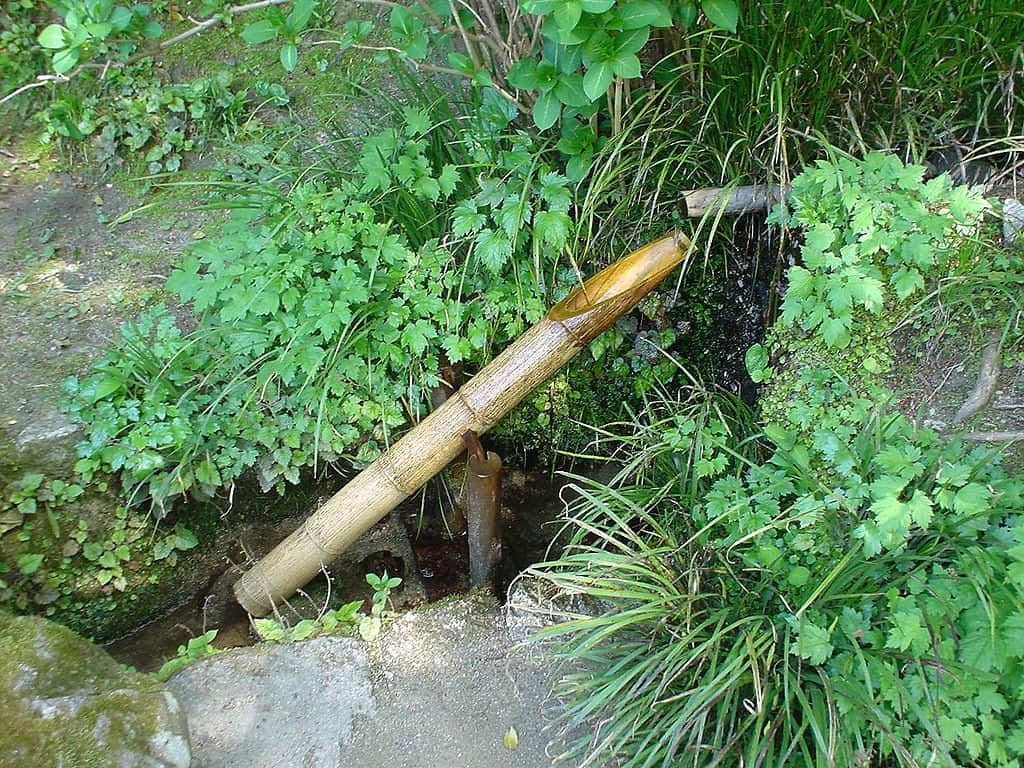
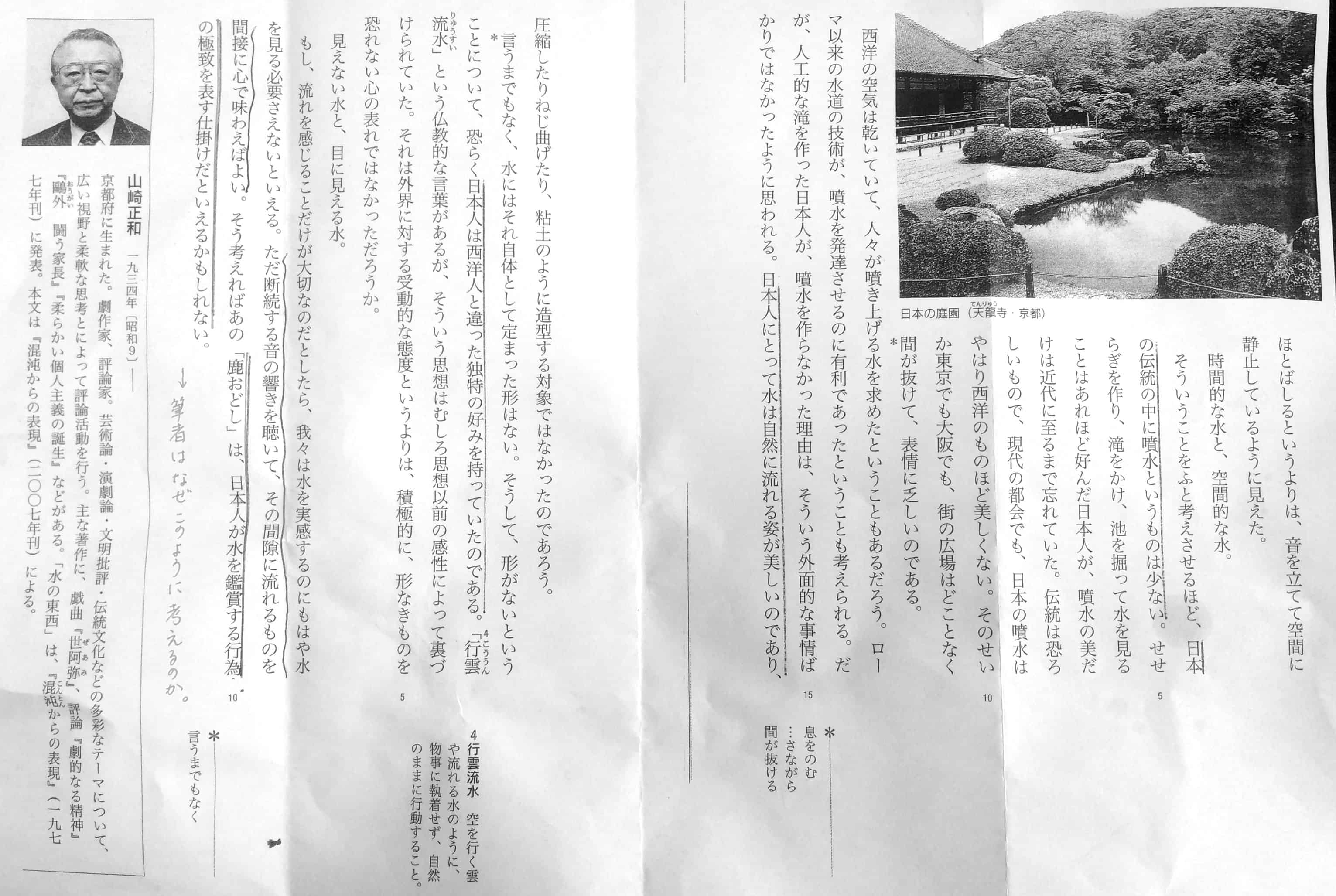
The other day I received from my Japanese teacher an interesting article by Yamazaki Masakazu comparing garden styles, and in particular the attitude towards and presentation of water in Japanese and European gardens (page 1, page 2). The author s list of achievements is long, various professorships, dramatist, literature critique, recognized as Person of Cultural Merit, just to name a view. I was looking forward to an interesting and high quality article! The article itself introduces the reader to Shishiodoshi, one of the standard ingredients of a Japanese garden: It is a device where water drips into a bamboo tube that is also a seesaw. At some point the water in the bamboo tube makes the seesaw switch over and the water pours out, after which the seesaw returns to the original position and a new cycle begins. Shishiodoshi The author describes his feelings and thoughts about the shishiodoshi, in particular connects human life (stress and relieve, cycles), the flow of time, and some other concepts with the shishiodoshi. Up to here it is a wonderful article providing interesting insights into the way the author thinks. Unfortunately, then the author tries to underline his ideas by comparing the Japanese shishiodoshi with European style water fountains, describing the former with all favorable properties and full of deep meaning, while the latter is qualified as beautiful and nice, but bare of any deeper meaning. I don t go into details that the whole comparison is anyway a bad one, as he is comparing Baroque style fountains, a very limited period, and furthermore ignores the fact that water fountains are not genuinely European (isn t there one in the Kenrokuen, one of the three most famous gardens in Japan!?), nor does he consider any other water-installation that might be available. What really destroys the in principle very nice article is the tone: The general tone of the article then can be summarized into: The shishiodoshi is rich on meaning, connects to the life of humans, instigates philosophical reflections, represents nature, the flow of time etc. The water fountain is beautiful and gorgeous, but that is all. I don t think that this separation, or this negative undertone, was created on purpose by the author. A person of his stature is supposedly above this level of primitive comparison. I believe that it is nothing else but a consequence of upbringing and the general attitude that permeates the whole society with this feeling of separateness. Us and They Repeatedly providing sentences like Japanese people and Western people have different tastes.. ( ). About 10 times in this short article expressions like Japanese and Westerner appear, leaving the reader with a bitter taste of an author that considers first the Japanese a people (what about Ainu, Ryukyu, etc?), and second that the Japanese are exclusive in the sense that they are set apart from the rest of the world in their way of thinking, living, being. What puzzles me is that this is not only a singular opinion, but a very general straight in the Japanese media, TV, radio, newspaper, books. Everyone considers Japan and Japanese as something that is fundamentally and profoundly different from everyone else in the world. There is We the Japanese (and that doesn t mean nationality of passport, but blood line!), and there are They the Rest or, as the way of writing and and description on many occasion suggestions, They the Barbarians . A short anecdote will underly this: One of the favorite TV talk show / pseudo-documentary style is about Japanese living abroad. That day a lady married in Paris was interviewed. What followed was a guided tour through Paris showing: Dirt in the gutter, street cleaning cars, waste disposal places. Yes, that was all. Just about the dirt . Of course, at length the (unfortunately only apparent) cleanliness of Japanese cities and neighborhoods are mentioned and shown to remind everyone how wonderful Japan is and how dirty the Barbarians. I don t want to say that I consider Japan more dirty than most other countries just the visible part is clean, the moment you step a bit aside and around the corner, there are the worst trash just thrown away without consideration. Anyway. To return to the topic of Us and They I consider us all humans, first and foremost, and nationality, birthplace, and all that are just by chance. I do NOT reject cultural differences, they are here, of course. But cultural differences are one thing, separating one self and one s perceived people from the rest of the world is another. Conclusion I repeat, I don t think that the author had any ill intentions, but it would have been nicer if the article wouldn t make such a stark distinction. He could have written about Shishiodoshi and water fountains without using the Us They categorization. He could have compared other water installations, could have discussed the long tradition of small ponds in European gardens, just to name a few things. But the author choose to highlight differences instead of commonalities. It is the Us against Them feeling that often makes life in Japan for a foreigner difficult. Japanese are not special, Austrians, too, are not special, nor are Americans, Russians, Tibetans, or any other nationality. No nationality is special, we are all humans. Maybe at some point this will arrive also in the Japanese society and thinking.

Email this to someonePrint this pageShare on FacebookShare on Google+Tweet about this on TwitterShare on LinkedInFlattr the author

19 May 2015

Thorsten Alteholz: alpine and UTF-8 and Debian lists

This is a note for my future self: When writing an email with only charset=US-ASCII , alpine creates an email with:

Content-Type: TEXT/PLAIN; format=flowed; charset=US-ASCII

and everything is fine. In case of UTF-8 characters inside the text, alpine creates something like:

Content-Type: MULTIPART/MIXED; BOUNDARY="705298698-1667814148-1432049085=:28313"

and the only available part contains:

Content-Type: TEXT/PLAIN; format=flowed; charset=UTF-8
Content-Transfer-Encoding: 8BIT
Google tells me that the reason for this is:
Alpine uses a single part MULTIPART/MIXED to apply a protection wrapper around QUOTED-PRINTABLE and BASE64 content to prevent it from being corrupted by various mail delivery systems that append little (typically advertising) things at the end of the message.
Ok, this behavior might come from bad experiences and it seems to work most of the time. Unfortunately if one sends a signed email to a Debian list that checks whether the signature is valid (like for example debian-lts-announce), such an email will be rejected with:
Failed to understand the email or find a signature: UDFormatError:
Cannot handle multipart messages not of type multipart/signed
*sigh*

Ritesh Raj Sarraf: Lenovo Yoga 2 13 with Debian

I recently acquired a Lenovo Yoga 2 13. While, at the time, the Yoga 3 was available, I decided to go for Yoga 2 13. The Yoga 3 comes with the newer Core M Broadwell family, which, in my opinion, doesn't really bring any astounding benefits. The Yoga 2 13 comes in mulitple variants worldwide. Infact these hardware variations have different effets when run under Linux. My varaint of Yoga 2 13 is:
CPU: Intel(R) Core(TM) i7-4510U CPU @ 2.00GHz
RAM: 8 GiB - Occupying 2 slots
Memory Controller Information
        Supported Interleave: One-way Interleave
        Current Interleave: One-way Interleave
        Maximum Memory Module Size: 8192 MB
        Maximum Total Memory Size: 16384 MB
       
Handle 0x0006, DMI type 6, 12 bytes
Handle 0x0007, DMI type 6, 12 bytes
The usual PCI devices:
rrs@learner:~$ lspci
00:00.0 Host bridge: Intel Corporation Haswell-ULT DRAM Controller (rev 0b)
00:02.0 VGA compatible controller: Intel Corporation Haswell-ULT Integrated Graphics Controller (rev 0b)
00:03.0 Audio device: Intel Corporation Haswell-ULT HD Audio Controller (rev 0b)
00:14.0 USB controller: Intel Corporation 8 Series USB xHCI HC (rev 04)
00:16.0 Communication controller: Intel Corporation 8 Series HECI #0 (rev 04)
00:1b.0 Audio device: Intel Corporation 8 Series HD Audio Controller (rev 04)
00:1c.0 PCI bridge: Intel Corporation 8 Series PCI Express Root Port 4 (rev e4)
00:1d.0 USB controller: Intel Corporation 8 Series USB EHCI #1 (rev 04)
00:1f.0 ISA bridge: Intel Corporation 8 Series LPC Controller (rev 04)
00:1f.2 SATA controller: Intel Corporation 8 Series SATA Controller 1 [AHCI mode] (rev 04)
00:1f.3 SMBus: Intel Corporation 8 Series SMBus Controller (rev 04)
01:00.0 Network controller: Realtek Semiconductor Co., Ltd. RTL8723BE PCIe Wireless Network Adapter
17:37          
And the storage devices
Device Model:     WDC WD5000M22K-24Z1LT0-SSHD-16GB
Device Model:     KINGSTON SM2280S3120G
Storage

The drive runs into serious performance problems when its SSHD's NCQ (mis)feature is under use in Linux <= 4.0.

[28974.232550] ata2.00: configured for UDMA/133
[28974.232565] ahci 0000:00:1f.2: port does not support device sleep
[28983.680955] ata1.00: exception Emask 0x10 SAct 0x7fffffff SErr 0x400100 action 0x6 frozen
[28983.681000] ata1.00: irq_stat 0x08000000, interface fatal error
[28983.681027] ata1: SError:   UnrecovData Handshk  
[28983.681052] ata1.00: failed command: WRITE FPDMA QUEUED
[28983.681082] ata1.00: cmd 61/40:00:b8:84:88/05:00:0a:00:00/40 tag 0 ncq 688128 out
                        res 40/00:3c:78:a9:88/00:00:0a:00:00/40 Emask 0x10 (ATA bus error)
[28983.681152] ata1.00: status:   DRDY  
[28983.681171] ata1.00: failed command: WRITE FPDMA QUEUED
[28983.681202] ata1.00: cmd 61/40:08:f8:89:88/05:00:0a:00:00/40 tag 1 ncq 688128 out
                        res 40/00:3c:78:a9:88/00:00:0a:00:00/40 Emask 0x10 (ATA bus error)
[28983.681271] ata1.00: status:   DRDY  
[28983.681289] ata1.00: failed command: WRITE FPDMA QUEUED
[28983.681316] ata1.00: cmd 61/40:10:38:8f:88/05:00:0a:00:00/40 tag 2 ncq 688128 out
                        res 40/00:3c:78:a9:88/00:00:0a:00:00/40 Emask 0x10 (ATA bus error)
[28983.681387] ata1.00: status:   DRDY  
[28983.681407] ata1.00: failed command: WRITE FPDMA QUEUED
[28983.681435] ata1.00: cmd 61/40:18:78:94:88/05:00:0a:00:00/40 tag 3 ncq 688128 out
                        res 40/00:3c:78:a9:88/00:00:0a:00:00/40 Emask 0x10 (ATA bus error)
[28983.697642] ata1.00: status:   DRDY  
[28983.697643] ata1.00: failed command: WRITE FPDMA QUEUED
[28983.697646] ata1.00: cmd 61/40:c8:38:65:88/05:00:0a:00:00/40 tag 25 ncq 688128 out
                        res 40/00:3c:78:a9:88/00:00:0a:00:00/40 Emask 0x10 (ATA bus error)
[28983.697647] ata1.00: status:   DRDY  
[28983.697648] ata1.00: failed command: WRITE FPDMA QUEUED
[28983.697651] ata1.00: cmd 61/40:d0:78:6a:88/05:00:0a:00:00/40 tag 26 ncq 688128 out
                        res 40/00:3c:78:a9:88/00:00:0a:00:00/40 Emask 0x10 (ATA bus error)
[28983.697651] ata1.00: status:   DRDY  
[28983.697652] ata1.00: failed command: WRITE FPDMA QUEUED
[28983.697656] ata1.00: cmd 61/40:d8:b8:6f:88/05:00:0a:00:00/40 tag 27 ncq 688128 out
                        res 40/00:3c:78:a9:88/00:00:0a:00:00/40 Emask 0x10 (ATA bus error)
[28983.697657] ata1.00: status:   DRDY  
[28983.697658] ata1.00: failed command: WRITE FPDMA QUEUED
[28983.697661] ata1.00: cmd 61/40:e0:f8:74:88/05:00:0a:00:00/40 tag 28 ncq 688128 out
                        res 40/00:3c:78:a9:88/00:00:0a:00:00/40 Emask 0x10 (ATA bus error)
[28983.697662] ata1.00: status:   DRDY  
[28983.697663] ata1.00: failed command: WRITE FPDMA QUEUED
[28983.697666] ata1.00: cmd 61/40:e8:38:7a:88/05:00:0a:00:00/40 tag 29 ncq 688128 out
                        res 40/00:3c:78:a9:88/00:00:0a:00:00/40 Emask 0x10 (ATA bus error)
[28983.697667] ata1.00: status:   DRDY  
[28983.697668] ata1.00: failed command: WRITE FPDMA QUEUED
[28983.697672] ata1.00: cmd 61/40:f0:78:7f:88/05:00:0a:00:00/40 tag 30 ncq 688128 out
                        res 40/00:3c:78:a9:88/00:00:0a:00:00/40 Emask 0x10 (ATA bus error)
[28983.697672] ata1.00: status:   DRDY  
[28983.697676] ata1: hard resetting link
[28984.017356] ata1: SATA link up 6.0 Gbps (SStatus 133 SControl 300)
[28984.022612] ata1.00: configured for UDMA/133
[28984.022740] ata1: EH complete
[28991.611732] Suspending console(s) (use no_console_suspend to debug)
[28992.183822] sd 1:0:0:0: [sdb] Synchronizing SCSI cache
[28992.186569] sd 1:0:0:0: [sdb] Stopping disk
[28992.186604] sd 0:0:0:0: [sda] Synchronizing SCSI cache
[28992.189594] sd 0:0:0:0: [sda] Stopping disk
[28992.967426] PM: suspend of devices complete after 1351.349 msecs
[28992.999461] PM: late suspend of devices complete after 31.990 msecs
[28993.000058] ehci-pci 0000:00:1d.0: System wakeup enabled by ACPI
[28993.000306] xhci_hcd 0000:00:14.0: System wakeup enabled by ACPI
[28993.016463] PM: noirq suspend of devices complete after 16.978 msecs
[28993.017024] ACPI: Preparing to enter system sleep state S3
[28993.017349] PM: Saving platform NVS memory
[28993.017357] Disabling non-boot CPUs ...
[28993.017389] intel_pstate CPU 1 exiting
[28993.018727] kvm: disabling virtualization on CPU1
[28993.019320] smpboot: CPU 1 is now offline
[28993.019646] intel_pstate CPU 2 exiting

In the interim, to overcome this problem, we can force the device to run in degraded mode. I'm not sure if it is really the degraded mode, or the device was falsely advertised as a 6 GiB capable device. Time will tell, but for now, force it to run in 3 GiB mode, and so far, I haven't run into the above mentioned probems. To force 3 GiB speed, apply the following.

rrs@learner:~$ cat /proc/cmdline
BOOT_IMAGE=/vmlinuz-4.0.4+ root=/dev/mapper/sdb_crypt ro cgroup_enable=memory swapaccount=1 rootflags=data=writeback libata.force=1:3 quiet
16:42          

And then verify it... As you can see below, I've forced it for ata1 because I want my SSD drive to run at full-speed. I've done enough I/O, which earlier resulted in the kernel spitting the SATA errors. With this workaround, the kernel does not spit any error messages.

[    1.273365] libata version 3.00 loaded.
[    1.287290] ahci 0000:00:1f.2: AHCI 0001.0300 32 slots 4 ports 6 Gbps 0x3 impl SATA mode
[    1.288238] ata1: FORCE: PHY spd limit set to 3.0Gbps
[    1.288240] ata1: SATA max UDMA/133 abar m2048@0xb051b000 port 0xb051b100 irq 41
[    1.288242] ata2: SATA max UDMA/133 abar m2048@0xb051b000 port 0xb051b180 irq 41
[    1.288244] ata3: DUMMY
[    1.288245] ata4: DUMMY
[    1.606971] ata1: SATA link up 3.0 Gbps (SStatus 123 SControl 320)
[    1.607906] ata1.00: ATA-9: WDC WD5000M22K-24Z1LT0-SSHD-16GB, 02.01A03, max UDMA/133
[    1.607910] ata1.00: 976773168 sectors, multi 0: LBA48 NCQ (depth 31/32), AA
[    1.608856] ata1.00: configured for UDMA/133
[    1.609106] scsi 0:0:0:0: Direct-Access     ATA      WDC WD5000M22K-2 1A03 PQ: 0 ANSI: 5
[    1.927167] ata2: SATA link up 6.0 Gbps (SStatus 133 SControl 300)
[    1.928980] ata2.00: ATA-8: KINGSTON SM2280S3120G, S8FM06.A, max UDMA/133
[    1.928983] ata2.00: 234441648 sectors, multi 16: LBA48 NCQ (depth 31/32), AA
[    1.929616] ata2.00: configured for UDMA/133

And the throughput you get out of your WD SATA SSHD drive, with capability set to 3.0 GiB is:

rrs@learner:/media/SSHD/tmp$ while true; do dd if=/dev/zero of=foo.img bs=1M count=20000; sync; rm -rf foo.img; sync; done
20000+0 records in
20000+0 records out
20971520000 bytes (21 GB) copied, 202.014 s, 104 MB/s
20000+0 records in
20000+0 records out
20971520000 bytes (21 GB) copied, 206.111 s, 102 MB/s

Hannes Reinecke has submitted patches for NCQ enhancements, for Linux 4.1, which I hope will resolve these problems. Another option is to disable NCQ for the drive, or else blacklist the make/model in driver/ata/libata-core.c

By the time I finished this blog entry draft, I had tests to conclude that this did not look like an NCQ problem. Because in degraded mode too, it runs with NCQ enabled (check above).

rrs@learner:~$ sudo fstrim -vv /media/SSHD
/media/SSHD: 268.2 GiB (287930949632 bytes) trimmed
16:58          
rrs@learner:~$ sudo fstrim -vv /
[sudo] password for rrs:
/: 64 GiB (68650749952 bytes) trimmed
16:56          

Another interesting feature of this drive is support for TRIM / DISCARD. This drive's FTL accepts the TRIM command. Ofcourse, you need to ensure that you have discard enabled in all the layers. In my case, SATA + Device Mapper (Crypt and LVM) + File System (ext4) Display

The overall display of this device is amazing. It is large enough to give you vibrant look. At 1920x1080 resolution, things look good. The display support was available out-of-the-box.

There were some suspend / resume hangs that occured with kernels < 4.x, during suspend / resume. The issue was root caused and fixed for Linux 4.0.

You may still notice the following kernel messages, though not problematic to me so far.

[28977.518114] PM: thaw of devices complete after 3607.979 msecs
[28977.590389] i915 0000:00:02.0: BAR 6: [??? 0x00000000 flags 0x2] has bogus alignment
[28977.590582] i915 0000:00:02.0: BAR 6: [??? 0x00000000 flags 0x2] has bogus alignment
[28977.591095] i915 0000:00:02.0: BAR 6: [??? 0x00000000 flags 0x2] has bogus alignment
[28977.591185] i915 0000:00:02.0: BAR 6: [??? 0x00000000 flags 0x2] has bogus alignment
[28977.591368] acpi device:30: Cannot transition to power state D3cold for parent in (unknown)
[28977.591911] pci_bus 0000:01: Allocating resources
[28977.591933] i915 0000:00:02.0: BAR 6: [??? 0x00000000 flags 0x2] has bogus alignment
[28977.592093] i915 0000:00:02.0: BAR 6: [??? 0x00000000 flags 0x2] has bogus alignment
[28977.592401] i915 0000:00:02.0: BAR 6: [??? 0x00000000 flags 0x2] has bogus alignment

You may need to disable the Intel Management Engine Interface (mei.ko), incase you run into suspend/resume problems.

rrs@learner:/media/SSHD/tmp$ cat /etc/modprobe.d/intel-mei-blacklist.conf
blacklist mei
blacklist mei-me
17:01          

You may also run into the following Kernel Oops during suspend/resume. Below, you see 2 interation of sleep because it first hibernates and then sleeps (s2both).

[  180.470206] Syncing filesystems ... done.
[  180.473337] Freezing user space processes ... (elapsed 0.001 seconds) done.
[  180.475210] PM: Marking nosave pages: [mem 0x00000000-0x00000fff]
[  180.475213] PM: Marking nosave pages: [mem 0x0006f000-0x0006ffff]
[  180.475215] PM: Marking nosave pages: [mem 0x00088000-0x000fffff]
[  180.475220] PM: Marking nosave pages: [mem 0x97360000-0x97b5ffff]
[  180.475274] PM: Marking nosave pages: [mem 0x9c36f000-0x9cffefff]
[  180.475356] PM: Marking nosave pages: [mem 0x9d000000-0xffffffff]
[  180.476877] PM: Basic memory bitmaps created
[  180.477003] PM: Preallocating image memory... done (allocated 380227 pages)
[  180.851800] PM: Allocated 1520908 kbytes in 0.37 seconds (4110.56 MB/s)
[  180.851802] Freezing remaining freezable tasks ... (elapsed 0.001 seconds) done.
[  180.853355] Suspending console(s) (use no_console_suspend to debug)
[  180.853520] wlan0: deauthenticating from c4:6e:1f:d0:67:26 by local choice (Reason: 3=DEAUTH_LEAVING)
[  180.864159] cfg80211: Calling CRDA to update world regulatory domain
[  181.172222] PM: freeze of devices complete after 319.294 msecs
[  181.196080] ------------[ cut here ]------------
[  181.196124] WARNING: CPU: 3 PID: 3707 at drivers/gpu/drm/i915/intel_display.c:7904 hsw_enable_pc8+0x659/0x7c0 [i915]()
[  181.196125] SPLL enabled
[  181.196159] Modules linked in: rfcomm ctr ccm bnep pci_stub vboxpci(O) vboxnetadp(O) vboxnetflt(O) vboxdrv(O) bridge stp llc xt_conntrack iptable_filter ipt_MASQUERADE nf_nat_masquerade_ipv4 iptable_nat nf_conntrack_ipv4 nf_defrag_ipv4 nf_nat_ipv4 nf_nat nf_conntrack xt_CHECKSUM xt_tcpudp iptable_mangle ip_tables x_tables nls_utf8 nls_cp437 vfat fat rtsx_usb_ms memstick snd_hda_codec_hdmi joydev mousedev hid_sensor_rotation hid_sensor_incl_3d hid_sensor_als hid_sensor_accel_3d hid_sensor_magn_3d hid_sensor_gyro_3d hid_sensor_trigger industrialio_triggered_buffer kfifo_buf industrialio hid_sensor_iio_common iTCO_wdt iTCO_vendor_support hid_multitouch x86_pkg_temp_thermal intel_powerclamp coretemp intel_rapl iosf_mbi kvm_intel kvm btusb hid_sensor_hub bluetooth uvcvideo videobuf2_vmalloc videobuf2_memops
[  181.196203]  videobuf2_core v4l2_common videodev media pcspkr evdev mac_hid arc4 psmouse serio_raw efivars i2c_i801 rtl8723be btcoexist rtl8723_common rtl_pci rtlwifi mac80211 snd_soc_rt5640 cfg80211 snd_soc_rl6231 snd_hda_codec_realtek i915 snd_soc_core snd_hda_codec_generic ideapad_laptop ac snd_compress dw_dmac sparse_keymap drm_kms_helper rfkill battery dw_dmac_core snd_hda_intel snd_pcm_dmaengine snd_soc_sst_acpi snd_hda_controller video 8250_dw regmap_i2c snd_hda_codec drm snd_hwdep snd_pcm spi_pxa2xx_platform i2c_designware_platform soc_button_array snd_timer i2c_designware_core snd i2c_algo_bit soundcore shpchp lpc_ich button processor fuse ipv6 autofs4 ext4 crc16 jbd2 mbcache btrfs xor raid6_pq algif_skcipher af_alg dm_crypt dm_mod sg usbhid sd_mod rtsx_usb_sdmmc rtsx_usb crct10dif_pclmul
[  181.196220]  crc32_pclmul crc32c_intel ghash_clmulni_intel aesni_intel aes_x86_64 lrw gf128mul glue_helper ablk_helper cryptd ahci libahci libata xhci_pci ehci_pci xhci_hcd ehci_hcd scsi_mod usbcore usb_common thermal fan thermal_sys hwmon i2c_hid hid i2c_core sdhci_acpi sdhci mmc_core gpio_lynxpoint
[  181.196224] CPU: 3 PID: 3707 Comm: kworker/u16:7 Tainted: G           O    4.0.4+ #14
[  181.196225] Hardware name: LENOVO 20344/INVALID, BIOS 96CN29WW(V1.15) 10/16/2014
[  181.196230] Workqueue: events_unbound async_run_entry_fn
[  181.196233]  0000000000000000 ffffffffa0706f68 ffffffff81522198 ffff880064debc88
[  181.196235]  ffffffff8106c5b1 ffff880251460000 ffff880250f83b68 ffff880250f83b78
[  181.196237]  ffff880250f83800 0000000000000001 ffffffff8106c62a ffffffffa071407c
[  181.196238] Call Trace:
[  181.196248]  [<ffffffff81522198>] ? dump_stack+0x40/0x50
[  181.196251]  [<ffffffff8106c5b1>] ? warn_slowpath_common+0x81/0xb0
[  181.196254]  [<ffffffff8106c62a>] ? warn_slowpath_fmt+0x4a/0x50
[  181.196278]  [<ffffffffa06ae349>] ? hsw_enable_pc8+0x659/0x7c0 [i915]
[  181.196289]  [<ffffffffa0643ee0>] ? intel_suspend_complete+0xe0/0x6e0 [i915]
[  181.196300]  [<ffffffffa0644501>] ? i915_drm_suspend_late+0x21/0x90 [i915]
[  181.196311]  [<ffffffffa0644690>] ? i915_pm_poweroff_late+0x40/0x40 [i915]
[  181.196318]  [<ffffffff813fa7ba>] ? dpm_run_callback+0x4a/0x100
[  181.196321]  [<ffffffff813fb010>] ? __device_suspend_late+0xa0/0x180
[  181.196324]  [<ffffffff813fb10e>] ? async_suspend_late+0x1e/0xa0
[  181.196326]  [<ffffffff8108b973>] ? async_run_entry_fn+0x43/0x160
[  181.196330]  [<ffffffff81083a5d>] ? process_one_work+0x14d/0x3f0
[  181.196332]  [<ffffffff81084463>] ? worker_thread+0x53/0x480
[  181.196334]  [<ffffffff81084410>] ? rescuer_thread+0x300/0x300
[  181.196338]  [<ffffffff81089191>] ? kthread+0xc1/0xe0
[  181.196341]  [<ffffffff810890d0>] ? kthread_create_on_node+0x180/0x180
[  181.196346]  [<ffffffff81527898>] ? ret_from_fork+0x58/0x90
[  181.196349]  [<ffffffff810890d0>] ? kthread_create_on_node+0x180/0x180
[  181.196350] ---[ end trace 8e339004db298838 ]---
[  181.220094] PM: late freeze of devices complete after 47.936 msecs
[  181.220972] PM: noirq freeze of devices complete after 0.875 msecs
[  181.221577] ACPI: Preparing to enter system sleep state S4
[  181.221886] PM: Saving platform NVS memory
[  181.222702] Disabling non-boot CPUs ...
[  181.222731] intel_pstate CPU 1 exiting
[  181.224041] kvm: disabling virtualization on CPU1
[  181.224680] smpboot: CPU 1 is now offline
[  181.225121] intel_pstate CPU 2 exiting
[  181.226407] kvm: disabling virtualization on CPU2
[  181.227025] smpboot: CPU 2 is now offline
[  181.227441] intel_pstate CPU 3 exiting
[  181.227728] Broke affinity for irq 19
[  181.227747] Broke affinity for irq 41
[  181.228771] kvm: disabling virtualization on CPU3
[  181.228793] smpboot: CPU 3 is now offline
[  181.229624] PM: Creating hibernation image:
[  181.563651] PM: Need to copy 379053 pages
[  181.563655] PM: Normal pages needed: 379053 + 1024, available pages: 1697704
[  182.472910] PM: Hibernation image created (379053 pages copied)
[  181.232347] PM: Restoring platform NVS memory
[  181.233171] Enabling non-boot CPUs ...
[  181.233246] x86: Booting SMP configuration:
[  181.233248] smpboot: Booting Node 0 Processor 1 APIC 0x1
[  181.246771] kvm: enabling virtualization on CPU1
[  181.249339] CPU1 is up
[  181.249389] smpboot: Booting Node 0 Processor 2 APIC 0x2
[  181.262313] kvm: enabling virtualization on CPU2
[  181.264853] CPU2 is up
[  181.264903] smpboot: Booting Node 0 Processor 3 APIC 0x3
[  181.277831] kvm: enabling virtualization on CPU3
[  181.280317] CPU3 is up
[  181.288471] ACPI: Waking up from system sleep state S4
[  182.340655] PM: noirq thaw of devices complete after 0.637 msecs
[  182.378087] PM: early thaw of devices complete after 37.428 msecs
[  182.378436] rtlwifi: rtlwifi: wireless switch is on
[  182.451021] rtc_cmos 00:01: System wakeup disabled by ACPI
[  182.697575] ata1: SATA link up 3.0 Gbps (SStatus 123 SControl 320)
[  182.697617] ata2: SATA link up 6.0 Gbps (SStatus 133 SControl 300)
[  182.699248] ata1.00: configured for UDMA/133
[  182.699911] ata2.00: configured for UDMA/133
[  182.699917] ahci 0000:00:1f.2: port does not support device sleep
[  186.059539] PM: thaw of devices complete after 3685.338 msecs
[  186.134292] i915 0000:00:02.0: BAR 6: [??? 0x00000000 flags 0x2] has bogus alignment
[  186.134479] i915 0000:00:02.0: BAR 6: [??? 0x00000000 flags 0x2] has bogus alignment
[  186.134992] i915 0000:00:02.0: BAR 6: [??? 0x00000000 flags 0x2] has bogus alignment
[  186.135080] i915 0000:00:02.0: BAR 6: [??? 0x00000000 flags 0x2] has bogus alignment
[  186.135266] acpi device:30: Cannot transition to power state D3cold for parent in (unknown)
[  186.135950] pci_bus 0000:01: Allocating resources
[  186.135974] pcieport 0000:00:1c.0: bridge window [mem 0x00100000-0x000fffff 64bit pref] to [bus 01] add_size 200000
[  186.135980] i915 0000:00:02.0: BAR 6: [??? 0x00000000 flags 0x2] has bogus alignment
[  186.136049] pcieport 0000:00:1c.0: res[15]=[mem 0x00100000-0x000fffff 64bit pref] get_res_add_size add_size 200000
[  186.136072] pcieport 0000:00:1c.0: BAR 15: assigned [mem 0x9fb00000-0x9fcfffff 64bit pref]
[  186.136174] i915 0000:00:02.0: BAR 6: [??? 0x00000000 flags 0x2] has bogus alignment
[  186.136490] i915 0000:00:02.0: BAR 6: [??? 0x00000000 flags 0x2] has bogus alignment
[  199.454497] Suspending console(s) (use no_console_suspend to debug)
[  200.024190] sd 1:0:0:0: [sdb] Synchronizing SCSI cache
[  200.024356] sd 0:0:0:0: [sda] Synchronizing SCSI cache
[  200.025359] sd 1:0:0:0: [sdb] Stopping disk
[  200.028701] sd 0:0:0:0: [sda] Stopping disk
[  201.106085] PM: suspend of devices complete after 1651.336 msecs
[  201.106591] ------------[ cut here ]------------
[  201.106628] WARNING: CPU: 0 PID: 3725 at drivers/gpu/drm/i915/intel_display.c:7904 hsw_enable_pc8+0x659/0x7c0 [i915]()
[  201.106628] SPLL enabled
[  201.106656] Modules linked in: rfcomm ctr ccm bnep pci_stub vboxpci(O) vboxnetadp(O) vboxnetflt(O) vboxdrv(O) bridge stp llc xt_conntrack iptable_filter ipt_MASQUERADE nf_nat_masquerade_ipv4 iptable_nat nf_conntrack_ipv4 nf_defrag_ipv4 nf_nat_ipv4 nf_nat nf_conntrack xt_CHECKSUM xt_tcpudp iptable_mangle ip_tables x_tables nls_utf8 nls_cp437 vfat fat rtsx_usb_ms memstick snd_hda_codec_hdmi joydev mousedev hid_sensor_rotation hid_sensor_incl_3d hid_sensor_als hid_sensor_accel_3d hid_sensor_magn_3d hid_sensor_gyro_3d hid_sensor_trigger industrialio_triggered_buffer kfifo_buf industrialio hid_sensor_iio_common iTCO_wdt iTCO_vendor_support hid_multitouch x86_pkg_temp_thermal intel_powerclamp coretemp intel_rapl iosf_mbi kvm_intel kvm btusb hid_sensor_hub bluetooth uvcvideo videobuf2_vmalloc videobuf2_memops
[  201.106694]  videobuf2_core v4l2_common videodev media pcspkr evdev mac_hid arc4 psmouse serio_raw efivars i2c_i801 rtl8723be btcoexist rtl8723_common rtl_pci rtlwifi mac80211 snd_soc_rt5640 cfg80211 snd_soc_rl6231 snd_hda_codec_realtek i915 snd_soc_core snd_hda_codec_generic ideapad_laptop ac snd_compress dw_dmac sparse_keymap drm_kms_helper rfkill battery dw_dmac_core snd_hda_intel snd_pcm_dmaengine snd_soc_sst_acpi snd_hda_controller video 8250_dw regmap_i2c snd_hda_codec drm snd_hwdep snd_pcm spi_pxa2xx_platform i2c_designware_platform soc_button_array snd_timer i2c_designware_core snd i2c_algo_bit soundcore shpchp lpc_ich button processor fuse ipv6 autofs4 ext4 crc16 jbd2 mbcache btrfs xor raid6_pq algif_skcipher af_alg dm_crypt dm_mod sg usbhid sd_mod rtsx_usb_sdmmc rtsx_usb crct10dif_pclmul
[  201.106711]  crc32_pclmul crc32c_intel ghash_clmulni_intel aesni_intel aes_x86_64 lrw gf128mul glue_helper ablk_helper cryptd ahci libahci libata xhci_pci ehci_pci xhci_hcd ehci_hcd scsi_mod usbcore usb_common thermal fan thermal_sys hwmon i2c_hid hid i2c_core sdhci_acpi sdhci mmc_core gpio_lynxpoint
[  201.106714] CPU: 0 PID: 3725 Comm: kworker/u16:25 Tainted: G        W  O    4.0.4+ #14
[  201.106715] Hardware name: LENOVO 20344/INVALID, BIOS 96CN29WW(V1.15) 10/16/2014
[  201.106720] Workqueue: events_unbound async_run_entry_fn
[  201.106723]  0000000000000000 ffffffffa0706f68 ffffffff81522198 ffff880064dd7c88
[  201.106725]  ffffffff8106c5b1 ffff880251460000 ffff880250f83b68 ffff880250f83b78
[  201.106727]  ffff880250f83800 0000000000000002 ffffffff8106c62a ffffffffa071407c
[  201.106728] Call Trace:
[  201.106737]  [<ffffffff81522198>] ? dump_stack+0x40/0x50
[  201.106740]  [<ffffffff8106c5b1>] ? warn_slowpath_common+0x81/0xb0
[  201.106742]  [<ffffffff8106c62a>] ? warn_slowpath_fmt+0x4a/0x50
[  201.106765]  [<ffffffffa06ae349>] ? hsw_enable_pc8+0x659/0x7c0 [i915]
[  201.106776]  [<ffffffffa0643ee0>] ? intel_suspend_complete+0xe0/0x6e0 [i915]
[  201.106786]  [<ffffffffa0644501>] ? i915_drm_suspend_late+0x21/0x90 [i915]
[  201.106797]  [<ffffffffa0644690>] ? i915_pm_poweroff_late+0x40/0x40 [i915]
[  201.106802]  [<ffffffff813fa7ba>] ? dpm_run_callback+0x4a/0x100
[  201.106805]  [<ffffffff813fb010>] ? __device_suspend_late+0xa0/0x180
[  201.106809]  [<ffffffff813fb10e>] ? async_suspend_late+0x1e/0xa0
[  201.106811]  [<ffffffff8108b973>] ? async_run_entry_fn+0x43/0x160
[  201.106813]  [<ffffffff81083a5d>] ? process_one_work+0x14d/0x3f0
[  201.106815]  [<ffffffff81084463>] ? worker_thread+0x53/0x480
[  201.106818]  [<ffffffff81084410>] ? rescuer_thread+0x300/0x300
[  201.106821]  [<ffffffff81089191>] ? kthread+0xc1/0xe0
[  201.106824]  [<ffffffff810890d0>] ? kthread_create_on_node+0x180/0x180
[  201.106827]  [<ffffffff81527898>] ? ret_from_fork+0x58/0x90
[  201.106830]  [<ffffffff810890d0>] ? kthread_create_on_node+0x180/0x180
[  201.106832] ---[ end trace 8e339004db298839 ]---
[  201.130052] PM: late suspend of devices complete after 23.960 msecs
[  201.130725] ehci-pci 0000:00:1d.0: System wakeup enabled by ACPI
[  201.130885] xhci_hcd 0000:00:14.0: System wakeup enabled by ACPI
[  201.146986] PM: noirq suspend of devices complete after 16.930 msecs
[  201.147591] ACPI: Preparing to enter system sleep state S3
[  201.147942] PM: Saving platform NVS memory
[  201.147948] Disabling non-boot CPUs ...
[  201.147999] intel_pstate CPU 1 exiting
[  201.149324] kvm: disabling virtualization on CPU1
[  201.149337] smpboot: CPU 1 is now offline
[  201.149640] intel_pstate CPU 2 exiting
[  201.151096] kvm: disabling virtualization on CPU2
[  201.151108] smpboot: CPU 2 is now offline
[  201.152017] intel_pstate CPU 3 exiting
[  201.153250] kvm: disabling virtualization on CPU3
[  201.153256] smpboot: CPU 3 is now offline
[  201.156229] ACPI: Low-level resume complete
[  201.156307] PM: Restoring platform NVS memory
[  201.160033] CPU0 microcode updated early to revision 0x1c, date = 2014-07-03
[  201.160190] Enabling non-boot CPUs ...
[  201.160241] x86: Booting SMP configuration:
[  201.160243] smpboot: Booting Node 0 Processor 1 APIC 0x1
[  201.172665] kvm: enabling virtualization on CPU1
[  201.174982] CPU1 is up
[  201.175013] smpboot: Booting Node 0 Processor 2 APIC 0x2
[  201.187569] CPU2 microcode updated early to revision 0x1c, date = 2014-07-03
[  201.188796] kvm: enabling virtualization on CPU2
[  201.191130] CPU2 is up
[  201.191158] smpboot: Booting Node 0 Processor 3 APIC 0x3
[  201.203297] kvm: enabling virtualization on CPU3
[  201.205679] CPU3 is up
[  201.210414] ACPI: Waking up from system sleep state S3
[  201.224617] ehci-pci 0000:00:1d.0: System wakeup disabled by ACPI
[  201.332523] xhci_hcd 0000:00:14.0: System wakeup disabled by ACPI
[  201.332634] PM: noirq resume of devices complete after 121.623 msecs
[  201.372718] PM: early resume of devices complete after 40.058 msecs
[  201.372892] rtlwifi: rtlwifi: wireless switch is on
[  201.373270] sd 0:0:0:0: [sda] Starting disk
[  201.373271] sd 1:0:0:0: [sdb] Starting disk
[  201.445954] rtc_cmos 00:01: System wakeup disabled by ACPI
[  201.692510] ata2: SATA link up 6.0 Gbps (SStatus 133 SControl 300)
[  201.694719] ata2.00: configured for UDMA/133
[  201.694724] ahci 0000:00:1f.2: port does not support device sleep
[  201.836724] usb 2-4: reset high-speed USB device number 2 using xhci_hcd
[  201.890158] psmouse serio1: synaptics: queried max coordinates: x [..5702], y [..4730]
[  201.930768] psmouse serio1: synaptics: queried min coordinates: x [1242..], y [1124..]
[  202.076784] usb 2-5: reset full-speed USB device number 3 using xhci_hcd
[  202.205100] usb 2-5: ep 0x2 - rounding interval to 64 microframes, ep desc says 80 microframes
[  202.316799] usb 2-7: reset full-speed USB device number 5 using xhci_hcd
[  202.444945] usb 2-7: No LPM exit latency info found, disabling LPM.
[  202.556817] usb 2-8: reset full-speed USB device number 6 using xhci_hcd
[  202.908691] usb 2-6: reset high-speed USB device number 4 using xhci_hcd
[  203.932602] ata1: SATA link up 3.0 Gbps (SStatus 123 SControl 320)
[  204.044890] ata1.00: configured for UDMA/133
[  206.228698] PM: resume of devices complete after 4855.892 msecs
[  206.380738] i915 0000:00:02.0: BAR 6: [??? 0x00000000 flags 0x2] has bogus alignment
[  206.383152] i915 0000:00:02.0: BAR 6: [??? 0x00000000 flags 0x2] has bogus alignment
[  206.385775] i915 0000:00:02.0: BAR 6: [??? 0x00000000 flags 0x2] has bogus alignment
[  206.388066] i915 0000:00:02.0: BAR 6: [??? 0x00000000 flags 0x2] has bogus alignment
[  206.390415] acpi device:30: Cannot transition to power state D3cold for parent in (unknown)
[  206.393078] pci_bus 0000:01: Allocating resources
[  206.393098] i915 0000:00:02.0: BAR 6: [??? 0x00000000 flags 0x2] has bogus alignment
[  206.395470] i915 0000:00:02.0: BAR 6: [??? 0x00000000 flags 0x2] has bogus alignment
[  206.397927] i915 0000:00:02.0: BAR 6: [??? 0x00000000 flags 0x2] has bogus alignment
[  206.518516] Restarting kernel threads ... done.
[  206.518812] PM: Basic memory bitmaps freed
[  206.518816] Restarting tasks ... done.

There is one more occasional Kernel Oops (below), which I believe again has to do with Intel.

[ 8770.745396] ------------[ cut here ]------------
[ 8770.745441] WARNING: CPU: 0 PID: 7206 at drivers/gpu/drm/i915/intel_display.c:9756 intel_check_page_flip+0xd2/0xe0 [i915]()
[ 8770.745444] Kicking stuck page flip: queued at 466186, now 466191
[ 8770.745445] Modules linked in: cpuid rfcomm ctr ccm bnep pci_stub vboxpci(O) vboxnetadp(O) vboxnetflt(O) vboxdrv(O) bridge stp llc xt_conntrack iptable_filter ipt_MASQUERADE nf_nat_masquerade_ipv4 iptable_nat nf_conntrack_ipv4 nf_defrag_ipv4 nf_nat_ipv4 nf_nat nf_conntrack xt_CHECKSUM xt_tcpudp iptable_mangle ip_tables x_tables nls_utf8 nls_cp437 vfat fat rtsx_usb_ms memstick snd_hda_codec_hdmi joydev mousedev hid_sensor_rotation hid_sensor_incl_3d hid_sensor_als hid_sensor_accel_3d hid_sensor_magn_3d hid_sensor_gyro_3d hid_sensor_trigger industrialio_triggered_buffer kfifo_buf industrialio hid_sensor_iio_common iTCO_wdt iTCO_vendor_support hid_multitouch x86_pkg_temp_thermal intel_powerclamp coretemp intel_rapl iosf_mbi kvm_intel kvm btusb hid_sensor_hub bluetooth uvcvideo videobuf2_vmalloc videobuf2_memops
[ 8770.745484]  videobuf2_core v4l2_common videodev media pcspkr evdev mac_hid arc4 psmouse serio_raw efivars i2c_i801 rtl8723be btcoexist rtl8723_common rtl_pci rtlwifi mac80211 snd_soc_rt5640 cfg80211 snd_soc_rl6231 snd_hda_codec_realtek i915 snd_soc_core snd_hda_codec_generic ideapad_laptop ac snd_compress dw_dmac sparse_keymap drm_kms_helper rfkill battery dw_dmac_core snd_hda_intel snd_pcm_dmaengine snd_soc_sst_acpi snd_hda_controller video 8250_dw regmap_i2c snd_hda_codec drm snd_hwdep snd_pcm spi_pxa2xx_platform i2c_designware_platform soc_button_array snd_timer i2c_designware_core snd i2c_algo_bit soundcore shpchp lpc_ich button processor fuse ipv6 autofs4 ext4 crc16 jbd2 mbcache btrfs xor raid6_pq algif_skcipher af_alg dm_crypt dm_mod sg usbhid sd_mod rtsx_usb_sdmmc rtsx_usb crct10dif_pclmul
[ 8770.745536]  crc32_pclmul crc32c_intel ghash_clmulni_intel aesni_intel aes_x86_64 lrw gf128mul glue_helper ablk_helper cryptd ahci libahci libata xhci_pci ehci_pci xhci_hcd ehci_hcd scsi_mod usbcore usb_common thermal fan thermal_sys hwmon i2c_hid hid i2c_core sdhci_acpi sdhci mmc_core gpio_lynxpoint
[ 8770.745561] CPU: 0 PID: 7206 Comm: icedove Tainted: G        W  O    4.0.4+ #14
[ 8770.745563] Hardware name: LENOVO 20344/INVALID, BIOS 96CN29WW(V1.15) 10/16/2014
[ 8770.745565]  0000000000000000 ffffffffa0706f68 ffffffff81522198 ffff88025f203dc8
[ 8770.745569]  ffffffff8106c5b1 ffff880250f83800 ffff880254dcc000 0000000000000000
[ 8770.745572]  0000000000000000 0000000000000000 ffffffff8106c62a ffffffffa0709d50
[ 8770.745575] Call Trace:
[ 8770.745577]  <IRQ>  [<ffffffff81522198>] ? dump_stack+0x40/0x50
[ 8770.745592]  [<ffffffff8106c5b1>] ? warn_slowpath_common+0x81/0xb0
[ 8770.745595]  [<ffffffff8106c62a>] ? warn_slowpath_fmt+0x4a/0x50
[ 8770.745616]  [<ffffffffa06a0bb3>] ? __intel_pageflip_stall_check+0x113/0x120 [i915]
[ 8770.745634]  [<ffffffffa06af042>] ? intel_check_page_flip+0xd2/0xe0 [i915]
[ 8770.745652]  [<ffffffffa067cde1>] ? ironlake_irq_handler+0x2e1/0x1010 [i915]
[ 8770.745657]  [<ffffffff81092d1a>] ? check_preempt_curr+0x5a/0xa0
[ 8770.745663]  [<ffffffff812d66c2>] ? timerqueue_del+0x22/0x70
[ 8770.745668]  [<ffffffff810bb7d5>] ? handle_irq_event_percpu+0x75/0x190
[ 8770.745672]  [<ffffffff8101b945>] ? read_tsc+0x5/0x10
[ 8770.745676]  [<ffffffff810bb928>] ? handle_irq_event+0x38/0x50
[ 8770.745680]  [<ffffffff810be841>] ? handle_edge_irq+0x71/0x120
[ 8770.745685]  [<ffffffff810153bd>] ? handle_irq+0x1d/0x30
[ 8770.745689]  [<ffffffff8152a866>] ? do_IRQ+0x46/0xe0
[ 8770.745694]  [<ffffffff8152866d>] ? common_interrupt+0x6d/0x6d
[ 8770.745695]  <EOI>  [<ffffffff8152794d>] ? system_call_fastpath+0x16/0x1b
[ 8770.745701] ---[ end trace 8e339004db29883a ]---
Network

In my case, the laptop came with the Realtek Wireless device (details above in lspci output). Note: The machine has no wired interface.

While the Intel Wifi devices shipped with this laptop have their own share of problems, this device (rtl8723be) works out of the box. But only for a while. There is no certain pattern on what triggers the bug, but once triggered, the network just freezes. Nothing is logged.

If your Yoga 2 13 came with the RTL chip, the following workaround may help avoid the network issues.

rrs@learner:/media/SSHD/tmp$ cat /etc/modprobe.d/rtl8723be.conf
options rtl8723be fwlps=0
17:06          
MCE

Almost every boot, eventually, the kernel reports MCE errors. Not something I understand well, but so far, it hasn't caused any visible issues. And from what I have googled so far, nobody seems to have fixed it anywhere

So, with fingers crossed, lets just hope this never translates into a real problem.

What the kernel reports of the CPU's capabilities.

[    0.041496] mce: CPU supports 7 MCE banks
[  299.540930] mce: [Hardware Error]: Machine check events logged

The MCE logs extracted from the buffer.

mcelog: failed to prefill DIMM database from DMI data
Hardware event. This is not a software error.
MCE 0
CPU 0 BANK 5
MISC 38a0000086 ADDR fef81880
TIME 1432455005 Sun May 24 13:40:05 2015
MCG status:
MCi status:
Error overflow
Uncorrected error
MCi_MISC register valid
MCi_ADDR register valid
Processor context corrupt
MCA: corrected filtering (some unreported errors in same region)
Generic CACHE Level-2 Generic Error
STATUS ee0000000040110a MCGSTATUS 0
MCGCAP c07 APICID 0 SOCKETID 0
CPUID Vendor Intel Family 6 Model 69
Hardware event. This is not a software error.
MCE 1
CPU 0 BANK 6
MISC 78a0000086 ADDR fef81780
TIME 1432455005 Sun May 24 13:40:05 2015
MCG status:
MCi status:
Uncorrected error
MCi_MISC register valid
MCi_ADDR register valid
Processor context corrupt
MCA: corrected filtering (some unreported errors in same region)
Generic CACHE Level-2 Generic Error
STATUS ae0000000040110a MCGSTATUS 0
MCGCAP c07 APICID 0 SOCKETID 0
CPUID Vendor Intel Family 6 Model 69
Hardware event. This is not a software error.
MCE 2
CPU 0 BANK 5
MISC 38a0000086 ADDR fef81880
TIME 1432455114 Sun May 24 13:41:54 2015
MCG status:
MCi status:
Error overflow
Uncorrected error
MCi_MISC register valid
MCi_ADDR register valid
Processor context corrupt
MCA: corrected filtering (some unreported errors in same region)
Generic CACHE Level-2 Generic Error
STATUS ee0000000040110a MCGSTATUS 0
MCGCAP c07 APICID 0 SOCKETID 0
CPUID Vendor Intel Family 6 Model 69
Hardware event. This is not a software error.
MCE 3
CPU 0 BANK 6
MISC 78a0000086 ADDR fef81780
TIME 1432455114 Sun May 24 13:41:54 2015
MCG status:
MCi status:
Uncorrected error
MCi_MISC register valid
MCi_ADDR register valid
Processor context corrupt
MCA: corrected filtering (some unreported errors in same region)
Generic CACHE Level-2 Generic Error
STATUS ae0000000040110a MCGSTATUS 0
MCGCAP c07 APICID 0 SOCKETID 0
CPUID Vendor Intel Family 6 Model 69

Categories:

Keywords:

18 May 2015

Jonathan McDowell: Stepping down from SPI

I was first elected to the Software in the Public Interest board back in 2009. I was re-elected in 2012. This July I am up for re-election again. For a variety of reasons I ve decided not to stand; mostly a combination of the fact that I think 2 terms (6 years) is enough in a single stretch and an inability to devote as much time to the organization as I d like. I mentioned this at the May board meeting. I m planning to stay involved where I can. My main reason for posting this here is to cause people to think about whether they might want to stand for the board. Nominations open on July 1st and run until July 13th. The main thing you need to absolutely commit to is being able to attend the monthly board meeting, which is held on IRC at 20:30 UTC on the second Thursday of the month. They tend to last at most 30 minutes. Of course there s a variety of tasks that happen in the background, such as answering queries from prospective associated projects or discussing ongoing matters on the membership or board lists depending on circumstances. It s my firm belief that SPI do some very important work for the Free software community. Few people realise the wide variety of associated projects. SPI offload the boring admin bits around accepting donations and managing project assets (be those machines, domains, trademarks or whatever), leaving those projects able to concentrate on the actual technical side of things. Most project members don t realise the involvement of SPI, and that s largely a good thing as it indicates the system is working. However it also means that there can sometimes be a lack of people wanting to stand at election time, and an absence of diversity amongst the candidates. I m happy to answer questions of anyone who might consider standing for the board; #spi on irc.oftc.net is a good place to ask them - I am there as Noodles.

17 May 2015

Andrew Pollock: [debian] Fixing some issues with changelogs.debian.net

I got an email last year pointing out a cosmetic issue with changelogs.debian.net. I think at the time of the email, the only problem was some bitrot in PHP's built-in server variables making some text appear incorrectly. I duly added something to my TODO list to fix it, and it subsequently sat there for like 13 months. In the ensuing time, Debian changed some stuff, and my code started incorrectly handling a 302 as well, which actually broke it good and proper. I finally got around to fixing it. I also fixed a problem where sometimes there can be multiple entries in the Sources file for a package (switching to using api.ftp-master.debian.org would also address this), which caused sometimes caused an incorrect version of the changelog to be returned. In the resulting tinkering, I learned about api.ftp-master.debian.org, which is totally awesome. I could stop maintaining and parsing a local copy of sid's Sources file, and just make a call to this instead. Finally, I added linking to CVEs, because it was a quick thing to do, and adds value. In light of api.ftp-master.debian.org, I'm very tempted to rewrite the redirector. The code is very old and hard for present-day Andrew to maintain, and I despise PHP. I'd rather write it in Python today, with some proper test coverage. I could also potentially host it on AppEngine instead of locally, just so I get some experience with AppEngine It's also been suggested that I fold the changes into the changelog hosting on ftp-master.debian.org. I'm hesitant to do this, as it would require changing the output from plain text to HTML, which would mess up consumers of the plain text (like the current implementation of changelogs.debian.net)

Lunar: Reproducible builds: week 2 in Stretch cycle

What happened about the reproducible builds effort for this week: Media coverage Debian's effort on reproducible builds has been covered in the June 2015 issue of Linux Magazin in Germany. Cover of Linux Magazin June 2015 Article about reproducible builds in Linux Magazin June 2015 Toolchain fixes josch rebased the experimental version of debhelper on 9.20150507. Packages fixed The following 515 packages became reproducible due to changes of their build dependencies: airport-utils, airspy-host, all-in-one-sidebar, ampache, aptfs, arpack, asciio, aspell-kk, asused, balance, batmand, binutils-avr, bioperl, bpm-tools, c2050, cakephp-instaweb, carton, cbp2make, checkbot, checksecurity, chemeq, chronicle, cube2-data, cucumber, darkstat, debci, desktop-file-utils, dh-linktree, django-pagination, dosbox, eekboek, emboss-explorer, encfs, exabgp, fbasics, fife, fonts-lexi-saebom, gdnsd, glances, gnome-clocks, gunicorn, haproxy, haskell-aws, haskell-base-unicode-symbols, haskell-base64-bytestring, haskell-basic-prelude, haskell-binary-shared, haskell-binary, haskell-bitarray, haskell-bool-extras, haskell-boolean, haskell-boomerang, haskell-bytestring-lexing, haskell-bytestring-mmap, haskell-config-value, haskell-mueval, haskell-tasty-kat, itk3, jnr-constants, jshon, kalternatives, kdepim-runtime, kdevplatform, kwalletcli, lemonldap-ng, libalgorithm-combinatorics-perl, libalgorithm-diff-xs-perl, libany-uri-escape-perl, libanyevent-http-scopedclient-perl, libanyevent-perl, libanyevent-processor-perl, libapache-session-wrapper-perl, libapache-sessionx-perl, libapp-options-perl, libarch-perl, libarchive-peek-perl, libaudio-flac-header-perl, libaudio-wav-perl, libaudio-wma-perl, libauth-yubikey-decrypter-perl, libauthen-krb5-simple-perl, libauthen-simple-perl, libautobox-dump-perl, libb-keywords-perl, libbarcode-code128-perl, libbio-das-lite-perl, libbio-mage-perl, libbrowser-open-perl, libbusiness-creditcard-perl, libbusiness-edifact-interchange-perl, libbusiness-isbn-data-perl, libbusiness-tax-vat-validation-perl, libcache-historical-perl, libcache-memcached-perl, libcairo-gobject-perl, libcarp-always-perl, libcarp-fix-1-25-perl, libcatalyst-action-serialize-data-serializer-perl, libcatalyst-controller-formbuilder-perl, libcatalyst-dispatchtype-regex-perl, libcatalyst-plugin-authentication-perl, libcatalyst-plugin-authorization-acl-perl, libcatalyst-plugin-session-store-cache-perl, libcatalyst-plugin-session-store-fastmmap-perl, libcatalyst-plugin-static-simple-perl, libcatalyst-view-gd-perl, libcgi-application-dispatch-perl, libcgi-application-plugin-authentication-perl, libcgi-application-plugin-logdispatch-perl, libcgi-application-plugin-session-perl, libcgi-application-server-perl, libcgi-compile-perl, libcgi-xmlform-perl, libclass-accessor-classy-perl, libclass-accessor-lvalue-perl, libclass-accessor-perl, libclass-c3-adopt-next-perl, libclass-dbi-plugin-type-perl, libclass-field-perl, libclass-handle-perl, libclass-load-perl, libclass-ooorno-perl, libclass-prototyped-perl, libclass-returnvalue-perl, libclass-singleton-perl, libclass-std-fast-perl, libclone-perl, libconfig-auto-perl, libconfig-jfdi-perl, libconfig-simple-perl, libconvert-basen-perl, libconvert-ber-perl, libcpan-checksums-perl, libcpanplus-dist-build-perl, libcriticism-perl, libcrypt-cracklib-perl, libcrypt-dh-gmp-perl, libcrypt-mysql-perl, libcrypt-passwdmd5-perl, libcrypt-simple-perl, libcss-packer-perl, libcss-tiny-perl, libcurses-widgets-perl, libdaemon-control-perl, libdancer-plugin-database-perl, libdancer-session-cookie-perl, libdancer2-plugin-database-perl, libdata-format-html-perl, libdata-uuid-libuuid-perl, libdata-validate-domain-perl, libdate-jd-perl, libdate-simple-perl, libdatetime-astro-sunrise-perl, libdatetime-event-cron-perl, libdatetime-format-dbi-perl, libdatetime-format-epoch-perl, libdatetime-format-mail-perl, libdatetime-tiny-perl, libdatrie, libdb-file-lock-perl, libdbd-firebird-perl, libdbix-abstract-perl, libdbix-class-datetime-epoch-perl, libdbix-class-dynamicdefault-perl, libdbix-class-introspectablem2m-perl, libdbix-class-timestamp-perl, libdbix-connector-perl, libdbix-oo-perl, libdbix-searchbuilder-perl, libdbix-xml-rdb-perl, libdevel-stacktrace-ashtml-perl, libdigest-hmac-perl, libdist-zilla-plugin-emailnotify-perl, libemail-date-format-perl, libemail-mime-perl, libemail-received-perl, libemail-sender-perl, libemail-simple-perl, libencode-detect-perl, libexporter-tidy-perl, libextutils-cchecker-perl, libextutils-installpaths-perl, libextutils-libbuilder-perl, libextutils-makemaker-cpanfile-perl, libextutils-typemap-perl, libfile-counterfile-perl, libfile-pushd-perl, libfile-read-perl, libfile-touch-perl, libfile-type-perl, libfinance-bank-ie-permanenttsb-perl, libfont-freetype-perl, libfrontier-rpc-perl, libgd-securityimage-perl, libgeo-coordinates-utm-perl, libgit-pureperl-perl, libgnome2-canvas-perl, libgnome2-wnck-perl, libgraph-readwrite-perl, libgraphics-colornames-www-perl, libgssapi-perl, libgtk2-appindicator-perl, libgtk2-gladexml-simple-perl, libgtk2-notify-perl, libhash-asobject-perl, libhash-moreutils-perl, libhtml-calendarmonthsimple-perl, libhtml-display-perl, libhtml-fillinform-perl, libhtml-form-perl, libhtml-formhandler-model-dbic-perl, libhtml-html5-entities-perl, libhtml-linkextractor-perl, libhtml-tableextract-perl, libhtml-widget-perl, libhtml-widgets-selectlayers-perl, libhtml-wikiconverter-mediawiki-perl, libhttp-async-perl, libhttp-body-perl, libhttp-date-perl, libimage-imlib2-perl, libimdb-film-perl, libimport-into-perl, libindirect-perl, libio-bufferedselect-perl, libio-compress-lzma-perl, libio-compress-perl, libio-handle-util-perl, libio-interface-perl, libio-multiplex-perl, libio-socket-inet6-perl, libipc-system-simple-perl, libiptables-chainmgr-perl, libjoda-time-java, libjsr305-java, libkiokudb-perl, liblemonldap-ng-cli-perl, liblexical-var-perl, liblingua-en-fathom-perl, liblinux-dvb-perl, liblocales-perl, liblog-dispatch-configurator-any-perl, liblog-log4perl-perl, liblog-report-lexicon-perl, liblwp-mediatypes-perl, liblwp-protocol-https-perl, liblwpx-paranoidagent-perl, libmail-sendeasy-perl, libmarc-xml-perl, libmason-plugin-routersimple-perl, libmasonx-processdir-perl, libmath-base85-perl, libmath-basecalc-perl, libmath-basecnv-perl, libmath-bigint-perl, libmath-convexhull-perl, libmath-gmp-perl, libmath-gradient-perl, libmath-random-isaac-perl, libmath-random-oo-perl, libmath-random-tt800-perl, libmath-tamuanova-perl, libmemoize-expirelru-perl, libmemoize-memcached-perl, libmime-base32-perl, libmime-lite-tt-perl, libmixin-extrafields-param-perl, libmock-quick-perl, libmodule-cpanfile-perl, libmodule-load-conditional-perl, libmodule-starter-pbp-perl, libmodule-util-perl, libmodule-versions-report-perl, libmongodbx-class-perl, libmoo-perl, libmoosex-app-cmd-perl, libmoosex-attributehelpers-perl, libmoosex-blessed-reconstruct-perl, libmoosex-insideout-perl, libmoosex-relatedclassroles-perl, libmoosex-role-timer-perl, libmoosex-role-withoverloading-perl, libmoosex-storage-perl, libmoosex-types-common-perl, libmoosex-types-uri-perl, libmoox-singleton-perl, libmoox-types-mooselike-numeric-perl, libmousex-foreign-perl, libmp3-tag-perl, libmysql-diff-perl, libnamespace-clean-perl, libnet-bonjour-perl, libnet-cli-interact-perl, libnet-daap-dmap-perl, libnet-dbus-glib-perl, libnet-dns-perl, libnet-frame-perl, libnet-google-authsub-perl, libnet-https-any-perl, libnet-https-nb-perl, libnet-idn-encode-perl, libnet-idn-nameprep-perl, libnet-imap-client-perl, libnet-irc-perl, libnet-mac-vendor-perl, libnet-openid-server-perl, libnet-smtp-ssl-perl, libnet-smtp-tls-perl, libnet-smtpauth-perl, libnet-snpp-perl, libnet-sslglue-perl, libnet-telnet-perl, libnhgri-blastall-perl, libnumber-range-perl, libobject-signature-perl, libogg-vorbis-header-pureperl-perl, libopenoffice-oodoc-perl, libparse-cpan-packages-perl, libparse-debian-packages-perl, libparse-fixedlength-perl, libparse-syslog-perl, libparse-win32registry-perl, libpdf-create-perl, libpdf-report-perl, libperl-destruct-level-perl, libperl-metrics-simple-perl, libperl-minimumversion-perl, libperl6-slurp-perl, libpgobject-simple-perl, libplack-middleware-fixmissingbodyinredirect-perl, libplack-test-externalserver-perl, libplucene-perl, libpod-tests-perl, libpoe-component-client-ping-perl, libpoe-component-jabber-perl, libpoe-component-resolver-perl, libpoe-component-server-soap-perl, libpoe-component-syndicator-perl, libposix-strftime-compiler-perl, libposix-strptime-perl, libpostscript-simple-perl, libproc-processtable-perl, libprotocol-osc-perl, librcs-perl, libreadonly-xs-perl, libreturn-multilevel-perl, librivescript-perl, librouter-simple-perl, librrd-simple-perl, libsafe-isa-perl, libscope-guard-perl, libsemver-perl, libset-tiny-perl, libsharyanto-file-util-perl, libshell-command-perl, libsnmp-info-perl, libsoap-lite-perl, libstat-lsmode-perl, libstatistics-online-perl, libstring-compare-constanttime-perl, libstring-format-perl, libstring-toidentifier-en-perl, libstring-tt-perl, libsub-recursive-perl, libsvg-tt-graph-perl, libsvn-notify-perl, libswish-api-common-perl, libtap-formatter-junit-perl, libtap-harness-archive-perl, libtemplate-plugin-number-format-perl, libtemplate-plugin-yaml-perl, libtemplate-tiny-perl, libtenjin-perl, libterm-visual-perl, libtest-block-perl, libtest-carp-perl, libtest-classapi-perl, libtest-cmd-perl, libtest-consistentversion-perl, libtest-data-perl, libtest-databaserow-perl, libtest-differences-perl, libtest-file-sharedir-perl, libtest-hasversion-perl, libtest-kwalitee-perl, libtest-lectrotest-perl, libtest-module-used-perl, libtest-object-perl, libtest-perl-critic-perl, libtest-pod-coverage-perl, libtest-script-perl, libtest-script-run-perl, libtest-spelling-perl, libtest-strict-perl, libtest-synopsis-perl, libtest-trap-perl, libtest-unit-perl, libtest-utf8-perl, libtest-without-module-perl, libtest-www-selenium-perl, libtest-xml-simple-perl, libtest-yaml-perl, libtex-encode-perl, libtext-bibtex-perl, libtext-csv-encoded-perl, libtext-csv-perl, libtext-dhcpleases-perl, libtext-diff-perl, libtext-quoted-perl, libtext-trac-perl, libtext-vfile-asdata-perl, libthai, libthread-conveyor-perl, libthread-sigmask-perl, libtie-cphash-perl, libtie-ical-perl, libtime-stopwatch-perl, libtk-dirselect-perl, libtk-pod-perl, libtorrent, libturpial, libunicode-japanese-perl, libunicode-maputf8-perl, libunicode-stringprep-perl, libuniversal-isa-perl, libuniversal-moniker-perl, liburi-encode-perl, libvi-quickfix-perl, libvideo-capture-v4l-perl, libvideo-fourcc-info-perl, libwiki-toolkit-plugin-rss-reader-perl, libwww-mechanize-formfiller-perl, libwww-mechanize-gzip-perl, libwww-mechanize-perl, libwww-opensearch-perl, libx11-freedesktop-desktopentry-perl, libxc, libxml-dtdparser-perl, libxml-easy-perl, libxml-handler-trees-perl, libxml-libxml-iterator-perl, libxml-libxslt-perl, libxml-rss-perl, libxml-validator-schema-perl, libxml-xpathengine-perl, libxml-xql-perl, llvm-py, madbomber, makefs, mdpress, media-player-info, meta-kde-telepathy, metamonger, mmm-mode, mupen64plus-audio-sdl, mupen64plus-rsp-hle, mupen64plus-ui-console, mupen64plus-video-z64, mussort, newpid, node-formidable, node-github-url-from-git, node-transformers, nsnake, odin, otcl, parsley, pax, pcsc-perl, pd-purepd, pen, prank, proj, proot, puppet-module-puppetlabs-postgresql, python-async, python-pysnmp4, qrencode, r-bioc-graph, r-bioc-hypergraph, r-bioc-iranges, r-bioc-xvector, r-cran-pscl, rbenv, rlinetd, rs, ruby-ascii85, ruby-cutest, ruby-ejs, ruby-factory-girl, ruby-hdfeos5, ruby-kpeg, ruby-libxml, ruby-password, ruby-zip-zip, sdl-sound1.2, stterm, systemd, taktuk, tcc, tryton-modules-account-invoice, ttf-summersby, tupi, tuxpuck, unknown-horizons, unsafe-mock, vcheck, versiontools, vim-addon-manager, vlfeat, vsearch, xacobeo, xen-tools, yubikey-personalization-gui, yubikey-personalization. The following packages became reproducible after getting fixed: Some uploads fixed some reproducibility issues but not all of them: Patches submitted which did not make their way to the archive yet: reproducible.debian.net Alioth now hosts a script that can be used to redo builds and test for a package. This was preliminary done manually through requests over the IRC channel. This should reduce the number of interruptions for jenkins' maintainers The graph of the oldest build per day has been fixed. Maintainance scripts will not error out when they are no files to remove. Holger Levsen started work on being able to test variations of CPU features and build date (as in build in another month of 1984) by using virtual machines. debbindiff development Version 18 has been released. It will uses proper comparators for pk3 and info files. Tar member names are now assumed to be UTF-8 encoded. The limit for the maximum number of different lines has been removed. Let's see on reproducible.debian.net how it goes for pathological cases. It's now possible to specify both --html and --text output. When neither of them is specified, the default will be to print a text report on the standard output (thanks to Paul Wise for the suggestion). Documentation update Nicolas Boulenguez investigated Ada libraries. Package reviews 451 obsolete reviews have been removed and 156 added this week. New identified issues: running kernel version getting captured, random filenames in GHC debug symbols, and timestamps in headers generated by qdbusxml2cpp. Misc. Holger Levsen went to re:publica and talked about reproducible builds to developers and users there. Holger also had a chance to meet FreeBSD developers and discuss the status of FreeBSD. Investigations have started on how it could be made part of our current test system. Laurent Guerby gave Lunar access to systems in the GCC Compile Farm. Hopefully access to these powerful machines will help to fix packages for GCC, Iceweasel, and similar packages requiring long build times.

16 May 2015

Ian Campbell: A vhosting git setup with gitolite and gitweb

Since gitorious' shutdown I decided it was time to start hosting my own git repositories for my own little projects (although the company which took over gitorious has a Free software offering it seems that their hosted offering is based on the proprietary version, and in any case once bitten, twice shy and all that). After a bit of investigation I settled on using gitolite and gitweb. I did consider (and even had a vague preference for) cgit but it wasn't available in Wheezy (even backports, and the backport looked tricky) and I haven't upgraded my VPS yet. I may reconsider cgit this once I switch to Jessie. The only wrinkle was that my VPS is shared with a friend and I didn't want to completely take over the gitolite and gitweb namespaces in case he ever wanted to setup git.hisdomain.com, so I needed something which was at least somewhat compatible with vhosting. gitolite doesn't appear to support such things out of the box but I found an interesting/useful post from Julius Plenz which included sufficient inspiration that I thought I knew what to do. After a bit of trial and error here is what I ended up with: Install gitolite The gitolite website has plenty of documentation on configuring gitolite. But since gitolite is in Debian its even more trivial than even the quick install makes out. I decided to use the newer gitolite3 package from wheezy-backports instead of the gitolite (v2) package from Wheezy. I already had backports enabled so this was just:
# apt-get install gitolite3/wheezy-backports
I accepted the defaults and gave it the public half of the ssh key which I had created to be used as the gitolite admin key. By default this added a user gitolite3 with a home directory of /var/lib/gitolite3. Since they username forms part of the URL used to access the repositories I want it to include the 3, so I edited /etc/passwd, /etc/groups, /etc/shadow and /etc/gshadow to say just gitolite but leaving the home directory as gitolite3. Now I could clone the gitolite-admin repo and begin to configure things. Add my user This was simple as dropping the public half into the gitolite-admin repo as keydir/ijc.pub, then git add, commit and push. Setup vhosting Between the gitolite docs and Julius' blog post I had a pretty good idea what I wanted to do here. I wasn't too worried about making the vhost transparent from the developer's (ssh:// URL) point of view, just from the gitweb and git clone side. So I decided to adapt things to use a simple $VHOST/$REPO.git schema. I created /var/lib/gitolite3/local/lib/Gitolite/Triggers/VHost.pm containing:
package Gitolite::Triggers::VHost;
use strict;
use warnings;
use File::Slurp qw(read_file write_file);
sub post_compile  
    my %vhost = ();
    my @projlist = read_file("$ENV HOME /projects.list");
    for my $proj (sort @projlist)  
        $proj =~ m,^([^/\.]*\.[^/]*)/(.*)$, or next;
        my ($host, $repo) = ($1,$2);
        $vhost $host  //= [];
        push @ $vhost $host  => $repo;
     
    for my $v (keys %vhost)  
        write_file("$ENV HOME /projects.$v.list",
                     atomic => 1  , join("\n",@ $vhost $v ));
     
 
1;
I then edited /var/lib/gitolite3/.gitolite.rc and ensured it contained:
LOCAL_CODE                =>  "$ENV HOME /local",
POST_COMPILE => [ 'VHost::post_compile', ],
(The first I had to uncomment, the second to add). All this trigger does is take the global projects.list, in which gitolite will list any repo which is configured to be accessible via gitweb, and split it into several vhost specific lists. Create first repository Now that the basics were in place I could create my first repository (for hosting qcontrol). In the gitolite-admin repository I edited conf/gitolite.conf and added:
repo hellion.org.uk/qcontrol
    RW+     =   ijc
After adding, committing and pushing I now have "/var/lib/gitolite3/projects.list" containing:
hellion.org.uk/qcontrol.git
testing.git
(the testing.git repository is configured by default) and /var/lib/gitolite3/projects.hellion.org.uk.list containing just:
qcontrol.git
For cloning the URL is:
gitolite@$ VPSNAME :hellion.org.uk/qcontrol.git
which is rather verbose ($ VPSNAME is quote long in my case too), so to simplify things I added to my .ssh/config:
Host gitolite
Hostname $ VPSNAME 
User gitolite
IdentityFile ~/.ssh/id_rsa_gitolite
so I can instead use:
gitolite:hellion.org.uk/qcontrol.git
which is a bit less of a mouthful and almost readable. Configure gitweb (http:// URL browsing) Following the documentation's advice I edited /var/lib/gitolite3/.gitolite.rc to set:
UMASK                           =>  0027,
and then:
$ chmod -R g+rX /var/lib/gitolite3/repositories/*
Which arranges that members of the gitolite group can read anything under /var/lib/gitolite3/repositories/*. Then:
# adduser www-data gitolite
This adds the user www-data to the gitolite group so it can take advantage of those relaxed permissions. I'm not super happy about this but since gitweb runs as www-data:www-data this seems to be the recommended way of doing things. I'm consoling myself with the fact that I don't plan on hosting anything sensitive... I also arranged things such that members of the groups can only list the contents of directories from the vhost directory down by setting g=x not g=rx on higher level directories. Potentially sensitive files do not have group permissions at all either. Next I created /etc/apache2/gitolite-gitweb.conf:
die unless $ENV GIT_PROJECT_ROOT ;
$ENV GIT_PROJECT_ROOT  =~ m,^.*/([^/]+)$,;
our $gitolite_vhost = $1;
our $projectroot = $ENV GIT_PROJECT_ROOT ;
our $projects_list = "/var/lib/gitolite3/projects.$ gitolite_vhost .list";
our @git_base_url_list = ("http://git.$ gitolite_vhost ");
This extracts the vhost name from $ GIT_PROJECT_ROOT (it must be the last element) and uses it to select the appropriate vhost specific projects.list. Then I added a new vhost to my apache2 configuration:
<VirtualHost 212.110.190.137:80 [2001:41c8:1:628a::89]:80>
        ServerName git.hellion.org.uk
        SetEnv GIT_PROJECT_ROOT /var/lib/gitolite3/repositories/hellion.org.uk
        SetEnv GITWEB_CONFIG /etc/apache2/gitolite-gitweb.conf
        Alias /static /usr/share/gitweb/static
        ScriptAlias / /usr/share/gitweb/gitweb.cgi/
</VirtualHost>
This configures git.hellion.org.uk (don't forget to update DNS too) and sets the appropriate environment variables to find the custom gitolite-gitweb.conf and the project root. Next I edited /var/lib/gitolite3/.gitolite.rc again to set:
GIT_CONFIG_KEYS                 => 'gitweb\.(owner description category)',
Now I can edit the repo configuration to be:
repo hellion.org.uk/qcontrol
    owner   =   Ian Campbell
    desc    =   qcontrol
    RW+     =   ijc
    R       =   gitweb
That R permission for the gitweb pseudo-user causes the repo to be listed in the global projects.list and the trigger which we've added causes it to be listed in projects.hellion.org.uk.list, which is where our custom gitolite-gitweb.conf will look. Setting GIT_CONFIG_KEYS allows those options (owner and desc are syntactic sugar for two of them) to be set here and propagated to the actual repo. Configure git-http-backend (http:// URL cloning) After all that this was pretty simple. I just added this to my vhost before the ScriptAlias / /usr/share/gitweb/gitweb.cgi/ line:
        ScriptAliasMatch \
                "(?x)^/(.*/(HEAD   \
                                info/refs   \
                                objects/(info/[^/]+   \
                                         [0-9a-f] 2 /[0-9a-f] 38    \
                                         pack/pack-[0-9a-f] 40 \.(pack idx))   \
                                git-(upload receive)-pack))$" \
                /usr/lib/git-core/git-http-backend/$1
This (which I stole straight from the git-http-backend(1) manpage causes anything which git-http-backend should deal with to be sent there and everything else to be sent to gitweb. Having done that access is enabled by editing the repo configuration one last time to be:
repo hellion.org.uk/qcontrol
    owner   =   Ian Campbell
    desc    =   qcontrol
    RW+     =   ijc
    R       =   gitweb daemon
Adding R permissions for daemon causes gitolite to drop a stamp file in the repository which tells git-http-backend that it should export it. Configure git daemon (git:// URL cloning) I actually didn't bother with this, git http-backend supports the smart HTTP mode which should be as efficient as the git protocol. Given that I couldn't see any reason to run another network facing daemon on my VPS. FWIW it looks like vhosting could have been achieved by using the --interpolated-path option. Conclusion There's quite a few moving parts, but they all seems to fit together quite nicely. In the end apart from adding www-data to the gitolite group I'm pretty happy with how things ended up.

Holger Levsen: 20150516-lts-march-and-april

My LTS March and April In March and April 2015 I sadly didn't get much LTS work done, for a variety of reasons. Most of these reasons make me happy, while at the same time I'm sad I had to reduce my LTS involvement and actually I even failed to allocate those few hours which were assigned to me. So I'll keep this blog post short too, as time is my most precious ressource atm. In March I only sponsored the axis upload for and wrote DLA-169-1, besides that I spent some hours to implement JSON output for the security-tracker, which was more difficult than anticipated, because a.) different people had different (first) unspoken assumptions what output they wanted and b.) since the security-trackers database schema has grown over years getting the data out in a logically structured fashion ain't as easy as one would imagine... In April I sponsored the openldap upload and wrote DLA-203-1 and then prepared debian-security-support 2015.04.04~~deb6u1 for squeeze-lts and triaged some of d-s-s's bugs. Adding support for oldoldstable (and thus keeping support for squeeze-lts) to the security-tracker was my joyful contribution for the very joyful Jessie release day. So in total I only spent 7.5 (paid) hours in these two months on LTS, despite I should have spent 10. The only thing I can say to my defense is that I've spent more time on LTS (supporting both users as well as contributors on the list as well as on IRC) but this time ain't billable. Which I think is right, but it still eats from my "LTS time" and so sometimes I wish I could more easily ignore people and just concentrate on technical fixes...

Next.

Previous.