Search Results: "ed"

3 March 2023

Sven Hoexter: exfat-fuse 1.4 in experimental

I know a few people hold on to the exFAT fuse implementation due the support for timezone offsets, so here is a small update for you. Andrew released 1.4.0, which includes the timezone offset support, which was so far only part of the git master branch. It also fixes a, from my point of view very minor, security issue CVE-2022-29973. In addition to that it's the first build with fuse3 support. If you still use this driver, pick it up in experimental (we're in the bookworm freeze right now), and give it a try. I'm personally not using it anymore beyond a very basic "does it mount" test.

Russell Coker: Hyper Threading on the E5-2696v3

I just did some quick tests of hyper-threading on my new E5-2696v3 CPU. I compiled the Linux 6.0.10 kernel with and without hyper-threading enabled. Here s the times for make -j36 bzImage and make -j36 modules with HT enabled:
real    2m26.540s
user    55m25.121s
sys     9m56.443s
real    10m57.374s
user    309m21.531s
sys     58m1.070s
Here s the times for make -j18 bzImage and make -j18 modules with HT disabled:
real    2m40.501s
user    31m35.295s
sys     5m43.523s
real    11m39.313s
user    170m46.840s
sys     31m37.756s
That s 9.6% faster for bzImage and 6.4% faster for modules. So for a performance boost that s between 5% and 10% I get greater exposure to kernel security issues and more difficulty tracking CPU time. That doesn t seem like a good trade-off so I ve put the nosmt kernel command-line option back.

2 March 2023

Ian Jackson: Never use git submodules

tl;dr git submodules are always the wrong solution. Yes, even the to the problem they were specifically invented to solve. ( Read more... )

comment count unavailable comments

Ben Hutchings: Debian LTS work, January/February 2023

In January I was assigned 24 hours by Freexian's Debian LTS initiative and worked 8 hours. In February I was assigned another 8 hours and worked 8 hours. I updated the linux (4.19) package to the latest stable update, but didn't upload it. I merged the latest bullseye security update into the linux-5.10 package and uploaded that.

1 March 2023

Russ Allbery: Small book haul

I'm a bit behind on both free software maintenance and on writing reviews, what with one thing and another, but hopefully will have time to catch up next month. Meanwhile, publishing continues and books keep catching my eye. Blake Crouch (ed.) Forward (sff anthology)
Kate Elliott The Keeper's Six (sff)
Ruthanna Emrys A Half-Built Garden (sff)
R.F. Kuang Babel (sff)
Seanan McGuire The Unkindest Tide (sff)
Seanan McGuire A Killing Frost (sff)
Seanan McGuire When Sorrows Come (sff)
Seanan McGuire Be the Serpent (sff)
Terry Pratchett Thief of Time (sff)
Terry Pratchett The Last Hero (sff)
Terry Pratchett The Amazing Maurice and His Educated Rodents (sff)
Terry Pratchett Night Watch (sff)
Terry Pratchett The Wee Free Men (sff)
Terry Pratchett Monstrous Regiment (sff) I keep hearing amazing things about Babel, so it's very high on the list.

Reproducible Builds (diffoscope): diffoscope 238 released

The diffoscope maintainers are pleased to announce the release of diffoscope version 238. This version includes the following changes:
* autopkgtest: fix tool name in the skippable list.
You find out more by visiting the project homepage.

Debian XMPP Team: XMPP What's new in Debian 12 bookworm

On Tue 13 July 2021 there was a blog post of new XMPP related software releases which have been uploaded to Debian 11 (bullseye). Today, we will inform you about updates for the upcoming Debian release bookworm. A lot of new releases have been provided by the upstream projects. There were lot of changes to the XMPP clients like Dino, Gajim, Profanity, Poezio and others. Also the XMPP servers have been enhanced. Unfortunately, we can not provide a list of all the changes which have been done, but will try to highlight some of the changes and new features. BTW, feel free to join the Debian User Support on Jabber at xmpp:debian@conference.debian.org?join. You can find a list of 58 packages of the Debian XMPP team on the XMPP QA Page. Server Libs Others Happy chatting - keep in touch with your family and friends via Jabber / XMPP - XMPP is an open standard of the Internet Engineering Task Force (IETF) for instant messaging.

28 February 2023

Paul Wise: FLOSS Activities Feb 2023

Focus This month I didn't have any particular focus. I just worked on issues in my info bubble.

Changes

Issues

Review

Administration
  • Debian BTS: unarchive/reopen/triage bugs for reintroduced package servefile
  • Debian IRC: turn an old channel into a redirect to the right one
  • Debian wiki: unblock IP addresses, approve accounts

Communication
  • Respond to queries from Debian users and contributors on the mailing lists and IRC

Sponsors The pyemd/sptag work was sponsored. All other work was done on a volunteer basis.

Shirish Agarwal: Cutting off body parts and Lenovo

I would suggest that this blog post would be slightly unpleasant and I do wish that there was a way, a standardized way just like movies where you can put General, 14+, 16+, Adult and whatnot. so people could share without getting into trouble. I would suggest to consider this blog as for somewhat mature and perhaps disturbing.

Cutting off body parts From last couple of months or so we have been getting daily reports of either men or women killed and then being chopped into pieces and this is being normalized . During my growing up years, the only such case I remember was the 1995 Tandoor case and it jolted the conscience of the nation. But it seems lot of water has passe under the bridge. as no one seems to be shocked anymore  Also shocking are the number of heart attacks that young people are getting. Dunno the reason for either. Just saw this yesterday, The first thing to my mind was, at least she wasn t chopped. It was only latter I realized that the younger sister may have wanted to educate herself or have some other drreams, but because of some evil customs had to give hand in marriage. No outrage here for anything, not even child marriage :(. How have we become so insensitive. And it s mostly Hindus killing Hindus but still no outrage. We have been killing Muslims and Christians so that I guess is just par for the course :(. I wish I could say there is a solution but there seems to be not  Even Child abuse cases have been going up but sad to say even they are being normalised. It s only when a US agency or somebody who feels shocked, then we feel shocked otherwise we have become numb

AMD and Lenovo Lappies About couple of months ago I had made a blog post about lappies. Then Russel reached out to me on Twitter and we engaged. One thing lead to other and soon I saw on some other topic somewhere came across this
The above is a video presentation given by Mark Pearson. Sad to say it was not illuminating enough. Especially the whole boothole thing. I did see three blog posts to get some more insight. The security entry did also share some news. I also reached out to Mr. Pearson to know both the status and also to enquire if there are any new lappies without an OS that I can buy from Lenovo. Sadly, both these e-mails went unanswered. Maybe they went to spam or something else, have no clue. While other organizations did work on it, Debian was kinda side-lined. Hence the annoyance from the Debian Maintainers that the whole thing came from the left field. And this doesn t just effect Debian but all those downstream distributions that rely on Debian  . Now while it s almost a year since then and probably all has been fixed but there haven t been any instructions that I could find that tellls me if there is any new way or just the old way works. In any case, I do think bookworm release probably would have all the fixes needed. IIRC, we just entered soft freeze just couple of weeks back. I have to admit something though, I have never used secure-boot as it has been designed, partially because I always run testing, irrespective of whatever device I use. And AFAIK the whole idea of Secure Boot is to have few updates unlike Testing which is kinda a rolling release thing. While Secure Boot wants same bits, all underlying bits, in Testing it s hard to ensure that as the idea is to test new releases of software and see what works and what breaks till we send it to final release (something like Bookworm ). FWIW, currently bookworm and Testing is one and the same till Bookworm releases, and then Testing would have its own updates from the next hour/day after.

Russell Coker: Links February 2023

Vox has an insightful interview with the author of Slouching Towards Utopia: An Economic History of the Twentieth Century [1]. The main claim of that book is that The 140 years from 1870 to 2010 of the long twentieth century were, I strongly believe, the most consequential years of all humanity s centuries . A claim that seems well supported. PostMarketOS is an interesting OS for hardware designed for Android [2]. It is based on Alpine Linux, is small, and modular. If you want to change something just change that package not the entire image. Also an aim is to have as much commonality between devices as possible, all phones with the same CPU family can run the same packages apart from the kernel and maybe some utilities related to hardware. Abhijithpa blogged about getting started with pmOS, it seems easy to do [3]. Interesting article about gay samurai [4]. Regarding sex with men or women an elderly arbiter, after hearing the impassioned arguments of the two sides, counsels that the wisest course is to follow both paths in moderation, thereby helping to prevent overindulgence in either . Wow. The SCP project is an interesting collaborative SciFi/horror fiction project [5] based on an organisation that aims to Secure and Contain dangerous objects and beings and Protect the world from them. The series of stories about the Anti-Memetics Division [6] is a good place to start reading.

Utkarsh Gupta: FOSS Activites in February 2023

Here s my (forty-first) monthly but brief update about the activities I ve done in the F/L/OSS world.

Debian
This was my 50th month of actively contributing to Debian. I became a DM in late March 2019 and a DD on Christmas 19! \o/ There s a bunch of things I do, both, technical and non-technical. Here are the things I did this month:

Uploads

Others
  • Looked up some Release team documentation.
  • Sponsored php-font-lib and php-dompdf-svg-lib for William.
  • Granted DM rights for php-dompdf.
  • Mentoring for newcomers.
  • Reviewed micro bits for Nilesh, new uploads and changes.
  • Ruby sprints.
  • Bug work (on BTS and #debian-ruby) for rails and redmine.
  • Moderation of -project mailing list.
A huge thanks to Freexian for sponsoring my Debian work and Entrouvert for sponsoring the Redmine backports. :D

Ubuntu
This was my 25th month of actively contributing to Ubuntu. Now that I joined Canonical to work on Ubuntu full-time, there s a bunch of things I do! \o/ I mostly worked on different things, I guess. I was too lazy to maintain a list of things I worked on so there s no concrete list atm. Maybe I ll get back to this section later or will start to list stuff from the fall, as I was doing before. :D

Debian (E)LTS
Debian Long Term Support (LTS) is a project to extend the lifetime of all Debian stable releases to (at least) 5 years. Debian LTS is not handled by the Debian security team, but by a separate group of volunteers and companies interested in making it a success. And Debian Extended LTS (ELTS) is its sister project, extending support to the stretch and jessie release (+2 years after LTS support). This was my forty-first month as a Debian LTS and thirty-second month as a Debian ELTS paid contributor.
I worked for 24.25 hours for LTS and 28.50 hours for ELTS.

LTS CVE Fixes and Announcements:
  • Fixed CVE-2022-47016 for tmux and uploaded to buster via 2.8-3+deb10u1.
    But decided to not roll the DLA for the package as the CVE got rejected upstream.
  • Issued DLA 3359-1, fixing CVE-2019-13038 and CVE-2021-3639, for libapache2-mod-auth-mellon.
    For Debian 10 buster, these problems have been fixed in version 0.14.2-1+deb10u1.
  • Issued DLA 3360-1, fixing CVE-2021-30151 and CVE-2022-23837, for ruby-sidekiq.
    For Debian 10 buster, these problems have been fixed in version 5.2.3+dfsg-1+deb10u1.
  • Worked on ruby-rails-html-sanitize and added notes to the security-tracker.
    TL;DR: we need newer methods in ruby-loofah to make the patches for ruby-rails-html-sanitize backportable.
  • Started to look at other set of packages meanwhile.

ELTS CVE Fixes and Announcements:
  • Issued ELA 813-1, fixing CVE-2017-12618 and CVE-2022-25147, for apr-util.
    For Debian 8 jessie, these problems have been fixed in version 1.5.4-1+deb8u1.
    For Debian 9 stretch, these problems have been fixed in version 1.5.4-3+deb9u1.
  • Issued ELA 814-1, fixing CVE-2022-39286, for jupyter-core.
    For Debian 9 stretch, these problems have been fixed in version 4.2.1-1+deb9u1.
  • Issued ELA 815-1, fixing CVE-2022-44792 and CVE-2022-44793, for net-snmp.
    For Debian 8 jessie, these problems have been fixed in version 5.7.2.1+dfsg-1+deb8u6.
    For Debian 9 stretch, these problems have been fixed in version 5.7.3+dfsg-1.7+deb9u5.
  • Helped facilitate RabbitMQ s update queries by one of our customers.
  • Started to look at other set of packages meanwhile.

Other (E)LTS Work:
Until next time.
:wq for today.

Reproducible Builds (diffoscope): diffoscope 237 released

The diffoscope maintainers are pleased to announce the release of diffoscope version 237. This version includes the following changes:
* autopkgtest: only install aapt and dexdump on architectures where they are
  available. (Closes: #1031297)
* compartors/pdf:
  + Drop backward compatibility assignment.
  + Fix flake warnings, potentially reinstating PyPDF 1.x support (untested).
You find out more by visiting the project homepage.

27 February 2023

Daniel Lange: Getting gpg to import signatures again

The GnuPG (gpg) ecosystem has been played with a bit in 2019 by adding fake signatures en masse to well known keys. The main result is that the SKS Keyserver network based on the OCaml software of the same name is basically history. A few other keyservers have come up like Hagrid (Rust) and Hockeypuck (Go) but there seems to be no clear winner yet. In case you missed it in 2019, see my take on cleaning these polluted keys. Now the changed defaults in gpg to "mitigate" this issue are trickling down to even the conservative distributions. Debian Bullseye has self-sigs-only on gpg 2.2.27 and it looks like Debian Bookworm will get gpg 2.2.40. This would add import-clean but Daniel Kahn Gillmor patched it out. He argues correctly that this new default could delete data from good locally store pubkeys. This all ends in you getting some random combination of self-sigs-only and / or import-clean depending on which Linux distribution and version you happen to use. Better be explicit. I recommend to add:
# disable new gpg defaults
keyserver-options no-self-sigs-only
keyserver-options no-import-clean
to your ~/.gnupg/gpg.conf to make sure you can manage signatures yourself and receive them from keyservers or local imports as intended. In case you care: See info gnupg --index-search=keyserver-options for the fine documentation. Of course apt install info first to be able to read info pages. 'cause who still used them in 2023? Oh, wait...

Billy Warren: My take on IRCs - let's rest from Slack and Discord for a while.

I want to interest those that haven t used IRCs for a while through this article. This article generally leans toward the Debian Community but I hope it gives you some perspectives into IRCs and also interests you in joining the Debian Community as well. Most Generation Z developers I know have at least used slack, discord, discourse and so many other communication tools but so few have used IRCs so heavily and this could be because they find it boring and limited to what kind of content they can share and what community they are participating in. I got interested in using IRCs when I joined Debian and was able to navigate my way through using some online resources. While IRC may not be as popular as other communication tools like Slack or Discord, it remains a valuable tool for communication and collaboration within the open-source community. Its open-source nature and lightweight protocol make it a flexible and customizable tool that can be used in various settings. Internet Relay Chat (IRC) is a communication protocol that has been around since the late 1980s. Despite its age, it is still a popular tool for communication and collaboration, especially within the open-source community. It is mostly known to be used by people that work on boring projects or maintain legacy code (I can t state how true this is though). Interesting facts about IRC include that it was created by a Finnish developer named Jarkko Oikarinen, who wanted to create a communication tool that would allow him to chat with his friends in real-time (the FaceBook of those days). The first IRC network was called EFnet, and it quickly grew in popularity as more and more people began to use the protocol for communication and collaboration. IRC allows users to connect to servers and join channels (chat rooms) where they can communicate in real time with other users who have also joined the same channel. Many open-source projects use IRC channels for communication and collaboration among developers. The Debian project has a number of IRC channels that are used for communication and collaboration among developers and users. I have at least interacted with three of them which include;- To start using IRC, you will need to choose an IRC client, which is software that allows you to connect to IRC networks. Some popular IRC clients for Debian users include HexChat, irssi, and WeeChat. These clients are free and open source, and can be downloaded from the Debian repositories.Once you have chosen an IRC client, you can connect to an IRC network and start joining channels. Many open-source projects have their own IRC channels, where developers can discuss the project and collaborate in real time. One of the benefits of using IRC that I found out was that it is a lightweight protocol, which means that it can be used on a wide variety of devices, including desktop computers and smartphones. This makes it an ideal communication tool for developers who may be working on different devices and need to communicate with each other quickly and easily. IRC is still a valuable tool for communication and collaboration within the open-source community even if it is not given the same popularity as other communication tools. Like some of the good old legacy designs whose function never goes old, IRC is one of them.

26 February 2023

Russ Allbery: Review: An Informal History of the Hugos

Review: An Informal History of the Hugos, by Jo Walton
Publisher: Tor
Copyright: August 2018
ISBN: 1-4668-6573-3
Format: Kindle
Pages: 564
An Informal History of the Hugos is another collection of Jo Walton's Tor.com posts. As with What Makes This Book So Great, these are blog posts that are still available for free on-line. Unlike that collection, this series happened after Tor.com got better at tags, so it's much easier to find. Whether to buy it therefore depends on whether having it in convenient book form is worth it to you. Walton's previous collection was a somewhat random assortment of reviews of whatever book she felt like reviewing. As you may guess from the title, this one is more structured. She starts at the first year that the Hugo Awards were given out (1953) and discusses the winners for each year up through 2000. Nearly all of that discussion is about the best novel Hugo, a survey of other good books for that year, and, when other awards (Nebula, Locus, etc.) start up, comparing them to the winners and nominees of other awards. One of the goals of each discussion is to decide whether the Hugo nominees did a good job of capturing the best books of the year and the general feel of the genre at that time. There are a lot of pages in this book, but that's partly because there's a lot of filler. Each post includes all of the winners and (once a nomination system starts) nominees in every Hugo category. Walton offers an in-depth discussion of the novel in every year, and an in-depth discussion of the John W. Campbell Award for Best New Writer (technically not a Hugo but awarded with them and voted on in the same way) once those start. Everything else gets a few sentences at most, so it's mostly just lists, all of which you can readily find elsewhere if you cared. Personally, I would have omitted categories without commentary when this was edited into book form. Two other things are included in this book. Most helpfully, Walton's Tor.com reviews of novels in the shortlist are included after the discussion of that year. If you like Walton's reviews, this is great for all the reasons that What Makes This Book So Great was so much fun. Walton has a way of talking about books with infectious enthusiasm, brief but insightful technical analysis, and a great deal of genre context without belaboring any one point. They're concise and readable and never outlast my attention span, and I wish I could write reviews half as well. The other inclusion is a selection of the comments from the original blog posts. When these posts originally ran, they turned into a community discussion of the corresponding year of SF, and Tor included a selection of those comments in the book. Full disclosure: one of those comments is mine, about the way that cyberpunk latched on to some incorrect ideas of how computers work and made them genre conventions to such a degree that most cyberpunk takes place in a parallel universe with very different computer technology. (I suppose that technically makes me a published author to the tune of a couple of pages.) While I still largely agree with the comment, I blamed Neuromancer for this at the time, and embarrassingly discovered when re-reading it that I had been unfair. This is why one should never express opinions in public where someone might record them. Anyway, there is a general selection of comments from random people, but the vast majority of the comments are discussions of the year's short fiction by Rich Horton and Gardner Dozois. I understand why this was included; Walton doesn't talk about the short fiction, Dozois was a legendary SF short fiction editor and multiple Hugo winner, and both Horton and Dozois reviewed short fiction for Locus. But they don't attempt reviews. For nearly all stories under discussion, unless you recognized the title, you would have no idea even what sub-genre it was in. It's just a sequence of assertions about which title or author was better. Given that there are (in most years) three short fiction categories to the one novel category and both Horton and Dozois write about each category, I suspect there are more words in this book from Horton and Dozois than Walton. That's a problem when those comments turn into tedious catalogs. Reviewing short fiction, particularly short stories, is inherently difficult. I've tried to do a lot of that myself, and it's tricky to find something useful to say that doesn't spoil the story. And to be fair to Horton and Dozois, they weren't being paid to write reviews; they were just commenting on blog posts as part of a community conversation, and I doubt anyone thought this would turn into a book. But when read as a book, their inclusion in this form wasn't my favorite editorial decision. This is therefore a collection of Walton's commentary on the selections for best novel and best new writer alongside a whole lot of boring lists. In theory, the padding shouldn't matter; one can skip over it and just read Walton's parts, and that's still lots of material. But Walton's discussion of the best novels of the year also tends to turn into long lists of books with no commentary (particularly once the very-long Locus recommended list starts appearing), adding to the tedium. This collection requires a lot of skimming. I enjoyed this series of blog posts when they were first published, but even at the time I skimmed the short fiction comments. Gathered in book form with this light of editing, I think it was less successful. If you are curious about the history of science fiction awards and never read the original posts, you may enjoy this, but I would rather have read another collection of straight reviews. Rating: 6 out of 10

25 February 2023

Gregor Herrmann: demo video: dpt(1) in pkg-perl-tools

in the Debian Perl Group we are maintaining a lot of packages (around 4000 at the time of writing). this also means that we are spending some time on improving our tools which allow us to handle this amount of packages in a reasonable time. many of the tools are shipped in the pkg-perl-tools package since 2013, & lots of them are scripts which are called as subcommands of the dpt(1) wrapper script. in the last years I got the impression that not all team members are aware of all the useful tools, & that some more promotion might be called for. & last week I was in the mood for creating a short demo video to showcase how I use some dpt(1) subcommands when updating a package to a new upstream release. (even though I prefer text over videos myself :)) probably not a cinematographic masterpiece but as the feedback of a few viewers has been positive, I'm posting it here as well: (direct link as planets ignore iframes )

Jelmer Vernooij: Silver Platter Batch Mode

Background Silver-Platter makes it easier to publish automated changes to repositories. However, in its default mode, the only option for reviewing changes before publishing them is to run in dry-run mode. This can be quite cumbersome if you have a lot of repositories. A new batch mode now makes it possible to generate a large number of changes against different repositories using a script, review and optionally alter the diffs, and then all publish them (and potentially refresh them later if conflicts appear).
Example running pyupgrade I m using the pyupgrade example recipe that comes with silver-platter.
 ---
 name: pyupgrade
 command: 'pyupgrade --exit-zero-even-if-changed $(find -name "test_*.py")'
 mode: propose
 merge-request:
   commit-message: Upgrade Python code to a modern version
And a list of candidate repositories to process in candidates.yaml.
 ---
 - url: https://github.com/jelmer/dulwich
 - url: https://github.com/jelmer/xandikos
With these in place, the updated repositories can be created:
 $ svp batch generate --recipe=pyupgrade.yaml --candidates=candidate.syml pyupgrade
The intermediate results This will create a directory called pyupgrade, with a clone of each of the repositories.
$ ls pyupgrade
batch.yaml  dulwich  xandikos
$ cd pyupgrade/dulwich
$ git log
commit 931f9ffb26e9143c56f20e0b85e6ddb0a8eee2eb (HEAD -> master)
Author: Jelmer Vernoo  <jelmer@jelmer.uk>
Date:   Sat Feb 25 22:28:12 2023 +0000
Run pyupgrade
diff --git a/dulwich/tests/compat/test_client.py b/dulwich/tests/compat/test_client.py
index 02ab6c0a..9b0661ed 100644
--- a/dulwich/tests/compat/test_client.py
+++ b/dulwich/tests/compat/test_client.py
@@ -628,7 +628,7 @@ class HTTPGitServer(http.server.HTTPServer):
         self.server_name = "localhost"
     def get_url(self):
-        return "http:// : /".format(self.server_name, self.server_port)
+        return f"http:// self.server_name : self.server_port /"
 class DulwichHttpClientTest(CompatTestCase, DulwichClientTestBase):
...
There is also a file called batch.yaml that describes the pending changes:
 1
 2
 3
 4
 5
 6
 7
 8
 9
10
11
12
13
name: pyupgrade
work:
- url: https://github.com/dulwich/dulwich
  name: dulwich
  description: Upgrade to modern Python statements
  commit-message: Run pyupgrade
  mode: propose
- url: https://github.com/jelmer/xandikos
  name: xandikos
  description: Upgrade to modern Python statements
  commit-message: Run pyupgrade
  mode: propose
recipe: ../pyupgrade.yaml
At this point the changes can be reviewed, and batch.yaml edited as the user sees fit - they can remove entries that don t appear to be correct, edit the metadata for the merge requests, etc. It s also possible to make changes to the clones. Once you re happy, publish the results:
$ svp batch publish pyupgrade
This will publish all the changes, using the mode and parameters specified in batch.yaml. batch.yaml is automatically stripped of any entries in work that have fully landed, i.e. where the pull request has been merged or where the changes were pushed to the origin. To check up on the status of your changes, run svp batch status:
$ svp batch status pyupgrade
To refresh any merge proposals that may have become out of date, simply run publish again:
svp batch publish pyupgrade

Petter Reinholdtsen: OpenSnitch available in Debian Sid and Bookworm

Thanks to the efforts of the OpenSnitch lead developer Gustavo I iguez Goya allowing me to sponsor the upload, the interactive application firewall OpenSnitch is now available in Debian Testing, soon to become the next stable release of Debian. This is a package which set up a network firewall on one or more machines, which is controlled by a graphical user interface that will ask the user if a program should be allowed to connect to the local network or the Internet. If some background daemon is trying to dial home, it can be blocked from doing so with a simple mouse click, or by default simply by not doing anything when the GUI question dialog pop up. A list of all programs discovered using the network is provided in the GUI, giving the user an overview of how the machine(s) programs use the network. OpenSnitch was uploaded for NEW processing about a month ago, and I had little hope of it getting accepted and shaping up in time for the package freeze, but the Debian ftpmasters proved to be amazingly quick at checking out the package and it was accepted into the archive about week after the first upload. It is now team maintained under the Go language team umbrella. A few fixes to the default setup is only in Sid, and should migrate to Testing/Bookworm in a week. During testing I ran into an issue with Minecraft server broadcasts disappearing, which was quickly resolved by the developer with a patch and a proposed configuration change. I've been told this was caused by the Debian packages default use if /proc/ information to track down kernel status, instead of the newer eBPF module that can be used. The reason is simply that upstream and I have failed to find a way to build the eBPF modules for OpenSnitch without a complete configured Linux kernel source tree, which as far as we can tell is unavailable as a build dependency in Debian. We tried unsuccessfully so far to use the kernel-headers package. It would be great if someone could provide some clues how to build eBPF modules on build daemons in Debian, possibly without the full kernel source. As usual, if you use Bitcoin and want to show your support of my activities, please send Bitcoin donations to my address 15oWEoG9dUPovwmUL9KWAnYRtNJEkP1u1b.

Holger Levsen: 20230225-Debian-Reunion-Hamburg-2023

Debian Reunion Hamburg 2023 from May 23 to 30 As in the last years there will be a Debian Reunion Hamburg 2023 event taking place at the same location as previous years, from May 23rd until the 30th (with the 29th being a public holiday in Germany and elsewhere). This is just a short announcement to get the word out, that this event will happen, so you can ponder and prepare attending. The wiki page has more information and some fine folks have even already registered! Announcements on the appropriate mailinglists will follow soon. And once again, a few things still need to be sorted out, eg a call for papers and a call for sponsors. Also this year I'd like to distribute the work on more shoulders, especially dealing with accomodation (there are 34 beds available on-site), accomodation payments and finances in general. If you want to help with any of that or have questions about the event, please reach out via #debconf-hamburg on irc.oftc.net or via the debconf-hamburg mailinglist. I'm very much looking forward to meet some of you once again and getting to know some others for the first time! Yay.

24 February 2023

Dirk Eddelbuettel: ttdo 0.0.9 on CRAN: Small Update

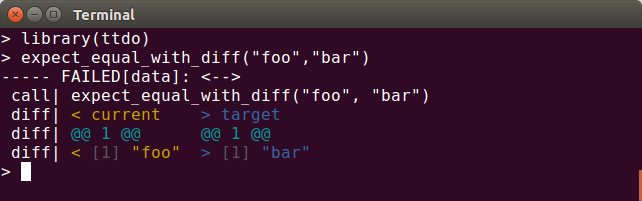
A new minor release of our ttdo package arrived on CRAN a few days ago. The ttdo package extends the excellent (and very minimal / zero depends) unit testing package tinytest by Mark van der Loo with the very clever and well-done diffobj package by Brodie Gaslam to give us test results with visual diffs (as shown in the screenshot below) which seemingly is so compelling an idea that it eventually got copied by another package which shall remain unnamed ttdo screenshot This release adds a versioned dependency on the just released tinytest version 1.4.1. As we extend tinytest (for use in the autograder we deploy within the lovely PrairieLearn framework) by consuming the tinytest code we have to update in sync. There were no other code changes in the package beside the usual maintenance of badges and continuous integration setup. As usual, the NEWS entry follows.

Changes in ttdo version 0.0.9 (2023-02-21)
  • Minor cleanup in README.md
  • Minor continuous integration update
  • Updated (versioned) depends on tinytest to 1.4.1

My CRANberries provides the usual summary of changes to the previous version. Please use the GitHub repo and its issues for any questions. If you like this or other open-source work I do, you can now sponsor me at GitHub.

This post by Dirk Eddelbuettel originated on his Thinking inside the box blog. Please report excessive re-aggregation in third-party for-profit settings.

Next.

Previous.