Search Results: "don"

2 March 2020

Petter Reinholdtsen: Nikita version 0.5 released - updated free software archive API server

Today, after many months of development, a new release of Nikita Noark 5 core project was finally announced on the project mailing list. The Nikita free software solution is an implementation of the Norwegian archive standard Noark 5 used by government offices in Norway. These were the changes in version 0.5 since version 0.4, see the email link above for links to a demo site: If free and open standardized archiving API sound interesting to you, please contact us on IRC (#nikita on irc.freenode.net) or email (nikita-noark mailing list). As usual, if you use Bitcoin and want to show your support of my activities, please send Bitcoin donations to my address 15oWEoG9dUPovwmUL9KWAnYRtNJEkP1u1b.

Jonathan Carter: Free Software activities for 2020-02

Belgians This month started off in Belgium for FOSDEM on 1-2 February. I attended FOSDEM in Brussels and wrote a separate blog entry for that. The month ended with Belgians at Tammy and Wouter s wedding. On Thursday we had Wouter s bachelors and then over the weekend I stayed over at their wedding venue. I thought that other Debianites might be interested so I m sharing some photos here with permission from Wouter. It was the only wedding I ve been at where nearly everyone had questions about Debian! I first met Wouter on the bus during the daytrip on DebConf12 in Nicaragua, back then I ve eagerly followed the Debianites on Planet Debian for a while so it was like meeting someone famous. Little did I know that 8 years later, I d be at his wedding back in my part of the world. If you went to DebConf16 in South Africa, you might remember Tammy, who have done a lot of work for DC16 including most of the artwork, bunch of website work, design on the badges, bags, etc and also did a lot of organisation for the day trips. Tammy and Wouter met while Tammy was reviewing the artwork in the video loops for the DebConf videos, and then things developed from there. Wouter s Bachelors Wouter was blindfolded and kidnapped and taken to the city center where we prepared to go on a bike tour of Cape Town, stopping for beer at a few places along the way. Wouter was given a list of tasks that he had to complete, or the wedding wouldn t be allowed to continue

Wouter s tasks
Wouter s props, needed to complete his tasks

Bike tour leg at Cape Town Stadium.

Seeking out 29 year olds.

Wouter finishing his lemon and actually seemingly enjoying it.

Reciting South African national anthem notes and lyrics.

The national anthem, as performed by Wouter (I was actually impressed by how good his pitch was).
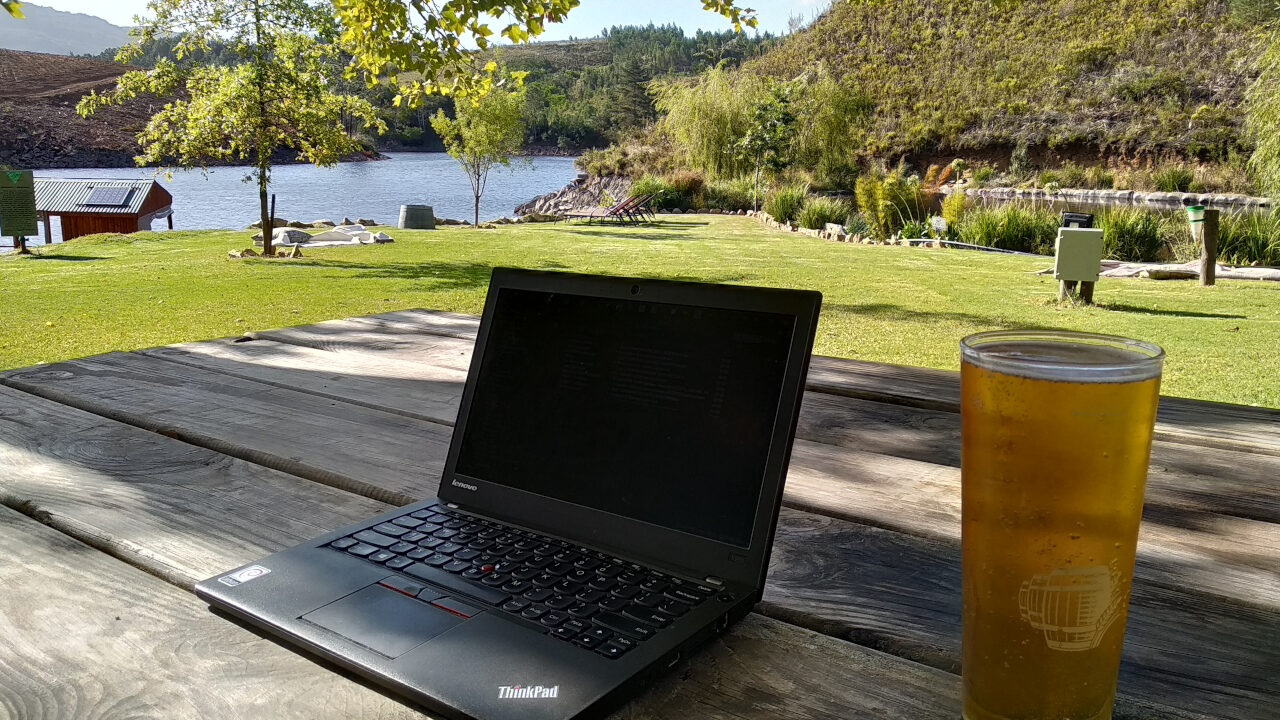
The Wedding Friday afternoon we arrived at the lodge for the weekend. I had some work to finish but at least this was nicer than where I was going to work if it wasn t for the wedding.
Accommodation at the lodge
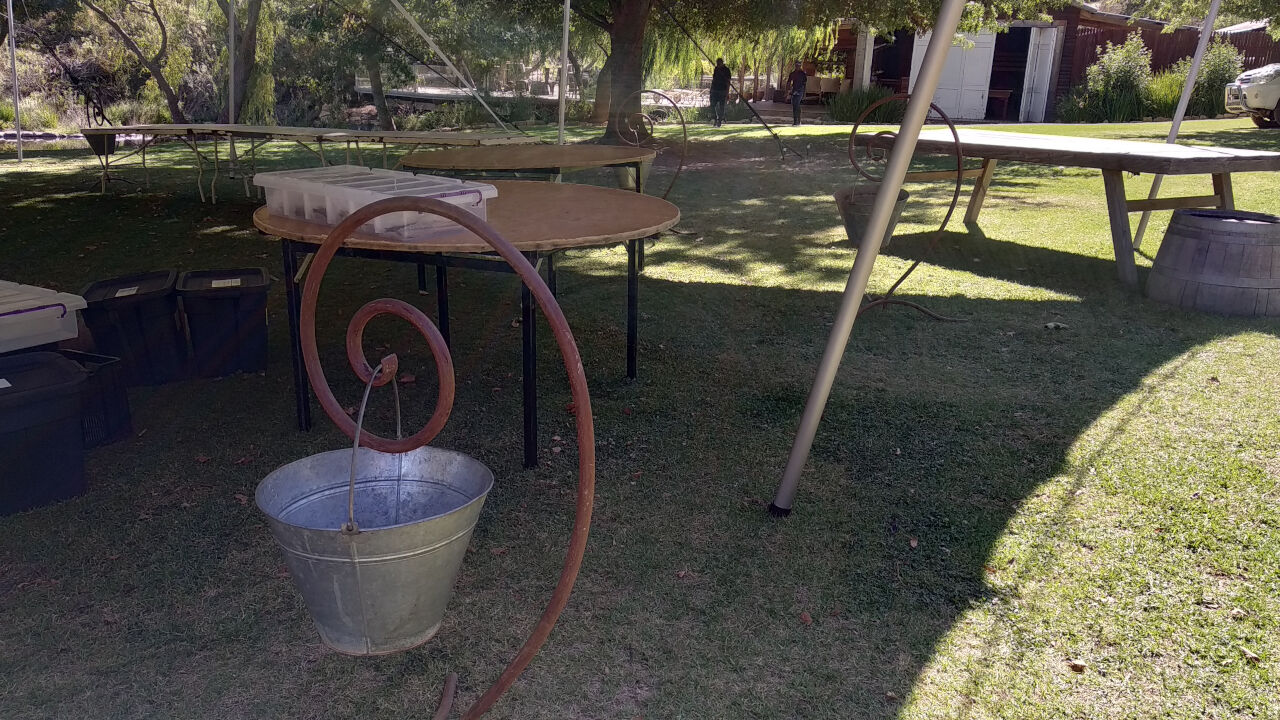
When the wedding co-ordinators started setting up, I noticed that there were all these swirls that almost looked like Debian logos. I asked Wouter if that was on purpose or just a happy accident. He said Hmm! I haven t even noticed that yet! , didn t get a chance to ask Tammy yet, so it could still be her touch.
Debian swirls everywhere
I took a canoe ride on the river and look what I found, a paddatrapper!

Kyle and I weren t the only ones out on the river that day. When the wedding ceremony started, Tammy made a dramatic entrance coming in on a boat, standing at the front with the breeze blowing her dress like a valkyrie.
A bit of digital zoomage of previous image.

Time to say the vows.

Just married. Thanks to Sue Fuller-Good for the photo.

Except for one character being out of place, this was a perfect fairy tale wedding, but I pointed Wouter to https://jonathancarter.org/how-to-spell-jonathan/ for future reference so it s all good.
Congratulations again to both Tammy and Wouter. It was a great experience meeting both their families and friends and all the love that was swirling around all weekend.

Debian Package Uploads 2020-02-07: Upload package calamares (3.2.18-1) to Debian unstable. 2020-02-07: Upload package python-flask-restful (0.3.8-1) to Debian unstable. 2020-02-10: Upload package kpmcore (4.1.0-1) to Debian unstable. 2020-02-16: Upload package fracplanet (0.5.1-5.1) to Debian unstable (Closes: #946028). 2020-02-20: Upload package kpmcore (4.1.0-2) to Debian unstable. 2020-02-20: Upload package bluefish (2.2.11) to Debian unstable. 2020-02-20: Upload package gdisk (1.0.5-1) to Debian unstable. 2020-02-20: Accept MR#6 for gamemode. 2020-02-23: Upload package tanglet (1.5.5-1) to Debian unstable. 2020-02-23: Upload package gamemode (1.5-1) to Debian unstable. 2020-02-24: Upload package calamares (3.2.19-1) to Debian unstable. 2020-02-24: Upload package partitionmanager (4.1.0-1) to Debian unstable. 2020-02-24: Accept MR#7 for gamemode. 2020-02-24: Merge MR#1 for calcoo. 2020-02-24: Upload package calcoo (1.3.18-8) to Debian unstable. 2020-02-24: Merge MR#1 for flask-api. 2020-02-25: Upload package calamares (3.2.19.1-1) to Debian unstable. 2020-02-25: Upload package gnome-shell-extension-impatience (0.4.5-4) to Debian unstable. 2020-02-25: Upload package gnome-shell-extension-harddisk-led (19-2) to Debian unstable. 2020-02-25: Upload package gnome-shell-extension-no-annoyance (0+20170928-f21d09a-2) to Debian unstable. 2020-02-25: Upload package gnome-shell-extension-system-monitor (38-2) to Debian unstable. 2020-02-25: Upload package tuxpaint (0.9.24~git20190922-f7d30d-1~exp3) to Debian experimental.

Debian Mentoring 2020-02-10: Sponsor package python-marshmallow-polyfield (5.8-1) for Debian unstable (Python team request). 2020-02-10: Sponsor package geoalchemy2 (0.6.3-2) for Debian unstable (Python team request). 2020-02-13: Sponsor package python-tempura (2.2.1-1) for Debian unstable (Python team request). 2020-02-13: Sponsor package python-babel (2.8.0+dfsg.1-1) for Debian unstable (Python team request). 2020-02-13: Sponsor package python-pynvim (0.4.1-1) for Debian unstable (Python team request). 2020-02-13: Review package ledmon (0.94-1) (Needs some more work) (mentors.debian.net request). 2020-02-14: Sponsor package citeproc-py (0.3.0-6) for Debian unstable (Python team request). 2020-02-24: Review package python-suntime (1.2.5-1) (Needs some more work) (Python team request). 2020-02-24: Sponsor package python-babel (2.8.0+dfsg.1-2) for Debian unstable (Python team request). 2020-02-24: Sponsor package 2048 (0.0.0-1~exp1) for Debian experimental (mentors.debian.net request). 2020-02-24: Review package notcurses (1.1.8-1) (Needs some more work) (mentors.debian.net request). 2020-02-25: Sponsor package cloudpickle (1.3.0-1) for Debian unstable (Python team request).

Debian Misc 2020-02-12: Apply Planet Debian request and close MR#21. 2020-02-23: Accept MR#6 for ToeTally (DebConf Video team upstream). 2020-02-23: Accept MR#7 for ToeTally (DebConf Video team upstream).

Antoine Beaupr : Moving dconf entries to git

I've been managing my UNIX $HOME repository with version control for almost two decades now (first under CVS, then with git). Once in a while, I find a little hack to make this work better. Today, it's dconf/gsettings, or more specifically, Workrave that I want to put in git. I noticed my laptop was extremely annoying compared with my office workstation and realized I never figured out how to write Workrave's configuration to git. The reason is that its configuration is stored in dconf, a binary database format, but, blissfully, I had forgotten about this and tried to figure out where the heck its config was. I was about to give up when I re-remembered this, when I figured I would just do a quick search ("dconf commit to git") and that brought me to Josh Triplett's Debconf 14 talk about this exact topic. The slides are... a little terse, but I could figure out the gist of it. The key is to change the DCONF_PROFILE environment to point to a new config file (say in your .bashrc):
export DCONF_PROFILE=$HOME/.config/dconf/profile
That file (~/.config/dconf/profile) should be created with the following content:
user-db:user
service-db:keyfile/user
  1. The first line is the default: store everything in this huge binary file.
  2. The second is the magic: it stores configuration in a precious text file, in .config/dconf/user.txt specifically.
Then the last step was to migrate config between the two. For that I need a third config file, a DCONF_PROFILE that has only the text database so settings are forcibly written there, say ~/.config/dconf/profile-edit:
service-db:keyfile/user
And then I can migrate my workrave configuration with:
gsettings list-recursively org.workrave   while read schema key val ; do DCONF_PROFILE=~/.config/dconf/profile-edit gsettings set "$schema" "$key" "$val" ; done
Of course, a bunch of those settings are garbage and do not differ from the default. Unfortuantely, there doesn't seem to be a way to tell gsettings to only list non-default settings, so I had to do things by hand from there, by comparing my generated config with:
DCONF_PROFILE=/dev/null gsettings list-recursively org.workrave
I finally ended up with the following user.txt, which is now my workrave config:
[org/workrave/timers/daily-limit]
snooze=1800
limit=25200
[org/workrave/timers/micro-pause]
auto-reset=10
snooze=150
limit=900
[org/workrave/timers/rest-break]
auto-reset=600
snooze=1800
limit=10800
[org/workrave/breaks/micro-pause]
max-preludes=0
That's a nice setup: "YOLO" settings end up in the binary database that I don't care about tracking in git, and a precious few snowflakes get tracked in a text file. Triplett also made a command to change settings in the text file, but I don't think I need to bother with that. It's more critical to copy settings between the two, in my experience, as I rarely have this moment: "oh I know exactly the key setting I want to change and i'll write it down". What actually happens is that I'm making a change in a GUI and later realize it should be synchronized over. (It looks like Triplett does have a tool to do those diffs and transitions, but unfortunately git://joshtriplett.org/git/home doesn't respond at this time so I can't find that source code.) (Update: that git repository can be downloaded with:
git clone https://joshtriplett.org/git/home
It looks like dconfc is designed to copy settings between the two databases. So my above loop would be more easily written as:
dconf dump /org/workrave/   DCONF_PROFILE=~/.config/dconf/profile-edit dconf load /org/workrave/
Certainly simplifies things. dconfd is also nice although it relies on the above dconfe script which makes it (IMHO) needlessly hard to deploy.) Now if only Firefox bookmarks were reasonable again...

Russell Coker: Amazon Prime and Netflix

I ve been trying both Amazon Prime and Netflix. I signed up for the month free of Amazon Prime to watch Good Omens and Picard . Good Omens is definitely worth the effort of setting up the month free of Amazon Prime and is worth the month s subscription if you have used your free month in the past and Picard is ok. Content Amazon Prime has a medium amount of other content, I m now paying for a month of Amazon Prime mainly because there s enough documentaries to take a month. For reference there are plenty of good ones about war and about space exploration. There are also some really rubbish documentaries, for example a 2 part documentary about the Magna Carta where the second part starts with Grover Norquist claiming that the Magna Carta is justification for not having any taxes (the first part seemed ok). Netflix has a lot of great content. A big problem with Netflix is that there aren t good ways of searching and organising the content you want to watch. It would be really nice if Netflix could use some machine learning for recommendations and recommend shows based on what I ve liked and also what I ve disliked. On both Netflix and Amazon when you view the details of a show it gives a short list of similar shows which is nice. With Amazon I have no complaints about that. But with Netflix the content library is so great that you get lost in a maze of links. On the Android tablet interface for Netflix it shows 12 similar shows in a grid and on the web interface it s a row of 20 shows with looped scrolling. Then as you click a different show you get another list of 12/20 shows which will usually have some overlap with the previous one. It would be nice if you could easily swipe left on shows you don t like to avoid having them repeatedly presented to you. On Netflix I ve really enjoyed the Altered Carbon series (which is significantly more violent than I anticipated), Black Mirror (the episode written by Trent Reznor and starring Miley Cyrus is particularly good), and Love Death and Robots . Overall I currently rate Love Death and Robots as in many ways the best series I ve ever watched because the episodes are all short and get straight to the point. One advantage of online video is that they don t need to pad episodes out or cut them short to fit a TV time slot, they can use as much time as necessary to tell the story. Watch List Having a single row of shows to watch is fine for the amount of content that Amazon has, but for the Netflix content you can easily get 100 shows on your watch list and it would be good to be able to search my watch list by genre (it s a drag to flick through dozens of icons of war documentaries when I m in the mood for an action movie as the icons are somewhat similar). As well as a list of shows you selected to watch Netflix has a list of shows that have been recently watched with no way to edit it which is separate from the list of shows selected to watch. So if you watch 5 minutes of a show and decide that it sucks then it stays on the list until you have partially watched 10 other shows recently. For my usage the recently watched list is the most important thing as I m watching some serial shows and wouldn t want to go through the 100 shows on my watch list to find them. If I ve decided that a movie sucked after watching a bit of it I don t want to be reminded of it by seeing the icon every time I use Netflix for the next month. Amazon has only a single watch next list for shows that you have watched recently and shows that you selected as worth watching. It allows editing the list which is nice, but then Amazon also often keeps shows on the list when you have finished watching them and removed them from the to watch setting. Amazon s watch list is also generally buggy, at one time it decided that a movie was no longer available in my region but didn t let me remove it from the list. Quality Apparently the Netflix web interface on Linux only allows 720p video while the Amazon web interface on all platforms is limited to 720p. In any case my Internet connection is probably only good enough for 1080p at most. I haven t noticed any quality differences between Netflix and Amazon Prime. Multiple Users Netflix allows you to create profiles for multiple users with separate watch lists which is very handy. They also don t have IP address restrictions so it s a common practice for people to share a Netflix account with relatives. If you try to use Netflix when the maximum number of sessions for your account is in use it will show a list of what the other people on your account are watching (so if you share with your parents be careful about that). Amazon doesn t allow creating multiple profiles, but the content isn t that great. The trend in video streaming is for proprietary content to force users to subscribe to a service. So sharing an Amazon Prime account with a few people so you want watch the proprietary content would make sense. Watching Patterns Sometimes when I m particularly distracted I can t focus on one show for any length of time. Both Amazon and Netflix (and probably all other online streaming services) allow me to skip between shows easily. That s always been a feature of YouTube, but with YouTube you get recommended increasingly viral content until you find yourself watching utter rubbish. At least with Amazon and Netflix there is a minimum quality level even if that is reality TV. Conclusion Amazon Prime has a smaller range of content and some really rubbish documentaries. I don t mind the documentaries about UFOs and other fringe stuff as it s obvious what it is and you can avoid it. A documentary that has me watching for an hour before it s revealed to be a promo for Grover Norquist is really bad, did the hour of it that I watched have good content or just rubbish too? Netflix has a huge range of content and the quality level is generally very high. If you are going to watch TV then subscribing to Netflix is probably a good idea. It s reasonably cheap, has a good (not great) interface, and has a lot of content including some great original content. For Amazon maybe subscribe for 1 month every second year to binge watch the Amazon proprietary content that interests you.

Simon D saulniers: Haskell: programmation dynamique

L approche de programmation dynamique est souvent associ e au remplissage d un tableau deux dimensions et l' criture explicite de ce proc d sous forme it rative. Dans un langage fonctionnel comme Haskell, on b n ficie de quelques avantages d expressivit de haut niveau et de lisibilit qu on ne retrouve pas autrement. Dans cet article, je commence par explorer deux exemples triviaux de programmation dynamique. Ensuite, je passe sur un probl me tout aussi accessible, mais dont l ach vement optimal demandera l utilisation d une structure Data.

1 March 2020

Enrico Zini: Online aggression links

Sealioning - Wikipedia
privilege archive.org
Sealioning (also spelled sea-lioning and sea lioning) is a type of trolling or harassment which consists of pursuing people with persistent requests for evidence or repeated questions, while maintaining a pretense of civility and sincerity.[1][2][3][4] It may take the form of "incessant, bad-faith invitations to engage in debate".[5]
Tone policing (also tone trolling, tone argument, and tone fallacy) is an ad hominem (personal attack) and antidebate tactic based on criticizing a person for expressing emotion. Tone policing detracts from the validity of a statement by attacking the tone in which it was presented rather than the message itself.
"A brawler who tattoos a message onto his knuckles does not throw every punch with the weight of First Amendment protection behind him," the brief stated. "Conduct like this does not constitute speech, nor should it. A deliberate attempt to cause physical injury to someone does not come close to the expression which the First Amendment is designed to protect."
It s no secret that times are changing. It used to be that men were men, jokes were jokes, and all facts came from one white guy in a suit who you trusted because he looked like your dad. Now I know I could get in a lot of trouble for just saying this, but I don t care because someone has to tell the truth: These days, you can t say anything racist at all without being called a racist.
Russia's neighbor has developed a plan for countering misinformation. Can it be exported to the rest of the world?
So, I wrote my BIFF Response but Marvin wrote me another angry email. Actually, he wrote 6 more this week, so what s up with that? Why didn t he stop after my first email?
The BIFF Response Method will teach you how to respond to angry emails, texts, or social media posts while maintaining your dignity and personal power.

Ulrike Uhlig: Conflict as a clash of strategies and a vector for change

Map of conflict I've been practising Non-Violent Communication (NVC) for several years. It helps me to better understand my feelings and needs. The concepts of NVC can also help to look at conflicts. I would like to introduce a way to look at conflict using the basic concepts of NVC:
  1. Humans have needs. (I would add that this applies to other sentient beings, too).
  2. It's okay to have needs.
  3. When needs are satisfied, we experience pleasant feelings (joy, love, happiness, etc.).
  4. When needs are unsatisfied, we experience unpleasant feelings (sadness, anger, grief, etc.)
  5. To satisfy our needs, we employ strategies. (Example. Need = well-being. Possible strategies = sauna, sleeping, walk in nature, etc.)
  6. When conflict occurs between two parties, it's not the needs that conflict, but the strategies that are employed to satisfy the needs.
An example. May has issues doing all the work they're supposed to do and seeks to talk to their manager about it. The manager repeatedly refuses to receive them, as the manager is very busy. May had the hope to be able to sort their issues out with the manager but now they feel frustrated, and helpless, on top of feeling stressed out. Week after week, May tries to get in touch with the manager, as they don't know how to solve their issue alone. But as their demands become more pressing, the manager starts to feel annoyed, tense, and insecure, and keeps ignoring May's requests. May's needs: communication, cooperation, being understood, being seen, autonomy.
Manager's needs: efficacy, independence, respect, autonomy. Both their needs are legit. Some of them even overlap. The conflict occurs at the level of their strategies: the manager makes the conscious decision to deny May's discussion requests, effectively denying them to voice their concerns and worries, which makes May feel helpless, frustrated, and angry. When May chooses to make their demands more explicit, the manager starts to feel more and more insecure. Working on our strategies There are always different strategies to satisfy our needs. Out of habit, we sometimes fail to see them, and keep using the ever same strategies. How could May deal with the situation differently? When we are aware of the need strategies dynamics, we can work on strategies without compromising our needs. When we are not, we are running in circles, effectively worsening the situation. The manager could also employ different strategies as they start noticing that they are feeling tense and insecure. Which ones could that be? There are also inappropriate strategies, and if not aware, the manager could well end up employing one of those: What would be appropriate strategies for the manager? Transforming organizations Working on strategies is a good first step. But generally the emotional work effectively lies on the shoulders of the individual with lower rank in the organization who lacks control and corresponding privileges to deal with the conflict. I believe that when conflict occurs in the workplace, it is important to draw further conclusions that would benefit the organization as a whole. In the above example, such conclusions could be: These are just some ideas for a fictitious conflict, but you get the idea.
Conflicts effectively are chances for the organization, or the involved parties, to grow in maturity.
More about working with conflict and conflict mapping tools in this great publication.

Paul Wise: FLOSS Activities February 2020

Changes

Issues

Review

Administration
  • Debian wiki: deploy changes, unblock IP addresses, approve new accounts, auto-approve email domains

Communication

Sponsors The apt-offline backport and purple-discord uploads were sponsored by my employer. All other work was done on a volunteer basis.

23 November 2017

Sean Whitton: Using Propellor to provision your Debian development laptop

sbuild is a tool used by those maintaining packages in Debian, and derived distributions such as Ubuntu. When used correctly, it can catch a lot of categories of bugs before packages are uploaded. It does this by building the package in a clean environment, and then running the package through the Lintian, piuparts, adequate and autopkgtest tools. However, configuring sbuild so that it makes use of all of these tools is cumbersome. In response to this complexity, I wrote a module for the Propellor configuration management system to prepare a system such that a user can just go ahead and run the sbuild(1) command. This module is useful on one s development laptop if you need to reinstall your OS, you don t have to look up the instructions for setting up sbuild again. But it s also useful on throwaway build boxes. I can instruct propellor to provision a new virtual machine to build packages with sbuild, and all the different tools mentioned above will be connected together for me. I just uploaded Propellor version 5.1.0 to Debian unstable. The version overhauls the API and internals of the Sbuild module to take better advantage of Propellor s design. I won t get into those details in this post. What I d like to do is demonstrate how you can set up sbuild on your own machines, using Propellor. Getting started with Propellor apt-get install propellor, and then propellor --init. You ll be offered two setups, options A and B. I suggest starting with option B. If you never use Propellor for anything other than provisioning sbuild, you can stick with option B. If this tutorial makes you want to check out more features of Propellor, you might consider switching to option A and importing your old configuration. Open ~/.propellor/config.hs. You will see something like this:
-- The hosts propellor knows about.
hosts :: [Host]
hosts =
        [ mybox
        ]
-- An example host.
mybox :: Host
mybox = host "mybox.example.com" $ props
        & osDebian Unstable X86_64
        & Apt.stdSourcesList
        & Apt.unattendedUpgrades
        & Apt.installed ["etckeeper"]
        & Apt.installed ["ssh"]
        & User.hasSomePassword (User "root")
        & File.dirExists "/var/www"
        & Cron.runPropellor (Cron.Times "30 * * * *")
You ll want to customise this so that it reflects your computer. My laptop is called iris, so I might replace the above with this:
-- The hosts propellor knows about.
hosts :: [Host]
hosts =
        [ iris
        ]
-- My laptop.
iris :: Host
iris = host "iris.silentflame.com" $ props
        & osDebian Testing X86_64
The list of lines beginning with & are the properties of the host iris. Here, I ve removed all properties except the osDebian property, which informs propellor that iris runs Debian testing and has the amd64 architecture. The effect of this is that Propellor will not try to change anything about iris. In this tutorial, we are not going to let Propellor configure anything about iris other than setting up sbuild. (The osDebian property is a pure info property, which means that it tells Propellor information about the host to which other properties might refer, but it doesn t itself change anything about iris.) Telling Propellor to configure sbuild First, add to the import lines at the top of config.hs the lines:
import qualified Propellor.Property.Sbuild as Sbuild
import qualified Propellor.Property.Schroot as Schroot
to enable use of the Sbuild module. Here is the full config for iris, which I ll go through line-by-line:
-- The hosts propellor knows about.
hosts :: [Host]
hosts =
        [ iris
        ]
-- My laptop.
iris :: Host
iris = host "iris.silentflame.com" $ props
        & osDebian Testing X86_64
        & Apt.useLocalCacher
        & sidSchrootBuilt
        & Sbuild.usableBy (User "spwhitton")
        & Schroot.overlaysInTmpfs
        & Cron.runPropellor (Cron.Times "30 * * * *")
  where
        sidSchrootBuilt = Sbuild.built Sbuild.UseCcache $ props
                & osDebian Unstable X86_64
                & Sbuild.update  period  Daily
                & Sbuild.useHostProxy iris
Running Propellor to configure your laptop propellor iris.silentflame.com. In this configuration, you don t need to worry about whether the hostname iris.silentflame.com actually resolves to your laptop. However, it must be possible to ssh root@localhost. This should be enough that spwhitton can:
$ sbuild -A --run-lintian --run-autopkgtest --run-piuparts foo.dsc
Further configuration It is easy to add new schroots; for example, for building backports:
        ...
        & stretchSchrootBuilt
        ...
  where
        ...
        stretchSchrootBuilt = Sbuild.built Sbuild.UseCcache $ props
                & osDebian (Stable "stretch") X86_64
                & Sbuild.update  period  Daily
                & Sbuild.useHostProxy iris
You can also add additional properties to configure your chroot. Perhaps on your LAN you need sbuild to install packages via https, and you already have an apt cacher available. You can replace the apt-cacher-ng configuration like this:
  where
        sidSchrootBuilt = Sbuild.built Sbuild.UseCcache $ props
                & osDebian Unstable X86_64
                & Sbuild.update  period  Daily
                & Apt.mirror "https://foo.mirror/debian/"
                & Apt.installed ["apt-transport-https"]
Thanks Thanks to Propellor s author, Joey Hess, for help navigating Propellor s type system while performing the overhaul included in version 5.1.0. Also for a conversation at DebConf17 which enabled this work by clearing some misconceptions of mine.

Russ Allbery: Holiday haul

Catching up on accumulated book purchases. I'm going to get another burst of reading time over the holidays (and am really looking forward to it). Alfred Bester The Stars My Destination (sff)
James Blish A Case of Conscience (sff)
Leigh Brackett The Long Tomorrow (sff)
Algis Budrys Who? (sff)
Frances Hardinge Fly By Night (sff)
Robert A. Heinlein Double Star (sff)
N.K. Jemisin The Obelisk Gate (sff)
N.K. Jemisin The Stone Sky (sff)
T. Kingfisher Clockwork Boys (sff)
Ursula K. Le Guin City of Illusions (sff)
Ursula K. Le Guin The Complete Orsinia (historical)
Ursula K. Le Guin The Dispossessed (sff)
Ursula K. Le Guin Five Ways to Forgiveness (sff)
Ursula K. Le Guin The Left Hand of Darkness (sff)
Ursula K. Le Guin Planet of Exile (sff)
Ursula K. Le Guin Rocannon's World (sff)
Ursula K. Le Guin The Telling (sff)
Ursula K. Le Guin The World for Word Is Forest (sff)
Fritz Leiber The Big Time (sff)
Melina Marchetta Saving Francesca (mainstream)
Richard Matheson The Shrinking Man (sff)
Foz Meadows An Accident of Stars (sff)
Dexter Palmer Version Control (sff)
Frederick Pohl & C.M. Kornbluth The Space Merchants (sff)
Adam Rex True Meaning of Smekday (sff)
John Scalzi The Dispatcher (sff)
Julia Spencer-Fleming In the Bleak Midwinter (mystery)
R.E. Stearns Barbary Station (sff)
Theodore Sturgeon More Than Human (sff)
I'm listing the individual components except for the Orsinia collection, but the Le Guin are from the Library of America Hainish Novels & Stories two-volume set. I had several of these already, but I have a hard time resisting a high-quality Library of America collection for an author I really like. Now I can donate a bunch of old paperbacks. Similarly, a whole bunch of the older SF novels are from the Library of America American Science Fiction two-volume set, which I finally bought since I was ordering Library of America sets anyway. The rest is a pretty random collection of stuff, although several of them are recommendations from Light. I was reading through her old reviews and getting inspired to read (and review) more.

22 November 2017

Louis-Philippe V ronneau: DebConf Videoteam sprint report - day 3

Erf, I'm tired and it is late so this report will be short and won't include dank memes or funny cat pictures. Come back tomorrow for that. tumbleweed Stefano worked all day long on the metadata project and on YouTube uploads. I think the DebConf7 videos have just finished being uploaded, check them out! RattusRattus Apart from the wonderful lasagna he baked for us, Andy continued working on the scraping scheme, helping tumbleweed. nattie Nattie has been with us for a few days now, but today she did some great QA work on our metadata scraping of the video archive. ivodd More tests, more bugs! Ivo worked quite a bit on the Opsis board today and it seems everything is ready for the mini-conf. \0/ olasd Nicolas built the streaming network today and wrote some Ansible roles to manage TLS cert creation through Let's Encrypt. He also talked with DSA some more about our long term requirements. wouter I forgot to mention it yesterday because he could not come to Cambridge, but Wouter has been sprinting remotely, working on the reviewing system. Everything with regards to reviewing should be in place for the mini-conf. He also generated the intro and outro slides for the videos for us. KiBi and Julien KiBi and Julien arrived late in the evening, but were nonetheless of great assistance. Neither are technically part of the videoteam, but their respective experience with Debian-Installer and general DSA systems helped us a great deal. pollo I'm about 3/4 done documenting our ansible roles. Once I'm done, I'll try to polish some obvious hacks I've seen while documenting.

21 November 2017

Louis-Philippe V ronneau: DebConf Videoteam sprint report - day 2

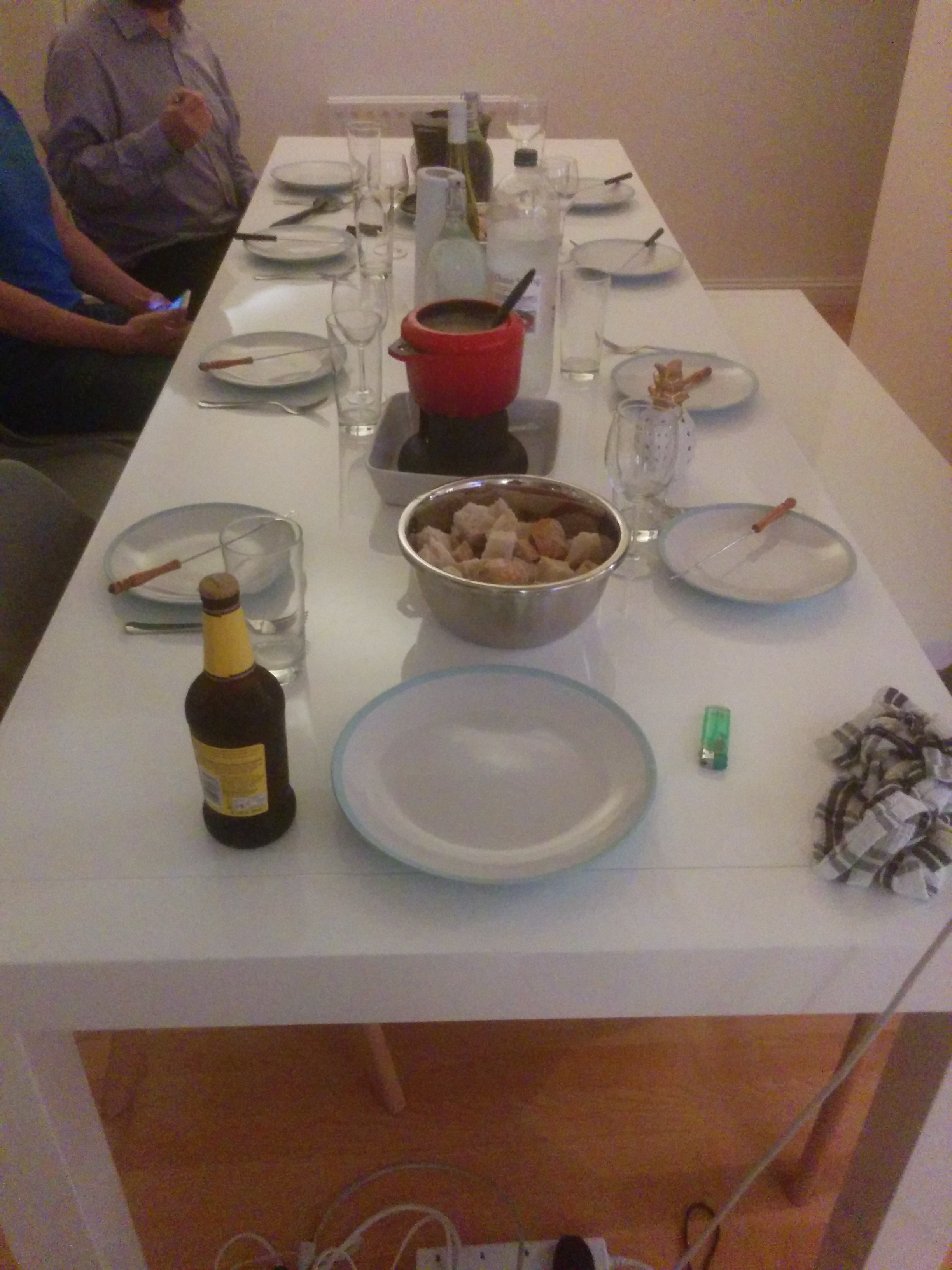
Another day, another videoteam report! It feels like we did a lot of work today, so let's jump right in: tumbleweed Stefano worked most of the day on the DebConf video archive metadata project. A bunch of videos already have been uploaded to YouTube. Here's some gold you might want to watch. By the end of our sprint, we should have generated metadata for most of our archive and uploaded a bunch of videos to YouTube. Don't worry though, YouTube is only a mirror and we'll keep our current archive as a video master. RattusRattus Andy joined us today! He hacked away with Stefano for most of the day, working on the metadata format for our videos and making schemes for our scraping tools. ivodd Ivo built and tested a good part of our video setup today, fixing bugs left and right in Ansible. We are prepared for the Cambridge Mini-DebConf! olasd Nicolas finished his scripts to automatically spool up and down our streaming mirrors via the DigitalOcean API today and ran our Ansible config against those machines to test our setup. pollo For my part, I completed a huge chunk of my sprint goals: we now have a website documenting our setup! It is currently hosted on Alioth pages, but olasd plans to make a request to DSA to have it hosted on the static.debian.org machine. The final URL will most likely be something like: https://video.debconf.org The documentation is still missing the streaming section (our streaming setup is not final yet, so not point in documenting that) and a section hosting guides for the volunteers. With some luck I might write those later this week. I've now moved on documentation our various Ansible roles. Oh, and we also ate some cheese fondue: Our fondue dinner

20 November 2017

Reproducible builds folks: Reproducible Builds: Weekly report #133

Here's what happened in the Reproducible Builds effort between Sunday November 5 and Saturday November 11 2017: Upcoming events On November 17th Chris Lamb will present at Open Compliance Summit, Yokohama, Japan on how reproducible builds ensures the long-term sustainability of technology infrastructure. We plan to hold an assembly at 34C3 - hope to see you there! LEDE CI tests Thanks to the work of lynxis, Mattia and h01ger, we're now testing all LEDE packages in our setup. This is our first result for the ar71xx target: "502 (100.0%) out of 502 built images and 4932 (94.8%) out of 5200 built packages were reproducible in our test setup." - see below for details how this was achieved. Bootstrapping and Diverse Double Compilation As a follow-up of a discussion on bootstrapping compilers we had on the Berlin summit, Bernhard and Ximin worked on a Proof of Concept for Diverse Double Compilation of tinycc (aka tcc). Ximin Luo did a successful diverse-double compilation of tinycc git HEAD using gcc-7.2.0, clang-4.0.1, icc-18.0.0 and pgcc-17.10-0 (pgcc needs to triple-compile it). More variations are planned for the future, with the eventual aim to reproduce the same binaries cross-distro, and extend it to test GCC itself. Packages reviewed and fixed, and bugs filed Patches filed upstream: Patches filed in Debian: Patches filed in OpenSUSE: Reviews of unreproducible packages 73 package reviews have been added, 88 have been updated and 40 have been removed in this week, adding to our knowledge about identified issues. 4 issue types have been updated: Weekly QA work During our reproducibility testing, FTBFS bugs have been detected and reported by: diffoscope development Mattia Rizzolo uploaded version 88~bpo9+1 to stretch-backports. reprotest development reproducible-website development theunreproduciblepackage development tests.reproducible-builds.org in detail Misc. This week's edition was written by Ximin Luo, Bernhard M. Wiedemann, Chris Lamb and Holger Levsen & reviewed by a bunch of Reproducible Builds folks on IRC & the mailing lists.

Louis-Philippe V ronneau: DebConf Videoteam sprint report - day 1

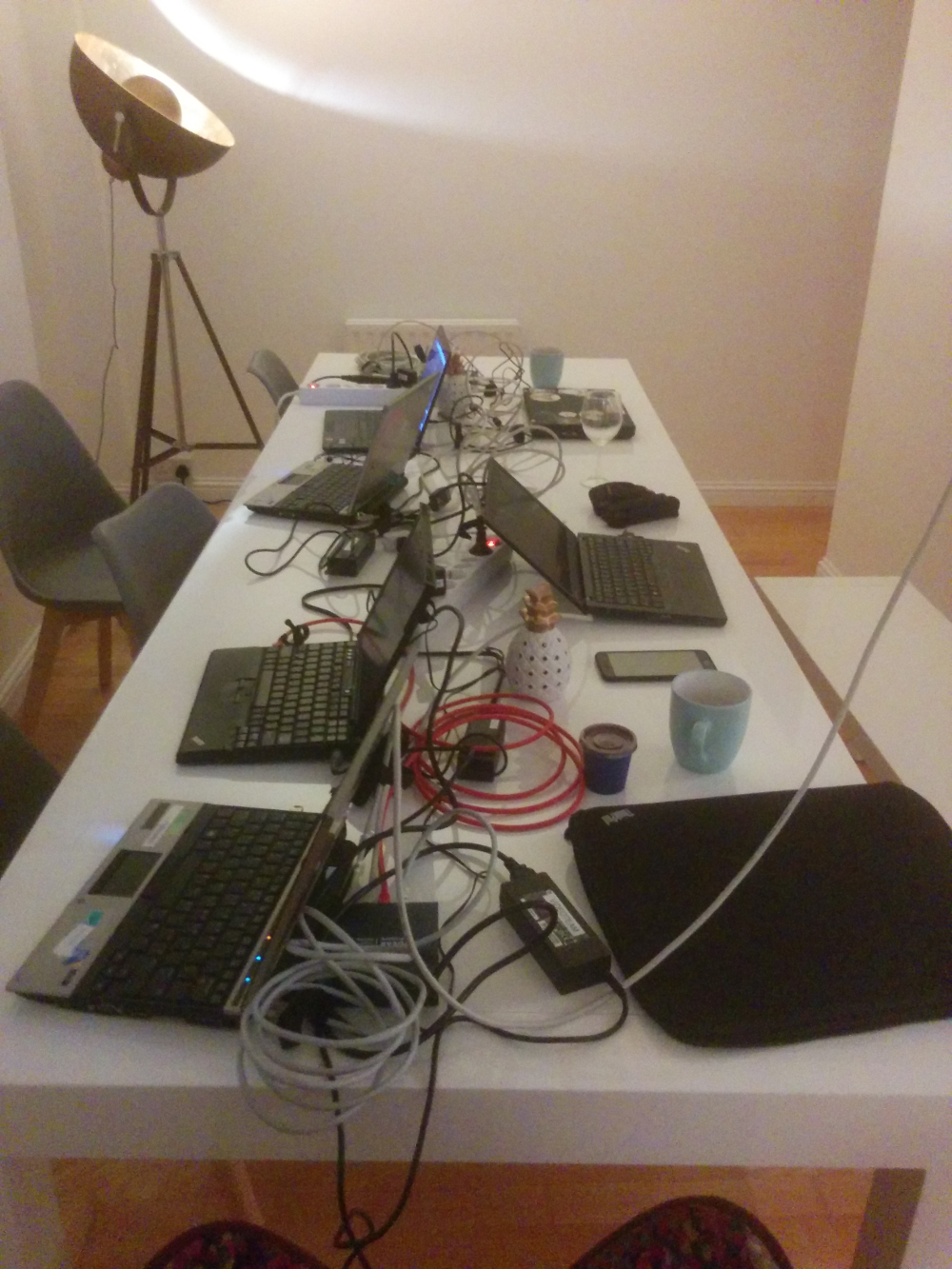
Another videoteam report! We've now been hacking for a full day and we are slowly starting to be productive. It's always hard to get back in a project when you haven't touched it in a while... Anyway, let's start this report with some important announcement: we finally have been able to snap a good picture of the airbnb's cat! The airbnb's cat No more nagging me about the placeholder image from Wikipedia I used in yesterday's report! Set up Our hacking space Here's what the team did today: tumbleweed Stefano started the day by hacking away on our video archive. We eventually want to upload all our videos to YouTube to give them exposure, but sadly our archive metadata is in a pretty poor shape. With the script tumbleweed wrote, we can scrape the archive for matches against the old DebConf's pentabarf XML we have. tumbleweed also helped Ivo with the ansible PXE setup he's working on. Some recent contributions from a collaborator implemented new features (like a nice menu to choose from) but also came with a few annoying bugs. ivodd Ivo continued working on the PXE setup today. He also tried to break our ansible setup by using fresh installs with different user cases (locales, interfaces, etc.), with some success. The reason he and Stefano are working so hard on the PXE boot is that we had a discussion about the future of our USB install method. The general consensus on this was although we would not remove it, we would not actively maintain it anymore. PXE is less trouble for multiple machines. For single machines or if you don't control the DHCP server, using ansible manually on a fresh Debian install will be the recommended way. olasd After a very long drive, olasd arrived late in the evening with all our gear. Hurray! We were thus able to set up some test boxes and start wiring the airbnb properly. Tomorrow will certainly be more productive with all this stuff at our disposition. pollo Today I mainly worked on setting up our documentation website. After some debate, we decided that sphinx was the right tool for the job. I am a few pages in and if I work well I think we'll have something to show for at the end of the sprint! I also was thrown back into ansible after witnessing a bug in the locale management. I'm still rusty, but it's slowly coming back to me. Let's end this blog post with a picture of the neon pineapple that sits on the wall of the solarium. Upside down this picture is even more troubling

18 November 2017

Matthieu Caneill: MiniDebconf in Toulouse

I attended the MiniDebconf in Toulouse, which was hosted in the larger Capitole du Libre, a free software event with talks, presentation of associations, and a keysigning party. I didn't expect the event to be that big, and I was very impressed by its organization. Cheers to all the volunteers, it has been an amazing week-end! Here's a sum-up of the talks I attended. Du logiciel libre la monnaie libre Speaker: lo s The first talk I attended was, translated to English, "from free software to free money". lo s compared the 4 freedoms of free software with money, and what properties money needs to exhibit in order to be considered free. He then introduced 1, a project of free (as in free speech!) money, started in the region around Toulouse. Contrary to some distributed ledgers such as Bitcoin, 1 isn't based on an hash-based proof-of-work, but rather around a web of trust of people certifying each other, hence limiting the energy consumption required by the network to function. YunoHost Speaker: Jimmy Monin I then attended a presentation of YunoHost. Being an happy user myself, it was very nice to discover the future expected features, and also meet two of the developers. YunoHost is a Debian-based project, aimed at providing all the tools necessary to self-host applications, including email, website, calendar, development tools, and dozens of other packages. Premiers pas dans l'univers de Debian Speaker: Nicolas Dandrimont For the first talk of the MiniDebConf, Nicolas Dandrimont introduced Debian, its philosophy, and how it works with regards to upstreams and downstreams. He gave many details on the teams, the infrastructure, and the internals of Debian. Trusting your computer and system Speaker: Jonas Smedegaard Jonas introduced some security concepts, and how they are abused and often meaningless (to quote his own words, "secure is bullshit"). He described a few projects which lean towards a more secure and open hardware, for both phones and laptops. Automatiser la gestion de configuration de Debian avec Ansible Speaker: J r my Lecour J r my, from Evolix, introduced Ansible, and how they use it to manage hundreds of Debian servers. Ansible is a very powerful tool, and a huge ecosystem, in many ways similar to Puppet or Chef, except it is agent-less, using only ssh connections to communicate with remote machines. Very nice to compare their use of Ansible with mine, since that's the software I use at work for deploying experiments. Making Debian for everybody Speaker: Samuel Thibault Samuel gave a talk about accessibility, and the general availability of the tools in today's operating systems, including Debian. The lesson to take home is that we often don't do enough in this domain, particularly when considering some issues people might have that we don't always think about. Accessibility on computers (and elsewhere) should be the default, and never require complex setups. Retour d'exp rience : mise jour de milliers de terminaux Debian Speaker: Cyril Brulebois Cyril described a problem he was hired for, an update of thousands of Debian servers from wheezy to jessie, which he discovered afterwards was worse than initially thought, since the machines were running the out-of-date squeeze. Since they were not always administered with the best sysadmin practices, they were all exhibiting different configurations and different packages lists, which raised many issues and gave him interesting challenges. They were solved using Ansible, which also had the effect of standardizing their system administration practices. Retour d'exp rience : utilisation de Debian chez Evolix Speaker: Gr gory Colpart Gr gory described Evolix, a company which manages servers for their clients, and how they were inspired by Debian, for both their internal tools and their practices. It is very interesting to see that some of the Debian values can be easily exported for a more open and collaborative business. Lightning talks To close the conference, two lightning talks were presented, describing the switch from Windows XP to Debian in an ecologic association near Toulouse; and how snapshot.debian.org can be used with bisections to find the source of some regressions. Conclusion A big thank you to all the organizers and the associations who contributed to make this event a success. Cheers!

Petter Reinholdtsen: Legal to share more than 3000 movies listed on IMDB?

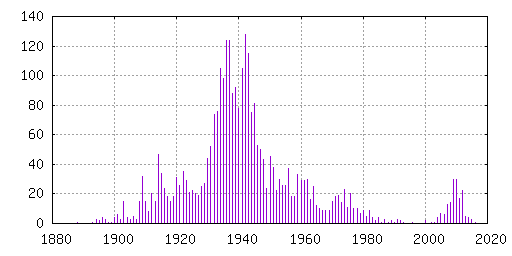
A month ago, I blogged about my work to automatically check the copyright status of IMDB entries, and try to count the number of movies listed in IMDB that is legal to distribute on the Internet. I have continued to look for good data sources, and identified a few more. The code used to extract information from various data sources is available in a git repository, currently available from github. So far I have identified 3186 unique IMDB title IDs. To gain better understanding of the structure of the data set, I created a histogram of the year associated with each movie (typically release year). It is interesting to notice where the peaks and dips in the graph are located. I wonder why they are placed there. I suspect World War II caused the dip around 1940, but what caused the peak around 2010?

I've so far identified ten sources for IMDB title IDs for movies in the public domain or with a free license. This is the statistics reported when running 'make stats' in the git repository:
  249 entries (    6 unique) with and   288 without IMDB title ID in free-movies-archive-org-butter.json
 2301 entries (  540 unique) with and     0 without IMDB title ID in free-movies-archive-org-wikidata.json
  830 entries (   29 unique) with and     0 without IMDB title ID in free-movies-icheckmovies-archive-mochard.json
 2109 entries (  377 unique) with and     0 without IMDB title ID in free-movies-imdb-pd.json
  291 entries (  122 unique) with and     0 without IMDB title ID in free-movies-letterboxd-pd.json
  144 entries (  135 unique) with and     0 without IMDB title ID in free-movies-manual.json
  350 entries (    1 unique) with and   801 without IMDB title ID in free-movies-publicdomainmovies.json
    4 entries (    0 unique) with and   124 without IMDB title ID in free-movies-publicdomainreview.json
  698 entries (  119 unique) with and   118 without IMDB title ID in free-movies-publicdomaintorrents.json
    8 entries (    8 unique) with and   196 without IMDB title ID in free-movies-vodo.json
 3186 unique IMDB title IDs in total
The entries without IMDB title ID are candidates to increase the data set, but might equally well be duplicates of entries already listed with IMDB title ID in one of the other sources, or represent movies that lack a IMDB title ID. I've seen examples of all these situations when peeking at the entries without IMDB title ID. Based on these data sources, the lower bound for movies listed in IMDB that are legal to distribute on the Internet is between 3186 and 4713. It would be great for improving the accuracy of this measurement, if the various sources added IMDB title ID to their metadata. I have tried to reach the people behind the various sources to ask if they are interested in doing this, without any replies so far. Perhaps you can help me get in touch with the people behind VODO, Public Domain Torrents, Public Domain Movies and Public Domain Review to try to convince them to add more metadata to their movie entries? Another way you could help is by adding pages to Wikipedia about movies that are legal to distribute on the Internet. If such page exist and include a link to both IMDB and The Internet Archive, the script used to generate free-movies-archive-org-wikidata.json should pick up the mapping as soon as wikidata is updates. As usual, if you use Bitcoin and want to show your support of my activities, please send Bitcoin donations to my address 15oWEoG9dUPovwmUL9KWAnYRtNJEkP1u1b.

17 November 2017

Jonathan Carter: I am now a Debian Developer

It finally happened On the 6th of April 2017, I finally took the plunge and applied for Debian Developer status. On 1 August, during DebConf in Montr al, my application was approved. If you re paying attention to the dates you might notice that that was nearly 4 months ago already. I was trying to write a story about how it came to be, but it ended up long. Really long (current draft is around 20 times longer than this entire post). So I decided I d rather do a proper bio page one day and just do a super short version for now so that someone might end up actually reading it. How it started In 1999 no wait, I can t start there, as much as I want to, this is a short post, so In 2003, I started doing some contract work for the Shuttleworth Foundation. I was interested in collaborating with them on tuXlabs, a project to get Linux computers into schools. For the few months before that, I was mostly using SuSE Linux. The open source team at the Shuttleworth Foundation all used Debian though, which seemed like a bizarre choice to me since everything in Debian was really old and its boot-floppies installer program kept crashing on my very vanilla computers.

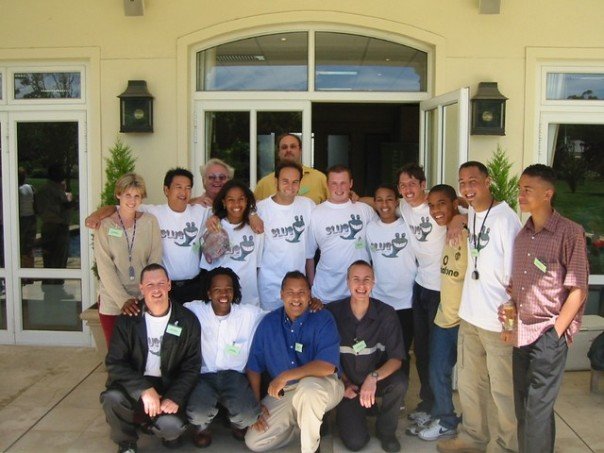
SLUG (Schools Linux Users Group) group photo. SLUG was founded to support the tuXlab schools that ran Linux.

My contract work then later turned into a full-time job there. This was a big deal for me, because I didn t want to support Windows ever again, and I didn t ever think that it would even be possible for me to get a job where I could work on free software full time. Since everyone in my team used Debian, I thought that I should probably give it another try. I did, and I hated it. One morning I went to talk to my manager, Thomas Black, and told him that I just don t get it and I need some help. Thomas was a big mentor to me during this phase. He told me that I should try upgrading to testing, which I did, and somehow I ended up on unstable, and I loved it. Before that I used to subscribe to a website called freshmeat that listed new releases of upstream software and then, I would download and compile it myself so that I always had the newest versions of everything. Debian unstable made that whole process obsolete, and I became a huge fan of it. Early on I also hit a problem where two packages tried to install the same file, and I was delighted to find how easily I could find package state and maintainer scripts and fix them to get my system going again. Thomas told me that anyone could become a Debian Developer and maintain packages in Debian and that I should check it out and joked that maybe I could eventually snap up highvoltage@debian.org . I just laughed because back then you might as well have told me that I could run for president of the United States, it really felt like something rather far-fetched and unobtainable at that point, but the seed was planted :) Ubuntu and beyond

Ubuntu 4.10 default desktop Image from distrowatch

One day, Thomas told me that Mark is planning to provide official support for Debian unstable. The details were sparse, but this was still exciting news. A few months later Thomas gave me a CD with just warty written on it and said that I should install it on a server so that we can try it out. It was great, it used the new debian-installer and installed fine everywhere I tried it, and the software was nice and fresh. Later Thomas told me that this system is going to be called Ubuntu and the desktop edition has naked people on it. I wasn t sure what he meant and was kind of dumbfounded so I just laughed and said something like Uh ok . At least it made a lot more sense when I finally saw the desktop pre-release version and when it got the byline Linux for Human Beings . Fun fact, one of my first jobs at the foundation was to register the ubuntu.com domain name. Unfortunately I found it was already owned by a domain squatter and it was eventually handled by legal. Closer to Ubuntu s first release, Mark brought over a whole bunch of Debian developers that was working on Ubuntu over to the foundation and they were around for a few days getting some sun. Thomas kept saying Go talk to them! Go talk to them! , but I felt so intimidated by them that I couldn t even bring myself to walk up and say hello. In the interest of keeping this short, I m leaving out a lot of history but later on, I read through the Debian packaging policy and really started getting into packaging and also discovered Daniel Holbach s packaging tutorials on YouTube. These helped me tremendously. Some day (hopefully soon), I d like to do a similar video series that might help a new generation of packagers. I ve also been following DebConf online since DebConf 7, which was incredibly educational for me. Little did I know that just 5 years later I would even attend one, and another 5 years after that I d end up being on the DebConf Committee and have also already been on a local team for one.

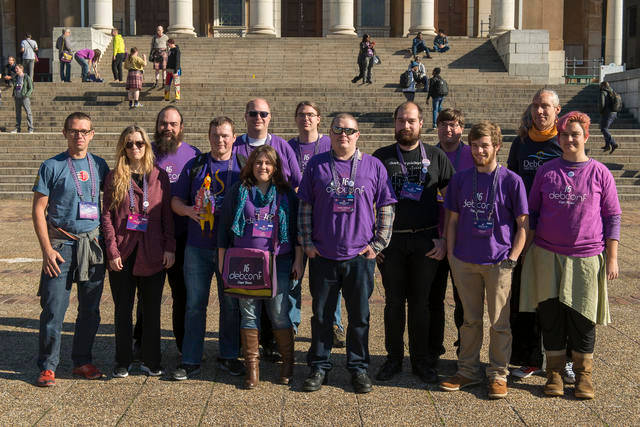
DebConf16 Organisers, Photo by Jurie Senekal.

It s been a long journey for me and I would like to help anyone who is also interested in becoming a Debian maintainer or developer. If you ever need help with your package, upload it to https://mentors.debian.net and if I have some spare time I ll certainly help you out and sponsor an upload. Thanks to everyone who have helped me along the way, I really appreciate it!

Michal Čihař: Running Bitcoin node and ElectrumX server

I've been tempted to run own ElectrumX server for quite some. First attempt was to run this on Turris Omnia router, however that turned out to be impossible due to memory requirements both Bitcoind and ElectrumX have. This time I've dedicated host for this and it runs fine: Electrum connecting to btc.cihar.com The server runs Debian sid (probably it would be doable on stretch as well, but I didn't try much) and the setup was pretty simple. First we need to install some things - Bitcoin daemon and ElectrumX dependencies:

# Bitcoin daemon, not available in stretch
apt install bitcoind
# We will checkout ElectrumX from git
apt install git
# ElectrumX deps
apt install python3-aiohttp
# Build environment for ElectrumX deps
apt install build-essentials python3-pip libleveldb-dev
# ElectrumX deps not packaged in Debian
pip3 install plyvel pylru
# Download ElectrumX sources
su - electrumx -c 'git clone https://github.com/kyuupichan/electrumx.git'
Create users which will run the services:
adduser bitcoind
adduser electrumx
Now it's time to prepare configuration for the services. For Bitcoin it's quite simple - we need to configure RPC interface and enable transaction index in /home/bitcoind/.bitcoin/bitcoin.conf:
txindex=1
listen=1
rpcuser=bitcoin
rpcpassword=somerandompassword
The ElectrumX configuration is quite simple as well and it's pretty well documented. I've decided to place it in /etc/electrumx.conf:
COIN=BitcoinSegwit
DB_DIRECTORY=/home/electrumx/.electrumx
DAEMON_URL=http://bitcoin:somerandompassword@localhost:8332/
TCP_PORT=50001
SSL_PORT=50002
HOST=::
DONATION_ADDRESS=3KPccmPtejpMczeog7dcFdqX4oTebYZ3tF
SSL_CERTFILE=/etc/letsencrypt/live/btc.cihar.com/fullchain.pem
SSL_KEYFILE=/etc/letsencrypt/live/btc.cihar.com/privkey.pem
REPORT_HOST=btc.cihar.com
BANNER_FILE=banner
I've decided to control both services using systemd, so it's matter of creating pretty simple units for that. Actually the Bitcoin one closely matches the one I've used on Turris Omnia and the ElectrumX the one they ship, but there are some minor changes. Systemd unit for ElectrumX in /etc/systemd/system/electrumx.service:
[Unit]
Description=Electrumx
After=bitcoind.target
[Service]
EnvironmentFile=/etc/electrumx.conf
ExecStart=/home/electrumx/electrumx/electrumx_server.py
User=electrumx
LimitNOFILE=8192
TimeoutStopSec=30min
[Install]
WantedBy=multi-user.target
And finally systemd unit for Bitcoin daemon in /etc/systemd/system/bitcoind.service:
[Unit]
Description=Bitcoind
After=network.target
[Service]
ExecStart=/usr/bin/bitcoind
User=bitcoind
TimeoutStopSec=30min
Restart=on-failure
RestartSec=30
[Install]
WantedBy=multi-user.target
Now everything should be configured and it's time to start up the services:
# Enable services so that they start on boot 
systemctl enable electrumx.service bitcoind.service
# Start services
systemctl start electrumx.service bitcoind.service
Now you have few days time until Bitcoin fetches whole blockchain and ElectrumX indexes that. If you happen to have another Bitcoin node running (or was running in past), you can speedup the process by copying blocks from that system (located in ~/.bitcoin/blocks/). Only get blocks from sources you trust absolutely as it might change your view of history, see Bitcoin wiki for more information on the topic. There is also magnet link in the ElectrumX docs to download ElectrumX database to speed up this process. This should be safe to download from untrusted source. The last think I'd like to mention is resources usage. You should have at least 4 GB of memory to run this, 8 GB is really preferred (both services consume around 4GB). On disk space, Bitcoin currently consumes 170 GB and ElectrumX 25 GB. Ideally all this should be running on the SSD disk. You can however offload some of the files to slower storage as old blocks are rarely accessed and this can save some space on your storage. Following script will move around 50 GB of blockchain data to /mnt/btc/blocks (use only when Bitcoin daemon is not running):
 1
 2
 3
 4
 5
 6
 7
 8
 9
10
11
#!/bin/sh
set -e
DEST=/mnt/btc/blocks
cd ~/.bitcoin/blocks/
find . -type f \( -name 'blk00[0123]*.dat' -o -name 'rev00[0123]*dat' \)   sed 's@^\./@@'   while read name ; do
        mv $name $DEST/$name
        ln -s $DEST/$name $name
done
Anyway if you would like to use this server, configure btc.cihar.com in your Electrum client. If you find this howto useful, you can send some Satoshis to 3KPccmPtejpMczeog7dcFdqX4oTebYZ3tF.

Filed under: Crypto Debian English

Renata Scheibler: Hello, world!

Renata's picture, a white woman profile. She touches her chin with her left hand fingertips About me Hello, world! For those who are meeting me for the first time, I am a 31 year old History teacher from Porto Alegre, Brazil. Some people might know me from the Python community, because I have been leading PyLadies Porto Alegre and helping organize Django Girls workshops in my state since 2016. If you don't, that's okay. Either way, it's nice to have you here. Ever since I learned about Rails Girls Summer of Code, during the International Free Software Forum - FISL 16, I have been wanting to get into a tech internship program. Google Summer of Code made into my radar as well, but I didn't really feel like I knew enough to try and get into those programs... until I found Outreachy. From their site:
Outreachy is an organization that provides three-month internships for people from groups traditionally underrepresented in tech. Interns work remotely with mentors from Free and Open Source Software (FOSS) communities on projects ranging from programming, user experience, documentation, illustration and graphical design, to data science.
There were many good projects to choose from on this round, a lot of them with few requirements - and most with requirements that I believed I could fullfill, such as some knowledge of HTML, CSS, Python or Django. I ought to say that I am not an expert in any of those. And, since you're reading this, I'm going to be completely honest. Coding is hard. Coding is hard to learn, it takes a lot of studying and a lot of practice. Even though I have been messing around computers pretty much since I was a kid, because I was a girl lucky enough to have a father who owned a computer store, I hadn't began learning how to program until mid-2015 - and I am still learning. I think I became such an autodidact because I had to (and, of course, because I was given the conditions to be, such as having spare time to study when I wasn't at school). I had to get any and all information from my surroundings and turn into knowledge that I could use to achieve my goals. In a time when I could only get new computer games through a CD-ROM and the computer I was allowed to use didn't have a CD-ROM drive, I had to try and learn how to open a computer cabinet and connect/disconnect hardware properly, so I could use my brother's CD-ROM drive on the computer I was allowed to and install the games without anyone noticing. When, back in 1998, I couldn't connect to the internet because the computer I was allowed to use didn't have a modem, I had to learn about networks to figure out how to do it from my brother's computer on the LAN (local network). I would go to the community public library and read books and any tech magazines I could get my hands into (libraries didn't usually have computers to be used by the public back then). It was about 2002 when I learned how to create HTML sites by studying at the source code from pages I had saved to read offline in one of the very, very few times I was allowed to access the internet and browse the web. Of course, the site I created back then never saw the light of the day, because I didn't have really have internet access at home. So, how come it is that only now, 14 years later, I am trying to get into tech? Because when I finished high school in 2003, I was still a minor and my family didn't allow me to go to Vocational School and take an IT course. (Never mind that my own oldest brother had graduated in IT and working with for almost a decade.) I ended up going to study... teacher training in History as an undergrad course. A lot has happened since then. I took the exam to become a public school teacher and more than two years had passed without being called to work. I spent 3 years in odd-jobs that paid barely enough to pay rent (and, sometimes, not even that). Since the IT is the new thing and all jobs are in IT, finally, finally it seemed okay for me to take that Vocational School training in a public school - and so I did. I gotta say, I thought that while I studied, I would be able to get some sort of job or internship to help with my learning. After all, I had seen it easily happening with people I met before getting into the course. And by "people", of course, I mean white men. For me, it took a whole year of searching, trying and interviewing for me to get an internship related to the field - tech support in a school computer lab, running GNU/Linux. And, in that very same week, I was hired as a public school teacher. There is a lot more... actually, there is so much more to this story, but I think I have told enough for now. Enough to know where I came from and who I am, as of now. I hope you stick around. I am bound to write here every two weeks, so I guess I will see you then! o/

16 November 2017

Michal Čihař: New projects on Hosted Weblate

Hosted Weblate provides also free hosting for free software projects. The hosting requests queue has grown too long, so it's time to process it and include new project. This time, the newly hosted projects include: If you want to support this effort, please donate to Weblate, especially recurring donations are welcome to make this service alive. You can do that easily on Liberapay or Bountysource.

Filed under: Debian English SUSE Weblate

Next.

Previous.