Search Results: "bod"

13 June 2011

Joachim Breitner: 401 page family book published

Over the course of the last five years, some relatives of me and I have been working on a family book which lists all descendants of my grandgrandgrandgrandfather Isaak Riehm, born 1799, and his wife Charlotte. My task was everything related to maintaining the data, running the infrastructure and generating the final book. In the end, we have collected biographical details, often with the person s live story, of 703 descendants, 285 partners and 416 parents-in-law. Together with an extensive preface the book now has a respectable size of 401 pages, includes 144 pictures and maps and over 200 copies have been printed and sold through the family.
The book cover
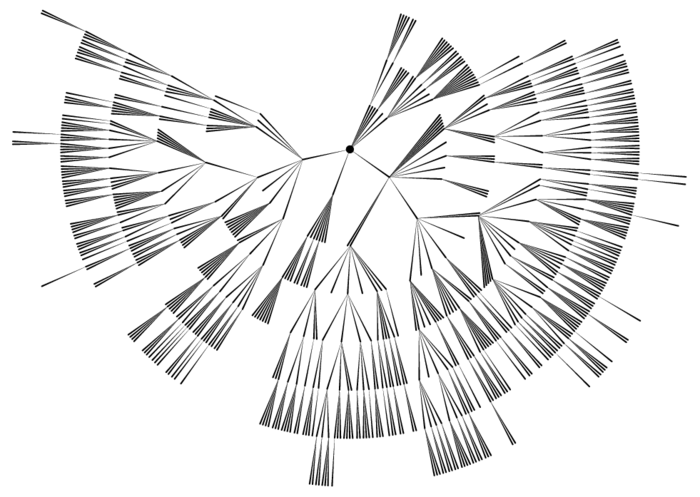
Although I do not think that the details of the lives of my family is very interesting for the general public, or even suitable for general release, I do want to show the fruit of our work. Therefore, I have created a stripped-down on-line version that only covers the first four generations. I bundled the book body with the cover and the end sheets into one complete PDF file (caution, large: 54MB, and of course in German). Some nifty embellishments of the book that I especially like are the abstract looking descendant fan in the front-end and back-end sheets, the separating bars between the persons which indicate the livespan of that person between 1799 and 2011 and the maps of the birth places and Isaak s travel destinations in the preface. Now to the technical details: Naturally, I used only Free Software in the genesis of the work (The cover is an exception, as it was not created by me). The most important is definitely gramps, a free genealogy system that held all our data. It is written in python and extensible with plug-ins, so I was able to create a custom report that takes the data relevant for us, filters for people who have agreed to appear in the book, and then generate LaTeX code that typesets the book, ready to be printed. I learned a great deal of LaTeX for this project, which uses over 30 different packages and required me to create a font of my own (which, as a side product, lead to a publication in the Linux-Magazin). For the maps I found the Generic Mapping Tools (GMT) and the freely available data for that of great use. I still had to manually collect the coordinates for all the places I wanted to show up in the map. Here, I relied mostly on Wikipedia. The fan which appears in the end sheets is laid out using a Haskell program (naturally, I have to use Haskell somewhere).
The front-end sheet
Of course, generating the book is only one side of the story; first, the data has to be collected and edited. For that, I wrote a plug-in to gramps that creates forms for each person. These forms contain the current known data and are used to correct and extend our knowledge. One variant of the form, created using LaTeX, was printed and mailed by snail-mail around the country and beyond, for those who are not reachable by mail. The other variant is an HTML form, hosted on a password-protected web site. Changes to that form cause the server to send an e-mail with a description of the changes (and only the changes, not the fields that are left untouched) to the mailing list of our team. There, the changes can be reviewed, e.g. for spelling and stylistic issues, and finally I copy n pasted them into gramps. These parts are implemented in python as well. Since genealogical data is never complete or up-to-date, I have set up a password-protected mediawiki based web site for the book where we collect corrections and additions to the data in the book. We have never anticipated that it would be so much work and that it would take us so long to finish this project, but we pulled it through and we are very happy with the result. Also, the reception has been very good and it was definitely a success. At this point I d like to express my gratitude to the hundreds of Free Software developers out there whose code we used and without whom it would not have been possible publish the book in the current form at all! Update: Due to some requests, I am making the code that I wrote available. You can download the tarball. Note that the code is a big mess and will not be usable right away. I guess if you can get the code to run and actually adjust to your needs, then you can as well write it yourself. Nevertheless it might be useful as inspiration or reference.

12 June 2011

Steve McIntyre: How to not embarrass yourself with missing attachments in mutt

I keep on seeing people sending messages saying "see attached file" or similar in their emails, but then forgetting to actually attach the file. I used to do it myself lots, but then with the help of some ideas I found on the net I wrote the following script to use with mutt. To use it, use the setting "set sendmail=" to point at it.
#!/bin/bash
#
# mutt-sendmail
# helper script to reduce embarrassment with mutt :-)
#
# Copyright 2011 Steve McIntyre <steve>
# GPL v2
###
# save msg in file to re-use it for multiple tests
###
TMPFILE= mktemp -p ~/tmp -t mutt.XXXXXX    exit 2
cat > $TMPFILE
## Attachment keywords that the message body will be searched for:
KEYWORDS='attach patch'
## Define test for multipart message.
function multipart  
    grep -q '^Content-Type: multipart' "$TMPFILE"
 
## Define test for keyword search.
function word-attach  
    grep -v '^>' "$TMPFILE"   grep -v "^X-attached:"   grep -E -i -q "$KEYWORDS"
 
## Header override.
function header-override  
    grep -i -E "^X-attached: *none *$" "$TMPFILE"
 
###
# FINAL DECISION:
# chain series of functions, use !   && for logic connections,
###
if multipart   ! word-attach   header-override; then
    formail -I bcc < $TMPFILE   /usr/lib/sendmail -oi -oem "$@"
    status=$?
else
    echo "No file was attached but a search of the message text suggests there"
    echo "should be one.  Add a header \"X-attached: none\" to override this"
    echo "check if no attachment is intended."
    status=1
fi
rm -f $TMPFILE
exit $status

Christian Perrier: Developers per country (June 2011) - 3rd take

See comments at the end about this 3rd version This is time again for yet another bubulle game: counting the number of developers per country. I already published such analysis in 2010 and 2009. So, here we are with the June 2011 version, sorted by the ratio of *active* developers per million population for each country.
Act: number of active developers
Dev: total number of developers
A/M: number of active devels per million pop.
D/M: number of devels per million pop.
2009: rank in 2009
2010: rank in 2010
June 2011: rank now
Code Name Population Act Dev Dev Act/Million Dev/Million 2009 2010 June 2011
fi Finland 5374781 21 31 3,91 5,77 1 1 1
ch Switzerland 7866500 21 26 2,67 3,31 2 2 2
mq Martinique 397730 1 1 2,51 2,51

3
no Norway 4964500 12 15 2,42 3,02 5 4 4
nz New Zealand 4393500 10 15 2,28 3,41 4 3 5
ie Ireland 4470700 10 13 2,24 2,91 13 9 6
se Sweden 9354462 19 35 2,03 3,74 3 6 7
lu Luxemburg 511840 1 1 1,95 1,95 8 5 8
de Germany 81802000 155 221 1,89 2,7 7 7 9
at Austria 8404252 15 25 1,78 2,97 6 8 10
fr France 63136180 91 119 1,44 1,88 12 12 11
au Australia 22632213 31 57 1,37 2,52 9 10 12
be Belgium 11007020 15 17 1,36 1,54 10 11 13
uk United-Kingdom 62008048 67 106 1,08 1,71 14 14 14
nl Netherlands 16674600 18 37 1,08 2,22 11 13 15
dk Denmark 5564219 6 10 1,08 1,8 17 17 16
ca Canada 34480000 27 57 0,78 1,65 15 15 17
hr Croatia 4429078 3 3 0,68 0,68 20 18 18
es Spain 46030109 31 51 0,67 1,11 16 16 19
lt Lithuania 3225346 2 2 0,62 0,62 28 19 20
cz Czech Rep 10540748 6 6 0,57 0,57 21 20 21
it Italy 60605053 33 47 0,54 0,78 23 22 22
bg Bulgaria 7351254 4 4 0,54 0,54 25 23 23
il Israel 7602400 4 6 0,53 0,79 24 24 24
us USA 308745538 162 364 0,52 1,18 19 21 25
hu Hungary 9979000 5 11 0,5 1,1 18 25 26
lv Latvia 2245357 1 1 0,45 0,45 26 26 27
uy Uruguay 3494382 1 2 0,29 0,57 22 27 28
jp Japan 127960000 33 46 0,26 0,36 30 28 29
pl Poland 38186860 9 13 0,24 0,34 29 29 30
cr Costa Rica 4253897 1 1 0,24 0,24 31 30 31
pt Portugal 10647763 2 4 0,19 0,38 27 32 32
sk Slovakia 5429763 1 1 0,18 0,18 32 31 33
gr Greece 11305118 2 3 0,18 0,27 33 38 34
ar Argentina 40091359 7 9 0,17 0,22 34 33 35
sv El Salvador 6134000 1 1 0,16 0,16

36
tw Taiwan 23061689 3 3 0,13 0,13 37 34 37
br Brazil 190732694 20 21 0,1 0,11 36 35 38
by Belarus 9648533 1 1 0,1 0,1 35 36 39
mg Madagascar 20653556 2 2 0,1 0,1 44 37 40
cu Cuba 11239363 1 1 0,09 0,09
38 41
kr South Korea 48758000 4 6 0,08 0,12 39 39 42
ec Ecuador 14790608 1 1 0,07 0,07
40 43
cl Chile 17224200 1 2 0,06 0,12 42 41 44
ro Romania 21466174 1 2 0,05 0,09 45 43 45
co Colombia 45925397 2 3 0,04 0,07 41 44 46
ru Russia 142905200 6 7 0,04 0,05 43 42 47
za South Africa 49991300 2 9 0,04 0,18 38 48 48
my Malaysia 27565821 1 1 0,04 0,04

49
ve Venezuela 29105632 1 1 0,03 0,03 40 45 50
pe Peru 29496000 1 1 0,03 0,03 46 46 51
tr Turkey 73722988 2 2 0,03 0,03 47 47 52
mx Mexico 112322757 2 2 0,02 0,02 49 49 53
th Thailand 63878267 1 2 0,02 0,03 50 50 54
eg Egypt 80085862 1 3 0,01 0,04 51 51 55
in India 1210193422 8 8 0,01 0,01 52 52 56
cn China 1339724852 7 11 0,01 0,01 53 53 57
ua Ukraine 45888000 0 0 0 0 48 53 58


896 1450 61,79%


A few interesting facts: v2 comment: This is the second version of this blog post. I have been pointed that the population I was using for "Ireland" is indeed the population of the entire island, so Republic of Ireland (Eire) plus Northern Ireland (Ulster). We may guess that people listing "IE" as their country are citizens of the Republic of Ireland, so the population to use is that of this part of the island. As a consequence, Ireland is bumped up to 6th rank instead of 9th. v3 comment: Doh. Since I'm doing this survey, I was always adding people using "sv" as country to Sweden. This is a quite common mistake and it was happening in the past. But now, there is only ONE developer who uses "sv" as country, this is Rene Mayorga and he definitely lives in El Salvador, not Sweden. As a consequence, Sweden lost one developer (but keeps its rank) and El Salvador now appears at rank 36. It is not a "new" country as Rene is DD for quite some time.

11 June 2011

Christian Perrier: Developers per country (June 2011) - 2nd take

See comment at the end about this 2nd version This is time again for yet another bubulle game: counting the number of developers per country. I already published such analysis in 2010 and 2009. So, here we are with the June 2011 version, sorted by the ratio of *active* developers per million population for each country.
Act: number of active developers
Dev: total number of developers
A/M: number of active devels per million pop.
D/M: number of devels per million pop.
2009: rank in 2009
2010: rank in 2010
June 2011: rank now
Code Name Population Act Dev Dev Act/Million Dev/Million 2009 2010 June 2011
fi Finland 5374781 21 31 3,91 5,77 1 1 1 1
ch Switzerland 7866500 21 26 2,67 3,31 2 2 2 2
mq Martinique 397730 1 1 2,51 2,51

3 3
no Norway 4964500 12 15 2,42 3,02 5 4 4 4
nz New Zealand 4393500 10 15 2,28 3,41 4 3 5 5
ie Ireland 4470700 10 13 2,24 2,91 13 9 6 6
se Sweden 9354462 20 36 2,14 3,85 3 6 7 7
lu Luxemburg 511840 1 1 1,95 1,95 8 5 8 8
de Germany 81802000 155 221 1,89 2,7 7 7 9 9
at Austria 8404252 15 25 1,78 2,97 6 8 10 10
fr France 63136180 91 119 1,44 1,88 12 12 11 11
au Australia 22632213 31 57 1,37 2,52 9 10 12 12
be Belgium 11007020 15 17 1,36 1,54 10 11 13 13
uk United-Kingdom 62008048 67 106 1,08 1,71 14 14 14 14
nl Netherlands 16674600 18 37 1,08 2,22 11 13 15 15
dk Denmark 5564219 6 10 1,08 1,8 17 17 16 16
ca Canada 34480000 27 57 0,78 1,65 15 15 17 17
hr Croatia 4429078 3 3 0,68 0,68 20 18 18 18
es Spain 46030109 31 51 0,67 1,11 16 16 19 19
lt Lithuania 3225346 2 2 0,62 0,62 28 19 20 20
cz Czech Rep 10540748 6 6 0,57 0,57 21 20 21 21
it Italy 60605053 33 47 0,54 0,78 23 22 22 22
bg Bulgaria 7351254 4 4 0,54 0,54 25 23 23 23
il Israel 7602400 4 6 0,53 0,79 24 24 24 24
us USA 308745538 162 364 0,52 1,18 19 21 25 25
hu Hungary 9979000 5 11 0,5 1,1 18 25 26 26
lv Latvia 2245357 1 1 0,45 0,45 26 26 27 27
uy Uruguay 3494382 1 2 0,29 0,57 22 27 28 28
jp Japan 127960000 33 46 0,26 0,36 30 28 29 29
pl Poland 38186860 9 13 0,24 0,34 29 29 30 30
cr Costa Rica 4253897 1 1 0,24 0,24 31 30 31 31
pt Portugal 10647763 2 4 0,19 0,38 27 32 32 32
sk Slovakia 5429763 1 1 0,18 0,18 32 31 33 33
gr Greece 11305118 2 3 0,18 0,27 33 38 34 34
ar Argentina 40091359 7 9 0,17 0,22 34 33 35 35
tw Taiwan 23061689 3 3 0,13 0,13 37 34 36 36
br Brazil 190732694 20 21 0,1 0,11 36 35 37 37
by Belarus 9648533 1 1 0,1 0,1 35 36 38 38
mg Madagascar 20653556 2 2 0,1 0,1 44 37 39 39
cu Cuba 11239363 1 1 0,09 0,09
38 40 40
kr South Korea 48758000 4 6 0,08 0,12 39 39 41 41
ec Ecuador 14790608 1 1 0,07 0,07
40 42 42
cl Chile 17224200 1 2 0,06 0,12 42 41 43 43
ro Romania 21466174 1 2 0,05 0,09 45 43 44 44
co Colombia 45925397 2 3 0,04 0,07 41 44 45 45
ru Russia 142905200 6 7 0,04 0,05 43 42 46 46
za South Africa 49991300 2 9 0,04 0,18 38 48 47 47
my Malaysia 27565821 1 1 0,04 0,04

48 48
ve Venezuela 29105632 1 1 0,03 0,03 40 45 49 49
pe Peru 29496000 1 1 0,03 0,03 46 46 50 50
tr Turkey 73722988 2 2 0,03 0,03 47 47 51 51
mx Mexico 112322757 2 2 0,02 0,02 49 49 52 52
th Thailand 63878267 1 2 0,02 0,03 50 50 53 53
eg Egypt 80085862 1 3 0,01 0,04 51 51 54 54
in India 1210193422 8 8 0,01 0,01 52 52 55 55
cn China 1339724852 7 11 0,01 0,01 53 53 56 56
ua Ukraine 45888000 0 0 0 0 48 53 57 57


896 1450 61,79%


A few interesting facts: This is the second version of this blog post. I have been pointed that the population I was using for "Ireland" is indeed the population of the entire island, so Republic of Ireland (Eire) plus Northern Ireland (Ulster). We may guess that people listing "IE" as their country are citizens of the Republic of Ireland, so the population to use is that of this part of the island. As a consequence, Ireland is bumped up to 6th rank instead of 9th.

Christian Perrier: Developers per country (June 2011)

This is time again for yet another bubulle game: counting the number of developers per country. I already published such analysis in 2010 and 2009. So, here we are with the June 2011 version, sorted by the ratio of *active* developers per million population for each country.
Act: number of active developers
Dev: total number of developers
A/M: number of active devels per million pop.
D/M: number of devels per million pop.
2009: rank in 2009
2010: rank in 2010
June 2011: rank now
Code Name Population Act Dev Dev Act/Million Dev/Million 2009 2010 June 2011
fi Finland 5374781 21 31 3,91 5,77 1 1 1
ch Switzerland 7866500 21 26 2,67 3,31 2 2 2
mq Martinique 397730 1 1 2,51 2,51

3
no Norway 4964500 12 15 2,42 3,02 5 4 4
nz New Zealand 4393500 10 15 2,28 3,41 4 3 5
se Sweden 9354462 20 36 2,14 3,85 3 6 6
lu Luxemburg 511840 1 1 1,95 1,95 8 5 7
de Germany 81802000 155 221 1,89 2,7 7 7 8
at Austria 8404252 15 25 1,78 2,97 6 8 9
ie Ireland 6197100 10 13 1,61 2,1 13 9 10
fr France 63136180 91 119 1,44 1,88 12 12 11
au Australia 22632213 31 57 1,37 2,52 9 10 12
be Belgium 11007020 15 17 1,36 1,54 10 11 13
uk United-Kingdom 62008048 67 106 1,08 1,71 14 14 14
nl Netherlands 16674600 18 37 1,08 2,22 11 13 15
dk Denmark 5564219 6 10 1,08 1,8 17 17 16
ca Canada 34480000 27 57 0,78 1,65 15 15 17
hr Croatia 4429078 3 3 0,68 0,68 20 18 18
es Spain 46030109 31 51 0,67 1,11 16 16 19
lt Lithuania 3225346 2 2 0,62 0,62 28 19 20
cz Czech Rep 10540748 6 6 0,57 0,57 21 20 21
it Italy 60605053 33 47 0,54 0,78 23 22 22
bg Bulgaria 7351254 4 4 0,54 0,54 25 23 23
il Israel 7602400 4 6 0,53 0,79 24 24 24
us USA 308745538 162 364 0,52 1,18 19 21 25
hu Hungary 9979000 5 11 0,5 1,1 18 25 26
lv Latvia 2245357 1 1 0,45 0,45 26 26 27
uy Uruguay 3494382 1 2 0,29 0,57 22 27 28
jp Japan 127960000 33 46 0,26 0,36 30 28 29
pl Poland 38186860 9 13 0,24 0,34 29 29 30
cr Costa Rica 4253897 1 1 0,24 0,24 31 30 31
pt Portugal 10647763 2 4 0,19 0,38 27 32 32
sk Slovakia 5429763 1 1 0,18 0,18 32 31 33
gr Greece 11305118 2 3 0,18 0,27 33 38 34
ar Argentina 40091359 7 9 0,17 0,22 34 33 35
tw Taiwan 23061689 3 3 0,13 0,13 37 34 36
br Brazil 190732694 20 21 0,1 0,11 36 35 37
by Belarus 9648533 1 1 0,1 0,1 35 36 38
mg Madagascar 20653556 2 2 0,1 0,1 44 37 39
cu Cuba 11239363 1 1 0,09 0,09
38 40
kr South Korea 48758000 4 6 0,08 0,12 39 39 41
ec Ecuador 14790608 1 1 0,07 0,07
40 42
cl Chile 17224200 1 2 0,06 0,12 42 41 43
ro Romania 21466174 1 2 0,05 0,09 45 43 44
co Colombia 45925397 2 3 0,04 0,07 41 44 45
ru Russia 142905200 6 7 0,04 0,05 43 42 46
za South Africa 49991300 2 9 0,04 0,18 38 48 47
my Malaysia 27565821 1 1 0,04 0,04

48
ve Venezuela 29105632 1 1 0,03 0,03 40 45 49
pe Peru 29496000 1 1 0,03 0,03 46 46 50
tr Turkey 73722988 2 2 0,03 0,03 47 47 51
mx Mexico 112322757 2 2 0,02 0,02 49 49 52
th Thailand 63878267 1 2 0,02 0,03 50 50 53
eg Egypt 80085862 1 3 0,01 0,04 51 51 54
in India 1210193422 8 8 0,01 0,01 52 52 55
cn China 1339724852 7 11 0,01 0,01 53 53 56
ua Ukraine 45888000 0 0 0 0 48 53 57


896 1450 61,79%


A few interesting facts:

10 June 2011

Rapha&#235;l Hertzog: People behind Debian: Philipp Kern, Stable Release Manager

Philipp is a Debian developer since 2005 and a member of the release team since 2008. Since he took the responsibility of Stable Release Manager, the process has evolved for the best. I asked him to explain how the release team decides what s fit for stable or not. His work on the buildd infrastructure is also admirable but I ll let him describe that. My questions are in bold, the rest is by Philipp. Who are you? I m a 24 year old Computer Science student, living in Karlsruhe, Germany. As a student assistant I m currently in two jobs: one is taking care of getting our university IPv6 network in shape, or rather generally getting fringe technologies into the network. The second is taking care of a s390x machine in the basement which my faculty got sponsored recently. In my spare time I tend my Debian duties and I m active in the student council (Fachschaft) as a sys-admin, software developer and until recently as treasurer. I got accepted as a Debian Developer in 2005. I m only really active since I was invited to join the Release Team in early 2008 after I contributed rewrites of some scripts that got lost in a disk crash of ftp-master. In late 2008 I also took on wanna-build/buildd duties. What s your notable achievement within Debian? For one I worked on the deployment of a single buildd/sbuild combination over all of our buildds and I rebased it on the sbuild in the archive several times already. All buildds basically look the same on all architectures, with only few variations. The chroots are now also created in a mostly predictable manner. Then we finally got build autosigning after years of constant poking. However the policy decision to allow it was made by the ftp-masters anyway, for which I m grateful, as it eases the workload of the buildd maintainers, the Security Team and the Release Team quite a bit. On the release side there s the integration of volatile into the proper structures of Debian. But there I m guilty for choosing the bad name squeeze-updates is, in comparision with security s squeeze/updates. Let s see if we can improve that for wheezy. The policy for stable updates have changed over time. Can you summarize what kind of updates are allowed nowadays? All the changes that were made to the policy were driven by the aim to keep stable (and to some lesser degree oldstable) usable throughout its lifetime. I have to admit that we got slightly more liberal in what we accept since I took over. The previous stable update policy included the fixes of critical bugs that break the system in interesting ways and security fixes. We also opened up the possibility of including important fixes for annoying bugs on a case-by-case basis. The whole don t update that much part of the stable release management is rooted in let s don t change the behaviour of a running system and let s have as few regressions as possible . We currently try to counter that with a review process that only allows self-contained fixes that were tested in unstable first, if applicable. In the future I d also like to have a feedback process that includes the users of the packages to report problems more early. In fact that s also why we now send calls for testing to debian-stable-announce one week in advance (see this mail as an example). So stable is updated through point releases that happen roughly every two months for stable and roughly every four for oldstable. They are accompanied by announcements and new CD/DVD sets. To be able to push some updates with less delay to our users and to avoid that they have to pick them from proposed-updates, there is stable-updates. The current policy for this suite is available in this post on debian-devel-announce. It boils down to everything urgent like tzdata, regression fixes and volatile packages. We noticed that some packages in stable just weren t useful anymore when they got updated through volatile. Hence those are folded into stable, too. We also relaxed the rules a bit so that leaf packages like clive, that rely on external websites not to change their URLs, can be updated too. If somebody wonders what happened to the and a half releases Those were intended to mark the inclusion of new hardware support (mostly by including a co-installable new kernel version). This kind of flag point release is thankfully no longer needed because our marvellous kernel team now backports certain hardware drivers to the kernel version in stable. They have some trouble soliciting test feedback for them, though. It would be cool if more people using stable could respond to their calls for testing. What are your plans for Debian Wheezy? Luckily the wanna-build/buildd side isn t much dependent on release cycles. The stable release management also just takes care of what gets dumped on them by the testing RMs. ;-) The near-term goals are certainly: Apart from that my work is mainly squashing the bugs on buildd.debian.org for the wanna-build part, so if you want something fixed, you need to report it, I m afraid. You have several roles within Debian, in particular stable release manager and member of the wanna-build team. Which role do you enjoy more and why? So the regular duties of the SRM, apart from setting up policies, are reviewing requests for uploads to proposed-updates, accepting them, chasing builds and scheduling point releases. It s mainly steady work. As for the Release Team it s working in a fabulous team where everyone s doing an awesome job. For me the wanna-build role is holding the things together and fixing up stuff that breaks while the world continues to evolve. And occassionally taking a stab at the ftp-masters. So rather different. My heart is probably siding with the buildd side because it s infrastructure but release work is fun, too. What s the biggest problem of Debian? Mainly that we re not quick in picking up new technologies and that we got slow on innovation. Distro-wide changes are usually a very big effort to coordinate and to finally complete. I guess people should be able to push fixes for release goals more eagerly into the archive. Also it seems to me that many DDs are actually disengaging from the release process, especially during the freeze but also before, which makes me a bit sad. However I m still not sure how we could counter that. As we re all volunteers you can t suddenly make others love the idea of releasing something together, I guess. Do you have wishes for Debian Wheezy? It s getting old, but there s certainly multiarch. Also a usable Python 3 is something I d really appreciate. Is there someone in Debian that you admire for their contributions? Peter Palfrader did an awesome job of getting a nicely working team together for DSA and got many tasks as automated as they are now. It s a pleasure to work with them and setting up a new buildd is, for example, a real breeze. He also developed a sane archive snapshot service, kudos for that.
Thank you to Philipp for the time spent answering my questions. I hope you enjoyed reading his answers as I did. Subscribe to my newsletter to get my monthly summary of the Debian/Ubuntu news and to not miss further interviews. You can also follow along on Identi.ca, Twitter and Facebook.

3 comments Liked this article? Click here. My blog is Flattr-enabled.

8 June 2011

Cosimo Alfarano: OpenNI in Debian

The world of augmented reality is quite fashinating.

I recently got interested into Natural Interaction due to the popularity of Microsoft's Kinect and decided to package OpenNI for Debian.

OpenNI is a framework aiming to making natural interaction transparent to the user/developer, publishing a unified API and abstracting the access to different sensors and modules. Currently it supports some Asus sensors and there is a branch on github supporting also Kinect (which is the one we're packaging).

Some cool projects are already using OpenNI: ROS, PointClouds and OpenCV come to my mind immediately.

We'are working on OpenNI package in the Multimedia Maintainers group on Alioth, the package is still not ready to be uploaded to unstable and upstream has some major problems like the lack of SONAME in its produced library, so some communication with upstream is needed but for preliminary use the packages are in a decent state: OpenNI, PrimeSense Sensor, NITE (non-free).

NITE is a closed source module set for advanced body and scene recognition, unfortunately PrimeSense didn't opensource them, thus I decided to use the same approach of flashplugin-nonfree and write a downloader.

For the sake of completeness, unstable already has libfreenect which purpose is similar but specifically oriented to Kinect.

I am studying both and really hope that in the next future some open source project will make (at least) skeleton and hand recognition available under an open license. People are already working on it, according to Google.

7 June 2011

John Goerzen: Back from Joplin

I m just back from spending a few days volunteering with the tornado recovery effort in Joplin, MO. The biggest image that remains in my mind is of the first time I saw a person picking through a large pile of rubble. The person was standing on top of what used to be a house. Now it was a pile of wood, glass, carpet, siding, and roofing material. I m sure there was hope for finding some treasure or other maybe a photo album or videos of children. In any case, it made me feel so lucky, even unfairly lucky, to have not had to go through that. This scene was repeated several times, but mostly the houses that devastated appeared abandoned by the time we were there, now two weeks after the event. But I heard stories, and lots of them. The victims of the storm, who were perhaps trying to rebuild that part of their house that got smashed by a tree or a pickup, or trying to get their intact belongings out before abandoning the house, or whatever, were mostly surprisingly upbeat. They were working out in 95-degree heat, many without electricity, running water, or sewer service. Almost every person I met that suffered a loss from the tornado wanted to tell their story. Many also told of their plans for the future, which were full of hope and even upbeat. These were people doing a hard job in terrible conditions and still showing hope. Another testament to the disaster was the most unusual set of vehicles you ve ever seen parked at any hotel you can care to think of, for at least an hour-and-a-half radius in the direction I came from. Besides the usual cars and minivans, there might be FEMA vehicles, electric company trucks, Red Cross vans, construction trucks of every kind, police and law enforcement from all over, etc. There was quite obviously an influx of people helping out in Joplin. My primary task there was to provide communications support for the effort as an amateur radio operator. Amateurs (or hams ) are something of a volunteer first responder of sorts during times of crisis; most of us own and are very familiar with operating equipment that can communicate over very long distances without the need for any on-site infrastructure. Amateur radio was the only method of communication for some Joplin hospitals in the immediate aftermath. The communications emergency is over, but the response isn t. I was assigned to work with the Salvation Army. They were doing a lot of things in Joplin, and had hundreds of volunteers working with them. I don t think I even know what many of them were doing I do know they had set up several warehouses across the city working with donating clothing, food, etc. The part I was involved with was primarily the canteen operation. The SA sent in food service trucks from several parts of the country. These trucks would roam up and down the streets in the damaged area, trying to get past every single street several times a day. Anybody that we could see would be offered food and water. No strings attached, no questions asked. This included homeowners, electric line workers, construction crews, sanitation workers, and quite a few nonprofit groups that sent well-meaning and useful volunteers into the area but didn t think to provide them with a large supply of water due to sending them into an area without any. Oops. In any case, with extreme heat and no running water, conditions were dangerous. The canteens also knew of certain at-risk families that were living in homes that were mostly intact in the disaster areas, and made a special point to check in on them. They also generally looked to make sure that people looked like they were healthy. Each canteen also had a counselor on board that would visit with people while we quickly prepared their meal they all seemed to welcome that. Amateur Radio s Role The operation of this size had quite a logistics challenge. I d hear of things like an unexpected need of 70 lunches, or a semi showing up with donations before there was space, or an unexpected but very welcome donation of a large quantity of ice cream without a place to store it (so the canteen trucks, which have freezers, needed to pick it up quickly). That s where us hams came in. Each canteen had an amateur radio operator on board. Each major location also had a ham stationed there, and the head of operations also often had a shadow a ham that would follow him around wherever he went to relay messages back and forth. We also had hams with pickups (with radios in them, of course) that could transport things around the city to places that needed them, hams at headquarters managing all the communication and generally investigating questions that didn t have immediately obvious answers, etc. Radios were used instead of cellphones for a few reasons. One big one is that everybody on the operation can hear what everyone else s needs are, since it s a group communications situation rather than one-to-one. It s easy to give a general alert to everyone ( come get your ice cream now please! ) and people that have suggestions can chime in. This came in extremely handy more than once. Also, it frees the people doing other jobs from having to spend time chasing someone s voicemail, finding phone numbers, etc; that gets delegated to us in some cases. I heard from the head of canteen operations, for whom this was the first disaster he d worked that had amateur radio support, how wonderful it was to have this going on. I also heard a secondhand report that some police officers that were also amateurs had listened to our operation and reported that we sound more professional than 911 dispatch and do a better job. On Sunday I was assigned to a canteen. This meant I didn t have a lot of radio traffic to pass, so although I had it in my ear all day, I wasn t actively talking on the radio very much. So I rode in back, helping hand out water, carry meals to people, and so forth. On Saturday, I was the shadow for the head of operations. That was a difficult task, because he barely ever moved at a pace slower than a run, sometimes would abruptly zip out somewhere, etc. But it was also enlightening and vital. He was a real get it done sort of guy, and was the key to quite a few things. Having someone available to relay questions to and from him was a good thing. And today I worked as a transport person and at headquarters. Due to not having a pickup there, I didn t actually get called on much to transport things, but in general between jobs the whole time I d act as a runner if needed, or simply try to figure out the details of how things were run for next time. I wound up taking net control (being the control operator at headquarters, and generally managing communications so that people don t talk over each other and such) for about an hour. So I got to do a little of just about every amateur radio task. Thoughts I am thankful for the opportunity to go, and the good feeling of helping people in need the first I ve ever had the chance to do that in a disaster. It s a good feeling to have a skill that is useful and appreciated. Sometimes it felt like handing out food and water is something pretty small in the scheme of things. But on the other hand, it gives people a chance to have contact with someone that cares, an opportunity to have people that can notice problems drive by a few times a day, and an opportunity to help meet people s basic needs. And sometimes in a fluid situation, there might be more volunteers than are needed, so I did spend some time sitting waiting for the next task. But overall, I m convinced that the work I helped facilitate was a good thing and provided a good and needed service in Joplin. This has been quite the experience and I m sure it s changed me too, though I don t yet know how.

6 June 2011

Rapha&#235;l Hertzog: Official Debian/Ubuntu packages for Dropbox

Dropbox is a popular service to synchronize files between multiple computers. The service is entirely proprietary but the company is Linux friendly and provides Linux binaries ready to use. They even provide Ubuntu packages that wrap the dropbox client and provide integration with Nautilus. A bit of story Unfortunately for Debian users, those packages do not work on Debian due to a dependency that can t be satisfied (because Ubuntu introduced an epoch on the version of their nautilus package that Debian doesn t have). This was even reported in a Squeeze review in Linux Weekly News. At some point, Ivan Borzenkov introduced a dropbox package to Debian but it was not based on the above package, instead it packaged directly the proprietary binaries. This was a bad decision because the binaries bundle a set of LGPL libraries and nobody from Debian wanted to do the required work to provide the corresponding source code. So the package got dropped (see bug #610300). More recently several persons filed ITP (Intent To Package) bugs stating their willingness to re-introduce dropbox in Debian, but after many months lingering in the bug tracking system (see #544499, #613788), they have been turned back to RFP (Request For Package) because they changed their minds. What I did Being a dropbox user myself (despite the recent proof that data stored on dropbox is not 100% private), I offered sponsorship to the volunteers who wanted to package dropbox. But it turns out this was not enough to motivate someone to complete the task. In the mean time I was still using the old dropbox package that was removed (it used to be downloadable from snapshot.debian.org). While this was good enough for me, it s clearly not OK in the long term and way too difficult for the majority of users. So this week-end I spent some hours to create a proper package. It s loosely based on the package provided by Dropbox but I upgraded the packaging and changed the way it works. I patched the dropbox wrapper to provide a dropbox update command that downloads and updates the proprietary binaries. They are now stored in /var/lib/dropbox instead of having a copy in each user s home directory (~/.dropbox-dist/). This update command is run by the postinst so that installing the package immediately downloads the proprietary binaries. Get the Dropbox packages for Debian The package nautilus-dropbox has been uploaded to Debian unstable, it s currently in the NEW queue but will shortly reach the mirrors. Then you will be able to You can install the package with a simple apt-get install nautilus-dropbox (provided that you activated the non-free section since that s where the package is hosted, it can t be part of Debian since it requires the proprietary binaries to be useful). In the mean time you can get the packages from the links below: Get the Dropbox packages for Ubuntu I have setup a PPA for nautilus-dropbox. Feel free to use it in place of the upstream packages.
$ sudo add-apt-repository ppa:hertzog/nautilus-dropbox
$ sudo apt-get update
$ sudo apt-get install nautilus-dropbox
It also includes packages for oneiric, but in theory once the package is accepted into Debian, it should appear in oneiric shortly after. Package maintenance I have done the initial packaging work but I don t really want to maintain it in the long term. I have more than enough to do with dpkg and my other packages. So if you are interested in maintaining this package, please get in touch with me. You should know a bit of python since there are Debian-specific patches of the upstream code. The package is maintained in a git repository. Feedback If you have encountered a problem with one of those packages, feel free to leave a comment. If you re an happy user of the above packages, click here to find out how you can thank me. I hope you enjoy the packages!

13 comments Liked this article? Click here. My blog is Flattr-enabled.

Vincent Bernat: Ready for World IPv6 day?

On June 8, 2011, will be World IPv6 Day. Major web companies like Google, Yahoo! and Facebook will serve their content through IPv6. While some of them already provide IPv6 content, you either need to use a special URL or get your connection from some selected providers, known to provide working IPv6 connection (the selection is done through DNS).

What s World IPv6 Day about? World IPv6 Day is mostly about major content providers and network operators. End users are not expected to take any special actions. The content will be provided for one day on IPv6 and IPv4 without any special trick to circumvent broken IPv6 setup. If you have an IPv4 only connectivity, all will continue to work (this day is not about switching Internet to IPv6 only). If you have a working IPv6 connectivity of any kind, you will use it to access content. However, if you have a broken IPv6 connectivity, you will find yourself isolated during one day until you solve the problem. You can check your connectivity and determine if you will run into trouble on World IPv6 Day. The main point of this day is to check if IPv6 native content can be provided to anybody without leaving out a large part of the users (the ones with a broken connectivity) which is reason why we don t already have IPv6 native content everywhere. Google explains it this way:
We continuously conduct detailed measurements on the quality of IPv6 connectivity, and our latest results show that making Google services generally available over IPv6 at this time would lead to connection problems and increased latency for a small number of users. User experience is very important to us, and we do not want to impact users on networks that do not yet fully support IPv6. We will continue to re-evaluate the situation as the IPv6 Internet evolves.
While content provider are invited to provide IPv6 content, network operator are expected to troubleshoot their customers problem (and they cannot withdraw themselves from this operation since the main change is done by content providers). If they can enable IPv6 connectivity, that would be great too but this is not mandatory. UPDATED: It s a shame but Microsoft s participation to World IPv6 day is a fix to prefer IPv4 over IPv6. Moreover, this fix will be reverted a few days later. Let s hope that network operators don t follow the lead by not setting up DNS hijacking to remove AAAA record.

What can I do? Even if you are neither a network operator nor a major player in web content publishing, it is expected that World IPv6 Day will also be the playground for most IPv6 related things.

As a user Check if your ISP provides native IPv6 connectivity. This can be an opt-in option. For example, in France, Free allows its users to enable native IPv6 connectivity if they choose the appropriate option. That s easy to do and you get IPv6 in a matter of minutes. If your ISP does not provide native IPv6 connectivity, you can try to bug them about this. This is unlikely to work. You can also get IPv6 through a tunnel broker like SixXS (create an account and apt-get install aiccu) or Hurricane Electric. Wikipedia has a list of IPv6 tunnel brokers. Don t rely on any other transition mechanism, they are unreliable.

As a service provider If you host yourself some services, like your web page or your own mail server, you can enable IPv6 connectivity for those as well. Get an IPv6 connectivity for your services, either native or through a tunnel broker. Then, enable IPv6 on each service you provide. Check that they are listening on IPv6 with ss -6l. All the tips below are meant for very simple setup. Ensure that net.ipv6.bindv6only is set to 0. Here is what I have done:
  • Enable SSH access through IPv6. With the default configuration of OpenSSH, this is already done. Check your ListenAddress directive if you have one.
  • Serve Web content through IPv6. I am using Nginx as a web server and you can mix IPv4 and IPv6 in the same virtual host. Setting up IPv6 is easy. Ensure that IPv6 support is compiled in (nginx -V) use listen [::]:80 instead of listen 80. Apache is equally easy to configure and should even work out of the box since the Listen 80 directive will listen to both IPv4 and IPv6 by default. lighttpd also supports IPv6. An easy way to get started is to use server.use-ipv6 = "enable".
  • Enable IPv6 in Postfix, Dovecot, BIND. For all of those, this works out of the box. Nowadays, most daemons will work fine with IPv6 without any special configuration since they will listen to :: by default which means any IPv4 or IPv6 address as long as net.ipv6.bindv6only is set to 0. Unfortunately, there is still some daemons that do not support IPv6.
  • Add appropriate AAAA record to your DNS because providing IPv6 services is of little use if your users (including you) cannot access them without typing the appropriate IP address. You may also want to provide a NS record reachable through IPv6.
  • Update your monitoring to use IPv6 as well. If you advertise IPv6 service and only IPv4 is working, most IPv6 client will be unable to access them.
  • Adapt your firewall. In Linux, Netfilter handles IPv4 and IPv6 separately. You need to ensure you setup a correct firewall for IPv6 as you have done with IPv4.
Here is a minimal firewall that you can adapt:
 1
 2
 3
 4
 5
 6
 7
 8
 9
10
11
12
13
14
15
16
17
18
19
20
21
22
23
24
ip6tables -A INPUT -m state --state ESTABLISHED,RELATED -j ACCEPT
ip6tables -A OUTPUT -m state --state ESTABLISHED,RELATED -j ACCEPT
for chain in INPUT OUTPUT; do
  ip6tables -A $chain -m rt --rt-type 0 -j DROP
  ip6tables -A $chain -p icmpv6 --icmpv6-type neighbor-solicitation \
     -m hl --hl-eq 255 -j ACCEPT
  ip6tables -A $chain -p icmpv6 --icmpv6-type neighbor-advertisement \
     -m hl --hl-eq 255 -j ACCEPT
  ip6tables -A $chain -m state --state NEW \
     -p icmpv6 --icmpv6-type echo-request -j ACCEPT
done
ip6tables -A INPUT -i lo -j ACCEPT
ip6tables -A OUTPUT -o lo -j ACCEPT
# Put your rules here!
ip6tables -N REJECT_ALL
ip6tables -A REJECT_ALL -p tcp -j REJECT --reject-with tcp-reset
ip6tables -A REJECT_ALL -p udp -j REJECT --reject-with icmp6-adm-prohibited
ip6tables -A REJECT_ALL -j DROP
for chain in INPUT OUTPUT FORWARD; do
    ip6tables -A $chain -j LOG --log-prefix "$chain-reject: "
    ip6tables -A $chain -j REJECT_ALL
done

Debian status There is still a long way for full IPv6 support of all applications in Debian but it is a release goal since Etch. This is not an easy task since adding IPv6 support on some software can be really difficult. DSA also enabled IPv6 support on many servers used by the Debian project including the main web server, the main mirror, the security mirror and the name servers. You should be able to use Debian with an IPv6 only access.

1 June 2011

Vincent Bernat: GNOME Power Manager without GNOME desktop

When I installed my new laptop, I decided to switch from sleepd to GNOME Power Manager (GPM). The rationale behind this decision was to get screen dimming for free while keeping other features because GPM uses UPower which uses pm-suspend and pm-powersave behind the scene. This means that it is easy to execute scripts on suspend or when the AC is unplugged by putting them in /etc/pm. I don t use a full GNOME desktop. My desktop is running FVWM which is just a window manager. However, I already use some parts of the GNOME environment:

What s working It happens that most of the features just do not work. However, suspend when closing the lid works fine. The icon in the systray works fine too (but there is a small bug). The screen dimming feature on idle also works (but there are annoying bugs with it). The visual feedback when pressing brightness keys works too.

What s not working It seems that I am not the only one to have problem with GPM: there are currently 115 bugs opened in the Debian BTS. If you want to get some debug output from gnome-power-manager, run it with --verbose flag. --debug flag does nothing (and supersedes --verbose).

Nothing happens when pressing the power button I have configured GPM to ask me what to do when I press the power button. But when I press the button, nothing happens. Looking at the source, here is the snippet of code that is executed:
1
2
3
4
5
6
7
if (policy == GPM_ACTION_POLICY_INTERACTIVE)  
    GpmSession *session;
    egg_debug ("logout, reason: %s", reason);
    session = gpm_session_new ();
    gpm_session_logout (session);
    g_object_unref (session);
 
In fact, this is not GPM that will ask you the question, but GNOME session manager because GPM triggers logout. If you don t run a full GNOME session, nothing will happen. My workaround is just to set the action to Suspend .

Does not sleep when idle GPM is configured to go to sleep after 2 hours on AC or 30 minutes on battery. This does not work for me because idle detection is delegated to external programs. There are four variables used by GPM to determine if we are idle:
  • session_idle which is the idle hint from ConsoleKit,
  • idle_inhibited which is set when another program asks to disable idle detection (a video player which does not want the screen to be dimmed),
  • suspend_inhibited which means a program do not want we going to sleep (a music player for example)
  • x_idle which tells if X is idle or not (someone is moving the mouse or typing on the keyboard).
To allow GPM to suspend when we are idle, x_idle and session_idle must be true while suspend_inhibited and idle_inhibited must be false. For screen dimming purpose, you just need to have x_idle set to true and idle_inhibited set to false. Currently, only GNOME Screensaver seems to tell ConsoleKit if the session is idle or not. XScreenSaver does not contain anything about this. I am using xautolock with xlock and I am pretty sure they won t tell GPM if I am idle. You can use dbus-send to circumvent this problem:
 1
 2
 3
 4
 5
 6
 7
 8
 9
10
11
$ dbus-send --system --dest=org.freedesktop.ConsoleKit \
>   --type=method_call --print-reply --reply-timeout=2000 \
>   /org/freedesktop/ConsoleKit/Manager \
>   org.freedesktop.ConsoleKit.Manager.GetCurrentSession
method return sender=:1.6 -> dest=:1.106 reply_serial=2
   object path "/org/freedesktop/ConsoleKit/Session1"
$ dbus-send --system --dest=org.freedesktop.ConsoleKit \
>   --type=method_call --print-reply --reply-timeout=2000 \
>   /org/freedesktop/ConsoleKit/Session1 \
>   org.freedesktop.ConsoleKit.Session.SetIdleHint boolean:true          
method return sender=:1.6 -> dest=:1.108 reply_serial=2
While I understand what is the rationale behind those choices (no code duplicate and allowing external programs to hinder power management), it lacks some fallback in case you don t use GNOME Screensaver (which is the key component here). I first though this was bug #594706 but this is not the case. I have opened (and closed) bug #628755. UPDATED: Jump to the conclusion for an updated solution for this problem.

Brightness is not restored to the previous value after idle When GPM undims the screen, it does not restore the previous value. It seems to be bug #617310 which is marked as fixed in upstream. I did not investigate it.

Wrong number of batteries reported I only have one battery but after one suspend/resume cycle, GPM thinks I have two. Maybe this is a bug of UPower. Maybe this is bug #606434. I did not investigate it. Maybe there is an happy interaction with bug #456280.

Inability to set configure actions when the UPS runs out of battery This is bug #390602. In addition to laptop batteries, UPower also supports UPS. In this case, GPM displays a special icon to tell if the UPS is fully charged. However, there is no possibility to execute special actions when the UPS is unplugged, like hibernate after 10 minutes or something like this. This seems to be a problem with the interface because looking with gconftool-2, we can spot variables like low_ups or critical_ups which allow to set actions when the UPS is almost out of battery. Moreover, the UPS icon only displays after one suspend/resume cycle but I am too lazy to report and debug this issue. Since, the icon disappear if I restart GPM, I am confident that the bug is in GPM.

Conclusion The conclusion is that GPM is not really that buggy but it really needs to be run in a full-blown GNOME desktop. The main problem is not really GPM. New technologies like UPower and ConsoleKit get pushed by freedesktop.org initiative, they get implemented by GNOME (and, I suppose, KDE) because they have tons of people following the appropriate mailing lists and any alternative just gets crushed by all those unpublicized changes. UPDATED: I got several helpful comments about this problem. There are two possible solutions:
  1. Use xfce4-power-manager. It handles brightness control in a better way and don t need an external program to tell when the current session is idle. It still needs a session manager to ask what to do when using the power button. The drawback to this solution is that you start to pull another desktop environment into your environment. You had some parts of GNOME and now you have some parts of XFCE. This solution was proposed by Sylvain Collilieux.
  2. Use gnome-session, gnome-screensaver and keep gnome-power-manager. As pointed by Julien Valroff, gnome-screensaver needs gnome-session to detect idleness. However, gnome-session starts a whole GNOME desktop. Again, there are two solutions. The first one is to replace gnome-session by something lighter implementing the bare minimum to make gnome-screensaver happy. Another suggestion is to configure gnome-session to start your favorite environment.
I start mine from ~/.xsession and here is what I have added at the top of it:
 1
 2
 3
 4
 5
 6
 7
 8
 9
10
11
12
13
14
15
16
17
# If not done, restart ourself with gnome-session
if [ -z "$SESSION_MANAGER" ]; then
    [ -d ~/.config/autostart ]   mkdir ~/.config/autostart
    rm -f ~/.config/autostart/*
    cat <<EOF > ~/.config/autostart/xsession.desktop
[Desktop Entry]
Name=Xsession
Comment=Start .xsession
Exec=$(readlink -f $0)
Type=Application
X-GNOME-Autostart-enabled=true
EOF
    exec gnome-session --autostart=$HOME/.config/autostart
fi
# Otherwise, keep starting stuff
# [...]
exec fvwm-crystal

Andrew Cater: /etc/apt/sources.list

Since we have people posting to various lists for the correct format for an /etc/apt/sources.list file, here's one including the non-free repositories (which are not part of Debian proper but provided for the convenience of Debian users). Hope this helps somebody sometime.

#

deb http://ftp.uk.debian.org/debian/ squeeze main contrib non-free
deb-src http://ftp.uk.debian.org/debian/ squeeze main contrib non-free

deb http://ftp.uk.debian.org/debian/ squeeze-updates main contrib non-free
deb-src http://ftp.uk.debian.org/debian/ squeeze-updates main contrib non-free

deb http://security.debian.org/ squeeze/updates main contrib non-free
deb-src http://security.debian.org/ squeeze/updates main contrib non-free

and, of course, it wrapped in the browser. There's a single space between squeeze and main and between main and contrib and between contrib and non-free for example. There are six lines in total - three pairs.

31 May 2011

Gunnar Wolf: Invitation Free Software in Mexico: Reflections and Opportunities

I was invited to be part of one of the panels to be present this Thursday (June 2) in a forum that promises to be interesting. The forum is organized by the Science and Technology comission of the Senate of the Republic (of Mexico ;-) ), Universidad Aut noma Metropolitana and Mozilla M xico. The day will be opened by Sen. Francisco Javier Castell n Fonseca and Richard Stallman; starting at 10:00, we will have thematic panels on: The full program (as well as details of interest of those that can physically attend) is attached to this post. I am looking forward to this forum. Not only it is a good opportunity to get our work known in one of those places where it matters, but it's also being organized by several interesting people I'm sure will have something interesting to contribute. And of course, we lacked time to build a better, more complete and more coherent proposal but there is a good probability we will have further such contacts. You might find interesting to read on the list we have been discussing; subscription seems to be open (although access to the archives is not Maybe it will be later on? In any case, I'm saving a mbox ;-) )
AttachmentSize
Activity program352.37 KB

Vincent Bernat: Provide a mobile version with CSS Media Queries

Nowadays, many websites provide a mobile version, like Wikipedia, which usually is a version tailored to device with less bandwidth and smaller screen. CSS Media Queries is a candidate recommendation from the W3C to support different stylesheets depending on the how the document is displayed. This allows to build a mobile version just by providing additional instructions in your CSS style sheet.

Using CSS Media Queries There are two ways to use CSS media queries. You can provide an additional CSS stylesheet and let the browser knows when to use it:
1
<link rel="stylesheet" media="screen and (max-width: 700px)" href="mobile.css">
When the width of the viewport is less than 700 pixels, the stylesheet mobile.css will be used. Another way to use CSS media queries is to declare a section inside your current CSS style sheet:
1
2
3
4
5
@media screen and (max-width: 700px)  
    #article  
       margin: 0.3em 0.2em;
     
 
While there are many available properties, the most two common ones will be max-width and min-width. You can use this feature to modify some aspects of your web site like reducing margins or hiding some extra navigational blocks.

Browser support Current versions of mobile browsers support CSS media queries: Safari Mobile, Android browser and Opera mobile will handle it without a glitch. If you use CSS media queries to provide a mobile version of your web site, you don t really have to worry about browser compatibility. There exists polyfills that will enable this feature on unsupported browsers like Internet Explorer 8. One of them is Respond which is a lightweight polyfill targeted at supporting only min-width and max-width in Internet Explorer 6, 7 and 8.

Example I have added CSS media queries to my website. Try it by resizing the window of your browser. Here are some of the changes depending on the width of the window:
  • the sidebar transforms into a topbar
  • the search box is hidden
  • padding is reduced at various places
Here is the current look in a classic browser: Website look on a classic browser If you reduce the size of your window, you will get something like this: Website look on a narrow window Browse my CSS files for more examples. Look at the end of each file. For further information, have a look at the article from CSS Tricks.

30 May 2011

Francois Marier: Code reviews with Gerrit and Gitorious

The Mahara project has just moved to mandatory code reviews for every commit that gets applied to core code.

Here is a description of how Gerrit Code Review, the peer-review system used by Android, was retrofitted into our existing git repository on Gitorious.

(If you want to know more about Gerrit, listen to this FLOSS Weekly interview.)

Replacing existing Gitorious committers with a robotThe first thing to do was to log into Gitorious and remove commit rights from everyone in the main repository. Then I created a new maharabot account with a password-less SSH key (stored under /home/gerrit/.ssh/) and made that new account the sole committer.

This is to ensure that nobody pushes to the repository by mistake since all of these changes would be overwritten by Gerrit.

Basic Gerrit installationAfter going through the installation instructions, I logged into the Gerrit admin interface and created a new "mahara" project.

I picked the "merge if necessary" submit action because "cherry-pick" would disable dependency tracking which is quite a handy feature.

Reverse proxy using NginxSince we wanted to offer Gerrit over HTTPS, I decided to run it behind an Nginx proxy. This is the Nginx configuration I ended up with:
server  
listen 443;
server_name reviews.mahara.org;
add_header Strict-Transport-Security max-age=15768000;

ssl on;
ssl_certificate /etc/ssl/certs/reviews.mahara.org.crt;
ssl_certificate_key /etc/ssl/certs/reviews.mahara.org.pem;

ssl_session_timeout 5m;
ssl_session_cache shared:SSL:1m;

ssl_protocols TLSv1;
ssl_ciphers HIGH:!ADH;
ssl_prefer_server_ciphers on;

location /
proxy_pass http://127.0.0.1:8081;
proxy_set_header X-Forwarded-For $remote_addr;
proxy_set_header Host $host;


Things to note:
Mail setupTo enable Gerrit to email reviewers and committers, I installed Postfix and used "reviews.mahara.org" as the "System mail name".

Then I added the following to /home/gerrit/mahara_reviews/etc/gerrit.config:
[user]
email = "gerrit@reviews.mahara.org"
to fix the From address in outgoing emails.

Init script and cronFollowing the installation instructions, I created these symlinks:
ln -s /home/gerrit/mahara_reviews/bin/gerrit.sh /etc/init.d/gerrit
cd /etc/rc2.d && ln -s ../init.d/gerrit S19gerrit
cd /etc/rc3.d && ln -s ../init.d/gerrit S19gerrit
cd /etc/rc4.d && ln -s ../init.d/gerrit S19gerrit
cd /etc/rc5.d && ln -s ../init.d/gerrit S19gerrit
cd /etc/rc0.d && ln -s ../init.d/gerrit K21gerrit
cd /etc/rc1.d && ln -s ../init.d/gerrit K21gerrit
cd /etc/rc6.d && ln -s ../init.d/gerrit K21gerrit
and put the following settings into /etc/default/gerritcodereview:
GERRIT_SITE=/home/gerrit/mahara_reviews
GERRIT_USER=gerrit
GERRIT_WAR=/home/gerrit/gerrit.war
to automatically start and stop Gerrit.

I also added a cron job in /etc/cron.d/gitcleanup to ensure that the built-in git repository doesn't get bloated:
MAILTO=admin@example.com
20 4 * * * gerrit GIT_DIR=/home/gerrit/mahara_reviews/git/mahara.git git gc --quiet

Configuration enhancementsTo allow images in change requests to be displayed inside the browser, I marked them as safe in /home/gerrit/mahara_reviews/etc/gerrit.config:
[mimetype "image/*"]
safe = true

Another thing I did to enhance the review experience was to enable the gitweb repository browser:
apt-get install gitweb

and to make checkouts faster by enabling anonymous Git access:
[gerrit]
canonicalGitUrl = git://reviews.mahara.org/git/
[download]
scheme = ssh
scheme = anon_http
scheme = anon_git

which requires that you have a git daemon running and listening on port 9418:
apt-get install git-daemon-run
ln -s /home/gerrit/mahara_reviews/git/mahara.git /var/cache/git/
touch /home/gerrit/mahara_reviews/git/mahara.git/git-daemon-export-ok

Finally, I included the Mahara branding in the header and footer of each page by providing valid XHTML fragments in /home/gerrit/mahara_reviews/etc/GerritSiteHeader.html and GerritSiteFooter.html.

Initial import and replicationOnce Gerrit was fully working, I performed the initial code import by using my administrator account to push the exiting Gitorious branches to the internal git repository:
git remote add gerrit ssh://username@reviews.mahara.org:29418/mahara
git push gerrit 1.2_STABLE
git push gerrit 1.3_STABLE
git push gerrit master
Note that I had to temporarily disable "Require Change IDs" in the project settings in order to import the old commits which didn't have these.

To replicate the internal Gerrit repository back to Gitorious, I created a new /home/gerrit/mahara_reviews/etc/replication.config file:
[remote "gitorious"]
url = gitorious.org:mahara/$ name .git
push = +refs/heads/*:refs/heads/*
push = +refs/tags/*:refs/tags/*
(The $ name variable is required even when you have a single project.)

Contributor instructionsThis is how developers can get a working checkout of our code now:
git clone git://gitorious.org/mahara/mahara.git
cd mahara
git remote add gerrit ssh://username@reviews.mahara.org:29418/mahara
git fetch gerrit
scp -p -P 29418 reviews.mahara.org:hooks/commit-msg .git/hooks/
and this is how they can submit local changes to Gerrit:
git push gerrit HEAD:refs/for/master

Anybody can submit change requests or comment on them but make sure you do not have the Cookie Pie Firefox extension installed or you will be unable to log into Gerrit.

28 May 2011

Vincent Bernat: SNMP support for keepalived

keepalived keepalived is an high-availability and load-balacing solution. Using VRRP, it allows you to share IP addresses between several servers or routers. At a given moment, only one of them (the master) will be handed the IP address. VRRP is usually setup for redundant routers, but you can also setup redundant services. If the master becomes unavailable or fails, one of the backups will take over the IP address. VRRP is not a cluster resource manager. It is targeted at sharing one (or several) IP between a set of hosts. If you want to share other resources with complex conditions like at least two web servers should run and the database should not run on the same node as a web server , you should look at heartbeat instead. For load-balancing, keepalived relies on IPVS, a Linux subsystem featuring layer-4 switching. keepalived will check if your servers are alive and tell it to IPVS. IPVS will handle incoming connections and send them on the appropriate alive server depending on the policy you can configure. For example, one policy is round-robin: servers are handled new connections in circular order.

keepalived & SNMP keepalived did not feature a native SNMP support. I have added complete SNMP support and I hope those patches will be accepted into mainstream. Meanwhile, you can grab keepalived with SNMP support source code from GitHub. Currently, it is based on the latest version of keepalived. Here is what you can do :
  • query the configuration of the running keepalived without parsing configuration files;
  • query runtime status (like VRRP status, priority or current state of a virtual server) without looking in the logs;
  • query runtime statistics about virtual servers (how many connections were handled by this real server, for example) without parsing the output of ipvsadm;
  • get noticed with the help of SNMP traps when something changed (VRRP transition or a real server that became unavailable);
  • changing the priority of a VRRP instance (to force a transition as master);
  • changing the weight of a real server (to remove it from a pool of servers).

Compilation To use it:
1
2
3
4
5
$ git clone https://github.com/vincentbernat/keepalived.git
$ cd keepalived
$ git checkout snmp-1.2.0
$ ./configure --enable-snmp
$ make
You get bin/keepalived which is the SNMP enabled keepalived daemon. You can use it directly or install it with make install as root. On RHEL, SNMP is not properly packaged. Try the following command instead of make:
1
$ make LDFLAGS="$(net-snmp-config --agent-libs) -lpopt -lssl -lcrypto"

Use To use it, you need to ensure that your main snmpd daemon can become a master agent. Check for the presence of master agentx line in snmpd.conf. The next step is to start keepalived with the -x switch. keepalived will connect to your main snmpd daemon. You can check the logs for a ligne like this:
May 28 17:21:19 L1 Keepalived_vrrp: NET-SNMP version 5.4.3 AgentX subagent connected

Lab To test it, we can setup a little lab with UML. You can find additional details about this kind of lab in my post about network lab with UML. Grab the complete lab from GitHub. Ensure that you correct the path to keepalived sources at the top of the setup script. keepalived & SNMP lab The lab features four web servers that will be merged into a single web service with the help of keepalived. Since, keepalived now supports full IPv6 support, we will also use IPv6 in our lab. Here is the VRRP configuration of the first keepalived :
vrrp_instance VI_1  
   state MASTER
   interface eth2
   dont_track_primary
   track_interface  
      eth0
      eth1
    
   virtual_router_id 1
   priority 150
   advert_int 2
   authentication  
      auth_type PASS
      auth_pass blibli
    
   virtual_ipaddress  
      1.1.1.15/24 dev eth0
      2001:db8::15/64 dev eth0
      192.168.1.1/24 dev eth1
      fd00::1/64 dev eth1
   
 
We define two virtual servers, one for IPv4, one for IPv6. Here is an excerpt of the configuration :
virtual_server_group VS_GROUP_IPv4  
   1.1.1.15 80
 
virtual_server group VS_GROUP_IPv4  
   delay_loop 10
   lb_algo rr
   lb_kind NAT
   protocol TCP
   real_server 192.168.1.10 80  
      weight 1
      HTTP_GET  
        url  
          path /
          status_code 200
         
        connect_timeout 10
       
    
   [...]
 
When running the lab (with ./setup), we can check that everything works as expected. From the client node, we can make several requests, both with IPv4 and IPv6:
1
2
3
4
5
6
7
8
C1# curl  http://1.1.1.15 
W3
C1# curl  http://1.1.1.15
W2
C1# wget -o /dev/null -O - 'http://[2001:db8::15]'
W3
C1# wget -o /dev/null -O - 'http://[2001:db8::15]'
W2
If we put down eth1 on L1, L2 becomes master and everything works as expected. Our client node can still do the requests.

SNMP We can query the configuration of our running keepalived from L1. The appropriate MIB is KEEPALIVED-MIB. The base OID for this MIB is .1.3.6.1.4.1.9586.100.5. It is hosted in the OID space allocated by IANA to the Debian project. For example, to get the configuration of our VRRP instance:
 1
 2
 3
 4
 5
 6
 7
 8
 9
10
11
12
13
14
15
16
17
18
19
# snmpwalk -v2c -cpublic localhost KEEPALIVED-MIB::vrrpInstanceTable
KEEPALIVED-MIB::vrrpInstanceName.1 = STRING: VI_1
KEEPALIVED-MIB::vrrpInstanceVirtualRouterId.1 = Gauge32: 1
KEEPALIVED-MIB::vrrpInstanceState.1 = INTEGER: master(2)
KEEPALIVED-MIB::vrrpInstanceInitialState.1 = INTEGER: master(2)
KEEPALIVED-MIB::vrrpInstanceWantedState.1 = INTEGER: master(2)
KEEPALIVED-MIB::vrrpInstanceBasePriority.1 = INTEGER: 150
KEEPALIVED-MIB::vrrpInstanceEffectivePriority.1 = INTEGER: 150
KEEPALIVED-MIB::vrrpInstanceVipsStatus.1 = INTEGER: allSet(1)
KEEPALIVED-MIB::vrrpInstancePrimaryInterface.1 = STRING: eth2
KEEPALIVED-MIB::vrrpInstanceTrackPrimaryIf.1 = INTEGER: tracked(1)
KEEPALIVED-MIB::vrrpInstanceAdvertisementsInt.1 = Gauge32: 2 seconds
KEEPALIVED-MIB::vrrpInstancePreempt.1 = INTEGER: preempt(1)
KEEPALIVED-MIB::vrrpInstancePreemptDelay.1 = Gauge32: 0 seconds
KEEPALIVED-MIB::vrrpInstanceAuthType.1 = INTEGER: password(1)
KEEPALIVED-MIB::vrrpInstanceLvsSyncDaemon.1 = INTEGER: disabled(2)
KEEPALIVED-MIB::vrrpInstanceGarpDelay.1 = Gauge32: 0 seconds
KEEPALIVED-MIB::vrrpInstanceSmtpAlert.1 = INTEGER: disabled(2)
KEEPALIVED-MIB::vrrpInstanceNotifyExec.1 = INTEGER: disabled(2)
We can get statistics from IPVS subsystem:
 1
 2
 3
 4
 5
 6
 7
 8
 9
10
11
# snmpwalk -v 2c -c public localhost KEEPALIVED-MIB::virtualServerTable   grep Stats
KEEPALIVED-MIB::virtualServerStatsConns.1 = Gauge32: 6 connections
KEEPALIVED-MIB::virtualServerStatsConns.2 = Gauge32: 6 connections
KEEPALIVED-MIB::virtualServerStatsInPkts.1 = Counter32: 36 packets
KEEPALIVED-MIB::virtualServerStatsInPkts.2 = Counter32: 36 packets
KEEPALIVED-MIB::virtualServerStatsOutPkts.1 = Counter32: 24 packets
KEEPALIVED-MIB::virtualServerStatsOutPkts.2 = Counter32: 24 packets
KEEPALIVED-MIB::virtualServerStatsInBytes.1 = Counter64: 2970 bytes
KEEPALIVED-MIB::virtualServerStatsInBytes.2 = Counter64: 3312 bytes
KEEPALIVED-MIB::virtualServerStatsOutBytes.1 = Counter64: 2592 bytes
KEEPALIVED-MIB::virtualServerStatsOutBytes.2 = Counter64: 3072 bytes
We can also disable a real server, for example W1:
 1
 2
 3
 4
 5
 6
 7
 8
 9
10
11
12
# snmpget -v2c -cpublic localhost KEEPALIVED-MIB::realServerAddrType.1.1 \
                                KEEPALIVED-MIB::realServerAddress.1.1
KEEPALIVED-MIB::realServerAddrType.1.1 = INTEGER: ipv4(1)
KEEPALIVED-MIB::realServerAddress.1.1 = Hex-STRING: C0 A8 01 0A 
# snmpget -v2c -cpublic localhost KEEPALIVED-MIB::realServerAddress.2.1 \
                                KEEPALIVED-MIB::realServerAddress.2.1
KEEPALIVED-MIB::realServerAddress.2.1 = Hex-STRING: FD 00 00 00 00 00 00 00 00 00 00 00 00 00 00 10 
# snmpset -v2c -cprivate localhost KEEPALIVED-MIB::realServerWeight.1.1 = 0
KEEPALIVED-MIB::realServerWeight.1.1 = INTEGER: 0
# snmpset -v2c -cprivate localhost KEEPALIVED-MIB::realServerWeight.2.1 = 0
KEEPALIVED-MIB::realServerWeight.2.1 = INTEGER: 0
From C1, you can now check that W1 is not queried anymore. Let s graph the number of connections per second each real server gets. With a simple script using rrdtool, we can get the following graph: rrdtool graph built from stats returned by keepalived SNMP agent

25 May 2011

Russell Coker: Links May 2011

John W. Dean wrote in insightful series of three articles for Findlaw about Authoritarian Conservatives [1]. In summary there are Authoritarian Followers who follow their leader blindly and Authoritarian Leaders who do whatever it takes to gain and maintain power. The Authoritarian mindset lends itself towards right-wing politics. Mick Ebeling gave an inspiring TED talk about his work developing a system to produce art that is controlled by eye movements [2]. The development work was started to support the quadriplegic graffiti artist TEMPT1. Mick s most noteworthy point is that all the hardware design and software are free so anyone can implement it without asking an insurance company or hospital (this is one of the few occasions when a TED speaker has received a standing ovation during a talk). The Eyewriter.org site has the designs and source which is licensed under the GPL [3]. Morgan Spurlock (who is famous for Supersize Me ) gave an amusing TED talk titled The Greatest TED Talk Ever Sold [4]. He provides some interesting information about the brand sponsorship process and his new movie The Greatest Movie Ever Sold . Ralph Langner gave an interesting TED talk about reverse-engineering the Stuxnet worm and discovering that it was targetted at the Iranian nuclear program [5]. The fact that the Stuxnet environment could be turned to other uses such as disrupting power plants is a great concern, particularly as it has special code to prevent automatic safety systems from activating. Angela Belcher gave an interesting TED talk about using nature to grow batteries [6]. She is evolving and engineering viruses to manufacture parts of batteries and assemble them, the aim is to scale up the process to manufacture batteries for the Prius and other large devices at room temperature with no toxic materials. She is also working on biological methods of splitting water into hydrogen and oxygen which has the obvious potential for fuel-cell power and also solar PV cells. As an aside she mentions giving a copy of the Periodic Table to Barack Obama and he told her that he will look at it periodically . Bruce Schnier gave a good overview of the issues related to human perceptions of security in his TED talk about The Security Mirage [7]. There isn t much new in that for people who have been doing computer work but it s good to have an overview of lots of issues. TED has an interesting interview with Gerry Douglas about his work developing touch-screen computer systems for processing medical data in Malawi [8]. This is worth reading by everyone who is involved in software design, many of the things that he has done go against traditional design methods. Mike Matas gave an interesting demo at TED of the first proper digital book [9]. The book is by Al Gore and is run on the iPad/iPhone platform (hopefully they will have an Android version soon). His company is in the business of licensing software for creating digital books. The demonstration featured a mixture of pictures, video, audio, and maps with the pinch interface to move them around. Dr Sommers of Tufts University wrote an interesting post for Psychology Today titled Why it s Never About Race [10]. It seems that there are lots of patterns of people being treated differently on the basis of race but for every specific case no-one wants to believe that racial bias was involved. The Register has an amusing article about what might have happened if Kate had left Prince William at the altar [11]. Fiorenzo Omenetto gave an interesting TED talk about synthetic silk [12]. He is working on developing artificial fibers and solids based on the same proteins as silk which can be used for storing information (DVDs and holograms), medical implants (which can be re-absorbed into the body and which don t trigger an immune response), and cups among other things. Maybe my next tie will have a no pupae were harmed in the production notice. ;) The CDC has released a guide to preparing for a Zombie apocalypse [13], while it s unlikely that Zombies will attack, the same suggestions will help people prepare for the other medical emergencies that involve the CDC. Salon has an interesting article by Glenn Greenwald who interviewed Benjamin Ferencz about aggressive warfare [14]. Benjamin was a prosecutor for war crimes at Nuremberg after WW2 and compares the US actions since 9-11 with what was deemed to be illegal by the standards of WW2. Eli Pariser gave an interesting TED talk about Online Filter Bubbles [15]. He claims that services such as Facebook and Google should give more of a mixture of results rather than targetting for what people want. The problem with this idea is that presenting links that someone doesn t want to click doesn t do any good. It s not as if the filter bubble effect relies on modern media or can be easily solved. Terry Moore gave a TED talk about how to tie shoelaces [16]. Basically he advocates using a doubly-slipped Reef Knot instead of a doubly-slipped Granny Knot. Now I just need to figure out how to tie a doubly-slipped Reef Knot quickly and reliably. Terry uses this as a mathaphor for other ways in which one might habitually do something in a non-optimal way.

23 May 2011

John Goerzen: Baptism

Today I was baptized and joined the Mennonite Church. I imagine this might surprise some of you for various reasons, so let me provide a bit of background. I ve had a lot of people, both in person and in comments responding to my blog post, express surprise with statements I have made. The view of Christianity that many people have is of a group that devalues scientific inquiry and places a lot of emphasis on things like opposition to gay marriage, evolution, and abortion, and enjoys political leaders that say bring it on. While I know some Christians that fall into that mold, there are quite a few that don t as well. Some churches, such as the one we attend, have a surprisingly diverse set of people and yet still function and get along well. Today they accepted me with joy. Nobody was concerned that I started my statement with a reference to ancient Greek philosophy, wound up suggesting that the church ought to make sure to make illegal immigrants, gays and lesbians, and prostitutes feel welcome, and embraced both religion and scientific inquiry, feeling them complimentary. Mennonites practice adult baptism rather than infant baptism. A traditional age for people to be baptized is during high school, though emphasis is placed more on the individual than their age, so it s not unheard-of for someone to do so a bit later in life as I have. Part of the baptism involves the candidate sharing their faith story. These are typically intensely personal, widely varied, heartfelt, and honest. Some people s stories involve struggles with depression, physical disabilities, or the place of religion in their lives, while others reflect little struggle at all. Mine involves letting go of a lot of things, and also seeing some things, such as serious intellectual inquiry or existential questions about God (such as is there a god? ), as a positive rather than a negative feature of a Christian life. But it also involves a recognition and deep respect for those that don t approach things in this way. Though given publicly in a church, baptism testimonies are rarely published or shared more broadly. But I m going to share mine here. I have edited it only very lightly to remove a few local references that wouldn t make sense out of the context of this community. This was delivered in front of a rather different audience than is likely to be reading this post, so if you have questions, do feel free to ask in the comments. But before I begin, I just have to pass along a joke a friend told me: John, you picked quite a day for your baptism the day after the rapture. Baptism Testimony John Goerzen May 22, 2011 Those of you that know me well will probably not be surprised that I will begin my Christian baptism testimony with a story about an ancient Greek philosopher, and also touch on the philosophical nature of truth. These are key parts of my story. As legend goes, Socrates famously said, I know that I know nothing in other words, he believed that nothing could be known with absolute certainty. The Greek Oracle thought to be infallibly wise said that Socrates, the man that thought he knew nothing, was the wisest man in all Athens. An interesting paradox, and one that sheds light on my own religious story. My story involves coming to grips with the understanding that I know very little, that no person can ultimately know much about God, and finding a way to make peace with that situation. Growing up in this community, I thought I knew some things about faith and Christianity. At a certain age, it all seemed so simple. We took the Bible to be literally true. We marveled in Sunday School at how the apostles could sometimes appear so blind. And, modeled both implicitly and explicitly, was this notion: the stronger our faith, the fewer inner questions or doubt we have about the nature of God, the literal accuracy of the entire Bible, or our relationship to God. Those I perceived held up as examples never seemed to question any of these things, and showed outwardly, at least complete certainty about them. Moreover, holding certain intellectual beliefs was key to Christian identity, and even more importantly, to eternal life. This model has quite obviously worked well for many people for many years. The good that has happened, and continues to happen, from people that have that kind of certainty is manifest all around us. And yet, it didn t seem to work out for me. I m not the kind of person that accepts a lot of things at face value. It is helpful to be able to examine and challenge ideas and even more helpful to have other people challenge my ideas. From well before I was in high school, I was questioning some things about the Bible, God, and religion in general. My thoughts ranged from the impact of evolution on religion to the apparently vengeful God of the Old Testament to the very existence of God. In the Christian context, I perceived having these questions as a personal failing, something that I ought to repress. The more I tried to repress them, the more troublesome they became. Why, for instance, should a loving merciful God decide whether to let us into heaven based on whether we hold certain intellectual beliefs? In high school, I participated in the catechism class here at this church, and was frustrated because it didn t tackle deeper meanings or the kinds of questions I had. I wasn t yet able to articulate all my thoughts and questions very well, and I probably had an overactive case of teenage cynicism. As a result, I didn t get baptized like most others my age did. As I learned more about the early history of Judaism and Christianity, I only found more reasons to question the model of faith I thought I had received the one in which Biblical literalism and a divine guarantee of sorts was key. More recently, I gradually became aware that the model of Christianity I had in mind was one of many views. Christians, Mennonites, and even this church are incredibly diverse groups, and in retrospect, I am surprised that it took me so long to realize this. Three major steps led me to baptism. The first step was the realization that, whatever our understanding of the literal accuracy of the Bible, literal truth is often inferior to metaphorical truth. As an example, many of us have read the works of Shakespeare. They are fictional, but the reason they have been revered for so many centuries is that they are true. They teach us things about ourselves and our world in a way that no history book can. By placing such an emphasis on literal truth in the Bible, I was missing out on the message right there for me. By concerning myself with creationism or evolution, I missed out on thinking about what the story in Genesis meant for the Jews, and what it could mean for me. Evolution ceased to be a threat to religion; it became simply a tool for learning about a different sort of truth than we get from religion. N. T. Wright mentions an incident that illustrates this point. A woman attending a religious conference asked the speaker, a prominent theologian, Is it true that the serpent in Genesis actually spoke like you and I speak? The theologian answered, It doesn t matter whether the serpent could speak. What matters is what the serpent said. The second step I took towards being baptized was realizing where the real core of Christianity lies. It s not some debate about Genesis, but rather the death to one s old self, and the rebirth and continual remaking of oneself in the example of Jesus. Given that, a lot of questions seem unimportant or even irrelevant. Good can be expressed in many ways, and if one person achieves a remarkably Christian life via a literal understanding of the Bible, and another via a more metaphorical reading, then it is my place only to affirm both and say that they both got it right. If we say that the task of remaking ourselves is like climbing a mountain, then what matters is not how we are climbing the mountain, but simply that we are climbing it. I used to equate faith with an intellectual belief. I have come to see that was a narrow view. Faith, to me now, is more about vision: do we see the world like Christ did? Where do our loyalties and our trust lie in God or in human institutions? What are our goals in life? We humans have failed to understand God, and probably always will. I too share in that incomplete understanding, but I have come to accept that it is OK. I know enough to know that I want my loyalty to lie in Jesus, to know what kind of vision of the world I want to have, and I have learned to accept that intellectual questions can even be a form of meditation, enlightenment, and prayer. The third step toward baptism was moving past my own shortcomings. For a long time, I thought I didn t believe the right things, didn t believe them strong enough, wasn t certain enough about God, didn t pray enough, didn t read enough, didn t understand enough, didn t love enough and ultimately, that I wasn t good enough. I request baptism today understanding that, despite the various imperfections I still have, and we all have, everyone is good enough and deserving of love and peace. God s love is for everyone. No exceptions! Following Jesus boils down to this: I too must be an agent of love and peace to everyone, without exception. My vision must be centered around the fact that we are to emulate the God that loves the entire world, sinners all, and therefore I should as well. I hope I can show others the kind of love that has been shown me. I hope, too, to share with this congregation and the global church in the vision of love. I hope that we can continually strive to re-focus on Christ s vision. As an example, we all know that many different viewpoints about whether homosexuality is sinful exist in Mennonite Church USA. These opinions are deeply held and personal for many, and have been discussed over and over and over. But ultimately, they aren t terribly relevant to the church s mission. The example of Jesus unites us all: he embraced everyone. He accepted criminals and prostitutes and showed them love and kindness. Our difficult task, which is also my difficult task, is to show this same love to absolutely everyone, regardless of our varying opinions about them and their conduct. The forgotten and repressed of our day perhaps criminals, homeless, Muslims, addicts, gays and lesbians, illegal immigrants, ethnic minorities, and still prostitutes deserve the love of Christ s church and all its members. My hope is that any one of the earth s 7 billion people could step through the doors of our church, or any church, and immediately feel Christ s love, and the unconditional, non-judgmental, welcome and love of Christ s followers, no matter what. This prayer from Ephesians 3 sums up my hope and my vision, for myself and everyone:
I pray that out of his glorious riches he may strengthen you with power through his Spirit in your inner being. I pray that Christ may dwell in your hearts through faith. And I pray that you, being rooted and established in love, may have power, together with all the Lord s people, to grasp how wide and long and high and deep is the love of Christ. And I pray that you will know this love that surpasses knowledge that you may be filled to the measure of all the fullness of God. (3.16-19)

22 May 2011

Joey Hess: more solar data

Entered in 6 months of the house's solar power data.
Power system voltages.
When I last did in mid-December I was seeing the expected slow decrease, but did not anticipate the dip in mid-January, which I think was due to snow and bad weather. At the end of February, I doubled the size of the active battery bank, and this damped out many of the spikes and lows. The mid-April low is bad weather paired with much higher than usual (24x7) inverter use, and possibly with some batteries that were still being conditioned after spending all winter off power. I'd expect the last couple of months to be higher, but perhaps I'm just not needing to conserve power here at all (come to think, I have a radio, an inverter, a flourescent light, an electric shaver charger, a sheevaplug, a laptop, and 4 USB pepherials going right now).

21 May 2011

Vincent Bernat: Network lab with User Mode Linux

To setup a virtual network lab, you get a lot of alternatives. You can for example use GNS3, Netkit, Marionnet or VNUML. Some of those tools, like GNS3, allow to add some closed source equipments like a Cisco 7200 or a Juniper router. All those tools are a great way to setup your network lab. Look at them! If you want to setup a virtual network lab for educational purpose, one of those should fit your purpose. However, none of those solution were a perfect match for me. I did not want to maintain some root filesystem. I wanted my lab to start in a few seconds. I wanted to keep all configuration files (including the ones for the virtual hosts) into one subdirectory of my home and be able to modify them while the lab was running. I also wanted to be able to plug some Cisco router using Dynamips/Dynagen. None of the listed solution above matched all those criteria. Therefore, I setup my own lab script with User Mode Linux. This is not a complete solution, but is more like a home-made solution to match one particular need. You cannot use the final result without tweaking it. Again, look at the other solutions first. We will go step by step to understand how the lab was built. If you are in a hurry, you can look at the result which is published on GitHub.

User Mode Linux User Mode Linux (or UML) is a Linux kernel running as a process instead of running on top of some processor. With Debian, you can install it using apt-get install user-mode-linux. You get a linux command that will run your Linux kernel as a simple process. No need to be root.
 1
 2
 3
 4
 5
 6
 7
 8
 9
10
11
12
13
14
15
16
17
18
19
20
21
22
23
24
25
$ linux
Core dump limits :
    soft - 0
    hard - NONE
Checking that ptrace can change system call numbers...OK
Checking syscall emulation patch for ptrace...OK
Checking advanced syscall emulation patch for ptrace...OK
Checking for tmpfs mount on /dev/shm...nothing mounted on /dev/shm
Checking PROT_EXEC mmap in /tmp/user/500/...OK
Checking for the skas3 patch in the host:
  - /proc/mm...not found: No such file or directory
  - PTRACE_FAULTINFO...not found
  - PTRACE_LDT...not found
UML running in SKAS0 mode
Adding 5632000 bytes to physical memory to account for exec-shield gap
Initializing cgroup subsys cpuset
Linux version 2.6.32 (2.6.32) (root@tito) (gcc version 4.4.5 (Debian 4.4.5-10) ) #2 Thu Jan 27 12:49:46 UTC 2011
[...]
console [mc-1] enabled
Couldn't stat "root_fs" : err = 2
Failed to initialize ubd device 0 :Couldn't determine size of device's file
registered taskstats version 1
VFS: Cannot open root device "98:0" or unknown-block(98,0)
Please append a correct "root=" boot option; here are the available partitions:
Kernel panic - not syncing: VFS: Unable to mount root fs on unknown-block(98,0)
You get a Linux kernel that will just panic because it does not find a disk to mount to run init from it. Usually, you build some root file system and give it as an argument to your UML kernel.

Basic setup However, you can also use your host filesystem as a root filesystem. We also specify /bin/sh as init instead of /sbin/init. This will be the first process to be started by our UML kernel.
 1
 2
 3
 4
 5
 6
 7
 8
 9
10
11
12
13
$ linux init=/bin/sh rootfstype=hostfs
[...]
Linux version 2.6.32 (2.6.32) (root@tito) (gcc version 4.4.5 (Debian 4.4.5-10) ) #2 Thu Jan 27 12:49:46 UTC 2011
[...]
VFS: Mounted root (hostfs filesystem) readonly on device 0:12.
IRQ 3/console-write: IRQF_DISABLED is not guaranteed on shared IRQs
IRQ 2/console: IRQF_DISABLED is not guaranteed on shared IRQs
IRQ 10/winch: IRQF_DISABLED is not guaranteed on shared IRQs
/bin/sh: can't access tty; job control turned off
# uname -a
Linux (none) 2.6.32 #2 Thu Jan 27 12:49:46 UTC 2011 x86_64 GNU/Linux
# echo $$
1
You may want to setup a bit your environment:
1
2
3
4
5
6
7
8
9
# hostname -b R1
# export TERM=xterm
# export PATH=/usr/local/bin:/usr/bin:/bin:/sbin:/usr/local/sbin:/usr/sbin
# mount -t proc proc /proc
# mount -t sysfs sysfs /sys
# mount -t tmpfs tmpfs /var/run -o rw,nosuid,nodev
# mount -t tmpfs tmpfs /var/log -o rw,nosuid,nodev
# mount -o bind /usr/lib/uml/modules /lib/modules
# mount -t hostfs hostfs /home/bernat/mylab -o /home/bernat/mylab
We setup /proc and /sys correctly. We also turn /var/run and /var/log as tmpfs filesystems. This will allow most daemons to run correctly: they will be able to write runtime data in /var/run and to write logs in /var/log. You can even launch your favorite syslog daemon. The line about /lib/modules is to ensure that our UML kernel is able to access its kernel modules. For example, we can now use modprobe tun. The line about /home allows to mount the home directory of your host inside UML. This was already the case, but it was mounted as read-only. One important thing to notice is that while you seem to be root inside UML, you did not run linux as root. Therefore, when the UML kernel tries to write a file it will still be bound by the permissions granted by your host kernel. See this example:
1
2
3
4
# mount -o remount,rw /
# touch /tmp/test1
# touch /etc/test1
touch: cannot touch  /etc/test1': Permission denied
This is a great way to ensure that your lab will not destroy your host. Do not run linux as root. What is interesting with such a setup is that you share the filesystem with your host. You can modify some configuration file on your host and your UML will see the modification right away. You can also modify a file inside UML and see the modification on your host too.

Console & job control There is a slight problem with this environment. You may be used to it if you already started your own GNU/Linux system with init=/bin/sh. The problem is that you don t have job control. Job control allows you to put tasks in background and interrupt them while they are running. It is job control that allows you to stop a program with ^C. Here, you don t have job control. See:
1
2
# cat
^C^C^C^C
You are stuck. The only way to go out is to kill the linux process on your host. Job control is a great mystery for me. I don t know how to enable it by hand. However, getty is able to enable job control for you. Just type this command:
1
# exec getty -n -l /bin/sh 38400 /dev/tty0
You get job control. We keep /bin/sh, but you may prefer /bin/bash since on most systems, /bin/sh is rather basic.

Writable root filesystem Let s get back to our root filesystem. Most daemons can run just fine with our setup. For example, we can start Nginx, a popular web server:
1
2
3
# mkdir /var/log/nginx
# /etc/init.d/nginx start
Starting nginx: nginx.
However, it will use the configuration file in /etc/nginx. You don t want to modify this directory for all your labs. The best way to handle this is to start Nginx with a custom configuration file:
1
2
# /etc/init.d/nginx stop
# nginx -c /home/bernat/mylab/nginx.conf
While keeping the configuration files related to your lab in your home is an important objective (all your lab related files are in the same place and you can modify them at will), it may be more convenient to still use /etc/init.d/nginx script to control Nginx. Moreover, some daemons do not allow to specify a configuration file. You will then need to modify your root filesystem. This is a pretty common problem with Live CD and it is solved by using an union mount. This is a special kind of mount that will merge two filesystems into one. One of the two filesystems can be read-only and all the changes will be reported to the second one. We will use AUFS. Ensure that you have aufs-tools package installed. Let s start from scratch for this example.
 1
 2
 3
 4
 5
 6
 7
 8
 9
10
$ linux init=/bin/sh rootfstype=hostfs
[...]
# mount -n -t proc proc /proc
# mount -n -t sysfs sysfs /sys
# mount -o bind /usr/lib/uml/modules /lib/modules
# mount -n -t tmpfs tmpfs /tmp -o rw,nosuid,nodev
# mkdir /tmp/ro /tmp/rw /tmp/aufs
# mount -n -t hostfs hostfs /tmp/ro -o /,ro
# mount -n -t aufs aufs /tmp/aufs -o noatime,dirs=/tmp/rw:/tmp/ro=ro
# exec chroot /tmp/aufs /bin/bash
It seems that AUFS with hostfs is rather fragile. We could have merged our root filesystem with some directory in our lab using hostfs like this:
1
2
3
4
# mount -n -t hostfs hostfs /tmp/rw -o /home/bernat/mylab/root,rw
# mount -n -t hostfs hostfs /tmp/ro -o /,ro
# mount -n -t aufs aufs /tmp/aufs -o noatime,dirs=/tmp/rw:/tmp/ro=ro
# exec chroot /tmp/aufs /bin/bash
However, the kernel panics on most operations. Therefore, /tmp/rw stays in a tmpfs filesystem. This means that any change to the root filesystem will be lost. I also was unable to issue a correct pivot_root before chroot. This is not really important here. UPDATED: It seems that there are other drawbacks to this setup. For some reason, if you have a separate /usr partition on your host system, you won t be able to write to it until you specify the noxino option to AUFS. Another issue is that AUFS does not notice most changes on the hostfs filesystem. You can fix this with option udba=inotify. However, this is incompatible with the noxino option. Therefore, you need to choose what is best for your lab. You can also mount some parts of your home with hostfs (for example, the source directory of the piece of software that you would like to test). Let s consider that Nginx configuration is in /home/bernat/lab/nginx. We simply uses a symbolic link:
1
2
# rm -rf /etc/nginx
# ln -s /home/bernat/mylab/nginx /etc/nginx
Since we lose the modifications to the root filesystem, the symbolic link should be done each time we start the lab. However, we can modify directly the configuration files in the host or in the UML.

Networking We know how to start our UML. Let s see how we can add some wires to it. UML supports several network adapters. The two most useful are TAP and VDE backend.

TAP A TAP interface is a virtual network kernel device which can be used by userland applications to inject layer 2 frames in it. If the kernel sends frames in a TAP device, they will be received by the application listening to it. This also works the other way around. A TAP interface is a regular ethernet device for the kernel. This means that you can bridge it or use tcpdump on it. The drawback of such interfaces is that you need to be root to create them. The application using them does not need to be run as root. I usually use this nifty shell function to setup TAP interfaces:
 1
 2
 3
 4
 5
 6
 7
 8
 9
10
11
12
13
14
15
16
17
18
19
20
21
22
23
__add_to_bridge()  
    # Optionally, add it to given bridge
    [ -z "$2" ]    
        [ -f /sys/class/net/$2/brforward ]    
            sudo brctl addbr $2
            sudo brctl stp $2 off
            sudo ip link set $2 up
         
        [ -f /sys/class/net/$2/brif/$1 ]    
            # We need to check if it is in another bridge
            bridge=$(echo /sys/class/net/*/brif/$1 2> /dev/null   \
                sed 's+/sys/class/net/\([^/]*\)/.*+\1+') 2> /dev/null
            [ -n "$bridge" ] && \
                sudo brctl delif $bridge $1
            sudo brctl addif $2 $1


tap()  
    sudo tunctl -b -u $(whoami) -t $1 > /dev/null
    sudo ip link set up dev $1
    __add_to_bridge $1 $2
 
It will create the interface and put it into a bridge. For example, you can create two interfaces linked together through a bridge to allow two UML to talk each other:
1
2
$ tap tap-R1 br-R1R2
$ tap tap-R2 br-R1R2
We can setup two UML which will use those interfaces. The first one is setup like this:
1
2
3
4
$ linux init=/bin/sh rootfstype=hostfs eth0=tuntap,tap-R1
[...]
# ip link set up dev eth0
# ip addr add 192.168.0.1/24 dev eth0
The second one:
1
2
3
4
5
6
7
8
9
$ linux init=/bin/sh rootfstype=hostfs eth0=tuntap,tap-R2
[...]
# ip link set up dev eth0
# ip addr add 192.168.0.2/24 dev eth0
# ping 192.168.0.1
PING 192.168.0.1 (192.168.0.1) 56(84) bytes of data.
Warning: time of day goes back (-13832us), taking countermeasures.
64 bytes from 192.168.0.1: icmp_req=20 ttl=64 time=0.633 ms
64 bytes from 192.168.0.1: icmp_req=21 ttl=64 time=0.157 ms
If you are running a firewall on your host, ensure that you let your host forward those packets. By default, bridging code forwards the frames through Netfilter.

VDE A VDE switch is a software emulation of a regular network switch. It is a userland component and does not need to be run as root. You need to install vde2 package to make use of it. You can run a switch using vde_switch command. You will get a console by pressing Enter. From this console, you can configure the switch: add ports, configure VLAN, etc. Like for TAP interfaces, let s setup two UML connected to this switch. The first one is like this:
1
2
3
4
$ linux init=/bin/sh rootfstype=hostfs eth0=vde
[...]
# ip link set up dev eth0
# ip addr add 192.168.0.1/24 dev eth0
And the second one:
1
2
3
4
5
6
7
8
9
$ linux init=/bin/sh rootfstype=hostfs eth0=vde
[...]
# ip link set up dev eth0
# ip addr add 192.168.0.2/24 dev eth0
# ping 192.168.0.1
PING 192.168.0.1 (192.168.0.1) 56(84) bytes of data.
64 bytes from 192.168.0.1: icmp_req=1 ttl=64 time=2.93 ms
Warning: time of day goes back (-8101us), taking countermeasures.
64 bytes from 192.168.0.1: icmp_req=2 ttl=64 time=0.503 ms

The lab So far, we had a look at what can be used to setup a lab. We need to put everything together into some script to setup the lab in a quick way. For each lab that I want to setup, I copy my latest script to a new location and adapt to the topology I want. I have put everything described below in GitHub. Feel free to browse and fork. Our lab will be about setting up a redundant VPN between two remote sites of the same company. This company is using OSPF as an IGP on each site and we will use BGP to let each site know the routes advertised in the other site. We will only use VDE switches for the layer 2 part. Redundant VPN lab Let s implement this lab. You should grab the sources first:
1
2
$ git clone https://github.com/vincentbernat/network-lab.git
$ cd network-lab/lab-redundant-vpn
You have a setup script which will setup the whole lab for you. You also have one directory for each UML. Those directories only contain configuration for the various daemons used inside UML. To make this lab work, ensure that you have quagga (Quagga, an Internet routing daemon supporting both OSPF and BGP) and racoon packages.

UML configuration First look at the end of script. There is something like this:
 1
 2
 3
 4
 5
 6
 7
 8
 9
10
11
12
13
14
15
16
17
18
19
20
21
22
23
24
25
26
27
case $$ in
    1)
        # Inside UML. Three states:
        [...]
        ;;
    *)
        TMP=$(mktemp -d)
        trap "rm -rf $TMP" EXIT
        check_dependencies
        setup_screen
        # Setup switches
        setup_switch site1
        setup_switch site101
        setup_switch internet
        # Start VM
        start_vm R1 eth0=vde,$TMP/switch-site1.sock
        start_vm R2 eth0=vde,$TMP/switch-site101.sock
        start_vm V1 eth0=vde,$TMP/switch-site1.sock eth1=vde,$TMP/switch-internet.sock
        start_vm V2 eth0=vde,$TMP/switch-site1.sock eth1=vde,$TMP/switch-internet.sock
        start_vm V3 eth0=vde,$TMP/switch-site101.sock eth1=vde,$TMP/switch-internet.sock
        start_vm V4 eth0=vde,$TMP/switch-site101.sock eth1=vde,$TMP/switch-internet.sock
        start_vm I1 eth0=vde,$TMP/switch-internet.sock
        display_help
        cleanup
        screen -X quit
        ;;
esac
The script will check its PID ($$). If it is 1, this means it has been invoked as init. Otherwise, it means it has been launched by the user. We will see the init part later. When called, we first check some dependencies, then we setup screen. Everything is run inside a screen session. No multiple windows. The next step is to setup the various switches needed for our lab. We take one switch for each site and one switch for Internet . The function that setups the switch just invokes vde_switch with the help of start-stop-daemon to record the PID (to shutdown the lab properly). Then, we start our various UML. For each of them, we need to specify which network adapters we need. For R1 and R2, we don t use a network adapter to connect to the internal network. We will use a dummy0 interface. To emulate Internet, we use another UML, I1. For each UML, our script will be used as init. In this case, its PID will be 1. As we have seen earlier, the script checks if it is called as init. If it is the case, it will setup the UML. During this setup, host specific configuration will be applied:
 1
 2
 3
 4
 5
 6
 7
 8
 9
10
11
12
13
14
15
16
17
18
19
20
21
22
23
24
25
26
27
28
29
30
31
32
33
34
35
36
37
38
39
40
41
42
43
44
45
46
47
48
49
50
echo "[+] Setup UML"
sysctl -w net.ipv4.ip_forward=1
case $ uts  in
    R1)
        modprobe dummy
        ip link set up dev dummy0
        ip addr add 192.168.15.1/24 dev dummy0
        ip addr add 192.168.1.10/24 dev eth0
        setup_quagga
        ;;
    R2)
        modprobe dummy
        ip link set up dev dummy0
        ip addr add 192.168.115.1/24 dev dummy0
        ip addr add 192.168.101.10/24 dev eth0
        setup_quagga
        ;;
    V1)
        ip addr add 192.168.1.11/24 dev eth0
        ip addr add 1.1.2.1/24 dev eth1
        ip route add default via 1.1.2.10
        setup_quagga
        setup_racoon 1.1.2.1 1.1.1.1 192.168.0.0/19-192.168.100.0/19
        ;;
    V2)
        ip addr add 192.168.1.12/24 dev eth0
        ip addr add 1.1.2.2/24 dev eth1
        ip route add default via 1.1.2.10
        setup_quagga
        setup_racoon 1.1.2.2 1.1.1.2 192.168.0.0/19-192.168.100.0/19
        ;;
    V3)
        ip addr add 192.168.101.13/24 dev eth0
        ip addr add 1.1.1.1/24 dev eth1
        ip route add default via 1.1.1.10
        setup_quagga
        setup_racoon 1.1.1.1 1.1.2.1 192.168.100.0/19-192.168.0.0/19
        ;;
    V4)
        ip addr add 192.168.101.14/24 dev eth0
        ip addr add 1.1.1.2/24 dev eth1
        ip route add default via 1.1.1.10
        setup_quagga
        setup_racoon 1.1.1.2 1.1.2.2 192.168.100.0/19-192.168.0.0/19
        ;;
    I1)
        ip addr add 1.1.1.10/24 dev eth0
        ip addr add 1.1.2.10/24 dev eth0
        ;;
esac
After all this, we drop to a shell to allow you to issue additional commands interactively.

Testing We need to wait one minute after the lab has been started. We can then check the routing table of various equipments. For example, here is R1 routing table (you need to type vtysh to get Quagga console):
 1
 2
 3
 4
 5
 6
 7
 8
 9
10
11
R1# show ip route
Codes: K - kernel route, C - connected, S - static, R - RIP, O - OSPF,
       I - ISIS, B - BGP, > - selected route, * - FIB route
C>* 127.0.0.0/8 is directly connected, lo
O   192.168.1.0/24 [110/10] is directly connected, eth0, 00:25:42
C>* 192.168.1.0/24 is directly connected, eth0
O   192.168.15.0/24 [110/10] is directly connected, dummy0, 00:25:42
C>* 192.168.15.0/24 is directly connected, dummy0
O>* 192.168.115.0/24 [110/20] via 192.168.1.11, eth0, 00:02:24
  *                           via 192.168.1.12, eth0, 00:02:24
We can see that if this router wants to contact R2, it has learned a multipath route with OSPF and can then sends its packets through V1 or V2, as expected. Here is the routing table of V3:
 1
 2
 3
 4
 5
 6
 7
 8
 9
10
11
12
V3# show ip route
Codes: K - kernel route, C - connected, S - static, R - RIP, O - OSPF,
       I - ISIS, B - BGP, > - selected route, * - FIB route
K>* 0.0.0.0/0 via 1.1.1.10, eth1
C>* 1.1.1.0/24 is directly connected, eth1
C>* 127.0.0.0/8 is directly connected, lo
O   192.168.15.0/24 [110/20] via 192.168.101.14, eth0, 00:04:26
B>* 192.168.15.0/24 [20/20] via 192.168.1.11 (recursive via 1.1.1.10), 00:07:16
O   192.168.101.0/24 [110/10] is directly connected, eth0, 00:07:30
C>* 192.168.101.0/24 is directly connected, eth0
O>* 192.168.115.0/24 [110/20] via 192.168.101.10, eth0, 00:07:18
We see that to contact R1, V3 knows two routes. One with BGP through the VPN. This is the one that will be used. The other one is through V4 but will not be used unless the BGP route is lost. We can ping R2 from R1:
1
2
3
4
R1# ping -I 192.168.15.1 192.168.115.1
PING 192.168.115.1 (192.168.115.1) from 192.168.15.1 : 56(84) bytes of data.
Warning: time of day goes back (-459129us), taking countermeasures.
64 bytes from 192.168.115.1: icmp_req=1 ttl=62 time=1.10 ms
Let s suppose we break the link between V1 and the Internet (using ip link set down eth1 on V1). The previous multipath route on R1 is now a single route through V2. Moreover, V3 has lost its BGP route to V1 and is now using its OSPF route through V4:
 1
 2
 3
 4
 5
 6
 7
 8
 9
10
11
V3# show ip route
Codes: K - kernel route, C - connected, S - static, R - RIP, O - OSPF,
       I - ISIS, B - BGP, > - selected route, * - FIB route
K>* 0.0.0.0/0 via 1.1.1.10, eth1
C>* 1.1.1.0/24 is directly connected, eth1
C>* 127.0.0.0/8 is directly connected, lo
O>* 192.168.15.0/24 [110/20] via 192.168.101.14, eth0, 00:10:13
O   192.168.101.0/24 [110/10] is directly connected, eth0, 00:13:17
C>* 192.168.101.0/24 is directly connected, eth0
O>* 192.168.115.0/24 [110/20] via 192.168.101.10, eth0, 00:13:05
We could enhance the resiliance of such a setup by adding a dedicated link between V1 and V2 and between V3 and V4 and running OSPF on this link (or iBGP). This would allow us to support several outages on our network.

Conclusion The script used to setup this lab can be adapted to setup other labs with little effort. Please, note that it depends on the configuration of your environment. However, the whole lab is contained in a single directory and is very small. You can email it to your friends or publish it on GitHub. It can also be extended to support Dynagen to include some Cisco equipments in your lab (for example, to experiment with VRF or MPLS).

Next.

Previous.