Search Results: "sten"

13 December 2024

Freexian Collaborators: Monthly report about Debian Long Term Support, November 2024 (by Roberto C. S nchez)

Like each month, have a look at the work funded by Freexian s Debian LTS offering.

Debian LTS contributors In November, 20 contributors have been paid to work on Debian LTS, their reports are available:
  • Abhijith PA did 14.0h (out of 6.0h assigned and 8.0h from previous period).
  • Adrian Bunk did 53.0h (out of 15.0h assigned and 85.0h from previous period), thus carrying over 47.0h to the next month.
  • Andrej Shadura did 7.0h (out of 7.0h assigned).
  • Arturo Borrero Gonzalez did 1.0h (out of 10.0h assigned), thus carrying over 9.0h to the next month.
  • Bastien Roucari s did 20.0h (out of 20.0h assigned).
  • Ben Hutchings did 0.0h (out of 24.0h assigned), thus carrying over 24.0h to the next month.
  • Chris Lamb did 18.0h (out of 18.0h assigned).
  • Daniel Leidert did 17.0h (out of 26.0h assigned), thus carrying over 9.0h to the next month.
  • Emilio Pozuelo Monfort did 40.5h (out of 60.0h assigned), thus carrying over 19.5h to the next month.
  • Guilhem Moulin did 7.25h (out of 7.5h assigned and 12.5h from previous period), thus carrying over 12.75h to the next month.
  • Jochen Sprickerhof did 3.5h (out of 10.0h assigned), thus carrying over 6.5h to the next month.
  • Lee Garrett did 14.75h (out of 15.25h assigned and 44.75h from previous period), thus carrying over 45.25h to the next month.
  • Lucas Kanashiro did 10.0h (out of 54.0h assigned and 10.0h from previous period), thus carrying over 54.0h to the next month.
  • Markus Koschany did 20.0h (out of 40.0h assigned), thus carrying over 20.0h to the next month.
  • Roberto C. S nchez did 6.75h (out of 9.75h assigned and 14.25h from previous period), thus carrying over 17.25h to the next month.
  • Santiago Ruano Rinc n did 24.75h (out of 23.5h assigned and 1.5h from previous period), thus carrying over 0.25h to the next month.
  • Sean Whitton did 2.0h (out of 6.0h assigned), thus carrying over 4.0h to the next month.
  • Sylvain Beucler did 21.5h (out of 9.5h assigned and 50.5h from previous period), thus carrying over 38.5h to the next month.
  • Thorsten Alteholz did 11.0h (out of 11.0h assigned).
  • Tobias Frost did 12.0h (out of 10.5h assigned and 1.5h from previous period).

Evolution of the situation In November, we have released 38 DLAs. The LTS coordinators, Roberto and Santiago, delivered a talk at the Mini-DebConf event in Toulouse, France. The title of the talk was How LTS goes beyond LTS . The talk covered work done by the LTS Team during the past year. This included contributions related to individual packages in Debian (such as tomcat, jetty, radius, samba, apache2, ruby, and many others); improvements to tooling and documentation useful to the Debian project as a whole; and contributions to upstream work (apache2, freeimage, node-dompurify, samba, and more). Additionally, several contributors external to the LTS Team were highlighted for their contributions to LTS. Readers are encouraged to watch the video of the presentation for a more detailed review of various ways in which the LTS team has contributed more broadly to the Debian project and to the free software community during the past year. We wish to specifically thank Salvatore (of the Debian Security Team) for swiftly handling during November the updates of needrestart and libmodule-scandeps-perl, both of which involved arbitrary code execution vulnerabilities. We are happy to see increased involvement in LTS work by contributors from outside the formal LTS Team. The work of the LTS Team in November was otherwise unremarkable, encompassing the customary triage, development, testing, and release of numerous DLAs, along with some associated contributions to related packages in stable and unstable.

Thanks to our sponsors Sponsors that joined recently are in bold.

12 December 2024

Matthew Garrett: When should we require that firmware be free?

The distinction between hardware and software has historically been relatively easy to understand - hardware is the physical object that software runs on. This is made more complicated by the existence of programmable logic like FPGAs, but by and large things tend to fall into fairly neat categories if we're drawing that distinction.

Conversations usually become more complicated when we introduce firmware, but should they? According to Wikipedia, Firmware is software that provides low-level control of computing device hardware, and basically anything that's generally described as firmware certainly fits into the "software" side of the above hardware/software binary. From a software freedom perspective, this seems like something where the obvious answer to "Should this be free" is "yes", but it's worth thinking about why the answer is yes - the goal of free software isn't freedom for freedom's sake, but because the freedoms embodied in the Free Software Definition (and by proxy the DFSG) are grounded in real world practicalities.

How do these line up for firmware? Firmware can fit into two main classes - it can be something that's responsible for initialisation of the hardware (such as, historically, BIOS, which is involved in initialisation and boot and then largely irrelevant for runtime[1]) or it can be something that makes the hardware work at runtime (wifi card firmware being an obvious example). The role of free software in the latter case feels fairly intuitive, since the interface and functionality the hardware offers to the operating system is frequently largely defined by the firmware running on it. Your wifi chipset is, these days, largely a software defined radio, and what you can do with it is determined by what the firmware it's running allows you to do. Sometimes those restrictions may be required by law, but other times they're simply because the people writing the firmware aren't interested in supporting a feature - they may see no reason to allow raw radio packets to be provided to the OS, for instance. We also shouldn't ignore the fact that sufficiently complicated firmware exposed to untrusted input (as is the case in most wifi scenarios) may contain exploitable vulnerabilities allowing attackers to gain arbitrary code execution on the wifi chipset - and potentially use that as a way to gain control of the host OS (see this writeup for an example). Vendors being in a unique position to update that firmware means users may never receive security updates, leaving them with a choice between discarding hardware that otherwise works perfectly or leaving themselves vulnerable to known security issues.

But even the cases where firmware does nothing other than initialise the hardware cause problems. A lot of hardware has functionality controlled by registers that can be locked during the boot process. Vendor firmware may choose to disable (or, rather, never to enable) functionality that may be beneficial to a user, and then lock out the ability to reconfigure the hardware later. Without any ability to modify that firmware, the user lacks the freedom to choose what functionality their hardware makes available to them. Again, the ability to inspect this firmware and modify it has a distinct benefit to the user.

So, from a practical perspective, I think there's a strong argument that users would benefit from most (if not all) firmware being free software, and I don't think that's an especially controversial argument. So I think this is less of a philosophical discussion, and more of a strategic one - is spending time focused on ensuring firmware is free worthwhile, and if so what's an appropriate way of achieving this?

I think there's two consistent ways to view this. One is to view free firmware as desirable but not necessary. This approach basically argues that code that's running on hardware that isn't the main CPU would benefit from being free, in the same way that code running on a remote network service would benefit from being free, but that this is much less important than ensuring that all the code running in the context of the OS on the primary CPU is free. The maximalist position is not to compromise at all - all software on a system, whether it's running at boot or during runtime, and whether it's running on the primary CPU or any other component on the board, should be free.

Personally, I lean towards the former and think there's a reasonably coherent argument here. I think users would benefit from the ability to modify the code running on hardware that their OS talks to, in the same way that I think users would benefit from the ability to modify the code running on hardware the other side of a network link that their browser talks to. I also think that there's enough that remains to be done in terms of what's running on the host CPU that it's not worth having that fight yet. But I think the latter is absolutely intellectually consistent, and while I don't agree with it from a pragmatic perspective I think things would undeniably be better if we lived in that world.

This feels like a thing you'd expect the Free Software Foundation to have opinions on, and it does! There are two primarily relevant things - the Respects your Freedoms campaign focused on ensuring that certified hardware meets certain requirements (including around firmware), and the Free System Distribution Guidelines, which define a baseline for an OS to be considered free by the FSF (including requirements around firmware).

RYF requires that all software on a piece of hardware be free other than under one specific set of circumstances. If software runs on (a) a secondary processor and (b) within which software installation is not intended after the user obtains the product, then the software does not need to be free. (b) effectively means that the firmware has to be in ROM, since any runtime interface that allows the firmware to be loaded or updated is intended to allow software installation after the user obtains the product.

The Free System Distribution Guidelines require that all non-free firmware be removed from the OS before it can be considered free. The recommended mechanism to achieve this is via linux-libre, a project that produces tooling to remove anything that looks plausibly like a non-free firmware blob from the Linux source code, along with any incitement to the user to load firmware - including even removing suggestions to update CPU microcode in order to mitigate CPU vulnerabilities.

For hardware that requires non-free firmware to be loaded at runtime in order to work, linux-libre doesn't do anything to work around this - the hardware will simply not work. In this respect, linux-libre reduces the amount of non-free firmware running on a system in the same way that removing the hardware would. This presumably encourages users to purchase RYF compliant hardware.

But does that actually improve things? RYF doesn't require that a piece of hardware have no non-free firmware, it simply requires that any non-free firmware be hidden from the user. CPU microcode is an instructive example here. At the time of writing, every laptop listed here has an Intel CPU. Every Intel CPU has microcode in ROM, typically an early revision that is known to have many bugs. The expectation is that this microcode is updated in the field by either the firmware or the OS at boot time - the updated version is loaded into RAM on the CPU, and vanishes if power is cut. The combination of RYF and linux-libre doesn't reduce the amount of non-free code running inside the CPU, it just means that the user (a) is more likely to hit since-fixed bugs (including security ones!), and (b) has less guidance on how to avoid them.

As long as RYF permits hardware that makes use of non-free firmware I think it hurts more than it helps. In many cases users aren't guided away from non-free firmware - instead it's hidden away from them, leaving them less aware that their freedom is constrained. Linux-libre goes further, refusing to even inform the user that the non-free firmware that their hardware depends on can be upgraded to improve their security.

Out of sight shouldn't mean out of mind. If non-free firmware is a threat to user freedom then allowing it to exist in ROM doesn't do anything to solve that problem. And if it isn't a threat to user freedom, then what's the point of requiring linux-libre for a Linux distribution to be considered free by the FSF? We seem to have ended up in the worst case scenario, where nothing is being done to actually replace any of the non-free firmware running on people's systems and where users may even end up with a reduced awareness that the non-free firmware even exists.

[1] Yes yes SMM

comment count unavailable comments

9 December 2024

Thorsten Alteholz: My Debian Activities in November 2024

Debian LTS This was my hundred-twenty-fifth month that I did some work for the Debian LTS initiative, started by Raphael Hertzog at Freexian. During my allocated time I uploaded or worked on: I also continued to work on a fix for glewlwyd, which is more difficult than expected. Besides I started to work on ffmpeg and haproxy. Last but not least I did a week of FD this month and attended the monthly LTS/ELTS meeting. Debian ELTS This month was the seventy-sixth ELTS month. During my allocated time I uploaded or worked on: I also started to work on a fix for kmail-account-wizzard. Unfortunately preparing a testing environment takes some time and I did not finish testing this month. Besides I started to work on ffmpeg and haproxy. Last but not least I did a week of FD this month and attended the monthly LTS/ELTS meeting. Debian Printing Unfortunately I didn t found any time to work on this topic. Debian Matomo Unfortunately I didn t found any time to work on this topic. Debian Astro This month I uploaded new packages or new upstream or bugfix versions of: I also sponsored an upload of calceph. Debian IoT This month I uploaded new upstream or bugfix versions of: Debian Mobcom This month I uploaded new packages or new upstream or bugfix versions of: misc This month I uploaded new upstream or bugfix versions of: I also did some NMU of opensta, kdrill, glosstex, irsim, pagetools, afnix, cpm, to fix some RC bugs. FTP master This month I accepted 266 and rejected 16 packages. The overall number of packages that got accepted was 269.

4 December 2024

Enrico Zini: How to right click

I climbed on top of a mountain with a beautiful view, and when I started readying my new laptop for a work call (as one does on top of mountains), I realised that I couldn't right click and it kind of spoiled the mood. Clicking on the bottom right corner of my touchpad left-clicked. Clicking with two fingers left-clicked. Alt-clicking, Super-clicking, Control-clicking, left clicked. Here's there are two ways to simulate mouse buttons with touchpads in Wayland: Skippable digression:
I'm not sure why Gnome insists in following Macs for defaults, which is what people with non-Mac hardware are less likely to be used to. In my experience, Macs are as arbitrarily awkward to use as anything else, but they managed to build a community where if you don't understand how it works you get told you're stupid. All other systems (including Gnome) have communities where instead you get told (as is generally the case) that the system design is stupid, which at least gives you some amount of validation in your suffering. Oh well.
How to configure right click Surprisingly, this is not available in Gnome Shell settings. It can be found in gnome-tweaks: under "Keyboard & Mouse", "Mouse Click Emulation", one can choose between "Fingers" or "Area". I tried both and went for "Area": I use right-drag a lot to resize windows, and I couldn't find a way, at least with this touchpad, to make it work consistently in "Fingers" mode.

2 December 2024

Bits from Debian: Bits from the DPL

This is bits from DPL for November. MiniDebConf Toulouse I had the pleasure of attending the MiniDebConf in Toulouse, which featured a range of engaging talks, complementing those from the recent MiniDebConf in Cambridge. Both events were preceded by a DebCamp, which provided a valuable opportunity for focused work and collaboration. DebCamp During these events, I participated in numerous technical discussions on topics such as maintaining long-neglected packages, team-based maintenance, FTP master policies, Debusine, and strategies for separating maintainer script dependencies from runtime dependencies, among others. I was also fortunate that members of the Publicity Team attended the MiniDebCamp, giving us the opportunity to meet in person and collaborate face-to-face. Independent of the ongoing lengthy discussion on the Debian Devel mailing list, I encountered the perspective that unifying Git workflows might be more critical than ensuring all packages are managed in Git. While I'm uncertain whether these two questions--adopting Git as a universal development tool and agreeing on a common workflow for its use--can be fully separated, I believe it's worth raising this topic for further consideration. Attracting newcomers In my own talk, I regret not leaving enough time for questions--my apologies for this. However, I want to revisit the sole question raised, which essentially asked: Is the documentation for newcomers sufficient to attract new contributors? My immediate response was that this question is best directed to new contributors themselves, as they are in the best position to identify gaps and suggest improvements that could make the documentation more helpful. That said, I'm personally convinced that our challenges extend beyond just documentation. I don't get the impression that newcomers are lining up to join Debian only to be deterred by inadequate documentation. The issue might be more about fostering interest and engagement in the first place. My personal impression is that we sometimes fail to convey that Debian is not just a product to download for free but also a technical challenge that warmly invites participation. Everyone who respects our Code of Conduct will find that Debian is a highly diverse community, where joining the project offers not only opportunities for technical contributions but also meaningful social interactions that can make the effort and time truly rewarding. In several of my previous talks (you can find them on my talks page just search for "team," and don't be deterred if you see "Debian Med" in the title; it's simply an example), I emphasized that the interaction between a mentor and a mentee often plays a far more significant role than the documentation the mentee has to read. The key to success has always been finding a way to spark the mentee's interest in a specific topic that resonates with their own passions. Bug of the Day In my presentation, I provided a brief overview of the Bug of the Day initiative, which was launched with the aim of demonstrating how to fix bugs as an entry point for learning about packaging. While the current level of interest from newcomers seems limited, the initiative has brought several additional benefits. I must admit that I'm learning quite a bit about Debian myself. I often compare it to exploring a house's cellar with a flashlight you uncover everything from hidden marvels to things you might prefer to discard. I've also come across traces of incredibly diligent people who have invested their spare time polishing these hidden treasures (what we call NMUs). The janitor, a service in Salsa that automatically updates packages, fits perfectly into this cellar metaphor, symbolizing the ongoing care and maintenance that keep everything in order. I hadn't realized the immense amount of silent work being done behind the scenes--thank you all so much for your invaluable QA efforts. Reproducible builds It might be unfair to single out a specific talk from Toulouse, but I'd like to highlight the one on reproducible builds. Beyond its technical focus, the talk also addressed the recent loss of Lunar, whom we mourn deeply. It served as a tribute to Lunar's contributions and legacy. Personally, I've encountered packages maintained by Lunar and bugs he had filed. I believe that taking over his packages and addressing the bugs he reported is a meaningful way to honor his memory and acknowledge the value of his work. Advent calendar bug squashing I d like to promote an idea originally introduced by Thorsten Alteholz, who in 2011 proposed a Bug Squashing Advent Calendar for the Debian Med team. (For those unfamiliar with the concept of an Advent Calendar, you can find an explanation on Wikipedia.) While the original version included a fun graphical element which we ve had to set aside due to time constraints (volunteers, anyone?) we ve kept the tradition alive by tackling one bug per day from December 1st to 24th each year. This initiative helps clean up issues that have accumulated over the year. Regardless of whether you celebrate the concept of Advent, I warmly recommend this approach as a form of continuous bug-squashing party for every team. Not only does it contribute to the release readiness of your team s packages, but it s also an enjoyable and bonding activity for team members. Best wishes for a cheerful and productive December
Andreas.

Jonathan Dowland: jungle/acid/etc

I thought it had been a full year since I last shared a playlist, but it's been two! I had a plan to produce more, but it seems I haven't. Instead here's a few tracks I've discovered recently which share a common theme. In August I stumbled across a Sound on Sound video interviewing Pete Cannon, who creates authentically old-school Jungle music using tools and techniques from the time, including AKAI samplers and the Commodore Amiga computer.
Here's three tracks that I found since then. Some 8-bit Amiga-jungle, by some slower-paced acid house from someone ostensibly based on Whitley Bay, by and a darker piece I heard on the radio. by

Russ Allbery: Review: Long Live Evil

Review: Long Live Evil, by Sarah Rees Brennan
Series: Time of Iron #1
Publisher: Orbit
Copyright: July 2024
ISBN: 0-316-56872-4
Format: Kindle
Pages: 433
Long Live Evil is a portal fantasy (or, arguably more precisely, a western take on an isekai villainess fantasy) and the first book of a series. If the author's name sounds familiar, it's possibly because of In Other Lands, which got a bunch of award nominations in 2018, She has also written a lot of other YA fantasy, but this is her first adult epic fantasy novel. Rae is in the hospital, dying of cancer. Everything about that experience, from the obvious to the collapse of her friendships, absolutely fucking sucks. One of the few bright points is her sister's favorite fantasy series, Time of Iron, which her sister started reading to her during chemo sessions. Rae mostly failed to pay attention until the end of the first book and the rise of the Emperor. She fell in love with the brooding, dangerous anti-hero and devoured the next two books. The first book was still a bit hazy, though, even with the help of a second dramatic reading after she was too sick to read on her own. This will be important later. After one of those reading sessions, Rae wakes up to a strange woman in her hospital room who offers her an option. Rather than die a miserable death that bankrupts her family, she can go through a door to Eyam, the world of Time of Iron, and become the character who suits her best. If she can steal the Flower of Life and Death from the imperial greenhouse on the one day a year that it blooms, she will wake up, cured. If not, she will die. Rae of course goes through, and wakes in the body of Lady Rahela, the Beauty Dipped in Blood, the evil stepsister. One of the villains, on the night before she is scheduled to be executed. Rae's initial panic slowly turns to a desperate glee. She knows all of these characters. She knows how the story will turn out. And she has a healthy body that's not racked with pain. Maybe she's not the heroine, but who cares, the villains are always more interesting anyway. If she's going to be cast as the villain, she's going to play it to the hilt. It's not like any of these characters are real. Stories in which the protagonists are the villains are not new (Nimona and Hench come to mind just among books I've reviewed), but they are having a moment. Assistant to the Villain by Hannah Nicole Maehrer came out last year, and this book and Django Wexler's How to Become the Dark Lord and Die Trying both came out this year. This batch of villain books all take different angles on the idea, but they lean heavily on humor. In Long Live Evil, that takes the form of Rae's giddy embrace of villainous scheming, flouncing, and blatant plot manipulation, along with her running commentary on the various characters and their in-story fates. The setup here is great. Rae is not only aware that she's in a story, she knows it's full of cliches and tropes. Some of them she loves, some of them she thinks are ridiculous, and she isn't shy about expressing both of those opinions. Rae is a naturally dramatic person, and it doesn't take her long to lean into the opportunities for making dramatic monologues and villainous quips, most of which involve modern language and pop culture references that the story characters find baffling and disconcerting. Unfortunately, the base Time of Iron story is, well, bad. It's absurd grimdark epic fantasy with paper-thin characters and angst as a central character trait. This is clearly intentional for both in-story and structural reasons. Rae enjoys it precisely because it's full of blood and battles and over-the-top brooding, malevolent anti-heroes, and Rae's sister likes the impossibly pure heroes who suffer horrible fates while refusing to compromise their ideals. Rae is also about to turn the story on its head and start smashing its structure to try to get herself into position to steal the Flower of Life and Death, and the story has to have a simple enough structure that it doesn't get horribly confusing once smashed. But the original story is such a grimdark parody, and so not my style of fantasy, that I struggled with it at the start of the book. This does get better eventually, as Rae introduces more and more complications and discovers some surprising things about the other characters. There are several delightful twists concerning the impossibly pure heroine of the original story that I will not spoil but that I thought retroactively made the story far more interesting. But that leads to the other problem: Rae is both not very good at scheming, and is flippant and dismissive of the characters around her. These are both realistic; Rae is a young woman with cancer, not some sort of genius mastermind, and her whole frame for interacting with the story is fandom discussions and arguments with her sister. Early in the book, it's rather funny. But as the characters around her start becoming more fleshed out and complex, Rae's inability to take them seriously starts to grate. The grand revelation to Rae that these people have their own independent existence comes so late in the book that it's arguably a spoiler, but it was painfully obvious to everyone except Rae for hundreds of pages before it got through Rae's skull. Those are my main complaints, but there was a lot about this book that I liked. The Cobra, who starts off as a minor villain in the story, is by far the best character of the book. He's not only more interesting than Rae, he makes everyone else in the book, including Rae, more interesting characters through their interactions. The twists around the putative heroine, Lady Rahela's stepsister, are a bit too long in coming but are an absolute delight. And Key, the palace guard that Rae befriends at the start of the story, is the one place where Rae's character dynamic unquestionably works. Key anchors a lot of Rae's scenes, giving them a sense of emotional heft that Rae herself would otherwise undermine. The narrator in this book does not stick with Rae. We also get viewpoint chapters from the Cobra, the Last Hope, and Emer, Lady Rahela's maid. The viewpoints from the Time of Iron characters can be a bit eye-roll-inducing at the start because of how deeply they follow the grimdark aesthetic of the original story, but by the middle of the book I was really enjoying the viewpoint shifts. This story benefited immensely from being seen from more angles than Rae's chaotic manipulation. By the end of the book, I was fully invested in the plot line following Cobra and the Last Hope, to the extent that I was a bit disappointed when the story would switch back to Rae. I'm not sure this was a great book, but it was fun. It's funny in places, but I ended up preferring the heartfelt parts to the funny parts. It is a fascinating merger of gleeful fandom chaos and rather heavy emotional portrayals of both inequality and the experience of terminal illness. Rees Brennan is a stage four cancer survivor and that really shows; there's a depth, nuance, and internal complexity to Rae's reactions to illness, health, and hope that feels very real. It is the kind of book that can give you emotional whiplash; sometimes it doesn't work, but sometimes it does. One major warning: this book ends on a ridiculous cliffhanger and does not in any sense resolve its main plot arc. I found this annoying, not so much because of the wait for the second volume, but because I thought this book was about the right length for the amount of time I wanted to spend in this world and wish Rees Brennan had found a way to wrap up the story in one book. Instead, it looks like there will be three books. I'm in for at least one more, since the story was steadily getting better towards the end of Long Live Evil, but I hope the narrative arc survives being stretched out across that many words. This one's hard to classify, since it's humorous fantasy on the cover and in the marketing, and that element is definitely present, but I thought the best parts of the book were when it finally started taking itself seriously. It's metafictional, trope-subverting portal fantasy full of intentional anachronisms that sometimes fall flat and sometimes work brilliantly. I thought the main appeal of it would be watching Rae embrace being a proper villain, but then the apparent side characters stole the show. Recommended, but you may have to be in just the right mood. Content notes: Cancer, terminal illness, resurrected corpses, wasting disease, lots of fantasy violence and gore, and a general grimdark aesthetic. Rating: 7 out of 10

1 December 2024

Guido G nther: Free Software Activities November 2024

Another short status update of what happened on my side last month. The larger blocks are the Phosh 0.43 release, the initial file chooser portal, phosh-osk-stub now handling digit, number, phone and PIN input purpose via special layouts as well as Phoc mostly catching up with wlroots 0.18 and the current development version targeting 0.19. phosh phoc phosh-mobile-settings libphosh-rs phosh-osk-stub phosh-tour pfs xdg-desktop-portal-phosh meta-phosh Debian Calls libcall-ui git-buildpackage wlroots python-dbusmock xdg-spec ashpd govarnam varnam-schemes Reviews This is not code by me but reviews I did on other peoples code. The list is incomplete, but I hope to improve on this in the upcoming months. Thanks for the contributions! Help Development If you want to support my work see donations. This includes a list of hardware we want to improve support for. Thanks a lot to all current and past donors. Comments? Join the Fediverse thread

Russ Allbery: Review: Unexploded Remnants

Review: Unexploded Remnants, by Elaine Gallagher
Publisher: Tordotcom
Copyright: 2024
ISBN: 1-250-32522-6
Format: Kindle
Pages: 111
Unexploded Remnants is a science fiction adventure novella. The protagonist and world background would support an episodic series, but as of this writing it stands alone. It is Elaine Gallagher's first professional publication. Alice is the last survivor of Earth: an explorer, information trader, and occasional associate of the Archive. She scouts interesting places, looks for inconsistencies in the stories the galactic civilizations tell themselves, and pokes around ruins for treasure. As this story opens, she finds a supposedly broken computer core in the Alta Sidoie bazaar that is definitely not what the trader thinks it is. Very shortly thereafter, she's being hunted by a clan of dangerous Delosi while trying to decide what to do with a possibly malevolent AI with frightening intrusion abilities. This is one of those stories where all the individual pieces sounded great, but the way they were assembled didn't click for me. Unusually, I'm not entirely sure why. Often it's the characters, but I liked Alice well enough. The Lewis Carroll allusions were there but not overdone, her computer agent Bugs is a little too much of a Warner Brothers cartoon but still interesting, and the world building has plenty of interesting hooks. I certainly can't complain about the pacing: the plot moves briskly along to a somewhat predictable but still adequate conclusion. The writing is smooth and competent, and the world is memorable enough that I'm still thinking about it. And yet, I never connected with this story. I think it may be because both Alice and the tight third-person narrator tend towards breezy confidence and matter-of-fact descriptions. Alice does, at times, get scared or angry, but I never felt those emotions. They were just events that were described to me. There wasn't an emotional hook, a place where the character grabbed me, and so it felt like everything was happening at an odd remove. The advantage of this approach is that there are no overwrought emotional meltdowns or brooding angstful protagonists, just an adventure story about a competent and thoughtful character, but I think I wanted a bit more emotional involvement than I got. The world background is the best part and feels like it could be part of a larger series. The Milky Way is connected by an old, vast, and only partly understood network of teleportation portals, which had cut off Earth for unknown reasons and then just as mysteriously reactivated when Alice, then Andrew, drunkenly poked at a standing stone while muttering an old prayer in Gaelic. The Archive spent a year sorting out her intellectual diseases (capitalism was particularly alarming) and giving her a fresh start with a new body. Humanity subsequently destroyed itself in a paroxysm of reactionary violence, leaving Alice a free agent, one of a kind in a galaxy of dizzying variety and forgotten history. Gallagher makes great use of the weirdness of the portal network to create a Star Wars style of universe: the focus is more on the diversity of the planets and alien species than on a coherent unifying structure. The settings of this book are not prone to Planet of the Hats problems. They instead have the contrasts that one would get if one dropped portals near current or former Earth population centers and then took a random walk through them (or, in other words, what playing GeoGuessr on a world map feels like). I liked this effect, but I have to admit that it also added to that sense of sliding off the surface of the story. The place descriptions were great bits of atmosphere, but I never cared about them. There isn't enough emotional coherence to make them memorable. One of the more notable quirks of this story is the description of ideologies and prejudices as viral memes that can be cataloged, cured, and deployed like weapons. This is a theme of the world-building as well: this society, or at least the Archive-affiliated parts of it, classifies some patterns of thought as potentially dangerous but treatable contagious diseases. I'm not going to object too much to this as a bit of background and characterization in a fairly short novella stuffed with a lot of other world-building and plot, but there's was something about treating ethical systems like diseases that bugged me in much the same way that medicalization of neurodiversity bugs me. I think some people will find that sense of moral clarity relaxing and others will find it vaguely irritating, and I seem to have ended up in the second group. Overall, I would classify this as an interesting not-quite-success. It felt like a side story in a larger universe, like a story that would work better if I already knew Alice from other novels and had an established emotional connection with her. As is, I would not really recommend it, but there are enough good pieces here that I would be interested to see what Gallagher does next. Rating: 6 out of 10

29 November 2024

Bits from Debian: Debian welcomes its new Outreachy interns

Outreachy logo Debian continues participating in Outreachy, and we're excited to announce that Debian has selected two interns for the Outreachy December 2024 - March 2025 round. Patrick Noblet Appiah will work on Automatic Indi-3rd-party driver update, mentored by Thorsten Alteholz. Divine Attah-Ohiemi will work on Making the Debian main website more attractive by switching to HuGo as site generator, mentored by Carsten Schoenert, Subin Siby and Thomas Lange.
Congratulations and welcome Patrick Noblet Appiah and Divine Attah-Ohiemi! From the official website: Outreachy provides three-month internships for people from groups traditionally underrepresented in tech. Interns work remotely with mentors from Free and Open Source Software (FOSS) communities on projects ranging from programming, user experience, documentation, illustration and graphical design, to data science. The Outreachy programme is possible in Debian thanks to the efforts of Debian developers and contributors who dedicate their free time to mentor students and outreach tasks, and the Software Freedom Conservancy's administrative support, as well as the continued support of Debian's donors, who provide funding for the internships. Join us and help extend Debian! You can follow the work of the Outreachy interns reading their blogs (they are syndicated in Planet Debian), and chat with us in the #debian-outreach IRC channel and mailing list.

22 November 2024

Matthew Palmer: Invalid Excuses for Why Your Release Process Sucks

In my companion article, I made the bold claim that your release process should consist of no more than two steps:
  1. Create an annotated Git tag;
  2. Run a single command to trigger the release pipeline.
As I have been on the Internet for more than five minutes, I m aware that a great many people will have a great many objections to this simple and straightforward idea. In the interests of saving them a lot of wear and tear on their keyboards, I present this list of common reasons why these objections are invalid. If you have an objection I don t cover here, the comment box is down the bottom of the article. If you think you ve got a real stumper, I m available for consulting engagements, and if you turn out to have a release process which cannot feasibly be reduced to the above two steps for legitimate technical reasons, I ll waive my fees.

But I automatically generate my release notes from commit messages! This one is really easy to solve: have the release note generation tool feed directly into the annotation. Boom! Headshot.

But all these files need to be edited to make a release! No, they absolutely don t. But I can see why you might think you do, given how inflexible some packaging environments can seem, and since that s how we ve always done it .

Language Packages Most languages require you to encode the version of the library or binary in a file that you want to revision control. This is teh suck, but I m yet to encounter a situation that can t be worked around some way or another. In Ruby, for instance, gemspec files are actually executable Ruby code, so I call code (that s part of git-version-bump, as an aside) to calculate the version number from the git tags. The Rust build tool, Cargo, uses a TOML file, which isn t as easy, but a small amount of release automation is used to take care of that.

Distribution Packages If you re building Linux distribution packages, you can easily apply similar automation faffery. For example, Debian packages take their metadata from the debian/changelog file in the build directory. Don t keep that file in revision control, though: build it at release time. Everything you need to construct a Debian (or RPM) changelog is in the tag version numbers, dates, times, authors, release notes. Use it for much good.

The Dreaded Changelog Finally, there s the CHANGELOG file. If it s maintained during the development process, it typically has an archive of all the release notes, under version numbers, with an Unreleased heading at the top. It s one more place to remember to have to edit when making that preparing release X.Y.Z commit, and it is a gift to the Demon of Spurious Merge Conflicts if you follow the policy of every commit must add a changelog entry . My solution: just burn it to the ground. Add a line to the top with a link to wherever the contents of annotated tags get published (such as GitHub Releases, if that s your bag) and never open it ever again.

But I need to know other things about my release, too! For some reason, you might think you need some other metadata about your releases. You re probably wrong it s amazing how much information you can obtain or derive from the humble tag so think creatively about your situation before you start making unnecessary complexity for yourself. But, on the off chance you re in a situation that legitimately needs some extra release-related information, here s the secret: structured annotation. The annotation on a tag can be literally any sequence of octets you like. How that data is interpreted is up to you. So, require that annotations on release tags use some sort of structured data format (say YAML or TOML or even XML if you hate your release manager), and mandate that it contain whatever information you need. You can make sure that the annotation has a valid structure and contains all the information you need with an update hook, which can reject the tag push if it doesn t meet the requirements, and you re sorted.

But I have multiple packages in my repo, with different release cadences and versions! This one is common enough that I just refer to it as the monorepo drama . Personally, I m not a huge fan of monorepos, but you do you, boo. Annotated tags can still handle it just fine. The trick is to include the package name being released in the tag name. So rather than a release tag being named vX.Y.Z, you use foo/vX.Y.Z, bar/vX.Y.Z, and baz/vX.Y.Z. The release automation for each package just triggers on tags that match the pattern for that particular package, and limits itself to those tags when figuring out what the version number is.

But we don t semver our releases! Oh, that s easy. The tag pattern that marks a release doesn t have to be vX.Y.Z. It can be anything you want. Relatedly, there is a (rare, but existent) need for packages that don t really have a conception of releases in the traditional sense. The example I ve hit most often is automatically generated bindings packages, such as protobuf definitions. The source of truth for these is a bunch of .proto files, but to be useful, they need to be packaged into code for the various language(s) you re using. But those packages need versions, and while someone could manually make releases, the best option is to build new per-language packages automatically every time any of those definitions change. The versions of those packages, then, can be datestamps (I like something like YYYY.MM.DD.N, where N starts at 0 each day and increments if there are multiple releases in a single day). This process allows all the code that needs the definitions to declare the minimum version of the definitions that it relies on, and everything is kept in sync and tracked almost like magic.

Th-th-th-th-that s all, folks! I hope you ve enjoyed this bit of mild debunking. Show your gratitude by buying me a refreshing beverage, or purchase my professional expertise and I ll answer all of your questions and write all your CI jobs.

18 November 2024

C.J. Collier: Managing HPE SAS Controllers

Notes to self. And anyone else who might find them useful. Following are some ssacli commands which I use infrequently enough that they fall out of cache. This may repeat information in other blogs, but since I search my posts first when commands slip my mind, I thought I d include them here, too. hpacucli is the wrong command. Use ssacli instead.
$ KR='/usr/share/keyrings/hpe.gpg'
$ for fingerprint in \
  882F7199B20F94BD7E3E690EFADD8D64B1275EA3 \
  57446EFDE098E5C934B69C7DC208ADDE26C2B797 \
  476DADAC9E647EE27453F2A3B070680A5CE2D476 ; do \
    curl "https://keyserver.ubuntu.com/pks/lookup?op=get&search=0x$ fingerprint " \
        gpg --no-default-keyring --keyring "$ KR " --import ; \
  done
$ gpg --list-keys --no-default-keyring --keyring "$ KR " 
/usr/share/keyrings/hpe.gpg
---------------------------
pub   rsa2048 2012-12-04 [SC] [expired: 2022-12-02]
      476DADAC9E647EE27453F2A3B070680A5CE2D476
uid           [ expired] Hewlett-Packard Company RSA (HP Codesigning Service)
pub   rsa2048 2014-11-19 [SC] [expired: 2024-11-16]
      882F7199B20F94BD7E3E690EFADD8D64B1275EA3
uid           [ expired] Hewlett-Packard Company RSA (HP Codesigning Service) - 1
pub   rsa2048 2015-12-10 [SCEA] [expires: 2025-12-07]
      57446EFDE098E5C934B69C7DC208ADDE26C2B797
uid           [ unknown] Hewlett Packard Enterprise Company RSA-2048-25 
$ echo "deb [signed-by=$ KR ] http://downloads.linux.hpe.com/SDR/repo/mcp bookworm/current non-free" \
    sudo dd of=/etc/apt/sources.list.d status=none
$ sudo apt-get update
$ sudo apt-get install -y -qq ssacli > /dev/null 2>&1
$ sudo ssacli ctrl all show status
HPE Smart Array P408i-p SR Gen10 in Slot 3
   Controller Status: OK
   Cache Status: OK
   Battery/Capacitor Status: OK
$ sudo ssacli ctrl all show detail
HPE Smart Array P408i-p SR Gen10 in Slot 3
   Bus Interface: PCI
   Slot: 3
   Serial Number: PFJHD0ARCCR1QM
   RAID 6 Status: Enabled
   Controller Status: OK
   Hardware Revision: B
   Firmware Version: 2.65
   Firmware Supports Online Firmware Activation: True
   Driver Supports Online Firmware Activation: True
   Rebuild Priority: High
   Expand Priority: Medium
   Surface Scan Delay: 3 secs
   Surface Scan Mode: Idle
   Parallel Surface Scan Supported: Yes
   Current Parallel Surface Scan Count: 1
   Max Parallel Surface Scan Count: 16
   Queue Depth: Automatic
   Monitor and Performance Delay: 60  min
   Elevator Sort: Enabled
   Degraded Performance Optimization: Disabled
   Inconsistency Repair Policy: Disabled
   Write Cache Bypass Threshold Size: 1040 KiB
   Wait for Cache Room: Disabled
   Surface Analysis Inconsistency Notification: Disabled
   Post Prompt Timeout: 15 secs
   Cache Board Present: True
   Cache Status: OK
   Cache Ratio: 10% Read / 90% Write
   Configured Drive Write Cache Policy: Disable
   Unconfigured Drive Write Cache Policy: Default
   Total Cache Size: 2.0
   Total Cache Memory Available: 1.8
   Battery Backed Cache Size: 1.8
   No-Battery Write Cache: Disabled
   SSD Caching RAID5 WriteBack Enabled: True
   SSD Caching Version: 2
   Cache Backup Power Source: Batteries
   Battery/Capacitor Count: 1
   Battery/Capacitor Status: OK
   SATA NCQ Supported: True
   Spare Activation Mode: Activate on physical drive failure (default)
   Controller Temperature (C): 53
   Cache Module Temperature (C): 43
   Capacitor Temperature  (C): 40
   Number of Ports: 2 Internal only
   Encryption: Not Set
   Express Local Encryption: False
   Driver Name: smartpqi
   Driver Version: Linux 2.1.18-045
   PCI Address (Domain:Bus:Device.Function): 0000:11:00.0
   Negotiated PCIe Data Rate: PCIe 3.0 x8 (7880 MB/s)
   Controller Mode: Mixed
   Port Max Phy Rate Limiting Supported: False
   Latency Scheduler Setting: Disabled
   Current Power Mode: MaxPerformance
   Survival Mode: Enabled
   Host Serial Number: 2M20040D1Q
   Sanitize Erase Supported: True
   Sanitize Lock: None
   Sensor ID: 0
      Location: Capacitor
      Current Value (C): 40
      Max Value Since Power On: 42
   Sensor ID: 1
      Location: ASIC
      Current Value (C): 53
      Max Value Since Power On: 55
   Sensor ID: 2
      Location: Unknown
      Current Value (C): 43
      Max Value Since Power On: 45
   Sensor ID: 3
      Location: Cache
      Current Value (C): 43
      Max Value Since Power On: 44
   Primary Boot Volume: None
   Secondary Boot Volume: None
$ sudo ssacli ctrl all show config
HPE Smart Array P408i-p SR Gen10 in Slot 3  (sn: PFJHD0ARCCR1QM)
   Internal Drive Cage at Port 1I, Box 2, OK
   Internal Drive Cage at Port 2I, Box 2, OK
   Port Name: 1I (Mixed)
   Port Name: 2I (Mixed)
   Array A (SAS, Unused Space: 0  MB)
      logicaldrive 1 (1.64 TB, RAID 6, OK)
      physicaldrive 1I:2:1 (port 1I:box 2:bay 1, SAS HDD, 300 GB, OK)
      physicaldrive 1I:2:2 (port 1I:box 2:bay 2, SAS HDD, 1.2 TB, OK)
      physicaldrive 1I:2:3 (port 1I:box 2:bay 3, SAS HDD, 300 GB, OK)
      physicaldrive 1I:2:4 (port 1I:box 2:bay 4, SAS HDD, 1.2 TB, OK)
      physicaldrive 2I:2:5 (port 2I:box 2:bay 5, SAS HDD, 300 GB, OK)
      physicaldrive 2I:2:6 (port 2I:box 2:bay 6, SAS HDD, 300 GB, OK)
      physicaldrive 2I:2:7 (port 2I:box 2:bay 7, SAS HDD, 1.2 TB, OK)
      physicaldrive 2I:2:8 (port 2I:box 2:bay 8, SAS HDD, 1.2 TB, OK)
   SEP (Vendor ID HPE, Model Smart Adapter) 379  (WWID: 51402EC013705E88, Port: Unknown)
$ sudo ssacli ctrl slot=3 pd 2I:2:7 show detail
HPE Smart Array P408i-p SR Gen10 in Slot 3
   Array A
      physicaldrive 2I:2:7
         Port: 2I
         Box: 2
         Bay: 7
         Status: OK
         Drive Type: Data Drive
         Interface Type: SAS
         Size: 1.2 TB
         Drive exposed to OS: False
         Logical/Physical Block Size: 512/512
         Rotational Speed: 10000
         Firmware Revision: U850
         Serial Number: KZGN1BDE
         WWID: 5000CCA01D247239
         Model: HGST    HUC101212CSS600
         Current Temperature (C): 46
         Maximum Temperature (C): 51
         PHY Count: 2
         PHY Transfer Rate: 6.0Gbps, Unknown
         PHY Physical Link Rate: 6.0Gbps, Unknown
         PHY Maximum Link Rate: 6.0Gbps, 6.0Gbps
         Drive Authentication Status: OK
         Carrier Application Version: 11
         Carrier Bootloader Version: 6
         Sanitize Erase Supported: False
         Shingled Magnetic Recording Support: None
         Drive Unique ID: 5000CCA01D247238
2024-12-09 update I was experiencing a disk failure or predictive failure when I walked into my office this afternoon. I checked this blog post and found the command I used to check the status of the sas array.
cjac@server0:~$ sudo ssacli ctrl all show config
HPE Smart Array P408i-p SR Gen10 in Slot 3  (sn: PFJHD0ARCCR1QM)
   Internal Drive Cage at Port 1I, Box 2, OK
   Internal Drive Cage at Port 2I, Box 2, OK
   Port Name: 1I (Mixed)
   Port Name: 2I (Mixed)
   Array A (SAS, Unused Space: 0  MB)
      logicaldrive 1 (1.64 TB, RAID 6, OK)
      physicaldrive 1I:2:1 (port 1I:box 2:bay 1, SAS HDD, 300 GB, OK)
      physicaldrive 1I:2:2 (port 1I:box 2:bay 2, SAS HDD, 1.2 TB, Predictive Failure)
      physicaldrive 1I:2:3 (port 1I:box 2:bay 3, SAS HDD, 300 GB, OK)
      physicaldrive 1I:2:4 (port 1I:box 2:bay 4, SAS HDD, 1.2 TB, OK)
      physicaldrive 2I:2:5 (port 2I:box 2:bay 5, SAS HDD, 300 GB, OK)
      physicaldrive 2I:2:6 (port 2I:box 2:bay 6, SAS HDD, 300 GB, OK)
      physicaldrive 2I:2:7 (port 2I:box 2:bay 7, SAS HDD, 1.2 TB, OK)
      physicaldrive 2I:2:8 (port 2I:box 2:bay 8, SAS HDD, 300 GB, OK)
   SEP (Vendor ID HPE, Model Smart Adapter) 379  (WWID: 51402EC013705E88, Port: Unknown)
At this point I engaged the under-study to have the flashing disk replaced
cjac@server0:~$ sudo ssacli ctrl all show config
[sudo] password for cjac: 
HPE Smart Array P408i-p SR Gen10 in Slot 3  (sn: PFJHD0ARCCR1QM)
   Internal Drive Cage at Port 1I, Box 2, OK
   Internal Drive Cage at Port 2I, Box 2, OK
   Port Name: 1I (Mixed)
   Port Name: 2I (Mixed)
   Array A (SAS, Unused Space: 0  MB)
      logicaldrive 1 (1.64 TB, RAID 6, Recovering, 56.43% complete)
      physicaldrive 1I:2:1 (port 1I:box 2:bay 1, SAS HDD, 300 GB, OK)
      physicaldrive 1I:2:2 (port 1I:box 2:bay 2, SAS HDD, 300 GB, Rebuilding)
      physicaldrive 1I:2:3 (port 1I:box 2:bay 3, SAS HDD, 300 GB, OK)
      physicaldrive 1I:2:4 (port 1I:box 2:bay 4, SAS HDD, 1.2 TB, OK)
      physicaldrive 2I:2:5 (port 2I:box 2:bay 5, SAS HDD, 300 GB, OK)
      physicaldrive 2I:2:6 (port 2I:box 2:bay 6, SAS HDD, 300 GB, OK)
      physicaldrive 2I:2:7 (port 2I:box 2:bay 7, SAS HDD, 1.2 TB, OK)
      physicaldrive 2I:2:8 (port 2I:box 2:bay 8, SAS HDD, 300 GB, OK)
   SEP (Vendor ID HPE, Model Smart Adapter) 379  (WWID: 51402EC013705E88, Port: Unknown)
In the next and future output, I will elide duplicate lines
cjac@server0:~$ date ; sudo ssacli ctrl all show config
Mon Dec  9 07:36:44 PM PST 2024 ... logicaldrive 1 (1.64 TB, RAID 6, Recovering, 66.85% complete)...
Mon Dec  9 07:39:25 PM PST 2024 ... logicaldrive 1 (1.64 TB, RAID 6, Recovering, 68.97% complete) ...
cjac@server0:~$ date ; sudo ssacli ctrl all show config   grep Recovering
Mon Dec  9 07:43:05 PM PST 2024 ... logicaldrive 1 (1.64 TB, RAID 6, Recovering, 71.85% complete)
Mon Dec  9 07:43:57 PM PST 2024 ... logicaldrive 1 (1.64 TB, RAID 6, Recovering, 72.55% complete)
cjac@server0:~$ sleep 5m ; date ; sudo ssacli ctrl all show config   grep Recovering
Mon Dec  9 07:49:43 PM PST 2024 ... logicaldrive 1 (1.64 TB, RAID 6, Recovering, 77.00% complete)
cjac@server0:~$ date ; sudo ssacli ctrl all show config   grep -e 1I:2:2 -e logicaldrive
Mon Dec  9 11:36:14 PM PST 2024 ... logicaldrive 1 (1.64 TB, RAID 6, OK)
physicaldrive 1I:2:2 (port 1I:box 2:bay 2, SAS HDD, 300 GB, OK)


12 November 2024

Paul Tagliamonte: Complex for Whom?

In basically every engineering organization I ve ever regarded as particularly high functioning, I ve sat through one specific recurring conversation which is not a conversation about complexity . Things are good or bad because they are or aren t complex, architectures needs to be redone because it s too complex some refactor of whatever it is won t work because it s too complex. You may have even been a part of some of these conversations or even been the one advocating for simple light-weight solutions. I ve done it. Many times. Rarely, if ever, do we talk about complexity within its rightful context complexity for whom. Is a solution complex because it s complex for the end user? Is it complex if it s complex for an API consumer? Is it complex if it s complex for the person maintaining the API service? Is it complex if it s complex for someone outside the team maintaining it to understand? Complexity within a problem domain I ve come to believe, is fairly zero-sum there s a fixed amount of complexity in the problem to be solved, and you can choose to either solve it, or leave it for those downstream of you to solve that problem on their own. That being said, while I believe there is a lower bound in complexity to contend with for a problem, I do not believe there is an upper bound to the complexity of solutions possible. It is always possible, and in fact, very likely that teams create problems for themselves while trying to solve a problem. The rest of this post is talking to the lower bound. When getting feedback on an early draft of this blog post, I ve been informed that Fred Brooks coined a term for what I call lower bound complexity Essential Complexity , in the paper No Silver Bullet Essence and Accident in Software Engineering , which is a better term and can be used interchangeably.

Complexity Culture In a large enough organization, where the team is high functioning enough to have and maintain trust amongst peers, members of the team will specialize. People will begin to engage with subsets of the work to be done, and begin to have their efficacy measured against that part of the organization s problems. Incentives shift, and over time it becomes increasingly likely that two engineers may have two very different priorities when working on the same system together. Someone accountable for uptime and tasked with responding to outages will begin to resist changes. Someone accountable for rapidly delivering features will resist gates between them and their users. Companies (either wittingly or unwittingly) will deal with this by tasking engineers with both production (feature development) and operational tasks (maintenance), so the difference in incentives isn t usually as bad as it could be. When we get a bunch of folks from far-flung corners of an organization in a room, fire up a slide deck and throw up some aspirational to-be architecture diagram in order to get a sign-off to solve some problem (be it someone needs a credible promotion packet, new feature needs to get delivered, or the system has begun to fail and needs fixing), the initial reaction will, more often than I d like, start to devolve into a discussion of how this is going to introduce a bunch of complexity, going to be hard to maintain, why can t you make it less complex? Right around here is when I start to try and contextualize the conversation happening around me understand what complexity is that being discussed, and understand who is taking on that burden. Think about who should be owning that problem, and work through the tradeoffs involved. Is it best solved here, or left to consumers (be them other systems, developers, or users). Should something become an API call s optional param, taking on all the edge-cases and on, or should users have to implement the logic using the data you return (leaving everyone else to take on all the edge-cases and maintenance)? Should you process the data, or require the user to preprocess it for you? Frequently it s right to make an active and explicit decision to simplify and leave problems to be solved downstream, since they may not actually need to be solved or perhaps you expect consumers will want to own the specifics of how the problem is solved, in which case you leave lots of documentation and examples. Many other times, especially when it s something downstream consumers are likely to hit, it s best solved internal to the system, since the only thing that can come of leaving it unsolved are bugs, frustration and half-correct solutions. This is a grey-space of tradeoffs, not a clear decision tree. No one wants the software manifestation of a katamari ball or a junk drawer, nor does anyone want a half-baked service unable to handle the simplest use-case.

Head-in-sand as a Service Popoffs about how complex something is, are, to a first approximation, best understood as meaning complicated for the person making comments . A lot of the #thoughtleadership believe that an AWS hosted EKS k8s cluster running images built by CI talking to an AWS hosted PostgreSQL RDS is not complex. They re right. Mostly right. This is less complex less complex for them. It s not, however, without complexity and its own tradeoffs it s just complexity that they do not have to deal with. Now they don t have to maintain machines that have pesky operating systems or hard drive failures. They don t have to deal with updating the version of k8s, nor ensuring the backups work. No one has to push some artifact to prod manually. Deployments happen unattended. You click a button and get a cluster. On the other hand, developers outside the ops function need to deal with troubleshooting CI, debugging access control rules encoded in turing complete YAML, permissions issues inside the cluster due to whatever the fuck a service mesh is, everyone needs to learn how to use some k8s tools they only actually use during a bad day, likely while doing some x.509 troubleshooting to connect to the cluster (an internal only endpoint; just port forward it) not to mention all sorts of rules to route packets to their project (a single repo s binary being run in 3 containers on a single vm host). Beyond that, there s the invisible complexity complexity on the interior of a service you depend on. I think about the dozens of teams maintaining the EKS service (which is either run on EC2 instances, or alternately, EC2 instances in a trench coat, moustache and even more shell scripts), the RDS service (also EC2 and shell scripts, but this time accounting for redundancy, backups, availability zones), scores of hypervisors pulled off the shelf (xen, kvm) smashed together with the ones built in-house (firecracker, nitro, etc) running on hardware that has to be refreshed and maintained continuously. Every request processed by network ACL rules, AWS IAM rules, security group rules, using IP space announced to the internet wired through IXPs directly into ISPs. I don t even want to begin to think about the complexity inherent in how those switches are designed. Shitloads of complexity to solve problems you may or may not have, or even know you had. What s more complex? An app running in an in-house 4u server racked in the office s telco closet in the back running off the office Verizon line, or an app running four hypervisors deep in an AWS datacenter? Which is more complex to you? What about to your organization? In total? Which is more prone to failure? Which is more secure? Is the complexity good or bad? What type of Complexity can you manage effectively? Which threaten the system? Which threaten your users?

COMPLEXIVIBES This extends beyond Engineering. Decisions regarding what tools are we able to use be them existing contracts with cloud providers, CIO mandated SaaS products, a list of the only permissible open source projects will incur costs in terms of expressed complexity . Pinning open source projects to a fixed set makes SBOM production less complex . Using only one SaaS provider s product suite (even if its terrible, because it has all the types of tools you need) makes accreditation less complex . If all you have is a contract with Pauly T s lowest price technically acceptable artisinal cloudary and haberdashery, the way you pay for your compute is less complex for the CIO shop, though you will find yourself building your own hosted database template, mechanism to spin up a k8s cluster, and all the operational and technical burden that comes with it. Or you won t and make it everyone else s problem in the organization. Nothing you can do will solve for the fact that you must now deal with this problem somewhere because it was less complicated for the business to put the workloads on the existing contract with a cut-rate vendor. Suddenly, the decision to reduce complexity because of an existing contract vehicle has resulted in a huge amount of technical risk and maintenance burden being onboarded. Complexity you would otherwise externalize has now been taken on internally. With a large enough organizations (specifically, in this case, i m talking about you, bureaucracies), this is largely ignored or accepted as normal since the personnel cost is understood to be free to everyone involved. Doing it this way is more expensive, more work, less reliable and less maintainable, and yet, somehow, is, in a lot of ways, less complex to the organization. It s particularly bad with bureaucracies, since screwing up a contract will get you into much more trouble than delivering a broken product, leaving basically no reason for anyone to care to fix this. I can t shake the feeling that for every story of technical mandates gone awry, somewhere just out of sight there s a decisionmaker optimizing for what they believe to be the least amount of complexity least hassle, fewest unique cases, most consistency as they can. They freely offload complexity from their accreditation and risk acceptance functions through mandates. They will never have to deal with it. That does not change the fact that someone does.

TC;DR (TOO COMPLEX; DIDN T REVIEW) We wish to rid ourselves of systemic Complexity after all, complexity is bad, simplicity is good. Removing upper-bound own-goal complexity ( accidental complexity in Brooks s terms) is important, but once you hit the lower bound complexity, the tradeoffs become zero-sum. Removing complexity from one part of the system means that somewhere else maybe outside your organization or in a non-engineering function must grow it back. Sometimes, the opposite is the case, such as when a previously manual business processes is automated. Maybe that s a good idea. Maybe it s not. All I know is that what doesn t help the situation is conflating complexity with everything we don t like legacy code, maintenance burden or toil, cost, delivery velocity.
  • Complexity is not the same as proclivity to failure. The most reliable systems I ve interacted with are unimaginably complex, with layers of internal protection to prevent complete failure. This has its own set of costs which other people have written about extensively.
  • Complexity is not cost. Sometimes the cost of taking all the complexity in-house is less, for whatever value of cost you choose to use.
  • Complexity is not absolute. Something simple from one perspective may be wildly complex from another. The impulse to burn down complex sections of code is helpful to have generally, but sometimes things are complicated for a reason, even if that reason exists outside your codebase or organization.
  • Complexity is not something you can remove without introducing complexity elsewhere. Just as not making a decision is a decision itself; choosing to require someone else to deal with a problem rather than dealing with it internally is a choice that needs to be considered in its full context.
Next time you re sitting through a discussion and someone starts to talk about all the complexity about to be introduced, I want to pop up in the back of your head, politely asking what does complex mean in this context? Is it lower bound complexity? Is this complexity desirable? Is what they re saying mean something along the lines of I don t understand the problems being solved, or does it mean something along the lines of this problem should be solved elsewhere? Do they believe this will result in more work for them in a way that you don t see? Should this not solved at all by changing the bounds of what we should accept or redefine the understood limits of this system? Is the perceived complexity a result of a decision elsewhere? Who s taking this complexity on, or more to the point, is failing to address complexity required by the problem leaving it to others? Does it impact others? How specifically? What are you not seeing? What can change? What should change?

Freexian Collaborators: Monthly report about Debian Long Term Support, October 2024 (by Roberto C. S nchez)

Like each month, have a look at the work funded by Freexian s Debian LTS offering.

Debian LTS contributors In October, 20 contributors have been paid to work on Debian LTS, their reports are available:
  • Abhijith PA did 6.0h (out of 7.0h assigned and 7.0h from previous period), thus carrying over 8.0h to the next month.
  • Adrian Bunk did 15.0h (out of 87.0h assigned and 13.0h from previous period), thus carrying over 85.0h to the next month.
  • Arturo Borrero Gonzalez did 10.0h (out of 10.0h assigned).
  • Bastien Roucari s did 20.0h (out of 20.0h assigned).
  • Ben Hutchings did 4.0h (out of 0.0h assigned and 4.0h from previous period).
  • Chris Lamb did 18.0h (out of 18.0h assigned).
  • Daniel Leidert did 29.0h (out of 26.0h assigned and 3.0h from previous period).
  • Emilio Pozuelo Monfort did 60.0h (out of 23.5h assigned and 36.5h from previous period).
  • Guilhem Moulin did 7.5h (out of 19.75h assigned and 0.25h from previous period), thus carrying over 12.5h to the next month.
  • Lee Garrett did 15.25h (out of 0.0h assigned and 60.0h from previous period), thus carrying over 44.75h to the next month.
  • Lucas Kanashiro did 10.0h (out of 10.0h assigned and 10.0h from previous period), thus carrying over 10.0h to the next month.
  • Markus Koschany did 40.0h (out of 40.0h assigned).
  • Ola Lundqvist did 14.5h (out of 6.5h assigned and 17.5h from previous period), thus carrying over 9.5h to the next month.
  • Roberto C. S nchez did 9.75h (out of 24.0h assigned), thus carrying over 14.25h to the next month.
  • Santiago Ruano Rinc n did 23.5h (out of 25.0h assigned), thus carrying over 1.5h to the next month.
  • Sean Whitton did 6.25h (out of 1.0h assigned and 5.25h from previous period).
  • Stefano Rivera did 1.0h (out of 0.0h assigned and 10.0h from previous period), thus carrying over 9.0h to the next month.
  • Sylvain Beucler did 9.5h (out of 16.0h assigned and 44.0h from previous period), thus carrying over 50.5h to the next month.
  • Thorsten Alteholz did 11.0h (out of 11.0h assigned).
  • Tobias Frost did 10.5h (out of 12.0h assigned), thus carrying over 1.5h to the next month.

Evolution of the situation In October, we have released 35 DLAs. Some notable updates prepared in October include denial of service vulnerability fixes in nss, regression fixes in apache2, multiple fixes in php7.4, and new upstream releases of firefox-esr, openjdk-17, and opendk-11. Additional contributions were made for the stable Debian 12 bookworm release by several LTS contributors. Arturo Borrero Gonzalez prepared a parallel update of nss, Bastien Roucari s prepared a parallel update of apache2, and Santiago Ruano Rinc n prepared updates of activemq for both LTS and Debian stable. LTS contributor Bastien Roucari s undertook a code audit of the cacti package and in the process discovered three new issues in node-dompurity, which were reported upstream and resulted in the assignment of three new CVEs. As always, the LTS team continues to work towards improving the overall sustainability of the free software base upon which Debian LTS is built. We thank our many committed sponsors for their ongoing support.

Thanks to our sponsors Sponsors that joined recently are in bold.

10 November 2024

Reproducible Builds: Reproducible Builds in October 2024

Welcome to the October 2024 report from the Reproducible Builds project. Our reports attempt to outline what we ve been up to over the past month, highlighting news items from elsewhere in tech where they are related. As ever, if you are interested in contributing to the project, please visit our Contribute page on our website. Table of contents:
  1. Beyond bitwise equality for Reproducible Builds?
  2. Two Ways to Trustworthy at SeaGL 2024
  3. Number of cores affected Android compiler output
  4. On our mailing list
  5. diffoscope
  6. IzzyOnDroid passed 25% reproducible apps
  7. Distribution work
  8. Website updates
  9. Reproducibility testing framework
  10. Supply-chain security at Open Source Summit EU
  11. Upstream patches

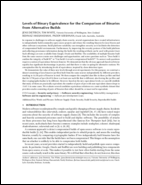
Beyond bitwise equality for Reproducible Builds? Jens Dietrich, Tim White, of Victoria University of Wellington, New Zealand along with Behnaz Hassanshahi and Paddy Krishnan of Oracle Labs Australia published a paper entitled Levels of Binary Equivalence for the Comparison of Binaries from Alternative Builds :
The availability of multiple binaries built from the same sources creates new challenges and opportunities, and raises questions such as: Does build A confirm the integrity of build B? or Can build A reveal a compromised build B? . To answer such questions requires a notion of equivalence between binaries. We demonstrate that the obvious approach based on bitwise equality has significant shortcomings in practice, and that there is value in opting for alternative notions. We conceptualise this by introducing levels of equivalence, inspired by clone detection types.
A PDF of the paper is freely available.

Two Ways to Trustworthy at SeaGL 2024 On Friday 8th November, Vagrant Cascadian will present a talk entitled Two Ways to Trustworthy at SeaGL in Seattle, WA. Founded in 2013, SeaGL is a free, grassroots technical summit dedicated to spreading awareness and knowledge about free source software, hardware and culture. Vagrant s talk:
[ ] delves into how two project[s] approaches fundamental security features through Reproducible Builds, Bootstrappable Builds, code auditability, etc. to improve trustworthiness, allowing independent verification; trustworthy projects require little to no trust. Exploring the challenges that each project faces due to very different technical architectures, but also contextually relevant social structure, adoption patterns, and organizational history should provide a good backdrop to understand how different approaches to security might evolve, with real-world merits and downsides.

Number of cores affected Android compiler output Fay Stegerman wrote that the cause of the Android toolchain bug from September s report that she reported to the Android issue tracker has been found and the bug has been fixed.
the D8 Java to DEX compiler (part of the Android toolchain) eliminated a redundant field load if running the class s static initialiser was known to be free of side effects, which ended up accidentally depending on the sharding of the input, which is dependent on the number of CPU cores used during the build.
To make it easier to understand the bug and the patch, Fay also made a small example to illustrate when and why the optimisation involved is valid.

On our mailing list On our mailing list this month:

diffoscope diffoscope is our in-depth and content-aware diff utility that can locate and diagnose reproducibility issues. This month, Chris Lamb made the following changes, including preparing and uploading versions 279, 280, 281 and 282 to Debian:
  • Ignore errors when listing .ar archives (#1085257). [ ]
  • Don t try and test with systemd-ukify in the Debian stable distribution. [ ]
  • Drop Depends on the deprecated python3-pkg-resources (#1083362). [ ]
In addition, Jelle van der Waa added support for Unified Kernel Image (UKI) files. [ ][ ][ ] Furthermore, Vagrant Cascadian updated diffoscope in GNU Guix to version 282. [ ][ ]

IzzyOnDroid passed 25% reproducible apps The IzzyOnDroid project has reached a good milestone by reaching over 25% of the ~1,200 Android apps provided by their repository (of official APKs built by the original application developers) having been confirmed to be reproducible by a rebuilder.

Distribution work In Debian this month:
  • Holger Levsen uploaded devscripts version 2.24.2, including many changes to the debootsnap, debrebuild and reproducible-check scripts. This is the first time that debrebuild actually works (using sbuild s unshare backend). As part of this, Holger also fixed an issue in the reproducible-check script where a typo in the code led to incorrect results [ ]
  • Recently, a news entry was added to snapshot.debian.org s homepage, describing the recent changes that made the system stable again:
    The new server has no problems keeping up with importing the full archives on every update, as each run finishes comfortably in time before it s time to run again. [While] the new server is the one doing all the importing of updated archives, the HTTP interface is being served by both the new server and one of the VM s at LeaseWeb.
    The entry list a number of specific updates surrounding the API endpoints and rate limiting.
  • Lastly, 12 reviews of Debian packages were added, 3 were updated and 18 were removed this month adding to our knowledge about identified issues.
Elsewhere in distribution news, Zbigniew J drzejewski-Szmek performed another rebuild of Fedora 42 packages, with the headline result being that 91% of the packages are reproducible. Zbigniew also reported a reproducibility problem with QImage. Finally, in openSUSE, Bernhard M. Wiedemann published another report for that distribution.

Website updates There were an enormous number of improvements made to our website this month, including:
  • Alba Herrerias:
    • Improve consistency across distribution-specific guides. [ ]
    • Fix a number of links on the Contribute page. [ ]
  • Chris Lamb:
  • hulkoba
  • James Addison:
    • Huge and significant work on a (as-yet-merged) quickstart guide to be linked from the homepage [ ][ ][ ][ ][ ]
    • On the homepage, link directly to the Projects subpage. [ ]
    • Relocate dependency-drift notes to the Volatile inputs page. [ ]
  • Ninette Adhikari:
    • Add a brand new Success stories page that highlights the success stories of Reproducible Builds, showcasing real-world examples of projects shipping with verifiable, reproducible builds . [ ][ ][ ][ ][ ][ ]
  • Pol Dellaiera:
    • Update the website s README page for building the website under NixOS. [ ][ ][ ][ ][ ]
    • Add a new academic paper citation. [ ]
Lastly, Holger Levsen filed an extensive issue detailing a request to create an overview of recommendations and standards in relation to reproducible builds.

Reproducibility testing framework The Reproducible Builds project operates a comprehensive testing framework running primarily at tests.reproducible-builds.org in order to check packages and other artifacts for reproducibility. In October, a number of changes were made by Holger Levsen, including:
  • Add a basic index.html for rebuilderd. [ ]
  • Update the nginx.conf configuration file for rebuilderd. [ ]
  • Document how to use a rescue system for Infomaniak s OpenStack cloud. [ ]
  • Update usage info for two particular nodes. [ ]
  • Fix up a version skew check to fix the name of the riscv64 architecture. [ ]
  • Update the rebuilderd-related TODO. [ ]
In addition, Mattia Rizzolo added a new IP address for the inos5 node [ ] and Vagrant Cascadian brought 4 virt nodes back online [ ].

Supply-chain security at Open Source Summit EU The Open Source Summit EU took place recently, and covered plenty of topics related to supply-chain security, including:

Upstream patches The Reproducible Builds project detects, dissects and attempts to fix as many currently-unreproducible packages as possible. We endeavour to send all of our patches upstream where appropriate. This month, we wrote a large number of such patches, including:

Finally, If you are interested in contributing to the Reproducible Builds project, please visit our Contribute page on our website. However, you can get in touch with us via:

Thorsten Alteholz: My Debian Activities in October 2024

FTP master This month I accepted 398 and rejected 22 packages. The overall number of packages that got accepted was 441. In case your RM bug is not closed within a month, you can assume that either the conversion of the subject of the bug email to the corresponding dak command did not work or you still need to take care of reverse dependencies. The dak command related to your removal bug can be found here. Unfortunately the bahavior of some project members caused a decline of motivation of team members to work on these bugs. When I look at these bugs, I just copy and paste the above mentioned dak commands. If they don t work, I don t have the time to debug what is going wrong. So please read the docs and take care of it yourself. Please also keep in mind that you need to close the bug or set a moreinfo tag if you don t want anybody to act on your removal bug. Debian LTS This was my hundred-twenty-fourth month that I did some work for the Debian LTS initiative, started by Raphael Hertzog at Freexian. During my allocated time I uploaded or worked on: Last but not least I did a week of FD this month and attended the monthly LTS/ELTS meeting. Debian ELTS This month was the seventy-fifth ELTS month. During my allocated time I uploaded or worked on: I also did a week of FD and attended the monthly LTS/ELTS meeting. Debian Printing Unfortunately I didn t found any time to work on this topic. Debian Matomo Unfortunately I didn t found any time to work on this topic. Debian Astro Unfortunately I didn t found any time to work on this topic. Debian IoT This month I uploaded new upstream or bugfix versions of: Debian Mobcom This month I uploaded new packages or new upstream or bugfix versions of: misc This month I uploaded new upstream or bugfix versions of:

3 November 2024

Guido G nther: Free Software Activities October 2024

Another short status update of what happened on my side last month. Besides a phosh bugfix release improving text input and selection was a prevalent pattern again resulting in improvements in the compositor, the OSK and some apps. phosh phoc phosh-mobile-settings libphosh-rs phosh-osk-stub phosh-osk-data xdg-desktop-portal-phosh Debian ModemManager Calls GTK feedbackd Chatty libcmatrix phosh-ev git-buildpackage Unified push specification swipeGuess wlr-clients iotas (Note taking app) Flare (Signal app) xdg-desktop-portal Reviews This is not code by me but reviews on other peoples code. The list is fairly incomplete, hope to improve on this in the upcoming months: Help Development If you want to support my work see donations. This includes a list of hardware we want to improve support for. Thanks a lot to all current and past donors.

24 October 2024

Emmanuel Kasper: back to blogging and running a feed reader as a containerized systemd service

After reading about Jonathan McDowell feed reader install and the back to blogging initiative, I decided to install a feed reader to follow all those nice blog posts. With a feed reader you can compose your own feed of news based on blog posts, websites, mastodon toots. And then you are independant from ad oriented ranking algorithms of social networks. Since Jonathan used FreshRSS as a feed reader, I started with the same software. On a quick glance on its github page, it sounded like a good project:
  • active contributions
  • different channels for stable and latest version of the software
  • container images pointing to the stable release
  • support multiple databases for storage, including PostgreSQL
  • correct documentation mentioning security caveats
I prefer to do the container image installation using podman since:
  • upgrades from FreshRSS are easy to do and can be done separately from operating system upgrades
  • I do not mess my based operating system with php (subjective) and in case of a compromized freshrss, the freshrss/apache install would be still restrained to its own Linux namespaces, separated from the rest of the system.
Podman is image compatible with Docker as they both implement the OCI runtime specification, and have a nearly identical command line interface. This installation will be done on a Debian server, but should work too on any Linux distribution. Initial setup
  • start a container image based on the start command provided by the FreshRSS project. The podman command line is nearly identical to the docker command line, excepts that podman expects the fully qualified domain name associated with the container image, and I chose to run the freshrss container on the localhost interface only. I also use a defined version tag, because using the latest tag makes it complicated to track which exact ersion I have installed.
# podman pull docker.io/freshrss/freshrss:1.20.1
# podman run --detach --restart unless-stopped --log-opt max-size=10m \
  --publish 127.0.0.1:8081:80 \
  --env TZ=Europe/Paris \
  --env 'CRON_MIN=1,31' \
  --volume freshrss_data:/var/www/FreshRSS/data \
  --volume freshrss_extensions:/var/www/FreshRSS/extensions \
  --name freshrss \
  docker.io/freshrss/freshrss:1.20.1
  • verify where the podman volumes have been created. This is where the user data of freshrss will be stored.
# podman volume ls
# podman volume inspect freshrss_data
  • now that freshrss is installed, you can start its configuration wizard at localhost:8081. You should keep the default sqlite choice
  • finally after running the wizard, you can login again and add some feeds
  • verify that your config has been stored outside the container, and inside the volume (so that it will not be erased in case of upgrages)
# ls -l /var/lib/containers/storage/volumes/freshrss_data/_data/users/
  • verify the state of sqlite database
echo '.tables'  sqlite3  /var/lib/containers/storage/volumes/freshrss_data/_data/users/<your freshrss user>/db.sqlite 
category  entry     entrytag  entrytmp  feed      tag
Going with FreshRSS in Production Podman has this very nice feature that it can generate a systemd unit from a running container, and use systemd to start a container on boot. This is in contrary to docker where the docker daemon does the stop/start of containers on boot. I prefer the systemd approach as it treats containers the same way as other system services. Once the freshrss container is running we can generate a systemd unit of it with:
# podman generate systemd --new --name freshrss   tee /etc/systemd/system/container-freshrss.service
Let s stop the container we started previously, and use systemd to manage it:
# podman stop freshrss
# systemctl enable --now container-freshrss.service
We can verify that we have a listening socket on the localhost interface, on the source port 8081
# systemctl status container-freshrss.service
  ...
# ss --listening --numeric --process '( sport = 8081 )'
Netid         State           Recv-Q          Send-Q                   Local Address:Port                   Peer Address:Port         Process         
tcp           LISTEN          0               4096                         127.0.0.1:8081                        0.0.0.0:*             users:(("conmon",pid=4464,fd=5))
Nota Bene: conmon (8) is the process managing the network namespace in which fresh-rss is running, hence it is displayed as the process owning the listening socket Exposing FreshRSS to the external world We have now a running service, but we need to make it reachable from the internet. The simplest, classical way, is to create a subdomain and a VirtualHost configured as a reverse proxy to access the service at 127.0.0.1:8081. Fortunately the FreshRSS authors have documented this setup in https://github.com/FreshRSS/FreshRSS/tree/edge/Docker#alternative-reverse-proxy-using-apache and those steps are no different from a standard application behind a web reverse proxy. Upgrading freshrss container to a newer version A documentation showing how to install a piece of software is nothing when it does not show how to upgrade that said software. Installing is easy, upgrading is where the challenge is. Fortunately to the good stateless design of freshrss (everything is in the sqlite database, which is backed by a non-epheremal volume in our setup), switchting versions is a peace of cake.
# podman pull docker.io/freshrss/freshrss:1.20.2
# systemctl stop container-freshrss.service
# sed -i 's,docker.io/freshrss/freshrss:1.20.1,docker.io/freshrss/freshrss:1.20.2,' /etc/systemd/system/container-freshrss.service
# systemctl daemon-reload
# systemctl start container-freshrss.service
If you need to rollback, you just need to revert version numbers in the instruction above. Enjoy your own reader feed ! I will add the following feeds of blogs I like, let us see if I follow them better with a feed reader !

21 October 2024

Sven Hoexter: Terraform: Making Use of Precondition Checks

I'm in the unlucky position to have to deal with GitHub. Thus I've a terraform module in a project which deals with populating organization secrets in our GitHub organization, and assigning repositories access to those secrets. Since the GitHub terraform provider internally works mostly with repository IDs, not slugs (this human readable organization/repo format), we've to do some mapping in between. In my case it looks like this:
#tfvars Input for Module
org_secrets =  
    "SECRET_A" =  
        repos = [
            "infra-foo",
            "infra-baz",
            "deployment-foobar",
        ]
    "SECRET_B" =  
        repos = [
            "job-abc",
            "job-xyz",
        ]
     
 
# Module Code
/*
Limitation: The GH search API which is queried returns at most 1000
results. Thus whenever we reach that limit this approach will no longer work.
The query is also intentionally limited to internal repositories right now.
*/
data "github_repositories" "repos"  
    query           = "org:myorg archived:false -is:public -is:private"
    include_repo_id = true
 
/*
The properties of the github_repositories.repos data source queried
above contains only lists. Thus we've to manually establish a mapping
between the repository names we need as a lookup key later on, and the
repository id we got in another list from the search query above.
*/
locals  
    # Assemble the set of repository names we need repo_ids for
    repos = toset(flatten([for v in var.org_secrets : v.repos]))
    # Walk through all names in the query result list and check
    # if they're also in our repo set. If yes add the repo name -> id
    # mapping to our resulting map
    repos_and_ids =  
        for i, v in data.github_repositories.repos.names : v => data.github_repositories.repos.repo_ids[i]
        if contains(local.repos, v)
     
 
resource "github_actions_organization_secret" "org_secrets"  
    for_each        = var.org_secrets
    secret_name     = each.key
    visibility      = "selected"
    # the logic how the secret value is sourced is omitted here
    plaintext_value = data.xxx
    selected_repository_ids = [
        for r in each.value.repos : local.repos_and_ids[r]
        if can(local.repos_and_ids[r])
    ]
 
Now if we do something bad, delete a repository and forget to remove it from the configuration for the module, we receive some error message that a (numeric) repository ID could not be found. Pretty much useless for the average user because you've to figure out which repository is still in the configuration list, but got deleted recently. Luckily terraform supports since version 1.2 precondition checks, which we can use in an output-block to provide the information which repository is missing. What we need is the set of missing repositories and the validation condition:
locals  
    # Debug facility in combination with an output and precondition check
    # There we can report which repository we still have in our configuration
    # but no longer get as a result from the data provider query
    missing_repos = setsubtract(local.repos, data.github_repositories.repos.names)
 
# Debug facility - If we can not find every repository in our
# search query result, report those repos as an error
output "missing_repos"  
    value = local.missing_repos
    precondition  
        condition     = length(local.missing_repos) == 0
        error_message = format("Repos in config missing from resultset: %v", local.missing_repos)
     
 
Now you only have to be aware that GitHub is GitHub and the TF provider has open bugs, but is not supported by GitHub and you will encounter inconsistent results. But it works, even if your terraform apply failed that way.

Next.

Previous.