Search Results: "rui"

28 September 2014

Benjamin Mako Hill: Community Data Science Workshops Post-Mortem

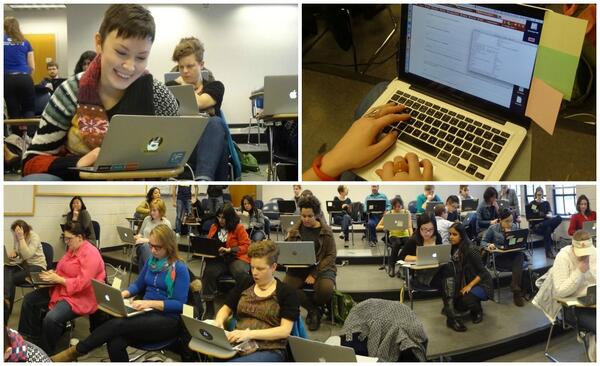
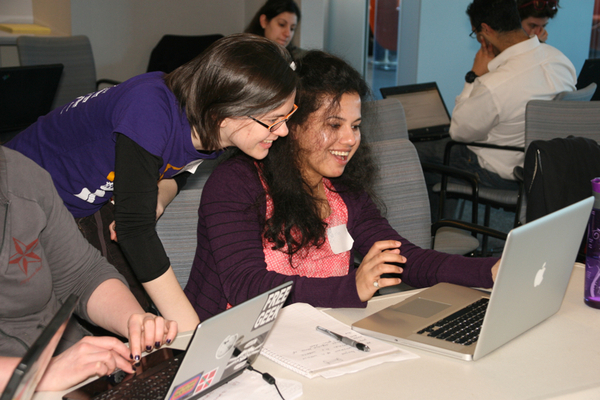
Earlier this year, I helped plan and run the Community Data Science Workshops: a series of three (and a half) day-long workshops designed to help people learn basic programming and tools for data science tools in order to ask and answer questions about online communities like Wikipedia and Twitter. You can read our initial announcement for more about the vision. The workshops were organized by myself, Jonathan Morgan from the Wikimedia Foundation, long-time Software Carpentry teacher Tommy Guy, and a group of 15 volunteer mentors who taught project-based afternoon sessions and worked one-on-one with more than 50 participants. With overwhelming interest, we were ultimately constrained by the number of mentors who volunteered. Unfortunately, this meant that we had to turn away most of the people who applied. Although it was not emphasized in recruiting or used as a selection criteria, a majority of the participants were women. The workshops were all free of charge and sponsored by the UW Department of Communication, who provided space, and the eScience Institute, who provided food. cdsw_combo_images-1The curriculum for all four session session is online: The workshops were designed for people with no previous programming experience. Although most our participants were from the University of Washington, we had non-UW participants from as far away as Vancouver, BC. Feedback we collected suggests that the sessions were a huge success, that participants learned enormously, and that the workshops filled a real need in the Seattle community. Between workshops, participants organized meet-ups to practice their programming skills. Most excitingly, just as we based our curriculum for the first session on the Boston Python Workshop s, others have been building off our curriculum. Elana Hashman, who was a mentor at the CDSW, is coordinating a set of Python Workshops for Beginners with a group at the University of Waterloo and with sponsorship from the Python Software Foundation using curriculum based on ours. I also know of two university classes that are tentatively being planned around the curriculum. Because a growing number of groups have been contacting us about running their own events based on the CDSW and because we are currently making plans to run another round of workshops in Seattle late this fall I coordinated with a number of other mentors to go over participant feedback and to put together a long write-up of our reflections in the form of a post-mortem. Although our emphasis is on things we might do differently, we provide a broad range of information that might be useful to people running a CDSW (e.g., our budget). Please let me know if you are planning to run an event so we can coordinate going forward.

24 September 2014

Matthew Garrett: My free software will respect users or it will be bullshit

I had dinner with a friend this evening and ended up discussing the FSF's four freedoms. The fundamental premise of the discussion was that the freedoms guaranteed by free software are largely academic unless you fall into one of two categories - someone who is sufficiently skilled in the arts of software development to examine and modify software to meet their own needs, or someone who is sufficiently privileged[1] to be able to encourage developers to modify the software to meet their needs.

The problem is that most people don't fall into either of these categories, and so the benefits of free software are often largely theoretical to them. Concentrating on philosophical freedoms without considering whether these freedoms provide meaningful benefits to most users risks these freedoms being perceived as abstract ideals, divorced from the real world - nice to have, but fundamentally not important. How can we tie these freedoms to issues that affect users on a daily basis?

In the past the answer would probably have been along the lines of "Free software inherently respects users", but reality has pretty clearly disproven that. Unity is free software that is fundamentally designed to tie the user into services that provide financial benefit to Canonical, with user privacy as a secondary concern. Despite Android largely being free software, many users are left with phones that no longer receive security updates[2]. Textsecure is free software but the author requests that builds not be uploaded to third party app stores because there's no meaningful way for users to verify that the code has not been modified - and there's a direct incentive for hostile actors to modify the software in order to circumvent the security of messages sent via it.

We're left in an awkward situation. Free software is fundamental to providing user privacy. The ability for third parties to continue providing security updates is vital for ensuring user safety. But in the real world, we are failing to make this argument - the freedoms we provide are largely theoretical for most users. The nominal security and privacy benefits we provide frequently don't make it to the real world. If users do wish to take advantage of the four freedoms, they frequently do so at a potential cost of security and privacy. Our focus on the four freedoms may be coming at a cost to the pragmatic freedoms that our users desire - the freedom to be free of surveillance (be that government or corporate), the freedom to receive security updates without having to purchase new hardware on a regular basis, the freedom to choose to run free software without having to give up basic safety features.

That's why projects like the GNOME safety and privacy team are so important. This is an example of tying the four freedoms to real-world user benefits, demonstrating that free software can be written and managed in such a way that it actually makes life better for the average user. Designing code so that users are fundamentally in control of any privacy tradeoffs they make is critical to empowering users to make informed decisions. Committing to meaningful audits of all network transmissions to ensure they don't leak personal data is vital in demonstrating that developers fundamentally respect the rights of those users. Working on designing security measures that make it difficult for a user to be tricked into handing over access to private data is going to be a necessary precaution against hostile actors, and getting it wrong is going to ruin lives.

The four freedoms are only meaningful if they result in real-world benefits to the entire population, not a privileged minority. If your approach to releasing free software is merely to ensure that it has an approved license and throw it over the wall, you're doing it wrong. We need to design software from the ground up in such a way that those freedoms provide immediate and real benefits to our users. Anything else is a failure.

(title courtesy of My Feminism will be Intersectional or it will be Bullshit by Flavia Dzodan. While I'm less angry, I'm solidly convinced that free software that does nothing to respect or empower users is an absolute waste of time)

[1] Either in the sense of having enough money that you can simply pay, having enough background in the field that you can file meaningful bug reports or having enough followers on Twitter that simply complaining about something results in people fixing it for you

[2] The free software nature of Android often makes it possible for users to receive security updates from a third party, but this is not always the case. Free software makes this kind of support more likely, but it is in no way guaranteed.

comment count unavailable comments

12 September 2014

Jonathan McDowell: Back from DebConf 14

I previously forgot to mention that I was planning to attend DebConf14, having missed DebConf13. This year the conference was held in Portland, OR. This is a city I've been to many times before, and enjoy, but I hadn't spent any time wandering around its city centre as a pedestrian. I have to say I really prefer DebConfs that are held in middle of city. It always seems a bit of a shame to travel some distance to somewhere new and spend all the time there in a conference venue. Plus these days I have the added lure of going out and playing Ingress in a new location. DebConf14 didn't disappoint in these respects; the location was super easy to get to from the airport via public transportation, all of the evening social events were within reasonable walking distance (I'll tend to default to walking when possible) and the talk venue/accommodation were close to each other and various eating + drinking options. Throw in the fact at Portland managed to produce some excellent weather (modulo my Ingress session on the last Saturday morning, when rained on me) and it's impossible to fault the physicalities of DebConf this year. This year the conference format was a bit different; previous years have had a week long DebConf before the week of the conference itself. This year went for a 9 day talk schedule (Saturday -> Sunday) with various gaps of hacking time interspersed. I've found it hard to justify a full two weeks away in the past, so this setup worked a lot better from my viewpoint. Also I rarely go to DebConf with a predetermined list of things to do; the stuff I work on naturally falls out of talks I attend and informal discussions I have. Having hack time throughout the conference helped me avoid feeling I was having to trade off hacking vs talks. Naturally enough a lot of my involvement at DebConf was around OpenPGP. Gunnar and I spent a fair bit of time getting Daniel up to speed with the keyring-maint team (Gunnar more than I, I'll confess). We finally set a hard timeframe for freeing Debian of older 1024 bit keys. I was introduced to the Gnuk, which is a particularly interesting piece of open specification hardware with a completely Free software stack on top if it that implements the OpenPGP smartcard spec. Currently it's limited to 2K keys but it's hoped that 4K support can be added (and I ended up spending a couple of hours after the closing talk hacking on the source and seeing how much needs to change for 4K support, aided by the very patient Niibe). These are the sort of things that really benefit from the face time that DebConf offers to the Debian project. I've said it before, but I think it's worth saying again: Debian is a bit like a huge telecommuting organization and it's my opinion that any such organization should try and ensure its members actually spend some time together on a regular basis. It improves the ability to work remotely a hell of a lot if you can actually put a face to the entity you're emailing / IRCing and have some sort of idea where they're coming from because you've spent some time with them, whether that's in talks or over dinner or just casual hallway chats. For once I also found myself considering alternative employment while at DebConf and it was incredibly useful to be able to have various conversations with both old friends and people who were there with an eye on recruitment. Thanks to all those whose ears I bent about the subject (and more on the outcome in a future post). Thank you also to the many people involved with the organization of DebConf; I've been on the periphery a few times over the years and it's given me a glimpse into the amount of hard work all of the volunteers (be they global team, local organizing team, video team or just random volunteers) put into making DebConf one of my must-attend yearly conferences. If you're at all involved in Debian and haven't attended I strongly urge you to do so - I'll see you all next year at DebConf15 in Heidelberg!

31 August 2014

Steve Kemp: A diversion - The National Health Service

Today we have a little diversion to talk about the National Health Service. The NHS is the publicly funded healthcare system in the UK.
Actually there are four such services in the UK, only one of which has this name:
  • The national health service (England)
  • Health and Social Care in Northern Ireland.
  • NHS Scotland.
  • NHS Wales.
In theory this doesn't matter, if you're in the UK and you break your leg you get carried to a hospital and you get treated. There are differences in policies because different rules apply, but the basic stuff "free health care" applies to all locations. (Differences? In Scotland you get eye-tests for free, in England you pay.)
My wife works as an accident & emergency doctor, and has recently changed jobs. Hearing her talk about her work is fascinating. The hospitals she's worked in (Dundee, Perth, Kirkcaldy, Edinburgh, Livingstone) are interesting places. During the week things are usually reasonably quiet, and during the weekend things get significantly more busy. (This might mean there are 20 doctors to hand, versus three at quieter times.) Weekends are busy largely because people fall down hills, get drunk and fight, and are at home rather than at work - where 90% of accidents occur. Of course even a "quiet" week can be busy, because folk will have heart-attacks round the clock, and somebody somewhere will always be playing with a power tool, a ladder, or both! So what was the point of this post? Well she's recently transferred to working for a childrens hospital (still in A&E) and the patiences are so very different. I expected the injuries/patients she'd see to differ. Few 10 year olds will arrive drunk (though it does happen), and few adults fall out of trees, or eat washing machine detergent, but talking to her about her day when she returns home is fascinating how many things are completely different from how I expected. Adults come to hospital mostly because they're sick, injured, or drunk. Children come to hospital mostly because their parents are paranoid. A child has a rash? Doctors are closed? Lets go to the emergency ward! A child has fallen out of a tree and has a bruise, a lump, or complains of pain? Doctors are closed? Lets go to the emergency ward! I've not kept statistics, though I wish I could, but it seems that she can go 3-5 days between seeing an actually injured or chronicly-sick child. It's the first-time-parents who bring kids in when they don't need to. Understandable, completely understandable, but at the same time I'm sure it is more than a little frustrating for all involved. Finally one thing I've learned, which seems completely stupid, is the NHS-Scotland approach to recruitment. You apply for a role, such as "A&E doctor" and after an interview, etc, you get told "You've been accepted - you will now work in Glasgow". In short you apply for a post, and then get told where it will be based afterward. There's no ability to say "I'd like to be a Doctor in city X - where I live", you apply, and get told where it is post-acceptance. If it is 100+ miles away you either choose to commute, or decline and go through the process again. This has lead to Kirsi working in hospitals with a radius of about 100km from the city we live in, and has meant she's had to turn down several posts. And that is all I have to say about the NHS for the moment, except for the implicit pity for people who have to pay (inflated and life-changing) prices for things in other countries.

23 August 2014

Antti-Juhani Kaijanaho: A milestone toward a doctorate

Yesterday I received my official diploma for the degree of Licentiate of Philosophy. The degree lies between a Master s degree and a doctorate, and is not required; it consists of the coursework required for a doctorate, and a Licentiate Thesis, in which the student demonstrates good conversance with the field of research and the capability of independently and critically applying scientific research methods (official translation of the Government decree on university degrees 794/2004, Section 23 Paragraph 2). The title and abstract of my Licentiate Thesis follow:
Kaijanaho, Antti-Juhani
The extent of empirical evidence that could inform evidence-based design of programming languages. A systematic mapping study.
Jyv skyl : University of Jyv skyl , 2014, 243 p.
(Jyv skyl Licentiate Theses in Computing,
ISSN 1795-9713; 18)
ISBN 978-951-39-5790-2 (nid.)
ISBN 978-951-39-5791-9 (PDF)
Finnish summary Background: Programming language design is not usually informed by empirical studies. In other fields similar problems have inspired an evidence-based paradigm of practice. Central to it are secondary studies summarizing and consolidating the research literature. Aims: This systematic mapping study looks for empirical research that could inform evidence-based design of programming languages. Method: Manual and keyword-based searches were performed, as was a single round of snowballing. There were 2056 potentially relevant publications, of which 180 were selected for inclusion, because they reported empirical evidence on the efficacy of potential design decisions and were published on or before 2012. A thematic synthesis was created. Results: Included studies span four decades, but activity has been sparse until the last five years or so. The form of conditional statements and loops, as well as the choice between static and dynamic typing have all been studied empirically for efficacy in at least five studies each. Error proneness, programming comprehension, and human effort are the most common forms of efficacy studied. Experimenting with programmer participants is the most popular method. Conclusions: There clearly are language design decisions for which empirical evidence regarding efficacy exists; they may be of some use to language designers, and several of them may be ripe for systematic reviewing. There is concern that the lack of interest generated by studies in this topic area until the recent surge of activity may indicate serious issues in their research approach. Keywords: programming languages, programming language design, evidence-based paradigm, efficacy, research methods, systematic mapping study, thematic synthesis
A Licentiate Thesis is assessed by two examiners, usually drawn from outside of the home university; they write (either jointly or separately) a substantiated statement about the thesis, in which they suggest a grade. The final grade is almost always the one suggested by the examiners. I was very fortunate to have such prominent scientists as Dr. Stefan Hanenberg and Prof. Stein Krogdahl as the examiners of my thesis. They recommended, and I received, the grade very good (4 on a scale of 1 5). The thesis has been accepted for publication published in our faculty s licentiate thesis series and will in due course appear has appeared in our university s electronic database (along with a very small number of printed copies). In the mean time, if anyone wants an electronic preprint, send me email at antti-juhani.kaijanaho@jyu.fi.
Figure 1 of the thesis: an overview of the mapping processFigure 1 of the thesis: an overview of the mapping process
As you can imagine, the last couple of months in the spring were very stressful for me, as I pressed on to submit this thesis. After submission, it took me nearly two months to recover (which certain people who emailed me on Planet Haskell business during that period certainly noticed). It represents the fruit of almost four years of work (way more than normally is taken to complete a Licentiate Thesis, but never mind that), as I designed this study in Fall 2010.
Figure 8 of the thesis: Core studies per publication yearFigure 8 of the thesis: Core studies per publication year
Recently, I have been writing in my blog a series of posts in which I have been trying to clear my head about certain foundational issues that irritated me during the writing of the thesis. The thesis contains some of that, but that part of it is not very strong, as my examiners put it, for various reasons. The posts have been a deliberately non-academic attempt to shape the thoughts into words, to see what they look like fixed into a tangible form. (If you go read them, be warned: many of them are deliberately provocative, and many of them are intended as tentative in fact if not in phrasing; the series also is very incomplete at this time.) I closed my previous post, the latest post in that series, as follows:
In fact, the whole of 20th Century philosophy of science is a big pile of failed attempts to explain science; not one explanation is fully satisfactory. [...] Most scientists enjoy not pondering it, for it s a bit like being a cartoon character: so long as you don t look down, you can walk on air.
I wrote my Master s Thesis (PDF) in 2002. It was about the formal method called B ; but I took a lot of time and pages to examine the history and content of formal logic. My supervisor was, understandably, exasperated, but I did receive the highest possible grade for it (which I never have fully accepted I deserved). The main reason for that digression: I looked down, and I just had to go poke the bridge I was standing on to make sure I was not, in fact, walking on air. In the many years since, I ve taken a lot of time to study foundations, first of mathematics, and more recently of science. It is one reason it took me about eight years to come up with a doable doctoral project (and I am still amazed that my department kept employing me; but I suppose they like my teaching, as do I). The other reason was, it took me that long to realize how to study the design of programming languages without going where everyone has gone before. Debian people, if any are still reading, may find it interesting that I found significant use for the dctrl-tools toolset I have been writing for Debian for about fifteen years: I stored my data collection as a big pile of dctrl-format files. I ended up making some changes to the existing tools (I should upload the new version soon, I suppose), and I wrote another toolset (unfortunately one that is not general purpose, like the dctrl-tools are) in the process. For the Haskell people, I mainly have an apology for not attending to Planet Haskell duties in the summer; but I am back in business now. I also note, somewhat to my regret, that I found very few studies dealing with Haskell. I just checked; I mention Haskell several times in the background chapter, but it is not mentioned in the results chapter (because there were not studies worthy of special notice). I am already working on extending this work into a doctoral thesis. I expect, and hope, to complete that one faster.

Daniel Pocock: Want to be selected for Google Summer of Code 2015?

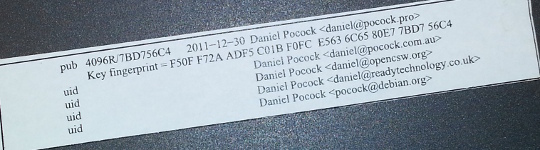
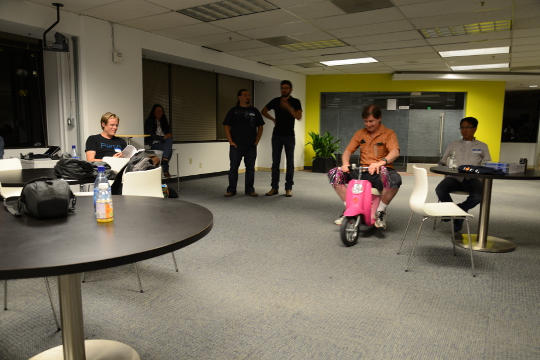
I've mentored a number of students in 2013 and 2014 for Debian and Ganglia and most of the companies I've worked with have run internships and graduate programs from time to time. GSoC 2014 has just finished and with all the excitement, many students are already asking what they can do to prepare and be selected in 2015. My own observation is that the more time the organization has to get to know the student, the more confident they can be selecting that student. Furthermore, the more time that the student has spent getting to know the free software community, the more easily they can complete GSoC. Here I present a list of things that students can do to maximize their chance of selection and career opportunities at the same time. These tips are useful for people applying for GSoC itself and related programs such as GNOME's Outreach Program for Women or graduate placements in companies. Disclaimers There is no guarantee that Google will run the program again in 2015 or any future year. There is no guarantee that any organization or mentor (including myself) will be involved until the official list of organizations is published by Google. Do not follow the advice of web sites that invite you to send pizza or anything else of value to prospective mentors. Following the steps in this page doesn't guarantee selection. That said, people who do follow these steps are much more likely to be considered and interviewed than somebody who hasn't done any of the things in this list. Understand what free software really is You may hear terms like free software and open source software used interchangeably. They don't mean exactly the same thing and many people use the term free software for the wrong things. Not all open source projects meet the definition of free software. Those that don't, usually as a result of deficiencies in their licenses, are fundamentally incompatible with the majority of software that does use genuinely free licenses. Google Summer of Code is about both writing and publishing your code and it is also about community. It is fundamental that you know the basics of licensing and how to choose a free license that empowers the community to collaborate on your code well after GSoC has finished. Please review the definition of free software early on and come back and review it from time to time. The The GNU Project / Free Software Foundation have excellent resources to help you understand what a free software license is and how it works to maximize community collaboration. Don't look for shortcuts There is no shortcut to GSoC selection and there is no shortcut to GSoC completion. The student stipend (USD $5,500 in 2014) is not paid to students unless they complete a minimum amount of valid code. This means that even if a student did find some shortcut to selection, it is unlikely they would be paid without completing meaningful work. If you are the right candidate for GSoC, you will not need a shortcut anyway. Are you the sort of person who can't leave a coding problem until you really feel it is fixed, even if you keep going all night? Have you ever woken up in the night with a dream about writing code still in your head? Do you become irritated by tedious or repetitive tasks and often think of ways to write code to eliminate such tasks? Does your family get cross with you because you take your laptop to Christmas dinner or some other significant occasion and start coding? If some of these statements summarize the way you think or feel you are probably a natural fit for GSoC. An opportunity money can't buy The GSoC stipend will not make you rich. It is intended to make sure you have enough money to survive through the summer and focus on your project. Professional developers make this much money in a week in leading business centers like New York, London and Singapore. When you get to that stage in 3-5 years, you will not even be thinking about exactly how much you made during internships. GSoC gives you an edge over other internships because it involves publicly promoting your work. Many companies still try to hide the potential of their best recruits for fear they will be poached or that they will be able to demand higher salaries. Everything you complete in GSoC is intended to be published and you get full credit for it. Imagine a young musician getting the opportunity to perform on the main stage at a rock festival. This is how the free software community works. It is a meritocracy and there is nobody to hold you back. Having a portfolio of free software that you have created or collaborated on and a wide network of professional contacts that you develop before, during and after GSoC will continue to pay you back for years to come. While other graduates are being screened through group interviews and testing days run by employers, people with a track record in a free software project often find they go straight to the final interview round. Register your domain name and make a permanent email address Free software is all about community and collaboration. Register your own domain name as this will become a focal point for your work and for people to get to know you as you become part of the community. This is sound advice for anybody working in IT, not just programmers. It gives the impression that you are confident and have a long term interest in a technology career. Choosing the provider: as a minimum, you want a provider that offers DNS management, static web site hosting, email forwarding and XMPP services all linked to your domain. You do not need to choose the provider that is linked to your internet connection at home and that is often not the best choice anyway. The XMPP foundation maintains a list of providers known to support XMPP. Create an email address within your domain name. The most basic domain hosting providers will let you forward the email address to a webmail or university email account of your choice. Configure your webmail to send replies using your personalized email address in the From header. Update your ~/.gitconfig file to use your personalized email address in your Git commits. Create a web site and blog Start writing a blog. Host it using your domain name. Some people blog every day, other people just blog once every two or three months. Create links from your web site to your other profiles, such as a Github profile page. This helps reinforce the pages/profiles that are genuinely related to you and avoid confusion with the pages of other developers. Many mentors are keen to see their students writing a weekly report on a blog during GSoC so starting a blog now gives you a head start. Mentors look at blogs during the selection process to try and gain insight into which topics a student is most suitable for. Create a profile on Github Github is one of the most widely used software development web sites. Github makes it quick and easy for you to publish your work and collaborate on the work of other people. Create an account today and get in the habbit of forking other projects, improving them, committing your changes and pushing the work back into your Github account. Github will quickly build a profile of your commits and this allows mentors to see and understand your interests and your strengths. In your Github profile, add a link to your web site/blog and make sure the email address you are using for Git commits (in the ~/.gitconfig file) is based on your personal domain. Start using PGP Pretty Good Privacy (PGP) is the industry standard in protecting your identity online. All serious free software projects use PGP to sign tags in Git, to sign official emails and to sign official release files. The most common way to start using PGP is with the GnuPG (GNU Privacy Guard) utility. It is installed by the package manager on most Linux systems. When you create your own PGP key, use the email address involving your domain name. This is the most permanent and stable solution. Print your key fingerprint using the gpg-key2ps command, it is in the signing-party package on most Linux systems. Keep copies of the fingerprint slips with you. This is what my own PGP fingerprint slip looks like. You can also print the key fingerprint on a business card for a more professional look. Using PGP, it is recommend that you sign any important messages you send but you do not have to encrypt the messages you send, especially if some of the people you send messages to (like family and friends) do not yet have the PGP software to decrypt them. If using the Thunderbird (Icedove) email client from Mozilla, you can easily send signed messages and validate the messages you receive using the Enigmail plugin. Get your PGP key signed Once you have a PGP key, you will need to find other developers to sign it. For people I mentor personally in GSoC, I'm keen to see that you try and find another Debian Developer in your area to sign your key as early as possible. Free software events Try and find all the free software events in your area in the months between now and the end of the next Google Summer of Code season. Aim to attend at least two of them before GSoC. Look closely at the schedules and find out about the individual speakers, the companies and the free software projects that are participating. For events that span more than one day, find out about the dinners, pub nights and other social parts of the event. Try and identify people who will attend the event who have been GSoC mentors or who intend to be. Contact them before the event, if you are keen to work on something in their domain they may be able to make time to discuss it with you in person. Take your PGP fingerprint slips. Even if you don't participate in a formal key-signing party at the event, you will still find some developers to sign your PGP key individually. You must take a photo ID document (such as your passport) for the other developer to check the name on your fingerprint but you do not give them a copy of the ID document. Events come in all shapes and sizes. FOSDEM is an example of one of the bigger events in Europe, linux.conf.au is a similarly large event in Australia. There are many, many more local events such as the Debian France mini-DebConf in Lyon, 2015. Many events are either free or free for students but please check carefully if there is a requirement to register before attending. On your blog, discuss which events you are attending and which sessions interest you. Write a blog during or after the event too, including photos. Quantcast generously hosted the Ganglia community meeting in San Francisco, October 2013. We had a wild time in their offices with mini-scooters, burgers, beers and the Ganglia book. That's me on the pink mini-scooter and Bernard Li, one of the other Ganglia GSoC 2014 admins is on the right. Install Linux GSoC is fundamentally about free software. Linux is to free software what a tree is to the forest. Using Linux every day on your personal computer dramatically increases your ability to interact with the free software community and increases the number of potential GSoC projects that you can participate in. This is not to say that people using Mac OS or Windows are unwelcome. I have worked with some great developers who were not Linux users. Linux gives you an edge though and the best time to gain that edge is now, while you are a student and well before you apply for GSoC. If you must run Windows for some applications used in your course, it will run just fine in a virtual machine using Virtual Box, a free software solution for desktop virtualization. Use Linux as the primary operating system. Here are links to download ISO DVD (and CD) images for some of the main Linux distributions: If you are nervous about getting started with Linux, install it on a spare PC or in a virtual machine before you install it on your main PC or laptop. Linux is much less demanding on the hardware than Windows so you can easily run it on a machine that is 5-10 years old. Having just 4GB of RAM and 20GB of hard disk is usually more than enough for a basic graphical desktop environment although having better hardware makes it faster. Your experiences installing and running Linux, especially if it requires some special effort to make it work with some of your hardware, make interesting topics for your blog. Decide which technologies you know best Personally, I have mentored students working with C, C++, Java, Python and JavaScript/HTML5. In a GSoC program, you will typically do most of your work in just one of these languages. From the outset, decide which language you will focus on and do everything you can to improve your competence with that language. For example, if you have already used Java in most of your course, plan on using Java in GSoC and make sure you read Effective Java (2nd Edition) by Joshua Bloch. Decide which themes appeal to you Find a topic that has long-term appeal for you. Maybe the topic relates to your course or maybe you already know what type of company you would like to work in. Here is a list of some topics and some of the relevant software projects:


  • System administration, servers and networking: consider projects involving monitoring, automation, packaging. Ganglia is a great community to get involved with and you will encounter the Ganglia software in many large companies and academic/research networks. Contributing to a Linux distribution like Debian or Fedora packaging is another great way to get into system administration.
  • Desktop and user interface: consider projects involving window managers and desktop tools or adding to the user interface of just about any other software.
  • Big data and data science: this can apply to just about any other theme. For example, data science techniques are frequently used now to improve system administration.
  • Business and accounting: consider accounting, CRM and ERP software.
  • Finance and trading: consider projects like R, market data software like OpenMAMA and connectivity software (Apache Camel)
  • Real-time communication (RTC), VoIP, webcam and chat: look at the JSCommunicator or the Jitsi project
  • Web (JavaScript, HTML5): look at the JSCommunicator
Before the GSoC application process begins, you should aim to learn as much as possible about the theme you prefer and also gain practical experience using the software relating to that theme. For example, if you are attracted to the business and accounting theme, install the PostBooks suite and get to know it. Maybe you know somebody who runs a small business: help them to upgrade to PostBooks and use it to prepare some reports. Make something Make some small project, less than two week's work, to demonstrate your skills. It is important to make something that somebody will use for a practical purpose, this will help you gain experience communicating with other users through Github. For an example, see the servlet Juliana Louback created for fixing phone numbers in December 2013. It has since been used as part of the Lumicall web site and Juliana was selected for a GSoC 2014 project with Debian. There is no better way to demonstrate to a prospective mentor that you are ready for GSoC than by completing and publishing some small project like this yourself. If you don't have any immediate project ideas, many developers will also be able to give you tips on small projects like this that you can attempt, just come and ask us on one of the mailing lists. Ideally, the project will be something that you would use anyway even if you do not end up participating in GSoC. Such projects are the most motivating and rewarding and usually end up becoming an example of your best work. To continue the example of somebody with a preference for business and accounting software, a small project you might create is a plugin or extension for PostBooks. Getting to know prospective mentors Many web sites provide useful information about the developers who contribute to free software projects. Some of these developers may be willing to be a GSoC mentor. For example, look through some of the following: Getting on the mentor's shortlist Once you have identified projects that are interesting to you and developers who work on those projects, it is important to get yourself on the developer's shortlist. Basically, the shortlist is a list of all students who the developer believes can complete the project. If I feel that a student is unlikely to complete a project or if I don't have enough information to judge a student's probability of success, that student will not be on my shortlist. If I don't have any student on my shortlist, then a project will not go ahead at all. If there are multiple students on the shortlist, then I will be looking more closely at each of them to try and work out who is the best match. One way to get a developer's attention is to look at bug reports they have created. Github makes it easy to see complaints or bug reports they have made about their own projects or other projects they depend on. Another way to do this is to search through their code for strings like FIXME and TODO. Projects with standalone bug trackers like the Debian bug tracker also provide an easy way to search for bug reports that a specific person has created or commented on. Once you find some relevant bug reports, email the developer. Ask if anybody else is working on those issues. Try and start with an issue that is particularly easy and where the solution is interesting for you. This will help you learn to compile and test the program before you try to fix any more complicated bugs. It may even be something you can work on as part of your academic program. Find successful projects from the previous year Contact organizations and ask them which GSoC projects were most successful. In many organizations, you can find the past students' project plans and their final reports published on the web. Read through the plans submitted by the students who were chosen. Then read through the final reports by the same students and see how they compare to the original plans. Start building your project proposal now Don't wait for the application period to begin. Start writing a project proposal now. When writing a proposal, it is important to include several things:
  • Think big: what is the goal at the end of the project? Does your work help the greater good in some way, such as increasing the market share of Linux on the desktop?
  • Details: what are specific challenges? What tools will you use?
  • Time management: what will you do each week? Are there weeks where you will not work on GSoC due to vacation or other events? These things are permitted but they must be in your plan if you know them in advance. If an accident or death in the family cut a week out of your GSoC project, which work would you skip and would your project still be useful without that? Having two weeks of flexible time in your plan makes it more resilient against interruptions.
  • Communication: are you on mailing lists, IRC and XMPP chat? Will you make a weekly report on your blog?
  • Users: who will benefit from your work?
  • Testing: who will test and validate your work throughout the project? Ideally, this should involve more than just the mentor.
If your project plan is good enough, could you put it on Kickstarter or another crowdfunding site? This is a good test of whether or not a project is going to be supported by a GSoC mentor. Learn about packaging and distributing software Packaging is a vital part of the free software lifecycle. It is very easy to upload a project to Github but it takes more effort to have it become an official package in systems like Debian, Fedora and Ubuntu. Packaging and the communities around Linux distributions help you reach out to users of your software and get valuable feedback and new contributors. This boosts the impact of your work. To start with, you may want to help the maintainer of an existing package. Debian packaging teams are existing communities that work in a team and welcome new contributors. The Debian Mentors initiative is another great starting place. In the Fedora world, the place to start may be in one of the Special Interest Groups (SIGs). Think from the mentor's perspective After the application deadline, mentors have just 2 or 3 weeks to choose the students. This is actually not a lot of time to be certain if a particular student is capable of completing a project. If the student has a published history of free software activity, the mentor feels a lot more confident about choosing the student. Some mentors have more than one good student while other mentors receive no applications from capable students. In this situation, it is very common for mentors to send each other details of students who may be suitable. Once again, if a student has a good Github profile and a blog, it is much easier for mentors to try and match that student with another project. GSoC logo generic Conclusion Getting into the world of software engineering is much like joining any other profession or even joining a new hobby or sporting activity. If you run, you probably have various types of shoe and a running watch and you may even spend a couple of nights at the track each week. If you enjoy playing a musical instrument, you probably have a collection of sheet music, accessories for your instrument and you may even aspire to build a recording studio in your garage (or you probably know somebody else who already did that). The things listed on this page will not just help you walk the walk and talk the talk of a software developer, they will put you on a track to being one of the leaders. If you look over the profiles of other software developers on the Internet, you will find they are doing most of the things on this page already. Even if you are not selected for GSoC at all or decide not to apply, working through the steps on this page will help you clarify your own ideas about your career and help you make new friends in the software engineering community.

30 June 2014

Russ Allbery: Review: The Knowledge

Review: The Knowledge, by Lewis Dartnell
Publisher: Penguin
Copyright: 2014
ISBN: 0-698-15165-8
Format: Kindle
Pages: 328
The cover pitch for The Knowledge is that technological civilization has collapsed. A war, an asteroid, a pandemic, or some other catastrophic event has ended life as we know it. Survivors have recovered enough to stabilize the population, but all the industry and infrastructure that supports the modern world has been crippled and the knowledge lost. What do they need to know to rebuild the world? (The subtitle, How to Rebuild Our World from Scratch, is deceptive. Dartnell spends a lot of time talking about what could be scavenged from the ruins after an event like a pandemic that leaves buildings and tools intact.) This brief description may bring several incorrect ideas to mind, so a few clarifications are in order. First, this is not a book about how to survive an apocalypse, or how to stabilize society afterwards. Dartnell skips over anything related to basic survival or politics, and this book would only be of limited interest to preppers. Rather, it is focused on the key concepts and key processes that underlie much of what makes up our civilization, and how those processes can be bootstrapped and recreated, hopefully much more quickly than the thousands of years they took to develop the first time around. Second, as much as I think Dartnell would have liked it to be, The Knowledge is not an instruction manual. There's just too much involved in modern machinery, metallurgy, chemistry, and other necessary science and engineering. What it is instead is a tour of the most important ideas, basic processes, and approaches that can lead to creation of an industrial economy. This means it's also a tour of the most critical technology and discoveries that we rely on for day-to-day living. Each idea presented here is a bare sketch, and would require extensive research and experimentation to put into practice. The Knowledge is not a scientific encyclopedia. Rather, it's a collection of signposts and suggested directions along with some suggestions about sequencing, with special emphasis on the ideas that were unintuitive or surprising, or which took humans much longer to stumble across than would have been necessary. I will say up front that I am quite dubious about the stated goal of this book. I'm not sure if it would be of significant assistance to people who found themselves in the circumstances that Dartnell postulates, and I'm also not sure it would be as difficult as Dartnell supposes to reconstruct these details from a good library, although the point is well-taken that most modern industrial techniques would be unavailable to a civilization starting from scratch and many historic techniques are no longer practiced and therefore not well-documented. But this book does not have to succeed at its stated goal to be worth reading. The Knowledge provides a fascinating insight into the way our current capabilities developed, other paths that development could have followed, and what building blocks are vital for the industry that we rely on. If you are like me, the first thing The Knowledge will remind you of is Minecraft, particularly with some of the mods (such as TerraFirmaCraft) that add more realistic detail to the technological bootstrapping. It's a treasure trove for anyone who might be working on that sort of mod or game. Dartnell tries to cover as much of the spectrum of technology as possible, from farming through medicine, from basic materials to industrial chemistry, and from electrical power through transportation. Each chapter necessarily covers only the highlights, the most vital technologies and the early priorities, and many of those are relatively vague pointers. But that's enough for a fascinating orientation. It's also full of memorable trivia: the huge variety of uses to which wood can be put, the difficulty in re-establishing production of industrial acids, the shelf life of gasoline, the global seed vault within the Arctic Circle, and the importance of a long-threaded screw for a lathe, just to name a few examples. In short, The Knowledge may or may not be a practical aid in rebuilding the world, but it's a lot of fun to read and full of tidbits that are fun to think about or pass on to others. It's also a great orientation in applied technology. The Knowledge is particularly fascinating if you have any interest in the simplified recreation of technological and industrial processes, such as in Minecraft and similar games. For authors of Minecraft mods who are aiming for realism, it might even be required reading. I'd love to see more mods based heavily on the approaches described in this book. The Knowledge also conveys, better than any book or course I've seen, an intuitive feel for the amazing complexity and ingenuity underlying industrial technology. I pre-ordered a copy of this book as soon as I heard about it, and I was not disappointed. Despite my certainty that I would be one of the early casualties in any general social collapse, I thoroughly enjoyed reading it, and would like to read it again at some point. Recommended, albeit with the caveat that I do not have the background required to verify any of the facts in this book, and am assuming that Dartnell has done his research properly. Rating: 9 out of 10

23 June 2014

Daniel Pocock: Bendigo: a risk of becoming the Australian capital of Islamophobia?

I spent most of my high-school years in a small town called Bendigo in Australia. These days, I'm living in the centre of Europe, Switzerland. Oddly enough, a more than trivial number of people in Bendigo are now trying to imitate one of the darkest moments in Switzerland's history, a crusade to prevent the construction of a mosque. At least in Switzerland, they tried to be slightly diplomatic: the official question on the referendum was about banning minarets rather than a whole religion. The placards in the street were more explicit, with the silhouette of blackened minarets arranged to resemble a field of inter-continental ballistic missiles: In Bendigo, however, the gloves are off. One councillor has already declared "I wouldn't want to live near a mosque. Would you?" Will Bendigo ban the internet too? In Australia and Britain, the press has been fascinated with the recent release of a Jihad video on Youtube created by Brits and Aussies fighting in Syria. Fear-mongering fanatics claim the mosque will bring jihadists to Bendigo. If they genuinely believe that, shouldn't they be pushing to censor or ban the internet too, so that the children of Bendigo won't get their hands on these recruitment videos? Weeds will grow if nobody plucks them out The fact is, most of these anti-Islam campaigners are nutcases or opportunists looking for a political career. Hundreds of millions of muslims worship their God in peace every day. As the referendum in Switzerland demonstrates, if good people do nothing, the nutcases will flourish like weeds. Only 30% of Swiss people voted to ban minarets, but with 47% of people not voting at all, the nutcases won. Citizens of Bendigo who value their human rights (which includes freedom of religion) would be wise to avoid complacency. Even though the mosque may now have council approval, sinister groups from around the whole country are now conspiring to overturn the decision or perhaps just make the town a focal point for their Islamophobia campaigns.

22 June 2014

Simon Josefsson: OpenPGP Key Transition Statement

I have created a new OpenPGP key 54265e8c and will be transitioning away from my old key. If you have signed my old key, I would appreciate signatures on my new key as well. I have created a transition statement that can be downloaded from https://josefsson.org/key-transition-2014-06-22.txt. Below is the signed statement.
-----BEGIN PGP SIGNED MESSAGE-----
Hash: SHA512
OpenPGP Key Transition Statement for Simon Josefsson
I have created a new OpenPGP key and will be transitioning away from
my old key.  The old key has not been compromised and will continue to
be valid for some time, but I prefer all future correspondence to be
encrypted to the new key, and will be making signatures with the new
key going forward.
I would like this new key to be re-integrated into the web of trust.
This message is signed by both keys to certify the transition.  My new
and old keys are signed by each other.  If you have signed my old key,
I would appreciate signatures on my new key as well, provided that
your signing policy permits that without re-authenticating me.
The old key, which I am transitioning away from, is:
pub   1280R/B565716F 2002-05-05
      Key fingerprint = 0424 D4EE 81A0 E3D1 19C6  F835 EDA2 1E94 B565 716F
The new key, to which I am transitioning, is:
pub   3744R/54265E8C 2014-06-22
      Key fingerprint = 9AA9 BDB1 1BB1 B99A 2128  5A33 0664 A769 5426 5E8C
The entire key may be downloaded from: https://josefsson.org/54265e8c.txt
To fetch the full new key from a public key server using GnuPG, run:
  gpg --keyserver keys.gnupg.net --recv-key 54265e8c
If you already know my old key, you can now verify that the new key is
signed by the old one:
  gpg --check-sigs 54265e8c
If you are satisfied that you've got the right key, and the User IDs
match what you expect, I would appreciate it if you would sign my key:
  gpg --sign-key 54265e8c
You can upload your signatures to a public keyserver directly:
  gpg --keyserver keys.gnupg.net --send-key 54265e8c
Or email simon@josefsson.org (possibly encrypted) the output from:
  gpg --armor --export 54265e8c
If you'd like any further verification or have any questions about the
transition please contact me directly.
To verify the integrity of this statement:
  wget -q -O- https://josefsson.org/key-transition-2014-06-22.txt gpg --verify
/Simon
-----BEGIN PGP SIGNATURE-----
Version: GnuPG v1.4.12 (GNU/Linux)
iLwEAQEKAAYFAlOnV+AACgkQ7aIelLVlcW89XgUAljJgYfReyR9/bU+Om6UHUttt
CAOgSRqdcQSQ2hT69vzuhb/bc8CslIQcBtGqTgxDFsxEFhbm5zKn+tSzy5MHNHqt
MsqHcZjlYuYVhMXDhka+cfyhtd9zIxjVE5vk8v+GqEGoh8DGYq0vPy3VfvcSz5Z3
MSUpSj8gN00jlU1z4nad3maEq0ApvsLr8EsLZmtxF5TNFvzJ8mmwY+gHBGHjVYkB
8AQBAQoABgUCU6dX4AAKCRAGZKdpVCZejD1eDp46XGL2puMp0le2OF75WIUW8xqf
TMiZeB99ruk3P/jvuLnGPP2J5o7SIKE50FkMEss0yvxi6jBlHk+cJeKWGXVjBpxU
0QHq063NU+kjbMYwDfi5ZxXqaKeYODJm8Xmfh3d7lRaWF5rUOosR8nC/OROSrhg4
TjlAbvbxpQsls/JPbbporK2gbAtMlzJPD8zC8z/dT+t0qjlce8fADugblVW3bACC
Kl53X4XpojzNd/U19tSXkIBdNY/GVJqci+iruiJ1WGARF9ocnIXVuNXsfyt7UGq4
UiM/AeDVzI76v1QnE8WpsmSXzi2zXe3VahUPhOU2nPDoL53ggiVsTY3TwilvQLfX
Av/74PIaEtCi1g23YeojQlpdYzcWfnE+tUyTSNwPIBzyzHvFAHNg1Pg0KKUALsD9
P7EjrMuz63z2276EBKX8++9GnQQNCNfdHSuX4WGrBx2YgmOOqRdllMKz6pVMZdJO
V+gXbCMx0D5G7v50oB58Mb5NOgIoOnh3IQhJ7LkLwmcdG39yCdpU+92XbAW73elV
kmM8i0wsj5kDUU2ys32Gj2HnsVpbnh3Fvm9fjFJRbbQL/FxNAjzNcHe4cF3g8hTb
YVJJlzhmHGvd7HvXysJJaa0=
=ZaqY
-----END PGP SIGNATURE-----
flattr this!

10 June 2014

Steve Kemp: I did get a job

In my previous blog-post I mentioned, briefly, that I'd posted a couple of adverts on Reddit looking for work. To give more detail I did three things: The advertisement was set to be shown in /r/edinburgh (where I live), and /r/sysadmin (where I thought some people might look if they were struggling for help). The advertising on Reddit was painless to setup, and the traffic stats were interesting, but even though this worked out well I'm a little loathe to repeat the process - since the "non-sterling transaction fee" from my bank effectively doubled my budget. I received a few (private) emails and comments, along with the expected grammar corrections. The end result was that I received contact from an American company founder who seemed interested. He allowed me to write some code to solve a fun problem, appeared to enjoy the code I sent (Ruby code for dealing with (exim) email spam, that's as specific as I will be). The end result was a three month contract, which we obviously hope will lead to more permanent work. Anyway I thought this was an atypical route to find a work, and was about a million times nicer than working with recruiters, so .. consider this documentation! In other news it is now 10pm and I need to go to the gym and pub, in that order.

7 May 2014

Julien Danjou: Making of The Hacker's Guide to Python

As promised, today I would like to write a bit about the making of The Hacker's Guide to Python. It has been a very interesting experimentation, and I think it is worth sharing it with you. The inspiration All started out at the beginning of August 2013. I was spending my summer, as the rest of the year, hacking on OpenStack. As years passed, I got more and more deeply involved in the various tools that we either built or contributed to within the OpenStack community. And I somehow got the feeling that my experience with Python, the way we used it inside OpenStack and other applications during these last years was worth sharing. Worth writing something bigger than a few blog posts. The OpenStack project is doing code reviews, and therefore so did I for almost two years. That inspired a lot of topics, like the definitive guide to method decorators that I wrote at the time I started the hacker's guide. Stumbling upon the same mistakes or misunderstanding over and over is, somehow, inspiring. I also stumbled upon Nathan Barry's blog and book Authority which were very helpful to get started and some sort of guideline. All of that brought me enough ideas to start writing a book about Python software development for people already familiar with the language. The writing The first thing I started to do is to list all the topics I wanted to write about. The list turned out to have subjects that had no direct interest for a practical guide. For example, on one hand, very few developers know in details how metaclasses work, but on the other hand, I never had to write a metaclass during these last years. That's the kind of subject I decided not to write about, dropped all subjects that I felt were not going to help my reader to be more productive. Even if they could be technically interesting.
Then, I gathered all problems I saw during the code reviews I did during these last two years. Some of them I only recalled in the days following the beginning of that project. But I kept adding them to the table of contents, reorganizing stuff as needed. After a couple of weeks, I had a pretty good overview of the contents that there I will write about. All I had to do was to fill in the blank (that sounds so simple now). The entire writing of the took hundred hours spread from August to November, during my spare time. I had to stop all my other side projects for that. The interviews While writing the book, I tried to parallelize every thing I could. That included asking people for interviews to be included in the book. I already had a pretty good list of the people I wanted to feature in the book, so I took some time as soon as possible to ask them, and send them detailed questions. I discovered two categories of interviewees. Some of them were very fast to answer ( 1 week), and others were much, much slower. A couple of them even set up Git repositories to answer the questions, because that probably looked like an entire project to them. :-) So I had to not lose sight and kindly ask from time to time if everything was alright, and at some point started to kindly set some deadline. In the end, the quality of the answers was awesome, and I like to think that was because I picked the right people! The proof-reading Once the book was finished, I somehow needed to have people proof-reading it. This was probably the hardest part of this experiment. I needed two different types of reviews: technical reviews, to check that the content was correct and interesting, and language review. That one is even more important since English is not my native language. Finding technical reviewers seemed easy at first, as I had ton of contacts that I identified as being able to review the book. I started by asking a few people if they would be comfortable reading a simple chapter and giving me feedbacks. I started to do that in September: having the writing and the reviews done in parallel was important to me in order to minimize latency and the book's release delay. All people I contacted answered positively that they would be interested in doing a technical review of a chapter. So I started to send chapters to them. But in the end, only 20% replied back. And even after that, a large portion stopped reviewing after a couple of chapters. Don't get me wrong: you can't be mad at people not wanting to spend their spare time in book edition like you do. However, from the few people that gave their time to review a few chapters, I got tremendous feedback, at all level. That's something that was very important and that helped a lot getting confident. Writing a book alone for months without having anyone taking a look upon your shoulder can make you doubt that you are creating something worth it. As far as English proof-reading, I went ahead and used ODesk to recruit a professional proof-reader. I looked for people with the right skills: a good English level (being a native English speaker at least), be able to understand what the book was about, and being able to work with correct delays. I had mixed results from the people I hired, but I guess that's normal. The only error I made was not to parallelize those reviews enough, so I probably lost a couple of months on that. The toolchain
While writing the book, I did a few breaks to build a toolchain. What I call a toolchain is set of tools used to render the final PDF, EPUB and MOBI files of the guide. After some research, I decided to settle on AsciiDoc, using the DocBook output, which is then being transformed to LaTeX, and then to PDF, or either to EPUB directly. I realy on Calibre to convert the EPUB file to MOBI. It took me a few hours to do what I wanted, using some magic LaTeX tricks to have a proper render, but it was worth it and I'm particularly happy with the result. For the cover design, I asked my talented friend Nicolas to do something for me, and he designed the wonderful cover and its little snake! The publishing Publishing in an interesting topic people kept asking me about. This is what I had to answer a few dozens of time: I never had any plan for asking an editor to publish this book. Nowadays, asking an editor to publish a book feels to me like asking a major company to publish a CD. It feels awkward. However, don't get me wrong: there can be a few upsides of having an editor. They will find reviewers and review your book for you. Having the book review handled for you is probably a very good thing, considering how it was hard to me to get that in place. It can be especially important for a technical book. Also, your book may end up in brick and mortar stores and be part of a collection, both improving visibility. That may improve your book's selling, though the editor and all the intermediaries are going to keep the largest amount of the money anyway. I've heard good stories about people using Gumroad to sell electronic contents, so after looking for competitors in that market, I picked them. I also had the idea to sell the book with Bitcoins, so I settled on Coinbase, because they have a nice API to do that. Setting up everything was quite straight-forward, especially with Gumroad. It only took me a few hours to do so. Writing the Coinbase application took a few hours too. My initial plan was to only sell online an electronic version. On the other hand, since I kept hearing that a printed version should exist, I decided to give it a try. I chose to work with Lulu because I knew people using it, and it was pretty simple to set up. The launch Once I had everything ready, I built the selling page and connected everything between Mailchimp, Gumroad, Coinbase, Google Analytics, etc. Writing the launch email was really exciting. I used Mailchimp feature to send the launch mail in several batches, just to have some margin in case of a sudden last minute problem. But everything went fine. Hurrah! I distributed around 200 copies of the ebook in the first 48 hours, for about $5000. That covered all the cost I had from the writing the book, and even more, so I was already pretty happy with the launch.
Retrospective In retrospect, something that I didn't do the best way possible is probably to build a solid mailing list of people interested, and to build an important anticipation and incentive to buy the book at launch date. My mailing list counted around 1500 people subscribed because they were interested in the launch of the book subscribed; in the end, probably only 10-15% of them bought the book during the launch, which is probably a bit lower than what I could expect. But more than a month later, I distributed in total almost 500 copies of the book (including physical units) for more than $10000, so I tend to think that this was a success. I still sell a few copies of the book each weeks, but the number are small compared to the launch. I sold less than 10 copies of the ebook using Bitcoins, and I admit I'm a bit disappointed and surprised about that. Physical copies represent 10% of the book distribution. It's probably a lot lower than most people that pushed me to do it thought it would be. But it is still higher of what I thought it would be. So I still would advise to have a paperback version of your book. At least because it's nice to have it in your library.
I only got positive feedbacks, a few typo notices, and absolutely no refund demand, which I really find amazing. The good news is also that I've been contacted with a couple of Korean and Chinese editors to get the book translated and published in those countries. If everything goes well, the book should be translated in the upcoming months and be available on these markets in 2015! If you didn't get a copy, it's still time to do so!

1 May 2014

MJ Ray: The Kelly Lessons in About 1555 Characters

So the Kelly report of the independent review into the events leading to the Co-operative Bank s capital shortfall was published yesterday. During the day, I was putting odd bits from it out in 140 characters with the hashtags #coops #kellylessons. Here they are in one more permanent place. How many of these lessons has your organisation whether a co-op or not learned?
  1. Running a full-service bank is a complex business Bank failed to understand the limits of its own capability
  2. The most important task for any board is to put in place the right Executive leadership for the business
  3. Ownership of a regulated bank requires a clearly articulated statement addressing mgmt & gov nance relationship
  4. Failures in board oversight are inevitable if the criteria used to elect do not require the necessary skills
  5. A bank board must include sufficient numbers of technically competent directors
  6. Boards need good m gmt info and to demand it if it is not forthcoming. Failure to obtain explains failings
  7. A bank should develop&implement robust risk gov nce&oversight and an appropriate control framework
  8. IT transformation keep as simple as poss , phase delivery.., deploy the right resources, plan for contingencies
  9. Bank should have paid closer attention and responded with greater urgency to what the Regulator told it
  10. Pay careful attention to the advice of external advisors. The Group ignored well-founded inconvenient advice
  11. Postponing dealing with problems is almost never a sustainable solution.
  12. Values need to be translated into meaningful guidance The Bank s ethical positioning should be more apparent
  13. Mantras about scale and ethics are no substitute for strategies grounded in a real understanding
  14. Talent management is critical Lack of capability driven by weaknesses in its recruitment&subsequent m gmt
  15. Tolerating culture of underperformance, weak transparency and a lack of accountability, constrains an organisation
Are there other lessons that you would add?

13 April 2014

C.J. Adams-Collier: When was the last time you upgraded from squeeze to wheezy?

Wow. 3G delta. I haven t booted this laptop for a while I think I m finally ready to make the move from gnome2 to gnome3. There are bits that still annoy me, but I think it s off to a good start. Upgrading perl from 5.10 to 5.14.
cjac@calcifer:~$ sudo apt-get dist-upgrade
Reading package lists... Done
Building dependency tree       
Reading state information... Done
Calculating upgrade... Done
The following packages will be REMOVED:
  at-spi capplets-data compiz compiz-gnome compiz-gtk defoma deskbar-applet g++-4.3 gcc-4.3 gcj-4.4-base gcj-4.4-jre gcj-4.4-jre-headless gcj-4.4-jre-lib
  gdm3 gir1.0-clutter-1.0 gir1.0-freedesktop gir1.0-glib-2.0 gir1.0-gstreamer-0.10 gir1.0-gtk-2.0 gir1.0-json-glib-1.0 glade-gnome gnome-about
  gnome-accessibility gnome-applets gnome-core gnome-panel gnome-utils-common lib32readline5-dev libbrasero-media0 libclass-mop-perl libdb4.7-java
  libdb4.8-dev libdevhelp-1-1 libdigest-sha1-perl libdirectfb-dev libebook1.2-9 libecal1.2-7 libedata-book1.2-2 libedata-cal1.2-7 libedataserverui1.2-8
  libepc-1.0-2 libepc-ui-1.0-2 libept1 libgcj10 libgcj10-awt libgd2-noxpm libgstfarsight0.10-0 libgtkhtml-editor0 libjpeg62-dev libmetacity-private0
  libmono-accessibility1.0-cil libmono-bytefx0.7.6.1-cil libmono-cairo1.0-cil libmono-cil-dev libmono-corlib1.0-cil libmono-cscompmgd7.0-cil
  libmono-data-tds1.0-cil libmono-data1.0-cil libmono-debugger-soft0.0-cil libmono-getoptions1.0-cil libmono-i18n-west1.0-cil libmono-i18n1.0-cil
  libmono-ldap1.0-cil libmono-microsoft7.0-cil libmono-npgsql1.0-cil libmono-oracle1.0-cil libmono-peapi1.0-cil libmono-posix1.0-cil
  libmono-relaxng1.0-cil libmono-security1.0-cil libmono-sharpzip0.6-cil libmono-sharpzip0.84-cil libmono-sqlite1.0-cil libmono-system-data1.0-cil
  libmono-system-ldap1.0-cil libmono-system-messaging1.0-cil libmono-system-runtime1.0-cil libmono-system-web1.0-cil libmono-system1.0-cil
  libmono-webbrowser0.5-cil libmono-winforms1.0-cil libmono1.0-cil libmtp8 libnautilus-extension1 libpango1.0-common libperl5.10 libpolkit-gtk-1-0
  libpulse-browse0 librpm1 librpmbuild1 libsdl1.2-dev libsdl1.2debian-pulseaudio libseed0 libstdc++6-4.3-dev libtelepathy-farsight0 libupnp3 libvlccore4
  libxmlrpc-c3 linphone-nox linux-headers-2.6.32-5-amd64 linux-sound-base metacity mono-2.0-devel mono-devel mysql-client-5.1 mysql-query-browser
  mysql-server-5.1 mysql-server-core-5.1 openoffice.org-base-core openoffice.org-core openoffice.org-gcj openoffice.org-report-builder-bin
  openoffice.org-style-andromeda php5-suhosin portmap python-beagle python-brasero python-docky python-encutils python-evince python-gnomeapplet
  python-gtop python-mediaprofiles python-metacity python-totem-plparser seahorse-plugins smbfs speedbar totem-coherence tqsllib1c2a unixcw vlc
  xserver-xorg-video-nv
The following NEW packages will be installed:
  accountsservice acl aisleriot apg aptdaemon-data aptitude-common asterisk-core-sounds-en asterisk-modules asterisk-moh-opsound-gsm at-spi2-core
  ax25-node bluez btrfs-tools caribou caribou-antler chromium chromium-inspector colord console-setup console-setup-linux cpp-4.6 cpp-4.7 crda
  cryptsetup-bin cups-filters db-util db5.1-util dconf-gsettings-backend dconf-service dconf-tools distro-info-data docutils-common docutils-doc enchant
  extlinux finger folks-common fonts-cantarell fonts-droid fonts-freefont-ttf fonts-horai-umefont fonts-lg-aboriginal fonts-liberation fonts-lyx
  fonts-opensymbol fonts-sil-gentium fonts-sil-gentium-basic fonts-sipa-arundina fonts-stix fonts-takao fonts-takao-gothic fonts-takao-mincho
  fonts-thai-tlwg fonts-tlwg-garuda fonts-tlwg-kinnari fonts-tlwg-loma fonts-tlwg-mono fonts-tlwg-norasi fonts-tlwg-purisa fonts-tlwg-sawasdee
  fonts-tlwg-typewriter fonts-tlwg-typist fonts-tlwg-typo fonts-tlwg-umpush fonts-tlwg-waree fonts-umeplus fuse g++-4.7 g++-4.7-multilib gcc-4.6
  gcc-4.6-base gcc-4.7 gcc-4.7-base gcc-4.7-multilib gcj-4.7-base gcj-4.7-jre gcj-4.7-jre-headless gcj-4.7-jre-lib gconf-service gcr
  gir1.2-accountsservice-1.0 gir1.2-atk-1.0 gir1.2-atspi-2.0 gir1.2-caribou-1.0 gir1.2-clutter-1.0 gir1.2-clutter-gst-1.0 gir1.2-cogl-1.0
  gir1.2-coglpango-1.0 gir1.2-evince-3.0 gir1.2-folks-0.6 gir1.2-freedesktop gir1.2-gck-1 gir1.2-gconf-2.0 gir1.2-gcr-3 gir1.2-gdesktopenums-3.0
  gir1.2-gdkpixbuf-2.0 gir1.2-gee-1.0 gir1.2-gkbd-3.0 gir1.2-glib-2.0 gir1.2-gmenu-3.0 gir1.2-gnomebluetooth-1.0 gir1.2-gnomekeyring-1.0
  gir1.2-gst-plugins-base-0.10 gir1.2-gstreamer-0.10 gir1.2-gtk-3.0 gir1.2-gtkclutter-1.0 gir1.2-gtksource-3.0 gir1.2-gtop-2.0 gir1.2-gucharmap-2.90
  gir1.2-javascriptcoregtk-3.0 gir1.2-json-1.0 gir1.2-mutter-3.0 gir1.2-networkmanager-1.0 gir1.2-notify-0.7 gir1.2-panelapplet-4.0 gir1.2-pango-1.0
  gir1.2-peas-1.0 gir1.2-polkit-1.0 gir1.2-rb-3.0 gir1.2-soup-2.4 gir1.2-telepathyglib-0.12 gir1.2-telepathylogger-0.2 gir1.2-totem-1.0
  gir1.2-totem-plparser-1.0 gir1.2-upowerglib-1.0 gir1.2-vte-2.90 gir1.2-webkit-3.0 gir1.2-wnck-3.0 gir1.2-xkl-1.0 git-man gjs gkbd-capplet glchess
  glib-networking glib-networking-common glib-networking-services glines gnect gnibbles gnobots2 gnome-bluetooth gnome-contacts gnome-control-center-data
  gnome-desktop3-data gnome-font-viewer gnome-icon-theme-extras gnome-icon-theme-symbolic gnome-online-accounts gnome-packagekit gnome-packagekit-data
  gnome-shell gnome-shell-common gnome-sudoku gnome-sushi gnome-themes-standard gnome-themes-standard-data gnome-user-share gnome-video-effects gnomine
  gnotravex gnotski gnuplot gnuplot-nox grilo-plugins-0.1 groff growisofs gsettings-desktop-schemas gstreamer0.10-gconf gtali guile-2.0-libs gvfs-common
  gvfs-daemons gvfs-libs hardening-includes hwdata iagno ienglish-common imagemagick-common ioquake3 ioquake3-server iputils-tracepath ipxe-qemu iw
  keyutils kmod krb5-locales lib32itm1 lib32quadmath0 lib32tinfo-dev lib32tinfo5 libaacplus2 libaacs0 libabiword-2.9 libaccountsservice0 libamd2.2.0
  libapache-pom-java libapol4 libapt-inst1.5 libapt-pkg4.12 libaqbanking-plugins-libgwenhywfar60 libaqbanking34 libaqbanking34-plugins libaqhbci20
  libaqofxconnect7 libarchive12 libasprintf0c2 libassuan0 libatk-adaptor libatk-adaptor-data libatk-bridge2.0-0 libatkmm-1.6-1 libatkmm-1.6-dev
  libatspi2.0-0 libaudiofile1 libavahi-ui-gtk3-0 libavcodec53 libavcodec54 libavformat53 libavformat54 libavutil51 libbabl-0.1-0 libbind9-80 libbison-dev
  libblas3 libbluray1 libboost-iostreams1.49.0 libboost-program-options1.49.0 libboost-python1.49.0 libboost-serialization1.49.0 libboost-thread1.49.0
  libbrasero-media3-1 libcairo-gobject2 libcairo-script-interpreter2 libcamel-1.2-33 libcanberra-dev libcanberra-gtk3-0 libcanberra-gtk3-module
  libcanberra-pulse libcapi20-3 libcaribou-common libcaribou-gtk-module libcaribou-gtk3-module libcaribou0 libccrtp0 libcdio-cdda1 libcdio-paranoia1
  libcdio13 libcfg4 libchamplain-0.12-0 libchamplain-gtk-0.12-0 libcheese-gtk21 libcheese3 libclass-factory-util-perl libclass-isa-perl libclass-load-perl
  libclass-load-xs-perl libclutter-1.0-common libclutter-gst-1.0-0 libclutter-gtk-1.0-0 libclutter-imcontext-0.1-0 libclutter-imcontext-0.1-bin
  libcluttergesture-0.0.2-0 libcmis-0.2-0 libcogl-common libcogl-pango0 libcogl9 libcolord1 libcommons-parent-java libconfdb4 libcoroipcc4 libcoroipcs4
  libcpg4 libcryptsetup4 libcrystalhd3 libcupsfilters1 libcw3 libdata-alias-perl libdatetime-format-builder-perl libdatetime-format-iso8601-perl
  libdb-java libdb5.1 libdb5.1-dev libdb5.1-java libdb5.1-java-jni libdbus-c++-1-0 libdbus-glib1.0-cil libdbus1.0-cil libdconf0 libdee-1.0-4
  libdevel-partialdump-perl libdevhelp-3-0 libdevmapper-event1.02.1 libdistro-info-perl libdmapsharing-3.0-2 libdns88 libdotconf1.0 libdvbpsi7
  libebackend-1.2-2 libebml3 libebook-1.2-13 libecal-1.2-11 libecore1 libedata-book-1.2-13 libedata-cal-1.2-15 libedataserver-1.2-16
  libedataserverui-3.0-1 libeina1 libemail-valid-perl libencode-locale-perl libepc-1.0-3 libepc-ui-1.0-3 libept1.4.12 libescpr1 libev4
  libeval-closure-perl libevdocument3-4 libevent-2.0-5 libevent-perl libevs4 libevview3-3 libexiv2-12 libexosip2-7 libexporter-lite-perl
  libexttextcat-data libexttextcat0 libfakechroot libfarstream-0.1-0 libfdk-aac0 libfdt1 libfile-basedir-perl libfile-desktopentry-perl
  libfile-fcntllock-perl libfile-listing-perl libfile-mimeinfo-perl libfltk-images1.3 libfltk1.3 libfolks-eds25 libfolks-telepathy25 libfolks25
  libfont-afm-perl libgail-3-0 libgcj13 libgcj13-awt libgck-1-0 libgconf-2-4 libgconf2-doc libgcr-3-1 libgcr-3-common libgd2-xpm libgdata13
  libgdata2.1-cil libgdict-common libgdk-pixbuf2.0-0 libgdk-pixbuf2.0-common libgdk-pixbuf2.0-dev libgegl-0.2-0 libgeocode-glib0 libgettextpo0 libgexiv2-1
  libgirepository-1.0-1 libgjs0b libgkeyfile1.0-cil libgladeui-2-0 libgladeui-common libglapi-mesa libglew1.7 libglib2.0-bin libgmime-2.6-0
  libgmime2.6-cil libgmp10 libgnome-bluetooth10 libgnome-desktop-3-2 libgnome-keyring-common libgnome-media-profiles-3.0-0 libgnome-menu-3-0 libgnomekbd7
  libgnutls-openssl27 libgnutlsxx27 libgoa-1.0-0 libgoa-1.0-common libgphoto2-l10n libgraphite2-2.0.0 libgrilo-0.1-0 libgs9 libgs9-common libgssdp-1.0-3
  libgstreamer-plugins-bad0.10-0 libgtk-3-0 libgtk-3-bin libgtk-3-common libgtk-3-dev libgtk-3-doc libgtk-sharp-beans-cil libgtk-vnc-2.0-0
  libgtkhtml-4.0-0 libgtkhtml-4.0-common libgtkhtml-editor-4.0-0 libgtkmm-3.0-1 libgtksourceview-3.0-0 libgtksourceview-3.0-common libgucharmap-2-90-7
  libgudev1.0-cil libgupnp-1.0-4 libgupnp-av-1.0-2 libgupnp-igd-1.0-4 libgusb2 libgvnc-1.0-0 libgweather-3-0 libgwenhywfar-data libgwenhywfar60 libgxps2
  libhcrypto4-heimdal libheimbase1-heimdal libhtml-form-perl libhtml-format-perl libhttp-cookies-perl libhttp-daemon-perl libhttp-date-perl
  libhttp-message-perl libhttp-negotiate-perl libhunspell-1.3-0 libicu48 libimobiledevice2 libio-aio-perl libisc84 libisccc80 libisccfg82 libiscsi1
  libiso9660-8 libisoburn1 libitm1 libjavascriptcoregtk-1.0-0 libjavascriptcoregtk-3.0-0 libjbig0 libjs-sphinxdoc libjs-underscore libjson0 libjte1
  libkadm5clnt-mit8 libkadm5srv-mit8 libkarma0 libkdb5-6 libkmod2 libkpathsea6 liblapack3 liblavfile-2.0-0 liblavjpeg-2.0-0 liblavplay-2.0-0 liblcms2-2
  liblensfun-data liblensfun0 liblinear-tools liblinear1 liblinphone4 liblockfile-bin liblogsys4 liblvm2app2.2 liblwp-mediatypes-perl
  liblwp-protocol-https-perl liblwres80 liblzma5 libmaa3 libmagick++5 libmagickcore5 libmagickcore5-extra libmagickwand5 libmath-bigint-perl
  libmath-round-perl libmatroska5 libmediastreamer1 libmhash2 libminiupnpc5 libmission-control-plugins0 libmjpegutils-2.0-0 libmodule-implementation-perl
  libmodule-runtime-perl libmono-2.0-1 libmono-2.0-dev libmono-accessibility4.0-cil libmono-cairo4.0-cil libmono-codecontracts4.0-cil
  libmono-compilerservices-symbolwriter4.0-cil libmono-corlib4.0-cil libmono-csharp4.0-cil libmono-custommarshalers4.0-cil libmono-data-tds4.0-cil
  libmono-debugger-soft2.0-cil libmono-debugger-soft4.0-cil libmono-http4.0-cil libmono-i18n-cjk4.0-cil libmono-i18n-mideast4.0-cil
  libmono-i18n-other4.0-cil libmono-i18n-rare4.0-cil libmono-i18n-west4.0-cil libmono-i18n4.0-all libmono-i18n4.0-cil libmono-ldap4.0-cil
  libmono-management4.0-cil libmono-messaging-rabbitmq4.0-cil libmono-messaging4.0-cil libmono-microsoft-build-engine4.0-cil
  libmono-microsoft-build-framework4.0-cil libmono-microsoft-build-tasks-v4.0-4.0-cil libmono-microsoft-build-utilities-v4.0-4.0-cil
  libmono-microsoft-csharp4.0-cil libmono-microsoft-visualc10.0-cil libmono-microsoft-web-infrastructure1.0-cil libmono-npgsql4.0-cil
  libmono-opensystem-c4.0-cil libmono-oracle4.0-cil libmono-peapi4.0-cil libmono-posix4.0-cil libmono-rabbitmq4.0-cil libmono-relaxng4.0-cil
  libmono-security4.0-cil libmono-sharpzip4.84-cil libmono-simd4.0-cil libmono-sqlite4.0-cil libmono-system-componentmodel-composition4.0-cil
  libmono-system-componentmodel-dataannotations4.0-cil libmono-system-configuration-install4.0-cil libmono-system-configuration4.0-cil
  libmono-system-core4.0-cil libmono-system-data-datasetextensions4.0-cil libmono-system-data-linq4.0-cil libmono-system-data-services-client4.0-cil
  libmono-system-data-services4.0-cil libmono-system-data4.0-cil libmono-system-design4.0-cil libmono-system-drawing-design4.0-cil
  libmono-system-drawing4.0-cil libmono-system-dynamic4.0-cil libmono-system-enterpriseservices4.0-cil libmono-system-identitymodel-selectors4.0-cil
  libmono-system-identitymodel4.0-cil libmono-system-ldap4.0-cil libmono-system-management4.0-cil libmono-system-messaging4.0-cil
  libmono-system-net4.0-cil libmono-system-numerics4.0-cil libmono-system-runtime-caching4.0-cil libmono-system-runtime-durableinstancing4.0-cil
  libmono-system-runtime-serialization-formatters-soap4.0-cil libmono-system-runtime-serialization4.0-cil libmono-system-runtime4.0-cil
  libmono-system-security4.0-cil libmono-system-servicemodel-discovery4.0-cil libmono-system-servicemodel-routing4.0-cil
  libmono-system-servicemodel-web4.0-cil libmono-system-servicemodel4.0-cil libmono-system-serviceprocess4.0-cil libmono-system-transactions4.0-cil
  libmono-system-web-abstractions4.0-cil libmono-system-web-applicationservices4.0-cil libmono-system-web-dynamicdata4.0-cil
  libmono-system-web-extensions-design4.0-cil libmono-system-web-extensions4.0-cil libmono-system-web-routing4.0-cil libmono-system-web-services4.0-cil
  libmono-system-web4.0-cil libmono-system-windows-forms-datavisualization4.0-cil libmono-system-windows-forms4.0-cil libmono-system-xaml4.0-cil
  libmono-system-xml-linq4.0-cil libmono-system-xml4.0-cil libmono-system4.0-cil libmono-tasklets4.0-cil libmono-web4.0-cil libmono-webbrowser2.0-cil
  libmono-webbrowser4.0-cil libmono-webmatrix-data4.0-cil libmono-windowsbase4.0-cil libmount1 libmozjs10d libmozjs17d libmozjs185-1.0 libmpeg2encpp-2.0-0
  libmplex2-2.0-0 libmtdev1 libmtp-common libmtp-runtime libmtp9 libmupen64plus2 libmusicbrainz-discid-perl libmusicbrainz5-0 libmutter0 libmx-1.0-2
  libmx-bin libmx-common libmysqlclient18 libnatpmp1 libnautilus-extension1a libnet-domain-tld-perl libnet-http-perl libnet-ip-minimal-perl libnetcf1
  libnetfilter-conntrack3 libnettle4 libnewtonsoft-json4.5-cil libnice10 libnl-3-200 libnl-genl-3-200 libnl-route-3-200 libnm-glib4 libnm-gtk-common
  libnm-gtk0 libnm-util2 libnotify4 libnspr4 libnss-winbind libnss3 libnuma1 libnunit2.6-cil liboauth0 libodbc1 liboobs-1-5 libopal3.10.4 libopenal-data
  libopus0 libosip2-7 libp11-2 libp11-kit-dev libp11-kit0 libpackage-stash-xs-perl libpackagekit-glib2-14 libpam-cap libpam-modules-bin libpam-winbind
  libpanel-applet-4-0 libparams-classify-perl libpcre3-dev libpcrecpp0 libpeas-1.0-0 libpeas-common libperl5.14 libpipeline1 libpload4 libpodofo0.9.0
  libpoe-component-resolver-perl libpoppler-glib8 libpoppler19 libportsmf0 libpostproc52 libprocps0 libpst4 libpt2.10.4 libptexenc1 libpython2.7
  libqt4-declarative libqtassistantclient4 libqtdbus4 libqtwebkit4 libquadmath0 libquicktime2 libquorum4 libquvi-scripts libquvi7 libraptor2-0 librasqal3
  libraw5 libregexp-reggrp-perl libreoffice libreoffice-base libreoffice-base-core libreoffice-calc libreoffice-common libreoffice-core libreoffice-draw
  libreoffice-emailmerge libreoffice-evolution libreoffice-filter-binfilter libreoffice-filter-mobiledev libreoffice-gnome libreoffice-gtk
  libreoffice-help-en-us libreoffice-impress libreoffice-java-common libreoffice-math libreoffice-officebean libreoffice-report-builder-bin
  libreoffice-style-galaxy libreoffice-style-tango libreoffice-writer libresid-builder0c2a librest-0.7-0 librest-extras-0.7-0 librhythmbox-core6 librpm3
  librpmbuild3 librpmio3 librpmsign1 libruby1.9.1 libsaamf3 libsackpt3 libsaclm3 libsaevt3 libsalck3 libsam4 libsamsg4 libsane-common
  libsane-extras-common libsatmr3 libsbsms10 libseed-gtk3-0 libsidplay2 libsigsegv2 libsocialweb-client2 libsocialweb-common libsocialweb-service
  libsocialweb0 libsocket-getaddrinfo-perl libsocket-perl libsonic0 libsoundtouch0 libsox2 libspeechd2 libspice-client-glib-2.0-1
  libspice-client-gtk-2.0-1 libspice-server1 libssl-doc libssl1.0.0 libstdc++6-4.7-dev libsvm-tools libswitch-perl libswscale2 libsystemd-daemon0
  libsystemd-login0 libtagc0 libtelepathy-farstream2 libtelepathy-logger2 libtest-warn-perl libtinfo-dev libtinfo5 libtirpc1 libtokyocabinet9 libtotem-pg4
  libtotem0 libtqsllib1 libtracker-sparql-0.14-0 libtree-dagnode-perl libts-dev libucommon5 libumfpack5.4.0 libunique-3.0-0 libupnp6 libusbredirhost1
  libusbredirparser0 libv4lconvert0 libverto-libev1 libverto1 libvisio-0.0-0 libvlccore5 libvo-aacenc0 libvo-amrwbenc0 libvorbisidec1 libvotequorum4
  libvpx1 libvte-2.90-9 libvte-2.90-common libwacom-common libwacom2 libwebkitgtk-1.0-0 libwebkitgtk-1.0-common libwebkitgtk-3.0-0 libwebkitgtk-3.0-common
  libwebp2 libwebrtc-audio-processing-0 libwildmidi-config libwireshark-data libwireshark2 libwiretap2 libwnck-3-0 libwnck-3-common libwpd-0.9-9
  libwpg-0.2-2 libwps-0.2-2 libwsutil2 libwv-1.2-4 libwww-robotrules-perl libx11-doc libx11-protocol-perl libx264-123 libx264-124 libx264-130 libx264-132
  libxalan2-java libxcb-composite0 libxcb-glx0 libxcb-shape0 libxcb-shm0-dev libxcb-util0 libxen-4.1 libxml-commons-external-java
  libxml-commons-resolver1.1-java libxml-sax-base-perl libxmlrpc-c++4 libxmlrpc-core-c3 libxz-java libyajl2 libyaml-0-2 libyaml-perl libyelp0 libzrtpcpp2
  libzvbi-common libzvbi0 lightsoff linphone-nogtk linux-headers-3.2.0-4-amd64 linux-headers-3.2.0-4-common linux-headers-amd64 linux-image-3.2.0-4-amd64
  linux-image-amd64 linux-kbuild-3.2 live-boot-doc live-config-doc live-manual-html mahjongg memtest86+ minissdpd mono-4.0-gac mono-dmcs mscompress
  multiarch-support mupen64plus-audio-all mupen64plus-audio-sdl mupen64plus-data mupen64plus-input-all mupen64plus-input-sdl mupen64plus-rsp-all
  mupen64plus-rsp-hle mupen64plus-rsp-z64 mupen64plus-ui-console mupen64plus-video-all mupen64plus-video-arachnoid mupen64plus-video-glide64
  mupen64plus-video-rice mupen64plus-video-z64 mutter-common mysql-client-5.5 mysql-server-5.5 mysql-server-core-5.5 mythes-en-us openarena-081-maps
  openarena-081-misc openarena-081-players openarena-081-players-mature openarena-081-textures openarena-085-data openarena-088-data packagekit
  packagekit-backend-aptcc packagekit-tools planner-data planner-doc poppler-data printer-driver-all printer-driver-c2050 printer-driver-c2esp
  printer-driver-cjet printer-driver-escpr printer-driver-foo2zjs printer-driver-gutenprint printer-driver-hpcups printer-driver-hpijs
  printer-driver-m2300w printer-driver-min12xxw printer-driver-pnm2ppa printer-driver-postscript-hp printer-driver-ptouch printer-driver-pxljr
  printer-driver-sag-gdi printer-driver-splix psutils python-aptdaemon.gtk3widgets python-aptdaemon.gtkwidgets python-bzrlib python-dbus-dev
  python-debianbts python-defer python-dnspython python-fpconst python-gi python-gi-cairo python-gi-dev python-gobject-2 python-gobject-2-dev
  python-keyring python-launchpadlib python-lazr.restfulclient python-lazr.uri python-liblarch python-liblarch-gtk python-magic python-oauth
  python-packagekit python-pyatspi2 python-pyparsing python-repoze.lru python-routes python-setools python-simplejson python-soappy python-speechd
  python-spice-client-gtk python-wadllib python-webob python-zeitgeist python2.7 python2.7-dev python2.7-minimal qdbus quadrapassel remmina-common
  rhythmbox-data rpcbind rtkit ruby ruby1.9.1 shotwell-common smartdimmer software-properties-common sound-theme-freedesktop speech-dispatcher
  sphinx-common sphinx-doc swell-foop syslinux-themes-debian syslinux-themes-debian-wheezy tdb-tools telepathy-haze telepathy-logger telepathy-rakia
  tex-gyre ttf-marvosym wireless-regdb xbrlapi xorg-sgml-doctools xorriso xserver-xorg-input-mouse xserver-xorg-input-vmmouse xulrunner-17.0 yelp-xsl
  zeitgeist-core zenity-common
The following packages have been kept back:
  acroread-debian-files db4.8-util hibernate ia32-libs ia32-libs-gtk libboost-dev libboost-serialization-dev opensc wine
The following packages will be upgraded:
  abcde abiword abiword-common abiword-plugin-grammar abiword-plugin-mathview acpi acpi-fakekey acpi-support acpi-support-base acpid acroread-data
  acroread-dictionary-en acroread-l10n-en adduser alacarte alsa-base alsa-utils amb-plugins anacron analog ant ant-optional apache2 apache2-doc
  apache2-mpm-prefork apache2-utils apache2.2-bin apache2.2-common app-install-data apt apt-file apt-utils apt-xapian-index aptdaemon aptitude
  aqbanking-tools aspell aspell-en asterisk asterisk-config asterisk-core-sounds-en-gsm asterisk-doc asterisk-voicemail astyle at audacity audacity-data
  augeas-lenses augeas-tools autoconf autoconf-doc automake automake1.9 autopoint autotools-dev avahi-autoipd avahi-daemon avidemux avidemux-common
  avidemux-plugins aview ax25-tools banshee baobab base-files base-passwd bash bash-completion bc bind9-doc bind9-host bind9utils binfmt-support binutils
  bison bluez-cups bogofilter bogofilter-bdb bogofilter-common brasero brasero-common bridge-utils browser-plugin-gnash bsd-mailx bsdmainutils bsdutils
  busybox buzztard buzztard-data bwidget bzip2 bzr bzrtools ca-certificates calibre calibre-bin ccache cd-discid cdebootstrap cdparanoia cdrdao
  checkpolicy cheese cheese-common chromium-browser chromium-browser-inspector cifs-utils cl-asdf cli-common clisp comerr-dev common-lisp-controller
  console-common console-data console-tools consolekit coreutils cowbuilder cowdancer cpio cpp cpp-4.4 cpufrequtils cracklib-runtime crawl-common
  crawl-tiles cron cryptsetup cups cups-bsd cups-client cups-common cups-driver-gutenprint cups-pk-helper cups-ppdc cupsddk curl curlftpfs cvs cw dash
  dasher dasher-data dbus dbus-x11 dc dcraw dctrl-tools debconf debconf-i18n debhelper debian-archive-keyring debian-faq debian-keyring debianutils debirf
  debootstrap desktop-base desktop-file-utils devhelp devhelp-common devscripts dialog dict dictionaries-common diffstat diffutils djtools dkms dmidecode
  dmsetup dnsmasq-base dnsutils doc-debian docbook docbook-dsssl docbook-to-man docbook-utils docbook-xml docbook-xsl docbook-xsl-doc-html docky dosemu
  dosfstools dpatch dpkg dpkg-dev dput dvd+rw-tools dvi2ps dynagen dynamips e2fslibs e2fsprogs ebtables ed eject ekiga emacs23-bin-common emacs23-common
  emacs23-nox emacsen-common emdebian-archive-keyring empathy empathy-common eog epiphany-browser epiphany-browser-data epiphany-extensions esound-common
  espeak espeak-data ethtool evince evince-common evolution evolution-common evolution-data-server evolution-data-server-common evolution-exchange
  evolution-plugins evolution-webcal exif exiftags exim4 exim4-base exim4-config exim4-daemon-light exiv2 f-spot fakechroot fakeroot fancontrol fceu
  fcrackzip fdupes feynmf file file-roller finch findutils firmware-iwlwifi firmware-linux-free firmware-linux-nonfree flac flashrom fldigi flex
  fontconfig fontconfig-config foo2zjs foomatic-db foomatic-db-engine foomatic-db-gutenprint foomatic-filters fping freedesktop-sound-theme freeglut3
  freetds-common ftp fuse-utils g++ g++-4.4 g++-4.4-multilib g++-multilib gawk gcalctool gcc gcc-4.4 gcc-4.4-base gcc-4.4-doc gcc-4.4-multilib
  gcc-doc-base gcc-multilib gcj-jre gcj-jre-headless gconf-defaults-service gconf-editor gconf2 gconf2-common gddrescue gdebi gdebi-core gedit
  gedit-common gedit-plugins genisoimage geoclue geoclue-hostip geoclue-localnet geoclue-manual geoclue-yahoo geoip-database gettext gettext-base
  ghostscript ghostscript-cups gimp gimp-data git git-buildpackage git-core git-svn gitk gksu glade gnash gnash-common gnash-opengl
  gnome-accessibility-themes gnome-applets-data gnome-backgrounds gnome-cards-data gnome-common gnome-control-center gnome-control-center-dev
  gnome-desktop-data gnome-dictionary gnome-disk-utility gnome-do gnome-do-plugins gnome-doc-utils gnome-games gnome-games-data gnome-games-extra-data
  gnome-icon-theme gnome-js-common gnome-keyring gnome-mag gnome-media gnome-menus gnome-nettool gnome-orca gnome-panel-data gnome-pkg-tools
  gnome-power-manager gnome-rdp gnome-screensaver gnome-screenshot gnome-search-tool gnome-session gnome-session-bin gnome-session-canberra
  gnome-session-common gnome-settings-daemon gnome-settings-daemon-dev gnome-system-log gnome-system-monitor gnome-system-tools gnome-terminal
  gnome-terminal-data gnome-user-guide gnomint gnu-fdisk gnucash-docs gnuchess gnumeric gnumeric-common gnupg gnupg-agent gocr google-talkplugin gparted
  gpgv gpredict gpscorrelate grep groff-base grub-common grub-legacy gsfonts-x11 gsmartcontrol gstreamer0.10-alsa gstreamer0.10-buzztard
  gstreamer0.10-buzztard-doc gstreamer0.10-doc gstreamer0.10-ffmpeg gstreamer0.10-ffmpeg-dbg gstreamer0.10-fluendo-mp3 gstreamer0.10-gnonlin
  gstreamer0.10-gnonlin-dbg gstreamer0.10-gnonlin-doc gstreamer0.10-nice gstreamer0.10-plugins-bad gstreamer0.10-plugins-bad-dbg
  gstreamer0.10-plugins-bad-doc gstreamer0.10-plugins-base gstreamer0.10-plugins-base-apps gstreamer0.10-plugins-base-dbg gstreamer0.10-plugins-base-doc
  gstreamer0.10-plugins-good gstreamer0.10-plugins-good-dbg gstreamer0.10-plugins-good-doc gstreamer0.10-plugins-ugly gstreamer0.10-plugins-ugly-dbg
  gstreamer0.10-plugins-ugly-doc gstreamer0.10-pulseaudio gstreamer0.10-tools gstreamer0.10-x gtg gthumb gthumb-data gtk2-engines gtk2-engines-pixbuf
  gucharmap guile-1.6 guile-1.6-libs guile-1.8-libs gvfs gvfs-backends gvfs-bin gzip hal hamster-applet hardinfo hddtemp hdparm hfsprogs hostname hp-ppd
  hpijs hplip hplip-cups hplip-data htmldoc htmldoc-common iamerican ibritish iceweasel ifupdown ijsgutenprint imagemagick imagemagick-doc info
  initramfs-tools initscripts inkscape insserv install-info installation-report intltool iotop iproute ipsec-tools iptables iptraf iputils-ping
  ircd-hybrid irssi isc-dhcp-client isc-dhcp-common isc-dhcp-server iscsitarget-dkms iso-codes ispell jack jadetex java-common jigdo-file keyanalyze
  keyboard-configuration keychain klibc-utils kpartx krb5-admin-server krb5-auth-dialog krb5-config krb5-doc krb5-kdc krb5-kdc-ldap krb5-multidev
  krb5-pkinit krb5-user lacheck lame latex-beamer latex-xcolor less lesstif2 lesstif2-dev lib32asound2 lib32bz2-1.0 lib32gcc1 lib32gomp1 lib32ncurses5
  lib32ncurses5-dev lib32nss-mdns lib32readline5 lib32stdc++6 lib32v4l-0 lib32z1 lib32z1-dev liba52-0.7.4 libaa1 libaa1-dev libacl1 libaften0
  libaiksaurus-1.2-0c2a libaiksaurus-1.2-data libaiksaurusgtk-1.2-0c2a libaio1 libalgorithm-diff-xs-perl libany-moose-perl libanyevent-perl libao-common
  libao4 libapache-dbi-perl libapache2-mod-apreq2 libapache2-mod-dnssd libapache2-mod-perl2 libapache2-mod-php5 libapache2-mod-python
  libapache2-request-perl libappconfig-perl libapr1 libapreq2 libaprutil1 libaprutil1-dbd-sqlite3 libaprutil1-ldap libapt-pkg-perl libaqbanking-data
  libarchive-zip-perl libart-2.0-2 libart-2.0-dev libart2.0-cil libasn1-8-heimdal libasound2 libasound2-dev libasound2-plugins libaspell15 libass4
  libasync-interrupt-perl libasyncns0 libatasmart4 libatk1.0-0 libatk1.0-data libatk1.0-dev libatk1.0-doc libatspi1.0-0 libattr1 libaudio-dev libaudio2
  libaudiofile-dev libaudit0 libaugeas0 libavahi-client-dev libavahi-client3 libavahi-common-data libavahi-common-dev libavahi-common3 libavahi-core7
  libavahi-glib-dev libavahi-glib1 libavahi-gobject0 libavahi-ui0 libavc1394-0 libax25 libb-hooks-endofscope-perl libb-keywords-perl libbind9-60
  libblas3gf libblkid1 libbluetooth3 libbml0 libboo2.0.9-cil libbrlapi0.5 libbs2b0 libbsd0 libburn4 libbusiness-paypal-api-perl
  libbusiness-tax-vat-validation-perl libbuzztard0 libbz2-1.0 libc-ares2 libc-bin libc-dev-bin libc6 libc6-dev libc6-dev-i386 libc6-i386 libcaca-dev
  libcaca0 libcache-fastmmap-perl libcairo-perl libcairo2 libcairo2-dev libcairomm-1.0-1 libcairomm-1.0-dev libcanberra-gtk0 libcanberra0 libcap-ng0
  libcap2 libcap2-bin libcapture-tiny-perl libccid libcdaudio1 libcddb-get-perl libcddb2 libcdparanoia0 libcdt4 libchm-bin libchm1 libck-connector0
  libclass-c3-perl libclass-c3-xs-perl libclass-insideout-perl libclass-inspector-perl libclass-method-modifiers-perl libclass-methodmaker-perl
  libclone-perl libclutter-1.0-0 libcolamd2.7.1 libcolor-calc-perl libcomedi0 libcomerr2 libcommon-sense-perl libcommons-beanutils-java
  libcommons-collections3-java libcommons-compress-java libcommons-digester-java libcommons-logging-java libconfig-inifiles-perl libconfig-json-perl
  libconfig-tiny-perl libconsole libcontextual-return-perl libconvert-asn1-perl libcoro-perl libcorosync4 libcpufreq-dev libcpufreq0 libcrack2 libcroco3
  libcrypt-openssl-bignum-perl libcrypt-openssl-random-perl libcrypt-openssl-rsa-perl libcrypt-passwdmd5-perl libcrypt-ssleay-perl libcss-minifier-xs-perl
  libcss-packer-perl libcups2 libcupscgi1 libcupsdriver1 libcupsimage2 libcupsmime1 libcupsppdc1 libcurl3 libcurl3-gnutls libcurses-perl libcwidget3
  libdata-optlist-perl libdata-structure-util-perl libdata-visitor-perl libdatetime-format-http-perl libdatetime-perl libdatetime-set-perl
  libdatetime-timezone-perl libdatrie1 libdb-dev libdb-je-java libdbd-mysql-perl libdbi-perl libdbus-1-3 libdbus-1-dev libdbus-glib-1-2 libdbus-glib-1-dev
  libdc1394-22 libdca0 libdebian-installer-extra4 libdebian-installer4 libdevel-globaldestruction-perl libdevel-size-perl libdevel-stacktrace-perl
  libdevel-symdump-perl libdevmapper1.02.1 libdigest-hmac-perl libdirac-decoder0 libdirac-encoder0 libdirectfb-1.2-9 libdirectfb-extra libdiscid0
  libdjvulibre-text libdjvulibre21 libdns69 libdpkg-perl libdrm-dev libdrm-intel1 libdrm-nouveau1a libdrm-radeon1 libdrm2 libdv4 libdvdcss2 libdvdnav4
  libdvdread4 libedit2 libelf1 libelfg0 libemail-address-perl libenca0 libenchant1c2a libengine-pkcs11-openssl libepc-common libesd0 libesd0-dev
  libespeak1 libevolution libexception-class-perl libexempi3 libexif12 libexpat1 libexpat1-dev libexpect-perl libfaac0 libfaad2 libfcgi-perl libfcgi0ldbl
  libffi-dev libffi5 libfftw3-3 libfile-homedir-perl libfile-libmagic-perl libfile-mmagic-perl libfile-slurp-perl libfile-which-perl libfilter-perl
  libfinance-quote-perl libflac++6 libflac8 libflickrnet2.2-cil libflite1 libfltk1.1 libfluidsynth1 libfontconfig1 libfontconfig1-dev libfontenc1
  libfreetype6 libfreetype6-dev libfribidi0 libfs6 libftdi-dev libftdi1 libfuse2 libgail-common libgail-dev libgail18 libgc1c2 libgcc1 libgcj-bc
  libgcj-common libgconf2-4 libgconf2-dev libgconf2.0-cil libgcrypt11 libgcrypt11-dev libgd-gd2-noxpm-perl libgdata-common libgdbm3 libgdict-1.0-6
  libgdiplus libgdome2-0 libgdome2-cpp-smart0c2a libgdu-gtk0 libgdu0 libgee2 libgeoclue0 libgeoip1 libgfortran3 libgif4 libgimp2.0 libgio-cil libgksu2-0
  libgl1-mesa-dev libgl1-mesa-dri libgl1-mesa-glx libglade2.0-cil libgladeui-1-9 libglib-perl libglib2.0-0 libglib2.0-cil libglib2.0-data libglib2.0-dev
  libglib2.0-doc libglibmm-2.4-1c2a libglibmm-2.4-dev libglu1-mesa libglu1-mesa-dev libgnome-desktop-2-17 libgnome-desktop-dev libgnome-keyring-dev
  libgnome-keyring0 libgnome-keyring1.0-cil libgnome-mag2 libgnome-menu2 libgnome-speech7 libgnome-vfs2.0-cil libgnome2-0 libgnome2-canvas-perl
  libgnome2-common libgnome2-dev libgnome2-perl libgnome2-vfs-perl libgnome2.24-cil libgnomecanvas2-0 libgnomecanvas2-common libgnomecanvas2-dev
  libgnomedesktop2.20-cil libgnomekbd-common libgnomeui-0 libgnomeui-common libgnomeui-dev libgnomevfs2-0 libgnomevfs2-common libgnomevfs2-dev
  libgnomevfs2-extra libgnupg-interface-perl libgnutls-dev libgnutls26 libgoffice-0.8-8 libgoffice-0.8-8-common libgomp1 libgpg-error-dev libgpg-error0
  libgpgme11 libgphoto2-2 libgphoto2-port0 libgpm2 libgpod-common libgpod4 libgraph4 libgsf-1-114 libgsf-1-common libgsl0ldbl libgsm0710-0 libgsm1
  libgssapi-krb5-2 libgssglue1 libgssrpc4 libgstbuzztard0 libgstreamer-plugins-base0.10-0 libgstreamer-plugins-base0.10-dev libgstreamer0.10-0
  libgstreamer0.10-0-dbg libgstreamer0.10-dev libgtk-vnc-1.0-0 libgtk2-perl libgtk2.0-0 libgtk2.0-bin libgtk2.0-cil libgtk2.0-common libgtk2.0-dev
  libgtk2.0-doc libgtkglext1 libgtkhtml3.14-19 libgtkimageview0 libgtkmathview0c2a libgtkmm-2.4-1c2a libgtkmm-2.4-dev libgtop2-7 libgtop2-common
  libgtop2-dev libguard-perl libgudev-1.0-0 libguile-ltdl-1 libgutenprint2 libgvc5 libgweather-common libhal-dev libhal-storage1 libhal1 libhamlib2
  libhpmud0 libhsqldb-java libhtml-packer-perl libhtml-parser-perl libhtml-tableextract-perl libhtml-tagcloud-perl libhtml-template-expr-perl
  libhtml-template-perl libhtml-tree-perl libhtml-treebuilder-xpath-perl libhttp-server-simple-perl libhx509-5-heimdal libhyphen0 libical0 libice-dev
  libice6 libicu44 libicu4j-java libidl-dev libidl0 libidn11 libidn11-dev libieee1284-3 libijs-0.35 libilmbase6 libimage-exif-perl libimage-exiftool-perl
  libio-pty-perl libio-socket-inet6-perl libio-socket-ssl-perl libio-stringy-perl libio-stty-perl libipc-run-perl libiptcdata0 libisc62 libisccc60
  libisccfg62 libisofs6 libiw30 libjack0 libjasper1 libjavascript-minifier-xs-perl libjavascript-packer-perl libjaxp1.3-java libjaxp1.3-java-gcj
  libjbig2dec0 libjline-java libjpeg-progs libjpeg62 libjpeg8 libjs-jquery libjs-yui libjson-any-perl libjson-glib-1.0-0 libjson-perl libjson-xs-perl
  libjtidy-java libk5crypto3 libkadm5clnt-mit7 libkadm5srv-mit7 libkate1 libkdb5-4 libkeyutils1 libklibc libkms1 libkrb5-26-heimdal libkrb5-3
  libkrb5support0 libktoblzcheck1c2a liblapack3gf liblcms1 libldap-2.4-2 liblink-grammar4 liblircclient0 liblist-moreutils-perl liblocale-gettext-perl
  liblocales-perl liblockfile1 liblog-dispatch-perl liblog4c3 liblog4cxx10 libloudmouth1-0 liblouis-data liblouis2 liblqr-1-0 libltdl-dev libltdl7
  liblua5.1-0 liblua5.1-0-dev liblucene2-java liblwres60 liblzo2-2 libmad0 libmagic1 libmagick++3 libmagickcore3 libmagickcore3-extra libmagickwand3
  libmailtools-perl libmeanwhile1 libmime-tools-perl libmime-types-perl libmimic0 libmms0 libmng1 libmodplug1 libmodule-find-perl libmodule-starter-perl
  libmono-accessibility2.0-cil libmono-addins-gui0.2-cil libmono-addins0.2-cil libmono-c5-1.1-cil libmono-cairo2.0-cil libmono-cecil-private-cil
  libmono-corlib2.0-cil libmono-cscompmgd8.0-cil libmono-data-tds2.0-cil libmono-db2-1.0-cil libmono-i18n-west2.0-cil libmono-i18n2.0-cil
  libmono-ldap2.0-cil libmono-management2.0-cil libmono-messaging-rabbitmq2.0-cil libmono-messaging2.0-cil libmono-microsoft-build2.0-cil
  libmono-microsoft8.0-cil libmono-npgsql2.0-cil libmono-oracle2.0-cil libmono-peapi2.0-cil libmono-posix2.0-cil libmono-rabbitmq2.0-cil
  libmono-relaxng2.0-cil libmono-security2.0-cil libmono-sharpzip2.6-cil libmono-sharpzip2.84-cil libmono-simd2.0-cil libmono-sqlite2.0-cil
  libmono-system-data-linq2.0-cil libmono-system-data2.0-cil libmono-system-ldap2.0-cil libmono-system-messaging2.0-cil libmono-system-runtime2.0-cil
  libmono-system-web-mvc1.0-cil libmono-system-web-mvc2.0-cil libmono-system-web2.0-cil libmono-system2.0-cil libmono-tasklets2.0-cil libmono-wcf3.0-cil
  libmono-windowsbase3.0-cil libmono-winforms2.0-cil libmono-zeroconf1.0-cil libmono2.0-cil libmoose-perl libmouse-perl libmp3lame0 libmpc2 libmpcdec6
  libmpfr4 libmpg123-0 libmusicbrainz3-6 libmysqlclient-dev libmysqlclient16 libmythes-1.2-0 libnamespace-autoclean-perl libnamespace-clean-perl
  libncurses5 libncurses5-dev libncursesw5 libncursesw5-dev libndesk-dbus-glib1.0-cil libndesk-dbus1.0-cil libneon27 libneon27-gnutls libnet-daemon-perl
  libnet-dbus-perl libnet-dns-perl libnet-ip-perl libnet-ldap-perl libnet-libidn-perl libnet-netmask-perl libnet-oauth-perl libnet-snmp-perl
  libnet-ssleay-perl libnet1 libnet1-dev libnet6-1.3-0 libnetaddr-ip-perl libnetpbm10 libnewt0.52 libnfnetlink0 libnfsidmap2 libnl1 libnm-glib-dev
  libnm-glib-vpn-dev libnm-glib-vpn1 libnm-util-dev libnotify-dev libnotify0.4-cil libnspr4-0d libnss-mdns libnss3-1d libnunit-cil-dev libofa0 libogg0
  liboobs-1-dev libopenais3 libopenal1 libopencore-amrnb0 libopencore-amrwb0 libopenct1 libopenexr6 libopenjpeg2 libopenraw1 libopenrawgnome1 libopts25
  liborbit2 liborbit2-dev liborc-0.4-0 libortp8 libosp5 libossp-uuid-perl libossp-uuid16 libostyle1c2 libotr2 libots0 libpackage-deprecationmanager-perl
  libpackage-stash-perl libpam-cracklib libpam-gnome-keyring libpam-ldap libpam-modules libpam-p11 libpam-runtime libpam0g libpam0g-dev libpango-perl
  libpango1.0-0 libpango1.0-dev libpango1.0-doc libpangomm-1.4-1 libpangomm-1.4-dev libpaper-utils libpaper1 libparams-util-perl libparams-validate-perl
  libparse-debcontrol-perl libparse-debianchangelog-perl libparse-recdescent-perl libparted0debian1 libpath-class-perl libpathplan4 libpcap0.8
  libpcap0.8-dev libpci3 libpciaccess-dev libpciaccess0 libpcre3 libpcsc-perl libpcsclite-dev libpcsclite1 libperl-critic-perl libperlio-eol-perl
  libphonon4 libpixman-1-0 libpixman-1-dev libpkcs11-helper1 libplist1 libplot2c2 libpng12-0 libpng12-dev libpod-coverage-perl libpoe-api-peek-perl
  libpoe-component-client-http-perl libpoe-component-client-keepalive-perl libpoe-component-ikc-perl libpoe-perl libpolkit-agent-1-0 libpolkit-backend-1-0
  libpolkit-gobject-1-0 libpolkit-gobject-1-dev libpoppler-glib4 libpoppler5 libpopt-dev libpopt0 libportaudio2 libppi-perl libppix-regexp-perl
  libppix-utilities-perl libpq5 libproxy0 libpstoedit0c2a libpthread-stubs0 libpthread-stubs0-dev libpulse-dev libpulse-mainloop-glib0 libpulse0
  libpurple0 libpython2.6 libqdbm14 libqpol1 libqt4-assistant libqt4-core libqt4-dbus libqt4-designer libqt4-gui libqt4-help libqt4-network libqt4-opengl
  libqt4-qt3support libqt4-script libqt4-scripttools libqt4-sql libqt4-sql-mysql libqt4-svg libqt4-test libqt4-webkit libqt4-xml libqt4-xmlpatterns
  libqtcore4 libqtgui4 libraptor1 libraw1394-11 librdf0 libreadline-dev libreadline5 libreadline6 libreadline6-dev libreadonly-perl libreadonly-xs-perl
  librecode0 libregexp-assemble-perl libregexp-common-perl libregexp-java libresample1 libroken18-heimdal librpc-xml-perl librpcsecgss3 librsvg2-2
  librsvg2-2.18-cil librsvg2-common librtmp0 libruby1.8 libsamplerate0 libsane libsane-extras libsane-hpaio libsasl2-2 libsasl2-modules
  libschroedinger-1.0-0 libsctp1 libsdl-image1.2 libsdl-ttf2.0-0 libsdl1.2debian libselinux1 libselinux1-dev libsemanage-common libsemanage1
  libsensors-applet-plugin0 libsensors4 libsepol1 libsepol1-dev libservlet2.5-java libsetools-tcl libsgutils2-2 libshout3 libsigc++-2.0-0c2a
  libsigc++-2.0-dev libslang2 libslang2-dev libslp1 libslv2-9 libsm-dev libsm6 libsmbclient libsmi2ldbl libsndfile1 libsnmp-base libsnmp15
  libsoap-lite-perl libsocket6-perl libsofia-sip-ua-glib3 libsofia-sip-ua0 libsoup-gnome2.4-1 libsoup-gnome2.4-dev libsoup2.4-1 libsoup2.4-dev
  libsox-fmt-all libsox-fmt-alsa libsox-fmt-ao libsox-fmt-base libsox-fmt-ffmpeg libsox-fmt-mp3 libsox-fmt-oss libsox-fmt-pulse libsp1c2 libspandsp2
  libspectre1 libspeex1 libspeexdsp1 libsqlite0 libsqlite3-0 libsqlite3-dev libsrtp0 libss2 libssh-4 libssh2-1 libssl-dev libstartup-notification0
  libstartup-notification0-dev libstdc++6 libstdc++6-4.4-dev libstrongswan libsub-exporter-perl libsub-identify-perl libsub-install-perl libsub-name-perl
  libsub-uplevel-perl libsvga1 libsvga1-dev libsvn-perl libsvn1 libsybdb5 libsysfs-dev libsysfs2 libt1-5 libtag1-vanilla libtag1c2a libtaglib2.0-cil
  libtalloc2 libtar libtasn1-3 libtasn1-3-dev libtdb1 libtelepathy-glib0 libtemplate-perl libterm-readkey-perl libterm-size-perl
  libtest-checkmanifest-perl libtest-class-perl libtest-deep-perl libtest-exception-perl libtest-mockobject-perl libtest-pod-perl libtext-aspell-perl
  libtext-charwidth-perl libtext-csv-perl libtext-csv-xs-perl libtext-iconv-perl libtext-template-perl libthai-data libthai0 libtheora0 libtidy-0.99-0
  libtie-cphash-perl libtie-toobject-perl libtiff4 libtime-format-perl libtool libtotem-plparser17 libtry-tiny-perl libts-0.0-0 libtwolame0 libudev-dev
  libudev0 libuniconf4.6 libunique-1.0-0 libunistring0 libuniversal-can-perl libuniversal-isa-perl libupower-glib-dev libupower-glib1 liburi-perl
  libusb-0.1-4 libusb-1.0-0 libusb-1.0-0-dev libusb-dev libusbmuxd1 libustr-1.0-1 libutempter0 libuuid-perl libuuid1 libv4l-0 libva-x11-1 libva1
  libvamp-hostsdk3 libvariable-magic-perl libvcdinfo0 libvde0 libvdeplug2 libvirt-bin libvirt0 libvisual-0.4-0 libvlc5 libvorbis0a libvorbisenc2
  libvorbisfile3 libvpb0 libvte-common libvte0.16-cil libvte9 libwant-perl libwavpack1 libwbclient0 libwebkit1.1-cil libwildmidi1 libwind0-heimdal
  libwmf0.2-7 libwnck-common libwnck-dev libwnck2.20-cil libwnck22 libwrap0 libwvstreams4.6-base libwvstreams4.6-extras libwww-mechanize-perl libwww-perl
  libwxbase2.8-0 libwxgtk2.8-0 libx11-6 libx11-data libx11-dev libx11-xcb1 libx86-1 libxapian22 libxau-dev libxau6 libxaw7 libxcb-dri2-0 libxcb-keysyms1
  libxcb-randr0 libxcb-render-util0 libxcb-render-util0-dev libxcb-render0 libxcb-render0-dev libxcb-shm0 libxcb-xv0 libxcb1 libxcb1-dev libxcomposite-dev
  libxcomposite1 libxcursor-dev libxcursor1 libxdamage-dev libxdamage1 libxdg-basedir1 libxdmcp-dev libxdmcp6 libxdot4 libxenstore3.0 libxerces2-java
  libxerces2-java-gcj libxext-dev libxext6 libxfixes-dev libxfixes3 libxfont1 libxft-dev libxft2 libxi-dev libxi6 libxinerama-dev libxinerama1
  libxkbfile-dev libxkbfile1 libxklavier-dev libxklavier16 libxml-feedpp-perl libxml-libxml-perl libxml-parser-perl libxml-regexp-perl
  libxml-sax-expat-perl libxml-sax-perl libxml-simple-perl libxml-twig-perl libxml-xpathengine-perl libxml2 libxml2-dev libxml2-doc libxml2-utils libxmu6
  libxmuu1 libxp-dev libxp6 libxpm4 libxrandr-dev libxrandr2 libxrender-dev libxrender1 libxres-dev libxres1 libxslt1-dev libxslt1.1 libxss1 libxt-dev
  libxt6 libxtst6 libxv1 libxvidcore4 libxvmc1 libxxf86dga1 libxxf86vm-dev libxxf86vm1 libyaml-syck-perl libzbar0 libzephyr4 liferea liferea-data
  link-grammar-dictionaries-en links linphone linphone-common lintian linux-base linux-headers-2.6-amd64 linux-headers-2.6.32-5-common
  linux-image-2.6-amd64 linux-image-2.6.32-5-amd64 linux-libc-dev linux-source-2.6.32 live-build lm-sensors lmodern locales lockfile-progs login logjam
  logrotate lsb-base lsb-release lsof luatex lvm2 lwresd lzma m4 make make-doc makedev makepasswd man-db manpages manpages-dev mawk mdadm
  media-player-info mencoder menu mercurial mercurial-common mesa-common-dev mesa-utils metacity-common mic2 mime-support mingw32-binutils mjpegtools
  mktemp mlocate mobile-broadband-provider-info modemmanager module-init-tools mono-2.0-gac mono-csharp-shell mono-gac mono-gmcs mono-mcs mono-runtime
  mono-xbuild mount mousetweaks mozilla-plugin-gnash mpg123 mtd-utils mtools mupen64plus mutt myspell-en-us mysql-client mysql-common mysql-server nano
  nautilus nautilus-data nautilus-sendto nautilus-sendto-empathy nbd-client ncftp ncurses-base ncurses-bin ncurses-term ndisc6 net-tools netatalk netbase
  netcat-openbsd netcat-traditional netenv netpbm network-manager network-manager-dev network-manager-gnome network-manager-openvpn
  network-manager-openvpn-gnome network-manager-vpnc network-manager-vpnc-gnome nfs-common nfs-kernel-server nmap node normalize-audio notification-daemon
  ntp ntpdate nvclock obex-data-server obexd-client odbcinst odbcinst1debian2 open-iscsi openarena openarena-data openarena-server openbios-ppc
  openbios-sparc openbsd-inetd openhackware openjade openocd openoffice.org openoffice.org-base openoffice.org-calc openoffice.org-common
  openoffice.org-draw openoffice.org-emailmerge openoffice.org-evolution openoffice.org-filter-binfilter openoffice.org-filter-mobiledev
  openoffice.org-gnome openoffice.org-gtk openoffice.org-help-en-us openoffice.org-impress openoffice.org-java-common openoffice.org-math
  openoffice.org-officebean openoffice.org-style-tango openoffice.org-thesaurus-en-us openoffice.org-writer openprinting-ppds openssh-blacklist
  openssh-blacklist-extra openssh-client openssh-server openssl openssl-blacklist openvpn openvpn-blacklist orbit2 org-mode os-prober oss-compat p7zip
  p7zip-full parted passwd patch patchutils pavucontrol pavumeter pbuilder pbzip2 pciutils pcmciautils pcsc-tools perl perl-base perl-doc perl-modules
  perlmagick perltidy pgf php-pear php-services-json php5-cli php5-common php5-dev pidgin pidgin-data pidgin-otr pidgin-sipe pinentry-gtk2 pkg-config
  planner pm-utils po-debconf po4a policycoreutils policykit-1 policykit-1-gnome poppler-utils popularity-contest powertop ppp ppp-dev pristine-tar
  procmail procps ps2eps psmisc pstoedit pulseaudio pulseaudio-esound-compat pulseaudio-module-x11 pulseaudio-utils purifyeps pwgen python python-apt
  python-apt-common python-aptdaemon python-aptdaemon-gtk python-axiom python-beautifulsoup python-brlapi python-cairo python-cddb python-central
  python-chardet python-cherrypy3 python-chm python-clientform python-coherence python-configobj python-crypto python-cssutils python-cups
  python-cupshelpers python-dateutil python-dbus python-debian python-demjson python-dev python-django python-django-tagging python-docutils
  python-evolution python-eyed3 python-feedparser python-gconf python-gdata python-gdbm python-glade2 python-gmenu python-gnome2 python-gnome2-desktop-dev
  python-gnome2-dev python-gnome2-doc python-gnomedesktop python-gnomekeyring python-gobject python-gobject-dev python-gpgme python-gst0.10 python-gtk-vnc
  python-gtk2 python-gtk2-dev python-gtk2-doc python-gtkglext1 python-gtksourceview2 python-html5lib python-httplib2 python-imaging python-iniparse
  python-ipy python-jinja2 python-libvirt python-libxml2 python-louis python-lxml python-mako python-markdown python-markupsafe python-mechanize
  python-minimal python-nevow python-notify python-numpy python-ogg python-old-doctools python-opengl python-openssl python-pam python-paramiko
  python-pexpect python-pkg-resources python-pyasn1 python-pyatspi python-pycurl python-pygments python-pykickstart python-pyorbit python-pypdf
  python-pysqlite2 python-pyvorbis python-qt4 python-rdflib python-renderpm python-reportbug python-reportlab python-reportlab-accel python-roman
  python-rpm python-rsvg python-selinux python-semanage python-sepolgen python-serial python-sip python-software-properties python-sphinx python-sqlite
  python-sqlitecachec python-support python-tagpy python-twisted-bin python-twisted-conch python-twisted-core python-twisted-web python-uno
  python-utidylib python-vte python-webkit python-wnck python-xapian python-xdg python-zope.interface python2.6 python2.6-dev python2.6-minimal
  qemu-keymaps qemu-kvm qemu-system qemu-user-static qemu-utils qt4-qtconfig quagga quagga-doc quilt radeontool rdesktop readline-common realpath recode
  remmina reportbug resolvconf rhythmbox rhythmbox-plugins rinse ripit rpm rpm-common rpm2cpio rsync rsyslog samba samba-common samba-common-bin samba-doc
  sane-utils scons screen seabios seahorse sed selinux-policy-default sensible-utils sensors-applet setools sflphone-daemon sflphone-data sflphone-gnome
  sgml-base sgml-data shared-mime-info sharutils shorewall-core shorewall6 shotwell siege signing-party simple-scan slapd smartmontools smbclient smistrip
  snd snd-gtk-pulse snmp software-center software-properties-gtk sound-juicer soundmodem sox sp spidermonkey-bin squashfs-tools ssh-krb5 sshfs ssl-cert
  strace strongswan strongswan-ikev1 strongswan-ikev2 strongswan-starter subversion sudo svn-buildpackage swat synaptic synergy syslinux syslinux-common
  system-config-printer system-config-printer-udev system-tools-backends system-tools-backends-dev sysv-rc sysvinit sysvinit-utils tar tasksel
  tasksel-data tcl tcl8.4 tcl8.5 tcpd tcpdump telepathy-gabble telepathy-mission-control-5 telepathy-salut telepathy-sofiasip tex-common texinfo
  texlive-base texlive-binaries texlive-common texlive-doc-base texlive-extra-utils texlive-font-utils texlive-fonts-recommended
  texlive-fonts-recommended-doc texlive-generic-recommended texlive-latex-base texlive-latex-base-doc texlive-latex-recommended
  texlive-latex-recommended-doc texlive-luatex texlive-metapost texlive-metapost-doc texlive-pstricks texlive-pstricks-doc texlive-xetex tidy time tinymce
  tipa tk tk8.4 tk8.5 tofrodos tomboy toshset totem totem-common totem-mozilla totem-plugins traceroute transfig transmission-cli transmission-common
  transmission-gtk trustedqsl tsconf ttf-ancient-fonts ttf-dejavu ttf-dejavu-core ttf-dejavu-extra ttf-freefont ttf-lg-aboriginal ttf-liberation ttf-lyx
  ttf-opensymbol ttf-sil-gentium ttf-sil-gentium-basic ttf-takao ttf-takao-gothic ttf-takao-mincho ttf-thai-arundina ttf-thai-tlwg ttf-umefont ttf-umeplus
  ttf-unifont twm twolame tzdata ucf udev udisks ufraw-batch unattended-upgrades unetbootin unetbootin-translations unifont unixodbc uno-libs3 unp unrar
  unzip update-inetd update-manager-core update-manager-gnome update-notifier update-notifier-common upower ure usbmuxd usbutils util-linux vde2 vflib3
  vgabios vim-common vim-tiny vino virt-manager virt-viewer virtinst vlc-data vlc-nox vlc-plugin-notify vlc-plugin-pulse vpnc vzctl w3m wamerican wdiff
  wget whiptail whois winbind wireless-tools wireshark wireshark-common wordnet wordnet-base wordnet-gui wpasupplicant wvdial wwwconfig-common x11-apps
  x11-common x11-session-utils x11-utils x11-xfs-utils x11-xkb-utils x11-xserver-utils x11proto-composite-dev x11proto-core-dev x11proto-damage-dev
  x11proto-dri2-dev x11proto-fixes-dev x11proto-fonts-dev x11proto-gl-dev x11proto-input-dev x11proto-kb-dev x11proto-print-dev x11proto-randr-dev
  x11proto-render-dev x11proto-resource-dev x11proto-video-dev x11proto-xext-dev x11proto-xf86dri-dev x11proto-xf86vidmode-dev x11proto-xinerama-dev xauth
  xbase-clients xbitmaps xca xclip xdemorse xdg-user-dirs xdg-user-dirs-gtk xdg-utils xen-tools xen-utils-common xenstore-utils xfonts-100dpi
  xfonts-100dpi-transcoded xfonts-75dpi xfonts-75dpi-transcoded xfonts-a12k12 xfonts-ayu xfonts-baekmuk xfonts-base xfonts-bitmap-mule
  xfonts-biznet-100dpi xfonts-biznet-75dpi xfonts-biznet-base xfonts-cyrillic xfonts-efont-unicode xfonts-efont-unicode-ib xfonts-encodings
  xfonts-jisx0213 xfonts-kaname xfonts-kapl xfonts-mathml xfonts-mona xfonts-naga10 xfonts-scalable xfonts-terminus xfonts-terminus-dos
  xfonts-terminus-oblique xfonts-thai xfonts-thai-etl xfonts-thai-manop xfonts-thai-nectec xfonts-thai-poonlap xfonts-thai-vor xfonts-tipa xfonts-unifont
  xfonts-utils xfonts-wqy xindy xindy-rules xinit xkb-data xml-core xorg xorg-docs-core xoscope xsane xsane-common xserver-common xserver-xephyr
  xserver-xorg xserver-xorg-core xserver-xorg-dev xserver-xorg-input-all xserver-xorg-input-evdev xserver-xorg-input-synaptics xserver-xorg-input-wacom
  xserver-xorg-video-apm xserver-xorg-video-ark xserver-xorg-video-ati xserver-xorg-video-chips xserver-xorg-video-cirrus xserver-xorg-video-fbdev
  xserver-xorg-video-i128 xserver-xorg-video-intel xserver-xorg-video-mach64 xserver-xorg-video-mga xserver-xorg-video-neomagic
  xserver-xorg-video-openchrome xserver-xorg-video-r128 xserver-xorg-video-radeon xserver-xorg-video-rendition xserver-xorg-video-s3
  xserver-xorg-video-s3virge xserver-xorg-video-savage xserver-xorg-video-siliconmotion xserver-xorg-video-sis xserver-xorg-video-sisusb
  xserver-xorg-video-tdfx xserver-xorg-video-trident xserver-xorg-video-tseng xserver-xorg-video-vesa xserver-xorg-video-vmware xserver-xorg-video-voodoo
  xsltproc xterm xtightvncviewer xtrans-dev xutils-dev xz-utils yelp yum zenity zip zlib1g zlib1g-dev
2160 upgraded, 944 newly installed, 133 to remove and 9 not upgraded.
Need to get 90.5 MB/2,928 MB of archives.
After this operation, 1,287 MB of additional disk space will be used.
Do you want to continue [Y/n]? 

12 April 2014

Mario Lang: Emacs Chess

Between 2001 and 2004, John Wielgley wrote emacs-chess, a rather complete Chess library for Emacs. I found it around 2004, and was immediately hooked. Why? Because Emacs is configurable, and I was hoping that I could customize the chessboard display much more than with any other console based chess program I have ever seen. And I was right. One of the four chessboard display types is exactly what I was looking for, chess-plain.el:
  
8 tSlDjLsT 
7 XxXxXxXx 
6         
5         
4         
3         
2 pPpPpPpP 
1 RnBqKbNr 
  
  abcdefgh
This might look confusing at first, but I have to admit that I grew rather fond of this way of displaying chess positions as ASCII diagrams. In this configuration, initial letters for (mostly) German chess piece names are used for the black pieces, and English chess piece names are used for the white pieces. Uppercase is used to indicate if a piece is on a black square and braille dot 7 is used to indicate an empty black square. chess-plain is completely configurable though, so you can have more classic diagrams like this as well:
  
8 rnbqkbnr 
7 pppppppp 
6  + + + + 
5 + + + +  
4  + + + + 
3 + + + +  
2 PPPPPPPP 
1 RNBQKBNR 
  
  abcdefgh
Here, upper case letters indicate white pieces, and lower case letters black pieces. Black squares are indicated with a plus sign. However, as with many Free Software projects, Emacs Chess was rather dormant in the last 10 years. For some reason that I can not even remember right now, my interest in Emacs Chess has been reignited roughly 5 weeks ago.
Universal Chess Interface It all began when I did a casual apt-cache serch for chess engines, only to discover that a number of free chess engines had been developed and packaged for Debian in the last 10 years. In 2004 there was basically only GNUChess, Phalanx and Crafty. These days, a number of UCI based chess engines have been added, like Stockfish, Glaurung, Fruit or Toga2. So I started by learning how the new chess engine communication protocol, UCI, actually works. After a bit of playing around, I had a basic engine module for Emacs Chess that could play against Stockfish. After I had developed a thin layer for all things that UCI engines have in common (chess-uci.el), it was actually very easy to implement support for Stockfish, Glaurung and Fruit in Emacs Chess. Good, three new free engines supported.
Opening books When I learnt about the UCI protocol, I discovered that most UCI engines these days do not do their own book handling. In fact, it is sort of expected from the GUI to do opening book moves. And here one thing led to another. There is quite good documentation about the Polyglot chess opening book binary format on the net. And since I absolutely love to write binary data decoders in Emacs Lisp (don't ask, I don't know why) I immediately started to write Polyglot book handling code in Emacs Lisp, see chess-polyglot.el. It turns out that it is relatively simple and actually performs very good. Even a lookup in an opening book bigger than 100 megabytes happens more or less instantaneously, so you do not notice the time required to find moves in an opening book. Binary search is just great. And binary searching binary data in Emacs Lisp is really fun :-). So Emacs Chess can now load and use polyglot opening book files. I integrated this functionality into the common UCI engine module, so Emacs Chess, when fed with a polyglot opening book, can now choose moves from that book instead of consulting the engine to calculate a move. Very neat! Note that you can create your own opening books from PGN collections, or just download a polyglot book made by someone else.
Internet Chess Servers Later I reworked the internet chess server backend of Emacs Chess a bit (sought games are now displayed with tabulated-list-mode), and found and fixed some (rather unexpected) bugs in the way how legal moves are calculated (if we take the opponents rook, their ability to castle needs to be cleared). Emacs Chess supports two of the most well known internet chess servers. The Free Internet Chess Server (FICS) and chessclub.com (ICC).
A Chess engine written in Emacs Lisp And then I rediscovered my own little chess engine implemented in Emacs Lisp. I wrote it back in 2004, but never really finished it. After I finally found a small (but important) bug in the static position evaluation function, I was motivated enough to fix my native Emacs Lisp chess engine. I implemented quiescence search so that captue combinations are actually evaluated and not just pruned at a hard limit. This made the engine quite a bit slower, but it actually results in relatively good play. Since the thinking time went up, I implemented a small progress bar so one can actually watch what the engine is doing right now. chess-ai.el is a very small Lisp impelemtnation of a chess engine. Static evaluation, alpha beta and quiescence search included. It covers the basics so to speak. So if you don't have any of the above mentioned external engines installed, you can even play a game of Chess against Emacs directly.
Other features The feature list of Emacs Chess is rather impressive. You can not just play a game of Chess against an engine, you can also play against another human (either via ICS or directly from Emacs to Emacs), view and edit PGN files, solve chess puzzles, and much much more. Emacs Chess is really a universal chess interface for Emacs.
Emacs-chess 2.0 In 2004, John and I were already planning to get emacs-chess 2.0 out the door. Well, 10 years have passed, and both of us have forgotten about this wonderful codebase. I am trying to change this. I am in development/maintainance mode for emacs-chess again. John has also promised to find a bit of time to work on a final 2.0 release. If you are an Emacs user who knows and likes to play Chess, please give emacs-chess a whirl. If you find any problems, please file an Issue on Github, or better yet, send us a Pull Requests. There is an emacs-chess Debian package which has not been updated in a while. If you want to test the new code, be sure to grab it from GitHub directly. Once we reach a state that at least feels like stable, I am going to update the Debian package of course.

3 April 2014

Andrew Pollock: [life] Day 65: Playgroup, and the foil confetti play date

Zoe slept pretty well last night. She only woke up briefly at 4am because Cowie had fallen out of bed and she couldn't find her. Today was the last Playgroup of the term. Megan, her little sister and her Dad came as well to check it out, which was nice, because Zoe then had someone to actively play with in addition to me. After Playgroup, we went to the adjacent Bulimba Memorial Park with Megan, and then had some lunch at Grill'd. Megan's Dad wanted to do some work on their house while Megan's little sister napped, so I offered to give Megan a play date at our place. The plan was to watch a movie and chill out. The girls picked Ratatouille and I made a batch of popcorn for them. Unfortunately Megan seemed to be less of a square eyes than Zoe, and she lost interest after a bit, so we stopped watching the movie and moved out to the balcony to do some craft. Zoe had been wanting to make a crown for Mummy's boss for a while, so we made a couple of crowns with the hot glue gun. I had bought this bag of mixed craft "jewels" and it's probably the best single craft thing I've bought. Zoe loves gluing them onto everything. After that, Zoe pulled out the bag of coloured foil confetti. If the gems were the best thing I've bought, this would have to be the worst. So far, all it's done is leak in the drawer it's been stored in, and I've been avoiding using it because it was going to be messy. Today, Zoe wanted to glue it onto the outside of her cardboard box, so I decided to give in and embrace the mess, and boy, did we make a mess. It probably ended up being the longest bit of cooperative play the girls did. They'd alternate between handing each other a fistful of confetti while I applied globs of glue where directed. Probably about 10 percent of each handful ended up stuck to the rocket, so the balcony looked like quite a mess by the end of it all, but at least it was a dry mess, so I could just vacuum it all up. I suspect I'll be encountering dregs for quite a while, because I doubt it's stuck to the cardboard particularly well. After that, the girls played indoors for a bit, and watched a bit more of the movie, but Megan seemed to be scared of Anton Ego, so I think that was why it wasn't holding her attention. The other activity that the girls seemed to thoroughly enjoy was tearing around the living room squealing while they took turns at throwing a grapefruit-sized beach ball at me, and I threw it back at them. Jason came back to pick up Megan, and I started dinner. Not that long after Megan left, Sarah arrived to watch Zoe for me so I could go visit my cousin in hospital. I had dinner on the table pretty much as soon as she walked in the door, and headed out.

31 March 2014

John Goerzen: Springtime in the Mountains

The scene: early one morning as the sun has just started to rise. Jacob and Oliver, ages 7 and 4, are the first people to wake up in the house their grandparents in California, where the four of us are visiting for the first time as a family. They have a conversation and decide that would be a good to go find a mystery. They decide to take their flashlights pink and blue, matching each boy s favorite color and slowly, but not very quietly, open their bedroom door and creep out. Brother, you forgot your flashlight! says Oliver. Oh, thanks brother! I ll get it! says Jacob. Meanwhile, Laura s mom wakes up, and notices two boys with flashlights creeping through the living room. Pretty soon they reach the kitchen, open the dishwasher, spy a suspicious-looking bowl, and decide that they have found the mystery a clean bowl! Or, at least that s the story that I pieced together based on what a 4-year-old and the grandma he awakened told me. We were on our first family trip to the Fresno, California area, to visit Laura s parents Jacob and Oliver s new grandparents. They ve played together before, but as this was our first visit to their place, there was quite the excitement. The boys had flown before, but it was several years ago and neither of them remember it well, so they were excited about that, too. The night before, Jacob woke up to tell me Dad, I am too excited to sleep. I think I will go downstairs and watch some TV. He didn t get too far with that plan. But he was excited. We went through security at the laid-back Wichita airport (where the TSA agents smile and there are often no security lines at all). We found our gate with enough time to grab lunch, which we did. The boys and I then did what we often do to kill time: explore. We explored the terminal, watching carpet-layers cut out carpet for the jetway, watching the construction of the new Terminal 3 out the window. And, of course, watching airplanes take off and land from the terminal s large windows. Finally it was our turn to board, and we all got on the plane: Jacob and Oliver with their backpacks of on-board activites, Laura and me with the rest of our carryon luggage, for the short trip to Denver. Jacob and Oliver s noses were pressed against the windows. Or, well, Jacob s was. Oliver s window was a little too high for him, but he was thrilled anyhow. They delighted in the airplane snacks, and the fact that they were allowed to drink pop on the plane. We packed books and some new art supplies for them (colored post-its, pages from a train-themed page-a-day calendar, a notebook, and a set of colored pens really seemed to do the trick.) We had a choice of 35 minutes or 4 hours between flights in Denver, and I had chosen 4 hours, thinking that would be a lot less stressful with boys. And it was. We found a nice corner of the mezzanine to sit for awhile they did art projects and played a game with Laura. Then I took them exploring Denver. We rode the moving sidewalks up and down the terminal, took a train ride to another terminal and back, ate supper all together, and flew to Fresno. We had stopped in the Wichita airport to buy them each a souvenir airplane, and these came out often during the rest of the trip. They enjoyed the mockups of the sequoias in Fresno Yosemite International Airport, enjoyed their beds and their room at the house, and did actually manage to fall asleep eventually. We had a few days there, where they played in a park, with bubbles on the patio, or croquet in the yard (I even discovered Jacob happily using the cast his broken arm is in as a hammer to pound the hoops into the ground!) There are a lot of miniatures in the house, and the boys enjoyed exploring the dollhouses and especially the N-gauge model train. Jacob enjoyed it so much he asked me to record a video of him playing with the trains. Evenings often brought book-reading, from the many children s books in the house. At home, Laura and I and both boys often scrunch onto an oversized chair and read a book and sing a song (one I make up on whatever topic they choose). Over there, we often had Laura, Jacob, Oliver, Laura s mom, and me scrunched up somewhere while the boys heard a story read to them by their grandma. That happened plenty of times other than bedtime, too. (Or Jacob would take his favorite books and read them to himself.) Laura s parents organized a reception Sunday for us, for the people from that area that couldn t make it to our wedding. Jacob and Oliver, predictably, had fun playing and even talked to some of the adults. The adults that didn t ask Jacob about his cast, anyhow (he dislikes talking about it). The boys discovered a live mic at the church where the reception was, and do I detect two future pastors in our midst? We had a great time at Laura s uncle and aunt s place. The boys were happy to discover an orange tree in their backyard, a tetherball post not far away, and an uncle ready to give them a demonstration of a swimming pool vacuum cleaner or sit at the piano with them. Jacob s favorite part, though, was when the hamburger buns his great uncle were toasting were left on the grill during the prayer before the meal, got a bit scorched, and the uncle remarked with a chuckle that I guess the Lord was tired of listening to me drone on! Jacob loved his meal, and cackled at the thought of a prayer causing buns to get scorched. But their highlight was the visit to the sequoias at Kings Canyon National Park the next day. The excitement had been building for that day all weekend. On the way out, we stopped at a fruit stand and bought some delicious strawberries the fresh, juicy, sweet and tasty kind that are red all the way through. We continued up through the foothills, stopping periodically to get out and stretch, look at the sights, take some photos, or borrow grandpa s binoculars. I knew we d be traveling in two cars, so I had the thought to pack some 2-way radios before we left. I gave one to the boys and one to the grandparents. All weekend long, whenever the six of us went somewhere, the boys (and especially Jacob) would give directions to the car that was following. Turn right! The light is green! Catch up, you re going too slow! So all the way into the mountains, Jacob would send back instructions on what to do. We saw Grant Grove, home to the worlds third-largest tree (267ft/81m tall and 3000 years old). It s quite the impressive tree the trunk s diameter near the ground is 29ft or almost 9m. As we walked the trails, their speed kept increasing as they were hunting for the tree tunnel I had told them about a tree that fell centuries ago and had been hollowed out to make a home. That trunk was easily 8ft or more in diameter, and I could stand up completely in places. We found it, to much delight from the boys So this is what it s like to be inside a tree! Our trip home brought a delay in Denver and a missed flight, which excited the boys when I told them now we get to eat supper in the airport! I wonder how long that tactic will work But Jacob was also excited because the plane we were put on in the end was bigger than the one we were scheduled on, so that was another piece of excitement. We got home, and I carried two sleeping boys in from the car, upstairs, tucked them in, pulled off their shoes, and put their favorite stuffed animals in their arms. They were happy to be home, and with memories to treasure for a long time.

Russ Allbery: Review: Sundiver

Review: Sundiver, by David Brin
Series: Uplift #1
Publisher: Bantam
Copyright: February 1980
Printing: September 1995
ISBN: 0-553-26982-8
Format: Mass market
Pages: 340
Sundiver is the first book of Brin's Uplift series, which I think it's fair to say are the books that made his reputation as an author. It's less well-known than the later sequels Startide Rising and The Uplift War for reasons that I'll get into in a moment. This was a re-read; I've read the first Uplift series before (and Startide Rising separately before that), but not in many years, and I wanted to re-read them and review them. I haven't finished doing that yet, several months after I re-read Sundiver, largely because this book wasn't as enjoyable as I remembered. The Uplift series is set in a heavily populated galaxy with a multitude of alien races. It follows the SF alien life pattern where the galaxy was well-populated and fully developed long before humans discovered it. The Earth is a relatively obscure backwater, and humans are expected to adopt to and follow the rules and restrictions that the other races had long-since established. This primarily means a complex and very formal system of caste and patronage: species brought to sapience by the technology of their patrons are expected to serve their patron races for millennia, and one's status in the galaxy is determined by the length of those patronage chains and the number of species one has fostered in turn. As is typical for stories of this sort, humans break the rules in unexpected ways. They have no known patrons, having apparently evolved sapience entirely on their own (although the galactic races are quite dubious of this theory). And they have uplifted two species to sapience (chimpanzees and dolphins) before their discovery by the rest of galactic civilization, although in fairly primitive ways and not properly by galactic standards. Set against this background, Sundiver is a science fiction puzzle story of a fairly old style. The protagonist, Jacob Demwa, is a scientific investigator who retired after a tragedy that killed his love. He's recruited out of that retirement and into this plot by an alien who is sympathetic to humans. A human exploration mission into the chromosphere of the Sun, treated as ridiculous by most of the galactics since the shared Library Institute certainly contains more information about stars than human technology could possibly uncover, has found strange and apparently sapient creatures living there: flocks of cattle-like creatures that are apparently being herded. There is no reference to such star-dwellers in the Library, which raises the possibility that humans have discovered something novel. That would be quite a coup against the galactics. But after the destruction of one of the solar exploration ships, it starts looking like these creatures are hostile. Jacob reminded me of a mix between a Larry Niven short story protagonist, working through the practical impact of a physics puzzle, and Isaac Asimov's Elijah Baley. What exactly is going on, both scientifically and politically, remains unclear for nearly the entire book. Both Jacob and the reader are constantly forming and then discarding hypotheses as events overtake them. The stakes are more interesting than a lot of science fiction novels: rather than survival or war, the stakes are prestige, influence, and status, with subtle but possibly vital effects on what position humans will take among the other species of the galaxy. All this sounds promising, and is why I remembered this book fondly. Unfortunately, re-reading it was a disappointing experience on several fronts. First, the characterization varies between trite and stereotyped. The aliens suffer from the standard alien characterization problem: each of them is an exemplar of their species, and all of the aliens feel like archetypes. While there are some twists in the inter-alien politics, one never gets a sense of the aliens as varied and complex societies in their own right. The humans are more varied, but that primarily means varieties of irritating. The worst is Peter LaRoque, a journalist who is set up as a villain of the story, and who is such an unremitting and over-the-top stereotype of everything possibly bad about journalists (and French people) that every scene containing him felt like someone scraping fingernails on a chalkboard. The other characters are a bit better, but not by much. Jacob himself has a bizarre, semi-mystical psychological problem from trauma that seems to give his amoral subconscious a life of its own. Brin appears to be setting this up to have major plot significance, but it never made any sense to me, didn't matter much in the end, and seems to mostly be an excuse for Jacob's hypercompetence. Sundiver's treatment of female characters also annoyed me enough to be worth a mention. The primary female character, Helene, is clearly intended to be a strong character with her own agency (she's both station commander and a starship captain), and Brin makes a lot of the humans switching to different words than male and female as a sign of a more egalitarian future. But this all feels skin-deep. The inevitable romance is all about Helene's attractiveness and ability to listen to Jacob, her logic is described as unscientific, and I got more and more annoyed by her portrayal as the book went along. She's not entirely without agency in the story, but she's much closer to a damsel in distress than the independent character Brin appeared to be trying for. It's hard to shake the feeling that she's being persistently belittled by the story. But this is a scientific puzzle story more than a mystery; characterization would be nice, but isn't strictly required. On re-read, the part of Sundiver that annoyed me the most was how much of a letdown the plot resolution was. I'm going to avoid any specific spoilers here, but I found the ending of both quite disappointing and a sign of the major problem with this series as a whole. The setup over-promises and Brin fails to deliver, a pattern that will repeat itself in this series. We get tantalizing hints of a new solar species, of revelations about the past of humanity, of deep galactic politics, and of vast knowledge contained in the Library that humans don't yet have access to. We get superficial archetypes for characters, politics that seem more like the bickering of children, plot twists that persistently take the story in more mundane and less interesting directions, and a sense of wonder, or lack thereof, that feels more like a Scooby Doo story than what I expect from science fiction. Some of the plot twists are unexpected and almost add some interest to the story, but don't make enough sense in the context of the story to be satisfying. And, of course, there's an climactic action sequence involving physical combat, as is required of all good Star Trek (original series) episodes. (I was waiting for Jacob's shirt to fall off.) The problem I have always had with Brin as a writer is that his ideas are far better than his ability to write characters and plots. In the hands of a better author, the Uplift universe background has so much potential. And I think Brin is a better author a few years later; my recollection is that both Startide Rising and The Uplift War do a better job of delivering on their promises. But Sundiver is deservedly forgettable. The good ideas rarely go anywhere beyond the obvious, the characters are irritating and often don't make sense, and the story is disappointing. I can't say I'm sorry to have read it, since my memory edited it down into a much better story, but I can only recommend it as background for later, better books. Rating: 4 out of 10

20 March 2014

Andrew Pollock: [life] Day 51, BJJ, library, lunch at Grill'd and a play in the park

Despite having a good, unbroken night's sleep, Zoe seemed a bit out of sorts this morning. She didn't have a particularly good breakfast. I'm not sure if that was because I made the porridge with cow's milk instead of almond milk (because I had some leftover cow's milk), or she was just having a bad day. Zoe has a trial dance class booked for tomorrow, which clashes with her normal Brazilian Jiu-Jitsu class, so we skipped Playgroup and did a BJJ class this morning. It was a good class, because there were 3 other kids there, a regular boy and girl, and a girl who was taking a trial class, so it was nice to have a bit more happening, but the two other regular kids were younger and a little less focused, and I think that distracted Zoe a bit. I think the lack of a decent breakfast also kicked in, and she went on strike a couple of times. Overall, it was a pretty good class though. The one downside was when I accidentally closed her fingers in the door on the way out. I didn't realise she was holding onto the door frame when I let go of the door I was holding open for her. Luckily it wasn't a heavy door or it could have ended more badly. Zoe had chosen to go to BJJ class by car today. I wondered if it was because of the improved music selection with the new radio. Her library books were due back soon, and since I don't have her this weekend, I thought we could just go to the library after BJJ class. I gave her a muesli bar to keep her going after BJJ class, but I think the lack of a good breakfast was really starting to show after we left the library. I was feeling like lunch out, and hadn't been to Grill'd for a while, nor sampled their kids menu, so I asked Zoe if she wanted a burger for lunch, and she said she did. We got to Grill'd, and I eventually managed to extract an order out of Zoe. She went for the mini chicken burger. The kid's menu items were pretty good. They came in a little box, with the burger, some chips, a popper (a.k.a. "juice box") and a colouring sheet with a set of colouring pencils. Unfortunately Zoe had a massive meltdown because she couldn't get the angle of her straw to her liking, and wasn't doing very well expressing how she wanted it ("down and then up" didn't make a whole lot of sense without it having bendy bits in places it didn't have bendy bits). Eventually I got her to eat. I'd say that food was definitely the issue, because after lunch she perked up significantly, and we had a nice little play in Bulimba Memorial Park, where I'd parked the car, and then we went home. We read a few of the new library books, and then she passed out for a late nap without much complaint. After her nap, she was still a little bit out of sorts, but we managed a walk down to the Hawthorne Garage to grab some lamb cutlets for dinner, and then she watched some TV and ate quite a good amount of fruit while I organised dinner. After a handwashing-related meltdown and dinner, we went back to the Hawthorne Garage for a babyccino. She'd perked up somewhat by this stage, and it was a nice outing. Many dogs were patted while there and on the way home. Bath time and bedtime went pretty well. It's another warm night, so I hope she sleeps well.

16 March 2014

Benjamin Mako Hill: Community Data Science Workshops in Seattle

Photo from the Boston Python Workshop   a similar workshop run in Boston that has inspired and provided a template for the CDSW.

Photo from the Boston Python Workshop a similar workshop run in Boston that has inspired and provided a template for the CDSW.

On three Saturdays in April and May, I will be helping run three day-long project-based workshops at the University of Washington in Seattle. The workshops are for anyone interested in learning how to use programming and data science tools to ask and answer questions about online communities like Wikipedia, Twitter, free and open source software, and civic media. The workshops are for people with no previous programming experience and the goal is to bring together researchers as well as participants and leaders in online communities. The workshops will all be free of charge and open to the public given availability of space. Our goal is that, after the three workshops, participants will be able to use data to produce numbers, hypothesis tests, tables, and graphical visualizations to answer questions like: If you are interested in participating, fill out our registration form here. The deadline to register is Wednesday March 26th. We will let participants know if we have room for them by Saturday March 29th. Space is limited and will depend on how many mentors we can recruit for the sessions. If you already have experience with Python, please consider helping out at the sessions as a mentor. Being a mentor will involve working with participants and talking them through the challenges they encounter in programming. No special preparation is required. If you re interested, send me an email.

3 March 2014

Rog rio Brito: More completed MOOCs

This weekend I received my 17th certification (or Statement of Accomplishment) for MOOCs. In particular, this last MOOC that I took was Creative, Serious and Playful Science of Android Apps, offered by Lawrence Angrave of University of Illinois at Urbana-Champaign. While I certainly knew that the course was an Introduction to Programming, the reasons I took it were twofold:
  1. For the "novelty" (for me, at least) of writing some Android Apps
  2. To reacquaint myself with Java, which I have not touched since 1999, when I wrote a compiler, in the ages of JDK 1.0 being transitioned to JDK 1.1.
I think that the time the course took (and which I invested in) was really well spent. In fact, I learned some nice things which I would not have touched otherwise. For instance, I made the conscious effort to use an IDE (Eclipse), despite being a person that would do most of the things inside Emacs and compile the programs with command-line tools. Despite being huge, Eclipse has some really nice features and the auto-completion is amazing. Since Java is so strongly typed and Eclipse knows Java pretty well, it almost completely writes your programs for you. :) Of course, my interest also made me want to streamline the build process and use the command line tools (with ant, another tool that was "alien" to me, having used makefiles for everything that I needed). The use of Eclipse (and the Android development environment in general) in my Debian unstable computers was not without problems, but after spending more time trying to fix Eclipse than really doing the homework (and pulling the little hair that I still have left), one really helpful post nailed it. (Yes, I had to remove other packages like gimp, but such is life). While playing with the Android side of things, I put one badly written (and not really "android-ish") app in a github repository (which I think is aptly named "Toy Android Apps"), which served me the purpose of learning some Android-specific concepts. But the course was helpful not only to get in touch with the tools (Eclipse, ant, running Android virtual machines with the help of kvm), but also on the Java side. I lost a bit of the prejudice against it (even though I still think it is a verbose language, especially when compared to, say Python), and I, also intend to contribute to one apache project or another that have low-hanging fruits. Actually, I have signed their Contributor License Agreement and I even had my first patch accepted! Aside: Well, sadly SVN doesn't support different committer and author fields like git does and it seems that doing many small commits may not be the Apache way of doing things but the important part of all this is that the code is there and there is so much more to be done. Aside #2: After a lot of time spent converting the repository to git (which is, after all, what I use), I put a mirror of Apache's the commons graph project.

Next.

Previous.