Russ Allbery: Review: The Mimicking of Known Successes
| Series: | Mossa and Pleiti #1 |
| Publisher: | Tordotcom |
| Copyright: | 2023 |
| ISBN: | 1-250-86051-2 |
| Format: | Kindle |
| Pages: | 169 |
| Series: | Mossa and Pleiti #1 |
| Publisher: | Tordotcom |
| Copyright: | 2023 |
| ISBN: | 1-250-86051-2 |
| Format: | Kindle |
| Pages: | 169 |
I write letters. The kind that are written on paper with a dip pen 1 and ink, stamped and sent through the post, spend a few days or weeks maturing like good wine in a depot somewhere2, and then get delivered to the recipient.
Some of them (mostly cards) are to people who will receive them and thank me via xmpp (that sounds odd, but actually works out nicely), but others are proper letters with long texts that I exchange with penpals.
Most of those are fountain pen frea^Wenthusiasts, so I usually use a different ink each time, and try to vary the paper, and I need to keep track of what I ve used.
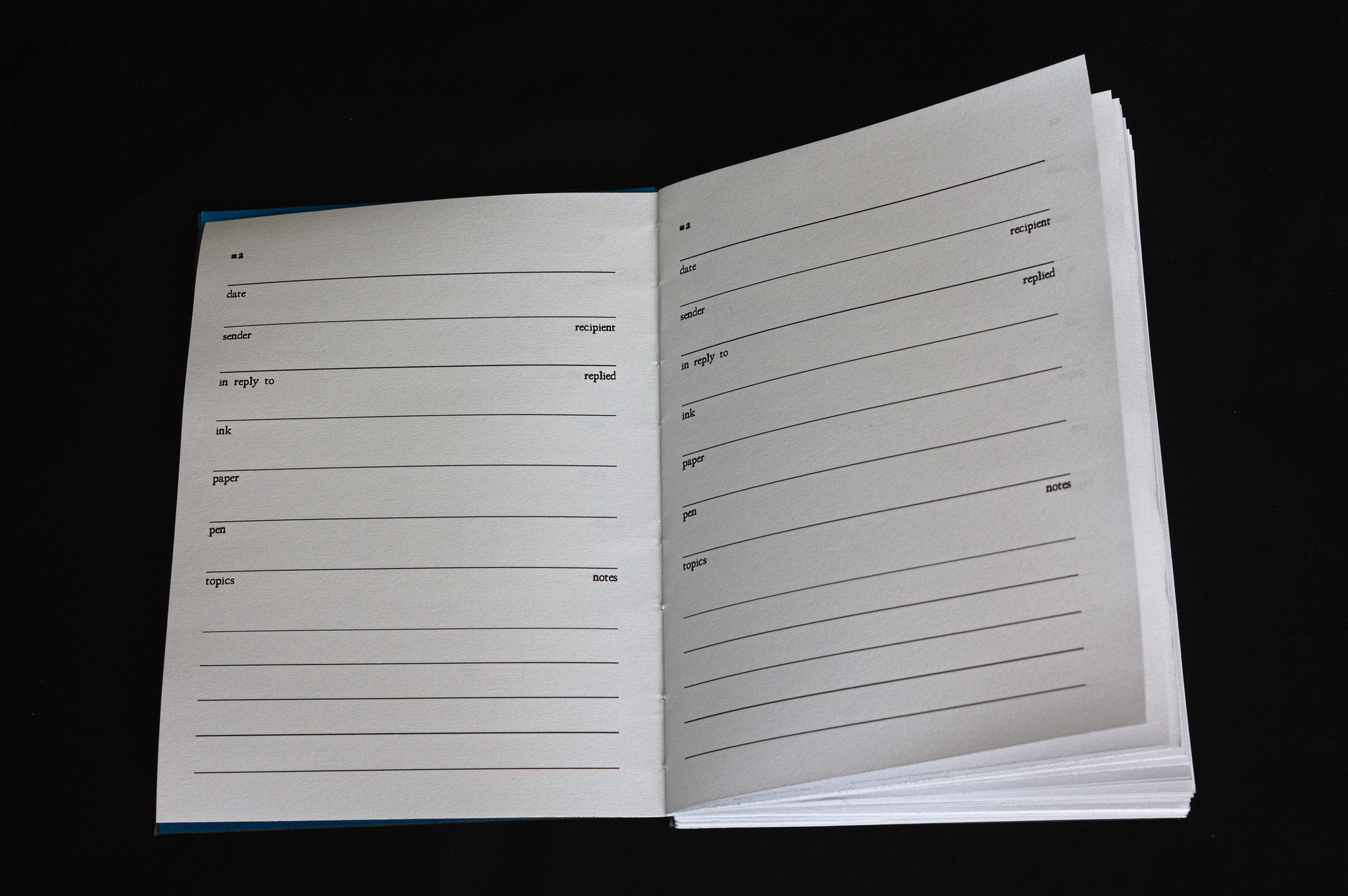
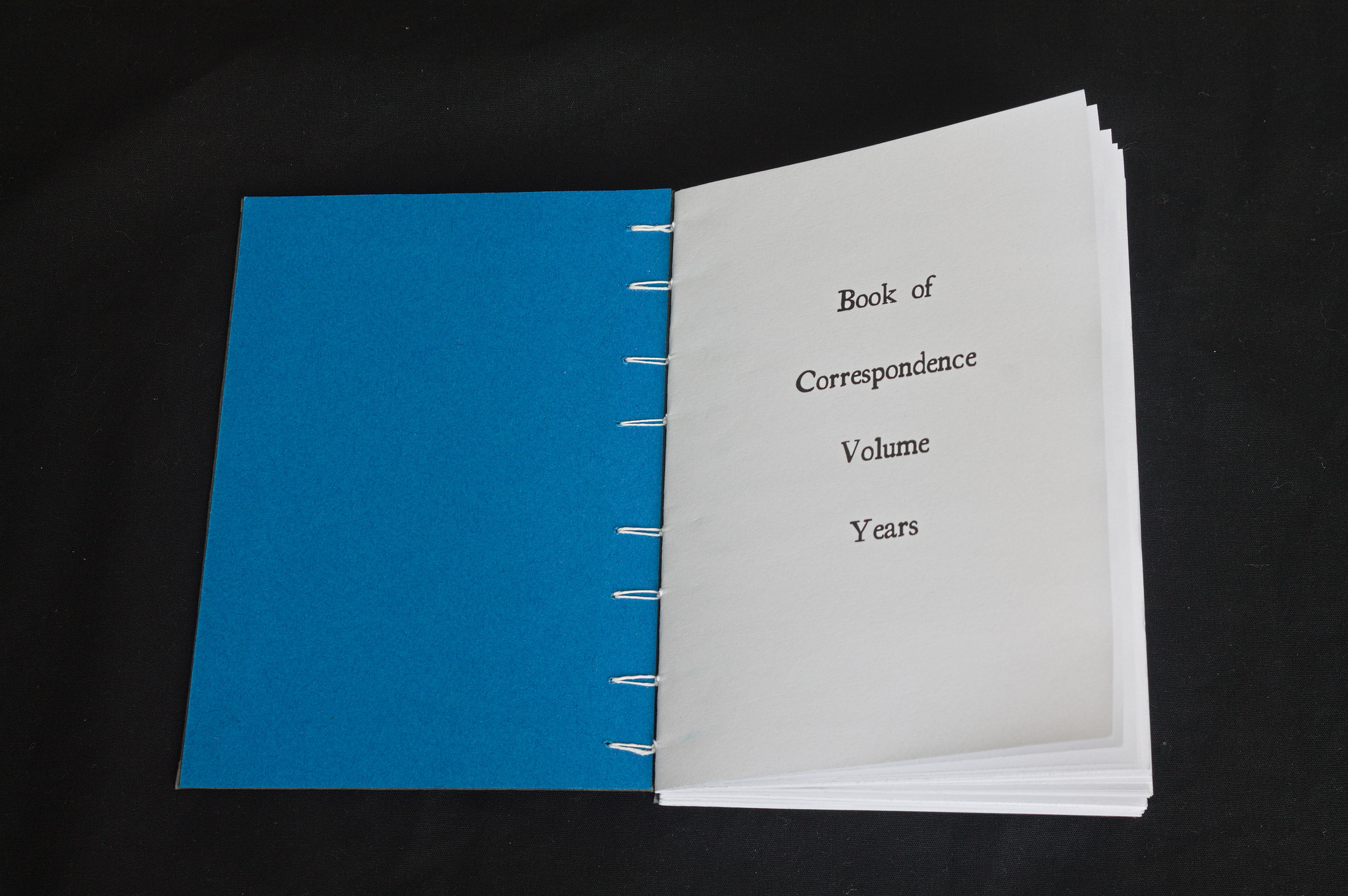
Some time ago, I ve read a Victorian book3 which recommended keeping a correspondence book to register all mail received and sent, the topics and whether it had been replied or otherwise acted upon. I don t have the mail traffic of a Victorian lady (or even middle class woman), but this looked like something fun to do, and if I added fields for the inks and paper used it would also have useful side effect.
I ve also added a few pages for the addresses of my correspondents (and an index of the letters I ve exchanged with them), and a few empty pages for other notes.
Then I ve used my a6_book.py script to rearrange the A6 pages into signatures and impress them on A4; to reduce later effort I ve added an option to order the pages in such a way that if I then cut four A4 sheet in half at a time (the limit of my rotary cutter) the signatures are ready to be folded. It s not the default because it requires that the pages are a multiple of 32 rather than just 16 (and they are padded up with empty pages if they aren t).
If you re also interested in making one, here are the files:
After printing (an older version where some of the pages are repeated. whoops, but it only happened 4 times, and it s not a big deal), it was time for binding this into a book.
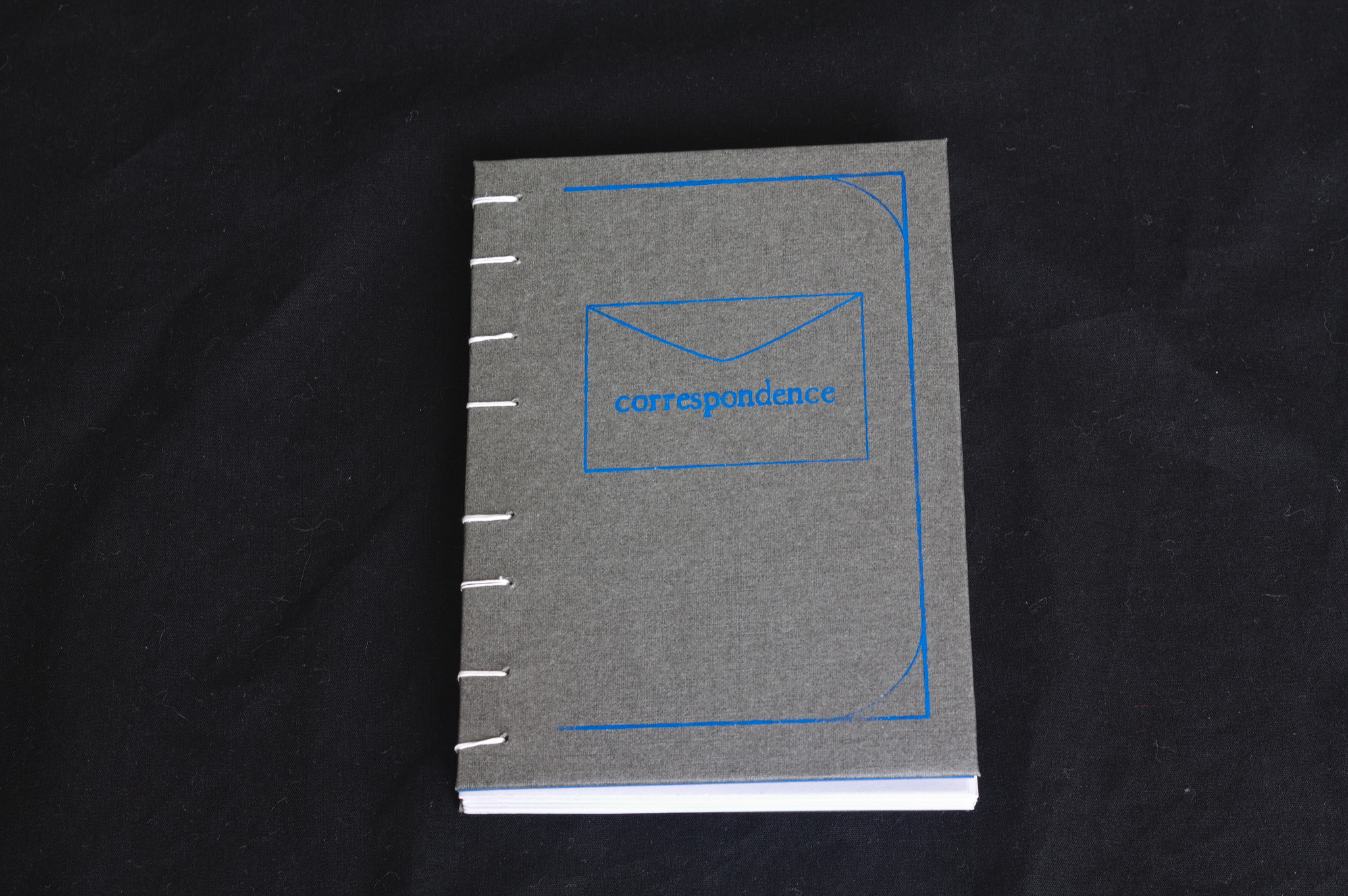
I ve opted for Coptic stitch, so that the book will open completely flat and writing on it will be easier and the covers are 2 mm cardboard covered in linen-look bookbinding paper (sadly I no longer have a source for bookbinding cloth made from actual cloth).
I tried to screenprint a simple design on the cover: the first attempt was unusable (the paper was smaller than the screen, so I couldn t keep it in the right place and moved as I was screenprinting); on the second attempt I used some masking tape to keep the paper in place, and they were a bit better, but I need more practice with the technique.
Finally, I decided that for such a Victorian thing I will use an Iron-gall ink, but it s Rohrer & Knlingner Scabiosa, with a purple undertone, because life s too short to use blue-black ink :D
And now, I m off to write an actual letter, rather than writing online about things that are related to letter writing.
The following contributors got their Debian Developer accounts in the last two months:
Considering I ve created my own private cloud in my home as part of: wp-k8s: WordPress on privately hosted Kubernetes cluster (Raspberry Pi 4 + Synology)....
The post rpi-microk8s-bootstrap: Automate RPI device conversion into Kubernetes cluster nodes with Terraform appeared first on FoolControl: Phear the penguin.
| Series: | Vlad Taltos #16 |
| Publisher: | Tor |
| Copyright: | 2023 |
| ISBN: | 1-4668-8970-5 |
| Format: | Kindle |
| Pages: | 277 |
Error updating ForwardingRule: googleapi: Error 400: Invalid value for field 'target.target':
'<https://www.googleapis.com/compute/v1/projects/mydumbproject/regions/europe-west1/serviceAttachments/
k8s1-sa-xyz-abc>'. Unexpected resource collection 'serviceAttachments'., invalid
Worked around that with the help of terrraform_data and lifecycle:
resource "terraform_data" "replacement"
input = var.gcp_psc_data["target"]
resource "google_compute_forwarding_rule" "this"
count = length(var.gcp_psc_data["target"]) > 0 ? 1 : 0
name = "$ var.gcp_psc_name -psc"
region = var.gcp_region
project = var.gcp_project
target = var.gcp_psc_data["target"]
load_balancing_scheme = "" # need to override EXTERNAL default when target is a service attachment
network = var.gcp_network
ip_address = google_compute_address.this.id
lifecycle
replace_triggered_by = [
terraform_data.replacement
]
See also terraform data for replace_triggered_by.
A first follow-up to the initial
announcement just days ago of the new crc32c
package. The package offers cyclical checksum with parity in
hardware-accelerated form on (recent enough) intel cpus as well as on
arm64.
This follow-up was needed because I missed, when switching to a
default static library build, that newest compilers would
complain if -fPIC was not set. gcc-12 on my
box was happy, gcc-13 on recent Fedora as used at CRAN was
not. A second error was assuming that saying
SystemRequirements: cmake would suffice. But hold on
whippersnapper: macOS always has a surprise for you! As
described at the end of the appropriate section in Writing R
Extensions, on that OS you have to go the basement, open
four cupboards, rearrange three shelves and then you get to use it. And
then in doing so (from an added configure script) I failed
to realize Windows needed a fallback. Gee.
The NEWS entry for this (as well the initial release) follows.
If you like this or other open-source work I do, you can now sponsor me at GitHub.Changes in version 0.0.2 (2023-05-11)
- Explicitly set cmake property for position-independent code
- Help macOS find its cmake binary as detailed also in WRE
- Help Windows with a non-conditional Makevars.win pointing at cmake
- Add more badges to README.md
Changes in version 0.0.1 (2023-05-07)
- Initial release version and CRAN upload
This post by Dirk Eddelbuettel originated on his Thinking inside the box blog. Please report excessive re-aggregation in third-party for-profit settings.
AMD Issues
It s just been couple of hard weeks apparently for AMD. The first has been the TPM (Trusted Platform Module) issue that was shown by couple of security researchers. From what is known, apparently with $200 worth of tools and with sometime you can hack into somebody machine if you have physical access. Ironically, MS made a huge show about TPM and also made it sort of a requirement if a person wanted to have Windows 11. I remember Matthew Garett sharing about TPM and issues with Lenovo laptops. While AMD has acknowledged the issue, its response has been somewhat wishy-washy. But this is not the only issue that has been plaguing AMD. There have been reports of AMD chips literally exploding and again AMD issuing a somewhat wishy-washy response.
Asus though made some changes but is it for Zen4 or only 5 parts, not known. Most people are expecting a recession in I.T. hardware this year as well as next year due to high prices. No idea if things will change, if ever
This isn't a book review, although the reason that I am typing this now is
because of a book, You Are Not Alone: from the creator and host of
Griefcast, Cariad Lloyd, ISBN: 978-1526621870 and I include a handful of
quotes from Cariad where there is really no better way of describing things.
Many people experience death for the first time as a child, often relating to a
family pet. Death is universal but every experience of death is unique. One of
the myths of grief is the idea of the Five Stages but this is a
misinterpretation. Denial, Anger, Bargaining, Depression and Acceptance
represent the five stage model of death and have nothing to do with
grief. The five stages were developed from studying those who are
terminally ill, the dying, not those who then grieve for the dead person and
have to go on living without them. Grief is for those who loved the person who
has died and it varies between each of those people just as people vary in how
they love someone. The Five Stages end at the moment of death, grief is what
comes next and most people do not grieve in stages, it can be more like a
tangled knot.
Death has a date and time, so that is why the last stage of the model is
Acceptance. Grief has no timetable, those who grieve will carry that grief for
the rest of their lives. Death starts the process of grief in those who go on
living just as it ends the life of the person who is loved. "Grief eases and
changes and returns but it never disappears.".
I suspect many will have already stopped reading by this point. People do not
talk about death and grief enough and this only adds to the burden of those who
carry their grief. It can be of enormous comfort to those who have carried
grief for some time to talk directly about the dead, not in vague pleasantries
but with specific and strong memories. Find a safe place without distractions
and talk with the person grieving face to face. Name the dead person. Go to
places with strong memories and be there alongside. Talk about the times with
that person before their death. Early on, everything about grief is painful and
sad. It does ease but it remains unpredictable. Closing it away in a box inside
your head (as I did at one point) is like cutting off a damaged limb but
keeping the pain in a box on the shelf. You still miss the limb and eventually,
the box starts leaking.
For me, there were family pets which died but my first job out of university
was to work in hospitals, helping the nurses manage the medication regimen and
providing specialist advice as a pharmacist. It will not be long in that
environment before everyone on the ward gets direct experience of the death of
a person. In some ways, this helped me to separate the process of death from
the process of grief. I cared for these people as patients but these were not
my loved ones. Later, I worked in specialist terminal care units, including
providing potential treatments as part of clinical trials. Here, it was not
expected for any patient to be discharged alive. The more aggressive
chemotherapies had already been tried and had failed, this was about pain
relief, symptom management and helping the loved ones. Palliative care is not
just about the patient, it involves helping the loved ones to accept what is
happening as this provides comfort to the patient by closing the loop.
Grief is stressful. One of the most common causes of personal stress is
bereavement.
The death of your loved one is outside of your control, it has happened, no
amount of regret can change that. Then come all the other stresses, maybe about
money or having somewhere to live as a result of what else has changed after
the death or having to care for other loved ones.
In the early stages, the first two years, I found it helpful to imagine my life
as a box containing a ball and a button. The button triggers new waves of pain
and loss each time it is hit. The ball bounces around the box and hits the
button at random. Initially, the button is large and the ball is enormous, so
the button is hit almost constantly. Over time, both the button and the ball
change size. Starting off at maximum, initially there is only one direction of
change. There are two problems with this analogy. First is that the grief ball
has infinite energy which does not happen in reality. The ball may get smaller
and the button harder to hit but the ball will continue bouncing. Secondly, the
life box is not a predictable shape, so the pattern of movement of the ball is
unpredictable.
A single stress is one thing, but what has happened since has just kept adding
more stress for me. Shortly before my father died 5 years ago now, I had moved
house. Then, I was made redundant on the day of the first anniversary of my
father's death. A year or so later, my long term relationship failed and a few
months after that COVID-19 appeared. As the country eased out of the pandemic
in 2021, my mother died (unrelated to COVID itself). A year after that, I had
to take early retirement. My brother and sister, of course, share a lot of
those stressors. My brother, in particular, took the responsibility for
organising both funerals and did most of the visits to my mother before her
death. The grief is different for each of the surviving family.
Cariad's book helped me understand why I was getting frequent ideas about going
back to visit places which my father and I both knew. My parents encouraged
each of us to work hard to leave Port Talbot (or Pong Toilet locally) behind,
in no small part due to the unrestrained pollution and deprivation that is
common to small industrial towns across Wales, the midlands and the north of
the UK. It wasn't that I wanted to move house back to our ancestral roots. It
was my grief leaking out of the box. Yes, I long for mountains and the sea
because I'm now living in a remorselessly flat and landlocked region after
moving here for employment. However, it was my grief driving those longings -
not for the physical surroundings but out of the shared memories with my
father. I can visit those memories without moving house, I just need to arrange
things so that I can be undisturbed and undistracted.
I am not alone with my grief and I am grateful to my friends who have helped
whilst carrying their own grief. It is necessary for everyone to think and talk
about death and grief. In respect of your own death, no matter how far ahead
that may be, consider Advance Care Planning and Expressions of Wish as well
as your Will.
Help your loved ones cope with your death by describing what you would like to happen.
Document how your life has been arranged so that the executor of your Will can find the right documents to inform:
- your bank,
- your mortgage company,
- your energy company,
- your mobile phone company,
- your house and car insurers and the like.
If you've got a complex home setup with servers and other machines which would be unfamiliar to the executor of your Will, then entrust someone else with the information required to revoke your keys, access your machines etc. and then provide the contact information for that person to your executor.
Arrange for your pets to be looked after.
Describe how you would like your belongings to be handled - do you want every effort made to have your clothes and furnishing recycled instead of going to landfill?
Where are the documents for the oven, the dishwasher and the central heating system so that these can be included in the sale of your property?
If there are loans outstanding, make sure your executor or a trusted person knows where to find the account numbers and company names.
What about organ donation? Make sure your executor knows your wishes and make sure your loved ones either agree or are willing to respect your wishes.
Then the personal stuff, what do you want to happen to your social media accounts, your cloud data, your games, DVD and CD collection, your photos and other media? Some social media companies have explicit settings available in your account to describe if you want the data deleted after a certain amount of time, after a notification from some government service or to set up some kind of memorialised version or hand over control of the account to a trusted person.
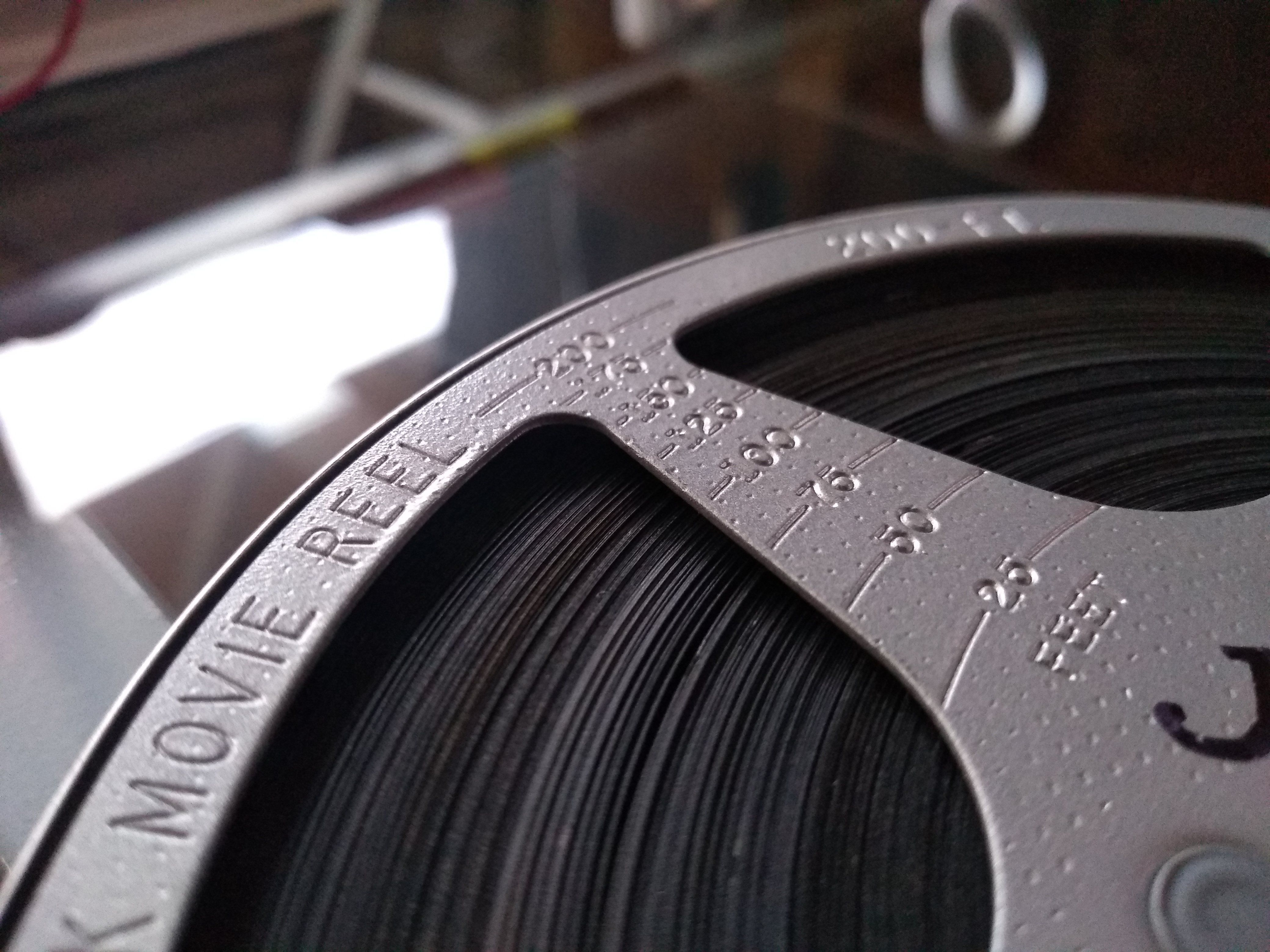
After my father passed away, I brought home most of the personal items
he had, both at home and at his office. Among many, many (many, many,
many) other things, I brought two of his personal treasures: His photo
collection and a box with the 8mm movies he shot approximately between
1956 and 1989, when he was forced into modernity and got a portable
videocassette recorder.
I have talked with several friends, as I really want to get it all in
a digital format, and while I ve been making slow but steady advances
scanning the photo reels, I was particularly dismayed (even though it
was most expected most personal electronic devices aren t meant to
last over 50 years) to find out the 8mm projector was no longer in
working conditions; the lamp and the fans work, but the spindles won t
spin. Of course, it is quite likely it is easy to fix, but it is
beyond my tinkering abilities and finding photographic equipment
repair shops is no longer easy. Anyway, even if I got it fixed,
filming a movie from a screen, even with a decent camera, is a lousy
way to get it digitized.
But almost by mere chance, I got in contact with my cousin Daniel, ho
came to Mexico to visit his parents, and had precisely brought with
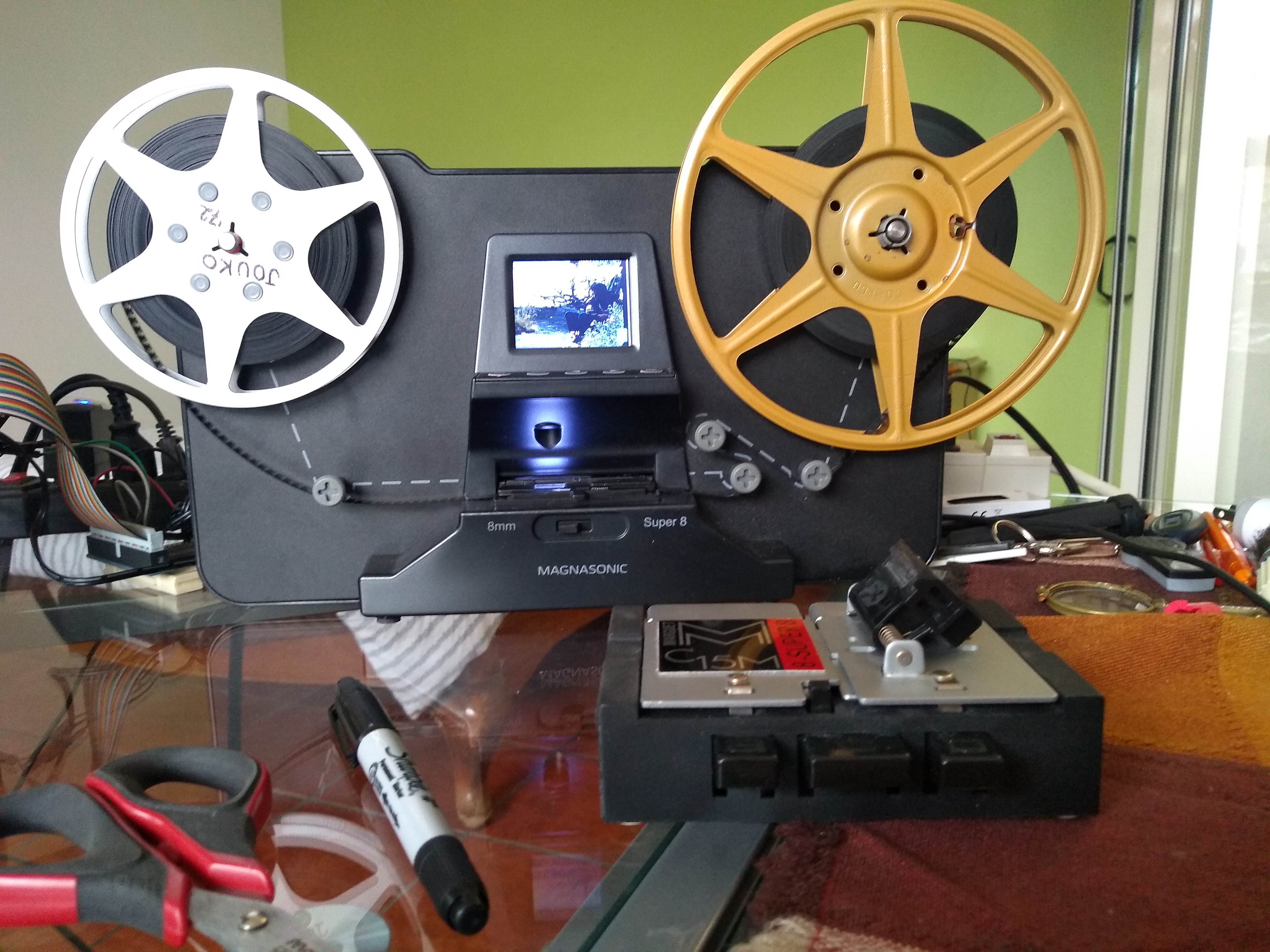
him a 8mm/Super8 movie scanner! It is a much simpler piece of
equipment than I had expected, and while it does present some minor
glitches (i.e. the vertical framing slightly loses alignment over the
course of a medium-length film scanning session, and no adjustment is
possible while the scan is ongoing), this is something
that can be decently fixed in post-processing, and a scanning session
can be split with no ill effects. Anyway, it is quite uncommon a
mid-length (5min) film can be done without interrupting i.e. to join a
splice, mostly given my father didn t just film, but also edited a lot
(this is, it s not just family pictures, but all different kinds of
fiction and documentary work he did).
So, Daniel lent me a great, brand new, entry-level film scanner; I
rushed to scan as many movies as possible before his return to the USA
this week, but he insisted he bought it to help preserve our family s
memory, and given we are still several cousins living in Mexico, I
could keep hold of it so any other of the cousins will find it more
easily. Of course, I am thankful and delighted!
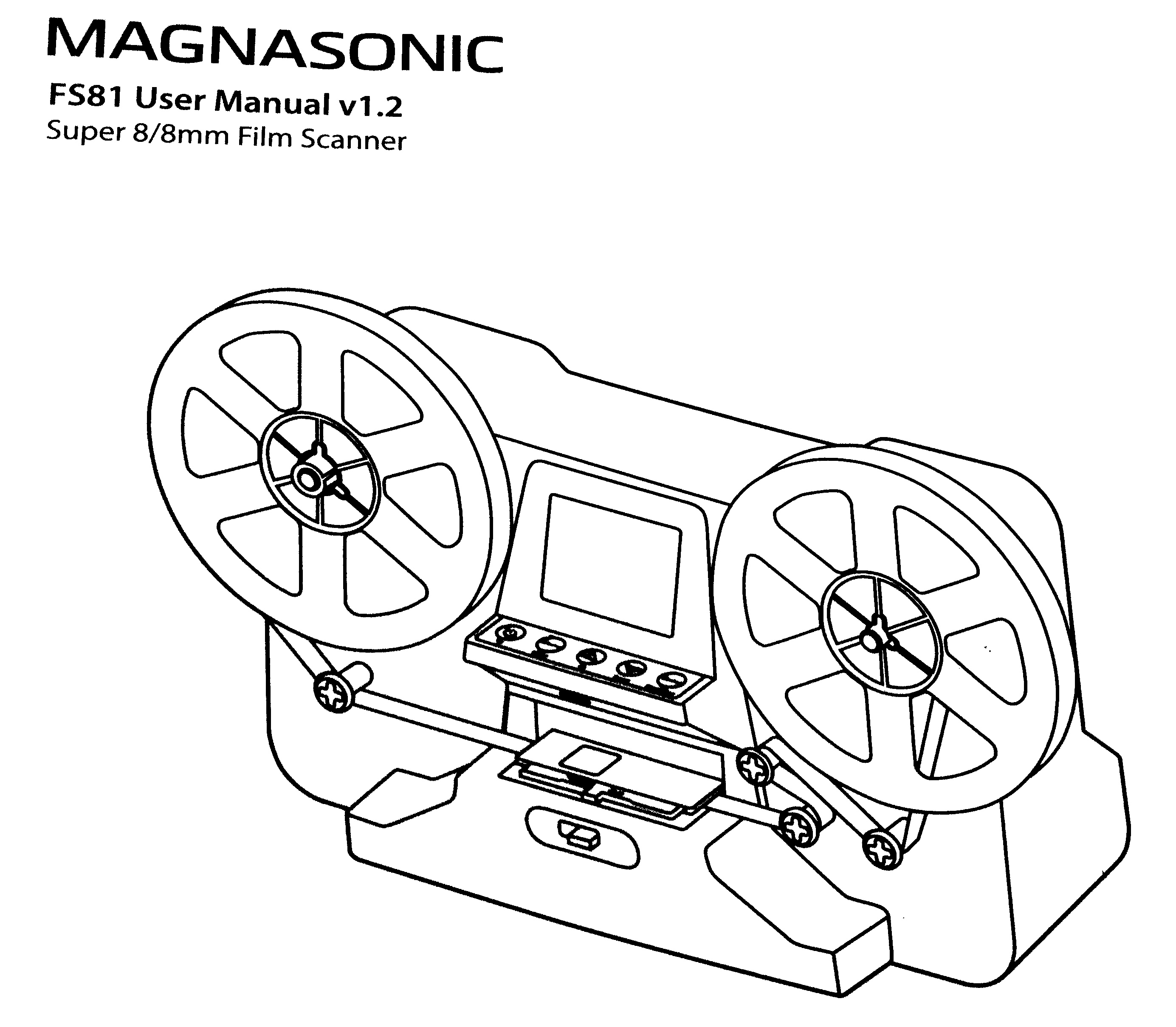
So, this equipment is a Magnasonic FS81. It is entry-level, as it
lacks some adjustment abilities a professional one would surely have,
and I m sure a better scanner will make the job faster but it s
infinitely superior to not having it!
The scanner processes roughly two frames per second (while the nominal
8mm/Super8 speed is 24 frames per second), so a 3 minute film reel
takes a bit over 35 minutes And a long, ~20 minute film reel
takes Close to 4hr, if nothing gets in your way :- And yes, with
longer reels, the probability of a splice breaking are way higher than
with a short one not only because there is simply a longer film to
process, but also because, both at the unwinding and at the receiving
reels, mechanics play their roles.
The films don t advance smoothly, but jump to position each frame in
the scanner s screen, so every bit of film gets its fair share of
gentle tugs.
My professional consultant on how and what to do is my good friend
Chema
Serralde,
who has stopped me from doing several things I would regret later
otherwise (such as joining spliced tapes with acidic chemical
adhesives such as Kola Loka, a.k.a. Krazy Glue even if it s a
bit trickier to do it, he insisted me on best using simple transparent
tape if I m not buying fancy things such as film-adhesive). Chema also
explained me the importance of the loopers (las Lupes in his
technical Spanish translation), which I feared increased the
likelihood of breaking a bit of old glue due to the angle in which the
film gets pulled but if skipped, result in films with too much
jumping.
Not all of the movies I have are for public sharing Some of them are
just family movies, with high personal value, but probably of very
little interest to others. But some are! I have been uploading some of
the movies, after minor post-processing, to the Internet
Archive. Among them:
Anyway, I have a long way forward for scanning. I have 20 3min reels,
19 5min reels, and 8 20min reels. I want to check the scanning
quality, but I think my 20min reels are mostly processed (we paid for
scanning them some years ago). I mostly finished the 3min reels, but
might have to go over some of them again due to the learning process.
And Well, I m having quite a bit of fun in the process!
Draw graph of number of commits. I thought I had lots of commits this month for Chrome OS.
To count those, all merged commits have committer Chromeos LUCI.
To get the timestamp of the commits,
git log --committer="Chromeos LUCI" --pretty=%ct . gives me the list of timestamps.
UNIX timestamp can be parsed with datetime.fromtimestamp, and then that array can be processed with density graph plot or histogram plotting tool, such as plt.hist.
Way back at DebConf16 Gunnar managed to arrange for a number of Next Thing Co. C.H.I.P. boards to be distributed to those who were interested. I was lucky enough to be amongst those who received one, but I have to confess after some initial experimentation it ended up sitting in its box unused.
The reasons for that were varied; partly about not being quite sure what best to do with it, partly due to a number of limitations it had, partly because NTC sadly went insolvent and there was less momentum around the hardware. I ve always meant to go back to it, poking it every now and then but never completing a project. I m finally almost there, and I figure I should write some of it up.
TL;DR: My C.H.I.P. is currently running a mainline Linux 6.3 kernel with only a few DTS patches, an upstream u-boot v2022.1 with a couple of minor patches and an unmodified Debian bullseye armhf userspace.
sunxi-mmc 1c11000.mmc: data error, sending stop command
CONFIG_TOUCHSCREEN_SUN4I) gave temperature readings and seemed to help somewhat with stability, though not completely.
Next I ended up looking at the AXP209 PMIC. There were various scripts still installed (I d started out with the NTC Debian install and slowly upgraded it to bullseye while stripping away the obvious pieces I didn t need) and a start-up script called enable-no-limit. This turned out to not be running (some sort of expectation of i2c-dev being loaded and another failing check), but looking at the script and the data sheet revealed the issue.
The AXP209 can cope with 3 power sources; an external DC source, a Li-battery, and finally a USB port. I was powering my board via the USB port, using a charger rated for 2A. It turns out that the AXP209 defaults to limiting USB current to 900mA, and that with wifi active and the CPU busy the C.H.I.P. can rise above that. At which point the AXP shuts everything down. Armed with that info I was able to understand what the power scripts were doing and which bit I needed - i2cset -f -y 0 0x34 0x30 0x03 to set no limit and disable the auto-power off. Additionally I also discovered that the AXP209 had a built in temperature sensor as well, so I added support for that via iio-hwmon.
diff --git a/arch/arm/dts/sun5i-r8-chip.dts b/arch/arm/dts/sun5i-r8-chip.dts
index 879a4b0f3b..1cb3a754d6 100644
--- a/arch/arm/dts/sun5i-r8-chip.dts
+++ b/arch/arm/dts/sun5i-r8-chip.dts
@@ -84,6 +84,13 @@
reset-gpios = <&pio 2 19 GPIO_ACTIVE_LOW>; /* PC19 */
;
+ mmc2_pins_e: mmc2@0
+ pins = "PE4", "PE5", "PE6", "PE7", "PE8", "PE9";
+ function = "mmc2";
+ drive-strength = <30>;
+ bias-pull-up;
+ ;
+
onewire
compatible = "w1-gpio";
gpios = <&pio 3 2 GPIO_ACTIVE_HIGH>; /* PD2 */
@@ -175,6 +182,16 @@
status = "okay";
;
+&mmc2
+ pinctrl-names = "default";
+ pinctrl-0 = <&mmc2_pins_e>;
+ vmmc-supply = <®_vcc3v3>;
+ vqmmc-supply = <®_vcc3v3>;
+ bus-width = <4>;
+ broken-cd;
+ status = "okay";
+ ;
+
&ohci0
status = "okay";
;
diff --git a/arch/arm/include/asm/arch-sunxi/gpio.h b/arch/arm/include/asm/arch-sunxi/gpio.h
index f3ab1aea0e..c0dfd85a6c 100644
--- a/arch/arm/include/asm/arch-sunxi/gpio.h
+++ b/arch/arm/include/asm/arch-sunxi/gpio.h
@@ -167,6 +167,7 @@ enum sunxi_gpio_number
#define SUN8I_GPE_TWI2 3
#define SUN50I_GPE_TWI2 3
+#define SUNXI_GPE_SDC2 4
#define SUNXI_GPF_SDC0 2
#define SUNXI_GPF_UART0 4
diff --git a/board/sunxi/board.c b/board/sunxi/board.c
index fdbcd40269..f538cb7e20 100644
--- a/board/sunxi/board.c
+++ b/board/sunxi/board.c
@@ -433,9 +433,9 @@ static void mmc_pinmux_setup(int sdc)
sunxi_gpio_set_drv(pin, 2);
#elif defined(CONFIG_MACH_SUN5I)
- /* SDC2: PC6-PC15 */
- for (pin = SUNXI_GPC(6); pin <= SUNXI_GPC(15); pin++)
- sunxi_gpio_set_cfgpin(pin, SUNXI_GPC_SDC2);
+ /* SDC2: PE4-PE9 */
+ for (pin = SUNXI_GPE(4); pin <= SUNXI_GPE(9); pin++)
+ sunxi_gpio_set_cfgpin(pin, SUNXI_GPE_SDC2);
sunxi_gpio_set_pull(pin, SUNXI_GPIO_PULL_UP);
sunxi_gpio_set_drv(pin, 2);
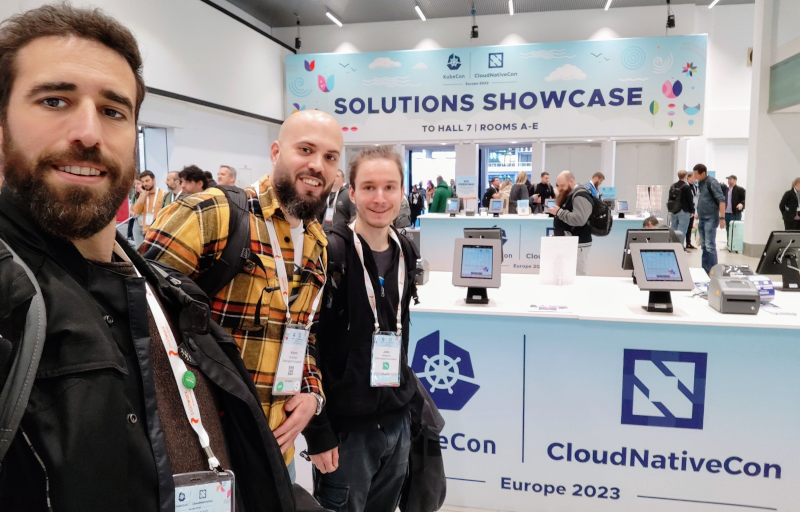
This post serves as a report from my attendance to Kubecon and CloudNativeCon 2023 Europe that took place in
Amsterdam in April 2023. It was my second time physically attending this conference, the first one was in
Austin, Texas (USA) in 2017. I also attended once in a virtual fashion.
The content here is mostly generated for the sake of my own recollection and learnings, and is written from
the notes I took during the event.
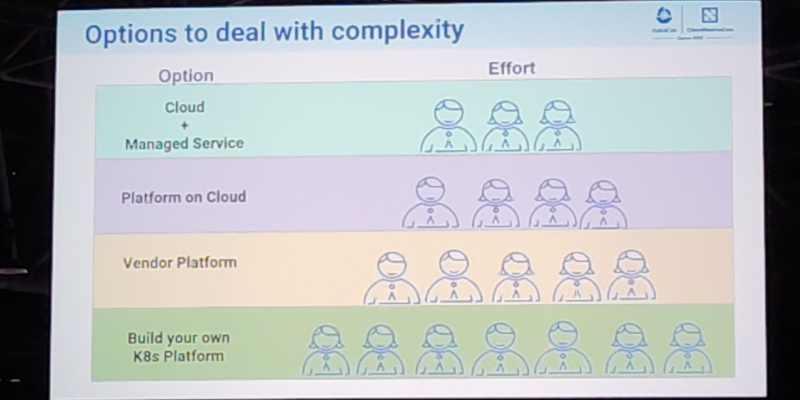
The very first session was the opening keynote, which reunited the whole crowd to bootstrap the event and
share the excitement about the days ahead. Some astonishing numbers were announced: there were more than
10.000 people attending, and apparently it could confidently be said that it was the largest open source
technology conference taking place in Europe in recent times.
It was also communicated that the next couple iteration of the event will be run in China in September 2023
and Paris in March 2024.
More numbers, the CNCF was hosting about 159 projects, involving 1300 maintainers and about 200.000
contributors. The cloud-native community is ever-increasing, and there seems to be a strong trend in the
industry for cloud-native technology adoption and all-things related to PaaS and IaaS.
The event program had different tracks, and in each one there was an interesting mix of low-level and higher
level talks for a variety of audience. On many occasions I found that reading the talk title alone was not
enough to know in advance if a talk was a 101 kind of thing or for experienced engineers. But unlike in
previous editions, I didn t have the feeling that the purpose of the conference was to try selling me
anything. Obviously, speakers would make sure to mention, or highlight in a subtle way, the involvement of a
given company in a given solution or piece of the ecosystem. But it was non-invasive and fair enough for me.
On a different note, I found the breakout rooms to be often small. I think there were only a couple of rooms
that could accommodate more than 500 people, which is a fairly small allowance for 10k attendees. I realized
with frustration that the more interesting talks were immediately fully booked, with people waiting in line
some 45 minutes before the session time. Because of this, I missed a few important sessions that I ll
hopefully watch online later.
Finally, on a more technical side, I ve learned many things, that instead of grouping by session I ll group
by topic, given how some subjects were mentioned in several talks.
On gitops and CI/CD pipelines
Most of the mentions went to FluxCD and ArgoCD. At
that point there were no doubts that gitops was a mature approach and both flux and argoCD could do an
excellent job. ArgoCD seemed a bit more over-engineered to be a more general purpose CD pipeline, and flux
felt a bit more tailored for simpler gitops setups. I discovered that both have nice web user interfaces that
I wasn t previously familiar with.
However, in two different talks I got the impression that the initial setup of them was simple, but migrating
your current workflow to gitops could result in a bumpy ride. This is, the challenge is not deploying
flux/argo itself, but moving everything into a state that both humans and flux/argo can understand. I also
saw some curious mentions to the config drifts that can happen in some cases, even if the goal of gitops is
precisely for that to never happen. Such mentions were usually accompanied by some hints on how to operate
the situation by hand.
Worth mentioning, I missed any practical information about one of the key pieces to this whole gitops story:
building container images. Most of the showcased scenarios were using pre-built container images, so in that
sense they were simple. Building and pushing to an image registry is one of the two key points we would need
to solve in Toolforge Kubernetes if adopting gitops.
In general, even if gitops were already in our radar for
Toolforge Kubernetes,
I think it climbed a few steps in my priority list after the conference.
Another learning was this site: https://opengitops.dev/.
On etcd, performance and resource management
I attended a talk focused on etcd performance tuning that was very encouraging. They were basically talking
about the exact
same problems we
have had in Toolforge Kubernetes, like api-server and etcd failure modes, and how sensitive etcd is to disk
latency, IO pressure and network throughput. Even though
Toolforge Kubernetes scale is small compared to other Kubernetes deployments out there, I found it very
interesting to see other s approaches to the same set of challenges.
I learned how most Kubernetes components and apps can overload the api-server. Because even the api-server
talks to itself. Simple things like kubectl may have a completely different impact on the API depending on
usage, for example when listing the whole list of objects (very expensive) vs a single object.
The conclusion was to try avoiding hitting the api-server with LIST calls, and use ResourceVersion which
avoids full-dumps from etcd (which, by the way, is the default when using bare kubectl get calls). I
already knew some of this, and for example the jobs-framework-emailer was already making use of this
ResourceVersion functionality.
There have been a lot of improvements in the performance side of Kubernetes in recent times, or more
specifically, in how resources are managed and used by the system. I saw a review of resource management from
the perspective of the container runtime and kubelet, and plans to support fancy things like topology-aware
scheduling decisions and dynamic resource claims (changing the pod resource claims without
re-defining/re-starting the pods).
On cluster management, bootstrapping and multi-tenancy
I attended a couple of talks that mentioned kubeadm, and one in particular was from the maintainers
themselves. This was of interest to me because as of today we use it for
Toolforge. They shared all
the latest developments and improvements, and the plans and roadmap for the future, with a special mention to
something they called kubeadm operator , apparently capable of auto-upgrading the cluster, auto-renewing
certificates and such.
I also saw a comparison between the different cluster bootstrappers, which to me confirmed that kubeadm was
the best, from the point of view of being a well established and well-known workflow, plus having a very
active contributor base. The kubeadm developers invited the audience to submit feature requests,
so I did.
The different talks confirmed that the basic unit for multi-tenancy in kubernetes is the namespace. Any
serious multi-tenant usage should leverage this. There were some ongoing conversations, in official sessions
and in the hallway, about the right tool to implement K8s-whitin-K8s, and vcluster
was mentioned enough times for me to be convinced it was the right candidate. This was despite of my impression
that multiclusters / multicloud are regarded as hard topics in the general community. I definitely would like to play
with it sometime down the road.
On networking
I attended a couple of basic sessions that served really well to understand how Kubernetes instrumented the
network to achieve its goal. The conference program had sessions to cover topics ranging from network
debugging recommendations, CNI implementations, to IPv6 support. Also, one of the keynote sessions had a
reference to how kube-proxy is not able to perform NAT for SIP connections, which is interesting because I
believe Netfilter Conntrack could do it if properly configured. One of the conclusions on the CNI front was
that Calico has a massive community adoption (in Netfilter mode), which is reassuring, especially considering
it is the one we use for Toolforge Kubernetes.
On jobs
I attended a couple of talks that were related to HPC/grid-like usages of Kubernetes. I was truly impressed
by some folks out there who were using Kubernetes Jobs on massive scales, such as to train machine learning
models and other fancy AI projects.
It is acknowledged in the community that the early implementation of things like Jobs and CronJobs had some
limitations that are now gone, or at least greatly improved. Some new functionalities have been added as
well. Indexed Jobs, for example, enables each Job to have a number (index) and process a chunk of a larger
batch of data based on that index. It would allow for full grid-like features like sequential (or again,
indexed) processing, coordination between Job and more graceful Job restarts. My first reaction was: Is that
something we would like to enable in Toolforge Jobs Framework?
On policy and security
A surprisingly good amount of sessions covered interesting topics related to policy and security. It was nice
to learn two realities:
In a previous blog post I described the use of virtual
postings to track accidental personal/family expenses. I've always been
uncomfortable with that, and in hledger 1yr I outlined a potential scheme
for finally addressing the virtual posting problem.
separate journals
My outline built on top of continuing to maintain both personal and family
financial data in the same place, but I've decided that this can't work,
because the different "directions" (or signs) of accidental transactions
originating from either the family or personal side can't be addressed with any
kind of alternate view on the same data.
To illustrate with an example.
A negative balance in family:liabilities:jon means "family owes jon". A
coffee bought by mistake on the family credit card will have a negative
posting on the credit card, and thus a positive one on the liabilities
account. ("jon owes family"). That's fine.
But what about when I buy family stuff on a personal card? The other side of
of the transaction is also going to have a positive sign, so it can't be
posted to family:liabilities:jon: it would have to go to somewhere else,
like jon:liabilities:family. Now I have two accounts which track versions
of the same thing, and they cannot be combined with a simple transaction
since they're looking at the same value from opposite directions (and signs).
Back when I first described the problem I was using
a single journal file for all my transactions. After moving to lots of separate
journal files (in hledger 1yr), it's become clearer to me that I don't
need to maintain the Family and Personal data together, at all: they can be
entirely separate journals.
getting data between journals
When I moved to a new set of ledger files for 2023, I needed to carry forward
the balances from 2022 in the form of "opening balance" transactions. This was
achieved by a report on the 2022 data, exported as CSV, and imported into the
2023 data (all following the scheme outlined by fully-fledged hledger.))
Separate Personal and Family journals need some information from each other, and I
can achieve that in the same way as for opening balances: with an export of
the relevant transactions as CSV, then imported on the other side. HLedger's
CSV import system is flexible enough that we can effectively invert the sign
of liabilities, addressing the problem above.
Worked example
We start with an accidental coffee purchased on the family card (and so this
belongs to the Family ledger)
2022-08-20 coffee
liabilities:creditcard -3
liabilities:jon:expenses:coffee 3
I've encoded the expense category that the Personal ledger will be interested
in (the last bit, expenses:coffee) as a sub-account of the liabilities
category that the Family ledger is interested in1 (the first bit,
liabilities:jon). When viewed on the Family side, the expense category is not
interesting, and we can hide it with HLedger's alias feature2:
alias /^liabilities:jon(.*)$/ = liabilities:jon
It then looks like this from the Family side:
2022-08-20 coffee
liabilities:creditcard -3
liabilities:jon 3
This transaction (and others like it) are exported via
hledger reg -f family/2023-back.journal liabilities:jon: -O csv \
jon/import/family/liabilities.csv
(The trailing colon on liabilities:jon: is important here!)
In the resulting CSV file, the running example transaction looks like
"55","2022-08-20","","coffee","liabilities:jon:expenses:coffee"," 3.00"," 3.00"
This is then converted into a journal file by hledger import. The rules file
for the import is very simple: the fields date, description, account1
and amount are taken as-is; account2 is hard-coded to liabilities:family.
The resulting transaction looks like
2022-08-20 coffee
liabilities:jon:expenses:coffee 3
liabilities:family -3
Before this journal is included by the main one, we have to adjust the expense
account, to remove the liabilities:jon: prefix. The import rules can't do
this3 , so we use another journal file as a go-between with another alias
rule:
alias /^liabilities.jon:/ =
This results, finally, in the following transaction in the Personal ledger:
2022-08-20 coffee
expenses:coffee 3
liabilities:family -3
avoiding double-counting
There's one set of transactions that we don't want to export across this divide,
and that's because they're already there: any time I transfer money from myself
to the family accounts (or vice versa) to address the accrued debt, the transaction
is visible from both my family and personal statements. To avoid exporting these
and double-counting them, I make sure those transactions don't post to an account
matching the pattern used in the hledger reg report. That's what the trailing
colon is for: It ensures I only export transactions which are to a sub-account
of liabilities:jon, and not to the root account liabilities:jon itself:
which is where I put the repayment transactions. I could instead use a more
explicit sub-account like liabilities:jon:repayments or similar, since the
trailing colon is quite subtle, but this works for me.
Wrap up
I've been really on the fence as to whether the complexity of this scheme is
worth it to avoid the virtual postings. The previous scheme was much simpler.
I have definitely made some mistakes with it, which didn't get caught by the
double-entry rules that virtual postings ignore, but they're for small sums
of money anyway.
On the other hand, a lot of the "machinery" of this already existed for getting
opening balances between calendar years, and the gory details are written down
and hidden inside the Makefile. I also expect that I will continue to see
advantages in having Family and Personal entirely separate, as they can each
develop and adapt to their own needs without having to consider the other side
of things every time.
It's a running experiment, and time will tell if it's a good idea.
family/2023.journal
file, which imports the data from another family/2023-back.journal,
and the CSV export is performed on the backing journal with the data
and not the alias.
Previously, I explained why ventilation monitoring is important, and the opportunity I see to help accelerate deployment of high quality ventilation monitoring for small businesses and organisations.
In this post, I m going to discuss my plans to tackle that opportunity:
| Publisher: | Little, Brown and Company |
| Copyright: | April 2018 |
| Printing: | 2020 |
| ISBN: | 0-316-55633-5 |
| Format: | Kindle |
| Pages: | 421 |
My house was crowded with some four dozen men, and for the first time in my life, I found myself steeped in mortal flesh. Those frail bodies of theirs took relentless attention, food and drink, sleep and rest, the cleaning of limbs and fluxes. Such patience mortals must have, I thought, to drag themselves through it hour after hour.I did not enjoy reading about Telegonus's childhood (it was too stressful; I don't like reading about characters fighting in that way), but apart from that, the last half of this book is simply beautiful. By the time Odysseus arrives, we're thoroughly in Circe's head and agree with all of the reasons why he might receive a chilly reception. Odysseus talks the readers around at the same time that he talks Circe around. It's one of the better examples of writing intelligent, observant, and thoughtful characters that I have read recently. I also liked that Odysseus has real flaws, and those flaws do not go away even when the reader warms to him. I'll avoid saying too much about the very end of the book to avoid spoilers (insofar as one can spoil Greek myth, but the last quarter of the book is where I think Miller adds the most to the story). I'll just say that both Telemachus and Penelope are exceptional characters while being nothing like Circe or Odysseus, and watching the characters tensely circle each other is a wholly engrossing reading experience. It's a much more satisfying ending than the Telegony traditionally gets (although I have mixed feelings about the final page). I've mostly talked about the Greek mythology part of Circe, since that's what grabbed me the most, but it's quite rightly called a feminist retelling and it lives up to that label with the same subtlety and skill that Miller brings to the prose and characterization. The abusive gender dynamics of Greek myth are woven into the narrative so elegantly you'd think they were always noted in the stories. It is wholly satisfying to see Circe come into her own power in a defiantly different way than that chosen by her mother and her sister. She spends the entire book building an inner strength and sense of herself that allows her to defend her own space and her own identity, and the payoff is pure delight. But even better are the quiet moments between her and Penelope.
"I am embarrassed to ask this of you, but I did not bring a black cloak with me when we left. Do you have one I might wear? I would mourn for him." I looked at her, as vivid in my doorway as the moon in the autumn sky. Her eyes held mine, gray and steady. It is a common saying that women are delicate creatures, flowers, eggs, anything that may be crushed in a moment s carelessness. If I had ever believed it, I no longer did. "No," I said. "But I have yarn, and a loom. Come."This is as good as everyone says it is. Highly recommended for the next time you're in the mood for a myth retelling. Rating: 8 out of 10
Twenty years A seemingly big, very round number, at least for me.
I can recall several very well-known songs mentioning this
timespan:
Maybe by sheer chance it was today also that we spent the evening at
Max s house I never worked directly with Max, but we both worked at
Universidad Pedag gica Nacional at the same time back then.
But Of course, a single twentyversary is not enough!
I don t have the exact date, but I guess I might be off by some two or
three months due to other things I remember from back then.
This year, I am forty years old as an Emacs and TeX user!
Back in 1983, on Friday nights, I went with my father to IIMAS (where
I m currently adscribed to as a PhD student, and where he was a
researcher between 1971 and the mid-1990s) and used the computer
one of the two big computers they had in the Institute. And what could
a seven-year-old boy do? Of course use the programs this great
Foonly F2 system had. Emacs and TeX (this is still before LaTeX).
40 years And I still use the same base tools for my daily work, day
in, day out.
Next.