Search Results: "radu"

14 June 2010

Christine Spang: Christine Spang: the end of an era

The world around me seems to whirl these days. One week ago, I graduated from MIT. People I've known during the last four years have been dispelling to various parts of the globe one by one, day by day. California, Canada, Indonesia, Seattle. Some will be back again. Some will not, or if so only to visit. pika is a continuous bustle of activity as the summer has commenced and it has filled with creative and adventurous MIT students who've suddenly found themselves having free time. A hammock being built on the roofdeck. Thrice-weekly icecream forays. Common areas overflowing with people playing musical instruments, chatting, and messing around on laptops. Summer's warmth has arrived, bringing with it farmer's markets, strawberry picking, and swimming expeditions. While it's wonderful to get to meet so many new people living in a college environment, I can't help but feel sadness thinking about everyone who's left. There are always more friends to be made as new people arrive, but old ones moving away leave bittersweet memories, and the new relationships are always a bit different as the age discrepancy between me and others changes. Or the me-the-ephemeral-collection-of-thoughts-which-when-regarding-other-people-sometimes-involve-the-mentor/mentee-distinctions-caused-by-one-party-being-older-or-more-knowledgeable-than-the-other-at-least-in-certain-areas changes. The end of a semester always feels like this, but this year even more so as the people I started university with start down new paths. For me, that was going to involve staying on at MIT to complete a one-year master's program, the "M.Eng." in electrical engineering and computer science. That plan, too, has changed. I've deferred the degree and accepted a full-time engineering position at Ksplice, an exciting early-stage Linux startup here in Cambridge. I'd been working at Ksplice part-time since January before joining full-time immediately following graduation. Ksplice is the realization of ideas I saw being born on the whiteboard at SIPB when I was a freshman, and it's fun to see that play out in a small, ever-changing, low-bullshit company. All in all, there are many more exciting things down the road, and, working at an MIT startup, I haven't even escaped the MIT/Cambridge reality-distortion bubble yet. Still, it's tempting to resist change and let myself romanticize the good old days, hoping to catch every person I've ever enjoyed spending time with and hold them down here forever. That's not the way life works, though. Change happens.

15 May 2010

Christian Perrier: [life] Running update

I didn't write much about running stuff since my update about Paris marathon. The main point was, in general, to gradually resume running activities, after the marathon peak. Which I actually didn't respect at all, as usual..:-)... I already wrote that my "training program" is mostly made of "run as you feel, with no strongly hardcoded program". So, the week-end after the marathon, I ran 11km on Saturday, followed by an half-marathon (alone) on Sunday which I completed in 1h53'31", very close to my 1h51'31" PB for a "half-marathon alone on trails" run. Definitely not what is generally recommended, but, eh, this is how I was feeling... Then, I could continue during the following weeks with my normal program made of 1 or 2 small runs (between 8 and 14km) at lunch time on weekdays, 1 small 10 or 11 km trail run (on this circuit or a longer variant), and a "long" run on Sunday mornings. The long run usually goes from 15km up to 25km. Now, 6 weeks after the marathon, I'll run a 20km trail named Le Trail des Cerfs ("deer trail"), that starts in my neighbourhood and goes through my beloved Rambouillet Forest. I could have chosen the 35K or even 50K race, but preferred being less ambitious with the distance and rather focus and ahieving what will be my first official trail race. I don't expect much differences with the weekly runs, indeed, as most of these are already done in trails, fields and woods with very few paved roads. My goal for this race is 1h45. Later on, I still have the plan to run a full marathon alone, probably on May 31st. This time, contrary to last year where I ran one by going through a very wide loop in Rambouillet Forest, I'll do 4 loops mostly in the city of Maurepas, on flat roads, with possible pit stops at my home (so, no camel back bag, but more focus on good performance). I plan to target 3h55 if the heat is not too high. Further plans are less precise. I'm not sure I'll be able to run the Sur les Traces du Loup trail in La Ville aux Clercs, 2 hours away from our place. That would mean arranging a small week-end there with Elizabeth. Still, that really looks like a great race, with a start at 18:00 to enjoy the end of the day during the longest days of the year. Also, the race and the barbecue that follows appear to be very friendly events in a small French village. On the other hand, the autumn marathon is decided. This will be the Seine et Eure Marathon, a "small (600 runners) marathon very close to our family house in the Seine valley. The race is one of the flatest marathons in France and has the reputation of leading to great times. That will be on October 17th. Target for me: 3h45 (unless I see changes happening util then).

26 April 2010

Stefano Zacchiroli: the DebConf Newbies initiative

DebConf newbies: we want you! You've probably already read a nice blog post by Joey about the DebConf Newbies initiative. Let me recap in case you didn't: Debian will invest some money to explicit sponsor DebConf10 attendance for "non-regulars", i.e. for those that have not attended DebConf ever, or quite in a while. If you are interested you should check the wiki page and mail Joey as requested. (Including a big thank you to him would be more than appropriate, given that he'll be taking care of most gory details.) Why are we doing this and why is it separate from the regular DebConf sponsorship process? Answering the latter is rather easy. The initiative has sponsoring criteria different than regular DebConf sponsoring (which is well oiled and taken care of by the DebConf orga team) and it didn't seem fair to mix the two, possibly keeping out from regular sponsoring requests some people, just because of this new initiative. Also, as we're well past the deadline for requesting regular DebConf sponsoring, it wouldn't have been nice to induce extra work to the DebConf sponsoring team (and Joey has been kind enough to volunteer anyhow, so ... :-) ). Answers to the former question (why are we doing this in the first place?) are possibly subjectives. My personal belief is that attending DebConf increases the enthusiasm of attendees and ultimately will make them better Debian citizens. It surely happened to me years ago: in the beginning of my Debian membership (as DD, since DMs did not exist back then) I just cared about my pet packages. It was only after meeting the Debian crowd in person at a FOSS event (LinuxTag 2004, IIRC) that I got really enthusiastic about Debian, gradually increasing my involvement in the project. I've never regretted it. I hope it can happen to some of you too, possibly starting with DebConf10.

See you in New York!

20 April 2010

Jon Dowland: new job

I'm changing jobs! From June 1st, I will be team leader of the Computing Support team for the School of Computing Science at Newcastle University. I will be leaving my current job as a Computing Officer within the central IT department's UNIX infrastructure team (ISS). My professional career began within ISS nearly 6 years ago. I have made many friends and will miss working with them as closely as I have. I am really looking forward to getting stuck into my new role. Working within a school means I will be a lot closer to the University's business of teaching and learning. As a Computing Science graduate I've always had an interest in computing research and my new role will have me up close and personal with world-class researchers.

16 April 2010

David Welton: Make Life Easier for European Startups: Simpler/Cheaper Limited Liability Companies

As I've mentioned here before, one of the differences between "Europe" and the US is just how cheap it is to start a company in the US. Before we go any further, I'll take a moment to add the standard "yes, I know that Europe is not one country" disclaimer, and specify that I'm mostly talking about continental Europe. Starting a company in the UK or Ireland isn't nearly as bad. In Oregon, I spent $55 to create DedaSys LLC. If I'd created it with one or more partners, I would have spent something on a lawyer in order to create a solid agreement, but that is of course a voluntary expenditure that we would pay for because it provided us with some value. In Italy, it costs thousands of Euros just to get started with a company; before you've made any money at all. And, while there are gradual improvements, it's still a bureaucratic process that pretty much must involve at least an accountant and a notary public. And you have to involve the very arbitrary number of 10,000 euros of capital in the company, supposedly there as a guarantee for the people you're doing business with. But 10,000 is not nearly enough to cover some kinds of problems you might cause, and way more than, say, a web startup with a couple of guys and their laptops need. My friend Salvatore says it's possible to sort of "get around" sinking the full 10K into your company, but in any case, the principal of "caveat emptor" is a more sensible one. At most, make a transparency requirement so that people dealing with companies can tell exactly how much reserves they have. During a recent bout of cold/flu, compliments of our daughter's nursery school, when I had some extra time on my hands, I decided to do something about this, however much it may be pissing into the wind. I set up a site: http://www.srlfacile.org (warning: Italian only) As well as a Google Group, and petition for people to sign, in an attempt to make a little bit of noise about the problem, here in Italy. While it's likely that the actual bureaucratic mechanisms are more smoothly oiled in other European countries, I have my doubts as to whether the actual amount of paperwork can compete with the very minimal page or two required by many US states. And in any case, the costs are still quite high, and while we all have different levels on the idea of the role of government, and ideal levels of taxation, I think we can agree that it's sensible to levy taxes only after a company has begun to make money! So - how about it? Anyone want to create sister initiatives in other countries in Europe where things aren't as simple and easy as they should be? Anyone care to tell of how this problem has been fixed elsewhere? I've heard tell that in Germany, there is now a simpler/cheaper way to create limited liability companies.

6 April 2010

Jonathan Yu: Google Summer of Code 2010

Last year, I had a great time participating in the Google Summer of Code with the Debian project. I had a neat project with some rather interesting implications for helping developers to package and maintain their work. It s still a work-in-progress, of course, as many projects in open source are, but I was able to accomplish quite a bit and am proud of my work. I learned quite a bit about coding in C, working with Debian and met some very intelligent people. My student peers were also very intelligent and great to learn from. I enjoyed meeting them virtually and discussing our various projects on the IRC channel as the summer progressed and the Summer of Code kicked into full swing. The Debian project in particular also helps arrange travel grants for students to attend the Debian Conference (this year, DebConf10 is being held in New York City!). DebConf provides a great venue to learn from other developers (both in official talks but also unofficial hacking sessions). As the social aspect is particularly important to Debian, DebConf helps people meet those with whom they are working with the most, thereby creating lifelong friendships and making open source fun. I have had several interviews for internships, and the bit of my work experience most asked about is my time doing the Google Summer of Code. I really enjoyed seeing a project go from the proposal stage, setting a reasonable timeline with my mentor, exploring the state of the art, and most importantly, developing the software. I think this is the sort of indispensible industry-type experience we often lack in our undergrad education. We might have an honours thesis or presentation, but much of the work in the Google Summer of Code actually gets used in the field. Developing software for people rather than for marks is significant in a number of ways, but most importantly it means there are real stakeholders that must be considered at all stages. Proposing brilliant new ideas is important, however, without highlighting the benefits they can have for various users, the reality is that it simply will not gain traction. Learning how to write proposals effectively is an important skill and working with my prospective mentor (at the time he later mentored my project once it was accepted) to develop mine was tremendously useful for my future endeavours. The way I see the Google Summer of Code is, in many ways, similar to an academic grant (and the stipend is about the same as well). It provides a modest salary (this year it s US$5000) but more importantly, personal contact with a mentor. Mentors are typically veterans in software development or the Debian project and act in the same role as supervisors for post-graduate work: they help monitor your progress and propose new ideas to keep you on track. The Debian Project is looking for more students and proposals. We have a list of ideas as well as application instructions available on our Wiki. As I will be going on internship starting May, I have offered to be a mentor this year. I look forward to seeing your submissions (some really interesting ones have already begun to filter in as the deadline approaches).
Filed under: Computer Science, Peer Relationships, Software Engineering Tagged: Computer Science, Debian, Google Summer of Code, Support

30 March 2010

David Welton: Where Tcl and Tk Went Wrong

I've been pondering this subject for a while, and I think I'm finally ready to write about it.
Tcl was, for many years, my go-to language of choice. It's still near and dear to me in many ways, and I even worked on a portion of a book about it ( http://journal.dedasys.com/2009/09/15/tcl-and-the-tk-toolkit-2nd-edition ). However, examining what "went wrong" is quite interesting, if one attempts, as much as possible, a dispassionate, analytical approach that aims to gain knowledge, rather than assign blame or paper over real defects with a rose-colored vision of things. It has made me consider, and learn, about a variety of aspects of the software industry, such as economics and marketing, that I had not previously been interested in. Indeed, my thesis is that Tcl and Tk's problems primarily stem from economic and marketing (human) factors, rather than any serious defects with the technology itself. Before we go further, I want to say that Tcl is not "dying". It is still a very widely used language, with a lot of code in production, and, importantly, a healthy, diverse, and highly talented core team that is dedicated to maintaining and improving the code. That said, since its "heyday" in the late 90ies, it has not ... "thrived", I guess we can say. I would also like to state that "hindsight is 20-20" - it's easy to criticize after the fact, and not nearly so easy to do the right thing in the right moment. This was one reason why I was reticent to write this article. Let me repeat that I am writing it not out of malice or frustration (I went through a "frustrated" phase, but that's in the past), but because at this point I think it's a genuinely interesting "case history" of a the rise and gentle decline of a widely used software system, and that there is a lot to be learned. At the height of its popularity, Tcl was up there with Perl, which was the scripting language in those days. Perl, Tcl, and Python were often mentioned together. Ruby existed, but was virtually unknown outside of Japan. PHP was on the rise, but still hadn't really come into its own. Lua hadn't really carved out a niche for itself yet, either. Tcl is no longer one of the popular languages, these days, so to say it hasn't had problems is to bury one's head in the sand: it has fallen in terms of popularity. To examine what went wrong, we should probably start off with what went right: These features led to Tcl being widely used, from Cisco routers to advanced television graphics generation programs to the AOLserver web server, which was busy serving out large quantities of dynamic web pages when many of us were still fiddling around with comparatively slow and clunky CGI programs in Perl. Note also that there have been a lot of cool things to have gone into Tcl in the mean time. It has a lot of impressive features; many more than most people realize, and has had a lot of them for a while. Check out http://www.tcl.tk to learn more about the "good stuff". But that's not the point of this article... There was a healthy, active community of developers producing lots of interesting add-ons for the language, and working on the language itself. This culminated in its adoption by Sun Microsystems, which hired the language's creator, Dr. John Ousterhout, and a team of people, who added a lot of great features to the language. Quoting from Ousterhout's history of Tcl page:

The additional resources provided by Sun allowed us to make major improvements to Tcl and Tk. Scott Stanton and Ray Johnson ported Tcl and Tk to Windows and the Macintosh, so that Tcl became an outstanding cross-platform development environment; Windows quickly came to be the most common platform. Jacob Levy and Scott Stanton overhauled the I/O system and added socket support, so that Tcl could easily be used for a variety of network applications. Brian Lewis built a bytecode compiler for Tcl scripts, which provided speedups of as much as a factor of 10x. Jacob Levy implemented Safe-Tcl, a powerful security model that allows untrusted scripts to be evaluated safely. Jacob Levy and Laurent Demailly built a Tcl plugin, so that Tcl scripts can be evaluated in a Web browser, and we created Jacl and TclBlend, which allow Tcl and Java to work closely together. We added many other smaller improvements, such as dynamic loading, namespaces, time and date support, binary I/O, additional file manipulation commands, and an improved font mechanism. Unfortunately, after several years, Sun decided that they wanted to promote one and only one language. And that language was Java. So Ousterhout and many people from his team decamped to a startup that Ousterhout founded, called Scriptics, where the Tcl and Tk innovations continued:

In 1998, Scriptics made several patch releases for Tcl 8.0 to fix bugs and add small new features, such as a better support for the [incr Tcl] extension. In April 1999, Scriptics made its first major open source release, Tcl/Tk 8.1. This release added Unicode support (for internationalization), thread safety (for multi-threaded server applications), and an all-new regular expression package by Henry Spencer that included many new features as well as Unicode support.
However, as many a company based around open source was to find later, it's a tough space to be in. Scriptics changed its name to Ajuba, and was eventually sold (at a healthy profit, apparently, making it a relative dot com success story, all in all) to Interwoven, for the "B2B" technology that Ajuba had developed. Interwoven was not interested in Tcl, particularly, so, to create a system for the ongoing development and governance of the language, the "Tcl Core Team" was created. This was something of a blow to Tcl, but certainly not fatal: Perl, Python, Ruby, PHP, Lua have all had some paid corporate support, but it has by no means been constant, or included large teams. At the same time in the late 90ies, open source was really starting to take off in general. Programmers were making all kinds of progress, and had begun to make Linux into what is today the world's most widely used server platform, and laying the groundwork for the KDE and Gnome desktops. While these may still not be widely used, they are for the most part very polished systems, and leaps and bounds better than what passed for the 'Unix desktop' experience in the 90ies. One of the key bits of work that was added to Tk was to make it look pretty good on Microsoft Windows systems. This was in an time when the "enterprisey" folks were turning away from Unix in the form of AIX, Solaris, HPUX, et al. and taking up NT as the platform of choice, so it was in some ways sensible to make Tk work well there, and in any case as a cross platform GUI toolkit, it ought to work well there in any case. And, on the Unix side, Tk emulated the expensive, professional Motif look and feel that serious Unix programmers used. What could go wrong? As Gnome and KDE continued to mature, though, what would become one of Tk's major (in my opinion) marketing blunders took root. I have it on good authority, from someone who was there in the office, that the Scriptics guys working on Tcl and Tk viewed Gnome and KDE (and the Gtk and Qt toolkits) as not really worth their while. To be fair, since Tk has always been under a liberal BSD style license, the Qt toolkit has always been "off limits". Still, though, the attitude was that Tk was a standalone system, and since it ran on pretty much any Unix system, it didn't need to bother with Gnome or KDE. Gradually, though, as more and more people used Gnome and KDE exclusively on Linux, the Tk look and feel began to look more and more antiquated, a relic from the 1990ies when Motif (which has since pretty much disappeared) was king. Tk applications started to really stand out by not looking at all like the rest of the operating system. And, while Linux may not be responsible for a vast portion of the world's desktops, it is widely used by developers, who were turned off by the increasingly creaky look of the Tk applications they saw. Tk is and was actually a fairly flexible system, and it would have been possible to tweak the look and feel to make it look a bit better on Linux, without even doing any major work. Maybe not perfect, but certainly better looking. Nothing happened, though. Another problem was that Tk and Tcl made it so easy to create GUIs that anyone could, and did, despite, in many cases, a complete lack of design skills. You can't particularly blame the tools for how they're used, but there was certainly a cultural problem: if you read most of the early Tcl and Tk books, and even many of the modern ones, there are hundreds of pages dedicated to exactly how to use Tk, but few to none explaining even basic user interface concepts, or even admonitions to the user to seek out that knowledge prior to attempting a serious GUI program. The end result is that a lot of Tk programs, besides just looking "old fashioned" had fairly poor user interfaces because they were made by programmers who did not have a UI/design culture. Contrast that with Gnome and KDE, which have made a point of focusing on how to make a good GUI for their systems, complete with guidelines about how applications should behave. It may have taken them some time to get things right, but they have done a lot to try and instill a culture of creating high quality, well-integrated GUI's that are consistent with the system where they run. Lately, there has been a lot of work to update the Tk look and feel, and it has finally started to bear fruit. However, in terms of marketing, the damage has already been done: the image of "old, crufty Tk" has been firmly planted in countless developers' minds, and no amount of facts are going to displace it in the near future. Another problem Tcl faced, as it grew, was the tug-of-war between those wishing to see it small, light, and easy to distribute embedded within some other program, and those wishing it to become a "full-fledged" programming language, with lots of tools for solving every day programs. Unfortunately, that tug of war seems to have left it somewhere in the middle. Lua is probably more popular these days as an embedded language, because it is very small, and very fast, and doesn't have as much "baggage" as Tcl. Meaning, of course, that it doesn't do as much as Tcl either, but for a system where one merely wishes to embed a scripting language, without much 'extra stuff', Tcl's extra functionality is perhaps a burden rather than a bonus. On the other hand, while Perl was happily chugging along with their CPAN system for distributing code, giving users easy access to a huge array of add-on functionality, and Python was building up a "batteries included" distribution, that included a lot of very useful software straight out of the box. Tcl, on the other hand, chose to keep the core distribution smallish, and only lately has got some semblance of a packaging and distribution system, that is, however, run by ActiveState, and is (at least according to a cursory glance at the Tcl'ers wiki), not even fully open source. The lack of a good distribution mechanism, and, in the meantime, eschewing a larger, batteries-included main distribution left Tcl users with a language that, out of the box, did significantly less than the competition. Technically, a Python style "big" distribution would not have been all that difficult, so once again, I think this is a marketing problem: a failure of the Tcl Core Team to observe the "market", assess what users needed, and act on it in a timely manner. Somewhat related to the large Tcl vs small Tcl issue was one particular extension, or extensions to the language that was noticeably absent: a system for writing "object oriented" code. Tcl, at heart, will never be an OO language through and through, like Ruby or Smalltalk, but that doesn't mean that an OO system for it is not a useful way of organizing larger Tcl systems. Indeed, Tcl's syntax is flexible enough that it's possible to write an OO system in Tcl itself, or, optimizing for speed, utilizing the extensive C API in order to create new commands. Over the years, a number of such systems have arisen, the most well-known being "Incr Tcl" (a play on the incr command, which is akin to += 1 in languages like C). However, none of these extensions was ever included with the standard Tcl distribution or somehow "blessed" as the official OO system for Tcl. This meant that a newcomer to Tcl wishing to organize their code according to OO principles had to pick a system to use from several competing options. And of course, newcomers are the least able to judge a complex feature like that in a language, making it a doubly stressful choice. Furthermore, even experienced Tcl programmers who wanted to share their code could not utilize an OO system if they wanted their code to work with just standard Tcl. Also, if their code had a dependancy on some OO system, it would require the user to download not only the extension in question, but the OO system it was built on, which, naturally, might conflict with whatever OO system the user had already selected! As of Tcl 8.6, thanks to the work of Donal Fellows, Tcl is finally integrating the building blocks of an OO system in the core itself, but this effort is probably something like 10 years too late. Some other more or less minor things that have taken too long to get integrated in the Tcl or Tk distributions include the PNG format (still not there in a production release of Tcl), a readline-based command line (Tkcon is nice, but not a replacement for simply being able to type "tclsh" and get a nice, functional shell like Python, Ruby and most other languages have. This could easily lead to a bad first experience for someone trying out Tcl). Tcl also took too long to integrate a first-class hash type (accessed with the 'dict' command), which only appeared in 8.5. Its "arrays" aren't bad, but don't quite have the full power of a hash table as dict implements them. Once again, the code to do these things was/is out there, it has just been a matter of integrating it into Tcl and Tk, which has been a slow process. One actual technical problem that Tcl faces is the concept that all values must be representable as a string. This is more or less ok for things like lists, hash tables or numbers, but is problematic when the user wishes to represent a value that simply isn't a string. A basic example is a file handle, which at the C API level is a FILE*. How does Tcl get around this? It keeps an internal hash table with a Tcl-script accessible string, such as "file5" that points to a FILE * value that is used internally by file commands. This works pretty well, but there is a big "but": since you can compose a string like "file5" at any time, that must be able to access the actual file pointer, you can't do any sort of "garbage collection" to determine when to clean things up automatically. Other languages have explicit references to resources, so the program "knows" when a resource is no longer referenced by the rest of the program, and can clean it up. Therefore, the programmer must explicity free any resources referenced this way. This explanation is simplifying things somewhat, but it is something I view as a technical problem with Tcl. If you've been following along, you've noticed a lot of "these days" and "recently". That's because Tcl is still very actively developed, with a lot of new ideas going into it. However, if you look at the release dates, it seems that after Ajuba was sold off, and Ousterhout pretty much abandoned an active role in the language for good, placing it in the hands of the Tcl Core Team, there was a lull in the momentum, with Tcl 8.5 taking 5 years to be released. This is actually, in my opinion, an interesting phenomenon in languages: you risk hitting some kind of local maximum when your language is popular enough to have a lot of users who will be angry if things are changed or accidentally broken in the course of big upheavals. So you have to slow down, go carefully, and not rock the boat too much. On the other hand, there is an opportunity cost in that newer languages with less to lose can race ahead of you, adding all kinds of cool and handy new things, or simply fix and remove "broken" features. Erlang is another system that has, in my opinion, suffered from this problem to some degree, but this article is long enough already! Once again, though, not really a technical issue, but a problem with how the code was managed (and not an easy one to solve, at that). A Tcl failure that I was personally involved with was the web infrastructure. What went on to become Apache Rivet was one of the first open source Apache/Tcl projects, and was actually quite a nice system: it was significantly faster than PHP, and of course made use of Tcl, which at the time had a large library of existing code, and could be easily repurposed for projects outside the web (or the other way around: non-web code could be brought in to a web-based project). One thing I ought to have done differently with the Apache Rivet project was listen to the wise advice of Damon Courtney, my "partner in crime" on the project, who wanted to see Apache Rivet have a fairly "fat" distribution with lots of useful goodies. Rails and Django, these days, have shown that that's a sensible approach, rather than relying on lots of little extensions that the user has to go around and collect. The code was out there, I should have helped make Rivet do more "out of the box". A problem that is and it isn't: the syntax. Tcl's syntax is amazingly flexible. Since everything is a command, you can write new commands in Tcl itself - and that goes for control structures, too! For instance, Tcl has a "while" command, but no "do ... while". It's very easy to implement that in Tcl itself. You simply can't do that in most "everyday" languages. However, this comes at something of a "cost". The syntax, for your average programmer who doesn't want to go too far out of their comfort zone, is perhaps a little bit further afield from the C family of languages than they would prefer. Still though, a "human" problem, rather than a technical one. Perhaps, sadly, the message is that you'd better not "scare" people when introducing a new language, by showing people something that doesn't look at least a little bit familiar. Conclusions? First and foremost, that, gradually, Tcl and Tk continue to be improved. However, if one visits developer forums, there are also a lot of negatives associated with the Tcl and Tk "brands", and I am not sure if it will be possible to rectify that. So what can we learn from the rise and subsequent "stagnation" of Tcl?

12 March 2010

Russell Coker: CAL Self-Serving and Useless

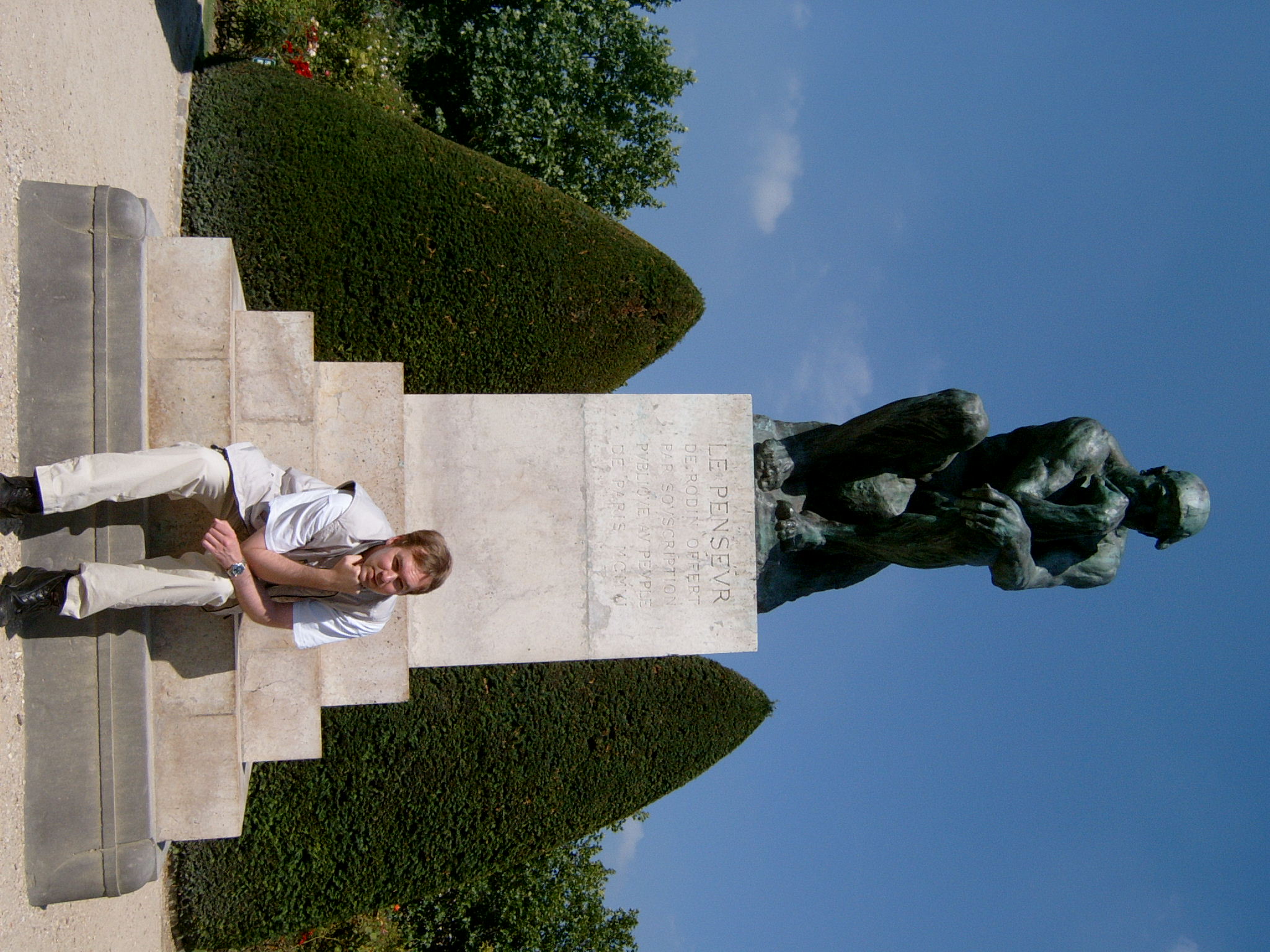
Me Thinking about Copyright in front of Le Pensevr Brendan Scott linked to a couple of articles about CAL (the Copyright Agency Limited) [1]. I have previously written about CAL and the way that they charge organisations for the work of others without their consent [2]. My personal dispute with CAL is that they may be charging people to use my work, I have not given them permission to act on my behalf and will never do so. If they ever bill anyone for my work then it will be an act of piracy. The fact that the government through some bad legislation permitted them to do such things doesn t prevent it from being piracy you can t disagree with this claim without supporting the past actions of China and other countries that have refrained from preventing factories from mass-producing unauthorised copies of software. The first article concerns the fact that last year CAL paid more than $9,400,000 in salary to it s employees (including $350,000 to it s CEO) while it only paid $9,100,000 directly to the authors [3]. It also spent another $300,000 to send it s executives to a junket in Barbados. It did give $76,000,000 to publishers on the assumption that a proportion of this money will be returned to authors of course said publishers could have used the money to have holidays in Barbados. CAL doesn t bother to check who ends up with shares of the $76,000,000 so it s anyone s guess where it ends up. The second article is by James Bradley who is an author and director of CAL [4]. He claims that much of the $76,000,000 was distributed to authors, although I m not sure how he would have any idea of how much it was which is presumably why he used the word much instead of some other word with a clearer meaning such as most . He also notes that CAL invested $1,000,000 in projects specifically designed to promote the development and dissemination of Australian writing , which sounds nice until you consider the fact that none of the authors (apart from presumably the few who sit on the CAL board) had any say in the matter. Can I take a chunk of the $9,400,000 that is paid to CAL employees and invest it in something? If not then why not? If they can invest money that was owed to other people then why can t I invest their salaries? James also says The issue of how well CAL serves rights-holders and authors and artists in particular is a vital one which is remarkably silly. He is entirely ignoring the fact that some rights holders don t want to be served by CAL at all. The fact that CAL can arbitrarily take money for other people s work is an infringement on their rights. He further demonstrates his ignorance by saying Without CAL and the licences we administer, users educational institutions, government agencies and corporate organisations, to name just a few would be required to seek permission every time they reproduced copyright material or run the risk of legal action for copyright infringement of course any educational institution can use Creative Commons licensed work [5]. I ve previously written about the CK12 project to develop CC licensed text books for free use [6]. There s no reason why the same thing can t be done for university text books. In the discussion following Claudine Chionh s LUV talk titled Humanities computing, Drupal and What I did on my holidays [7] it was suggested that it should be possible to gain credit towards a post-graduate degree based on work done to share information this could mean setting up a Drupal site and populating the database or it could mean contributing to CC licensed text books. Let s face it, a good CC text book will be read by many more people than the typical conference proceedings! James says that CAL is used Instead of having to track down individual rights-holders every time they want to reproduce copyright material . The correct solution to this problem would be to change the copyright law such that if a reasonable attempt to discover the rights-holder fails then work is deemed to be in the public domain. The solution to the problem of tracking down rights-holders is not to deny them their rights entirely and grant CAL the right to sub-license their work! He also makes the ridiculous claim Whereas in the age of the physical book schools and universities could have bought fewer books and made up the difference by using photocopies, it is now possible for an organisation to buy a single set of digital materials and reproduce them ad infinitum which implies that CAL is the only thing saving the profits of authors from unrestricted digital copying. Of course as CAL seems to have no active enforcement mechanisms and they apparently charge a per-student fee they really have no impact on the issue of a single licensed copy being potentially used a million times extra use apparently won t provide benefits to the author and use in excess of the licensing scheme won t be penalised. He asks the rhetorical question After all, why go to the expense of creating a textbook (or some form of digital course materials) if you are going to sell only a half-dozen copies to state education departments . The answer is obvious to anyone who has real-world experience with multiple licensing schemes you can sell one single copy and make a profit if the price is high enough. The smart thing for the education departments to do would be to pool their resources and pay text book companies for writing CC licensed texts (or releasing previously published texts under the CC). The average author of a text book would probably be very happy to earn $100,000 for their work, the editorial process probably involves a similar amount of work. So if the government was to offer $300,000 for the entire rights to a text book then I m sure that there would be more than a few publishers tendering for the contract. According to the CIA World Fact Book there are 2,871,482 people in Australia aged 0-14 [8], that means about 205,000 per year level. CAL charges $16 for each primary and secondary student so the government is paying about $3,280,000 every year per year level. Even in year 12 the number of text books used is probably not more than 10, so it seems to me that if all the money paid to CAL by schools in a single year was instead used to fund Creative Commons licensed text books then the majority of the school system would be covered! The universities have a much wider range of text books but they also have higher CAL fees of $40 per student. After cutting off the waste of taxpayer money on CAL fees for schools that money could be invested in the production of CC licensed university text books.

Craig Small: VMware at last

Well I suppose its a bit heretical running something such as VMware, but its an important piece of software at my workplace, it also allows me to run some important VMKs or modules. But at first it just wouldn't compile.

And then I found this wonderful blog about Installing VMware on Ubuntu and it worked wonderfully. The author patched the code and it all installed nicely.

The next problem was one of the services would not start. Port 8308 would refuse to work and when I went to the management screen and said Service Unavailable. I tracked this down to the Java program dying at socket binding time.

The absolute first thing you should check if you are having TCP/IP problems with Java is the sysctl path net.ipv6.bindv6only which you can check with
sysctl net.ipv6.bindv6only.

If it is 1, it might mean bad Java code network problems. And in fact this time it was the problem, changing it to 0 and the Java daemon started and stayed running and all was good.

Incidently if you use the Cisco ASA firewall Java client and it dies, use this trick for it too. On Debian systems, edit the file /etc/sysctl.d/bindv6only and set that option to 0. I don't think its the fault of the key, but bad Java code (but is there anything but bad Java code?)
<script defer="defer" src="http://static.zemanta.com/readside/loader.js" type="text/javascript"></script>

27 February 2010

Jos Parrella: DC11 on BIH!

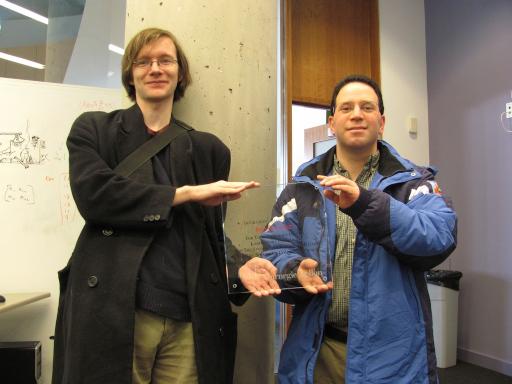
DebConf 11 will be held in Banja Luka, Bosnia and Herzegovina. Munich, Germany arrived on a close second and our bid, Quito, Ecuador, arrived last, allegedly because some points flipped over since DC 11 was meant to happen in Europe. So, after having three DebConfs hosted in America in the last four years, DebConf 11 will travel to Europe in 2011! Good news for all our fellow DDs and contributors over there. The Banja Luka team managed to get an important support from their Government. They even met with the Prime Minister and got him to sign an offer of full support. I think this becomes dangerous for a DebConf, given that I ve worked and have had mishaps while funding conferences with at least three governments (Ecuador, Venezuela and Brazil) with stronger levels of support (Law-like level) for free software and I know that at least other two governments in the World have unfortunately done this in the past. So we need backup plans and lots of follow-up activities with the stakeholders. However, this agreement sets an important milestone in government support for free and open source software as well as Debian. I ll use it in my Debian slides, and congratulations! IMO, Munich would have made a great host for DC11 in terms of air travel connectivity, at a bigger hit on local costs, but nothing that would differ that much from DC7, though! I don t think I ll be able to make it at this moment to Bosnia (struggling for NYC) and at this point it s premature to think on supporting Quito s again for DC12. People and sponsors get gradually tired, even with spiritual commitment. The DC10 decision meeting was long and lots of things needed to be improved. At that moment I thought the Project learnt useful lessons for future meetings, but we re repeating ourselves now on the DC11 decision meeting. And now, I m just hoping for the best, for the sake of the time and sanity of all us here. Ditch the priority list altogether, increase the stakeholders on the global team, filter bids early in the process and use more technology to improve the information flow before the decision!

19 February 2010

Matthew Garrett: Pittsburgh

As I mentioned, I headed to Pittsburgh last week to give some talks at CMU and find out something about what they're doing there. Despite the dire weather that had closed the airport the day before, I had no trouble getting into town and was soon safely in a hotel room with a heater that seemed oddly enthusiastic about blasting cold air at me for ten seconds every fifteen minutes. Unfortunately, it seems that life wasn't as easy for everyone - ten minutes after I arrived, I got a phone call telling me that the city had asked CMU to cancel classes the next day.

This turned out to be much less of a problem than I'd expected - whether because of their enthusiasm to learn about ACPI or because they simply hadn't noticed the alert telling them about the cancellation, a decent body of students turned up the next morning. After a brief chat with Mark Stehlik, the assistant dean for undergraduate education, I headed off to the lecture hall. The fact that I can now just plug my laptop into a VGA cable and have my desktop automatically extend itself continues to amaze me, as does OpenOffice's seemingly unerring ability to get confused about which screen should have my content and which should be showing me the next slide. Nevertheless, facts were imparted and knowledge dropped on those assembled. I'm even reasonably sure that the contents were factually accurate, which is a shame because the most attractive part of teaching always struck me as being able to lie to students who will then happily regurgitate whatever you tell them because in case it turns up on the exam. Perhaps this is why I'm safer out of academia.

Lunch offered an opportunity to visit the Red Hat sponsored lab, which was pleasingly located somewhere other than a basement. The guy on the right of the picture is Greg Kesden, the director of undergraduate laboratories in CS there - it was wonderful to get an opportunity to see the machines getting used, and students seemed genuinely appreciative of the facility.

After lunch I spent a while talking to Satya about the Internet Suspend and Resume project. This is an impressive combination of virtualisation and migration, using a Fedora-based live image to bring up an OS on arbitrary hardware before downloading a machine image and launching it. The majority of the data is pulled in on demand, meaning that initial performance can be slow but ensuring that data is only downloaded if it's needed. When the user is finished, the delta between the original image and the new one can be pushed back to the server while remaining cached on the local machine in case the image is used again.

It's an interesting approach, combining the flexibility of thin clients with the advantages of having actually useful computing power at the local end. There's a few functional awkwardnesses, such as some VMs being unhappy if images are migrated between machines with different CPU features, and it obviously benefits from having significant bandwidth. But the idea of being able to combine the convenience of a floating session with the knowledge that you can still keep copies of your data on you is an attractive one, and I'd love a future where I can move my session between my laptop and a desktop.

After that there was some time to talk to Bill Scherlis and Philip Lehman about the software engineering courses that CMU run. Part of the minor in software engineering includes a course requirement to make a meaningful contribution to an existing software project, from design through to submission and upstream acceptance. I had the opportunity to talk to a couple of the students about this and the differences they found between working with the Mozilla and Chrome communities, which I'll try to write up at some point.

Finally I gave a presentation on Fedora and some of the issues that we face in providing a useful OS when patents and recalcitrant hardware vendors do their best to thwart us. Despite the ice outside and the significantly-below-freezing temperatures, enough people turned up that sorties had to be sent out to find extra chairs. It was great to see how interested people were in learning about what we do, although it's probably the case that the free pizza did help encourage people.

After that it was an early trip back to the airport, where I found that my plane was delayed and the only "restaurant" still open was McDonalds. Even so, I left with the feeling that it had been an interesting and educational visit. Many thanks to David Eckhardt, who runs the OS course I presented to and who looked after me all day - thanks too to Joshua Wise who picked me up when David was running late due to the ground being covered with blocks of ice.

15 February 2010

Biella Coleman: Timing Life

The Chronicle recently published a piece that drew a lot of attention on the difficulties that female academics with kids face during the first 4-7 seven years of their job when academics are expected to do nothing but produce, produce, and produce and yet because they have produced children, they can t produce all that much writing. I don t share the author s predicament in that I don t have kids. But I have had to be an (often long-distance) caretaker for the last 8 years, 4 of which I spent considerable time in PR taking over my mom s caretaker s duties. Although when it comes to female academics and kids there is a lot that can (really must) be done to facilitate a career and motherhood, when it comes to taking care of my mom, being an academic has been an odd and mixed blessing, although it did require me to play with the system self-consciously or else it would have been an early academic death. When my mom was first falling pretty ill, I was wrapping up my dissertation. Though I was ready (on paper at least) to go on the market, I did not step foot in it. I knew that if I landed a job it would be the end of seeing my mom and since she only had a few years of capacity left, I decided to 1) apply only for one postdoctoral position (that had no teaching and was in NJ making it very easy to fly home frequently) 2) if I did not land it, I would return home to spend time with her, keep on writing but not graduate. If I had started a job right after my dissertation, I would have killed my chances of churning out articles, and worse, not have seen much of my mom. I was lucky enough to land this postdoctoral fellowship, which was a life savior. I was able to get a heck of a lot of work done that I would never ever would have been able to do my first two years of teaching (kids or no kids) and I spent many months in PR as well. I always encourage graduate students to apply for these positions because the payback is enormous (with the exception of fellowships that require a ton of teaching), even if the applications are really time consuming, more so than applying for jobs. Though rarely stated in such terms, the first few years of an academic position is not unlike medical residency. It takes a brutal amount of time, not only because of the sheer time you have to work but also because there is so much new to learn and so many different responsibilities to juggle. It is exhiliarting but draining, even disorienting. But there is one important difference from our medical school counterparts (aside from the blood and guts and gore :-)): their hell continues throughout the year, while our hell diminishes during the summer when classes end and writing is supposed to dominate your attention. Also since I am not required to be here once classes ended, I am able to leave NYC and spend it back home. I would simply not be able to do this with most any other full time job (unless it involved telecommunting) and for that I am grateful I landed the job I did. Academia, despite its rat race quality, has allowed me to visit my mom throughout the year and summer. Given the importance of summers for writing it seem that departments/universities can do a lot for female faculty simply by sponsoring or helping to pay for summer day care for two years, thus offsetting some of the costs and then providing them with the space needed to write/produce.This can accompany the policy that some, though not enough schools have, which is turning off your tenure clock for the year you are pregnant, and in some cases, even giving you leave. Thankfully at NYU you can stop your clock not just for pregnancy (which they now automatically do because when it was optional some female professors were not taking it!) but also for circumstances like mine. I was given a short tenure extension, which was not easy to ask for but it is important to do so. I am extremely grateful they have this policy. Something else partially unique about caring for a parent is the perspective it affords. Although it would be a lie to say I suffer no anxieties about my job, I find it hard to get embroiled in a lot of the petty politics of academia, a perspective that clings to me, especially after having to take care of someone with Alzheimers, and especially my mom who we nicknamed the Russian Terror for her turbulent (but really fun) personality. Sitting in front of your computer to write and think about some obscure academic topic feels not only easy after those experiences but a scamish sort of privilege. My mom is now in a nursing home and I no longer have to spend time taking care of her. Instead I visit and see her and get overwhelmingly sad when I do. In one month, it will be her 2 year anniversary in a nursing home and I still have not come to grips with the situation. It strikes me as obscene and unreasonably cruel that this illness can afflict a person for years, even a decade or more. Perhaps more than anything it is the sheer massive length and persistence of this illness that makes it so hard to bear. And I am sure my work for better or for worse has acted as an emotional refuge, where I drown myself in work that I love instead of drowning in the sorrow that I often feel, making what is a difficult job far easier.

Russell Coker: Links February 2010

Popular Mechanics has a good article about 911 [1]. Experts in all the relevant fields were consulted to debunk popular myths. It s an old article but I hadn t read it before and learned a lot. Former CIA analyst Raw McGovern and former FBI attorney/special agent Coleen Rowley, a colleague in Veteran Intelligence Professionals for Sanity wrote an interesting article titled Why Counter-Terrorism Is in Shambles [2]. Such sanity from people who are associated with the intelligence industry is unusual. Gizmodo has an amusing and informative poster about the true risks of airline travel post 911 [3]. Reuters has an interesting article about drug smugglers using Gulfstream and 727 aircraft to smuggle cocaine from South America to Africa [4]. They claim a link to al Quaeda, but such a link seems tenuous from the evidence provided, it does seem reasonable to claim that groups who claim affiliation to al Quaeda are involved in smuggling anyone can claim anything really. An 8yo boy is on the TSA terrorism watch list , he regularly gets frisked when traveling by air [5]. His mother had a security clearance to fly on Air Force 2 when Al Gore was the Vice President, any sane security system would look at the parents rather than an 8yo child children of that age aren t going to independently become terrorists. The Dallas Observer has an interesting article by Kimberly Thorpe about how to beat debt collectors [6]. Apparently most debt collectors break the law in some way and can be sued for damages with a typical settlement of $3,500. Some debtors are suing multiple debt collectors, after one debt collector is successfully sued the debt is passed to another collector who also breaks the law. What I really like about this is that the community of people who sue debt collectors keep the industry honest and protect the majority of the population who don t have the time or interest for engaging in law suits. Read Write Web has an informative article about SourceForge being forced to deny access to people in Cuba, Iran, North Korea, Sudan and Syria [7]. A problem for free software developers is that we often don t know the location of the people we collaborate with so it s best to be as open as possible. This means that the US is not a good place to host servers, probably some part of the EU would be better. Also this sort of thing makes the field of free software development less welcoming to US citizens. Did the congress people learn nothing in high-school? They should know that someone who starts a campaign of ostracism may end up being in the small group. Google is developing a new Native Client (NaCl) system that seems to be like Microsoft ActiveX [8]. I can t imagine this doing anything that couldn t be done with Java, it seems most likely to just marginalise the less popular platforms which isn t in the best interests of Google. Kevin Kelly of the Technium wrote an interesting post about 1000 true fans [9]. The concept is that if you are doing creative work you only need 1000 dedicated fans who buy everything you sell to make a living. If you make $20 per year from each of the 1000 fans and you will earn enough to live. Make $100 per year from each of the 1000 fans and you will be earning more money than most people. The updates show that artists who try this aren t having much success yet, but the Internet population is still increasing dramatically PaxStreamline offers an innovation in commercial air-conditioning, apparently a significant amount of electricity is wasted on heating the air after chilling it excessively to remove moisture [10]. So instead of cooling it they use a liquid dessicant to extract the moisture. Ben Schwartz explains why you should never create files in H.264 or MPEG formats, unless you have a special commercial license then you (and your viewers) will all be liable for patent infringement for any type of commercial use [11]. Note that storing the data on a web site with Google adverts counts as commercial use. I wonder if all those digital cameras and mobile phones that create MPEG videos have appropriate licenses, maybe uploading a file created on your phone breaches the patent. J. K. Rowling (author of Harry Potter) gave an inspiring speech for Harvard graduates [12]. I particularly liked the following reference to her work for Amnesty International Choosing to live in narrow spaces leads to a form of mental agoraphobia, and that brings its own terrors. I think the willfully unimaginative see more monsters. They are often more afraid . Peter Eigen gave an interesting TED talk about the formation of Transparency International and the economic problems that are caused by corruption [13]. The Monthly Review has an interesting article about the failure of the US justice system [14]. The prison industrial complex has captured part of the US government, neo-liberalism is to blame. 59% of Americans agree that homosexuals ought to be able to serve in the U.S. military. But 70 percent believe that gays and lesbians ought to be able to serve in the military [15]. Apparently 11% of Americans think that gays and lesbians are better than homosexuals .

9 February 2010

Christian Perrier: Family DebConf

This year, at DebConf 10, I'll very probably have the pride to attend the conference along with my 22 y.o. son, Jean-Baptiste. JB began a 3 year cycle to graduate in electronics and industrial computing at Polytech'Paris-UPMC and is increasingly becoming more and more interested in Linux, programming and particularly low-level programming in embedded devices (as far as I can understand this stuff). As one can see, he's on his way to become a much clever geek than his dad. It then became natural for him to consider attending Debconf even though he's not (yet) involved in Debian. So, you folks will have to suffer having two bubulles instead of one. That should make a nice picture if Bdale and Elisabeth are there too..:-) See you in NYC!

4 February 2010

Gunnar Wolf: ber-redundant paperwork

 ber-redundant paperwork
So I finally got off my lazy butt and started the paperwork to get a formal recognition of studies equivalence for a undergraduate studies (Licenciatura en ingenier a de software) via CENEVAL's Acuerdo 286 (licenciatura). Part of the paperwork involves filling the form I photographed and attached to this node. This is the utmost example of ber-redundant paperwork... Where it requires my personal data, some of the fields are:
CURP
Clave nica de Registro Poblacional, Unique Populational Registration Key. This is a string composed by:
  • WOIG: First letter and first vowel after the first letter of my first family name, first letter of my second family name, first letter of my given name
  • 760427: birth date, yymmdd
  • H: Sex (H = male, M = female, I guess)
  • DF: State or federative entity I was born in
  • LSN: First consonant after the first letter of the first and second family name and of the given name
  • 03: Deambiguation digits
So far, so good.
Age
Well, cannot it be deduced from the CURP? It has my full birth date!
Sex
Well, cannot it be deduced from the CURP? It is a specific field in it
Birth date
Man, you already have it literally on top of the field!
Nationality
This tramit is only for Mexicans, so... what's the point?
Birth place
The CURP states already the state or federative entity I was born... But I'll accept this one, as not all states have only one city as DF does
Quite a nice catalog of redundancies. As a cherry on top of the cake, the phone number states I should write my long distance phone code (LADA historically, Larga Distancia Autom tica, Automatic Long Distance) only if I am in any of the states. I can only ask myself why... Anyway... Lets continue filling paperwork. Grah. Hopefully I will be able to get my papers... somewhen in the next half century.

4 January 2010

Biella Coleman: All tech

Fall semester I did not teach any classes that covered digital media (in part because I was swimming in the stuff writing a review essay on the topic, which I am sending today to the journal, ending about 4 months of hell). On the other hand, spring semester will be all about digital media: hackers, free software, privacy, piracy, phone phreaking and more. I am excited. Here is my graduate syllabus on the commons and piracy and here is my undergraduate class on hacking. Both are still under development but pretty far along.

29 December 2009

Neil Williams: Intermittent tasks

Sometimes, the main task at any one time is simply going to take time and cannot be shortened. With my poor network connection, this tends to occur any time I need to do network tasks like multistrap and debootstrap tests, archive updates and the rest. The problem is that my network connection is so bad, most apt type tasks completely saturate all available bandwidth, especially when downloading a single large package like those built from gcc or OOo.

Thankfully, gpdftext has provided an intermittent task that is useful, intermittent, non-network dependent and relatively straightforward (so as not to be too distracting from the main task) without being sufficiently routine to make me think about automating it.
I've downloaded some 70 public domain novels as A4 PDF and I'm gradually working through them in gpdftext to tidy up the chapter headings and reformat as an A5 PDF, ready to be transferred back to my ebook reader.

This version of gpdftext isn't released yet (it's current SVN, 0.1.0) as it's in string freeze. However, it provides a fairly robust test of the next release. :-)

Current list includes: Little Women, Fairy Tales of Hans Christian Andersen, Lady Susan, Northanger Abbey, Pride and Prejudice, Sense and Sensibility, Peter Pan (Peter and Wendy), Lorna Doone: A Romance Of Exmoor, The Gap in the Curtain, The Thirty-Nine Steps, Through the Looking Glass (And What Alice Found There), Fanny Hill: Memoirs of a Woman of Pleasure, Moll Flanders, Robinson Crusoe, The Further Adventures of Robinson Crusoe, A Tale of Two Cities, David Copperfield, Great Expectations, Little Dorrit, Oliver Twist, The Life And Adventures Of Nicholas Nickleby, The Adventures of Sherlock Holmes, The Casebook of Sherlock Holmes, The Hound of the Baskervilles, The Memoirs of Sherlock Holmes, The Return of Sherlock Holmes, Cranford, The Wind in the Willows, King Solomon's Mines, Tess of the d'Urbervilles, The Hunchback of Notre Dame, Declaration of Independence, Just so Stories, Kim, The Jungle Book, The Man Who Would be King, The Arabian Nights, Lady Chatterley's Lover, Sons and Lovers, Women in Love, The Story of Doctor Dolittle, The Call of the Wild, The Game, White Fang, Moby Dick, Anne of Green Gables, The Well at the World's End, Pygmalion, An Inquiry into the Nature and Causes of the Wealth of Nations, East is West, Strange Case of Dr Jekyll and Mr Hyde, The Jewel of Seven Stars, Anna Karenina, The Adventures of Huckleberry Finn, The Adventures of Tom Sawyer, The Kama Sutra, 20,000 Leagues Under the Sea, The Aeneid of Virgil.

That should be enough for now.... (21 converted so far).

19 December 2009

Michael Banck: 19 Dec 2009

Tutorials at the Garching Debian Stammtisch Munich traditionally used to have a lot of Debian Developers, but over the last couple of years quite a few of us who used to be students graduated and moved elsewhere or became very busy with their day jobs. We still meet for having a beer and a chat, but not as much as some years ago. We used to meet about once a month, but in 2009 we only managed to meet four times (however, we organized a Bug Squashing Party in November and had a special meeting as Lenny Release Party in February) As the meetings are really rather informal and not necessarily very Debian related, it is difficult to attract new people this way. So Johannes Wiedersich and I decided to try a more hands-on approach by having a second meeting in Garching, in the student-run bar on the campus of the Technische Universit t M nchen (TUM). The idea was to get more of the local science, mathematics and computer science students (as well as possibly interested faculty members) involved. We tried a first time about a year ago, but after two or three meeting in late 2008 and early 2009, we lost momentum. However, we began organizing the meetings again with the start of the winter term, and had two rather successful meetings so far. For the first meeting, we basically handed out some information on how to get involved locally (the Debian-Munich list, its subscription address, the wiki etc.) and discussed Debian in general and Debconf11 in Munich in particular. About half a dozen people showed up, and two of these attended the Bug Squashing Party later that month, and another one (a faculty member) got very active in Debconf11 organization. Thus, I was quite happy with the outcame of that meeting. Some days ago, we had another meeting, and this time I was doing a live-tutorial on Debian package building. As Johannes was ill, we did not manage to announce or publicize the meeting well in advance, so only three people showed up. Still, I think it went rather OK, and we will be doing another Debian package-building tutorial for the next meeting, and possibly other turorials/workshops afterwards (ideas so far include library maintenance, Debconf, how the Debian community is organized and how to get involved in it). As doing a live-tutorial on one notebook is a bit difficult if you both have to type on it and people should see what happens, we will either use some extra hardware next time, or move to some nearby seminar room with a projector, this will be announced in advance. So if you are on Garching campus or nearby and interested in Debian development (and Debian package-building in particular), come to the next meeting on January 13th! We decided to meet on the second Wednesday of each month, at 18h. Subscribe to the Debian-Munich list to get the invitation or watch out for the flyers on the campus.

Next.

Previous.