Manuel A. Fernandez Montecelo: Debian GNU/Linux port for RISC-V 64-bit (riscv64)
This is a post describing my involvement with the Debian GNU/Linux port for
RISC-V (unofficial and not endorsed by Debian
at the moment) and announcing the availability of the repository (still very
much WIP) with packages built for this architecture.
If not interested in the story but you want to check the repository, just jump to the bottom.
Roots
A while ago, mostly during 2014, I was involved in the Debian port for OpenRISC
(or1k)
about which I posted (by coincidence) exactly 2 years ago.
The two of us working on the port stopped in August or September of that year,
after knowing that the copyright of the code to add support for this
architecture in GCC would not be assigned to the FSF, so
it would never be added to GCC upstream unless the original authors changed
their mind (which they didn't) or there was a clean-room reimplementation (which
didn't happen so far).
But a few other key things contributed to the decision to stop working on that
port, which bear direct relationship to this story.
One thing that particularly influenced me to stop working on it was a sense of
lack of purpose, all things considered, for the OpenRISC port that we were
working on.
For example, these chips are sometimes used as part of bigger devices by Samsung
to control or wake up other chips; but it was not clear whether there would ever
be devices with OpenRISC as the main chip, specially in devices powerful enough
to run Linux or similar kernels, and Debian on top. One can use FPGAs to
synthesise OpenRISC or1k, but these are slow, and expensive when using lots of
memory.
Without prospects of having hardware easily available to users, there's not much
point in having a whole Debian port ready to run on hardware that never comes to
be.
Yeah, sure, it's fun to create such a port, but it's tons of work to maintain
and keep it up to-date forever, and with close to zero users it's very
unrewarding.
Another thing that contributed to decide to stop is that, at least in my
opinion, 32-bit was not future-proof enough for general purpose computing,
specially for new devices and ports starting to take off on that time and age.
There was some incipient work to create another OpenRISC design for 64-bits, but
it was still in an early phase.
My secret hope and ultimate goal was to be able to run as much a free-ish
computer as possible as my main system. Still today many people are buying
and using 32-bit devices, like small boards; but very few use it as their main
computer or servers for demanding workloads or complex services. So for me,
even if feasible if one is very austere and dedicated, OpenRISC or1k failed that
test.
And lastly, another thing happened at the time...
Enter RISC-V
In August 2014, at the point when we were fully acknowledging the problem of
upstreaming (or rather, lack thereof) the support for OpenRISC in GCC,
RISC-V was announced to the world, bringing along papers
with suggestive titles such as Instruction Sets Should Be Free: The Case For
RISC-V
(pdf) and
articles like RISC-V: An Open Standard for SoCs - The case for an open
ISA in EE
Times.
RISC-V (as the previous RISC-n marks) had been designed (or rather, was being
designed, because it was and is an as yet unfinished standard) by people
from UC Berkeley, including David
Patterson,
the pioneer of RISC computer designs and co-author of the seminal book
Computer Architecture: A Quantitative Approach . Other very capable people
are also also leading the project, doing the design and legwork to make it
happen see the list of contributors.
But, apart from throwing names, the project has many other merits.
Similarly to OpenRISC, RISC-V is an open instruction set architecture (ISA), but
with the advantage of being designed in more recent times (thus avoiding some
mistakes and optimising for problems discovered more recently, as technology
evolves); with more resources; with support for instruction widths of 32, 64 and
even 128 bits; with a clean set of standard but optional extensions (atomics,
float, double, quad, vector, ...); and with reserved space to add new extensions
in ordered and compatible ways.
In the view of some people in the OpenRISC community, this unexpected
development in a way made irrelevant the ongoing update of OpenRISC for 64-bits,
and from what I know and for better or worse, all efforts on that front stopped.
Also interestingly (if nothing else, for my purposes of running as much a free
system as possible), was that the people behind RISC-V had strong intentions to
make it useful to create modern hardware, and were pushing heavily towards it
from the beginning.
And together with this announcement or soonly after, it came the promise of
free-ish hardware in the form of the lowRISC project.
Although still today it seems to be a long way from actually shipping hardware,
at least there was some prospect of getting it some day.
On top of all that, about the freedom aspect, both the Berkeley and lowRISC
teams engaged since very early on with the free hardware community, including
attending and presenting at OpenRISC events; and lowRISC intended to have as
much free hardware as possible in their planned SoC.
Starting to work on the Debian port, this time for RISC-V
So in late 2014 I slowly started to prepare the Debian port, switching on and
off.
The Userland spec was frozen in 2014 just before the announcement, the Privilege
one is still not frozen today, so there was no need to rush.
There were plans to upstream the support in the toolchain for RISC-V (GNU
The repository is signed with my key as Debian Developer, contained in the file
binutils, glibc and GCC; Linux and other useful software like Qemu) in
2015, but sadly these did not materialise until late 2016 and 2017. One of the
main reasons for the delay was due to the slowness to sort out the copyright
assignment of the code to the FSF (again). Still today, only binutils and
GCC are upstreamed, and Linux and glibc depend on the Privilege spec being
finished, so it will take a while.
After the experience with OpenRISC and the support in GCC, I didn't want to
invest too much time, lest it all became another dead-end due to lack of
upstreaming so I was just cross-compiling here and there, testing Qemu
(which still today is very limited for this architecture, e.g. no network
support and very limited character and block devices) and trying to find and
report bugs in the implementations, and send patches (although I did not
contribute much in the end).
Incompatible changes in the toolchain
In terms of compiling packages and building-up a repository, things were
complicate, and less mature and stable than the OpenRISC ones were even back in
2014.
In theory, with the Userland spec being frozen, regular programs (below the
Operating System level) compiled at any time could have run today; but in
practice what happened is that there were several rounds of profound or, at
least, disrupting changes in the toolchain before and while being upstreamed,
which made the binary packages that I had built to not work at all (changes in
dynamic loader, registers where arguments are stored when jumping functions,
etc.).
These major breakages happened several times already, and kind of unexpectedly
at least for the people not heavily involved in the implementation.
When the different pieces are upstreamed it is expected that these breakages
won't happen; but still there's at least the fundamental bit of glibc, which
will probably change things once again in incompatible ways before or while
being upstreamed.
Outside Debian but within the FOSS / Linux world, the main project that I know
of is that some people from Fedora also started a port in mid 2016 and did great
advances, but from what I know they put the project in the freezer in late
2016 until all such problems are resolved they don't want to spend time
rebootstrapping again and again.
What happened recently on the Debian front
In early 2016 I created the page for RISC-V in
the Debian wiki, expecting that things were at last fully stable and the
important bits of the toolchain upstreamed during that year I was too
optimistic.
Some other people (including Debian folks) have been contributing for a while,
in the wiki, mailing lists and IRC channels, and in the RISC-V project mailing
lists you will see their names everywhere.
However, due to the combination of lack of hardware, software not upstreamed and
shortcomings of emulators (chiefly Qemu) make contributions hard and very
tedious, nothing much happened recently visible to the outside world in terms of
software.
The private repository-in-the-making
In late 2015 and beginning of 2016, having some free time in my hands and
expecting that all things would coalesce quickly, I started to build a
repository of binary packages in a more systematic way, with most of the basic
software that one can expect in a basic Debian system (including things common
to all Linux systems, and also specific Debian software like dpkg or apt,
and even aptitude!).
After that I also built many others outside the basic system (more than 1000
source packages and 2000 or 3000 arch-dependent binary packages in total),
specially popular libraries (e.g. boost, gtk+ version 2 and 3), interpreters
(several versions of lua, perl and python, also version 2 and 3) and in
general packages that are needed to build many other packages (like doxygen).
Unfortunately, some of these most interesting packages do not compile cleanly
(more because of obscure or silly errors than proper porting), so they are not
included at the moment.
I intentionally avoided trying to compile thousands of packages in the archive
which would be of nobody's use at this point; but many more could be compiled
without much effort.
About the how, initially I started cross-compiling and using
rebootstrap, which was of
great help in the beginning. Some of the packages that I cross-compiled had
bugs that I did not know how to debug without a live and native (within
emulators) system, so I tried to switch to natively built packages very early
on. For that I needed many packages built natively (like doxygen or cmake)
which would be unnecessary if I remained cross-compiling the host tools would
be used in that case.
But this also forced me to eat my own dog food, which even if much slower and
tedious, it was on the whole a more instructive experience; and above all, it
helped to test and make sure that the the tools and the whole stack was working
well enough to build hundreds of packages.
Why the repository-in-the-making was private
Until now I did not attempt to make the repository available on-line, for
several reasons.
First because it would be kind of useless to publish files that were not working
or would soon not work, due to the incompatible changes in the toolchain,
rendering many or most of the packages built useless. And because, for many
months now, I expected that things would stabilise and to have something stable
really soon now but this didn't happen yet.
Second because of lack of resources and time since mid 2016, and because I got
some packages only compiled thanks to (mostly small and unimportant, but
undocumented and unsaved) hacks, often working around temporary bugs and thus
not worth sending upstream; but I couldn't share the binaries without sharing
the full source and fulfill licenses like the GNU
GPL. I did a new round of clean
rebuilds in the last few weeks, just finished, the result is close to 1000
arch-dependent packages.
And third, because of lack of demand. This changed in the last few weeks, when
other people started to ask me to share the results even if incomplete or not
working properly (I had one request in the past, but couldn't oblige in time
at the time).
Finally, the work so far: repository now on-line
So finally, with the great help from Kurt Keville from MIT, and Bytemark
sponsoring a machine where most of the packages were built, here we have the
repository:
The lines for /etc/apt/sources.list are:
 deb [ arch=riscv64 signed-by=/usr/share/keyrings/debian-keyring.gpg ] http://riscv.mit.edu/debian unstable main
 deb-src [ signed-by=/usr/share/keyrings/debian-keyring.gpg ] http://riscv.mit.edu/debian unstable main
/usr/share/keyrings/debian-keyring.gpg, which is part of the package
debian-keyring (available from Debian and derivatives).
WARNING!!
This repository, though, is very much WIP, incomplete (some package
dependencies cannot be fulfilled, and it's only a small percentage of the Debian
archive, not trying to be comprehensive at the moment) and probably does not
work at all in your system at this point, for the following reasons:
- I did not create Debian packages for fundamental pieces like
glibc,gcc,linux, etc.; although I hope that this happens soon after the next stable release (Stretch) is out of the door and the remaining pieces are upstreamed (help welcome).
- There's no base system image yet, containing the software above plus a boot
loaders and sequence to set up the system correctly. At the moment you have
to provide your own or use one that you can find around the net. But
hopefully we will provide an image soon. (Again, help welcome).
- Due to ongoing changes in the toolchain, if the version of the toolchain in your image is very new or very old, chances are that the binaries won't work at all. The one that I used was the master branch on 20161117 of their fork of the toolchain: https://github.com/riscv/riscv-gnu-toolchain
glibc provided it will be difficult that you can get the binaries to
run at all; but there are some packages that are arch-dependent but not too tied
to libc or the dynamic loader will not be affected.
At least you can try one the few static packages present in Debian, like the one
in the package bash-static. When one removes moving parts like the
dynamic loader and libc, since the basic machine instructions are stable for
several years now, it should work, but I wouldn't discard some dark magic that
prevents even static binaries from working.
Still, I hope that the respository in its current state is useful to some
people, at least for those who requested it. If one has the environment set-up,
it's easy to unpack the contents of the .deb files and try out the software
(which often is not trivial or very slow to compile, or needs lots of
dependencies to be built first first).
... and finally, even if not useful at all for most people at the moment, by
doing this I also hope that efforts like this spark your interest to contribute
to free software, free hardware, or both! :-)


 Ikea recently launched their
 About
GNOME 3 introduced an extensions framework that allows its users to extend the desktop shell by writing extensions using JavaScript and CSS. It works quite well and dozens of extensions have already been uploaded to the
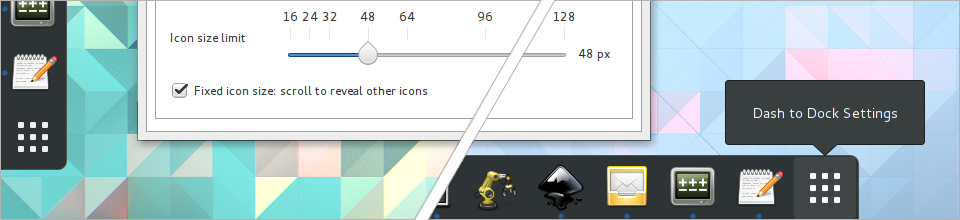
 Speeds up shell animations. Animations can make the system more usable, but it can also be either distracting or cause some slight delays while waiting for the animation to complete. This gives you a sliding scale that lets you choose how much you d like to speed it up.


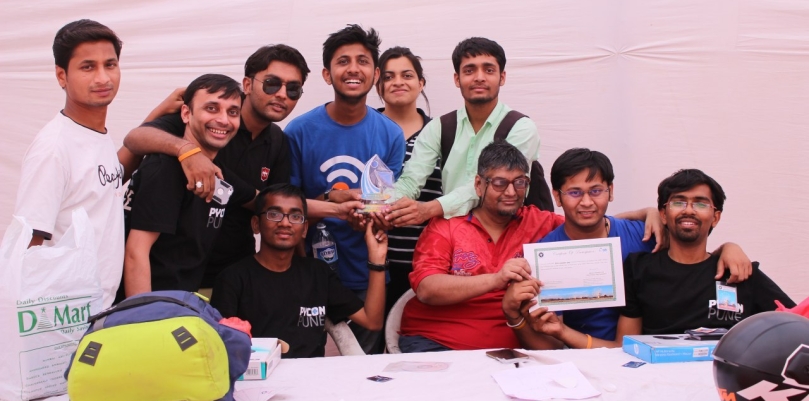 The above picture is the blend of the two communities from foss community and mozilla India. And unless you were there you wouldn t know who is from which community which is what FOSS is all about. But as always I m getting a bit ahead of myself.
Akshat, who works at NCRA as a programmer, the standing guy on the left shared with me in January this year that this year too, we should have two stalls, foss community and mozilla India stalls next to each other. While we had the banners, we were missing stickers and flyers. Funds were and are always an issue and this year too, it would have been emptier if we didn t get some money saved from last year minidebconf 2016 that we had in Mumbai. Our major expenses included printing stickers, stationery and flyers which came to around INR 5000/- and couple of LCD TV monitors which came for around INR 2k/- as rent. All the labour was voluntary in nature, but both me and Akshat easily spending upto 100 hours before the event. Next year, we want to raise to around INR 10-15k so we can buy 1 or 2 LCD monitors and we don t have to think for funds for next couple of years. How will we do that I have no idea atm.
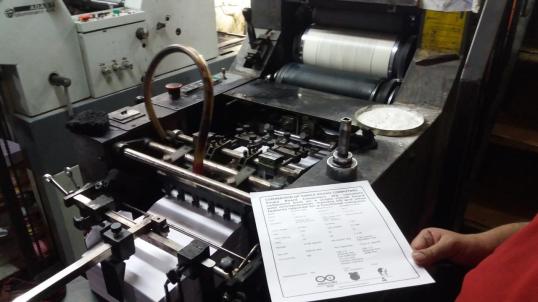 Me and Akshat did all the printing and stationery runs and hence had not been using my lappy for about 3-4 days.
Come to the evening before the event and the laptop would not start. Coincidentally, or not few months or even last at last year s Debconf people had commented on IBM/Lenovo s obsession with proprietary power cords and adaptors. I hadn t given it much thought but when I got no power even after putting it on AC power for 3-4 hours, I looked up on the web and saw that the power cord and power adaptors were all different even in T440 and even that under existing models. In fact I couldn t find mine hence sharing it via pictures below.
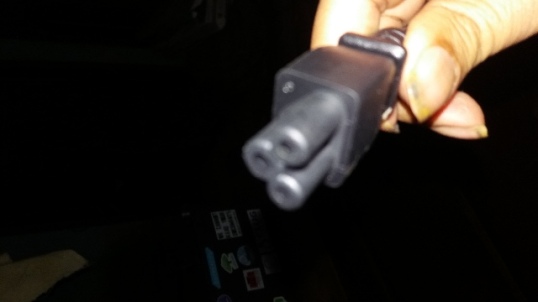
 I knew/suspected that thinkpads would be rare where I was going, it would be rarer still to find the exact power cord and I was unsure whether it was the power cord at fault or adaptor or whatever goes for SMPS in laptop or memory or motherboard/CPU itself. I did look up the documentation at support.lenovo.com and was surprised at the extensive documentation that Lenovo has for remote troubleshooting.
I did the usual take out the battery, put it back in, twiddle with the little hole in the bottom of the laptop, trying to switch on without the battery on AC mains, trying to switch on with battery power only but nothing worked. Couple of hours had gone by and with a resigned thought went to bed, convincing myself that anyways it s good I am not taking the lappy as it is extra-dusty there and who needs a dead laptop anyways.
Update After the event was over, I did contact Lenovo support and within a week, with one visit from a service engineer, he was able to identify that it was a faulty cable which was at fault and not the the other things which I was afraid of. Another week gone by and lenovo replaced the cable. Going by service standards that I have seen of other companies, Lenovo deserves a gold star here for the prompt service they provided. I probably would end up subscribing to their extended 2-year warranty service when my existing 3 year warranty is about to be over.
Next day, woke up early morning, two students from COEP hostel were volunteering and we made our way to NCRA, Pune University Campus. Ironically, though we were under the impression that we would be the late arrivals, it turned out we were the early birds. 5-10 minutes passed by and soon enough we were joined by
 Our find for the event was Aarti Kashyap who you can see above. She is a third-year student at COEP and one of the rare people who chose to interact with hardware rather than software. From last several years, we had been trying, successfully and unsuccessfully to get more Indian women and girls interested into technology. It is a vicious circle as till a girl/woman doesn t volunteer we are unable to share our knowledge to the extent we can which leads them to not have much interest in FOSS or even technology in general.
While there are groups are
 What had been interesting about the whole journey were the new people who were bringing all their passion and creativity to the fore. From the mozilla community, we had Akshay who is supposed to be a wizard on graphics, animation, editing anything to do with the visual medium. He shared some of the work he had done and also shared a bit about how blender works with people who wanted to learn about that.
Mayur, whom you see in the picture pointing out something about FOSS and this was the culture that we strove to have. I know and love and hate the browser but haven t been able to fathom the recklessness that Mozilla has been doing the last few years, which has just been having one mis-adventure after another.
For instance,


 Please use

 I was an happy user of




 While learning about and configuring weechat this evening, I noticed a lot
of complexity and unsatisfying tradeoffs related to its UI, its mouse
support, and its built-in window system. Got to wondering what I'd do
differently, if I wrote my own IRC client, to avoid those problems.
The first thing I realized is, it is not a good idea to think about
writing your own IRC client. Danger will robinson..
So, let's generalize. This blog post is not about designing an IRC client,
but about exploring simpler ways that something like an IRC client
might handle its UI, and perhaps designing something general-purpose that
could be used by someone else to build an IRC client, or be mashed up with
an existing IRC client.
What any modern IRC client needs to do is display various channels to the
user. Maybe more than one channel should be visible at a time in some kind
of window, but often the user will have lots of available channel and only
want to see a few of them at a time. So there needs to be an interface for
picking which channel(s) to display, and if multiple windows are shown, for
arranging the windows. Often that interface also indicates when there is
activity on a channel. The most recent messages from the channel are
displayed. There should be a way to scroll back to see messages that have
already scrolled by. There needs to be an interface for sending a message
to a channel. Finally, a list of users in the channel is often desired.
Modern IRC clients implement their own UI for channel display, windowing,
channel selection, activity notification, scrollback, message entry, and
user list. Even the IRC clients that run in a terminal include all of that.
But how much of that do they need to implement, really?
Suppose the user has a tabbed window manager, that can display virtual
terminals. The terminals can set their title, and can indicate when there
is activity in the terminal. Then an IRC client could just open a bunch of
terminals, one per channel. Let the window manager handle channel
selection, windowing (naturally), and activity notification.
For scrollback, the IRC client can use the terminal's own scrollback
buffer, so the terminal's regular scrollback interface can be used. This is
slightly tricky; can't use the terminal's alternate display, and have to
handle the UI for the message entry line at the bottom.
That's all the UI an IRC client needs (except for the user list), and most
of that is already implemented in the window manager and virtual terminal.
So that's an elegant way to make an IRC client without building much new UI
at all.
But, unfortunately, most of us don't use tabbed window managers (or tabbed
terminals). Such an IRC client, in a non-tabbed window manager, would be a
many-windowed mess. Even in a tabbed window manager, it might be annoying
to have so many windows for one program.
So we need fewer windows. Let's have one channel list window, and one
channel display window. There could also be a user list window. And there
could be a way to open additional, dedicated display windows for channels,
but that's optional. All of these windows can be seperate virtual
terminals.
A potential problem: When changing the displayed channel, it needs
to output a significant number of messages for that channel,
so that the scrollback buffer gets populated. With a large number of lines,
that can be too slow to feel snappy. In some tests, scrolling
10 thousand lines was noticiably slow, but scrolling 1 thousand lines
happens fast enough not to be noticiable.
(Terminals should really be faster at scrolling than this, but they're still
 I recently needed to get access to a DataEase database; the person I helped
was the legitimate owner of the data, but had forgotten the password,
as the database was largely from 1996. There are various companies
around the world that seem to do this, or something similar (like give
you an API), for a usually unspecified fee; they all have very 90s homepages
and in general seem like they have gone out of business a long time ago.
And I wasn't prepared to wait.
For those of you who don't know DataEase, it's a sort-of relational database
for DOS that had its heyday in the late 80s and early 90s (being sort of
the cheap cousin of dBase); this is before SQL gained traction as the
standard query language, before real multiuser database access, and before
variable-width field storage.
It is also before reasonable encryption. Let's see what we can do.
DataEase has a system where tables are mapped through the data dictionary,
which is a table on its own. (Sidenote: MySQL pre-8.0 still does not have
this.) This is the file RDRRTAAA.DBM; I don't really know what RDRR stands
for, but T is the database letter in case you wanted more than one database
in the same directory, and AAA, AAB, AAC etc. is a counter so that a table
grows to be too big for one file. (There's also .DBA files for structure of
non-system tables, and then some extra stuff for indexes.)
DBM files are pretty much the classical, fixed-length 80s-style database
files; each row has some flags (I believe these are for e.g. row is
deleted ) and then just the rows in fixed format right after each other.
For instance, here's one I created as part of testing (just the first few
lines of the hexdump are shown):

 Previously:

 I attended this year's Linux Kernel Summit in Santa Fe, NM, USA and
made notes on some of the sessions that were relevant to Debian.