Russ Allbery: Review: Surface Detail
| Publisher: | Orbit |
| Copyright: | October 2010 |
| Printing: | May 2011 |
| ISBN: | 0-316-12341-2 |
| Format: | Trade paperback |
| Pages: | 627 |
| Publisher: | Orbit |
| Copyright: | October 2010 |
| Printing: | May 2011 |
| ISBN: | 0-316-12341-2 |
| Format: | Trade paperback |
| Pages: | 627 |
| Series: | Class 5 #6 |
| Publisher: | Eclipse |
| Copyright: | November 2024 |
| ISBN: | 1-7637844-0-1 |
| Format: | Kindle |
| Pages: | 289 |

~/.config/user-dirs.dirs configuration file.
If you are a system administrator or distribution vendor and want to set default locations for the default XDG directories, you can edit the /etc/xdg/user-dirs.defaults file to set global defaults that affect all users on the system (users can still adjust the settings however they like though).
xdg-user-dirs brings full support for the Meson build system (dropping Automake), translation updates, and some robustness improvements to its code. We also fixed the arbitrary code execution from unsanitized input bug that the Arch Linux Wiki mentions here for the xdg-user-dirs utility, by replacing the shell script with a C binary.
Thanks to everyone who contributed to this release!
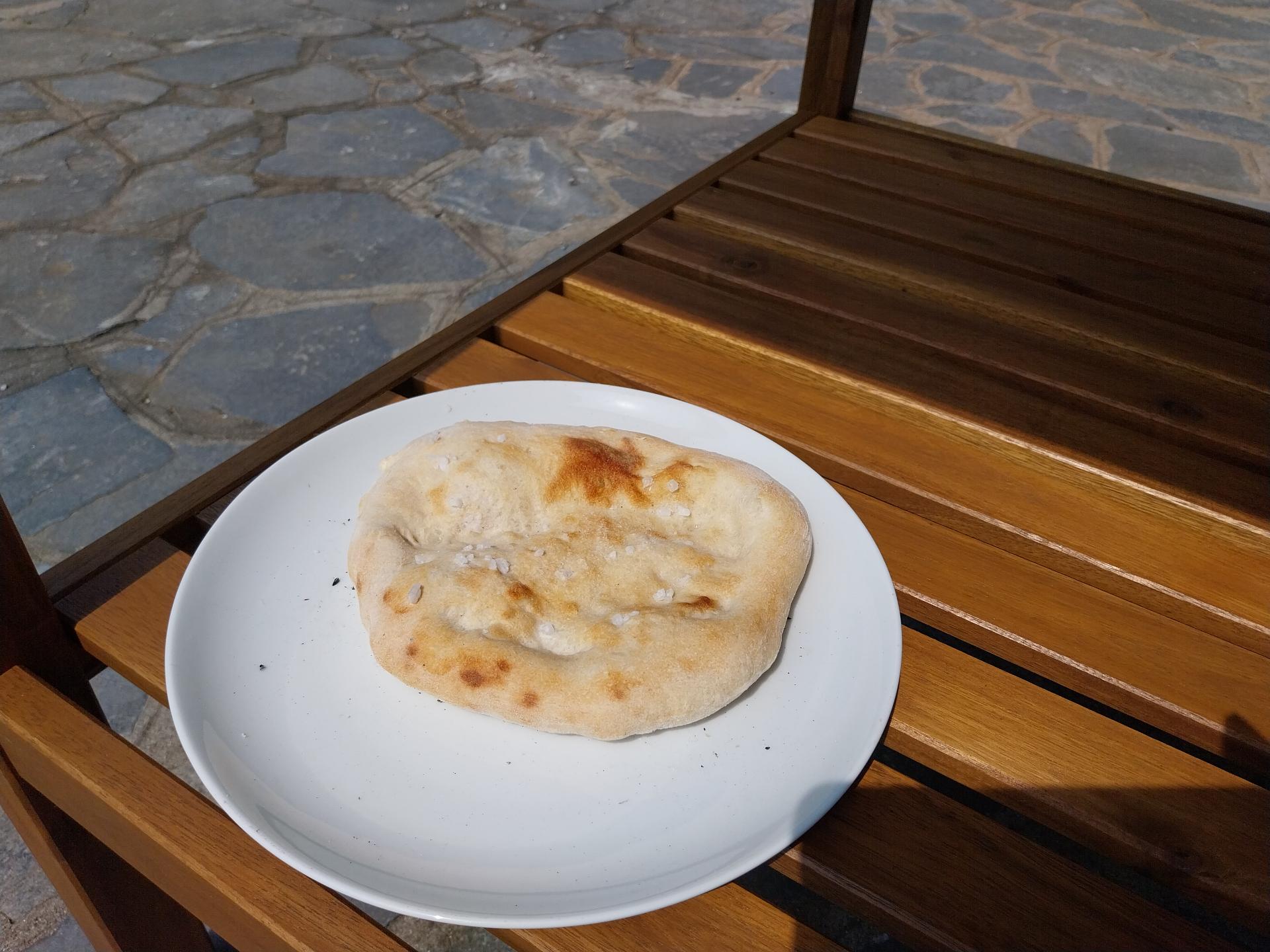
And it was good. The kind of pizza that is quite soft, especially near
the borders.
We ate it with fresh mozzarella and tomatoes, and then made another one
the same way, to finish the mozzarella.
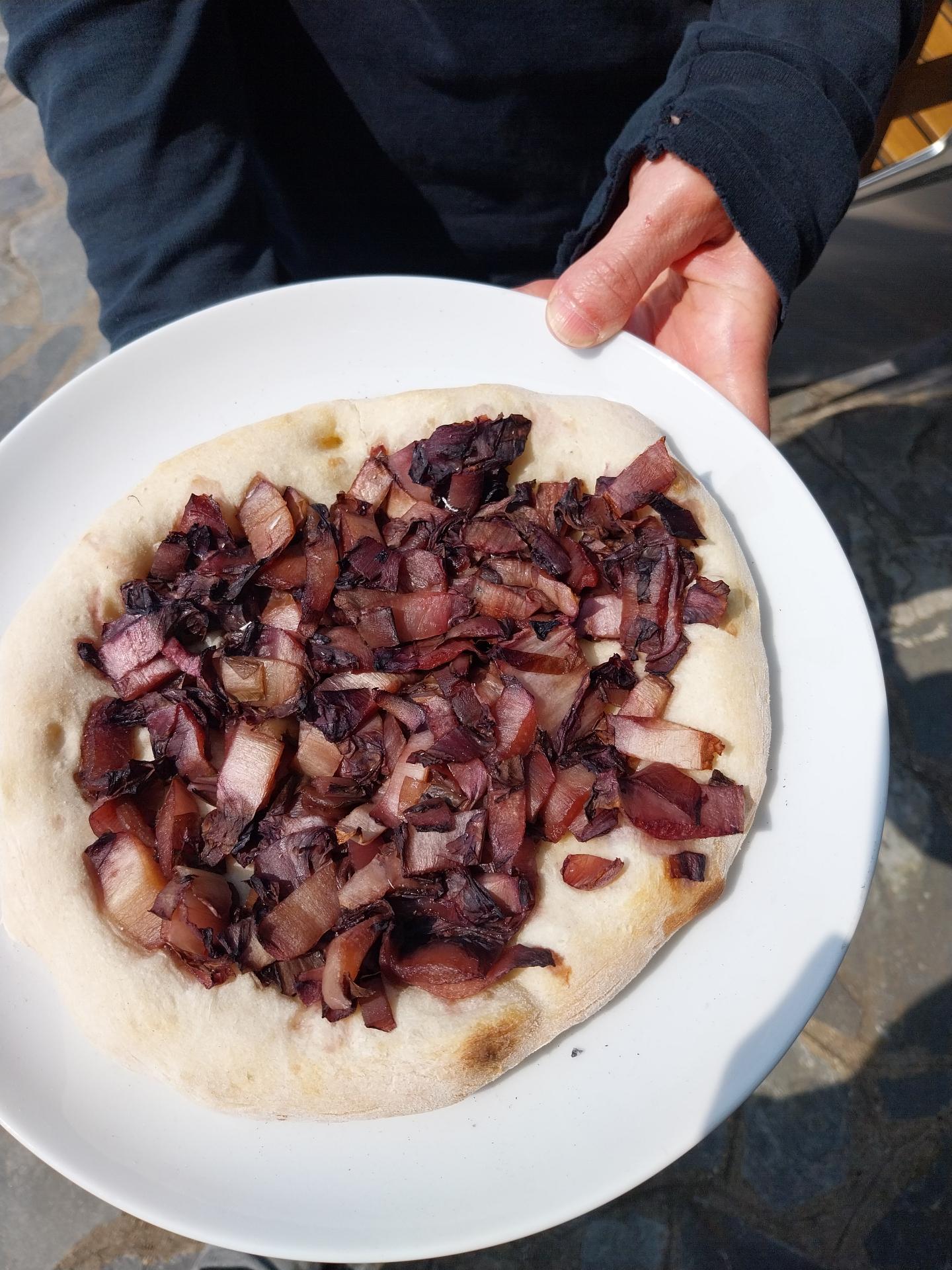
This was supposed to be our lunch, but we decided to try one with some
leftover cooked radicchio, and that also worked quite nicely.
And finally, we decided we needed to try a more classical pizza, with
tomato sauce and cured meat, of which we forgot to take pictures.
Up to here we had eaten about half of the dough, and we were getting
full: I had prepared significantly more than what I expected to eat, to
be able to accidentally burn some, but also with the idea to bake
something else to be eaten later.
So I made two more focaccias with just water and salt, and then I tried
to cook some bread with what I expected to be residual heat.
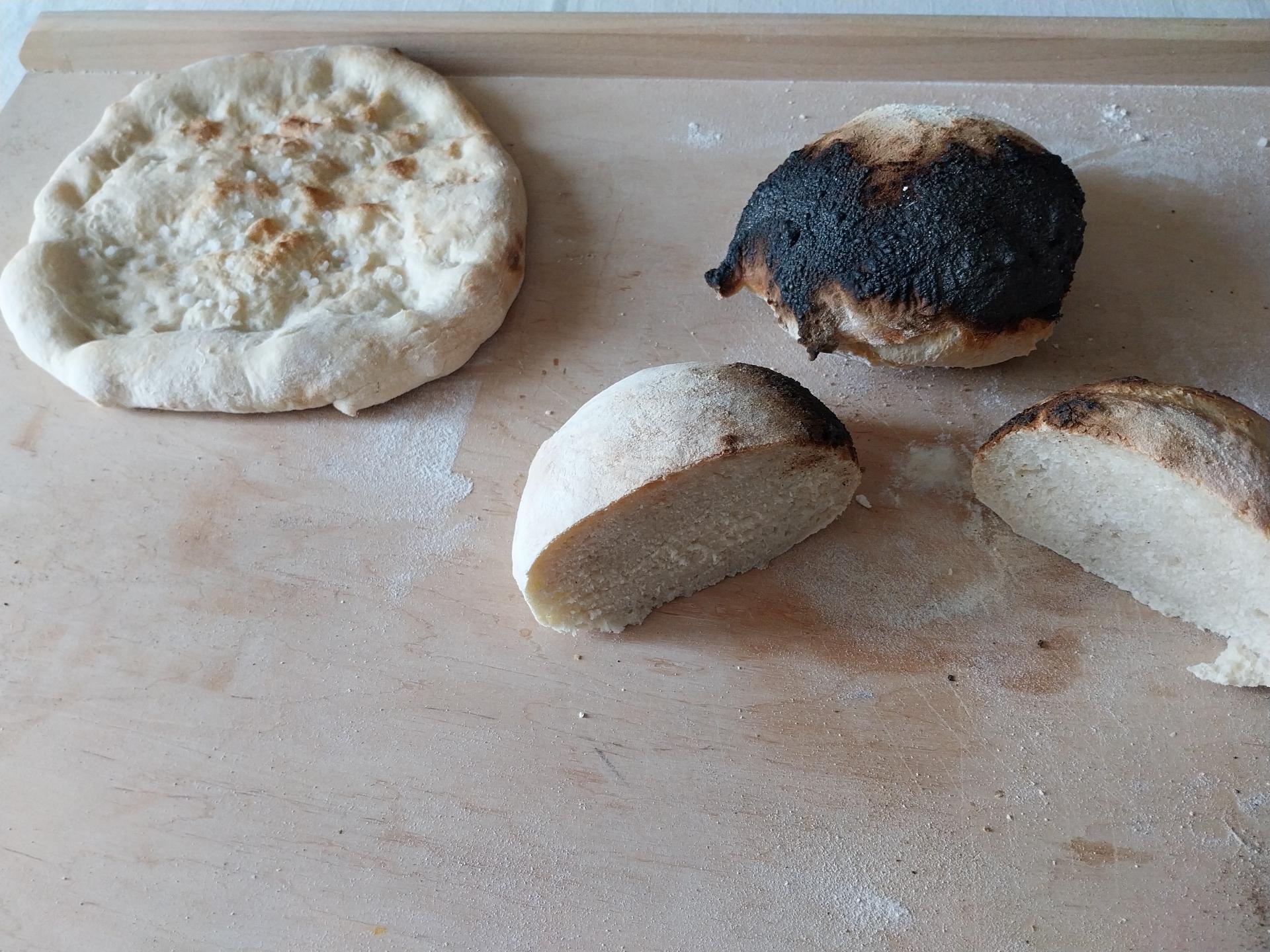
Except that the oven was getting a bit too cold, so my partner added
some charcoal, and when I put the last two unflattened balls right at
the back of the oven where it was still warmer, that side carbonized.
After 5 minutes I moved them to the middle of the oven, and turned them,
and then after another turn and 5 more minutes they were ready. And
other than the burnt crust, they were pretty edible.
So, the thoughts after our first experience.
Everybody around the table (my SO, my mother and me) was quite happy
with the results, and they are different enough from the ones I could
get with the regular oven.
As I should have expected, it s much faster than a masonry oven, both in
getting to temperature and in cooling down: my plan for residual heat
bread cooking will have to be adjusted with experience.
We were able to get it hot enough, but not as hot as it s supposed to be
able to get: we suspect that using just charcoal may have influenced it,
and next week we ll try to get some wood, and try with a mix.
As for the recipe, dividing the dough in eight parts worked quite well:
maybe the pizzas are a bit on the smaller side, but since they come one
at a time it s more convenient to cut and share them, and maybe make a
couple more at the end.
Of course, I ll want to try different recipes, for different styles of
pizzas (including some almost-trademark-violating ones) and for other
types of flatbread.
I expect it won t be hard to find volunteers to help us with the
experiments. :D
- A lot
- Everyone has a few universal basic qualities, and some special qualities. To me life is pursuit of exploring world based on those qualities and maturing those qualities as one goes on about exploring world/life with those qualities.
Discovering and enhancing experiences as one goes through them.
- life is endless suffering
- my answer might change daily, but this is what I ve noticed and feel recently. Life is a spectrum with two distinct ends: what we control and what we don t. At birth, the spectrum is largely tilted toward control, but throughout our lives, it gradually shifts toward the other side. Ultimately, as we approach death, we lose all control over any aspect of our existence, reaching the other end of the spectrum.
tho this isn t universal, privilege plays a huge part in what you control tho i believe it holds true for the majority
but yeah man, meaning and purpose are dynamic, it s in their nature to change i can give you a different answer this evening itself xD
- Funeral Monologue from Synecdoche, New York. https://www.youtube.com/watch?v=Z9PzSNy3xj0
- Zindagi ek nadiya hai, Aur mujhe tairna nahi aata
(translation - Life is a river, and I don t know how to swim)
On a more serious note, Life is what you make it out for yourself. The only established truth is that it will end. We can never know if there is something after or if there was something before. So try to live a life that you feel aspired by? But this question was beautifully answered by that book which you had about that dying professor
(Me - He was talking about Tuesday s with Morrie)
- My answer is 42
- One, it s living on your own terms, you define everything for yourself, success, normal, whatever. You get to curate your version of it no matter the societal norms.
It s an accumulation of experiences - friends, parents, work, activities, doing shit loads. Sab try karo- travel, zumba, art, music, workout, sports, dil kara ye karna hai karlo. (translation - If your heart wants to do it, just do it.)
Then I think relationships - all that you ve nurtured, people forget maintaining people because of work. It takes efforts to keep people in your life, everyone that comes has a place in yours, how well thats stays is upto you. You also get to curate your people, who stays who don t. Family toh hai hi (translation - family is there) but everyone else that comes along can make it pretty good.
So I don t want to be 50 and be like chalo ab kuch apne liye karte hai (translation - Come on, now let s do something for ourselves) Do whatever shit you want today. Not everything costs money, and if it does get thrifty
But do keep healthy while doing all of that
- Being alive so that my daughter can grow up and i can help raising her kids as well. Raising kids without mother is tough :P
- Definitively, I feel like Life is a by product of proteins and energy working together. But in a more personal sense, Life is a dumb joke played onto us. It s a rat race. But rats exists because of life and then it becomes a chicken-egg problem
Honestly, I don t give good answers to life questions. I m generally the one asking
Life can be like a box of chocolates, you don t know what you re gonna get untill you experience the chocolate(assuming the chocolates are heterogenous and contains a mix of everything)
Camus once said, Life is a revolt , and one of his students added more spice to it like Life is a revolt against the meaninglessness of existence"
I kinda feel like Life is the pursuit of every person s search for meaning
- Imprisonment waiting for execution
I have one more thought while we are on the topic , game with pre defined starting position and predefined destination , path to reach is a maze
- A phase where you can have a really good time or really bad one, usually the mix of both. A phase where you are prisoner to responsibility and materialistic wants.
It s a hell for you, where you try to create heaven for others. Being born was never your choice, but ending is always in your hands but you are a prisoner. You fear that leaving this world behind will destroy the heavens you created for others and they will be back to hell. But eventually everyone moves on watching the hourglass of their life.
Once you are left with no desires or no one to create heavens for, you look arround yourself. You see everyone chasing something, everyone scared of their limitted life time sliping away yet you want it to end sooner.
Doesn t matter if it was all good till now, or all bad. The other half is waiting for redemption. If it was all good, it s best time to die don t wait for the bad to start. If was all bad, it s still the best time to die what if it was the good one and more worst is waiting for you. We desire to be remembered, yet we want to free from this loop of suffering.
Someone once said, life is a suffering, chose your sufferings.
- Life to me is to live without regrets and live with freedom.
Life is always unpredictable and this unpredictability makes it more interesting and worth it.
- As of now, for the state of mind that I am in , I think for me life is about subtle struggle, subtle inconveniences and yet moving forward cause that s all I know.
I am not sure if any of this has any meaning, but sometimes I feel I was born of a purpose and that the universe has my back.
For me it s about raising my consciousness, understanding people to their depths, gaining moderate material success and helping people to some extend.
I have tried to seek a grander meaning but I have failed.
Life for me is what I make out it.
In my times of great success i rarely think about life for I am busy enjoying it, whatever you may call that state of mind.
- For me its the little things that you enjoy with YOUR people
- Life to me is about living and loving, and doing it in a way that sustains. It s the people who shape you, the work you get absorbed in, the quiet moments in between. There s also the wanting, the drive to figure out what s worth going after and how to get there, but that s just one part of it, not the point of it. And none of it happens in a vacuum. I m aware of the privileges that let me live this way, and I try to hold on to that gratitude. In the end, life has both a material and a non-material side, and a lot of what we do is chasing material things in an attempt to satisfy something non-material within us
- Mere liye (translation - for me) life is staying at my home and studying random economics papers. That s when I enjoy myself the most.
- Very complicated
Some days I wish this life never ended and some time I feel it would be better if it stopped at that moment.
It all depends on the events that happen in the so called life .
So life to me is a string of events that happen anyway and you get to make some decisions which can turn it in any direction and then you wonder how did that happen.
- not forgetting to breathe, learn, eat, game, take a good shit, love, sleep.
- To be honest it changed with time! At 19 it was about freedom, wasn t sure what freedom meant but i wanted that! To be free from everything, maybe because parents still controlled a part of my life. Then came 22-24 where i was working, trying to figure out what i want, the meaning changed from freedom to living for myself. To earn more, to be greedy about myself and pursue whatever would help me gain more steps in my career.
Came my mba life, switched my life from doing for myself to trying everything out to have no regrets. Life meaning was just about living with no regrets, invested, gambled, did everything to earn that tag of yeah, have tried that . Now it has all switched to, it was all just a fake facade. Life turned to having a meaningful life rather than finding meaning in what i am doing. Living for people around me, chhoti chhoti cheezo m khushi (translation - happiness in small things(?)) isn t really a topic of conversation but more of happy thing for me. So it changed, and m quite happy to be honest. Life did show me a lot of failures, but was privileged enough to face those failures. Gained a lot of learnings if not money
Hopeful for more learnings and change meaning of life with time
- A task.
- You have different answers at different times You learn different meanings at different times When you are studying, basically it is about job, finding a partner then it becomes, house, car other things based on your income in between, there can be passion too
Free Software was a passion, electoral politics too, but both kind of faded and I want cooperative and user driven development now (prav - something that motivates me every day) and these days learning Chinese and watching Cdrama takes a huge part of my leisure time it is heavily subjective and also influences by previous experiences people around you, how much influence they have on you
it also depends on if they had to struggle in their life or not, for some life did not give much troubles and trouble itself can be relative people who never had to struggle may find even smallest challenges as troubles like if you own a car, your worry is finding a parking slot
- I am too young to think about lyfe
- A ticket to see the show on earth, I guess
I guess life is different depending on the mood. It is a very broad question.
(Me - What is it in this present mood?)
Learning stuff (like I am learning a new language) and being happy but also to regulate emotions in a world where being optimistic is getting harder each day.
Life is also having a unique set of glasses you wear. Both in terms of looking from your eyeballs and your psychological perspective. Both are unique and cannot be replicated.
It is interesting what people on their deathbed think of life. If I know I am dying, my perspective would change a whole lot.
Life is finishing reading books while we are alive
Life is sleeping after a good XMPP chat
- Dukh dard peeda (translation - surrow pain suffering)
- uhh to word it? life is just like a journey from A to somewhere and its all about what paths you take and what line you get on to me, just a series of short adventures that all connect to a larger sequence until you can t have any more adventures-
(Me - eee, THE END. drop dead, like a coin)
yeaaaah- I am not really for spirituality of an afterlife, to me life just ends at some point, after which point there fails to remain a discernable you, and some X time after which, you will be last remembered, try to make that last time a good one I guess?
(Me - no soul?)
uhhh not in the way most people think of it i guess?
theres just a lot ofyous, theres the physical you, there is the idea of you, there is the expectation of you, and one of the undefinable you I would label as the soul maybe? like the part thats not physically you, but also certainly you
(Me - can t say I understood part, but I get you in this sense)
mhm- well its about just questioning who you are more so questioning what life is-, I have sadly spent way too much time trying to figure that out
- Making the best of the time you have
- living a full range of experiences and embracing the good ones, seeing all that the world has to offer. In the end we were always just stardust. Might as well enjoy it when we are stardust with a consciousness of our own.
- For some reason or the Universe s /dev/random I was born here as a biological being, and from my experience I understood living is hard and the best way to live is by embracing it. Loving everyone and everything around you. Be happy and joyful until you naturally say good bye to this world.
- Life is being fucked by everything and you just have to figure out and try to stick to the things worth being fucked forNote: Following was transcribed from a audio message.
- There are five conditions to become a life to survive in the environment. I think there s five conditions by the biological definitions and reproduction is one of the factor virus is not considered a life form because it cannot reproduce on its own but technically it s kind of a life because it reproduces using the DNA ability this is the biological definition. Do you want a philosophical definition?I m grateful for all the replies, outlooks, and subsequent conversations I got to have after this question with everyone. After all, it was a deeply personal question. It does fit in nicely with my definition of life:
My definition is kind of the same except that you get life experiences along with it as a human. Extra benefits is that you are not an NPC. All other organisms are NPCs. But humans can interpret the world and change it to their liking. That is life in the case of a human. But then many humans are mostly NPCs. But they still can change the life. Okay, fuck this. Where is this even going?
A human is an exception in the case of life, because human is not an NPC. Human can interrupt the world, human can change it to its liking, which is why we are such a successful organism on this planet. That is life to me. That s a human. But all of this is kind of meaningless, because the biological impurity of a human being still exists, so you still have the urges to reproduce, which kind of makes it like just another organism. But then, humans are yet to evolve to overcome that biological imperative.
hz.tools will be tagged
#hztools.Frequency Changes and
Discontinuities. Since then, ARF has grown a few more.
After getting all that down, I opted to start at what I thought the simplest
container would look like,
TLV
(tag-length-value) encoded packets. This is a fairly well trodden path,
and used by a bunch of existing protocols
we
all
know
and
love.
Each ARF file (or stream) was a set of
encoded packets (sometimes called data units in other specs). This means that
unknown packet types may be skipped (since the length is included) and
additional data can be added after the existing fields without breaking
existing decoders.
| Flag | Description |
| 0x01 | Critical (tag must be understood) |
tag field. This tag indicates how the contents of the
value field should be interpreted.
| Tag ID | Description |
| 0x01 | Header |
| 0x02 | Stream Header |
| 0x03 | Samples |
| 0x04 | Frequency Change |
| 0x05 | Timing |
| 0x06 | Discontinuity |
| 0x07 | Location |
| 0xFE | Vendor Extension |
00, // tag (0; no subpacket is 0 yet)
00, // flags (0; no flags)
00, 00 // length (0; no data)
// data would go here, but there is none
sparky)
stores Frequency data internally, which makes conversion between the two
natural.
| ID | Name | Description |
| 0x01 | f32 | interleaved 32 bit floating point scalar values |
| 0x02 | i8 | interleaved 8 bit signed integer scalar values |
| 0x03 | i16 | interleaved 16 bit signed integer scalar values |
| 0x04 | u8 | interleaved 8 bit unsigned integer scalar values |
| 0x05 | f64 | interleaved 64 bit floating point scalar values |
| 0x06 | f16 | interleaved 16 bit floating point scalar values |
00, 00, 00, fa, de, dc, ab, 1e, // magic
00, 00, 00, 00, 00, 00, 00, 00, // flags
18, 27, a6, c0, b5, 3b, 06, 07, // start time (1740543127)
// guid (fb47f2f0-957f-4545-94b3-75bc4018dd4b)
fb, 47, f2, f0, 95, 7f, 45, 45,
94, b3, 75, bc, 40, 18, dd, 4b,
// site_id (ba07c5ce-352b-4b20-a8ac-782628e805ca)
ba, 07, c5, ce, 35, 2b, 4b, 20,
a8, ac, 78, 26, 28, e8, 05, ca
num streams field of the Header. This has the nice effect of
enabling clients to read all the stream headers without requiring buffering of
unread packets from the stream.
00, 01, // id (1)
00, 00, 00, 00, 00, 00, 00, 00, // flags
01, // format (float32)
01, // byte order (Little Endian)
00, 00, 01, d1, a9, 4a, 20, 00, // rate (2 MHz)
00, 00, 5a, f3, 10, 7a, 40, 00, // frequency (100 MHz)
// guid (7b98019d-694e-417a-8f18-167e2052be4d)
7b, 98, 01, 9d, 69, 4e, 41, 7a,
8f, 18, 16, 7e, 20, 52, be, 4d,
// site_id (98c98dc7-c3c6-47fe-bc05-05fb37b2e0db)
98, c9, 8d, c7, c3, c6, 47, fe,
bc, 05, 05, fb, 37, b2, e0, db,
format and
byte_order field sent in the related Stream Header.
01, // id
ab, cd, ab, cd, // iq samples
01, // id
00, 00, b5, e6, 20, f4, 80, 00 // frequency (200 MHz)
01, // id
sys field indicates the Geodetic system to be used for the provided
latitude, longitude and elevation fields. The full list of supported
geodetic systems is currently just WGS84, but in case something meaningfully
changes in the future, it d be nice to migrate forward.
Unfortunately, being a bit of a coward here, the accuracy field is a bit of a
cop-out. I d really rather it be what we see out of kinematic state estimation
tools like a kalman filter, or at minimum, some sort of ellipsoid. This is
neither of those - it s a perfect sphere of error where we pick the largest
error in any direction and use that. Truthfully, I can t be bothered to model
this accurately, and I don t want to contort myself into half-assing something
I know I will half-ass just because I know better.
| System | Description |
| 0x01 | WGS84 - World Geodetic System 1984 |
00, 00, 00, 00, 00, 00, 00, 00, // flags
01, // system (wgs84)
3f, f3, be, 76, c8, b4, 39, 58, // latitude (1.234)
40, 02, c2, 8f, 5c, 28, f5, c3, // longitude (2.345)
40, 59, 00, 00, 00, 00, 00, 00, // elevation (100)
40, 24, 00, 00, 00, 00, 00, 00 // accuracy (10)
// extension id (b24305f6-ff73-4b7a-ae99-7a6b37a5d5cd)
b2, 43, 05, f6, ff, 73, 4b, 7a,
ae, 99, 7a, 6b, 37, a5, d5, cd,
// data (0x01, 0x02, 0x03, 0x04, 0x05)
01, 02, 03, 04, 05
u16 65535 bytes. Given the u8 sample header, this limits us
to 8191 32 bit sample pairs at a time. I wound up believing that the overhead in
terms of additional packet framing is worth it because always encoding 4
byte lengths felt like overkill, and a dynamic length scheme ballooned
codepaths in the decoder that I was trying to keep as easy to change as
possible as I worked with the format.
debci 3.14 was released on March 4th, with a followup 3.14.1 release with
regression fixes a few days afterwards. Those releases were followed by new
development and maintenance work that will provide extra capabilities and
stability to the platform.
This month saw the initial version of an incus backend
land in Debian CI. The transition into the new backend will be done carefully so
as to not disrupt testing migration. Each package will be running jobs with
both the current lxc backend and with incus. Packages that have the same result
on both backends will be migrated over, and packages that exhibit different
results will be investigated further, resulting in bug reports and/or other
communication with the maintainers.
On the frontend side, the code has been ported to Bootstrap 5
over from the now ancient Bootstrap 3. This need has been
originally reported back in 2024
based on the lack of security support for Bootstrap 3. Beyond improving
maintainability, this upgrade also enables support for dark mode in debci,
which is still work in progress.
Both updates mentioned in this section will be available in a following debci
release.
hatchling, python-mitogen,
python-virtualenv, python-discovery, dh-python, pypy3, python-pipx,
and git-filter-repo.crun, libmaxminddb, librdkafka,
lowdown, platformdirs, python-discovery, sphinx-argparse-cli, tox,
tox-uv.DPKG_ROOT to support installing hurd.riscv64.
After another NMU,
python-memray finally migrated.epson-inkjet-printer-escpr and
sane-airscan. He also fixed a packaging bug in printer-driver-oki. As of
systemd 260.1-1 the configuration of lpadmin has been added to the sysusers.d
configuration. All printing packages can now simply depend on the
systemd-sysusers package and don t have to take care of its creation in
maintainer scripts anymore.python-pyhanko-certvalidator. pyHanko is a suite for signing and stamping PDF
files, and one of the few libraries that can be leveraged to sign PDFs with
eIDAS Qualified Electronic Signatures.
One thing that should be noted is that some of the support people seemed to be very good at their jobs and they were all friendly. It was the system that failed here, turning a minor issue of a missing part into a 6 week saga.
Furilabs needs to do the following to address this issue:
The twentyfourth release of littler as a
CRAN package
landed on CRAN just now, following in the now twenty-one year history
(!!) as a (initially non-CRAN) package started by Jeff in 2006, and joined
by me a few weeks later.
littler
is the first command-line interface for R as it predates
Rscript. It allows for piping as well for shebang
scripting via #!, uses command-line arguments more
consistently and still starts
faster. It also always loaded the methods package which
Rscript only began to do in later years.
littler
lives on Linux and Unix, has its difficulties on macOS due to
some-braindeadedness there (who ever thought case-insensitive
filesystems as a default were a good idea?) and simply does not exist on
Windows (yet the build system could be extended see RInside for
an existence proof, and volunteers are welcome!). See the FAQ
vignette on how to add it to your PATH. A few examples
are highlighted at the Github repo:, as well
as in the examples
vignette.
This release, which comes just two months after the previous 0.3.22
release that brought a few new features, is mostly internal. (The
previous release erroneously had 0.3.23 in its blog and social media
posts, it really was 0.3.22 and this one now is is 0.3.23.) Mattias
Ellert address a nag (when building for a distribution) about one
example file with a shebang not have excutable modes. I accommodated the
ever-changing interface the C API of R (within about twelve hours of
being notified). A few other smaller changes were made as well polishing
a script or two or usual, see below for more.
The full change description follows.
My CRANberries service provides a comparison to the previous release. Full details for the littler release are provided as usual at the ChangeLog page, and also on the package docs website. The code is available via the GitHub repo, from tarballs and now of course also from its CRAN page and viaChanges in littler version 0.3.23 (2026-04-12)
- Changes in examples scripts
- Correct spelling in
installGithub.rto lower-case h- The
r2u.rnow recognises resolute aka 26.06installRub.rcan install (more easily) from r-multiverse- A file permission was corrected (Mattias Ellert in #131)
- Changes in package
- Update script count and examples in README.md
- Continuous intgegration scripts received minor updates
- The C level access to the R API was updated to reflect most recent standards (Dirk in #132)
install.packages("littler"). Binary packages are
available directly in Debian as
well as (in a day or two) Ubuntu binaries at
CRAN thanks to the tireless Michael Rutter. Comments and suggestions
are welcome at the GitHub repo.
This post by Dirk Eddelbuettel originated on his Thinking inside the box blog. If you like this or other open-source work I do, you can sponsor me at GitHub. You can also sponsor my Tour de Shore 2026 ride in support of the Maywood Fine Arts Center.
My Debian contributions this month were all sponsored by Freexian.

You can also support my work directly via Liberapay or GitHub Sponsors.
OpenSSH
I fixed CVE-2026-3497 in unstable, thanks to a fix in Ubuntu by Marc Deslauriers. Relatedly, I applied an Ubuntu patch by Athos Ribeiro to not default to weak GSS-API exchange algorithms.
I m looking forward to being able to split out GSS-API key exchange support in OpenSSH once Ubuntu 26.04 LTS has been released! This stuff will still be my problem, but at least it won t be in packages that nearly everyone has installed.
Python packaging
New upstream versions:
rand::rngs::OsRng
The sandbox utilizes several systemd execution properties to harden the process:
safe-run-binary -b ~/.gemini-config -- npx @google/gemini-cli
safe-run-binary --gui -b ~/.mozilla -b ~/.cache/mozilla -b ~/Downloads -- firefox
| Publisher: | Ace |
| Copyright: | November 2024 |
| ISBN: | 0-593-81590-4 |
| Format: | Kindle |
| Pages: | 324 |
Welcome to the March 2026 report from the Reproducible Builds project!
These reports outline what we ve been up to over the past month, highlighting items of news from elsewhere in the increasingly-important area of software supply-chain security. As ever, if you are interested in contributing to the Reproducible Builds project, please see the Contribute page on our website.
Eric Biggers posted to the Linux Kernel Mailing List in response to a patch series posted by Thomas Wei schuh to introduce a calculated hash-based system of integrity checking to complement the existing signature-based approach. Thomas original post mentions:
The current signature-based module integrity checking has some drawbacks in combination with reproducible builds. Either the module signing key is generated at build time, which makes the build unreproducible, or a static signing key is used, which precludes rebuilds by third parties and makes the whole build and packaging process much more complicated.However, Eric s followup message goes further:
I think this actually undersells the feature. It s also much simpler than the signature-based module authentication. The latter relies on PKCS#7, X.509, ASN.1, OID registry, crypto_sig API, etc in addition to the implementations of the actual signature algorithm (RSA / ECDSA / ML-DSA) and at least one hash algorithm.
In Debian this month,
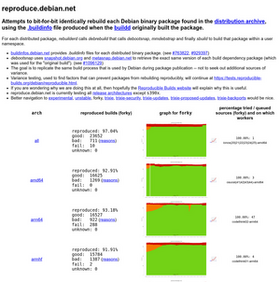
debaudit complements the work of the Reproducible Builds project. While reproduce.debian.net focuses on ensuring that binary packages can be bit-for-bit reproduced from their source packages, debaudit focuses on the preceding step: ensuring that the source package itself is a faithful and reproducible representation of its upstream source or Vcs-Git repository.
librust-const-random-dev package reporting that the compile-time-rng feature of the ahash crate uses the const-random crate in turn, which uses a macro to read/generate a random number generator during the build. This issue was also filed upstream.
pkgjs_lock_json_file_issue.
Lastly, Bernhard M. Wiedemann posted another openSUSE monthly update for their work there.
diffoscope is our in-depth and content-aware diff utility that can locate and diagnose reproducibility issues. This month, Chris Lamb made a number of changes, including preparing and uploading versions, 314 and 315 to Debian.
test_code_is_black_clean test in the autopkgtests. (#1130402). [ ]315.
rebuilderd, our server designed monitor the official package repositories of Linux distributions and attempt to reproduce the observed results there; it powers, amongst other things, reproduce.debian.net.
A new version, 0.26.0, was released this month, with the following improvements:
minify (rust random HashMap) / (alternative by kpcyrd)rpm-config-SUSE (toolchain)python-nxtomomill.dh-fortran.python-discovery.kanboard.moltemplate.stacer.libcupsfilters.django-ninja.python-agate.aetos.python-bayespy.
Once again, there were a number of improvements made to our website this month including:
diffoci Arch Linux package on the Tools page. [ ]
Marc Ohm, Timo Pohl, Ben Swierzy and Michael Meier published a paper on the threat of cache poisoning in the Python ecosystem:
Attacks on software supply chains are on the rise, and attackers are becoming increasingly creative in how they inject malicious code into software components.
This paper is the first to investigate Python cache poisoning, which manipulates bytecode cache files to execute malicious code without altering the human-readable source code.
We demonstrate a proof of concept, showing that an attacker can inject malicious bytecode into a cache file without failing the Python interpreter s integrity checks.
In a large-scale analysis of the Python Package Index, we find that about 12,500 packages are distributed with cache files.
Through manual investigation of cache files that cannot be reproduced automatically from the corresponding source files, we identify classes of reasons for irreproducibility to locate malicious cache files.
While we did not identify any malware leveraging this attack vector, we demonstrate that several widespread package managers are vulnerable to such attacks.
A PDF of the paper is available online.
Mario Lins of the University of Linz, Austria, has published their PhD doctoral thesis on the topic of Software supply chain transparency:
We begin by examining threats to the software distribution stage the point at which artifacts (e.g., mobile apps) are delivered to end users with an emphasis on mobile ecosystems [and] we next focus on the operating system on mobile devices, with an emphasis on mitigating bootloader-targeted attacks. We demonstrate how to compensate lost security guarantees on devices with an unlocked bootloader. This allows users to flash custom operating systems on devices that no longer receive security updates from the original manufacturer without compromising security. We then move to the source code stage. [Also,] we introduce a new architecture to ensure strong source-to-binary correspondence by leveraging the security guarantees of Confidential Computing technology. Finally, we present The Supply Chain Game, an organizational security approach that enhances standard risk-management methods. We demonstrate how game-theoretic techniques, combined with common risk management practices, can derive new criteria to better support decision makers.
A PDF of the paper is available online.
debugedit and relative debug paths based on a comment on the Build path page: Have people tried more modern versions of debugedit to get deterministic (absolute) DWARF paths and found issues with it?
#reproducible-builds on irc.oftc.net.
rb-general@lists.reproducible-builds.org
It s been about a month since I wrapped up my Outreachy internship, but my journey with Debian is far from over. I planned to keep contributing and exploring the community, and these past few weeks have been busy
For the openQA project, we decided to explore how accurate local language installations are and see if we can improve the translations. While exploring this, I started working on automating a test for a specific bug report: Debian Bug #1111214
This is a test I had started by writing a detailed description of the installation process to confirm that selecting the Spanish_panama locale works accurately. I spent time studying previous language installation tests, and I learned that I needed to add a specific tag (LANGUAGE-) to the needles (visual test markers).
Since the installation wasn t in English anymore, taking the correct screenshots and defining the areas took quite some time. I used the following command on the CLI to run the test:
openqa-cli api -X POST isos ISO=debian-live-testing-amd64-gnome.iso DISTRI=debian-live VERSION=forky FLAVOR=gnome LANGUAGE=spanish_panama ARCH=x86_64 BUILD=1311 CHECKSUM=unknown
While working on this, I got stuck at the complete_installation step. Because the keyboard layout had changed to Spanish, the commands required to confirm a successful install weren t working as expected. Specifically, we had an issue typing the greater than sign (>).
My mentor, Roland Clobus, worked on a clever maneuver for the keys (AltGr-Shift-X), which was actually submitted upstream to openSUSE.
In this step, I also had to confirm that the locale was correctly set to LANG= es_PA.UTF-8 . I had to dig into the scripts and Linux commands to make this work. It was a bit intimidating at first, but it turned out to be a great learning experience. You can follow my progress on this Merge Request here. I m currently debugging a small issue where the home key seems to click twice in the final step, and after that, the test would be complete
.
Beyond the code, I ve been getting more involved in the social side of Debian:
Next.