Jon Dowland: Farewell, Interzone

 New format IZ
Recently, North Tyneside Council circulated the beginnings of a regional
development plan. This consisted of a detailed map of the borough, complete
with various areas marked out as sites for potential housing development.
Included amongst the sites for potential development was Whitley Bay Ice
Rink and the surrounding leisure facilities: a football pitch, a cricket
pitch, and more.
Whitley Bay Ice Rink has been a fixture in the cultural history of the region
and it would be a terrible shame if it were to close. Many people seemed to
agree: a petition calling for the site to be excluded from the plan received
over 7,000 signatures. Residents were also able to write comments on the plan
itself. The specific paragraph for the Ice Rink had attracted over 100 comments
when I looked at it on the last day that comments were open. I hurredly
put together one of my own:
Whitley Bay Ice Rink is about to celebrate it s 60th birthday as both a key part of the history and culture of the borough and a unique leisure facility in the wider area. Sadly the Rink has seemed, historically, to be somewhat neglected, rather like the other large cultural landmark in the region - Whitley Bay s Spanish City and Dome. I argue you should no sooner consider closing or redeveloping the Rink site than the Dome itself. Rather, both should be cherished and invested in, particularly if (as rumoured) the current owners are keen to retire or pass it on. In recognising the need to increase the amount of housing in the area, one should consider what facilities will be available to the new residents within the region. Removing facilities to provide housing is slaying the golden goose. Whitley Bay Ice Rink is one of the few rinks left in the country and the nearest permanent ice rink within 30 miles. Ice skating has become a fond and lasting memory for many of the adults who have grown up in the region, many of whom enjoy or look forward to their own children experiencing it. I look forward to taking my niece and nephew there, when they are old enough, as well as my own future children. It is a traditional spot for School trips; the sports teams operating from the rink have a proud history and fearsome reputation. It s an attraction for the large numbers of University students that travel to the two nearest Universities. The borough is blighted with rotting seaside hotels which (following the recent development of the Idols site) should be converted into attractive flat or maisonette housing as a priority.
I read a lot this year - I'll write more about that and reflections on
goodreads in another post - but most of the things I read weren't published
in 2013. (I should also write a bit about my thoughts on e-readers). However,
it seems I have enough to write about 2013's novels to make a round-up post
worthwhile, so here we go.


 A nice view at work this morning.
In April this year, Iain Banks announced that he had inoperable cancer. At
the time I was reading what became his last Culture novel, "The Hydrogen
Sonata". Banks died shortly afterwards in June.
I came across this passage in "The Hydrogen Sonata" which struck me
as poignant:
Living either never has any point, or is always its own point; being a naturally cheery soul, I lean towards the latter. However, just having done more of it than someone else doesn't really make much difference.Much belated RIP, Iain Banks.


 Wow, my first "Debian day" in 2013, but it's a bit of a misnomer
because I didn't do any Debian work tonight.
I spent some time poking at geary, Yorba's new
email client which looks promising. I haven't managed to get it working much,
though. Someone packaged an old version in Debian but it wouldn't work with
either my home or my work IMAP/SMTP servers for various reasons. I did get a
git checkout to build in March or April but that stopped working on Debian when
they dropped "Precise" support (It seems they were backporting various
GIR/Webkit bits and pieces into their own code and didn't want to carry that
around any more). They've currently got a fundraiser
going,
they're aiming for $100k and (at the time of writing) need half of that with
only 10 hours to go.
Recently I've also been trying to fix a rockbox bug on Sansa Fuze
v1
which really cripples writing onto the Fuze. The original firmware does not
support microsd capacities >32G which rules it out for me. Sadly the v1 version
of the Fuze is uncommon enough that I don't think this bug is getting much
attention. My investigations have been limited to fairly dumb bisect-like
approaches, combined with lots of writing onto a microsd card (which will
probably be killed dead by all this). My initial attempts at a bisect have
failed as it turns out the problem is the inverse of a regression: it bizarrely
seems as if the bug was fixed in a version-branch, rather than stopped working
in one, so it has never been squashed in the main branch at all. Furthermore,
the commit that seems to fix the problem is a totally benign version
bump, and
almost certainly hasn't fixed the bug. So with sufficient further testing
I'll probably just prove that this bug has never been fixed. It might be time
to switch tack and look into diagnosing the bug rather than trying to side-step
it. Or perhaps just spend 15 on a Sansa Clip
Zip and forget
all about the Fuze v1. Either way I hope someone releases a 128G microsd card
this year!
Every now and then I wonder whether it would make sense to package rockbox in
Debian in some way. Probably not.
Recently, I've been using
awk in shell scripts more and more often.
When I saw Thomas' Blog I reeled a bit
from of the make/shell quoted within. (Sorry Thomas! It's still a thought
provoking blog post):
DEBVERS         ?= $(shell dpkg-parsechangelog   sed -n -e 's/^Version: //p')
VERSION         ?= $(shell echo '$(DEBVERS)'   sed -e 's/^[\[:digit:]]*://' -e 's/[-].*//')
DEBFLAVOR       ?= $(shell dpkg-parsechangelog   grep -E ^Distribution:   cut -d" " -f2)
DEBPKGNAME      ?= $(shell dpkg-parsechangelog   grep -E ^Source:   cut -d" " -f2)
DEBIAN_BRANCH   ?= $(shell cat debian/gbp.conf   grep debian-branch   cut -d'=' -f2   awk ' print $1 ')
GIT_TAG         ?= $(shell echo '$(VERSION)'   sed -e 's/~/_/')
DEBIAN_BRANCH, more correct):
DEBVERS        := $(shell dpkg-parsechangelog   awk '/^Version:/  print $$2 ')
VERSION        := $(shell echo '$(DEBVERS)'   sed -e 's/^[0-9]*://' -e 's/-.*//')
DEBFLAVOR      := $(shell dpkg-parsechangelog   awk '/^Distribution:/  print $$2 ')
DEBPKGNAME     := $(shell dpkg-parsechangelog   awk '/^Source:/  print $$2 ')
DEBIAN_BRANCH  := $(shell awk 'BEGIN FS="[= ]+"  /debian-branch/  print $$2 ' debian/gbp.conf)
GIT_TAG        := $(subst ~,_,$(VERSION))
gsettings API and doesn't
still use the old gconf one, the best guide on what to do is still Ross
Burton's blog post from two years
ago,
although you can find most of what you need to know buried deep in the
GSettings C API
specification,
which is not the first place I would have looked (lesson learned!)
Note: In this context I'm in the role of systems administrator, rather than
distributor/vendor or software author. Whereas you are generally advised to use
gsettings itself and not poke at the backend (dconf for Linux), the
documentation seems to point sysadmins towards dconf hackery rather than
gsettings. However
gsettings worked for me, and I got nowhere with dconf direct.
Some caveats worth knowing about:
gsettings tool only accepts dotted schemas, not
slash-separated ones.gsettings uses XML for schema files, but a separate ini-style
format for override files. Everybody wins?glib-compile-schemas requires a path argument, so all your schema and
override files must be in the same place. Sites have to lump stuff into
/usr/share/glib-2.0/schemas alongside distribution files, rather than
separated out to (say) /usr/local/share/glib-2.0/schemas.glib-compile-schemas
which non-the-less is broken. The result is gsettings clients, including
the gsettings binary itself, complaining and then segfaulting. Do not
rely on glib-compile-schemas to ensure compliant override files.glib-compile-schemas would appear to read override files in native byte
order, so make sure you name your override so that it sorts after any
distribution-provided overrides. E.g., 20_my_gnome-shell.gschema.override
to sort after 10_gnome-shell.gschema.override. The classic procmail recipe for (reasonably) safe automatic mailing list filtering is
:0
* ^List-Id:[^<]+<\/[a-z0-9-.]+
$MAILDIR/MATCH/
*.lists.fedoraproject.org, I'm looking at you). Removing the dot from the expression above means you end up with unambiguous, albeit long, folder names (devel.lists.fedoraproject.org).
If you access this mail over IMAP, you have another problem: the dots create a nested folder heirarchy that probably doesn't make any sense (devel lists fedoraproject org). It's possible to change the configuration of IMAP clients and servers to use a different delimiter, but this is not an oft travelled road, and I don't feel like finding the pot holes. Better to substitute the dot for something else. I'd recommend an ASCII character, Unicode seems to throw up a whole bunch of client problems.
Here's a variation that solves the problem:
:0
* ^List-Id:[^<]+<\/[a-z0-9-.]+

  :0
  subst=  echo "$MATCH"   tr . :
  :0
  $MAILDIR/$subst/
list-ids (integration left as an exercise to the reader):
:0
* ^List-Id:.*debian.*lists\.debian\.org
subst=  echo "$MATCH"   sed 's/\([A-Za-z0-9-]\+\)\..*/\1/'
* ! ^List-Id.*groups\.facebook\.com
exim filter snippets that would let me implement the above in a (slightly) nicer looking way. Sadly I think I'm stuck with procmail for some other features I use, but it's been a while since I looked.
I wrote that I would double-check how secure the module selection and
downloading is in Puppet.
Well, puppet module resolves, fetches and downloads unsigned tarballs
from a HTTP source and unpacks them without any verification whatsoever.
Related: I've been looking at rpm/yum GPG behaviour. rpm supports
checking the signature of RPMs as a separate operation from installing
them. You can't ask it to not install a package if the signature is
absent or not correct.
yum is better when dealing with repositories. It can be told to check
the GPG signature on all RPMs both globally (the [main] section of
yum.conf) and on a per-repository basis. GPG signature checking can
be disabled on the command line with --nogpgcheck. It cannot be
selectively enabled on the command line.
However, yum install can install local RPMs and RPMs on web servers
as well as from repositories. In both of these cases, it will not check
the GPG signature at all, no matter what you've put in your yum.conf.
Finally, even if all the above worked properly, the GPG keys published by
Fedora have almost no public signatures (none
at all for EPEL), so neither you nor I could establish a trust path to them.
Luckily I can establish a trust path to the RH security
key.
Over the last few days I've done quite a lot of work to try and get our
puppet configuration up to modern best practises. The Puppet Labs folks
strongly encourage you to make as much use of puppet modules as possible. A
puppet module gathers together puppet manifests, facter facts and other bits
and pieces into a reusable component that you could potentially share with
others. Many modules (of very mixed quality) are available on the web, in
particular at github and via Puppet Lab's own
Forge.
Since version 2.7.14, the puppet command-line tool has built-in support for
managing modules:
# puppet module list
/etc/puppet/modules
  auth (???)
  interfaces (???)

# puppet module install puppetlabs-apt
class puppetmaster

  module   'rcoleman/puppet_module': ensure => '0.0.3',
  module   'puppetlabs/firewall':    ensure => '0.0.4',
  module   'puppetlabs/lvm':         ensure => '0.1.1',
  module   'puppetlabs/ntp':         ensure => '0.2.0',
squishyball is a command-line tool to help you compare two audio files. It
supports basic A/B testing, A/B/X testing and X/X/Y ("triangle") tests to
help rule out various selection, confirmation and ordering biases. I'm using
it to figure out the optimal lossy audio codec and bitrate to encode my music
collection with.
It can be a little fiddly to use if you also use pulseaudio. I specify a
specific ALSA device via -d, identified via aplay -L, and keep alsamixer
running in a separate window to adjust volume if necessary, since GNOME's
volume control shortcuts effect the pulseaudio mixers only. This way I can
use headphones via the onboard analog stereo output and leave my desktop
session configured to use HDMI output.
For the time being, I've disabled support for the OPUS audio format. This is to
prevent squishyball (GPL) from linking against libssl, which is pulled in by
libopusfile. A future version of the package might manage to make this work.
So you can download Steam for Linux now!. Or
at least Ubuntu. The 1.0.0.22-version
package needs a bit of tweaking to make it installable on
Debian. There's a good writeup of some of the issues in this blog
post (more recent packages seem to have much more simple dependencies).
I run amd64 with multiarch enabled for i386. I chose to update my libc to the
version in experimental rather than embed a newer version in a private steam
directory. The remaining issues are mostly package version differences between
Ubuntu (who seem to be very epoch-happy, I guess they've made a lot more
packaging mistakes) and Debian.
I wrote the following script to do the work. It takes two arguments: the
original steam .deb and then the output filename to write a modified
.deb to. Feel free to try it.
#!/bin/sh
set -u
set -e
[ $# -eq 2 ]     echo "$0 <in-deb> <out-deb>" >&2; exit 1;
wd=$(mktemp -td $0.XXXXXX)
trap "rm -r '$wd'" INT QUIT EXIT
dpkg-deb -x "$1" "$wd/steam"
dpkg-deb -e "$1" "$wd/steam/DEBIAN"
sed -i  -e 's/\(libpulse0 (>= \)1:/\1/' -e '# remove ubuntu epoch' \
    -e 's/^\(Version:.*\)$/\1+jmtd/' \
    -e 's/xterm   gnome-terminal,//' -e '# seems to be an apt bug here' \
    -e 's/\(multiarch-support (>= 2.15\)[^)]*/\1/' -e '# remove ubuntu epoch' \
    "$wd/steam/DEBIAN/control"
mv "$wd/steam/usr/bin/steamdeps" "$wd/steam/usr/bin/steamdeps.orig"
ln -s "/bin/true" "$wd/steam/usr/bin/steamdeps"
fakeroot dpkg-deb -b "$wd/steam" "$2"
xterm gnome-terminal. I have both installed, but neither for i386. Of
course, steam doesn't need a 32 bit terminal emulator, it can spawn the 64 bit
one perfectly well. It turns out that you can't express such a dependency at
the moment. Even changing that to a virtual package x-terminal-emulator
didn't work: aptitude still wanted to pull in a 32 bit match and all the
supporting libraries. For this package I just delete the dependency outright.
On Linux, network interface device naming has been somewhat chaotic: depending
on a number of factors, eth0 today might not be eth0 tomorrow. For me, this
has never been a problem in practice. At work, our physical servers have a bank
of on-mainboard network ports, all managed by the same driver and so are
assigned names predictably. For our virtual machines, the same is true: 99% of
the time they have one network interface, but when they have more than one,
they are of the same type and so are assigned predictably. At home, even on
desktops and laptops with multiple network devices being added and removed at a
time, I've never actually hit a problem where one was mis-identified.
However, it must have been a problem for some people because it has been
solved three times
now.
Sadly, these incompatible solutions cause headaches in all of my use cases.
At work we have a puppet snippet that relies on knowing the interface name for
a host's "primary" interface. In our case, "primary" means something like "the
one the default route is over". We used to hardcode eth0 into this recipe. I
don't feel too bad about that, as the puppet folks do the exact same thing in
many of their scripts.
This breaks for newer physical hosts where one of the three schemes are in play
and the interfaces are named/numbered em1 and counting. We worked around it
by parameterizing the interface name in our recipe and defining it in our
nodes.pp for the troublesome hosts, but that just moves the problem around.
My more permanent solution is to define a facter fact primary_interface that
tells puppet what the correct interface should be. Here's my first attempt:
Facter.add("primary_interface") do
  setcode do
    ifs = Dir.new("/sys/class/net").each.to_a - \
      Dir.new("/sys/devices/virtual/net").each.to_a
      # filter out ones with no link
      ifs.reject! do  i
        begin
          File.read("/sys/class/net/# i /carrier") != "1\n"
        rescue Errno::EINVAL
          true
        end
      end
    ifs[0]
  end
end
ifs
has more than one element at the end, a lexographic sort may prove more
accurate; if there is an existing network default route up, that might be a
strong clue too. It's also very Linux specific. My question though is whether
this is a sensible approach in the first place?
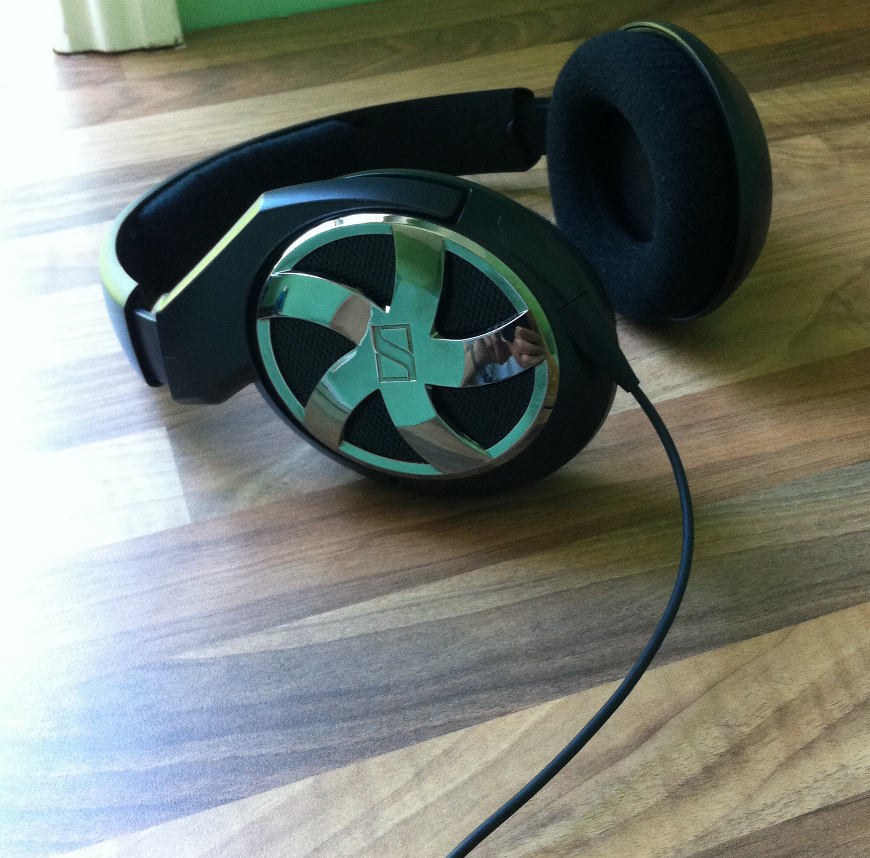 Sennheiser HD438
I just read this excellent blog post called "Linux Future" which defines a term "FLOS" to describe what the current direction of Linux development appears to be. Specifically, it addresses the divergence from what one might call the "UNIX" philosophy in new core technologies like
systemd.
I think sticking a new name to define this philosophical direction is a great idea. "FLOS" is something that both proponents and haters can rally around. It acknowledges the move away from the UNIX way of doing things, and doesn't overload a term like Linux, "ownership" of which is claimed by both camps (and others who just want to keep their heads down and get on with things!)
The next step, after embracing it, would be to define the strategy and the roadmap. Where is FLOS going? What's the endgame? Perhaps with such a vision we may end up with some technologies which will stand the test of time, like Apple's CoreAudio (10 years old) or Microsoft's win32 API (now 20 years old), rather than the ludicrously high plumbing turnover we endure right now.
(Oh my goodness, I finally wrote an actual Linux blog post.)
Next.