Here s my (twenty-ninth) monthly but brief update about the activities I ve done in the F/L/OSS world.
Debian
This was my 38th month of actively contributing to Debian.
I became a DM in late March 2019 and a DD on Christmas 19! \o/
I had been sick this month, so most of the time I spent away from system, recovering, et al,
and also went through the huge backlog that I had, which is starting to get smaller. :D
Anyway, I did the following stuff in Debian:
Uploads and bug fixes:
at (3.4.4-1) - Adding a DEP8 test for the package, fixing bug #985421.
Other $things:
Mentoring for newcomers.
Moderation of -project mailing list.
Ubuntu
This was my 13th month of actively contributing to Ubuntu.
Now that I joined Canonical to work on Ubuntu full-time, there s a bunch of things I do! \o/
I mostly worked on different things, I guess.
I was too lazy to maintain a list of things I worked on so there s
no concrete list atm. Maybe I ll get back to this section later or
will start to list stuff from the fall, as I was doing before. :D
Debian (E)LTS
Debian Long Term Support (LTS) is a project to extend the lifetime of all Debian stable releases to (at least) 5 years. Debian LTS is not handled by the Debian security team, but by a separate group of volunteers and companies interested in making it a success.
And Debian Extended LTS (ELTS) is its sister project, extending support to the Jessie release (+2 years after LTS support).
This was my twenty-ninth month as a Debian LTS and eighteenth month as a Debian ELTS paid contributor.
Whilst I was assigned 42.75 hours for LTS and 45.25 hours for ELTS, I could only work a little due to being sick and so
I spent 15.75 hours on LTS and 9.25 hours on ELTS and worked on the following things:
LTS CVE Fixes and Announcements:
Issued DLA 2909-1, fixing CVE-2021-45079, for strongswan.
For Debian 9 stretch, these problems have been fixed in version 5.5.1-4+deb9u6.
Review: Children of Earth and Sky, by Guy Gavriel Kay
Publisher:
New American Library
Copyright:
2016
ISBN:
0-698-18327-4
Format:
Kindle
Pages:
572
Nine hundred years have passed since the events of
Lord of Emperors. Twenty-five years
ago, Sarantium, queen of cities, fell to the Osmanlis, who have renamed it
Asharias in honor of their Asherite faith. The repercussions are still
echoing through the western world, as the Osmanlis attempt each spring to
push farther west and the forces of Rodolfo, Holy Emperor in Obravic and
defender of the Jaddite faith, hold them back.
Seressa and Dubrava are city-state republics built on the sea trade.
Seressa is the larger and most renown, money-lenders to Rodolfo and
notorious for their focus on business and profit, including willingness to
trade with the Osmanlis. Dubrava has a more tenuous position: smaller,
reliant on trade and other assistance from Seressa, but also holding a
more-favored trading position with Asharias. Both are harassed by piracy
from Senjan, a fiercely Jaddite raiding city north up the coast from
Dubrava and renown for its bravery against the Asherites. The Senjani
are bad for business. Seressa would love to wipe them out, but they have
the favor of the Holy Emperor. They settled for attempting to starve the
city with a blockade.
As Children of Earth and Sky opens, Seressa is sending out new
spies. One is a woman named Leonora Valeri, who will present herself as
the wife of a doctor that Seressa is sending to Dubrava. She is neither
his wife nor Seressani, but this assignment gets her out of the convent to
which her noble father exiled her after an unapproved love affair. The
other new spy is the young artist Pero Villani, a minor painter whose only
notable work was destroyed by the woman who commissioned it for being too
revealing. Pero's destination is farther east: Grand Khalif Gur u the
Destroyer, the man whose forces took Sarantium, wants to be painted in the
western style. Pero will do so, and observe all he can, and if the
opportunity arises to do more than that, well, so much the better.
Pero and Leonora are traveling on a ship owned by Marin Djivo, the younger
son of a wealthy Dubravan merchant family, when their ship is captured by
Senjani raiders. Among the raiders is Danica Gradek, the archer who broke
the Seressani blockade of Senjan. This sort of piracy, while tense,
should be an economic transaction: some theft, some bargaining, some
ransom, and everyone goes on their way. That is not what happens.
Moments later, two men lie dead, and Danica's life has become entangled
with Dubravan merchants and Seressani spies.
Children of Earth and Sky is in some sense a sequel to the
Sarantine Mosaic, and knowing the events
of that series adds some emotional depth and significant moments to this
story, but you can easily read it as a stand-alone novel. (That said, I
recommend the Sarantine Mosaic regardless.) As with nearly all of
Kay's work, it's historical fiction with the names changed (less this time
than in most of this books) and a bit of magic added. The setting is the
middle of the 15th century. Seressa is, of course, Venice. The Osmanlis
are the Ottoman Turks, and Asharias is Istanbul, the captured
Constantinople. Rodolfo is a Habsburg Holy Roman Emperor, holding court
in an amalgam of northern cities that (per the afterward) is primarily
Prague. Dubrava, which is central to much of this book, is Dubrovnik in
Croatia. As usual with Kay's novels, you don't need to know this to enjoy
the story, but it may spark some fun secondary reading.
The touch of magic is present in several places, but comes primarily from
Danica, whose grandfather resides as a voice in her head. He is the last
of her family that she is in contact with. Her father and older brother
were killed by Osmanli raiders, and her younger brother taken as a slave
to be raised as a djanni warrior in the khalif's infantry. (Djannis are
akin to Mamluks in our world.) Damaz, as he is now known, is the
remaining major viewpoint character I've not mentioned. There are a
couple of key events in the book that have magic at the center, generally
involving Danica or Damaz, but most of the story is straight historical
fiction (albeit with significant divergences from our world).
I'd talked myself out of starting this novel several times before I
finally picked it up. Like most of Kay's, it's a long book, and I wasn't
sure if I was in the mood for epic narration and a huge cast. And indeed,
I found it slow at the start. Once the story got underway, though, I was
as enthralled as always. There is a bit of sag in the middle of the book,
in part because Kay didn't follow up on some relationships that I wish
were more central to the plot and in part because he overdoes the
narrative weight in one scene, but the ending is exceptional.
Guy Gavriel Kay is the master of a specific type of omniscient tight third
person narration, one in which the reader sees what a character is
thinking but also gets narrative commentary, foreshadowing, and emotional
emphasis apart from the character's thoughts. It can feel heavy-handed;
if something is important, Kay tells you, explicitly and sometimes
repetitively, and the foreshadowing frequently can be described as
portentous. But in return, Kay gets fine control of pacing and emphasis.
The narrative commentary functions like a soundtrack in a movie. It tells
you when to pay close attention and when you can relax, what moments are
important, where to slow down, when to brace yourself, and when you can
speed up. That in turn requires trust; if you're not in the mood for the
author to dictate your reading pace to the degree Kay is attempting, it
can be irritating. If you are in the mood, though, it makes his novels
easy to relax into. The narrator will ensure that you don't miss anything
important, and it's an effective way to build tension.
Kay also strikes just the right balance between showing multiple
perspectives on a single moment and spending too much time retelling the
same story. He will often switch viewpoint characters in the middle of a
scene, but he avoids the trap of replaying the scene and thus losing the
reader's interest. There is instead just a moment of doubled perspective
or retrospective commentary, just enough information for the reader to
extrapolate the other character's experience backwards, and then the story
moves on. Kay has an excellent feel for when I badly wanted to see
another character's perspective on something that just happened.
Some of Kay's novels revolve around a specific event or person.
Children of Earth and Sky is not one of those. It's a braided
novel following five main characters, each with their own story. Some of
those stories converge; some of them touch for a while and then diverge
again. About three-quarters of the way through, I wasn't sure how Kay
would manage a satisfying conclusion for the numerous separate threads
that didn't feel rushed, but I need not have worried. The ending had very
little of the shape that I had expected, focused more on the small than
the large (although there are some world-changing events here), but it was
an absolute delight, with some beautiful moments of happiness that took
the rest of the novel to set up.
This is not the sort of novel with a clear theme, but insofar as it has
one, it's a story about how much of the future shape and events of the
world are unknowable. All we can control is our own choices, and we may
never know their impact. Each individual must decide who they want to be
and attempt to live their life in accordance with that decision, hopefully
with some grace towards others in the world.
The novel does, alas, still have some of Kay's standard weaknesses. There
is (at last!) an important female friendship, and I had great hopes for a
second one, but sadly it lasted only a scant handful of pages. Men
interact with each other and with women; women interact almost exclusively
with men. Kay does slightly less awarding of women to male characters
than in some previous books (although it still happens), but this world is
still weirdly obsessed with handing women to men for sex as a hospitality
gesture. None of this is too belabored or central to the story, or I
would be complaining more, but as soon as one sees how regressive the
gender roles typically are in a Kay novel, it's hard to unsee.
And, as always for Kay, the sex in this book is weirdly off-putting to me.
I think this goes hand in hand with Kay's ability to write some of the
best conversations in fantasy. Kay's characters spar and thrust with
every line and read nuance into small details of wording. Frequently, the
turn of the story rests on the outcome of a careful conversation. This is
great reading; it's the part of Kay's writing I enjoy the most. But I'm
not sure he knows how to turn it off between characters who love and trust
each other. The characters never fully relax; sex feels like another move
in ongoing chess games, which in turn makes it feel weirdly transactional
or manipulative instead of open-hearted and intimate. It doesn't help
that Kay appears to believe that arousal is a far more irresistible force
for men than I do.
Those problems did get in the way of my enjoyment occasionally, but I
didn't think they ruined the book. The rest of the story is too good.
Danica in particular is a wonderful character: thoughtful, brave,
determined, and deeply honest with herself in that way that is typical of
the best of Kay's characters. I wanted to read the book where Danica's
and Leonora's stories stayed more entwined; alas, that's not the story Kay
was writing. But I am in awe at Kay's ability to write characters who
feel thoughtful and insightful even when working at cross purposes, in a
world that mostly avoids simple villains, with a plot that never hinges on
someone doing something stupid. I love reading about these people. Their
triumphs, when they finally come, are deeply satisfying.
Children of Earth and Sky is probably not in the top echelon of
Kay's works with the Sarantine Mosaic and Under Heaven, but it's close. If you like his other writing, you
will like this as well. Highly recommended.
Rating: 9 out of 10
Munin plugin and it s CPU usage (and a rewrite in rust)
With my last blog on the Munin plugins CPU usage I complained about Oracle
Linux doing something really weird, driving up CPU usage when running
a fairly simple Shell script with a loop in.
Turns out, I was wrong. It is not OL7 that makes this problem show
up. It appears to be something from the Oracle Enterprise Database
installed on the system, that makes it go this crazy. I ve now had
this show up on RedHat7 systems too, and the only thing that singles
them out is that overpriced index card system on it.
I still don t know what the actual reason for this is, and honestly,
don t have enough time to dig deep into it. It is not something that a
bit of debugging/tracing finds - especially as it does start out all
nice, and accumulates more CPU usage over time. Which would suggest
some kind of leak leading to more processing needed, or so - but then
it is only CPU affected, not memory, and ONLY on systems with that
database on. Meh.
Well, I recently (December vacation) got me to look deeper into
learning Rust. My first project with that was a multi-threaded milter
to do some TLS checks on outgoing mails (kind of fun customer
requirements there), and heck, Rust did make that a surprisingly easy
task in the end. (Comparing the old, single-threaded C code with my
multi-threaded Rust version, a third of the code length doing more,
and being way easier to extend with wanted new features is nice).
So my second project was Replace this shell script with a Rust binary
doing the same . Hell yeah. Didn t take that long and looks good
(well, the result. Not sure about the code. People knowing rust may
possibly scratch out eyes when looking at it). Not
yet running for that long, but even compared to the shell on systems
that did not show the above mentioned bugs (read: Debian, without
Oracle foo), uses WAY less CPU (again, mentioned by highly accurate
outputs of the top command). So longer term I hope this version won t
run into the same problems as the shell one. Time will tell.
If you are interested in the code, go find it
here, and if you happen to know
rust and not run away screaming, I m happy for tips and code fixes,
I m sure this can be improved lots. (At least cargo clippy is happy,
so basics are done )
Update: According to munin, the rust version creates 14
forks/second less than the shell one. And the fork rate change is same
on machines with/without the database. That 14 is more than I would
have guessed. CPU usage as expected: only on the problem hosts with
Oracle Database installed you can see a huge difference, otherwise it
is not an easily noticable difference. That is, on an otherwise idle
host (munin graph shows average use of low one-digit numbers), one can
see a drop of around 1% in the CPU usage graph from munin. Ohwell,
poor Shell.
Starting just after Christmas, I have been working on CI for all
the kernel team's packages on Salsa. The salsa-ci-team has done
great work on producing a common pipeline that is usable for most
packages with minimal configuration. However, for some packages
a lot more work was required.
Linux
I started with the most important
package, linux
itself. This now has about 1.1 GiB of source spread over 76,000
source files. That turns out to be a
problem
for the pipeline which currently puts unpacked source in
artifacts - it is far beyond the limits of what Salsa allows. I
worked around this by using a modified version of the extract-source
and build jobs that use packed source package as the artifacts. The
output of the build job is compatible with the common test jobs.
The linux package also takes a lot of resources to build; around 80
minutes on the fastest PC I have at home (if ccache is not primed).
Salsa's shared CI runners seem to be about 10 times slower than
that, so it is completely unfeasible to even one full build in CI.
Instead I defined a new build profile that includes only the
smallest kernel configuration, without debug info, and the
user-space packages. This still takes over an hour with the Salsa
CI runners, but I don't think we can improve this much without
losing a lot of code coverage.
Our Git repository for linux also does not contain the upstream
source, so the extract-source job has to fetch that. The common
extract-source job uses origtargz to do that, and in
case the orig tarball is not already in the archive this will run
uscan. That led me to a new problem: our
debian/watch file could only find tarballs linked
from the front of
www.kernel.org, and we're
sometimes working with different upstream versions. There is
actually no single page listing all tarball releases of Linux, and
tarballs for release candidates are dynamically generated by CGit
and unsigned. So I changed debian/watch to fetch from
Git, which is what we were already doing with our own
genorig.py script.
Unfortunately, running uscan against a Git upstream,
with some files excluded (as there are still a few upstream files we
consider non-free), is
about twice as slow
as it could be. Since I had to modify the extract-source job
anyway, I've continued using genorig.py there.
A full build log for linux is over 200 MiB, and even with the
reduced build profile it would be much longer than Salsa's limit of
2 4 MiB. I therefore opted to use the 'terse' build option (which
translates to V=0), but made the builds of user-space
tools ignore this option so that blhc could still do its work. (The
kernel itself cannot use the same hardening options, so blhc is not
useful there.)
Finally, with the CI pipeline running, blhc and lintian showed a lot
of problems that we hadn't been attending to. I've fixed all the
blhc errors (with some careful suppressions), all the lintian
errors, and the most straightforward lintian warnings.
firmware-nonfree
The
firmware-nonfree
package also has huge "source" (about 560 MB) and needed some of the
same modifications, but is quick to build so did not require a
special build profile.
Running lintian over firmware-nonfree reminded me that I needed to
sort out the unsuual and inconistent handling of machine-readable
copyright information in this source package. I had already done
most of that work on a private branch in 2020, so this is mostly
ready but I still need to resolve a licensing issue with AppStream
metadata.
Other packages
For
kernel-handbook,
there was already a trivial "CI" pipeline used to push static pages
to
the
web site. I've replaced this with the common pipeline plus a
job that will push the pages from each build on the master branch.
For everything else, it was straightforward to enable the
common pipeline with a little bit of configuration.
TLDR: we are making progress on the Rust implementation of the GNU coreutils.
Well, it is an understatement to say my previous blog post interested many people. Many articles, blog posts and some podcasts talked about it! As we pushed coreutils 0.0.12 a few days ago and getting closer to the 10 000 stars on github, it is now time to give an update!
This has brought a lot of new contributors to this project. Instead of 30 to 60 patches per month, we jumped to 400 to 472 patches every month. Similarly, we saw an increase in the number of contributors (20 to 50 per month from 3 to 8). Two new maintainers (Michael Debertol & Terts Diepraam) stepped in and have been doing a much better job than myself as reviewers now! As a silly metric, according to github, we had 5 561 clones of the repository over the last 2 weeks!
The new contributors focused on:
Performances. Now, some binaries are significantly faster than GNU (ex: head, cut, etc)
Adding missing binaries or options (see below)
Improve the testsuite: we grew the overall code coverage from 55% to 75% (in general, we consider that a 80% code coverage on a project is excellent).
Refactoring the code to simplify the maintenance. Examples:
Managing error the same way in the various binaries - (Kudos to Jeffrey Finkelstein for the huge work)
Improving the GNU compatibility (thanks to Jan Verbeek, Jan Scheer, kimono-koans and many others)
Move toclap 3. Upgrade by Terts which unblocks us on various problems.
...
Closing the gap with GNU
As far as I know, we are only missing stty (change and print terminal line settings) as a program.
Thanks to some heroes, basenc, pr, chcon and runcon have been implemented. For example, for the two last programs, Koutheir Attouchi wrote new crates to manage SELinux properly. This crate has been used for some other utilities like cp, ls or id.
Leveraging the GNU testsuite to test this implementation
Because the GNU testsuite is excellent, we now have a proper CI using it to run the tests. It is pretty long on the Github action CI (almost two hours to run it) but it is an amazing improvement to the way we work. It was a joint work from a bunch of folks (James Robson, Roy Ivy III, etc). To achieve this, we also made it easier to run the GNU testsuite locally with the Rust implementation but also to ignore some tests or adjust some error messages (see build-gnu.sh and run-gnu-test.sh).
Following a suggestion of Brian G, a colleague at Mozilla (he did the same for some Firefox major change), we are now collecting the history of fail/pass/error into a separate repository and generating a daily graph showing the evolution of regression. At this date, we have, with GNU/Coreutils 9.0:
Total
611 tests
Pass
214
Skip
84
Fail
298
Error
15
We are now automatically identifying new passing tests and regressions in the CI.
For example: Warning: Congrats! The gnu test tests/chmod/c-option is now passing!
<br />Warning: Congrats! The gnu test tests/chmod/silent is now passing!
<br />Warning: Congrats! The gnu test tests/chmod/umask-x is now passing!
<br />Error: GNU test failed: tests/du/long-from-unreadable. tests/du/long-from-unreadable is passing on 'master'. Maybe you have to rebase?
[...]
<br />Warning: Changes from master: PASS +4 / FAIL +0 / ERROR -4 / SKIP +0
This is also beneficial to GNU as, by implementing some options, Michael Debertol noticed some incorrect behaviors (with sort and cat) or an uninitialized variable (with chmod).
Documentations
Every day, we are generating the user documentation and of the internal coreutils.
User documentation: https://uutils.github.io/coreutils-docs/user/ Example: ls or cp
The internal documentation can be seen on:https://uutils.github.io/coreutils-docs/dev/uucore/ For example, the backup style is documented here: https://uutils.github.io/coreutils-docs/dev/uucore/backup_control/index.html
More?
Besides my work on Debian/Ubuntu, I have also noticed that more and more operating systems are starting to look at this:
In parallel, https://github.com/uutils/findutils/, a rust dropped-in replacement for find, is getting more attention lately! Here, the graph showing the evolution of the program using the BFS testsuite (much better than GNU's).
What is next?
stty needs to be implemented
Improve the GNU compatibility on key programs and reduce the gap
Investigate how to reduce the size of the binaries
Allow Debian and Ubuntu to switch by default without tricky manipulation
How to help?
I have been maintaining a list of good first bugs for new comers in the repo!
Don't hesitate to contribute, it is much easier than it seems and a terrific way to learn Rust!
A look at the 2021 model of Dell XPS 13 - available with Linux pre-installed
I received a new laptop for work - a Dell XPS 13. Dell has been long famous for offering certain models with pre-installed Linux as a supported option, and opting for those is nice for moving some euros/dollars from certain PC desktop OS monopoly towards Linux desktop engineering costs. Notably Lenovo also offers Ubuntu and Fedora options on many models these days (like Carbon X1 and P15 Gen 2).
Obviously a smooth, ready-to-rock Ubuntu installation is nice for most people already, but I need openSUSE, so after checking everything is fine with Ubuntu, I continued to install openSUSE Tumbleweed as a dual boot option. As I m a funny little tinkerer, I obviously went with some special things. I wanted:
Ubuntu to remain as the reference supported OS on a small(ish) partition, useful to compare to if trying out new development versions of software on openSUSE and finding oddities.
openSUSE as the OS consuming most of the space.
LUKS encryption for openSUSE without LVM.
ext4 s new fancy fast_commit feature in use during filesystem creation.
As a result of all that, I ended up juggling back and forth installation screens a couple of times (even more than shown below, and also because I forgot I wanted to use encryption the first time around).
First boots to pre-installed Ubuntu and installation of openSUSE Tumbleweed as the dual-boot option:
(if the embedded video is not shown, use a direct link)
Some notes from the openSUSE installation:
openSUSE installer s partition editor apparently does not support resizing or automatically installing side-by-side another Linux distribution, so I did part of the setup completely on my own.
Installation package download hanged a couple of times, only passed when I entered a mirror manually. On my TW I ve also noticed download problems recently, there might be a problem with some mirror I need to escalate.
The installer doesn t very clearly show encryption status of the target installation - it took me a couple of attempts before I even noticed the small encrypted column and icon (well, very small, see below), which also did not spell out the device mapper name but only the main partition name. In the end it was going to do the right thing right away and use my pre-created encrypted target partition as I wanted, but it could be a better UX. Then again I was doing my very own tweaks anyway.
Let s not go to the details why I m so old-fashioned and use ext4 :)
openSUSE s installer does not work fine with HiDPI screen. Funnily the tty consoles seem to be fine and with a big font.
At the end of the video I install the two GNOME extensions I can t live without, Dash to Dock and Sound Input & Output Device Chooser.
A friend recently reminded me of the existence of chrony, a
"versatile implementation of the Network Time Protocol (NTP)". The
excellent introduction is worth quoting in full:
It can synchronise the system clock with NTP servers, reference
clocks (e.g. GPS receiver), and manual input using wristwatch and
keyboard. It can also operate as an NTPv4 (RFC 5905) server and peer
to provide a time service to other computers in the network.
It is designed to perform well in a wide range of conditions,
including intermittent network connections, heavily congested
networks, changing temperatures (ordinary computer clocks are
sensitive to temperature), and systems that do not run continuosly,
or run on a virtual machine.
Typical accuracy between two machines synchronised over the Internet
is within a few milliseconds; on a LAN, accuracy is typically in
tens of microseconds. With hardware timestamping, or a hardware
reference clock, sub-microsecond accuracy may be possible.
Now that's already great documentation right there. What it is, why
it's good, and what to expect from it. I want more. They have a very
handy comparison table between chrony, ntp and
openntpd.
My problem with OpenNTPd
Following concerns surrounding the security (and complexity) of the
venerable ntp program, I have, a long time ago, switched to using
openntpd on all my computers. I hadn't thought about it until I
recently noticed a lot of noise on one of my servers:
jan 18 10:09:49 curie ntpd[1069]: adjusting local clock by -1.604366s
jan 18 10:08:18 curie ntpd[1069]: adjusting local clock by -1.577608s
jan 18 10:05:02 curie ntpd[1069]: adjusting local clock by -1.574683s
jan 18 10:04:00 curie ntpd[1069]: adjusting local clock by -1.573240s
jan 18 10:02:26 curie ntpd[1069]: adjusting local clock by -1.569592s
You read that right, openntpd was constantly rewinding the clock,
sometimes in less than two minutes. The above log was taken while
doing diagnostics, looking at the last 30 minutes of logs. So, on
average, one 1.5 seconds rewind per 6 minutes!
That might be due to a dying real time clock (RTC) or some other
hardware problem. I know for a fact that the CMOS battery on that
computer (curie) died and I wasn't able to replace
it (!). So that's partly garbage-in, garbage-out here. But still, I
was curious to see how chrony would behave... (Spoiler: much better.)
But I also had trouble on another workstation, that one a much more
recent machine (angela). First, it seems OpenNTPd
would just fail at boot time:
anarcat@angela:~(main)$ sudo systemctl status openntpd
  openntpd.service - OpenNTPd Network Time Protocol
     Loaded: loaded (/lib/systemd/system/openntpd.service; enabled; vendor pres>
     Active: inactive (dead) since Sun 2022-01-23 09:54:03 EST; 6h ago
       Docs: man:openntpd(8)
    Process: 3291 ExecStartPre=/usr/sbin/ntpd -n $DAEMON_OPTS (code=exited, sta>
    Process: 3294 ExecStart=/usr/sbin/ntpd $DAEMON_OPTS (code=exited, status=0/>
   Main PID: 3298 (code=exited, status=0/SUCCESS)
        CPU: 34ms
jan 23 09:54:03 angela systemd[1]: Starting OpenNTPd Network Time Protocol...
jan 23 09:54:03 angela ntpd[3291]: configuration OK
jan 23 09:54:03 angela ntpd[3297]: ntp engine ready
jan 23 09:54:03 angela ntpd[3297]: ntp: recvfrom: Permission denied
jan 23 09:54:03 angela ntpd[3294]: Terminating
jan 23 09:54:03 angela systemd[1]: Started OpenNTPd Network Time Protocol.
jan 23 09:54:03 angela systemd[1]: openntpd.service: Succeeded.
After a restart, somehow it worked, but it took a long time to sync
the clock. At first, it would just not consider any peer at all:
anarcat@angela:~(main)$ sudo ntpctl -s all
0/20 peers valid, clock unsynced
peer
   wt tl st  next  poll          offset       delay      jitter
159.203.8.72 from pool 0.debian.pool.ntp.org
    1  5  2    6s    6s             ---- peer not valid ----
138.197.135.239 from pool 0.debian.pool.ntp.org
    1  5  2    6s    7s             ---- peer not valid ----
216.197.156.83 from pool 0.debian.pool.ntp.org
    1  4  1    2s    9s             ---- peer not valid ----
142.114.187.107 from pool 0.debian.pool.ntp.org
    1  5  2    5s    6s             ---- peer not valid ----
216.6.2.70 from pool 1.debian.pool.ntp.org
    1  4  2    2s    8s             ---- peer not valid ----
207.34.49.172 from pool 1.debian.pool.ntp.org
    1  4  2    0s    5s             ---- peer not valid ----
198.27.76.102 from pool 1.debian.pool.ntp.org
    1  5  2    5s    5s             ---- peer not valid ----
158.69.254.196 from pool 1.debian.pool.ntp.org
    1  4  3    1s    6s             ---- peer not valid ----
149.56.121.16 from pool 2.debian.pool.ntp.org
    1  4  2    5s    9s             ---- peer not valid ----
162.159.200.123 from pool 2.debian.pool.ntp.org
    1  4  3    1s    6s             ---- peer not valid ----
206.108.0.131 from pool 2.debian.pool.ntp.org
    1  4  1    6s    9s             ---- peer not valid ----
205.206.70.40 from pool 2.debian.pool.ntp.org
    1  5  2    8s    9s             ---- peer not valid ----
2001:678:8::123 from pool 2.debian.pool.ntp.org
    1  4  2    5s    9s             ---- peer not valid ----
2606:4700:f1::1 from pool 2.debian.pool.ntp.org
    1  4  3    2s    6s             ---- peer not valid ----
2607:5300:205:200::1991 from pool 2.debian.pool.ntp.org
    1  4  2    5s    9s             ---- peer not valid ----
2607:5300:201:3100::345c from pool 2.debian.pool.ntp.org
    1  4  4    1s    6s             ---- peer not valid ----
209.115.181.110 from pool 3.debian.pool.ntp.org
    1  5  2    5s    6s             ---- peer not valid ----
205.206.70.42 from pool 3.debian.pool.ntp.org
    1  4  2    0s    6s             ---- peer not valid ----
68.69.221.61 from pool 3.debian.pool.ntp.org
    1  4  1    2s    9s             ---- peer not valid ----
162.159.200.1 from pool 3.debian.pool.ntp.org
    1  4  3    4s    7s             ---- peer not valid ----
Then it would accept them, but still wouldn't sync the clock:
anarcat@angela:~(main)$ sudo ntpctl -s all
20/20 peers valid, clock unsynced
peer
   wt tl st  next  poll          offset       delay      jitter
159.203.8.72 from pool 0.debian.pool.ntp.org
    1  8  2    5s    6s         0.672ms    13.507ms     0.442ms
138.197.135.239 from pool 0.debian.pool.ntp.org
    1  7  2    4s    8s         1.260ms    13.388ms     0.494ms
216.197.156.83 from pool 0.debian.pool.ntp.org
    1  7  1    3s    5s        -0.390ms    47.641ms     1.537ms
142.114.187.107 from pool 0.debian.pool.ntp.org
    1  7  2    1s    6s        -0.573ms    15.012ms     1.845ms
216.6.2.70 from pool 1.debian.pool.ntp.org
    1  7  2    3s    8s        -0.178ms    21.691ms     1.807ms
207.34.49.172 from pool 1.debian.pool.ntp.org
    1  7  2    4s    8s        -5.742ms    70.040ms     1.656ms
198.27.76.102 from pool 1.debian.pool.ntp.org
    1  7  2    0s    7s         0.170ms    21.035ms     1.914ms
158.69.254.196 from pool 1.debian.pool.ntp.org
    1  7  3    5s    8s        -2.626ms    20.862ms     2.032ms
149.56.121.16 from pool 2.debian.pool.ntp.org
    1  7  2    6s    8s         0.123ms    20.758ms     2.248ms
162.159.200.123 from pool 2.debian.pool.ntp.org
    1  8  3    4s    5s         2.043ms    14.138ms     1.675ms
206.108.0.131 from pool 2.debian.pool.ntp.org
    1  6  1    0s    7s        -0.027ms    14.189ms     2.206ms
205.206.70.40 from pool 2.debian.pool.ntp.org
    1  7  2    1s    5s        -1.777ms    53.459ms     1.865ms
2001:678:8::123 from pool 2.debian.pool.ntp.org
    1  6  2    1s    8s         0.195ms    14.572ms     2.624ms
2606:4700:f1::1 from pool 2.debian.pool.ntp.org
    1  7  3    6s    9s         2.068ms    14.102ms     1.767ms
2607:5300:205:200::1991 from pool 2.debian.pool.ntp.org
    1  6  2    4s    9s         0.254ms    21.471ms     2.120ms
2607:5300:201:3100::345c from pool 2.debian.pool.ntp.org
    1  7  4    5s    9s        -1.706ms    21.030ms     1.849ms
209.115.181.110 from pool 3.debian.pool.ntp.org
    1  7  2    0s    7s         8.907ms    75.070ms     2.095ms
205.206.70.42 from pool 3.debian.pool.ntp.org
    1  7  2    6s    9s        -1.729ms    53.823ms     2.193ms
68.69.221.61 from pool 3.debian.pool.ntp.org
    1  7  1    1s    7s        -1.265ms    46.355ms     4.171ms
162.159.200.1 from pool 3.debian.pool.ntp.org
    1  7  3    4s    8s         1.732ms    35.792ms     2.228ms
It took a solid five minutes to sync the clock, even though the
peers were considered valid within a few seconds:
jan 23 15:58:41 angela systemd[1]: Started OpenNTPd Network Time Protocol.
jan 23 15:58:58 angela ntpd[84086]: peer 142.114.187.107 now valid
jan 23 15:58:58 angela ntpd[84086]: peer 198.27.76.102 now valid
jan 23 15:58:58 angela ntpd[84086]: peer 207.34.49.172 now valid
jan 23 15:58:58 angela ntpd[84086]: peer 209.115.181.110 now valid
jan 23 15:58:59 angela ntpd[84086]: peer 159.203.8.72 now valid
jan 23 15:58:59 angela ntpd[84086]: peer 138.197.135.239 now valid
jan 23 15:58:59 angela ntpd[84086]: peer 162.159.200.123 now valid
jan 23 15:58:59 angela ntpd[84086]: peer 2607:5300:201:3100::345c now valid
jan 23 15:59:00 angela ntpd[84086]: peer 2606:4700:f1::1 now valid
jan 23 15:59:00 angela ntpd[84086]: peer 158.69.254.196 now valid
jan 23 15:59:01 angela ntpd[84086]: peer 216.6.2.70 now valid
jan 23 15:59:01 angela ntpd[84086]: peer 68.69.221.61 now valid
jan 23 15:59:01 angela ntpd[84086]: peer 205.206.70.40 now valid
jan 23 15:59:01 angela ntpd[84086]: peer 205.206.70.42 now valid
jan 23 15:59:02 angela ntpd[84086]: peer 162.159.200.1 now valid
jan 23 15:59:04 angela ntpd[84086]: peer 216.197.156.83 now valid
jan 23 15:59:05 angela ntpd[84086]: peer 206.108.0.131 now valid
jan 23 15:59:05 angela ntpd[84086]: peer 2001:678:8::123 now valid
jan 23 15:59:05 angela ntpd[84086]: peer 149.56.121.16 now valid
jan 23 15:59:07 angela ntpd[84086]: peer 2607:5300:205:200::1991 now valid
jan 23 16:03:47 angela ntpd[84086]: clock is now synced
That seems kind of odd. It was also frustrating to have very little
information from ntpctl about the state of the daemon. I understand
it's designed to be minimal, but it could inform me on his known
offset, for example. It does tell me about the offset with the
different peers, but not as clearly as one would expect. It's also
unclear how it disciplines the RTC at all.
Compared to chrony
Now compare with chrony:
jan 23 16:07:16 angela systemd[1]: Starting chrony, an NTP client/server...
jan 23 16:07:16 angela chronyd[87765]: chronyd version 4.0 starting (+CMDMON +NTP +REFCLOCK +RTC +PRIVDROP +SCFILTER +SIGND +ASYNCDNS +NTS +SECHASH +IPV6 -DEBUG)
jan 23 16:07:16 angela chronyd[87765]: Initial frequency 3.814 ppm
jan 23 16:07:16 angela chronyd[87765]: Using right/UTC timezone to obtain leap second data
jan 23 16:07:16 angela chronyd[87765]: Loaded seccomp filter
jan 23 16:07:16 angela systemd[1]: Started chrony, an NTP client/server.
jan 23 16:07:21 angela chronyd[87765]: Selected source 206.108.0.131 (2.debian.pool.ntp.org)
jan 23 16:07:21 angela chronyd[87765]: System clock TAI offset set to 37 seconds
First, you'll notice there's none of that "clock synced" nonsense, it
picks a source, and then... it's just done. Because the clock on this
computer is not drifting that much, and openntpd had (presumably) just
sync'd it anyways. And indeed, if we look at detailed stats from the
powerful chronyc client:
anarcat@angela:~(main)$ sudo chronyc tracking
Reference ID    : CE6C0083 (ntp1.torix.ca)
Stratum         : 2
Ref time (UTC)  : Sun Jan 23 21:07:21 2022
System time     : 0.000000311 seconds slow of NTP time
Last offset     : +0.000807989 seconds
RMS offset      : 0.000807989 seconds
Frequency       : 3.814 ppm fast
Residual freq   : -24.434 ppm
Skew            : 1000000.000 ppm
Root delay      : 0.013200894 seconds
Root dispersion : 65.357254028 seconds
Update interval : 1.4 seconds
Leap status     : Normal
We see that we are nanoseconds away from NTP time. That was ran very
quickly after starting the server (literally in the same second as
chrony picked a source), so stats are a bit weird (e.g. the Skew is
huge). After a minute or two, it looks more reasonable:
Reference ID    : CE6C0083 (ntp1.torix.ca)
Stratum         : 2
Ref time (UTC)  : Sun Jan 23 21:09:32 2022
System time     : 0.000487002 seconds slow of NTP time
Last offset     : -0.000332960 seconds
RMS offset      : 0.000751204 seconds
Frequency       : 3.536 ppm fast
Residual freq   : +0.016 ppm
Skew            : 3.707 ppm
Root delay      : 0.013363549 seconds
Root dispersion : 0.000324015 seconds
Update interval : 65.0 seconds
Leap status     : Normal
Now it's learning how good or bad the RTC clock is ("Frequency"), and
is smoothly adjusting the System time to follow the average offset
(RMS offset, more or less). You'll also notice the Update interval
has risen, and will keep expanding as chrony learns more about the
internal clock, so it doesn't need to constantly poll the NTP servers
to sync the clock. In the above, we're 487 micro seconds (less than a
milisecond!) away from NTP time.
(People interested in the explanation of every single one of those
fields can read the excellent chronyc manpage. That thing made me
want to nerd out on NTP again!)
On the machine with the bad clock, chrony also did a 1.5 second
adjustment, but just once, at startup:
jan 18 11:54:33 curie chronyd[2148399]: Selected source 206.108.0.133 (2.debian.pool.ntp.org)
jan 18 11:54:33 curie chronyd[2148399]: System clock wrong by -1.606546 seconds
jan 18 11:54:31 curie chronyd[2148399]: System clock was stepped by -1.606546 seconds
jan 18 11:54:31 curie chronyd[2148399]: System clock TAI offset set to 37 seconds
Then it would still struggle to keep the clock in sync, but not as
badly as openntpd. Here's the offset a few minutes after that above
startup:
System time : 0.000375352 seconds slow of NTP time
And again a few seconds later:
System time : 0.001793046 seconds slow of NTP time
I don't currently have access to that machine, and will update this
post with the latest status, but so far I've had a very good
experience with chrony on that machine, which is a testament to its
resilience, and it also just works on my other machines as well.
Extras
On top of "just working" (as demonstrated above), I feel that
chrony's feature set is so much superior... Here's an excerpt of the
extras in chrony, taken from the comparison table:
source frequency tracking
source state restore from file
temperature compensation
ready for next NTP era (year 2036)
replace unreachable / falseticker servers
aware of jitter
RTC drift tracking
RTC trimming
Restore time from file w/o RTC
leap seconds correction, in slew mode
drops root privileges
I even understand some of that stuff. I think.
So kudos to the chrony folks, I'm switching.
Caveats
One thing to keep in mind in the above, however is that it's quite
possible chrony does as bad of a job as openntpd on that old
machine, and just doesn't tell me about it. For example, here's
another log sample from another server
(marcos):
jan 23 11:13:25 marcos ntpd[1976694]: adjusting clock frequency by 0.451035 to -16.420273ppm
I get those basically every day, which seems to show that it's at
least trying to keep track of the hardware clock.
In other words, it's quite possible I have no idea what I'm talking
about and you definitely need to take this article with a grain of
salt. I'm not an NTP expert.
Update: I should also mentioned that I haven't evaluated
systemd-timesyncd, for a few reasons:
I have enough things running under systemd
I wasn't aware of it when I started writing this
I couldn't find good documentation on it... later I found the
above manpage and of course the Arch Wiki but that is very
minimal
therefore I can't tell how it compares with chrony or (open)ntpd,
so I don't see an enticing reason to switch
It has a few things going for it though:
it's likely shipped with your distribution already
it drops privileges (possibly like chrony, unclear if it also has
seccomp filters)
it's minimalist: it only does SNTP so not the server side
the status command is good enough that you can tell the clock
frequency, precision, and so on (especially when compared to
openntpd's ntpctl)
So I'm reserving judgement over it, but I'd certainly note that I'm
always a little weary in trusting systemd daemons with the network,
and would prefer to keep that attack surface to a minimum. Diversity
is a good thing, in general, so I'll keep chrony for now.
It would certainly nice to see it added to chrony's comparison table.
Switching to chrony
Because the default configuration in chrony (at least as shipped in
Debian) is sane (good default peers, no open network by default),
installing it is as simple as:
apt install chrony
And because it somehow conflicts with openntpd, that also takes care
of removing that cruft as well.
Update: Debian defaults
So it seems like I managed to write this entire blog post without
putting it in relation with the original reason I had to think about
this in the first place, which is odd and should be corrected.
This conversation came about on an IRC channel that mentioned that the
ntp package (and upstream) is in bad shape in Debian. In that
discussion, chrony and ntpsec were discussed as possible replacements,
but when we had the discussion on chat, I mentioned I was using
openntpd, and promptly realized I was actually unhappy with it. A
friend suggested chrony, I tried it, and it worked amazingly, I
switched, wrote this blog post, end of story.
Except today (2022-02-07, two weeks later), I actually read that
thread and realized that something happened in Debian I wasn't
actually aware of. In bookworm, systemd-timesyncd was not only
shipped, but it was installed by default, as it was marked as a hard
dependency of systemd. That was "fixed" in systemd-247.9-2 (see
bug 986651), but only by making the dependency a Recommendsand marking it as Priority: important.
So in effect, systemd-timesyncd became the default NTP daemon in
Debian in bookworm, which I find somewhat surprising. timesyncd has
many things going for it (as mentioned above), but I do find it a bit
annoying that systemd is replacing all those utilities in such a
way. I also wonder what is going to happen on upgrades. This is all a
little frustrating too because there is no good comparison between the
other NTP daemons and timesyncd anywhere. The chrony comparison
table doesn't mention it, and an audit by the Core Infrastructure
Initiative from 2017 doesn't mention it either, even though
timesyncd was announced in 2014. (Same with this blog post from Facebook.)
At CES this week, Lenovo announced that their new Z-series laptops would ship with AMD processors that incorporate Microsoft's Pluton security chip. There's a fair degree of cynicism around whether Microsoft have the interests of the industry as a whole at heart or not, so unsurprisingly people have voiced concerns about Pluton allowing for platform lock-in and future devices no longer booting non-Windows operating systems. Based on what we currently know, I think those concerns are understandable but misplaced.
But first it's helpful to know what Pluton actually is, and that's hard because Microsoft haven't actually provided much in the way of technical detail. The best I've found is a discussion of Pluton in the context of Azure Sphere, Microsoft's IoT security platform. This, in association with the block diagrams on page 12 and 13 of this slidedeck, suggest that Pluton is a general purpose security processor in a similar vein to Google's Titan chip. It has a relatively low powered CPU core, an RNG, and various hardware cryptography engines - there's nothing terribly surprising here, and it's pretty much the same set of components that you'd find in a standard Trusted Platform Module of the sort shipped in pretty much every modern x86 PC. But unlike Titan, Pluton seems to have been designed with the explicit goal of being incorporated into other chips, rather than being a standalone component. In the Azure Sphere case, we see it directly incorporated into a Mediatek chip. In the Xbox Series devices, it's incorporated into the SoC. And now, we're seeing it arrive on general purpose AMD CPUs.
Microsoft's announcement says that Pluton can be shipped in three configurations:as the Trusted Platform Module; as a security processor used for non-TPM scenarios like platform resiliency; or OEMs can choose to ship with Pluton turned off. What we're likely to see to begin with is the former - Pluton will run firmware that exposes a Trusted Computing Group compatible TPM interface. This is almost identical to the status quo. Microsoft have required that all Windows certified hardware ship with a TPM for years now, but for cost reasons this is often not in the form of a separate hardware component. Instead, both Intel and AMD provide support for running the TPM stack on a component separate from the main execution cores on the system - for Intel, this TPM code runs on the Management Engine integrated into the chipset, and for AMD on the Platform Security Processor that's integrated into the CPU package itself.
So in this respect, Pluton changes very little; the only difference is that the TPM code is running on hardware dedicated to that purpose, rather than alongside other code. Importantly, in this mode Pluton will not do anything unless the system firmware or OS ask it to. Pluton cannot independently block the execution of any other code - it knows nothing about the code the CPU is executing unless explicitly told about it. What the OS can certainly do is ask Pluton to verify a signature before executing code, but the OS could also just verify that signature itself. Windows can already be configured to reject software that doesn't have a valid signature. If Microsoft wanted to enforce that they could just change the default today, there's no need to wait until everyone has hardware with Pluton built-in.
The two things that seem to cause people concerns are remote attestation and the fact that Microsoft will be able to ship firmware updates to Pluton via Windows Update. I've written about remote attestation before, so won't go into too many details here, but the short summary is that it's a mechanism that allows your system to prove to a remote site that it booted a specific set of code. What's important to note here is that the TPM (Pluton, in the scenario we're talking about) can't do this on its own - remote attestation can only be triggered with the aid of the operating system. Microsoft's Device Health Attestation is an example of remote attestation in action, and the technology definitely allows remote sites to refuse to grant you access unless you booted a specific set of software. But there are two important things to note here: first, remote attestation cannot prevent you from booting whatever software you want, and second, as evidenced by Microsoft already having a remote attestation product, you don't need Pluton to do this! Remote attestation has been possible since TPMs started shipping over two decades ago.
The other concern is Microsoft having control over the firmware updates. The context here is that TPMs are not magically free of bugs, and sometimes these can have security consequences. One example is Infineon TPMs producing weak RSA keys, a vulnerability that could be rectified by a firmware update to the TPM. Unfortunately these updates had to be issued by the device manufacturer rather than Infineon being able to do so directly. This meant users had to wait for their vendor to get around to shipping an update, something that might not happen at all if the machine was sufficiently old. From a security perspective, being able to ship firmware updates for the TPM without them having to go through the device manufacturer is a huge win.
Microsoft's obviously in a position to ship a firmware update that modifies the TPM's behaviour - there would be no technical barrier to them shipping code that resulted in the TPM just handing out your disk encryption secret on demand. But Microsoft already control the operating system, so they already have your disk encryption secret. There's no need for them to backdoor the TPM to give them something that the TPM's happy to give them anyway. If you don't trust Microsoft then you probably shouldn't be running Windows, and if you're not running Windows Microsoft can't update the firmware on your TPM.
So, as of now, Pluton running firmware that makes it look like a TPM just isn't a terribly interesting change to where we are already. It can't block you running software (either apps or operating systems). It doesn't enable any new privacy concerns. There's no mechanism for Microsoft to forcibly push updates to it if you're not running Windows.
Could this change in future? Potentially. Microsoft mention another use-case for Pluton "as a security processor used for non-TPM scenarios like platform resiliency", but don't go into any more detail. At this point, we don't know the full set of capabilities that Pluton has. Can it DMA? Could it play a role in firmware authentication? There are scenarios where, in theory, a component such as Pluton could be used in ways that would make it more difficult to run arbitrary code. It would be reassuring to hear more about what the non-TPM scenarios are expected to look like and what capabilities Pluton actually has.
But let's not lose sight of something more fundamental here. If Microsoft wanted to block free operating systems from new hardware, they could simply mandate that vendors remove the ability to disable secure boot or modify the key databases. If Microsoft wanted to prevent users from being able to run arbitrary applications, they could just ship an update to Windows that enforced signing requirements. If they want to be hostile to free software, they don't need Pluton to do it.
(Edit: it's been pointed out that I kind of gloss over the fact that remote attestation is a potential threat to free software, as it theoretically allows sites to block access based on which OS you're running. There's various reasons I don't think this is realistic - one is that there's just way too much variability in measurements for it to be practical to write a policy that's strict enough to offer useful guarantees without also blocking a number of legitimate users, and the other is that you can just pass the request through to a machine that is running the appropriate software and have it attest for you. The fact that nobody has actually bothered to use remote attestation for this purpose even though most consumer systems already ship with TPMs suggests that people generally agree with me on that)
Starting anything new always has in it an element of uncertainty, doubt, fears, and struggle to forge ahead, this has been my current situation as an outreachy intern working on the transition of nodejs16 and webpack5 which is about updating all packages that depend on nodejs14 and webpack4 to work well with the updated version of nodejs16 and webpack5 in the Debian operations system. Juicy right!
As a software developer struggling to grasp both basic and advanced knowledge of a concept can seem daunting, much like learning anything new, you can be overwhelmed when you are surrounded and know there is a whole lot of other new concept, tools, process, languages you have to learn that are linked to what you are currently learning, as you are struggling to grasp the fundamental idea of what you are currently learning. imbued in any struggle to get a solution to the problem is where innovation and inventions lie in, and our learning becomes improved as we dive into fact-finding, getting your hypothesis after a series of tests and ultimately proffering a solution
Some of my struggles as I intern with Debian has been lack of skill of the shell scripting language as that is one of the core languages to understand so as to navigate your way around maintaining packages for Debian, also funny enough having just an intermediate knowledge of the javascript programming language as arguably having a basic knowledge of javascript is necessary to building and testing javascript packages in Debian as I know only the basic of javascript since my core language is Python, that I struggle with. The good thing is that the more I keep at it the faster the chance of the struggles reducing
Now to the fun part! having a community of developers who have been through the struggling phase is divine, as they make your learning experience much easier, my mentors and other community member have made learning to package modules for Debian much easier as all hands are on deck to always help out with our challenges. I remember it felt so wonderful when my first contribution got merged and I became more encouraged to update more packages. These helped me a lot in the contribution stage for Debian as I better familiar with how the system worked. I m super grateful to my mentors and co-intern as they are always there to assist me.
How I Navigate my way through my struggles
I guess the first thing about any challenge is to be aware of it and admit your limitations of particular knowledge, then you move on to creatively seek solutions by asking for help from those who know the way. Voila! Now comes the part where you have to take up their solutions, ideas, opinions and make it work for your particular case scenario that is a skill set that all Software developers must-have.
Going through documentation has immensely helped solve my problems much faster and build new knowledge, as I get the fundamental idea of why and how things work. I also try to break each concept down into steps, achieve my goals for each step, then build all solutions in each step together, surfing the internet to find solutions also has a huge benefit.
Vocabulary terms Used in Debian
uscan => a tool to identify and download upstream source code from the repository, also compressing it into the required format.
apt => a package manager to manage packages in Debian, similar to pip in python, npm in javascript.
stretch/buster/bullseye/bookworm/sid => old old stable Debian9 - The codename for the release before the previous stable release (stretch). old stable Debian10 - The previous stable release
(Buster). stable Debian11 - The current stable release (Bullseye). testing Debian12 - The next-generation stable release (Bookworm). unstable - The unstable development release (Sid) where new or updated packages are introduced. To understand more on debian release cycle
reverse-rebuild => is building all modules that depend on a package in Debian while building the main package.
lintian => A helper tool used to check for inconsistencies and errors in a Debian Package based on Debian standards.
pkg-js-tools => A collection of tools to aid packaging Node modules in Debian.
dpkg-buildpackage => A command to build upstream code in an unclean chroot or environment.
quilt => A patch creation and management automation script. quilt helps manage a series of patches that a Debian package maintainer needs to be applied to upstream source when building the package.
autopkgtest => a script used to test an installed binary package using the source package's tests
RFS => (Request For Sponsorship) Working in the Debian ecosystem includes two roles either as a Debian Maintainer with restricted rights and privileges like uploading to the Debian archive or as a Debian Developer with all rights and privileges such as uploading to the Debian archive, as a new contributor or a Debian maintainer (with few rights and privileges) in Debian you can
RFS so that your pull request (PR) can be merged to the Debian archive by a Debian Developer, much like your contribution has been accepted
There are so many terms and tools you have to get accustomed to, but they are easy to understand and use, as enough and frequently updated wiki documentation are available to guide you through, plus a whole lot of community members you can ask questions from.
strength and growth come only through continuous effort and struggle. Napoleon Hill
Welcome to the December 2021 report from the Reproducible Builds project! In these reports, we try and summarise what we have been up to over the past month, as well as what else has been occurring in the world of software supply-chain security.
As a quick recap of what reproducible builds is trying to address, whilst anyone may inspect the source code of free software for malicious flaws, almost all software is distributed to end users as pre-compiled binaries. The motivation behind the reproducible builds effort is to ensure no flaws have been introduced during this compilation process by promising identical results are always generated from a given source, thus allowing multiple third-parties to come to a consensus on whether a build was compromised. As always, if you would like to contribute to the project, please get in touch with us directly or visit the Contribute page on our website.
Early in December, Julien Voisin blogged about setting up a rebuilderd instance in order to reproduce Tails images. Working on previous work from 2018, Julien has now set up a public-facing instance which is providing build attestations.
As Julien dryly notes in his post, Currently, this isn t really super-useful to anyone, except maybe some Tails developers who want to check that the release manager didn t backdoor the released image. Naturally, we would contend sincerely that this is indeed useful.
The secure/anonymous Tor browser now supports reproducible source releases. According to the project s changelog, version 0.4.7.3-alpha of Tor can now build reproducible tarballs via the make dist-reprod command. This issue was tracked via Tor issue #26299.
Fabian Keil posted a question to our mailing list this month asking how they might analyse differences in images produced with the FreeBSD and ElectroBSD s mkimg and makefs commands:
After rebasing ElectroBSD from FreeBSD stable/11 to stable/12 I recently noticed that the "memstick" images are unfortunately still not 100% reproducible.
diffoscopediffoscope is our in-depth and content-aware diff utility. Not only can it locate and diagnose reproducibility issues, it can provide human-readable diffs from many kinds of binary formats. This month, Chris Lamb prepared and uploading versions 195, 196, 197 and 198 to Debian, as well as made the following changes:
Support showing Ordering differences only within .dsc field values. []
Add support for XMLb files. []
Also add, for example, /usr/lib/x86_64-linux-gnu to our local binary search path. []
Support the pgpdump PGP packet visualiser version 0.34. []
Ignore the new Lintian tag binary-with-bad-dynamic-table. []
Fix the Enhances field in debian/control. []
Finally, Brent Spillner fixed the version detection for Black uncompromising code formatter [], Jelle van der Waa added an external tool reference for Arch Linux [] and Roland Clobus added support for reporting when the GNU_BUILD_ID field has been modified []. Thank you for your contributions!
Distribution work
In Debian this month, 70 reviews of packages were added, 27 were updated and 41 were removed, adding to our database of knowledge about specific issues. A number of issue types were created as well, including:
Upstream patches
The Reproducible Builds project attempts to fix as many currently-unreproducible packages as possible. In December, we wrote a large number of such patches, including:
Testing framework
The Reproducible Builds project runs a significant testing framework at tests.reproducible-builds.org, to check packages and other artifacts for reproducibility. This month, the following changes were made:
Holger Levsen:
Run the Debian scheduler less often. []
Fix the name of the Debian testing suite name. []
Detect builds that are rescheduling due to problems with the diffoscope container. []
No longer special-case particular machines having a different /boot partition size. []
Automatically fix failed apt-daily and apt-daily-upgrade services [], failed e2scrub_all.service & user@systemd units [][] as well as generic build failures [].
Simplify a script to powercycle arm64 architecture nodes hosted at/by codethink.co.uk. []
Use unique folders and reports for each Debian version. []
Turn off debugging. []
Add a better error description for incorrect/missing arguments. []
Report non-reproducible issues in Debian sid images. []
Lastly, Mattia Rizzolo updated the automatic logfile parsing rules in a number of ways (eg. to ignore a warning about the Python setuptools deprecation) [][] and Vagrant Cascadian adjusted the config for the Squid caching proxy on a node. []
If you are interested in contributing to the Reproducible Builds project, please visit our Contribute page on our website. However, you can get in touch with us via:
Recently a relative who owned a 50 Plasma TV asked me for advice on getting a new TV. Looking at the options all the TVs seem to be smart TVs (running Android with built in support for YouTube and Netflix) and most of them seem to be 4K resolution. 4K doesn t provide much benefit now as most people don t have BlueRay DVD players and discs, there aren t a lot of 4K YouTube videos, and most streaming services don t offer 4K resolution. But as 4K doesn t cost much more it doesn t make sense not to get it.
I gave my relative a list of good options from Kogan (the Australian company that has the cheapest consumer electronics) and they chose a 65 4K Smart TV from Kogan. That only cost $709 plus delivery which is reasonably affordable for something that will presumably last for a long time and be used by many people.
Netflix on a web browser won t do more than FullHD resolution unless you use Edge on Windows 10. But Netflix on the smart tv has a row advertising 4K shows which indicates that 4K is supported. There are some 4K videos on YouTube but not a lot at this time.
Size
It turns out that 65 is very big. It didn t fit on the table that had been used for the 50 Plasma TV.
Rtings.com has a good article about TV size vs distance [1]. According to their calculations if you want to sit 2 meters away from a TV and have a 30 degree field of view (recommended for mixed use) then a 45 TV is ideal.
According to their calculations on pixel sizes, if you have a FullHD display (or the common modern case a FullHD signal displayed on a 4K monitor) that is between 1.8 and 2.5 meters away from you then a 45 TV is the largest that will be useful. To take proper advantage of a monitor larger than 45 at a distance of 2 meters you need a 4K signal. If you have a 4K signal then you can get best results by having a 45 monitor less than 1.8 meters away from you. As most TV watching involves less than 3 people it shouldn t be inconvenient to be less than 1.8 meters away from the TV.
The 65 TV weighs 21Kg according to the specs, that isn t a huge amount for something small, but for something a large and inconvenient as a 65 TV it s impossible for one person to safely move. Kogan sells 43 TVs that weigh 6KG, that s something that most adults could move with one hand. I think that a medium size TV that can be easily moved to a convenient location would probably give an equivalent viewing result to an extremely large TV that can t be moved at all. I currently have a 40 LCD TV, the only reason I have that is because a friend didn t need it, the previous 32 TV that I used was adequate for my needs. Most of my TV viewing is on a 28 monitor, which I find adequate for 2 or 3 people. So I generally wouldn t recommend a 65 TV for anyone.
Android for TVs
Android wasn t designed for TVs and doesn t work that well on them. Having buttons on the remote for Netflix and YouTube is handy, but it would be nice if there were programmable buttons for other commonly used apps or a way to switch between the last few apps (like ALT-TAB on a PC).
One good feature of Android for TV is that it can display a set of rows of shows (similar to the Netflix method of displaying) where each row is from a different app. The apps I ve installed on that TV which support the row view are Netflix, YouTube, YouTube Music, ABC iView (that s Australian ABC), 7plus, 9now, and SBS on Demand. That s nice, now we just need channel 10 s app to support that to have coverage for all Australian free TV stations in the Android TV interface.
Conclusion
It s a nice TV and it generally works well. Android is OK for TV use but far from great. It is running Android version 9, maybe a newer version of Android works better on TVs.
It s too large for reasonable people to use in a home. I ve seen smaller TVs used for 20 people in an office in a video conference. It s cheap enough that most people can afford it, but it s easier and more convenient to have something smaller and lighter.
In 2021, I finished and reviewed 43 books, yet another (tiny) increase
over 2020 and once again the best year for reading since 2012 (which was
the last time I averaged 5 books a month). The year got off to a good
reading start and closed strong, but once again had sags in the spring and
summer when I got behind on reviews and fell out of the habit of reading
daily. This year, at least, the end-of-year catch-up was less dramatic;
all but two of the books I reviewed in December were finished in December.
The best books I read this year were Naomi Novik's magic boarding school
fantasies A Deadly
Education and The
Last Graduate, which I rated a 9 and a 10 respectively. Memorable
characters, some great world-building, truly exceptional characterization
of a mother/daughter relationship, adroit avoidance of genre pitfalls, and
two of my favorite fictional tropes: for me, this series has it all. The
third and concluding book of that series is my most anticipated book of
2022.
My large reviewing project of this year was a complete re-read of
C.S. Lewis's The Chronicles of Narnia, starting with my
1000th published review.
As you can see, I have a lot of opinions about those books; they were a
huge part of my childhood, and I'd been talking about writing those
reviews for years. They were the longest reviews I've published and,
unusually for me, full-spoiler reviews, and they took up a lot of my
reviewing energy for the year. Of the seven books in the series, I was
pleased to see that The Voyage of the Dawn Treader and
The Magician's
Nephew held up and are still very much worth reading. The Voyage
of the Dawn Treader, in particular, is an exceptional sense-of-wonder
fantasy novel with a story structure that remains rare.
The best non-fiction book I read in 2021 is a prosaic choice that's only
of specialist interest, but JavaScript: The Definitive Guide is precisely the type of
programming language manual that I look for when learning a new language.
It taught me what I was hoping to learn when I picked it up.
Honorable mentions are a crowded field this year; I read a lot of books
that were good but not great. Worth calling out are Arkady Martine's
A Desolation Called
Peace (sequel to the excellent
A Memory Called
Empire), if for nothing else than Three Seagrass; Micaiah Johnson's
impressive debut The
Space Between Worlds; and Becky Chambers's last Wayfarer novel,
The Galaxy, and the
Ground Within. On the non-fiction side, Allie Brosh's
Solutions and Other
Problems is a much harder and sadder book than the exceptional
Hyperbole and a
Half, but it was still very much worth reading.
This was another year spent reading mostly recently-published books,
without much backfill of either award winners or my existing library. In
2022, I hope to balance keeping up with new books of interest with
returning to series I left unfinished, award lists I left only partly
explored, and books I snapped up in earlier years and then never got
around to.
The full analysis includes some
additional personal reading statistics, probably only of interest to me.
The long awaited James WebbSpace
Telescope has
finally been successfully launched today. It is a Xmas gift for many
people who have been waiting for it for many years.
On a more personal side, I am happy and proud to have contributed to a tiny
part of a tiny piece of software of this huge project over the last 15 years:
the Instrument Performance Simulator
of the NIRSpec instrument.
Review: The Empress of Salt and Fortune, by Nghi Vo
Series:
Singing Hills Cycle #1
Publisher:
Tordotcom
Copyright:
March 2020
ISBN:
1-250-75029-6
Format:
Kindle
Pages:
119
Cleric Chih is a record-keeper and historian from the Singing Hills abbey.
They have come to Lake Scarlet with their neixin, the hoopoe Almost
Brilliant, because the magical imperial lock placed on the site by the
Empress In-yo has just been lifted. They hope to be one of the first to
catalog what may be found there, but are surprised to encounter an old
woman named Rabbit. Along with a catalog of objects will come a catalog
of stories.
Empress In-yo came from the north, a political bride for Emperor Sung.
She was exiled to Lake Scarlet, to a compound her attendants called
Thriving Fortune as a bitter joke. This is the site that Cleric Chih is
cataloging. The old woman named Rabbit was one of the empress's
attendants. Cleric Chih slowly draws out her stories, often sparked by an
object found in the compound and described in the chapter epigraphs.
The Empress of Salt and Fortune is a short fantasy novella set in a
slightly modified version of China. In-yo comes from a recognizably
Mongolian north, but it's colder and has mammoths. Anh, the analogue of
China, uses magic to ensure that winter never comes. The court politics,
though, seem largely unchanged from our world. The empress from the north
had one important duty: delivery of an heir. Once that was done, the
empire had no more need for her.
That was, as foreshadowed at the start of the novella, not the end of
In-yo or Rabbit's story.
This is a lovely, layered, and subtle story that was a bit too subtle for
my mood when I was reading it. It is the type of story that understates
the emotions of the characters and rewards close reading and paying
attention. I was not paying enough attention and missed a few significant
character developments, which in this concise and careful of a story is
not advisable. If you read this, learn from my experience, take it slow,
and don't expect major plot events to be signaled in neon.
The center of this story is careful and ruthless use of power in a world
that is attempting to deny you any, and the sacrifices that one makes to
reach that power anyway. Both the empress and Rabbit play bad hands with
great effectiveness, taking advantage of the ways in which they're
underestimated. It's a sharp and difficult and quietly angry story with a
good emotional payoff that doesn't deliver a typical ending. I like
stories in which characters make difficult decisions with their eyes wide
open, and then refuse to second-guess them or feel bad about the expected
consequences.
If you like stories about decisive women using and bypassing systems that
were stacked against them, you will probably enjoy this novella.
The Empress of Salt and Fortune won the 2021 Hugo for best novella,
but there is not a lot of fantasy here. It's mostly in the background and
setting of a political and character story, and I'm not sure any of it was
essential to the plot. What it does have is memorable characters and
concise and effective storytelling. We may be living through the golden
age of the novella, at least in the science fiction and fantasy world.
Chih is a quiet and careful questioner who knows the value of patience and
creating space. They don't get much opportunity for characterization in
this novella, but what hints we get of their order's approach are
intriguing. It appears that this series of novellas will be following
Chih rather than the other branches of the story. That will likely keep
me reading.
Followed by When the Tiger Came Down the Mountain.
Rating: 7 out of 10
I have a Kindle. I ve spent a lot of time saying this sheepishly it s Amazon, it s proprietary, DRM is bad, etc, etc. It was a very thoughtful gift from my parents, taking into account things like my travel schedule, preference for traveling lighter, love of reading, and small apartment.
I wanted to share some observations from my experience owning a Kindle.
I don t like to read for school on it. I really markup the papers I read for school, underlining things, notes in the margins, flipping back and forth between pages, cross-referencing things. (Note: My greatest grad school investment has probably been getting a solid printer.) The Kindle doesn t work well for this.
I don t like buying ebooks. I don t inherently mind buying ebooks in general. I own some. I don t want to pay $15 for a DRMed ebook though. It feels too much like renting a book. I find organizing ebooks tedious, while organizing my physical books joyful. I ve bought ebooks from non-Amazon sites, taken advantage of Tor.com s Book of the Month Club, and some other things.
I love borrowing ebooks. Borrowing ebooks from the library is the absolute best. I love it. It s convenient, I have a huge range of books I can read, and between my phone and the Kindle, I can get one or add it to a To Read queue the moment I think about it, rather than forgetting on-and-off for months.
It connects me to my parents. Because the Kindle is connected to my parents Amazon account, I get to see what they read. It s like a little social network with just my family. We have similar tastes in books (for some part anyway), and it s cool to also get some recommendations when I m in a rush or on the train and don t have time to actually ask for them.
In a lot of ways my Kindle is an extension of the public library system. It allows me to connect with it (and the books I want to read). It feels very scifi to me having a personal device that connects to this seemingly endless public store of cool stuff.
Two weeks ago I decided to make myself a combined birthday and Christmas present and upgrade my coffee gear.
I ve got my first espresso machine back in 2013, it was a cheap Saeco Philips Poemia, which made reasonably
drinkable coffee, but not being able to make good coffee made me increasingly unhappy about it. However,
since it worked, I wasn t motivated enough to change anything until it stopped working. One day the nut holding
the shower screen broke, and I couldn t replace it.
Having no coffee machine is arguably worse than having a mediocre one, so I started looking for a new one in the budget
range. Having spent about two months reading reviews for all sorts of manual espresso machines, I realised the best
thing I can probably do for the money I was willing to spend at the time was to buy a second-hand Gaggia Classic.
Which is what I did: I paid 260 to a person who apparently decided they prefer to press a button to get their espresso
rather than have to prepare it themselves.
My first attempts at making espresso weren t very much successful, as my hand grinder couldn t produce the right grind for
espresso (without using pressurised baskets), so I quickly upgraded it to the 50 De Longhi electric grinder, which was much
better for espresso.
Gaggia Classic 2015 and De Longhi grinder
This setup has worked for me for nearly 4 years, but over the time the Gaggia started malfunctioning.
See, this particular Gaggia Classic is the 2015 model, which resulted in the overhaul of the design after Gaggia was acquired by
Philips. They replaced the boiler, changed the exterior design a bit, and importantly for me replaced the fully metal group
head with the metal and plastic version typically found in cheap espresso machines like my old Poemia.
The Gaggia Classic 2015 group head
The trouble with this one is that the plastic bit (barely seen on the picture, but it s inserted into the notches on the sides
of the group head) is that it gets damaged over the time, especially when the portafilter is inserted very tightly. The more
damaged it gets, the tigher it is necessary to insert the portafilter to avoid leakage, the more damaged it gets and so on.
At one point, the Gaggia was leaking water every time I was making coffee, affecting the quality of the brew and making a mess
in the kitchen. I made a mistake and removed the plastic bit only to realise it cannot be purchased separately and nobody knows
how to put it back once it s been removed; I ended up paying more than a hundred euro to replace the group head as a whole.
Once I ve got the Gaggia back, I became too conscious of the potential damage I can make by overengaging the portafilter, I decided
it s probably the time to get a new coffee machine.
Gaggia Classic 2015 vs 2019
The makers of Gaggia listened to the critics and undid the 2015 changes to the Gaggia Classic design, reverting to the previous one
and fixing it they basically merged the fixes many of the owners of the old Gaggia did themselves. The group head is now without
any plastic, so I don t have to worry that much about damaging it accidentally.
A friend pointed out that my grinder is probably not good enough and recommended a couple of models to me; I checked
Kev s Coffee Blog and found a grinder, Sage Dose Control Pro,
which was available on sale in my local shop for a reasonable price.
I ve also got a portafilter holder to make tamping more comfortable I used to tamp against an edge of the sink:
The final setup:
Gaggia Classic 2019 and Sage BCG600 Dose Control Pro
What I learnt from this is that the grinder does indeed make a huge difference. I am now able to consistently produce brews I would only occasionally
get with the old De Longhi grinder. There is one downside to the new grinder.
Happy with my new purchase, I went to read this review and thought to myself: lucky me, my grinder is absolutely quiet! And then I realised that
the noise in my kitchen is not, in fact, produced by the fridge, but the grinder. Well, a cheap switched plug solved the issue completely (I wish
sockets here each had a switch like they usually to in the UK!)
As a follow on to a previous blog entry of mine, Free and Open, I feel it
worthwhile to do my bit to dismantle the pseudo-science and over
simplification in the idea that gender is binary at a biological level.
TL;DR: Science simply does not support binary sexes or binary genders.
Truth is a bit more complicated.
There is certainty and there are binary answers in mathematics. Things
get less definitive in physics, certainly as soon as quantum is
broached. Processes become more of an equilibrium between states in
chemistry, never wholly one or the other. Yes, there is the oddity of
absolute zero but no experiment has yet achieved that fully. It is
accurate to describe physics as a development of applied mathematics
and to view chemistry as applied physics. Biology, at the biochemical
level, is applied chemistry. The sciences build on each other, "on the
shoulders of giants", but at each level, some certainty is lost, some
amount of uncertainty is expanded and measurements become
probabilities, proportions and percentages.
Biology is dependent on biochemistry - chemistry is how a biological
change results in a different organism. Physics is how that chemical
change occurs - temperature, pressure and physical states are inherent
to all chemical changes.
Outside laboratory constraints, few chemical reactions, especially in
organic chemistry, produce one and only one result from two or more
known reagents.
In biology, everyone is familiar with genetic mutations but a genetic
mutation only happens because a biochemical reaction (hydrogen bonding
of nucleobases) does not always produce the expected result. Every cell
division, every viral infection, there is a finite probability that a
change will occur. It might be a small number but it is never zero and
can never be dismissed. This is obvious in the current Covid pandemic -
genetic mutations result in new variants. Some variants are inviable,
some variants produce no net change in the way that the viral particles
infect adjacent cells. Sometimes, a mutation happens that changes
everything. These mutations are not mistakes - these are simply changes
with undetermined outcomes. Genetic changes are the foundation of
biodiversity and variety is what allows lifeforms of all kinds to
survive changes in environmental factors and/or changes in prevalent
diseases.
It is precisely the same in humans, particularly in one of the
principle spheres of human life that involves replicating genetic
material - the creation of gametes for sexual reproduction. Every
single time any DNA is copied, there is a finite chance that a
different base will be put in place compared to the original. Copying
genetic material is therefore non-binary. Given precisely the same
initial conditions, the result is not always predictable and the range
of how the results vary from one to another increases with every
iteration.
Let me stress that - at the molecular level, no genetic operation in
any biological lifeform has a truly binary result. Repeat that
operation sufficiently often and an unexpected result WILL inevitably
occur. It is a mathematical certainty that genetic changes will arise
by attempting precisely the same genetic operation enough times.
Genetic changes are fundamental to how lifeforms survive changing
conditions. Life would likely have died out a long time ago on this
planet if every genetic operation was perfect. Diversity is life.
Similarity leads to extinction.
Viral load is interesting at this point. Someone can be infected with a
virus, including coronavirus, by encountering a small number of viral
particles. Some viruses, it may be a few hundred, some viruses may need
a few thousand particles to infect a vulnerable host. But here's the
thing, for that host to be at risk of infecting another host, the virus
needs the host to produce billions upon billions of copies of the virus
by taking over the genetic machinery within a huge number of cells in
the host. This, as is accepted with Covid, is before the virus has been
copied enough times to produce symptoms in the host. Before those
symptoms become serious, billions more copies will be made. The numbers
become unimaginable - and that is within a single host, let alone the
265 million (and counting) hosts in the current Covid19 pandemic. It's
also no wonder that viral infections cause tiredness, the infection is
diverting huge resources to propagating itself - before even
considering the activity of the immune system.
It is idiocy of the highest order to expect all those copies to be
identical. The rise of variants is inevitable - indeed essential - in
all spheres of biology. A single viral particle is absolutely no threat
of any kind - it must first get inside and then copy the genetic
information in a host cell. This is where the complexity lies in the
definition of life itself. A virus can be considered a lifeform but it
is only able to reproduce using another, more complex, lifeform. In
truth, a viral particle does not and cannot mutate. The infected host
mutates the virus. The longer it takes that host to clear the
infection, the more mutations that host will create and then
potentially spread to others.
Now apply this to the creation of gametes in humans. With seven billion
humans, the amount of copying of genetic material is not as large as
the pandemic but it is still easy for everyone to understand that
children do not merely combine the DNA of both parents. Changes happen.
Human sexual reproduction is not as simple as 1 + 1 = 2. Sometimes, the
copying of the genetic material produces an unexpected result. Sexual
reproduction itself is non-binary. Sexual reproduction is not easy or
simple for lifeforms to adopt - the diversity which results from the
non-binary operations are exactly why so many lifeforms invest so much
energy in reproducing in this way.
Whilst many genetic changes in humans will be benign or beneficial, I d
like to take an example of a genetic disorder that results from the
non-binary nature of sex. Humans can be born with the XY phenotype -
i.e. at a genetic level, the individual has the same combination of
chromosomes as another XY individual but there are changes within the
genes in those chromosomes. We accept this, some children of blonde
parents do not have blonde hair, etc. There are also genetic changes
where an XY phenotype is not binary. Some people, who at a genetic
level would be almost identical to another person who is genetically
male, have a genetic mutation which makes it impossible for the cells
of that individual to respond to androgens (testosterone). (See
Androgen insensitivity syndrome). Genetically, that individual has an X
and a Y chromosome, just like many other individuals. However, due to a
change in how the genes on those chromosomes were copied, that
individual is biologically incapable of constructing the secondary
sexual characteristics of a male. At a genetic level, the individual
has the XY phenotype of a male. At the physical level, the individual
has all the sexual characteristics of a female and none of the sexual
characteristics of a male. The gender of that individual is not binary.
Treatment is centred on supporting the individual and minimising some
risks from the inactive genes on the Y chromosome.
Human sexual reproduction is non-binary. The results of any sexual
reproduction in humans will not always produce the binary option of
male or female. It is a lie to claim that human gender is binary. The
science is in plain view and cannot be ignored.
Identifying as non-binary is not a "cop out" - it can be a biological,
genetic, scientific fact.
Human sexuality and gender are malleable. Where genetic changes result
in symptoms, these can be ameliorated by treatment with human sex
hormones, like oestrogen and testosterone. There are valid medical uses
for anabolic steroids and hormone replacement therapies to help
individuals who, at a genetic level, have non-binary gender. These
treatments can help align the physical outer signs with the personality
and identity of the individual, whether with or without surgery. It is
unacceptable to abandon such people to suffer life long discrimination
and harassment by imposing a binary definition that has no basis in
science.
When a human being has an XY phenotype, that human being is not
necessarily male. That individual will be on a spectrum from female
(left unaffected by sex hormones in the womb, the foetus will be
female, even with an X and a Y chromosome), to various degrees of male.
So, at a genetic, biological level, it is a scientific fact that human
beings do not have binary gender. There is no evidence that this is new
to the modern era, there is no scientific basis for thinking that
copying of genetic material was somehow perfectly reliable in earlier
history, or that such mutations are specific to homo sapiens. Changes
in genetic material provide the diversity to fight infections and adapt
to changing environmental factors. Species have and will continue to go
extinct if this diversity is absent.
With that out of the way, it is no longer a stretch to encompass other
aspects of human non-binary genders beyond the known genetic syndromes
based on changes in the XY phenotype. Science has not uncovered all of
the ways that genes affect personality, behaviour, or identity.
How other, less studied, genetic changes affect the much more subtle
human facets, especially anything to do with consciousness, identity,
personality, sexuality and behaviour, is guesswork. All of these facets
can and likely are being affected by genetic factors as well as
environmental factors in an endless range of permutations. Personality
traits are a beautiful and largely unknowable blend of genes and
environment. Genetic information has a finite probability of changes at
each and every iteration. Environmental factors are more akin to chaos
theory. The idea that the results will fit into binary constructs is
laughable.
Human society puts huge emphasis on societal norms. Individuals who do
not fit into those norms suffer discrimination. The norms themselves
have evolved over time as a response to various influences on human
civilisation but most are not based on science. It is up to all humans
in that society to call out discrimination, to call for changes in the
accepted norms and support those who are marginalised. It is a
precarious balance, one that humans rarely get right, but it must be
based on an acceptance that variation is the natural state. Artificial
constraints, like binary genders, must be dismantled because human
beings and human sexual reproduction are not binary.
To those who think, "well it is for 99%", think again about Covid. 99%
(or closer to 98%) of infected humans recover without notable after
effects. That has still crippled the nations of the globe and humbled
all those who tried to deny it. Five million human beings are dead
because "most infected people recover".
Just because something only affects a proportion of human beings does
not invalidate the suffering of those humans and the discrimination
that those humans will face.
Societal norms are not necessarily correct. Religious and other
influences typically obscure and ignore scientific fact and undermine
human kindness.
The scientific truth of life on this planet is that gender is not
binary.
The more complex the lifeform, the more factors will affect where on
the spectrum any one individual will appear.
Just because we do not yet fully understand how genes affect human
personality and sexuality, does not invalidate the science that
variation is the natural order.
My previous blog about diversity is not just about male vs female, one
nationality vs another, one ethnicity compared to another. Diversity is
diverse. Diversity requires accepting that every facet of humanity is
subject to variation. That leads to tension at times, it is inevitable.
Tension against societal norms, tension against discrimination, tension
around those individuals who would abuse the tolerance of others for
their own gratification or from their own ignorance.
None of us are perfect, none of us have any of this fully sorted and
all of us will make mistakes. Personally, I try to respect those around
me. I will use whatever pronouns and other conventions that the person
requests, from their perspective and not mine. To do otherwise is to
deny the natural order and to deny the science.
Celebrate all diversity, it is the very stuff of life.
Final comments:
The discussions around (typically female) bathroom facilities often
miss the point. The concern is not about individuals who describe
themselves as non-binary. The concern is about individuals who are
fully certain of their own sexuality and who act as sexual predators
for their own gratification. These people are acting out a lie for
their own ends. The problem people are the predators, so stop blaming
the victims who are just as at risk as anyone else who identifies as
female. Maybe the best people to spot such predators are those who are
non-binary, who have had to pretend to fit into societal norms. Just as
travel can be a good antidote to racism, openness and discussion can be
a tool to undermine the lies of sexual predators and reassure those who
are justifiably fearful. There can never be a biological binary test of
gender, there can never be any scientific justification for binary
division of facilities.
Humanity itself is not binary, even life itself has blurry borders
around comas, suspended animation and locked-in syndrome. Legal
definitions of human death vary around the world.
The only common thread I have ever found is: Be kind to each other.
If you find anything above objectionable, then I can only suggest that
you reconsider the science and learn to be kind to your fellow humans.
None of us are getting out of this alive.
My degree is in pharmaceutical sciences and I practised community and
hospital pharmacy for 20 years before moving into programming. I have
direct experience of supporting people who were prescribed hormones to
transition their physical characteristics to match their personal
identity. I had a Christian upbringing but my work showed me that those
religious norms were incompatible with being kind to others, so I
rejected religion and I now consider myself a secular humanist.
On the road to AppStream 1.0, a lot of items from the long todo list have been done so far only one major feature is remaining, external release descriptions, which is a tricky one to implement and specify. For AppStream 1.0 it needs to be present or be rejected though, as it would be a major change in how release data is handled in AppStream.
Besides 1.0 preparation work, the recent 0.15 release and the releases before it come with their very own large set of changes, that are worth a look and may be interesting for your application to support. But first, for a change that affects the implementation and not the XML format:
1. Completely rewritten caching code
Keeping all AppStream data in memory is expensive, especially if the data is huge (as on Debian and Ubuntu with their large repositories generated from desktop-entry files as well) and if processes using AppStream are long-running. The latter is more and more the case, not only does GNOME Software run in the background, KDE uses AppStream in KRunner and Phosh will use it too for reading form factor information. Therefore, AppStream via libappstream provides an on-disk cache that is memory-mapped, so data is only consuming RAM if we are actually doing anything with it.
Previously, AppStream used an LMDB-based cache in the background, with indices for fulltext search and other common search operations. This was a very fast solution, but also came with limitations, LMDB s maximum key size of 511 bytes became a problem quite often, adjusting the maximum database size (since it has to be set at opening time) was annoyingly tricky, and building dedicated indices for each search operation was very inflexible. In addition to that, the caching code was changed multiple times in the past to allow system-wide metadata to be cached per-user, as some distributions didn t (want to) build a system-wide cache and therefore ran into performance issues when XML was parsed repeatedly for generation of a temporary cache. In addition to all that, the cache was designed around the concept of one cache for data from all sources , which meant that we had to rebuild it entirely if just a small aspect changed, like a MetaInfo file being added to /usr/share/metainfo, which was very inefficient.
To shorten a long story, the old caching code was rewritten with the new concepts of caches not necessarily being system-wide and caches existing for more fine-grained groups of files in mind. The new caching code uses Richard Hughes excellent libxmlb internally for memory-mapped data storage. Unlike LMDB, libxmlb knows about the XML document model, so queries can be much more powerful and we do not need to build indices manually. The library is also already used by GNOME Software and fwupd for parsing of (refined) AppStream metadata, so it works quite well for that usecase. As a result, search queries via libappstream are now a bit slower (very much depends on the query, roughly 20% on average), but can be mmuch more powerful. The caching code is a lot more robust, which should speed up startup time of applications. And in addition to all of that, the AsPool class has gained a flag to allow it to monitor AppStream source data for changes and refresh the cache fully automatically and transparently in the background.
All software written against the previous version of the libappstream library should continue to work with the new caching code, but to make use of some of the new features, software using it may need adjustments. A lot of methods have been deprecated too now.
2. Experimental compose support
Compiling MetaInfo and other metadata into AppStream collection metadata, extracting icons, language information, refining data and caching media is an involved process. The appstream-generator tool does this very well for data from Linux distribution sources, but the tool is also pretty heavyweight with lots of knobs to adjust, an underlying database and a complex algorithm for icon extraction. Embedding it into other tools via anything else but its command-line API is also not easy (due to D s GC initialization, and because it was never written with that feature in mind). Sometimes a simpler tool is all you need, so the libappstream-compose library as well as appstreamcli compose are being developed at the moment. The library contains building blocks for developing a tool like appstream-generator while the cli tool allows to simply extract metadata from any directory tree, which can be used by e.g. Flatpak. For this to work well, a lot of appstream-generator s D code is translated into plain C, so the implementation stays identical but the language changes.
Ultimately, the generator tool will use libappstream-compose for any general data refinement, and only implement things necessary to extract data from the archive of distributions. New applications (e.g. for new bundling systems and other purposes) can then use the same building blocks to implement new data generators similar to appstream-generator with ease, sharing much of the code that would be identical between implementations anyway.
2. Supporting user input controls
Want to advertise that your application supports touch input? Keyboard input? Has support for graphics tablets? Gamepads? Sure, nothing is easier than that with the new control relation item and supports relation kind (since 0.12.11 / 0.15.0, details):
3. Defining minimum display size requirements
Some applications are unusable below a certain window size, so you do not want to display them in a software center that is running on a device with a small screen, like a phone. In order to encode this information in a flexible way, AppStream now contains a display_length relation item to require or recommend a minimum (or maximum) display size that the described GUI application can work with. For example:
This will make the application require a display length greater or equal to 300 logical pixels. A logical pixel (also device independent pixel) is the amount of pixels that the application can draw in one direction. Since screens, especially phone screens but also screens on a desktop, can be rotated, the display_length value will be checked against the longest edge of a display by default (by explicitly specifying the shorter edge, this can be changed).
This feature is available since 0.13.0, details. See also Tobias Bernard s blog entry on this topic.
4. Tags
This is a feature that was originally requested for the LVFS/fwupd, but one of the great things about AppStream is that we can take very project-specific ideas and generalize them so something comes out of them that is useful for many. The new tags tag allows people to tag components with an arbitrary namespaced string. This can be useful for project-internal organization of applications, as well as to convey certain additional properties to a software center, e.g. an application could mark itself as featured in a specific software center only. Metadata generators may also add their own tags to components to improve organization. AppStream gives no recommendations as to how these tags are to be interpreted except for them being a strictly optional feature. So any meaning is something clients and metadata authors need to negotiate. It therefore is a more specialized usecase of the already existing custom tag, and I expect it to be primarily useful within larger organizations that produce a lot of software components that need sorting. For example:
This feature is available since 0.15.0, details.
5. MetaInfo Creator changes
The MetaInfo Creator (source) tool is a very simple web application that provides you with a form to fill out and will then generate MetaInfo XML to add to your project after you have answered all of its questions. It is an easy way for developers to add the required metadata without having to read the specification or any guides at all.
Recently, I added support for the new control and display_length tags, resolved a few minor issues and also added a button to instantly copy the generated output to clipboard so people can paste it into their project. If you want to create a new MetaInfo file, this tool is the best way to do it!
The creator tool will also not transfer any data out of your webbrowser, it is strictly a client-side application.
And that is about it for the most notable changes in AppStream land! Of course there is a lot more, additional tags for the LVFS and content rating have been added, lots of bugs have been squashed, the documentation has been refined a lot and the library has gained a lot of new API to make building software centers easier. Still, there is a lot to do and quite a few open feature requests too. Onwards to 1.0!
Hello! Welcome. I m so thrilled you re here.
Some of you may know this (as I ve written about in the past), but if you re
new to my RF travels, I ve spent nights and weekends over the last two years
doing some self directed learning on how radios work. I ve gone from a very
basic understanding of wireless communications, all the way through the process
of learning about and implementing a set of libraries to modulate and
demodulate data using my now formidable stash of
SDRs. I ve been
implementing all of the RF processing code from first principals and purely
based on other primitives I ve written myself to prove to myself that I
understand each concept before moving on.
I ve just finished a large personal milestone I was able to successfully
send a cURL HTTP request through a network interface into my stack of
libraries, through my own
BPSK
implementation, framed in my own artisanal hand crafted Layer 2 framing scheme,
demodulated by my code on the other end, and sent into a Linux network
interface. The combination of the Layer 1
PHY and Layer 2 Data
Link is something that I ve
been calling PACKRAT .
$ curl http://44.127.0.8:8000/
* Connected to 44.127.0.8 (44.127.0.8) port 8000 (#0)
> GET / HTTP/1.1
> Host: localhost:1313
> User-Agent: curl/7.79.1
> Accept: */*
>
* Mark bundle as not supporting multiuse
* HTTP/1.0, assume close after body
< HTTP/1.0 200 OK
< Content-Length: 236
<
____ _ ____ _ ______ _ _____
  _ \ / \ / ___   / / _ \ / \ _ _
   _) / _ \      ' /   _)   / _ \
  __/ ___ \  ___  . \  _ < / ___ \
 _  /_/ \_\____ _ \_\_  \_\/_/ \_\_
* Closing connection 0
In an effort to pay it forward to thank my friends for their time walking me
through huge chunks of this, and those who publish their work, I m now spending
some time documenting how I was able to implement this protocol. I would never
have gotten as far as I did without the incredible patience and kindness of
friends spending time working with me, and educators publishing their hard work
for the world to learn from. Please accept my deepest thanks and appreciation.
The PACKRAT posts are written from the perspective of a novice radio engineer,
but experienced software engineer. I ll be leaving
out a lot of the technical details on the software end and specific software
implementation, focusing on the general gist of the implementation in the radio
critical components exclusively. The idea here is this is intended to be a
framework a jumping off point for those who are interested in doing this
themselves. I hope that this series of blog posts will come to be useful
to those who embark on this incredibly rewarding journey after me.
This is the first post in the series, and it will contain links to all the
posts to follow. This is going to be the landing page I link others to as I
publish additional posts, I ll be updating the links on this page. The posts
will also grow a tag, which you can check back on, or follow along with
here.
Tau
Tau ( ) is a much more natural expression of the mathematical constant used
for circles which I use rather than Pi ( ).
You may see me use Tau in code or text Tau is the same as 2 , so if you
see a Tau and don t know what to do, feel free to mentally or textually
replace it with 2 . I just hate always writing 2 everywhere and only
using (or worse yet 2 /2) .when I mean 1/2 of a circle (or, /2).
Psuedo-code
Basicaly none of the code contained in this series is valid on its own. It s
very lightly basically Go, and only meant to express concepts in term of
software. The examples in the post shouldn t be taken on their own as working
snippits to process IQ data, but rather, be used to guide implementations
to process the data in question. I d love to invite all readers to try to
play at home with the examples, and try and work through the example data
captures!
Captures
Speaking of captures, I ve included live on-the-air captures of PACKRAT
packets, as transmitted from my implementation, in different parts of these
posts. This means you can go through the process of building code to parse and
receive PACKRAT packets, and then build a transmitter that is validated by your
receiver. It s my hope folks will follow along at home and experiment with
software to process RF data on their own!
Z3 is a theorem prover developed at Microsoft research and available as
a dynamically linked C++ library in Debian-based distributions. While the
library is a whopping 16 MB, and the solver is a tad slow, it s permissive
licensing, and number of tactics offered give it a huge potential for use
in solving dependencies in a wide variety of applications.
Z3 does not need normalized formulas, but offers higher level abstractions
like atmost and atleast and implies, that we will make use of together
with boolean variables to translate the dependency problem to a form Z3
understands.
In this post, we ll see how we can apply Z3 to the dependency resolution
in APT. We ll only discuss the basics here, a future post will explore
optimization criteria and recommends.
Translating the universe
APT s package universe consists of 3 relevant things: packages (the tuple
of name and architecture), versions (basically a .deb), and dependencies
between versions.
While we could translate our entire universe to Z3 problems, we instead will
construct a root set from packages that were manually installed and versions
marked for installation, and then build the transitive root set from it by
translating all versions reachable from the root set.
For each package P in the transitive root set, we create a boolean literal P. We then
translate each version P1, P2, and so on. Translating a version means building
a boolean literal for it, e.g. P1, and then translating the dependencies as shown below.
We now need to create two more clauses to satisfy the basic requirements for debs:
If a version is installed, the package is installed; and vice versa. We can encode
this requirement for P above as P == atleast( P1,P2 , 1).
There can only be one version installed. We add an additional constraint of the
form atmost( P1,P2 , 1).
We also encode the requirements of the operation.
For each package P that is manually installed, add a constraint P.
For each version V that is marked for install, add a constraint V.
For each package P that is marked for removal, add a constraint !P.
Dependencies
Packages in APT have dependencies of two basic forms: Depends and Conflicts,
as well as variations like Breaks (identical to Conflicts in solving terms),
and Recommends (soft Depends) - we ll ignore those for now. We ll discuss
Conflicts in the next section.
Let s take a basic dependency list: A Depends: X Y, Z. To represent that
dependency, we expand each name to a list of versions that can satisfy
the dependency, for example X1 X2 Y1, Z1.
Translating this dependency list to our Z3 solver, we create boolean variables
X1,X2,Y1,Z1 and define two rules:
A implies atleast( X1,X2,Y1 , 1)
A implies atleast( Z1 , 1)
If there actually was nothing that satisfied the Z requirement, we d have added
a rule not A. It would be possible to simply not tell Z3 about the version at
all as an optimization, but that adds more complexity, and the not A constraint
should not cause too many problems.
Conflicts
Conflicts cannot have or in them. A dependency B Conflicts: X, Y means that only
one of B, X, and Y can be installed. We can directly encode this in Z3 by using the
constraint atmost( B,X,Y , 1). This is an optimized encoding of the constraint: We
could have encoded each conflict in the form !B or !X, !B or !X, and so on. Usually
this leads to worse performance as it introduces additional clauses.
Complete example
Let s assume we start with an empty install and want to install the package a below.
Package: a
Version: 1
Depends: c   b
Package: b
Version: 1
Package: b
Version: 2
Conflicts: x
Package: d
Version: 1
Package: x
Version: 1
The translation in Z3 rules looks like this:
Package rules for a:
a == atleast( a1 , 1) - package is installed iff one version is
atmost( a1 , 1) - only one version may be installed
a a must be installed
Dependency rules for a
implies(a1, atleast( b2, b1 , 1)) the translated dependency above. note that c is gone, it s not reachable.
Package rules for b:
b == atleast( b1,b2 , 1) - package is installed iff one version is
atmost( b1, b2 , 1) - only one version may be installed
Dependencies for b (= 2):
atmost( b2, x1 , 1) - the conflicts between x and b = 2 above
Package rules for x:
x == atleast( x1 , 1) - package is installed iff one version is
atmost( x1 , 1) - only one version may be installed
The package d is not translated, as it is not reachable from the root
set a1 , the transitive root set is a1,b1,b2,x1 .
Next iteration: Optimization
We have now constructed the basic set of rules that allows us to
solve solve our dependency problems (equivalent to SAT), however
it might lead to suboptimal solutions where it removes automatically
installed packages, or installs more packages than necessary, to
name a few examples.
In our next iteration, we have to look at introducing optimization;
for example, have the minimum number of removals, the minimal
number of changed packages, or satisfy as many recommends as possible.
We will also look at the upgrade problem (upgrade as many packages as
possible), the autoremove problem (remove as many automatically installed
packages as possible).


 Starting just after Christmas, I have been working on CI for all
the kernel team's packages on Salsa. The salsa-ci-team has done
great work on producing a common pipeline that is usable for most
packages with minimal configuration. However, for some packages
a lot more work was required.
Linux
I started with the most important
package,
 At this date, we have, with GNU/Coreutils 9.0:
 What is next?

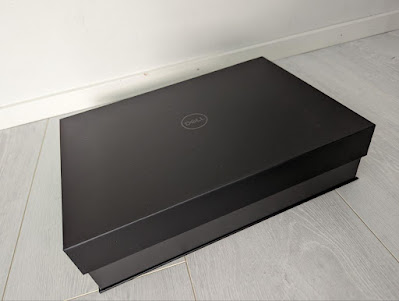


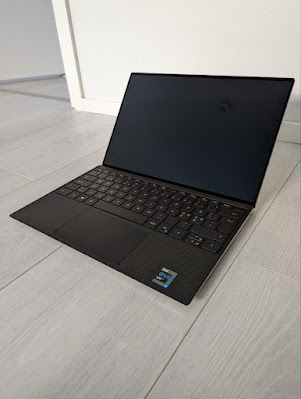


 At CES this week, Lenovo





 The long awaited
 Gaggia Classic 2015 and De Longhi grinder
 The Gaggia Classic 2015 group head
 Gaggia Classic 2015 vs 2019
 Gaggia Classic 2019 and Sage BCG600 Dose Control Pro
 Happy with my new purchase, I went to read this review and thought to myself: lucky me, my grinder is absolutely quiet! And then I realised that
the noise in my kitchen is not, in fact, produced by the fridge, but the grinder. Well, a cheap switched plug solved the issue completely (I wish
sockets here each had a switch like they usually to in the UK!)
 As a follow on to a previous blog entry of mine,
 Hello! Welcome. I m so thrilled you re here.
Some of you may know this (as I ve written about in the past), but if you re
new to my RF travels, I ve spent nights and weekends over the last two years
doing some self directed learning on how radios work. I ve gone from a very
basic understanding of wireless communications, all the way through the process
of learning about and implementing a set of libraries to modulate and
demodulate data using my now formidable stash of