Dominique Dumont: An improved GUI for cme and Config::Model


remotes/private/attic/novena 822ca2bb add letter i sent to novena, never published
remotes/private/attic/secureboot de09d82b quick review, add note and graph
remotes/private/attic/wireguard 5c5340d1 wireguard review, tutorial and comparison with alternatives
remotes/private/backlog/dat 914c5edf Merge branch 'master' into backlog/dat
remotes/private/backlog/packet 9b2c6d1a ham radio packet innovations and primer
remotes/private/backlog/performance-tweaks dcf02676 config notes for http2
remotes/private/backlog/serverless 9fce6484 postponed until kubecon europe
remotes/private/fin/cost-of-hosting 00d8e499 cost-of-hosting article online
remotes/private/fin/kubecon f4fd7df2 remove published or spun off articles
remotes/private/fin/kubecon-overview 21fae984 publish kubecon overview article
remotes/private/fin/kubecon2018 1edc5ec8 add series
remotes/private/fin/netconf 3f4b7ece publish the netconf articles
remotes/private/fin/netdev 6ee66559 publish articles from netdev 2.2
remotes/private/fin/pgp-offline f841deed pgp offline branch ready for publication
remotes/private/fin/primes c7e5b912 publish the ROCA paper
remotes/private/fin/runtimes 4bee1d70 prepare publication of runtimes articles
remotes/private/fin/token-benchmarks 5a363992 regenerate timestamp automatically
remotes/private/ideas/astropy 95d53152 astropy or python in astronomy
remotes/private/ideas/avaneya 20a6d149 crowdfunded blade-runner-themed GPLv3 simcity-like simulator
remotes/private/ideas/backups-benchmarks fe2f1f13 review of backup software through performance and features
remotes/private/ideas/cumin 7bed3945 review of the cumin automation tool from WM foundation
remotes/private/ideas/future-of-distros d086ca0d modern packaging problems and complex apps
remotes/private/ideas/on-dying a92ad23f another dying thing
remotes/private/ideas/openpgp-discovery 8f2782f0 openpgp discovery mechanisms (WKD, etc), thanks to jonas meurer
remotes/private/ideas/password-bench 451602c0 bruteforce estimates for various password patterns compared with RSA key sizes
remotes/private/ideas/prometheus-openmetrics 2568dbd6 openmetrics standardizing prom metrics enpoints
remotes/private/ideas/telling-time f3c24a53 another way of telling time
remotes/private/ideas/wallabako 4f44c5da talk about wallabako, read-it-later + kobo hacking
remotes/private/stalled/bench-bench-bench 8cef0504 benchmarking http benchmarking tools
remotes/private/stalled/debian-survey-democracy 909bdc98 free software surveys and debian democracy, volunteer vs paid work
Wow, what a mess! Let's see if I can make sense of this:
novena: the project is ooold now, didn't seem to fit a LWN
article. it was basically "how can i build my novena now" and "you
guys rock!" it seems like the MNT Reform is the brain child of
the Novena now, and I dare say it's even cooler!secureboot: my LWN editors were critical of my approach, and
probably rightly so - it's a really complex subject and I was
probably out of my depth... it's also out of date now, we did
manage secureboot in Debianwireguard: LWN ended up writing extensive coverage, and
I was biased against Donenfeld because of conflicts in a previous
projectdat: I already had written Sharing and archiving data sets with
Dat, but
it seems I had more to say... mostly performance issues, beaker, no
streaming, limited adoption... to be investigated, I guess?packet: a primer on data communications over ham radio, and the
cool new tech that has emerged in the free software world. those
are mainly notes about Pat, Direwolf, APRS and so
on... just never got around to making sense of it or really using
the tech...performance-tweaks: "optimizing websites at the age of http2",
the unwritten story of the optimization of this website with HTTP/2
and friendsserverless: god. one of the leftover topics at Kubecon, my notes
on this were thin, and the actual subject, possibly even
thinner... the only lie worse than the cloud is that there's no
server at all! concretely, that's a pile of notes about
Kubecon which I wanted to sort
through. Probably belongs in the attic now.astropy: "Python in astronomy" - had a chat with saimn
while writing about sigal, and it
turns out he actually works on free software in astronomy, in
Python... I actually expect LWN to cover this sooner than
later, after Lee Phillips's introduction to SciPyavaneya: crowdfunded blade-runner-themed GPLv3 simcity-like
simulator, i just have that link so farbackups-benchmarks: review of backup software through performance
and features, possibly based on those benchmarks, maybe based
on this list from restic although they refused
casync. benchmark articles are hard though, especially when
you want to "cover them all"... I did write a silly Attic vs
Bup back when those programs existed (2014), in a related
note...ideas/cumin: review of the Cumin automation tool from
WikiMedia Foundation... I ended up using the tool at work and
writing service documentation for itideas/future-of-distros: modern packaging problems and complex
apps, starting from this discussion about the removal of
Dolibarr from Debian, a summary of the thread from liw,
and ideas from joeyh (now from the outside of Debian), then
debates over the power of FTP masters - ugh, glad I
didn't step in that rat's nestideas/on-dying: "what happens when a hacker dies?" rather grim
subject, but a more and more important one... joeyh has ideas
again, phk as well, then there's a protocol for dying
(really grim)... then there are site policies like GitHub,
Facebook, etc... more in the branch, but that one I can't help but
think about now that family has taken a bigger place in my life...ideas/openpgp-discovery: OpenPGP discovery mechanisms (WKD, etc),
suggested by Jonas Meurer (somewhere?), only links to
Mailveloppe, LEAP, WKD (or is it WKS?), another
standard, probably would need to talk about OpenPGP CA now
and how Debian and Tor manage their keyrings... pain in the back.ideas/password-bench: bruteforce estimates for various password
patterns compared with RSA key sizes, spinoff of my smartcard
article, in
the crypto-bench, look at this shiny graph, surely that
must mean an article, right?ideas/prometheus-openmetrics: "Evolving the Prometheus exposition
format into a standard", seems like this happenedideas/telling-time: telling time to users is hard. xclock vs
ttyclock, etc. maybe gameclock and undertime as well? syncing time
is hard, but it turns out showing it is non trivial as
well... basically turning this bug report into an article. for
some reason I linked to this meme, derived from this
meme, presumably a premonition of my stupid idea of writing
undertime TIMEZONES!ideas/wallabako: "talk about wallabako, read-it-later + kobo
hacking", that's it, not even a link to the project!stalled/bench-bench-bench benchmarking http benchmarking tools, a
horrible mess of links, copy-paste from terminals, and ideas about
benchmarking... some of this trickled out into this benchmarking
guide at Tor, but not much more than the list of toolsstalled/debian-survey-democracy: "free software surveys and
Debian democracy, volunteer vs paid work"... A long standing
concern of mine is that all Debian work is supposed to be
volunteer, and paying explicitly for work inside Debian has
traditionally been frowned upon, even leading to serious drama and
dissent (remember Dunc-Tank)? back when I was writing for LWN,
I was also doing paid work for Debian LTS. I also learned
that a lot (most?) Debian Developers were actually being paid by
their job to work on Debian. So I was confused by this apparent
contradiction, especially given how the LTS project has been mostly
accepted, while Dunc-Tank was not... See also this talk at Debconf
16. I had hopes that this study would show the "hunch"
people have offered (that most DDs are paid to work on Debian) but
it seems to show the reverse (only 36% of DDs, and 18% of all
respondents paid). So I am still confused and worried about the
sustainability of Debian.
Every year since 2005 there is a very good, big and interesting Latin
American gathering of free-software-minded people. Of course, Latin
America is a big, big, big place, and it s not like we are the most
economically buoyant region to meet in something equiparable to
FOSDEM.
What we have is a distributed free software conference originally,
a distributed Linux install-fest (which I never liked, I am against
install-fests), but gradually it morphed into a proper conference:
Festival Latinoamericano de Instalaci n de Software Libre (Latin
American Free Software Installation Festival)
This FLISOL was hosted by the always great and always interesting
Rancho Electr nico, our favorite
local hacklab, and has many other interesting
talks.
I like talking about projects where I am involved as a
developer but this time I decided to do otherwise: I presented a
talk on the Jitsi videoconferencing server. Why? Because of the
relevance videoconferences have had over the last year.
So, without further ado Here is a video I recorded locally from the
talk I gave
(MKV), as
well as the slides
(PDF).
Back in 2005 we had Debconf in Helsinki. Earlier in the year I'd ended up invited to Canonical's Ubuntu Down Under event in Sydney, and one of the things we'd tried to design was a reasonable graphical boot environment that could also display status messages. The design constraints were awkward - we wanted it to be entirely in userland (so we didn't need to carry kernel patches), and we didn't want to rely on vesafb[1] (because at the time we needed to reinitialise graphics hardware from userland on suspend/resume[2], and vesa was not super compatible with that). Nothing currently met our requirements, but by the time we'd got to Helsinki there was a general understanding that Paul Sladen was going to implement this.wget -O /usr/local/hpePublicKey2048_key1.pub https://downloads.linux.hpe.com/SDR/hpePublicKey2048_key1.pub echo "# HP RAID" >> /etc/apt/sources.list echo "deb [signed-by=/usr/local/hpePublicKey2048_key1.pub] http://downloads.linux.hpe.com/SDR/downloads/MCP/Debian/ buster/current non-free" >> /etc/apt/sources.listThe above commands will setup the APT repository for Debian/Buster. See the HP Downloads FAQ [2] for more information about their repositories. hponcfg This package contains the hponcfg program that configures ILO (the HP remote management system) from Linux. One noteworthy command is hponcfg -r to reset the ILO, something you should do before selling an old system. ssacli This package contains the ssacli program to configure storage arrays, here are some examples of how to use it:
# list controllers and show slot numbers ssacli controller all show # list arrays on controller identified by slot and give array IDs ssacli controller slot=0 array all show # show details of one array ssacli controller slot=0 array A show # show all disks on one controller ssacli controller slot=0 physicaldrive all show # show config of a controller, this gives RAID level etc ssacli controller slot=0 show config # delete array B (you can immediately pull the disks from it) ssacli controller slot=0 array B delete # create an array type RAID0 with specified drives, do this with one drive per array for BTRFS/ZFS ssacli controller slot=0 create type=arrayr0 drives=1I:1:1When a disk is used in JBOD mode just under 33MB will be used at the end of the disk for the RAID metadata. If you have existing disks with a DOS partition table you can put it in a HP array as a JBOD and it will work with all data intact (GPT partition table is more complicated). When all disks are removed from the server the cooling fans run at high speed, this would be annoying if you wanted to have a diskless workstation or server using only external storage. ssaducli This package contains the ssaducli diagnostic utility for storage arrays. The SSD wear gauge report doesn t work for the 2 SSDs I tested it on, maybe it only supports SAS SSDs not SATA SSDs. It doesn t seem to do anything that I need. storcli This package contains both 32bit and 64bit versions of the MegaRAID utility and deletes whichever one doesn t match the installation in the package postinst, so it fails debsums checks etc. The MegaRAID utility is for a different type of RAID controller to the Smart Storage Array (AKA SSA) that the other utilities work with. As an aside it seems that there are multiple types of MegaRAID controller, the management program from the storcli package doesn t work on a Dell server with MegaRAID. They should have made separate 32bit and 64bit versions of this package. Recommendations Here is HP page for downloading firmware updates (including security updates) [3], you have to login first and have a warranty. This is legal but poor service. Dell servers have comparable prices (on the second hand marker) and comparable features but give free firmware updates to everyone. Dell have overall lower quality of Debian packages for supporting utilities, but a wider range of support so generally Dell support seems better in every way. Dell and HP hardware seems of equal quality so overall I think it s best to buy Dell. Suggestions for HP Finding which of the signing keys to use is unreasonably difficult. You should get some HP employees to sign the HP keys used for repositories with their personal keys and then go to LUG meetings and get their personal keys well connected to the web of trust. Then upload the HP keys to the public key repositories. You should also use the same keys for signing all versions of the repositories. Having different keys for the different versions of Debian wastes people s time. Please provide firmware for all users, even if they buy systems second hand. It is in your best interests to have systems used long-term and have them run securely. It is not in your best interests to have older HP servers perform badly. Having all the fans run at maximum speed when power is turned on is a standard server feature. Some servers can throttle the fan when the BIOS is running, it would be nice if HP servers did that. Having ridiculously loud fans until just before GRUB starts is annoying.
I had a twitter fight few days back with a gentleman and the article is a result of that fight. Sadly, I do not know the name of the gentleman as he goes via a psuedo name and then again I ve not taken permission from him to quote him in either way. So I will just state the observations I was able to make from the conversations we had. As people who read this blog regularly would know, I am and have been against Railway Privatization which is happening in India. And will be sharing some of the case studies from other countries as to how it panned out for them.
UK railway map with operators

Railway map of Japan with private ownership courtesy Wikimedia commons
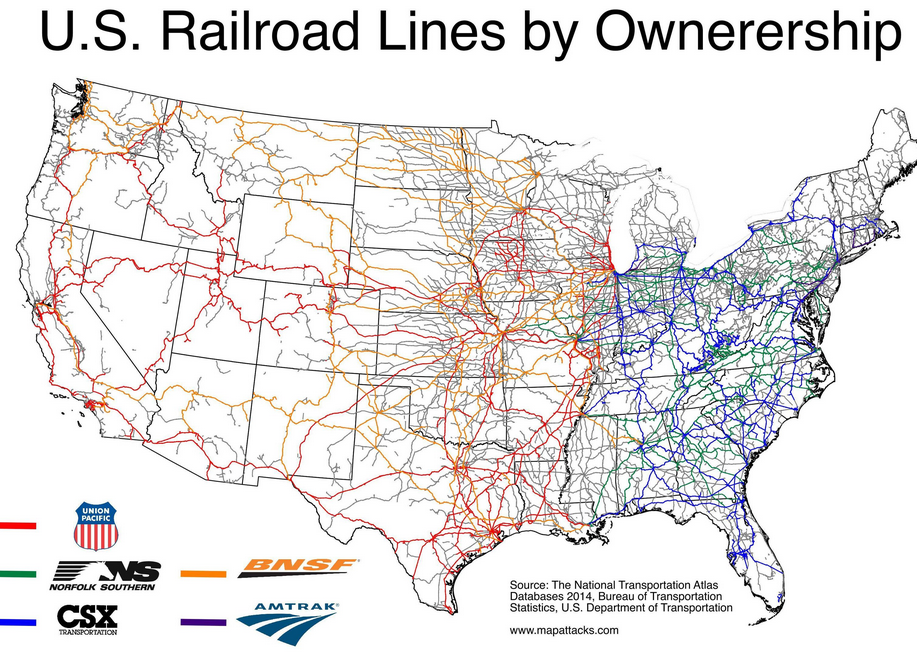
U.S. Railway lines with the different owners
Vaccine issues
Currently, though the issue has been the Vaccine and the pricing of the same. A good article to get a summation of the issues outlined has been shared on Economist. Another article that goes to the heart of the issue is at scroll. To buttress the argument, the SII chairman had shared this few weeks back
Adar Poonawala talking to Vishnu Som on Left, right center, 7th April 2021.
Prices of AstraZeneca among various states and countries.Internet Freedom and Aarogya Setu App.
Internet Freedom had shared the chilling effects of the Aarogya Setu App. This had also been shared by FSCI in the past, and recently had their handle being banned on Twitter. This was also apparent in a legal bail order which the high court judge gave. While I won t go into the merits and demerits of the bail order, it is astounding for the judge to say that the accused, even though he would be on bail install an app. so he can be surveilled. And this is a high court judge, such a sad state of affairs. We seem to be putting up new lows every day when it comes to judicial jurisprudence. One interesting aspect of the whole case was shared by Aishwarya Iyer. She shared a story that she and her team worked on quint which raises questions on the quality of the work done by Delhi Police. This is of course, up to Delhi Police to ascertain the truth of the matter because unless and until they are able to tie in the PMO s office in for a leak or POTUS s office it hardly seems possible. For e.g. the dates when two heads of state can meet each other would be decided by the secretaries of the two. Once the date is known, it would be shared with the press while at the same time some sort of security apparatus would kick in place. It is incumbent, especially on the host to take as much care as he can of the guest. We all remember that World War 1 (the war to end all wars) started due to the murder of Archduke Ferdinand.
As nobody wants that, the best way is to make sure that a political murder doesn t happen on your watch. Now while I won t comment on what it would be, it would be safe to assume that it would be z+ security along with higher readiness. Especially if it as somebody as important as POTUS. Now, it would be quite a reach for Delhi Police to connect the two dates. They either will have to get creative with the dates or some other way. Otherwise, with practically no knowledge in the public domain, they can t work in limbo. In either case, I do hope the case comes up for hearing soon and we see what the Delhi Police says and contends in the High Court about the same. At the very least, it would be irritating for them to talk of the dates unless they can contend some mass conspiracy which involves the PMO (and would bring into question the constant vetting done by the Intelligence dept. of all those who work in PMO). And this whole case is to kind of shelter to the Delhi riots which happened in which majorly the Muslims died but their deaths lay unaccounted till date 
Conclusion In Conclusion, I would like to share a bit of humor because right now the atmosphere is humorless, both with authoritarian tendencies of the Central Govt. and the mass mismanagement of public health which they now have left to the state to do as they fit. The peice I am sharing is from arre, one of my goto sites whenever I feel low.
#!/usr/bin/python3 import sys import time def display(line: str): cur = '0' * len(line) while True: print(cur, end="\r") if cur == line: break time.sleep(0.09) cur = "".join(chr(min(ord(c) + 1, ord(oc))) for c, oc in zip(cur, line)) print() message = " ".join(sys.argv[1:]) display(message.upper())
cat, and you get a long wait, and then the final string, without the
animation.
What is happening is that since the output is not going to a terminal,
optimizations kick in that buffer the output and send it in bigger chunks, to
make processing bulk I/O more efficient.
I haven't found a good introductory explanation of buffering in Python's
documentation. The details seem to be scattered in the io module
documentation and they mostly
assume that one is already familiar with concepts like unbuffered,
line-buffered or block-buffered. The libc documentation has a good quick
introduction
that one can read to get up to speed.
Controlling buffering in Python
In Python, one can force a buffer flush with the flush() method of the output
file descriptor, like sys.stdout.flush(), to make sure pending buffered
output gets sent.
Python's print() function also supports flush=True as an optional argument:
print(cur, end="\r", flush=True)
reconfigure()
method, which can reconfigure line buffering only:
sys.stdout.reconfigure(line_buffering=True)
sys.stdout to something that has the
behaviour one wants (code from this StackOverflow
thread):
import io # Python 3, open as binary, then wrap in a TextIOWrapper with write-through. sys.stdout = io.TextIOWrapper(open(sys.stdout.fileno(), 'wb', 0), write_through=True)
I ve mostly had the preference of controlling my data rather than depend on someone else. That s one reason why I still believe email to be my most reliable medium for data storage, one that is not plagued/locked by a single entity. If I had the resources, I d prefer all digital data to be broken down to its simplest form for storage, like email format, and empower the user with it i.e. their data.
Yes, there are free services that are indirectly forced upon common users, and many of us get attracted to it. Many of us do not think that the information, which is shared for the free service in return, is of much importance. Which may be fair, depending on the individual, given that they get certain services without paying any direct dime.
Rewrote my pomodoro technique timer.
I've been iterating on how I operate and focus. Too much focus exhausts me.
I'm trying out Focusmate's method of 50 minutes of focus time and 10 minutes of break.

Here is a web app that tries to start the timer at the hour and starts break at the last 10 minutes.

I am arranging to take a cottage at Wallington near Baldock in Herts, rather a pig in a poke because I have never seen it, but I am trusting the friends who have chosen it for me, and it is very cheap, only 7s. 6d. a week [ 20 in 2021].For those not steeped in English colloquialisms, "a pig in a poke" is an item bought without seeing it in advance. In fact, one general insight that may be drawn from reading Orwell's extant correspondence is just how much he relied on a close network of friends, belying the lazy and hagiographical picture of an independent and solitary figure. (Still, even Orwell cultivated this image at times, such as in a patently autobiographical essay he wrote in 1946. But note the off-hand reference to varicose veins here, for they would shortly re-appear as a symbol of Winston's repressed humanity in Nineteen Eighty-Four.) Nevertheless, the porcine reference in Orwell's idiom is particularly apt, given that he wrote the bulk of Animal Farm at The Stores his 1945 novella, of course, portraying a revolution betrayed by allegorical pigs. Orwell even drew inspiration for his 'fairy story' from Wallington itself, principally by naming the novel's farm 'Manor Farm', just as it is in the village. But the allusion to the purchase of goods is just as appropriate, as Orwell returned The Stores to its former status as the village shop, even going so far as to drill peepholes in a door to keep an Orwellian eye on the jars of sweets. (Unfortunately, we cannot complete a tidy circle of references, as whilst it is certainly Napoleon Animal Farm's substitute for Stalin who is quoted as describing Britain as "a nation of shopkeepers", it was actually the maraisard Bertrand Bar re who first used the phrase). "It isn't what you might call luxurious", he wrote in typical British understatement, but Orwell did warmly emote on his animals. He kept hens in Wallington (perhaps even inspiring the opening line of Animal Farm: "Mr Jones, of the Manor Farm, had locked the hen-houses for the night, but was too drunk to remember to shut the pop-holes.") and a photograph even survives of Orwell feeding his pet goat, Muriel. Orwell's goat was the eponymous inspiration for the white goat in Animal Farm, a decidedly under-analysed character who, to me, serves to represent an intelligentsia that is highly perceptive of the declining political climate but, seemingly content with merely observing it, does not offer any meaningful opposition. Muriel's aesthetic of resistance, particularly in her reporting on the changes made to the Seven Commandments of the farm, thus rehearses the well-meaning (yet functionally ineffective) affinity for 'fact checking' which proliferates today. But I digress. There is a tendency to "read Orwell backwards", so I must point out that Orwell wrote several other works whilst at The Stores as well. This includes his Homage to Catalonia, his aforementioned The Road to Wigan Pier, not to mention countless indispensable reviews and essays as well. Indeed, another result of focusing exclusively on Orwell's last works is that we only encounter his ideas in their highly-refined forms, whilst in reality, it often took many years for concepts to fully mature we first see, for instance, the now-infamous idea of "2 + 2 = 5" in an essay written in 1939. This is important to understand for two reasons. Although the ostentatiously austere Barnhill might have housed the physical labour of its writing, it is refreshing to reflect that the philosophical heavy-lifting of Nineteen Eighty-Four may have been performed in a relatively undistinguished North Hertfordshire village. But perhaps more importantly, it emphasises that Orwell was just a man, and that any of us is fully capable of equally significant insight, with to quote Christopher Hitchens "little except a battered typewriter and a certain resilience."
The red commemorative plaque not only limits Orwell's tenure to the time he was permanently in the village, it omits all reference to his first wife, Eileen O'Shaughnessy, whom he married in the village church in 1936.
Wallington's Manor Farm, the inspiration for the farm in Animal Farm. The lower sign enjoins the public to inform the police "if you see anyone on the [church] roof acting suspiciously". Non-UK-residents may be surprised to learn about the systematic theft of lead.

In the past, I've talked about building a Z80-based computer. I made some progress towards that goal, in the sense that I took the initial (trivial steps) towards making something:
0x00 which is the Z80 NOP instruction.cls to clear the screen), as well as got the hang of using the wordstar keyboard shortcuts as used within the turbo pascal environment.
I have some plans for development:
TYPE, and allow terminating with Q. B>LOCATE H*.COM
P:HELLO COM
P:HELLO2 COM
G:HITCH COM
E:HYPHEN COM
I've also written some other trivial assembly language tools, which was surprisingly relaxing. Especially once I got back into the zen mode of optimizing for size.
I forked the upstream repository, mostly to tidy up the contents, rather than because I want to go into my own direction. I'll keep the contents in sync, because there's no point splitting a community even further - I guess there are fewer than 100 of these boards in the wild, probably far far fewer!
A new website containing introductory videos and slide decks is now available for your perusal at ess-intro.github.io. It provides a series of introductions to the excellent Emacs Speaks Statistics (ESS) mode for the Emacs editor.
This effort started following my little tips, tricks, tools and toys series of short videos and slide decks for the command-line and R, broadly-speaking . Which I had mentioned to friends curious about Emacs, and on the ess-help mailing list. And lo and behold, over the fall and winter sixteen of us came together in one GitHub org and are now proud to present the initial batch of videos about first steps, installing, using with spaceemacs, customizing, and org-mode with ESS. More may hopefully fellow, the group is open and you too can join: see the main repo and its wiki.
This is in fact the initial announcement post, so it is flattering that we have already received over 350 views, four comments and twenty-one likes.
We hope it proves to be a useful starting point for some of you. The Emacs editor is quite uniquely powerful, and coupled with ESS makes for a rather nice environment for programming with data, or analysing, visualising, exploring, data. But we are not zealots: there are many editors and environments under the sun, and most people are perfectly happy with their choice, which is wonderful. We also like ours, and sometimes someone asks tell me more or how do I start . We hope this series satisifies this initial curiousity and takes it from here.
With that, my thanks to Fr d ric, Alex, Tyler and Greg for the initial batch, and for everybody else in the org who chipped in with comments and suggestion. We hope it grows from here, so happy Emacsing with R from us!
qemu-system-x86_64 -kernel arch/x86/boot/bzImage -initrd ../initrd-$KERN_VER -curses -m 2000 -append "root=/dev/vda ro nokaslr" -gdb tcp::1200The command to run GDB is gdb vmlinux , when at the GDB prompt you can run the command target remote localhost:1200 to connect to the GDB server port 1200. Note that there is nothing special about port 1200, it was given in an example I saw and is as good as any other port. It is important that you run GDB against the vmlinux file in the main directory not any of the several stripped and packaged files, GDB can t handle a bzImage file but that s OK, it ends up much the same in RAM. When the target remote command is processed the kernel will be suspended by the debugger, if you are looking for a bug early in the boot you may need to be quick about this. Using qemu-system-x86_64 instead of kvm slows things down and can help in that regard. The bug I was hunting happened 1.6 seconds after kernel load with KVM and 7.8 seconds after kernel load with qemu. I am not aware of all the implications of the kvm vs qemu decision on debugging. If your bug is a race condition then trying both would be a good strategy. After the target remote command you can debug the kernel just like any other program. If you put a breakpoint on print_modules() that will catch the operation of printing an Oops which can be handy.
Armadillo is a powerful and expressive C++ template library for linear algebra aiming towards a good balance between speed and ease of use with a syntax deliberately close to a Matlab. RcppArmadillo integrates this library with the R environment and language and is widely used by (currently) 852 other packages on CRAN.
This new release brings us the just release Armadillo 10.4.0. Upstream moves at a speed that is a little faster than the cadence CRAN likes. We release RcppArmadillo 0.10.2.2.0 on March 9; and upstream 10.3.0 came out shortly thereafter. We aim to accomodate CRAN with (roughly) monthly (or less frequent) releases) so by the time we were ready 10.4.0 had just come out.
As it turns, the full testing had a benefit. Among the (currently) 852 CRAN packages using RcppArmadillo, two were failing tests. This is due to a subtle, but important point. Early on we realized that it would be beneficial if the standard R control over random-number creation and seeding affected Armadillo too, which Conrad accomodated kindly with an optional RNG interface which RcppArmadillo supplies. With recent changes he made, the R side saw normally-distributed draws (via the Armadillo interface) changed, which lead to the two changes. All hail unit tests. So I mentioned this to Conrad, and with the usual Chicago-Brisbane time difference late my evening a fix was in my inbox. The CRAN upload was then halted as I had missed that due to other changes he had made random draws from a Gamma would now call std::rand() which CRAN flags. Another email to Brisbane, another late (one-line) fix back and all was good. We still encountered one package with an error but flagged this as internal to that package s setup, so Uwe let RcppArmadillo onto CRAN, I contacted that package s maintainer who was very receptive and a change should be forthcoming. So with all that we have 0.10.4.0.0 on CRAN giving us Armadillo 10.4.0.
The full set of changes follows. As Armadillo 10.3.0 was not uploaded to CRAN, its changes are included too.
Courtesy of my CRANberries, there is a diffstat report relative to previous release. More detailed information is on the RcppArmadillo page. Questions, comments etc should go to the rcpp-devel mailing list off the R-Forge page. If you like this or other open-source work I do, you can sponsor me at GitHub.Changes in RcppArmadillo version 0.10.4.0.0 (2021-04-12)
- Upgraded to Armadillo release 10.4.0 (Pressure Cooker)
- faster handling of triangular matrices by
log_det()- added
log_det_sympd()for log determinant of symmetric positive matrices- added ARMA_WARN_LEVEL configuration option, to control the degree of emitted warning messages
- reduced the default degree of warning messages, so that failed decompositions, failed saving/loading, etc, no longer emit warnings
- Apply one upstream corrections for
arma::randndraws when using alternative (here R) generator, andarma::randg.Changes in RcppArmadillo version 0.10.3.0.0 (2021-03-10)
- Upgraded to Armadillo release 10.3 (Sunrise Chaos)
- faster handling of symmetric positive definite matrices by
pinv()- expanded
.save()/.load()for dense matrices to handle coord_ascii format- for out of bounds access, element accessors now throw the more nuanced
std::out_of_rangeexception, instead of onlystd::logic_error- improved quality of random numbers
This post by Dirk Eddelbuettel originated on his Thinking inside the box blog. Please report excessive re-aggregation in third-party for-profit settings.
$ restic check
using temporary cache in /var/tmp/restic-tmp/restic-check-cache-854484247
repository b0b0516c opened successfully, password is correct
created new cache in /var/tmp/restic-tmp/restic-check-cache-854484247
create exclusive lock for repository
load indexes
check all packs
check snapshots, trees and blobs
error for tree 4645312b:
decrypting blob 4645312b443338d57295550f2f4c135c34bda7b17865c4153c9b99d634ae641c failed: ciphertext verification failed
error for tree 2c3248ce:
decrypting blob 2c3248ce5dc7a4bc77f03f7475936041b6b03e0202439154a249cd28ef4018b6 failed: ciphertext verification failed
Fatal: repository contains errors
I started by locating the snapshots which make use of these corrupt trees:
$ restic find --tree 4645312b
repository b0b0516c opened successfully, password is correct
Found tree 4645312b443338d57295550f2f4c135c34bda7b17865c4153c9b99d634ae641c
... path /usr/include/boost/spirit/home/support/auxiliary
... in snapshot 41e138c8 (2021-01-31 08:35:16)
Found tree 4645312b443338d57295550f2f4c135c34bda7b17865c4153c9b99d634ae641c
... path /usr/include/boost/spirit/home/support/auxiliary
... in snapshot e75876ed (2021-02-28 08:35:29)
$ restic find --tree 2c3248ce
repository b0b0516c opened successfully, password is correct
Found tree 2c3248ce5dc7a4bc77f03f7475936041b6b03e0202439154a249cd28ef4018b6
... path /usr/include/boost/spirit/home/support/char_encoding
... in snapshot 41e138c8 (2021-01-31 08:35:16)
Found tree 2c3248ce5dc7a4bc77f03f7475936041b6b03e0202439154a249cd28ef4018b6
... path /usr/include/boost/spirit/home/support/char_encoding
... in snapshot e75876ed (2021-02-28 08:35:29)
and then deleted them:
$ restic forget 41e138c8 e75876ed
repository b0b0516c opened successfully, password is correct
[0:00] 100.00% 2 / 2 files deleted
$ restic prune
repository b0b0516c opened successfully, password is correct
counting files in repo
building new index for repo
[13:23] 100.00% 58964 / 58964 packs
repository contains 58964 packs (1417910 blobs) with 278.913 GiB
processed 1417910 blobs: 0 duplicate blobs, 0 B duplicate
load all snapshots
find data that is still in use for 20 snapshots
[1:15] 100.00% 20 / 20 snapshots
found 1364852 of 1417910 data blobs still in use, removing 53058 blobs
will remove 0 invalid files
will delete 942 packs and rewrite 1358 packs, this frees 6.741 GiB
[10:50] 31.96% 434 / 1358 packs rewritten
hash does not match id: want 9ec955794534be06356655cfee6abe73cb181f88bb86b0cd769cf8699f9f9e57, got 95d90aa48ffb18e6d149731a8542acd6eb0e4c26449a4d4c8266009697fd1904
github.com/restic/restic/internal/repository.Repack
github.com/restic/restic/internal/repository/repack.go:37
main.pruneRepository
github.com/restic/restic/cmd/restic/cmd_prune.go:242
main.runPrune
github.com/restic/restic/cmd/restic/cmd_prune.go:62
main.glob..func19
github.com/restic/restic/cmd/restic/cmd_prune.go:27
github.com/spf13/cobra.(*Command).execute
github.com/spf13/cobra/command.go:852
github.com/spf13/cobra.(*Command).ExecuteC
github.com/spf13/cobra/command.go:960
github.com/spf13/cobra.(*Command).Execute
github.com/spf13/cobra/command.go:897
main.main
github.com/restic/restic/cmd/restic/main.go:98
runtime.main
runtime/proc.go:204
runtime.goexit
runtime/asm_amd64.s:1374
As you can see above, the prune command failed due to a corrupt pack and
so I followed the process I previously wrote
about
and identified the affected snapshots using:
$ restic find --pack 9ec955794534be06356655cfee6abe73cb181f88bb86b0cd769cf8699f9f9e57
before deleting them with:
$ restic forget 031ab8f1 1672a9e1 1f23fb5b 2c58ea3a 331c7231 5e0e1936 735c6744 94f74bdb b11df023 dfa17ba8 e3f78133 eefbd0b0 fe88aeb5
repository b0b0516c opened successfully, password is correct
[0:00] 100.00% 13 / 13 files deleted
$ restic prune
repository b0b0516c opened successfully, password is correct
counting files in repo
building new index for repo
[13:37] 100.00% 60020 / 60020 packs
repository contains 60020 packs (1548315 blobs) with 283.466 GiB
processed 1548315 blobs: 129812 duplicate blobs, 4.331 GiB duplicate
load all snapshots
find data that is still in use for 8 snapshots
[0:53] 100.00% 8 / 8 snapshots
found 1219895 of 1548315 data blobs still in use, removing 328420 blobs
will remove 0 invalid files
will delete 6232 packs and rewrite 1275 packs, this frees 36.302 GiB
[23:37] 100.00% 1275 / 1275 packs rewritten
counting files in repo
[11:45] 100.00% 52822 / 52822 packs
finding old index files
saved new indexes as [a31b0fc3 9f5aa9b5 db19be6f 4fd9f1d8 941e710b 528489d9 fb46b04a 6662cd78 4b3f5aad 0f6f3e07 26ae96b2 2de7b89f 78222bea 47e1a063 5abf5c2d d4b1d1c3 f8616415 3b0ebbaa]
remove 23 old index files
[0:00] 100.00% 23 / 23 files deleted
remove 7507 old packs
[0:08] 100.00% 7507 / 7507 files deleted
done
And with 13 of my 21 snapshots deleted, the checks now pass:
$ restic check
using temporary cache in /var/tmp/restic-tmp/restic-check-cache-407999210
repository b0b0516c opened successfully, password is correct
created new cache in /var/tmp/restic-tmp/restic-check-cache-407999210
create exclusive lock for repository
load indexes
check all packs
check snapshots, trees and blobs
no errors were found
This represents a significant amount of lost backup history, but at least
it's not all of it.
First up, I am alive and well. I have been receiving calls from friends for quite sometime but now that I have become deaf, it is a pain and the hearing aids aren t all that useful. But moreover, where we have been finding ourselves each and every day sinking lower and lower feels absurd as to what to write and not write about India. Thankfully, I ran across this piece which does tell in far more detail than I ever could. The only interesting and somewhat positive news I had is from south of India otherwise sad days, especially for the poor. The saddest story is that this time Covid has reached alarming proportions in India and surprise, surprise this time the villain for many is my state of Maharashtra even though it hasn t received its share of GST proceeds for last two years and this was Kerala s perspective, different state, different party, different political ideology altogether.
Kerala Finance Minister Thomas Issac views on GST, October 22, 2020 Indian Express.
Next.