Search Results: "gt"

1 May 2023

Gunnar Wolf: Scanning heaps of 8mm movies

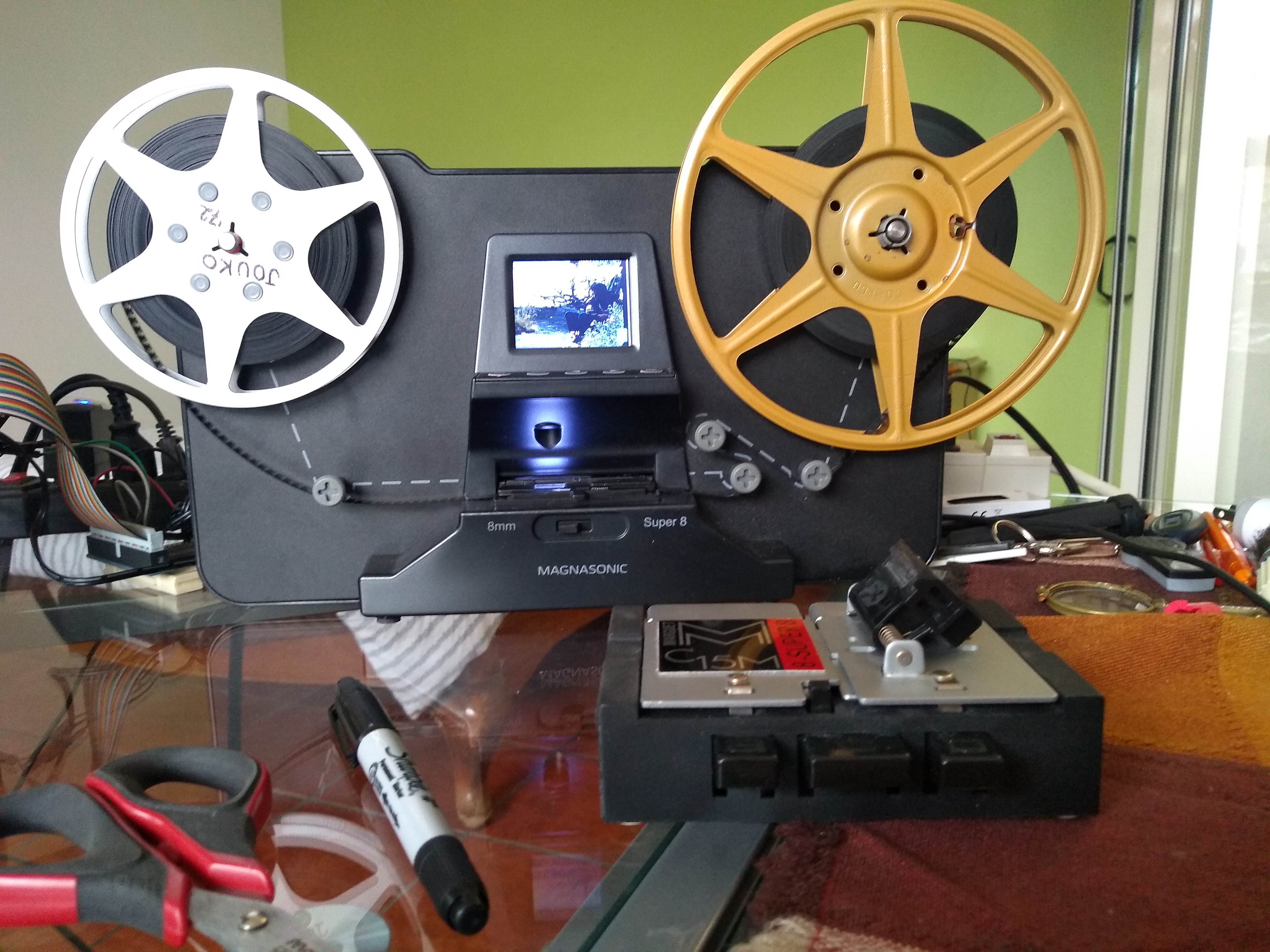
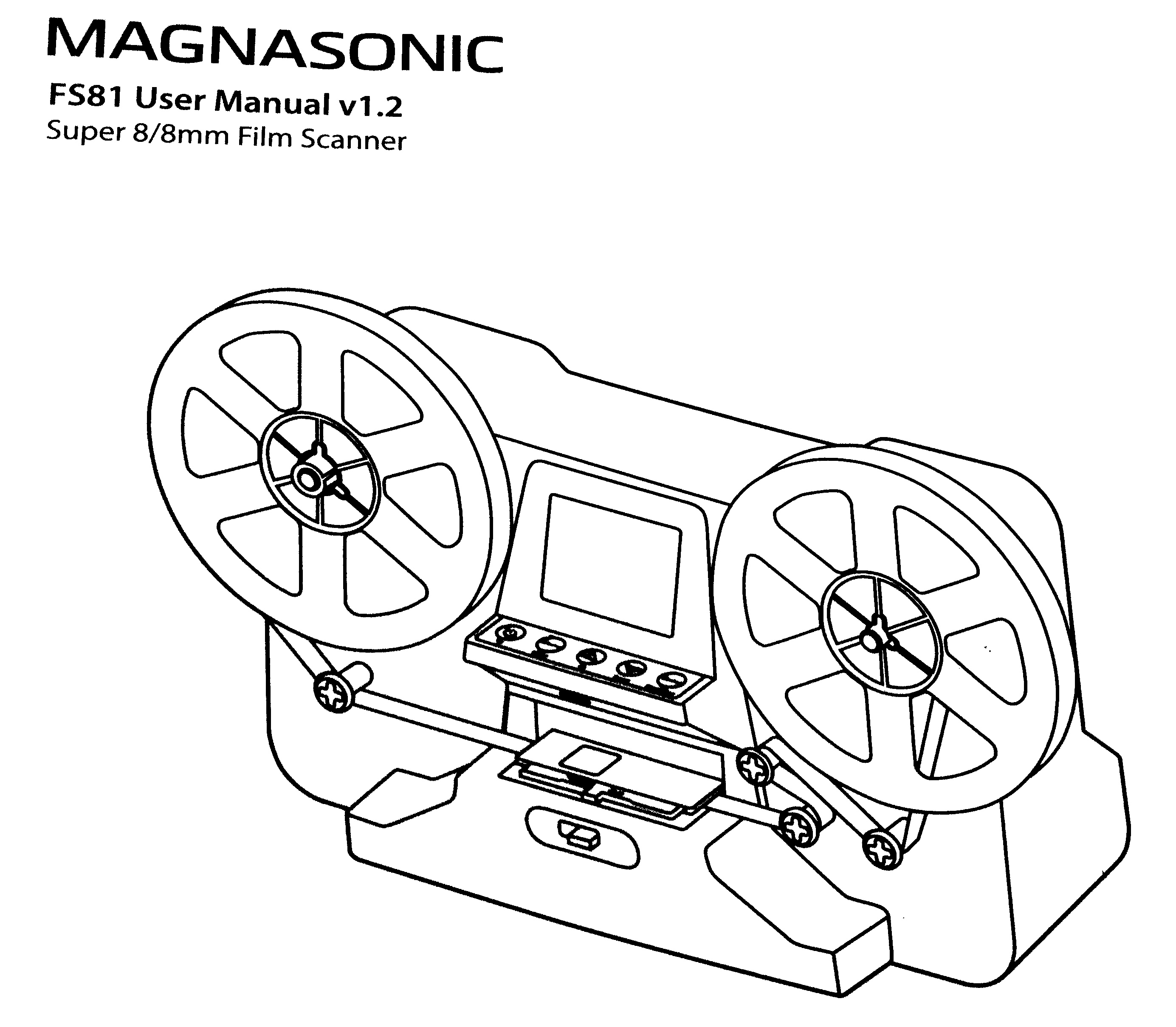
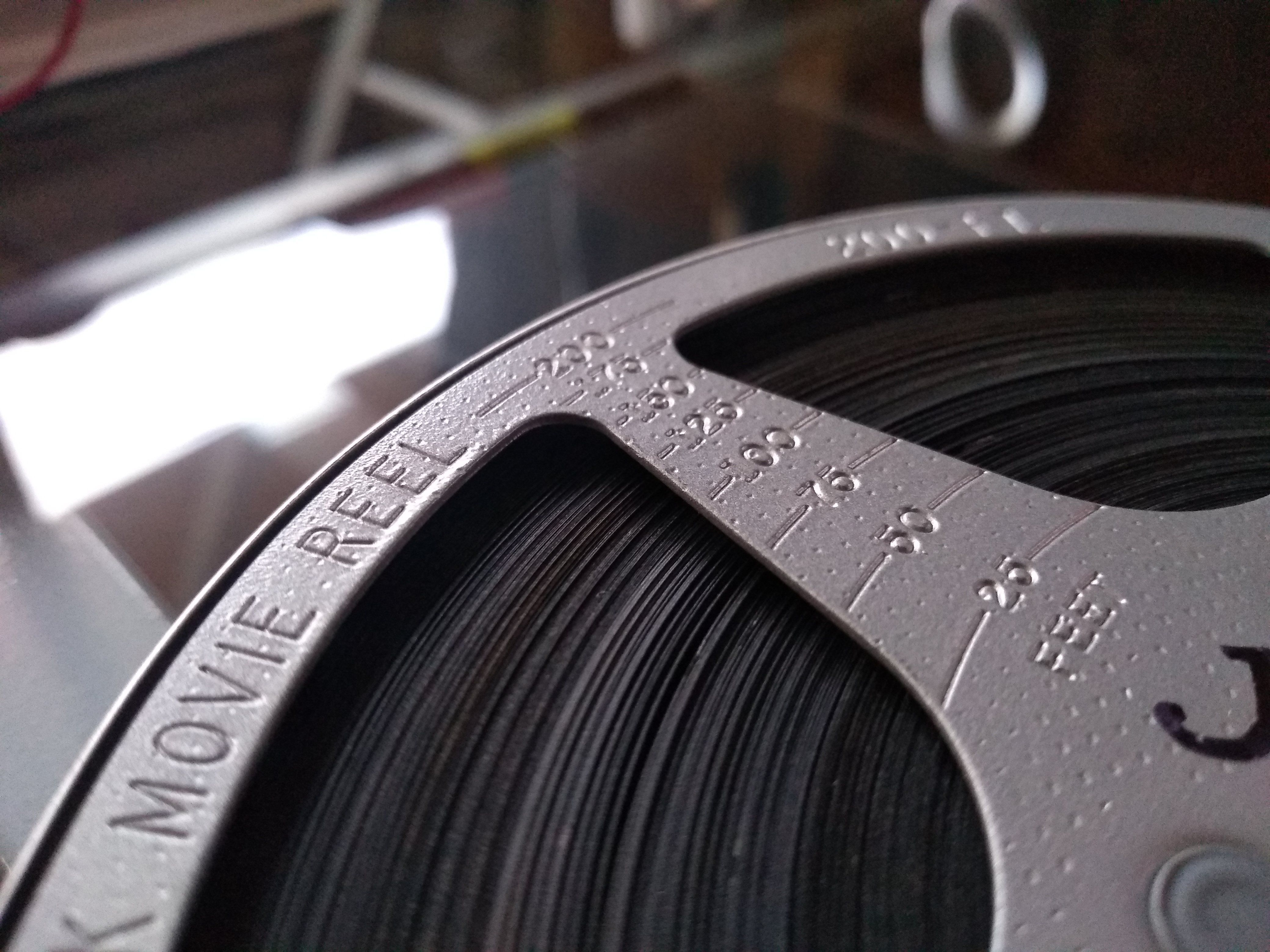
After my father passed away, I brought home most of the personal items he had, both at home and at his office. Among many, many (many, many, many) other things, I brought two of his personal treasures: His photo collection and a box with the 8mm movies he shot approximately between 1956 and 1989, when he was forced into modernity and got a portable videocassette recorder. I have talked with several friends, as I really want to get it all in a digital format, and while I ve been making slow but steady advances scanning the photo reels, I was particularly dismayed (even though it was most expected most personal electronic devices aren t meant to last over 50 years) to find out the 8mm projector was no longer in working conditions; the lamp and the fans work, but the spindles won t spin. Of course, it is quite likely it is easy to fix, but it is beyond my tinkering abilities and finding photographic equipment repair shops is no longer easy. Anyway, even if I got it fixed, filming a movie from a screen, even with a decent camera, is a lousy way to get it digitized. But almost by mere chance, I got in contact with my cousin Daniel, ho came to Mexico to visit his parents, and had precisely brought with him a 8mm/Super8 movie scanner! It is a much simpler piece of equipment than I had expected, and while it does present some minor glitches (i.e. the vertical framing slightly loses alignment over the course of a medium-length film scanning session, and no adjustment is possible while the scan is ongoing), this is something that can be decently fixed in post-processing, and a scanning session can be split with no ill effects. Anyway, it is quite uncommon a mid-length (5min) film can be done without interrupting i.e. to join a splice, mostly given my father didn t just film, but also edited a lot (this is, it s not just family pictures, but all different kinds of fiction and documentary work he did). So, Daniel lent me a great, brand new, entry-level film scanner; I rushed to scan as many movies as possible before his return to the USA this week, but he insisted he bought it to help preserve our family s memory, and given we are still several cousins living in Mexico, I could keep hold of it so any other of the cousins will find it more easily. Of course, I am thankful and delighted! So, this equipment is a Magnasonic FS81. It is entry-level, as it lacks some adjustment abilities a professional one would surely have, and I m sure a better scanner will make the job faster but it s infinitely superior to not having it! The scanner processes roughly two frames per second (while the nominal 8mm/Super8 speed is 24 frames per second), so a 3 minute film reel takes a bit over 35 minutes And a long, ~20 minute film reel takes Close to 4hr, if nothing gets in your way :- And yes, with longer reels, the probability of a splice breaking are way higher than with a short one not only because there is simply a longer film to process, but also because, both at the unwinding and at the receiving reels, mechanics play their roles. The films don t advance smoothly, but jump to position each frame in the scanner s screen, so every bit of film gets its fair share of gentle tugs. My professional consultant on how and what to do is my good friend Chema Serralde, who has stopped me from doing several things I would regret later otherwise (such as joining spliced tapes with acidic chemical adhesives such as Kola Loka, a.k.a. Krazy Glue even if it s a bit trickier to do it, he insisted me on best using simple transparent tape if I m not buying fancy things such as film-adhesive). Chema also explained me the importance of the loopers (las Lupes in his technical Spanish translation), which I feared increased the likelihood of breaking a bit of old glue due to the angle in which the film gets pulled but if skipped, result in films with too much jumping. Not all of the movies I have are for public sharing Some of them are just family movies, with high personal value, but probably of very little interest to others. But some are! I have been uploading some of the movies, after minor post-processing, to the Internet Archive. Among them: Anyway, I have a long way forward for scanning. I have 20 3min reels, 19 5min reels, and 8 20min reels. I want to check the scanning quality, but I think my 20min reels are mostly processed (we paid for scanning them some years ago). I mostly finished the 3min reels, but might have to go over some of them again due to the learning process. And Well, I m having quite a bit of fun in the process!

Junichi Uekawa: May.

May. Doing some rust stuff and maintenance of existing C++ code. Doing something that I can feel improves the codebase is nice.

Russ Allbery: Review: The Amazing Maurice and His Educated Rodents

Review: The Amazing Maurice and His Educated Rodents, by Terry Pratchett
Series: Discworld #28
Publisher: HarperCollins
Copyright: 2001
Printing: 2008
ISBN: 0-06-001235-8
Format: Mass market
Pages: 351
The Amazing Maurice and His Educated Rodents is the 28th Discworld novel and the first marketed for younger readers. Although it has enough references to establish it as taking place on Discworld, it has no obvious connections with the other books and doesn't rely on any knowledge of the series so far. This would not be a bad place to start with Terry Pratchett and see if his writing style and sense of humor is for you. Despite being marketed as young adult, and despite Pratchett's comments in an afterward in the edition I own that writing YA novels is much harder, I didn't think this was that different than a typical Discworld novel. The two main human characters read as about twelve and there were some minor changes in tone, but I'm not sure I would have immediately labeled it as YA if I hadn't already known it was supposed to be. There are considerably fewer obvious pop culture references than average, though; if that's related, I think I'll prefer Pratchett's YA novels, since I think his writing is stronger when he's not playing reference bingo. Maurice (note to US readers: Maurice is pronounced "Morris" in the UK) is a talking cat and the mastermind of a wandering con job. He, a stupid-looking kid with a flute (Maurice's description), and a tribe of talking rats travel the small towns of Discworld. The rats go in first, making a show of breaking into the food, swimming in the cream, and widdling on things that humans don't want widdled on. Once the townspeople are convinced they have a plague of rats, the kid with the flute enters the town and offers to pipe the rats away for a very reasonable fee. He plays his flute, the rats swarm out of town, and they take their money and move on to the next town. It's a successful life that suits Maurice and his growing hoard of gold very well. If only the rats would stop asking pointed questions about the ethics of this scheme. The town of Bad Blintz is the next on their itinerary, and if the rats have their way, will be the last. Their hope is they've gathered enough money by now to find an island, away from humans, where they can live their own lives. But, as is always the case for one last job in fiction, there's something uncannily wrong about Bad Blintz. There are traps everywhere, more brutal and dangerous ones than they've found in any other town, and yet there is no sign of native, unintelligent rats. Meanwhile, Maurice and the boy find a town that looks wealthy but has food shortages, a bounty on rats that is absurdly high, and a pair of sinister-looking rat-catchers who are bringing in collections of rat tails that look suspiciously like bootlaces. The mayor's daughter discovers Maurice can talk and immediately decides she has to take them in hand. Malicia is very certain of her own opinions, not accustomed to taking no for an answer, and is certain that the world follows the logic of stories, even if she has to help it along. This is truly great stuff. I think this might be my favorite Discworld novel to date, although I do have some criticisms that I'll get to in a moment. The best part are the rats, and particularly the blind philosopher rat Dangerous Beans and his assistant Peaches. In the middle of daring infiltration of the trapped sewers in scenes reminiscent of Mission: Impossible, the rats are also having philosophical arguments. They've become something different than the unaltered rats that they call the keekees, but what those differences mean is harder to understand. The older rats are not happy about too many changes and think the rats should keep acting like rats. The younger ones are discovering that they're afraid of shadows because now they understand what the shadows hint at. Dangerous Beans is trying to work out a writing system so that they can keep important thoughts. One of their few guides is a children's book of talking animals, although they quickly discover that the portrayed clothing is annoyingly impractical. But as good as the rats are, Maurice is nearly as much fun in an entirely different way. He is unapologetically out for himself, streetwise and canny in a way that feels apt for a cat, gets bored and mentally wanders off in the middle of conversations, and pretends to agree with people when that's how he can get what he wants. But he also has a weird sense of loyalty and ethics that only shows up when something is truly important. It's a variation on the con man with a heart of gold, but it's a very well-done variation that weaves in a cat's impatience with and inattention to anything that doesn't directly concern them. I was laughing throughout the book. Malicia is an absolute delight, the sort of character who takes over scenes through sheer force of will, and the dumb-looking kid (whose name turns out to be Keith) is a perfect counterbalance: a laid-back, quiet boy who just wants to play his music and is almost entirely unflappable. It's such a great cast. The best part of the plot is the end. I won't spoil it, so I'll only say that Pratchett has the characters do the work on the aftermath that a lot of books skip over. He doesn't have any magical solutions for the world's problems, but he's so very good at restoring one's faith that maybe sometimes those solutions can be constructed. My one complaint with this book is that Pratchett introduces a second villain, and while there are good in-story justifications for it and it's entangled with the primary plot, he added elements of (mild) supernatural horror and evil that I thought were extraneous and unnecessary. He already had enough of a conflict set up without adding that additional element, and I think it undermined the moral complexity of the story. I would have much rather he kept the social dynamics of the town at the core of the story and used that to trigger the moments of sacrifice and philosophy that made the climax work. The Discworld books by this point have gotten very good, but each book seems to have one element like that where it felt like Pratchett took the easy way out of a plot corner or added some story element that didn't really work. I feel like the series is on the verge of having a truly great book that rises above the entire series to date, but never quite gets there. That caveat aside, I thoroughly enjoyed this and had trouble putting it down. Mrs. Frisby and the Rats of Nimh was one of my favorite books as a kid, and this reminded me of it in some good ways (enough so that I think some of the references were intentional). Great stuff. If you were to read only one Discworld book and didn't want to be confused by all the entangled plot threads and established characters, I would seriously consider making it this one. Recommended. Followed by Night Watch in publication order. There doesn't appear to be a direct plot sequel, more's the pity. Rating: 8 out of 10

Paul Wise: FLOSS Activities April 2023

Focus This month I didn't have any particular focus. I just worked on issues in my info bubble.

Changes

Issues
  • Security issue in secret manager (sent privately)
  • Broken symlinks in opencpn
  • Test problem in SPTAG
  • Debian migration unblock needed for evolution

Review

Administration
  • Debian IRC: fixed the #debian-mips channel topic
  • Debian wiki: unblock IP addresses, approve accounts
  • Debian QA services: deploy changes, investigate SourceForge uscan issue

Communication
  • Respond to queries from Debian users and contributors on the mailing lists and IRC

Sponsors The SPTAG work was sponsored. All other work was done on a volunteer basis.

30 April 2023

Junichi Uekawa: Lots of Windows dependencies in Debian Rust packages.

Lots of Windows dependencies in Debian Rust packages. As cargo tries to check even the optional dependencies exist, Debian has lots of rust packages that are not needed on Debian platforms. I would think it would be okay to have a stub that mirrors the version number but nothing else, but Debian seems to have a full copy of the packages. An alternative is to patch out the dependencies in Cargo.toml, which some packages. As a result so many packages depend on winapi package, but don't really use in our configuration. Seems like a waste of our resources to keep these around (albeit maybe a small resource).

Russell Coker: Links April 2023

Cory Doctorow has an insightful article Gig Work is the Opposite of Steampunk [1] about the horrors that companies like Amazon are forcing on their employees. Valerie Aurora and Leigh Honeywell wrote an insightful article about the al Capone theory of sexual harassment [2]. Why people who sexually harass others usually perform other anti-social activity that is also easier to prosecute. The IEEE has an interesting article about using ML for parts of the CPU design process, both the technical issues and the controversy about competing ideas which is probably caused by sexism [3]. Love and taxes are forever my heart is a line from an anime dating sim game that prepares US taxes [4]. Unfortunately it was removed from Steam. The existence of the game is a weird social commentary and removing the game because you can t have an anime hottie do taxes is bizarre but also understandable given liability issues. There s no mention in the review of whether male hotties are available for people who prefer dating guys. As an aside my accountant looks like he is allergic to exercise The Killdozer Book web site (which has an invalid SSL certificate so you have to click on advanced in Chrome to get to the content) has an insightful article debunking some of the stories about the Killdozer [5]. He wasn t some sort of hero of freedom, he was just a jerk who reneged on a deal hoping to get more money, thought that laws shouldn t apply to him, and killed himself because of it. Apparently some big tech companies are knowingly hiring people to not work unlike the usual large corporate case of unknowingly hiring people to not work [6]. Silicon Valley is a good TV show, and it s apparently realistic. Ron Garrett wrote in insightful blog post about theoretical attacks on Bitcoin and how Bitcoin could be used [7]. The conclusion is not good for Bitcoin. Compiler Explorer is a program that shows how various C++ compilers produce assembly code for various architectures, this site hosts the main active instance [8]. There are other instances, here is an instance that produces code for the Ruzzian Elbrus architecture [9]. The Elbrus Wikipedia page is interesting [10]. Apparently the Ruzzians don t want this information to be spread, LOL. The Smithsonian Magazine has an interesting article about pet parrots being taught to video call each other [11]. Apparently parrots are social animals and can develop psychological problems if kept alone, so the video calls can be good for them. Also the owners had to monitor the chats to ensure that they played nicely together, just like play-dates for kids! Phoronix has an amusing article about the drama regarding the AMD Spectral Chicken bit in the Linux kernel source [12]. This page listing bad free software licenses is amusing [13]. The ACS has an interesting article about how Samsung fakes photos of the moon and presumably could fake other photos of notable objects that don t change [14]. The way that they proved the forgery was interesting.

Valhalla's Things: Programming the ESP32-C3-DevKit-Lipo with Arduino

Posted on April 30, 2023
A few months ago we may have bought a few ESP32-C3-DevKit-Lipo boards from Olimex. Since every time I go back to working with them I ve forgotten how to do so, and my old notes on the fediverse are hard to find, this is the full procedure.

Setup I start by sort-of-following https://docs.espressif.com/projects/arduino-esp32/en/latest/installing.html
  • Install arduino from the distribution packages (version 1.8 is ok).
  • Under File Preferences, add the development URL to the Additional Boards Manager URLs field. (on 2023-04-30 that s https://espressif.github.io/arduino-esp32/package_esp32_dev_index.json).
  • Under Tools Board Boards Manager make sure that you install a version of esp32 by Espressif Systems that is above 2.0 (on 2023-04-30 there is a 2.0.8 that works).

Programming
  • Under Tools Board ESP32 Arduino select ESP32C3 Dev Module.
  • Under Tools USB CDC On Boot select Enabled.
You can now compile and upload your sketches. If something goes wrong, to force the board to bootloader mode bring GPIO9 to GND. Note that the serial port device /dev/ttyACM0 only appears when in bootloader mode, but uploading sketches and the serial monitor will still work even if the port is not set in the arduino IDE.

Matthew Palmer: dev-dependencies and Rust's unused_crate_dependencies lint

I m in the process of getting super-strict about the code quality of cretrit, the comparison-revealing encryption library that underlies the queryable encryption of the Enquo project. While I m going to write a whole big thing about Rust linting in the future, I bumped across a rather gnarly problem that I thought was worth sharing separately. The problem, in short, is that the unused_crate_dependencies lint interacts badly with crates that are only needed for benchmarking, such as (in my case) criterion. Rust has a whole bucketload of lints that can help your codebase adhere to certain standards, by warning (or exploding) if the problem is detected. The unused_crate_dependencies lint, as the name suggests, gets snippy when there s a crate listed in your Cargo.toml that doesn t appear to be used anywhere. All well and good so far. However, while Rust has the ability to specify crates needed for running the testsuite (the [dev-dependencies] section of Cargo.toml) separately from crates needed for actually using this thing ([dependencies]), it doesn t have a way to specify crates needed for running the benchmarks . That is a problem when you re using something like criterion for benchmarking, because it doesn t get refered to at all in your project code it only gets used in the benchmarks. When building your codebase for running the test suite, the compiler sees that you ve specified criterion as one of your testsuite dependencies , but it never gets used in your testsuite. This causes the unused_crate_dependencies lint to lose its tiny mind, and make your build look ugly (or fail). Thankfully, the solution is very simple, once you know the trick (this could be the unofficial theme song of the entire Rust ecosystem). You need to refer to the criterion crate somewhere in the code that gets built during the testsuite. The lint tells you most of what you need to do (like most things Rust, it tries hard to be helpful), but since it s a development dependency, you need a little extra secret sauce. All you need to do is add these two lines to the bottom of your src/lib.rs (or src/main.rs for a binary crate):
#[cfg(test)]
use criterion as _;
For the less Rust-literate, this means when the build-time configuration flag test is set, import the criterion crate, but don t, like, allow it to actually be referred to . This is enough to make the lint believe that the dependency is being used, and making it only happen when the test build-time config flag is set avoids the ugliness of it trying to refer to the crate during regular builds (which would fail, because criterion is only a dev-dependency). Simple? Yes. Did it take me a lot of skull-sweat to figure out? You betcha. That s why I m writing it down even if everyone else already knows this, at least future Matt will find this post next time he trips over this problem.

29 April 2023

Andrew Cater: And it's now after 2100 - so the unexpurgated version

We're all but done - a couple of bugs sorted. All testing complete.


Russ Allbery: INN 2.7.1

This is a bug fix and minor feature release over INN 2.7.0, and the upgrade should be painless. You can download the new release from ISC or my personal INN pages. The latter also has links to the full changelog and the other INN documentation. As of this release, we're no longer generating hashes and signed hashes. Instead, the release is a simple tarball and a detached GnuPG signature, similar to my other software releases. We're also maintaining the releases in parallel on GitHub. For the full list of changes, see the INN 2.7.1 NEWS file. As always, thanks to Julien LIE for preparing this release and doing most of the maintenance work on INN!

Andrew Cater: Release testing for 11.7 - pictures (with appropriate identity protection)


Andrew Cater: Debian Bullseye 11.7 release - testing going on - 202304291427

We've been joined by Simon (smcv) - lots of chat bouncing backwards and forwards. Laptops appearing out of backpacks suddenly being repurposed.Settling very much into a rhythm and routine.

Working with two laptops on your lap ends up being quite heavy :)

Russell Coker: Write a blog post in the style of Russell Coker

Feeling a bit bored I asked ChatGPT Write a blog post in the style of Russell Coker and the result is in the section below. I don t know if ChatGPT knows that the person asking the question is the same as the person being asked about. If a human had created that I d be certain that great computer scientist and writer was an attempt at flattery, for a machine I m not sure. I have not written a single book, but I expect that in some alternate universe some version of me has written several. I don t know if humans would describe my writing as being known for clarity, precision, and depth . I would not be surprised if no-one else wrote about it so I guess I m forced to read what he wrote would be a more common response. The actual article part doesn t seem to be in my style at all. Firstly it s very short at only 312 words, while I have written some short posts most of them are much longer. To find this out I did some MySQL queries to get the lengths of posts (I used this blog post as inspiration [1]). Note that multiple sequential spaces counts as multiple words.
# get post ID and word count
SELECT id, LENGTH(post_content) - LENGTH(REPLACE(REPLACE(REPLACE(REPLACE(post_content, "\r", ""), "\n", ""), "\t", ""), " ", "")) + 1 AS wordcount FROM wp_posts where post_status = 'publish' and post_type='post';
# get average word count
SELECT avg(LENGTH(post_content) - LENGTH(REPLACE(REPLACE(REPLACE(REPLACE(post_content, "\r", ""), "\n", ""), "\t", ""), " ", "")) + 1) FROM wp_posts where post_status = 'publish' and post_type='post';
# get the first posts by length
SELECT id, LENGTH(post_content) - LENGTH(REPLACE(REPLACE(REPLACE(REPLACE(post_content, "\r", ""), "\n", ""), "\t", ""), " ", "")) + 1 AS wordcount, post_content FROM wp_posts where post_status = 'publish' and post_type='post' ORDER BY wordcount limit 10;
# get a count of the posts less than 312 words
SELECT count(*) from wp_posts where (LENGTH(post_content) - LENGTH(REPLACE(REPLACE(REPLACE(REPLACE(post_content, "\r", ""), "\n", ""), "\t", ""), " ", "")) + 1) < 312 and post_status = 'publish' and post_type='post';
# get a count of all posts
select count(*) from wp_posts where post_status = 'publish' and post_type='post';
It turns out that there are 333/1521 posts that are less than 312 words and the average length is 665 words. Of the shortest posts a large portion were written before Twitter became popular and had the sort of unimportant content that Twitter is good for. It seems ironic that ChatGPT says that I'm known for "depth" and then writes a short post allegedly in my style. As for the actual content of the "post", it's not something that I greatly disagree with but it's definitely not something I'd write. If some manager or marketing person wrote something like this and asked my opinion I'd probably suppress a sigh and say it's OK for it's target market. I think that free software is better in many ways and for many reasons and that separately from the issue of merit free software is important because of the ways that it is used. We could debate various issues related to the quality of free software vs proprietary software but even people who don't believe that free software is of high quality have to admit that software that runs most mobile phones and most web servers is important. As much as I dislike Windows most desktop PCs and laptops run it so I can't claim it to be unimportant. So my first disagreement with the content is the issue of importance vs quality. One thing that ChatGPT is known for is weak arguments that appear convincing. "This diversity often leads to better software, as bugs are found and fixed faster, and new features are added more quickly" could be opposed by "the payment for proprietary software often leads to better software, as bugs are found and fixed faster, and new features are added more quickly". I think that any case where "feature of option A gives this list of good results" can be rewritten as "feature of the opposite of option A gives the same list of good results" and be equally convincing is a poor argument. Also any argument that seems to rest on "free software is all written by hobbyists" is ignoring the demands of users who need things done on a non-hobby timeframe, the many profitable companies that develop and support free software, and the employment status of a large portion of my Facebook friends (many of whom are paid for ~2000 hours a year of free software development and many more of whom have paid free software development as part of their work supporting the use of free software). Really the entire blog post it wrote seems to me like something a human might write if their boss assigned them to write about the benefits of free software, and that they would then write a new article saying the exact opposite if their boss asked them to. Finally I prefer the term "free software" to "open source software". The difference doesn't seem important to some people, but any being that doesn't know the difference won't do well at impersonating me. ChatGPT Result Hello everyone, I'm ChatGPT, and today I'm going to try my best to write a blog post in the style of the great computer scientist and writer, Russell Coker. Russell Coker is a renowned software engineer and writer, who is best known for his contributions to the Linux community, especially the Debian project. He has authored several books and articles on topics ranging from security to software engineering, and his writing style is known for its clarity, precision, and depth. So, without further ado, let's dive into the topic of this blog post, which is the importance of open-source software. Open-source software is software whose source code is available for anyone to inspect, modify, and distribute. This means that anyone can use, study, and improve the software, without any restrictions or fees. Open-source software has been around for a long time, but it has become more prevalent and important in recent years, thanks to the rise of the internet and the digital economy. Open-source software has several benefits, both for individuals and for society as a whole. One of the most significant benefits is that it fosters innovation and collaboration. When software is open-source, it means that anyone can contribute to it, which leads to a diverse range of perspectives and ideas. This diversity often leads to better software, as bugs are found and fixed faster, and new features are added more quickly. Another benefit of open-source software is that it is often more secure than proprietary software. Because the source code is available for anyone to inspect, vulnerabilities and security flaws can be found and fixed faster. This means that open-source software is often more reliable and trustworthy than proprietary software, which may have hidden backdoors or vulnerabilities that can be exploited by attackers. Open-source software is also often more cost-effective than proprietary software. Because it is free to use and distribute, organizations can save money on licensing fees and other costs associated with proprietary software. This can be particularly important for non-profit organizations or small businesses that may not have the resources to invest in expensive software licenses. In conclusion, open-source software is an important part of the digital landscape, and its benefits are numerous. Whether you are a software developer, a business owner, or an individual user, open-source software has something to offer. So, the next time you are looking for software to use, consider open-source options, and help support the collaborative and innovative spirit of the open-source community.

Enrico Zini: Gtk4 model-backed radio button in Python

Gtk4 has interesting ways of splitting models and views. One that I didn't find very well documented, especially for Python bindings, is a set of radio buttons backed by a common model. The idea is to define an action that takes a string as a state. Each radio button is assigned a string matching one of the possible states, and when the state of the backend action is changed, the radio buttons are automatically updated. All the examples below use a string for a value type, but anything can be used that fits into a GLib.Variant. The model This defines the action. Note that enables all the usual declarative ways of a status change:
mode = Gio.SimpleAction.new_stateful(
        name="mode-selection",
        parameter_type=GLib.VariantType("s"),
        state=GLib.Variant.new_string(""))
gtk_app.add_action(self.mode)
The view
def add_radio(model: Gio.SimpleAction, id: str, label: str):
    button = Gtk.CheckButton(label=label)
    # Tell this button to activate when the model has the given value
    button.set_action_target_value(GLib.Variant.new_string(id))
    # Build the name under which the action is registesred, plus the state
    # value controlled by this button: clicking the button will set this state
    detailed_name = Gio.Action.print_detailed_name(
            "app." + model.get_name(),
            GLib.Variant.new_string(id))
    button.set_detailed_action_name(detailed_name)
    # If the model has no current value set, this sets the first radio button
    # as selected
    if not model.get_state().get_string():
        model.set_state(GLib.Variant.new_string(id))
Accessing the model To read the currently selected value:
current = model.get_state().get_string()
To set the currently selected value:
model.set_state(GLib.Variant.new_string(id))

Andrew Cater: Debian Bullseye 11.7 release weekend 202304291215UTC

A switch failure early on: some quick changes of wiring and we're off. The room is very quiet for a few minutes then a burst of chatter, then on we go.Just the noise of keyboards and quiet concentration

Simon Josefsson: How To Trust A Machine

Let s reflect on some of my recent work that started with understanding Trisquel GNU/Linux, improving transparency into apt-archives, working on reproducible builds of Trisquel, strengthening verification of apt-archives with Sigstore, and finally thinking about security device threat models. A theme in all this is improving methods to have trust in machines, or generally any external entity. While I believe that everything starts by trusting something, usually something familiar and well-known, we need to deal with misuse of that trust that leads to failure to deliver what is desired and expected from the trusted entity. How can an entity behave to invite trust? Let s argue for some properties that can be quantitatively measured, with a focus on computer software and hardware: Essentially, this boils down to: Trust, Verify and Hold Accountable. To put this dogma in perspective, it helps to understand that this approach may be harmful to human relationships (which could explain the social awkwardness of hackers), but it remains useful as a method to improve the design of computer systems, and a useful method to evaluate safety of computer systems. When a system fails some of the criteria above, we know we have more work to do to improve it. How far have we come on this journey? Through earlier efforts, we are in a fairly good situation. Richard Stallman through GNU/FSF made us aware of the importance of free software, the Reproducible/Bootstrappable build projects made us aware of the importance of verifiability, and Certificate Transparency highlighted the need for accountable signature logs leading to efforts like Sigstore for software. None of these efforts would have seen the light of day unless people wrote free software and packaged them into distributions that we can use, and built hardware that we can run it on. While there certainly exists more work to be done on the software side, with the recent amazing full-source build of Guix based on a 357-byte hand-written seed, I believe that we are closing that loop on the software engineering side. So what remains? Some inspiration for further work: Onwards and upwards, happy hacking! Update 2023-05-03: Added the Liberating property regarding free software, instead of having it be part of the Verifiability and Transparency .

Andrew Cater: Back in Cambridge - Debian point release for Debian Bullseye due this weekend - 11.7

Back in Cambridge for a point release weekend. Lots of people turning up - it comes to something when large monitors, a desktop machine require two or three trips to the car and there's still a crate of leads to go.As ever, lots of banter - computer renovations and updates were done yesterday - if they hadn't been, I'd have had at least another expert engineer on hand.This is *definitely* the place to be rather than at the other end of an IRC chat.This is *not* the release for Debian Bookworm: that will be on June 10th/11th - likely to be the same personnel, same place. There was a release of Debian Bookworm RC2 media yesterday incorporating fixes up to date.

Abhijith PA: Attending FOSSASIA 2023

I attended FOSSASIA 2023 summit held at Lifelong Learning Institute, Singapore. A 3 day long parallel talk filled conference. Its my second time attending FOSSASIA. The first one was 2018 summit. Like last time, I didn t attend much talks but focussed on networking with people. A lot of familiar faces there. PV Anthony, Harish, etc. I vounteered to run Debian Booth at the exhibition hall distributing stickers, flyers. Rajudev also helped me at the booth. Most of the people there used debian or its derivates or know debian already, its easier for me that way, that I don t have do much explaining compared to other booths. Thanks to Parth for looking after booth in my breaks. debian_booth1 debian_booth2 Sometimes our booth also act as cloak room :). Ours was close to the entrance door and we may be similar faces to folks. So people come and drop their bags before they go to talks. One thing I love about the such conference is that people have very different hardwares that I never able to see otherwise. I remember KDE booth had a Steam Value portable gaming board running KDE plasma. Then a person have this eyeglass which act as a monitor. Then the usual DJI drones but custom programmed. It was very lovely to meet and play around with exotic hardwares. Kurian whom I met during a Debian packaging workshop in Kerala was a speaker at FOSSASIA. He presented a talk titled OpenAI Whisper and it s amazing power to do finetuning . I was his unofficial PR guy, taking pictures :).
Weather Clear sky, little hot and humid. The weather was quite nice for me except the surprise rain and small thunderstorms. Comparing to my place s temperature, its wonderful.

Junichi Uekawa: Draw graph of number of commits.

Draw graph of number of commits. I thought I had lots of commits this month for Chrome OS. To count those, all merged commits have committer Chromeos LUCI. To get the timestamp of the commits, git log --committer="Chromeos LUCI" --pretty=%ct . gives me the list of timestamps. UNIX timestamp can be parsed with datetime.fromtimestamp, and then that array can be processed with density graph plot or histogram plotting tool, such as plt.hist.

28 April 2023

Enrico Zini: Handling keyboard-like devices

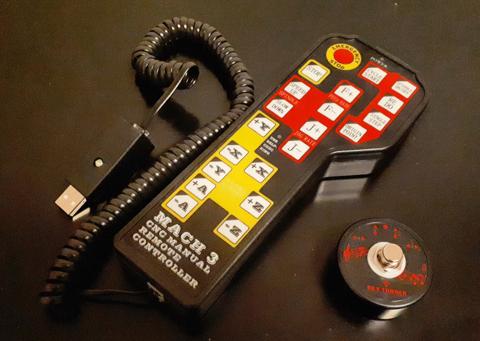
CNC control panel and Bluetooth pedal page turner I acquired some unusual input devices to experiment with, like a CNC control panel and a bluetooth pedal page turner. These identify and behave like a keyboard, sending nice and simple keystrokes, and can be accessed with no drivers or other special software. However, their keystrokes appear together with keystrokes from normal keyboards, which is the expected default when plugging in a keyboard, but not what I want in this case. I'd also like them to be readable via evdev and accessible by my own user. Here's the udev rule I cooked up to handle this use case:
# Handle the CNC control panel
SUBSYSTEM=="input", ENV ID_VENDOR =="04d9", ENV ID_MODEL =="1203", \
   OWNER="enrico", ENV ID_INPUT =""
# Handle the Bluetooth page turner
SUBSYSTEM=="input", ENV ID_BUS =="bluetooth", ENV LIBINPUT_DEVICE_GROUP =="*/ mac ", ENV ID_INPUT_KEYBOARD ="1" \
   OWNER="enrico", ENV ID_INPUT ="", SYMLINK+="input/by-id/bluetooth- mac -kbd"
SUBSYSTEM=="input", ENV ID_BUS =="bluetooth", ENV LIBINPUT_DEVICE_GROUP =="*/ mac ", ENV ID_INPUT_TABLET ="1" \
   OWNER="enrico", ENV ID_INPUT ="", SYMLINK+="input/by-id/bluetooth- mac -tablet"
The bluetooth device didn't have standard rules to create /dev/input/by-id/ symlinks so I added them. In my own code, I watch /dev/input/by-id with inotify to handle when devices appear or disappear. I used udevadm info /dev/input/event to see what I could use to identify the device. The Static device configuration via udev page of libinput's documentation has documentation on the various elements specific to the input subsystem Grepping rule files in /usr/lib/udev/rules.d was useful to see syntax examples. udevadm test /dev/input/event was invaluable for syntax checking and testing my rule file while working on it. Finally, this is an extract of a quick prototype Python code to read keys from the CNC control panel:
import libevdev
KEY_MAP =  
    libevdev.EV_KEY.KEY_GRAVE: "EMERGENCY",
    # InputEvent(EV_KEY, KEY_LEFTALT, 1)
    libevdev.EV_KEY.KEY_R: "CYCLE START",
    libevdev.EV_KEY.KEY_F5: "SPINDLE ON/OFF",
    # InputEvent(EV_KEY, KEY_RIGHTCTRL, 1)
    libevdev.EV_KEY.KEY_W: "REDO",
    # InputEvent(EV_KEY, KEY_LEFTALT, 1)
    libevdev.EV_KEY.KEY_N: "SINGLE STEP",
    # InputEvent(EV_KEY, KEY_LEFTCTRL, 1)
    libevdev.EV_KEY.KEY_O: "ORIGIN POINT",
    libevdev.EV_KEY.KEY_ESC: "STOP",
    libevdev.EV_KEY.KEY_KPPLUS: "SPEED UP",
    libevdev.EV_KEY.KEY_KPMINUS: "SLOW DOWN",
    libevdev.EV_KEY.KEY_F11: "F+",
    libevdev.EV_KEY.KEY_F10: "F-",
    libevdev.EV_KEY.KEY_RIGHTBRACE: "J+",
    libevdev.EV_KEY.KEY_LEFTBRACE: "J-",
    libevdev.EV_KEY.KEY_UP: "+Y",
    libevdev.EV_KEY.KEY_DOWN: "-Y",
    libevdev.EV_KEY.KEY_LEFT: "-X",
    libevdev.EV_KEY.KEY_RIGHT: "+X",
    libevdev.EV_KEY.KEY_KP7: "+A",
    libevdev.EV_KEY.KEY_Q: "-A",
    libevdev.EV_KEY.KEY_PAGEDOWN: "-Z",
    libevdev.EV_KEY.KEY_PAGEUP: "+Z",
 
class KeyReader:
    def __init__(self, path: str):
        self.path = path
        self.fd: IO[bytes]   None = None
        self.device: libevdev.Device   None = None
    def __enter__(self):
        self.fd = open(self.path, "rb")
        self.device = libevdev.Device(self.fd)
        return self
    def __exit__(self, exc_type, exc, tb):
        self.device = None
        self.fd.close()
        self.fd = None
    def events(self) -> Iterator[dict[str, Any]]:
        for e in self.device.events():
            if e.type == libevdev.EV_KEY:
                if (val := KEY_MAP.get(e.code)):
                    yield  
                        "name": val,
                        "value": e.value,
                        "sec": e.sec,
                        "usec": e.usec,
                     
Edited: added rules to handle the Bluetooth page turner

Next.

Previous.