Search Results: "ag"

9 May 2007

Peter Van Eynde: Finally online again

My new employer pays for an ADSL line for me. A second line, adding a ADSL connection on another copper pair I was told. Perfect I though, let's order it. Little did I know what problems I would get into.

Two days ago our ADSL went dead. No messages, no calls, no nothing. I call the provider (mobistar) who tell me we cancelled the contract and then hang up on me! The day after I contacted the company that does the ADSL stuff for $employer, asking them if this was their doing. Their reply: "search, search... no we have no documents on you, it must be something internal to $employer, we know nothing". Two hours later I get an email from them asking for dates for the installation of the ADSL modem. On the 21st at the earliest.

Coincidence, right? I send an "un-fuck this right now!" email shortly after. 24h later I still have no reply.

No looking forward to 2 weeks without internet we started searching. So after some hacking and a good idea from my wife it turns out skynet "just" re-enabled my account of 2 years ago, same userid, same password. As if I never left.

Not good...

MJ Ray: Travelling to Debconf7

In reply to my tips for anyone making the trip over land from England, Joachim Breitner wrote:
"Damn it! Now I was waiting for the night train tickets back from Edinburgh, just to notice now that they don't operate on Saturdays! I wonder if there is some car going from Edinburgh to London on Saturday, 23rd... (/me is worrying about his trip)"
and 10 minutes later:
"Never mind, there are still overnight busses available - and damn cheap :-)"
I hope that crew of that overnight bus are kinder than the one I did London-Paris on a while ago: calling out over the public address at 0230 stops that no-one had tickets for, then arriving over an hour early in Paris. No-one wanted to be in Paris at 0430. Anyway, I think I'll spend a few hours in Manchester and Derby - anyone got tips on where to eat or what to see?

Simon Richter: Whee, it works.

The dirty work is done, and I have successfully built a busybox that links against uClibc. what is so special about that, you ask? Well, the toolchain I used is the emdebian ARM cross compiler, and the uClibc was built with dpkg-buildpackage, converted to a cross -dev package using dpkg-cross and then installed with dpkg. So the final step, providing a compiler alias, is a two line shell script away. You can use uClibc by either passing the -uclibc command line option to the compiler (in all stages), or by invoking the compiler using the arm-linux-uclibc-gcc alias. I am thinking about uClibc++ as well, however that will require additional tuning.

MJ Ray: Highway Code and Cycling

Steve Kinsella wrote:
"Your right to ride on the road is in jeopardy. The revised Highway Code says cyclists should "use cycle facilities where possible". [...] The implications of this are bad. First, we will suffer more abuse and intimidating driving. Secondly cyclists will be disobeying the Highway Code when they assess that a cycle lane or path is dangerous and act accordingly. Thirdly, if a cyclist is involved in an accident and tries to claim damages, the insurance companies are likely to argue that the rider contributed to the accident by not using the cycle facility. The Highway Code has been laid before parliament. It will automatically be approved possibly by 20 May unless it is referred to a House of Commons Committee which cannot amend it and can only recommend the whole document be rejected. [...] There is a petition on the government website. One can be sceptical about the value of these petitions but the publicity is valuable as can be seen from this Sunday Times article of 7 May. It is interesting to note that 35 MP's objected to the original revised wording. Unfortunately, the replacement wording is worse. 11,000 objections were received to the previous wording. There are 70, 000 in the CTC alone who should now be objecting. If this Highway Code is approved by government cyclists will effectively lose the right to ride on the road where there are alternative routes or adjacent facilities. Please register your name on the petition and persuade others to do the same."
(via nscycle )

MJ Ray: ADSL: Have you been TOS'd off?

One of my co-operatives, The Phone Co-op, has set clear monthly data allowances from 5GB to 20GB on its residential ADSL Max packages. If you exceed that, you get emailed (a bit before you hit the limit) and then billed GBP1.50 for each extra gig. When telling me about this, they wrote
"Unlike other ISPs, we will not impose any other restrictions to your service or how you use it"
which surprised me. Are heavy users still TOS'd off the network by other ISPs? They also announced a pound a month discount for combining ADSL and line rental, which suits me fine!

Anthony Towns: Torrenting the Debian Archive

Continuing the theme from my previous post – the first and fundamental thing any distro needs to have, and thus the first and fundamental thing to think about disintermediating, is some way of distributing software. That might be burning CDs and sending them out to resellers or OEMs, or having your stuff available for download, whether by putting it up on your own server, hosting it via a dedicated high-reliability provider like akamai, or maintaining a network of mirror sites and keeping them up to date. And, of course, anyone who wants to distribute their own software has to do the exact same thing – which either means doing it themselves, and not being able to take advantage of the scalability the distributor has already made work, or going through the distribution and dealing with the problems that entails, as well as the benefits. In this case, disintermediation and decentralisation are pretty much one and the same thing: and decentralising content distribution is already a well understood problem: that’s what peer-to-peer is all about, and peer-to-peer distribution of, well, distributions is already very successful – at least when it comes to CD (and DVD) images. Which means that just about anyone can create a CD image, and distribute it to the world in exactly the same way a major organisation like Debian or Red Hat would – upload a torrent file, run a seed, and let the magic of BitTorrent do its thing. Scalability is no longer something you need a distribution organisation to manage, instead it’s built directly into the technology itself. Unfortunately BitTorrent is designed for large static images – not something you update on a daily basis. And for better or worse, my preferred distribution (Debian testing, currently lenny) does update that frequently. Fortunately, though, BitTorrent’s an open protocol and has dozens of open source implementations – so last year I was able to propose it as part of the Google Summer of Code, and was lucky enough to get a few responses and a student to work on it. It didn’t get much further than that unfortunately – the student lost internet access not long into the programme (and for most of its duration), and that was pretty much that. So when this year’s SoC rolled around, I didn’t really expect much, and didn’t put the idea up for consideration again, but lo and behold someone came through and asked if it was still possible and if there was any more information, and when I forwarded on some of the mails from the previous year we ended up with a second chance at the project. So far it’s looking pretty good – we’ve had a lot more success at keeping in touch, and thanks to the extended schedule for the SoC this year we’ve been able to do a much better job of keeping on top of what’s going on. So much so, in fact, that there’s a first (alpha) release out before the SoC is officially due to start! Wonderful stuff! What it does at the moment is allow you to take a Packages file (the stuff “apt-get update” downloads, which includes descriptions of all the packages that are available, how they inter-depend, and so forth), and from that information create a usable torrent from which to obtain the packages themselves which can then be used to share and distribute the packages. There are two crucial steps in that: the first is allowing the torrent to work without requiring huge amounts of extra information to be distributed (which would introduce scalability problems of its own, instead of solving them), and the second is that the pieces that make up the torrent are selected in a way that matches the actual packages, so that when you upload a single new package, you are in fact only making a minor change to the torrent, rather than having it (on average) completely redefine half of the torrent (and again introduce scalability problems rather than solve them). There’s more information on the DebTorrent wiki page and Cameron’s blog if you’re interested. Anyway, it’s just an alpha release at the moment, which means while there’s code that does something, it’s not actually all that useful yet. The current plan is to next add some code to make it automatically prioritise packages based on what you’re actually using – so that rather than downloading all the debs it see, it’ll only download the ones you’ve got installed, or maybe only newer versions of the ones you’ve got installed, which should get us pretty close to the point where it’s actually useful for something. The end result, of course, is to build a tool that you can point at a Debian archive, run it on a machine connected to the Internet, and you won’t have to do anything more to have a reliable, scalable and reasonably efficient means of allowing your users to distribute and update their systems. In this case, scalable means that if you end up with as many users as Debian or Ubuntu, your users will have a comparable experience, as if you’d arranged for a similarly comprehensive mirror network, without actually having to do the leg work. And heck, presuming that works, it doesn’t even matter if no one else actually does that – it’s worth it even if it saves Debian or Ubuntu the effort of keeping track of a mirror network by hand. There are interesting possibilities at smaller scales too, of course. :)
Erich Schubert: Sch uble at LinuxTag 2007

Traditionally, the german ministry of the interior has been taking patronage for the LinuxTag. Which per-se is a good thing.However, the current minister of the interior has been publishing some "anti-terror proposals" that pretty much all opensource people see as a serious attack on their freedom, and that actually violate the constitution (or even the human rights, such as his statements towards torture).So this is a very odd situation: everybody would like to say "no" to him, but at the same time, welcome his ministry because of the good cooperation with opensource people the last years.IMHO, LinuxTag needs at least make a statement that while they welcome his efforts to establish the use of open source software in public administration, they can not agree with his political efforts with respect to the "war on terror", which pose a serious attack on the freedom of individuals.After all, there will be security experts at LinuxTag, and who if not they are capable of judging that e.g. the famous "federal trojan" won't be able to help much against organized crime (including terror organizations) because these can also organize computing safety (e.g. by not using Windows and not accepting executable data in email...). Or show up how much data abuse his proposals with respect to data gathering allow.

Gustavo Franco: Re: Hypothesis about the number of Debian users, from apt-listbugs logs.

Interesting work Junichi, but I guess that you've missed some users. Your data:
I disagree with the number of users, because there's a important number missing: How many people said no to popcon. Even if your number is right or close, do you see the 1,000,000 - 48641 difference above?

The only thing I'm sure now is that we've much more than 1,000,000 users. With just the data above it isn't possible to reach the exact number. It was like ask just a few developers who will be his first option for DPL and give as a result the number of DDs and not a estimative on who's going to win.

Reference: http://www.netfort.gr.jp/~dancer/diary/daily/2007-May-9.html.en#2007-May-9-21:13:02

Junichi Uekawa: Hypothesis about number of Debian installations, from apt-listbugs logs.

I've analysed merkel.debian.org access logs.Since etch was released, 30000 unique IPs were used to accessmerkel.debian.org using apt-listbugs.According to popcon, 3% of all Debian installations install apt-listbugs.Let me add three simplifications to the equation.(A) popcon models Debian user installation behavior reasonably well. (Decision to install apt-listbugs and popcon (which both happen to be applications requiring network connection and leak information about what packages are installed on your system) are independent.)(B) A unique IP represents a single system (Even though DHCP may change IP address over a month's period, NAT may share IP addresses, and ignore everybody who's working offline).(C) All Debian installations are using Debian etch, lenny, or sid (no old distributions).I can assume with these three conditions that there are 1,000,000 Debian users worldwide.Does this number sound big or small to you?UPDATE: since it looks like this topic is very interesting, and I'm receiving a lot of comments, I've reposted the contents to debian-devel, so that it's much easier to discuss.Lemmesee.

8 May 2007

MJ Ray: Travelling to Debconf7

I've booked my travel to Debconf7. Here are some tips for anyone making the trip over land from England: There are cheap megatrains and megabuses from central Edinburgh to/from Manchester (train, weekdays) and Sheffield Meadowhall (bus, everyday) which give useful connections to points further south, avoiding London. Caledonian Sleeper Bargain Berths are now bookable, but Fridays go quickly (and seem to have gone for 15th). Similarly, there seem to be no cheap tickets left on the train up the Welsh border to Manchester for most useful dates. Find your "magic towns" for train tickets: stations where you can break long journeys to save money. They're often stations with more than one fast train operator, so these are usually old railway towns. For example, mine are Crewe and Derby from Somerset. Sometimes you don't even need to get off the train, but if you do change trains, you might be gambling on delays on the way to that town (if using timed tickets and so on), so allow enough time! Debconf's arrivals day (Saturday 16 June) is the European Day of Action Against Airport Expansion so arriving over land is a damn good idea, even without the CO2 reasons. (Debconf's last day is Pride Scotia - is all the silly scheduling deliberate?) Anyway, I think I'll have a bit of time in Manchester and Derby - anyone got tips on where to eat or what to see?

Martin F. Krafft: Linux pains #517: unregistering network devices

Somehow my network device does not want to recognise that it actually has a carrier. This being Linux (and not Windows), I thus decide to reload the driver, after taking down the network interface:
lapse:~# ip l dev eth0
2: eth0: <BROADCAST,MULTICAST> mtu 1500 qdisc pfifo_fast qlen 1000
    link/ether 00:0a:e4:30:43:16 brd ff:ff:ff:ff:ff:ff
# notice: not UP
lapse:~# rmmod e1000
lapse kernel: unregister_netdevice: waiting for eth0 to become free.
  Usage count = 1
lapse kernel: unregister_netdevice: waiting for eth0 to become free.
  Usage count = 1
[...]
# goes on forever, uninterruptible; thus new shell:
lapse:~# ps u -C rmmod
USER       PID %CPU %MEM    VSZ   RSS TTY      STAT START   TIME COMMAND
root      5624  0.0  0.0   1656   480 pts/2    D+   00:02   0:00 rmmod e1000
As we all well know, state 'D' uninterruptible sleep means: reboot. Especially since I cannot ssh into the box anymore (doh!), and su and sudo just end up in state 'D' as well, if I try them. So, on to reboot. Or wait, that doesn't work as the shutdown process will hang long before the filesystems get unmounted. Great. It's become impossible to argue that Linux is the more stable operating system Update: a few people responded with workarounds, ranging from use of watchdog to automate the reboot (this is my laptop, so it's not really necessary) to various combinations of flags to /sbin/shutdown or the use of sysrq to force the system to reboot without cleaning up or unmounting filesystems essentially the same as pressing the reset button. Ben Hutchings says:
I think this happens when the driver repeatedly attempts to fix an error condition and keeps scheduling future work (retaining a reference to the device) rather than giving up.
I thus ended up filing a bug against the kernel.

Norbert Tretkowski: Backports for etch available

Alexander Wirt wrote it to our mailinglist already, there's a etch-backports suite on backports.org since a while. Please read his mail and check the mailinglist archive before contacting me or the mailinglist. Happy backporting. On a related note, I started working on a GNOME 2.18 backport for etch, but didn't find the time to finish it yet.

Peter Makholm: Back to Debian development

My first uploads to Debain since Etch was declared frozen for real. A minor new upstream version of slashem with ubuntu patches and new debconf translations and a relative larger upstream version of inotify-tools. My Debian todo-list: making lib-packages for inotify-tools, looking af raop-play, and then give the slashem packaging some love.

Nico Golde: newsbeuter 0.4

Ak just released newsbeuter-0.4.
Now I guess newsbeuter is the most feature-rich RSS reader available for text-mode. Not even raggle has more (AFAIK).

Here are the new features:
The support for extension script rocks, now you write shell scripts which generate output, newsbeuter uses as input for example!

I already uploaded the package to Debian unstable. While the buildds still compile, get it from incoming.

Martin F. Krafft: Starting netconf development

This message just went out to the debian-devel mailinglist:
Even though I am still somewhat physically limited, my brain today decided to start on the netconf development. And since we all know that the waterfall model is the One True Model and that Extreme Programming no solution, I started by drafting a document, nothing formal, just thoughts on how to implement the various parts of netconf. And open questions I already know need to be answered. I shall be posting this document to the netconf-devel mailing list sometime soon and am looking for comments (and answers and helpers). The purpose of this message is to get interested people to subscribe. Please do so that we can keep debian-devel free of this and so that I can get more feedback (and potentially help). If you don't know what I am talking about, check out the wiki page and slides from my last talk. Then subscribe.
Thanks for your attention; that is all. NP: Trentem ller: The Last Resort

Martin F. Krafft: A lesson learnt

I am installing my first Ubuntu computer, a laptop for a friend who just wants to use the Internet. Even though I am not entirely sure whether to ridicule the installation process it took the installer 2:47 hours to produce the first user dialog on this PIII 600MHz with 256Mb of RAM, so I had to use the alternative text-mode installer or be impressed by the desktop that eventually filled the screen with more-or-less everything working out of the box, I think I did learn a lesson today, as trivial as it may sound. The screen of this laptop stays blank throughout the boot sequence even though Ubuntu put so much effort into a flashy splash screen. Thus, I logged on to #ubuntu and found someone who had time to help:
< madduck> i just installed feisty on a laptop and now when i start, after
           grub, it says "Starting up" and then has a black screen until gdm
           has started
< madduck> where is the fancy splash?
< someone> madduck: the splash screen uses a standard VESA mode which,
           apparently, your system doesn't support. Remove the "quiet
           splash" options from menu.lst to see boot messages in text mode.
< someone> madduck: you can try fixing the VESA mode with the vga= kernel
           boot option. Start with 'vga=ask' and enter 'scan' at the prompt
           at boot time.
But I still had no success when someone apparently typed into the wrong window and triggered the childish area of my brain:
< someone_else> ls
< someone_else> clear
< madduck> rm -rf ~
< someone> madduck: what was the purpose of that?
< madduck> someone: EWIN :)
< someone> madduck: I'm not prepared to support you if you go around telling
           people to delete their home directories, however funny you think
           that is.
I apologised (sincerely), and the person went on to help me, pointing me to more VESA modes and making me try them until I had a lead. No wonder Ubuntu gets the users. I am not saying that Debian is at the losing end in this scenario. Instead, I am preaching to the choir who sings back: "but Debian wouldn't be Debian without the flames." And I think to myself: "I wonder who actually engages their brains and continues to hold that view when they utter it." NP: The Young Gods - Kissing the Sun (Orange Mix) Update: without having to be told by anyone, I know there are people in Debian who try to be equally helpful and reasonable. In fact, Debian has gotten a lot better in the last years, in part (but not exclusively) thanks to Debian Women. This post does not try to discredit those who already make Debian a better place, or to piss anyone off. In fact, it's about a lesson I learnt, which may be obvious to many, but which hasn't been as obvious to me until today.

Daniel Stone: freedesktop.org downtime

It's just not our week, I guess. For the past couple of days, gabe.freedesktop.org (www.fd.o, ns1.fd.o, lists.fd.o) has been playing up: it will just mysteriously die with no explanation. It appears to still be alive, but we can't access it at all. Bringing it back up yields nothing suspicious before it dies, so we're suspecting some bad hardware. This wouldn't be too major a problem, bar the loss of the above-named services and dri.fd.o, openclipart.org, and a few other services, if it weren't for other things conspiring against us.

All revision control services (git/CVS/SVN committing and checkout, web access to same), Bugzilla, xorg.fd.o, people.fd.o and planet.fd.o, are on separate machines which are unaffected by this failure. But, unfortunately, we got less than 24 hours notice that our secondary DNS server at MIT was being moved, and would be offline for a while. Two DNS servers gone. Our third DNS server, hosted in the UK, is still servicing requests just fine, but apparently our registrar never noticed the update. So the third DNS server according to the glue records is home.keithp.com, which is also off the air right now for some reason.

So, ns0.bluelinux.co.uk is still serving names, and you can still access some services if you use that, but we're not sure how long until normal DNS is back up, let alone how long it will take us to get gabe fully fixed.

Sorry for the outage, please bear with us. If you think it's frustrating not being able to check www.fd.o, try checking the remote console and watching /proc/meminfo hopelessly spew into the serial console as you are unable to log in ...

David Welton: Rails bitten by Ruby's nil.to_f

I guess I'm still new enough to Ruby that this does not make sense to me:
>> nil.to_f
=> 0.0
Magically, from nothing, you have something. I suppose it might be convenient in places, but today I ran into a minor bug in Rails that causes problems when trying to get the average of a column that doesn't have any entries. So what is the reasoning behind nil.to_f being 0.0 (and nil.to_i being 0, to_s being ""), anyway?

Michael Prokop: grml release candidates

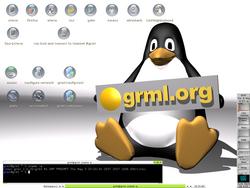
grml 1.0 screenshot As formorer mentioned already we have new release candidates of grml: grml 1.0-rc1 with codename Meilenschwein is available as well as grml-small 0.4-rc1 with codename Springinkerl. We are proud to be able to present a 64bit version of grml as well: grml 64 0.1-rc1 with codename LiveShell which is based on the amd64 port of Debian. New features? Tons of new features. So what are you waiting for? Ah, that the mirrors are getting in sync, right. So grab the ISOs in the meanwhile from the master or the slave or even better use bittorrent (torrents for: grml, grml64 and grml-small) instead. We are waiting for your bug reports. 8-)

Holger Levsen: all numbers can be 0wned

By clicking on this link you possible violate the DMCA again, it contains yet another 0wned number. But it also has instructions how to make up your own 128 bit number, which noone else can legally use anymore - in countries where the DMCA is valid or can be enforced. So, better don't click ;-) Or much rather, better do.

If I were bored, I would probably play with the vanity gpg key generator, to generate a very special gpg key, but I'm not bored :) Also it's not quite so much fun, to start a script and wait.

Next.

Previous.