Search Results: "tb"

20 September 2012

Matthew Garrett: UEFI Bootkits

The Register covered a story on a UEFI-based attack on Windows 8. It's actually covering this technical writeup, which is a discussion of a proof of concept implementation of an attack on the Windows 8 kernel from the firmware environment. The first approach they describe is pretty straightforward, in that they simply patch the Windows bootloader directly. Since this is what's reading the kernel off disk and launching it, patching that code means you can modify the kernel in-place and run it with built-in privilege elevation exploits.

The second approach is a little more interesting, and is based on their observation that the UEFI ExitBootServices() function is called after the kernel is loaded but before it's executed. UEFI calls are simply function pointers, so if you can run code in the firmware environment it's trivial to simply replace the function pointer with one to code of your own which does whatever you want before calling the original code. This makes it pretty straightforward to add a hook that gets run when ExitBootServices() is called, finds the kernel, patches it and then continues on its way. Since the kernel is patched after it's been read, this gets around any kind of signature checking that the bootloader might carry out.

But both these cases have something in common: they rely on the ability to run arbitrary code in the firmware environment, and that's precisely the thing that UEFI Secure Boot prevents. A system with a correct implementation of Secure Boot isn't vulnerable to the described attacks, but it's fairly unsurprising that running UEFI without Secure Boot is vulnerable. UEFI on its own doesn't provide any additional security. You're as vulnerable to bootkits as you are with BIOS.

So this isn't really a story about a surprising vulnerability. It's a story about someone taking the logical step of implementing a bootkit on top of UEFI, which is what everyone should have been expecting all along. Computers that are configured to run arbitrary code will run arbitrary code, and if that arbitrary code happens to modify your kernel so your credit card details are automatically posted to pastebin, well, that's a plausible outcome.

comment count unavailable comments

17 September 2012

Andrea Veri: Building Debian packages with Deb-o-Matic

Today I ll be telling you about an interesting way to build your Debian packages using Deb-o-Matic, a tool developed and maintained by Luca Falavigna. Some more details about this tool from the package s description:
Deb-o-Matic is an easy to use build machine for Debian source packages based on pbuilder, written in Python. It provides a simple tool to automate build of source packages with limited user interaction and a simple configuration. It has some useful features such as automatic update of pbuilder, automatic scan and selection of source packages to build and modules support.
The setup. 1. Download the package.
apt-get install debomatic
2. Modify the main configuration file as follows:
[default]
builder: pbuilder
packagedir: /home/john/debomatic # Take note of the following path since we'll need it for later use.
configdir: /etc/debomatic/distributions
pbuilderhooks: /usr/share/debomatic/pbuilderhooks
maxbuilds: 3 # The number of builds you can perform at the same time.
inotify: 1
sleep: 60 # The sleep time between one build and another.
logfile: /var/log/debomatic.log
[gpg]
gpg: 0 # Change to 1 if you want Deb-O-Matic to check the GPG signature of the uploaded packages.
keyring: /etc/debomatic/debomatic.gpg # Add the GPG Keys you want Deb-O-Matic to accept in this keyring.
[modules]
modules: 1 # A list of all the available modules will follow right after.
modulespath: /usr/share/debomatic/modules
[runtime]
alwaysupdate: unstable experimental precise
distblacklist:
modulesblacklist: Lintian Mailer
mapper:  'sid': 'unstable',
'wheezy': 'testing',
'squeeze': 'stable' 
[lintian]
lintopts: -i -I -E --pedantic # Run Lintian in Pedantic mode.
[mailer] # You need an SMTP server running on your machine for the mailer to work. You can have a look at the 'Ssmtp' daemon which is a one-minute-setup MTA, check an example over here.
fromaddr: debomatic@localhost
smtphost: localhost
smtpport: 25
authrequired: 0
smtpuser: user
smtppass: pass
success: /etc/debomatic/mailer/build_success.mail-template # Update the build success or failure mails as you wish by modifying the relevant files.
failure: /etc/debomatic/mailer/build_failure.mail-template
[internals]
configversion = 010a
The available modules are:
  1. Contents , which acts as a dpkg -c over the built packages.
  2. DateStamp , which displays build start and finish times into a file in the build directory.
  3. Lintian , which stores Lintian output on top of the built package in the pool directory.
  4. Mailer , which sends a reply to the uploader once the build has finished.
  5. PrevBuildCleaner , which deletes all files generated by the previous build.
  6. Repository , which generates a local repository of built packages.
2. Configure dput to upload package s sources to your local repository, edit the /etc/dput.cf file and add this entry:
[debomatic]
method = local
incoming = /home/john/debomatic
or the following if you are going to upload the files to a different machine through SSH:
[debomatic]
login = john
fqdn = debomatic.example.net
method = scp
incoming = /debomatic
3. Add a new Virtual Host on Apache and access the repository / built packages directly through your browser:
<VirtualHost *:80>
ServerAdmin john@example.net
ServerName debomatic.example.net
DocumentRoot /home/john/debomatic
<Directory /home/john/debomatic>
Options Indexes FollowSymLinks MultiViews
AllowOverride None
Order allow,deny
allow from all
</Directory>
</VirtualHost>
4. Start the daemon:
sudo /etc/init.d/debomatic start
5. (Optional) Add your repository to APT s sources.list:
deb http://debomatic.example.net/ unstable main contrib non-free
6. (Optional) Start Deb-O-Matic at system s startup by modifying the /etc/init.d/debomatic file at line 21:
- [ -x "$DAEMON" ]   exit 0
- [ "$DEBOMATIC_AUTOSTART" = 0 ] && exit 0
+ [ -x "$DAEMON" ]   exit 0
+ [ "$DEBOMATIC_AUTOSTART" = 1 ] && exit 0
and finally add it to the desired runlevels:
update-rc.d debomatic defaults
Enjoy!

16 September 2012

Gregor Herrmann: RC bugs 2012/37

I didn't get very far this week with my RCBW efforts, but luckily we have BSPs going on :) Here's my short list:

Russell Coker: Servers in the Office

I just had a conversation with someone who thinks that their office should have no servers. The office in question has four servers, an Internet gateway/firewall system, the old file server (and also Xen server), the new file server, and the VOIP server. The Internet gateway system could possibly be replaced by a suitably smart ADSL modem type device, but that would reduce the control over the network and wouldn t provide much of a benefit. The VOIP server has to be a separate system for low latency IMHO. In theory you could use a Xen DomU for running Asterisk or you could run Asterisk on the Dom0 of the file/Xen server. But that just makes things difficult. A VOIP server needs to be reliable and is something that you typically don t want to touch once it s working, in this case the Asterisk server has been a few more years without upgrades than the Xen server. An Asterisk system could be replaced by a dedicated telephony device which some people might consider to be removing a server, but really a dedicated VOIP server device is just as much of a server as a P4 running Asterisk but with greater expense. A major advantage of a P4 running Asterisk is that you can easily replace the system at no cost if there is a hardware problem. Having two file servers is excessive for a relatively small office. But running two servers is the common practice when one server is being replaced. The alternative is to just immediately cut things over which has the potential for a lot of people to arrive at work on Monday and find multiple things not working as desired. Having two file servers is a temporary problem. File Servers The first real problem when trying to remove servers from an office is the file server. ADSL links with Annex M can theoretically upload data at 3Mb/s which means almost 400KB/s. So if you have an office with a theoretically perfect ADSL2+ Annex M installation then you could save a 4MB file to a file server on the Internet in not much more than 10 seconds if no-one else is using the Internet connection. Note that 4MB isn t THAT big by today s standards, the organisation in question has many files which are considerably bigger than that. Large files include TIFF and RAW files used for high quality image processing, MS-Office documents, and data files for most accounting programs. Saving a 65MB quick-books file in 3 minutes (assuming that your Annex M connection is perfect and no-one else is using the Internet) would have to suck. Then there s the issue of reading files, video files (which are often used for training and promotion) are generally larger than 100MB which would be more than 30 seconds of download time at ADSL2+ speed but if someone sends an email to everyone in the office saying please watch this video then the average time to load it would be a lot more. Through quickly examining my collection of Youtube downloads I found a video which averaged 590KB/s, if an office using a theoretically perfect ADSL2+ connection giving 24Mb/s (3MB/s) download speed had such a file on a remote file server then a maximum of five people could view it at one time if no-one else in the office was using the Internet. Now when the NBN is connected (which won t happen in areas like the Melbourne CBD for at least another 3 years) it will be possible to get speeds like 100Mb/s download and 25Mb/s upload. That would allow up to 20 people to view videos at once and a 65MB quick-books file could be saved in a mere 22 seconds if everyone else was idle. Of course that relies on the size of data files remaining the same for another 3 years which seems unlikely, currently no Youtube videos use resolutions higher than 1920*1080 (so they don t take full advantage of a $400 Dell monitor) and there s always potential for storing more financial data. I expect that by the time we all have 100Mb/25Mb speeds on the NBN it will be as useful to us as 24Mb/3Mb ADSL2+ Annex M speeds are today (great for home use but limited for an office full of people). There are of course various ways of caching data, but all of them involve something which would be considered to be a server and I expect that all of them are more difficult to install and manage than just having a local file server. Of course instead of crunching the numbers for ADSL speeds etc you could just think for a moment about the way that 100baseT networking to the desktop has been replaced by Gigabit networking. When people expect each workstation to have 1000Mb/s send and receive speed it seems quite obvious that one ADSL connection shared by an entire office isn t going to work well if all the work that is done depends on it. Management could dictate that there is to be no server in the office, but if that was to happen then the users would create file shares on their workstations so you would end up with ad-hoc servers which aren t correctly managed or backed up. That wouldn t be an improvement and technically wouldn t achieve the goal of not having servers. Home Networking Without Servers It is becoming increasingly common to have various servers in a home network. Due to a lack of space and power and the low requirements a home file server will usually be a workstation with some big disks, but there are cheap NAS devices which some people are installing at home. I don t recommend the cheap NAS devices, I m merely noting that they are being used. Home entertainment is also something that can benefit from a server. A MythTV system for recording TV and playing music has more features than a dedicated PVR box. But even the most basic PVR ($169 for a 1TB device in Aldi now) is still a fairly complex computer which would probably conflict with any aim to have a house free of servers. The home network design of having a workstation run as a file and print server can work reasonably well as long as the desktop tasks aren t particularly demanding (IE no games) and the system doesn t change much (IE don t track Debian/Testing or otherwise have new versions of software). But this is really something that only works if you only have a few workstations. Running an office without servers seems rather silly as it seems that none of my friends are able to have a home without a server. Running Internet Services Hypothetically speaking if one was to run an office without servers then that would require running all the servers in question on the Internet somewhere. For some things this can work better than a local server, for example most of my clients who insist on running a mail server in their office would probably get a better result if they had a mail server running on Linode or Hetzner or one of the Hosted Exchange offerings if they want a Windows mail sever. But for a file server if you were to get around the issue of bandwidth required to access the files in normal use there s the issue of managing a server (which is going to take more effort and expense than for a server on the LAN). Then there s the issue of backups. In my previous post about Hard Drives for Backup [1] I considered some of the issues related to backing data up over the Internet. The big problem however is a complete restore, if you have even a few dozen gigs of data that you want to transfer to a remote server in a hurry it can be a difficult problem. If you have hundreds of gigs then it becomes a very difficult problem. I m sure that I could find a Melbourne based Data Center (DC) that gives the option of bringing a USB attached SATA disk for a restore but even that case would give a significant delay when compared to backing things up on a LAN. If a server on the office LAN breaks in the afternoon my client can make arrangements to let me work in their office in the evening to fix it, but sometimes DCs don t allow 24*7 access and sometimes when they do allow access there are organisational problems that make it impossible when you want it (EG the people at the client company who are authorised become unavailable). The Growth of Servers Generally it s a really bad idea to build a server that has exactly the hardware you need. The smart thing to do is to install more of every resource (disk, RAM, CPU, etc) than is needed and to allow expansion when possible (EG have some RAM slots and drive bays free). No matter how well you know your environment and it s users you can get surprised by the way that requirements change. Buying a slightly bigger server at the start costs hardly any money but upgrading a server will cost a lot. Once you have a server that s somewhat over-specced you will always find other things to run on it. Many things could be run elsewhere at some cost, but if you have unused hardware then you may as well use it. Xen and other virtualisation systems are really good in this regard as they allow you to add more services without making upgrades difficult. This means that it s quite common to have a server that is purchased for one task but which ends up being used for many tasks. Anyone who would aspire to an office without servers would probably regard adding extra features in such a manner to be a problem. But really if you want to allow the workers to do their jobs then it s best to be able to add new services as needed without going through a budget approval process for each one. Conclusion There probably are some offices where no-one does any serious file access and everyone s work is based around a web browser or some client software that is suited to storing data on the Internet. But for an office where the workers use traditional Office software such as MS-Office or Libre-Office a file server is necessary. Some sort of telephony server is necessary no matter how you do things. If you have a traditional telephone system then you might try not to call the PABX a server , but really that s what it is. Then when the traditional phone service becomes too expensive you have to consider whether to use Asterisk or a proprietary system, in either case it s really a server. In almost every case the issue isn t whether to have a server in the office, but how many servers to have and how to manage them. Related posts:
  1. Planning Servers for Failure Sometimes computers fail. If you run enough computers then you...
  2. a good security design for an office One issue that is rarely considered is how to...
  3. Efficiency of Cooling Servers One thing I had wondered was why home air-conditioning systems...

15 September 2012

Eddy Petri&#537;or: Why a lack of skepticism is dangerous...

Some of my Romanian readers might know that for the last two years I've got involved in the skeptical movement to such a degree that I am a co-producer of a bi-weekly podcast on science and skepticism (in Romanian) called Skeptics in Romania . Some might even be regular listeners of the show.

(There isn't much to see now visually on the site, but me and the other people behind the project have some ongoing plans to change that.)

In spite of our modest site, up until now we had some successes, one of them being the publication of an article on us in a known Romanian printed publication and another being the invitation to a live show face to face with Oreste Teodorescu, a well known Romanian mysticist and woo promoter.

During that live show we managed to show a demonstration (video below, in Romanian) of how astrology gives the impression of working, without actually working, and, taking into account we had no prior TV camera experience and that it was a live show, I think we managed an honourable presence.


<iframe allowfullscreen="allowfullscreen" frameborder="0" height="315" src="http://www.youtube.com/embed/y5OG1q8_3Ro" width="420"></iframe>

We also have a series of interviews in English with some really interesting people: Dr. Eugenie Scott, Prof. Christopher French, Prof. Edzard Ernst, Samantha Stein and others. We did these interviews at Denkfest 2011, in Zurich, and we integrated the translated (voice over) interviews in our podcast. The conlusion is that most of our activities revolve around the podcast, so let me tell you more about that.

The podcast has a somewhat fixed structure, it starts with a conversation between ourselves, then we have a segment on the history of science, technology, skepticism and woo, and then we have a segment called The dangers of not being skeptical . In this segment we present cases of people who lost their lives, their health, their money or any combination of the former because they were duped into some scam, science-y sounding non-science, unfounded claim or some other woo.

Having lost recently my brother-in-law to a form of cancer known as Hodgkin lymphoma, I became especially sensitive about miracle-cure claims for cancer, and this section of the show has lately seen its fair share of such cases. Honestly, if there could be a way to prosecute the irresponsible, ignorant and/or cynical people promoting all sorts of quack "therapies", especially for cancer*, I would really like to see it happen. But there isn't, and we're trying the best accessible approach, informing the public.

During my brother-in-law's last two years of his life, he went through lots of chemotherapy and radiotherapy sessions, repeated periods of hospitalisation, and lots of drugs. This is the best of what we currently have for treating and curing most forms of cancer, and too many times this isn't enough. I can't even imagine how stressful and discouraging it must feel when the best of what we have doesn't help.

Here is where the desperation and hopes of patients and their families meet the purely irresponsible cynical or ignorant promoters of woo and quack therapies. Because it takes either an ignorant or a really cynical (I really feel this word isn't enough) person to prey on the suffering of other people to make easy money under the false pretence of offering a cure.

It almost happened to my brother-in-law and his family, because they almost went for some herbal concoction promoted as a cancer cure on some forum, blog or page of a seller of this fake therapy. It was really hard for me to make them understand why using such a product it not advisable, not even in parallel with the medical treatment due its possible counter effect or interactions with the real medical treatment, without them getting the wrong idea that I wasn't trying to help. While trying to be brief and informative not to lose their attention, I told them how "natural" doesn't necessarily mean "good" (uranium, lead and Irukandji's venom are all natural), and how plants are drugs because they all contain chemical substances (and no, "chemical" does not mean "human made" or "artificial") which could interact with the medical treatment.


But most people don't even have the chance of having close by a person with a more science-leaning thought process and a skeptical mind. Those unfortunate people are the most vulnerable people and constitute the biggest chunk of the victims of baseless pseudo-cures or pseudo-treatments.

On our last show, I presented the case of Yvonne Main, a cancer suffering patient who mistook an invasive carcinoma for a cyst, and irdologist Ruth Nelson for a real healthcare giver.

Yvonne Main, died from an invasive carcinoma
after seeking help from a iridologist,
and delaying real medical treament for 18 months


Yvonne, after seeking medical advice from a person that essentially promotes the dead idea of guessing diseases by looking at the eyes**, used natural treatments for about 18 months and, after all this time, her carcinoma grew to a size of 10 to 11 cm, eating through her skull and causing damage which was later attempted to be countered through bone transplant from her ribs.

Ruth Nelson wasn't prosecuted in any way and continues her practice of quackery unharmed.

This is not the only case, nor even one case from a select few where woo and quackery lead to grave consequences for patients. There are many, many more; they're so many that even after splitting them in categories they seem too many per category, especially when you realise these are only the findings of, essentially, a single man:


http://www.whatstheharm.net/


This is part of what I have been doing in the last few years, instead of working on Debian. Is it a good thing? Is it a bad thing? Maybe it's good. I want to know what do you think?


* you will, most likely, never hear such a promoter of non-therapies say that there isn't just one cancer, and that, in fact, cancer is a name for a certain family of diseases which are all called cancer - that's a first sign that you might be dealing with quack
** probably in the line of thought that the eyes are the gates to the soul so they must tell something significant about health

11 September 2012

Russell Coker: Back to the Xperia X10

10 months ago I was given a Samsung Galaxy S Android phone [1] to replace my Sony Ericsson Xperia X10. I also installed Cyanogenmod on it (here is a more detailed comparison of the phones with a focus on liberty [2]). But now I m using the Xperia X10 again. Hardware Reliability Some time ago a friend told me that he bought a Sony phone in preference to a Samsung phone because he didn t think that Samsung phones were reliable enough. I assured him that Samsung phones would be fine if you used a gel-case, but now I m not so sure. My mother in law has a Samsung Galaxy S which now has a single crack across the face, it doesn t appear that her phone was dropped, maybe it just bent a bit it s a fairly thin phone. My Galaxy S started crashing over the last few months and now many applications will crash any time I use 3G networking. Currently my Galaxy S is working well as a small Wifi tablet and hasn t crashed since I replaced the SIM with one that has expired. I wish that phone designers would make mode solid products with bigger batteries. The fact that the Xperia X10 weighs maybe 20g more than the Galaxy S (according to Wikipedia) isn t a problem for me. Even with the Mugen Power 1800mah battery [4] to replace the original 1500mah battery it s still nowhere near the limit of the phone mass that I m prepared to carry. Sony Upgrades Some time ago Sony released an Android 2.3.3 image for the Xperia X10. There is no Cyanogenmod image for the Xperia X10 because it has been locked down which greatly limits what can be done. Also Sony has a proprietary backup program on their Android 2.1 image which isn t supported on Android 2.3.3 this inspired my post about 5 principles of backup software [3]. Due to this pain I didn t even try to upgrade the Xperia X10 phones for me and my wife until recently. Before upgrading the Xperia X10 phones I was unable to use my wife s phone. The phone didn t seem to like recognising my touch so long touch actions (such as unlocking the phone) were almost impossible for me. I think that this is due to the fact that I have fairly dry skin which presumably gives me a higher capacitance. After the upgrade both phones are usable for me, so presumably either Sony or Google upgraded the algorithms for recognising touch to work better with varying screen quality. Comparing the Galaxy S and the Xperia X10 When I first started running Cyanogenmod on the Galaxy S I noticed that it was a lot faster than the Xperia X10 but I didn t know why. It was documented that there had been performance improvements in Android 2.2. Now that I m running Android 2.3.3 on the Xperia X10 I know that the performance difference is not due to the Android version. It could be due to Cyanogenmod optimisations or Sony stupidity, but it s most likely due to hardware differences. The Galaxy S has more RAM and storage which allows installing and running more applications. Now that I m using the Xperia X10 for the bare minimum applications (phone calls, SMS, camera, email, ssh, and web browsing) it works quite well. I still play games on the Galaxy S and use it for more serious web browsing via Wifi. I think that the value I m getting from the Galaxy S as a tiny wifi tablet is greater than the money I might get from selling a partially broken phone that s been obsoleted by two significantly better models. Conclusion The camera on the Xperia X10 is significantly better than the one on the Galaxy S, so going back to a phone that has a great camera is a real benefit. But being slow and locked down is a real drag. I was tempted to buy a Samsung Galaxy Note or Galaxy S3, but it seemed like a bad idea to buy a phone given that my contract comes up for renewal in about 6 months which means I ll be offered a free phone which while not really free is still going to be cheaper than buying a phone outright. Also in future given the low opinion I m now getting of smart phone reliability I ll try and keep a small stock of spare Android phones to cover the case of broken phones. Related posts:
  1. Galaxy S vs Xperia X10 and Android Network Access Galaxy S Review I ve just been given an indefinite loan...
  2. CyanogenMod and the Galaxy S Thanks to some advice from Philipp Kern I have now...
  3. Liberty and Mobile Phones I own two mobile phones at the moment, I use...

9 September 2012

Gregor Herrmann: RC bugs 2012/36

highlight of the week: I "wrote" (i.e. copypasted) my first patch in haskell some days ago :) apart from that, nothing exciting:

Rog rio Brito: Some experiences with ZFS

Continuing the ZFS evaluation journey (which I will summarize here with the things that I learned), I was able to fit about 2.5TB of data on a single 2TB drive, with deduplication enabled. Unfortunately, even moving files around in ZFS (which you would think would be a cheap operation) takes ages. Removing files also takes ages. In a completely unloaded Phenom II X4 910 system running Linux 3.5.2 (actually, from Debian's experimental), and zfsonlinux version 0.6.0.71-0ubuntu1~precise1 (recompiled from source to work with my Debian system), I tried to remove a subdirectory that had about 4000 files. According to time, it took:
real    42m51.487s
user    0m0.188s
sys     0m16.769s
Which is a bit too slow. I just (read: "yesterday") upgraded this machine from 4GB to 6GB of RAM (well, I would have updated it to 8GB of RAM as that is what I ordered, but it one of the RAM chips arrived dead here and I simply took one of the new 4GB card and one of the older 2GB card). But, honestly, I don't see change in upgrading the RAM from 4GB to 6GB and, unless something magic happens with 2GB more, I wouldn't expect a whole different story with 8GB of RAM. Oh, no swap is being used (well, it is an unloaded machine after all), and the Linux kernel swappiness knob is at its default of 60. What I do see, though, is that even for a single file removal, the disk is thrashing a lot. I mean like crazy and that is, of course, the prime suspect of the bad performance (of course, of course). So, there must be some really crazy metadata churning going on here and I guess that the people from the LLNL would like to know of their modules producing this behavior. Keep tuned for some future impressions.

7 September 2012

Steve Kemp: Security changes have unintended effects.

A couple of months ago I was experimenting with adding no-new-privileges to various systems I run. Unfortunately I was surprised a few weeks later at unintended breakge. My personal server has several "real users", and several "webserver users". Each webserver user runs a single copy of thttpd under its own UID, listening on 127.0.0.1:xxxx, where xxxx is the userid:
steve@steve:~$ id -u s-steve
1019
steve@steve:~$ sudo lsof -i :1019
COMMAND  PID    USER   FD   TYPE  DEVICE SIZE/OFF NODE NAME
thttpd  9993 s-steve    0u  IPv4 7183548      0t0  TCP localhost:1019 (LISTEN)
Facing the world I have an IPv4 & IPv6 proxy server that routes incoming connections to these local thttpd instances. Wouldn't it be wonderful to restrict these instances, and prevent them from acquiring new privileges? Yes, I thought. Unfortunately I stumbled across a down-side: Some of the servers send email, and they do that by shelling out to /usr/sbin/sendmail which is setuid (and thus fails). D'oh! The end result was choosing between: I went with the latter for now, but will probably revisit this in the future. In more interesting news recently I tried to recreate the feel of a painting, as an image which was successful. I think. I've been doing a lot more shooting recently, even outdoors, which has been fun. ObQuote: "You know, all the cheerleaders in the world wouldn't help our football team." - Bring it On

2 September 2012

Jose Luis Rivas Contreras: Finally a workaround for htop drawing issue inside tmux!

I was tired that htop didn t showed up the info as is, and started to google about it. Aparently there s an issue with the drawing stuff for bold and not-bold fonts, and most workarounds consists on making htop showing things on black and white. Then, lazyness came to my mind and used:

TERM=screen htop
Wala! It worked, and showed htop with colors! 12 colors of course, but I don t need more!! So after that I just echoed that line to my ~/.bash_aliases and is pretty much done for a while, at least for me. It works!

Gregor Herrmann: RC bugs 2012/35

not my Best RCBW Week Ever. anyway, here's what I've done:

Erich Schubert: ELKI call for contributions

ELKI is a data mining software project that I have been working on for the last years as part of my PhD research. It is open source (AGPL-3 licensed) and avilable as both a Debian package and Ubuntu package in the official repositories. So a simple aptitude install elki should get you going and give you a menu entry for ELKI. These packages come with the scripts elki to launch the MiniGUI and elki-cli to run from command line. The key feature that sets ELKI apart from existing open source tools used in data mining (e.g. Weka and R) is that it has support for index structures to speed up algorithms, and a very modular architecture that allows various combinations of data types, distance functions, index structures and algorithms. When looking for performance regressions and optimization potential in ELKI, I recently ran some benchmarks on a data set with 110250 images described by 8 dimensional color histograms. This is a decently sized dataset: it takes long enough (usually in the range of 1-10 minutes) to measure true hotspots. When including Weka and R in the comarison I was quite surprised: our k-means implementation runs at the same speed as Rs implementation in C (and around twice that of the more flexible "flexclus" version). For some of the key agorithms (DBSCAN, OPTICS, LOF) we are an order of magnitude faster than Weka and R, and adding index support speeds up the computation by another factor of 5-10x. In the most extreme case - DBSCAN in Weka vs. DBSCAN with R-tree in ELKI - the speedup was a factor of 330x, or 2 minutes (ELKI) as opposed to 11 hours (Weka).
The reason why I was suprised is that I expected ELKI to perform much worse. It is written in Java (as opposed to R's kmeans, which is in C), uses a very flexible architecture which for example does not assume distances to be of type double and just has a lot of glue code inbetween. However, obviously, the Java Hotspot compiler actually lives up to its expectations and manages to inline the whole distance computations into k-means, and then compiles it at a level comparable to C. R executes vectorized operations quite fast, but on non-native code as in the LOF example it can become quite slow, too. (I would not take Weka as reference, in particular with DBSCAN and OPTICS there seems to be something seriously broken. Judging from a quick look at it, the OPTICS implementation actually is not even complete, and both implementations actually copy all data out of Weka into a custom linear database, process it there, then feed back the result into Weka. They should just drop that "extension" altogether. The much newer and Weka-like LOF module is much more comparable.) Note that we also have a different focus than Weka. Weka is really popular for machine learning, in particular for classification. In ELKI, we do not have a single classification algorithm because there is Weka for that. Instead, ELKI focuses on cluster analysis and outlier detection. And ELKI has a lot of algorithms in this domain, I dare to say the largest collection. In particular, they are all in the same framework, so they can be easily compared. R does of course have an impressive collection in CRAN, but in the end they do not really fit together. Anyway, ELKI is a cool research project. It keeps on growing, we have a number of students writing extensions as part of their thesis. It has been extremely helpful for me in my own research, as I could quickly prototype some algorithms, then try different combinations and use my existing evaluation and benchmarking. You need some time to get started (largely because of the modular architecture, Java generics and such hurdles), but then it is a very powerful research tool. But there are just many more algorithms, published sometime, somewhere, but barely with source code available. We'd love to get all these published algorithms into ELKI, so researchers can try them out. And enhance them. And use them for their actual data. So far, ELKI was mostly used for algorithmic research, but it's starting to move out into the "real" world. More and more people that are not computer scientists start using ELKI to analyze their data. Because it has algorithms that no other tools have. I tried to get ELKI into the "Google Summer of Code", but it was not accepted. But I'd really like to see it gain more traction outside the university world. There are a number of cool projects associated with ELKI that I will not be able to do myself the next years, unfortunately. If you are a researcher in cluster analysis or outlier detection, consider contributing your algorithms to ELKI. Spend some time optimizing them, adding some documentation. Because, if ELKI keeps on growing and gaining popularity, it will be the future benchmark platform. And this can give you citations, which are somewhat the currency of science these days. Algorithms available in the major toolkits just do get cited more, because people compare to them. See this list for an overview of work cited by ELKI - scientific work that we reimplemented at least to some extend for ELKI. It is one of the services that we provide with ELKI for researchers: not only the algorithm, but also the appropriate citation.

31 August 2012

Russell Coker: Links August 2012

Google are providing some really good employee benefits including benefits to a life partner of a deceased employee [1]. It s not known if all those benefits are available outside the US, in any case the US is the first world country with the least social security so they need it most there. A recent Australian legal case had a father petitioning the court to have his kids take his family name [2]. According to the news report no good reason was given for renaming the kids, merely tradition. The mother won. GlassDoor.com is a site for reviewing companies [3]. It also has job adverts, it seems that they get people in to read the reviews and then advertise jobs. Sarah Resnick interviewed Jacob Appelbaum (of Tor fame) about privacy issues and published the article as Leave Your Cellphone at Home [4]. It s very interesting and references some resources such as riseup.net that I have to try using. Systemd in Fedora 17 has multi-seat support [5]. They support plugging USB terminals in at run-time to dynamically add new consoles for GNOME sessions. The Coding Horror blog has an amusing and informative post about why people shouldn t learn to code [6]. Related posts:
  1. Links June 2012 This Youtube video is an amusing satire of EULAs and...
  2. Links January 2012 Cops in Tennessee routinely steal cash from citizens [1]. They...
  3. Links August 2008 Michael Janke is writing a series of posts about estimating...

30 August 2012

Erich Schubert: Finding packages for deinstallation

On my netbook, I try to keep the amount of installed software limited. Aptitudes "automatically installed" markers are very helpful here, since they allow you to differentiate between packages that were deliberately installed and packages that were manually marked for installation. I quite often browse through the list of installed packages and recheck those that are not marked as "A".
However, packages that are "suggested" by some other package (but not "required") will be kept even when marked as automatically. This is quite sensible: when you deinstall the package that "suggested" them, they will be removed. So this is nice for having optional software also automatically removed.
However sometimes you need the core package but not this optional functionality. Aptitude can help you there, too. Here's an aptitude filter I used to find some packages for removal:
!?reverse-depends(~i) ~M !?essential
It will display only packages with no direct dependency from another installed package and that are marked as automatically installed (so they must be kept installed because of a weaker dependency.
Some examples of "suggested but not required" packages:
  • Accessibility extensions of Gnome
  • Spelling dictionaries
  • Optional functionality / extensions
Depending on your requirements, you might want to keep some of these and remove others.

Here is also a filter to find packages that you can put on "automatically installed":
~i !~M ?reverse-depends(~i) !?essential
This will catch "installed but not automatically installed packages, that another installed package depends on". Note that you should not blindly put all of these to "automatic" mode. For example "logrotate" depends on "cron anacron fcron". If you have both cron and anacron installed, aptitude will consider anacron to be unnecessary (it is - on a system with 24h uptime). So review this list, and see what happens when you set packages to "A", and reconsider your intentions. If it is a software you want for sure, leave it on manual.

29 August 2012

Russell Coker: Woolworths Maths Fail

picture of discount from $3.99 to $3.00 advertised as 20% off The above is a picture of the chocolate display at Woolworths, an Australian supermarket that was formerly known as Safeway it had the same logo as the US Safeway so there s probably a connection. This is actually a 24.81% discount. It s possible that some people might consider it a legal issue to advertise something as a 25% discount when it s 1 cent short of that (even though we haven t had a coin smaller than 5 cents in Australia since 1991). But then if they wanted to advertise a discount percentage that s a multiple of 5% they could have made the discount price $2.99, presumably whatever factors made them make the original price $3.99 instead of $4.00 would also apply when choosing a discount price. So the question is, do Woolworths have a strict policy of rounding down discount rates to the nearest 5% or do they just employ people who failed maths in high school? Sometimes when discussing education people ask rhetorical questions such as when would someone use calculus in real life , I think that the best answer is people who have studied calculus probably won t write such stupid signs . Sure the claimed discount is technically correct as they don t say no more than 20% off and not misleading in a legal sense (it s OK to claim less than you provide), but it s annoyingly wrong. Well educated people don t do that sort of thing. As an aside, the chocolate in question is Green and Black, that s a premium chocolate line that is Fair Trade, Organic, and very tasty. If you are in Australia then I recommend buying some because $3.00 is a good price. Related posts:
  1. fair trade is the Linux way I have recently purchased a large quantity of fair trade...
  2. LUG Meetings etc Recently I was talking to an employee at Safeway (an...
  3. The Sad State of Shopping in Australia Paul Wayper has written a blog post criticising the main...

28 August 2012

Russell Coker: SSD for a Workstation

SSDs have been dropping in price recently so I just bought four Intel 120G devices for $115 each. I installed the first one for my mother in law who had been complaining about system performance. Her system boot time went from 90 seconds to 20 seconds and a KDE login went from about 35 seconds to about 10 seconds. The real problem that she had reported was occasional excessive application delay, while it wasn t possible to diagnose that properly I think it was a combination of her MUA doing synchronous writes while other programs such as Chromium were doing things. To avoid the possibility of a CPU performance problem I replaced her 1.8GHz E4300 system with a 2.66GHz E7300 that I got from a junk pile (it s amazing what s discarded nowadays). I also installed a SSD in my own workstation (a 2.4GHz E4600). The boot time went down from 45s on Ext4 without an encrypted root to 27s with root on BTRFS including the time taken to enter the encryption password (maybe about 23s excluding my typing time). The improvement wasn t as great, but that s because my workstation does some things on bootup that aren t dependent on disk IO such as enabling a bridge with STP (making every workstation a bridge is quieter than using switches). KDE login went from about 27s to about 12s and the time taken to start Chromium and have it be usable (rather than blocking on disk IO) went from 30 seconds to an almost instant response (maybe a few seconds)! Tests on another system indicates that Chromium startup could be improved a lot by purging history, but I don t want to do that. It s unfortunate that Chromium only supports deleting recent history (to remove incriminating entries) but doesn t support deleting ancient history that just isn t useful. I didn t try to seriously benchmark the SSD (changing from Ext4 to BTRFS on my system would significantly reduce the accuracy of the results), I have plans for doing that on more important workloads in the near future. For the moment the most casual tests have shown a significant performance benefit so it s clear that an SSD is the correct storage option for any new workstation which doesn t need more than 120G of storage space. $115 for SSD vs $35 for HDD is a fairly easy choice for a new system. For larger storage the price of hard drives increases more slowly than that of SSD. In spite of the performance benefits I doubt that I will gain a real benefit from this in the next year. The time taken to install the SSD equates to dozens of boot cycles which given a typical workstation uptime in excess of a month is unlikely to happen soon. One minor benefit is that deleting messages in Kmail is an instant operation which saves a little annoyance and there will be other occasional benefits. One significant extra benefit is that an SSD is quiet and dissipates less heat which might allow the system cooling fans to run more slowly. As noisy computers annoy me an SSD is a luxury feature. Also it s good to test new technologies that my clients may need. The next thing on my todo list is to do some tests of ZFS with SSD for L2ARC and ZIL. Related posts:
  1. How I Partition Disks Having had a number of hard drives fail over the...
  2. Xen and Swap The way Xen works is that the RAM used by...
  3. big and cheap USB flash devices It s often the case with technology that serious changes occur...

27 August 2012

Christoph Berg: PostgreSQL in Debian Hackathon

Almost a year has passed since my talk at pgconf.eu 2011 in Amsterdam on Connecting the Debian and PostgreSQL worlds, and unfortunately little has happened on that front, mostly due to my limited spare time between family and job. pgapt.debian.net is up and running, but got few updates and is lagging behind on PostgreSQL releases. Luckily, we got the project moving. Dimitri Fontaine and Magnus Hagander suggested to do a face-to-face meeting, so we got together at my house for two days last week and discussed ideas, repository layouts, build scripts, and whatnot to get all of us aligned for pushing the project ahead. My employer sponsored my time off work for that. We almost finished moving the repository to postgresql.org infrastructure, barring some questions of how to hook the repository into the existing mirror infrastructure; this should get resolved this week. The build server running Jenkins is still located on my laptop, but moving this to a proper host will also happen really soon now. We are using Mika Prokop's jenkins-debian-glue scripts for driving the package build from Jenkins. The big plus point about Jenkins is that it makes executing jobs on different distributions and architectures in parallel much easier than a bunch of homemade shell scripts could get us with reasonable effort. Here's a list of random points we discussed: We really aim at using unmodified packages from Debian as much as possible, and in fact this project doesn't mean to replace Debian's PostgreSQL packaging work, but to extend it beyond the number of server versions (and Debian and Ubuntu versions covered) supported. The people behind the Debian and Ubuntu packages, and this repository are mostly the same, so we will claim that "our" packages will be the same quality as the "original" ones. Big thanks go to Martin Pitt for maintaining the postgresql-common testsuite that really covers every aspect of running PostgreSQL servers on Debian/Ubuntu systems. Stay tuned for updates! :)

Rog rio Brito: American accent meme

This is the result of an old meme, but it is still quite interesting:
What American accent do you have?
Your Result: The Northeast

Judging by how you talk you are probably from north Jersey, New York City, Connecticut or Rhode Island. Chances are, if you are from New York City (and not those other places) people would probably be able to tell if they actually heard you speak.

Philadelphia
Boston
The Inland North
North Central
The South
The West
The Midland
What American accent do you have?
Quiz Created on GoToQuiz

26 August 2012

Gregor Herrmann: RC bugs 2012/34

good news: I'm seeing more & more people contributing to RC bugs in the BTS. here are my own contributions for the past week:

24 August 2012

Jonathan Carter: Wheezy Theme Updates


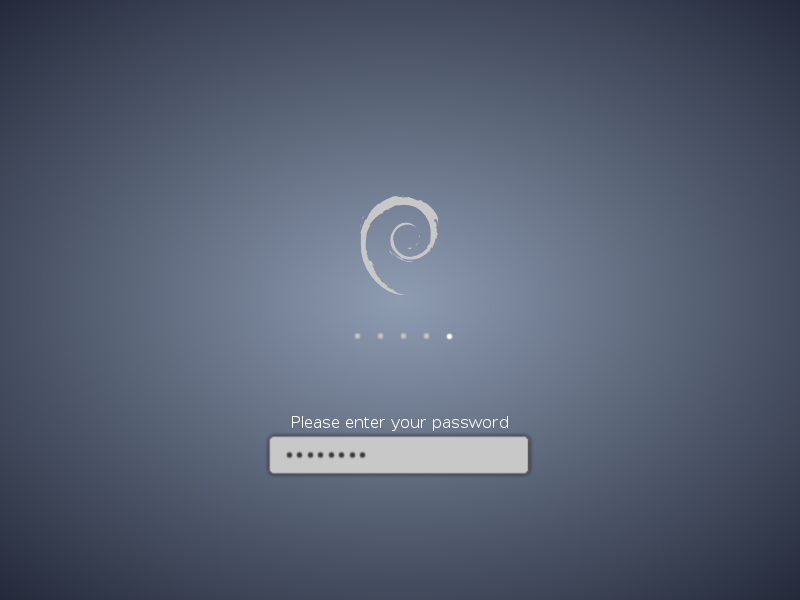
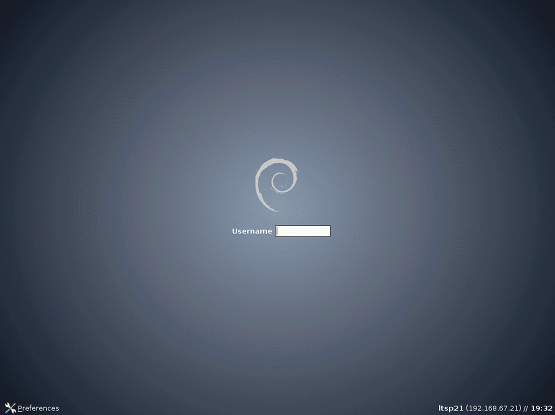
Joy Theme When the Joy theme was picked as the chosen theme for Debian 7.0 (Wheezy), I wanted to do what I could to get as much of it in the archive as possible before the freeze that occurred in June. I ve been working with Paul Tagliamonte and Vagrant Cascadian and I m glad that it resulted in some nice things! The Joy theme is modest and beautiful and I think Debian 7.0 is going to be one of the best looking Debian releases so far. Joy Plymouth Theme Plymouth is the part that provides the boot splash. It also takes care of a few other things, like showing prompts and progress indicators for filesystem checks, password prompts for encrypted devices and more so that the splash doesn t need to exit to show those. It s very scriptable, The installers for the Genesi Efika range of devices even use it for it s front-end. I needed to start with a Plymouth theme where I knew the prompts for all the things that happen during boot was at least more or less implemented, so I started off with one that I know works well, the Edubuntu one. So, fun fact: Debian 7.0 s Plymouth theme is actually based on the Edubuntu one. I had to play with the colours a bit to get it right, Edubuntu has a light background so I had to invert contrast for things like the input box, but I think it came out nicely. Splashy isn t in the archives anymore and it s not widely used anymore, so I cleaned it up from the desktop-base package so that there s less clutter shipped with it. Joy LTSP/LDM Theme This screenshot actually looks a bit uglier than it should because I took it on a VM that doesn t have 24bit colour, but we re looking into what we can do to make it look better on 16bit colour as well. During Debconf in Nigaragua, Vagrant and I worked on getting the LDM theme in shape. I have already done what I thought was most of the work by the time Debconf started, but it turns out there was a lot more to it to do it properly. We managed to get rid of the gtk2-engines-murrine dependency, which in itself is quite tiny, but it s a bit backwards in that it depends on the whole rest of the murrine-themes which brings in too much. We took the time to get the dependencies/recommends/etc right and to make it the default theme in Debian without messing it up for any Debian derivatives. It all came together and now when you install LTSP on Debian, you get the Joy theme by default! I m really glad about that because I didn t get the Spacefun LDM theme done in time for the Squeeze release. Enjoy!

Next.

Previous.