Search Results: "mak"

13 November 2017

Markus Koschany: My Free Software Activities in October 2017

Welcome to gambaru.de. Here is my monthly report that covers what I have been doing for Debian. If you re interested in Java, Games and LTS topics, this might be interesting for you. Debian Games Debian Java Debian LTS This was my twentieth month as a paid contributor and I have been paid to work 19 hours on Debian LTS, a project started by Rapha l Hertzog. I will catch up with the remaining 1,75 hours in November. In that time I did the following: Misc Thanks for reading and see you next time.

12 November 2017

Ben Armstrong: The Joy of Cat Intelligence

As a cat owner, being surprised by cat intelligence delights me. They re not exactly smart like a human, but they are smart in cattish ways. The more I watch them and try to sort out what they re thinking, the more it pleases me to discover they can solve problems and adapt in recognizably intelligent ways, sometimes unique to each individual cat. Each time that happens, it evokes in me affectionate wonder. Today, I had one of those joyful moments. First, you need to understand that some months ago, I thought I had my male cat all figured out with respect to mealtimes. I had been cleaning up after my oafish boy who made a watery mess on the floor from his mother s bowl each morning. I was slightly annoyed, but was mostly curious, and had a hunch. A quick search of the web confirmed it: my cat was left-handed. Not only that, but I learned this is typical for males, whereas females tend to be right-handed. Right away, I knew what I had to do: I adjusted the position of their water bowls relative to their food, swapping them from right to left; the messy morning feedings ceased. I congratulated myself for my cleverness. You see, after the swap, as he hooked the kibbles with his left paw out of the right-hand bowl, they would land immediately on the floor where he could give them chase. The swap caused the messes to cease because before, his left-handed scoops would land the kibbles in the water to the right; he would then have to scoop the kibble out onto the floor, sprinkling water everywhere! Furthermore, the sodden kibble tended to not skitter so much, decreasing his fun. Or so I thought. Clearly, I reasoned, having sated himself on the entire contents of his own bowl, he turned to pilfering his mother s leftovers for some exciting kittenish play. I had evidence to back it up, too: he and his mother both seem to enjoy this game, a regular fixture of their mealtime routines. She, too, is adept at hooking out the kibbles, though mysteriously, without making a mess in her water, whichever way the bowls are oriented. I chalked this up to his general clumsiness of movement vs. her daintiness and precision, something I had observed many times before. Come to think of it, lately, I ve been seeing more mess around his mother s bowl again. Hmm. I don t know why I didn t stop to consider why And then my cat surprised me again. This morning, with Shadow behind my back as I sat at my computer, finishing up his morning meal at his mother s bowl, I thought I heard something odd. Or rather, I didn t hear something. The familiar skitter-skitter sound of kibbles evading capture was missing. So I turned and looked. My dear, devious boy had squished his overgrown body behind his mother s bowls, nudging them ever so slightly askew to fit the small space. Now the bowl orientation was swapped back again. Stunned, I watched him carefully flip out a kibble with his left paw. Plop! Into the water on the right. Concentrating, he fished for it. A miss! He casually licked the water from his paw. Another try. Swoop! Plop, onto the floor. No chase now, just satisfied munching of his somewhat mushy kibble. And then it dawned on me that I had got it somewhat wrong. Yes, he enjoyed Chase the Kibble, like his mom, but I never recognized he had been indulging in a favourite pastime, peculiarly his own I had judged his mealtime messes as accidents, a very human way of thinking about my problem. Little did I know, it was deliberate! His private game was Bobbing for Kibbles. I don t know if it s the altered texture, or dabbling in the bowl, but whatever the reason, due to my meddling, he had been deprived of this pleasure. No worries, a thwarted cat will find a way. And that is the joy of cat intelligence.

Russ Allbery: Review: Night Moves

Review: Night Moves, by Pat Green
Publisher: Aquarius
Copyright: 2014
ISBN: 0-9909741-1-1
Format: Kindle
Pages: 159
In the fall of 2012, Pat Green was a preacher of a failing church, out of a job, divorced for six months, and feeling like a failure at every part of his life. He was living in a relative's house and desperately needed work and his father had been a taxi driver. So he got a job as a 6pm to 6am taxi driver in his home town of Joliet, Illinois. That job fundamentally changed his understanding of the people who live in the night, how their lives work, and what it means to try to help them. This is nonfiction: a collection of short anecdotes about life as a cab driver and the people who have gotten a ride in Green's cab. They're mostly five or six pages long, just a short story or window into someone's life. I ran across Pat Green's writing by following a sidebar link from a post on Patheos (probably from Love, Joy, Feminism, although I no longer remember). Green has an ongoing blog on Patheos about raising his transgender son (who appears in this collection as a lesbian daughter; he wasn't out yet as transgender when this was published), which is both a good sample of his writing and occasionally has excerpts from this book. Green's previous writing experience, as mentioned at several points in this collection, was newspaper columns in the local paper. It shows: these essays have the succinct, focused, and bite-sized property of a good newspaper article (or blog post). The writing is a little rough, particularly the remembered dialogue that occasionally falls into the awkward valley between dramatic, constructed fictional dialogue and realistic, in-the-moment speech. But the stories are honest and heartfelt and have the self-reflective genuineness of good preaching paired with a solid sense of narrative. Green tries to observe and report first, both the other person and his own reactions, and only then try to draw more general conclusions. This book is also very hard to read. It's not a sugar-coated view of people who live in the night of a city, nor is it constructed to produce happy endings. The people who Green primarily writes about are poor, or alone, or struggling. The story that got me to buy this book, about taking a teenage girl to a secret liaison that turned out to be secret because her liaison was another girl, is heartwarming but also one of the most optimistic stories here. A lot of people die or just disappear after being regular riders for some time. A lot of people are desperate and don't have any realistic way out. Some people, quite memorably, think they have a way out, and that way out closes on them. The subtitle of this book is "An Ex-Preacher's Journey to Hell in a Taxi" and (if you followed the link above) you'll see that Green is writing in the Patheos nonreligious section. The other theme of this collection is the church and its effect on the lives of people who are trying to make a life on the outskirts of society. That effect is either complete obliviousness or an active attempt to make their lives even worse. Green lays out the optimism that he felt early in the job, the hope that he could help someone the way a pastor would, guide her to resources, and how it went horribly wrong when those resources turned out to not be interested in helping her at all. And those stories repeat, and repeat. It's a book that makes it very clear that the actual practice of Christianity in the United States is not about helping poor or marginalized people, but there are certainly plenty of Christian resources for judging, hurting people, closing doors, and forcing abused people back into abusive situations, all in the name of God. I do hope some Christians read this and wince very hard. (And lest the progressive Christians get too smug, one of the stories says almost as brutal things about liberal ministries as the stories of conservative ones.) I came away feeling even more convinced by the merits of charities that just give money directly to poor people. No paternalism, no assuming that rich people know what they need, no well-meaning intermediary organizations with endless rules, just resources delivered directly to the people who most need resources. Ideally done by the government and called universal basic income. Short of constructing a functional government that builds working public infrastructure, and as a supplement even if one has such a government (since infrastructure can't provide everything), it feels like the most moral choice. Individual people may still stay mired in awful situations, but at least that isn't compounded by other people taking their autonomy away and dictating life to them in complete ignorance. This is a fairly short and inexpensive book. I found it very much worth reading, and may end up following Green's blog as well. There are moments of joy and moments of human connection, and the details of the day-to-day worries and work style of a taxi driver (in this case, one who drives a company car) are pretty interesting. (Green does skip over some parts for various reasons, such as a lot of the routine fares and most of the stories of violence, but does mention what he's skipping over.) But it's also a brutal book, because so many people are hurting and there isn't much Green can do about it except bear witness and respect them as people in a way that religion doesn't. Recommended, but brace yourself. Rating: 8 out of 10

10 November 2017

Wouter Verhelst: SReview 0.1

This morning I uploaded version 0.1 of SReview, my video review and transcoding system, to Debian experimental. There's still some work to be done before it'll be perfectly easy to use by anyone, but I do think I've reached the point by now where it should have basic usability by now. Quick HOWTO for how to use it: There's still some bits of the above list that I want to make easier to do, and there's still some things that shouldn't be strictly necessary, but all in all, I think SReview has now reached a certain level of maturity that means I felt confident doing its first upload to Debian. Did you try it out? Let me know what you think!

Thadeu Lima de Souza Cascardo: Software Freedom Strategy with Community Projects

It's been some time since I last wrote. Life and work have been busy. At the same time, the world has been busy, and as I would love to write a larger post, I will try to be short here. I would love to touch on the Librem 5 and postmarketOS. In fact, I had, in a podcast in Portuguese, Papo Livre. Maybe, I'll touch a little on the latter. Some of the inspiration for this post include: All of those led me to understand how software freedom is under attack, in particular how copyleft in under attack. And, as I talked during FISL, though many might say that "Open Source has won", end users software freedom has not. Lots of companies have co-opted "free software" but give no software freedom to their users. They seem friends with free software, and they are. Because they want software to be free. But freedom should not be a value for software itself, it needs to be a value for people, not only companies or people who are labeled software developers, but all people. That's why I want to stop talking about free software, and talk more about software freedom. Because I believe the latter is more clear about what we are talking about. I don't mind that we use whatever label, as long as we stablish its meaning during conversations, and set the tone to distinguish them. The thing is: free software does not software freedom make. Not by itself. As Bradley Kuhn puts it: it's not magic pixie dust. Those who have known me for years might remember me as a person who studied free software licenses and how I valued copyleft, the GPL specifically, and how I concerned myself with topics like license compatibility and other licensing matters. Others might remember me as a person who valued a lot about upstreaming code. Not carrying changes to software openly developed that you had not made an effort to put upstream. I can't say I was wrong on both accounts. I still believe in those things. I still believe in the importance of copyleft and the GPL. I still value sharing your code in the commons by going upstream. But I was certaily wrong in valuing them too much. Or not giving as much or even more value to distribution efforts of getting software freedom to the users. And it took me a while in seeing how many people also saw the GPL as a tool to get code upstream. You see that a lot in Linus' discourse about the GPL. And that is on the minds of a lot of people, who I have seen argue that copyleft is not necessary for companies to contribute code back. But that's the problem. The point is not about getting code upstream. But about assuring people have the freedom to run a modified version of the software they received on their computers. It turns out that many examples of companies who had contributed code upstream, have not delivered that freedom to their end-users, who had received a modified version of that same software, which is not free. Bradley Kuhn also alerts us that many companies have been replacing copyleft software with non-copyleft software. And I completely agree with him that we should be writing more copyleft software that we hold copyright for, so we can enforce it. But looking at what has been happening recently in the Linux community about enforcement, even thought I still believe in enforcement as an strategy, I think we need much more than that. And one of those strategies is delivering more free software that users may be able to install on their own computers. It's building those replacements for software that people have been using for any reason. Be it the OS they get when they buy a device, or the application they use for communication. It's not like the community is not doing it, it's just that we need to acknowledge that this is a necessary strategy to guarantee software freedom. That distribution of software that users may easily install on their computers is as much or even more valuable than developing software closer to the hacker/developer community. That doing downstream changes to free software in the effort of getting them to users is worth it. That maintaining that software stable and secure for users is a very important task. I may be biased when talking about that, as I have been shifting from doing upstream work to downstream work and both on the recent years. But maybe that's what I needed to realize that upstreaming does not necessarily guarantees that users will get software freedom. I believe we need to talk more about that. I have seen many people dear to me disregard that difference between the freedom of the user and the freedom of software. There is much more to talk about that, go into detail about some of those points, and I think we need to debate more. I am subscribed to the libreplanet-discuss mailing list. Come join us in discussing about software freedom there, if you want to comment on anything I brought up here. As I promised I would, I would like to mention about postmarketOS, which is an option users have now to get some software freedom on some mobile devices. It's an effort I wanted to build myself, and I applaud the community that has developed around it and has been moving forward so quickly. And it's a good example of a balance between upstream and dowstream code that gets to deliver a better level of software freedom to users than the vendor ever would. I wanted to write about much of the topics I brought up today, but postponed that for some time. I was motivated by recent events in the community, and I am really disappointed at some the free software players and some of the events that happened in the last few years. That got me into thinking in how we need to manifest ourselves about those issues, so people know how we feel. So here it is: I am disappointed at how the Linux Foundation handled the situation about Software Freedom Conversancy taking a case against VMWare; I am disappointed about how Software Freedom Law Center handled a trademark issue against the Software Freedom Conservancy; and I really appreciate all the work the Software Freedom Conservancy has been doing. I have supported them for the last two years, and I urge you to become a supporter too.

8 November 2017

Neil McGovern: Software Freedom Law Center and Conservancy

Before I start, I would like to make it clear that the below is entirely my personal view, and not necessarily that of the GNOME Foundation, the Debian Project, or anyone else. There s been quite a bit of interest recently about the petition by Software Freedom Law Center to cancel the Software Freedom Conservancy s trademark. A number of people have asked my views on it, so I thought I d write up a quick blog on my experience with SFLC and Conservancy both during my time as Debian Project Leader, and since. It s clear to me that for some time, there s been quite a bit of animosity between SFLC and Conservancy, which for me started to become apparent around the time of the large debate over ZFS on Linux. I talked about this in my DebConf 16 talk, which fortunately was recorded (ZFS bit from 8:05 to 17:30).
This culminated in SFLC publishing a statement, and Conservancy also publishing their statement, backed up by the FSF. These obviously came to different conclusions, and it seems bizarre to me that SFLC who were acting as Debian s legal counsel published a position that was contrary to the position taken by Debian. Additionally, Conservancy and FSF who were not acting as counsel mirrored the position of the project. Then, I hear of an even more confusing move that SFLC has filed legal action against Conservancy, despite being the organisation they helped set up. This happened on the 22nd September, the day after SFLC announced corporate and support services for Free Software projects. SFLC has also published a follow up, which they say that the act is not an attack, let alone a bizarre attack , and that the response from Conservancy, who view it as such was like reading a declaration of war issued in response to a parking ticket . Then, as SFLC somehow find the threat of your trademark being taken away as something other than an attack, they also state: Any project working with the Conservancy that feels in any way at risk should contact us. We will immediately work with them to put in place measures fully ensuring that they face no costs and no risks in this situation. which I read as a direct pitch to try and pull projects away from Conservancy and over to SFLC. Now, even if there is a valid claim here, despite the objections that were filed by a trademark lawyer who I have a great deal of respect for (disclosure: Pam also provides pro-bono trademark advice to my employer, the GNOME Foundation), the optics are pretty terrible. We have a case of one FOSS organisation taking another one to court, after many years of them being aware of the issue, and when wishing to promote a competing service. At best, this is a distraction from the supposed goals of Free Software organisations, and at worst is a direct attempt to interrupt the workings of an established and successful umbrella organisation which lots of projects rely on. I truly hope that this case is simply dropped, and if I was advising SFLC, that s exactly what I would suggest, along with an apology for the distress. Put it this way if SFLC win, then they re simply displaying what would be viewed as an aggressive move to hold the term software freedom exclusively to themselves. If they lose, then it shows that they re willing to do so to another 501(c)3 without actually having a case. Before I took on the DPL role, I was under the naive impression that although there were differences in approach, at least we were coming to try and work together to promote software freedoms for the end user. Unfortunately, since then, I ve now become a lot more jaded about exactly who, and which organisations hold our best interests at heart. (Featured image by Nick Youngson CC-BY-SA-3.0 http://nyphotographic.com/)

Dirk Eddelbuettel: R / Finance 2018 Call for Papers

The tenth (!!) annual annual R/Finance conference will take in Chicago on the UIC campus on June 1 and 2, 2018. Please see the call for papers below (or at the website) and consider submitting a paper. We are once again very excited about our conference, thrilled about who we hope may agree to be our anniversary keynotes, and hope that many R / Finance users will not only join us in Chicago in June -- and also submit an exciting proposal. So read on below, and see you in Chicago in June!

Call for Papers R/Finance 2018: Applied Finance with R
June 1 and 2, 2018
University of Illinois at Chicago, IL, USA The tenth annual R/Finance conference for applied finance using R will be held June 1 and 2, 2018 in Chicago, IL, USA at the University of Illinois at Chicago. The conference will cover topics including portfolio management, time series analysis, advanced risk tools, high-performance computing, market microstructure, and econometrics. All will be discussed within the context of using R as a primary tool for financial risk management, portfolio construction, and trading. Over the past nine years, R/Finance has includedattendeesfrom around the world. It has featured presentations from prominent academics and practitioners, and we anticipate another exciting line-up for 2018. We invite you to submit complete papers in pdf format for consideration. We will also consider one-page abstracts (in txt or pdf format) although more complete papers are preferred. We welcome submissions for both full talks and abbreviated "lightning talks." Both academic and practitioner proposals related to R are encouraged. All slides will be made publicly available at conference time. Presenters are strongly encouraged to provide working R code to accompany the slides. Data sets should also be made public for the purposes of reproducibility (though we realize this may be limited due to contracts with data vendors). Preference may be given to presenters who have released R packages. Please submit proposals online at http://go.uic.edu/rfinsubmit. Submissions will be reviewed and accepted on a rolling basis with a final submission deadline of February 2, 2018. Submitters will be notified via email by March 2, 2018 of acceptance, presentation length, and financial assistance (if requested). Financial assistance for travel and accommodation may be available to presenters. Requests for financial assistance do not affect acceptance decisions. Requests should be made at the time of submission. Requests made after submission are much less likely to be fulfilled. Assistance will be granted at the discretion of the conference committee. Additional details will be announced via the conference website at http://www.RinFinance.com/ as they become available. Information on previous years'presenters and their presentations are also at the conference website. We will make a separate announcement when registration opens. For the program committee:
Gib Bassett, Peter Carl, Dirk Eddelbuettel, Brian Peterson,
Dale Rosenthal, Jeffrey Ryan, Joshua Ulrich

7 November 2017

Reproducible builds folks: Reproducible Builds: Weekly report #132

Here's what happened in the Reproducible Builds effort between Sunday October 29 and Saturday November 4 2017: Past events Upcoming events Reproducible work in other projects Packages reviewed and fixed, and bugs filed Reviews of unreproducible packages 7 package reviews have been added, 43 have been updated and 47 have been removed in this week, adding to our knowledge about identified issues. Weekly QA work During our reproducibility testing, FTBFS bugs have been detected and reported by: Documentation updates diffoscope development Version 88 was uploaded to unstable by Mattia Rizzolo. It included contributions (already covered by posts of the previous weeks) from: strip-nondeterminism development Version 0.040-1 was uploaded to unstable by Mattia Rizzolo. It included contributions already covered by posts of the previous weeks, as well as new ones from:
Version 0.5.2-2 was uploaded to unstable by Holger Levsen. It included contributions already covered by posts of the previous weeks, as well as new ones from: reprotest development buildinfo.debian.net development tests.reproducible-builds.org Misc. This week's edition was written by Bernhard M. Wiedemann, Chris Lamb, Mattia Rizzolo & reviewed by a bunch of Reproducible Builds folks on IRC & the mailing lists.

Rog rio Brito: Some activities of the day

Yesterday, I printed the first draft of the first chapter when my little boy was here and he was impressed with this strange object called a "printer". Before I printed what I needed, I fired up LibreOffice and chose the biggest font size that was available and let him type his first name by himself. He was quicker than I thought with a keyboard. After seeing me print his first name, he was jumping up and down with joy of having created something and even showed grandma and grandpa what he had done. He, then, wanted more and I taught him how to use that backspace key, what it meant and he wanted to type his full name. I let him and taught him that there is a key called space that he should type every time he wants to start a new word and, in the end, he typed his first two names. To my surprise, he memorized the icon with the printer (which I must say that I have to hunt every time, since it seems so similar to the adjacent ones!) and pressed this new key called "Enter". When he pressed, he wasn't expecting the printer on his right to start making noises and printing his name. He was so excited and it was so nice to see his reaction full of joy to get a job done! I am thinking of getting a spare computer, building it with him and for him, so that he can call it his computer every time he comes to see daddy. As a serendipitous situation, Packt Publishing offered yesterday their title "Python Projects for Kids". Unfortunately, he does not yet know how to read, but I guess that the right age is coming soon, which is a good thing to make him be educated "the right way" (that is, with the best support, teaching and patience that I can give him). Anyway, I printed the first draft of the first chapter and today I have to turn it in. As I write this, I am downloading a virtual machine from Microsoft to try to install Java on it. Let me see if it works. I have none of the virtualization options used, tough the closest seems to be virtualbox. Let me cross my fingers. In other news, I updated some of the tags of very old posts of this blog, and I am seriously thinking about switching from [ikiwiki][0] to another blog platform. It is slow, very slow on my system with the repositories that I have, especially on my armel system. Some non-interpreted system would be best, but I don't know if such a thing even exists. But the killer problem is that it doesn't support easily the typing of Mathematics (even though a 3rd party plugin for MathJax exists). On the other hand, I just received an answer on twitter from @telegram and it was nice:
Hello, Telegram supports bold and italic. You can type **bold** and __italic__. On mobile, you can also highlight text for this as well.
It is nice that this works with telegram-desktop too. Besides that, I filed some bugs on Debian's BTS, responded to some issues on my projects on GitHub (I'm slowly getting back on maintaining things) and file wishlist bugs on some other projects. Oh, and I grabbed a copy of "Wonder woman" ("Mulher Maravilha") and "Despicable Me 3" ("Meu Malvado Favorito 3") dubbed in Brazilian Portuguese for my son. I have to convert the audio from AAC-LC in 6 channels to AC3 or to stereo. Otherwise, my TVs have problem with the videos (one refuses to play the entire file and another plays the audio with sounds of hiccups). Edit: After converting the VirtualBox image taken from Microsoft, I could easily use qemu/kvm to create screenshots of the installation of Java. The command that I used (for future reference) is: qemu-system-x86_64 -enable-kvm -m 4096 -smp 2 -net nic,model=e1000 -net user -soundhw ac97 -drive index=0,media=disk,cache=unsafe,file=win7.qcow2 Edit: Fixed some typos.

6 November 2017

James Bromberger: Web Security 2017

I started web development around late 1994. Some of my earliest paid web work is still online (dated June 1995). Clearly, that was a simpler time for content! I went on to be Webmaster (yes, for those joining us in the last decade, that was a job title once) for UWA, and then for Hartley Poynton/JDV.com at time when security became important as commerce boomed online. At the dawn of the web era, the consideration of backwards compatibility with older web clients (browsers) was deemed to be important; content had to degrade nicely, even without any CSS being applied. As the years stretched out, the legacy became longer and longer. Until now. In mid-2018, the Payment Card Industry (PCI) Data Security Standard (DSS) 3.2 comes into effect, requiring card holder environments to use (at minimum) TLS 1.2 for the encrypted transfer of data. Of course, that s also the maximum version typically available today (TLS 1.3 is in draft 21 at this point in time of writing). This effort by the PCI is forcing people to adopt new browsers that can do the TLS 1.2 protocol (and the encryption ciphers that permits), typically by running modern/recent Chrome, Firefox, Safari or Edge browsers. And for the majority of people, Chrome is their choice, and the majority of those are all auto-updating on every release. Many are pushing to be compliant with the 2018 PCI DSS 3.2 as early as possible; your logging of negotiated protocols and ciphers will show if your client base is ready as well. I ve already worked with one government agency to demonstrate they were ready, and have already helped disable TLS 1.0 and 1.1 on their public facing web sites (and previously SSL v3). We ve removed RC4 ciphers, 3DES ciphers, and enabled ephemeral key ciphers to provide forward secrecy. Web developers (writing Javascript and using various frameworks) can rejoice the age of having to support legacy MS IE 6/7/8/9/10 is pretty much over. None of those browsers support TLS 1.2 out of the box (IE 10 can turn this on, but for some reason, it is off by default). This makes Javascript code smaller as it doesn t have to have conditional code to work with the quirks of those older clients. But as we find ourselves with modern clients, we can now ask those clients to be complicit in our attempts to secure the content we serve. They understand modern security constructs such as Content Security Policies and other HTTP security-related headers. There s two tools I am currently using to help in this battle to improve web security. One is SSLLabs.com, the work of Ivan Risti (and now owned/sponsored by Qualys). This tool gives a good view of the encryption in flight (protocols, ciphers), chain of trust (certificate), and a new addition of checking DNS records for CAA records (which I and others piled on a feature request for AWS Route53 to support). The second tool is Scott Helm s SecurityHeaders.io, which looks at the HTTP headers that web content uses to ask browsers to enforce security on the client side. There s a really important reason why these tools are good; they are maintained. As new recommendations on ciphers, protocols, signature algorithms or other actions become recommended, they re updated on these tools. And these tools are produced by very small, but agile teams like one person teams, without the bureaucracy (and lag) associated with large enterprise tools. But these shouldn t be used blindly. These services make suggestions, and you should research them yourselves. For some, not all the recommendations may meet your personal risk profile. Personally, I m uncomfortable with Public-Key-Pins, so that can wait for a while indeed, Chrome has now signalled they will drop this. So while PCI is hitting merchants with their DSS-compliance stick (and making it plainly obvious what they have to do), we re getting a side-effect of having a concrete reason for drawing a line under where our backward compatibility must stretch back to, and the ability to have the web client assist in ensure security of content.

Andreas Bombe: Reviving GHDL in Debian

It has been a few years since Debian last had a working VHDL simulator in the archive. Its competitor Verilog has been covered by the iverilog and verilator simulator packages, but GHDL was the only option for VHDL in Debian and that has become broken, orphaned and was eventually removed. I have just submitted an ITP to make my work on it official. A lot has changed since the last Debian upload of GHDL. Upstream development is quite active and it has gained free reimplementations of the standard library definitions (the lack of which frustrated at least two attempts at adoption of the Debian package). It has gained additional backends, in addition to GCC it can now also use LLVM and its own custom mcode (x86 only) code generator. The mcode backend should provide faster compilation at the expense of lacking sophisticated optimization, hence it might be preferable over the other two for small projects. My intentions are to provide all three backends in separate packages which would also offer easier backend troubleshooting a user experiencing problems can simply install another package to try a different backend. The problem with that idea is that GHDL is not designed for that kind of parallel installation. The backend is chosen at build configure time and that configuration is built and installed. Parallel installation will probably need some development but if that would turn out to be much work I could always have the packages conflicting initially. Given all these changes I am redoing the Debianization from ground up and maybe take bits and pieces from the old packaging where suitable. Right now I m building the different backends to compare and see what files are backend specific and what can go into a common package.

John Goerzen: The Yellow House Phone Company (Featuring Asterisk and an 11-year-old)

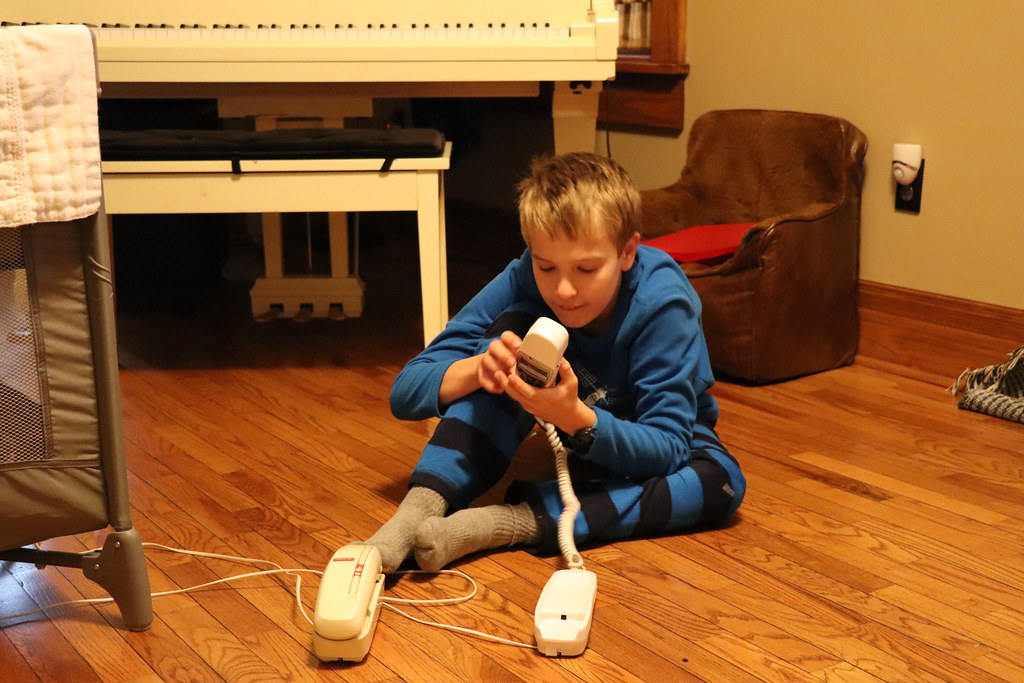
Well Jacob, do you think we should set up our own pretend phone company in the house? We can DO THAT? Yes! Then yes. Yes! YES YES YESYESYESYES YES! Let s do it, dad! Not long ago, my parents had dug up the old phone I used back in the day. We still have a landline, and Jacob was having fun discovering how an analog phone works. I told him about the special number he could call to get the time and temperature read out to him. He discovered what happens if you call your own number and hang up. He figured out how to play Mary Had a Little Lamb using touchtone keys (after a slightly concerned lecture from me setting out some rules to make sure his musical dialing wouldn t result in any, well, dialing.) He was hooked. So I thought that taking it to the next level would be a good thing for a rainy day. I have run Asterisk before, though I had unfortunately gotten rid of most of my equipment some time back. But I found a great deal on a Cisco 186 ATA (Analog Telephone Adapter). It has two FXS lines (FXS ports simulate the phone company, and provide dialtone and ring voltage to a connected phone), and of course hooks up to the LAN. We plugged that in, and Jacob was amazed to see its web interface come up. I had to figure out how to configure it (unfortunately, it uses SCCP rather than SIP, and figuring out Asterisk s chan_skinny took some doing, but we got there.) I set up voicemail. He loved it. He promptly figured out how to record his own greetings. We set up a second phone on the other line, so he could call between them. The cordless phones in our house support SIP, so I configured one of them as a third line. He spent a long time leaving himself messages. IMG_3465 Pretty soon we both started having ideas. I set up extension 777, where he could call for the time. Then he wanted a way to get the weather forecast. Well, weather-util generates a text-based report. With it, a little sed and grep tweaking, the espeak TTS engine, and a little help from sox, I had a shell script worked up that would read back a forecast whenever he called a certain extension. He was super excited! That s great, dad! Can it also read weather alerts too? Sure! weather-util has a nice option just for that. Both boys cackled as the system tried to read out the NWS header (their timestamps like 201711031258 started with two hundred one billion ) Then I found an online source for streaming NOAA Weather Radio feeds Jacob enjoys listening to weather radio and I set up another extension he could call to listen to that. More delight! But it really took off when I asked him, Would you like to record your own menu? You mean those things where it says press 1 or 2 for this or that? Yes. WE CAN DO THAT? Oh yes! YES, LET S DO IT RIGHT NOW! So he recorded a menu, then came and hovered by me while I hacked up extensions.conf, then eagerly went back to the phone to try it. Oh the excitement of hearing hisown voice, and finding that it worked! Pretty soon he was designing sub-menus ( OK Dad, so we ll set it up so people can press 2 for the weather, and then choose if they want weather radio or the weather report. I m recording that now. Got it? ) He has informed me that next Saturday we will build an intercom system like we have at school. I m going to have to have some ideas on how to tie Squeezebox in with Asterisk to make that happen, I think. Maybe this will do.

5 November 2017

Russ Allbery: Review: Sweep in Peace

Review: Sweep in Peace, by Ilona Andrews
Series: Innkeeper Chronicles #2
Publisher: NYLA
Copyright: 2015
ISBN: 1-943772-32-0
Format: Kindle
Pages: 302
This is the sequel to Clean Sweep. You could pick up the background as you go along, but the character relationships benefit from reading the series in order. Dina's inn is doing a bit better, but it still desperately needs guests. That means she's not really in a position to say no when an Arbitrator shows up at her door and asks her to host a peace summit. Lucky for the Arbitrator, since every other inn on Earth did say no. Nexus has been the site of a viciously bloody conflict between the vampires, the Hope-Crushing Horde, and the Merchants of Baha-char for years. All sides have despaired of finding any form of peace. The vampires and the Horde have both deeply entrenched themselves in a cycle of revenge. The Merchants have the most strategic position and an apparently unstoppable warrior. The situation is hopeless; by far the most likely outcome will be open warfare inside the inn, which would destroy its rating and probably Dina's future as an innkeeper. Dina will need all of her power and caution just to stop that; peace seems beyond any possibility, but thankfully isn't her problem. Maybe the Arbitrator can work some miracle if she can just keep everyone alive. And well fed. Which is another problem. She has enough emergency money for the food, but somehow cook for forty people from four different species while keeping them all from killing each other? Not a chance. She's going to have to hire someone somehow, someone good, even though she can't afford to pay. Sweep in Peace takes this series farther out of urban fantasy territory and farther into science fiction, and also ups the stakes (and the quality of the plot) a notch. We get three moderately interesting alien species with only slight trappings of fantasy, a wonderful alien chef who seems destined to become a regular in the series, and a legitimately tricky political situation. The politics and motives aren't going to win any awards for deep and subtle characterization, but that isn't what the book is going for. It's trying to throw enough challenges at Dina to let her best characteristics shine, and it does that rather well. The inn continues to be wonderful, although I hope it becomes more of a character in its own right as the series continues. Dina's reshaping of it for guests, and her skill at figuring out the rooms her guests would enjoy, is my favorite part of these books. She cares about making rooms match the personality of her guests, and I love books that give the character a profession that matters to them even if it's unrelated to the plot. I do wish Andrews would find a few other ways for Dina to use her powers for combat beyond tentacles and burying people in floors, but that's mostly a quibble. You should still not expect great literature. I guessed the big plot twist several chapters before it happened, and the resolution is, well, not how these sorts of political situations resolve in the real world. But there is not a stupid love affair, there are several interesting characters, and one of the recurring characters gets pretty solid and somewhat unusual characterization. And despite taking the plot in a more serious direction, Sweep in Peace retains its generally lighthearted tone and firm conviction in Dina's ability to handle just about anything. Also, the chef is wonderful. One note: Partway into the book, I started getting that "oh, this is a crossover" feeling (well-honed by years of reading comic books). As near as I can tell from a bit of research, Andrews pulled in some of their characters from the Edge series. This was a bit awkward, in the "who are these people and why do they seem to have more backstory than any of the other supporting characters" cross-over sort of way, but the characters that were pulled in were rather intriguing. I might have to go read the Edge books now. Anyway, if you liked Clean Sweep, this is better in pretty much every way. Recommended. Followed by One Fell Sweep. Rating: 8 out of 10

4 November 2017

Louis-Philippe V ronneau: Migrating my website to Pelican

After too much time lying to myself, telling myself things like "I'll just add this neat feature I want on my blog next week", I've finally made the big jump, ditched django and migrated my website to Pelican. I'm going to the Cambridge Mini-Debconf at the end of the month for the Debconf Videoteam Autumn sprint and I've taken the task of making daily sprint reports for the team. That in return means I have to publish my blog on Planet Debian. My old website not having feeds made this a little hard and this perfect storm gave me the energy to make the migration happen. Anyway, django was fun. Building a (crappy) custom blogging engine with it taught me some rough basics, but honestly I don't know why I ever thought it was a good idea. Don't get me wrong: django is great and should definitely be used for large and complicated websites. My blog just ain't one. Migrating to Pelican was pretty easy since it also uses Jinja2 templates and generates content from Mardown. The hardest part was actually bending it to replicate the weird and specific behavior I wanted it to have. So yeah, woooo, I migrated to Pelican. Who cares, right? Well, if you are amongst the very, very few people who read the blog posts I mainly write for myself, you'll be please to know that: Here's a bonus picture of a Pelican from Wikimedia, just for the sake of it: A pelican

3 November 2017

Reproducible builds folks: Reproducible Builds: Weekly report #131

Here's what happened in the Reproducible Builds effort between Sunday October 22 and Saturday October 28 2017: Past Events Upcoming/current events Documentation updates Bernhard Wiedemann started The Unreproducible Package which "is meant as a practical way to demonstrate the various ways that software can break reproducible builds using just low level primitives without requiring external existing programs that implement these primitives themselves. It is structured so that one subdirectory demonstrates one class of issues in some variants observed in the wild." Reproducible work in other projects Hush, a fork of ZCash, opened an issue into reproducible builds. A new tag was added to lintian (lint checker for Debian packages) to ensure that changelog entry timestamps are strictly increasing. This avoids certain real-world issues with identical timestamps, documented in Debian #843773. Packages reviewed and fixed, and bugs filed Patches sent upstream: Debian bug reports: Reviews of unreproducible packages 14 package reviews have been added, 35 have been updated and 28 have been removed in this week, adding to our knowledge about identified issues. 1 issue type has been updated: Weekly QA work During our reproducibility testing, FTBFS bugs have been detected and reported by: strip-nondeterminism development Version 0.040-1 was uploaded to unstable by Mattia Rizzolo. It included contributions already covered by posts of the previous weeks, as well as new ones from: reprotest development Development continued in git: buildinfo.debian.net development Development continued in git: reproducible-website development Misc. This week's edition was written by Ximin Luo, Chris Lamb, Bernhard M. Wiedemann and Holger Levsen & reviewed by a bunch of Reproducible Builds folks on IRC & the mailing lists.

Russell Coker: Work Stuff

Does anyone know of a Linux support company that provides 24*7 support to Ruby and PHP applications? I have a client that is looking for such a company. Also I m looking for more consulting work. If anyone knows of an organisation that needs some SE Linux consulting, or support for any of the FOSS software I ve written then let me know. I take payment by Paypal and Bitcoin as well as all the usual ways. I can make a private build of any of my FOSS software to suit your requirements or if you want features that could be used by other people (and don t conflict with the general use cases) I can add them on request. Small changes start at $100.

Rog rio Brito: Comparison of JDK installation of various Linux distributions

Today I spent some time in the morning seeing how one would install the JDK on Linux distributions. This is to create a little comparative tutorial to teach introductory Java. Installing the JDK is, thanks to the OpenJDK developers in Debian and Ubuntu (Matthias Klose and helpers), a very easy task. You simply type something like:
apt-get install openjdk-8-jdk
Since for a student it is better to have everything for experiments, I install the full version, not only the -headless version. Given my familiarity with Debian/Ubuntu, I didn't have to think about the way of installing it, of course. But as this is a tutorial meant to be as general as I can, I tried also to include instructions on how to install Java on other distributions. The first two that came to my mind were openSUSE and Fedora. Both use the RPM package format for their "native" packages (in the same sense that Debian uses DEB packages for "native" packages). But they use different higher-level tools to install such packages: Fedora uses a tool called dnf, while openSUSE uses zypper. To try these distributions, I got their netinstall ISOs and used qemu/kvm to install on a virtual machine. I used the following to install/run the virtual machines (the example below, is, of course, for openSUSE):
qemu-system-x86_64 -enable-kvm -m 4096 -smp 2 -net nic,model=e1000 -net user -drive index=0,media=disk,cache=unsafe,file=suse.qcow2 -cdrom openSUSE-Leap-42.3-NET-x86_64.iso
The names of the packages also change from one distribution to another. On Fedora, I had to use:
dnf install java-1.8.0-openjdk-devel
On openSUSE, I had to use:
zypper install java-1_8_0-openjdk-devel
Note that one distribution uses dots in the names of the packages while the other uses underscores. One interesting thing that I noticed with dnf was that, when I used it, it automatically refreshed the package lists from the network, something which I forgot, and it was a pleasant surprise. I don't know about zypper, but I guess that it probably had fresh indices when the installation finished. Both installations were effortless after I knew the names of the packages to install. Oh, BTW, in my 5 minute exploration with these distributions, I noticed that if you don't want the JDK, but only the JRE, then you omit the -devel suffix. It makes sense when you think about it, for consistency with other packages, but Debian's conventions also make sense (JRE with -jre suffix, JDK with -jdk suffix). I failed miserably to use Fedora's prebaked, vanilla cloud image, as I couldn't login on this image and I decided to just install the whole OS on a fresh virtual machine. I don't have instructions on how to install on Gentoo nor on Arch, though. I now see how hard it is to cover instructions/provide software for as many distributions as you wish, given the multitude of package managers, conventions etc.

2 November 2017

Steinar H. Gunderson: Introducing Narabu, part 5: Encoding

Narabu is a new intraframe video codec. You probably want to read part 1, part 2, part 3 and part 4 first. At this point, we've basically caught up with where I am, so thing are less set in stone. However, let's look at what qualitatively differentiates encoding from decoding; unlike in interframe video codecs (where you need to do motion vector search and stuff), encoding and decoding are very much mirror images of each other, so we can intuitively expect them to be relatively similar in performance. The procedure is DCT, quantization, entropy coding, and that's it. One important difference is in the entropy coding. Since our rANS encoding is non-adaptive (a choice made largely for simplicity, but also because our streams are so short) works by first signaling a distribution and then encoding each coefficient using that distribution. However, we don't know that distribution until we've DCT-ed all blocks in the picture, so we can't just DCT each block and entropy code the coefficients on-the-fly. There are a few ways to deal with this: As you can see, tons of possible strategies here. For simplicity, I've ended up with the former, although this could very well be changed at some point. There are some interesting subproblems, though: First of all, we need to decide the data type of this temporary array. The DCT tends to concentrate energy into fewer coefficients (which is a great property for compression!), so even after quantization, some of them will get quite large. This means we cannot store them in an 8-bit texture; however, even the bigger ones are very rarely bigger than 10 bits (including a sign bit), so using 16-bit textures wastes precious memory bandwidth. I ended up slicing the coefficients by horizontal index and then pairing them up (so that we generate pairs 0+7, 1+6, 2+5 and 3+4 for the first line of the 8x8 DCT block, 8+15, 9+14, 10+13 and 11+12 for the next line, etc.). This allows us to pack two coefficients into a 16-bit texture, for an average of 8 bits per coefficient, which is what we want. It makes for some slightly fiddly clamping and bit-packing since we are packing signed values, but nothing really bad. Second, and perhaps surprisingly enough, counting efficiently is nontrivial. We want a histogram over what coefficients are used the more often, ie., for each coefficient, we want something like ++counts[dist][coeff] (recall we have four distinct distributions). However, since we're in a massively parallel algorithm, this add needs to be atomic, and since values like e.g. 0 are super-common, all of our GPU cores will end up fighting over the cache line containing counts[dist][0]. This is not fast. Think 10 ms/frame not fast. Local memory to the rescue again; all modern GPUs have fast atomic adds to local memory (basically integrating adders into the cache, as I understand it, although I might have misunderstood here). This means we just make a suitably large local group, build up our sub-histogram in local memory and then add all nonzero buckets (atomically) to the global histogram. This improved performance dramatically, to the point where it was well below 0.1 ms/frame. However, our histogram is still a bit raw; it sums to 1280x720 = 921,600 values, but we want an approximation that sums to exactly 4096 (12 bits), with some additional constraints (like no nonzero coefficients). Charles Bloom has an exposition of a nearly optimal algorithm, although it took me a while to understand it. The basic idea is: Make a good approximation by multiplying each frequency by 4096/921600 (rounding intelligently). This will give you something that very nearly rounds to 4096 either above or below, e.g. 4101. For each step you're above or below the total (five in this case), find the best single coefficient to adjust (most entropy gain, or least loss); Bloom is using a heap, but on the GPU, each core is slow but we have many of them, so it's better just to try all 256 possibilities in parallel and have a simple voting scheme through local memory to find the best one. And then finally, we want a cumulative distribution function, but that is simple through a parallel prefix sum on the 256 elements. And then finally, we can take our DCT coefficients and the finished rANS distribution, and write the data! We'll have to leave some headroom for the streams (I've allowed 1 kB for each, which should be ample except for adversarial data and we'll probably solve that just by truncating the writes and accepting the corruption), but we'll compact them when we write to disk. Of course, the Achilles heel here is performance. Where decoding 720p (luma only) on my GTX 950 took 0,4 ms or so, encoding is 1,2 ms or so, which is just too slow. Remember that 4:2:2 is twice that, and we want multiple streams, so 2,4 ms per frame is eating too much. I don't really know why it's so slow; the DCT isn't bad, the histogram counting is fast, it's just the rANS shader that's slow for some reason I don't understand, and also haven't had the time to really dive deeply into. Of course, a faster GPU would be faster, but I don't think I can reasonably demand that people get a 1080 just to encode a few video streams. Due to this, I haven't really worked out the last few kinks. In particular, I haven't implemented DC coefficient prediction (it needs to be done before tallying up the histograms, so it can be a bit tricky to do efficiently, although perhaps local memory will help again to send data between neighboring DCT blocks). And I also haven't properly done bounds checking in the encoder or decoder, but it should hopefully be simple as long as we're willing to accept that evil input decodes into garbage instead of flagging errors explicitly. It also depends on a GLSL extension that my Haswell laptop doesn't have to get 64-bit divides when precalculating the rANS tables; I've got some code to simulate 64-bit divides using 32-bit, but it doesn't work yet. The code as it currently stands is in this Git repository; you can consider it licensed under GPLv3. It's really not very user-friendly at this point, though, and rather rough around the edges. Next time, we'll wrap up with some performance numbers. Unless I magically get more spare time in the meantime and/or some epiphany about how to make the encoder faster. :-)

Antoine Beaupr : October 2017 report: LTS, feed2exec beta, pandoc filters, git mediawiki

Debian Long Term Support (LTS) This is my monthly Debian LTS report. This time I worked on the famous KRACK attack, git-annex, golang and the continuous stream of GraphicsMagick security issues.

WPA & KRACK update I spent most of my time this month on the Linux WPA code, to backport it to the old (~2012) wpa_supplicant release. I first published a patchset based on the patches shipped after the embargo for the oldstable/jessie release. After feedback from the list, I also built packages for i386 and ARM. I have also reviewed the WPA protocol to make sure I understood the implications of the changes required to backport the patches. For example, I removed the patches touching the WNM sleep mode code as that was introduced only in the 2.0 release. Chunks of code regarding state tracking were also not backported as they are part of the state tracking code introduced later, in 3ff3323. Finally, I still have concerns about the nonce setup in patch #5. In the last chunk, you'll notice peer->tk is reset, to_set to negotiate a new TK. The other approach I considered was to backport 1380fcbd9f ("TDLS: Do not modify RNonce for an TPK M1 frame with same INonce") but I figured I would play it safe and not introduce further variations. I should note that I share Matthew Green's observations regarding the opacity of the protocol. Normally, network protocols are freely available and security researchers like me can easily review them. In this case, I would have needed to read the opaque 802.11i-2004 pdf which is behind a TOS wall at the IEEE. I ended up reading up on the IEEE_802.11i-2004 Wikipedia article which gives a simpler view of the protocol. But it's a real problem to see such critical protocols developed behind closed doors like this. At Guido's suggestion, I sent the final patch upstream explaining the concerns I had with the patch. I have not, at the time of writing, received any response from upstream about this, unfortunately. I uploaded the fixed packages as DLA 1150-1 on October 31st.

Git-annex The next big chunk on my list was completing the work on git-annex (CVE-2017-12976) that I started in August. It turns out doing the backport was simpler than I expected, even with my rusty experience with Haskell. Type-checking really helps in doing the right thing, especially considering how Joey Hess implemented the fix: by introducing a new type. So I backported the patch from upstream and notified the security team that the jessie and stretch updates would be similarly easy. I shipped the backport to LTS as DLA-1144-1. I also shared the updated packages for jessie (which required a similar backport) and stretch (which didn't) and those Sebastien Delafond published those as DSA 4010-1.

Graphicsmagick Up next was yet another security vulnerability in the Graphicsmagick stack. This involved the usual deep dive into intricate and sometimes just unreasonable C code to try and fit a round tree in a square sinkhole. I'm always unsure about those patches, but the test suite passes, smoke tests show the vulnerability as fixed, and that's pretty much as good as it gets. The announcement (DLA 1154-1) turned out to be a little special because I had previously noticed that the penultimate announcement (DLA 1130-1) was never sent out. So I made a merged announcement to cover both instead of re-sending the original 3 weeks late, which may have been confusing for our users.

Triage & misc We always do a bit of triage even when not on frontdesk duty, so I: I also did smaller bits of work on: The latter reminded me of the concerns I have about the long-term maintainability of the golang ecosystem: because everything is statically linked, an update to a core library (say the SMTP library as in CVE-2017-15042, thankfully not affecting LTS) requires a full rebuild of all packages including the library in all distributions. So what would be a simple update in a shared library system could mean an explosion of work on statically linked infrastructures. This is a lot of work which can definitely be error-prone: as I've seen in other updates, some packages (for example the Ruby interpreter) just bit-rot on their own and eventually fail to build from source. We would also have to investigate all packages to see which one include the library, something which we are not well equipped for at this point. Wheezy was the first release shipping golang packages but at least it's shipping only one... Stretch has shipped with two golang versions (1.7 and 1.8) which will make maintenance ever harder in the long term.
We build our computers the way we build our cities--over time, without a plan, on top of ruins. - Ellen Ullman

Other free software work This month again, I was busy doing some serious yak shaving operations all over the internet, on top of publishing two of my largest LWN articles to date (2017-10-16-strategies-offline-pgp-key-storage and 2017-10-26-comparison-cryptographic-keycards).

feed2exec beta Since I announced this new project last month I have released it as a beta and it entered Debian. I have also wrote useful plugins like the wayback plugin that saves pages on the Wayback machine for eternal archival. The archive plugin can also similarly save pages to the local filesystem. I also added bash completion, expanded unit tests and documentation, fixed default file paths and a bunch of bugs, and refactored the code. Finally, I also started using two external Python libraries instead of rolling my own code: the pyxdg and requests-file libraries, the latter which I packaged in Debian (and fixed a bug in their test suite). The program is working pretty well for me. The only thing I feel is really missing now is a retry/fail mechanism. Right now, it's a little brittle: any network hiccup will yield an error email, which are readable to me but could be confusing to a new user. Strangely enough, I am particularly having trouble with (local!) DNS resolution that I need to look into, but that is probably unrelated with the software itself. Thankfully, the user can disable those with --loglevel=ERROR to silence WARNINGs. Furthermore, some plugins still have some rough edges. For example, The Transmission integration would probably work better as a distinct plugin instead of a simple exec call, because when it adds new torrents, the output is totally cryptic. That plugin could also leverage more feed parameters to save different files in different locations depending on the feed titles, something would be hard to do safely with the exec plugin now. I am keeping a steady flow of releases. I wish there was a way to see how effective I am at reaching out with this project, but unfortunately GitLab doesn't provide usage statistics... And I have received only a few comments on IRC about the project, so maybe I need to reach out more like it says in the fine manual. Always feels strange to have to promote your project like it's some new bubbly soap... Next steps for the project is a final review of the API and release production-ready 1.0.0. I am also thinking of making a small screencast to show the basic capabilities of the software, maybe with asciinema's upcoming audio support?

Pandoc filters As I mentioned earlier, I dove again in Haskell programming when working on the git-annex security update. But I also have a small Haskell program of my own - a Pandoc filter that I use to convert the HTML articles I publish on LWN.net into a Ikiwiki-compatible markdown version. It turns out the script was still missing a bunch of stuff: image sizes, proper table formatting, etc. I also worked hard on automating more bits of the publishing workflow by extracting the time from the article which allowed me to simply extract the full article into an almost final copy just by specifying the article ID. The only thing left is to add tags, and the article is complete. In the process, I learned about new weird Haskell constructs. Take this code, for example:
-- remove needless blockquote wrapper around some tables
--
-- haskell newbie tips:
--
-- @ is the "at-pattern", allows us to define both a name for the
-- construct and inspect the contents as once
--
--   is the "empty record pattern": it basically means "match the
-- arguments but ignore the args"
cleanBlock (BlockQuote t@[Table  ]) = t
Here the idea is to remove <blockquote> elements needlessly wrapping a <table>. I can't specify the Table type on its own, because then I couldn't address the table as a whole, only its parts. I could reconstruct the whole table bits by bits, but it wasn't as clean. The other pattern was how to, at last, address multiple string elements, which was difficult because Pandoc treats spaces specially:
cleanBlock (Plain (Strong (Str "Notifications":Space:Str "for":Space:Str "all":Space:Str "responses":_):_)) = []
The last bit that drove me crazy was the date parsing:
-- the "GAByline" div has a date, use it to generate the ikiwiki dates
--
-- this is distinct from cleanBlock because we do not want to have to
-- deal with time there: it is only here we need it, and we need to
-- pass it in here because we do not want to mess with IO (time is I/O
-- in haskell) all across the function hierarchy
cleanDates :: ZonedTime -> Block -> [Block]
-- this mouthful is just the way the data comes in from
-- LWN/Pandoc. there could be a cleaner way to represent this,
-- possibly with a record, but this is complicated and obscure enough.
cleanDates time (Div (_, [cls], _)
                 [Para [Str month, Space, Str day, Space, Str year], Para _])
    cls == "GAByline" = ikiwikiRawInline (ikiwikiMetaField "date"
                                           (iso8601Format (parseTimeOrError True defaultTimeLocale "%Y-%B-%e,"
                                                           (year ++ "-" ++ month ++ "-" ++ day) :: ZonedTime)))
                        ++ ikiwikiRawInline (ikiwikiMetaField "updated"
                                             (iso8601Format time))
                        ++ [Para []]
-- other elements just pass through
cleanDates time x = [x]
Now that seems just dirty, but it was even worse before. One thing I find difficult in adapting to coding in Haskell is that you need to take the habit of writing smaller functions. The language is really not well adapted to long discourse: it's more about getting small things connected together. Other languages (e.g. Python) discourage this because there's some overhead in calling functions (10 nanoseconds in my tests, but still), whereas functions are a fundamental and important construction in Haskell that are much more heavily optimized. So I constantly need to remind myself to split things up early, otherwise I can't do anything in Haskell. Other languages are more lenient, which does mean my code can be more dirty, but I feel get things done faster then. The oddity of Haskell makes frustrating to work with. It's like doing construction work but you're not allowed to get the floor dirty. When I build stuff, I don't mind things being dirty: I can cleanup afterwards. This is especially critical when you don't actually know how to make things clean in the first place, as Haskell will simply not let you do that at all. And obviously, I fought with Monads, or, more specifically, "I/O" or IO in this case. Turns out that getting the current time is IO in Haskell: indeed, it's not a "pure" function that will always return the same thing. But this means that I would have had to change the signature of all the functions that touched time to include IO. I eventually moved the time initialization up into main so that I had only one IO function and moved that timestamp downwards as simple argument. That way I could keep the rest of the code clean, which seems to be an acceptable pattern. I would of course be happy to get feedback from my Haskell readers (if any) to see how to improve that code. I am always eager to learn.

Git remote MediaWiki Few people know that there is a MediaWiki remote for Git which allow you to mirror a MediaWiki site as a Git repository. As a disaster recovery mechanism, I have been keeping such a historical backup of the Amateur radio wiki for a while now. This originally started as a homegrown Python script to also convert the contents in Markdown. My theory then was to see if we could switch from Mediawiki to Ikiwiki, but it took so long to implement that I never completed the work. When someone had the weird idea of renaming a page to some impossible long name on the wiki, my script broke. I tried to look at fixing it and then remember I also had a mirror running using the Git remote. It turns out it also broke on the same issue and that got me looking in the remote again. I got lost in a zillion issues, including fixing that specific issue, but I especially looked at the possibility of fetching all namespaces because I realized that the remote fetches only a part of the wiki by default. And that drove me to submit namespace support as a patch to the git mailing list. Finally, the discussion came back to how to actually maintain that contrib: in git core or outside? Finally, it looks like I'll be doing some maintenance that project outside of git, as I was granted access to the GitHub organisation...

Galore Yak Shaving Then there's the usual hodgepodge of fixes and random things I did over the month.
There is no [web extension] only XUL! - Inside joke

1 November 2017

James McCoy: Monthly FLOSS activity - 2017/10 edition

Debian subversion vim
libvterm
pangoterm
vim-gnupg
neovim
vim

Next.

Previous.