Eddy Petrișor: svn-buildpackage advice
A word of advice: if you use svn-buildpackage with a custom builder, such as pdebuild, always use --svn-no-links unless you want all your packages to suddenly become native packages!
 I wanted to spill the discussion of fonts from Mark’s blog and share what little I know on the topic.
So I am localising Webconverger for each locale and learning as I go. My aim is for each locale version to meet the requirements of that locale. That allows some focus, as making a distro that can hit every locale is really hard.
On my unstable system, I have somehow have 179 fonts installed.
monty$ fc-list   wc -l
179
Ok, 50 of them are ttf fonts. ttf fonts are what get used on the Web, so they count the most to Webconverger. I am going to ignore bitmap fonts et al for some simplicity and sanity. I am also not going to talk about hinting and anti-aliasing, though I do have opinions. :) Anyway, 50 ttfs is still too many considering the “free fonts” often don’t really replace the msttcorefonts, which I think they should really try do. The leading free fonts like Bitstream Vera Sans and DejaVu Sans look the same to me (~sans-serif) and are seriously boring. I guess they’re comparable to msttcorefont’s Verdana. Great… one down. :) Though DejaVu Sans has really good i18n coverage, another thing I’m interested in. Unfortunately i18n coverage esp. with China/Japan/Korea (CJK) markets is difficult.
sorry for Chinese there is no best font..
because China government never try hard for this;
all kinds of fonts is some company create;
and u know China had so log history so many great beautiful font style
.. but not become computer free fonts...
I think the opensource evolution model doesn’t work very well with fonts. They need to be super high quality from the outset. Throwing a bunch of fonts at the problem gets us in our current confused situation. I think it would be great if governments could settle on some core fonts instead dictated to by Microsoft, or by whatever proprietary font gains acceptance in other markets.
 I wanted to spill the discussion of fonts from Mark’s blog and share what little I know on the topic and learn from the lazyweb. :)
So I am localising Webconverger for each locale and learning as I go. My aim is for each locale to have it’s own Webconverger i18n version. I hope this approach allows some focus, as making a distro that can hit every locale well is really hard.
On my unstable system, I have somehow have 179 fonts installed.
monty$ fc-list   wc -l
179
Ok, 50 of them are ttf fonts. ttf fonts are what get used on the Web, so they count the most to Webconverger. I am going to ignore bitmap fonts et al for some simplicity and sanity. I am also not going to talk about hinting and anti-aliasing, though I do have opinions. :) Anyway, 50 ttfs is still too many considering the “free fonts” often don’t really replace the msttcorefonts, which I think they should really try do. The leading free fonts like Bitstream Vera Sans and DejaVu Sans look the same to me (actually they are the same, thnks Panthera!) and are seriously boring. I guess they’re comparable to msttcorefont’s Verdana. Great… one down. :) Update: Mike Day informs me this is what Red Hat are doing, developing a set of fonts that are metrically equivalent to the key Microsoft fonts. DejaVu Sans has really good i18n coverage, though unfortunately i18n coverage esp. with China/Japan/Korea (CJK) markets is difficult.
So I have a Chinese friend and asked him to try a special Chinese specific Debian live build of Webconverger. He says all the Ubuntu geeks use VeraSansYuanTi. However that’s I think the opensource evolution model doesn’t work very well with fonts. They need to be super high quality from the outset. Throwing a bunch of fonts at the problem gets us in our current confused situation. Update: Henri Sivonen wisely points out that “in the case of DejaVu, adding glyphs to Vera as an open source project seems to work”. I think it would be great if governments could settle on some cultural core fonts for their locality instead of being dictated to by Microsoft, or by whatever proprietary font gains acceptance in other markets.
sorry for Chinese there is no best font..
because China government never try hard for this;
all kinds of fonts is some company create;
and u know China had so log history so many great beautiful font style
.. but not become computer free fonts…
(For the gimp-impaired, there’s an online tool that might be helpful: LolCatNow, if you have complaints about flamefests in Debian mailing lists, make sure you check “passive-aggressive notes from roommates, neighbors, coworkers and strangers” and take a minute to realize RL is not that much better at resolving conflict. Happy loling!Buildr)
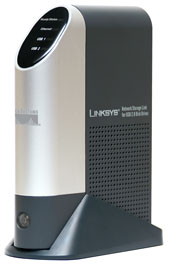 Not much bigger than the palm of my hand, and cheaper than a ticket for a Test at Lord's, the NSLU2 is a small fileserver that serves files from attached USB disks. What makes it particularly special is the large amount of alternative firmwares built by Linux open source developers, which allow you to extend the functionality of the NSLU2 beyond merely serving out files via SMB (the Windows file serving protocol.) Cheap NFS serving So what's the big deal for me? Well, like most laptop-slinging folks whose home network is predominantly wireless, I want my backup disks to sit on the network, available when needed. It turns out it's very difficult to find a standalone network disk that properly supports Unix file system semantics such as symbolic links. Most just support SMB file sharing, with attendant limits such as no links and no files over 2GB. (I found this out the hard way with Apple's Airport Extreme.) With the NSLU2 I was able to install the "Unslung" alternative firmware, and install good old NFS, making my backup disks available in a normal way to Linux and OS X machines alike. (How we used to complain about NFS back in the early 90s, but Windows file sharing still makes it look good!) In the great tradition of open source there are multiple choices of Linux distributions you can install. As it was my first time round, I went for Unslung, which preserves as much as possible of the official Linksys interface, but lets you extend it. Next time, with a better idea of what I'd use the box for, I'd probably plump for Debian. Constraints breed creativity Inside the case, the NSLU2 is in fact a tiny Linux machine with 32MB of RAM and an Intel XScale CPU. This turns out to be plenty enough resources to serve files on a small network. Aside from my prosaic needs, the NSLU2 has been put to several more innovative uses, such as a music server for Apple ITunes and a 4-line home telephone exchange. I've been astounded at the applications people have devised for this little box. Being fairly cheap makes it a great candidate for home automation projects. It's a great example of how limiting resources fosters innovation. Remember how games on 8-bit microcomputers were so much more ingenious than those on their more well-resourced successors?

 You can get it by darcs at http://antti-juhani.kaijanaho.fi/darcs/darcs-monitor/ (darcsweb



Email is such a funny thing. People hand you these single little messages that are no heavier than a river pebble. But it doesn't take long until you have acquired a pile of pebbles that's taller than you and heavier than you could ever hope to move, even if you wanted to do it over a few dozen trips. But for the person who took the time to hand you their pebble, it seems outrageous that you can't handle that one tiny thing. "What 'pile'? It's just a fucking pebble!"The next time I get bothered that someone hasn't replied to my e-mail, I'm going to try to remember that they may have a lot of other pebbles in their pile.
Next.

