Search Results: "tb"

18 October 2012

Jonas Smedegaard: SOME DESCRIPTIVE TITLE

# Copyright (C) YEAR Free Software Foundation, Inc. # This file is distributed under the same license as the PACKAGE package. # FIRST AUTHOR <email>, YEAR. # #, fuzzy msgid "" msgstr "" "Project-Id-Version: PACKAGE VERSION\n" "POT-Creation-Date: 2012-10-12 11:14+0300\n" "PO-Revision-Date: YEAR-MO-DA HO:MI+ZONE\n" "Last-Translator: FULL NAME <email>\n" "Language-Team: LANGUAGE <ll>\n" "Language: \n" "MIME-Version: 1.0\n" "Content-Type: text/plain; charset=UTF-8\n" "Content-Transfer-Encoding: 8bit\n" #. type: Title # #, no-wrap msgid "Status hos doktoren" msgstr "" #. type: Plain text #, no-wrap msgid "\n" msgstr "" #. type: Plain text #, no-wrap msgid "\n" msgstr "" #. type: Plain text #, no-wrap msgid "" "**Jonas Smedegaard** [dr.jones at pobox.com " "](mailto:friends%40jones.dk?Subject=Status%20hos%20doktoren&In-Reply-To=1.5.4.32.19971011010004.0067de34%40kaospilot.dk) " "\n" msgstr "" #. type: Plain text msgid "_Sat Oct 11 15:22:00 CEST 1997_" msgstr "" #. type: Bullet: ' * ' #: msgid "Previous message: [Spamming? ](000001.html)" msgstr "" #. type: Bullet: ' * ' #: msgid "" "**Messages sorted by:** ? date (date.html#2) ? thread (thread.html#2) " "? subject (subject.html#2) ? author (author.html#2)" msgstr "" #. type: Plain text #, no-wrap msgid " Hej Patrik (og alle Jer andre )!\n" msgstr "" #. type: Plain text #, no-wrap msgid "" " >_Vad sker med dig det var ett stycke tid diden?\n" " _>_Vad skedde der med ditt arbejde pa cafeet og pa skolen?\n" " _\n" " Lang historie!\n" " (den kommer nu )\n" msgstr "" #. type: Plain text #, no-wrap msgid "" " Jeg tror snart jeg har laert (the hard way) hvor dyr jeg egentligt er i " "drift.\n" " Jeg har nu i 3 maneder "ligget med r ven *under* vandskorpen" " " konomisk: minus 15.000,- pa kontoen. Det vender forhabentligvis indenfor " "den naeste maned - ellers pa jeg tage et regulaert lan, hvis jeg fortsat " "skal have firma som fuldtidsbeskaeftigelse.\n" " Det betyder, at jeg for tiden arbejder fra ca. 9 morgen til 0:30 nat syv " "dage om ugen (med enkelte eftermiddage eller aftener fri). Der er faktisk " "opgaver at lave, som ogsa gi'r penge i kassen - men det har der ikke vaeret " "for nogle maneder siden, og nar der var, har jeg taget mig for billigt " "betalt (men du kender mig jo!). Jeg er begyndt mere at involvere min " "storebror, nar jeg udarbejder tilbud, til at hjaelpe mig med en mere reel " "prissaetning.\n" msgstr "" #. type: Plain text #, no-wrap msgid " Her er lidt(?) om, hvad jeg beskaeftiger mig med for tiden:\n" msgstr "" #. type: Plain text #, no-wrap msgid "" " *** Homebase ***\n" " Jeg far forbindelse fra mit kontor og ned til Mejlgade om en lille uge - " "rent teoretisk ihvertfald - derefter skal jeg ha' elektronikken til at " "fungere \n" " Jeg administrerer deres servere og netvaerk, og er "Boss" for Morten " "P. fra Frontl berne, som er blevet hyret til at vedligeholde alle " "arbejdspladserne pa skolen.\n" " Jeg har *intet* at g re med content pa webserveren. Efter i foraret at " "have haft DogSystem (et par nystartede edb-folk) til at udarbejde noget " "smart (som vist aldrig blev rigtigt til noget) har Uffe nu faet samlet nogle " "studerende (vist primaert fra hold 3), som skal hitte pa noget \n" msgstr "" #. type: Plain text #, no-wrap msgid "" " Her er et uddrag af en mail til Rasmus fra hold 3:\n" " >>_Du ma gerne f lge lidt med i arbejdet og sende mig en kommentar " "eller\n" " _>>_gode rad, hvis du f ler for det.\n" " _>_\n" " _>_Jeg har et ambivalent forhold til Jeres arbejde:\n" " _>_ - Jeg f ler for det, Ja. Meget!\n" " _>_ - I sidder og laver mit arbejde \n" " _>_ - Meningen med mit arbejde er ar g re mig selv arbejdsl s - sa det " "er\n" " _>_*godt*, at I laver det \n" " _>_ - I laver det maske bedre, maske darligere end jeg ville ha' gjort " "det -\n" " _>_men helt sikkert anderledes!\n" " _>_ - Min force (og min kaephest!) er grundstrukturer mere end visuel " "(og\n" " _>_anden) indpakning. Det er svaert at kommentere og komme med gode rad, " "nar de\n" " _>_er omkring grundstruktur. Det kraever naesten, at man sidder ved " "roret \n" " _>_ - Hvis ikke jeg kommer med mine kommentarer nu, skal jeg enten holde " "mund\n" " _>_med det (og det er svaert) eller de vil udvikles til bagklogskab og\n" " _>_bedrevidenhed \n" " _>_ - Jeg har egentligt for travlt til at beskaeftige mig med det: Jeg " "har hele\n" " _>_tiden haft "travlt". At jeg har "for travlt" er et udtryk for, at " "jeg er\n" " _>_blevet klar over, at for at leve et liv som selvstaendigt " "erhvervsdrivende\n" " _>_er det ikke nok at arbejde hardt - man skal ogsa ta' penge for " "det Jeg\n" " _>_har derfor ikke for travlt, hvis der er penge i lortet (men det er " "sjaeldent\n" " _>_tilfaeldet i Mejlgade - til gengaeld er der sa meget andet " "dernede!).\n" " _\n" " *** Brugerflade-design ***\n" " Jeg har faet et job ved Frontl berne: VPAE (Virtual Project Assistance " "Environment).\n" " De er med i et faelles-nordisk projekt om at lave en "virtuel " "projektvugge" - altsa et forum pa Internet med en raekke vaerkt jer til " "projektudvikling og administration af gamle projekter.\n" " Konkret arbejder jeg i diss uger pa design af brugergraenseflade " "(dialogbokse osv.) og n dvendige datastrukturer til et system til " "udarbejdelse af en projektbeskrivelse.\n" msgstr "" #. type: Plain text #, no-wrap msgid "" " Jeg arbejder taet sammen med Morten P., og det er utroligt spaendende at " "arbejde med en konkret, mindre opgave med stor paedagogisk og funktionel " "vaerdi.\n" msgstr "" #. type: Plain text #, no-wrap msgid "" " *** Praktikant ***\n" " En af mine venner fra gymnasietiden, Henrik, studerer informatik (det " "hedder vist noget lidt andet ) her i rhus, og meget tyder pa, at han " "snart kommer i praktik her hos mig i en maned.\n" " Han skal arbejde meget selvstaendigt. Jeg har brug for hans viden " "indenfor PR, han kan bruge mig som "pr veklud", og jeg kan stille medier " "(webserver o.l.) til hans radighed.\n" msgstr "" #. type: Plain text #, no-wrap msgid "" " Jeg har en ide om at vaere meget aben overfor brug af praktikanter - " "ikke bare som nem arbejdskraft (det er kraevende at saette i arbejde, og at " "give opgaver fra sig!), men mere fordi det giver mig en traening i " "formidling af min viden, og erfaringer mht. "s saetning" af mine metoder " "og ideer som tekniker - men det kraever maske lidt uddybning :\n" msgstr "" #. type: Plain text #, no-wrap msgid "" " Mit virke er grundliggende at bygge bro mellem teknikere og brugere " "indenfor IT. Det har 2 aspekter - at naerme teknikeren til brugeren, og at " "naermere brugeren til teknikken. Jeg arbejder med undervisning (arketyper, " "paedagogik og kommunikation), brugerfladedesign og almen radgivning for at " "hjaelpe brugeren pa vej. For at hjaelpe teknikeren tager jeg udgangspunkt i " "mig selv og mit arbejde med brugeren, og udvikler herigennem en raekke " "metoder og tankesaet, som jeg vil formidle - gennem praktikanter eller " "evt. decideret undervisning - til andre teknikere, som ikke i det daglige " "arbejder "i begge lejre", og derfor ikke ser de samme problematikker som " "mig.\n" " konomisk skulle "Projekt dr. Jones" gerne baeres igennem " "vha. konkrete projekter - virksomheder og enkeltpersoner, som har behov for " "min viden og mit arbejde, og som er villige til at betale merprisen for " "forskning fremfor traditionelle l sninger (NB! jeg bruger bevidst ikke ord " "som "udvikling" og "innovation" - for mit arbejde f rer til tider " "tilbage til udgangspunktet - det er ikke *altid* n dvendigt at opfinde den " "dybe tallerken igen!)\n" msgstr "" #. type: Plain text #, no-wrap msgid "" " Henrik vil ikke give mig de store erfaringer mht. formidling af min " "viden - jeg har for stor en pukkel af opgaver liggende til at kunne gabe " "over ham ogsa. Denne gang er det primaert hans felt - PR - jeg kan drage " "nytte af.\n" msgstr "" #. type: Plain text #, no-wrap msgid "" " *** Undevisning ***\n" " Jeg har nu i en maned undeervist i edb som valgfag pa IDA " "(Idraetsdagh jskolen). Indtil nu har det vaeret 2 timer om ugen, elever i " "alderen 30-60 ar - men om fa uger bliver der yderligere 4 timer om ugen med " "elever pa 20-30 ar.\n" msgstr "" #. type: Plain text #, no-wrap msgid "" " Afl nningen er symbolsk (nej, god l n regnet som underviser, jeg far " "samme l n som en uddannet laerer - men ikke sammenholdt med, hvor " ""dyrebar" min tid er som selvstaendig ), men sjaeldent har jeg oplevet " "sa tydeligt et ryk i min paedagogiske forstaelse og opmaerksomhed.\n" " Jeg bliver sandsynligvis ikke haengende ved IDA i mere end et 1/2-1 ar - " "det er simpelthen for tids- og ressourcekraevende - men h ster gode " "erfaringer salaenge (og bader mig i deres positive feedback :-)\n" msgstr "" #. type: Plain text #, no-wrap msgid "" " *** Brugerflade-programmering ***\n" " Samtidig (egentligt burde jeg forlaengst vaere faerdig, men opgaven greb " "om sig) arbejder jeg pa mit eget projekt: BOS (BrugerOpdateringsSystem).\n" " Det er et CGI-script (lille program pa en web-server), som muligg r " "redigering af indholdet pa websider uafhaengigt af sidens grafiske " "opsaetning, og - vaesentligst - UDEN AT SKRIVE EEN ENESTE KODE!\n" msgstr "" #. type: Plain text #, no-wrap msgid "" " 1. udgave af BOS betalte jeg en programm r 15.000,- for at udvikle. Jeg " "havde brug for det til en opgave for AC (Akademikernes Centralorganisation), " "som skulle bruge det til bl.a. pressemeddelelser og publicering af et " "manedsblad pa deres 200+ siders websider (som jeg ogsa har lavet!).\n" " Da AC i sensommeren kom med rettelser og udvidelser til deres website " "blev der brug for forbedringer af BOS, og jeg erfarede, at min programm r " "havde lavet meget u-fleksibel kode, som var umulig at bygge videre pa.\n" " 2. udgave af BOS er nu naesten faerdig. Jeg valgte at skrive det om fra " "grunden selv (med hjaelp fra en god ven, som studerer datalogi), og har " "efterhanden skrevet ca. 750 linjers kode i programmeringssproget Perl \n" msgstr "" #. type: Plain text #, no-wrap msgid "" " Jeg havde ikke troet, at jeg nogensinde skulle kunne programmere. Det " "kraever disciplin og god forstaelse for grundliggende datastrukturer, som " "jeg hidtil troede n dvendiggjorde et mangearigt universitetsstudie " "(datalogi).\n" " Jeg vil ikke sla mig ned som programm r, men kan nu bruge det som ekstra " "fjer i min vifte af erfaringsomrader, i min rejse mod "At vaere det ledende " "radgivningsorgan i Danmark indenfor anvendt edb"!\n" msgstr "" #. type: Plain text #, no-wrap msgid "" " *** Internet-Cafe ***\n" " Jeg har jo kontor i 2 lokaler hos NETLAB, en spillecafe (computerspil i " "netvaerk). Det tog ikke mange jeblikke at slutte deres og mit netvaerk " "sammen, sa alle spillecomputerne ogsa kunne komme pa Internet - desvaerre " "fungerede det ikke med store computerspil (lang teknisk forklaring ), kun " "med alm. ting som e-mail og at "surfe" pa nettet.\n" " Jeg far snart (indenfor fa uger) "aegte" adgang til Internet, via fast " "forbindelse d gnet rundt. Sa kan der spilles computerspil via Internet, og " "spillecafeen er reelt blevet en Internet-Cafe \n" " Den kommende Internetforbindelse er dog ikke saerligt kraftig (64kbit - " "2-4 x modemhastighed) til deling mellem 20 kraftige maskiner, og har lagt en " "f ler ind hos Telia: Om ikke de har lyst til at sponsorere stedet. Give os " "en kraftig forbindelse til Internet, og til gengaeld fa reklamevaerdien af " "en stabil og hurtig forbindelse Folk der bliver rigtigt bidt af det vil " "jo f r eller siden k be en maskine selv, og sa far de jo brug for en " "Internet-udbyder \n" " Min rolle bliver at administrere "hullet" (eller "hullerne" til " "Internet, og evt. ogsa at strukturere og administrere mail-adresser til " "bes gende pa cafeen.\n" " konomisk forestiller jeg mig en fast procentdel af indtaegterne i " "cafeen - eller evt. simpelthen en billigere husleje?!?. Det gaelder om at " "finde en prispolitik, som spiller sammen med den grundliggende holdning ved " "bade dr. Jones og NETLAB om et indbydende, seri st (uden at blive kedeligt!) " "milj fremfor "flest muligt forbi kasseapperatet".\n" msgstr "" #. type: Plain text #, no-wrap msgid " -\n" msgstr "" #. type: Plain text #, no-wrap msgid "" " Det blev et laengere brev - og jeg tror faktisk, jeg vil genbruge det " "til ogsa at fortaelle familie og andre venner, hvorfor de har h rst sa lidt " "til mig pa det sidste \n" msgstr "" #. type: Plain text #, no-wrap msgid "" " Hej allesammen!\n" " Haber I nyder tilvaerelsen. Det g r jeg - men traenger ogsa snart til et " "lille pusterum - juleferie i Sydfrankrig, regner jeg med!\n" msgstr "" #. type: Plain text #, no-wrap msgid "" " Ha' det bra!\n" " Jonas\n" " :_-)\n" " _\n" msgstr "" #. type: Plain text msgid "" "[More information about the Friends mailing list](http://mail.jones.dk/cgi- " "bin/mailman/listinfo/friends)" msgstr "" #. type: Plain text msgid "This text is part of my friends scriblings." msgstr ""

17 October 2012

Martin Pitt: Running a Samba server as normal user for testing

For writing tests for GVFS (current tests, proposed improvements) I want to run Samba as normal user, so that we can test gvfs smb backend without root privileges and thus can run them safely and conveniently in a make check environment for developers and in JHBuild for continuous integration testing. Before these tests could only run under gvfs-testbed, which needs root. Unlike other servers such as ssh or ftp, this turned out surprisingly non-obvious and hard, so I want to document it in this blog post for posterity s benefit. Running the server Running smbd itself is mainly an exercise of figuring out all the options that you need to set; Alex Larsson and I had some fun figuring out all the quirks and hiccups that happen between Ubuntu s and Fedora s packaging and 3.6 vs. 4.0, but finally arrived at something working. First, you need to create an empty directory where smbd can put all its databases and state files in. For tests you would use mkdtemp(), but for easier reading I just assume mkdir /tmp/samba here. The main knowledge is in the Samba configuration file, let s call it /tmp/smb.conf:
[global]
workgroup = TESTGROUP
interfaces = lo 127.0.0.0/8
smb ports = 1445
log level = 2
map to guest = Bad User
passdb backend = smbpasswd
smb passwd file = /tmp/smbpasswd
lock directory = /tmp/samba
state directory = /tmp/samba
cache directory = /tmp/samba
pid directory = /tmp/samba
private dir = /tmp/samba
ncalrpc dir = /tmp/samba
[public]
path = /tmp/public
guest ok = yes
[private]
path = /tmp/private
read only = no
For running this as a normal user you need to set a port > 1024, so this uses 1445 to resemble the original (privileged) port 445. The map to guest line makes anonymous logins work on Fedora/Samba 4.0 (I m not sure whether it s a distribution or a version issue). Don t ask about dir vs. directory , that s an inconsistency in Samba; with above names it works on both 3.6 and 4.0. We use the old smbpasswd backend as shipping large tdb files is usually too inconvenient and brittle for test suites. I created an smbpasswd file by running smbpasswd on a real Samba installation, and then using pdbedit to convert it to a smbpasswd file:
sudo smbpasswd -a martin
sudo pdbedit -i tdbsam:/var/lib/samba/passdb.tdb -e smbpasswd:/tmp/smbpasswd
The result for password foo is
myuser:0:XXXXXXXXXXXXXXXXXXXXXXXXXXXXXXXX:AC8E657F83DF82BEEA5D43BDAF7800CC:[U          ]:LCT-507C14C7:
which you are welcome to copy&paste (you can replace myuser with any valid user name, of course). This also defines two shares, one public, one authenticated. You need to create the directories and populate them a bit:
mkdir /tmp/public /tmp/private
echo hello > /tmp/public/hello.txt
echo secret > /tmp/private/myfile.txt
Now you can run the server with
smbd -iFS -s /tmp/smb.conf
The main problem with this approach is that smbd exits ( Server exit (failed to receive smb request) ) after a client terminates, so you need to write your tests in a way to only run one connection/request per test, or to start smbd in a loop. Running the client If you merely use the smbclient command line tool, this is rather simple: It has a -p option for specifying the port:
$ smbclient -p 1445 //localhost/private
Enter martin's password: [enter "foo" here]
Domain=[TESTGROUP] OS=[Unix] Server=[Samba 3.6.6]
smb: \> dir
  .                                   D        0  Wed Oct 17 08:28:23 2012
  ..                                  D        0  Wed Oct 17 08:31:24 2012
  myfile.txt                                   7  Wed Oct 17 08:28:23 2012
In the case of gvfs it wasn t so simple, however. Surprisingly, libsmbclient does not have an API to set the port, it always assumes 445. smbclient itself uses some internal libcli API which does have a way to change the port, but it s not exposed through libsmbclient. However, Alex and I found some mailing list posts ([1], [2]) that mention $LIBSMB_PROG, and it s also mentioned in smbclient s manpage. It doesn t quite work as advertised in the second ML post (you can t set it to smbd, smbd apparently doesn t speak the socket protocol over stdin/stdout), and it s not being used anywhere in the current Samba sources, but what does work is to use good old netcat:
export LIBSMB_PROG="nc localhost 1445"
with that, you can use smbclient or any program using libsmbclient to talk to our test smb server running as user.

13 October 2012

Russell Coker: Google mod_pagespeed

I ve just downloaded and installed the Debian AMD64 package of the Google Apache Pagespeed module [1]. To see if it worked I used the Google PageSpeed insights tool which gave my blog a rating of 93% (and 88% for mobile) [2]. After installing mod_pagespeed I received the same scores. So it appears that Pagespeed isn t doing any good according to Google s analysis! etbe.coker.com.au 10.11.12.13 - [13/Oct/2012:05:22:31 +0000] "GET /wp-content/plugins/openid/f/W.openid.css,qver=519.pagespeed.cf.Bbu1gxRjUE.css HTTP/1.0" 200 2165 "http://etbe.coker.com.au/" "Mozilla/5.0 (X11; Linux x86_64) AppleWebKit/537.1 (KHTML, like Gecko) Chrome/21.0.1180.89 Safari/537.1" 0
etbe.coker.com.au 10.11.12.13 - [13/Oct/2012:05:22:31 +0000] "GET /wp-content/themes/atahualpa/js/DD_roundies.js,qver=0.0.2a.pagespeed.jm.4gw5yluag0.js HTTP/1.0" 200 3679 "http://etbe.coker.com.au/" "Mozilla/5.0 (X11; Linux x86_64) AppleWebKit/537.1 (KHTML, like Gecko) Chrome/21.0.1180.89 Safari/537.1" 0
etbe.coker.com.au 10.11.12.13 - [13/Oct/2012:05:22:31 +0000] "GET /wp-includes/js/jquery/jquery.js,qver=1.7.2.pagespeed.jm.XZwfunyK-6.js HTTP/1.0" 200 33587 "http://etbe.coker.com.au/" "Mozilla/5.0 (X11; Linux x86_64) AppleWebKit/537.1 (KHTML, like Gecko) Chrome/21.0.1180.89 Safari/537.1" 0
etbe.coker.com.au 10.11.12.13 - [13/Oct/2012:05:22:33 +0000] "GET /wp-content/themes/atahualpa/images/xlogo.png.pagespeed.ic.ICWmaHBME5.png HTTP/1.0" 200 2267 "http://etbe.coker.com.au/" "Mozilla/5.0 (X11; Linux x86_64) AppleWebKit/537.1 (KHTML, like Gecko) Chrome/21.0.1180.89 Safari/537.1" 0 The above sample of web logs shows that the string pagespeed is appended to some URLs with a hash of the file contents which apparently allows much longer cache times without making it difficult to change content. So Pagespeed is obviously doing something. Is Google analysis expected to say that there is no change? Note that my speed scores are 93% and 88% so my site is was apparently quite good before mod_pagespeed was installed maybe the analysis would report a difference on a site that didn t perform so well. Now even if mod_pagespeed has given a benefit to real users but not Google tests it still means that I won t get the SEO benefits that Google apparently gives to fast sites. Also to make things even more exciting the W3.org HTML validator [3] now says that there s an error in my blog. So not only has mod_pagespeed failed to improve performance in a way that Google notices but it has also broken something! Related posts:
  1. More About Google Earth I recently wrote about problems with Google Earth [1]. In...
  2. A Strange Attempt to Trick Google I just noticed that my post about LED Headlights in...
  3. google-bank Currently many people have Google advertising on their web sites,...

Russell Coker: Creating WordPress Packages

deb http://www.coker.com.au wheezy wordpress I maintain Debian packages of a number of WordPress themes and plugins for my personal use which I am not planning to upload to Debian due to the maintenance and security issues. Generally the way things work with WordPress packages (and apparently most things in PHP) is that new versions are released whenever the author feels like it with little documentation and often now way of determining whether it s a security issue. When there is a security issue it s often fixed in a new version that includes new features giving no good option for someone who was happy with the old functionality and just wants a secure system. This isn t the way we like to do things in Debian. The result of this is that I maintain a number of packages for my personal use (and for the benefit of any interested people on the Internet) that often get new updates. I ve written the below script to create a new version of a Debian package. It searches my repository for the most recent .debian.tar.gz file for the package, applies that, runs dch -i to update the changelog, and then builds the package. So far this has only been tested on one package, I expect that I ll have to put a sed command in there to cover the case where the zip file name doesn t match what I want as the package name and I ll probably find other bugs in future, but I think it s good enough to publish now. #!/bin/bash
set -e
REPOSITORY=/home/whatever
unzip $1
FILE=$(basename $1)
PACKAGE=$(echo $FILE sed -e "s/\..*$//")
LEN=$(($(echo $PACKAGE wc -c)+1))
VER=$(echo $FILE cut -c $ LEN -200 sed -e s/.zip//)
DIRNAME=wordpress-$ PACKAGE -$ VER
mv $PACKAGE $DIRNAME
tar czf wordpress-$ PACKAGE _$ VER .orig.tar.gz $ DIRNAME
cd $DIRNAME
tar xzf $(ls -tr $ REPOSITORY /wordpress-$ PACKAGE _*.debian.tar.gz tail -1)
dch -i
dpkg-buildpackage Any suggestions for improvement will be welcome, I don t claim to be the world s greatest shell scripter. But please note that I generally aim to write shell scripts that can be understood by people who aren t experts. So if you can replace the program with a single line of Perl I will be impressed but I won t implement your solution. Related posts:
  1. WordPress Maintainability For a while I ve been maintaining my own WordPress packages....
  2. permalinks in wordpress, Apache redirection, and other blog stuff When I first put my new blog online I didn t...
  3. WordPress Plugins I ve just added the WordPress Minify [1] plugin to my...

12 October 2012

Russell Coker: Cheap Bulk Storage

The Problem Some of my clients need systems that store reasonable amounts of data. This is enough data that we can expect some data corruption on disk such that traditional RAID doesn t work, that old fashioned filesystems like Ext3/4 will have unreasonable fsck fimes, and that the number of disks in a small server isn t enough. NetApp is a really good option for bulk reliable storage, but their products are very expensive. BTRFS has a lot of potential, but the currently released versions (as supported in distributions such as Debian/Wheezy) lack significant features. One significant lack in current BTRFS releases is something equivalent to the ZFS send/receive functionality for remote backups, this was a major factor when I analysed the options for hard drive based backup [1], and you should always think about backup before deploying a new system. Currently ZFS is the best choice for bulk storage which is reliable if you can t afford NetApp. Any storage system needs a minimum level of reliability if only to protect it s own metadata and a basic RAID array doesn t protect against media corruption with current data volumes. The combination of performance, lack of fsck (which is a performance feature), large storage support, backup, and significant real-world use makes ZFS a really good option. Now I need to get some servers for more than 8.1TiB of storage (the capacity of a RAID-Z array of 4*3TB disks). One of my clients needs significantly more, probably at least 10 disks in a RAID-Z array so none of the cheaper servers will do. Basically the issue that some of my clients are dealing with (and which I have to solve) is how to provide a relatively cheap ZFS system for storing reasonable amounts of data. For some systems I need to start with about 10 disks and be able to scale to 24 disks or more without excessive expense. Also to make things a little easier and cheaper 24*7 operation is not required, so instead of paying for hot-swap disks we can just schedule down-time outside business hours. The Problem with Dell Dell is really good for small systems, the PowerEdge tower servers that support 2*3.5 or 4*3.5 disks and which have space for an SSD or two are really affordable and easy to order. But even in the mid-size Dell tower servers (which are small by server standards) you have problems with just getting a few disks operating outside a RAID array [2]. The Dell online store is really great for small servers, any time I m buying a server for less than $2500 I check the Dell online store first and usually their price is good enough that there is no need to get a quote from another company. Unfortunately all the servers with bigger storage involve disks that are unreasonably expensive (it seems that Dell makes their profit on the parts) and prices are not available online. I gave my email address and phone number to the Dell web site on Wednesday and they haven t cared to get back to me yet. This is the type of service that makes me avoid IBM and HP for any server deployment where the Dell online store sells something suitable! BackBlaze For some time BackBlaze have been getting interest by describing how they store lots of data in a small amount of space by tightly stacking SATA disks. They don t think that ZFS on Linux is ready for production, but their hardware ideas are useful. They have recently described their latest architecture [3]. They describe it as 135TB for $7,384. Of course the 135TB number is based on the idea of getting the full 3TB capacity out of each disk which they can do as they have redundancy over multiple storage pods. But anyone who wants a single fileserver needs some internal redundancy to cover disk failure. One option might be to have three RAID-Z2 arrays of 15 disks which gives a usable capacity of 42*3TB==126TB==113TiB. Note that while the ZFS documentation recommends between 3 and 9 disks per zpool for performance I don t expect performance problems, when you only have a gigabit Ethernet connection there shouldn t be a problem with three ZFS zpools making the network the bottleneck. For this option the way to go would be to start with an array of 15 disks and then buy a second set of 15 disks when the first storage pool becomes full. It seems likely that 4TB disks will become cheap before a 35TiB array is filled so we can get more efficiency by delaying purchases. The BackBlaze pod isn t cheap, they are sold as a complete system without storage disks for $US5,395 by Protocase [4]. That gives a markup of $US3,411 over the BackBlaze cost which isn t too bad given that BackBlaze are quoting the insane bulk discount hardware prices that I could never get. Protocase also offer the case on it s own for anyone who wants to build a system around it. It seems like the better option is to buy the system from Protocase, but that would end up being over $6,000 when Australian import duty is added and probably close to $7,000 when shipping etc is included. Norco Norco offers a case that takes 24 hot-swap SATA/SAS disks and a regular PC motherboard for $US399 [5]. It s similar to the BackBlaze pod but smaller, cheaper, and there s no obvious option to buy a configured and tested system. 24 disks would allow two RAID-Z2 arrays of 12 disks, the first array could provide 27TiB and the second array could provide something bigger when new disks are released. SuperMicro SuperMicro has a range of storage servers that support from 12 to 36 disks [6]. They seem good, but I d have to deal with a reseller to buy them which would involve pain at best and at worst they wouldn t bother getting me a quote because I only want one server at a time. Conclusion Does anyone know of any other options for affordable systems suitable for running ZFS on SATA disks? Preferably ones that don t involve dealing with resellers. At the moment it seems that the best option is to get a Norco case and build my own system as I don t think that any of my clients needs the capacity of a BackBlaze pod at the moment. Supermicro seems good but I d have to deal with a reseller. In my experience the difference between the resellers of such computer systems and used car dealers is that used car dealers are happy to sell one car at a time and that every used car dealer at least knows how to drive. Also if you are an Australian reader of my blog and you want to build such storage servers to sell to my clients in Melbourne then I d be interested to see an offer. But please make sure that any such offer includes a reference to your contributions to the Linux community if you think I won t recognise your name. If you don t contribute then I probably don t want to do business with you. As an aside, I was recently at a camera store helping a client test a new DSLR when one of the store employees started telling me how good ZFS is for storing RAW images. I totally agree that ZFS is the best filesystem for storing large RAW files and this is what I am working on right now. But it s not the sort of advice I expect to receive at a camera store, not even one that caters to professional photographers. Related posts:
  1. Cheap SATA Disks in a Dell PowerEdge T410 A non-profit organisation I support has just bought a Dell...
  2. ZFS vs BTRFS on Cheap Dell Servers I previously wrote about my first experiences with BTRFS [1]....
  3. Flash Storage and Servers In the comments on my post about the Dell PowerEdge...

9 October 2012

Stefano Zacchiroli: bits from the DPL for September 2012

Just posted to d-d-a, bits from the DPL for Septemer 2012.
Heya,
here is the periodic report of DPL activities, this time related to September 2012 (posted here with some delay, as I've been traveling oversea on behalf of Debian for the past few days). Help needed: Google Code-In The Google Code-In (GCI) initiative is about to start again. We don't have a great track record of participating into it, and that's a pity. The initiative revolves around small tasks that other Free Software projects have come to call "easy hacks", showing how effective they're in attracting new volunteers. To participate, we need both mentors and admins. If you're interested see Ana's call for help and please volunteer on the soc-coordination list. Related to this, you've probably seen the report of our participation in GSoC 2012. I'd like to thank all students, mentors, and admins for a very well organized edition. Logo relicensing & other assets The DFSG-relicensing of the Debian logo, which I've mentioned in recent updates, has now happened. The so called Debian "Open Use" logo, in both variants (with and without "Debian") is now dually licensed under LGPL3+ / CC-BY-SA 3.0. The change has been made effective with a resolution of the SPI Board of Directors. Note that the so called "official" logo, which we seem to use very little, is still released under the terms of a non-free license. Discussion is ongoing on -project to stop promoting it. If you're using it or if you've arguments in favor of against that, please participate in the discussion. I've got from SFLC an updated draft of the new proposed trademark policy, implementing most of the changes requested during related August discussions on -project. I'll post it for review there shortly. The Japanese Trademark Office (JPO) has sent us the final confirmation that trademark transfer request (from individuals Debian contributors in the area to SPI) has happened. We've paid the needed fee of 457 CHF to conclude the transaction. We finally settled a domain transfer agreement with the current owner of the debian.eu. Technically, the domain will be transferred to FFIS in the coming weeks. Core teams (non-)news Quite some core teams are in the process of changing their formations these weeks, but most are still pending proper delegation (or equivalent). So here are just a few "teasers": I hope to finalize all the pending tasks above this month. Future events I've spent quite some time to plan my participation in events I'll be attending during October on behalf of Debian, such as the ACM Reflections conference in Urbana-Champaign (at the time of writing, this has already happened), the Ubuntu Developer Summit in Copenhagen, and the LinuxDay event in Turin. Cheers.
PS the day-to-day activity log for September 2012 is available at the usual place master:/srv/leader/news/bits-from-the-DPL.txt.201209

8 October 2012

Luke Faraone: Where I've gone off to

For those of you back at my university, you may have noticed I'm not there this semester.

Google's 2012 FEP team

I spent this past summer at Google, Inc, developing internal tools for the AdSense team, specifically Google Programmable Ads. Being at Google was great; I loved my team and my intern cohort, the rest of the interns in the Freshman Engineering Practicum.

I'm not currently at Google; my internship ended at the beginning of August. Although it was a blast, all good things must come to an end.

I'm not at Mason, either. I was super excited to return to university, and was just about to buy my books and get ready to move in when I got an email from a former coworker at Ksplice, a startup Oracle acquired while I interned there last year. He was starting a new company which would focus on business communications. I'd be working with a bunch of my former coworkers, and based on what I had heard of the company's plans I was confident in their ability to make an awesome product.

Needless to say, when they decided to offer me a position working there full time, I jumped on it.

From an academic point of view, Mason didn't really have much of a mechanism to support this. Co-ops are uncommon there, and not really supported for more than one semester; a full year away had never been done, according to our career services. My department was fully supportive, however, so we managed to find a way to make it work. This involved filling out some oddly-named forms, such as Special Registration for Graduation Request, which the registrar asserted was the right form, trust us on this one.

Myself and Obey Arthur Liu
at a SIPB hackathon
But that's all neither here nor there. I'm now up in Cambridge, MA, working with awesome people (including but not limited to tabbott, wdaher, jesstess, and keegan), and exploring the city. I'm hanging out with MIT SIPB, helping with the maintenance of Sugar Labs' servers in E15 and spending more time working on various open source projects.

To my friends at Mason: I miss you all. I know regardless of how the next year+ turns out, it'll be one one hell of a ride.

Craig Small: NTP control messages

I have had an opportunity to rework some code to query NTP servers directly in python rather than running ntpq -pn and scraping the result. The over-the-wire protocol format is reasonably straight forward and my little module is now passing all of its nosetests which is wonderful. While its only a single table, ntpq actually does multiple requests to get its results. NTP control messages are all mode 6 which tells the client and server its not time sort of things, but more about queries. A control packet has a sequence number which the server responds with so you can line up your requests with responses. For large responses, the more, offset and count fields work together to knit up a large block of data. The first packet of the response will have the offset field of 0. The count is the size of the data payload in bytes. If the response is too big, the more bit will be set to 1 to say there is more coming. The second packet will have an offset that is the same value as the previous packets count value, so you can stitch them together. The first query is a READSTAT which uses opcode 1. This returns a list of 4 byte responses with the association ID taking the first two bytes and the peer status taking the second. If you look at the output of ntpq you will notice a character in the first column which is the peer selection. The important one for us is asterix, which equates to 110 in the lower 3 bits of the first status byte. This is the system peer which is the main one. There may be others, up to 2, (usually symbol +) which are compared to the system peer. ntpq doesn t really care about the different peers and just displays the status but I want to know what peer the server is synchronised to. Next we need more details about the system peer (or all peers in ntpq). To do this a READVAR or opcode 2 is sent to the server. The association ID is set to the association or peer we are interested in. The response for my setup is sent over two packets which need to be reassembled and it is all in plain ascii which is a comma-separated list with a key=value pair. I use the following python line to split it up.
self.assoc_data.update(dict([tuple(ad.strip().split("=")) for ad in data[header_len:].split(",") if ad.find("=") &gt; -1]))
I m sure people that know python better than I will say I am doing it wrong (it looks a bit klunky to me too) but it does work. From that I can query the various values that are returned by the server about its peers, including the source of its clock.

7 October 2012

Gregor Herrmann: RC bugs 2012/40

this week I focussed mostly on bugs where conffiles are modified in maintainer scripts. thanks to the recipe in debconf-devel(7) many cases are not so hard to solve.

3 October 2012

Alberto Garc a: IndustryPack, QEMU and LinuxCon

IndustryPack drivers for Linux In the past months we have been working at Igalia to give Linux support to IndustryPack devices. IndustryPack modules are small boards ( mezzanine ) that are attached to a carrier board, which serves as a bridge between them and the host bus (PCI, VME, ). We wrote the drivers for the TEWS TPCI200 PCI carrier and the GE IP-OCTAL-232 module.
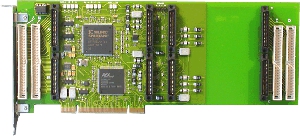
TEWS TPCI200
GE IP-OCTAL-232
My mate Samuel was the lead developer of the kernel drivers. He published some details about this work in his blog some time ago. The drivers are available in latest Linux release (3.6 as of this writing) but if you want the bleeding-edge version you can get it from here (make sure to use the staging-next branch). IndustryPack emulation for QEMU Along with Samuel s work on the kernel driver, I have been working to add emulation of the aformentioned IndustryPack devices to QEMU. The work consists on three parts: I decided to split the emulation like this to be as close as possible to how the hardware works and to make it easier to reuse the code to implement other IndustryPack devices. The emulation is functional and can be used with the existing Linux driver. Just make sure to enable CONFIG_IPACK_BUS, CONFIG_BOARD_TPCI200 and CONFIG_SERIAL_IPOCTAL in the kernel configuration. I submitted the code to QEMU, but it hasn t been integrated yet, so if you want to test it you ll need to patch it yourself: get the QEMU source code and apply the TPCI200 patch and the IP-Octal 232 patch. Those patches have been tested with QEMU 1.2.0. And here s how you run QEMU with support for these devices:
$ qemu -device tpci200 -device ipoctal
The IP-Octal board implements eight RS-232 serial ports. Each one of those can be redirected to a character device in the host using the functionality provided by QEMU. The serial0 to serial7 parameters can be used to specify each one of the redirections. Example:
$ qemu -device tpci200 -device ipoctal,serial0=pty
With this, the first serial port of the IP-Octal board ( /dev/ipoctal.0.0.0 on the guest) will be redirected to a newly-allocated pty on the host. LinuxCon Europe Having virtual hardware allows us to test and debug the Linux driver more easily. In November I ll be in Barcelona with the rest of the Igalia OS team for LinuxCon Europe and the KVM Forum. I will be talking about how to use QEMU to improve the robustness of device drivers and speed up their development.. Some other Igalians will also be there, including Juan Su rez who will be talking about the Grilo multimedia framework. See you in Barcelona!

Kumar Appaiah: A backup workflow with bup

It's important to back things up. You should also make your life easier by using some good software. I use obnam for some backups, but I wanted to try out bup for a new backup workflow I needed. I will describe the workflow here.The situation: I have a laptop with things to be backed up. I also have a Raspberry Pi which I use as a network attached storage (it has a 1 TB external drive attached to it) and runs Raspbian Wheezy on it. Naturally, you can do this on any NAS running some GNU/Linux variant. In addition, I also have an external portable USB hard disk where another backup copy will be stored. How do I automate this?Here is how I went about this process. First, for the Raspberry Pi:
  1. First, identify the directory or directories to be backed up. To keep this simple, the directory I am backing up is /home/kumar/Work.
  2. On the Raspberry Pi, install bup. If you want to build it from the git clone, you would need python-dev, and pandoc for the documentation.
    sudo aptitude install pandoc python-dev
    git clone git://github.com/apenwarr/bup.git
    cd bup;make;sudo make install
    
  3. Initialize the backup directory on the Raspberry Pi:
    BUP_DIR=/home/kumar/BACKUPS bup init
    BACKUPS is the place where bup is asked to store the backups (much like it's analogue of .git). You can store all your backups within this directory, and you can still classify backup sets within this directory with different names (much like git branches).
  4. On the local machine, initialize the backup directory.
    bup index -uv /home/kumar/Work
  5. Back it up. This will take time the first time, if the Work directory has several contents within it.
    bup save -r kumar@<raspberry_pi_ip_address>:BACKUPS -n workbackup /home/kumar/Work
    
    workbackup is the name of the backup set. This can be paperbackup or databackup or notesbackup so that several classes can be backed up within the BACKUPS directory.
  6. Now, you have backed things up. Make changes in the Work directory. For instance, add/edit/remove/move some files.
  7. Rerun the index and save commands from steps 4 and 5 above. Enjoy the speedup and ability to rewind to the previous state.
  8. Test restoration of ONE directory of backup (just to save time) on Pi itself directly on the Pi:
    bup -d /home/kumar/BACKUPS/ restore -C /tmp/ /workbackup/latest/home/kumar/Work/offset-coupling-params
    
    Then scp it back if you need it.
  9. Alternative: Use fuse. On the Pi:
    sudo aptitude install python-fuse
    sudo adduser kumar fuse
    mkdir Mount
    bup -d /home/kumar/BACKUPS fuse Mount
    Then cd into Mount and cp/scp the correct files wherever.
    fusermount -u Mount
    
  10. Once happy, write the bup index/bup save commands into a script and run it periodically to back up (check this at the end of the post). Have fun.
Next, to prepare the external hard disk, I went with the old-style autofs automounting solution:
  1. To automount the disk, in /etc/auto.master, add
    /auto			/etc/auto.misc	--timeout=60
    
  2. In /etc/auto.misc add:
    backupdrive	-fstype=btrfs	:UUID="7927a7ab-8c3f-4198-bd73-d3cc519a9ac3"
    
    fstype may need changing for your file system, and UUID can be found using blkid on the exact partition of the hard disk you wish to back up to.
  3. Initialize the backup directory:
    sudo mkdir /auto/backupdrive/BACKUPS
    sudo chown kumar.kumar /auto/backupdrive/BACKUPS
    bup -d /auto/backupdrive/BACKUPS/ init
    
  4. Index and back up:
    bup -d /auto/backupdrive/BACKUPS/ index -uv /home/kumar/Work
    bup -d /auto/backupdrive/BACKUPS/ save -n workbackup /home/kumar/Work
    
  5. Make changes in the Work directory. Add/edit/remove/move files.
  6. Rerun index and save commands from step 5. Enjoy the speed.
  7. Test restoration of ONE directory of backup from removable disk:
    bup -d /auto/backupdrive/BACKUPS/ restore -C /tmp/ /workbackup/latest/home/kumar/Work/offset-coupling-params
    
  8. Once happy, write the bup index/bup save commands into a script and run it periodically to back up. Have fun.
Finally, a quick script to automate all of the above.
#!/bin/sh
bup index -u /home/kumar/Work
bup save -r kumar@<raspberry_pi_ip_address>:BACKUPS -n workbackup /home/kumar/Work
if ls /auto/backupdrive/ 2> /dev/null;then
    echo Backing up to the removable disk...
    bup -d /auto/backupdrive/BACKUPS/ index -u /home/kumar/Work
    bup -d /auto/backupdrive/BACKUPS/ save -n workbackup /home/kumar/Work
    echo Backed up to the removable disk! Yay!
else
    echo WARNING: Not backing up to the removable disk
fi
What this script does it, it backs up to the NAS, and then checks if the external disk is connected. If the disk is mounted, then it backs up to that disk as well. It might be a good idea to cron or anacron this script, or have someone remind you to run this periodically. The only limitation I have is that you can't use bup restore to restore from a remote repository yet, but that isn't a huge issue for me now. In addition, metadata is not stored by the bup save/restore commands. You would have to use split and join with tar to get that. However, bup is fast moving, so I'd expect these features soon. Till then, this workflow works all right for data only backups.Although this is just a mental dump of the procedure I made for myself, suggestions for improvement are welcome. Thanks.

2 October 2012

Russell Coker: Asperger Syndrome Disability vs Over Pathologising

Is Asperger Syndrome a Disability? Some people tell me that I m disabled. Usually it s an unstated implication such as referring to Asperger Syndrome as a disability with the assumption that I ll agree. One time I had someone assume that I had never had a paid job because they knew I m an Aspie, maybe I should boast more about my career successes. One interesting take on this is represented by Maco s bost about Disablism/Ablism where she says Vocab note: A person has an impairment. Society s treatment of that impairment is what disables the person [1]. The same concept is presented by BRAINHE in their Social Model of Disability document [2]. The Wikipedia page on Ableism says The ableist worldview holds that disability is an error, a mistake, or a failing, rather than a simple consequence of human diversity, akin to race, ethnicity, sexual orientation or gender [3]. This is fairly close to the position that Neurodiversity [4] advocates take on Autism. Jaarsma P and Welin S wrote an interesting paper titled Autism as a Natural Human Variation: Reflections on the Claims of the Neurodiversity Movement [5] which considers these issues in depth and comes to the conclusion that High Functioning Autism (for which Asperger Syndrome is generally regarded as a synonym) is a difference while Low Functioning Autism is a disability. I think that generally we should accept the opinion of the person in question. Someone who is unable to communicate or is too young to make an informed decision could have their disability status determined by carers. But anyone who is capable of making an informed decision and communicating it should have their opinion respected. I am not going to argue with any of the people who claim that they are disabled due to an Autism Spectrum Disorder. But I don t think that I am disabled and I think that people shouldn t argue with me about this. Over Pathologising Lynne Soraya wrote an interesting article for Psychology Today about one aspect of the supposed over-diagnosis [6]. She responds to Paul Steinberg, a psychiatrist who made a number of claims about Asperger Syndrome which lack evidence. Paul s main idea seems to be that anyone who has social problems but who seems to be successful regardless shouldn t have an Autism Spectrum diagnosis and he claims that such people should be regarded as having a social disability instead. His main idea seems to be that having a diagnosis is a bad thing, but his idea of having a social disability diagnosis instead doesn t seem so great. In many other discussions I ve seen people claim that a large number of diagnosis of anything is a problem. Their idea seems to be that the vast majority of the population shouldn t have a diagnosis for anything and that whenever a significant number of people are diagnosed with a psychological condition (and 1% of the population seems to be a significant number) then it s a problem. I don t think that having a large portion of the population diagnosed is necessarily a problem, I think that it would be OK if the majority of the population was diagnosed with something. The issue is not whether people are diagnosed but what happens after the diagnosis. When a child is diagnosed their parents can help them deal with whatever the issues are this may or may not require further involvement with psychologists or special schools. For the milder cases (of Autism, ADHD, and other conditions) merely knowing what areas will cause difficulty and teaching kids how to deal with them will be enough to solve many problems. When someone is diagnosed as a child but doesn t have obvious symptoms as an adult that is more likely to be an indication that they were taught good coping mechanisms and protected from bad situations as a child not that the diagnosis was wrong. There are some serious issues with special schools and psychiatric drugs, but diagnosis doesn t necessarily imply mistreatment and avoiding a diagnosis is not the correct way to avoid such mistreatment. When someone is diagnosed as an adult they have to learn to deal with it. The general lack of psychologists (waiting times as long as 6 months are common) and the fact that most psychologists won t do any good for someone on the Autism Spectrum is a real problem. But merely knowing the source of your problems is a major step towards alleviating or solving them. One of the arguments that is commonly used against so-called over-diagnosis is that adults don t show apparent symptoms. The issue here is that with some effort and planning adults on the spectrum can act like NTs. Acting like an NT doesn t imply being an NT, it usually requires a lot of ongoing effort that could be applied to other things if society didn t expect us to act like NTs all the time. Conclusion I wish people would stop telling me that I m either disabled or too high functioning to be on the Autism Spectrum. I will never think like an NT and I don t want to, so I ll always be an Aspie. By most objective measures I m at least as successful as the general population in all things that require social skills, so unless something like always losing at Poker is considered a disability I don t think that it s reasonable to consider me to be disabled. It would be nice if I could lock the people who claim that Autism is always a disability in a room with the people who think it s over-diagnosed and let them debate it, no matter which side lost the debate the result would be good! Update: I removed a broken link to a Youtube video, I published this post from a 3G connection and didn t test that the Youtube link still worked. For some reason the author had marked it private since the last time I visited it. Related posts:
  1. Autism vs Asperger Syndrome Diagnostic Changes for Autism Spectrum Disorders Currently Asperger Syndrome (AS)...
  2. Is Asperger Syndrome a Good Thing? A meme that keeps going around is that Asperger Syndrome...
  3. Autism Awareness and the Free Software Community It s Autism Awareness Month April is Autism Awareness month, there...

30 September 2012

Gregor Herrmann: RC bugs 2012/39

good to see that there are again Bug Squashing Parties going on, & that quite a few people send patches to the Bug Tracking System &/or make Non-Maintainer Uploads. here are my contributions for this week:

Russell Coker: Links September 2012

Scott Adams has an interesting idea for political debates he calls Fact Bubbler [1]. It sounds implausible the first time you read it, but then so did Wikipedia. Arstechnica has an interesting article on software defined radio [2]. This could change many things. The Nieder Family has another update on the way patents threaten their daughter s ability to communicate [3]. Also Apple is making things worse by taking pre-emptive strikes against iPhone apps which are involved in legal disputes never use an iPhone (or other proprietary system) for anything important if you have a choice. In more positive news crowd-funded gene sequencing has found an explanation for Maya Nieder s developmental delays [4]. This will revolutionise medicine! Steven Cherry of IEEE Spectrum has an interesting interview with Peter Cappelli about the difficulties that computer and engineering companies have in hiring talented people [5]. The Guardian has an interesting article about the non-profit investigative reporting organisation ProPublica [6]. See the ProPublica.org site for some quality news reports [7]. Michael O.Church wrote an interesting and insightful article about the fate of a Just a Programmer in a startup funded by Venture Capitalists [8]. It doesn t sound good at all. EyeNetra is developing a smart-phone based system for testing eyes [9]. It s apparently possible to manufacture glasses for $0.75 so the cost and difficulty of performing eye tests is the main factor that prevents poor people in developing countries from getting glasses. So a cheap portable eye testing system is going to help many people get the glasses they need. Bryan Gardiner wrote an interesting article for Wired about the Gorilla glass that is used in most mobile phones and tablets [10]. Maco wrote an interesting article about crochet and reverse-engineering along with a Python program to print a crochet pattern [11]. I wonder whether anyone has tried to make a crochet robot, something like a 3D printer but which crochet s things rather than printing them. Holding the wool would be a real challenge, it s not nearly as easy as printing on something that s stuck down and incapable of movement.
  1. [1] http://dilbert.com/blog/entry/fact_bubbler/
  2. [2] http://arstechnica.com/tech-policy/2012/07/how-software-defined-radio-could-revolutionize-wireless/
  3. [3] http://niederfamily.blogspot.com.au/2012/06/silencing-of-maya.html
  4. [4] http://blog.ted.com/2012/07/17/newly-discovered-gene-may-explain-4-year-olds-rare-disease-thanks-to-ted-fellow-jimmy-lin/
  5. [5] http://spectrum.ieee.org/podcast/at-work/tech-careers/why-bad-jobsor-no-jobshappen-to-good-workers
  6. [6] http://www.guardian.co.uk/technology/2012/jul/02/propublica-investigative-reporting
  7. [7] http://www.propublica.org/
  8. [8] http://michaelochurch.wordpress.com/2012/07/08/dont-waste-your-time-in-crappy-startup-jobs/
  9. [9] http://eyenetra.com/
  10. [10] http://www.wired.com/wiredscience/2012/09/ff-corning-gorilla-glass/all/
  11. [11] http://ubuntulinuxtipstricks.blogspot.com.au/2010/10/algorithms-reverse-engineering-and.html
Related posts:
  1. Links April 2012 Karen Tse gave an interesting TED talk about how to...
  2. Links May 2012 Vijay Kumar gave an interesting TED talk about autonomous UAVs...
  3. Links July 2012 The New York Times has an interesting article about hacker...

28 September 2012

Don Armstrong: Switching to KGB from CIA

CIA.vc has unfortunately disappeared, and is unlikely to return any time soon. I personally have decided to switch to KGB, but other alternatives such as FBI and irker exist. To switch, you first need to find or set up a kgb bot. If this is a Debian associated FOSS project, feel free to contact me or join #kgb-devel on irc.oftc.net and ask for someone to allow your project to talk to their bot. Once you've found a bot, we need to set up the client. [I'll talk about bot set up at the end.]

kgb-client configuration Install the kgb-client and kgb-client-git packages. Currently, kgb only supports subversion and git, but I suspect this will be rectified shortly. For git repositories, add a post-receive hook like the following:
#!/bin/sh
tee hooks/reflog   kgb-client --conf /path/to/kgbclient.conf --repository git --git-reflog -
For subversion repositories, add a post-commit hook like the following:
#!/bin/sh
kgb-client --conf /path/to/kgbclient.conf --repository svn "$1" "$2"
Then update the configuration file /path/to/kgbclient.conf:
---
repo-id: my-repository
servers:
 - uri: http://servername:9999/
   password: verysecret
# optional link to a website where the commits are;
# needs newish kgb-client and server
web-link: http://example.com/?p=my-repository;a=commitdiff;h=$ commit 
Then, send the bot owner the password, repo-id, channel, and network you'd like the changes to be reported to.

Configuring kgb-bot The bots just listen to soap requests and if the password matches, sends the commit to the appropriate IRC channel. To set one up, install kgb-bot. Then, enable the bot (set BOT_ENBALED=1 in /etc/default/kgb-bot), and configure the bot's configuration file /etc/kgb-bot/kgb.conf:
---
soap:
  server_addr: 0.0.0.0
  server_port: 9999
  service_name: KGB
queue_limit: 150
log_file: "/var/log/kgb-bot.log"
repositories:
  # just a name to identify it
  my-repository:
    # needs to be the same on the client
    password: verysecret
networks:
  oftc:
    nick: KGB-you
    ircname: KGB bot
    username: kgb
    password: ~
    nickserv_password: yournickservpassword
    server: irc.oftc.net
    port: 6667
  freenode:
    nick: KGB-you
    ircname: KGB bot
    username: kgb
    password: ~
    nickserv_password: yournickservpassword
    server: irc.freenode.net
    port: 6667
channels:
  - name: '#your-channel'
    network: oftc
    repos:
     - your-repo
  - name: '#commits'
    network: freenode
    repos:
     - your-repo
Then start the bot (/etc/init.d/kgb-bot start), and watch as it joins channels and reports your changes! You'll probably actually want to register whatever nick you are using on the networks, etc... but you can figure that out yourself!

26 September 2012

Russell Coker: Server Use Per Person

I ve just read Diego s response to an ill-informed NYT article about data-center power efficiency [1]. This makes me wonder, how much server use does each person have? Google Almost everyone uses Google, most of us use it a lot. The main Google product is also probably the most demanding, their search engine. In a typical day I probably do about 50 to 100 Google searches, that sounds like a lot, but half of them would probably be for one topic that is difficult to find. I don t think that I do that many Google searches because I generally know what I m doing and when I find what I need I spend a lot of time reading it. I m sure that many people do a lot more. Each Google search takes a few seconds to complete (or maybe more if it s an image search and I m on a slow link), but I think it s safe to assume that more than a few seconds of CPU time are involved. How much work would each Google search take if performed on a single system? Presumably Google uses the RAM of many systems as cache which gives a result more similar to a NUMA system than one regular server working for a longer time so there is no way of asking how long it would take to do a Google search with a single server. But I m sure that Google has some ratio of servers to the rate of requests coming in, it s almost certainly a great secret, but we can make some guesses. If the main Google user base comprises people who collectively do an average of 100 searches per day then we can probably guess at the amount of server use required for each search based on the number of servers Google would run. I think it s safe to assume that Google doesn t plan to buy one server for every person on the planet and that they want to have users significantly outnumbering servers. So even for core users they should be aiming to have each user only take a fraction of the resources that one server adds to the pool. So 100 searches probably each take more than 1 second of server use. But they almost certainly take a lot less than 864 seconds (the server use if Google had one server for every 100 daily requests which would imply one server for each of the heavier users). Maybe it takes 10 seconds of server use (CPU, disk, or network whichever is the bottleneck) to complete one search request. That would mean that if the Google network was at 50% utilisation on average then they would have 86400*.5/10/100 == 43 users per server for the core user base who average 100 daily requests. If there are 80M core users that would be about 2M servers, and then maybe something like another 4M servers for the rest of the world. So I could be using 1000 seconds of server time per day on Google searches. I also have a Gmail account which probably uses a few seconds for storing email and giving it to Fetchmail, and I have a bunch of Android devices which use Google calendars, play store, etc. The total Google server use on my behalf for everything other than search is probably a rounding error. But I could be out by an order of magnitude, if it only took 1 second of server use for a Google search then I would be at 100 server seconds per day and Google would only need one server for every 430 users like me. Google also serves lots of adverts on web sites that I visit, I presume that serving the adverts doesn t take much resources by Google standards. But accounting for it, paying the people who host content, and detecting fraud probably takes some significant resources. Other Big Services There are many people who spend hours per day using services such as Facebook. No matter how I try to estimate the server requirements it s probably going to be fairly wrong. But I ll make a guess at a minute of server time per hour. So someone who averages 3 hours of social networking per day (which probably isn t that uncommon) would be using 180 seconds of server time. Personal Servers The server that hosts my blog is reasonably powerful and has two other people as core users. So that could count as 33% of a fairly powerful server in my name. But if we are counting server use per USER then most of the resources of my blog server would be divided among the readers. My blog has about 10,000 people casually reading it through Planet syndication, that could mean that each person who casually reads my blog has 1/30,000 of a server allocated to them for that. Another way of considering it is that 10% of a server (8640 seconds) is covered by me maintaining my blog and writing posts, 20% is for users who visit my blog directly, and 3% is for the users who just see a Planet feed. That would mean that a Planet reader gets 1/330,000 of a server (250ms per day) and someone who reads directly gets 1/50,000 of a server (1.72s per day) as I have about 10,000 people visiting my blog directly in a month. My mail server which is also shared by a dozen or so people (maybe that counts as 5% of a server for me or 4320 seconds per day). Then there s the server I use for SE Linux development (including my Play Machine) and a server I use as a DNS secondary and a shell server for various testing and proxying. Other People s Servers If every reader of a Planet instance like Planet Debian and Planet Linux Australia counts as 1/330,000 of a server for their usage of my blog, then how would that count for my own use of blogs? I tend to read blogs written by the type of people who like to run things themselves, so there would be a lot of fairly under-utilised servers that run blogs. Through Planet Debian and Planet Linux Australia I could be reading 100 or more blogs which are run in the same manner as mine, and in a typical day I probably directly visit a dozen blogs that are run in such a manner. This could give me 50 seconds of server time for blog reading. Home Servers I have a file server at home which is also a desktop system for my wife. In terms of buying and running systems that doesn t count as an extra server as she needs to have a desktop system anyway and using bigger disks doesn t make much difference to the power use (7W is the difference between a RAID-1 server and a single disk desktop system). I also have a PC running as an Internet gateway and firewall. Running servers at home isn t making that much of an impact on my computer power use as there is only one dedicated 24*7 server and that is reasonably low power. But having two desktop systems on 24*7 is a significant factor. Where Power is Used/Wasted No matter how things are counted or what numbers we make up it seems clear that having a desktop system running 24*7 is the biggest use of power that will be assigned to one person. Making PCs more energy efficient through better hardware design and better OS support for suspending would be the best way of saving energy. Nothing that can be done at the server side can compare. Running a server that is only really used by three people is a significant waste by the standards of the NYT article. Of course the thing is that Hetzner is really cheap (and I m not contributing any money) so there isn t a great incentive to be more efficient in this regard. Even if I allocate some portion of the server use to blog readers then there s still a significant portion that has to be assigned to me for my choice to not use a managed service. Running a mail server for a small number of users and running a DNS server and a SE Linux development server are all ways of wasting more power. But the vast majority of the population don t have the skills to run their own server directly, so this sort of use doesn t affect the average power use for the population. Nothing else really matters. No matter what Google does in terms of power use it just doesn t matter when compared to all the desktop systems running 24*7. Small companies may be less efficient, but that will be due to issues of how to share servers among more people and the fact that below a certain limit you can t save money by using less resources particularly if you pay people to develop software. Conclusion I blame Intel for most of the power waste. Android phones and tablets can do some amazing things, which is hardly surprising as by almost every measure they are more powerful than the desktop systems we were all using 10 years ago and by many measures they beat desktop systems from 5 years ago. The same technology should be available in affordable desktop systems. I d like to have a desktop system running Debian based on a multi-core ARM CPU that can drive a monitor at better than FullHD resolution and which uses so little power that it is passively cooled almost all the time. A 64bit ARM system with 8G of RAM a GPU that can decode video (with full Linux driver support) and a fast SSD should compete well enough with typical desktop systems on performance while being quiet, reliable, and energy efficient. Finally please note that most of this post relies on just making stuff up. I don t think that this is wrong given the NYT article that started this. I also think that my estimates are good enough to draw some sensible conclusions. Related posts:
  1. Name Server IP and a Dead Server About 24 hours ago I rebooted the system that runs...
  2. Google Custom Search Engine I ve just been experimenting with Google Custom Search [1]. Below...
  3. Google Server Design Cnet has an article on the design of the Google...

24 September 2012

Russell Coker: Australian Mobile Phone Costs

I previously wrote about the changes to bundling prices by Virgin (which are similar to changes by other telcos) which make it uneconomical to take a bundled phone [1]. This makes it a little easier to compare telcos as there is no need to be concerned about which telcos offer phones you like. Now it s just a matter of call costs and this is easier to assess when the cost of a phone isn t adding to the confusion. Comparing Australian Telcos I m currently with Virgin and I ve found them to be OK in every way. They use the Optus network which isn t as good as the Telstra network but which supports more phones. Virgin charge $19 per month for a SIM without a phone, that gives you $450 worth of calls at a rate of $0.99 per minute + $0.40 connection and $0.28 SMS as well as free calls to other Virgin customers [2]. If the people you call most are on Virgin it s going to be almost impossible to use the $450 at those rates. The $19 plan only includes 250MB of data per month, for an extra $5 you can get another 500MB or for $10 you can get 2GB. For my use $29 is probably the right plan, for my wife $19 would do. Vodafone doesn t offer free calls to other Vodafone customers unless you are on a $30 per month plan, but that plan only gives 500MB of data measured in 12KB increments so that s going to be expensive. Also Vodafone have had some quality problems recently so I m not going to link to them. Optus has some interesting options, they start with a $14 per month plan that includes 50MB of data and 500SMS that could be good value if you do lots of SMS [3]. Also all their plans give free 5 minute calls to other phones on the same account this would be good if your SO is on the same phone account as you. Their plans offer small amounts of data and no apparent option for adding more which is a real problem for anyone who wants to use the Internet seriously. Telstra are really expensive, their web site is poorly designed, and they tell me to use Windows or a Mac. Everyone who spends most of their time in urban areas shouldn t consider them, the only reason for using Telstra is their coverage of rural areas. Internode have a new mobile phone service based on the Optus network which offers good value for money [4]. They start with a $10 per month plan that includes $165 of calls and SMS. The call cost is $0.90 per minute plus $0.35 flagfall and the SMS cost is $0.25. It also includes 100MB of data charged at 1KB increments. The $20 per month plan from Internode includes $450 of calls $1000 of free calls to other Internode mobile phones, and 1.5G of data transfer. Internode also has a $15 charge for sale and delivery of the SIM. Internode also offer 150GB of free social networking traffic, I wonder whether it would be viable to tunnel some other protocol over Twitter or Facebook TPG also has some good offers, $18 per month gives you 1.5GB of data measured in 10KB increments and $550 of phone calls at a cost of $0.90 per minute with $0.35 flagfall and $0.253 SMS cost and unlimited calls and SMS to other TPG mobile and land-line phones [5]. The $10 plan from TPG offers $2000 of free calls to other TPG phones, so if you only need 250MB of data in 10KB increments (which is a lot less than 250MB in 1KB increments) and want lots of free calls to your SO then TPG could be really good. I d rather pay an extra $2 to Internode and get data measured in 1KB increments. Conclusion My usage pattern includes a reasonably large number of calls to my wife and more than 500MB of data use every month. For this pattern the Internode plan is the cheapest for me and for my wife. It seems that a large portion of the phone using population who use the Internet a lot would find this to be an ideal plan. TPG is another good option, particularly for people who use TPG ADSL as they get a discount on the call rates and free calls to their land-line. It seems to me that anyone who uses a mobile phone enough that a pre-paid option isn t cheaper and who doesn t need the coverage that only Telstra can provide will be best served by Internode or TPG. I plan to transition to Internode some time after my current Virgin contract ends. I will probably delay the transition until the contracts for some of my wife s relatives expire. If we all migrate at the same time then we keep getting free calls to each other my relatives don t use mobile phones much so there s no money to save on calling them for free. Related posts:
  1. Is Lebara the Cheapest Mobile Phone company in Australia? My parents have just got a mobile phone with a...
  2. Choosing an Australian Mobile Telco for use with Android Since playing with the IBM Seer augmented reality software [1]...
  3. Changing Phone Prices in Australia 18 months ago when I signed up with Virgin Mobile...

23 September 2012

Gregor Herrmann: RC bugs 2012/38

during the last week, I've worked on the following RC bugs:

Aigars Mahinovs: Cloning or pre-configuring a batch of Android phones

An interesting question popped up in my Twitter stream today is there an Android alternative to Apple configurator (for iPhone, iPad and iPod Touch) that allows to create a bunch of identical Apple devices with some added configurations and applications. The best I could come up with is not as polished, but on the other hand much more powerful option Nandroid backup and restore (also known as ClockworkMod Recovery backup). To do this, you need a source phone and a bunch of destination phones. On the source phone a ClockworkMod Recovery (CWR) must be installed (either via a root or via a bootloader unlock). On the destination phones you will either need to also install ClockworkMod Recovery or unlock the bootloader to allow the Fastboot tool to work. So the procedure then goes as follows:
1. Unlock the bootloader on the source phone (search for device specific info on how to do that)
2. Use fastboot flash recovery filename.img to write a device-specific version of CWR to the recovery partition of the device (the phone must be in fastboot mode at that point)
3. Do whatever customisations you want to the source phone at this point. You can use custorm ROMs, install whatever applications, do whatever configuration, but I would suggest keeping everything in phone memory so you don t have to flash the SD card as well.
4. Reboot the source phone into CWR mode, use the backup option to create a full backup.
5. The backup will now be in the SD card of the source device. Copy that to the computer that you will use for creating copies. For each destination phone:
6. Unlock the bootloader of the destination phone
7. Reboot the phone in the fastboot mode, connect it via USB to the copying computer
8. Flash all partitions from the backup using fastboot flash ... commands, skip flashing the recovery partition if you don t want CMR on the destination device
9. Re-lock the bootloader (with fastboot oem lock) And you are done! All the phones must be of the same model. And that model must support unlocking bootloader for this to work. I prefer this method, because this way it is possible to create an end device without root, with a locked bootloader and without CWR thus providing some security as unlocking the bootloader wipes the device, so without specific hacking an attacker can not easily get access to system data on such device. It is also possible to do this with devices that do not have an boot unlock if there is a way to root the original firmware which allows to install CWR and go on from there, but that is significantly more complicated and time-consuming, so using devices with an ability to unlock the bootloader is much preferable. However, before you go to all that trouble, it might be worth to consider if maybe for your particular use case it would be enough with the two commands from Android SDK adb install ... and adb push ... to install applications or individual files on devices or adb backup AppName and adb restore ... to backup and restore one or more individual applications with all their settings. These options have the benefit of that they will work across different device models and that they do not wipe other data or applications from the devices. As I could not immediately find a better way or even a detailed guide how to do this, I decided to write this post, so it would be easier for other people to find this information. If you know a better way, please do mention it in the comments section!

22 September 2012

Russell Coker: Changing Phone Prices in Australia

18 months ago when I signed up with Virgin Mobile [1] the data transfer quotas were 200MB on the $29 per month plan and 1.5G on the $39 per month plan. About 4 months ago when I checked the prices the amounts of data had gone up on the same plans (2.25G for $39 per month from memory). Now $39 per month gets only 500MB! It seems that recently Virgin has significantly reduced their value for money. Virgin does have an option to pay an exgtra $10 per month for 2GB of data which gets you 2GB per month if you sign up for 24 months. That is reasonably good value, when I first signed up with Virgin I paid $39 per month to get extra data transfer, now I could use the $29 plan for phone access and spend $10 per month on data with a Wifi gateway device. On top of this the phone plans aren t nearly as good value as they used to be. When I signed up with Virgin the Sony Ericsson Xperia X10 was free on a $29 plan, at the time that was a hell of a phone. I believe that the Samsung Galaxy S3 currently occupies a similar market position to the one that the Xperia X10 did 18 months ago so it shouldn t be much more expensive. But Virgin are offering the Galaxy S3 for $21 extra per month over 24 months on the $29 plan a total cost of ($29+$21)*24==$1200 while offering the same amount of calls and data transfer for $19 per month ($19*24==$456) when you don t get a phone this makes the price of a Galaxy S3 $1200-$456==$744 while Kogan [2] sells the same phone for $519 + postage! The cheapest phone that Virgin is offering is a Galaxy S2 for $5 per month on a $29 plan which when compared to $19 per month for the same plan without a phone makes the phone cost ($5+$10)*24==$360. Kogan sells the Galaxy S2 for $399 so there s a possibility of a Virgin plan saving some money over buying a phone from Kogan. But given the choice of $360 for a Galaxy S2 from Virgin and the Kogan prices of $839 for a Galaxy Note 2, $349 for a Galaxy Nexus, $469 for a Galaxy Note, $529 for a Galaxy S3, and $219 for a HTC One V I find it difficult to imagine that anyone would think that the $360 Galaxy S2 is the best option. I ve previously investigated dual-sim phones for cheap calls and data [3] but they didn t seem like good value at the time because the free phones offered by the telcos used to be a good deal. Now it seems that none of the telcos are offering good deals on phones so with my needs the way to go would be to buy a Samsung Galaxy S3 or Samsung Galaxy Note 2 from Kogan, and get the $19 plan from Virgin probably with a $10 per month extra fee to get an extra 2GB of data. For my wife the best option would be to keep using the Xperia X10 on a $19 per month plan as she doesn t seem to have any problem with the Xperia X10 that justifies spending hundreds of dollars. I idly considered getting a portable Wifi-3G device to use a cheap pre-paid 3G data option ($10 per month) and a cheap phone plan without data (maybe $10 per month), but decided that it s not worth the effort. The Virgin $19 plan gives me free calls to my wife and lots of calls to other numbers (more than I can use) and an extra $10 gives me all the data transfer I need. To use a Wifi-3G device would involve buying such a device and the hassle of carrying it and using it, that wouldn t save money for at least a year and would be annoying. The sudden decrease in data quotas is a real concern though. It s an indication that the telco cartel in Australia is pushing prices up, that s not a good sign. LTE is nice, but 3G with better quotas would be more generally useful to me. Related posts:
  1. Dual SIM Phones vs Amaysim vs Contract for Mobile Phones Currently Dick Smith is offering two dual-SIM mobile phones for...
  2. Virgin Refunds Me $200 Virgin Mobile Excessive Billing In my previous post about the...
  3. A Mobile Phone for Sysadmin Use My telco Three have just offered me a deal on...

Next.

Previous.